August, 2025
Wonderful Whitehorse
Why don’t more people come to this magical place? My mom took me to Yukon in honour of my impending 60th, wanting to take me somewhere I hadn’t been. She succeeded with her choice of destination; it’s no longer a place I’ve never been and is a place I look forward to coming back to!
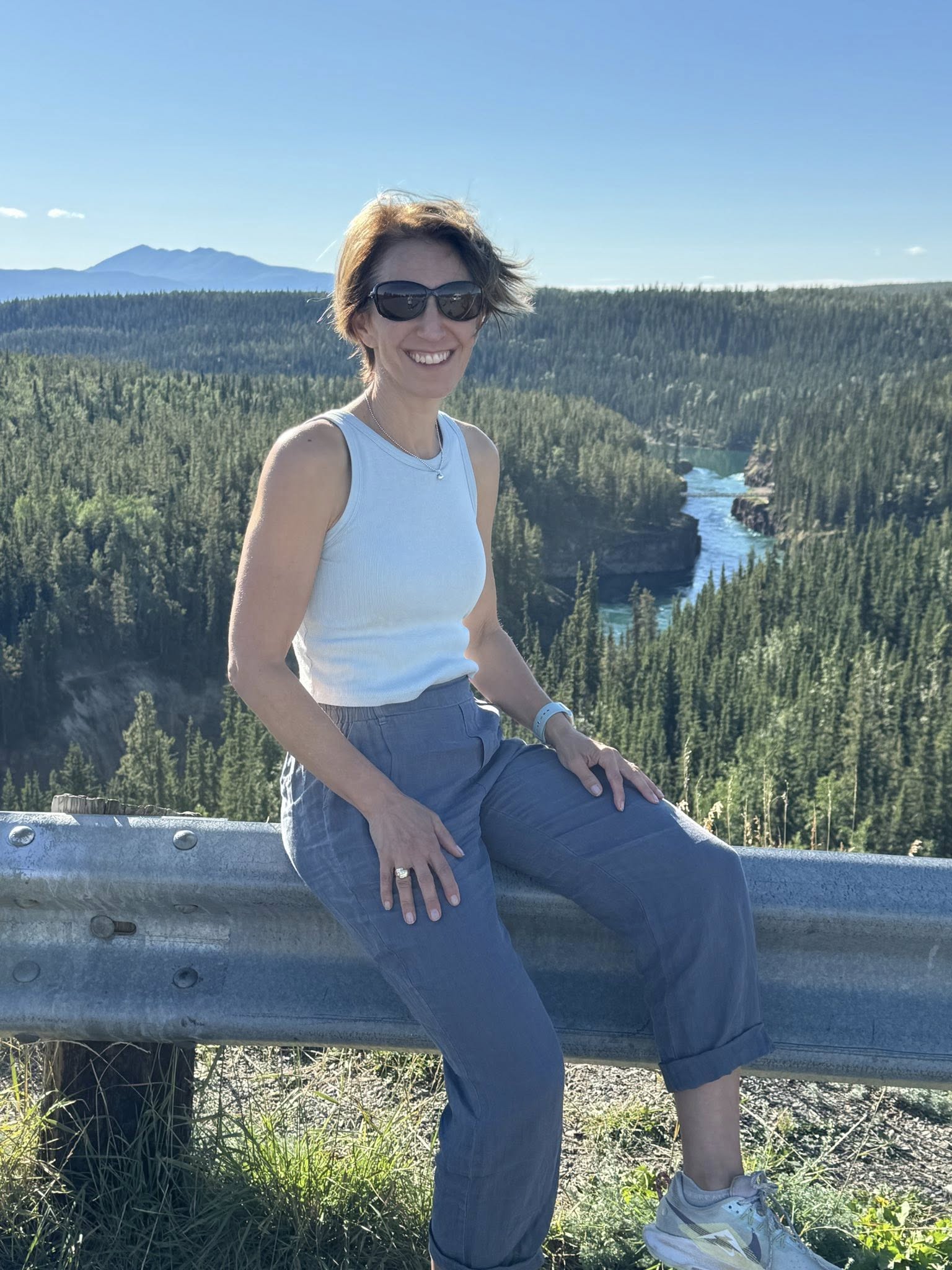
Just outside of Whitehorse is Miles Canyon a key passage during the gold rush, which is what put Whitehorse on the map. Prospectors not only needed a permit to mine but were also required to carry a year’s worth of supplies. The Canadian government of the day wanted to make sure these people (many of whom were fortune-hunters and not outdoorsmen) would survive the winter. Carrying 900kg of extra supplies slowed down these hopeful folks by making them portage all their extra gear over multiple trips through the canyon. But it did give rise to a whole new portage economy! Funnily enough, these industrious service suppliers probably made more money than most of the 100,000 prospectors who set out to make it rich. Only 40,000 of them made it to Dawson City, a year-long trek, with only 3-5% making enough money to be comfortable and a mere 1% striking it rich! I guess it pays to service the hopefuls.
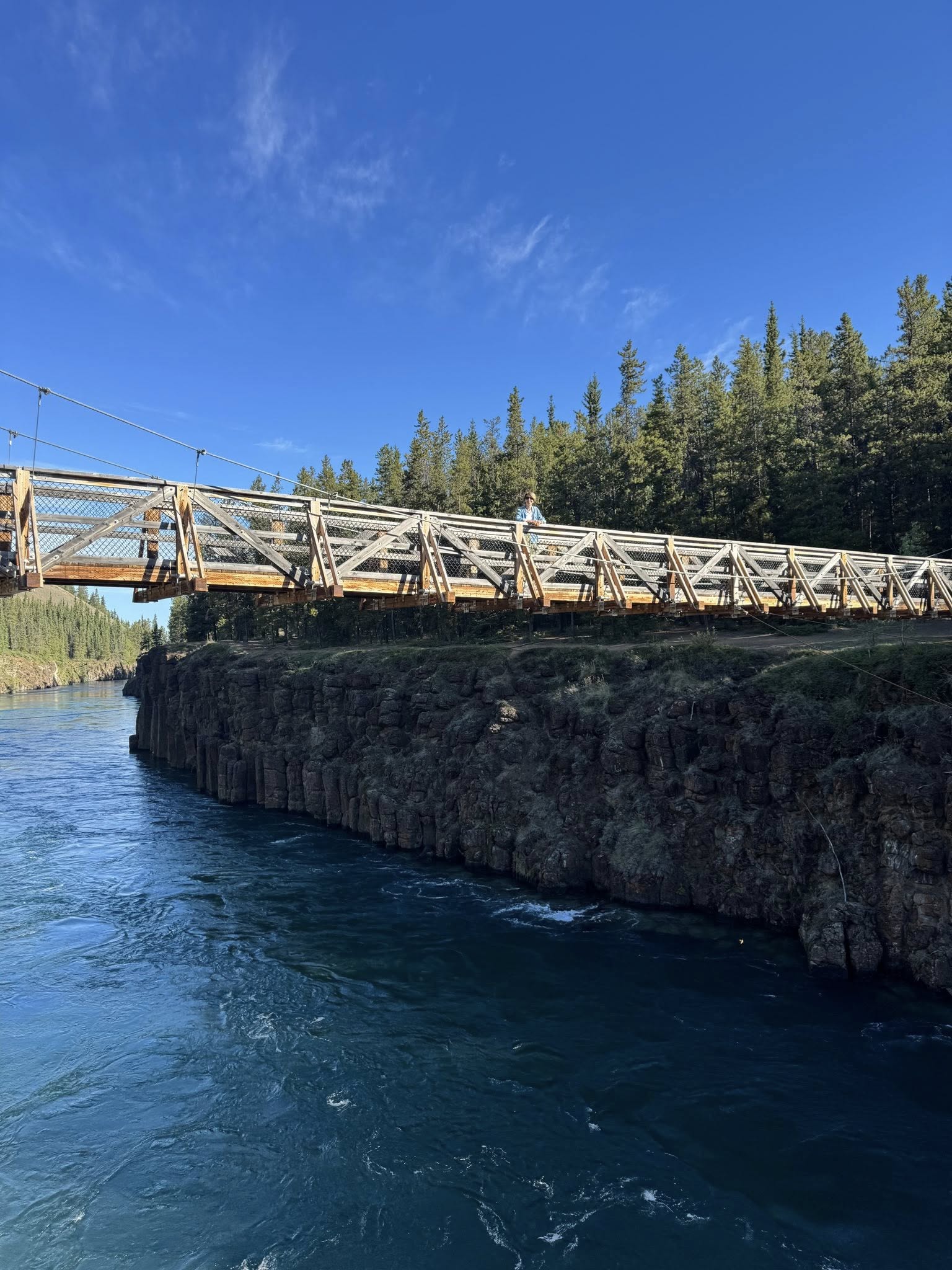
This bridge over the canyon did not exist in 1896 when people were rushing to find gold…would have made their lives a lot easier. The water level was also a lot lower and more treacherous in the pre-dam days.
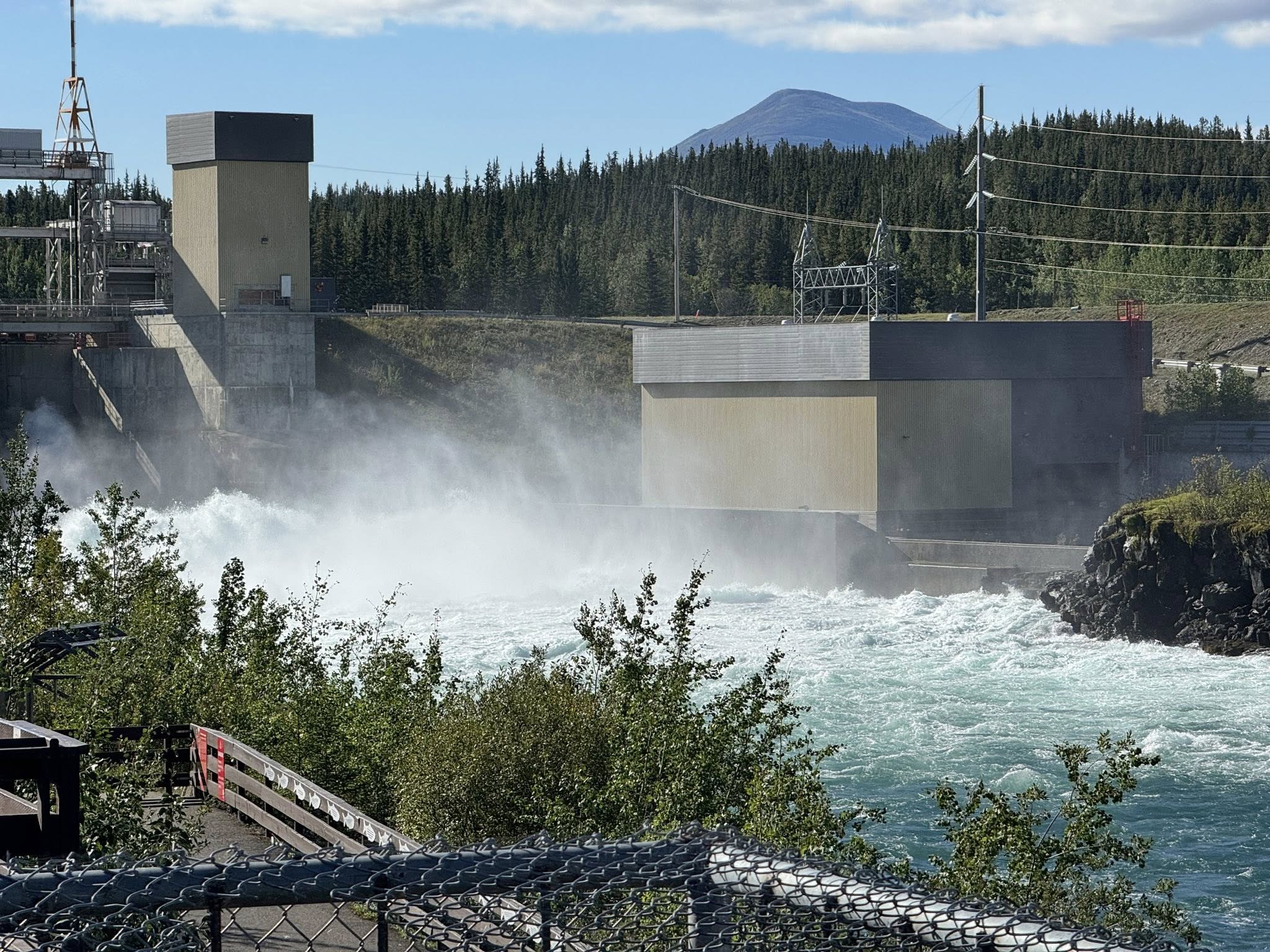
The Lewes dam was built in 1957 and raised the water level nearly two feet, taming the rapids in Miles Canyon. But it messed up the salmon migration as swimming up the dam was a bit too much to ask of these senior salmon. Never fear as engineers were here to solve the problem!
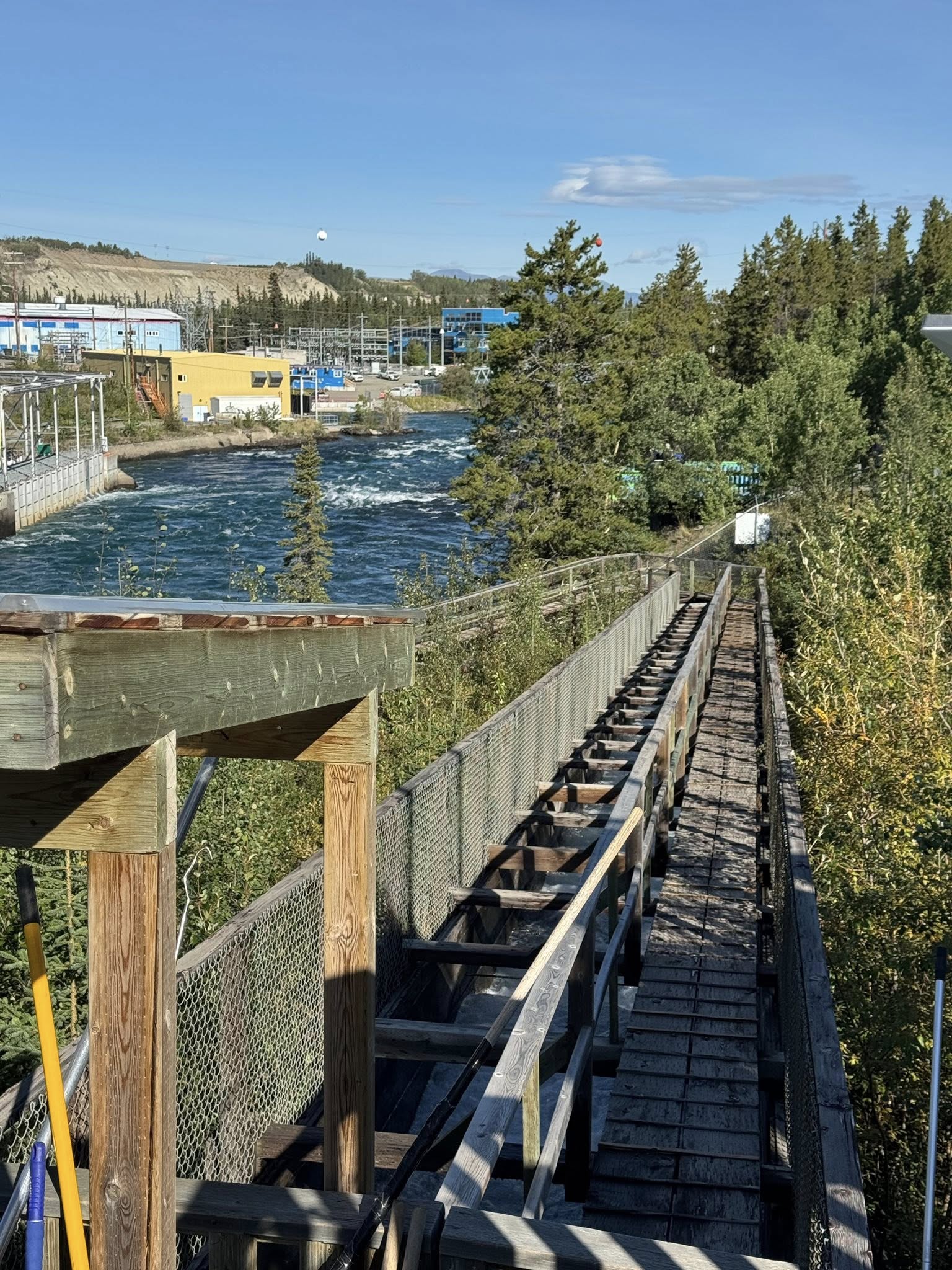
This is the Whitehorse Rapids Fishway (affectionately called the fish ladder), the longest wooden fishway in the world at 366m. It rises 15m, allowing the chinook to avoid meeting a certain demise in the dam’s turbines. The action only runs through here a few weeks in August so we were lucky to see the last few salmon go through. This year, 510 chinook have made it through, up from 13 in 2022 but still below the average of 860. There is also a hatchery here that helps boost the numbers that make it upstream to spawn.
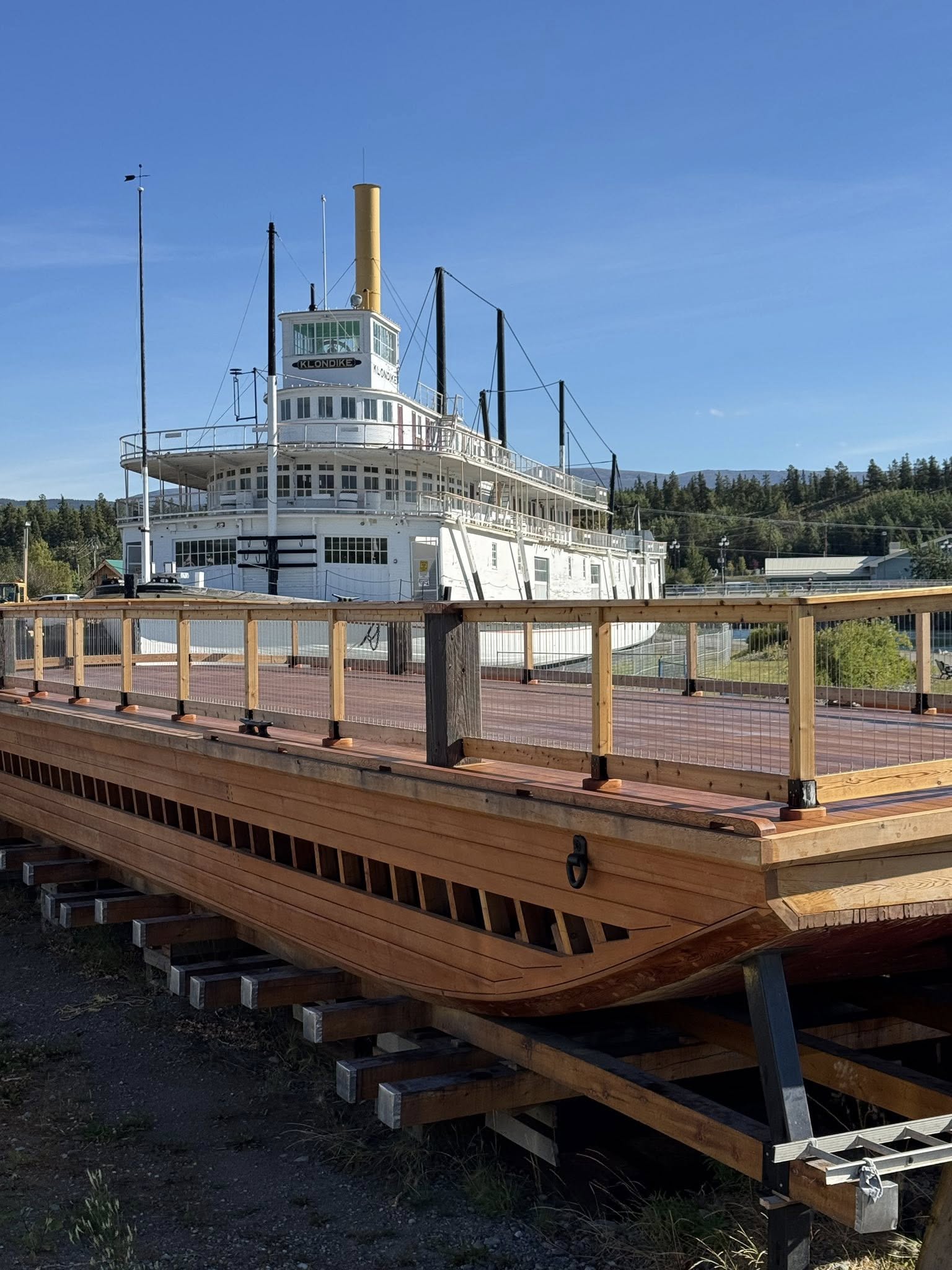
The post-gold rush activity saw sternwheelers making the run up and down the Yukon River between Whitehorse and Dawson City. Before the roads were built, goods and people moved on these flat-bottomed boats (shallow waters, rocks and rapids required flat-bottoms). From Whitehorse to Dawson City went everything the gold miners needed to survive: food, equipment, fuel, livestock, building materials and mail, taking a day and a half with the aid of the current. The five to six day journey against the current from Dawson City to Whitehorse brought the spoils of mining and trapping: gold, furs and passengers coming home at the end of the season.
Built around 1929, the SS Klondike had a relatively short life and sank in 1936. Minus what was salvaged to build the SS Klondike 2 (seen in this picture), the OG is still submerged and very visible when the river levels are low. The larger 2.0 was completed in 1937 and doubled the capacity of its progenitor, pushing on a barge 270 tonnes of cargo and 75 passengers in the lap of luxury. By 1950 the Klondike Highway was built and the SS Klondike was no longer needed for cargo. They tried to turn it into a tourist attraction but that didn’t work out so well and she was retired in the mid-50s.
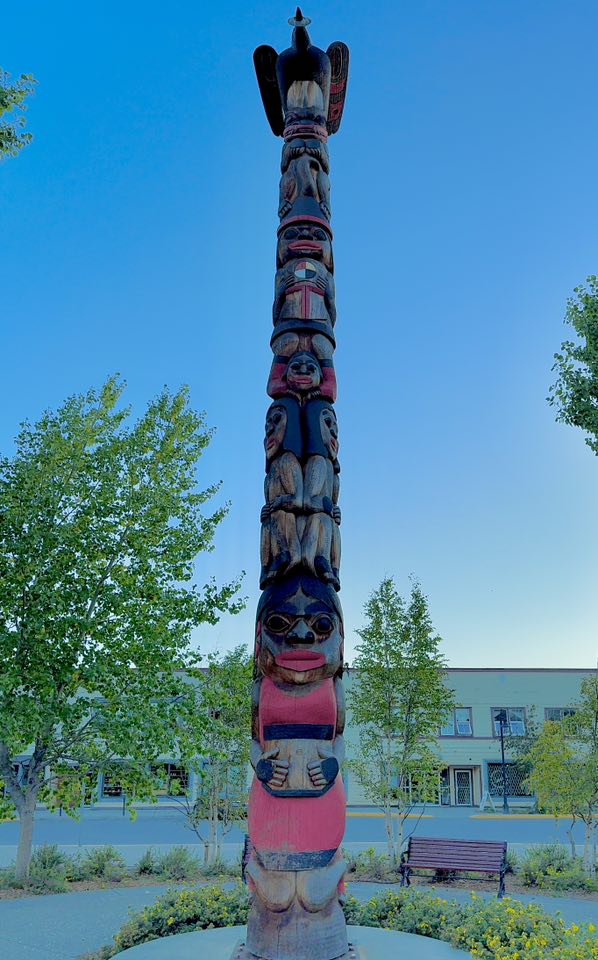
This healing totem was raised by hand in 2012 along the bank of the Yukon River in Whitehorse. It was funded by the Truth and Reconciliation Commission and dedicated to all who were affected by the residential school system; the children who were taken, the families that were gutted and all who came after that suffered the ripple effects.
The pole symbolizes the reunion of separated families.
Starting at the bottom are the representations of Mother holding a bentwood box, followed by Children and Father, and then Wolf and Crow, the main Yukon First Nation clans, all together once again. Every woodchip was collected during the carving process to represent the people impacted by residential schools. These chips were burned in a sacred ceremony and placed in the bentwood box held by Mother, symbolizing the return of those taken.
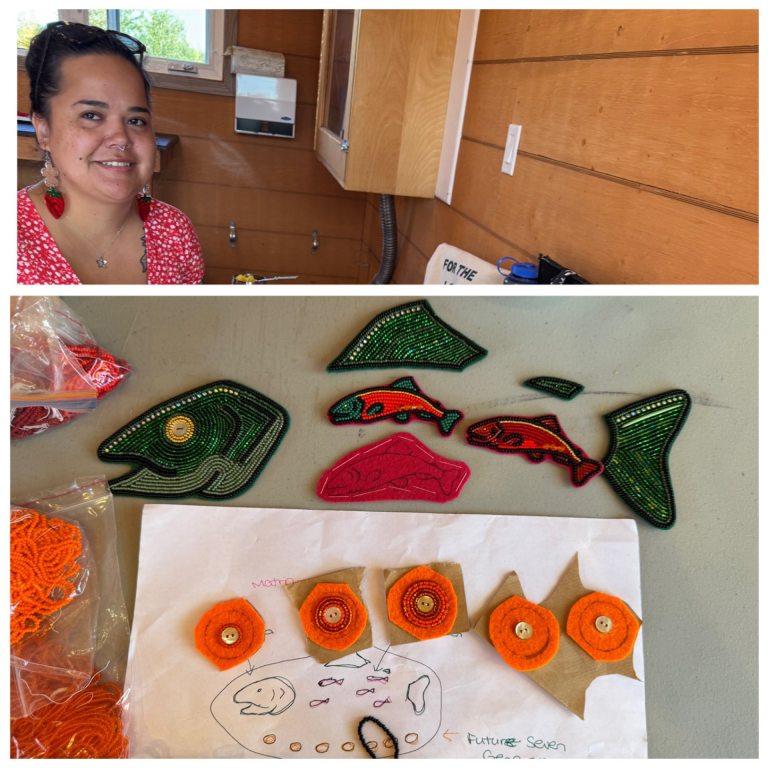
2025 is the 10th anniversary of the Kwanlin Dün Cultural Centre’s Shakaat Artist-in-Residence Program. First Nations artists from around the country are invited to apply to come to Whitehorse for 15 days. They work in small cabins by the Cultural Centre with their door open as an invitation to passers by to come in, meet the artist and learn about their work. The art of all this year’s artists will be displayed in October inside the cultural centre. This year’s theme is Summer Camp.
Carissa Waugh is a beader from Whitehorse. To her, summer camp reminds her of her grandmother and fishing. You can see her design plan sketched on the paper. Baby salmon are covered on top by the mother salmon in green beadwork and below are seven salmon eggs representing seven generations. When Elders speak of thinking “seven generations ahead,” they are asking us to consider the consequences of our actions roughly 150–200 years into the future. Carissa told me that her generation is the 7th since the start of the residential school system.
When she finishes the beadwork, she will sew these pieces onto a piece of hide.
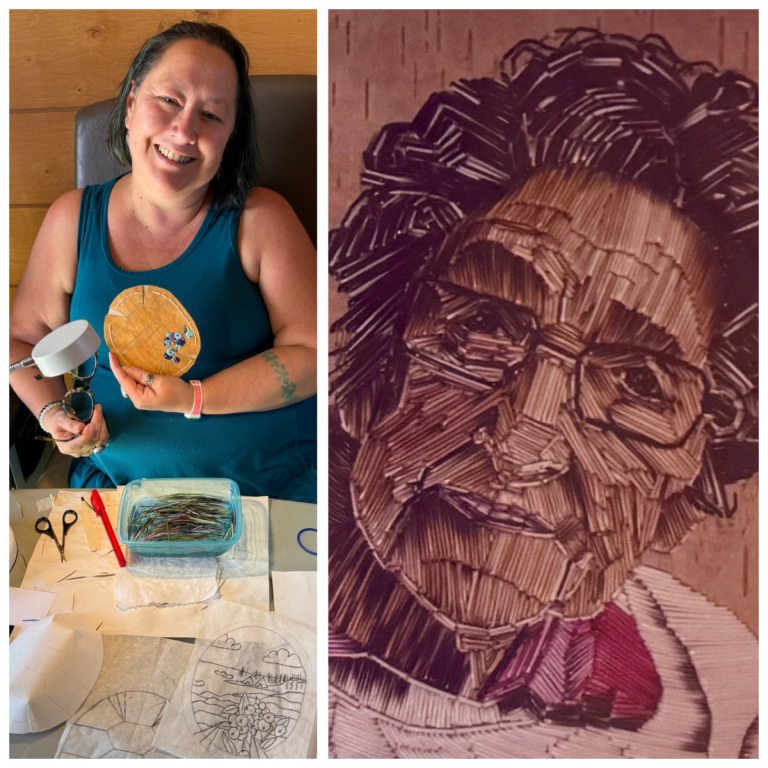
Tara Francis is a Mi'kmaq artist from New Brunswick. Her work as an artist-in-residence this year is quilling. She dyes small porcupine quills and then soaks them in water to soften them before using them as one would use embroidery floss. Her canvas is a double layer of birch bark. Her representation of summer camp shows a riverside scene with blueberries in the foreground. She will quill around the canoe and wigwam leaving those elements to shine in the birch bark.
The detail of her work is amazing. Her portrait of one of her grandmothers (who she says was her best friend) does an incredible job of capturing her essence.
Here’s Tara in action!
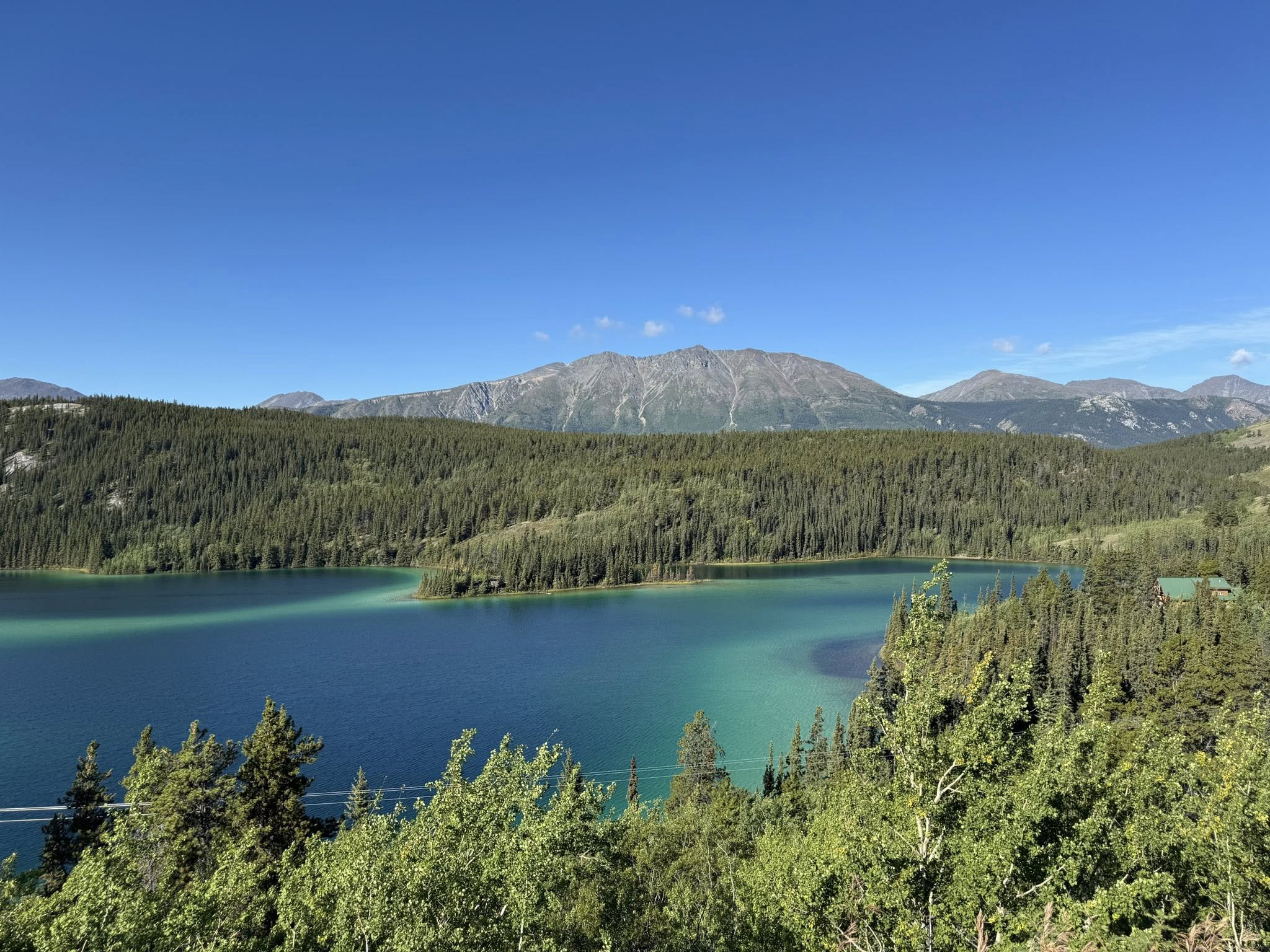
Emerald Lake sits quietly in the Watson River Valley 60km south of Whitehorse. It’s a small (and very cold) lake that punches way above its weight when it comes to beauty. On its shallow depths sits the source of its magic. Clay and calcium carbonate from the erosion of limestone create a white layer called marl which reflects the sunlight with beautiful green hues. Legend says the aurora comes to rest here in the summer.
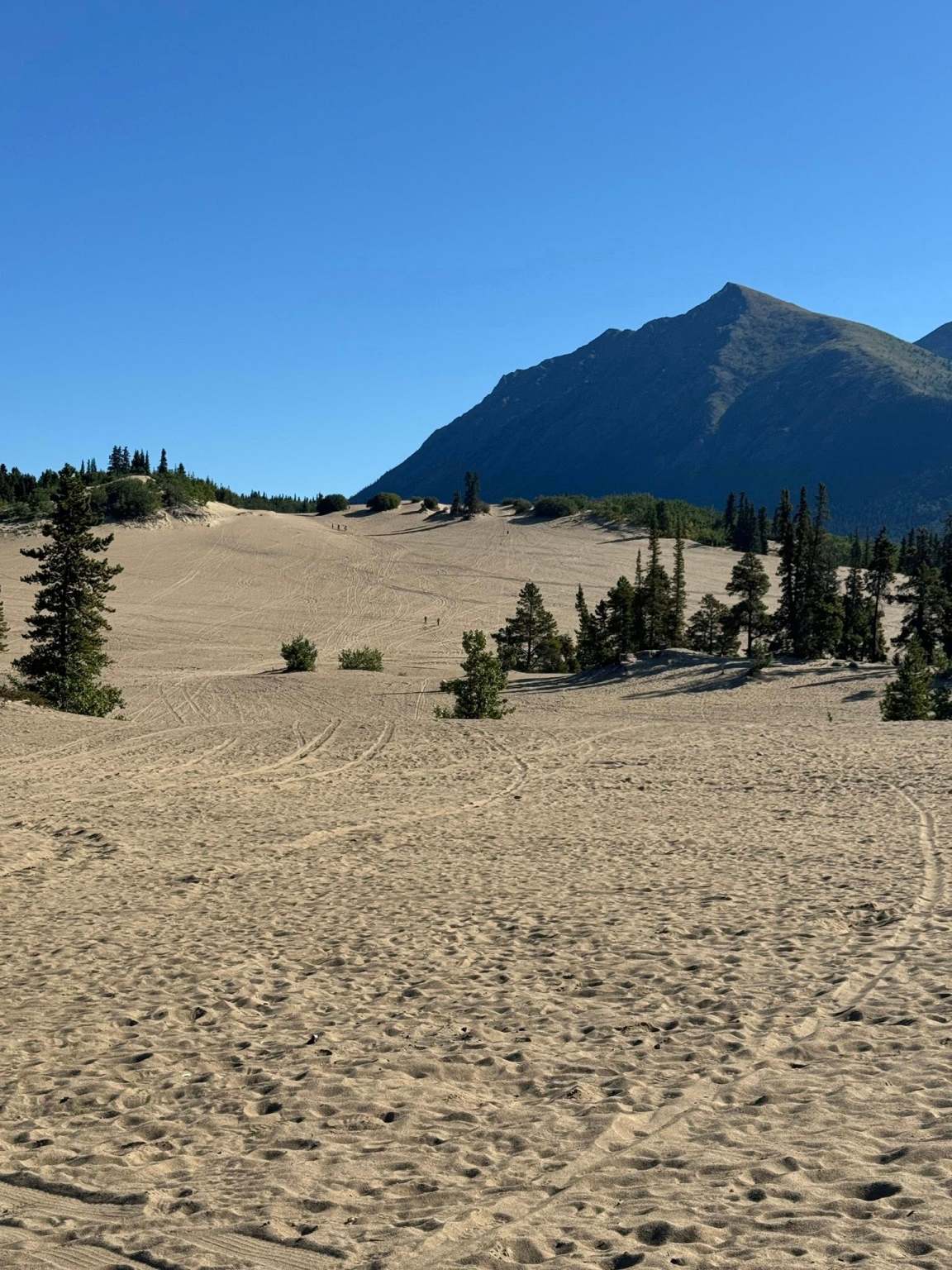
Carcross Desert is just up the road from Emerald Lake. “Desert” is actually a misnomer for this 2.5 square kilometre patch of sand. There’s too much moisture in this former glacial lake to call it a desert; it’s technically a sand dune. But Carcross Sand Dune just doesn’t have quite the same ring to it.
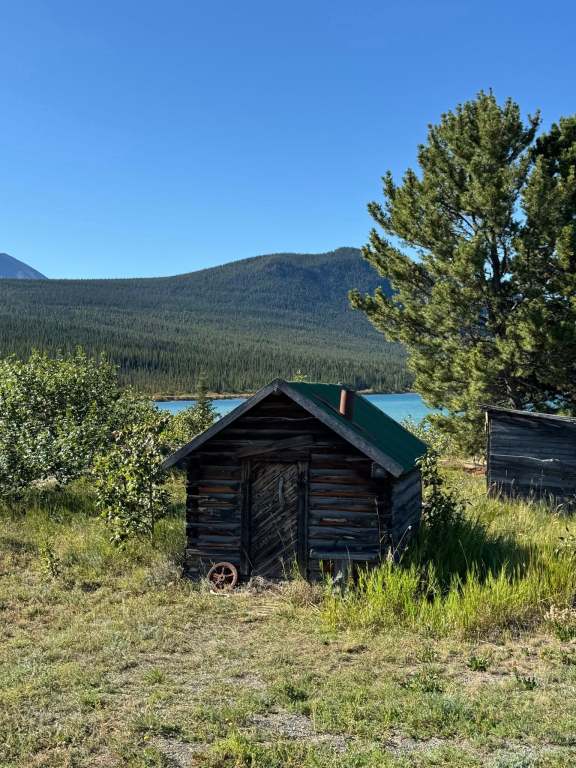
This mini house along the edge of Lake Bennett, in the town of Carcross, was apparently built 100 years ago by a Norwegian who made it his summer home. Norwegians are typically not known for their short stature so this must have been a squeeze to get into!
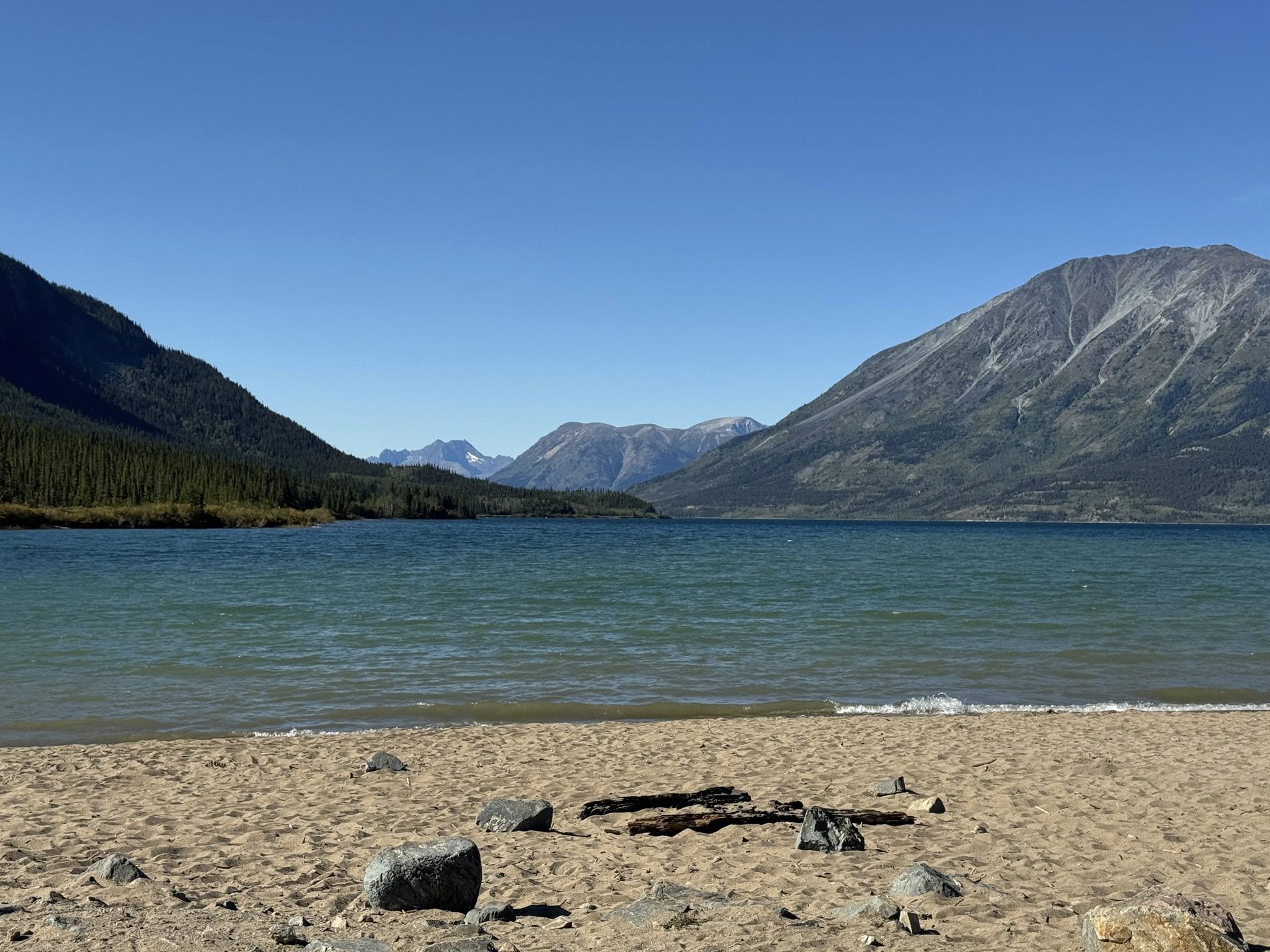
During the very busy two-year Klondike Gold Rush here (1897-1899), the shores of Lake Bennett in the town of Carcross were a bustling place. This was the spot where the prospectors hiking trails from Alaska over the Chilkoot or White Passes heading to Dawson City ended. Here, thousands built boats to float out of Lake Bennett into the Yukon River system all the way to Dawson City. In 1898, more than 7,000 boats launched from these shores when the ice broke. There were hotels, saloons and churches at the ready to entertain and fleece the thousands of tent dwellers waiting for the ice to break. Perhaps this was the site of our first tent city?
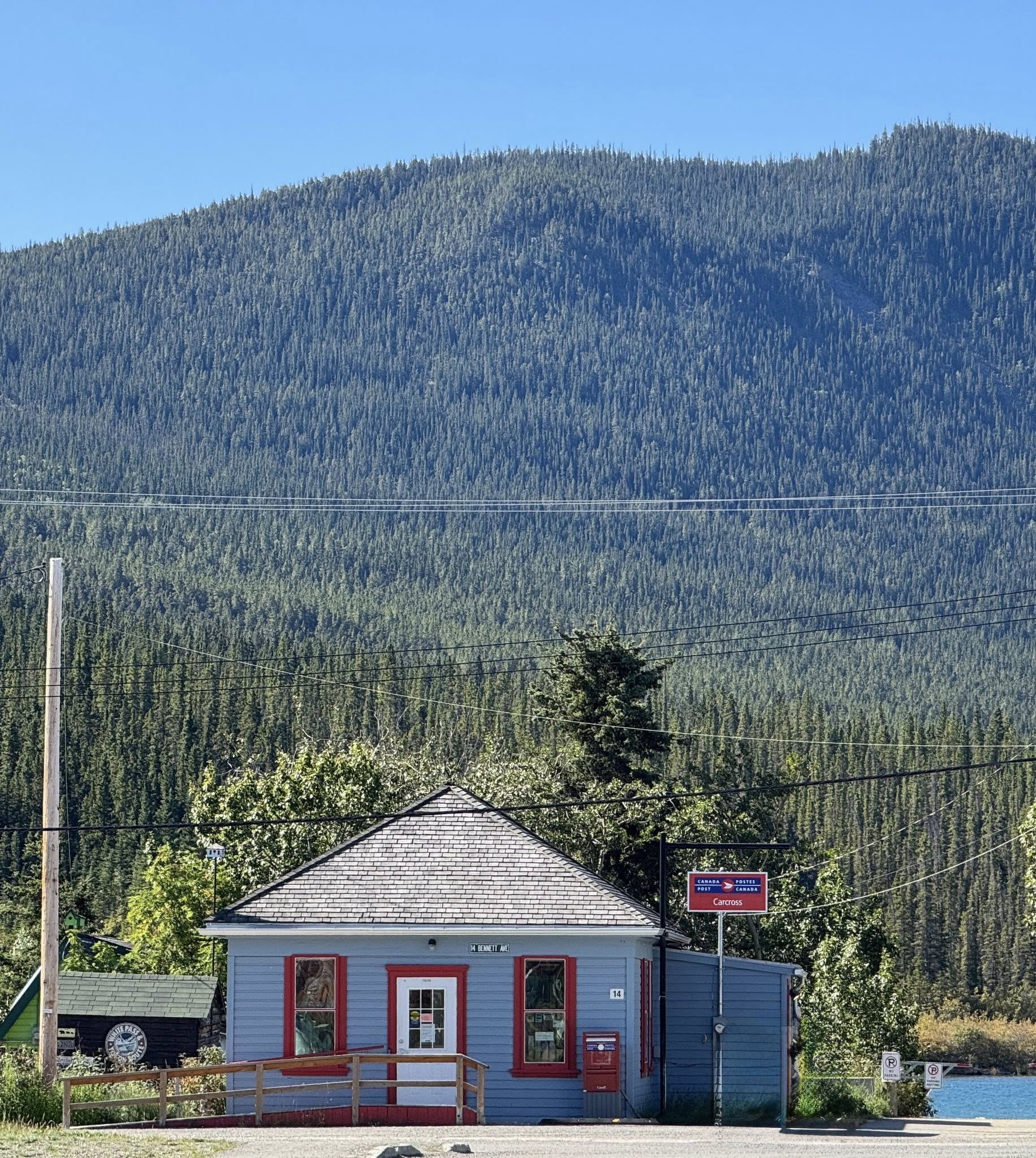
Originally called Caribou Crossing for its roots as an Indigenous hunting camp long before the Klondike Gold Rush, confusion arose as the town grew in popularity and population. People stopped getting mail and soon realized their mail was being sent to Caribou, BC. By 1904, to rectify this confusion, the town bit the bullet and renamed itself with the portmanteau of Carcross.
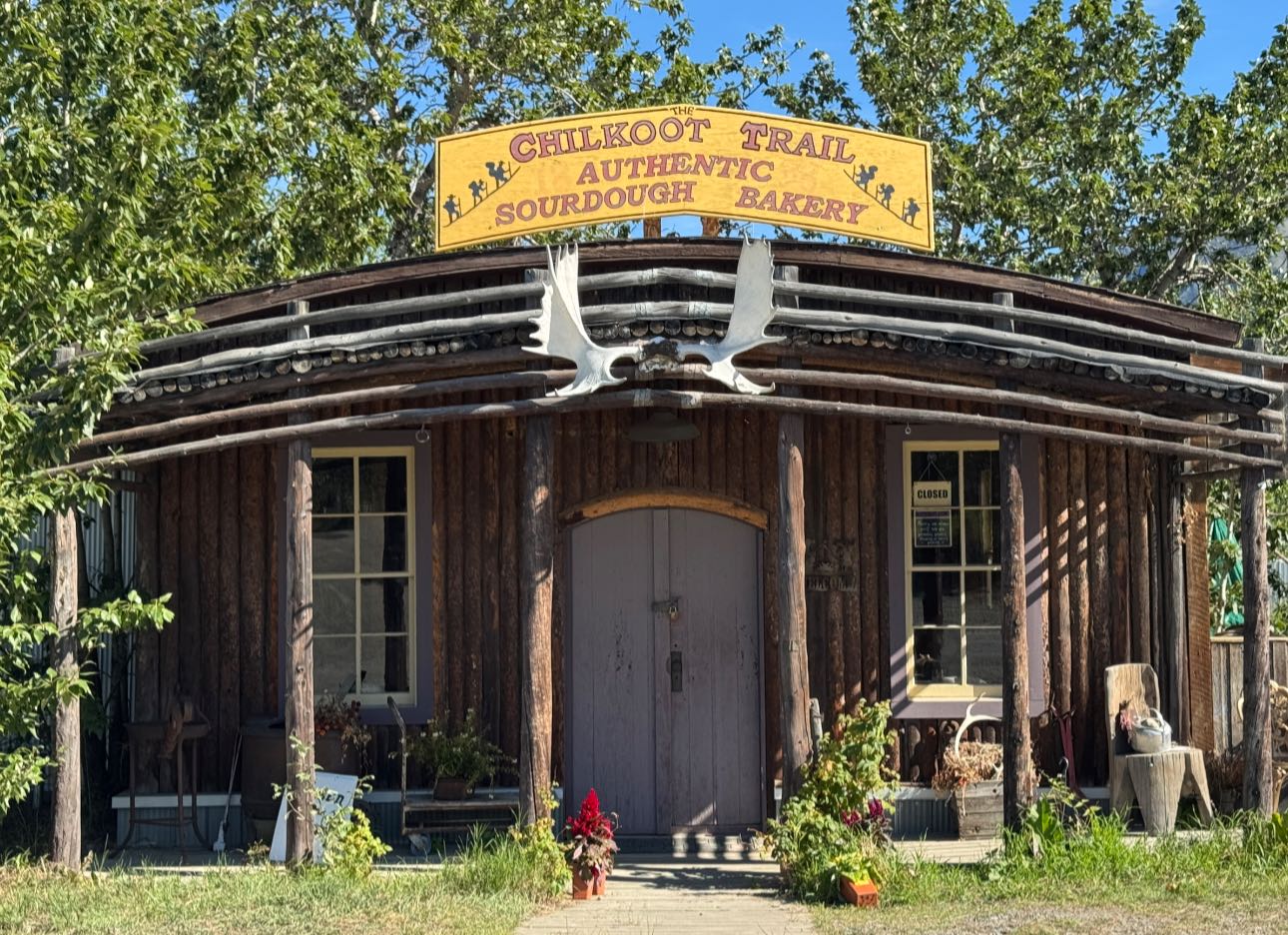
This one-time RCMP barracks was built by Johnny Williams as his home in 1921. He couldn’t afford to ship wood to Carcross by train so he used what he could find locally; small local logs erected vertically to build his house. The logs too crooked for walls he used for rounded doorways and the top of his veranda.
Over 100 years later, it’s still standing after serving as a personal residence, an RCMP office, a warehouse, a craft store, a gift shop and now a sourdough bakery.
Sourdough carries an important legacy here. Akin to matzah helping the Israelites get through 40 years in the desert, sourdough enabled the prospectors to bake bread in the rough without yeast. Starter could last indefinitely if properly cared for so prospectors treated it like a trusted companion. They would tuck it in their clothes to keep it from freezing. If their starter died, they were stuck with dried and hardtack food.
Because of this history, "sourdough" has come to mean “old-timer”, someone who has lasted through a Yukon winter!
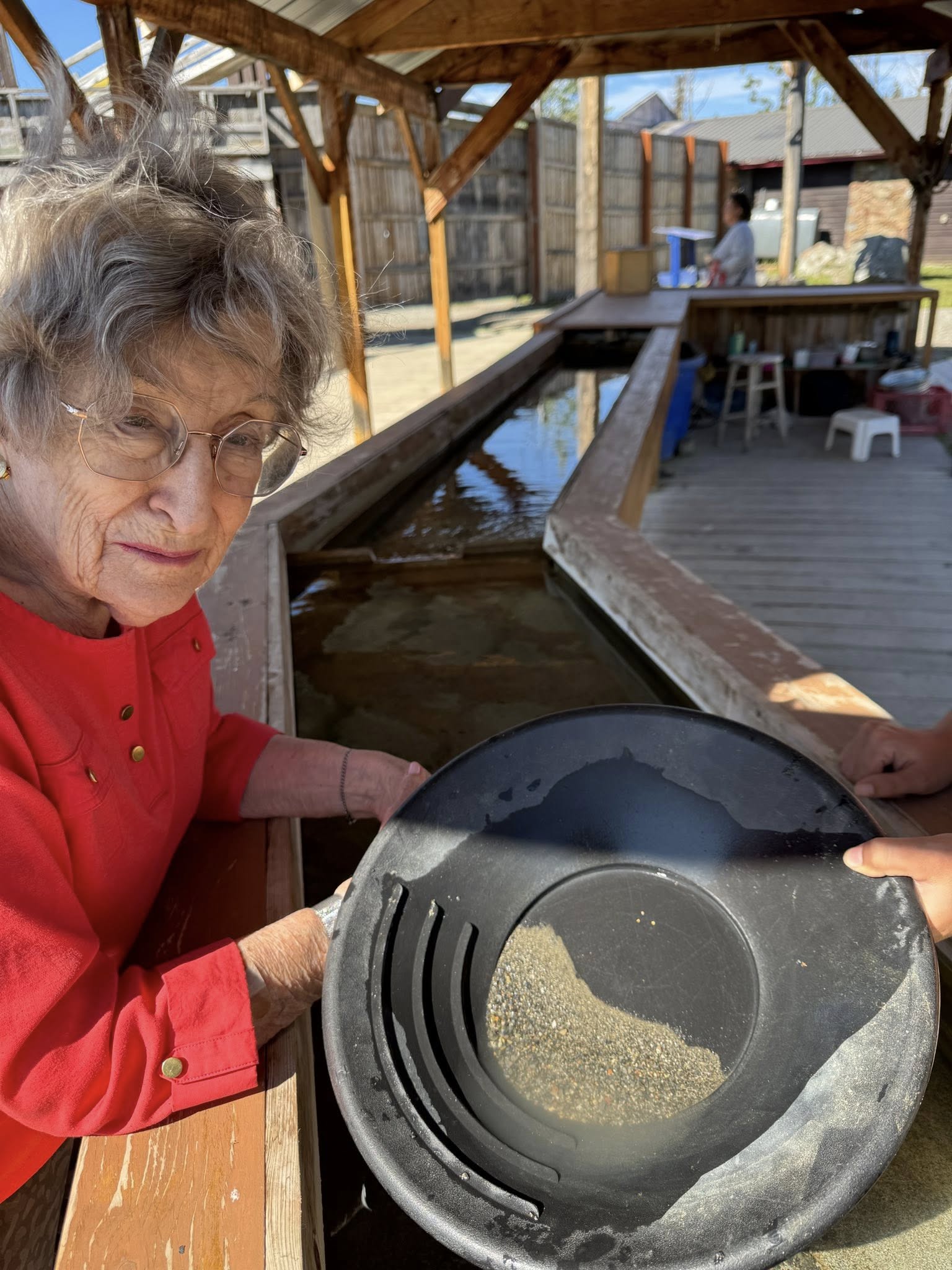
We had a successful stint at panning for gold! See those three little flecks at the top of the pan? Gold! This place gets its sand from a mine in Dawson city after they’ve removed the nuggets. They can’t be bothered to hunt for the little bits leftover and leave that to us.
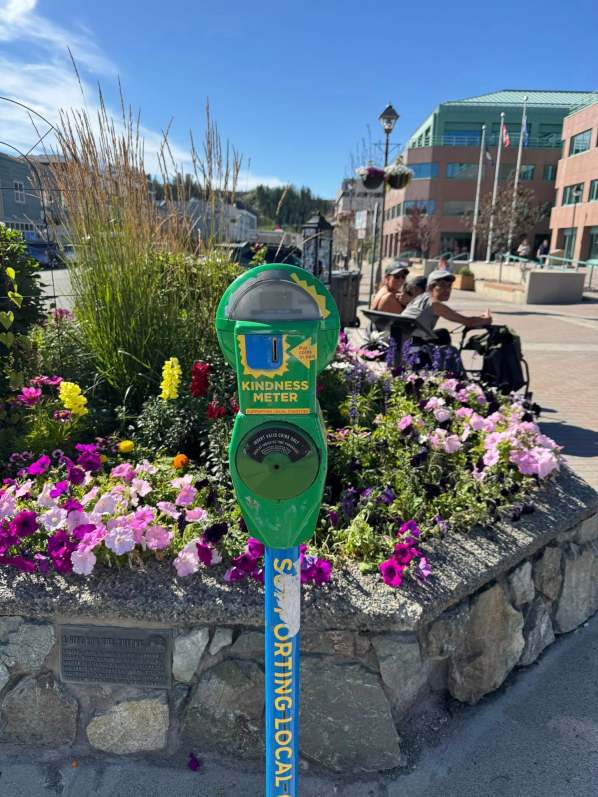
This kind of meter I’d be happy to feed! I think every city should install these.
See the guy on the bench in the background? He called out to me saying “It’s just a meter! Why are you taking a picture of that?”…
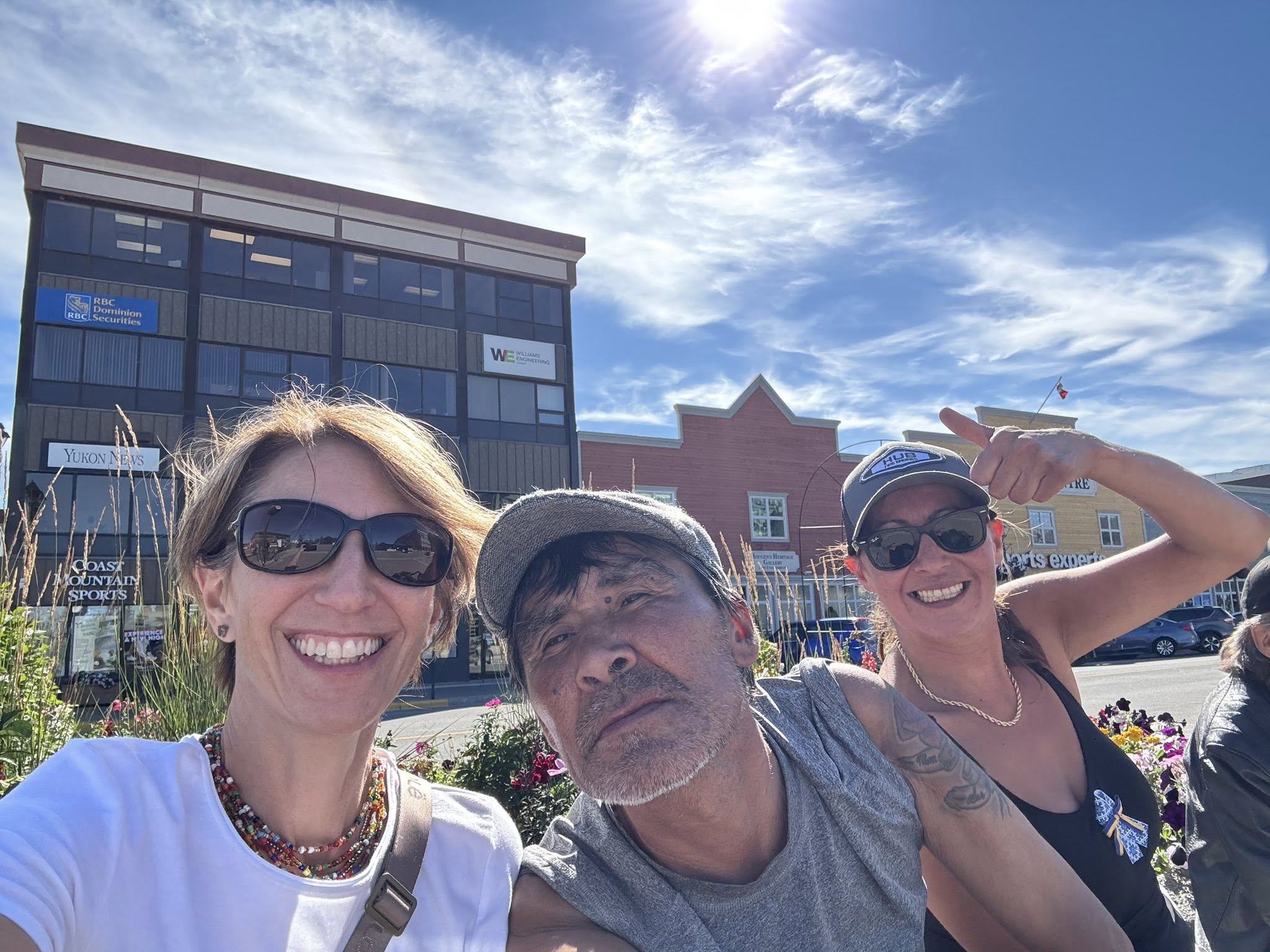
…I went over to chat with him and he insisted on a selfie. His name is Peter and beside him is his niece and roommate Jay. He made sure to tell me she was just his niece and therefore he was available. I told him I was taken; he tried to convince me that didn’t matter. I wasn’t worried, Jay had my back!
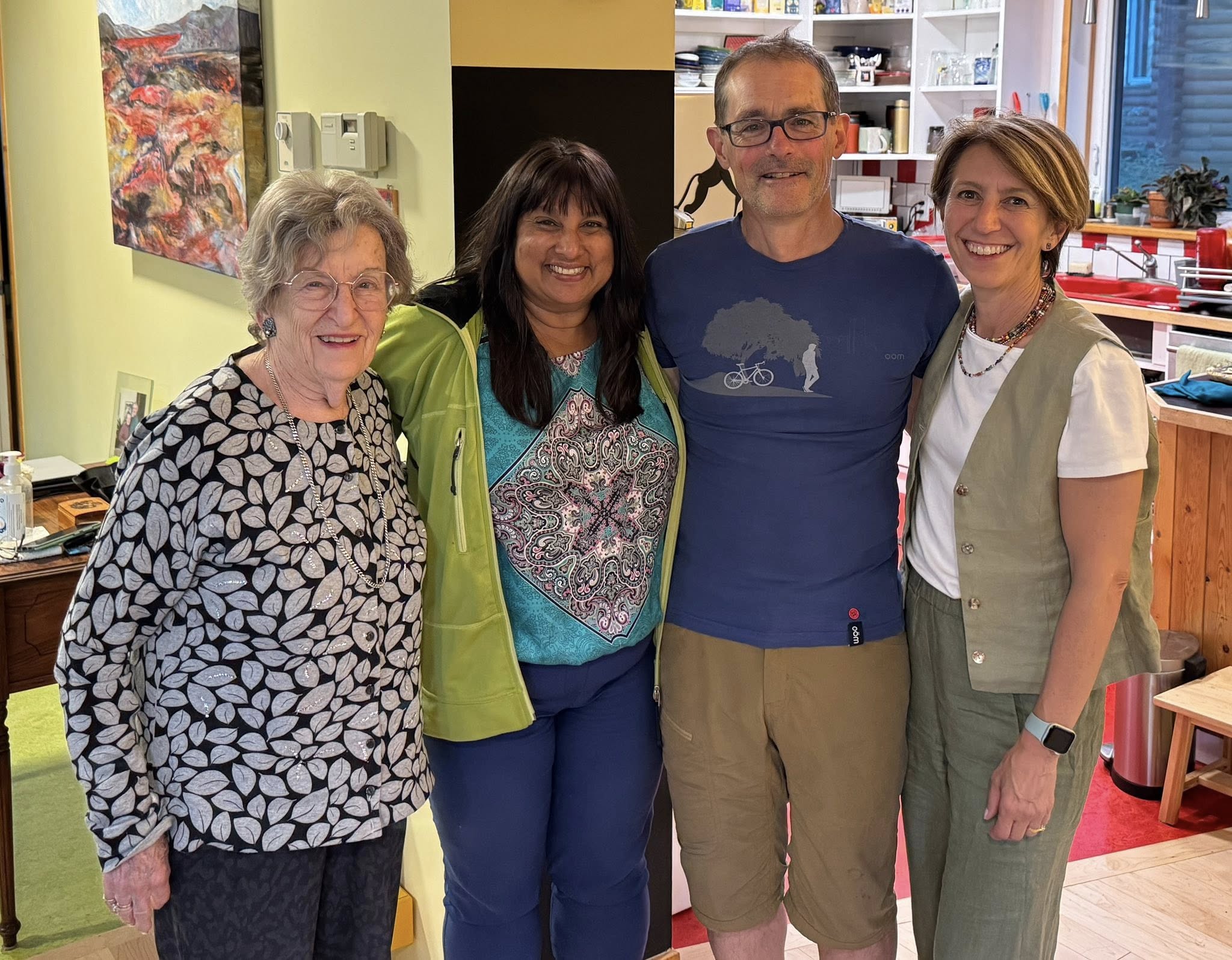
Such a treat to have dinner with Shehnaz Ali and Bill Slater, friends dating back to first year undergrad at Guelph!
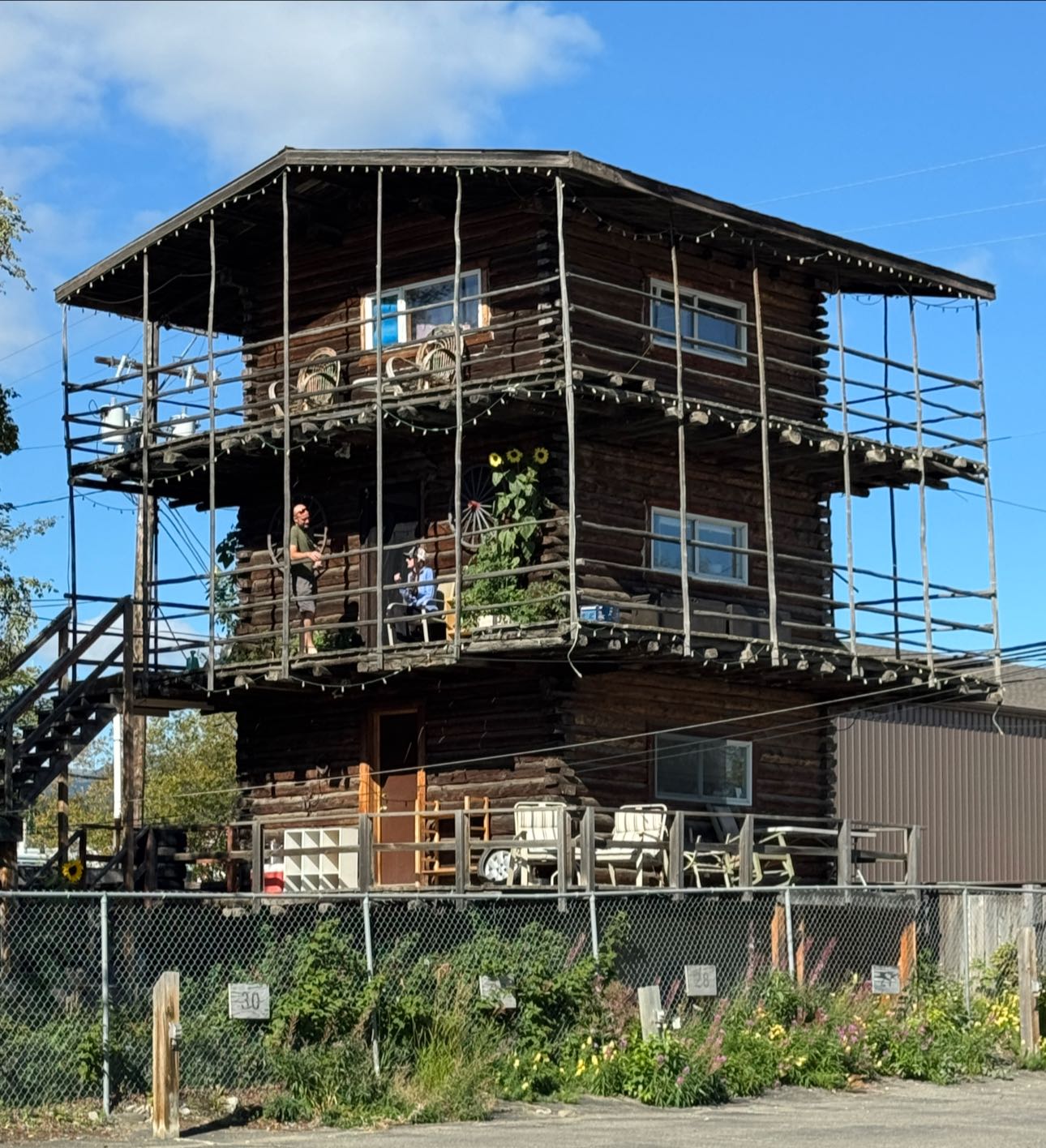
One of the first things we noticed about Whitehorse is there are no tall buildings. Although the zoning seems to allow for about six storeys, we really didn’t see anything above three or four. So when I heard about the Whitehorse skyscraper, my curiosity was piqued! With all the low rise buildings, why didn’t I see something tall rising up from somewhere? Well, it’s because this wooden building is the Whitehorse skyscraper! Faced with a housing shortage in the post-war period, a prospector named Martin Berrigan came up with a creative solution. Using materials easily at hand, he built three-storey log “skyscrapers”. He stacked nine inch diameter logs (the trees don’t grow very big up here) 58 logs (25 feet) high and created three stacked units, 16 feet x 16 feet (how much room does a person really need?). These were the first multi-unit rental dwellings in Whitehorse. Nearly 20 years later, in 1964, the buildings were modernized: electricity and plumbing were added!
We went up to Sky High Wilderness Ranch to learn about the Huskies and mushing (using dogs and sleds for transportation in the North). While we questioned the appropriateness of the use of dogs for our entertainment rather than the origins of necessity, this place really seems to do it right. Our guide, Christina, was super knowledgeable about dog health and welfare and truly loves these animals. Our experience there showed just how ingrained mushing is for the dogs. Christina said she feels sorry for Huskies living in a house; they are happiest outside in -15C. There are about 130 Huskies here, 30 of which are retired and roam around freely. These were beautiful dogs but not at all what I imagined. Turns out Alaskan Husky is a fancy name for a mutt. These are Hound and Shepherd mixes and are all different colours and sizes. Bred for performance and stamina, they are meant to be fast. Siberian Huskies, which is what I always thought of as “Huskies” are bigger and stronger but not as fast. The dogs love Christina and can’t wait to get teamed up and go. The other dogs are racing around in their areas in excitement. There’s a real excited frenzy when Christina is within range! The dogs are tied up and separated for their safety. Chains are 6’ long and enable them to be close enough to interact with their neighbours. By keeping them separated from one another, they can keep an eye on them individually to monitor health (what goes in and what comes out) and make sure the alphas don’t get into fights. The staff know the personalities of the dogs and know which play well together and which should be kept apart.
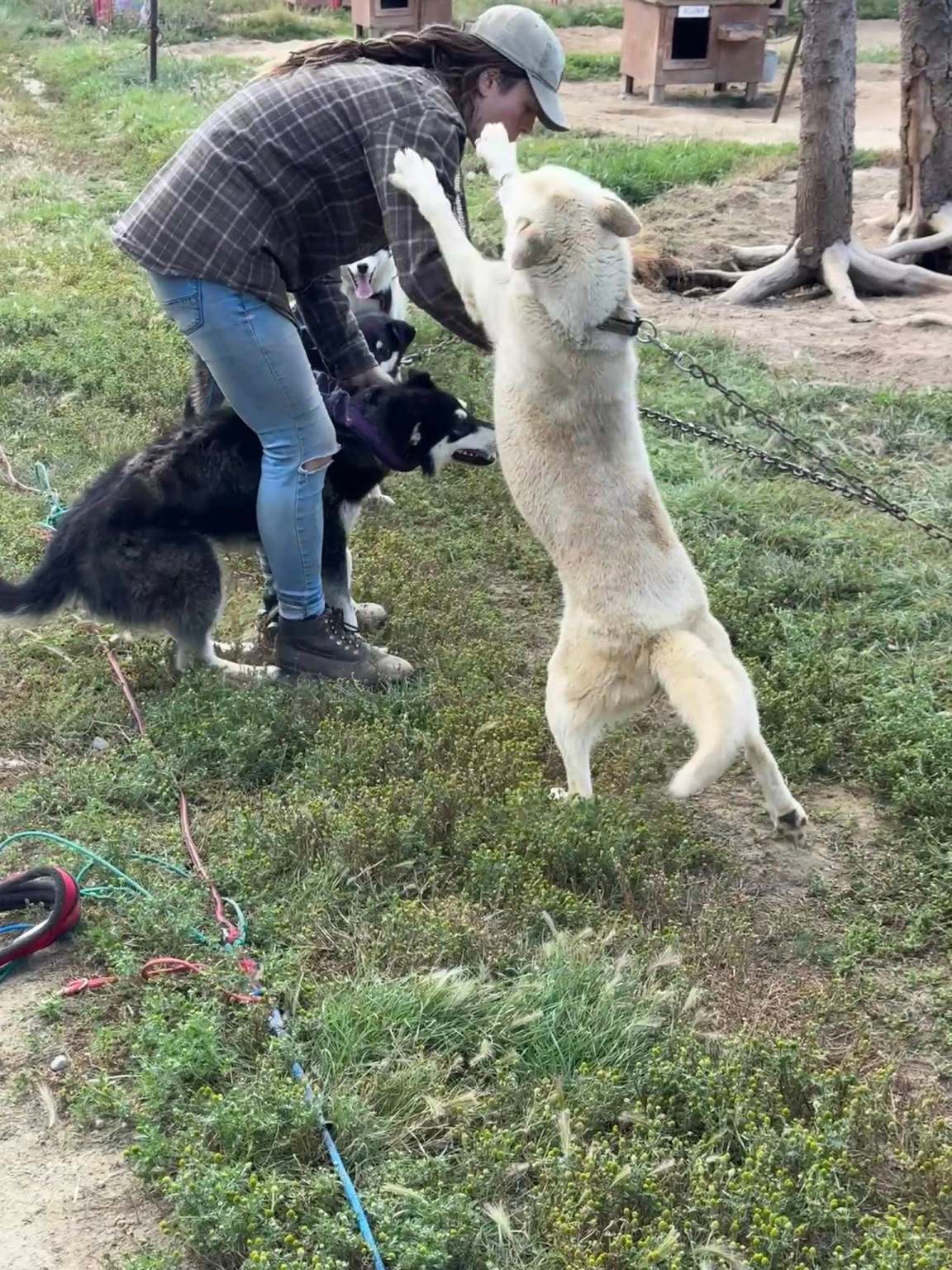
Let’s go!! Put me on the line!
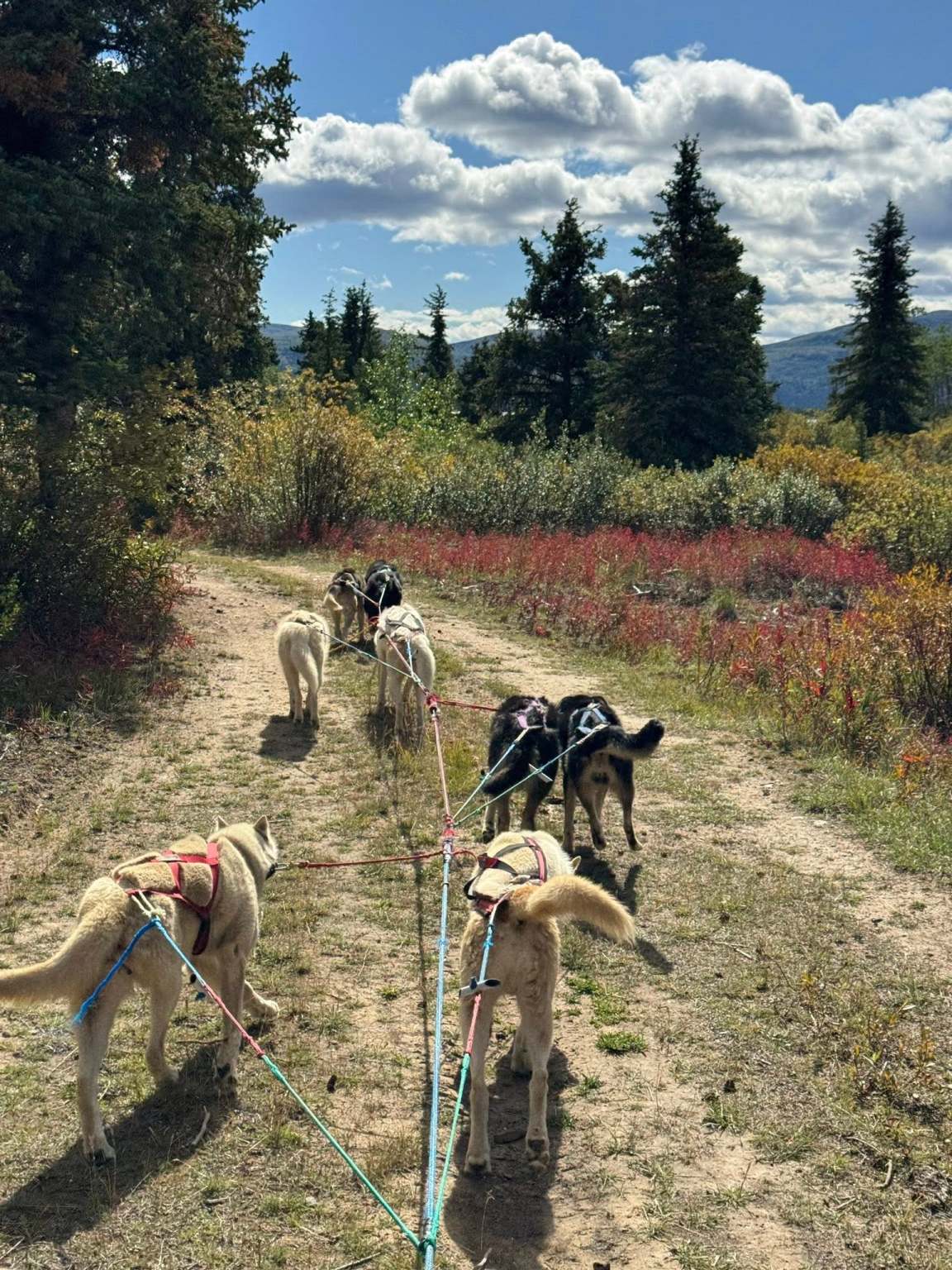
Here’s our group of eight dogs. The first two are the experienced leaders, aged nine and four. The middle four are 11-month-old rescued siblings. The last two are a year and a half, also siblings. The first two are trotting side-by-side, each on its own side of the line, showing the ones in back how it’s supposed to be done. The puppies tend to be all over the place so these daily runs teach them the routine.
The puppies! These eight cuties are three and a half weeks old and we are encouraged to interact with them so they get used to humans. Christina touches their paws a lot so that when they are older and running in winter she can easily put on their little boots (important for their paw health). Sibling groups have a theme to their names. These ones will be named for lakes in the Yukon.
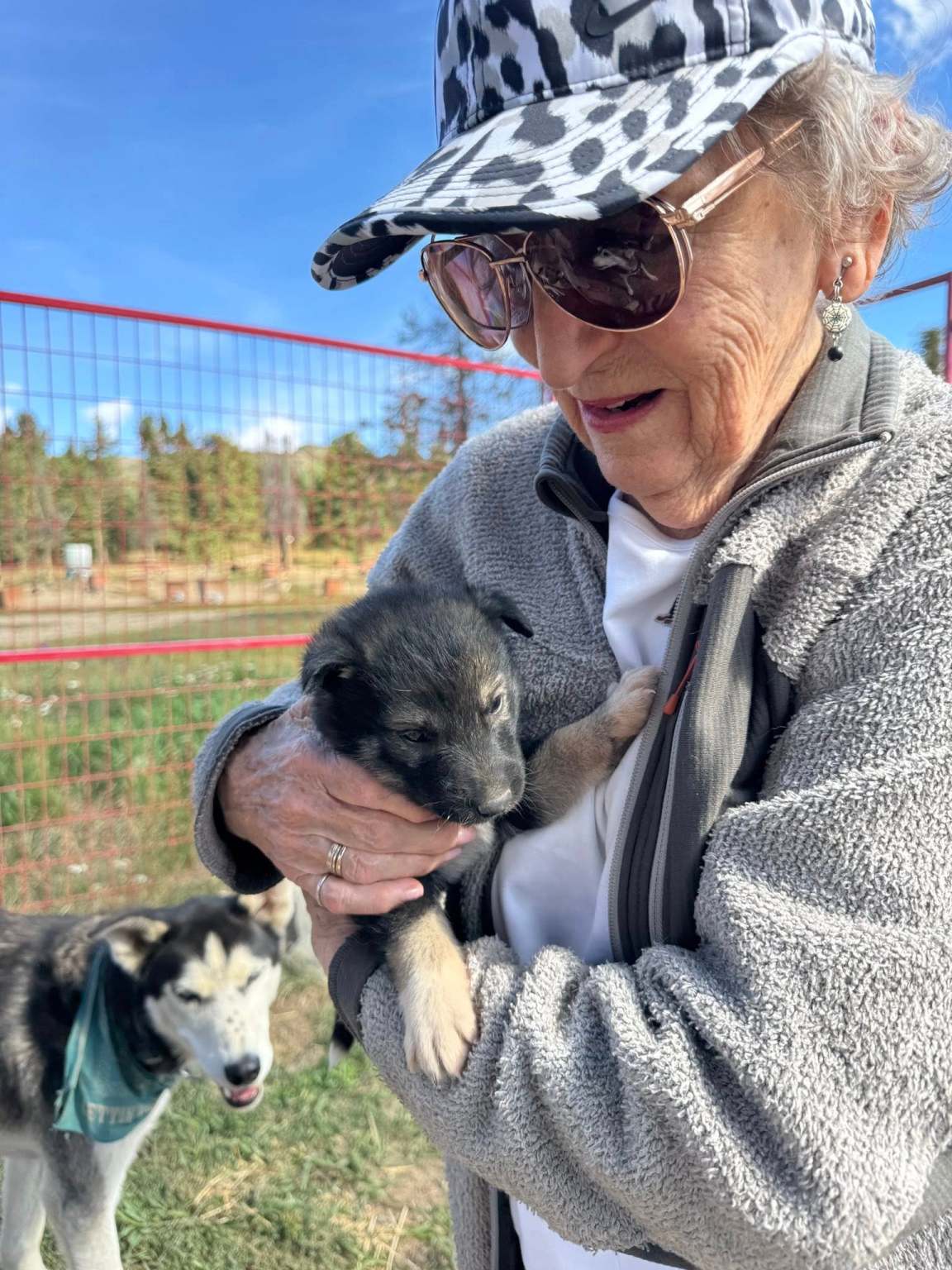
I think Mom wants to bring one home…not sure what her cat would have to say about that!
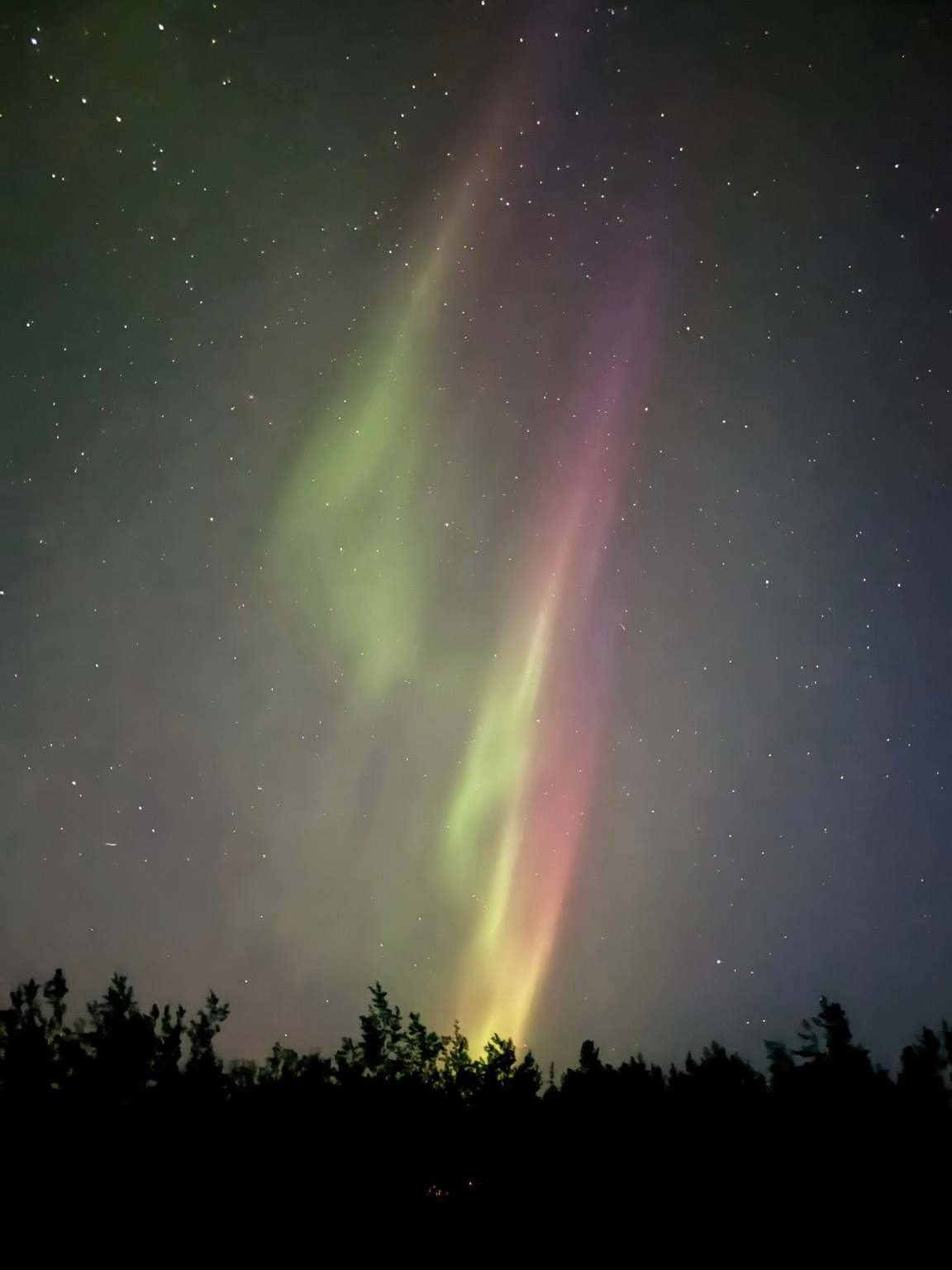
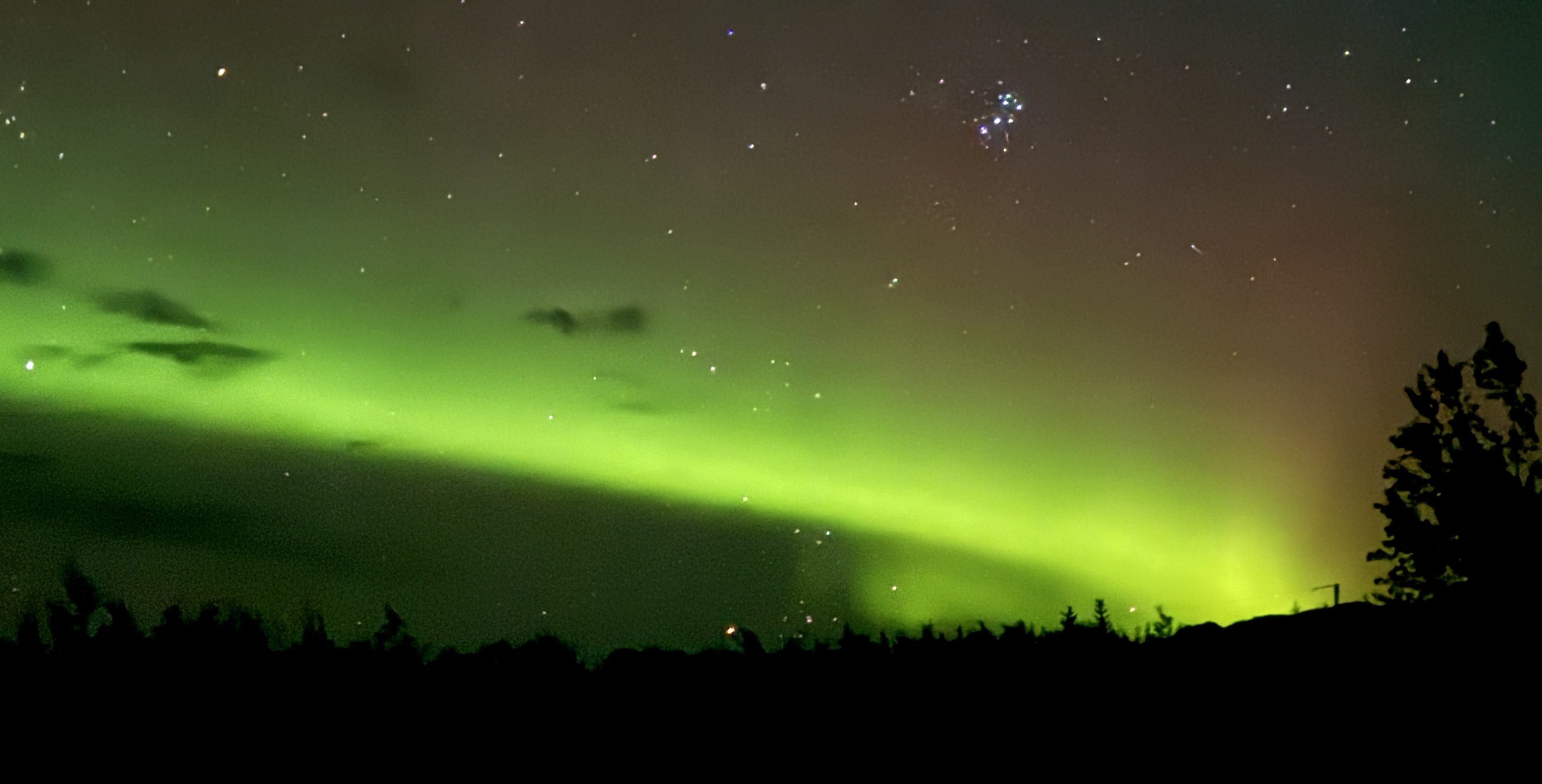
The Aurora Borealis! Our late August timing is just the start of the season and we were lucky to see some pretty amazing displays. I can only imagine what it’s like in winter! This is a late night adventure; we were out with our guides, Northern Tales (excellent, by the way, and they do more than Aurora viewings), from 10:30pm - 3am! The charged solar particles are colliding with gases in the atmosphere and produce a faint light (compared to the sun) so the darker it is, the better to see.
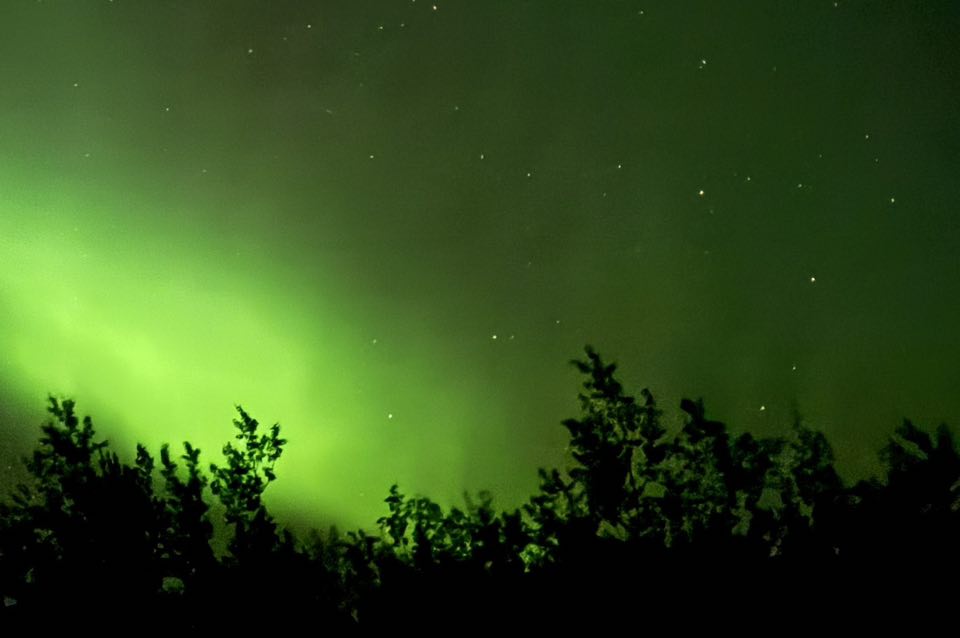
I love the silhouette of the trees against the green sky.
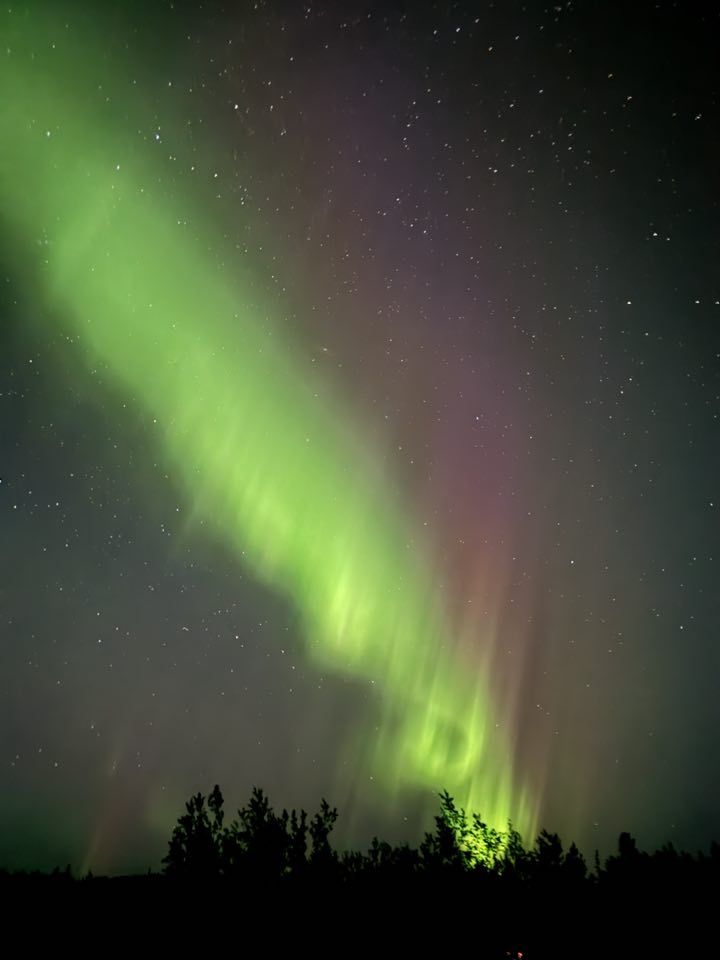
So how does all this aurora magic happen? It starts with the giant ball of hot plasma that is our sun. The outer atmosphere of the sun (the corona) is much hotter than the surface of the sun and at that temperature some particles blow out of the sun’s atmosphere (solar wind) and get caught in the sun’s magnetic field which flings these particles outwards in bursts (solar flares). The earth’s magnetic field then catches those particles and funnels them towards our poles. That’s when they collide with our atmospheric gasses and produce the colours that we marvel at.
Green is the most common colour and that is when the particles collide with oxygen at altitudes of 100-250km. The red also comes from oxygen but above 250km. We only see red when the activity is more intense. We didn’t see any purple or blue which comes from nitrogen at altitudes lower than 100km. At higher altitudes the air is thinner so oxygen has more time to release red light. At lower altitudes, collisions are more frequent which produces the green and blue light. There’s your science lesson for the day!
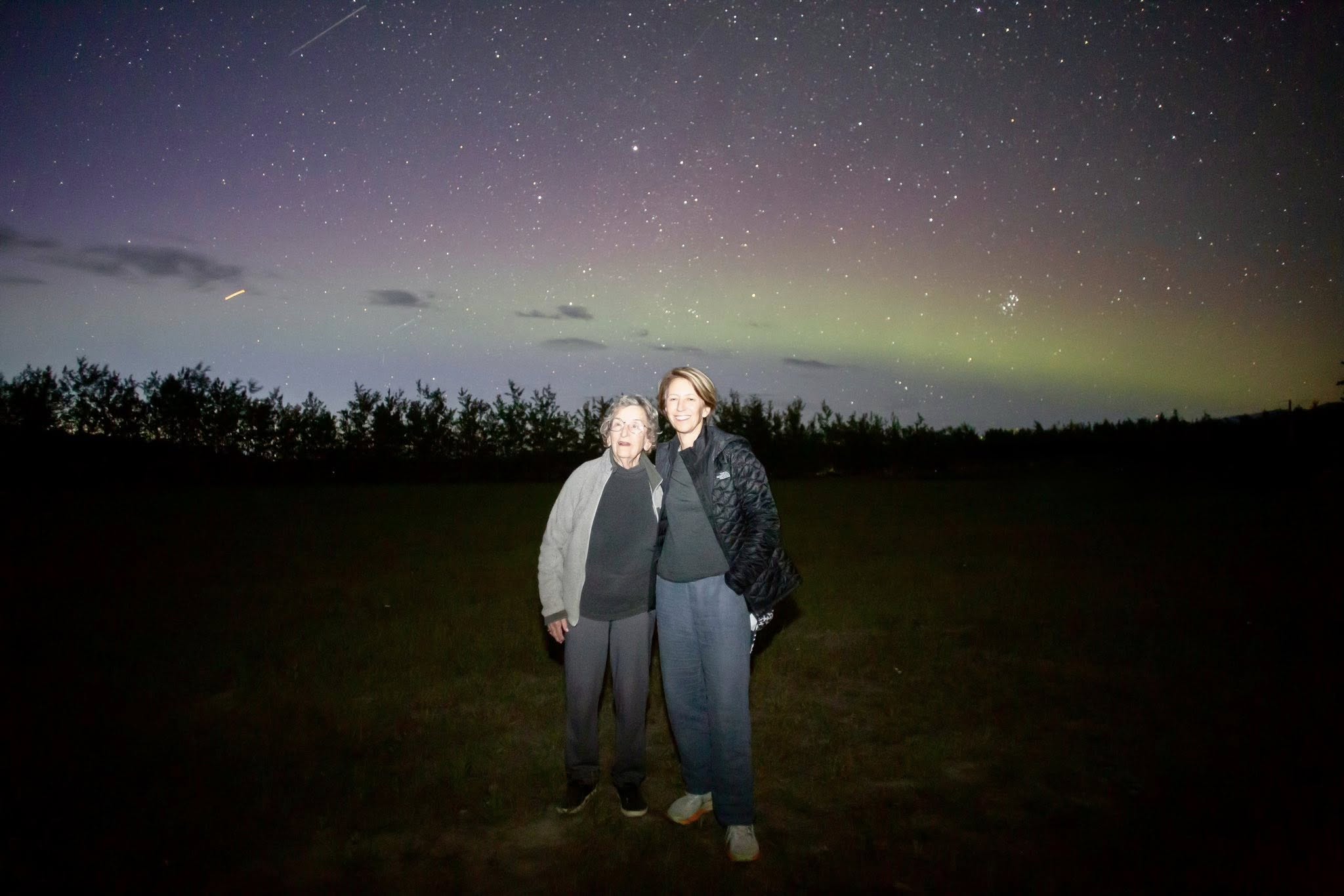
A joy to share this bucket list experience with my mom!
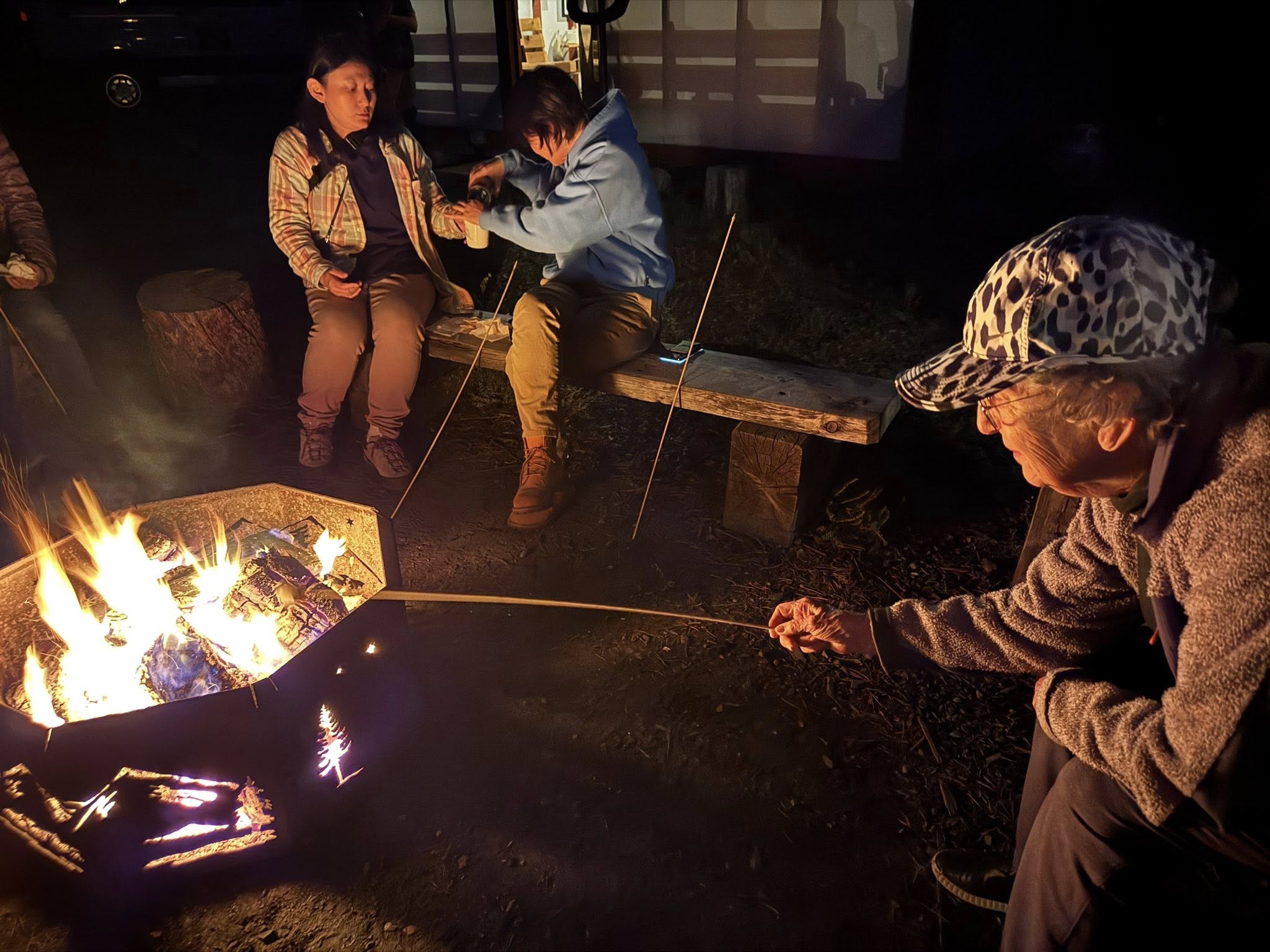
And here’s another first for my mom. Roasting a marshmallow over a fire! She had two!
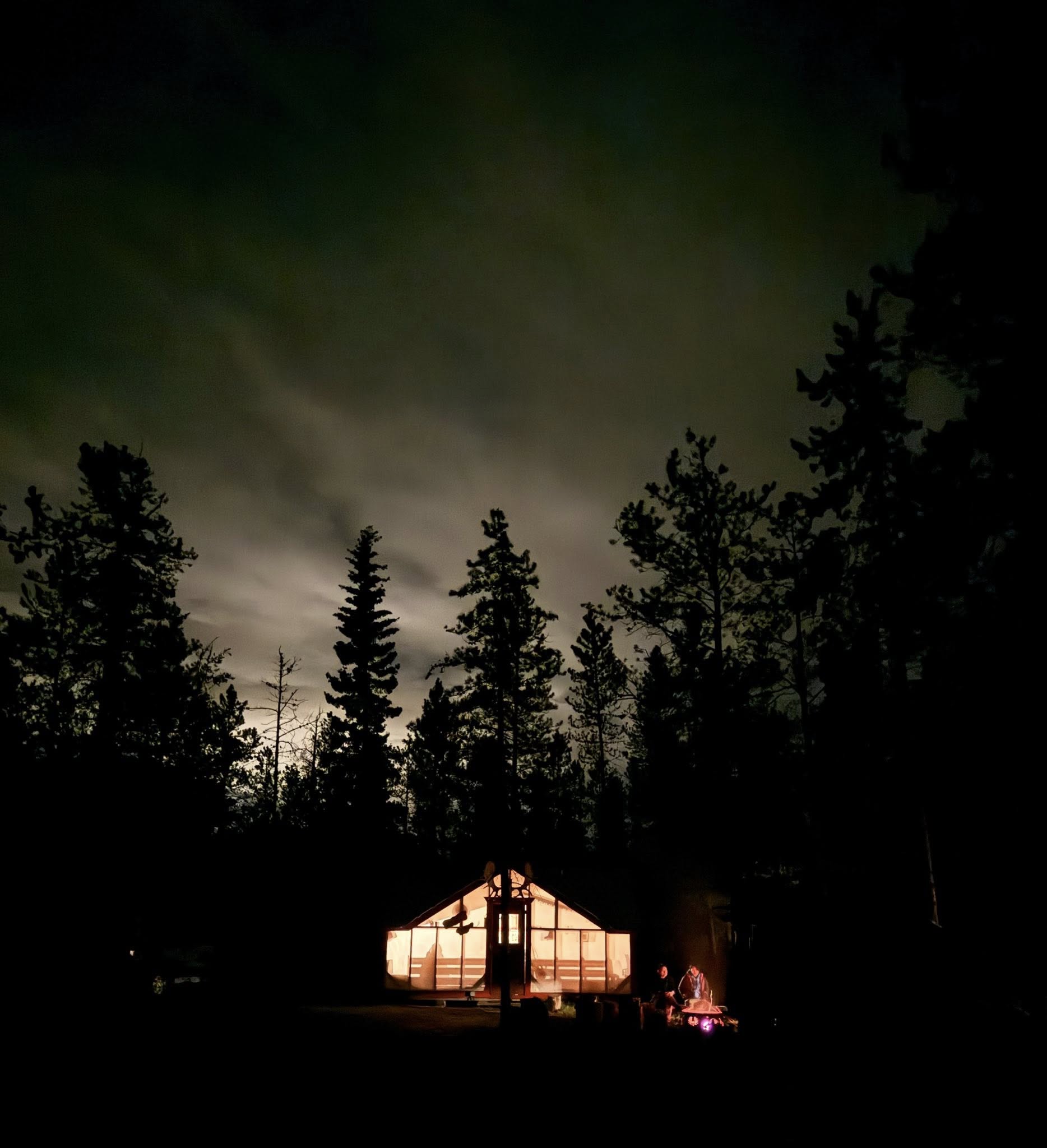
Our late night warming hut and fire pit provided a nice break when it got chilly after midnight!