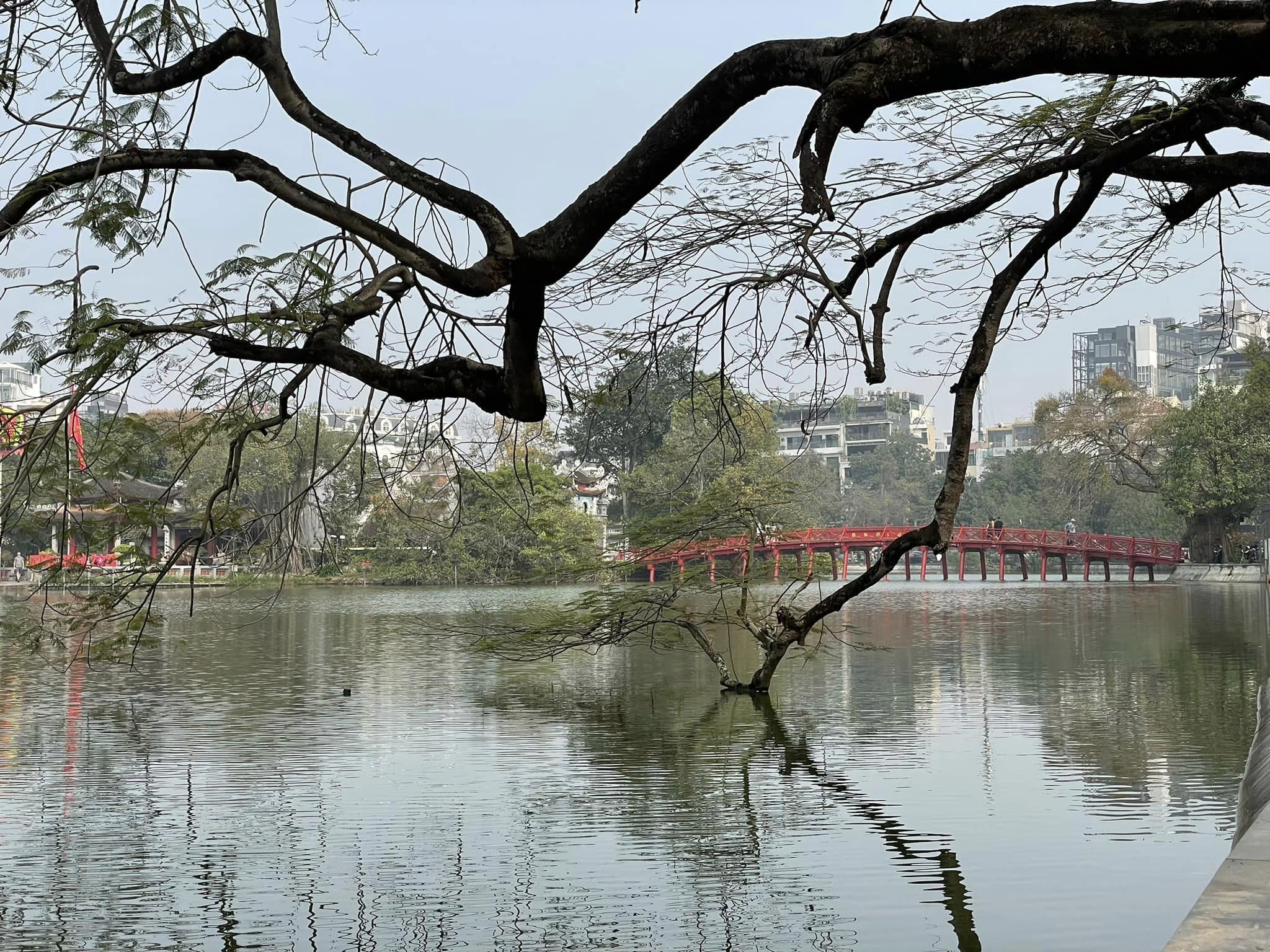
Hustling and Bustling Hanoi
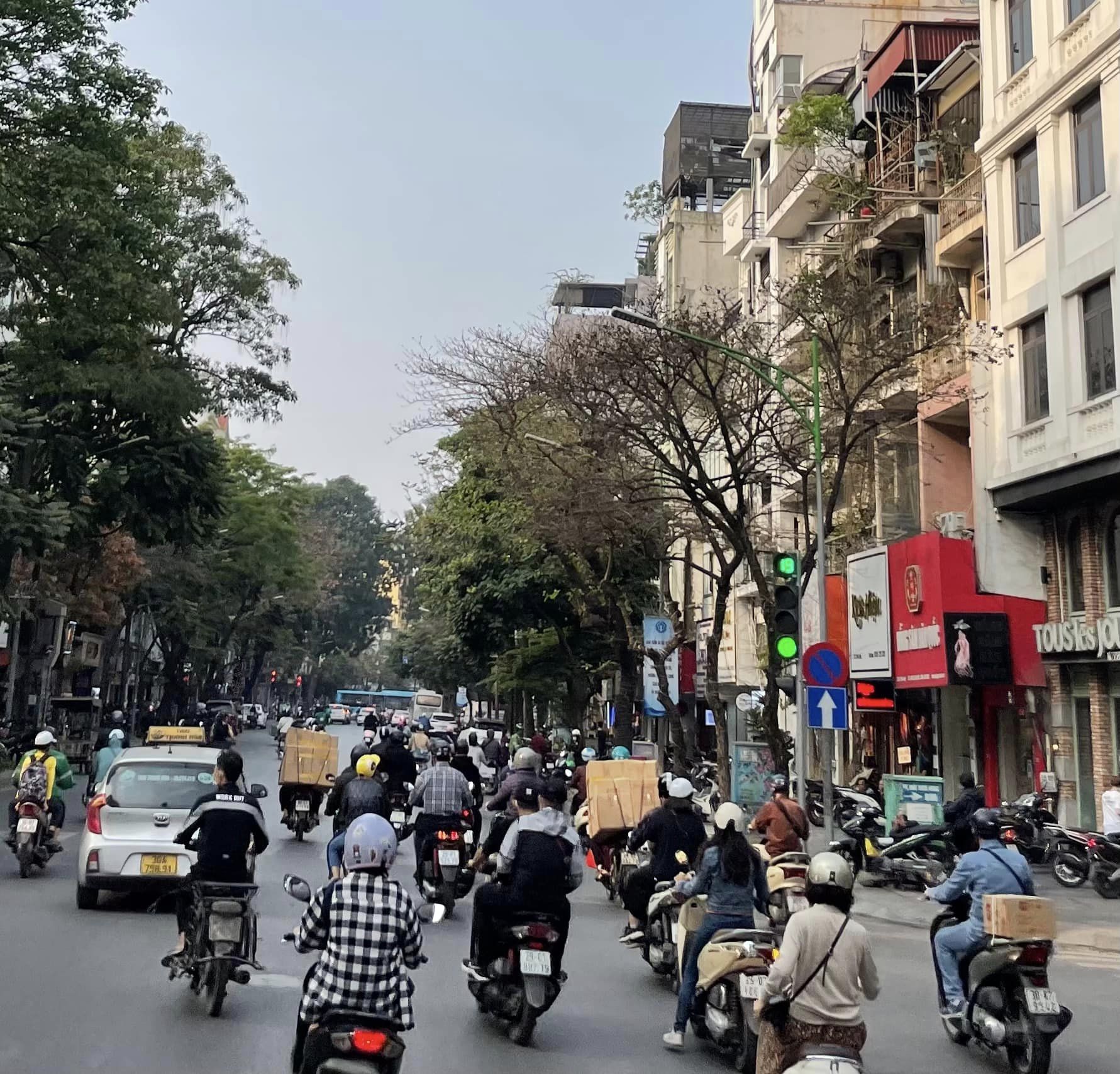
Hanoi is known for its traffic. Rear view mirrors are only for decoration; the horn is the primary navigation tool. Traffic lights and which side of the road you’re supposed to be on don’t matter. Bicycles, cars, mopeds and people weave around each other, slow down and rarely stop. Drivers of vehicles 50 CCs and less don’t need a driver’s license…and it shows! As a pedestrian, you need to grab your confidence by the horns and just cross the street at an even pace. Don’t surprise the vehicles and they won’t surprise you.
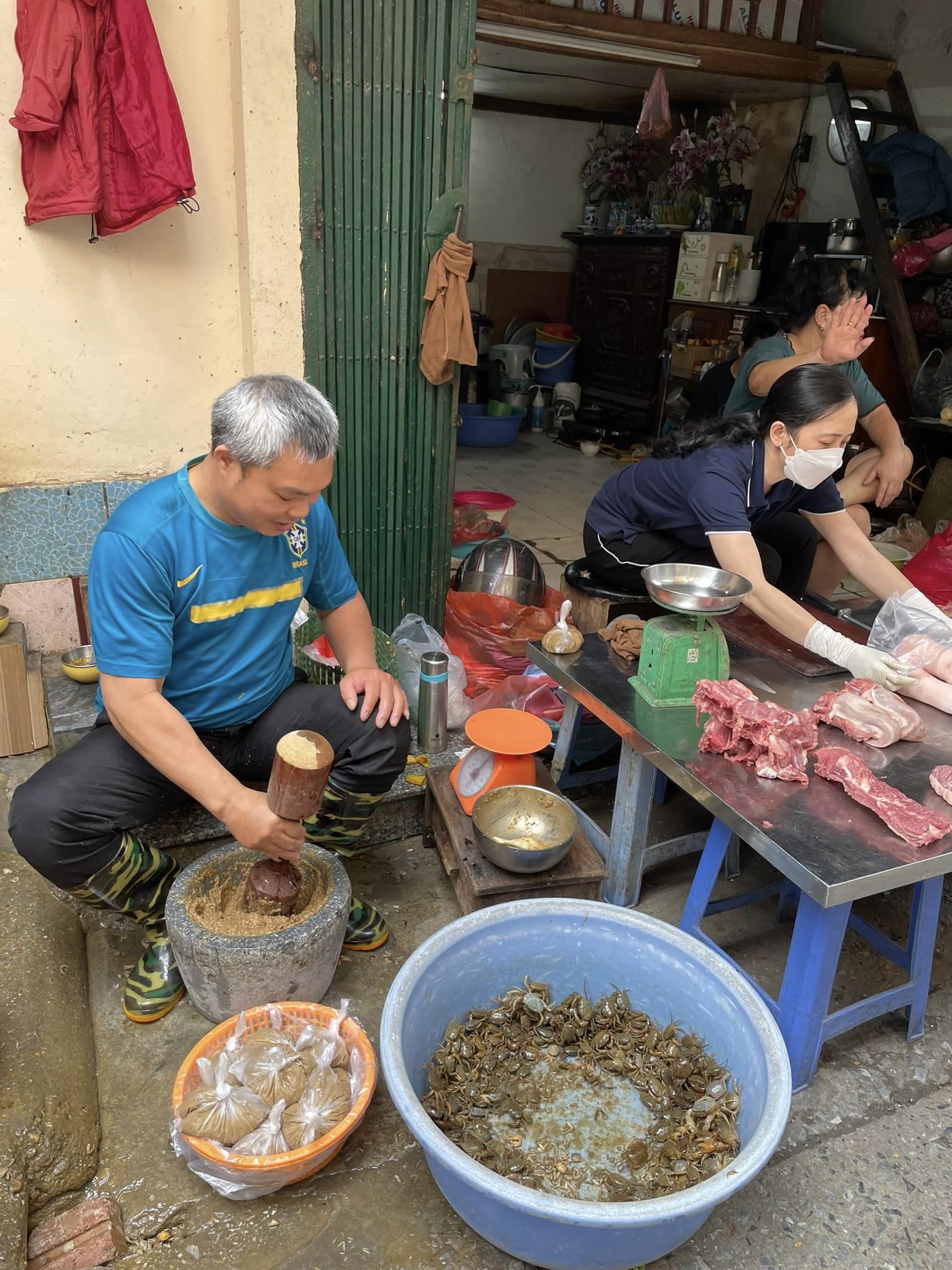
Absolutely everything is for sale on the sidewalks, from car and scooter parts to apparel (knock off or otherwise) to every imaginable culinary ingredient. Here, raw beef sits (ahem, unrefrigerated) beside a fellow making crab paste from live crabs.
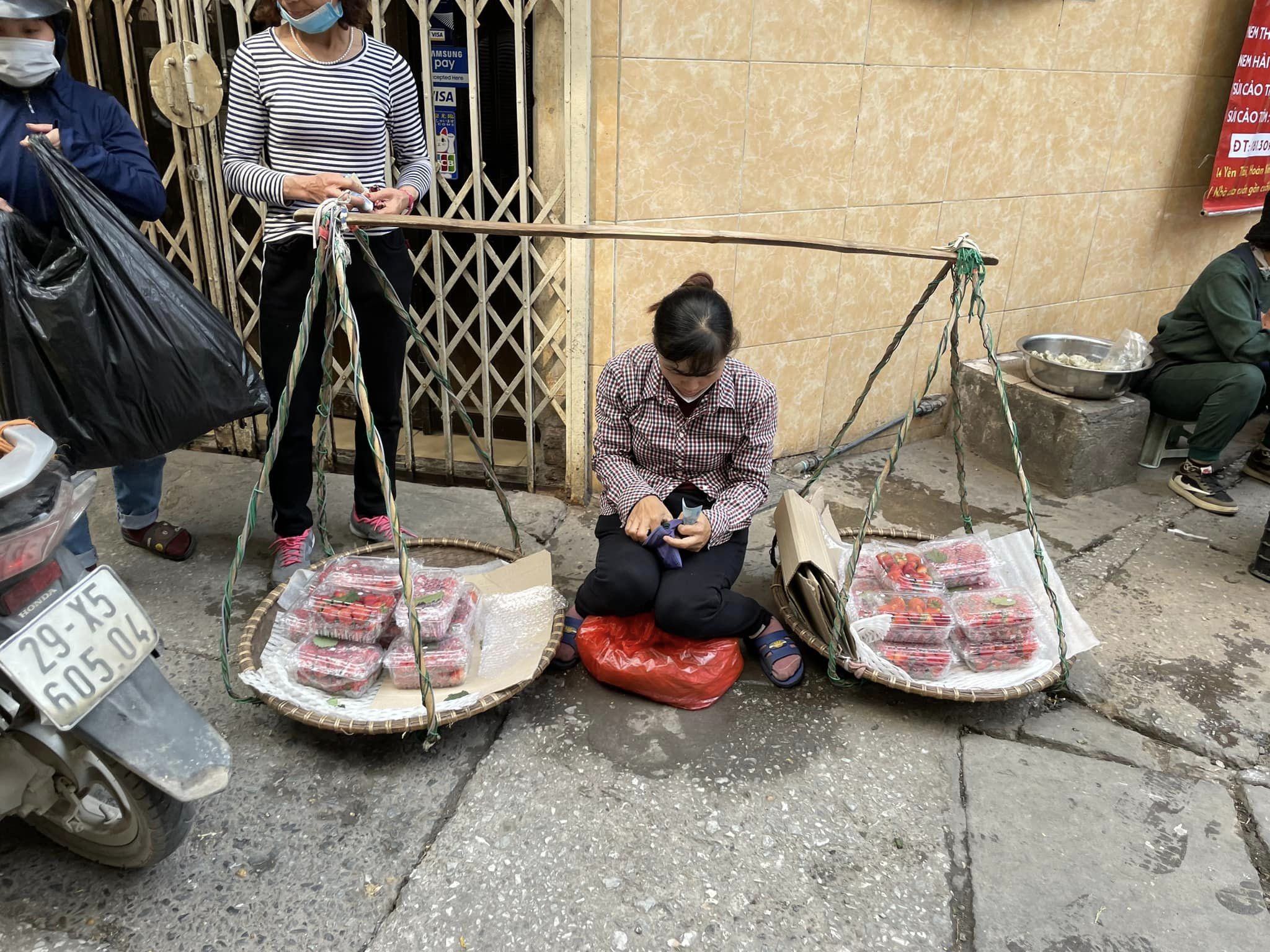
This strawberry seller, who comes to the city daily from her farm, was sold out the next time we passed her.
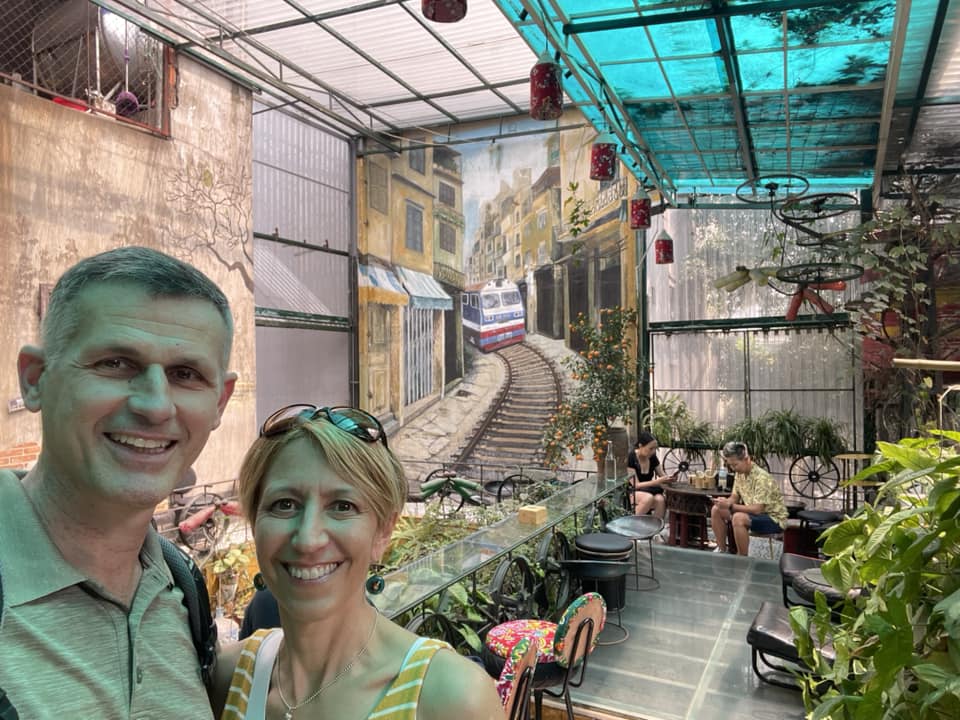
Such a cool little cafe with great food! Hidden Gem Cafe is an eco-friendly spot with all recycled furnishings. Old seats from cars, filled tires as table tops, not to mention great murals; all sorts of weird and wonderful bits and bobs make up this stylish decor.
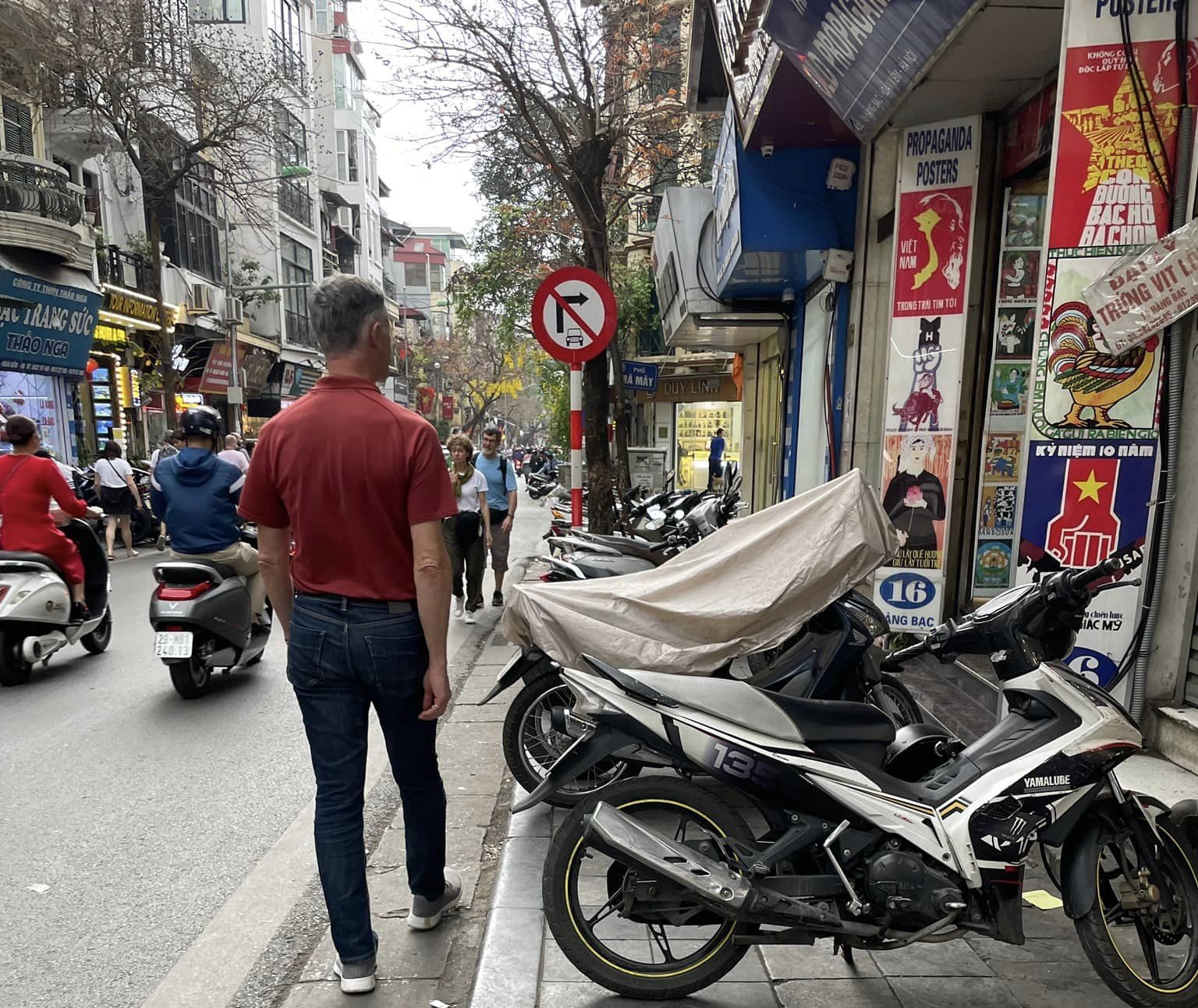
Silly pedestrian, sidewalks are for scooters, not people.
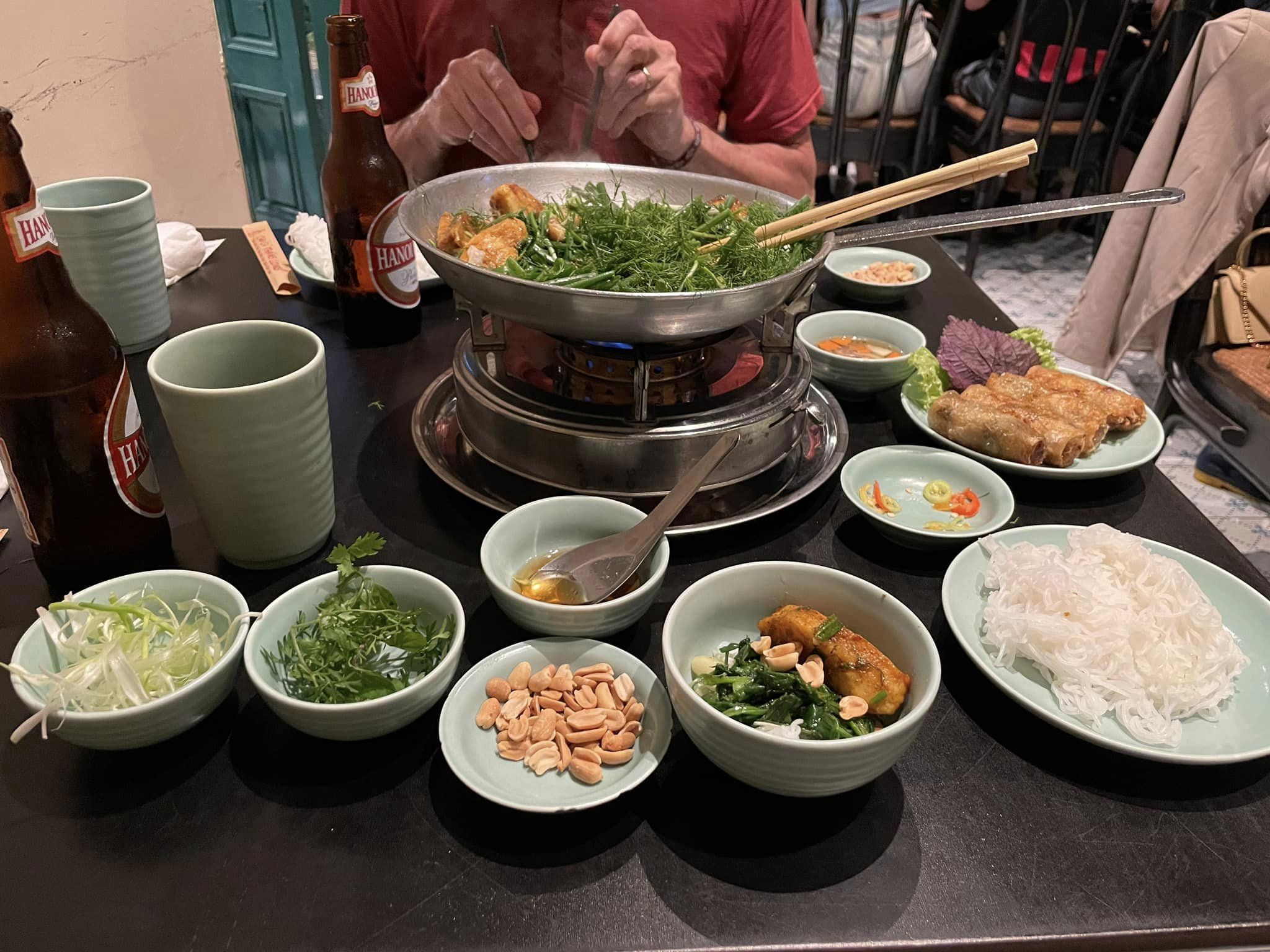
Fabulous Cha Ca for dinner. Turmeric-marinated catfish is cooked on the table with mounds of dill and green onions. Add-ins of peanuts, noodles, mixed herbs and dipping sauce make this Hanoi-born dish magical. We had no idea how to eat this but a helpful waiter came along and layered up our bowls with deliciousness!
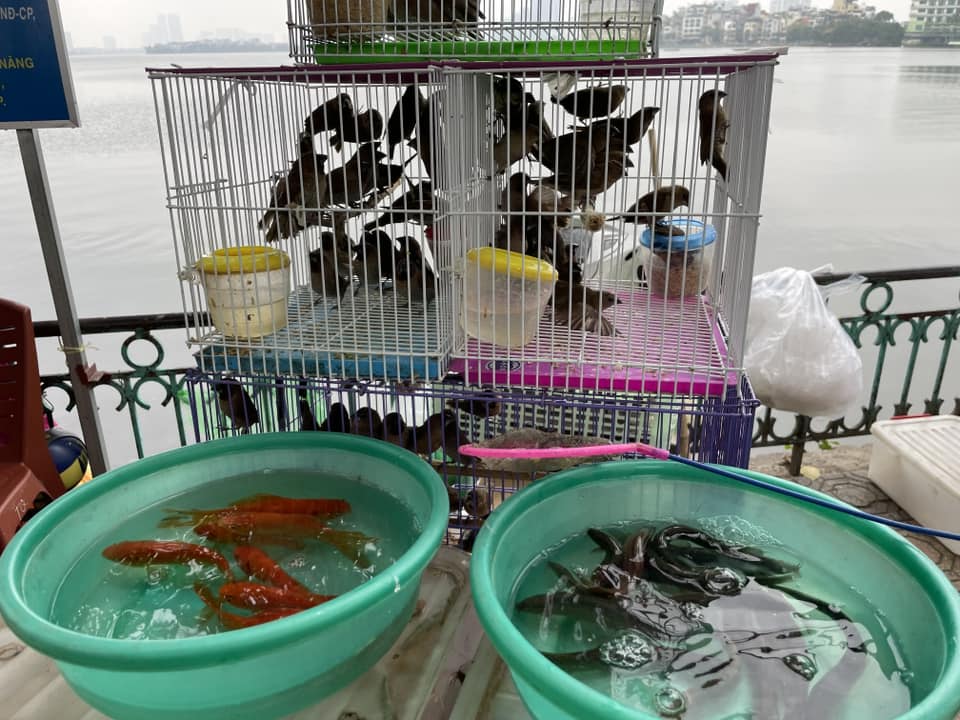
Birds and tiny catfish in cages and bowls by the Tran Quoc Pagoda on West Lake. The woman tried to sell me some fish. I wondered why…couldn’t she see that I wasn’t a local? Where would I cook such a thing? Turns out that you buy these birds and fish to release them back to the river or sky and give them their freedom. In Buddhism, we seek to do nice things for others so providing freedom to a caught creature would qualify. And being adjacent to the pagoda would mean that your act of kindness would surely be noticed. Interesting, someone catches and traps, someone else purchases and frees, and the cycle continues…with an economic side benefit!
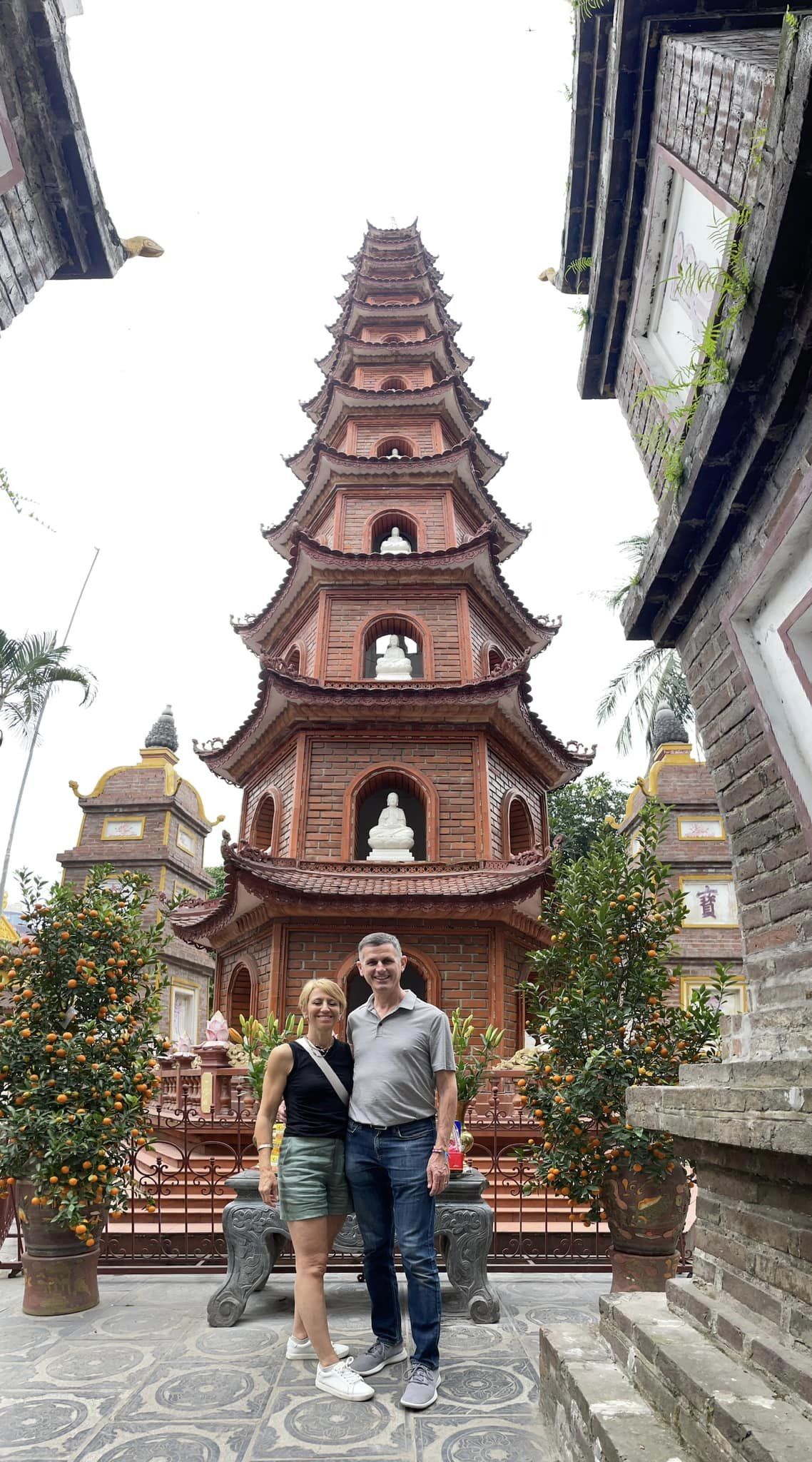
The stumpa of the Tran Quoc Pagoda certainly makes a statement.
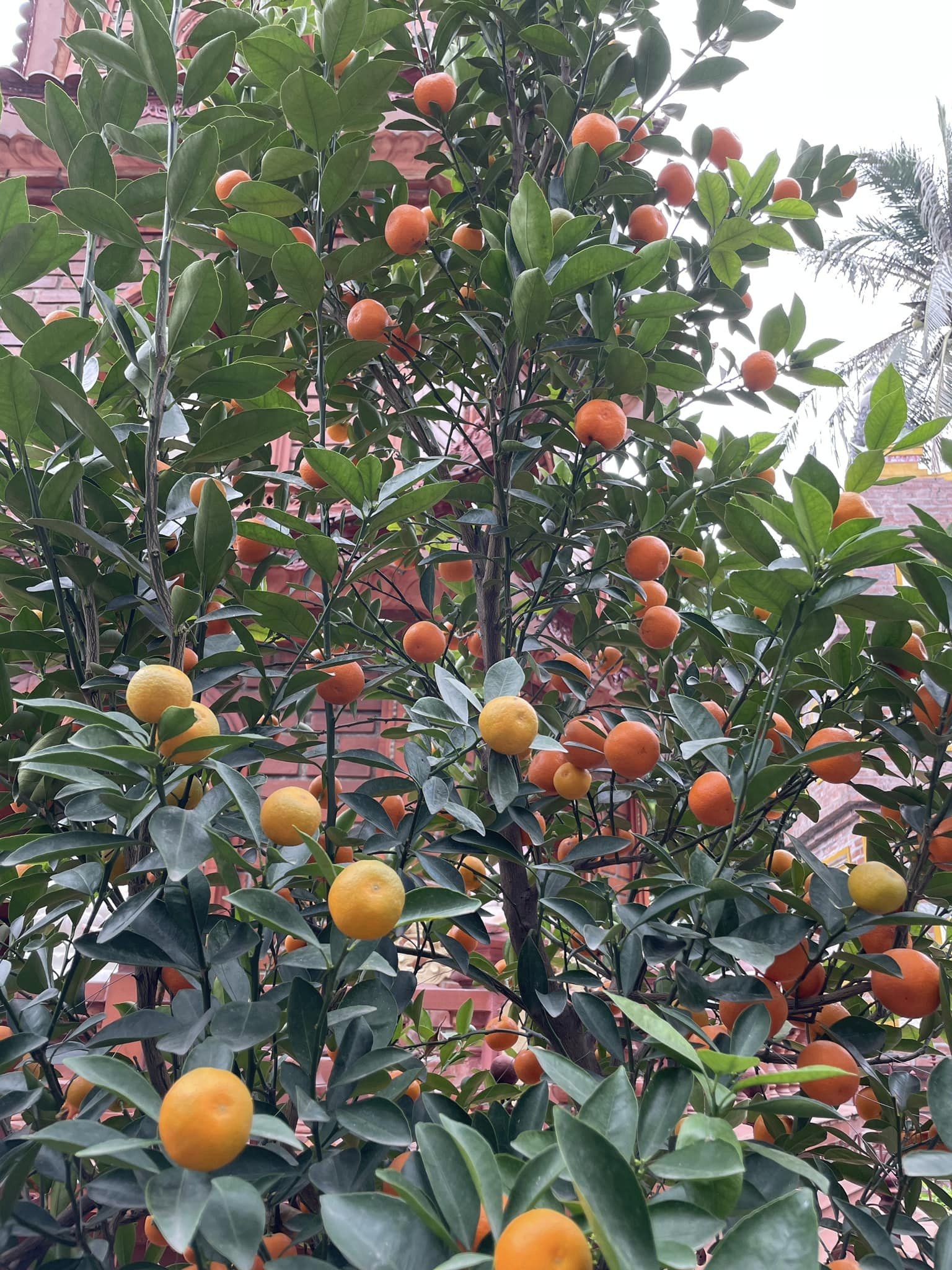
The perfect kumquat tree represents life. The fully mature orange represents the grand parent, the green orange represents the parent, the tiny green bud of an orange represents the child and the orange flower represents the future generation. This photo is of a perfect tree. Here’s a Where’s Waldo challenge for you: can you find all the generations?
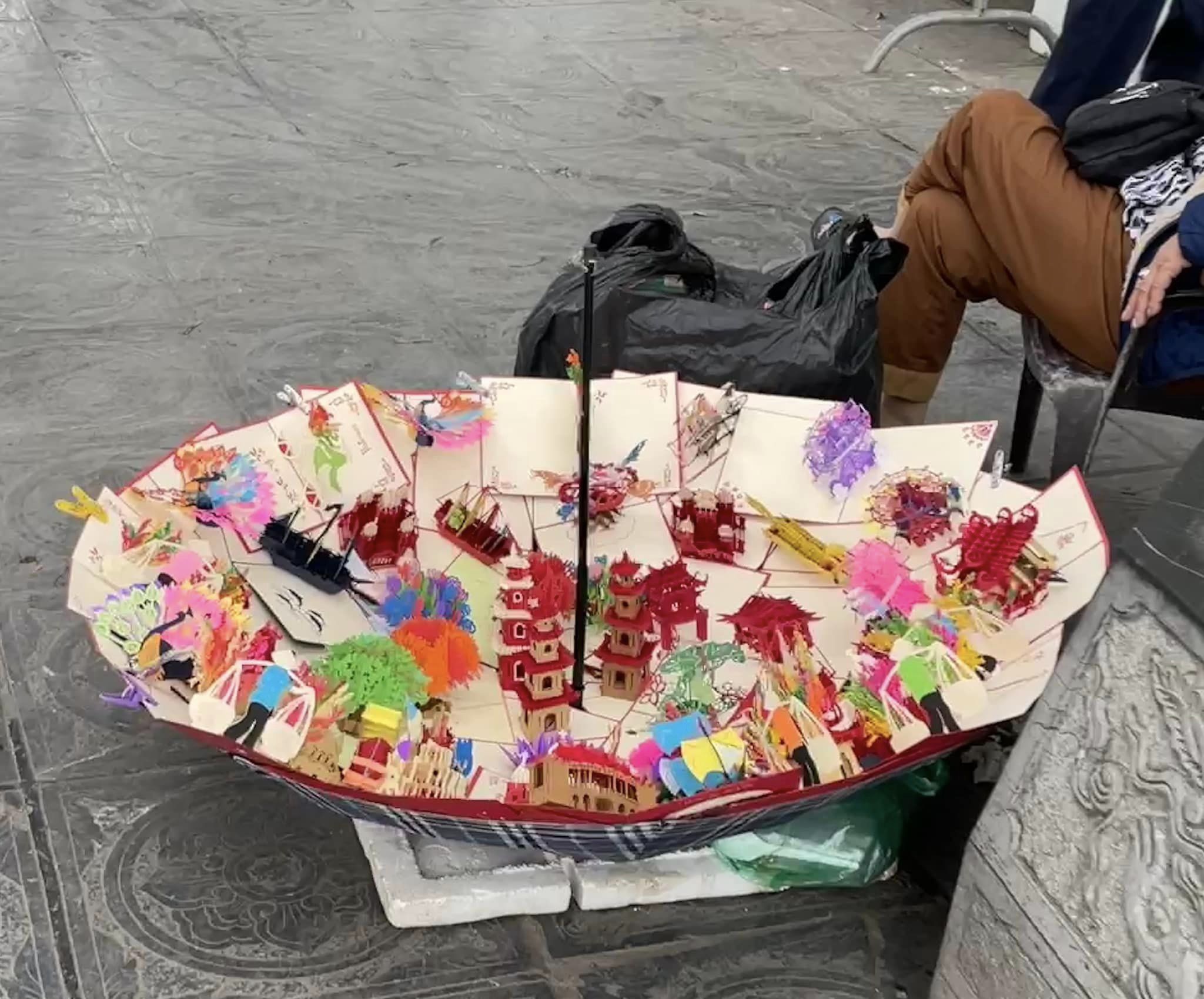
Creative display of intricately cut paper. Added bonus: when the police appear, the seller can fold up the umbrella and make a speedy escape.
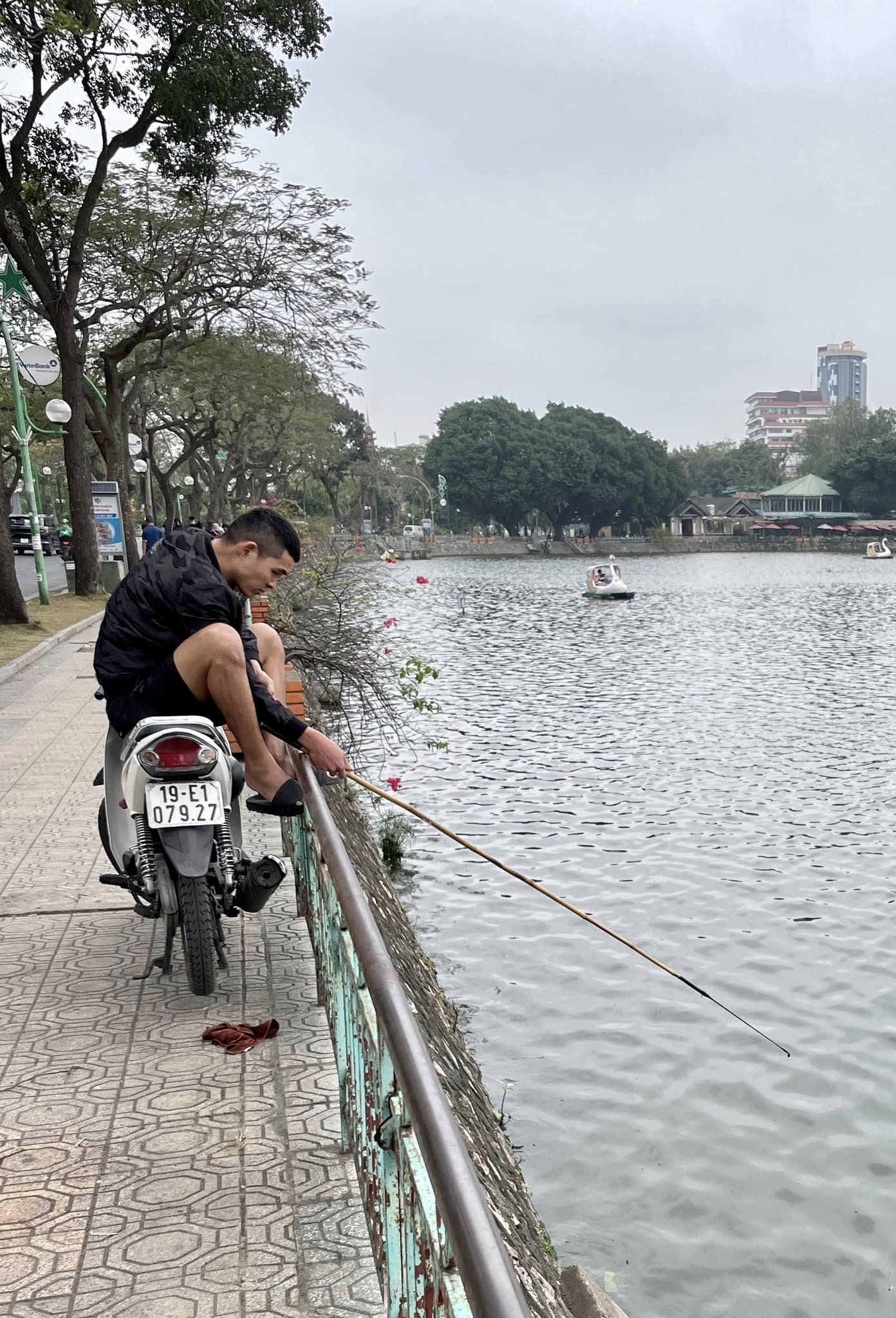
Fishing in the Red River. Squatting is such a natural position here.
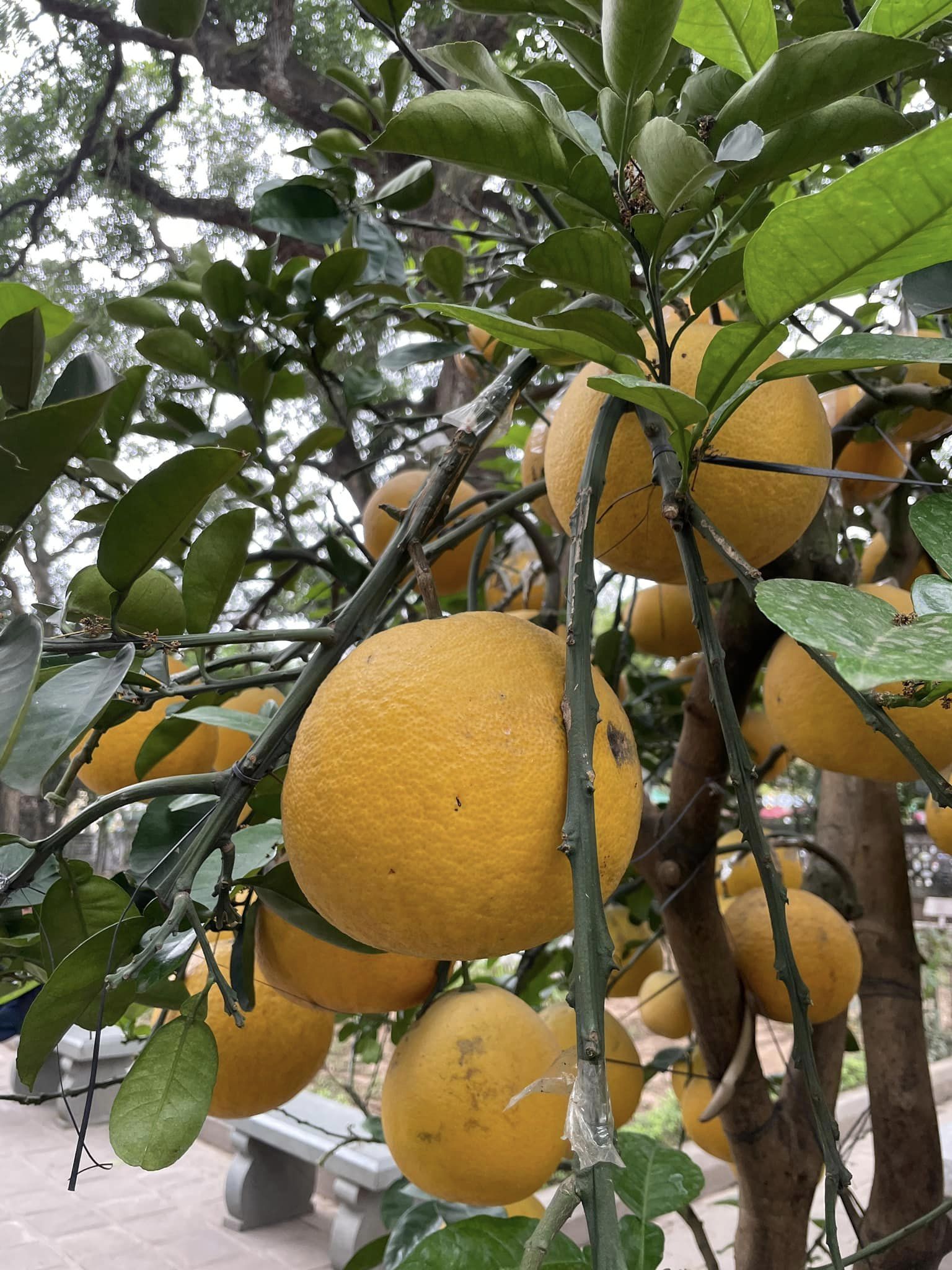
Mature pomelos are grafted onto a host tree for New Year. This way, the host tree continues to feed the fruit and prolong its freshness. The tree branch is sliced and the stalk holding the fruit is inserted into the cut on the main branch. It is then wrapped in tape to hold it in place.
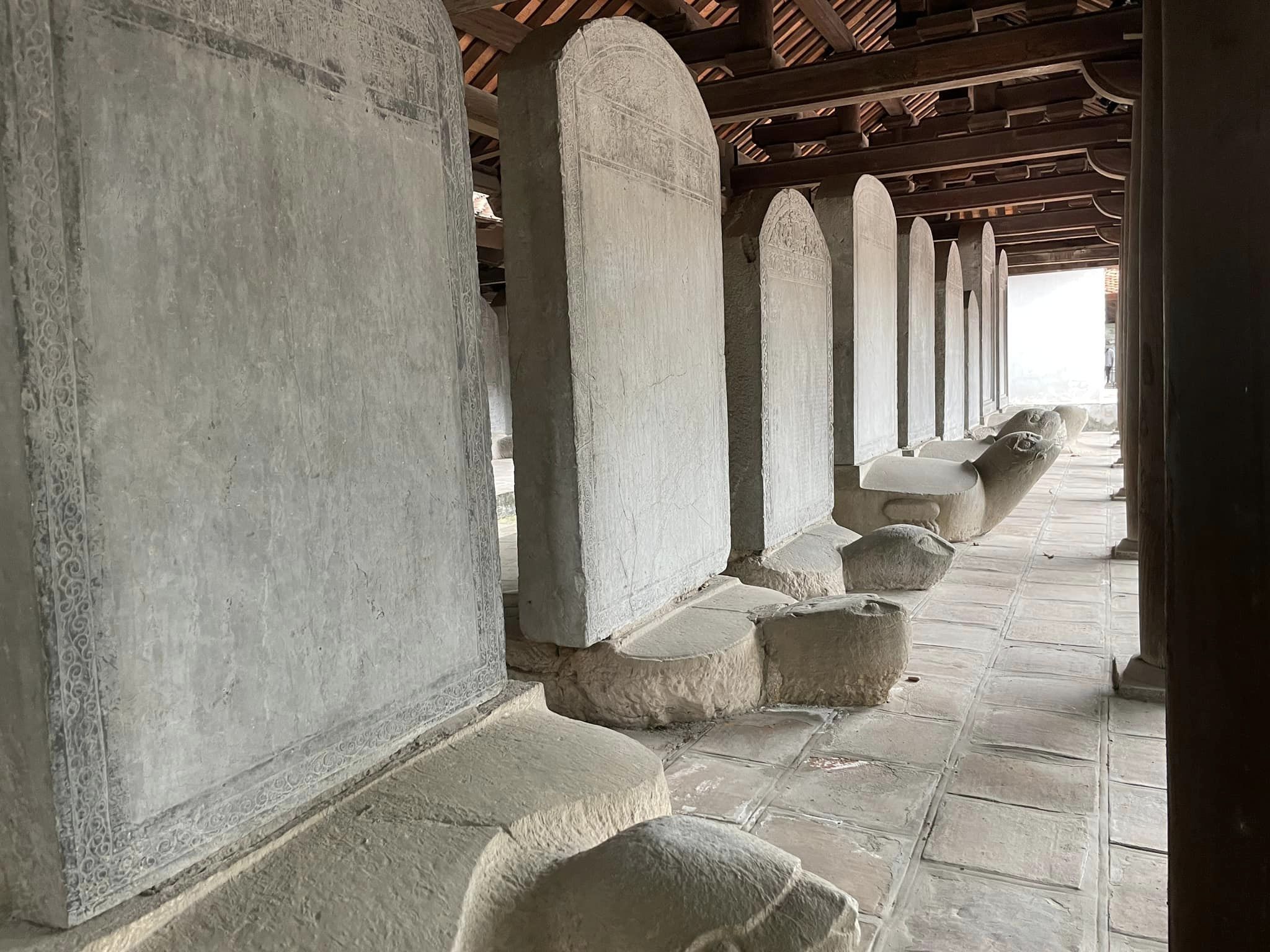
The Confucius Temple of Literature was established in 1070 by one of the earliest Kings. The goal was to educate the best and the brightest. Prospective students had to jump through many hoops to be accepted at what became the first university of Vietnam. First, students studied at the village level and had to pass special exams. They then proceeded to study for provincial exams and only when they passed the national level exam were they admitted to the Temple of Literature. Age of the student and how long it took to gain admittance was not relevant. The fact that a student passed the necessary exams was all it took. Students ranged in age from as young as 14 to as old as 60. These stone stelae, mounted on the backs of turtles (which represent longevity, strength and intelligence), were inscribed with the year of examination, the dates of the reigning kings and the names and places of birth of the graduates. Perhaps this inspired today’s publishing or the CPA graduates in the newspaper?
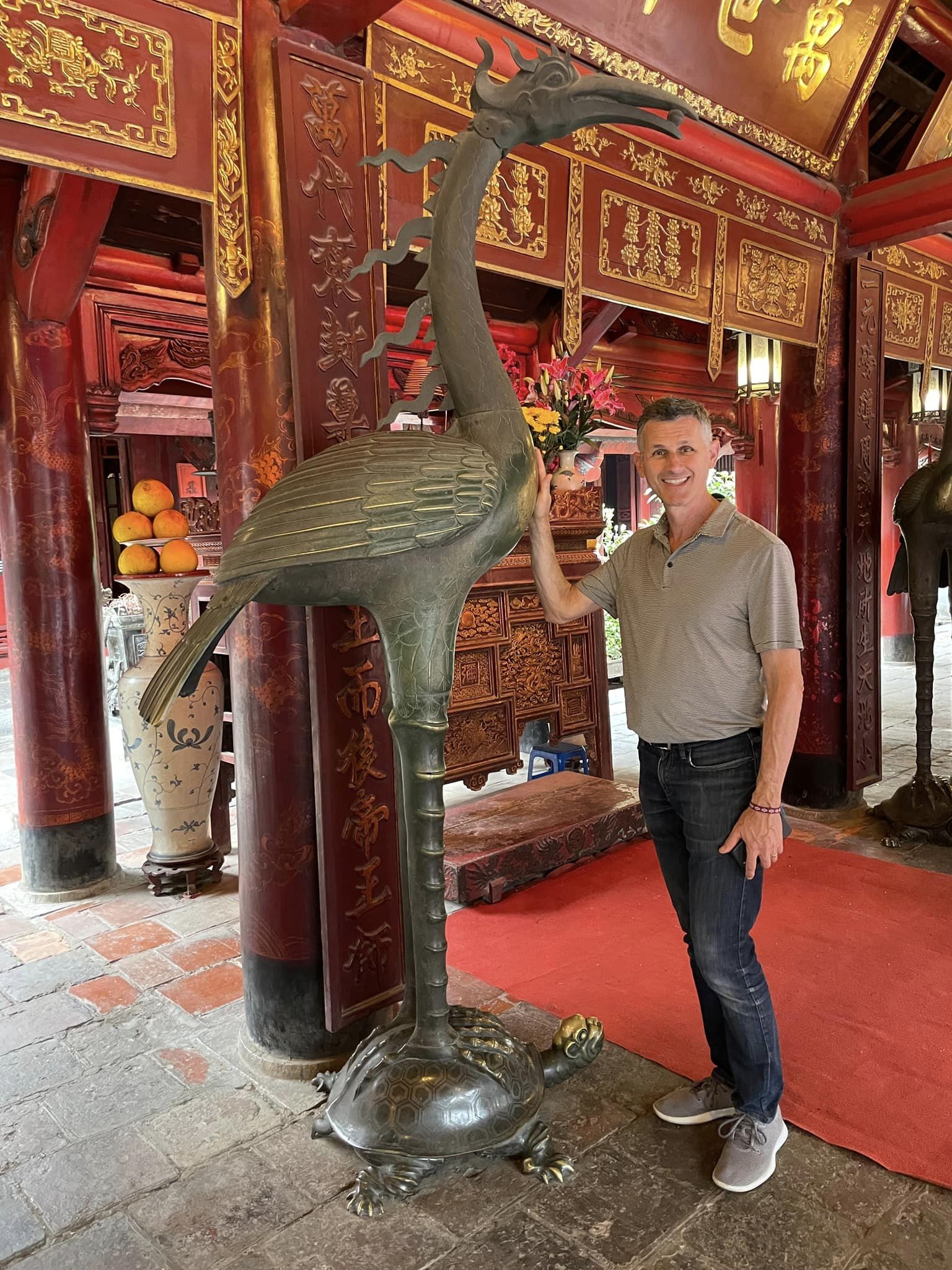
Turtle and stork represent friendship and community. There are two stories about why this is so. 1) When there was a flood and the stork had nowhere to land, the turtle offered up his shell as a place for it to rest 2) A farmer had a pet poisonous snake. During a period where there was no food, the snake wanted to kill the farmer for food. The snake asked the turtle if this was ok. The turtle said it was ok, but crane overheard and killed the snake. The turtle’s penance was to carry the stork on his back. I like the first story of cooperation and compassion.
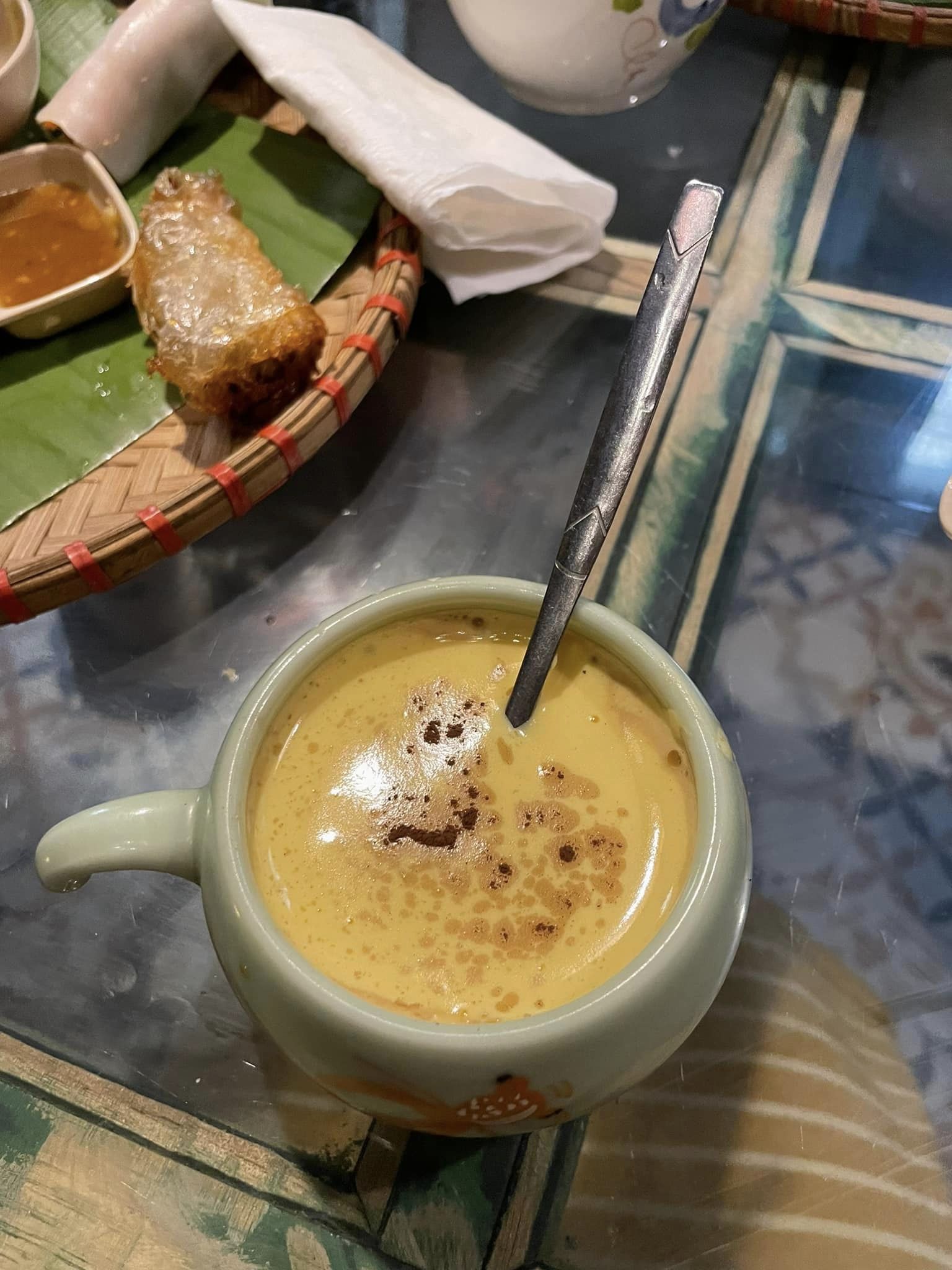
Egg coffee, a traditional Hanoi beverage. It’s like liquid tiramisu! It was created by a bartender in 1946 who came up with the idea of whisking in egg as a substitute during a milk shortage.
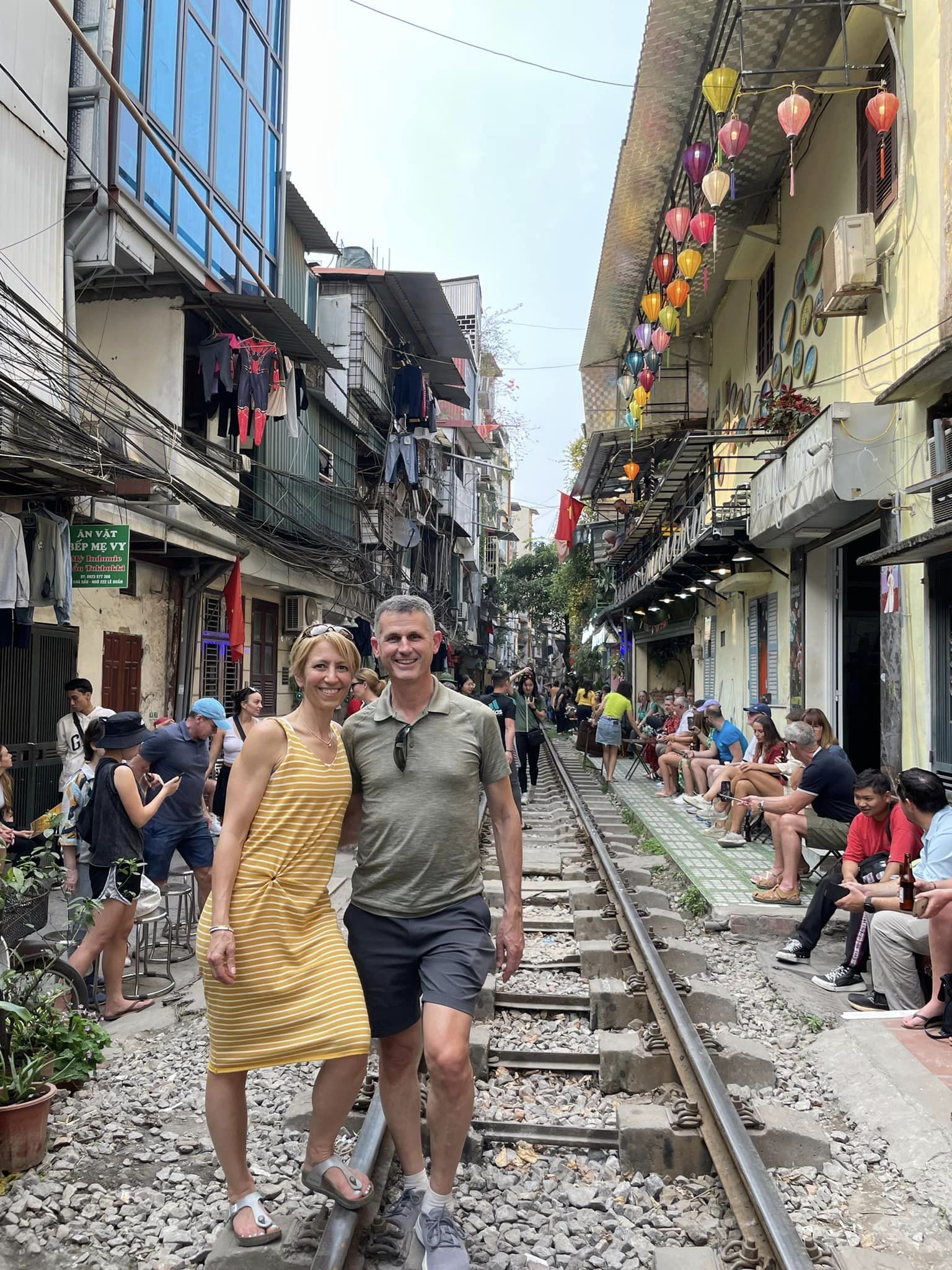
I’ve never seen anything like Hanoi’s train street. In 1902 when the tracks were laid for the route from SA Pa to Hanoi, they were quite a distance from where the action was in the city however, as happens with urban sprawl, houses and shops were built closer and closer to the tracks until the tracks were literally in their backyards. Word got out, tourists came and enterprising Vietnamese set up cafés out their back doors so the tourists could enjoy a drink and a snack and watch the train go by. Dangerous? Yes. Do people come anyway? Yes. Was the government taking action to protect public safety? Not until a train had to be diverted because too many people were on the tracks taking pictures. The Train Street was closed to pedestrians and the cafés were shut down. It all seems to be open again as it was bustling when we were there.
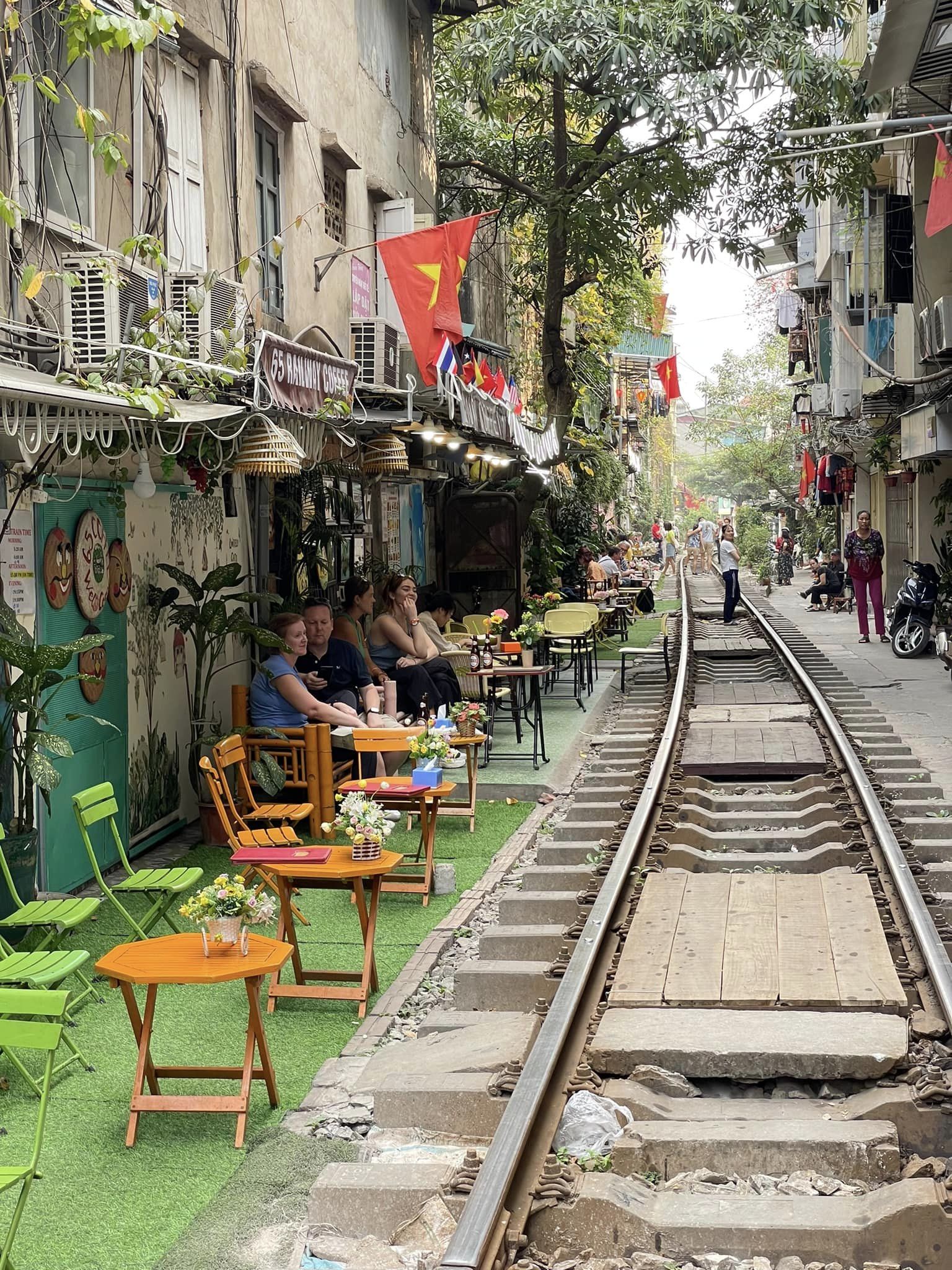
Trackside café.
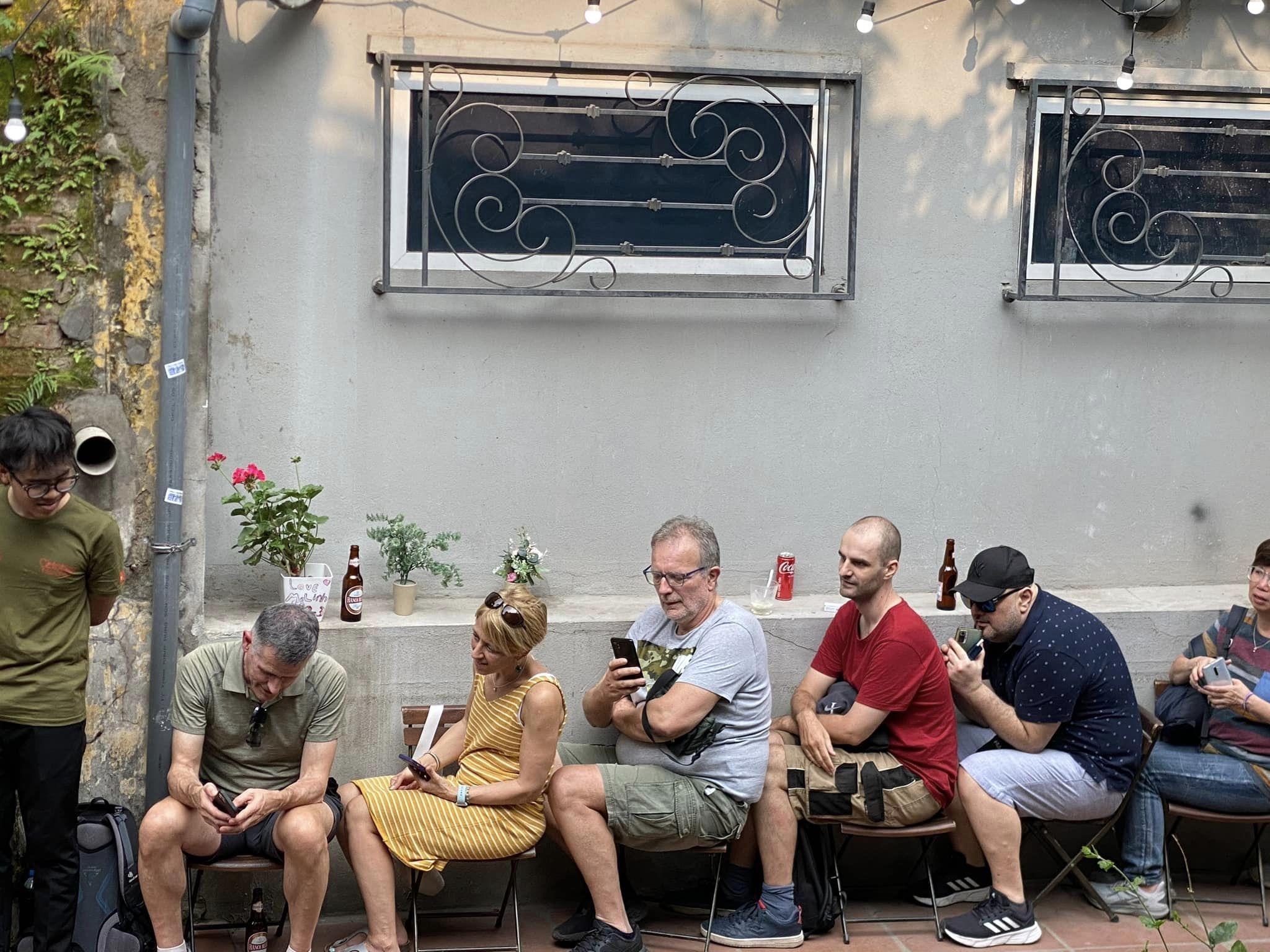
Adam moved his knees just in time!
While we were enjoying a drink, the café owner came out to announce the train was coming in five minutes. She took away the little plastic tables and told us to sit sideways on our chairs…and then the train came…at full speed…less than a metre from where we were sitting!
Water puppetry started in the 11th century; when the rice fields flooded the villagers created this as a means of entertainment. Today’s riff on this tradition happens in a waist deep pool with the puppeteers, hidden behind a screen, controlling the wooden lacquered puppets mounted on bamboo poles under the water. The skits depict rural life and folklore and have a lot of humour laced in (if you understand what’s going on). Here, a fisherman’s struggle.
The voice over actors and live musicians sit on both sides of the pool. How they manage to have dragons spraying water and breathing fire is beyond me!
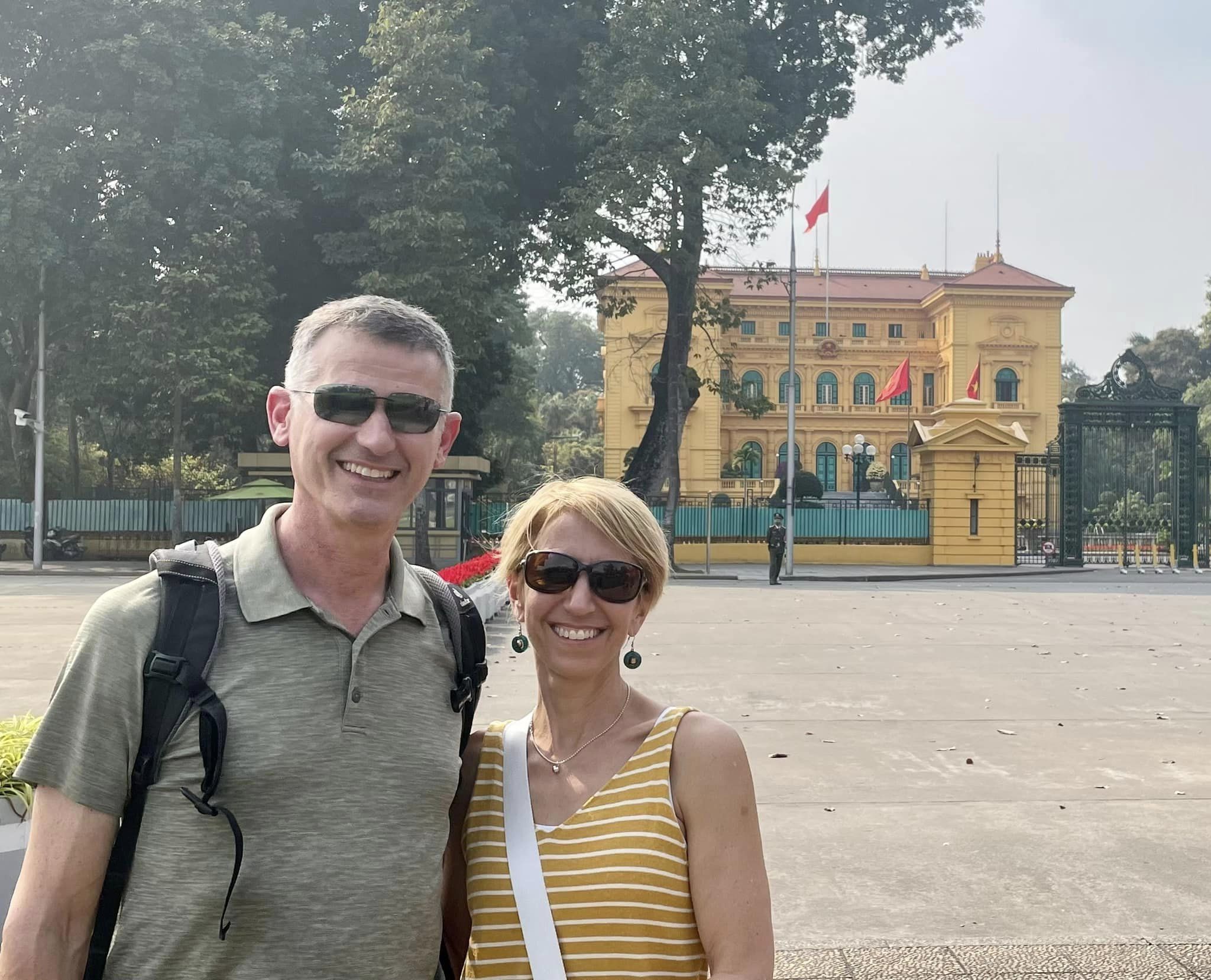
The French ruled what they called French Indochina (Vietnam, Cambodia and Laos) from 1858-1954 from the Indochina General Governor Palace. When Ho Chi Minh declared independence and made himself President of the Democratic Republic of Vietnam, he was expected to take up residence in what they now called the Presidential Palace. Ho Chi Minh felt it was far too grand so in true communist style, he lived in the servants’ quarters instead until his very simple stilt house was built.
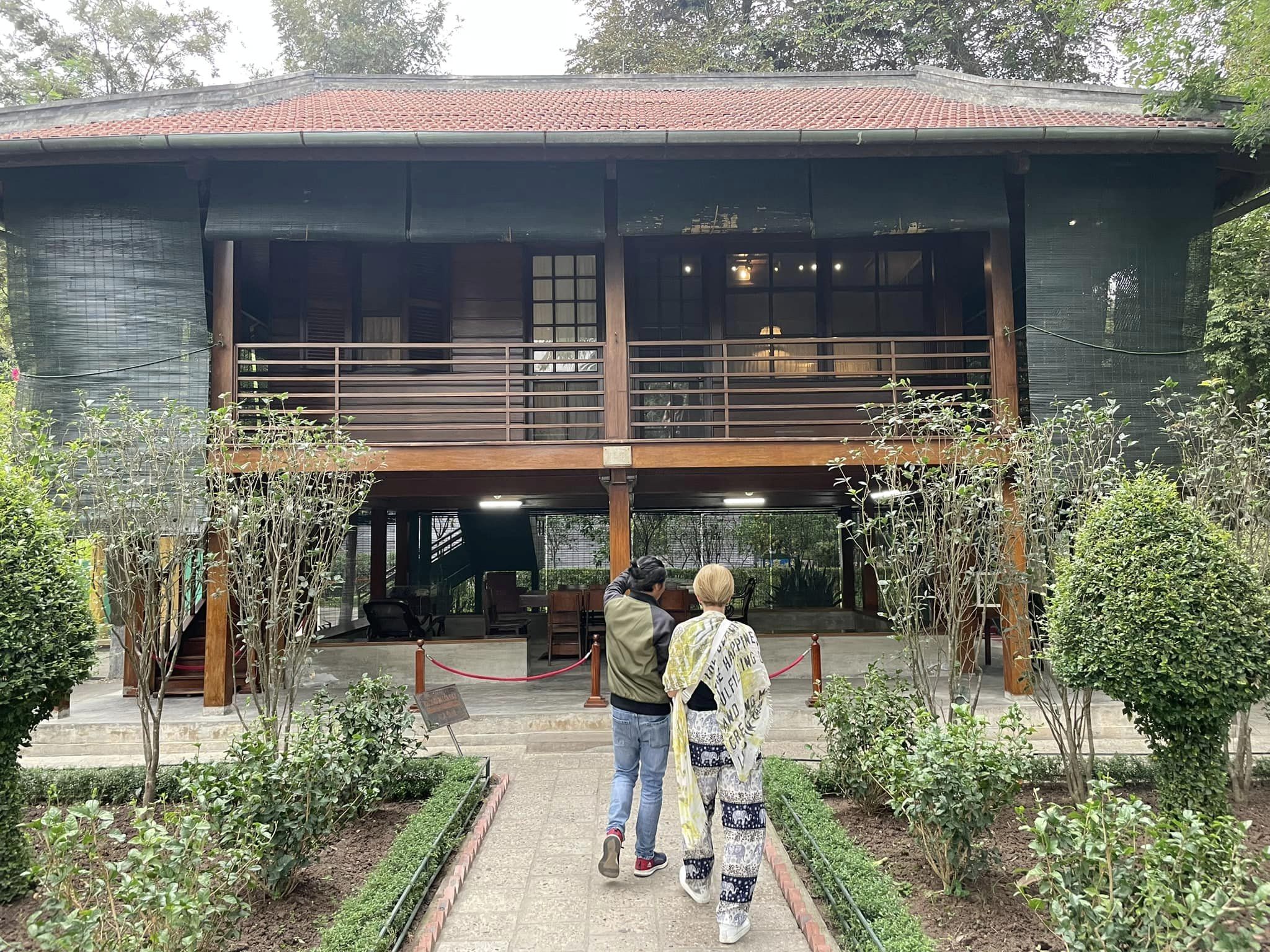
The stilt house where Ho Chi Minh lived until his death in 1969 was very simple. It only had a bedroom and an office. He chose not to have a kitchen or dining room because he didn’t want to add to the workload of the staff. Instead he went to the kitchen to eat his meals.
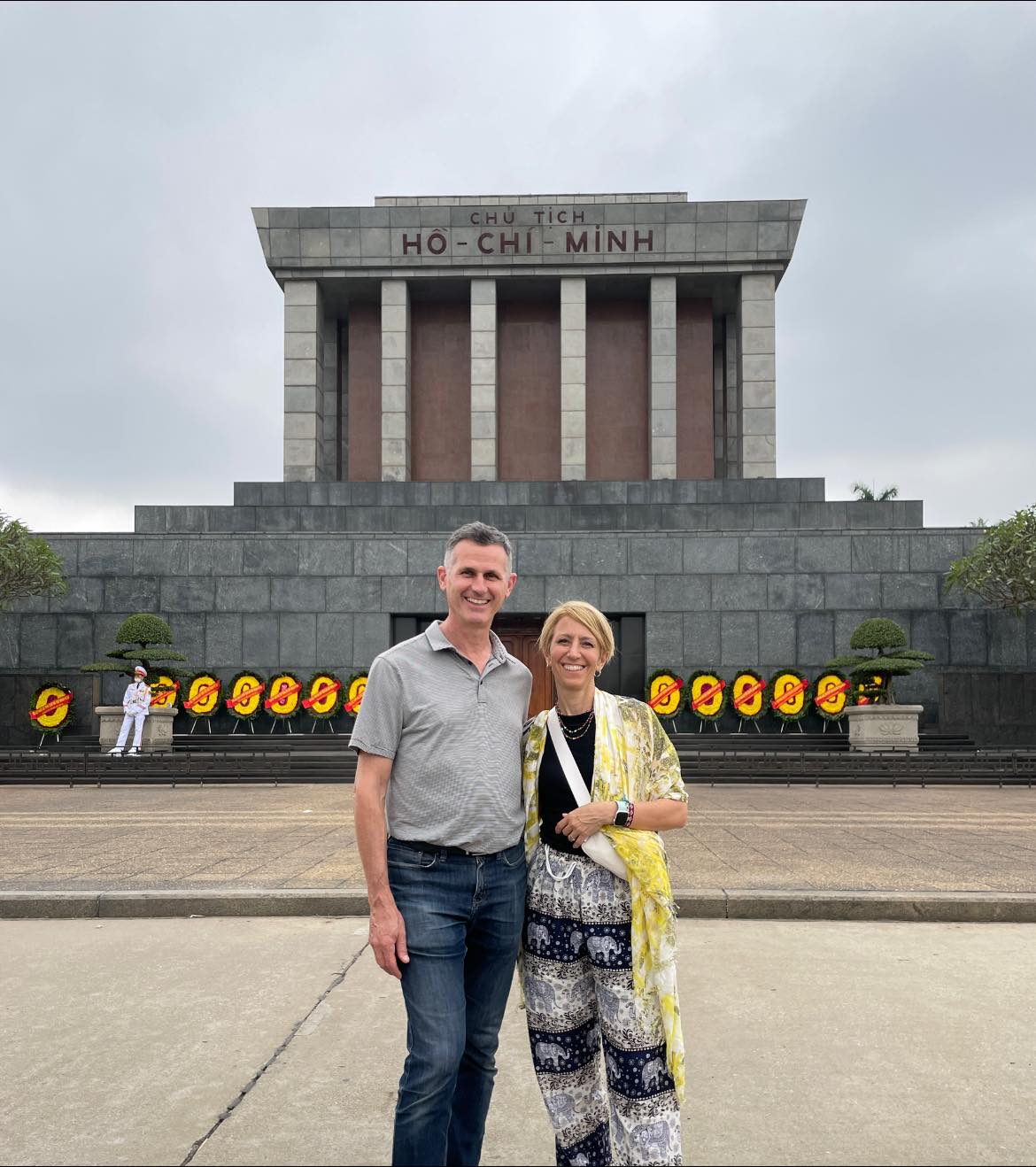
Ho Chi Minh was a fascinating and humble man. His father was a mandarin in Nguyen dynasty. After his mother died , HCM followed his father and went to Confucius school in Hue. Feeling the need to stand up for his country, he realized that he had to leave Vietnam to find a new way to be independent. He worked on cruise ships and would get off the ship and work in new countries along the way. He ended up spending 30 years abroad and learned to speak six languages. He had an epiphany in Russia and believed in the communist ideology. He returned to Hanoi in 1945 and declared independence, creating the Democratic Republic of Vietnam and ultimately defeated the French in 1954. When he died in 1969. he wanted to be cremated and have his ashes separated and buried around the country.. unbeknownst to him, his comrades went to Russia to learn how to preserve his body. His preserved body still lies here in his mausoleum. Every 2 year, the mausoleum closes and Russian doctors come to check on his body and tweak its preservation.
Phabulous Phò
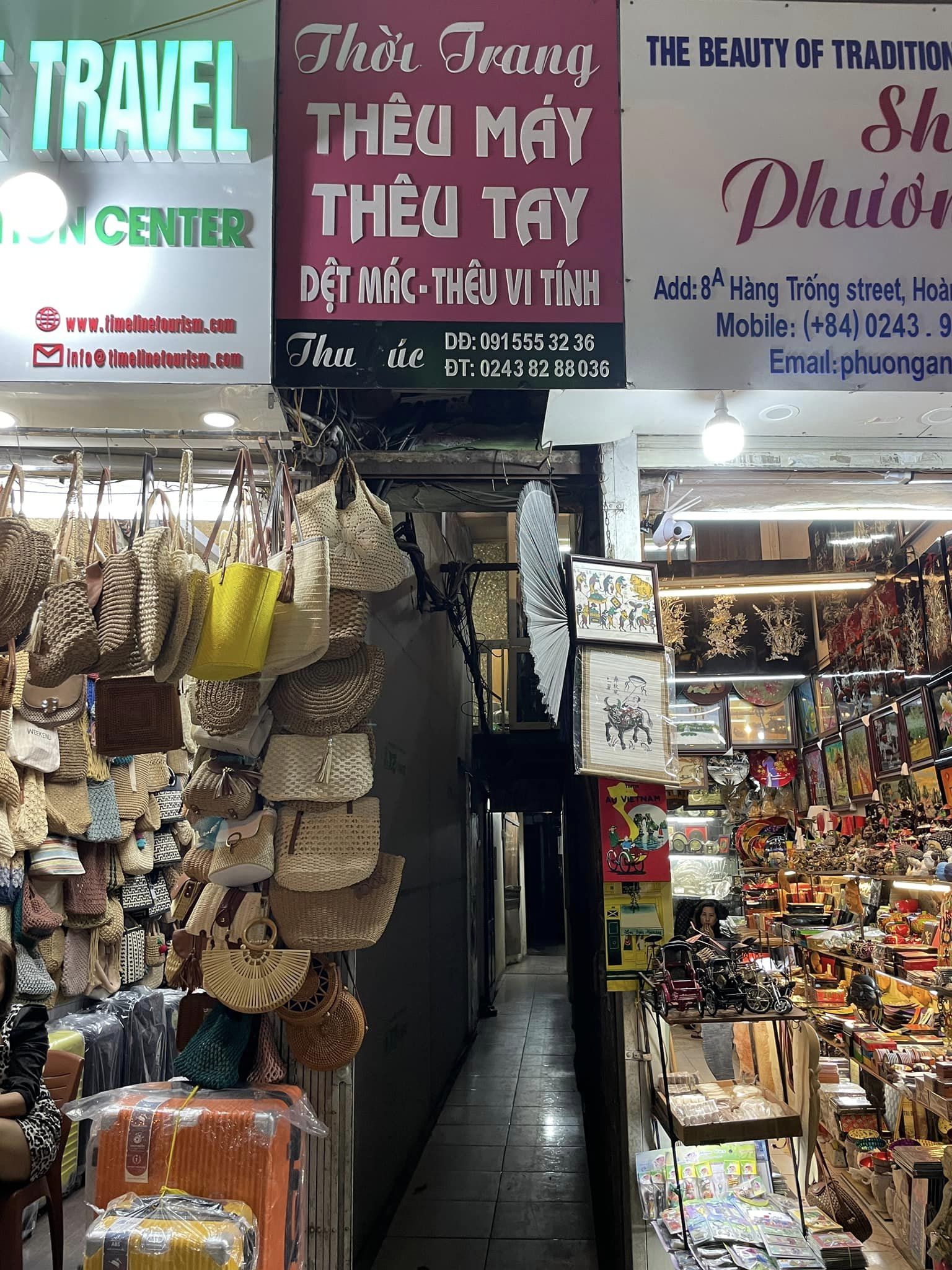
Mrs Minh’s indoor location is accessed through a narrow entry between tourist shops on a bustling street. This is why it’s hard to find.
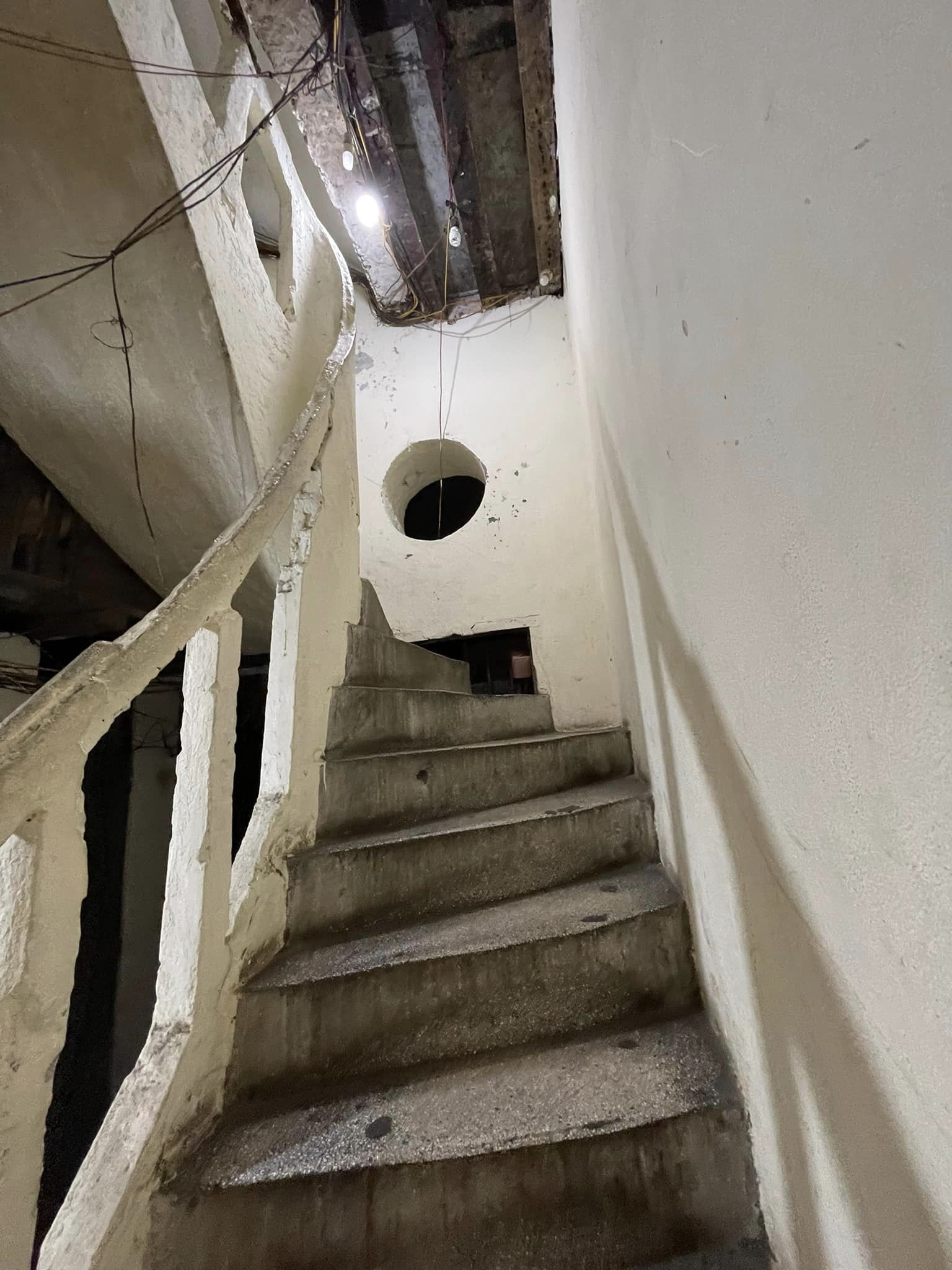
We climbed up stairs we found at the end of the alley leading off the street, feeling like we were trespassing, and found ourselves in a hallway full of shoes, leading into a private home’s dining room. Turns out Mrs Minh had moved her phò business closer to home…literally in her home. We took off our shoes and very self-consciously walked into the room full of about two dozen teeny plastic stools set around a few low plastic tables. A family hurried their kids away from the table to give us their seats. The little boy tried to slurp up whatever he could before being dragged out. Talk about deepening our sense of self-consciousness!
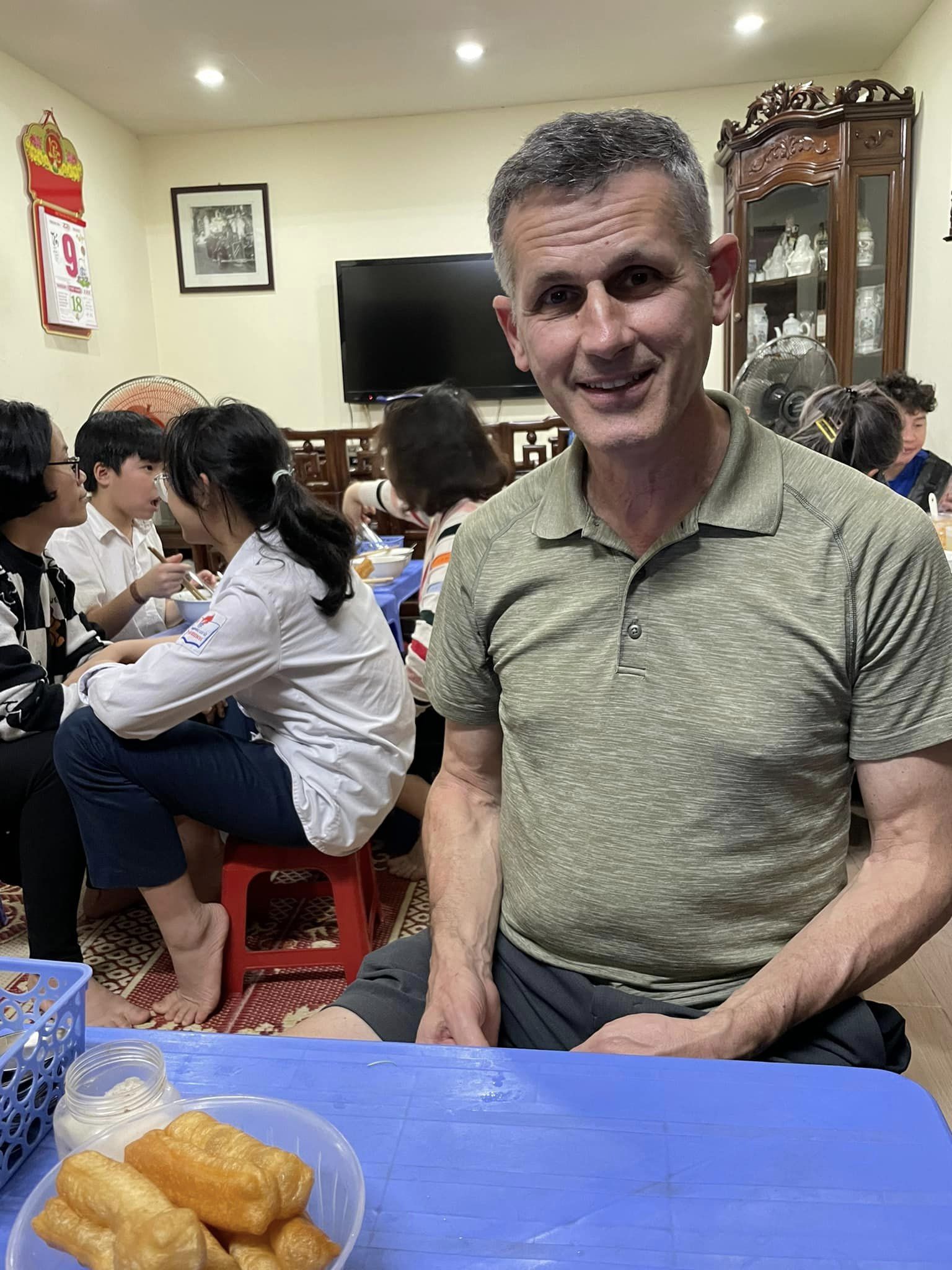
So there we sat, not quite knowing what to do next.
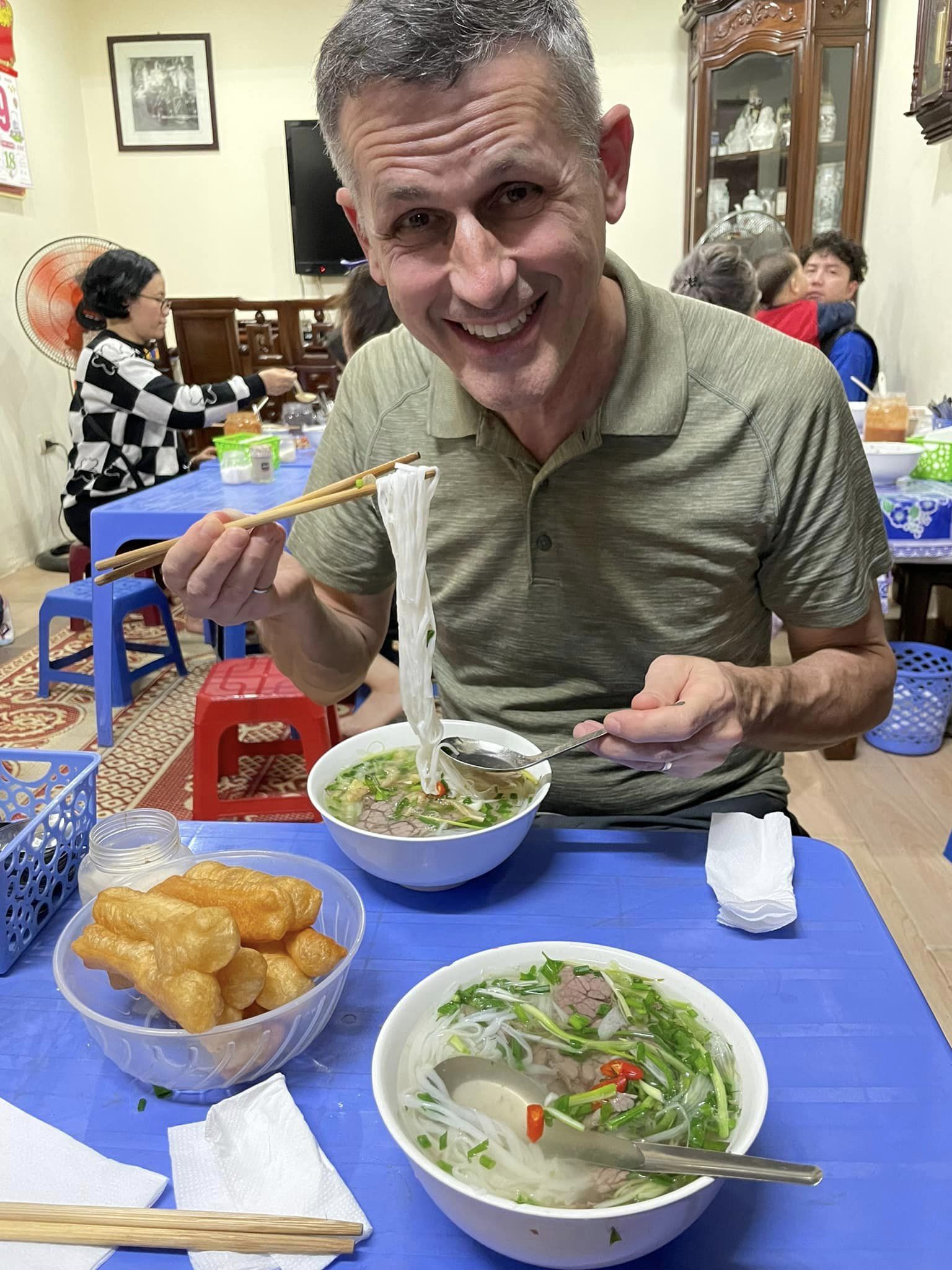
Then a woman (Mrs Minh?) came and put two bowls in front of us. No menu, no words were exchanged. Beef phò in its delicious simplicity. Beef bones are simmered for 24 hours with spices we don’t typically use in our North American broth, Four ingredients: broth, rice noodles, green onions and strips of beef. And, of course, the ever important condiments: killer hot sauce (in a reused pop bottle), a plate piled high with herbs (cilantro, mint, basil and other bits of greenery we didn’t recognize), chopped fresh chilies and deep fried dumplings.
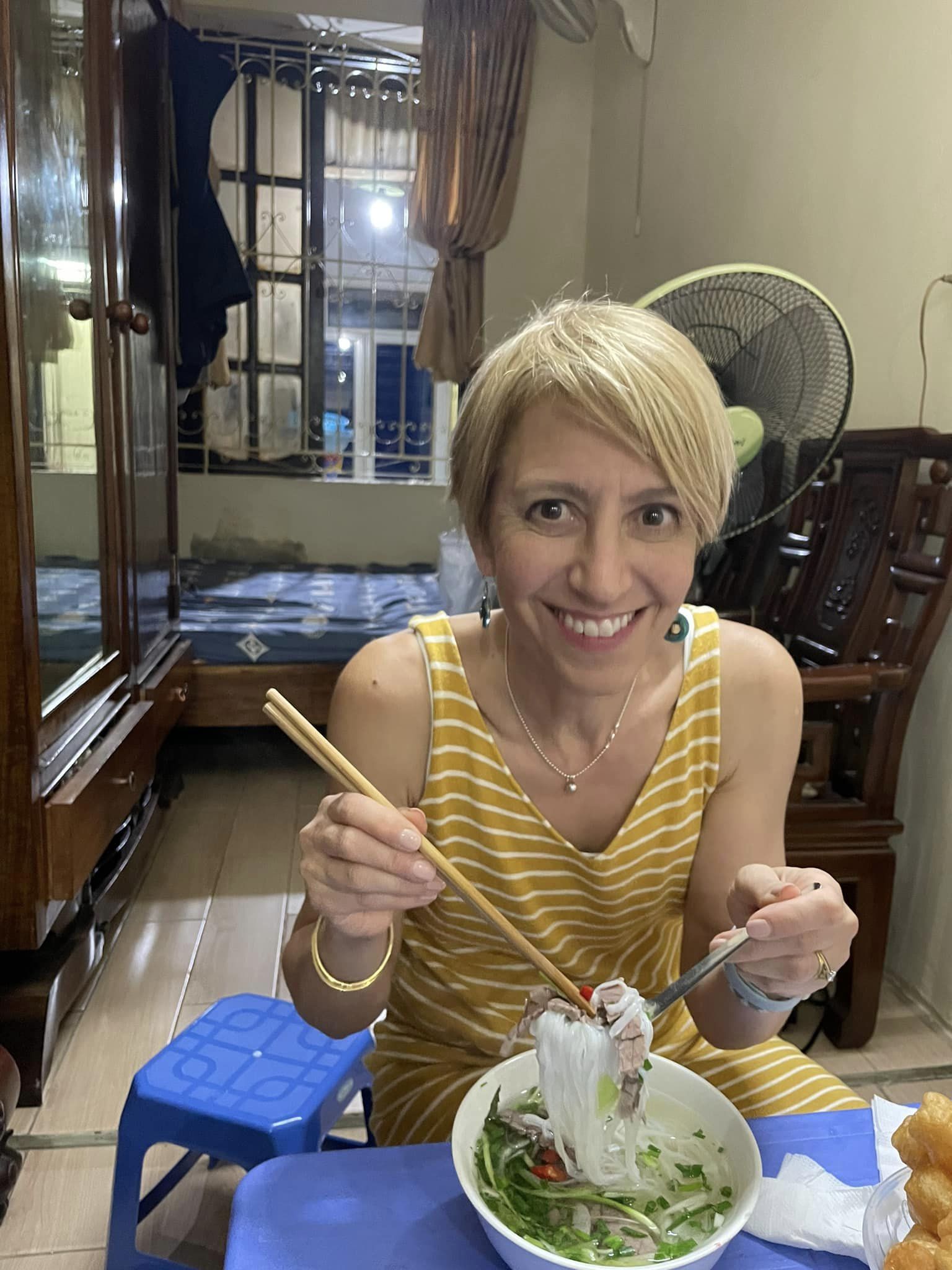
This is not a place to linger after your meal. Table turns are pretty quick. When we finished, another woman came in and pulled out a wad of cash and showed us which bank note we should use to pay. So we gave her the requested 100,000 VND for the two bowls of pho…$5 including tip. The entire experience was pretty much wordless for us, but everything important was easily communicated with smiles, belly rubs and thumbs ups!