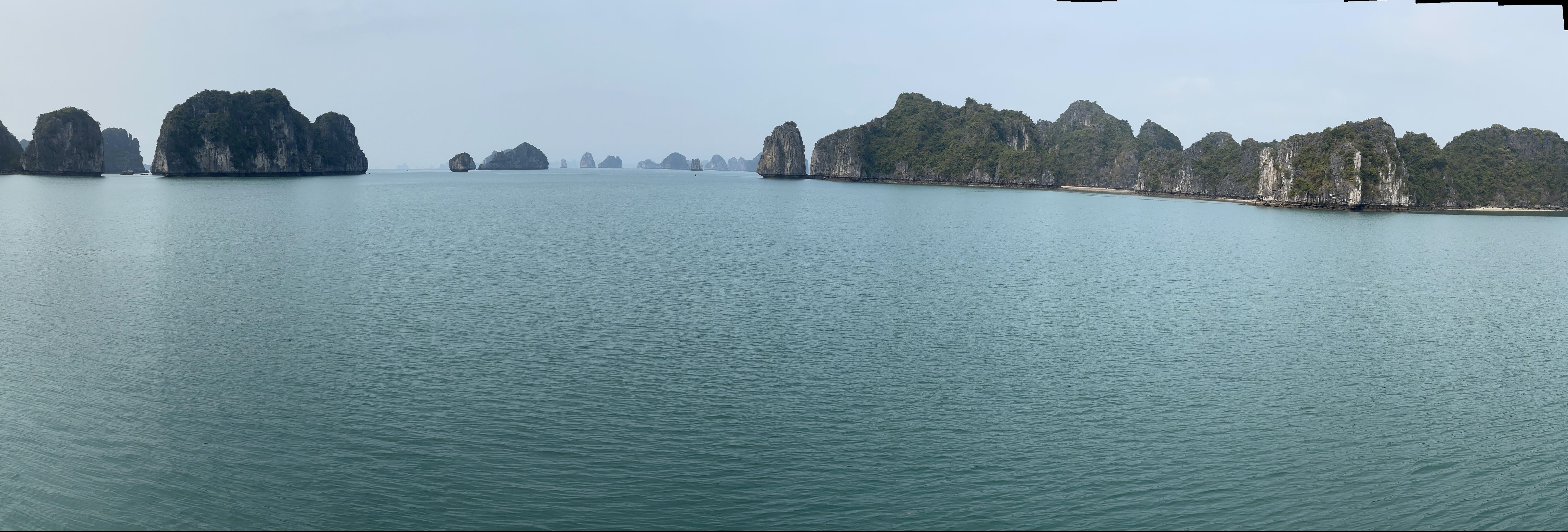
Heavenly Ha Long Bay
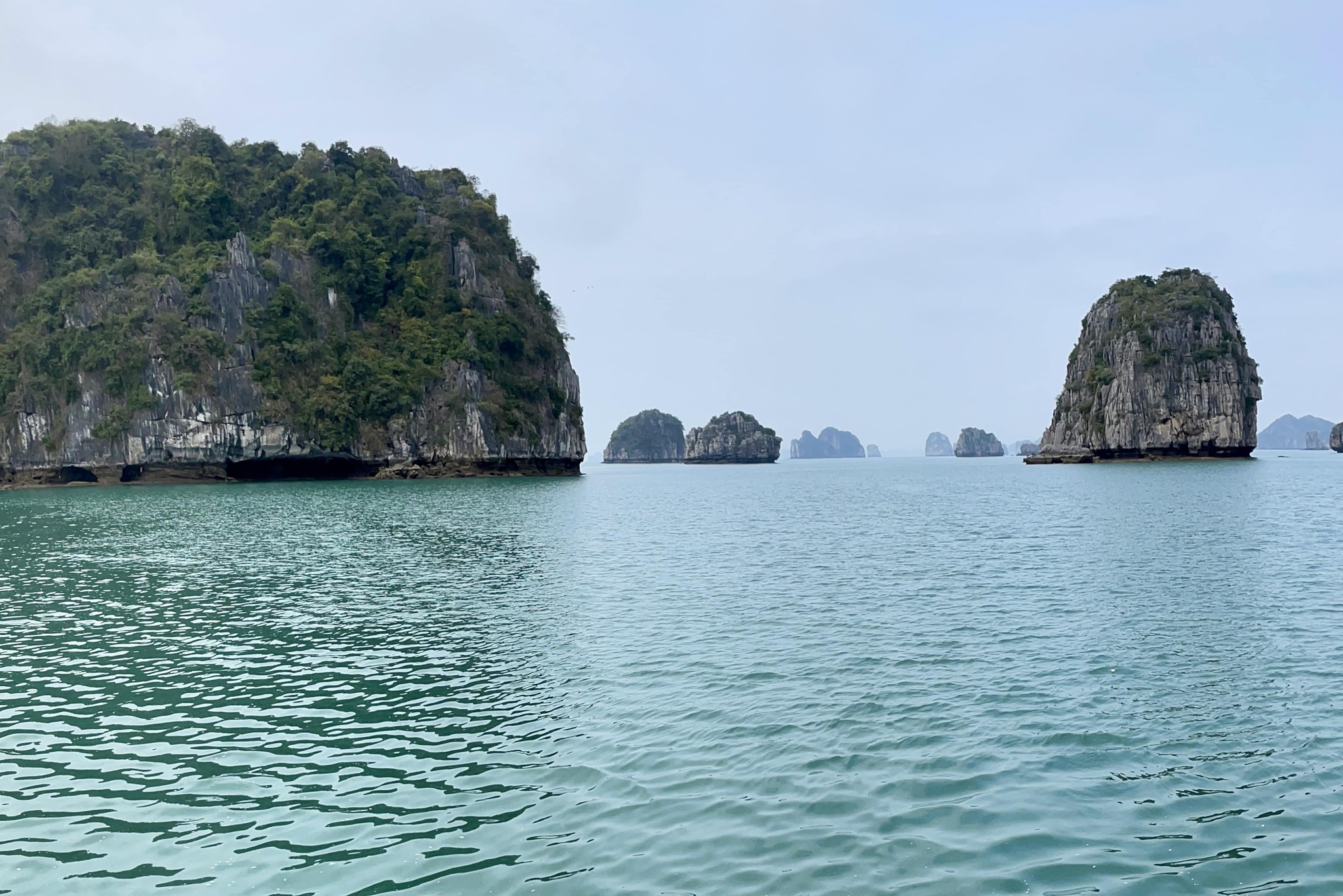
As legend would have it, the gods sent a family of dragons to protect the newly established Vietnam against invaders. The dragons spit out jewels and jade which transformed into the islands and islets in Ha Long Bay, linked together to form a defensive perimeter. As invaders approached in their boats, giant rocks magically appeared just in time for the invaders to crash into them. The Dragons decided to settle in the now peaceful area. Ha Long means descending dragon (where the mother dragon settled) and Bai Tu Long means children attend upon (where the dragon children settled to attend to their mother).
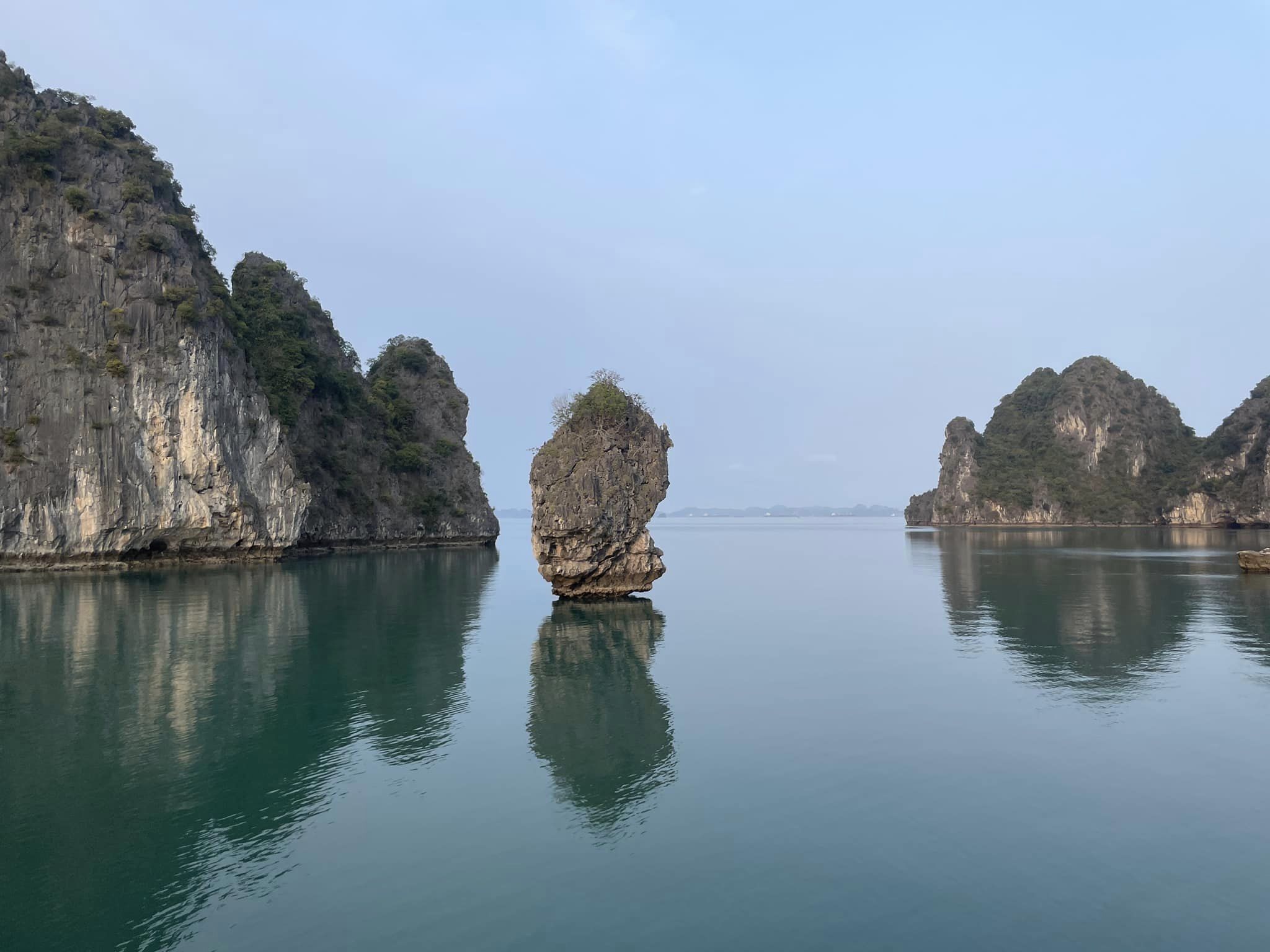
The geologists might disagree with how this region was formed. They dig a bit deeper back in time, starting some 500 million years ago when this area that was all part of the ocean, got hit with some tectonic movement and spent the next 100 million years forming limestone mountains. Over the last 20 million years erosion, thanks to the tides and the limestone, have created the stunning landscape of 2000 islands and who knows how many caves and water tunnels we have the privilege of navigating today.
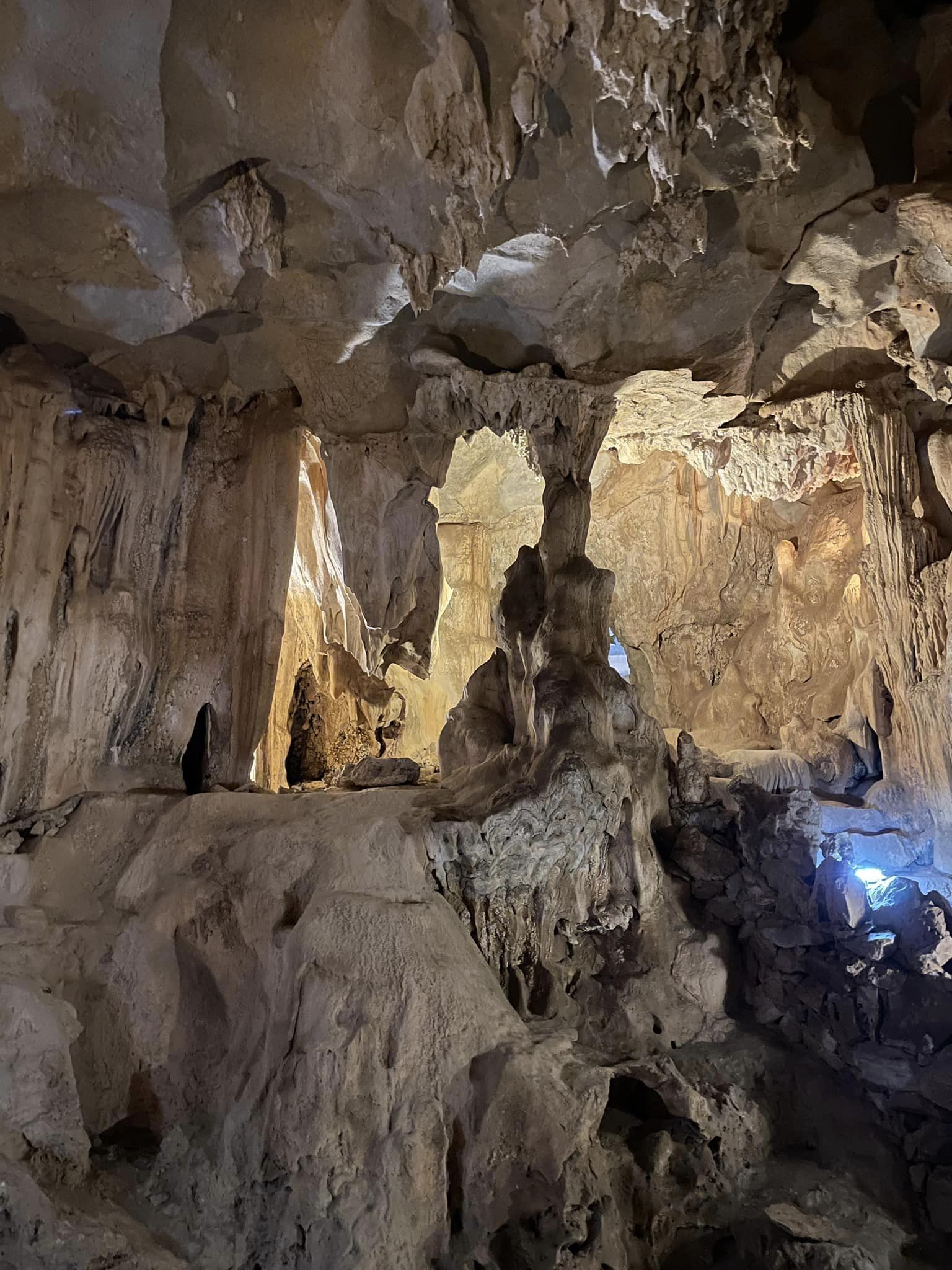
Thiên Can Son cave on Cong Do Island. Three big caverns with lots of limestone stalactites and stalagmites.
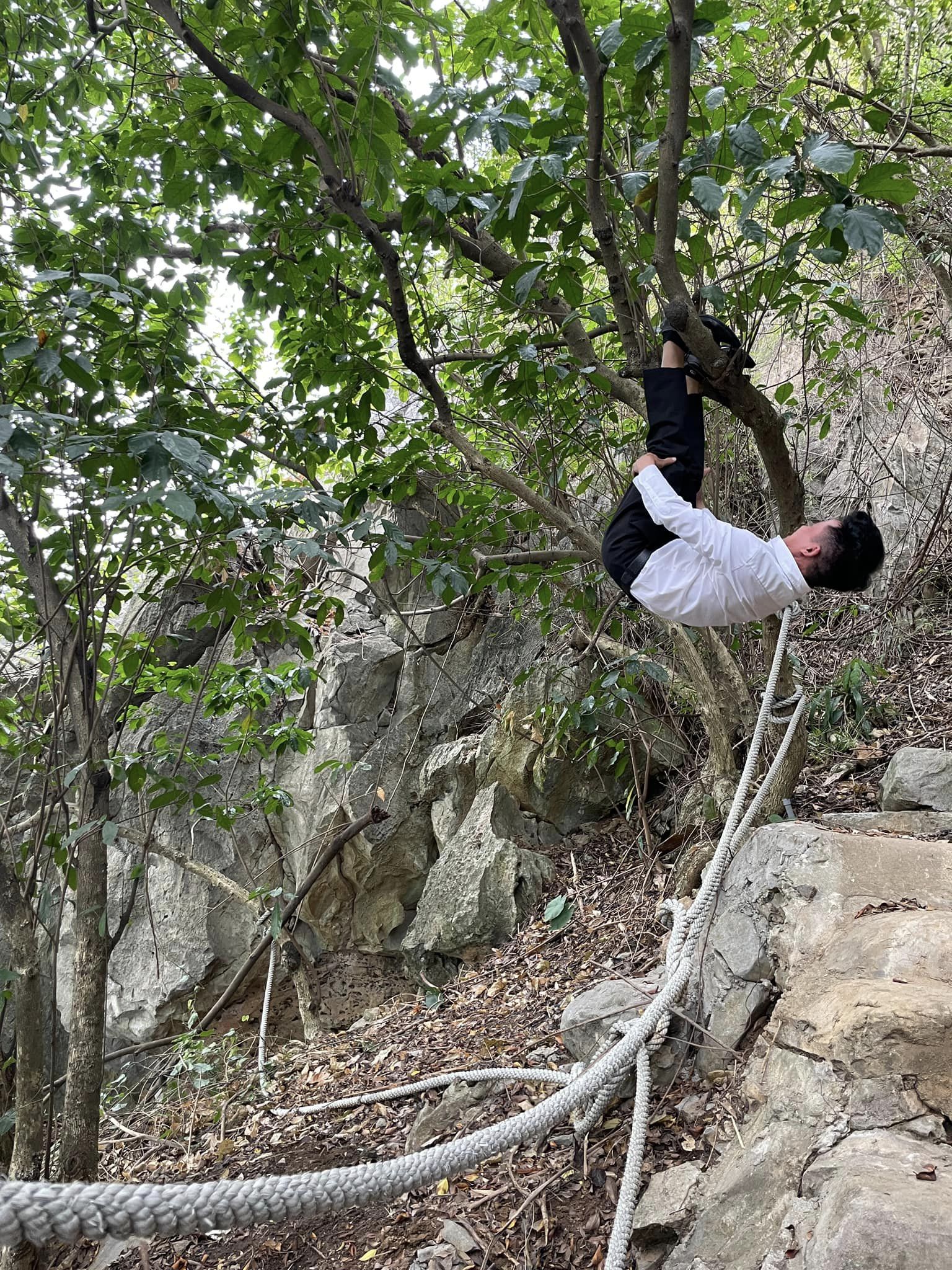
Our guide, Bay, engaging in some monkey business outside the Thiên Can Son cave.
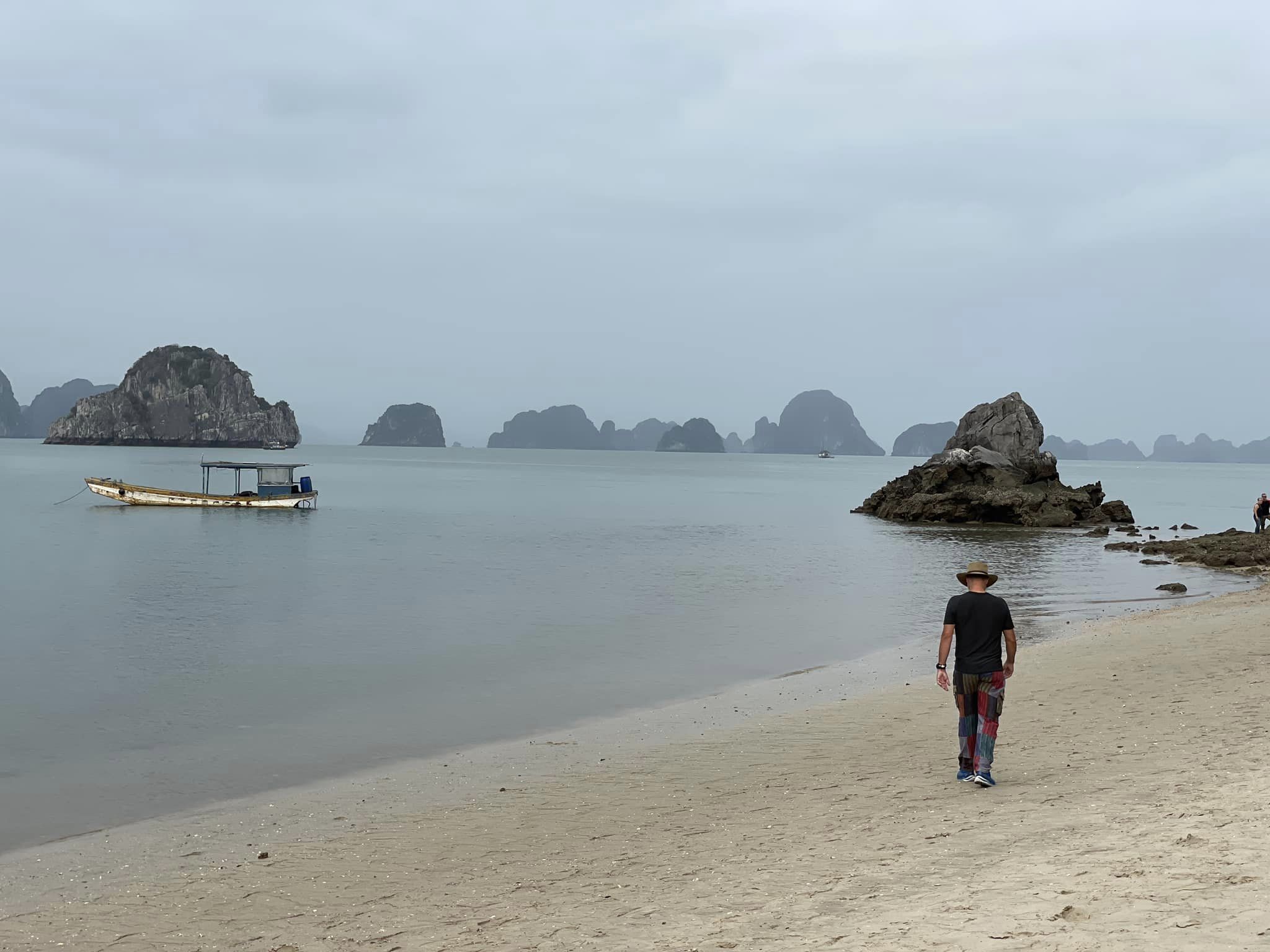
The beach below the Thiên Can Son cave.
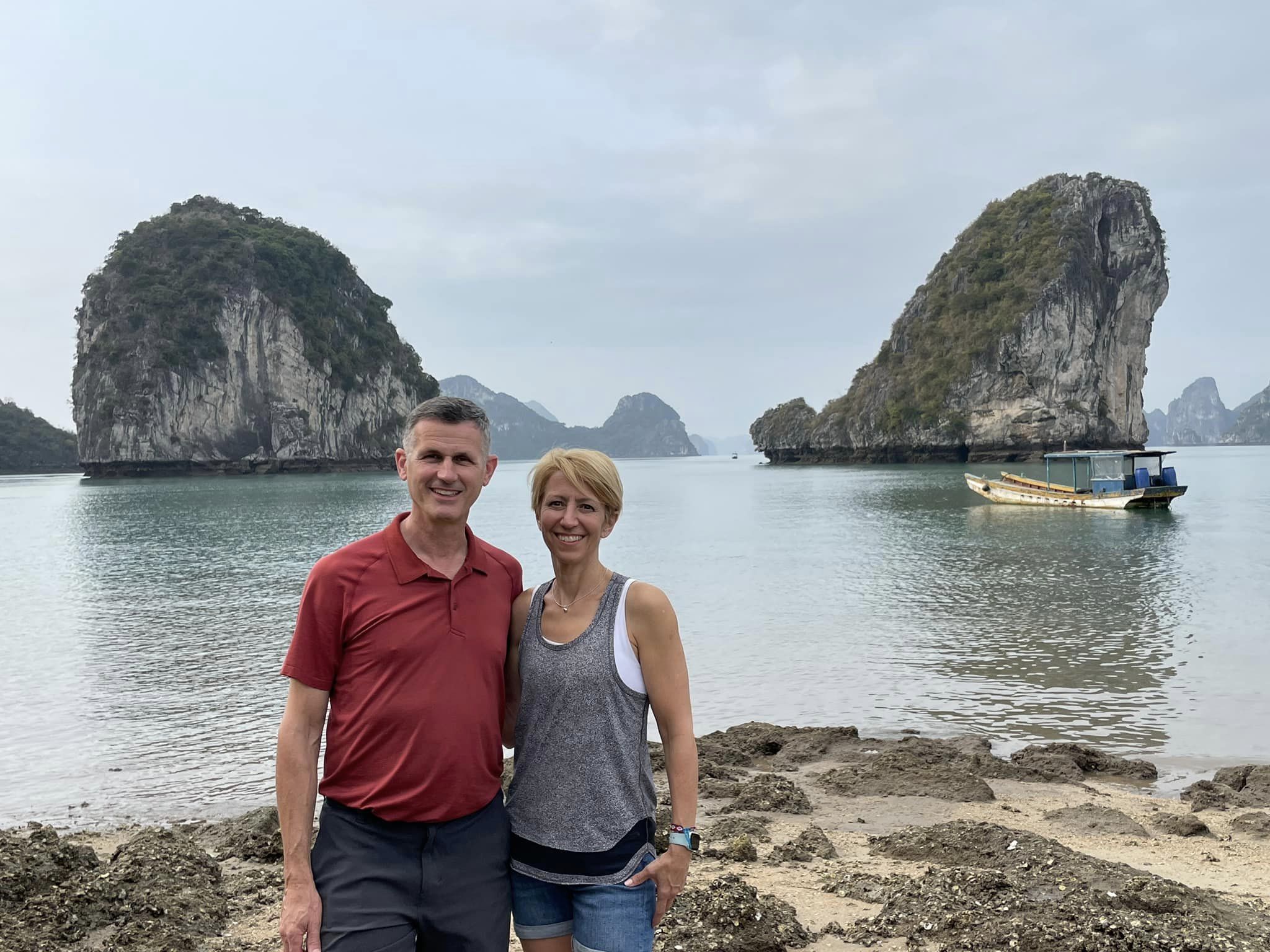
More beach below Thiên Can Son cave.
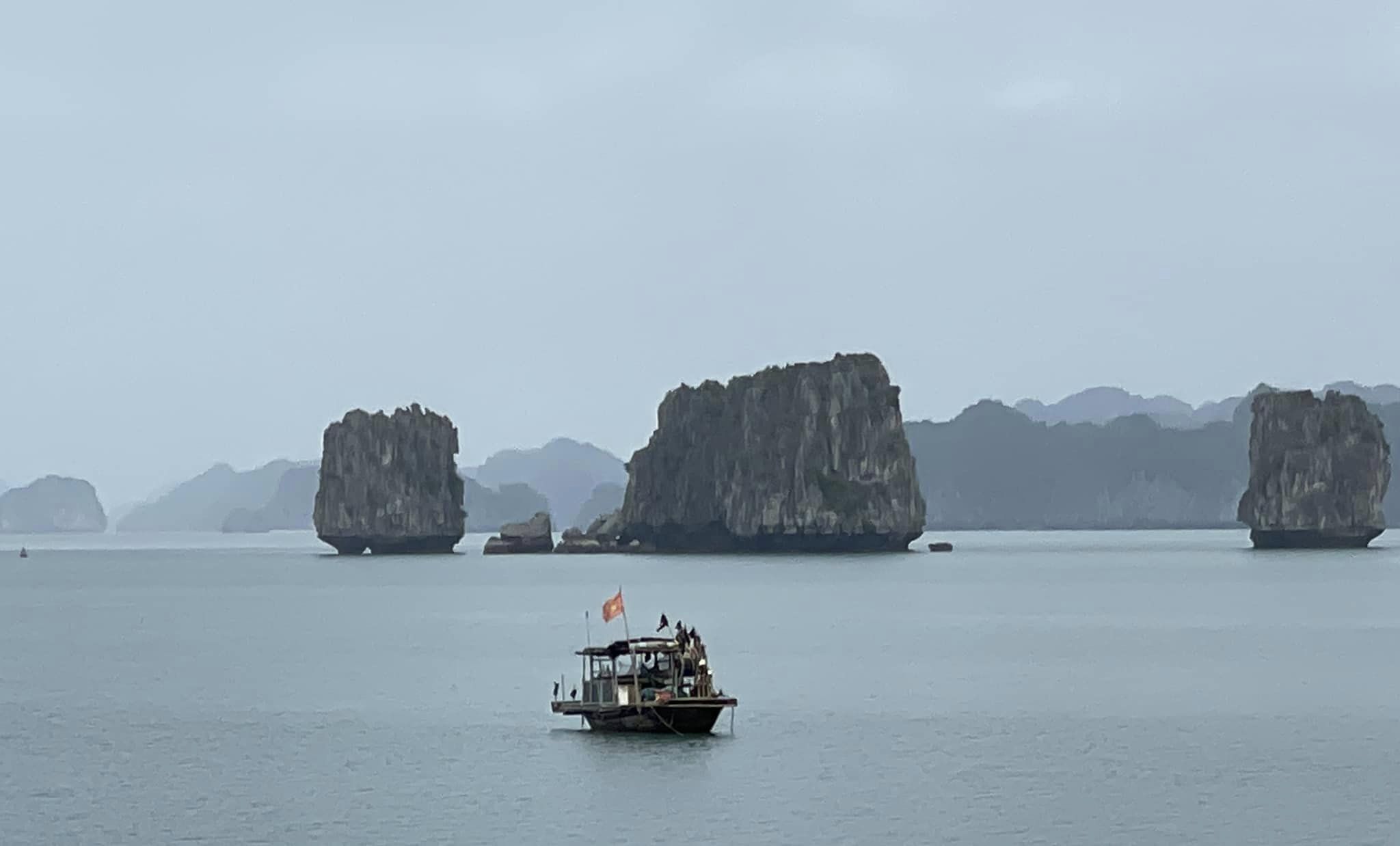
It’s a boat, it’s an island…
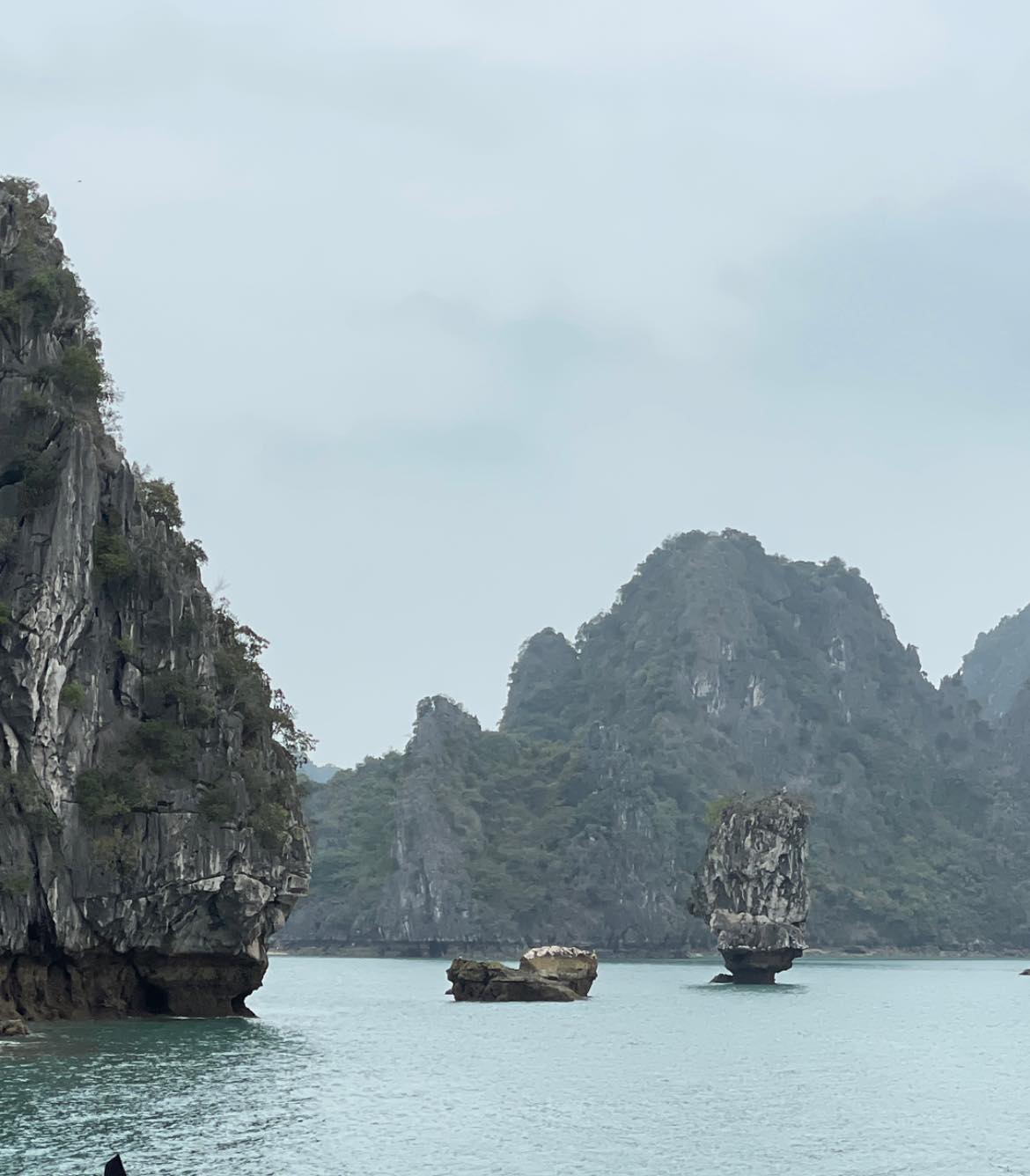
These islands and islets often look like they’re about to topple over.
Our boat operator taking us out to Bing Vieng fishing village. She’s moving us at quite a clip and she’s not even rowing with her feet!
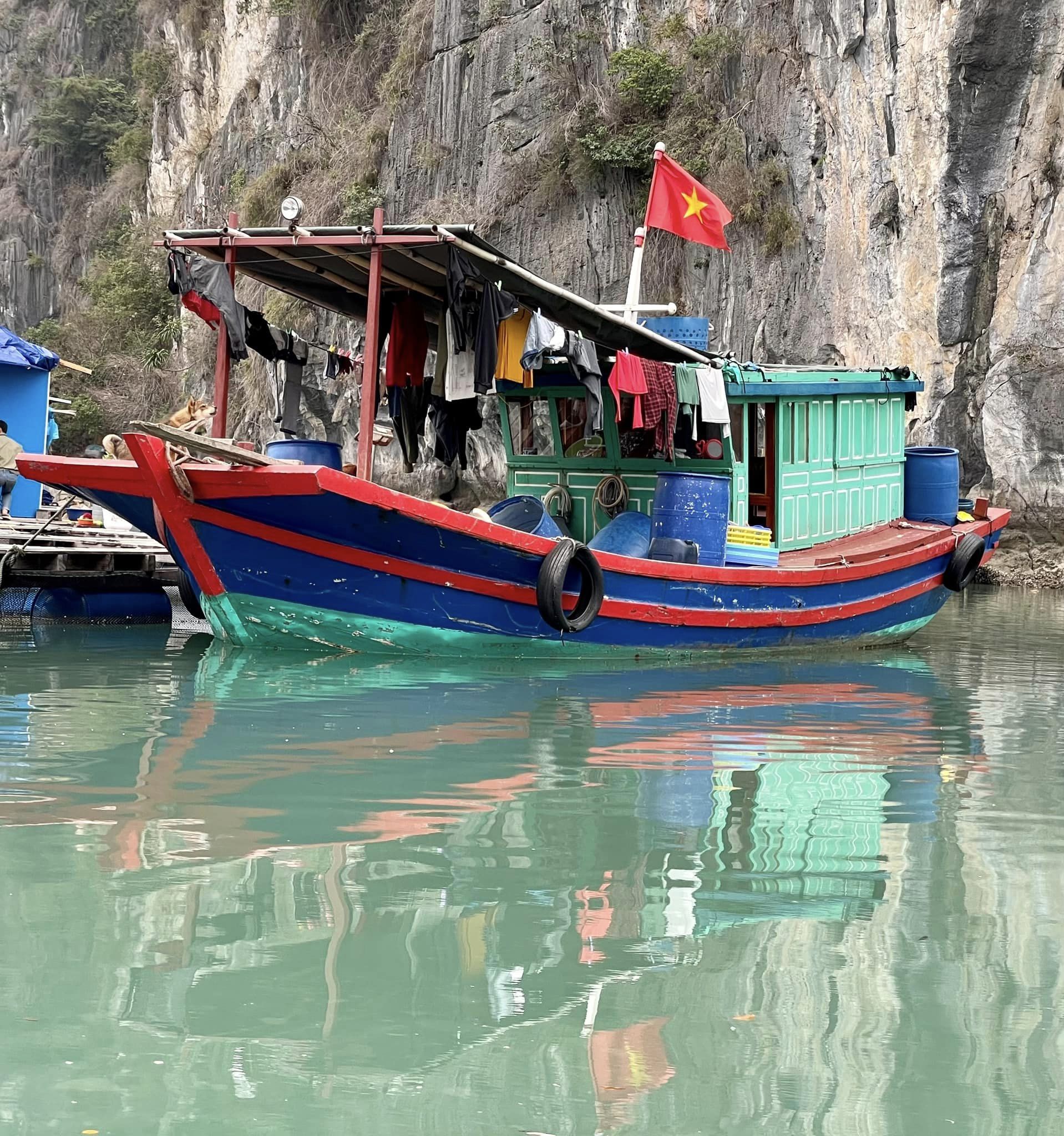
Live work space.
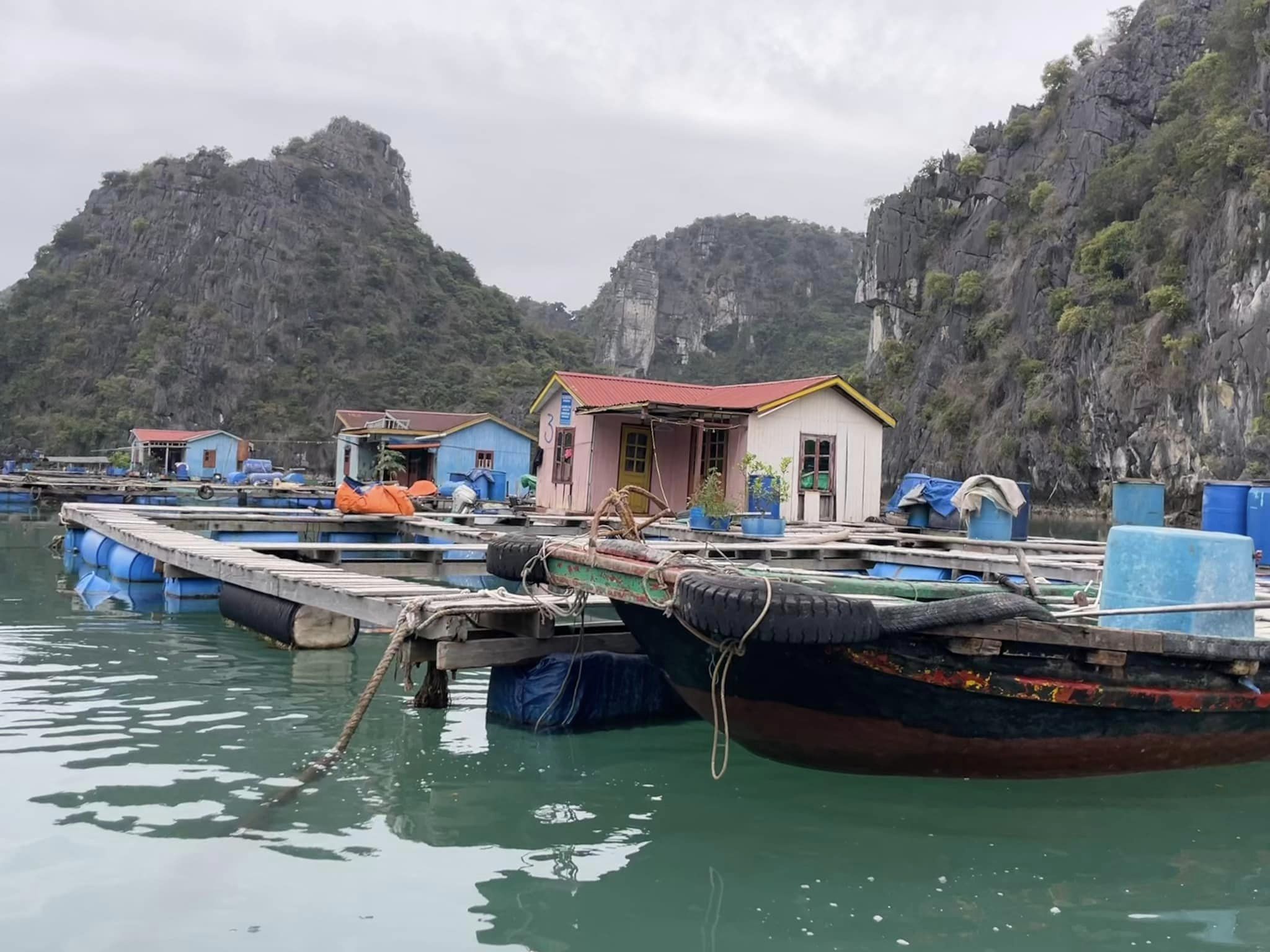
Bing Vieng fishing village dates from the 19th century. Surrounded almost completely by small islands, it started out as an anchorage for boats and refuge from storms. In time, people started building houses (on docks or boats tethered together) there and the community has grown to 80 homes. About 30 children from the floating fishing village go to a mainland boarding school, paid for by an education charity. The parents are motivated to send their kids to school as they themselves have no education. If this seems like a great place to retire or resettle, you’re in for a big commitment. There is no “immigration” to this village unless by marriage.
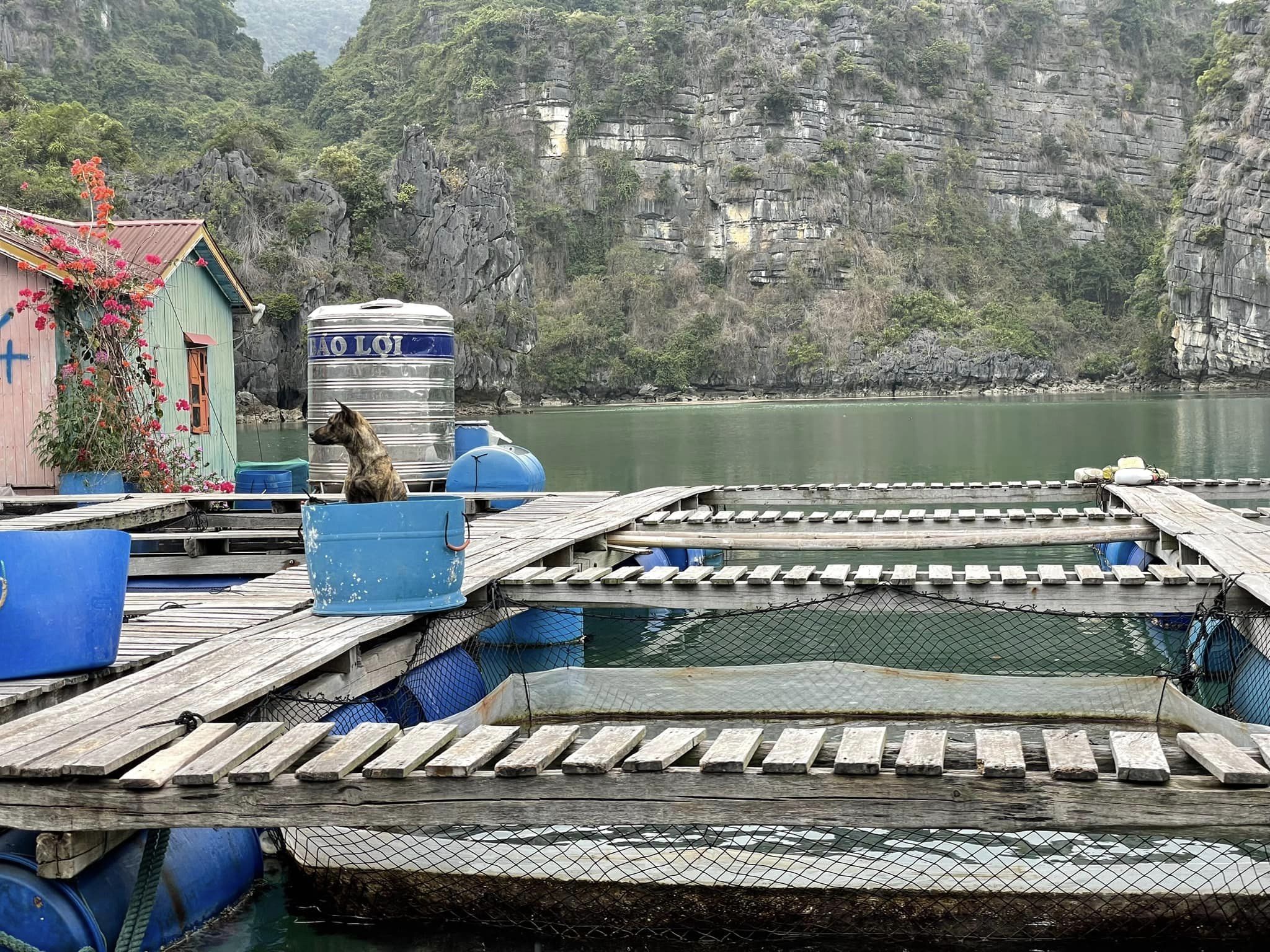
A fish farm in the floating village. A dog keeps guard against eagles and other predators.
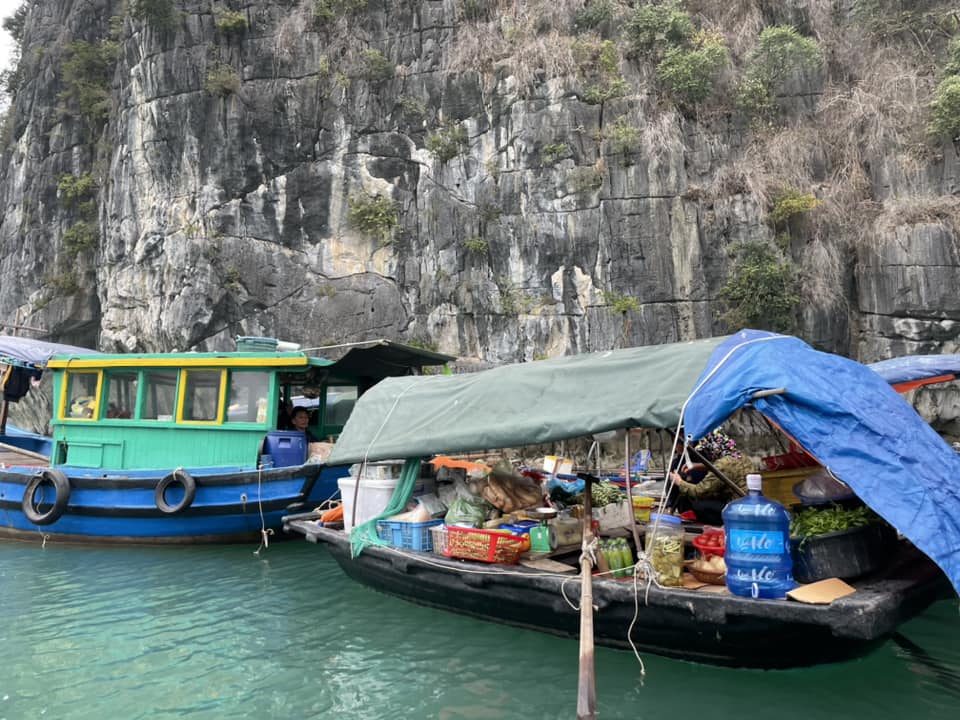
The corner store. Supplied from the mainland, villagers come here to stock up on whatever they don’t catch or grow for themselves.
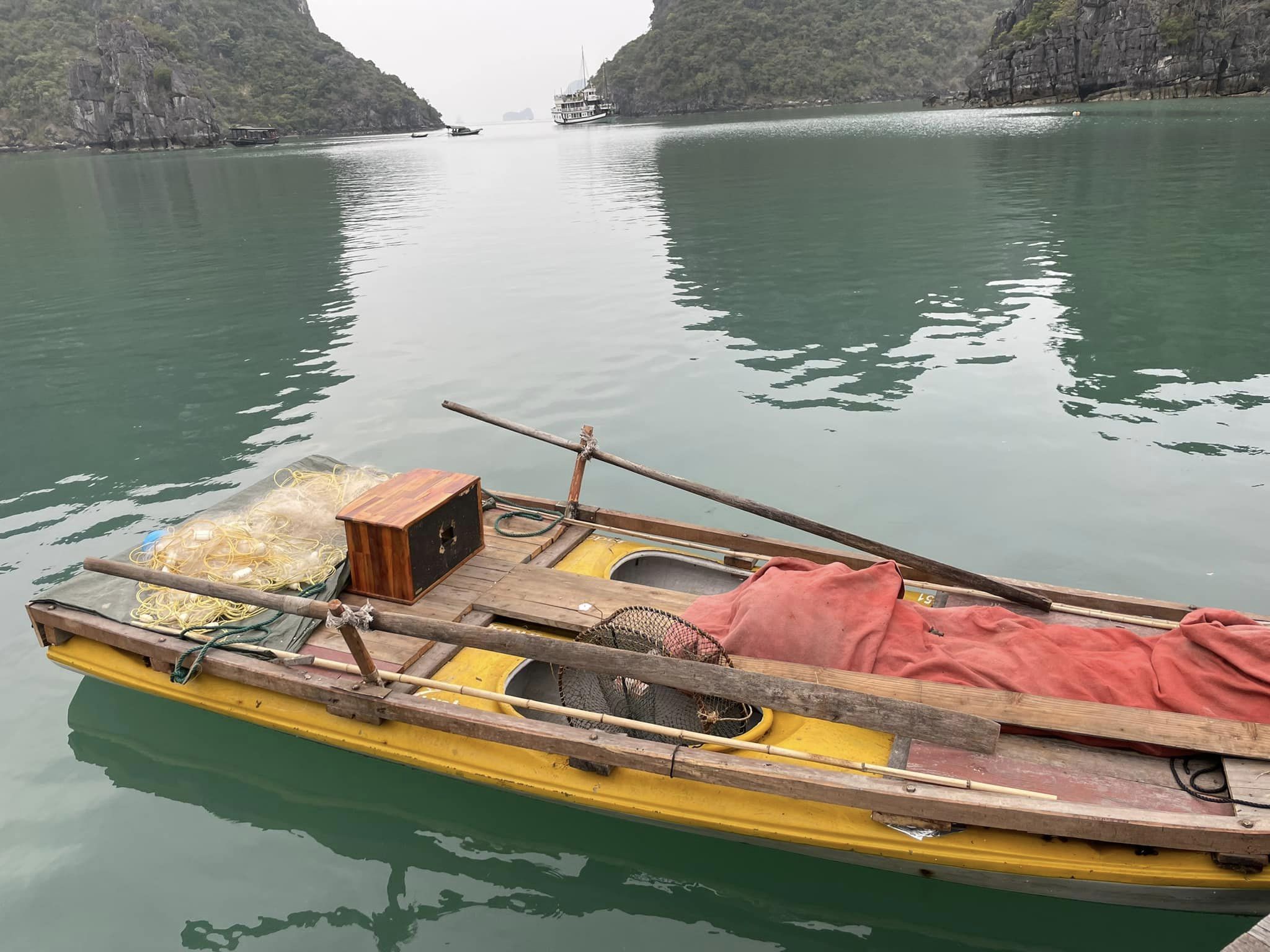
An ingenious double kayak. Way more stable than a single and more room for stuff!
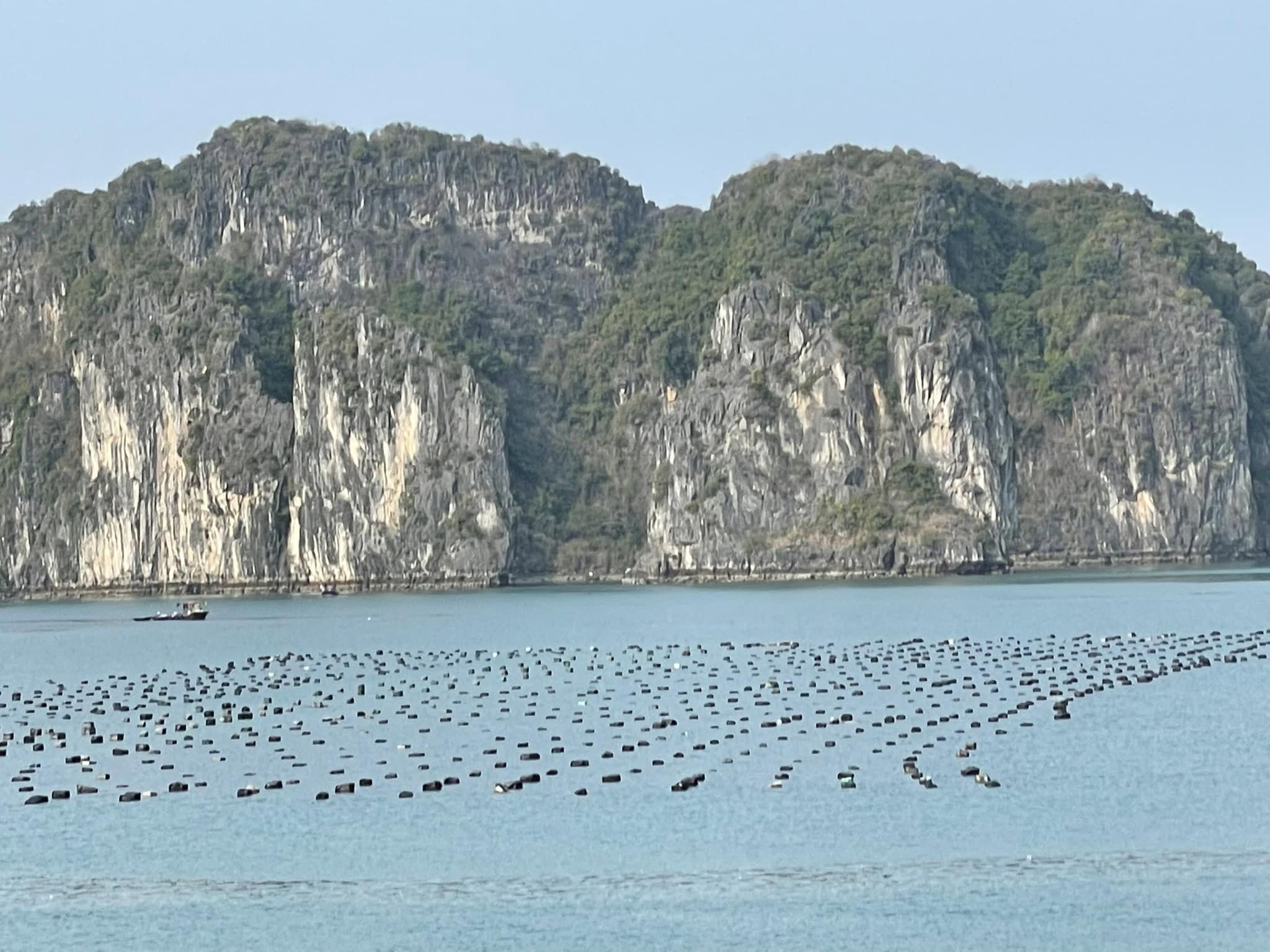
Oyster/pearl farm.
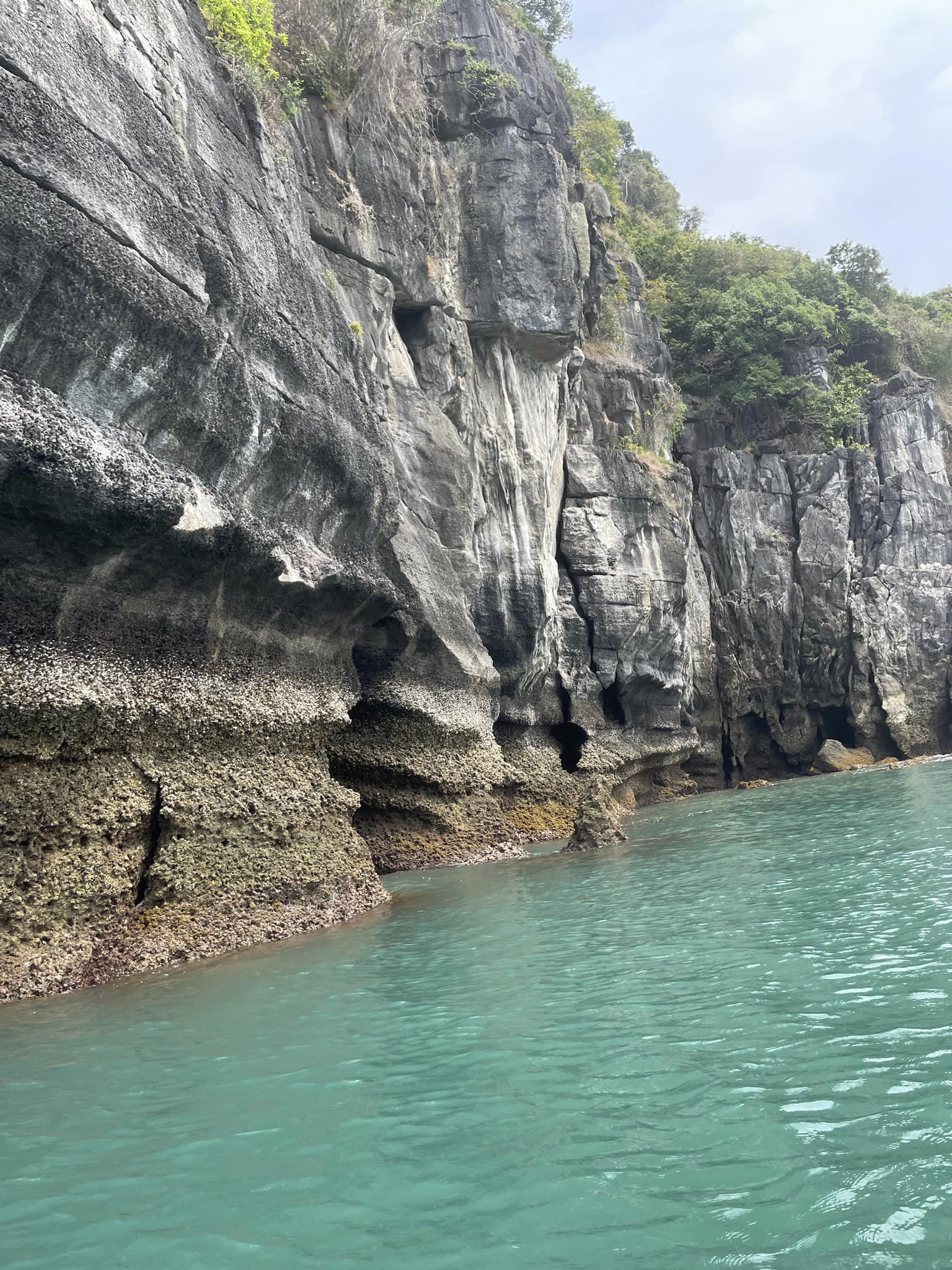
The ever changing colour of the water. It shifts depending on how close you are to the edge of an island.
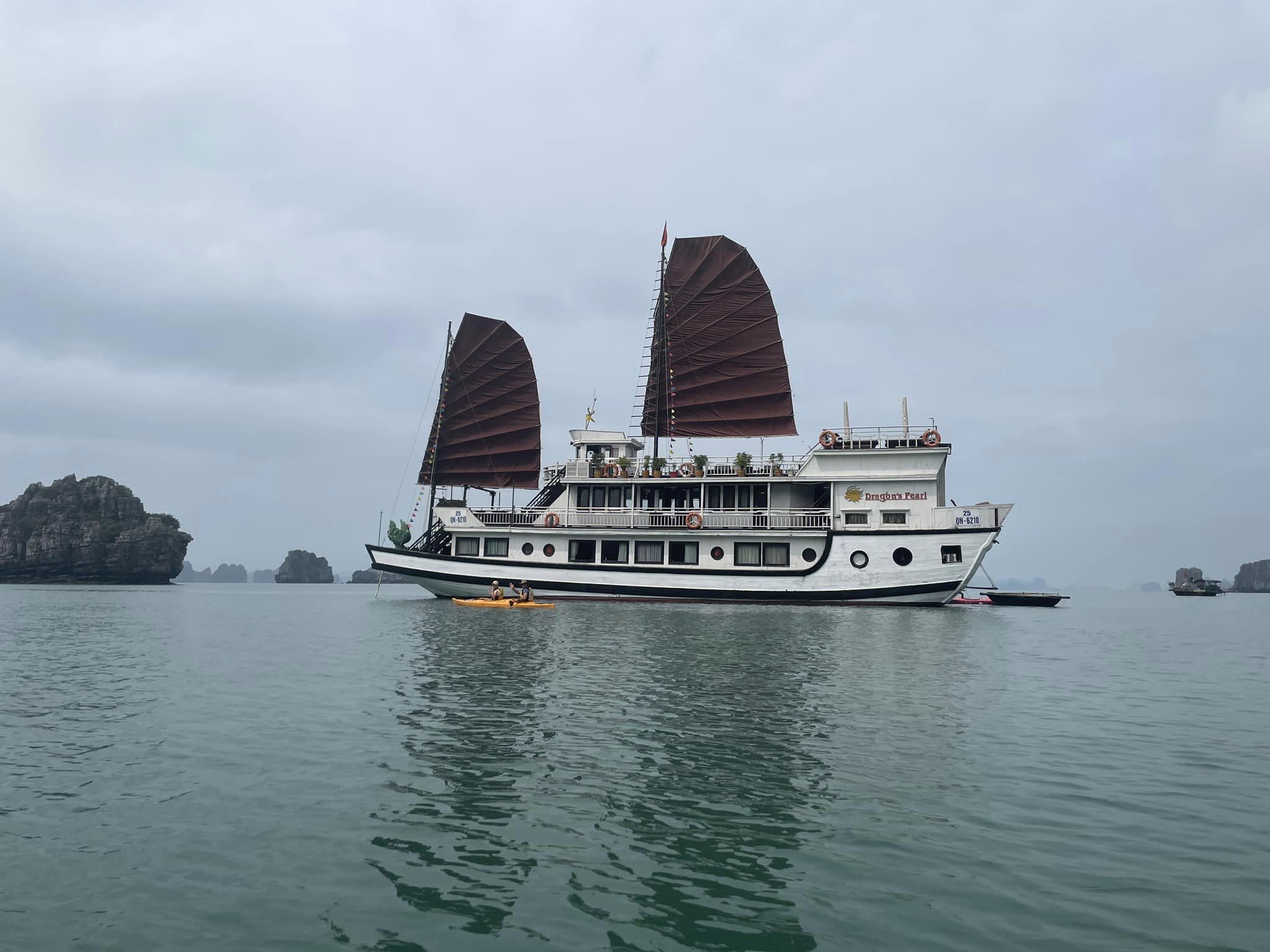
Our boat, the Dragon Pearl.
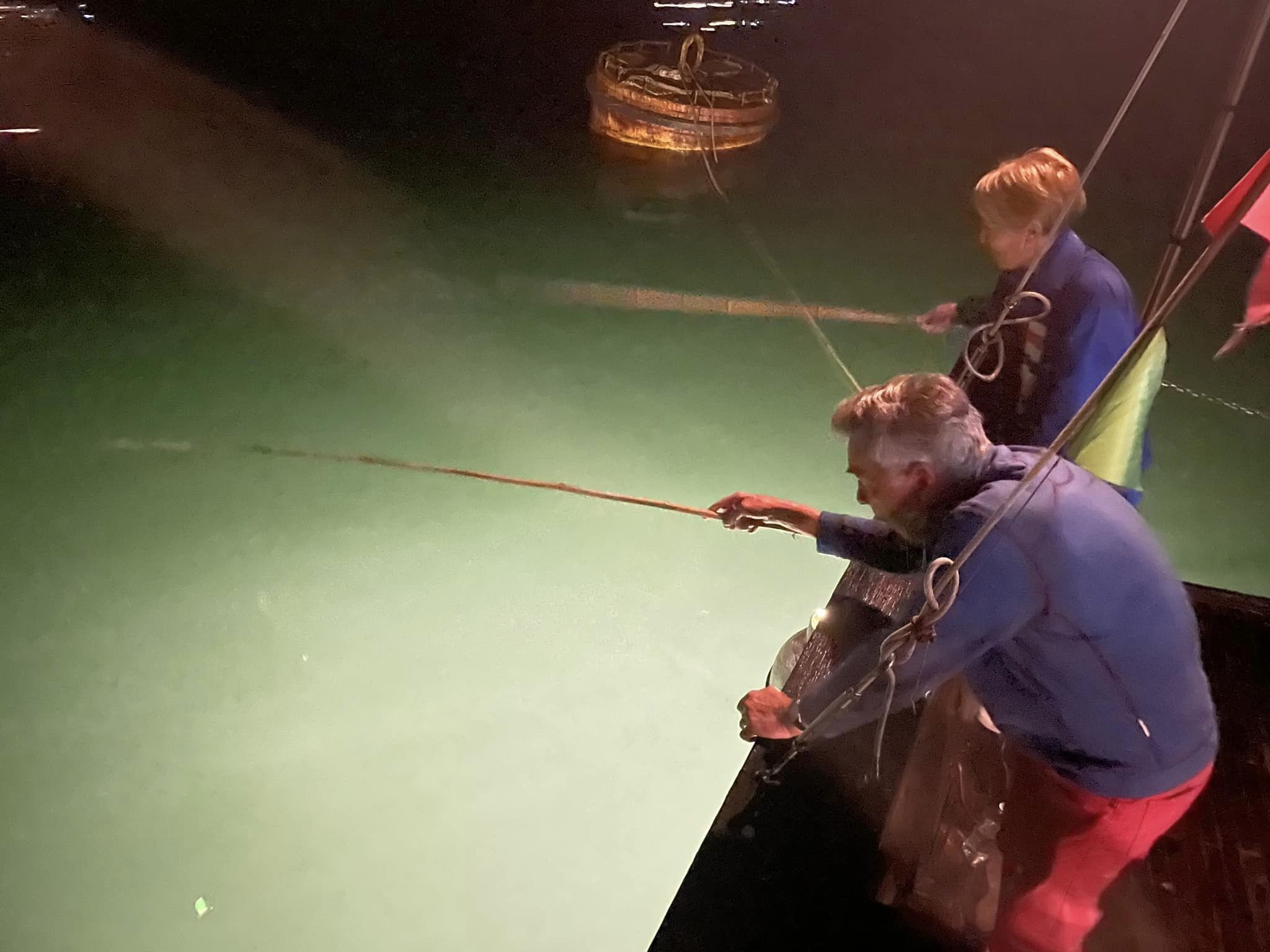
Trying my hand at squid fishing. This is done at night with a light shining into the water to attract the squid. A simple line and lure is attached to a bamboo pole. You drop the lure down and jerk it back up until you get a nibble. No nibbles for us…
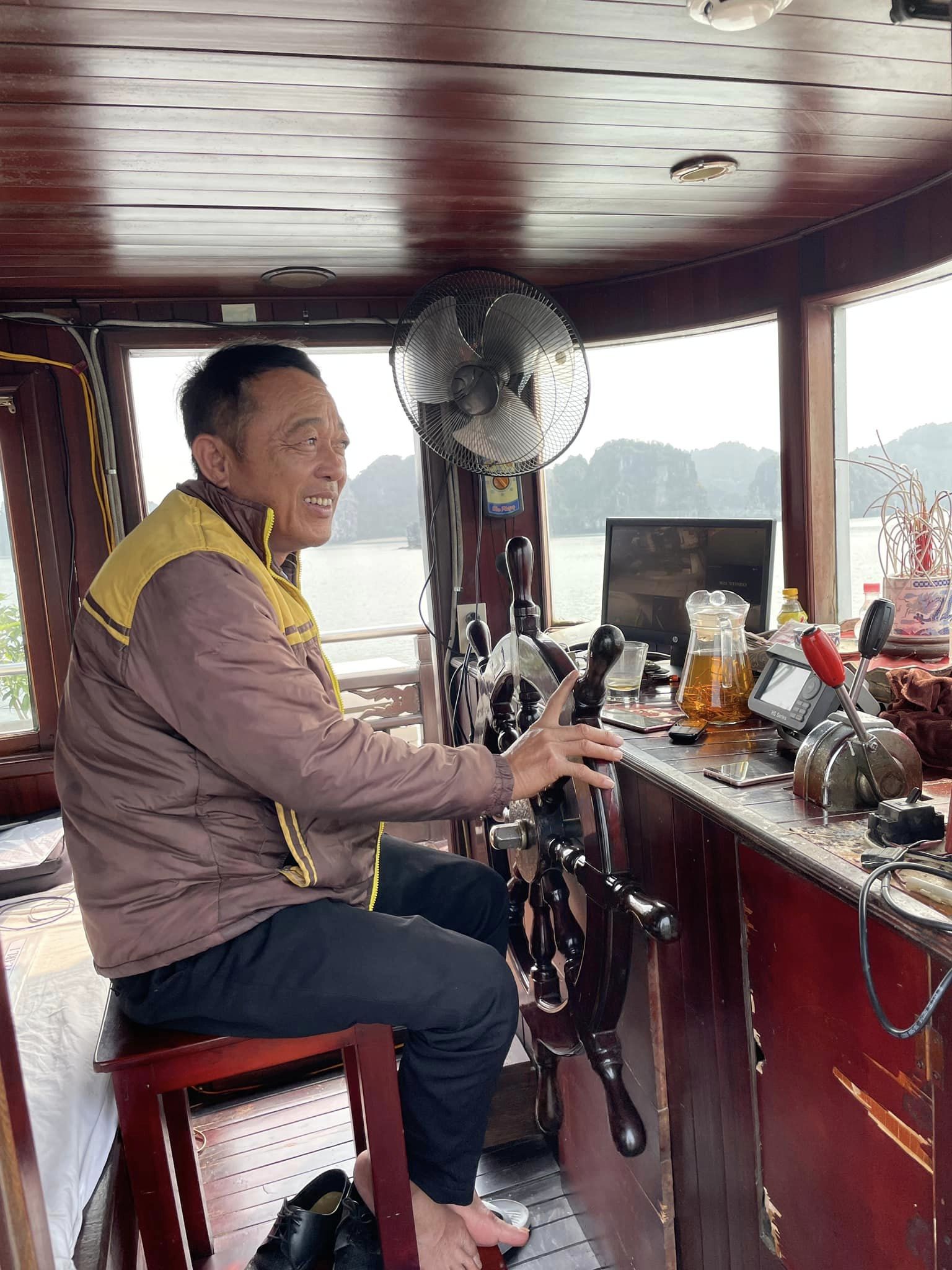
Our lovely captain. His quarters are right up here with the best view. That’s the edge of his bed behind him.
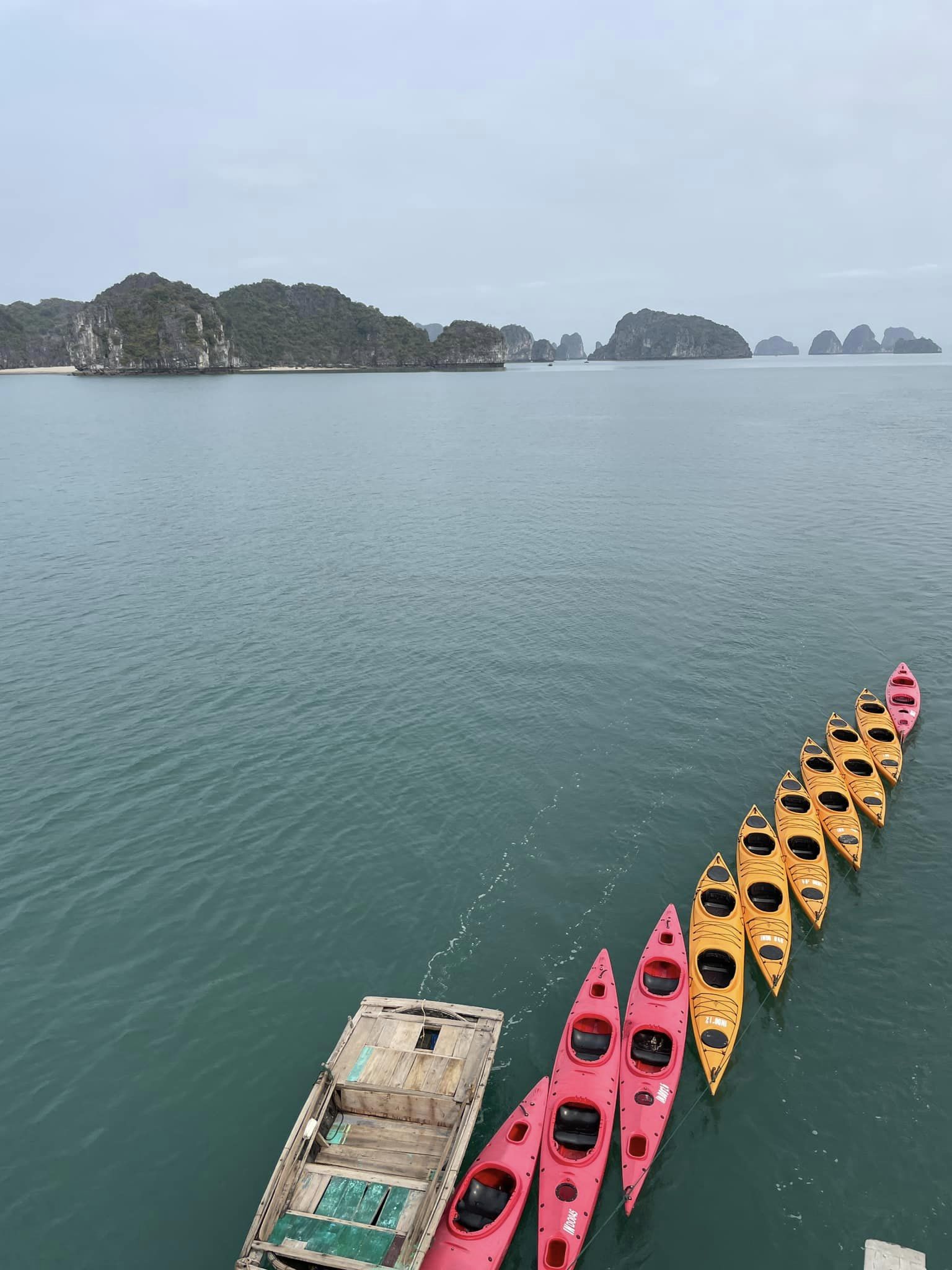
Ready for kayaking!
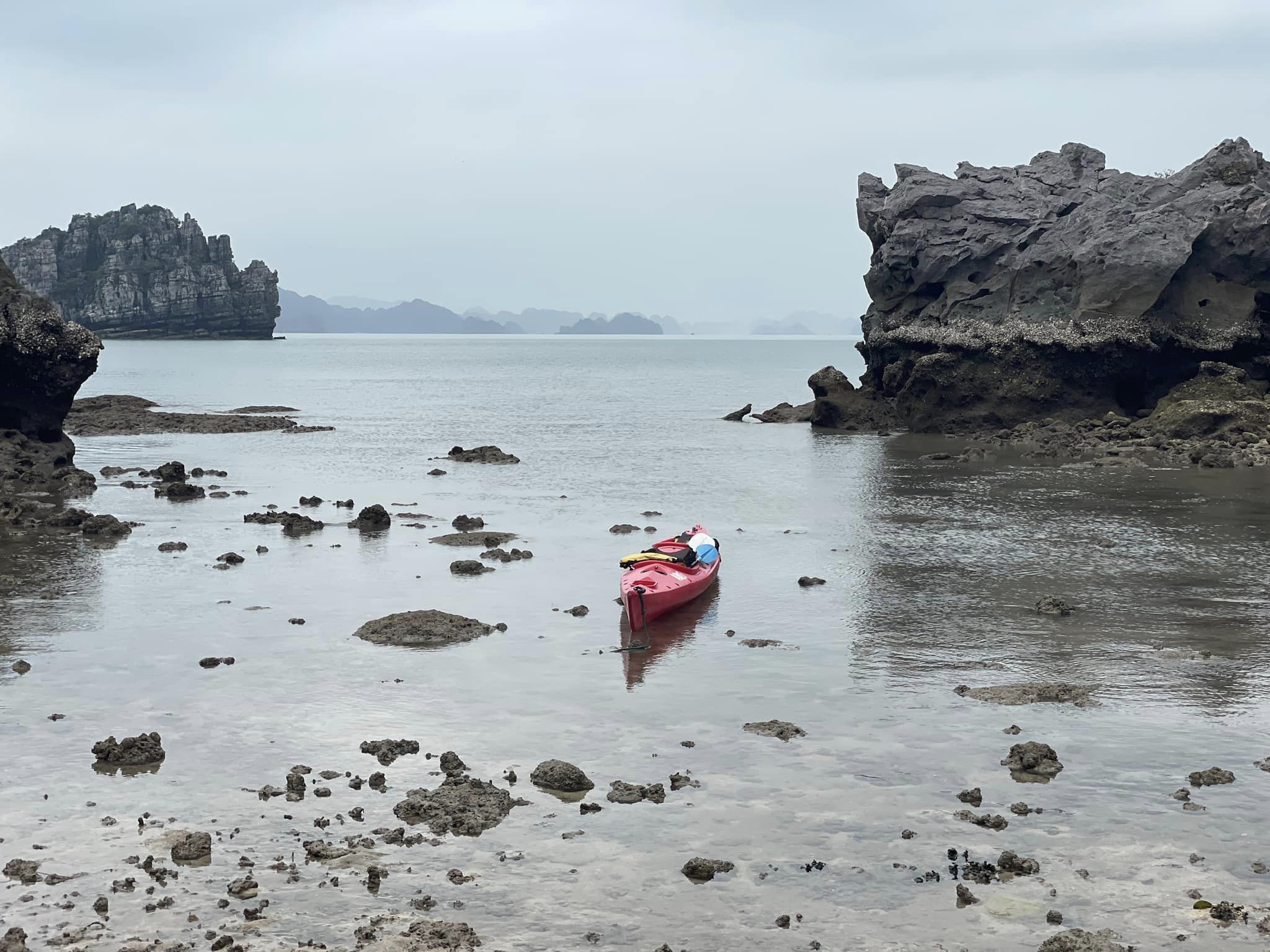
Deep Cove, this is not! This is as far as we could get into this bay without scraping the kayak on rocks and coral. A secluded, pristine beach.
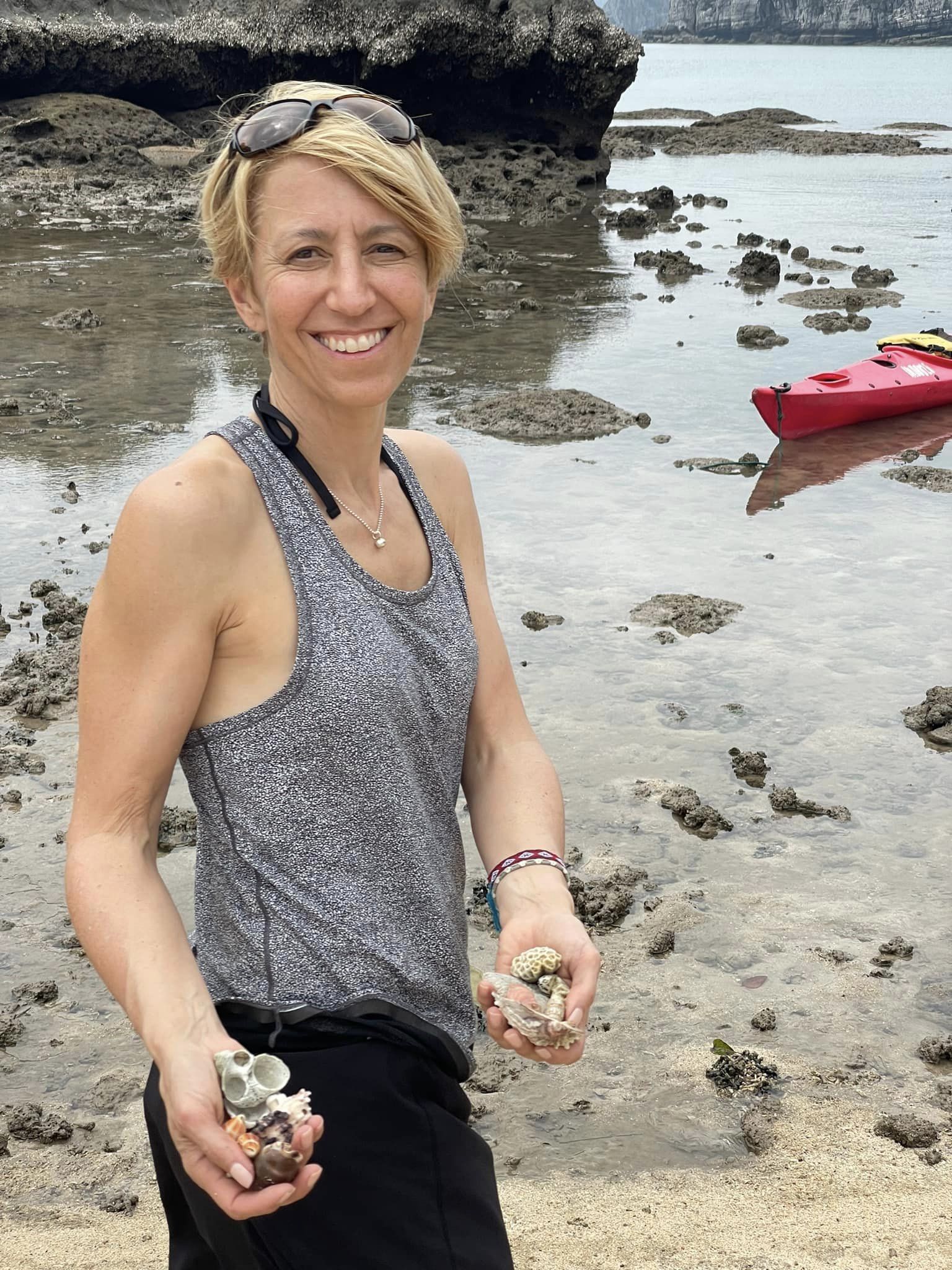
Perfect for beach combing!
We came across this “little” cave while kayaking.
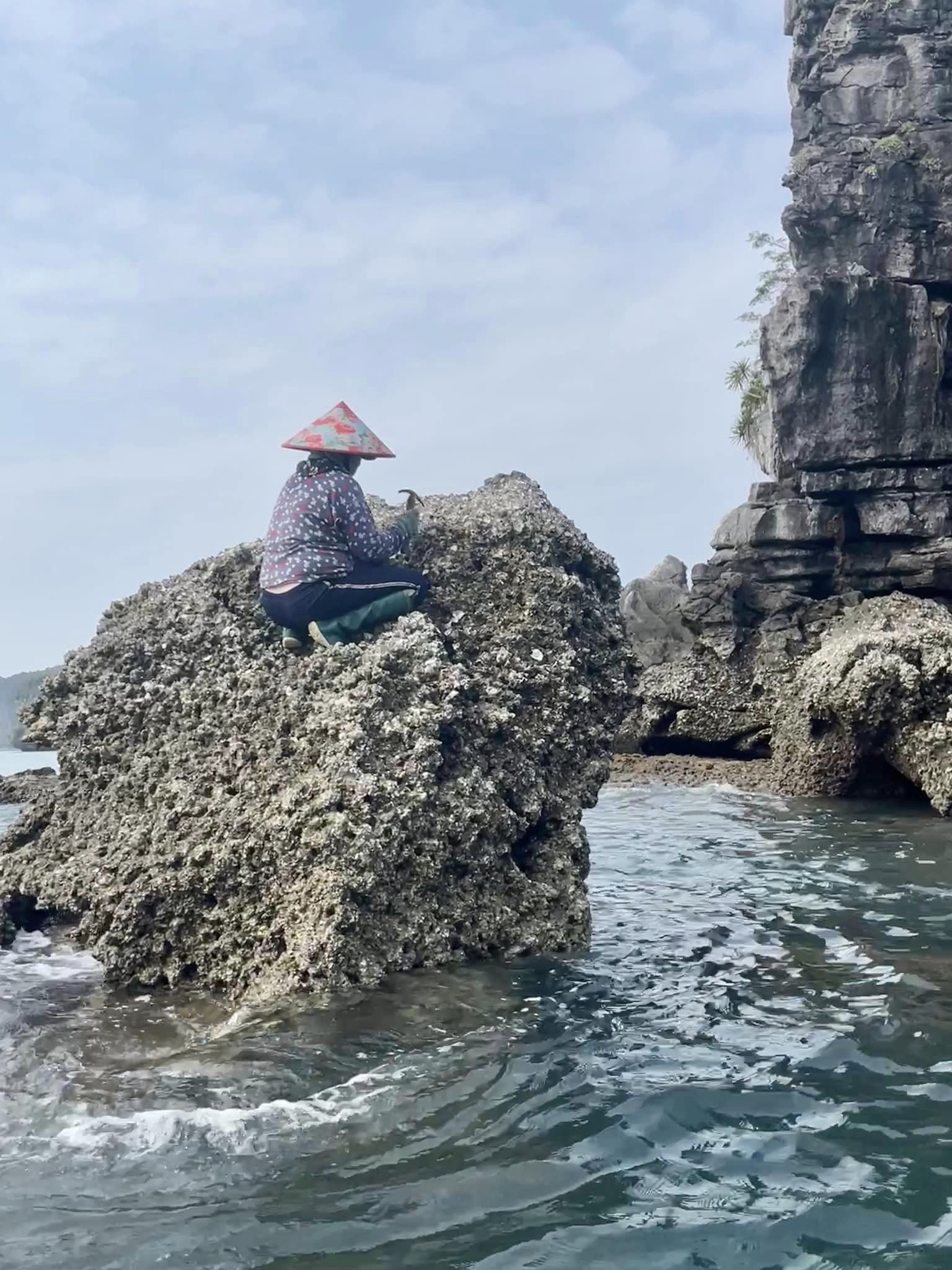
This enterprising woman was hacking mussels off the rock. Not sure if it was to eat or sell.
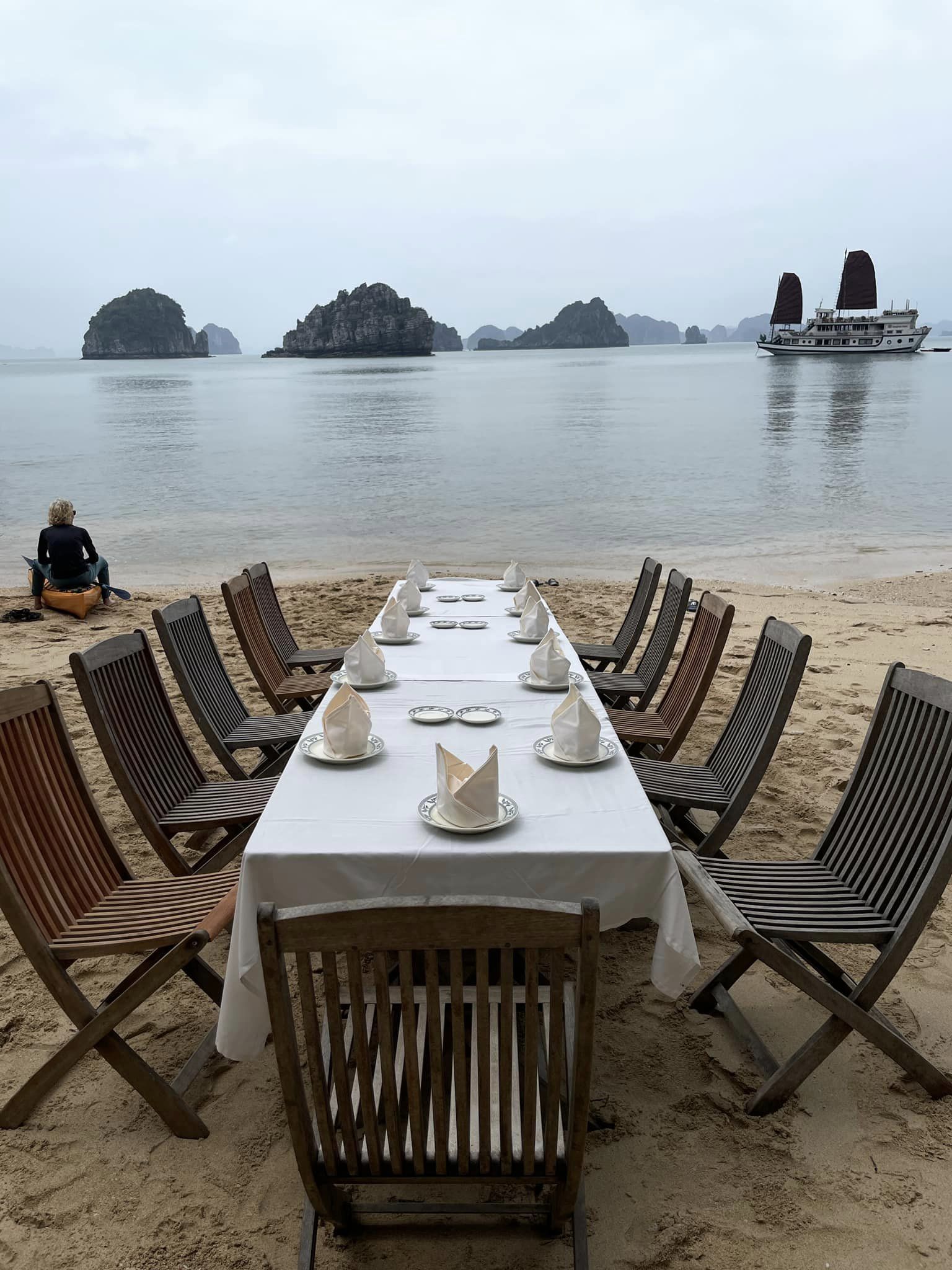
The best location for our kayaking “picnic”. Certainly kicked the concept of picnic us a few levels.
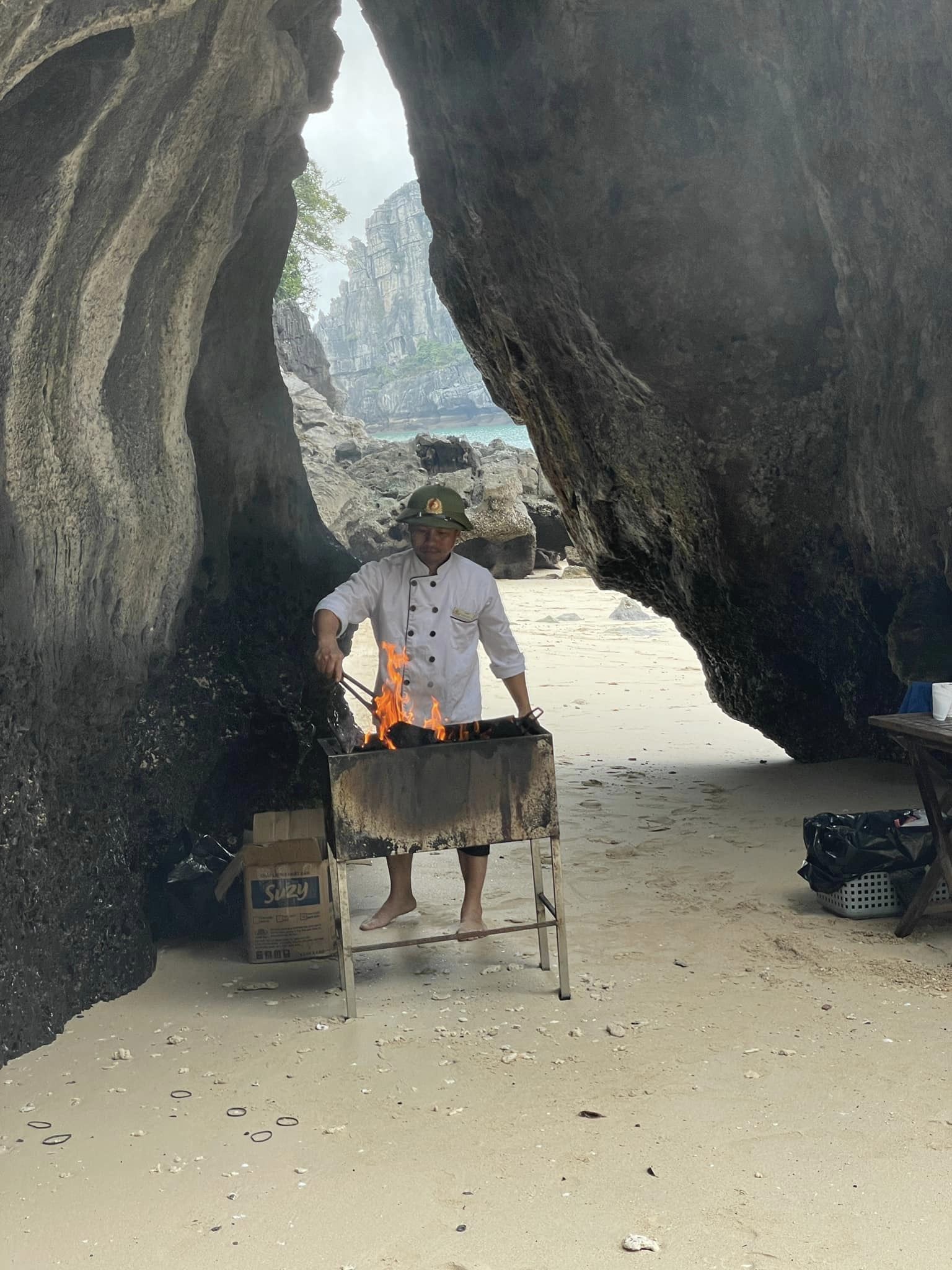
Where the food magic was happening. Our chef, nestled in between giant rocks on the beach.
Found a shortcut! I didn’t speed up the video because some things are just meant to be savoured.
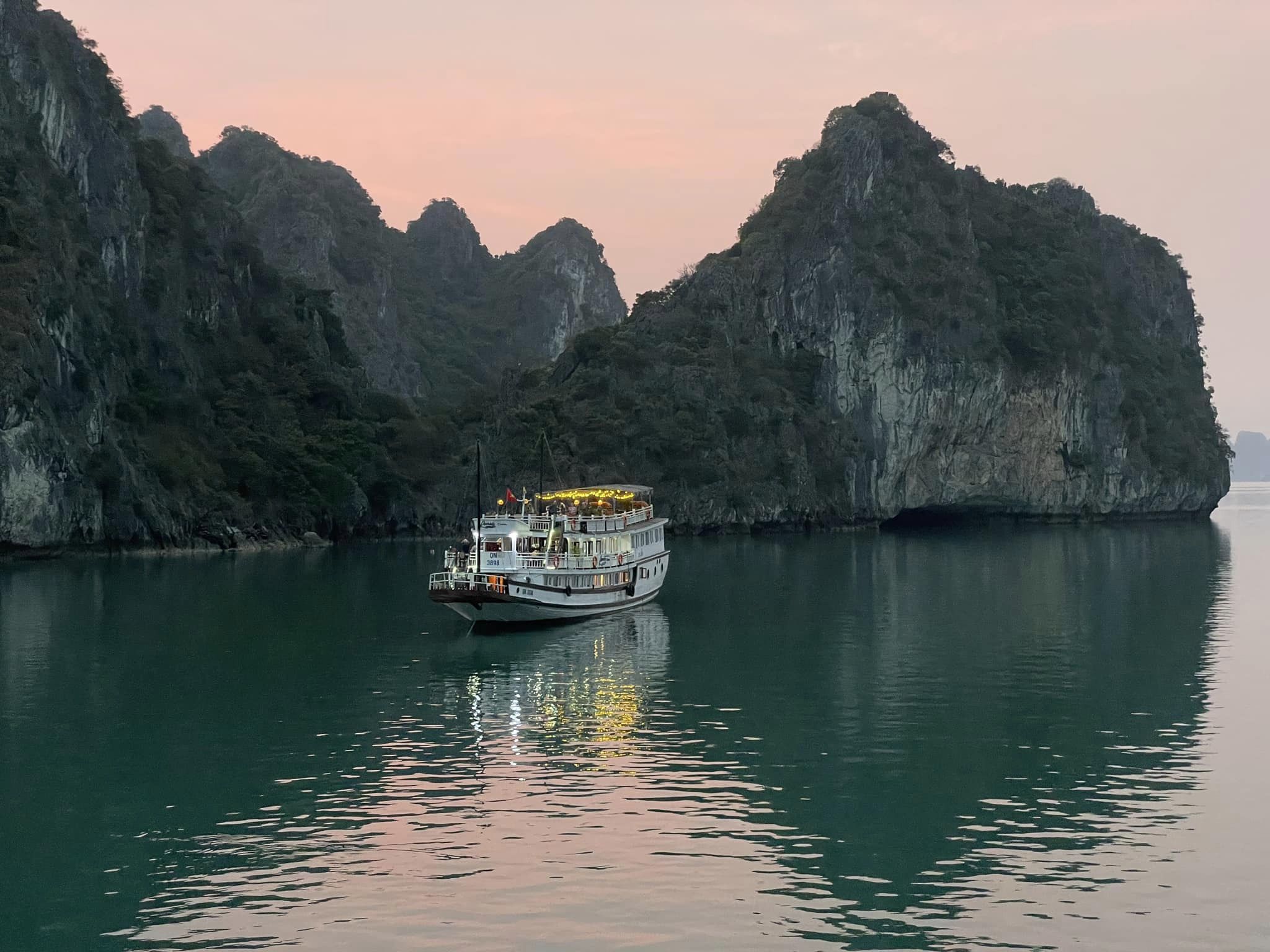
Good night from Bai Tu Long Bay.
Pearls Glorious Pearls
Of course we had to learn about pearls while in Ha Long Bay! 1893 was a magic year in the pearl world. That’s when Kokichi Mikimoto figured out how to produce a cultured pearl. A hundred years later the Vietnamese learned how to implant pearls into oysters and grow them in Ha Long Bay. A booming business now exists!
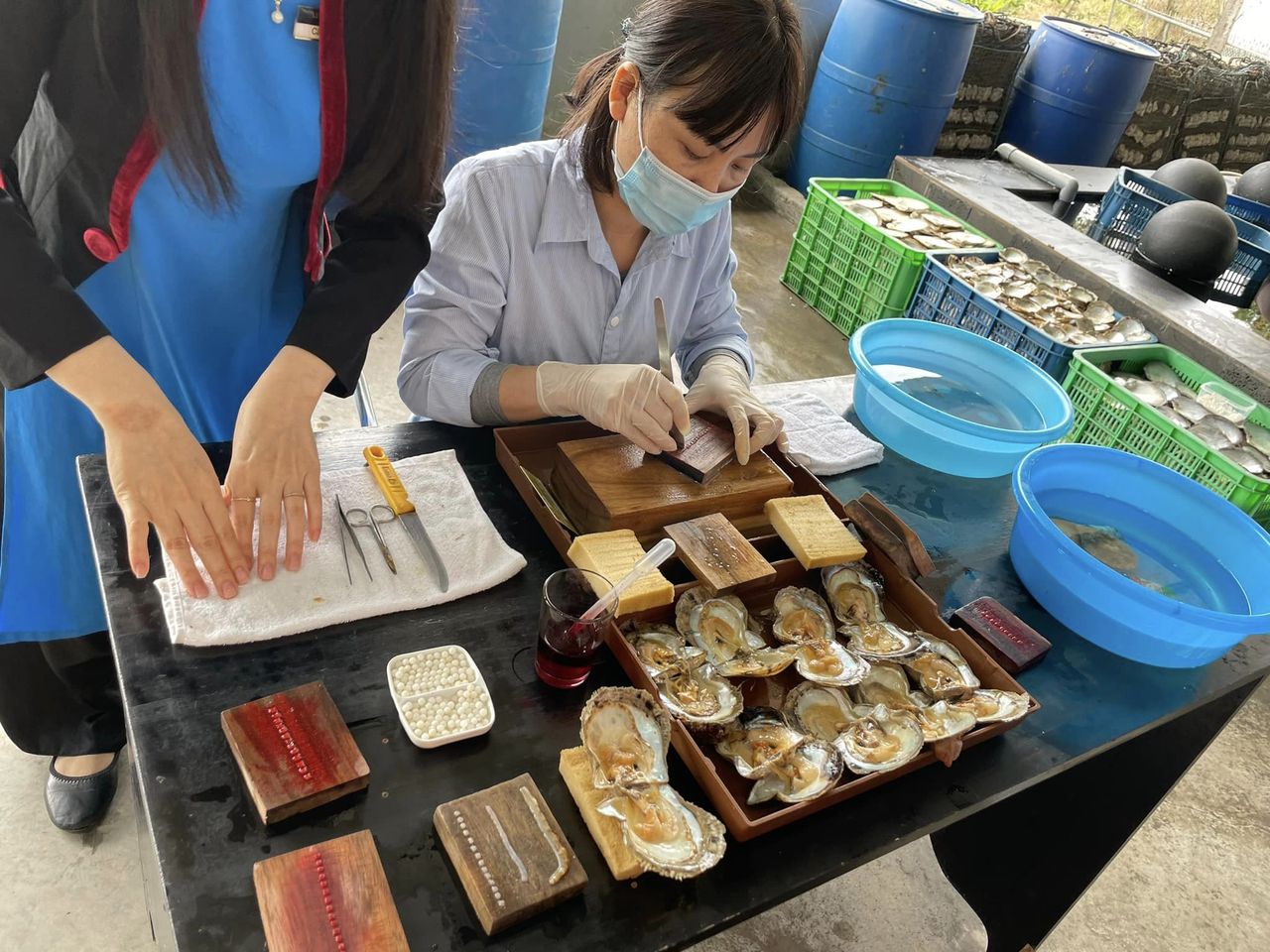
Making a cultured pearl is a little like in vitro fertilization. The mantle strip is removed from an oyster and cut into small pieces. A receiving oyster shell is pried open and a small piece of donor mantle tissue (the “saibo”) is placed side by side with a spherical bead of oyster shell (it looks like a tiny pearl) in the reproductive organ of the receiving oyster. The shell is then closed and attached to a rack or a string and placed back in the sea. The donor mantle forms a pearl sac around the bead and layers of pearl nacre coat the bead forming the pearl.
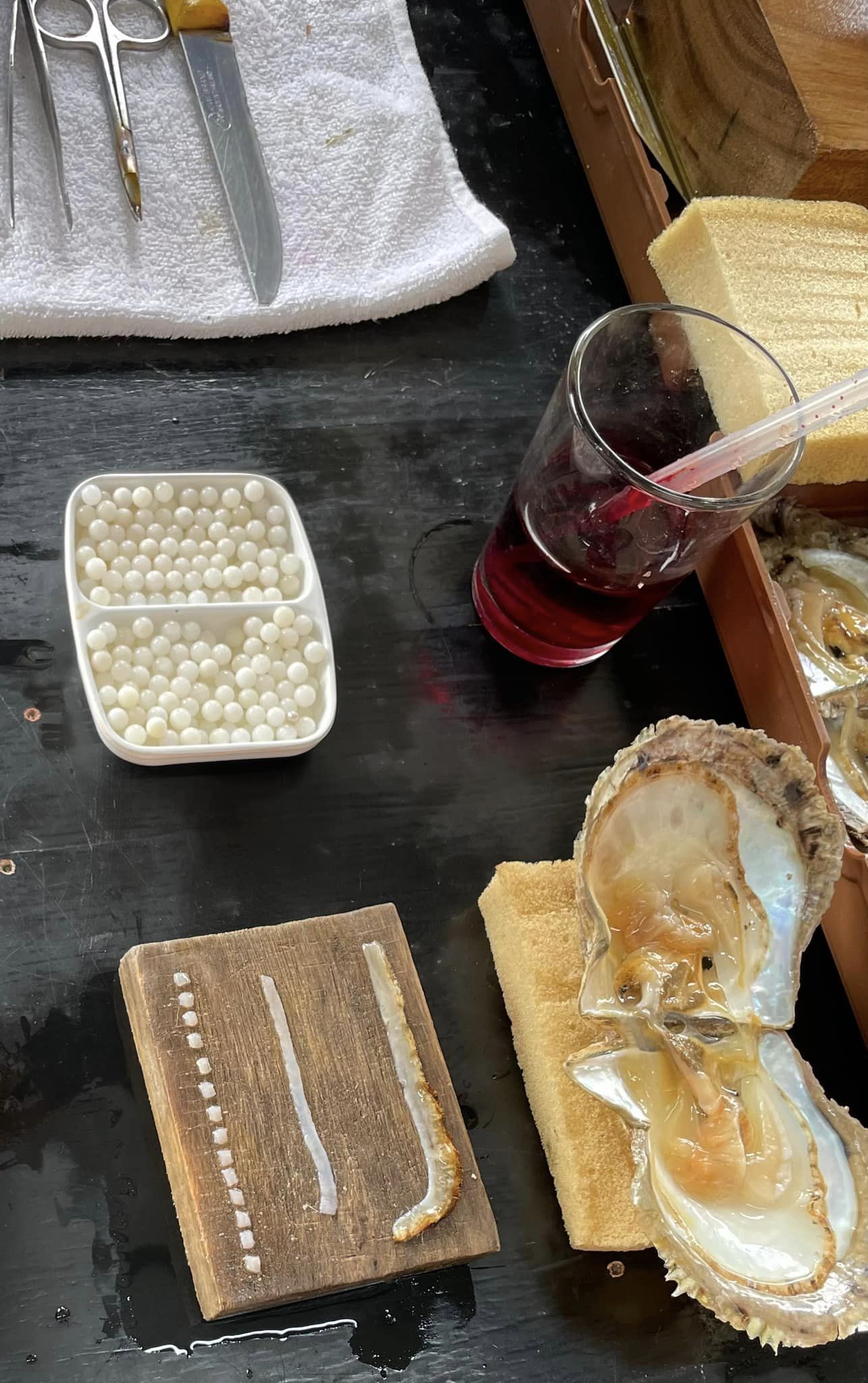
This shows the stages of the mantle preparation. On the right, in the shell, the mantle is along the edge of the flesh of the oyster. On the wooden board, you have the whole mantle piece on the right, cleaned up in the middle, and cut into the tiny pieces to be inserted into the host oyster on the left. In the container at the top of the photo are the “seeds” that get implanted with the mantle.
Here is the process.
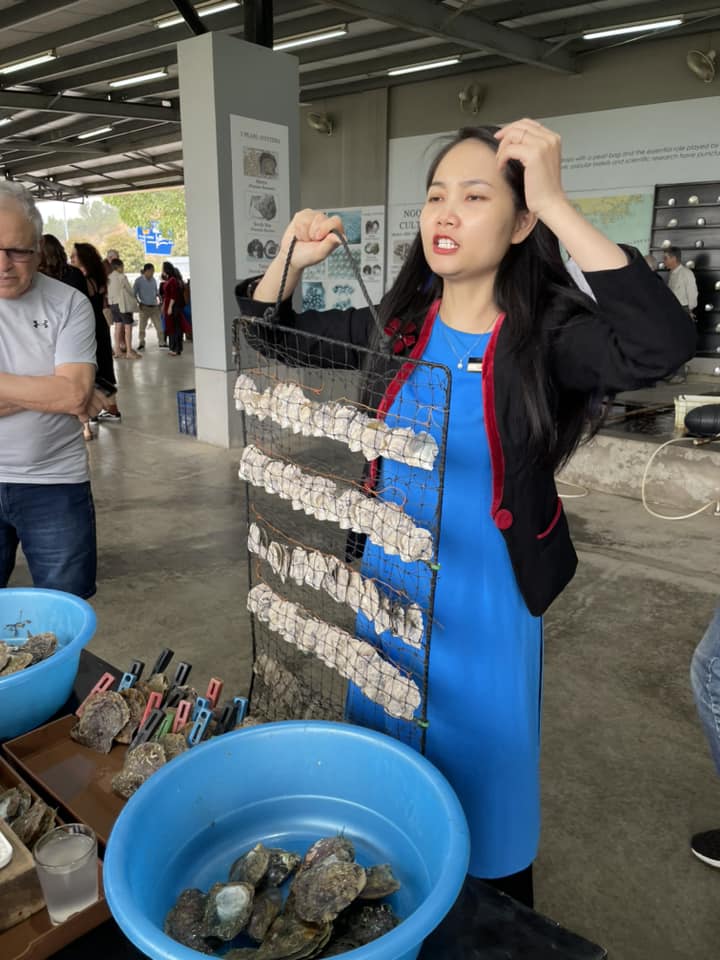
The rack of implanted oysters ready to go back into the sea.
Is there a pearl inside?