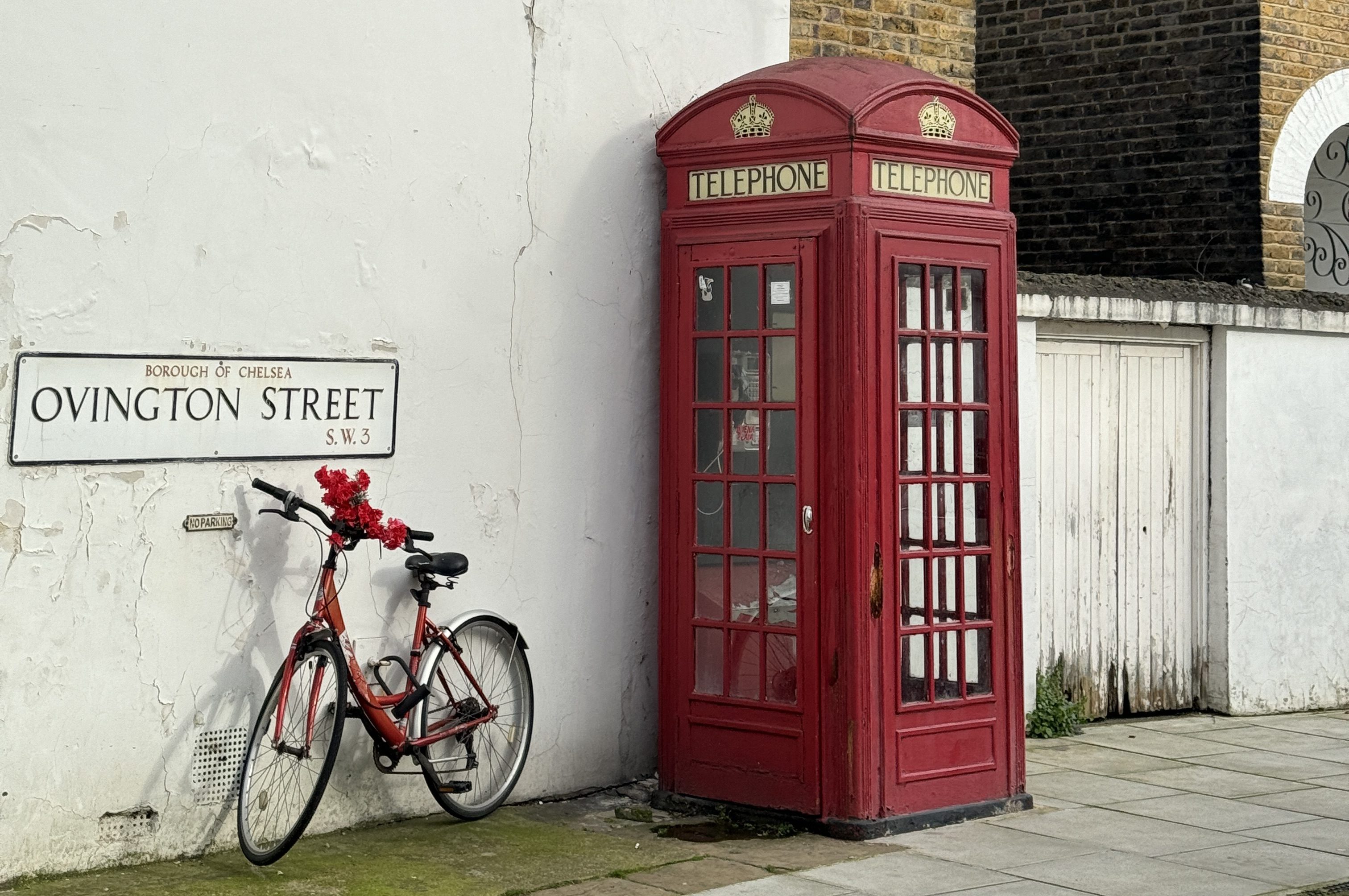
September, 2025
Back to London
Here for a short visit before spreading our wings around the UK and Scotland. Thanks, London for picking the exact days we were in London to stage one of your most disruptive strikes ever! A striking tube didn’t stop us though, just made getting around a little more time-consuming and served to line the pockets of the taxi and Uber drivers who were most happy to pick up the slack.
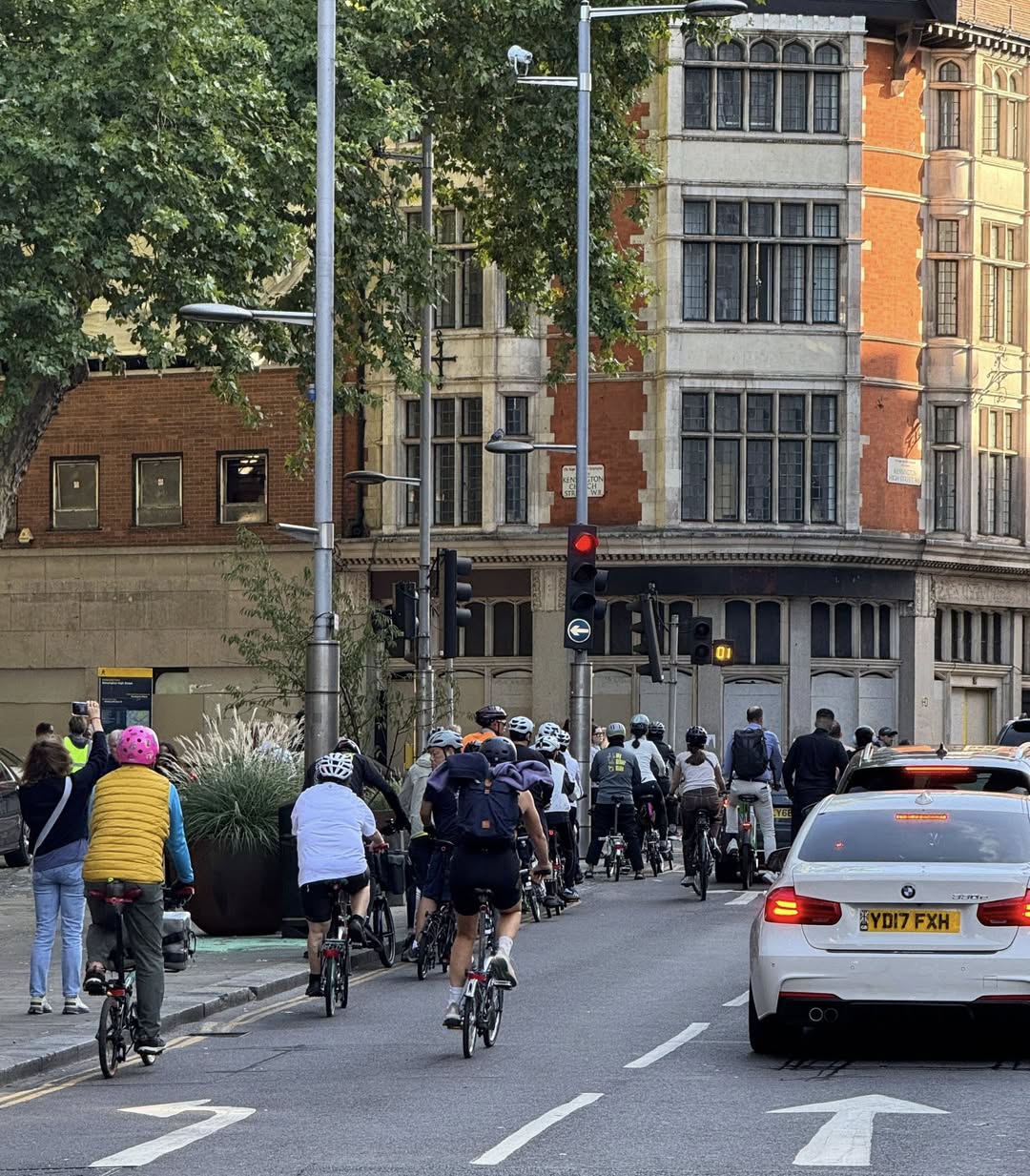
I’m not sure if there were more people commuting to work by bike because of the Tube strikes or if this was typical, but there sure were a lot of bikes on the roads. With the volume of traffic, there was no way I was going to attempt to ride a share bike on the other side of the road to compensate for the lack of Underground service!
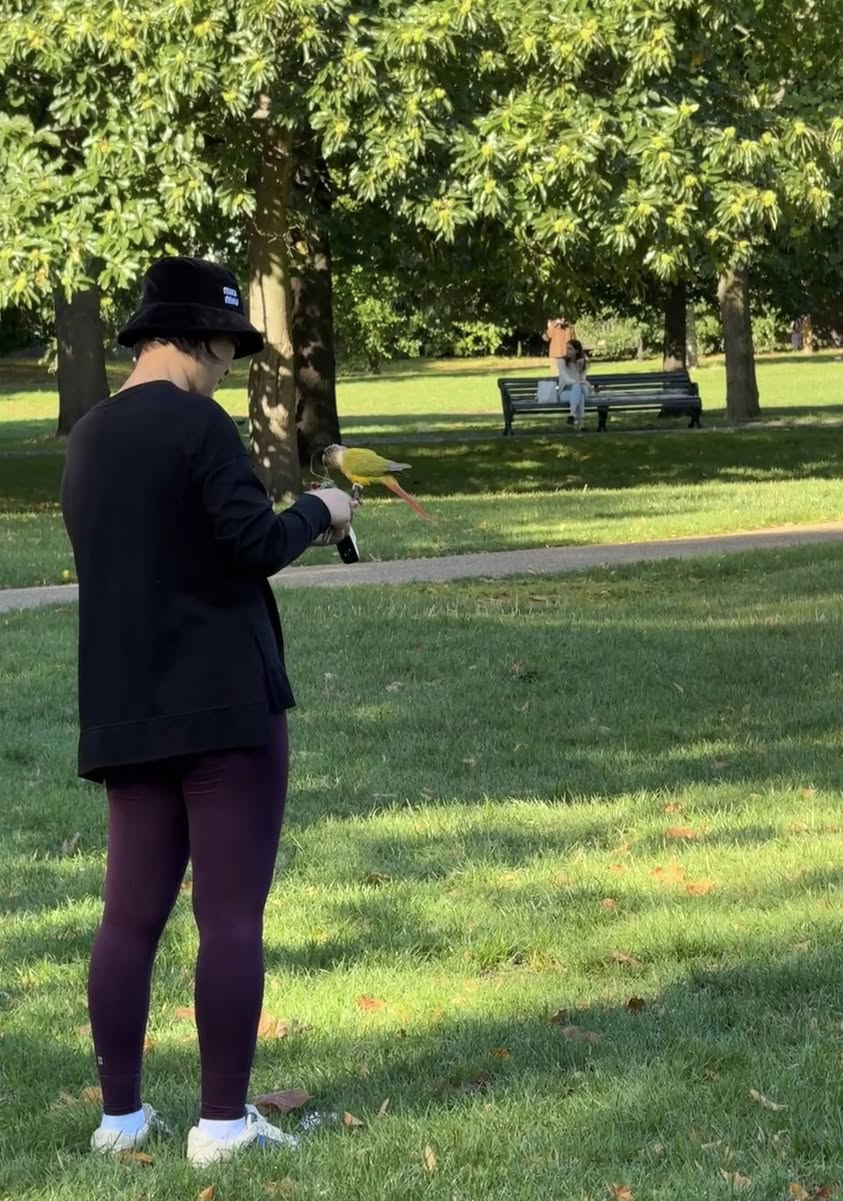
For the most part, we walked…and walked and walked. And so many interesting things one sees when walking from A to B! Walking through Kensington Park to meet a friend in Mayfair, I came across many people walking their dogs. But this was the first time I’d ever seen anyone out walking their bird!
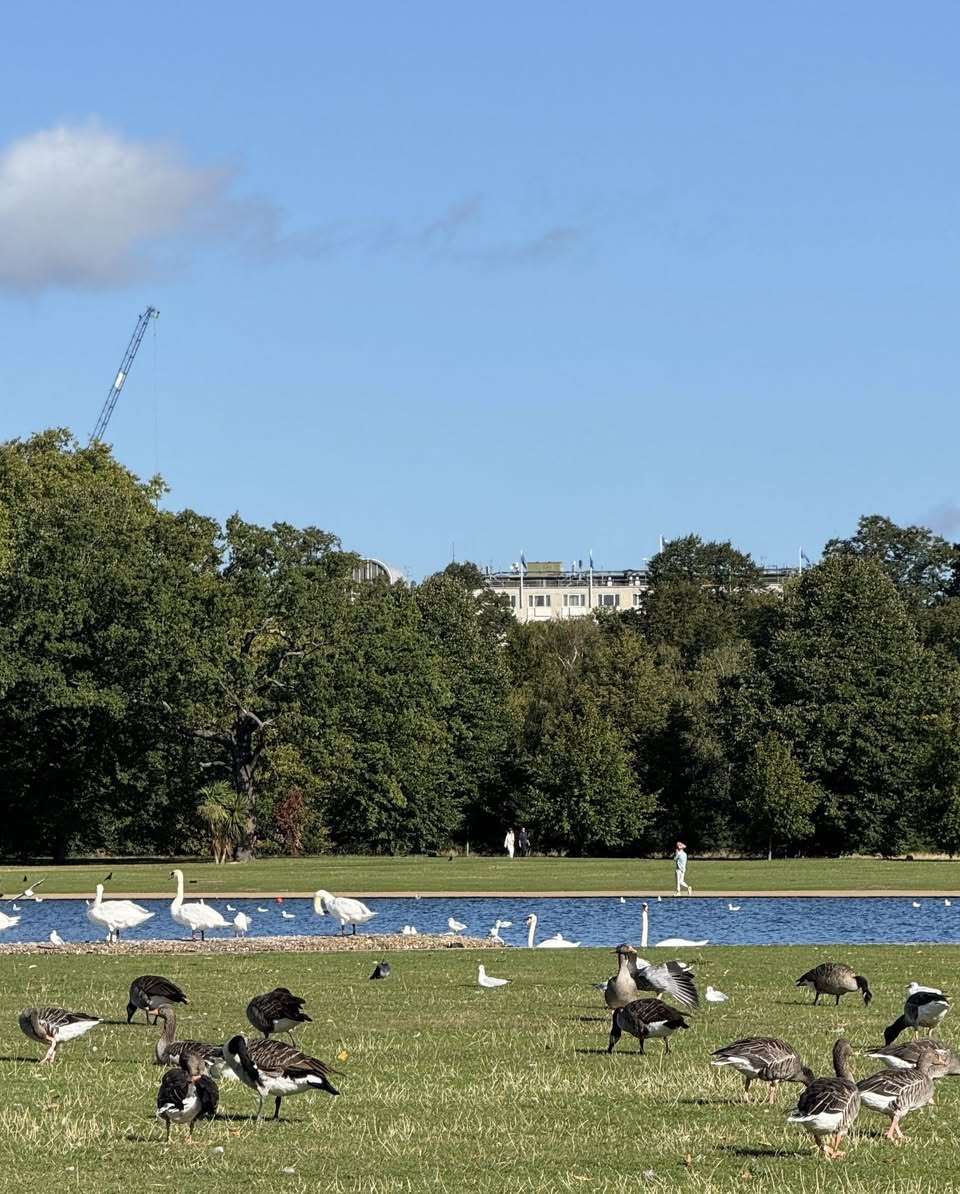
How lovely to see Canada Geese in the minority for once! These ones certainly did not have the attitude of ours in Vancouver who seem to think they own the city.
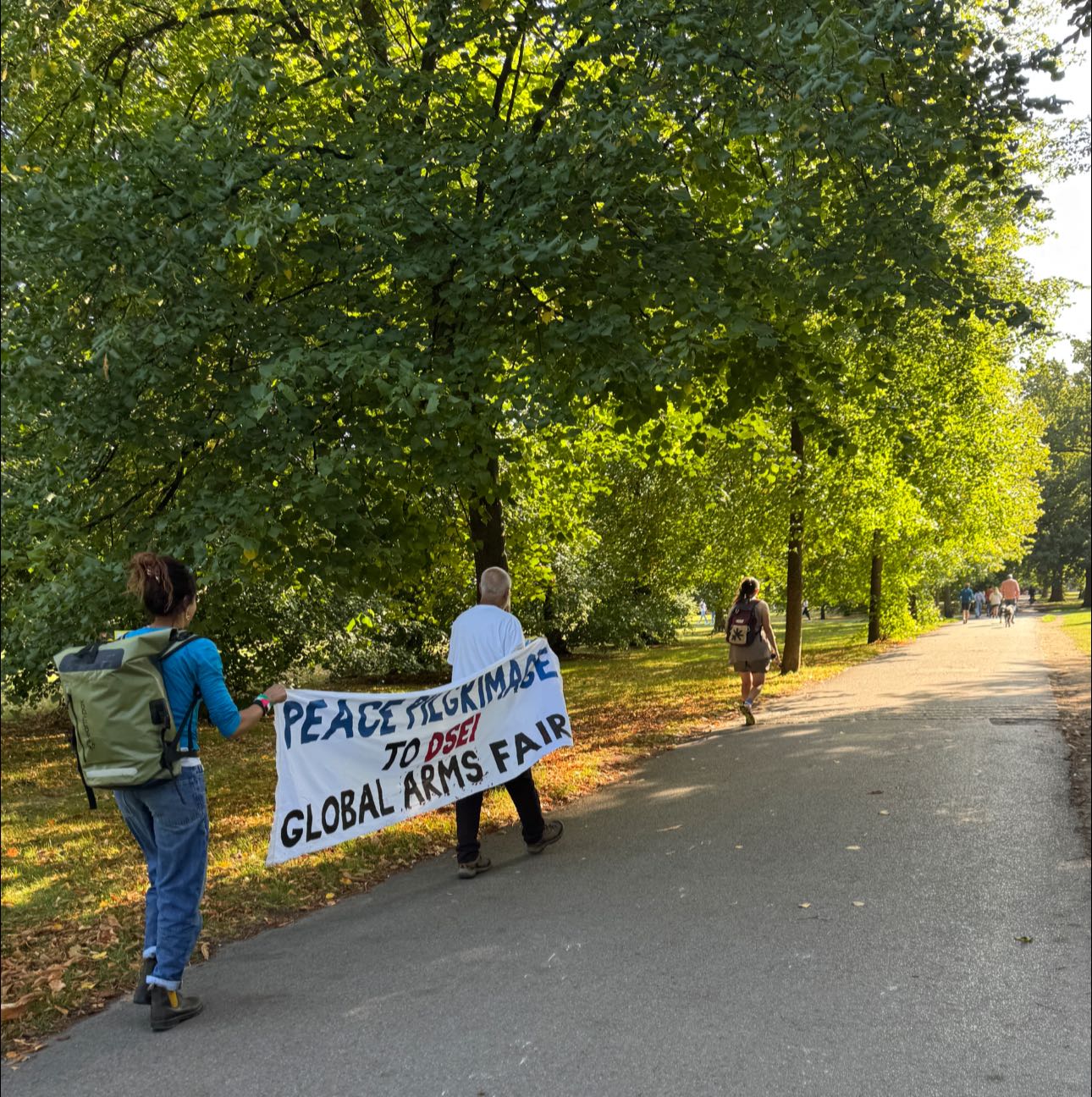
These two have been walking for a week…they started in Oxford and are heading to protest at the DSEI Global Arms Fair. They are almost there; only three hours to go!
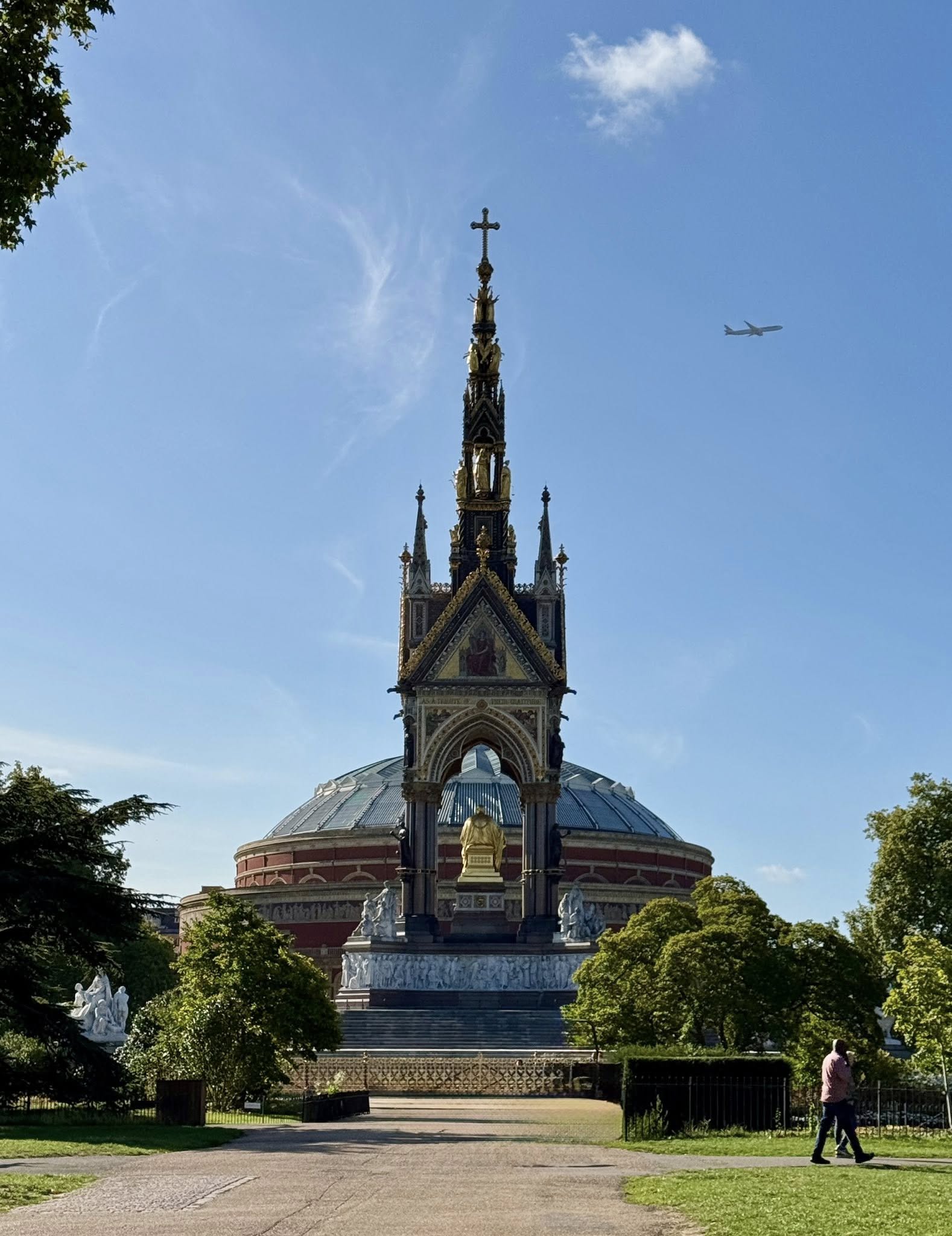
I don’t think Prince Albert’s memorial is the best seat in the house but he can certainly surveil all the goings on in his dream venue. His wife, Queen Victoria commissioned the Royal Albert Hall in her husband’s memory after he died at the young age of 42. He officially died of Typhoid Fever but apparently had been ailing for a few years beforehand and nowadays medical historians think he likely had Crohn’s disease or stomach cancer. Albert had a passion for the arts and this Hall fulfilled his dream of a venue where all people could come together to enjoy music, art and lectures. Victoria was so devastated by his death that she wore black for the remaining 40 years of her life.
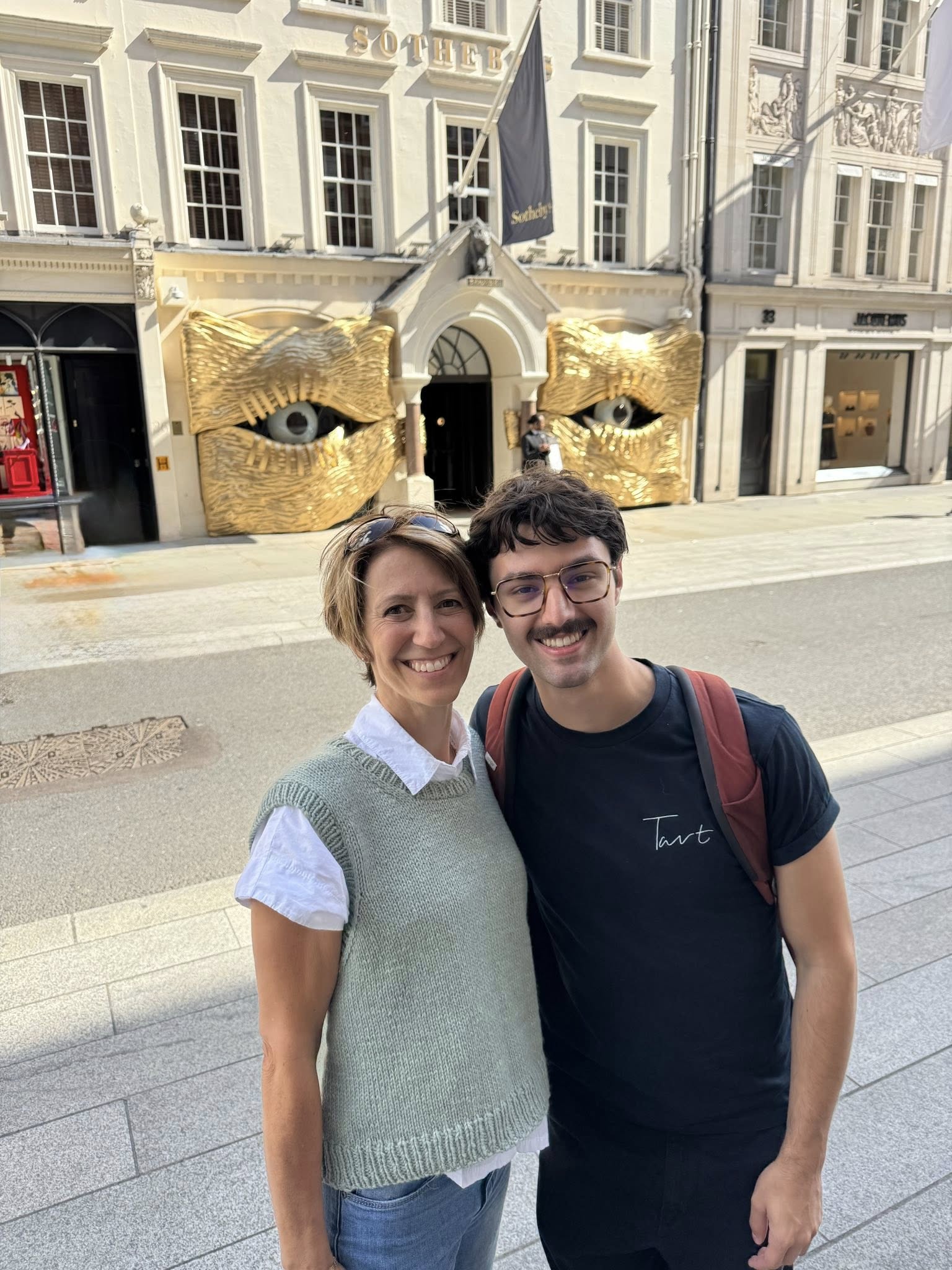
Trying to be as tall as Evan! I’m on my tippy toes and he is crouching with the eyes of Sotheby’s looking on.
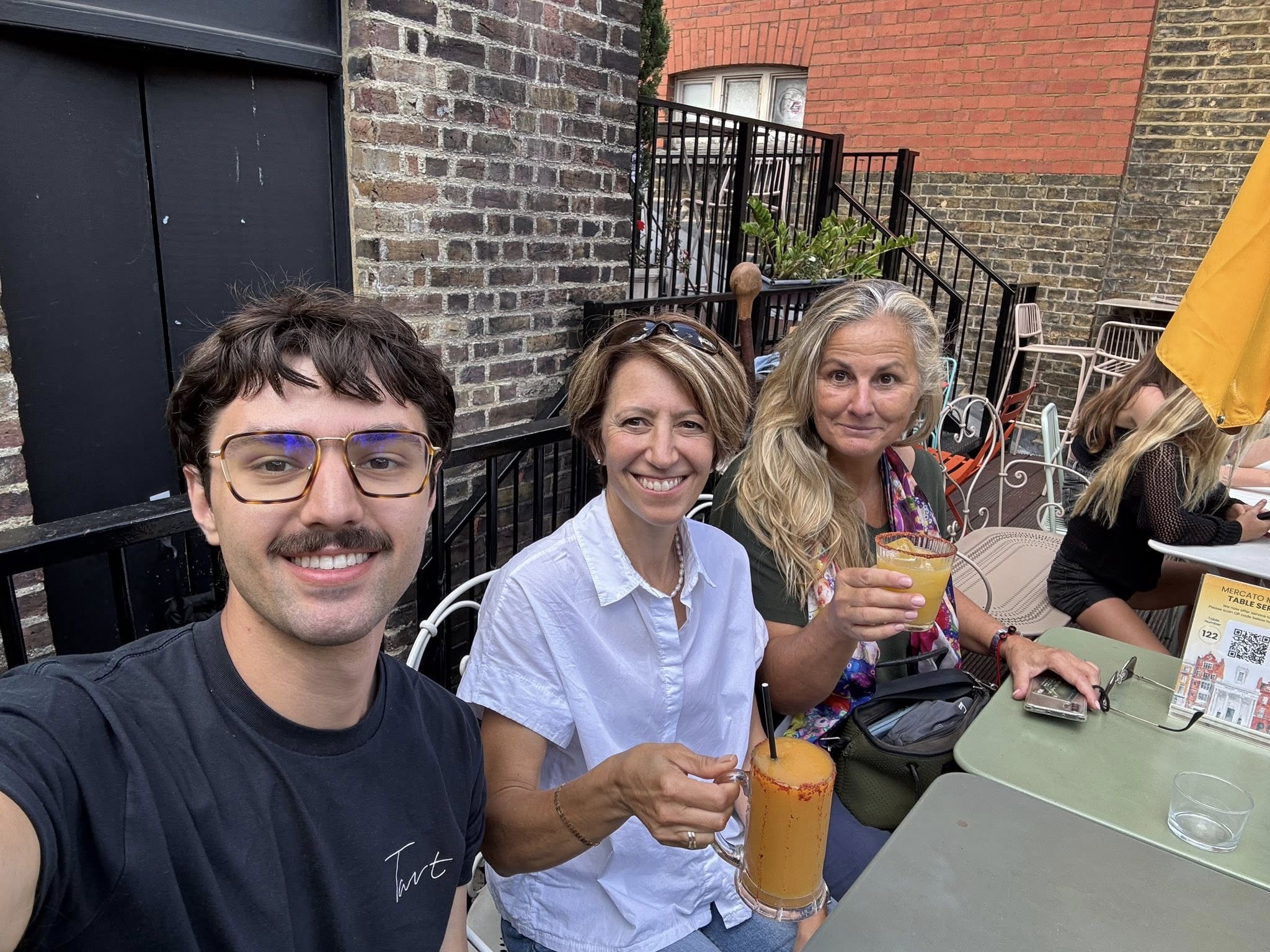
How wonderful to catch up with Rachel at Mercato Mayfair! We’ve known each other since the start of high school.
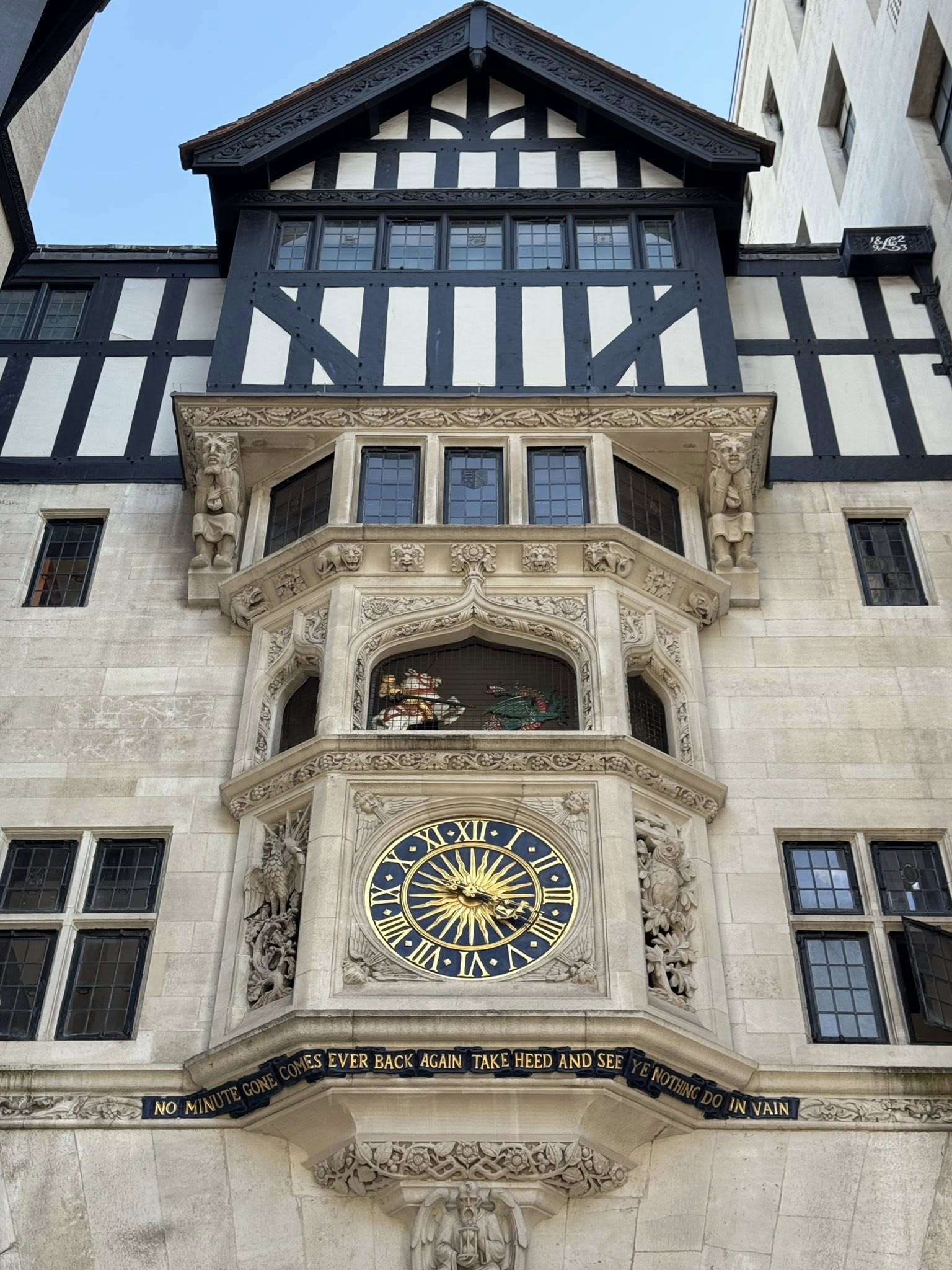
“No minute gone comes ever back again. Take heed and see ye nothing do in vain.” Can’t think of more apt words beneath the clock at Liberty. Better hurry up and shop, shop, shop!
We waited for ages for the Uber boat to take us to the Tate Modern (in the absence of the Tube). Finally, one came by but didn’t stop. No, it wasn’t full, the water level in the Thames was too low at this spot for it to pull in close enough to the dock. Someone must have opened up a lock or something because a while later, one pulled in…either that or the Uber boat was having its own little solidarity work to rule.
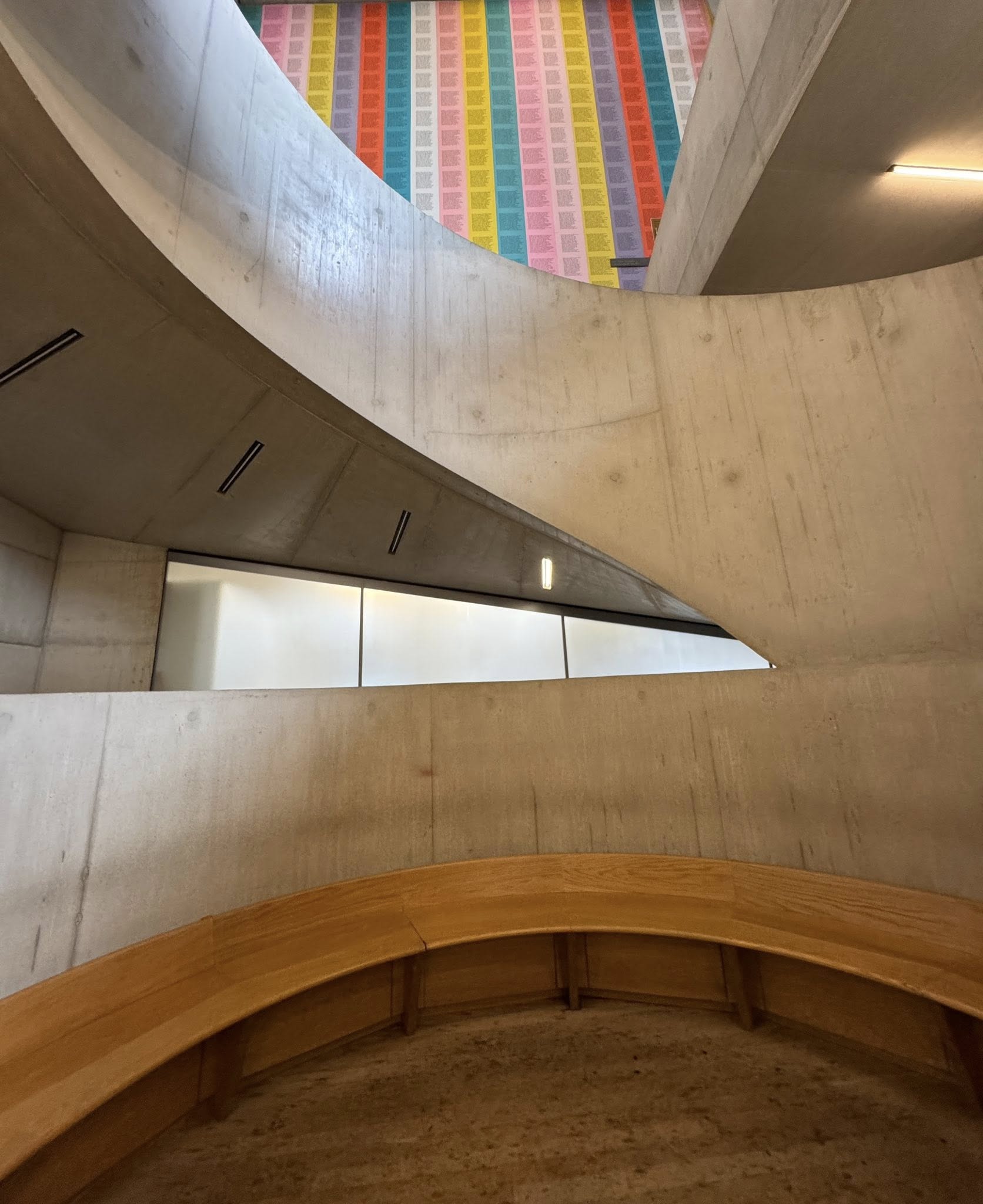
The Tate Modern never fails to impress. So many inspiring works throughout this place and lots of interesting things not in the galleries. This is American artist Jenny Holzer’s Inflammatory Essays 1979-1982. She read what she calls “crackpot literature” to find writings expressing extreme political and moral positions. None of these reflect her own beliefs but, in her words, she wanted to 'instill a sense of urgency in the reader. I wanted the reader to jump, at least, and maybe consider doing something useful.’ Interestingly, these days, with so much extremism in our faces day in and day out, we have been desensitized and don’t react anymore.
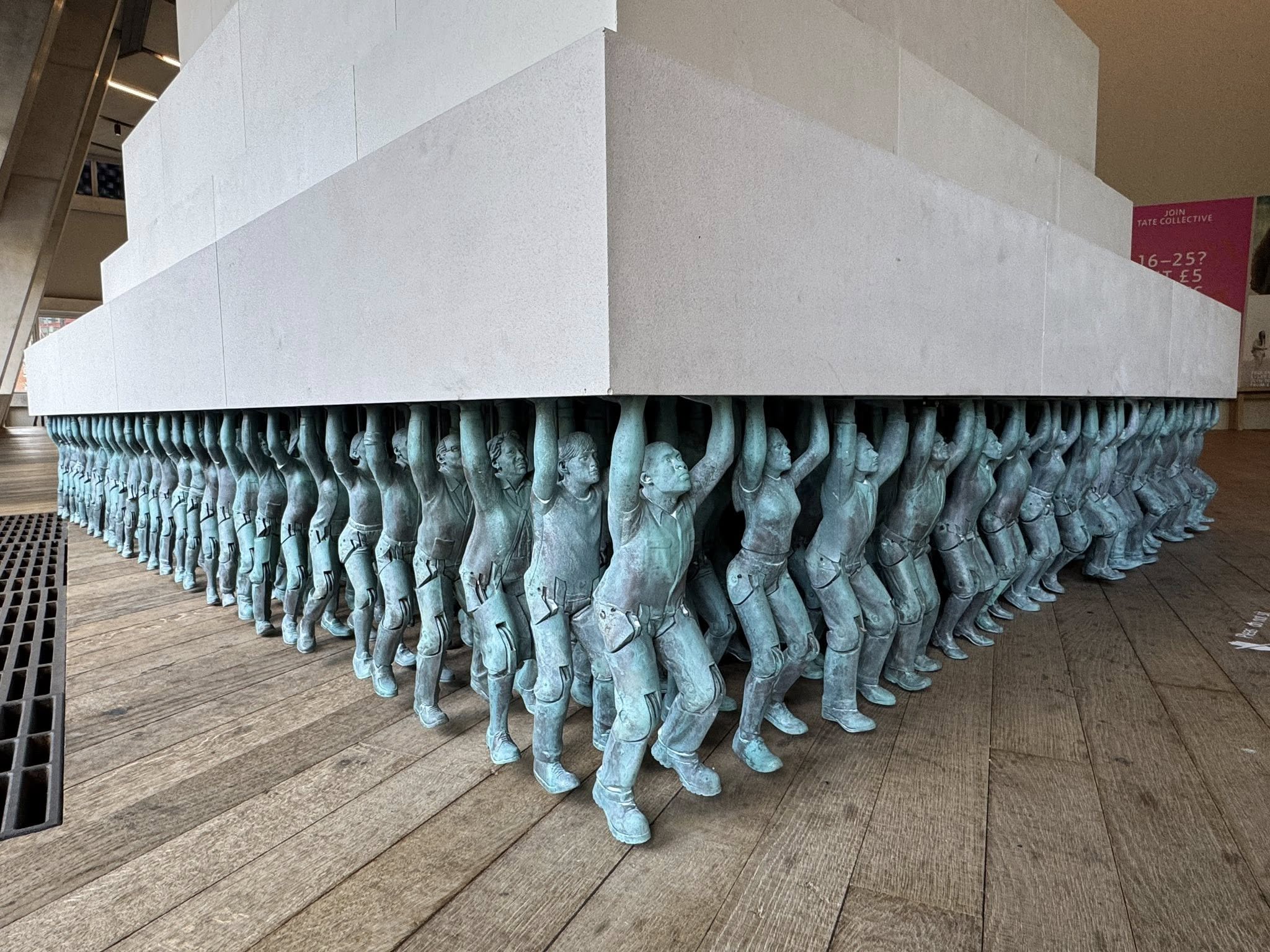
Korean artist Do Ho Suh created this brand new work, Public Figures, to upturn the traditional patriarchal narrative of commemorating male heroes with statues on plinths. Here, the heroes in the form of hundreds of resin figures are holding the plinth up, a gesture about collective effort, anonymous labor, the weight of memory, and who supports whom.
Here’s Public Figures moving itself to its new home.
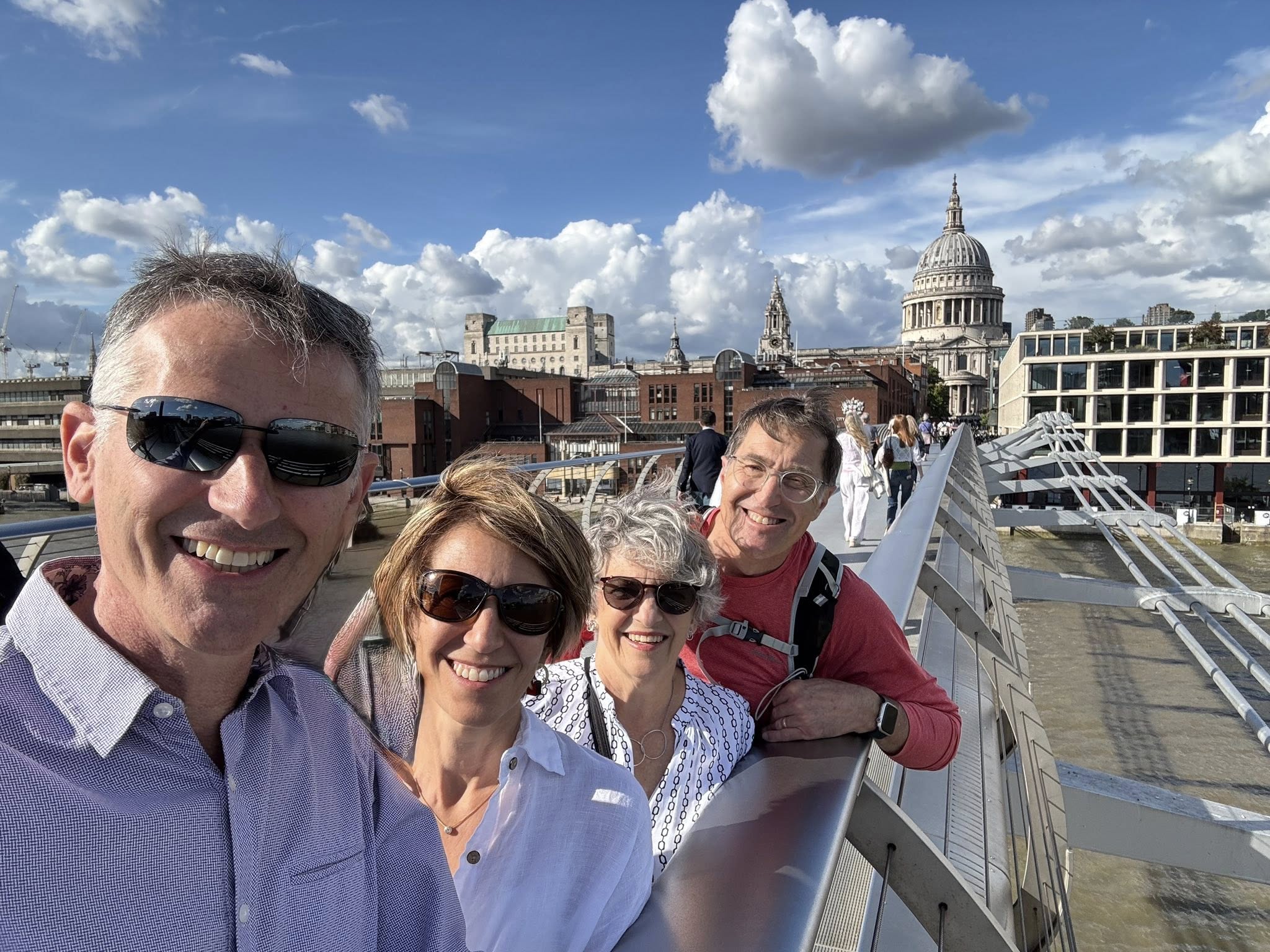
Spent from all that culture and taking a breather on the Millennium Bridge with St Paul’s Cathedral in the background. Now to head back and get ready for a special dinner!
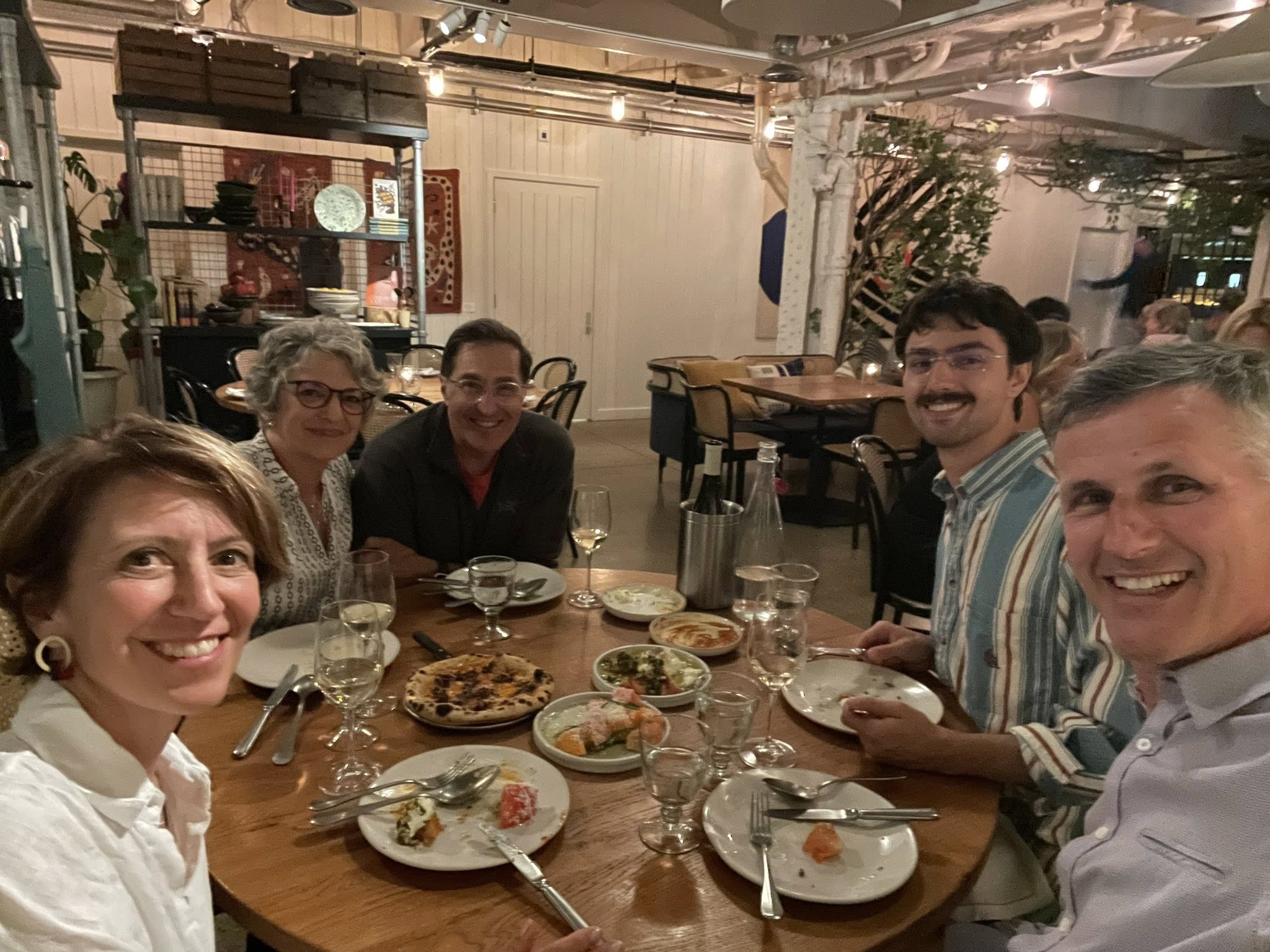
So much for getting ready, the Uber (car) was so stuck in traffic we needed to shift plans and go straight to dinner at Evan’s restaurant, Wild by Tart. He got to be on the customer side tonight. He had worked earlier in the day so we take great pride in knowing he made our desserts tonight. Spectacular meal!
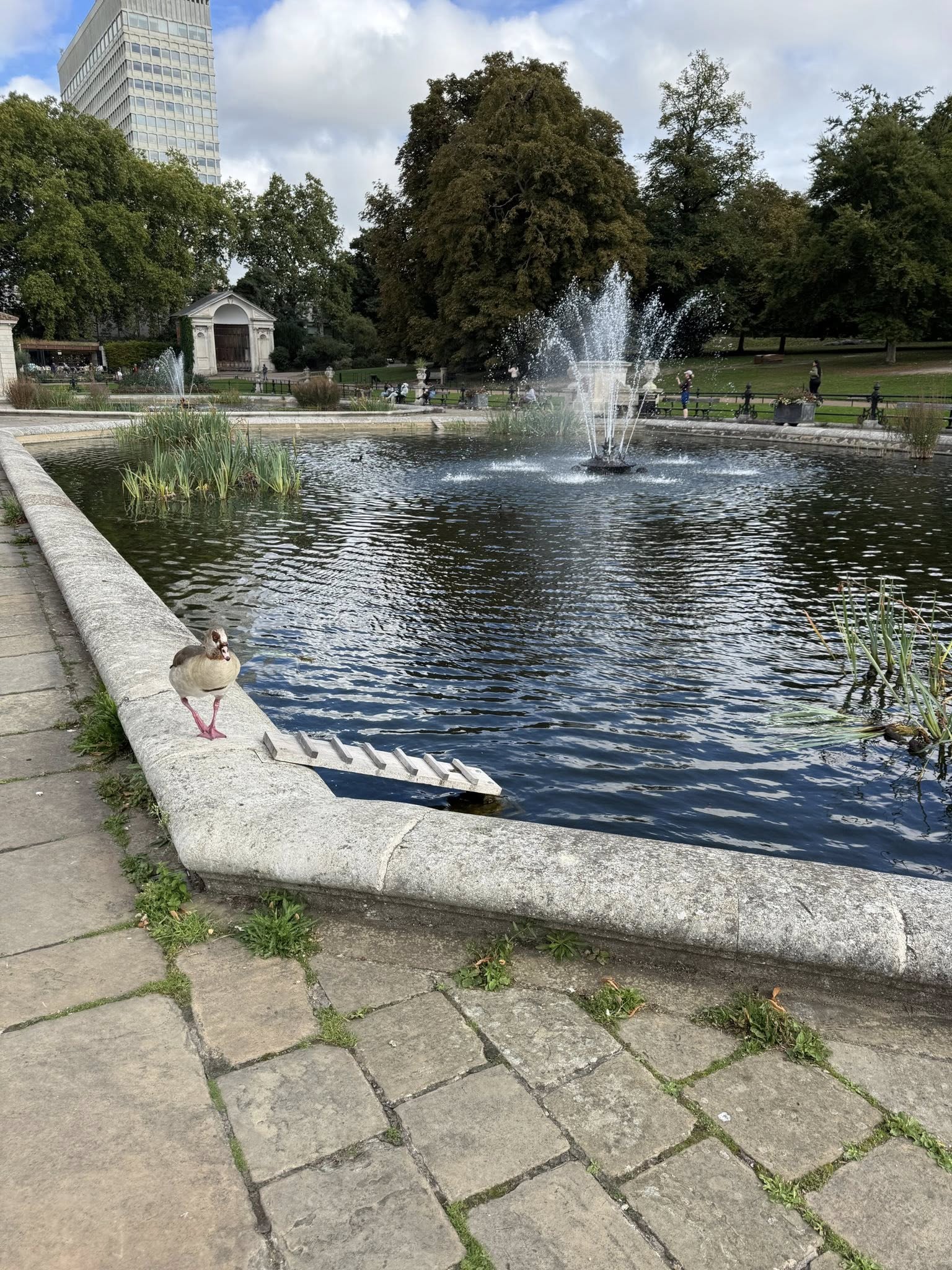
They sure take care of their waterfowl here…heaven forbid they should tumble into the pond.
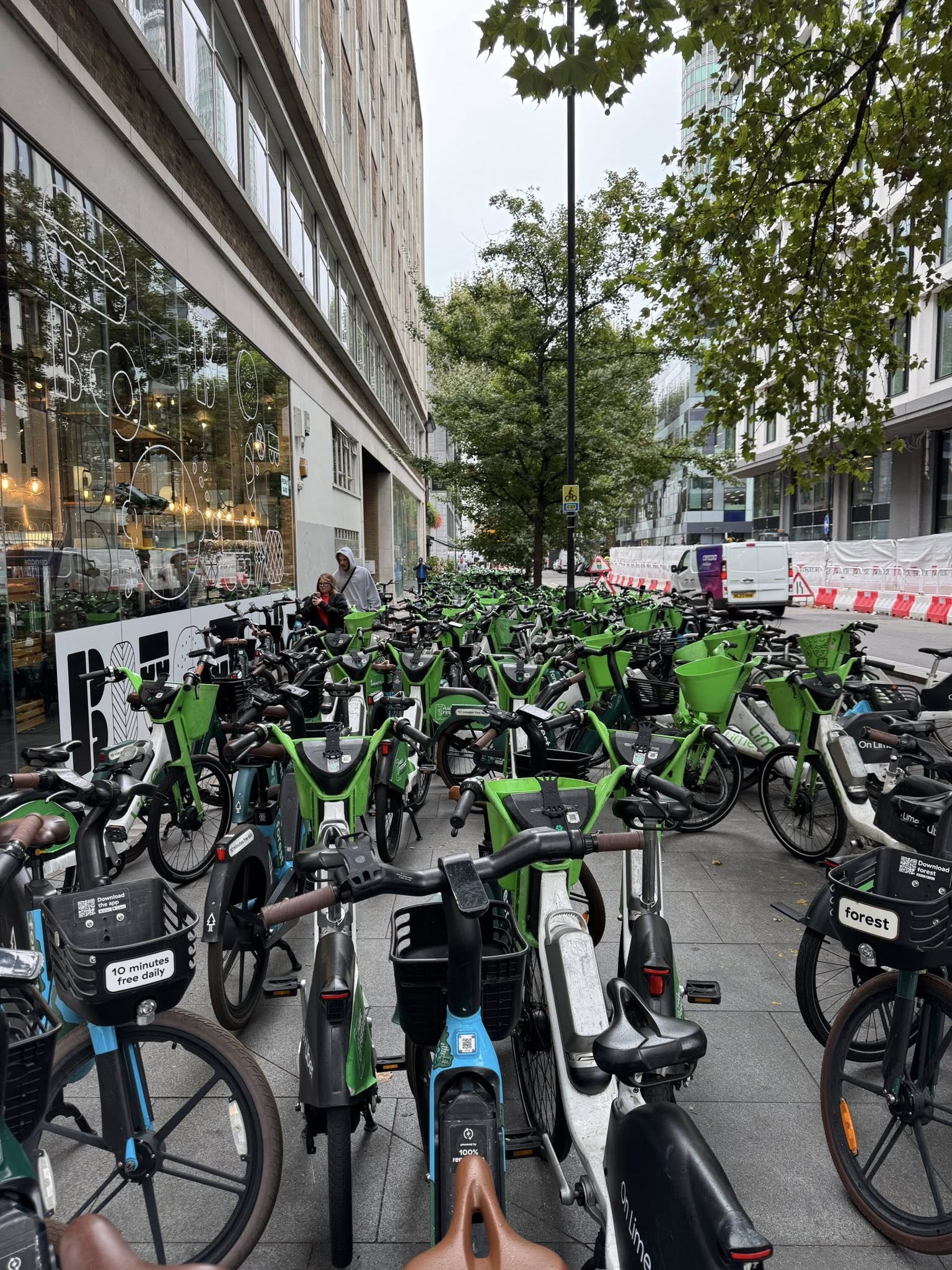
Now there’s a lot of share bikes! Are there this many when the Tube is running normally?
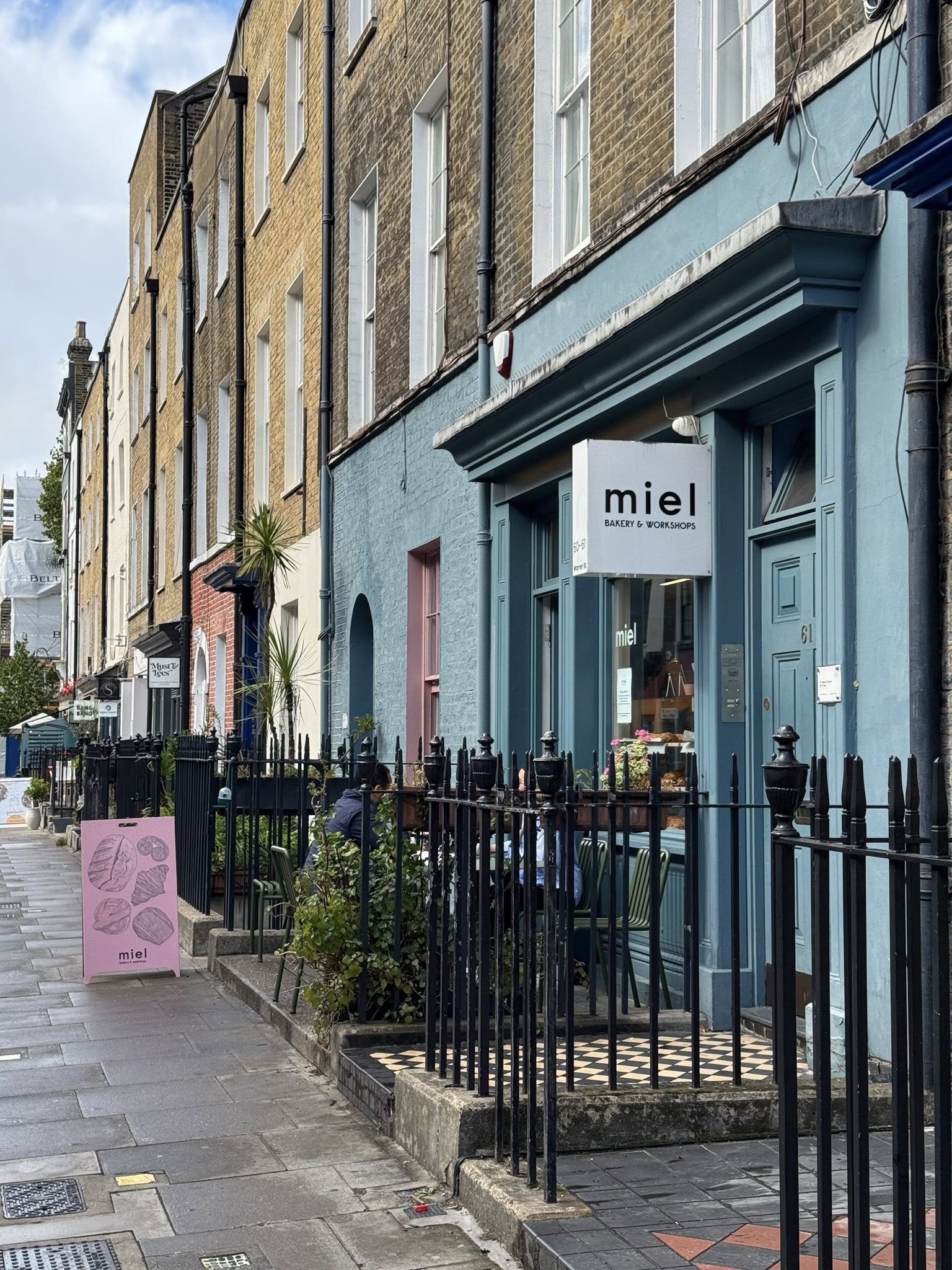
Evan took us to Miel for coffee. A tiny bakery that punches well above its weight. The coffee and pastries were fabulous. Apparently Nigella comes here whenever she is in town.
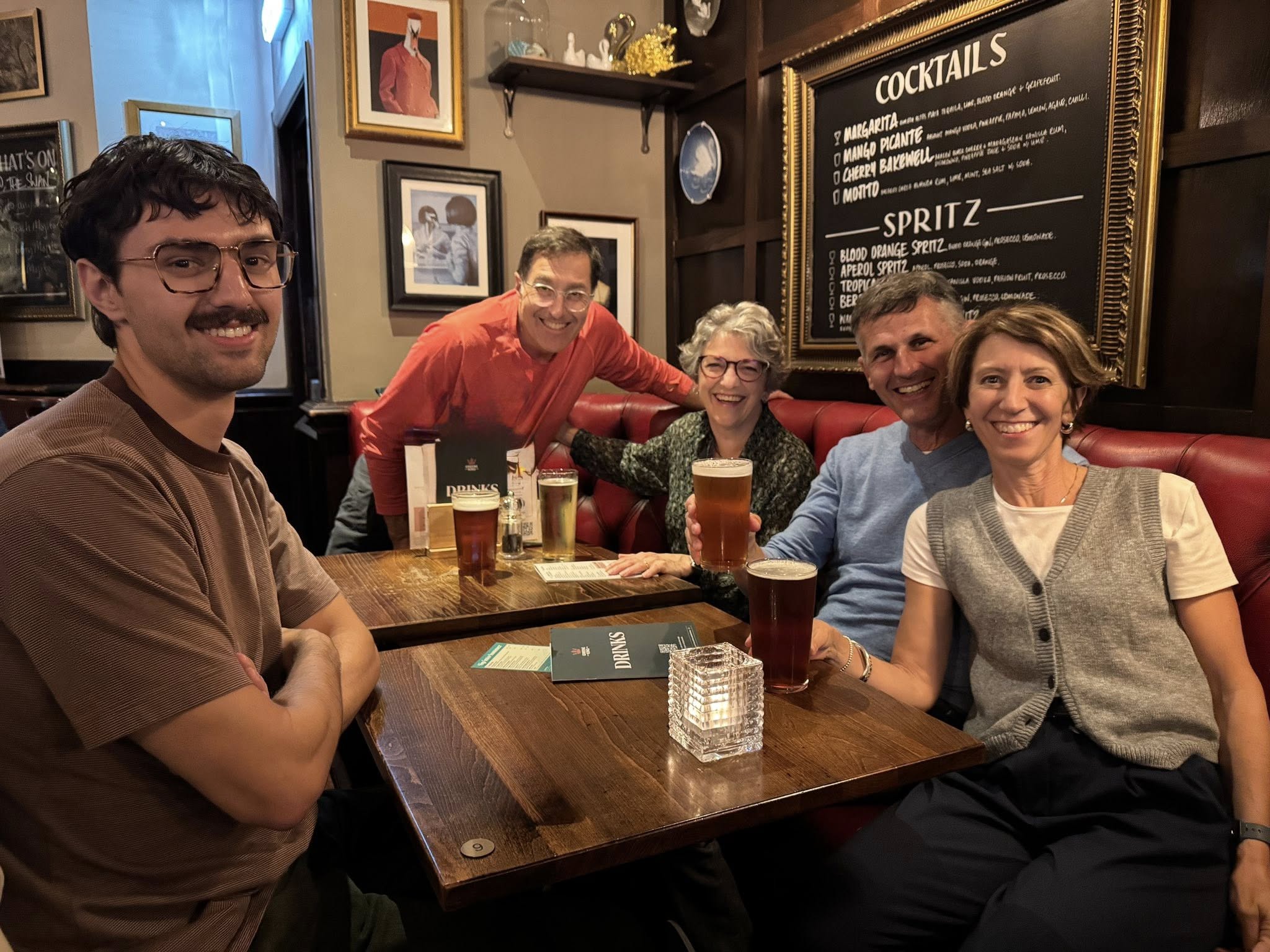
We finished the afternoon in a pub, of course! Here I was introduced to cask ale. Known as “real” ale, this is unfiltered and unpasteurized beer that continues to mature in the barrel. The secondary fermentation that occurs in the barrel gives it a soft and gentle carbonation with no added CO2. This is not a burp-inducing beer! With no added carbonation, the bartender pumps it out of the barrel by hand. This barrel has a short shelf life and once tapped it needs to be drunk within a few days…not a problem in this pub culture country!
Luscious London
For me, London has it all! Museums (free!), theatre, neighbourhoods, architecture, old friends and equal measures of quaintness and quirkiness; feasts for all my senses. A week exploring the city with Evan leaves me wanting and needing more. Will Evan’s next move be my ticket back here on regular visiting rounds?
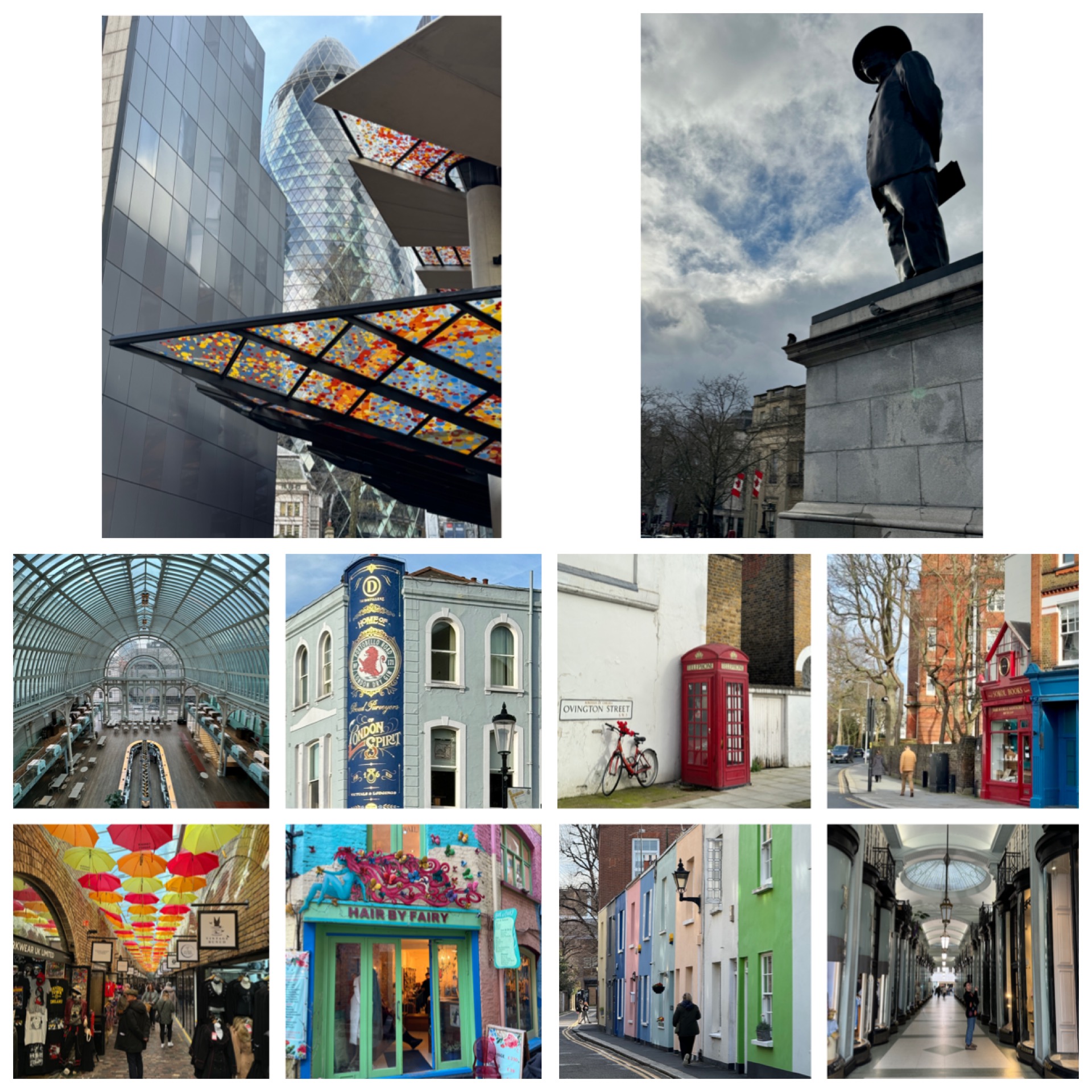
Welcome to London! We walked and walked and walked more steps than I can count. From the centre of the city to Covent Garden, Camden and Portobello markets and so many nooks and crannies in between, there was so much to be part of!
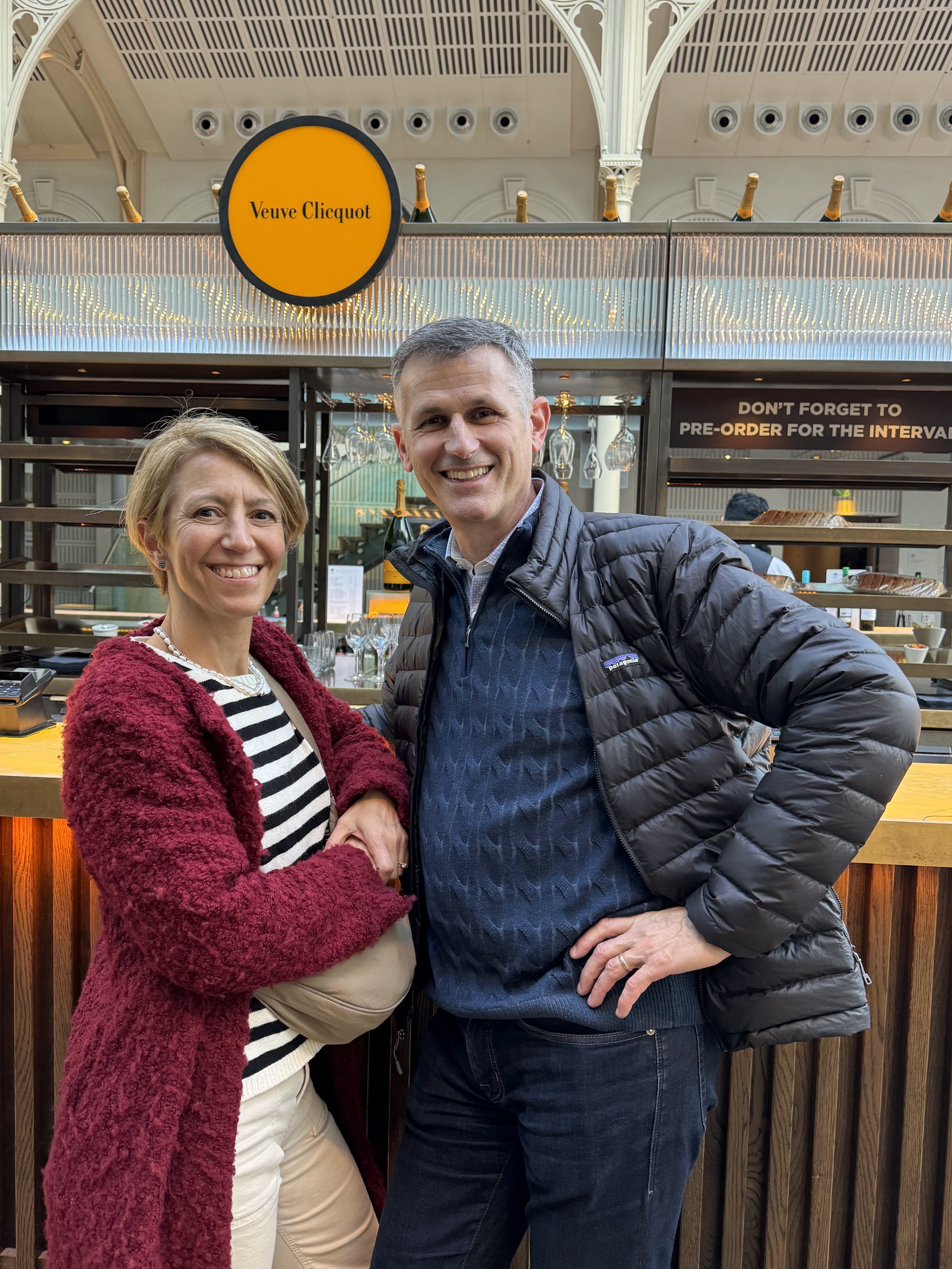
Hanging out at the Covent Garden Opera House’s Champagne bar.
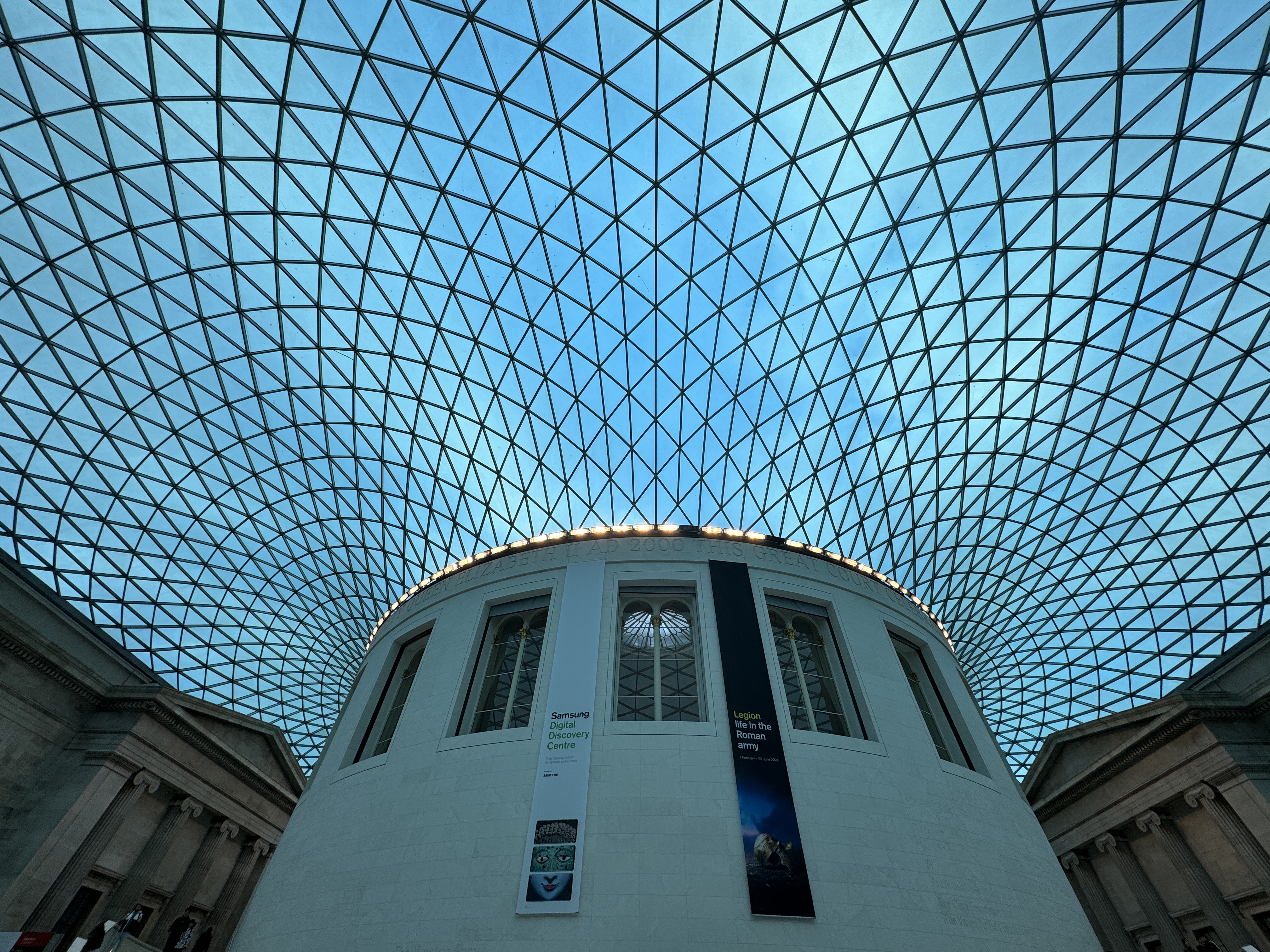
I’m not really a museum gal but here, how can you not be? The British Museum has an unbelievable collection of artifacts, relics, sculptures and oddities from the world over. Suffice it to say, if repatriation was in full force, the place would be empty…
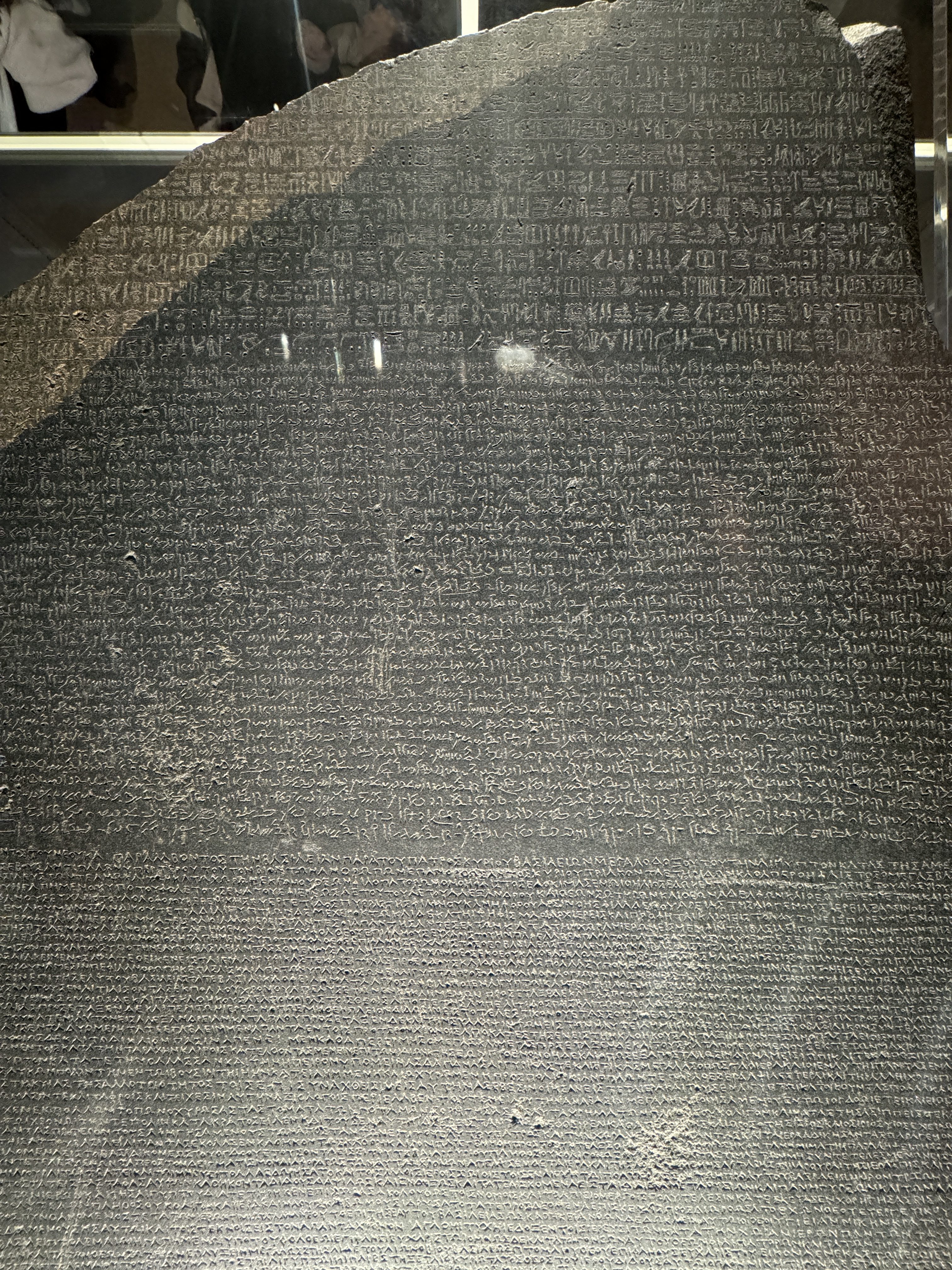
The Rosetta Stone is here! This remarkable rock cracked open the world of ancient Egypt. This piece of rock had a long journey to get to the British Museum in 1802. The ancient Egyptians inscribed decrees on rocks and placed them outside temples to justify the rule of the pharaoh in power. Here, a young Ptolemy V came to power at the age of 12 in 195 BCE at a time when the Ptolemies were struggling to maintain control. The Rosetta Stone’s inscription detailed all his great honours from the priests and decreed that everyone must revere him as their king. They made sure to do it in three languages so everyone would understand who their ruler was. So what happened over nearly 2,000 years that brought this stela across the pond? In 1470, the Rosetta Stone was taken from the temple as material to build a fortress in a town called Rashid for Egypt’s Muslim rulers, who clearly had no clue that this piece of rock was of historical importance. It wasn’t until Napoleon showed up in 1799 and started digging to build a new fort against the Ottoman-British forces that the enlightened French discovered the stone and realized that it might be significant. The British then defeated Napoleon and their spoils were given to the British through the Treaty of Alexandria. The Museum makes a point of declaring that it got the Rosetta Stone not by stealing or looting but through legal and legitimate means…won fair and square. What’s written on the stone is not really all that important. The magic is that it was inscribed in three languages: Hieroglyphic (the sacred language of the priests), Demotic (the everyday language of the Egyptian people) and Greek (the language of government). Ancient Greek was still understood in the late 18th century and people excitedly realized this could be the key to cracking the hieroglyphic code. And indeed it was!
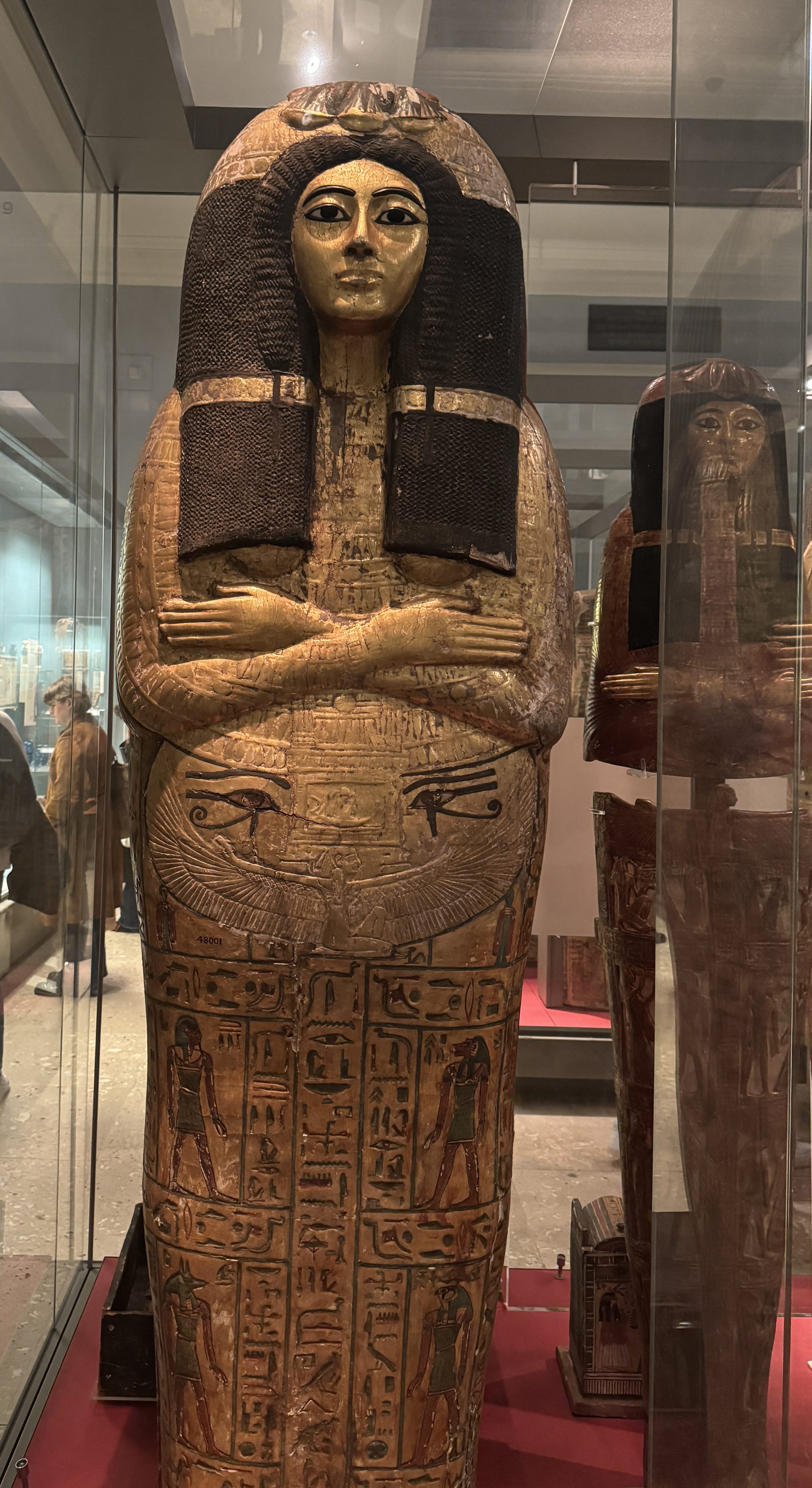
The British Museum’s ancient Egypt exhibit is amazing. The most stunning artifacts from Egypt are not only displayed but explained so well to those of us who aren’t Egyptologists. There is so much to learn here but one of my favourite tidbits was the importance given to appearance for the afterlife. For them, death was only a step into a new world and life so they had better make a solid impression! Not only were these mummy cases beautiful, and perhaps embellished, representations of who’s inside, but those inside got some serious spa treatment to send them on their journey…manis and pedis, hair dye to cover grays, hair extensions (the fascination with long locks goes way back), beard trims and lots of makeup. All this to make sure that those who greeted them on the other side would not be mistaken as to their social status. As with everything, not much has changed…
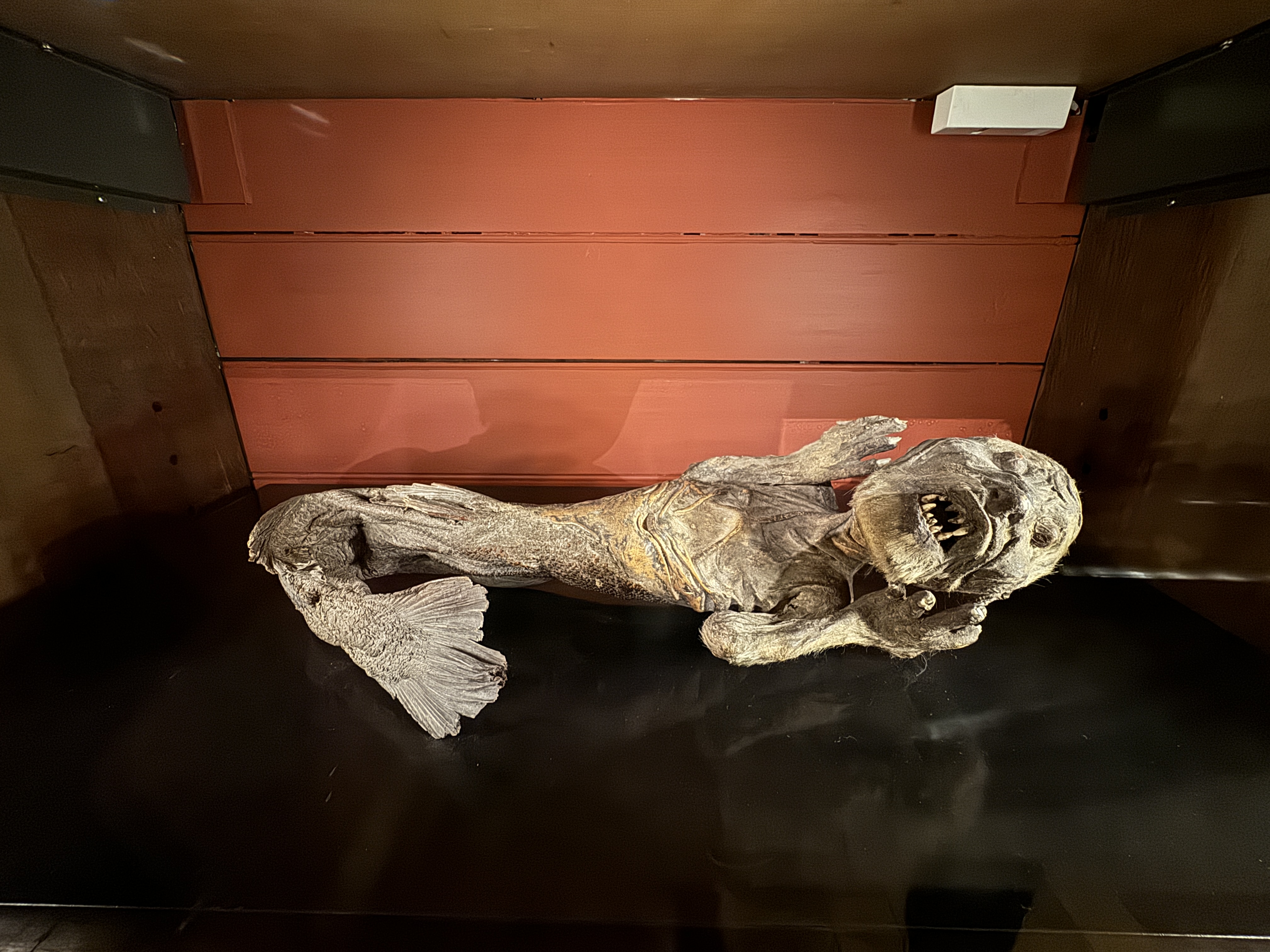
And now for something completely different: mermaids are real! They must be since they have held a permanent place in the British Museum. These oddities of the sea were renowned and it would have been quite a coup for the 17th century wealthy to have a real one on display at home. A “real” mermaid was actually a feat of taxidermy. This one in the British Museum is the body and head of a monkey deftly sewn onto the tail of a fish. Thankfully Disney gave the mermaid a makeover otherwise Ariel would have occupied countless children’s nightmares.
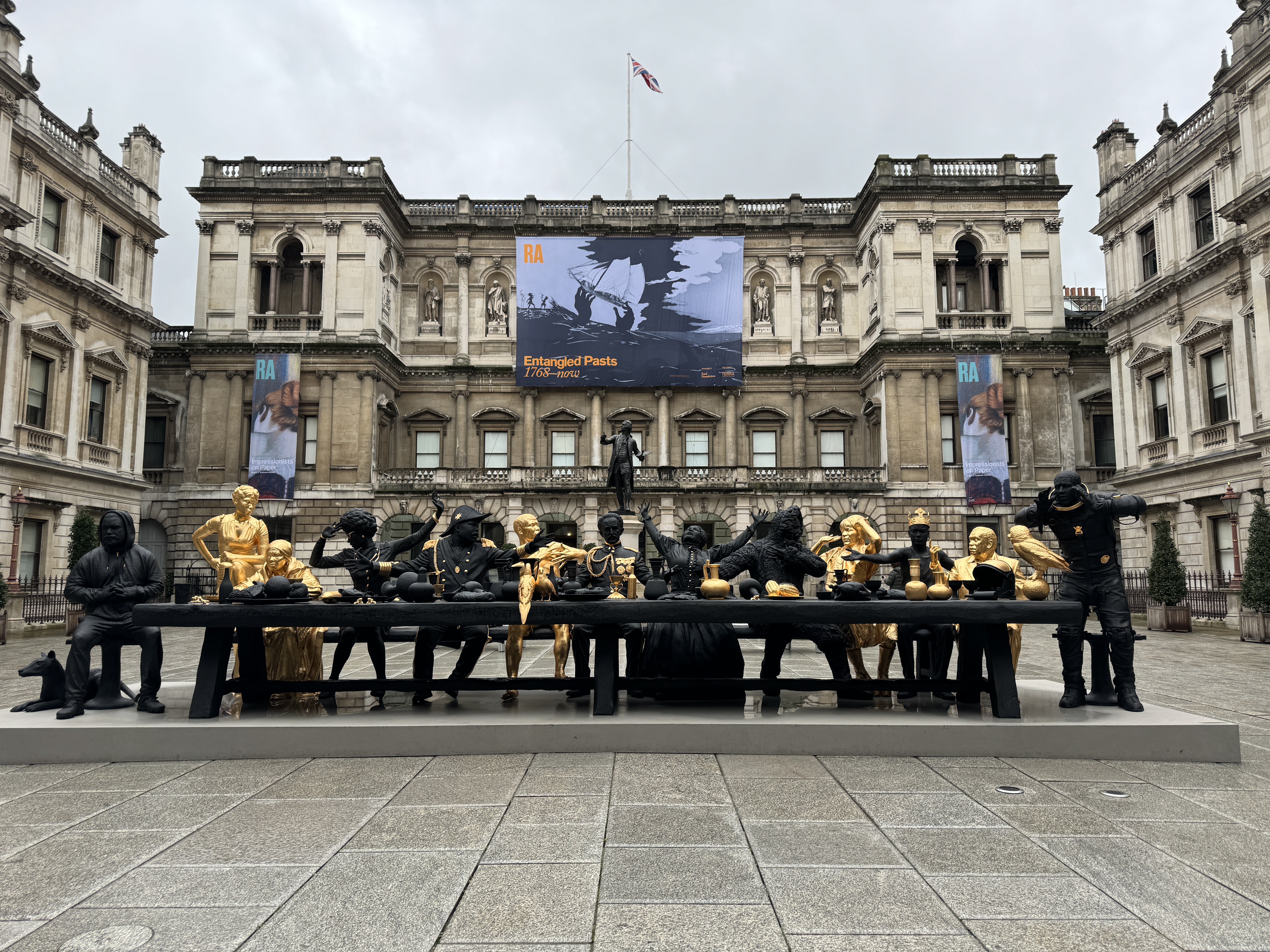
Bahamian artist Tavares Strachan's The First Supper, a riff on Da Vinci’s The Last Supper was the “frontispiece” of The Royal Academy of Arts’ amazing exhibition on art and colonialism: Entangled Pasts, 1768 to Now. The museum describes this exhibition as an exploration of “art and its role in shaping narratives in Britain around empire, enslavement, indenture, resistance and abolition”. What I loved was how just over half of it showed art of the period and the rest was contrasted by the work of contemporary artists. Current day artists are sharing their personal views, stories and experiences, shaped by the lens of those that came before them. From left to right, in case you want to do a deeper dive into who's who in this influential world: Tavares Strachan, Sister Rosetta Tharpe, Harriet Tubman, Shirley Chisholm, Marcus Garvey, Zumbi dos Palmares, Haile Selassie, Mary Seacole, Matthew Henson, Marsha P. Johnson, King Tubby, Derek Walcott, Robert Henry Lawrence. And the animal at Strachan's feet is the now-extinct Tasmanian tiger.
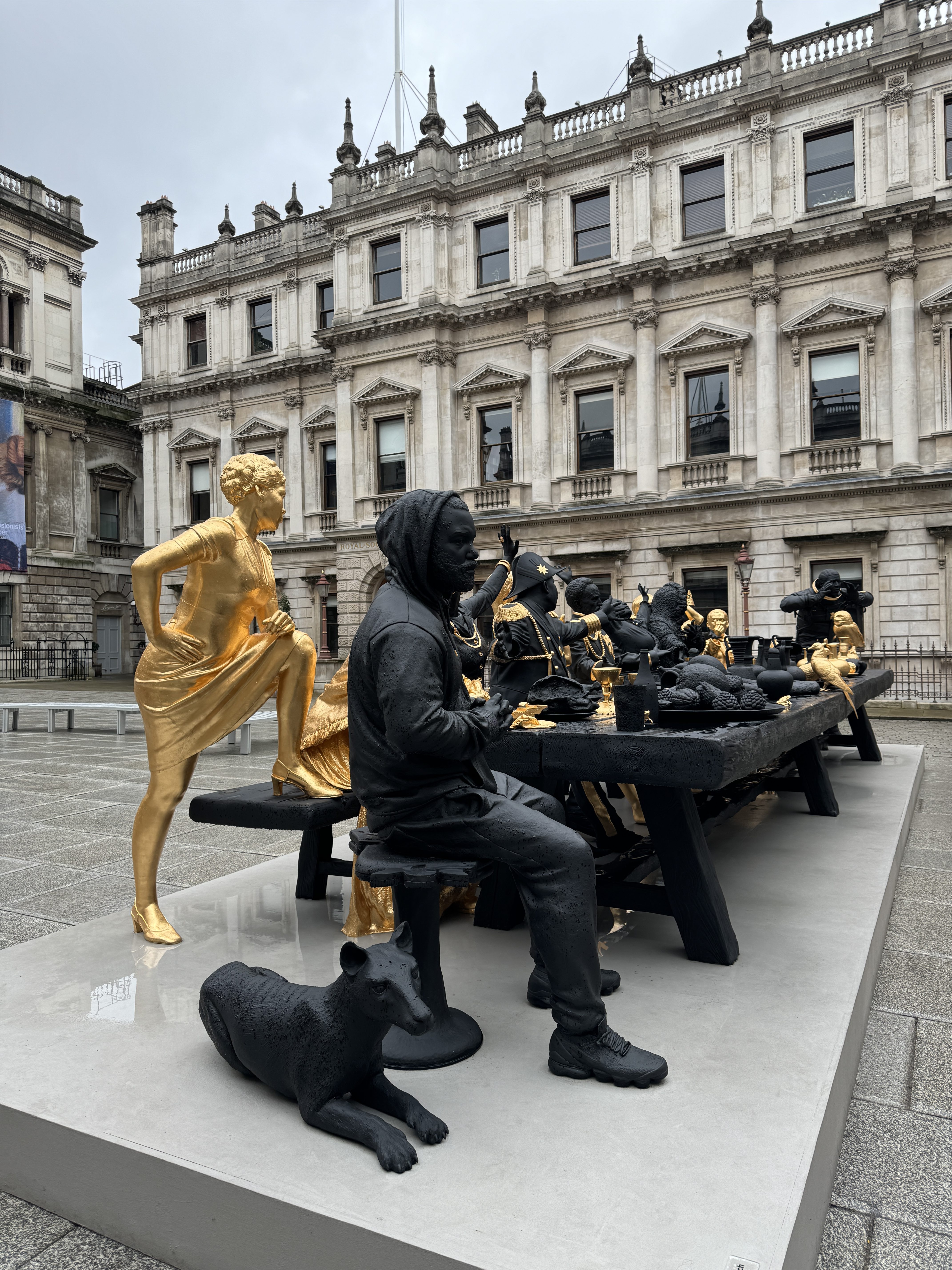
Tavares Strachan, the artist of this piece, places himself at the table as Judas, sitting among a group of abolitionists, activists, artists, explorers and politicians of African descent, all of whom have overcome oppressive power structures. Sharing a meal and conversation is an essential part of the fabric of community and symbolizes the building of social relationships. His table mates span the timeframe of the exhibition. Why does he portray himself as Judas? One historian suggests that as Judas, he is not betraying the guest of honour, but rather betrays history’s status quo by highlighting these important (but marginalized in their time) individuals. Sister Rosetta Tharpe stands over his shoulder. She was a gospel star who was the first to incorporate spiritual lyrics into R&B and created the foundation for rock and roll. She's the original soul sister!
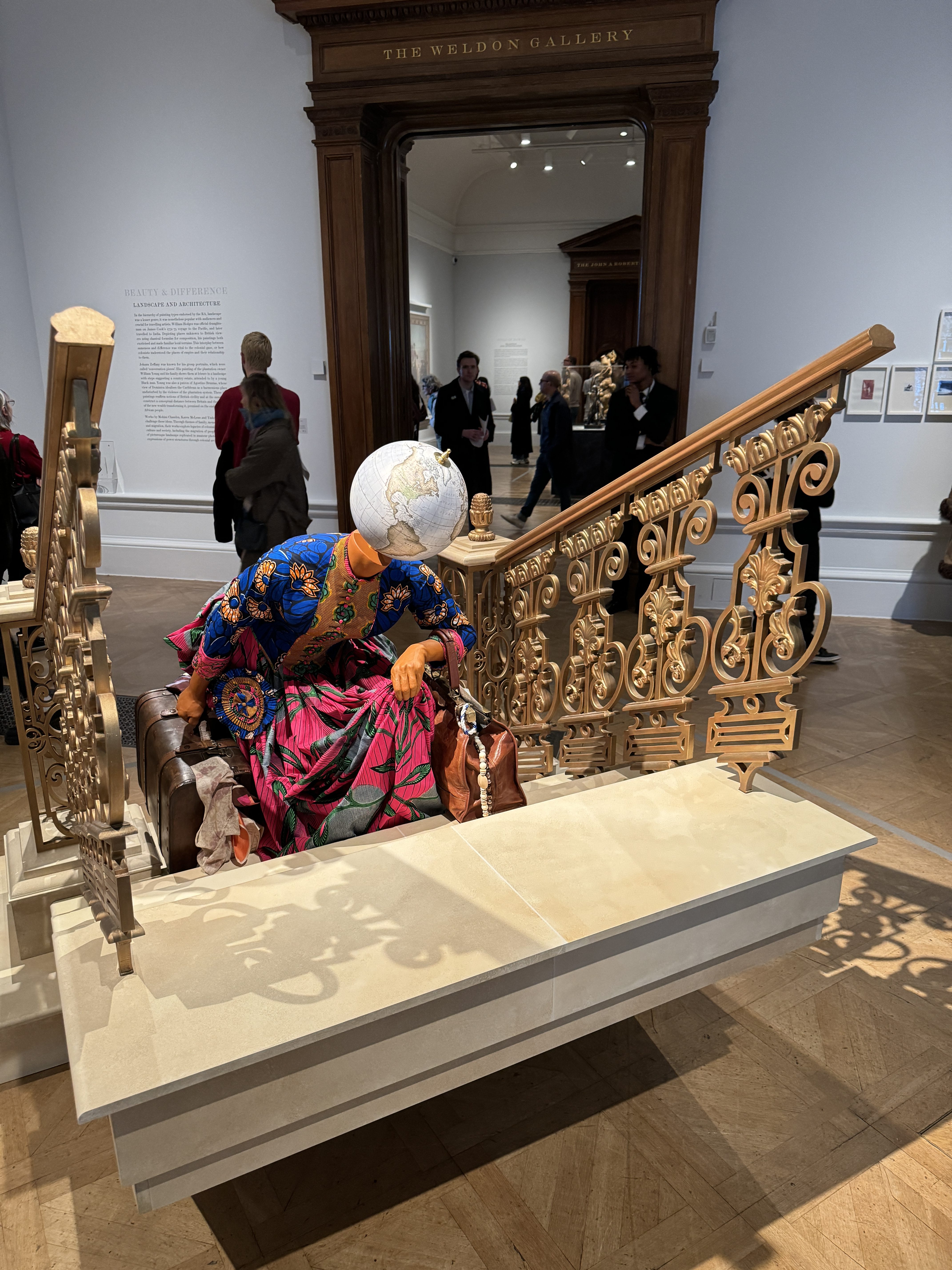
I love this installation called Woman Moving Up by Yinka Shonibare showing us a woman in African textiles with a globe as her head, working hard to carry her suitcases up the elegant stairs that suddenly end.
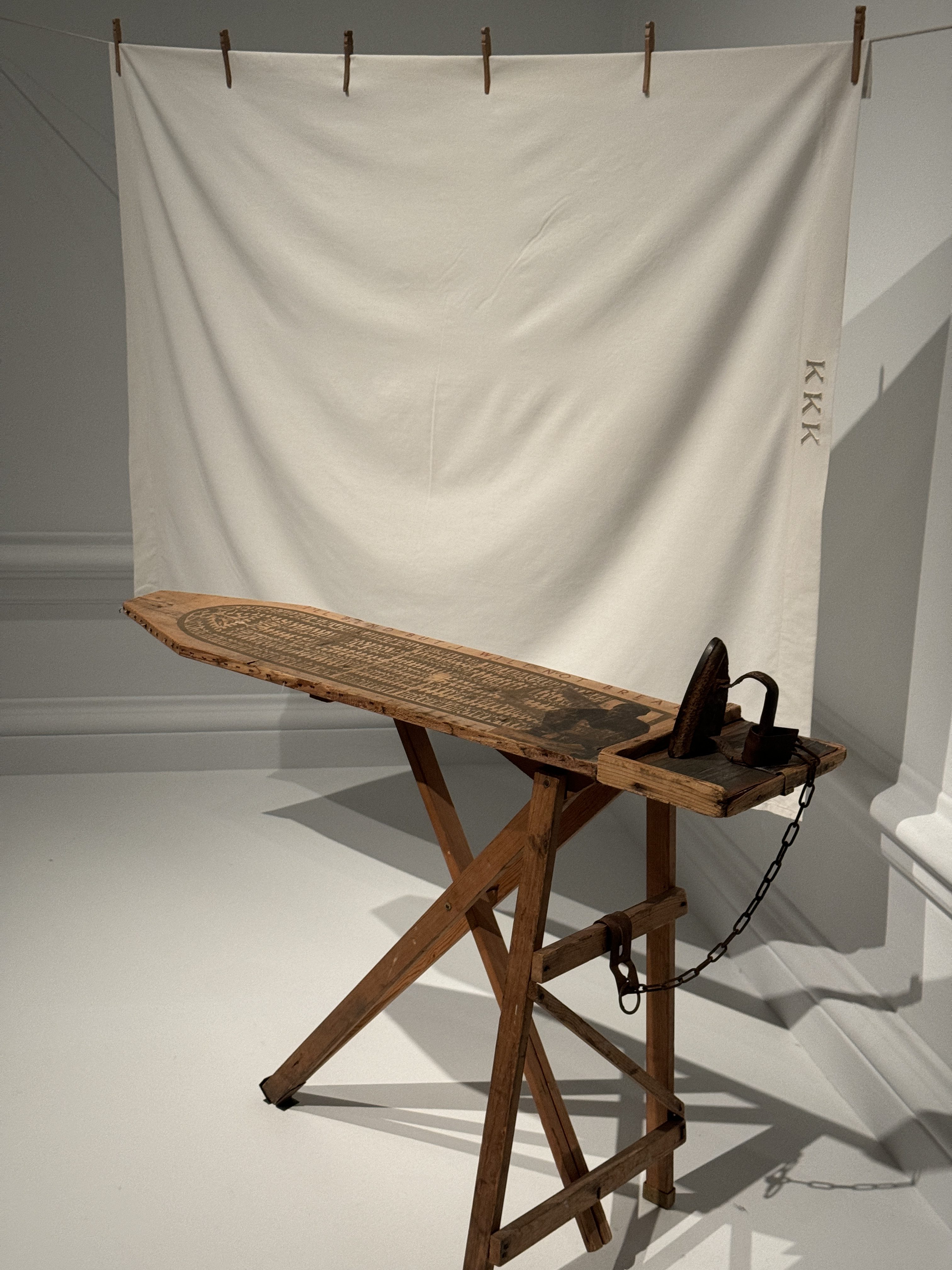
Betye Saar’s I’ll Bend But I Will Not Break is incredibly powerful. She has depicted a diagram of the 18th century British slave ship Brookes on the surface of the ironing board. An iron is chained to the board, as were the slaves being transported across the ocean. In the background hangs a perfectly pressed sheet embroidered with the initials of the Ku Klux Klan.
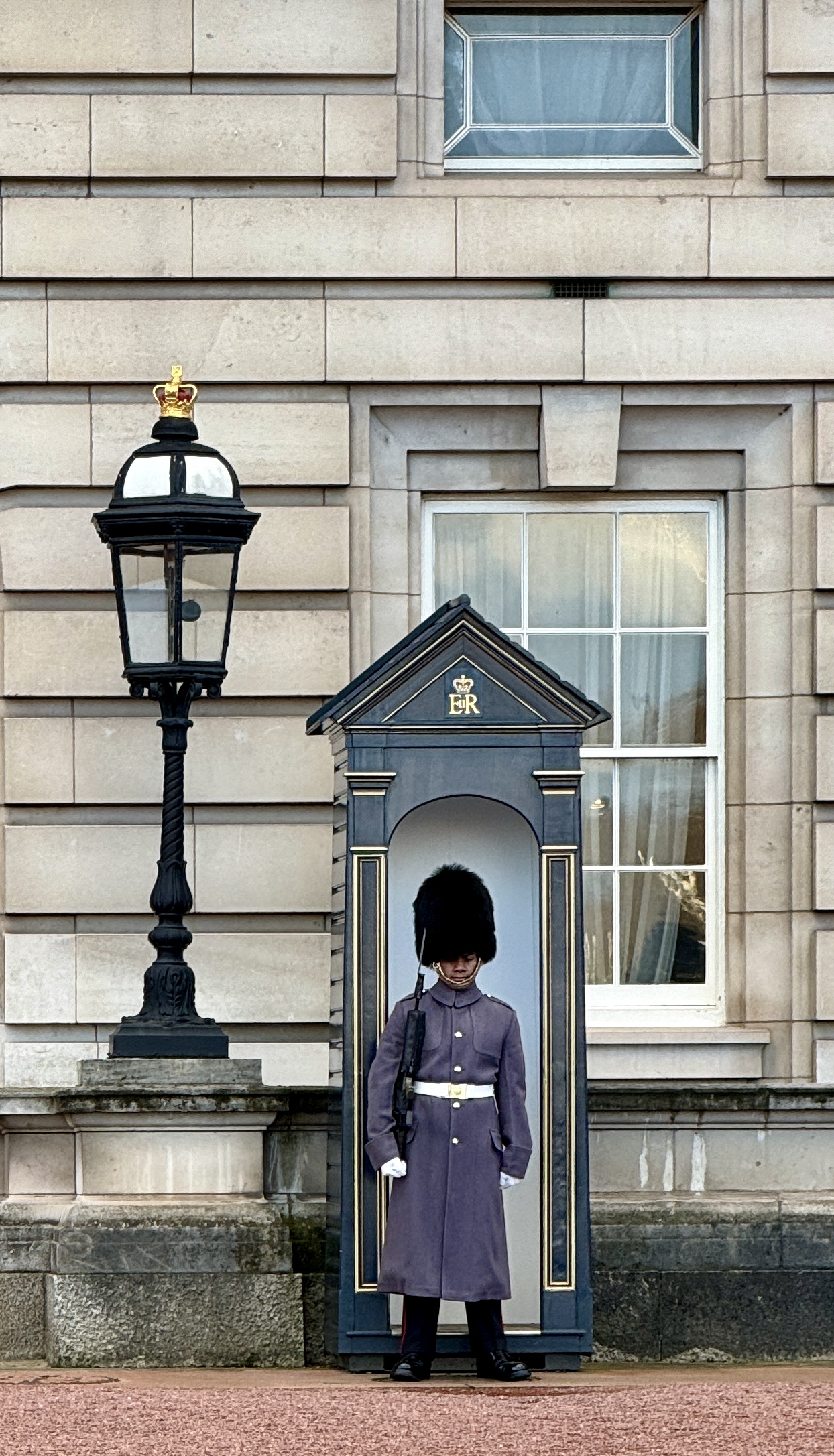
This Royal Guard seems to be a bit asleep at the wheel.
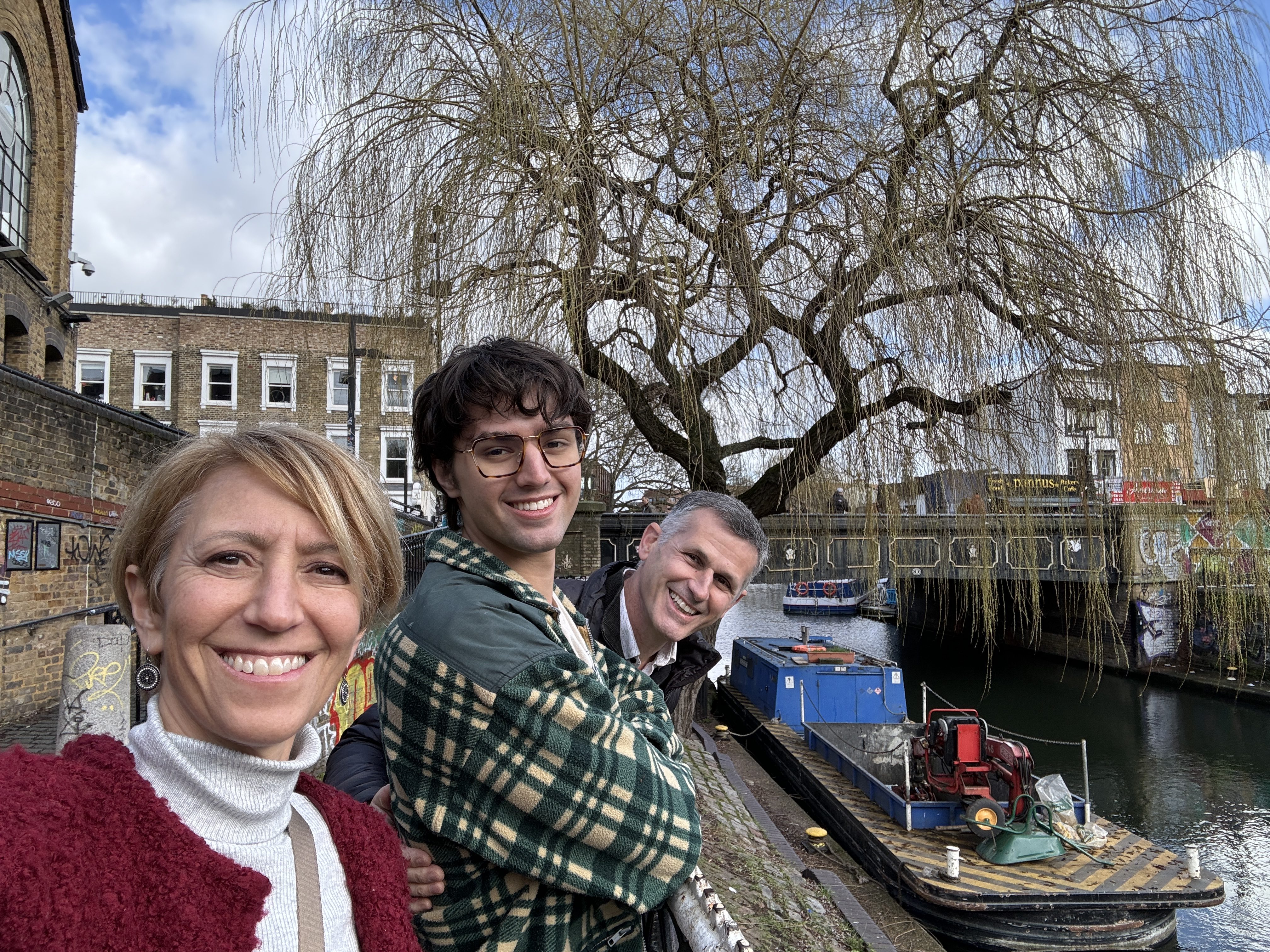
The lovely neighbourhood of Camden with its fun market and beautiful pathways along the canal.
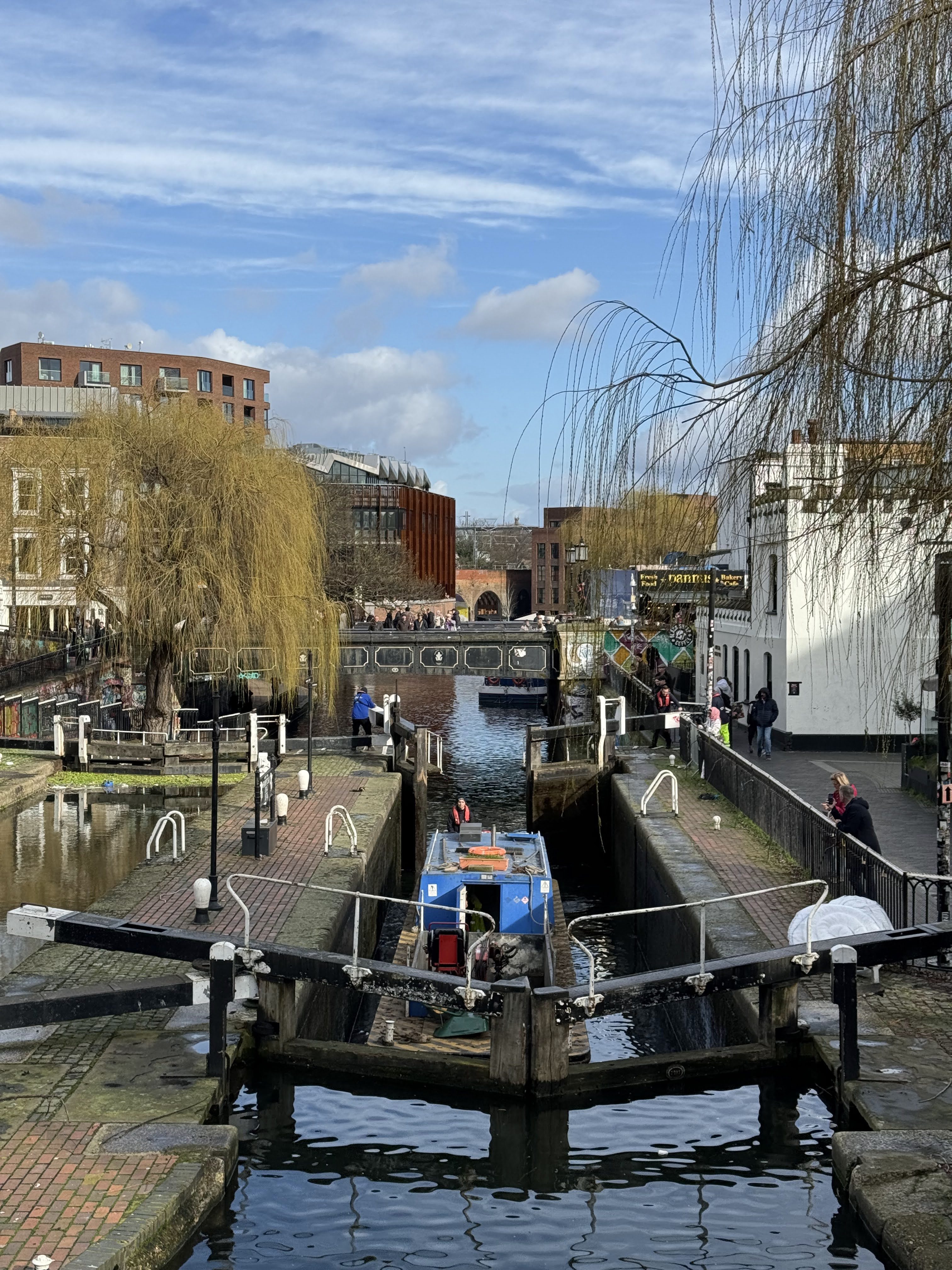
We didn’t think the locks were actually in operation until a boat came through. It’s a fully manual system with a guy at the far end winding the locks open and closed. It looked like quite a workout!
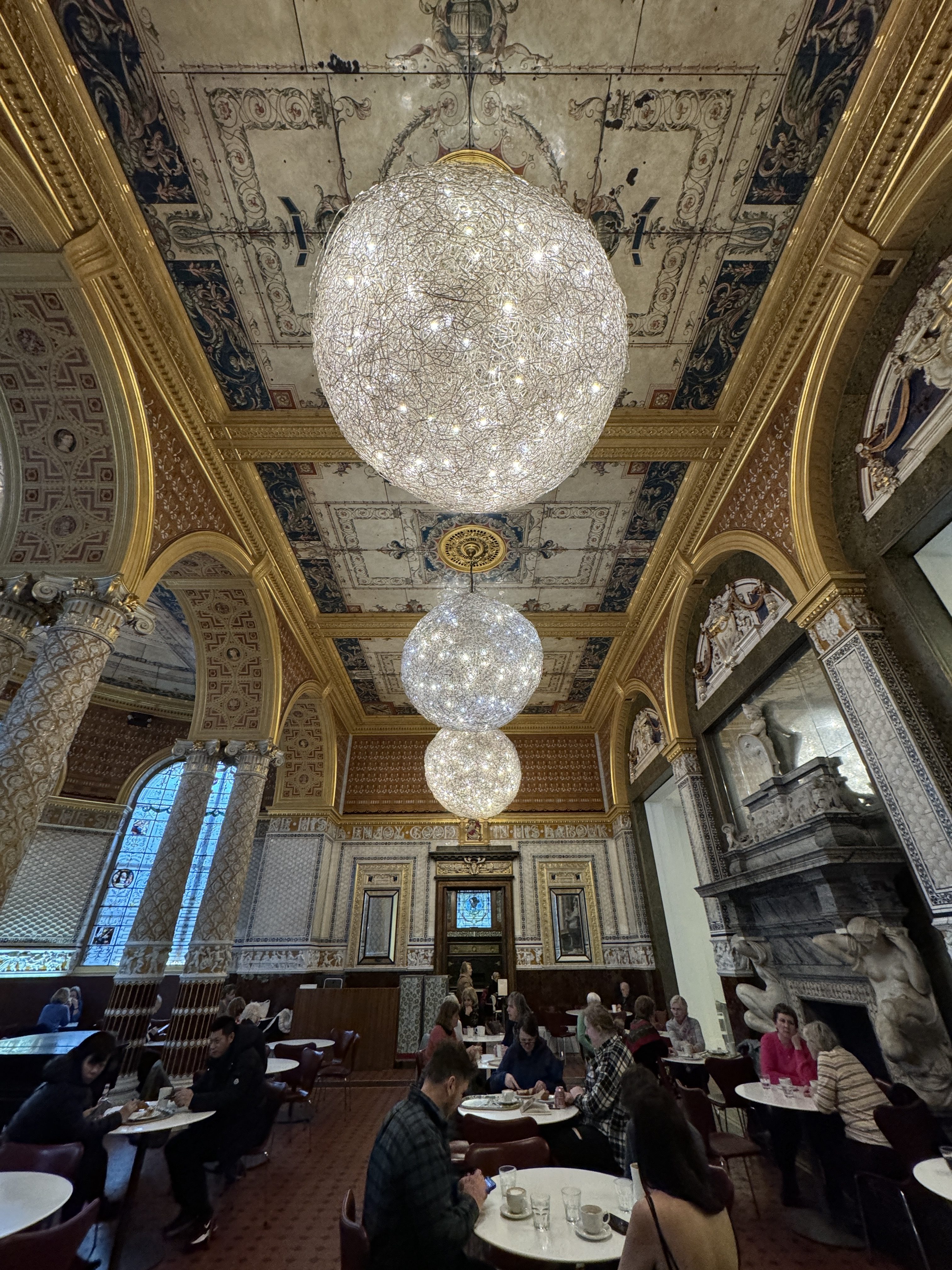
The Victoria and Albert Museum opened in the 1860s and was a trailblazer on many counts. It was the first in the world to have lighting in the galleries so the Victorian folk could stay to enjoy the unbelievable collection from around the world…and maybe spend less time in the pubs! As we all can attest, long days in the museum zap one’s energy so, another world first: a restaurant in a museum! And befitting the times, it was a pretty fancy spot!
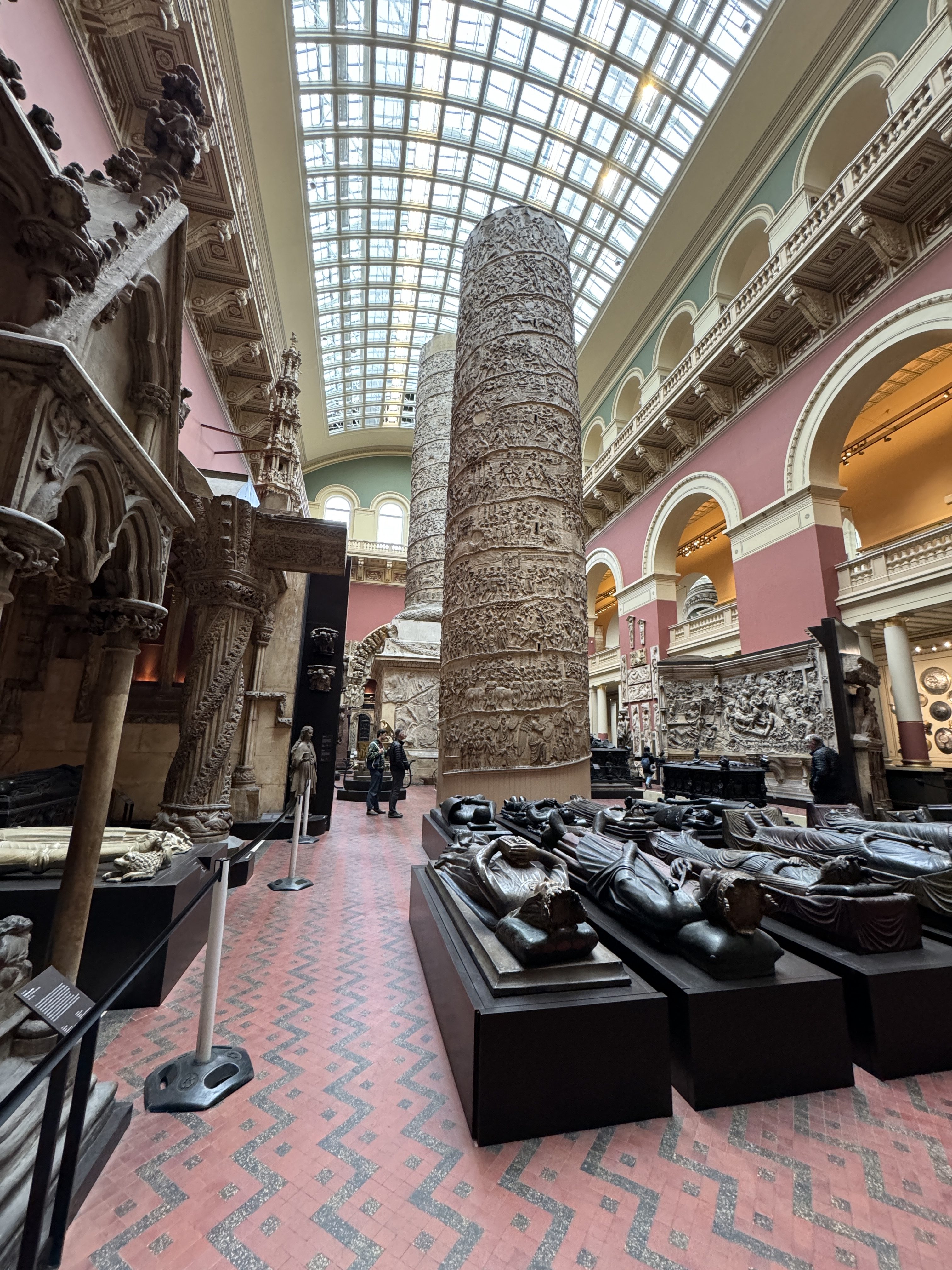
Travelling was tough in Victorian Times so the V&A decided to bring the beauty and treasures of abroad home. In this particular case, it was done with creativity and fairness, not looting and stealing. The Cast Courts house perfect replicas of monuments and sculptures from around the world to offer its enlightened (or to-be-enlightened) patrons a much broader history of art than they could ever dream of. These galleries made the world feel just a bit smaller and the people feel more connected to the outside world, maybe as impactful in those days as the early Internet was in our times. As the collection grew, this room (and some others) were rebuilt to the specifications of the works destined for the space. This room was built to accommodate the two enormous plaster casts of Trajan's Column. This column was so enormous that it could only be displayed cut in half and placed side by side.
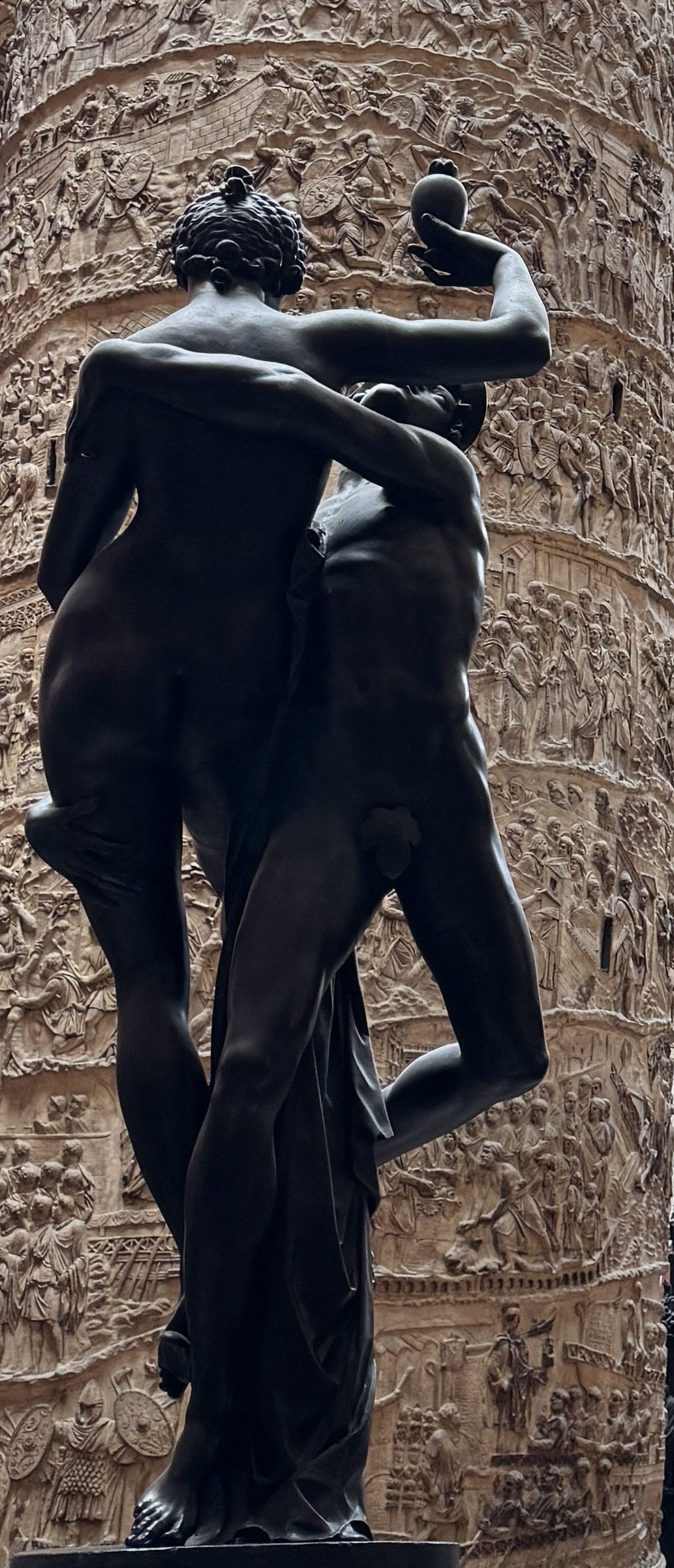
There was no fancy technology in those days and the replicas achieved perfection because the moulds were actually cast on the original monuments and sculptures. The level of detail is remarkable. The magic of the casts is not just that it opened an otherwise closed window of the world to the public, but that it also, in some cases, now provides an almost perfect record of works that had subsequently been either destroyed, or damaged due to poor restoration, pollution or weathering.
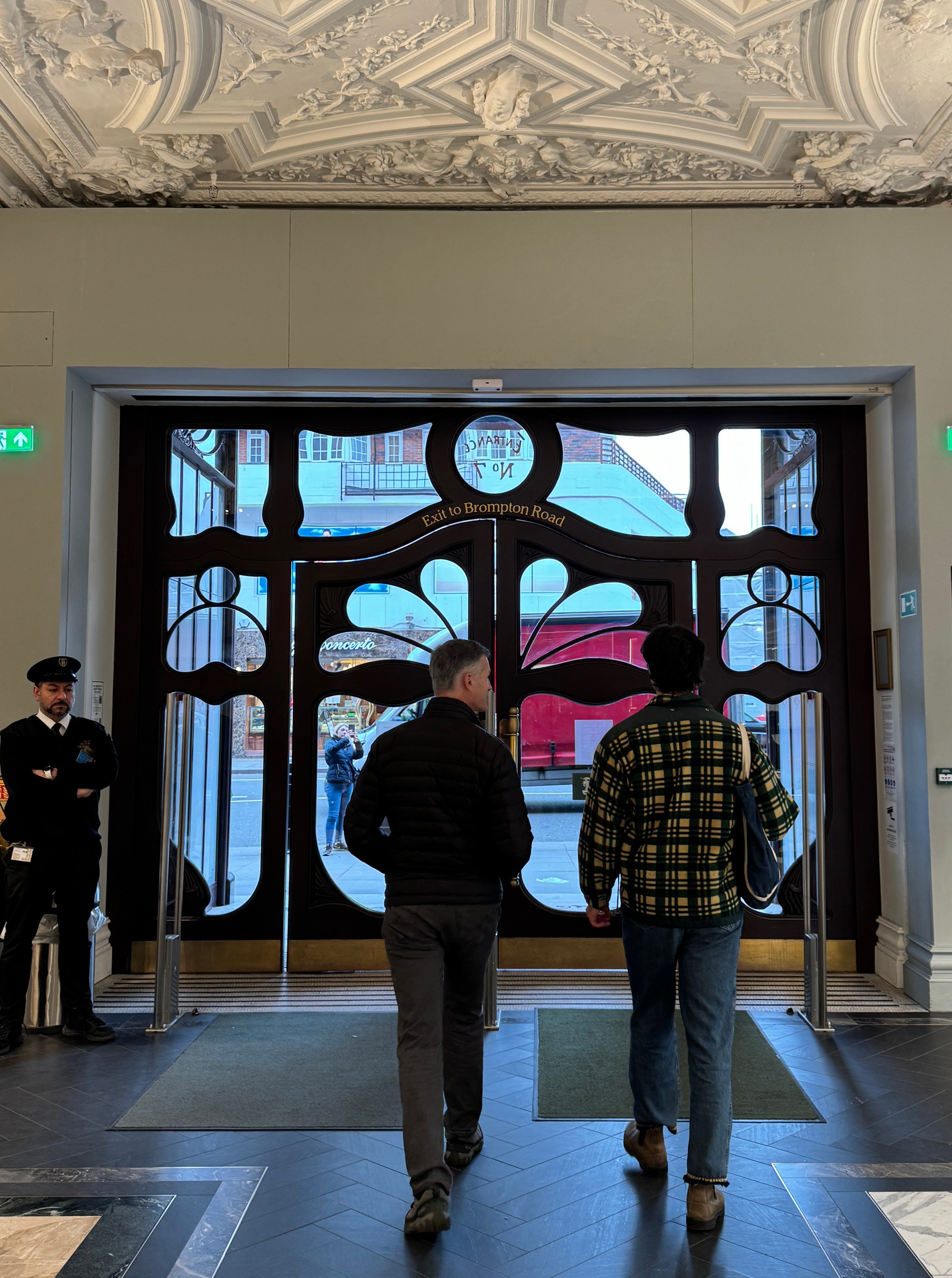
Exiting Harrods…they’ve had enough!
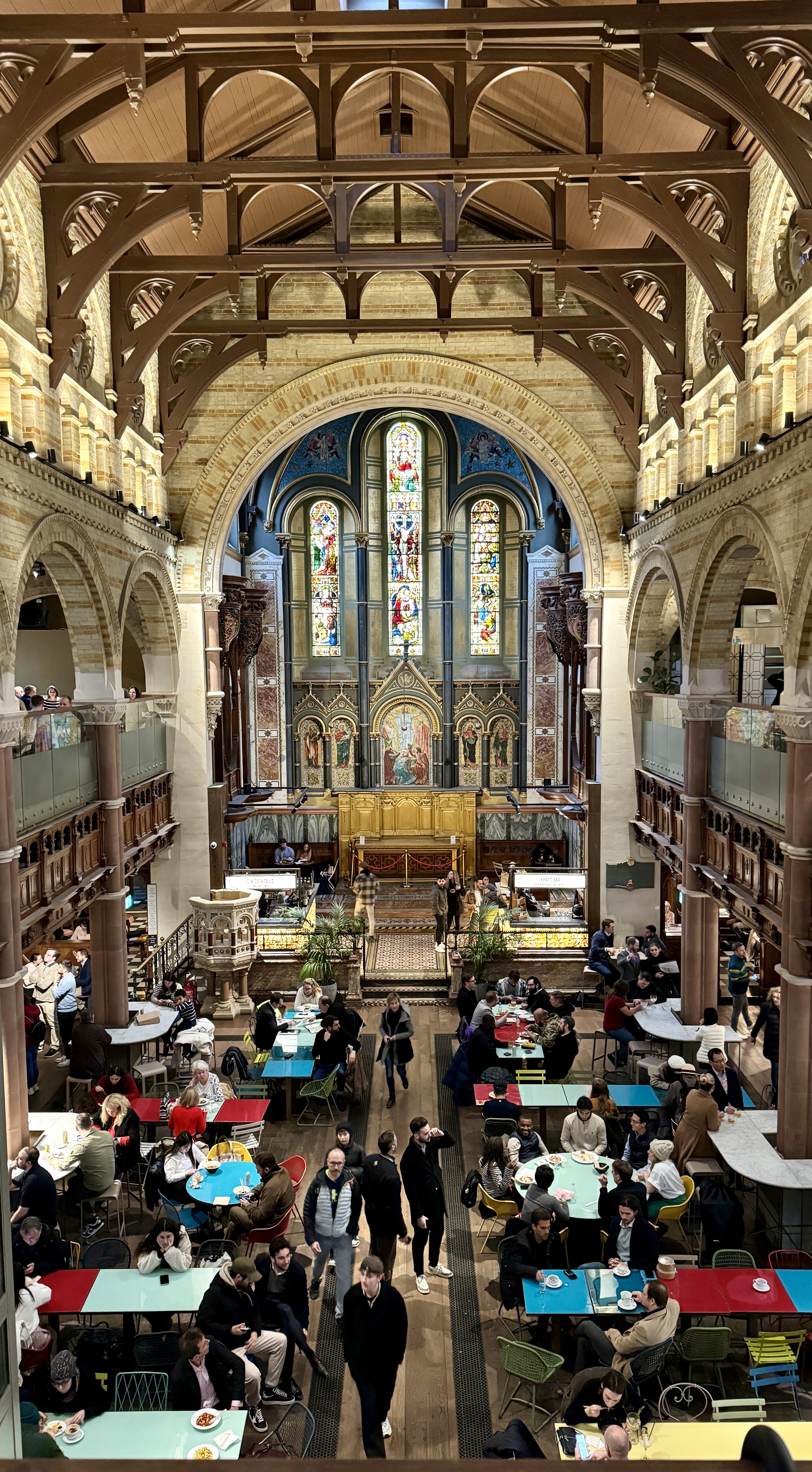
Mercato Mayfair is a food court in the most amazing place, a converted church. I love how the bar is on the altar! And the food was fabulous.
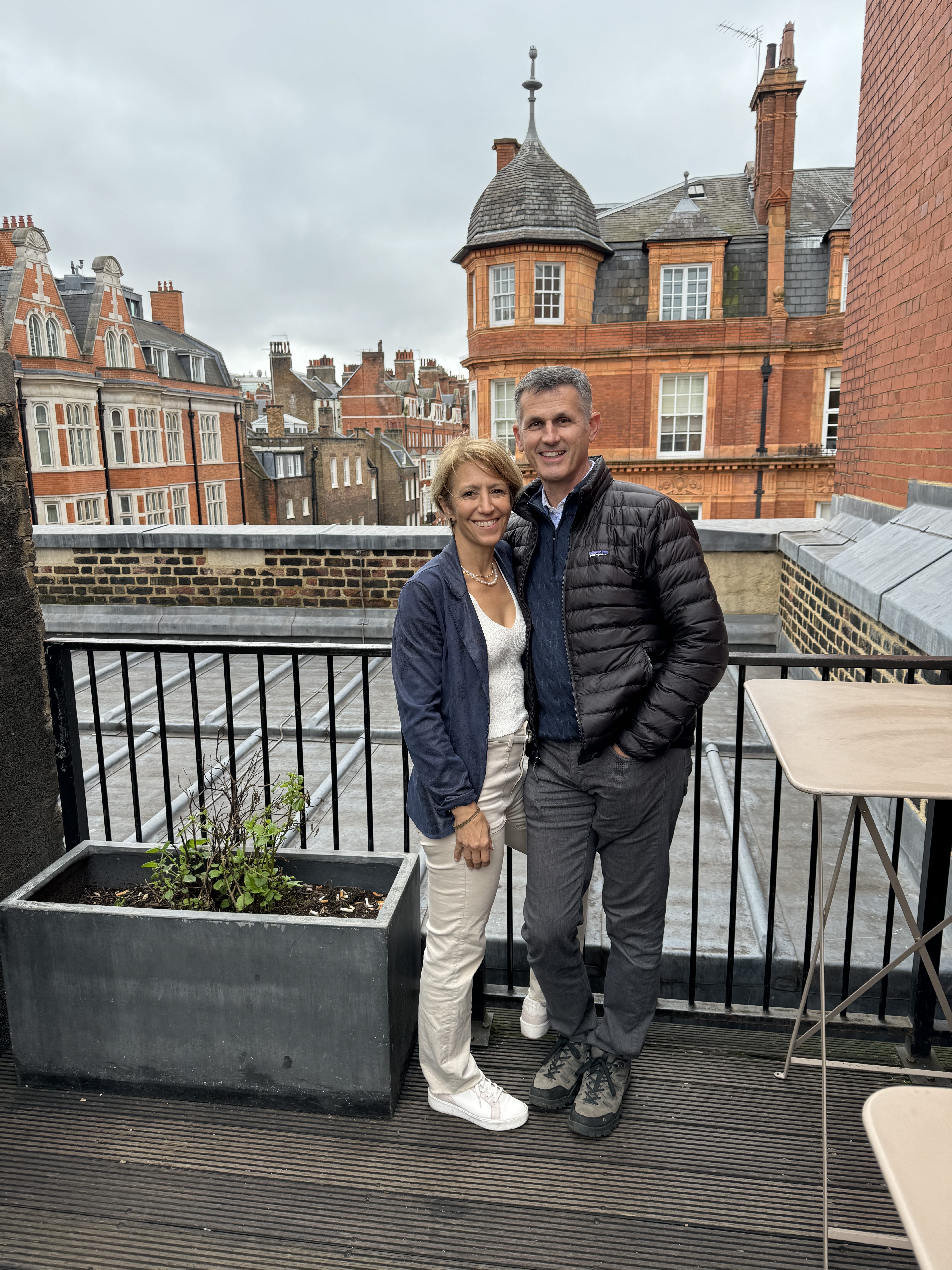
A surprising terrace at the top of Mercato Mayfair.
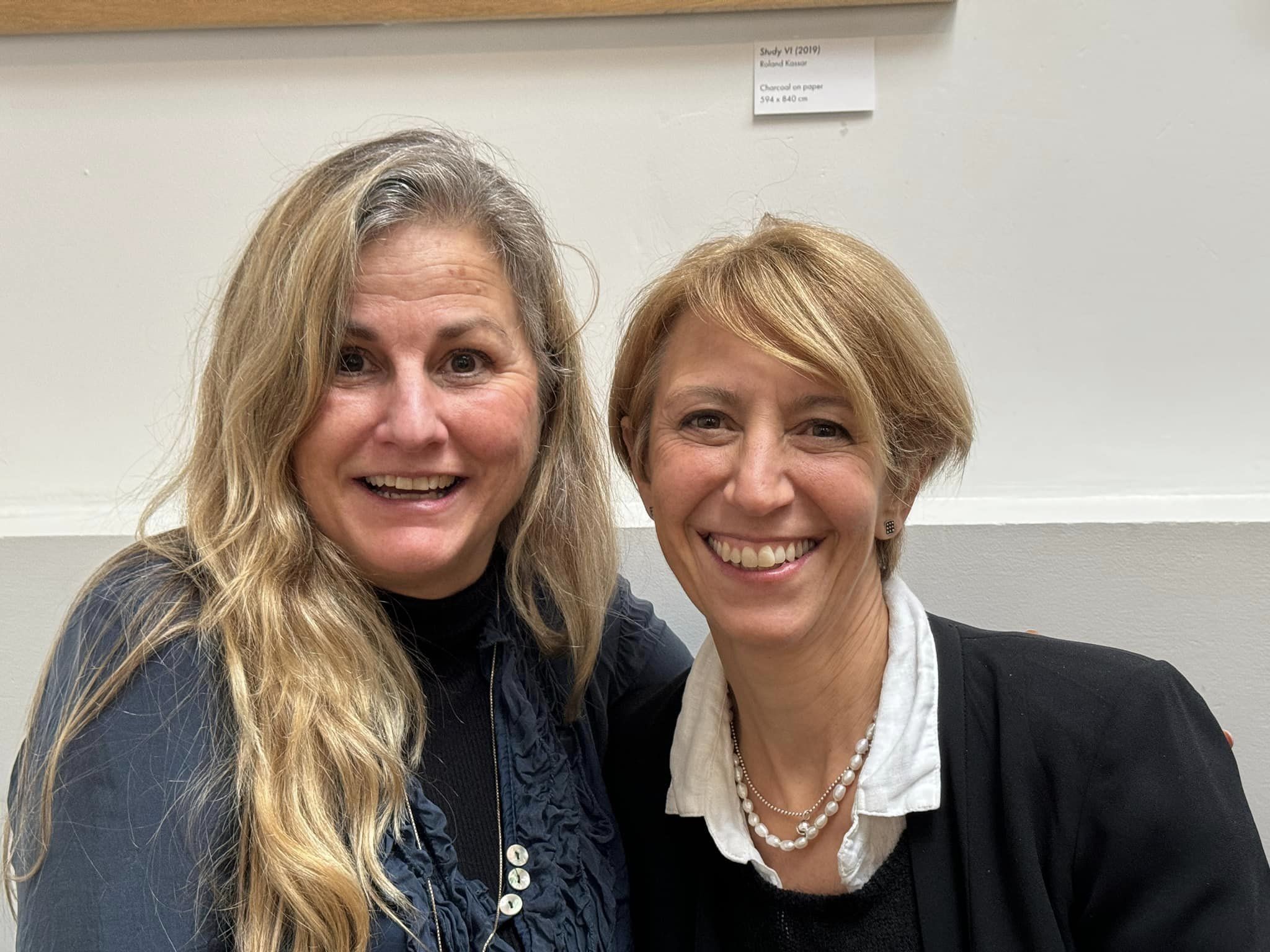
How amazing to catch up with my dear high school friend Rachel. We haven’t seen each other in 40 years…don’t do the math!
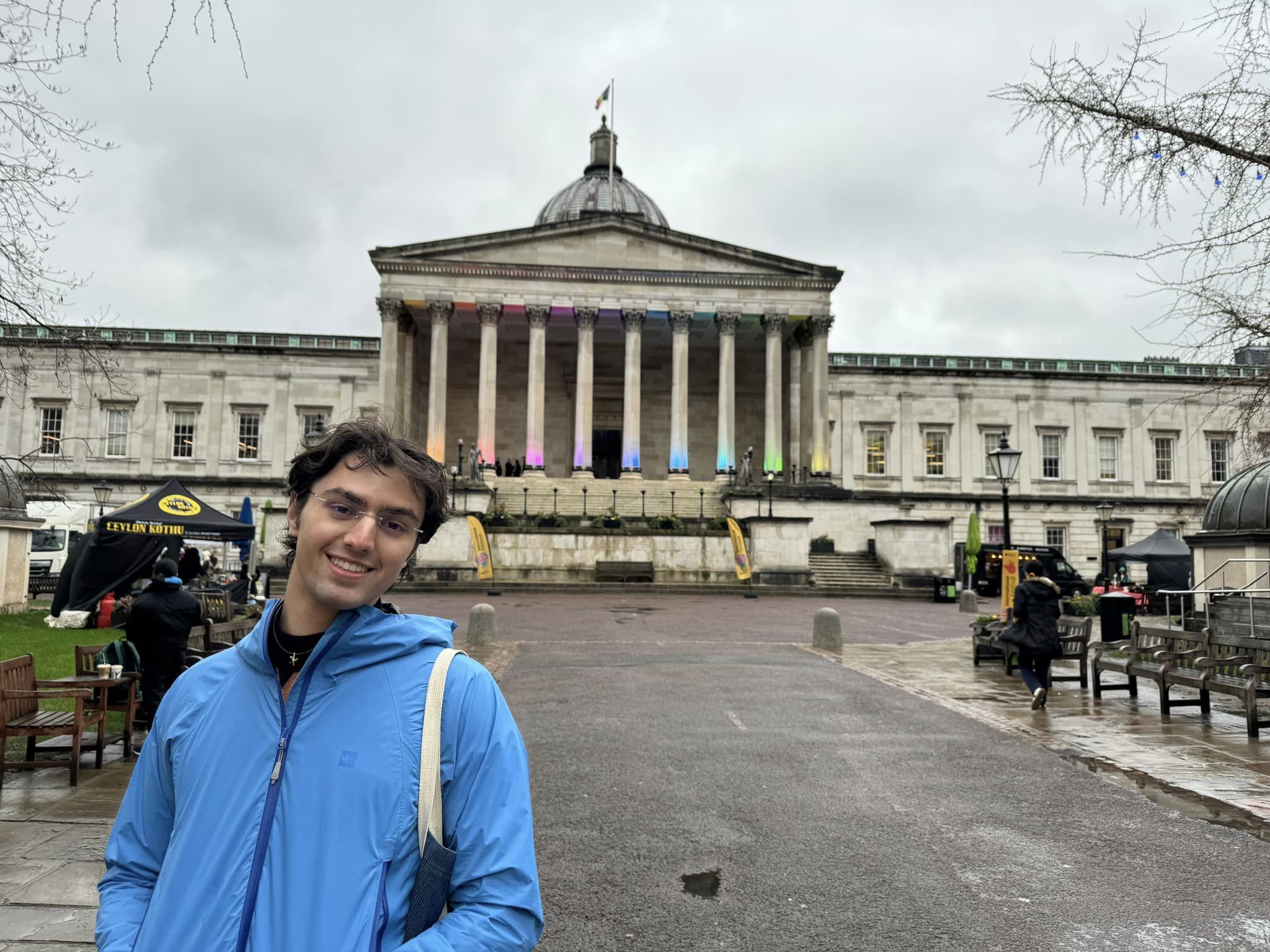
Touring UCL with Evan. He looks pretty at home to me…
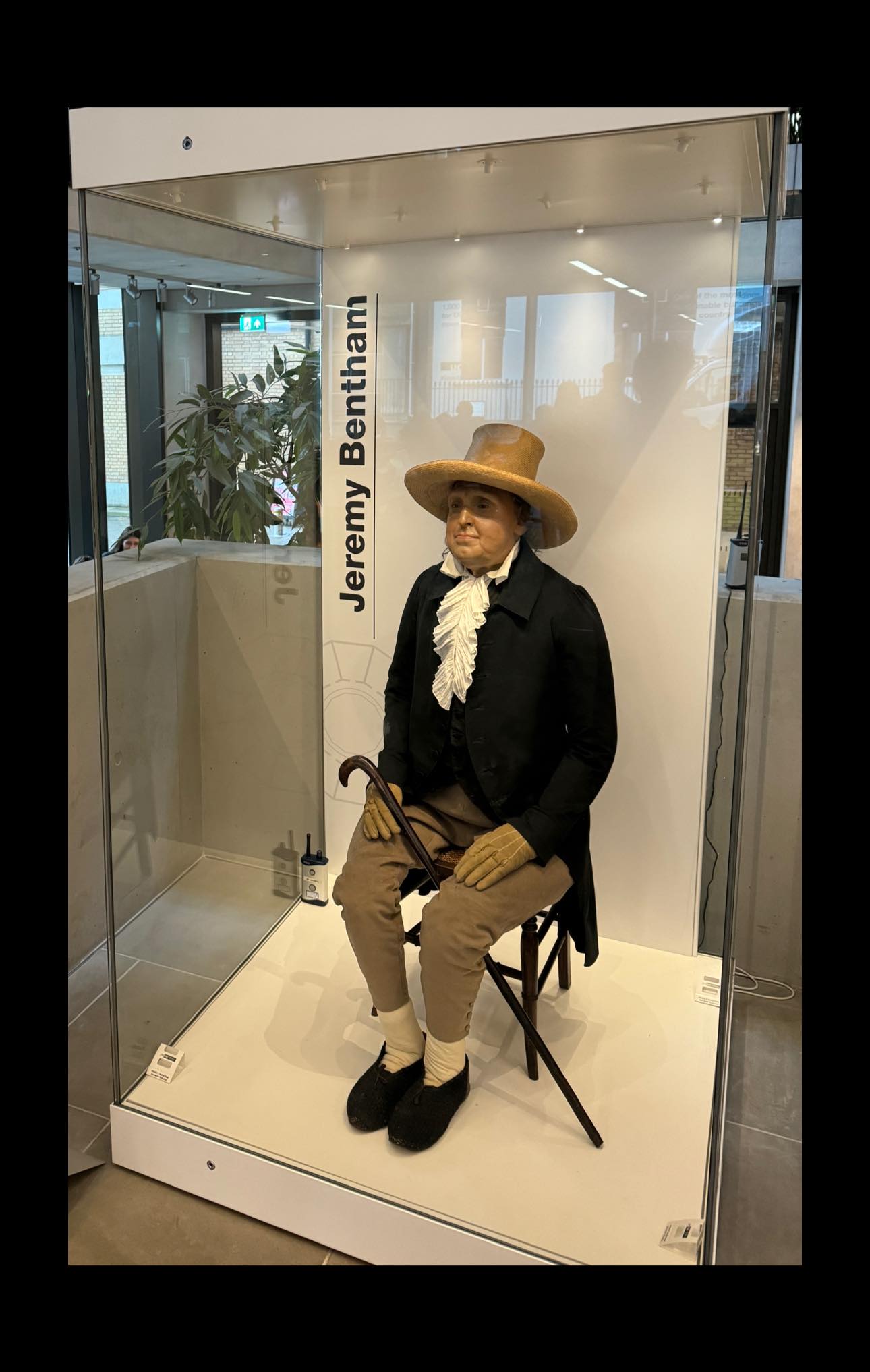
Here’s a bit of quirkiness. Jeremy Bentham was a radical philosopher whose ideas influenced the founding of UCL. He held a special place in his heart for this institution, so much so that he decreed that upon his death, his body be donated to medical science and then be preserved in his image. Here he sits in the Student Union building, his skeleton padded, clothed and topped with a wax head. His actual head is somewhere else on campus.
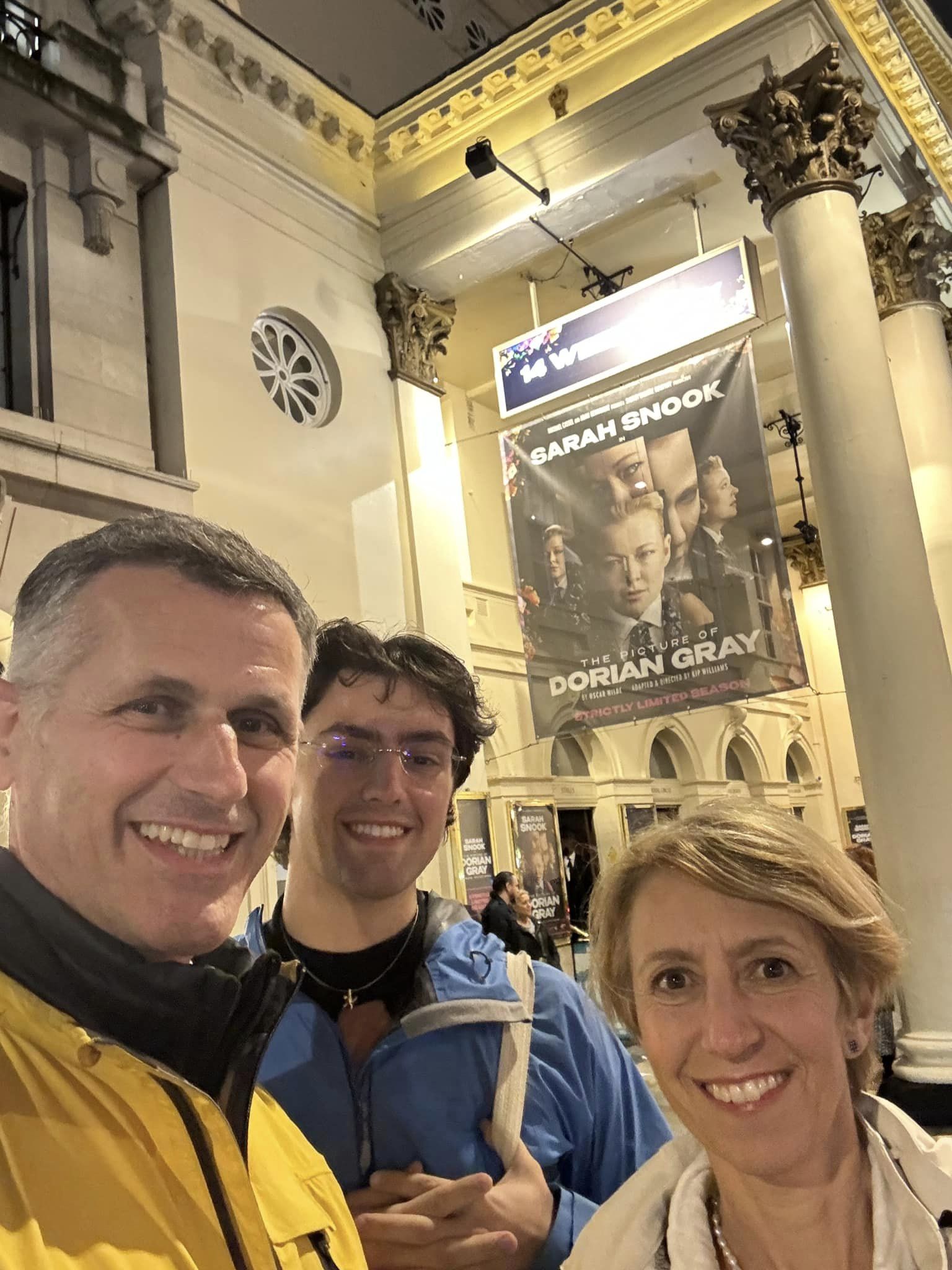
Play #1, The Picture of Dorian Gray. Sarah Snook takes this show on by herself (with about a dozen semi-invisible, black-clad stage crew). She is amazing, playing somewhere in the neighbourhood of 16 characters. The production and staging is one of the most remarkable I’ve seen. Can’t say more because I don’t want to ruin it. If you’re in London before May 11, go see it! Six thumbs up from us.
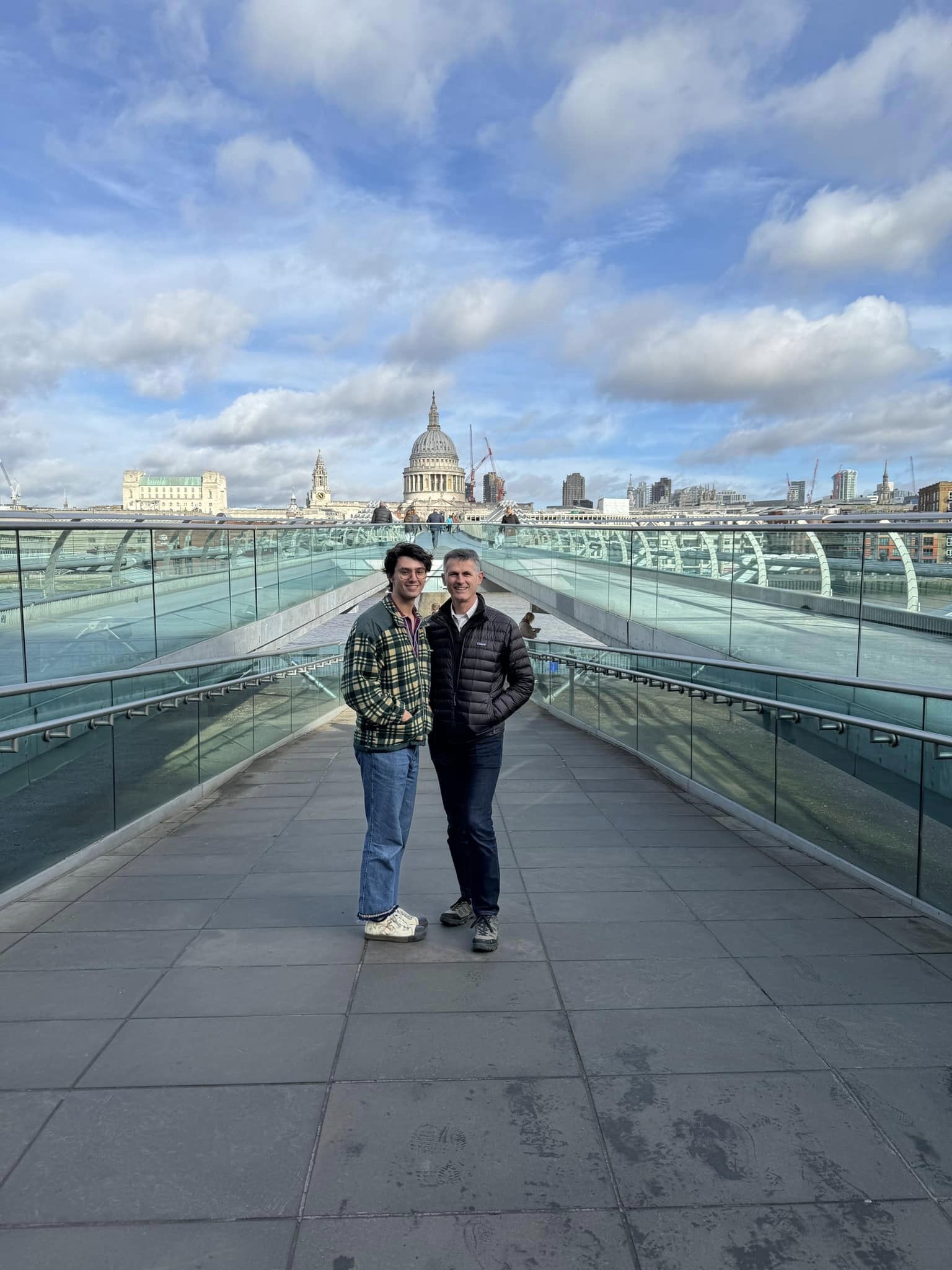
Heading to the Tate Modern. The engineer in our group had to walk over the Millennium Bridge.
The Tate Modern is the most amazing of modern art museums, doing a great job of demystifying modern art! So much to see in this converted power station but I will share a couple of installations that really struck me. Here, Babel 2001 by Cildo Meireles. The biblical Tower of Babel which reached the heavens was the cause of all of mankind’s conflicts. God was so offended by the structure (maybe he didn’t want people arriving unannounced) that he made the builders speak in different languages. No longer able to communicate, the people became divided and scattered across the earth.
Meireles’s Tower of hundreds of analog radios from different eras are all playing different stations at once making each one impossible to hear and understand. Everyone talking all at once and nobody able to listen.
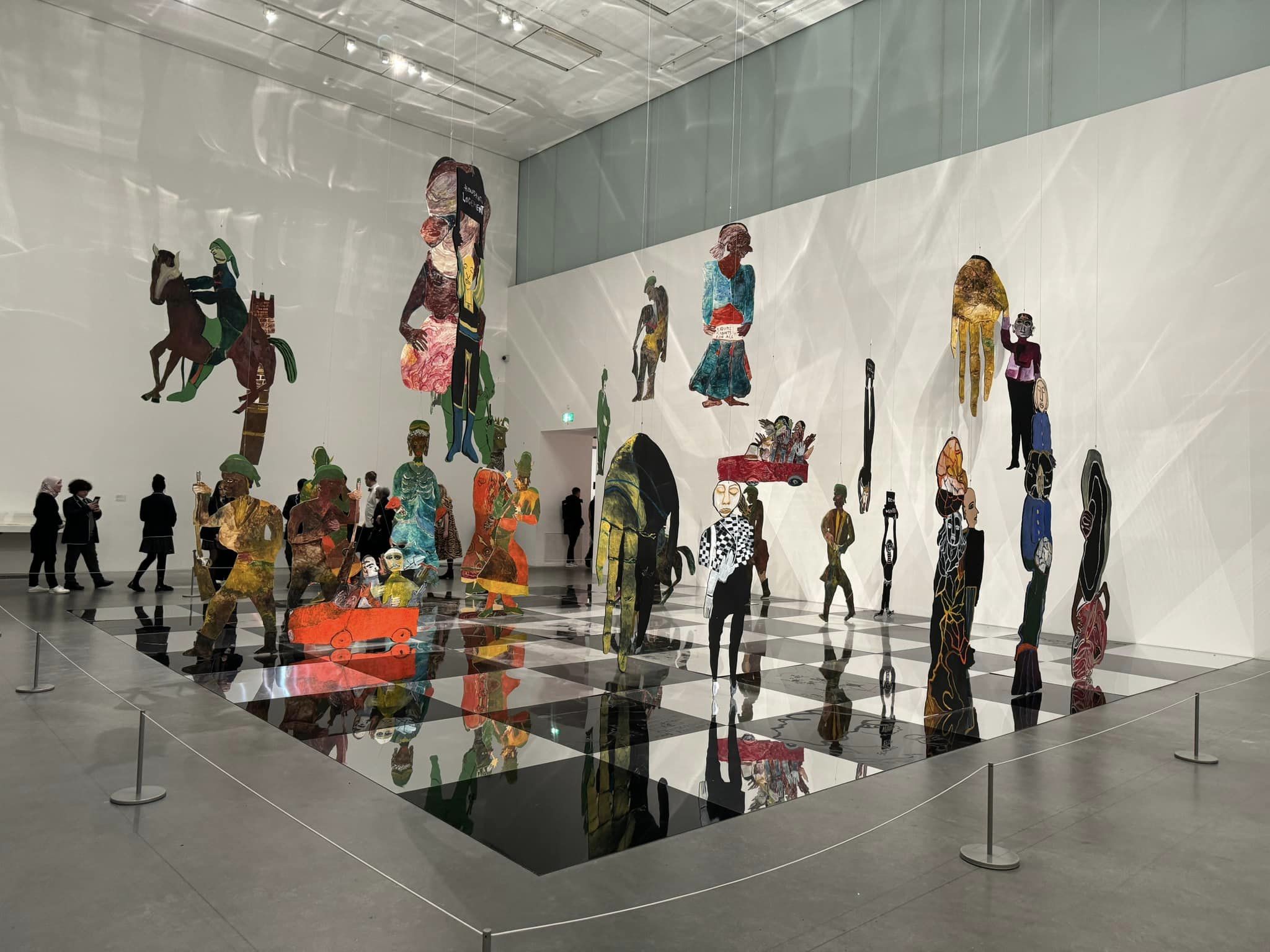
Anna Boghiguian’s Institution vs. The Mass uses a changeable set of figures inspired by chess to illustrate the cycles of revolution and socio-political change throughout history. The King, the Queen, the ranking officers and the masses are all positioned at varying heights over the board, illustrating their relative positions of power. As the oppressed become dissatisfied and frustrated over time, revolution leads to change. Each time this work is installed, the position of the figures can change, reshaping the power relationships.
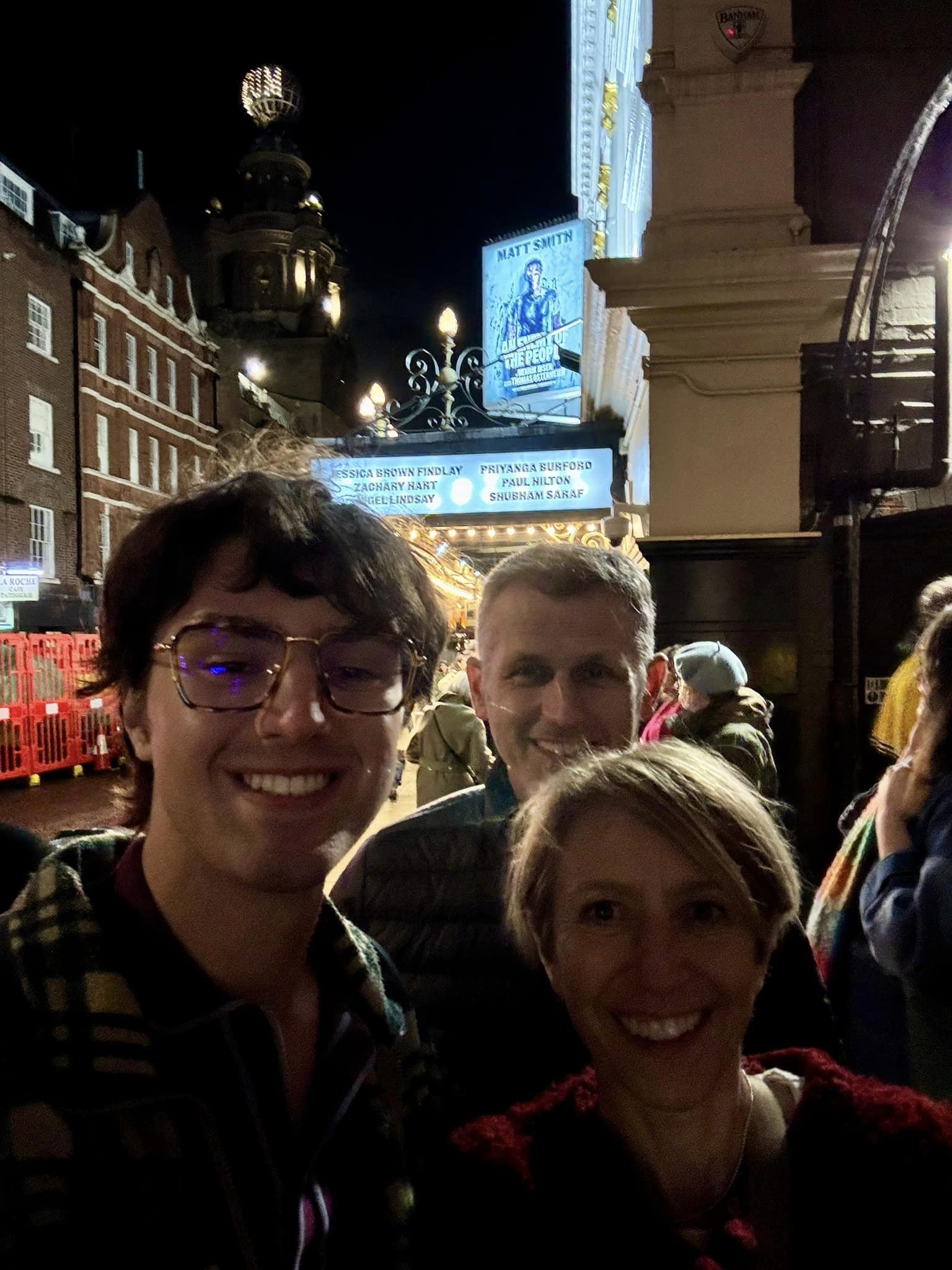
Play #2, An Enemy of the People with Matt Smith, who some may remember from Dr Who and others will recognize from his role as a young Prince Phillip in The Crown. For a play written in the 1880s, it’s shocking how relevant it is today. Five thumbs up, not sure if Evan would give both his thumbs to this one.
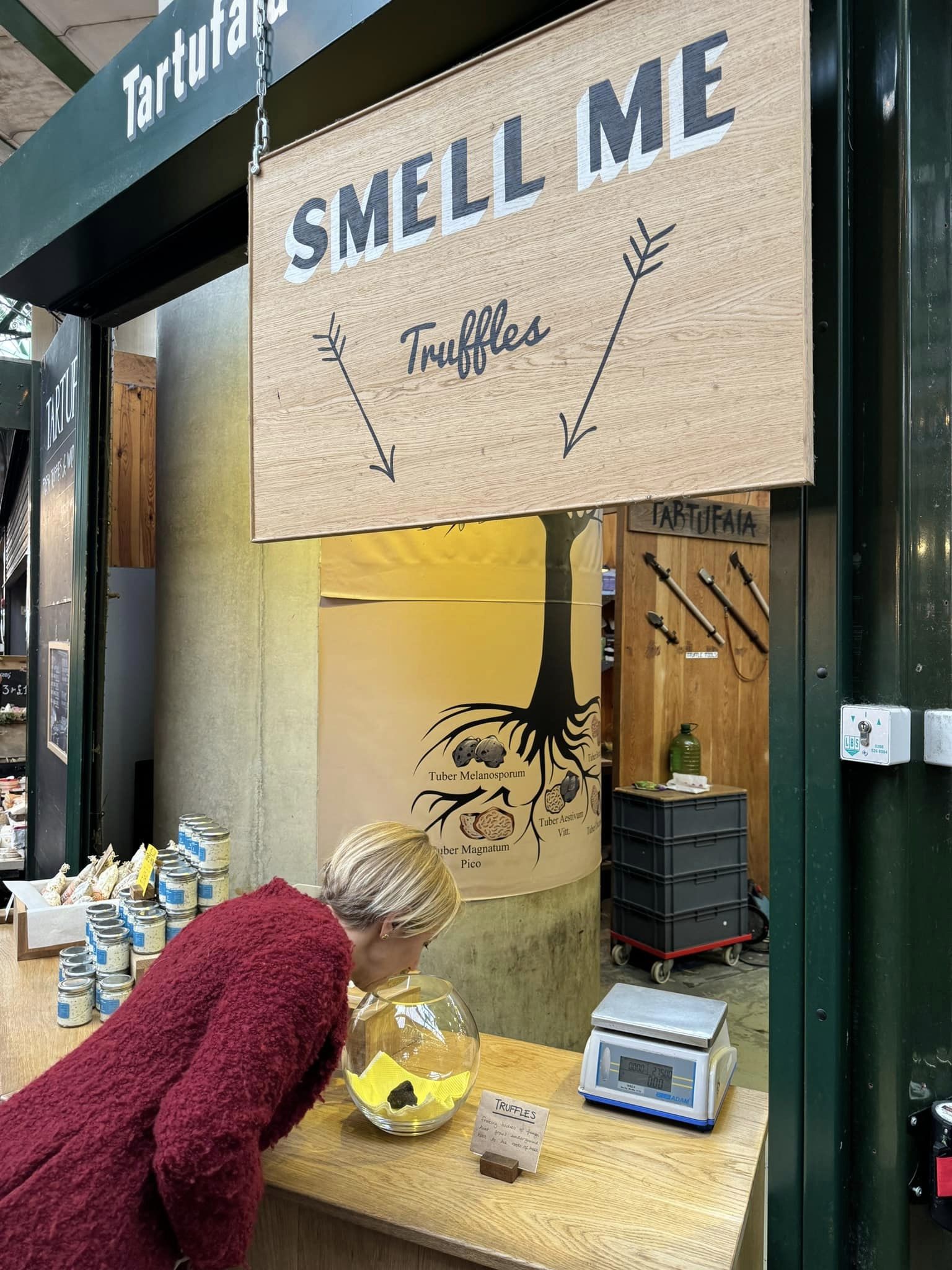
Couldn’t pass up this invitation!