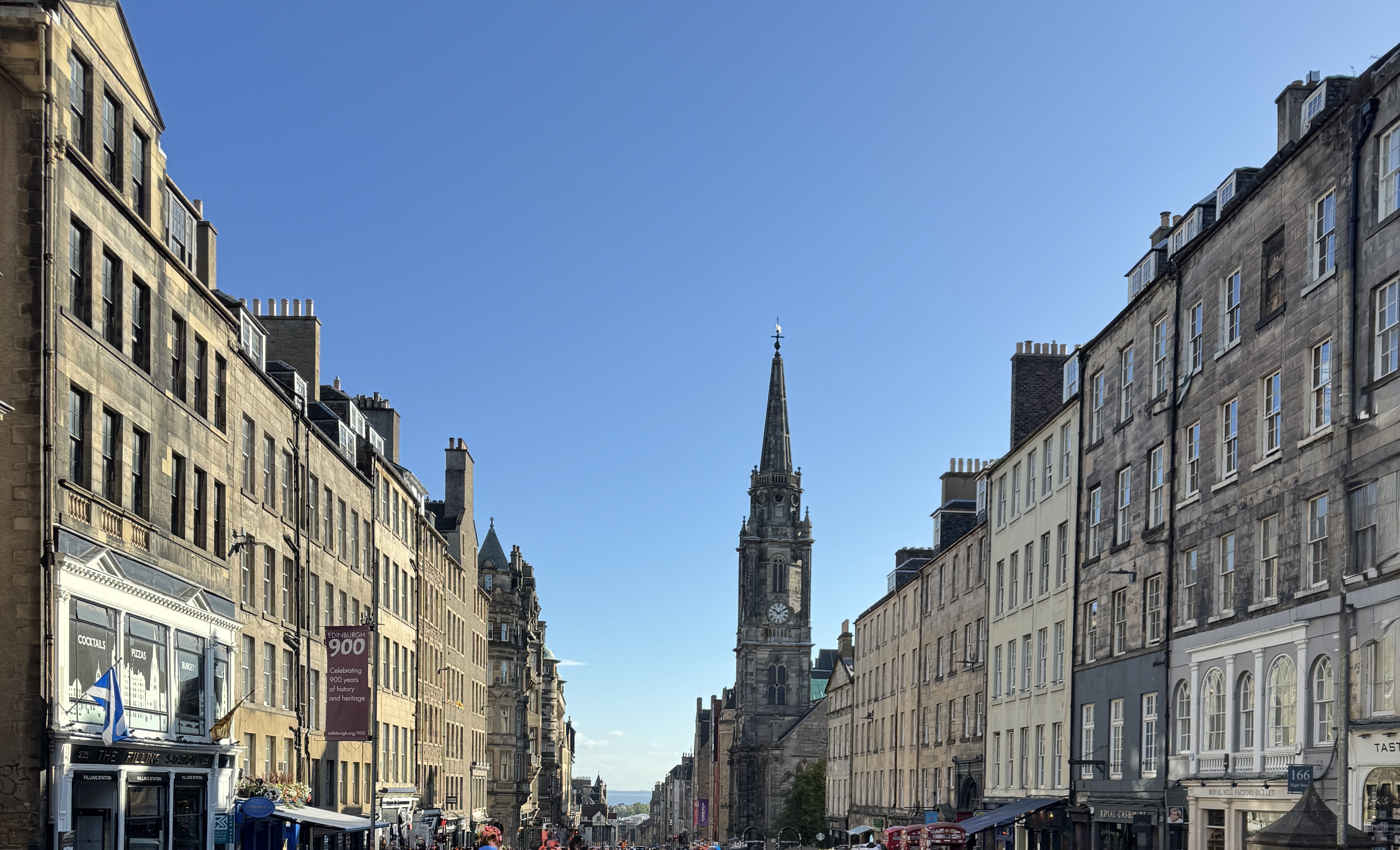
September, 2025
Enigmatic Edinburgh
Ah Edinburgh, such a beautiful city yet so difficult to pronounce for most. Like so many names of places in the UK, the letters belie the pronunciation. This city, with a bit of nature sprinkled in, verges on perfect for me. The people are so lovely, the history is rich (and poor!), the coffee and food fabulous and the stories and lore somehow believable. The only absence seems to be the sheep!
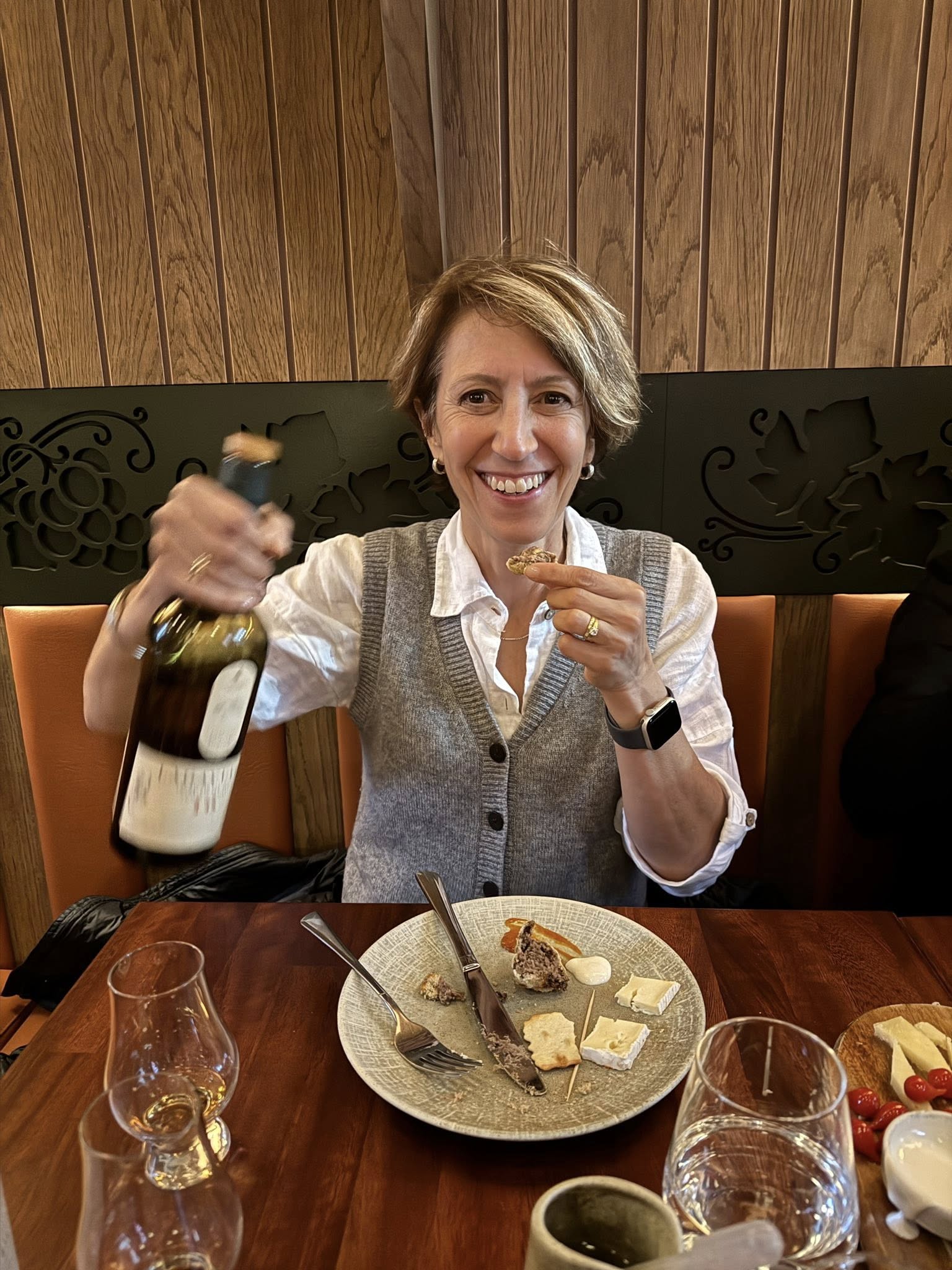
We’d barely arrived and I found myself faced with haggis. If I can eat crickets in a taco in Mexico, ants garnishing a dish in Vietnam and chicken sashimi in Japan, how could I, in good conscience, skip out on haggis in Scotland? It was actually quite good, especially since it was a bit bougie’d up as a haggis bonbon… chased with a wee dram of whisky. And if you’re questioning my spelling of this classic Scottish beverage…with or without an “e”, both are correct. In Scotland and Canada, we can’t be bothered with the “e” and in Ireland and the US, they slip in the “e”; odd in American English, given they are prone to dropping letters they deem unnecessary.
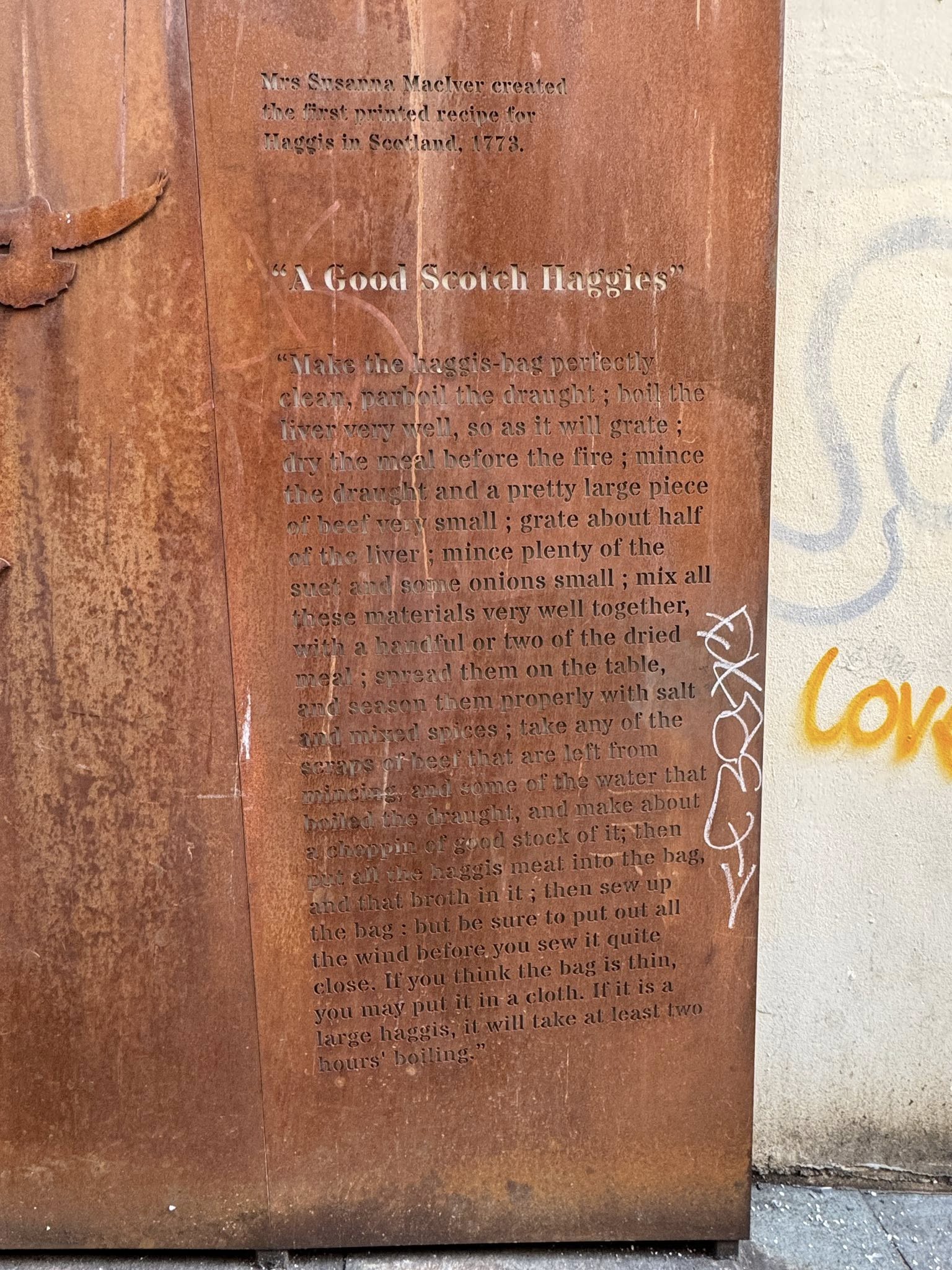
And in case you’re interested in creating this classic Scottish delicacy yourself, we found this copy of the first printed recipe from 1773. If you know a farmer, you should be able to get all the ingredients you need.
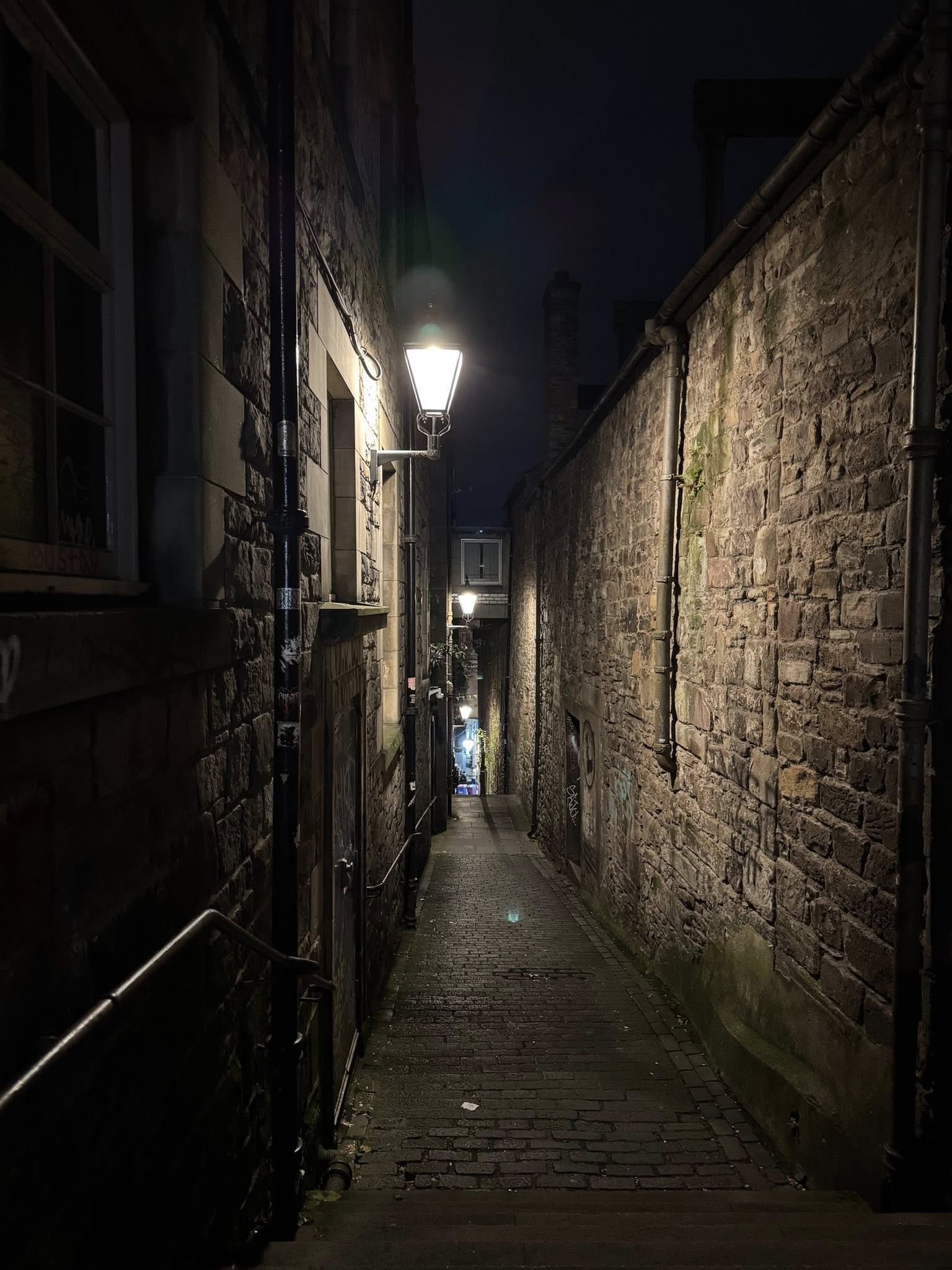
Edinburgh is full of these closes, narrow alleys leading off the main road, into courtyards behind the buildings or linking to the streets behind. This was a walled city so as the population grew, they were forced to build up, sometimes reaching 10-12 storeys. The rich lived among the poor but they got the breezy top floors with the poor relegated to the damp, dark, lower levels. This made old Edinburgh one of the most densely populated places in 17th century Europe. The advantage of these socially-mixed residential areas was if the poor had a problem, so did the rich so issues were more likely to be addressed. But these crammed quarters became a hive of disease. The rich complained which led to the city building out the New Town (“New” as in 1767). The rich moved out to wide streets and bright open spaces and left the Old Town to the poor.
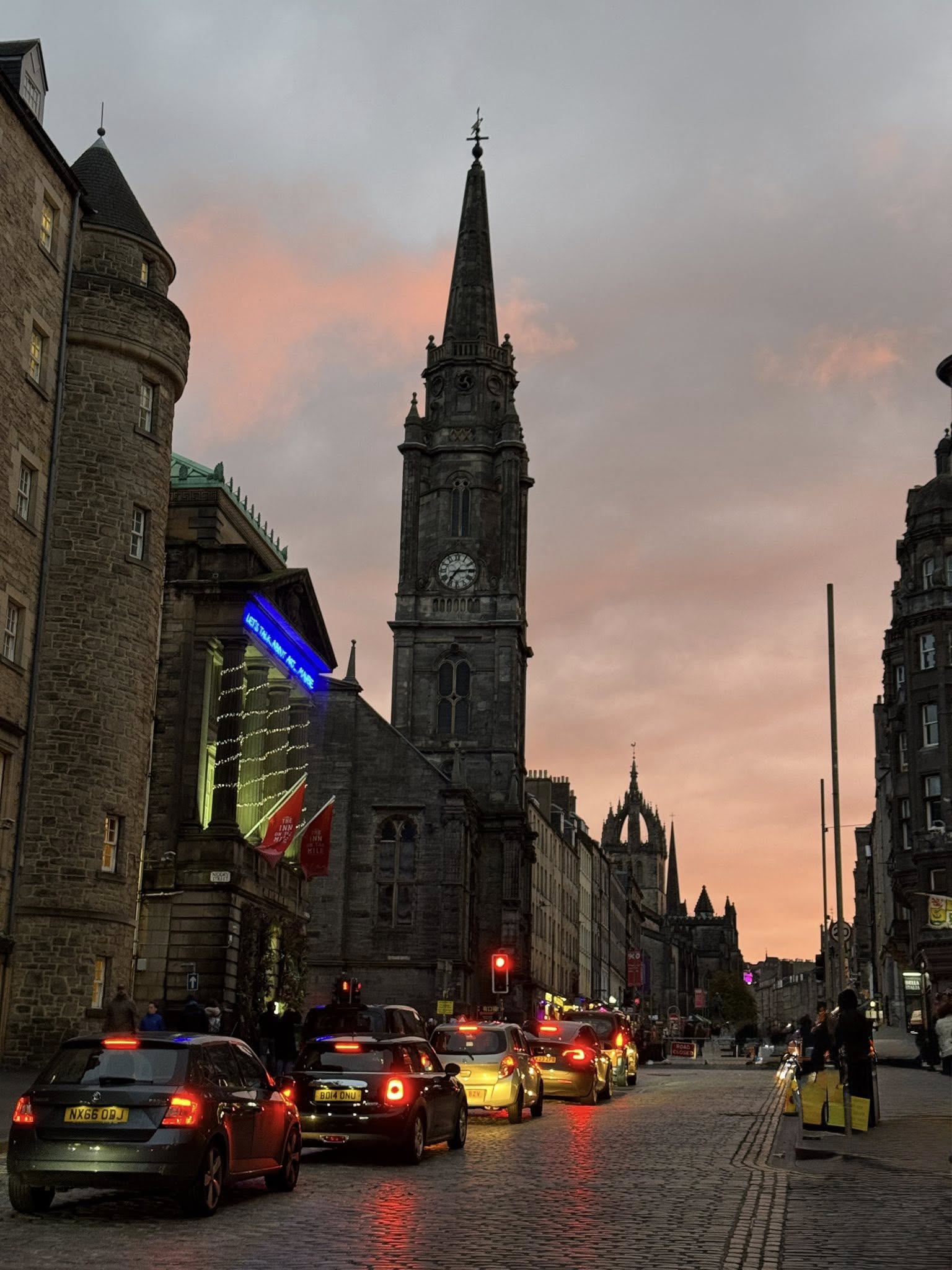
The Royal Mile was the one wide street in old Edinburgh bookended by Holyrood Palace at one end and the Edinburgh Castle at the other. Its name is distance-accurate in old Scottish terms. Before the Acts of Union in 1707 which united the kingdoms of Scotland and England into Great Britain, Scotland had its own system of weights and measures. A Scottish mile was 1/8th (220 yards) longer than the English Mile. Edinburgh’s Royal Mile is 24 yards short of the Scottish mile. The length was coincidental but it made for a good name!
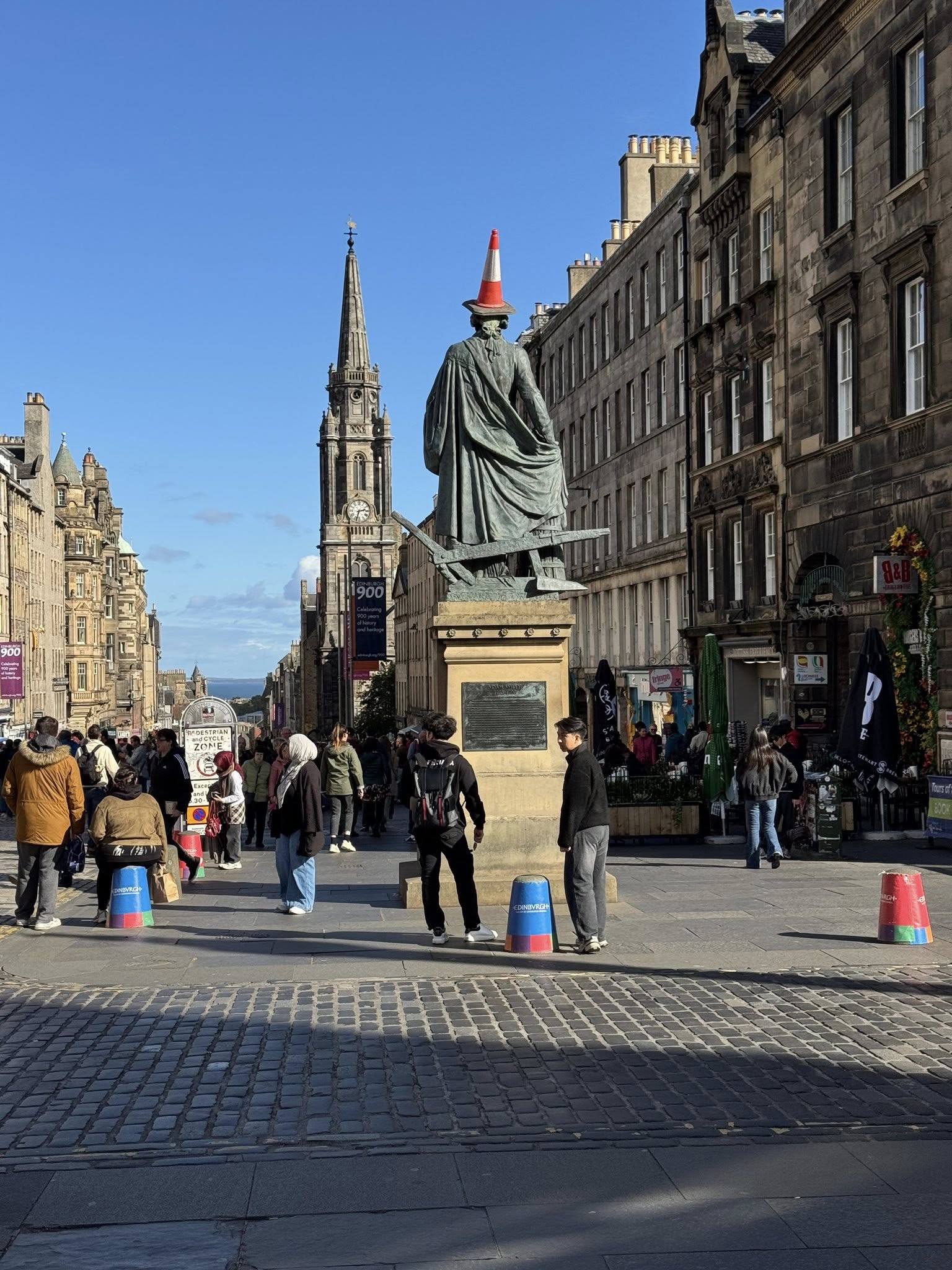
In the middle of the Royal Mile, right beside the St Giles Cathedral, stands a statue of Adam Smith, a famous Scott, who wrote Wealth of Nations. How fitting that he’s looking up the street at the Tron Kirk (the spire with the clock tower), originally a mid-1600s Church of Scotland parish church. The church was nicknamed for the “tron”, a public weighing beam where merchants arriving in Edinburgh to sell their goods like grain, butter, coal, salt and meat had to have them officially weighed for market. This ensured fair taxation and pricing. The wealth of the nation played out before him. As for the traffic cone on his head… a classic college prank, on repeat.
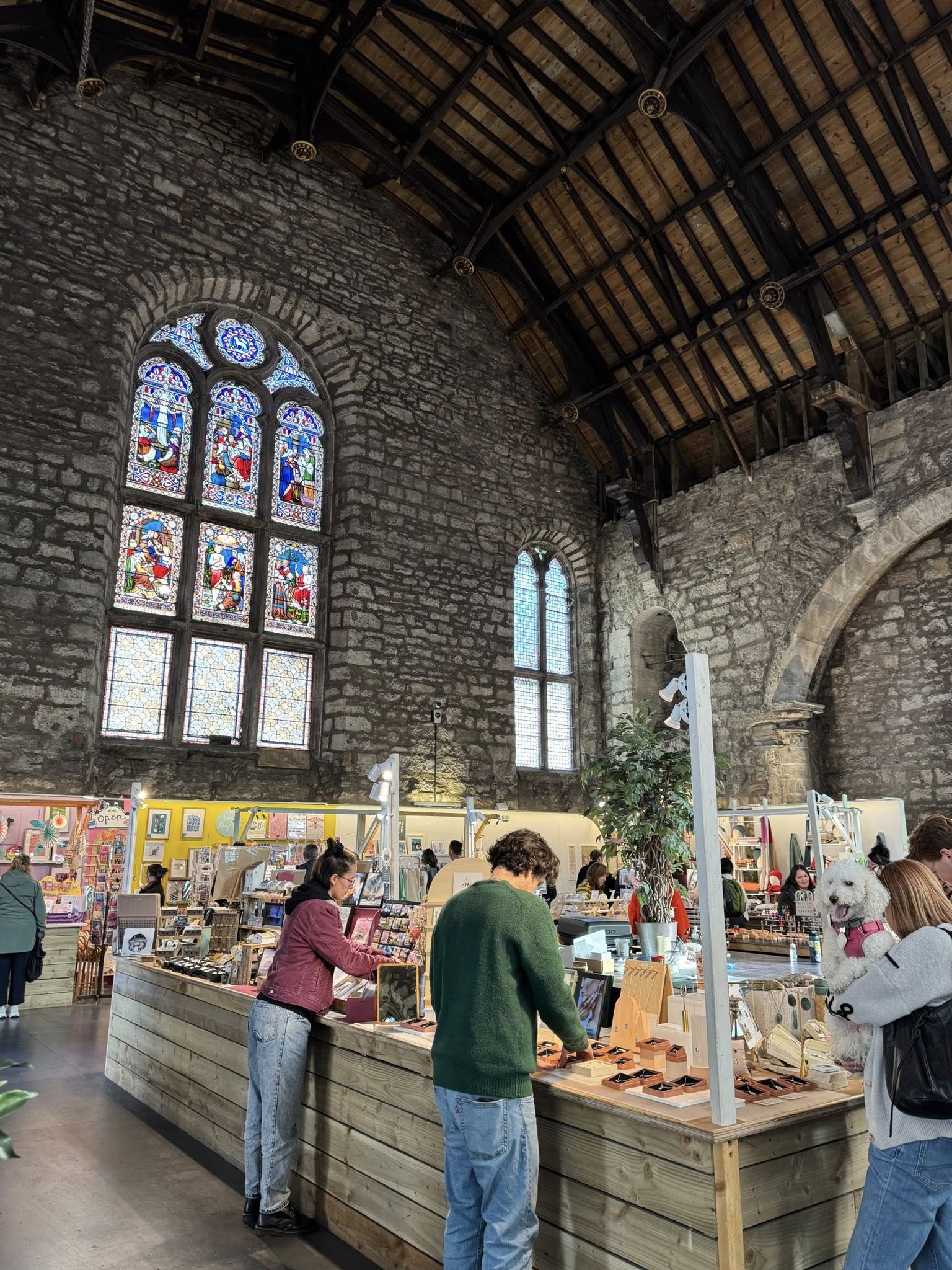
The church closed for worship in the 1950s and was converted into the Tron Craft Centre in the 1980s. The wealth of the nation continues to be supported by local artisans selling their wares to tourists, locals and their dogs.
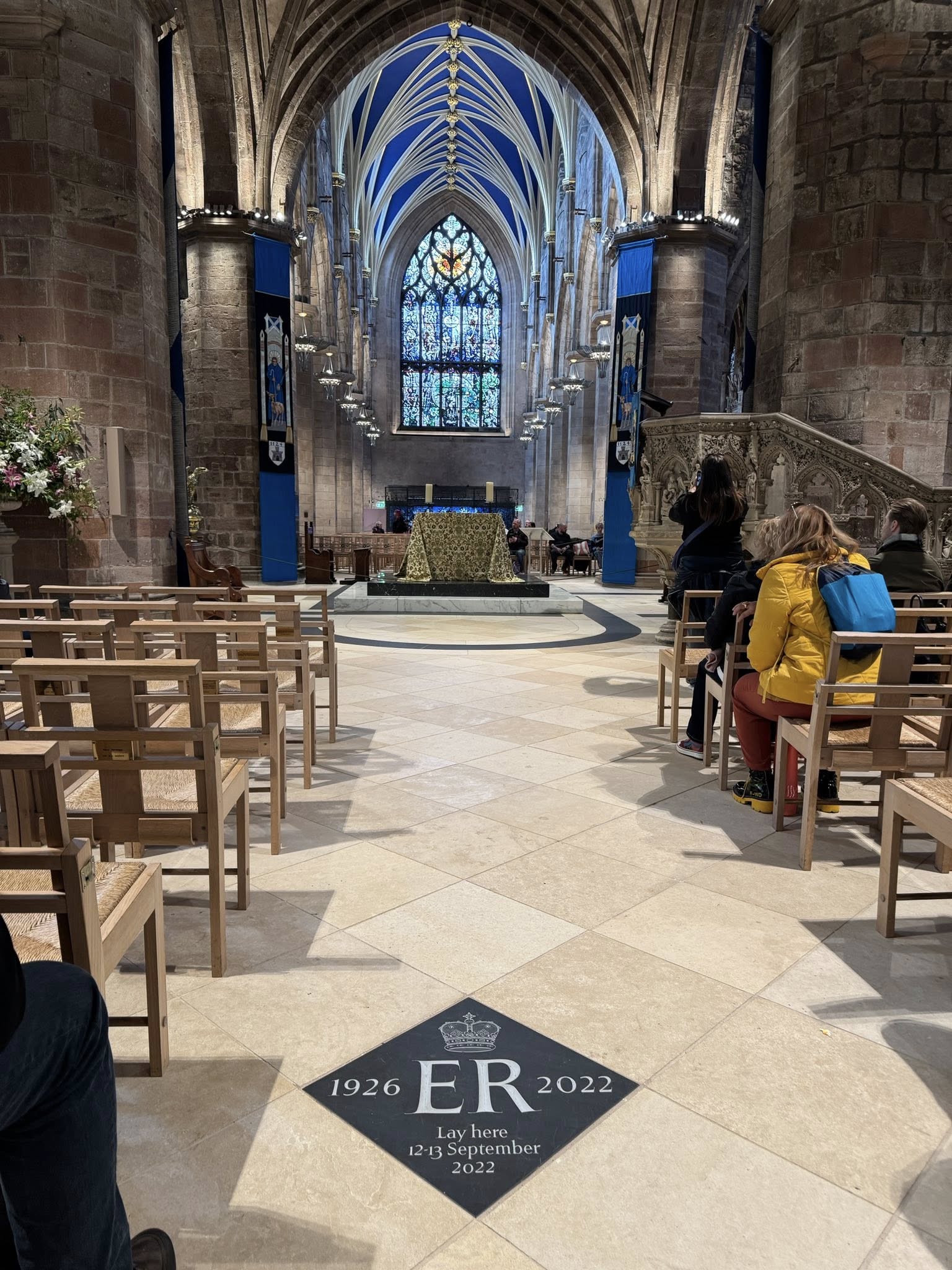
Luckily, St Giles Cathedral, perfectly positioned in the middle of the Royal Mile, is still open for business. Built in the 12th century, King David I decided to dedicate his cathedral to a highly popular saint in medieval Europe. Giles was from Provence and never actually set foot in Edinburgh, let alone Scotland, but became Edinburgh’s patron saint anyway. His cultish fame as patron of lepers, beggars and the disabled spread through the medieval church’s network of saints’ veneration so King David picked him. As the main parish church of Edinburgh, and as Edinburgh became Scotland’s capital, the cathedral became the hub of all things important like royal processions and proclamations, civic ceremonies and big state events. As such, St Giles as well as the cathedral became nationally important. John Knox, the Scottish Reformer, preached here in the 1560s so it became seen as the heart of Scotland’s new national religion. When Queen Elizabeth II died, her coffin lay at rest here due to her special connection to Scotland and the fact that she attended services here when she was in town.
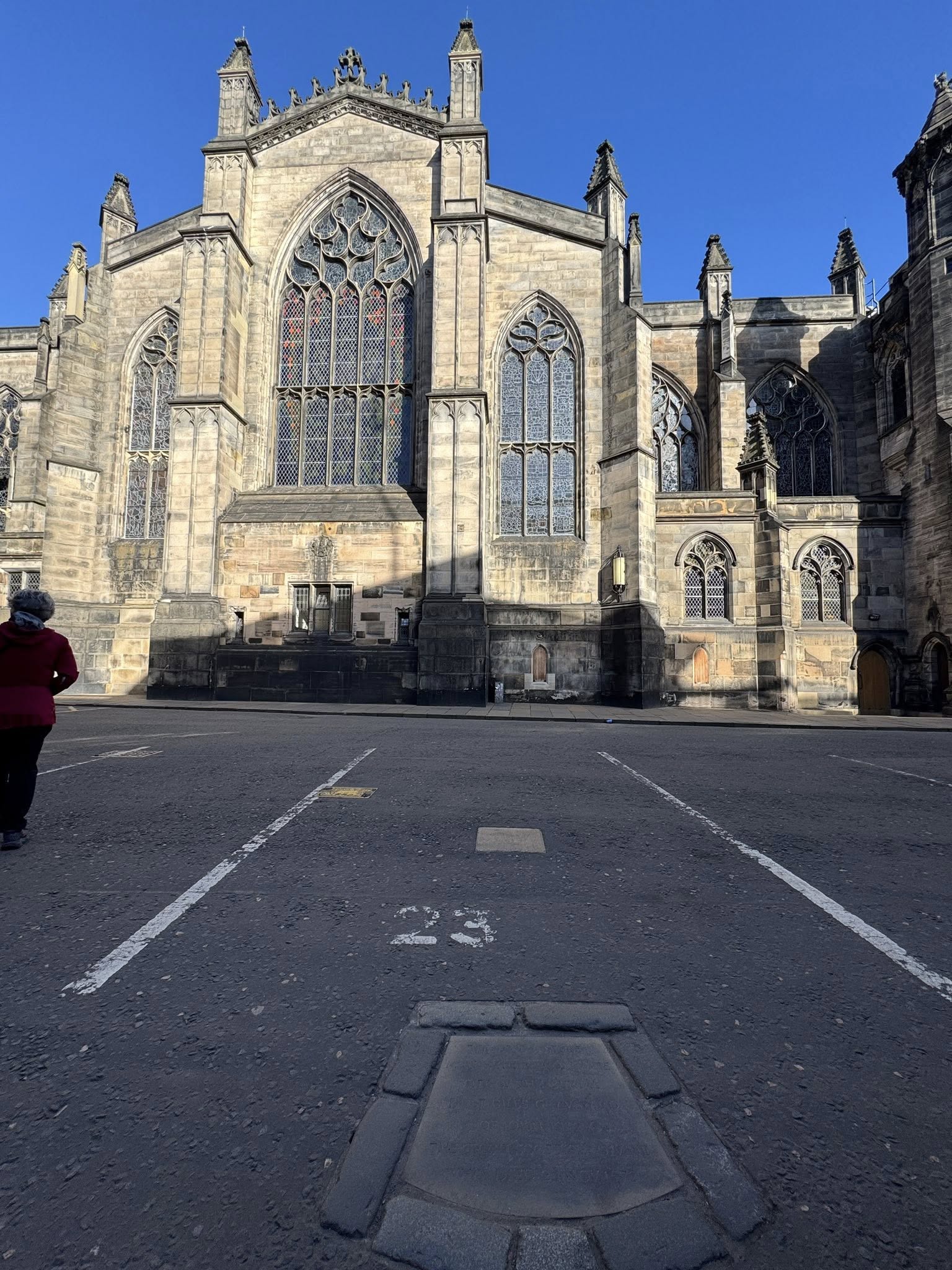
Number 23 is a special spot in the car park behind St Giles Cathedral. John Knox felt a strong kinship to this place and insisted that when he died, he be buried near the church of St Giles forever. His wish was granted and when the city moved the notables from the cemetery adjacent to the church to the Greyfriars cemetery when they built the car park, they left John Knox here, under spot #23. Everyone knows he’s buried here under the car park so there won’t be any big search, as there was when they unearthed the bones of King Richard III under a car park in Leicester.
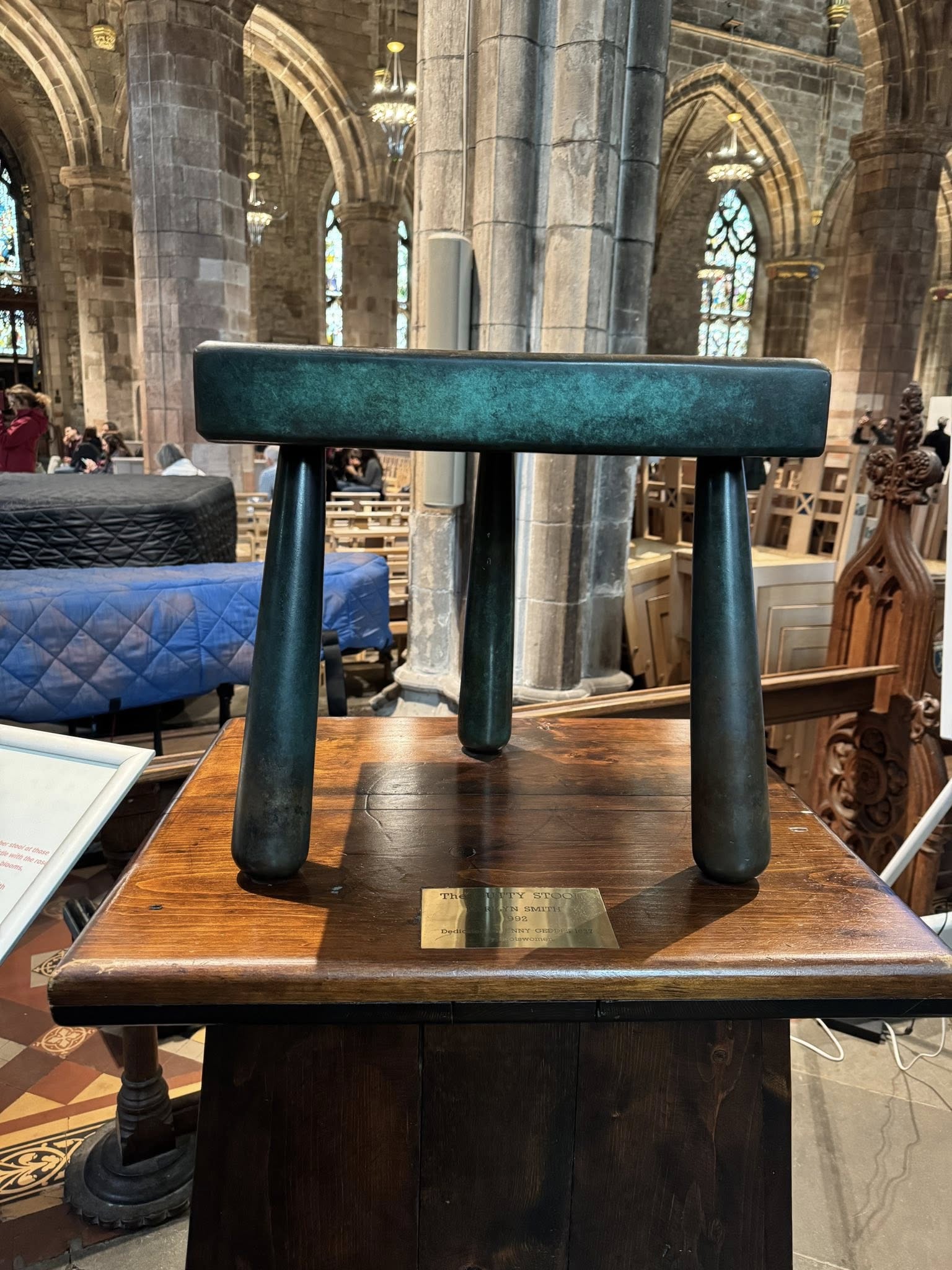
This stool is a memorial to Jenny Geddes inside the cathedral. In the 1630s, King Charles I of England tried to introduce the Anglican Book of Common Prayer in a very proud and staunch Presbyterian Protestant Scotland. The Scots wanted none of it, but King Charles pushed ahead and on July 23, 1637, the Dean of Edinburgh read the book to the congregation for the first time. Nobody liked what they heard but a servant named Jenny Geddes had the guts to say what everyone else was thinking. She stood up and said: “The Devil give you colic, the belly of you, false thief; dare you say Mass in my ear?” She picked up her stool and threw it at the priest, starting a riot. Presbyterianism won. What happened to Jenny? Well, there is a question as to whether she really existed, whether it was her that threw the stool or someone else, and whether there ever was a stool thrown, but her legacy as a folk hero lives on to this day as a symbol of resistance and opposition to religious imposition and authority. What happened to Charles? He was the first king to be charged with treason against his own people and was ultimately beheaded in 1649, thanks to his pushing religion and royal power on the people. He was too stubborn and lost it all: this marked the first shift in power from monarchy to parliament.
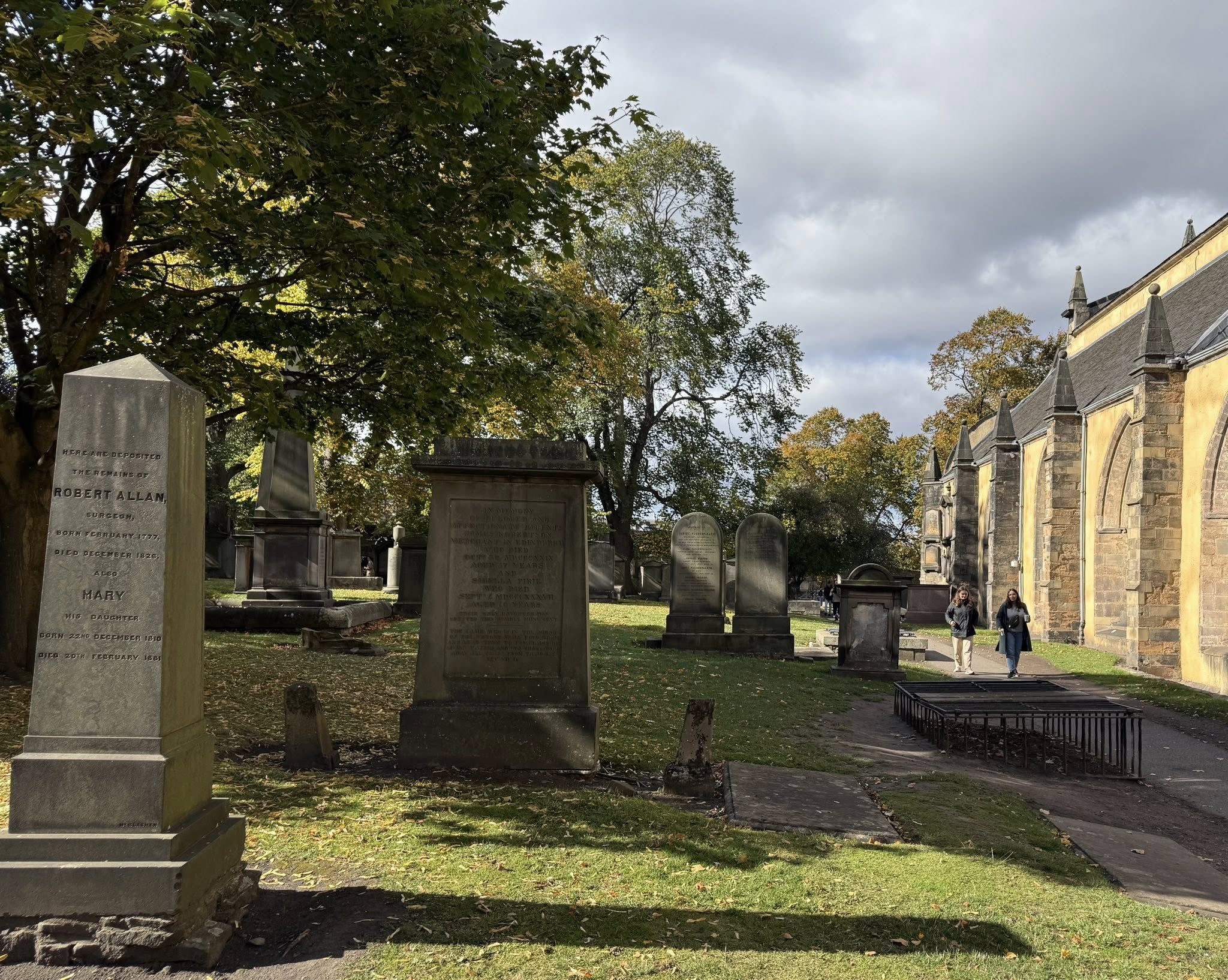
Greyfriars Kirkyard was originally part of the Grey Friars Franciscan friary which was dissolved in 1560 at the Reformation. In 1561, the Edinburgh Town Council set aside the land as a new burial ground to relieve pressure on the overcrowded old cemetery at St Giles. A century later, after Jenny Geddes' performance at the cathedral, this is where the National Covenant was signed in 1638, pledging to defend Presbyterianism against Charles I’s reforms. The iron cage on the right-hand side of the photo is not a decorative element of the cemetery. In fact, it’s a mortsafe. In the late 18th and early 19th centuries, Edinburgh was a world centre for medical training. Students needed fresh, dead bodies for dissection. At the time, according to the law, the med school only had access to the bodies of those executed. But with only a handful of executions per year, demand far exceeded supply. This is always where the enterprising folk step in! Grave robbers would dig up fresh bodies and sell them to the medical school for as much as £10 (equivalent to £1000 today). The schools desperately needed the bodies so it was a “don’t ask, don’t tell” situation. Families paid to install these heavy cages over their loved one’s graves to prevent the body snatching. They didn’t need to cage up the graves for too long as once decomposing started, the bodies were useless. The cages would be rented for a few weeks at a time and then moved to a new grave. When the grave robbing business was thwarted, a couple of fellows, Burke and Hare, came up with a new idea in 1828: they murdered at least 16 people and sold them directly to the anatomy school. They killed the poor as they were less likely to be missed. These two were arrested but Hare managed to escape. Burke was convicted, executed and donated to the med school. What goes around comes around!
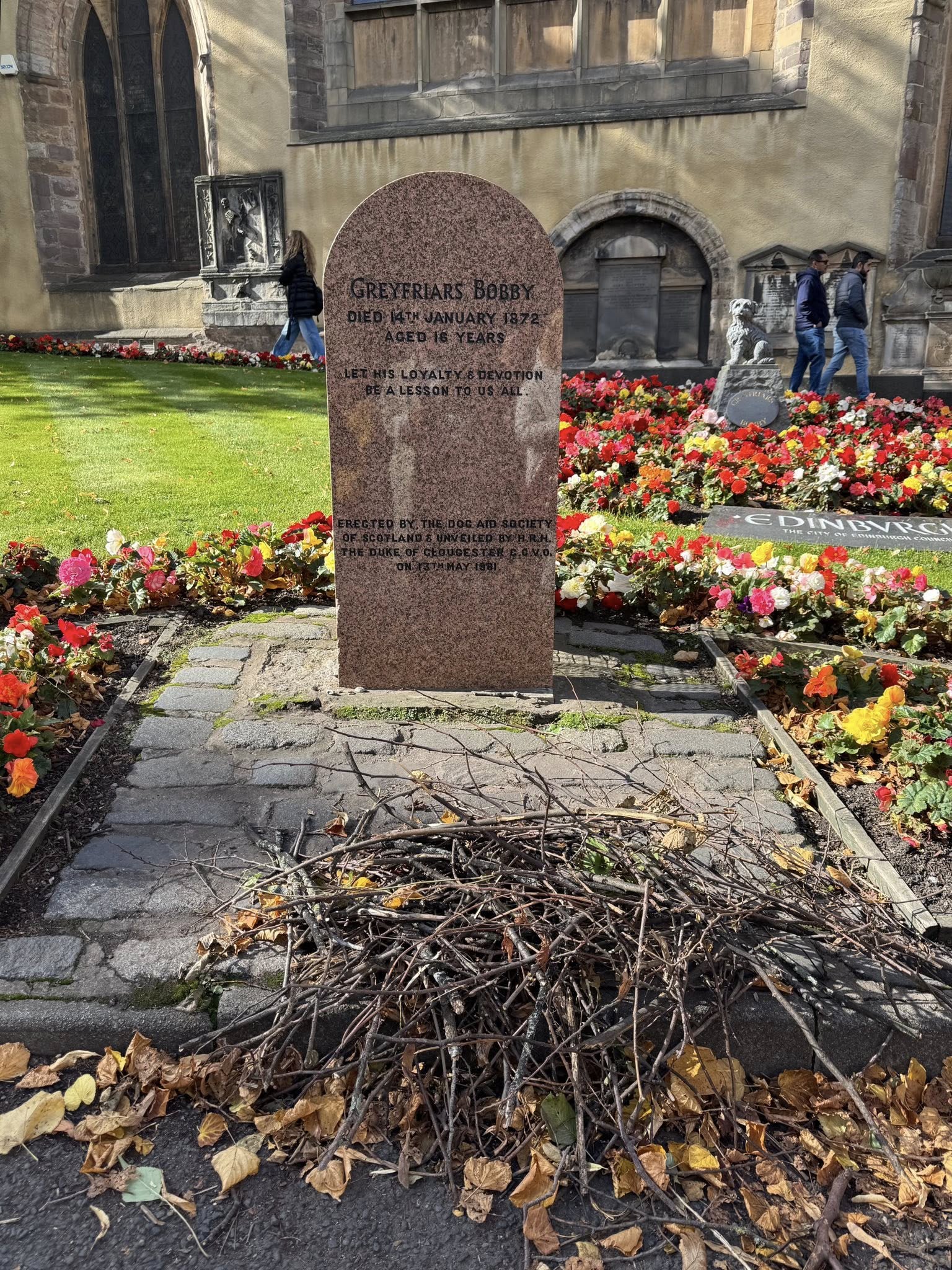
One of the most famous buried here is Greyfriars Bobby. Bobby was a Skye terrier who belonged to John Gray, a night watchman in Edinburgh. When John died in 1858, Bobby refused to leave his master’s graveside for 14 years. This posed a bit of a problem as without John, Bobby was a stray and therefore could be picked up and euthanized. But Bobby had become famous and drew in the tourists. The Lord Provost of Edinburgh figured out a loophole and arranged for Bobby to have a licence and collar so he wouldn’t be taken as a stray. After Bobby died, he was buried just inside the gates of Greyfriars (not in consecrated ground, since he was a dog). Bobby still draws in the tourists who leave sticks at his grave.
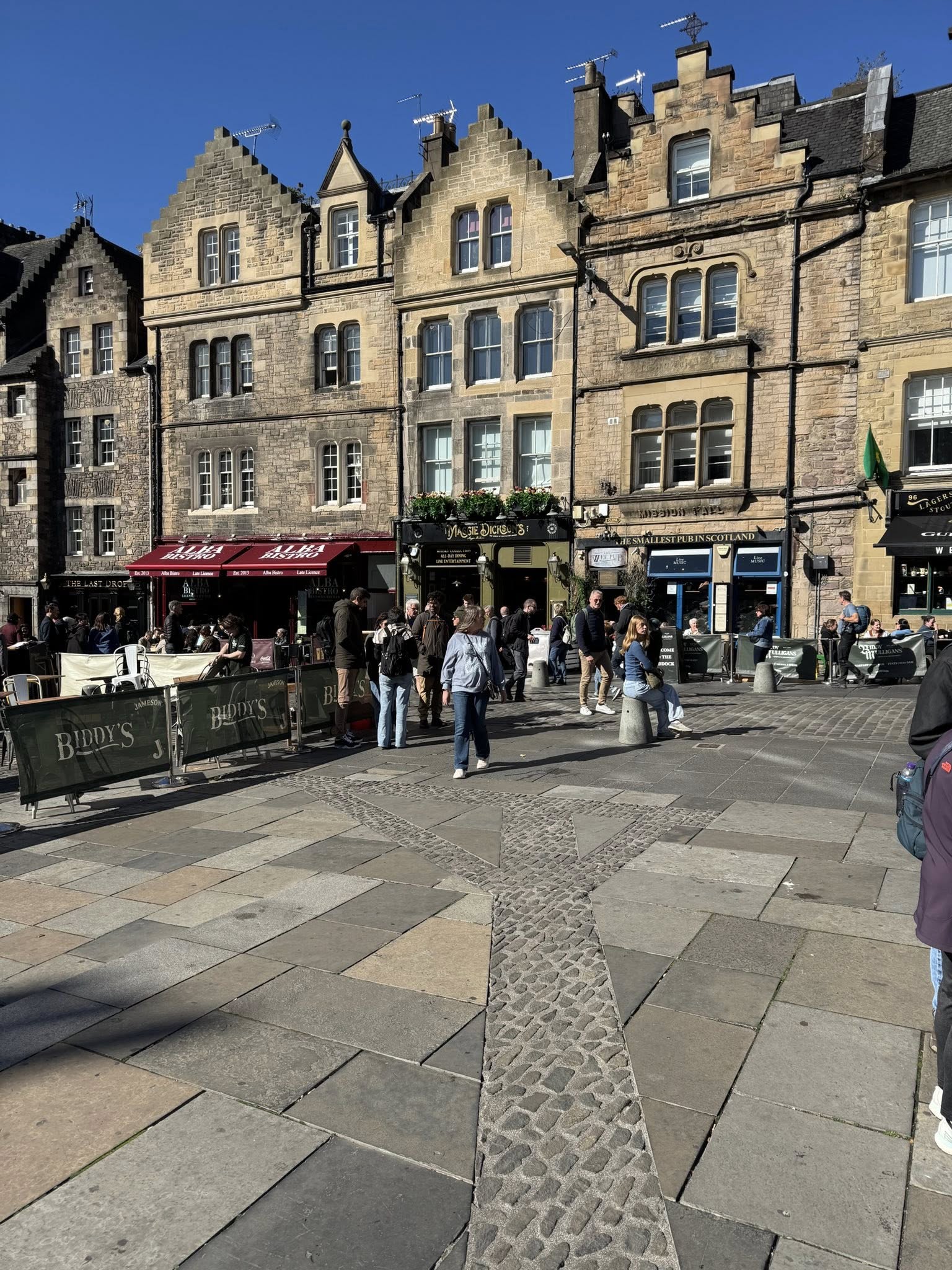
Continuing along the death theme… this cobble marker at the top end of Grassmarket was where the gallows were. As entertainment, thousands would come to watch executions. The executions have long since stopped but the entertainment continues in the form of pubs, restaurants and buskers.
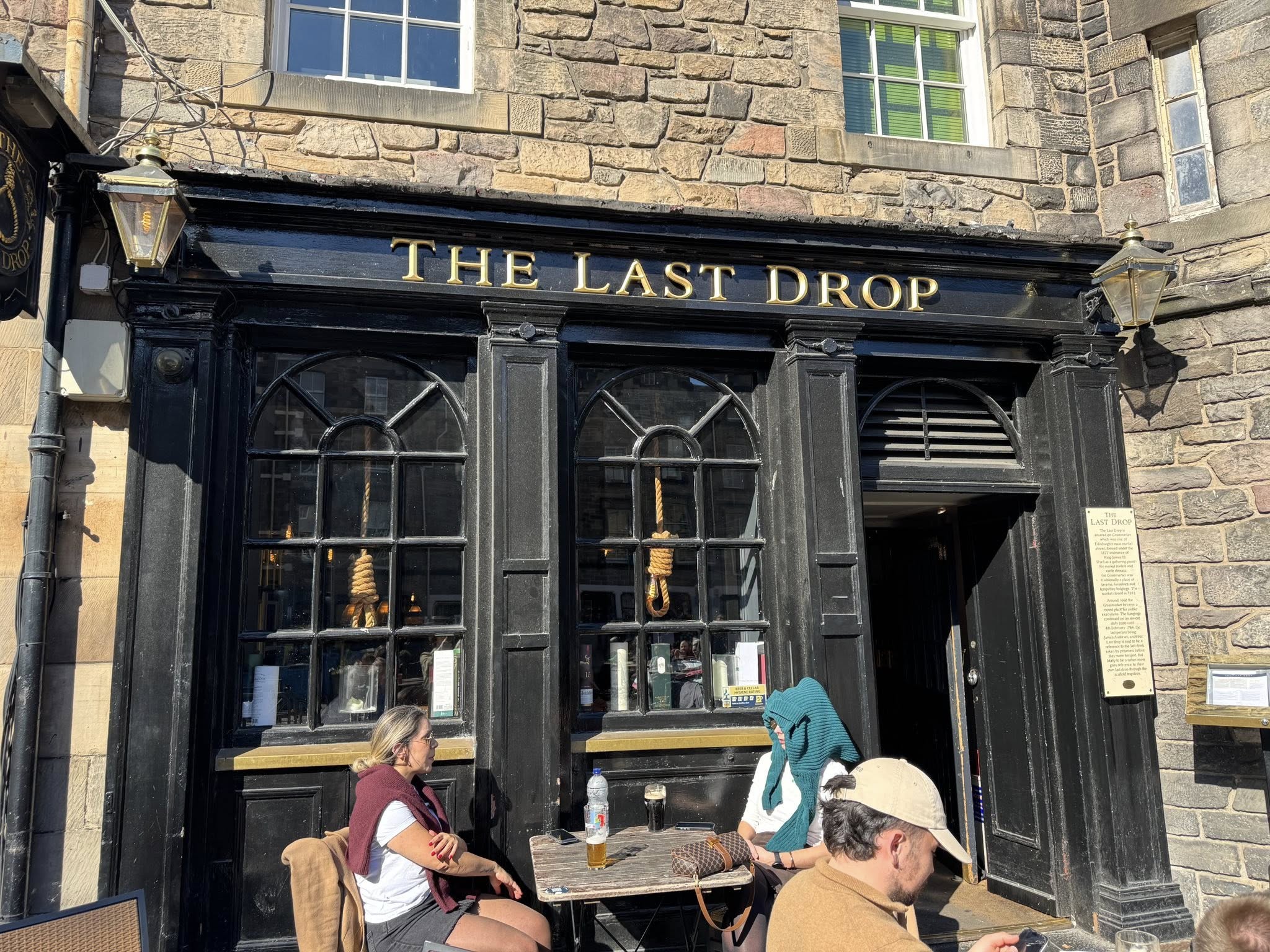
Facing the gallows was this pub, The Last Drop. The story goes that prisoners were allowed a last drink before heading to the gallows, and this is where they had their last drop of drink. One very famous and true gallows story is that of Maggie Dickson. At the age of 18 or 19, Maggie married a fisherman who deserted her. She gets pregnant in 1724 but hides the pregnancy because she is essentially a single woman. The baby comes early and is stillborn. Because nobody knew of the pregnancy, she left the body by banks of the River Tweed. It was illegal to conceal a pregnancy and she is tried, convicted and sentenced to be hanged by the neck until pronounced dead. This happened and her body was put in a coffin and taken back to her family in Musselburgh. The driver of the coffin cart heard knocking and when he went to check on the coffin, he found Maggie alive. She was tried again and since the law said she was to be “hanged until dead”, and the authorities had carried out the sentence the first time pronouncing her dead, she could not legally be executed again. She was released and went on to live for a long time.
A busy night at the Jolly Judge pub!
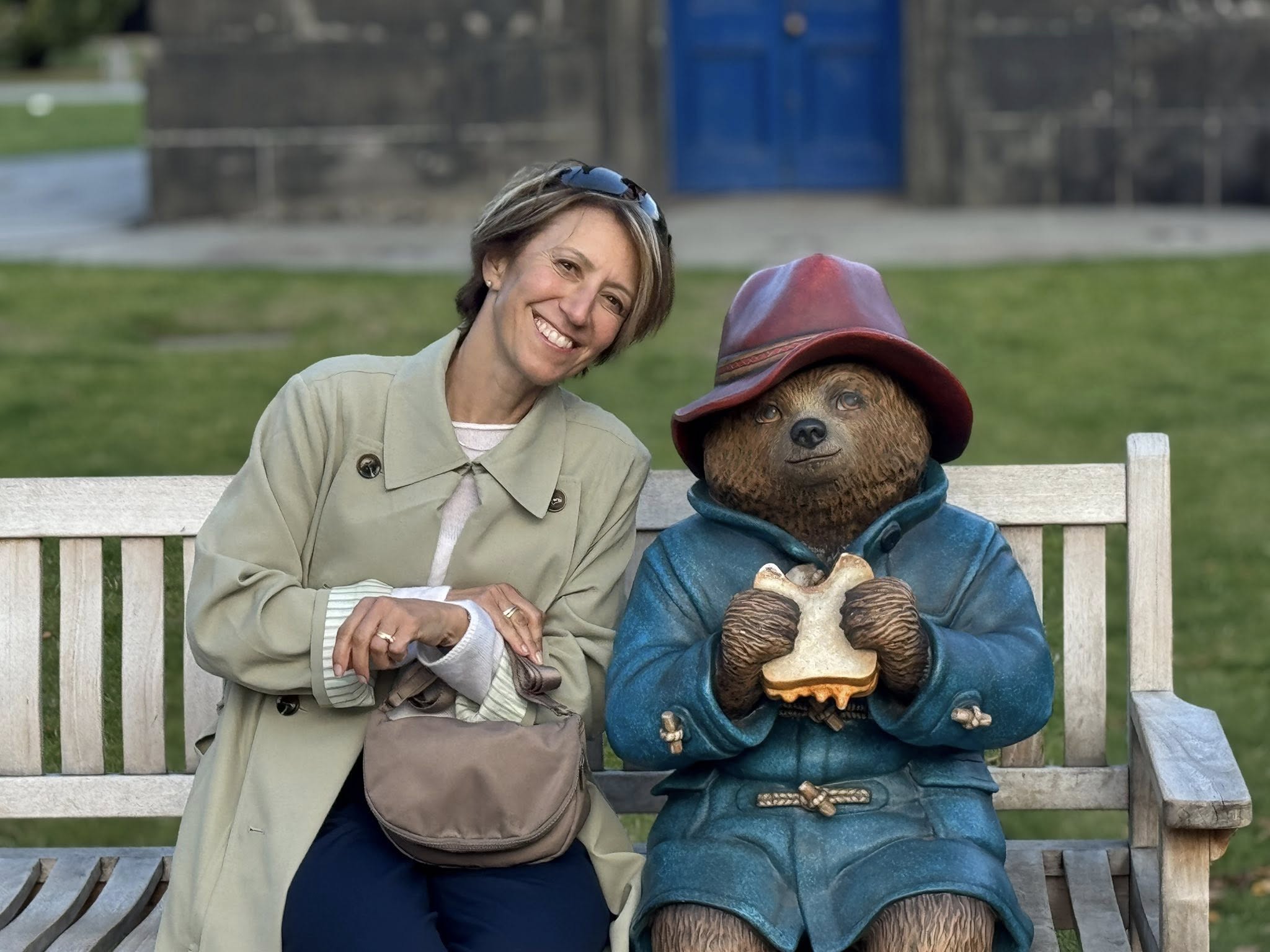
Finally someone to chat with on the bench!
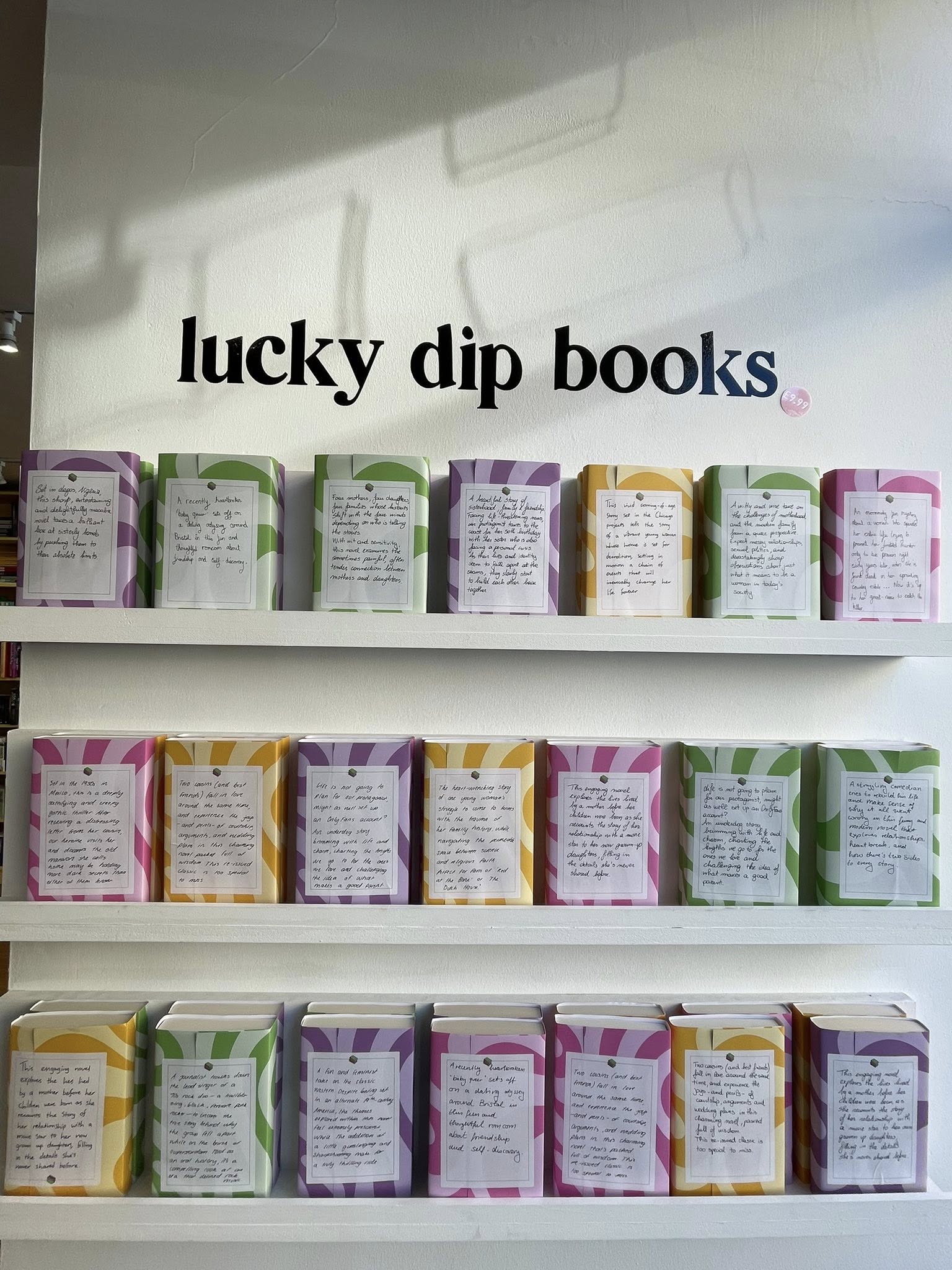
I love this idea we saw in a bookshop in Stockbridge. The books are wrapped up with a brief synopsis written on the front. People buy the book solely based on the description. You can’t tell a book by its cover!
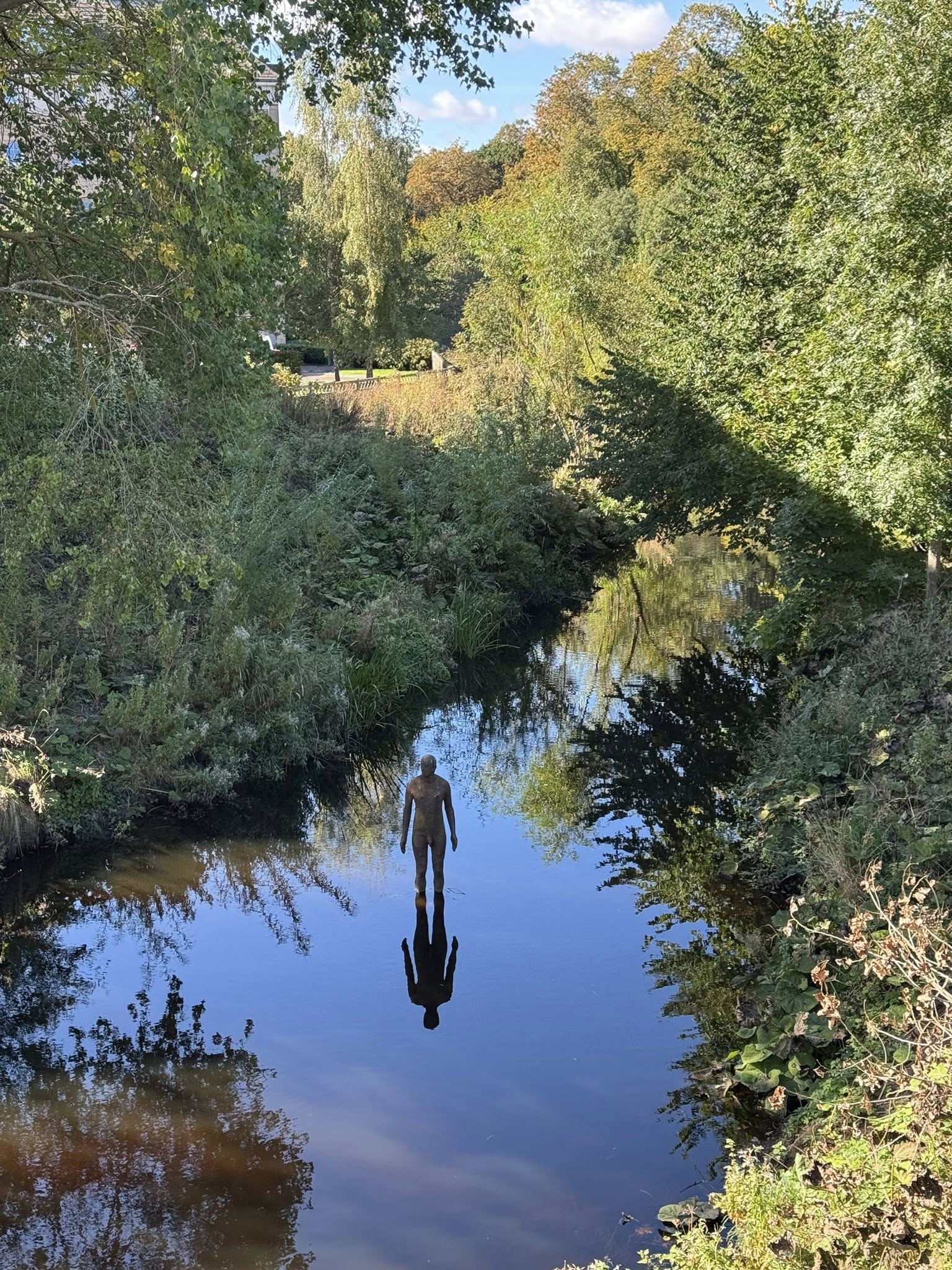
Strolling along the Water of Leith Walkway we came across one of artist Anthony Gormley’s sculptures in a series called Six Times. Cast from the artist’s own body, six sculptures are placed in or beside the river along the walkway. They act as silent witnesses to the flow of the Water of Leith, reminding viewers of the passage of time, the cycles of nature, and human impermanence. This is number 4 and it was a surprise to come across it. We didn’t notice the other five.
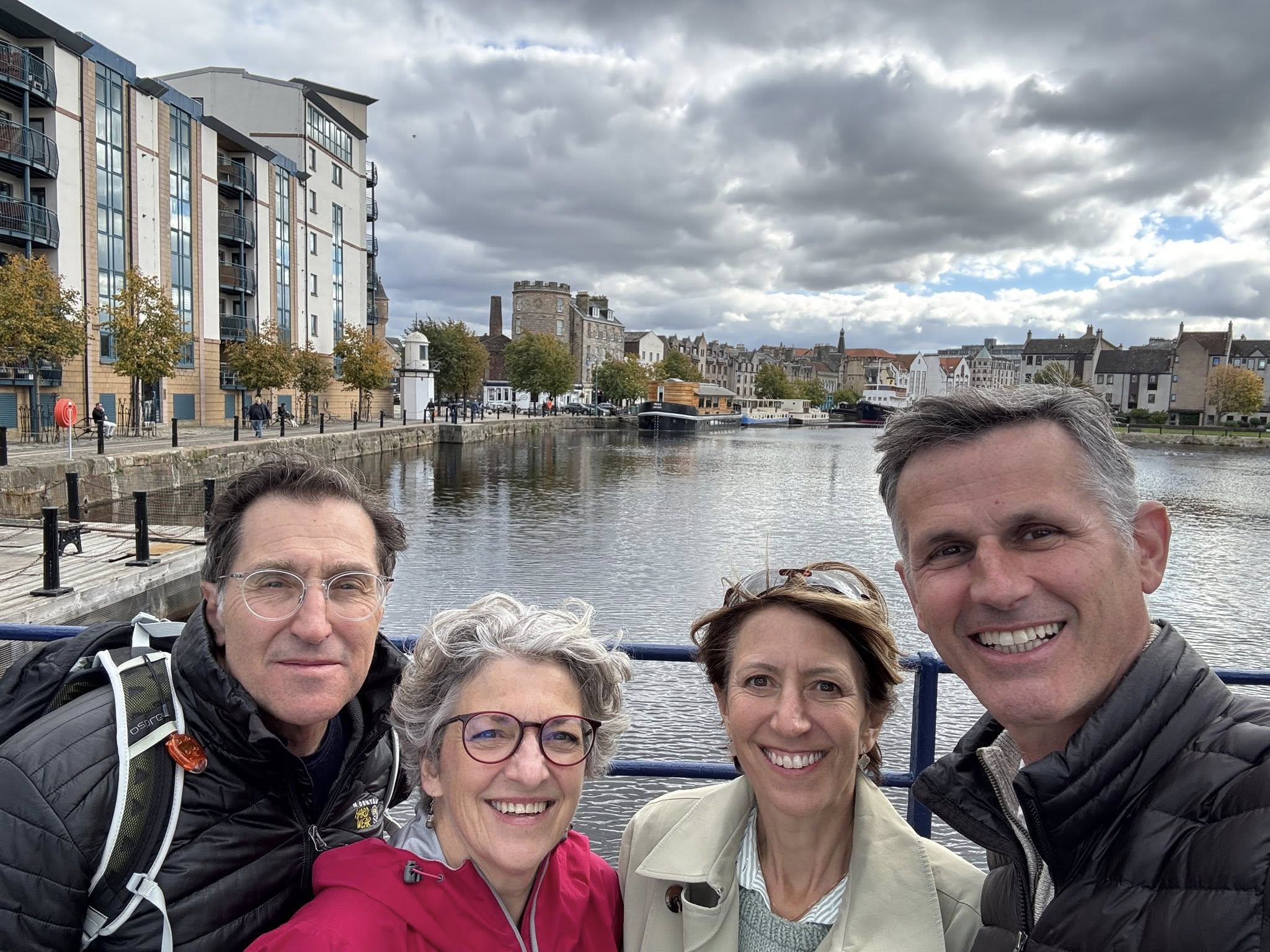
We made it to Leith! This was Edinburgh’s main port since the 12th century. Since the main port moved to deeper water to handle ever-larger container ships, Leith has had a serious facelift and is now a trendy part of town with great restaurants, fancy apartments and the home of Queen Elizabeth II’s decommissioned yacht, the Royal Yacht Britannia.
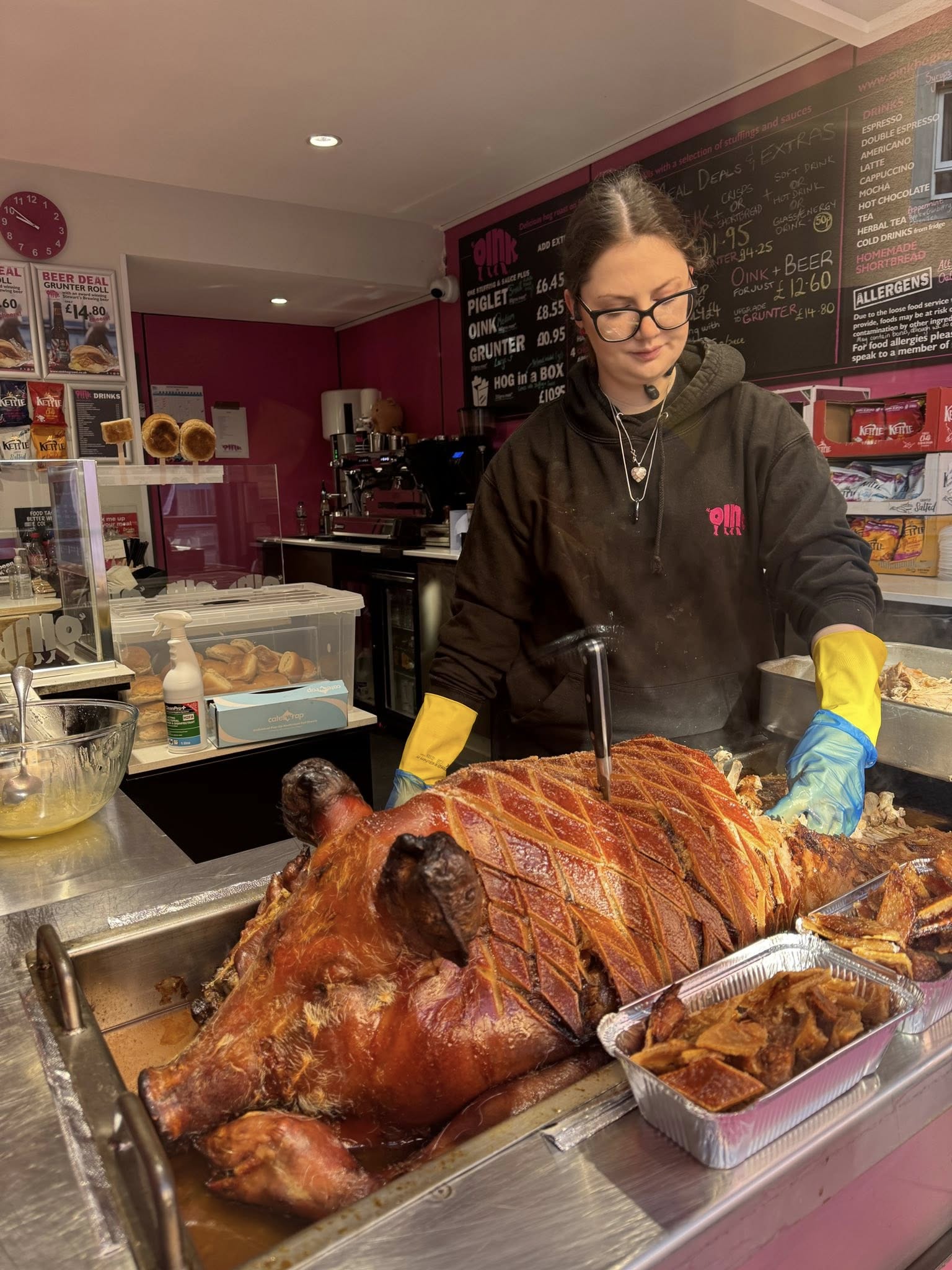
Now that’s pulled pork!
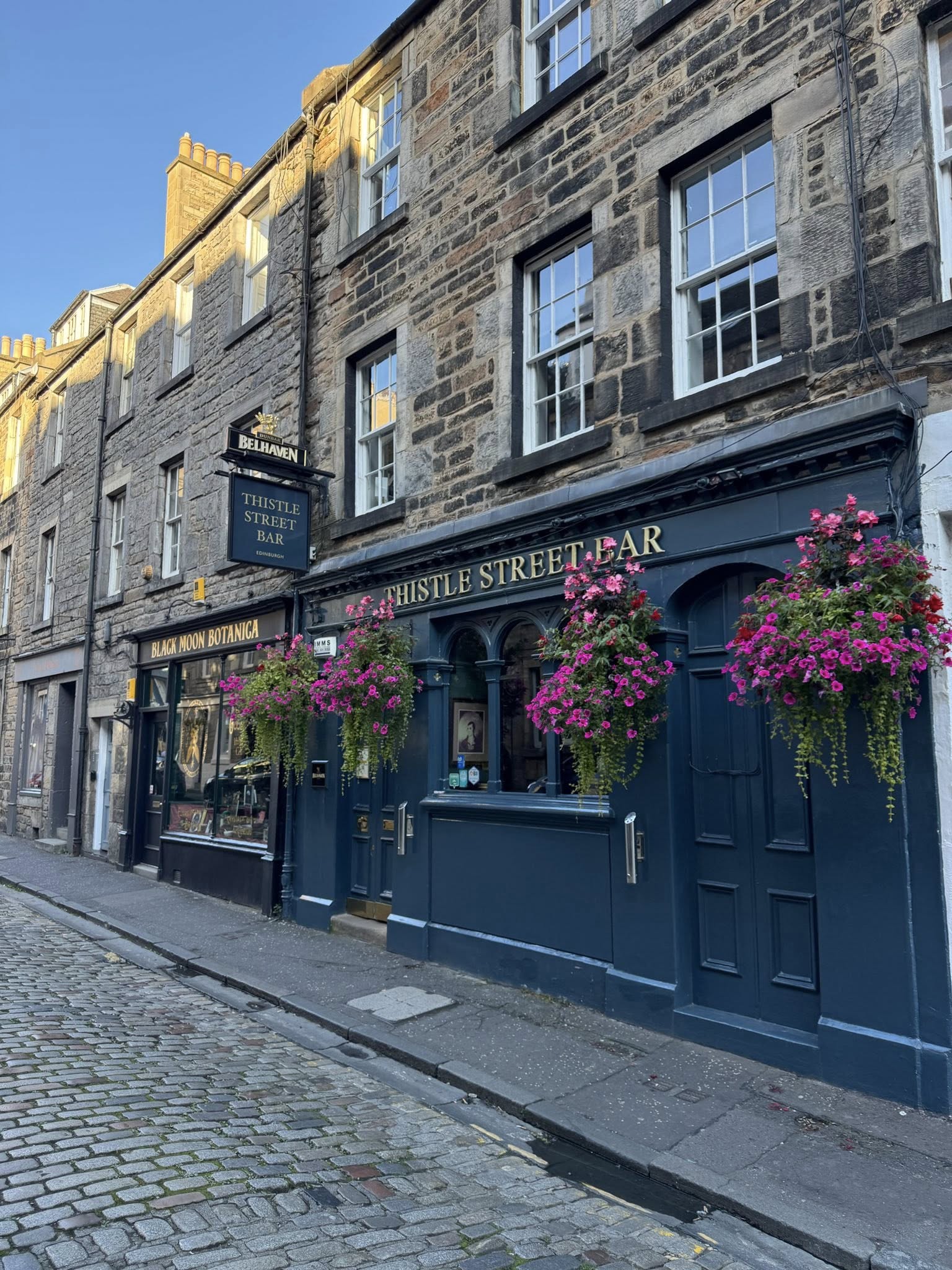
Our favourite pub in Edinburgh! The Thistle Street Bar was around the corner from where we stayed and luckily we discovered it our second day in Edinburgh. We went every night after that. Owners Robert and Dorothy are absolutely lovely and have created a place with a fantastic vibe.
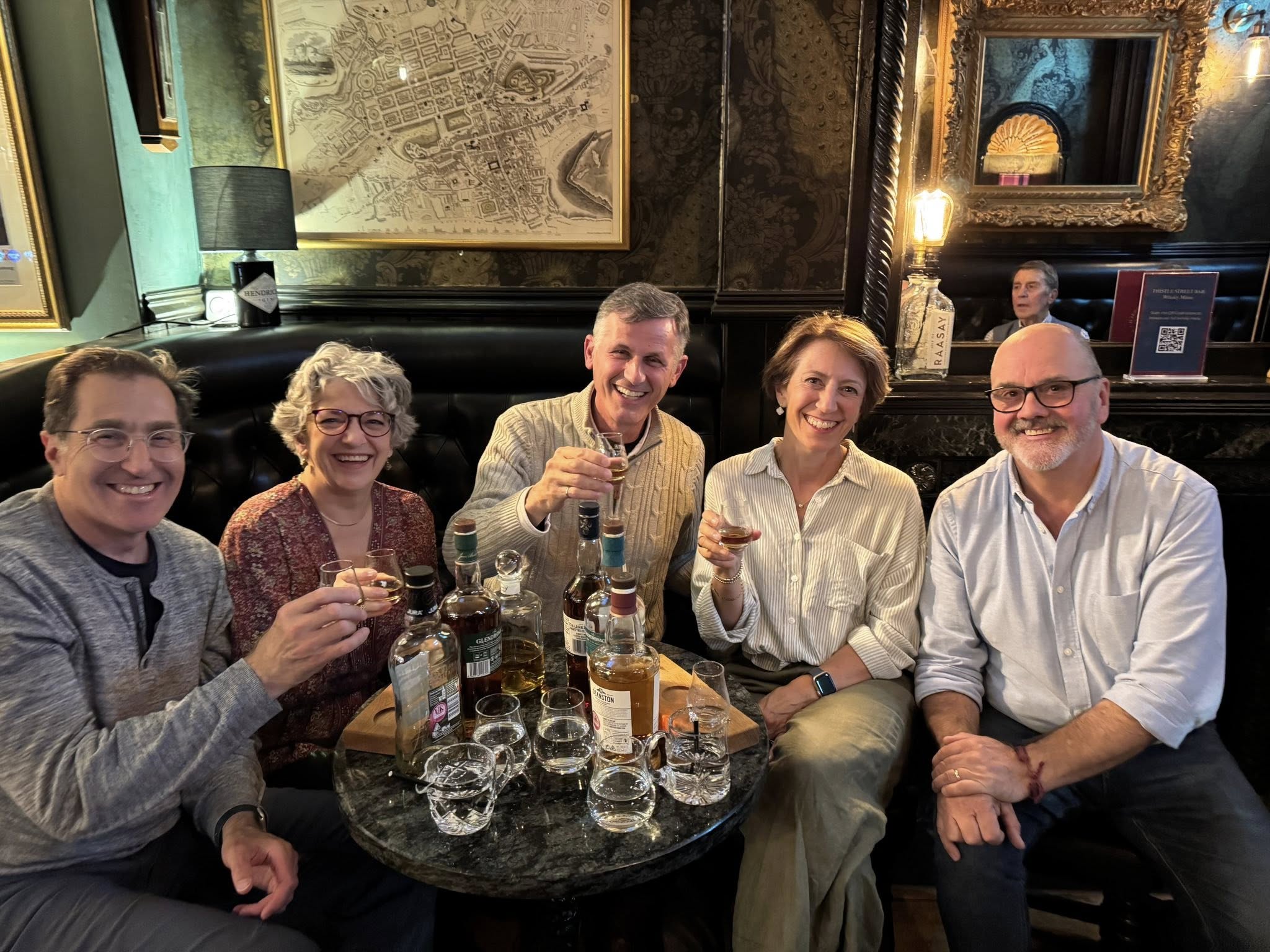
On our second visit, Robert took the time to do a whisky education and tasting. He’s not only a wonderful guy and a wealth of information about whisky, he’s also a tour guide by day. I wish we knew earlier as he would be an amazing guide to explore the city with. Thistlestop Tours is his other business.
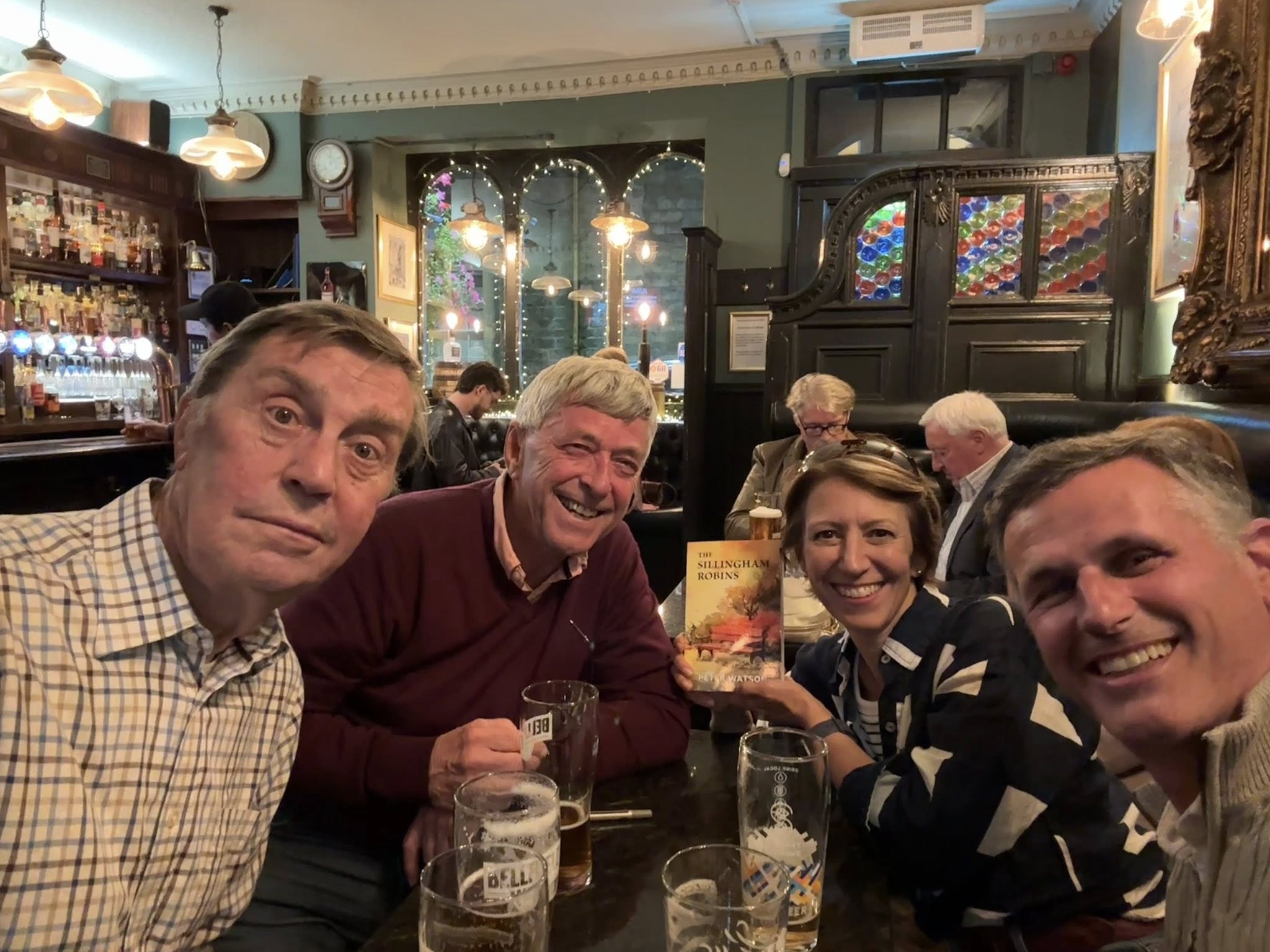
This was our third and last night at Thistle Street Bar. On our second night we met Peter Watson (beside me) and his friend John who was visiting from Adelaide. Peter was such fun and a great pub friend! In retirement, he decided to keep busy by writing a novel. We met up on our third night and he brought me a signed copy. My next read!
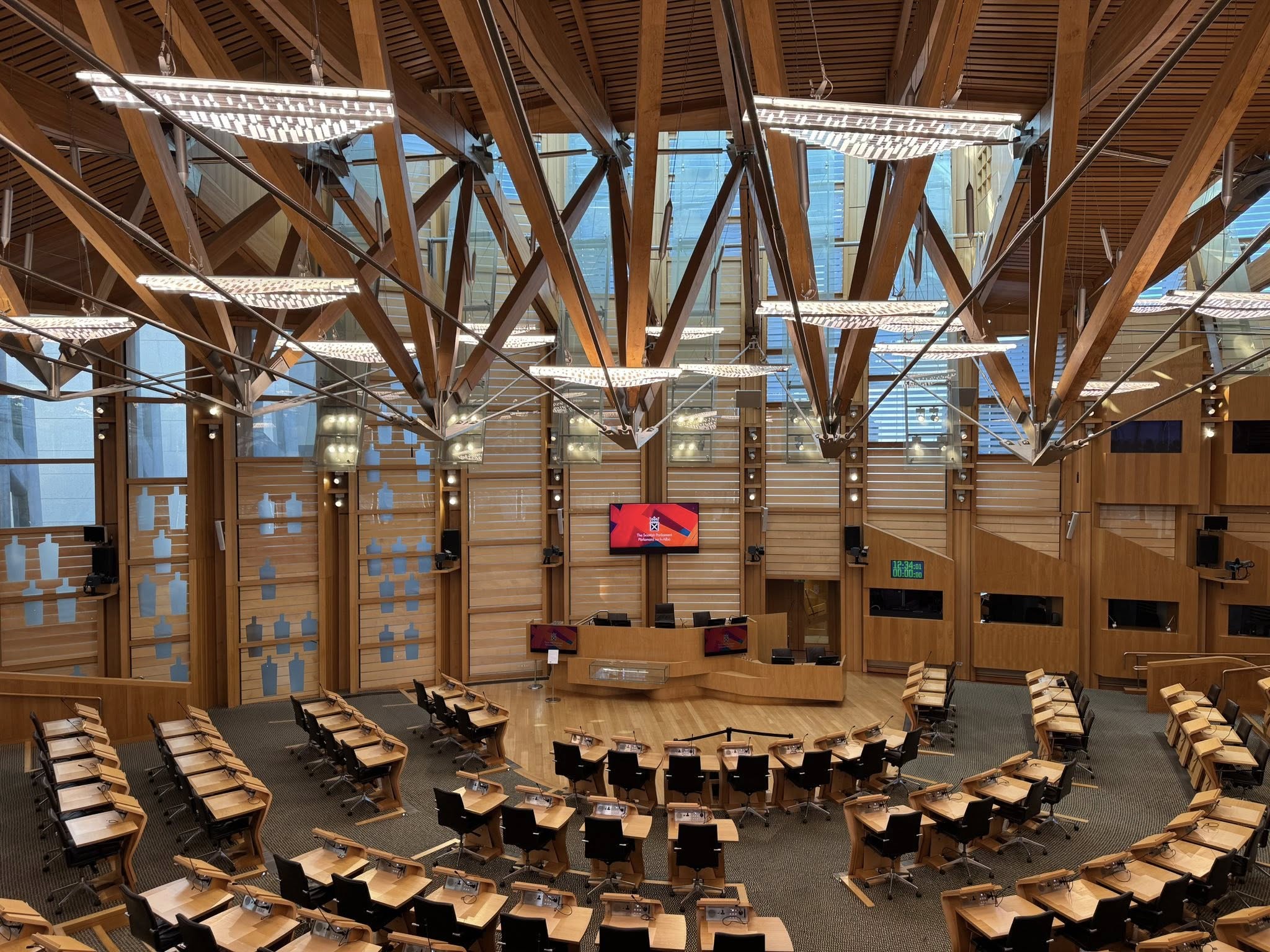
Edinburgh completed its new Scottish Parliament building in 2004 across the street from Holyrood Palace on the site of the old Holyrood Brewery. It’s open to the public and people can come any time to watch the MSPs take care of business. The best time to come is on a Thursday for First Minister’s Questions. Apparently it can get quite raucous, just like in our Parliament. The building is full of symbolism but my favourite are the images of beer bottles on the walls and the ceiling fixtures. Seems very fitting in a country steeped in pub culture on the site of an old brewery. However, the security guy in the room told us that the building is very abstract and that those “bottles” actually represent the Scottish people who are known to be broad shouldered. Fine, but I beg to differ…
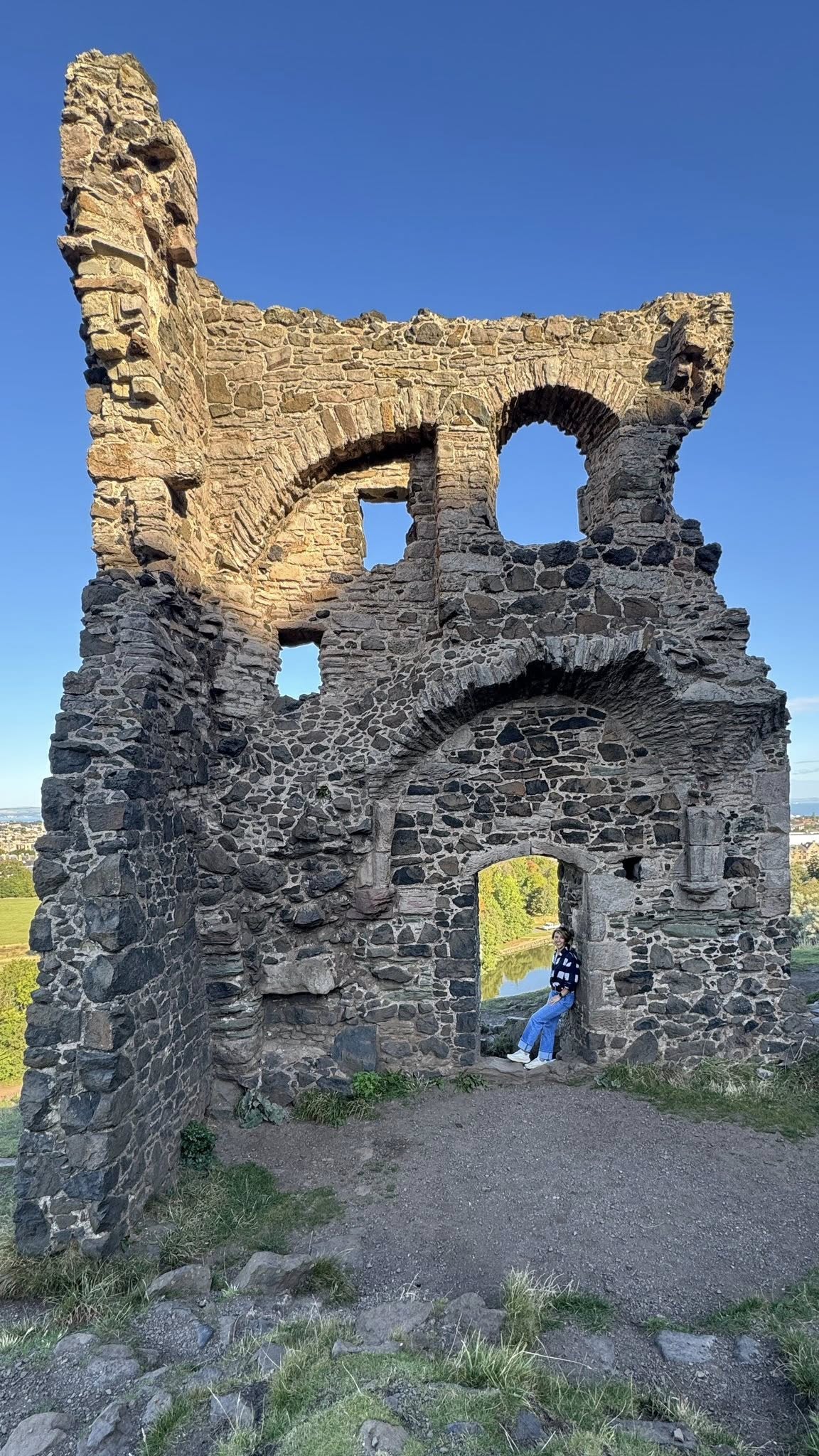
Our last day we trekked up the iconic Arthur’s Seat, passing St Anthony’s Chapel partway up. Built in the 15th century, this is thought to have been a place of pilgrimage, particularly for lepers. Interesting link back to our friend St Giles, the patron saint of the disabled, lepers and beggars.
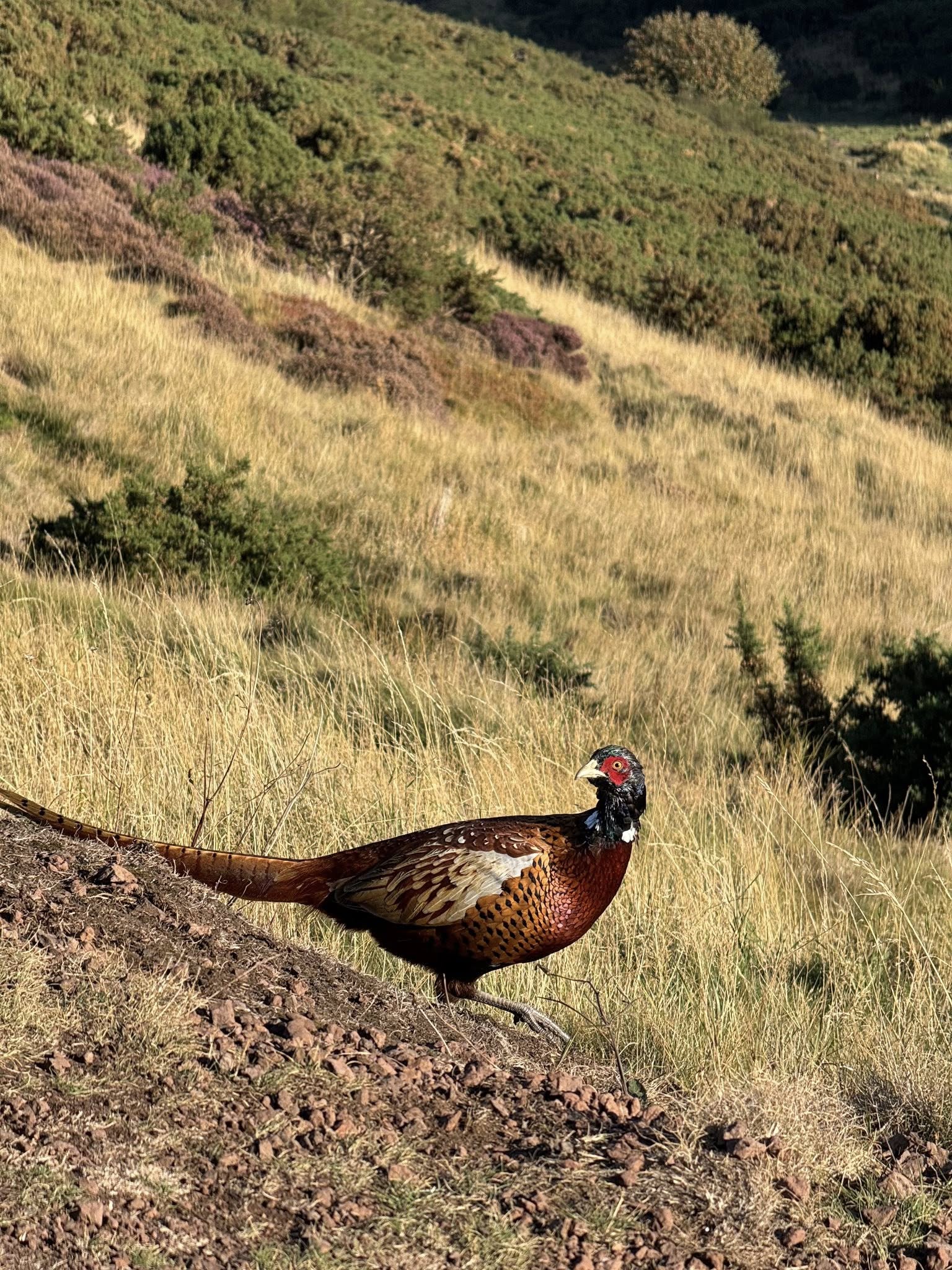
The colour palette of this pheasant is perfect here near the top of Arthur’s Seat.
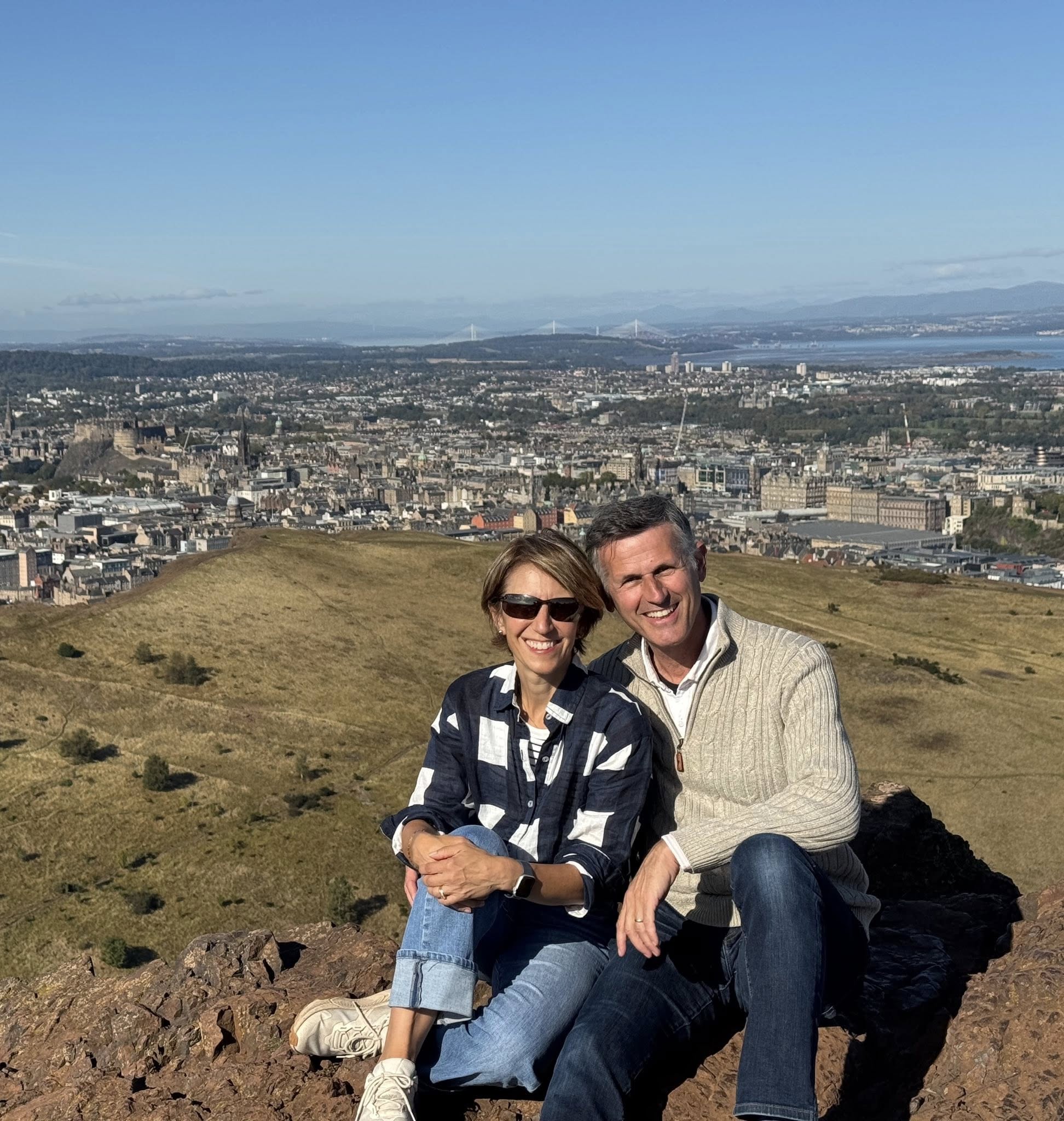
Spectacular view of Edinburgh from the top of Arthur’s Seat.
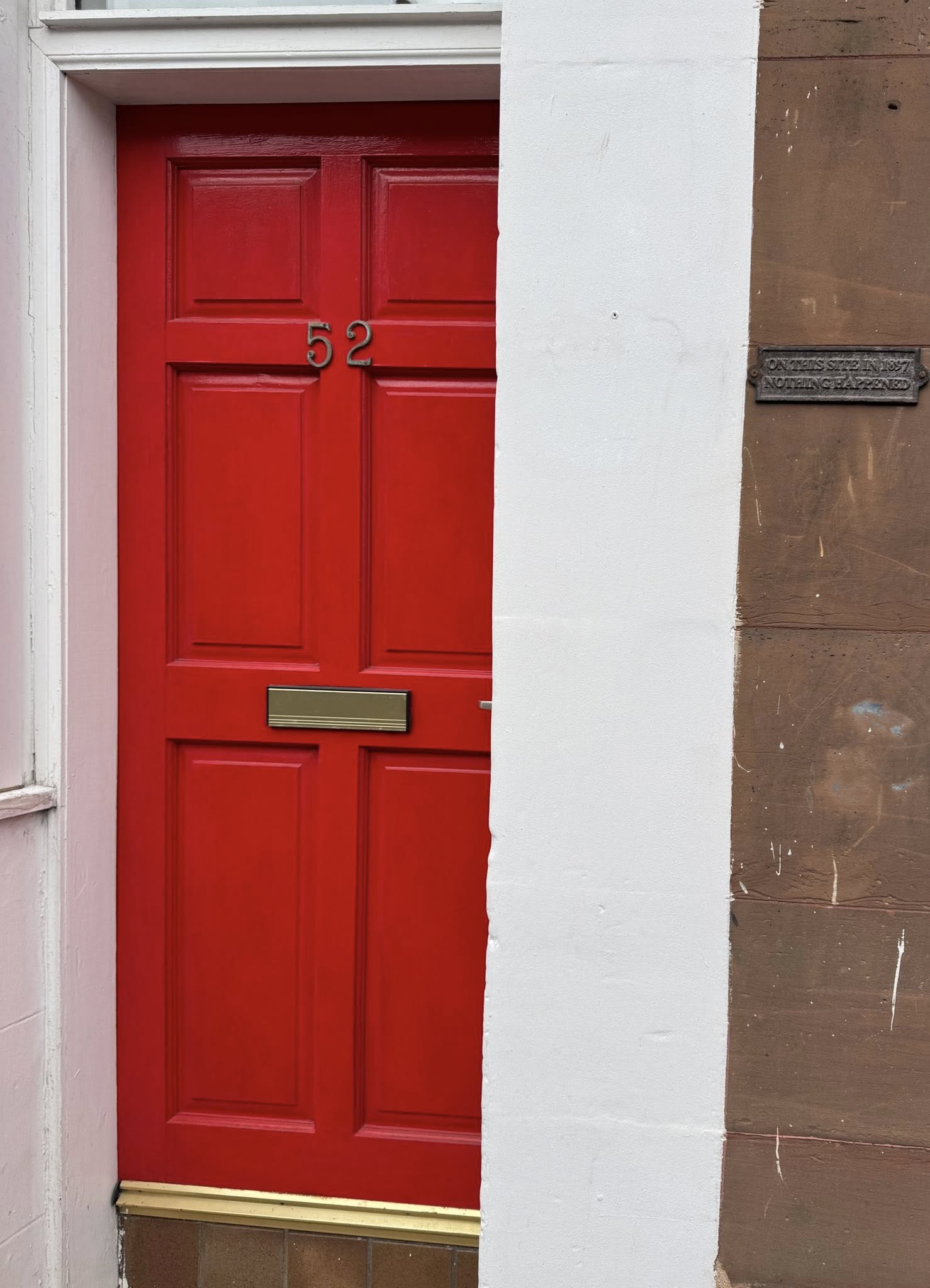
So many houses in the UK have plaques to let us know which famous person once lived there and when. This one is my favourite!
Quidditch practice on the University of Edinburgh field. Since these are not real wizards and real flying brooms, they run with a stick between their legs!