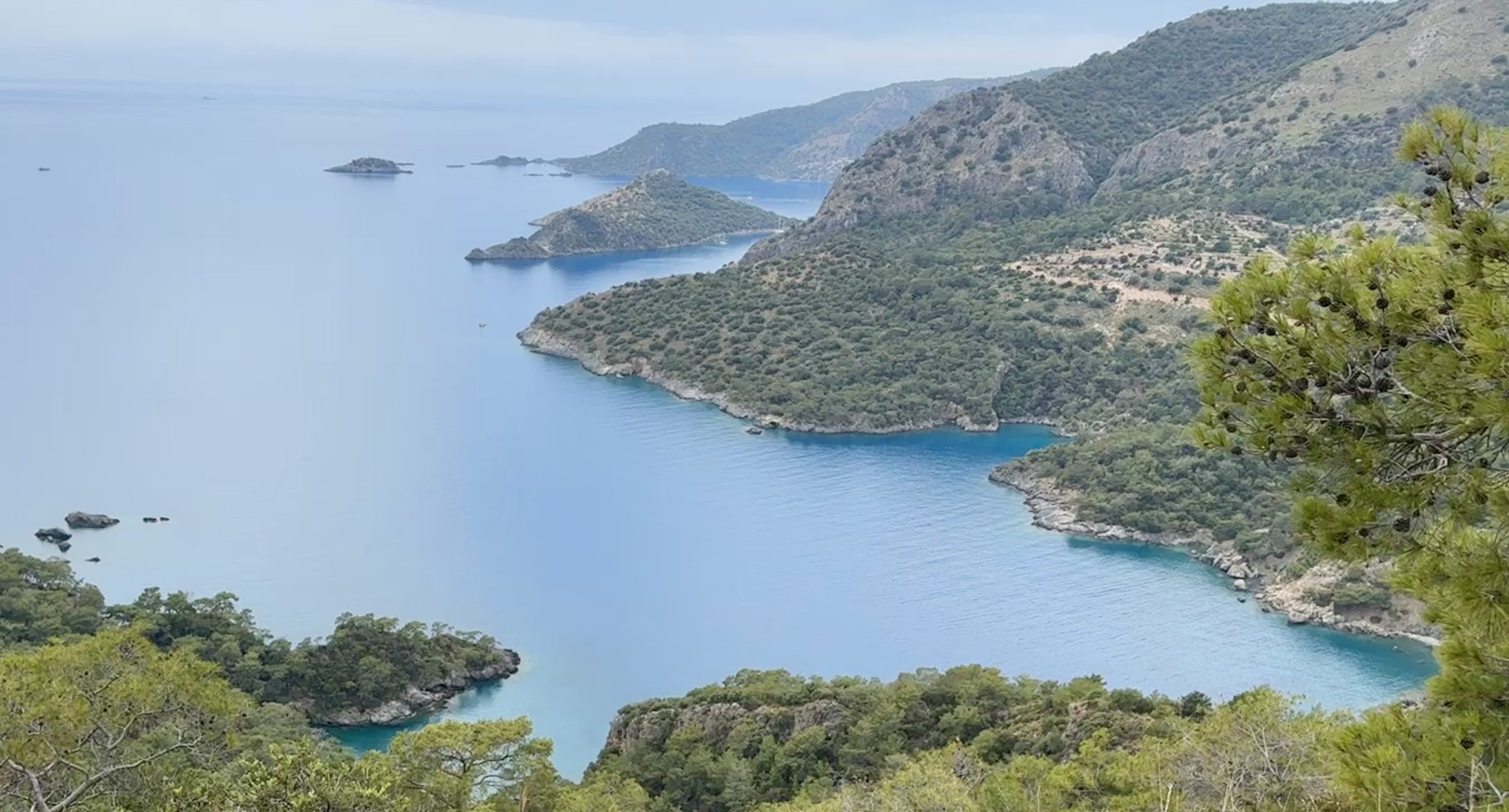
Fabulous Fethiye
Nature continues to guide our wrap up of Southwestern Turkey, with our base at the start of the Lycian Way. Of course there are ruins around and about that deserve a bit of exploring but around here, we were mostly in canyons, atop mountains and at the beach!
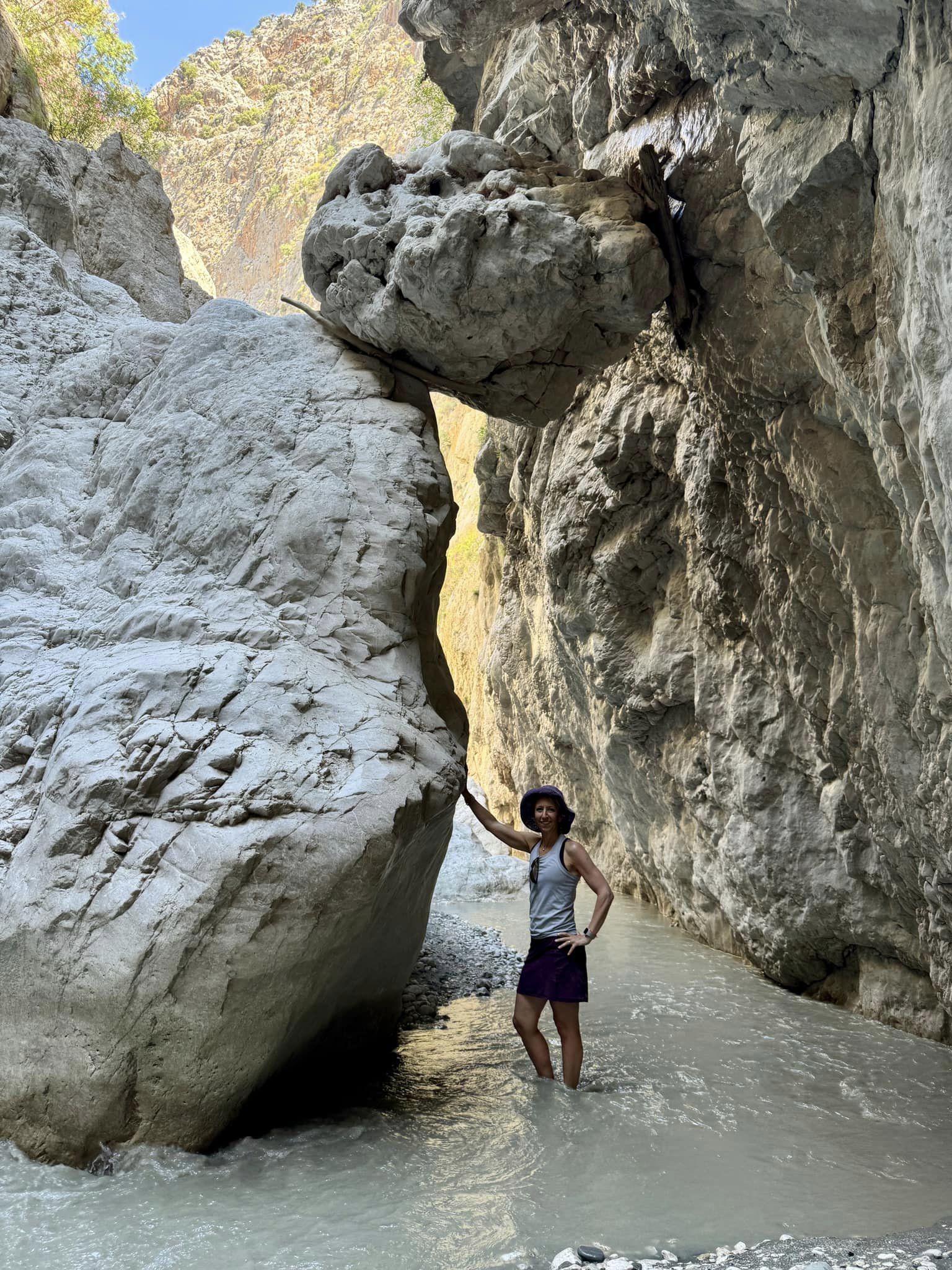
Saklikent Gorge is another spot reminiscent of Utah for us. Impressive at 300m deep, we trekked through rushing, icy water, without any of the fancy waders and footwear protection we had in The Narrows in Utah!
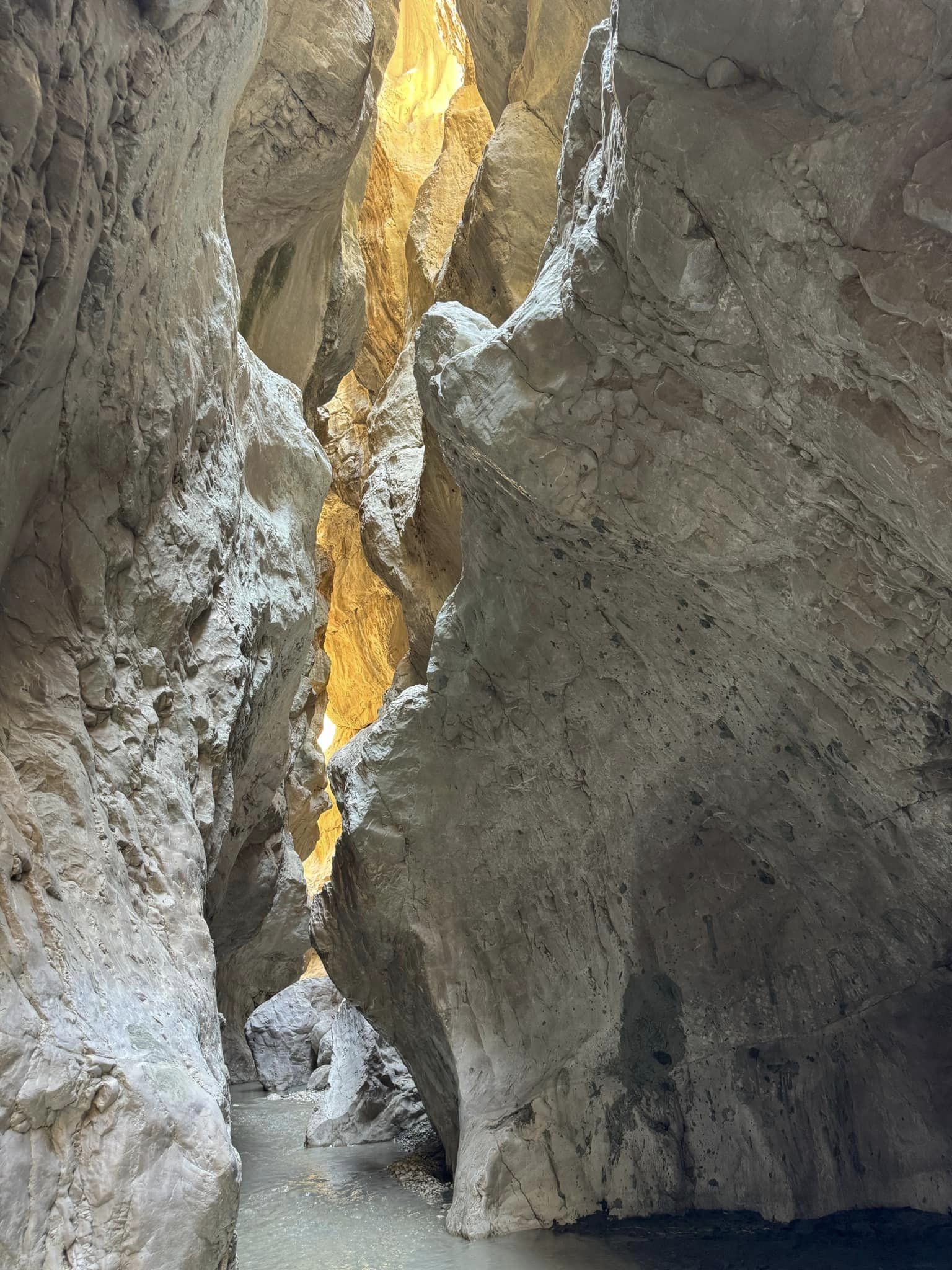
Early in the day, the sun looks like fire on the rocks.
Take it from us, flip flops are not recommended footwear for this type of trek. Every step sank into mud as fine as icing sugar that held on tight to our flip flops making our passage quite slow. But you wouldn’t want to do this in bare feet because within the mud are rocks you can’t see through the swirling silt.
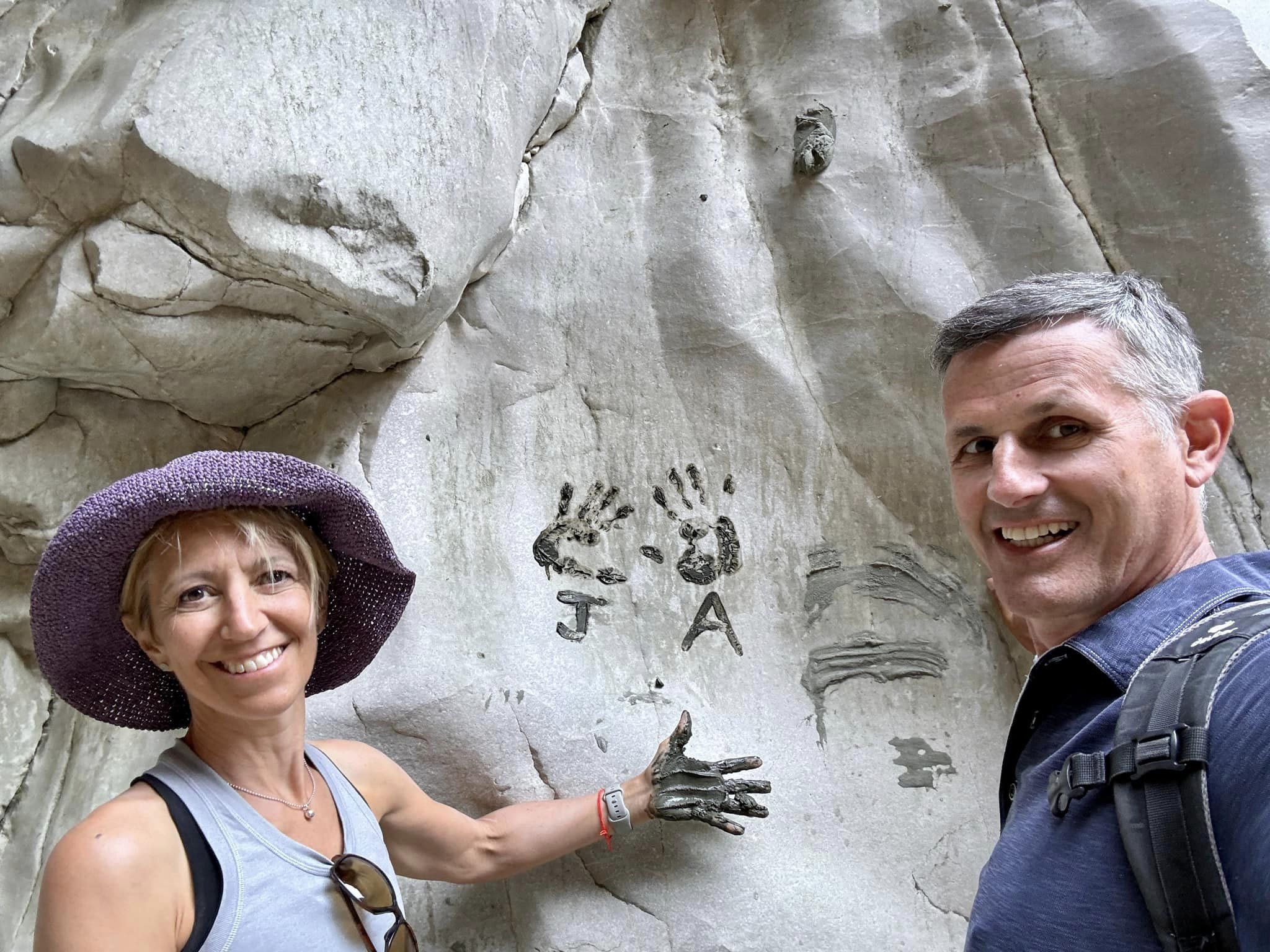
While we didn’t spread mud over our bodies, as others do here (not sure what special properties are in the mud) we did engage in a bit of graffiti.
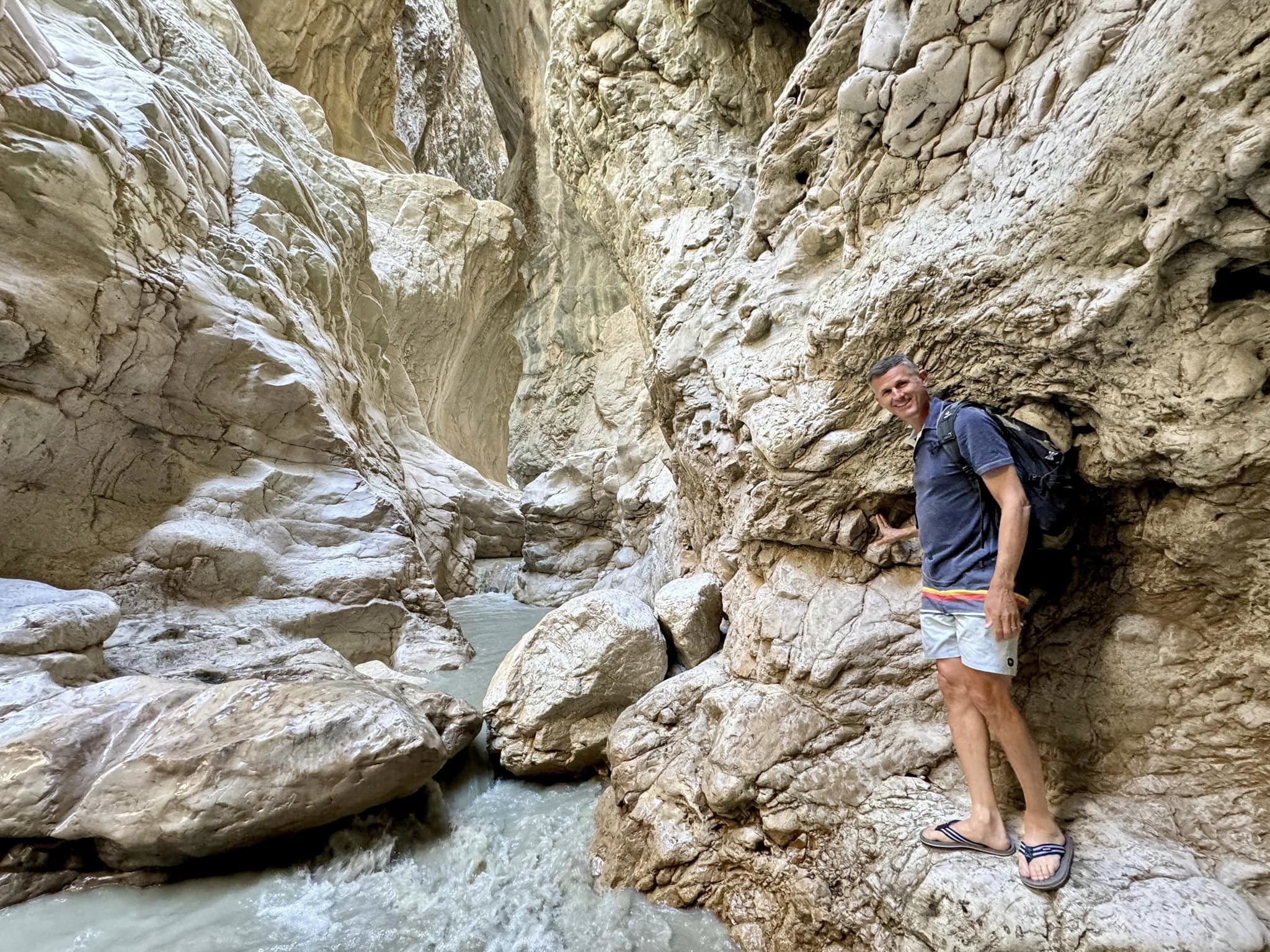
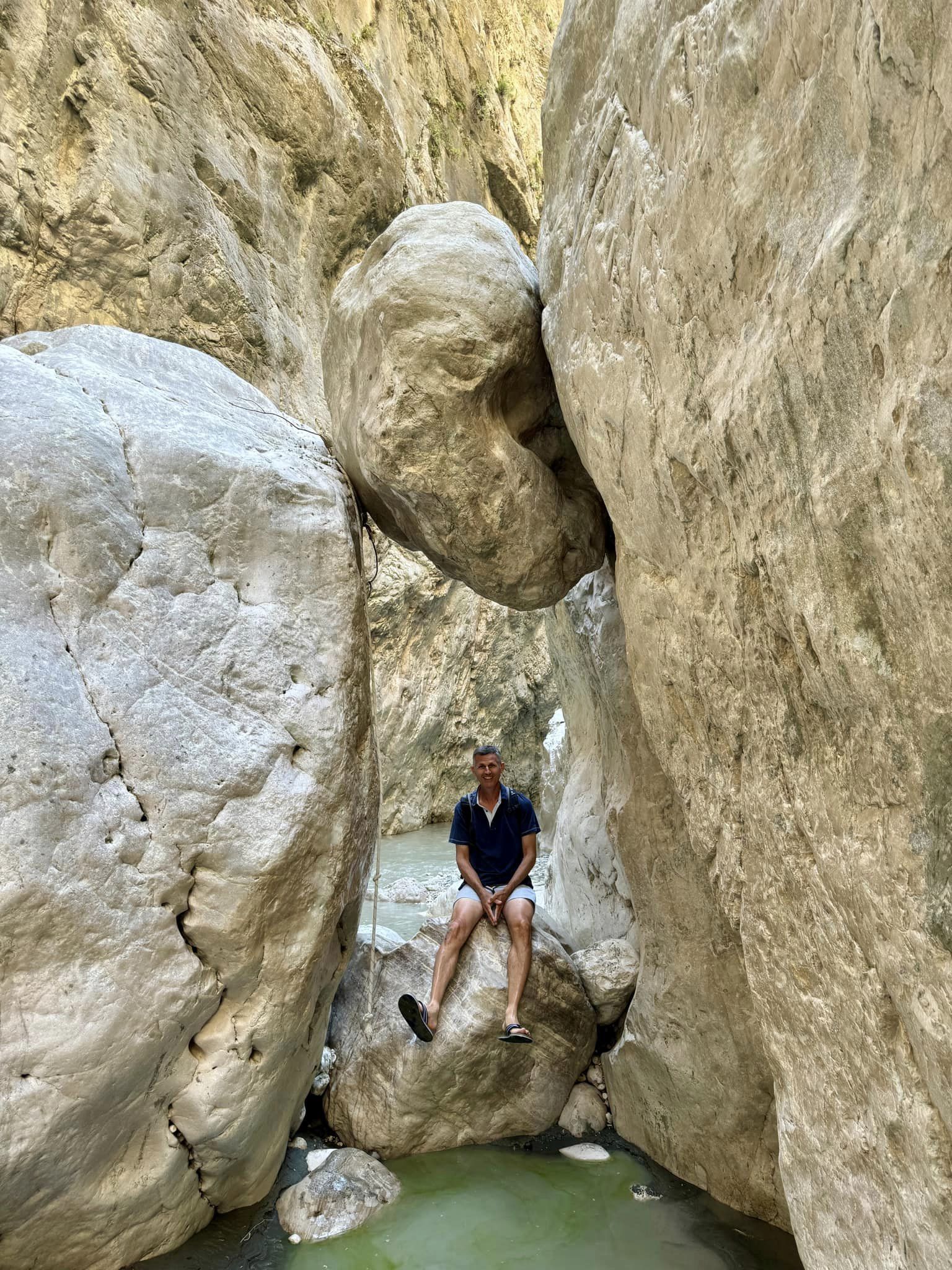
This was the end of the road for us. Just beyond the rock where Adam is standing, is a tiny but very deep pool. Glad the teenagers ahead were able to illustrate this for us.
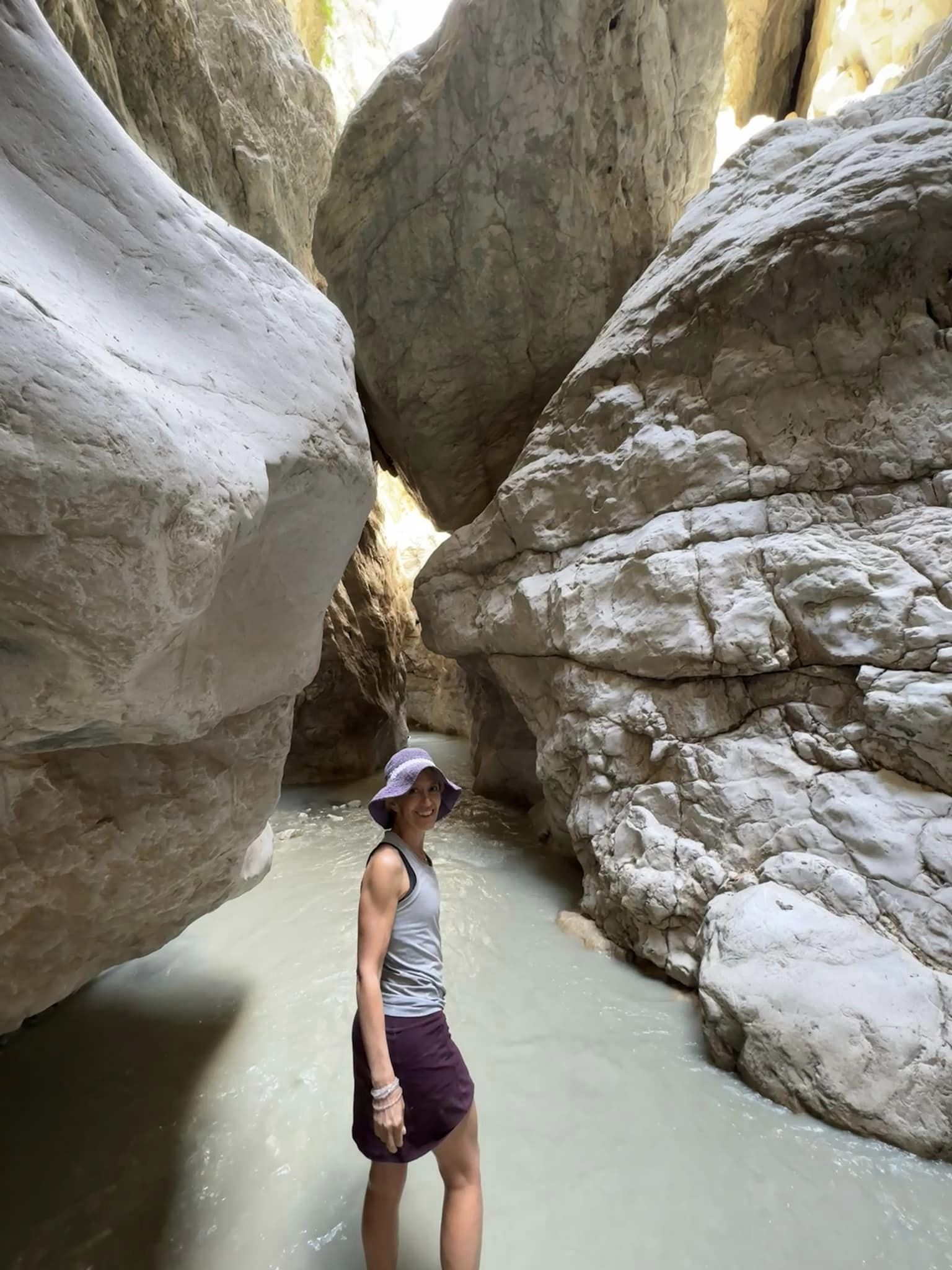
Glad we weren’t there to see this boulder fall…
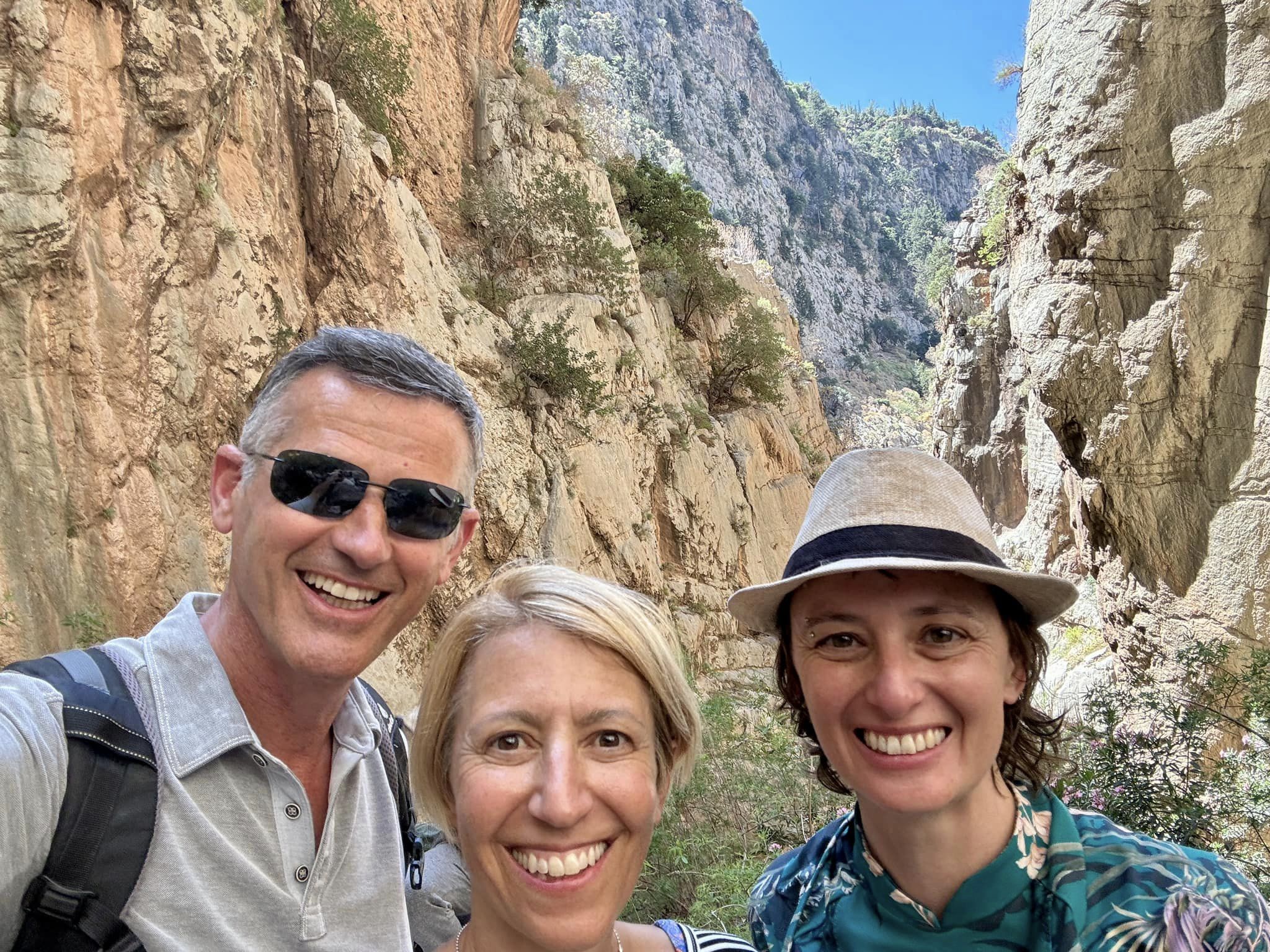
One of the most amazing things that can happen when travelling is crossing paths with special people in your life. My cousin Lori was trekking part of the Lycian Way and we happened to be in the same place at the same time for one day! We spent the day on a boat cruising around the Aegean Sea to a hike in Butterfly Valley (oddly, not many butterflies), swim and visit some ruins on the unpopulated St Nicholas island. Magic!
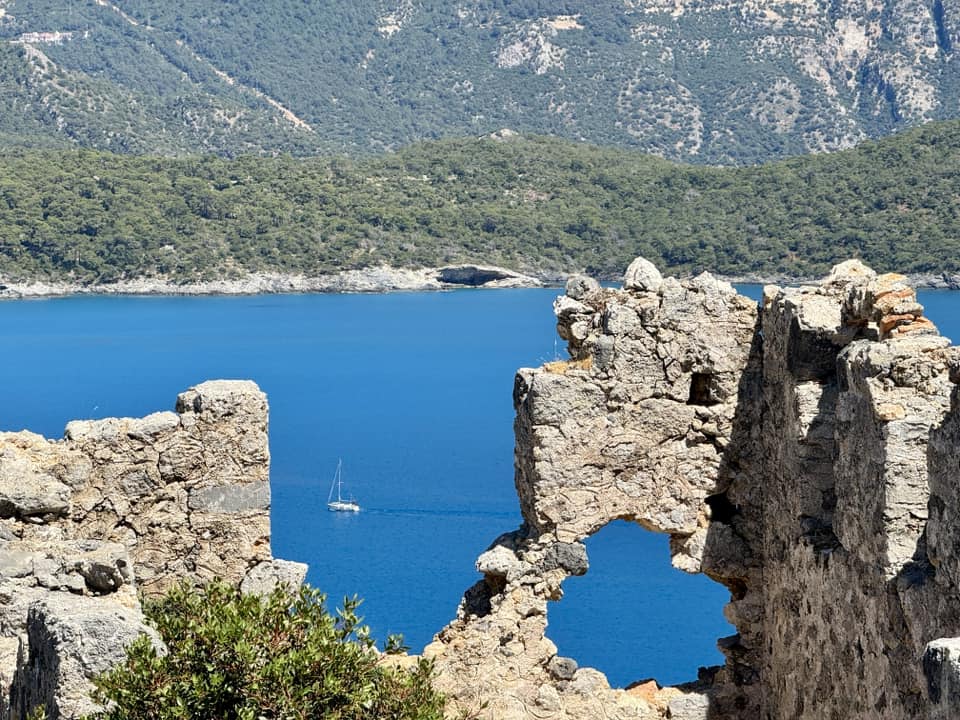
The ruins of five old churches stand out against the beautiful blue of the Aegean Sea on St Nicholas Island. They say St Nicholas died here but more reputable sources than the town’s marketing board agree he died in Myra where he was bishop and was buried in his church there. Italian sailors stole his remains in the 11th century and took his remains home to Bari, where they remain. Did he ever go to St Nicholas Island? Who knows. Maybe. But I’d say, go to the island for the views and not a pilgrimage.
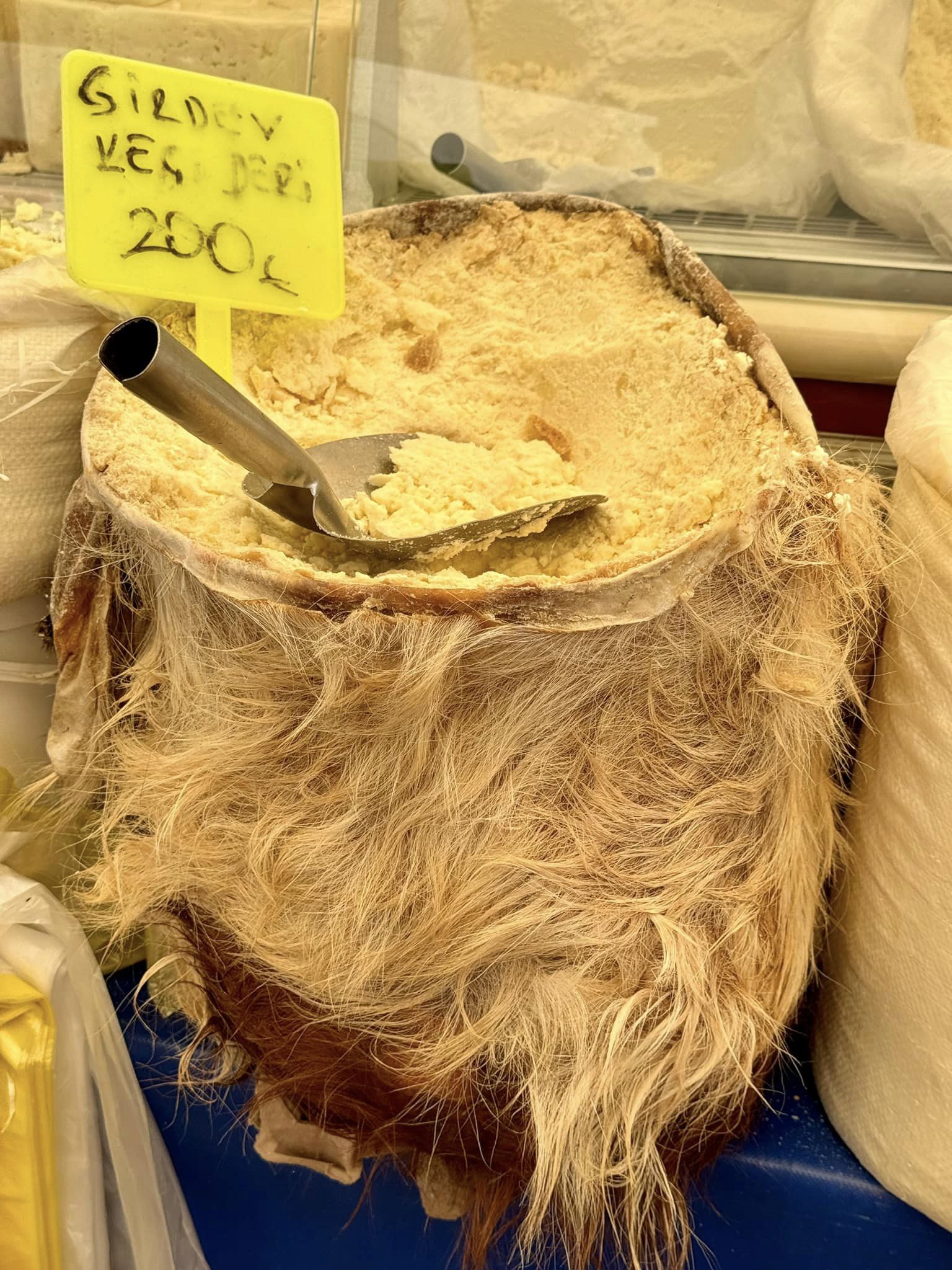
A dry, strong and a bit sour cheese at the market in Fethiye, aged for two years in this very bag. The cheese was nice but I would love to take the bag home! I wonder how long would it take for the stinky cheese smell to dissipate…
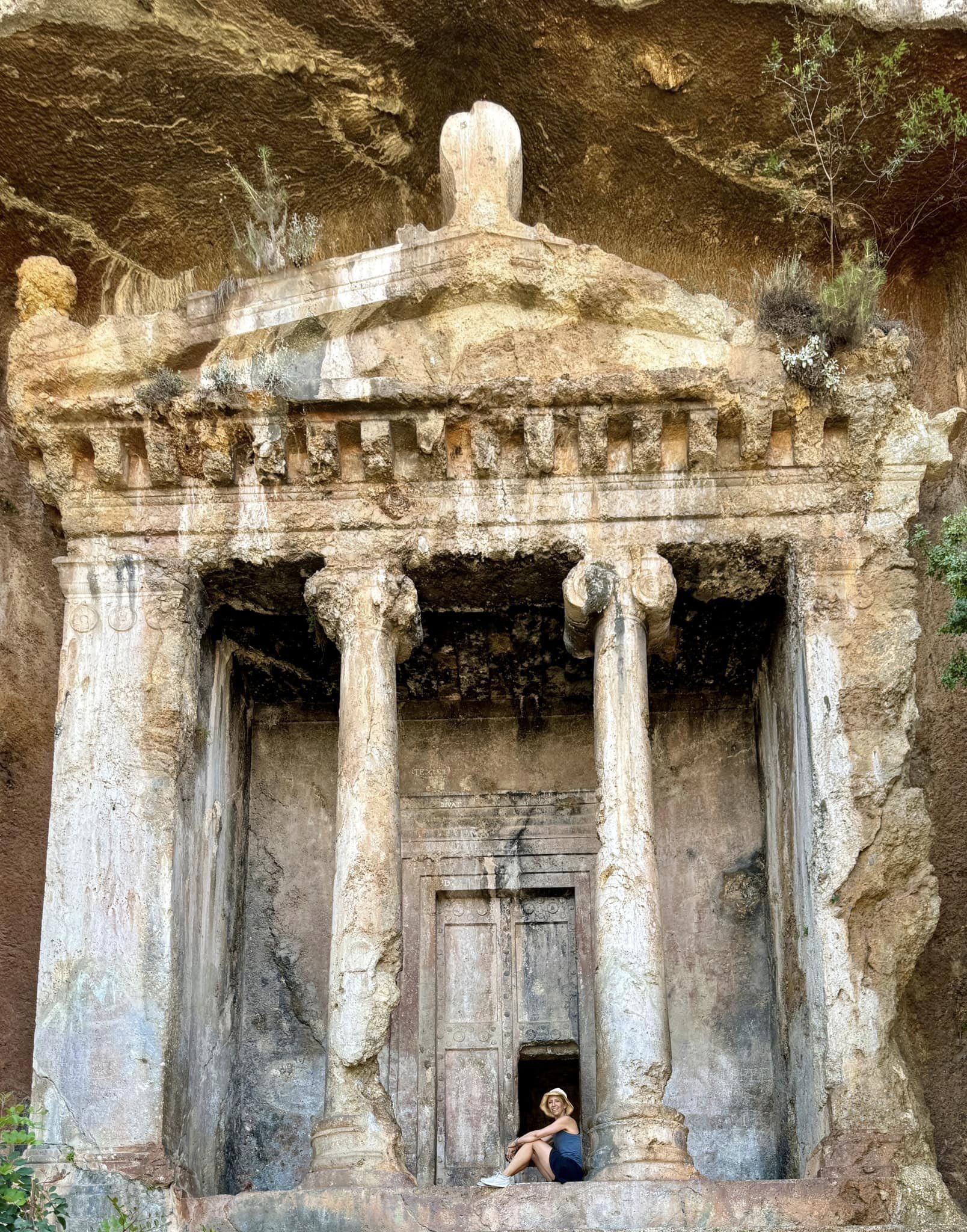
The Amyntas rock tomb, built in 350BC above the town of Fethiye. The tomb was named after the Greek inscription on the side of it which reads Amyntas, son of Hermagios, who was likely an early governor of the region. Who knows if he was actually buried here as these Lycian rock tombs are all barren, having been well-raided over the centuries. This one was at the top of the hill, indicating the occupant’s seniority.
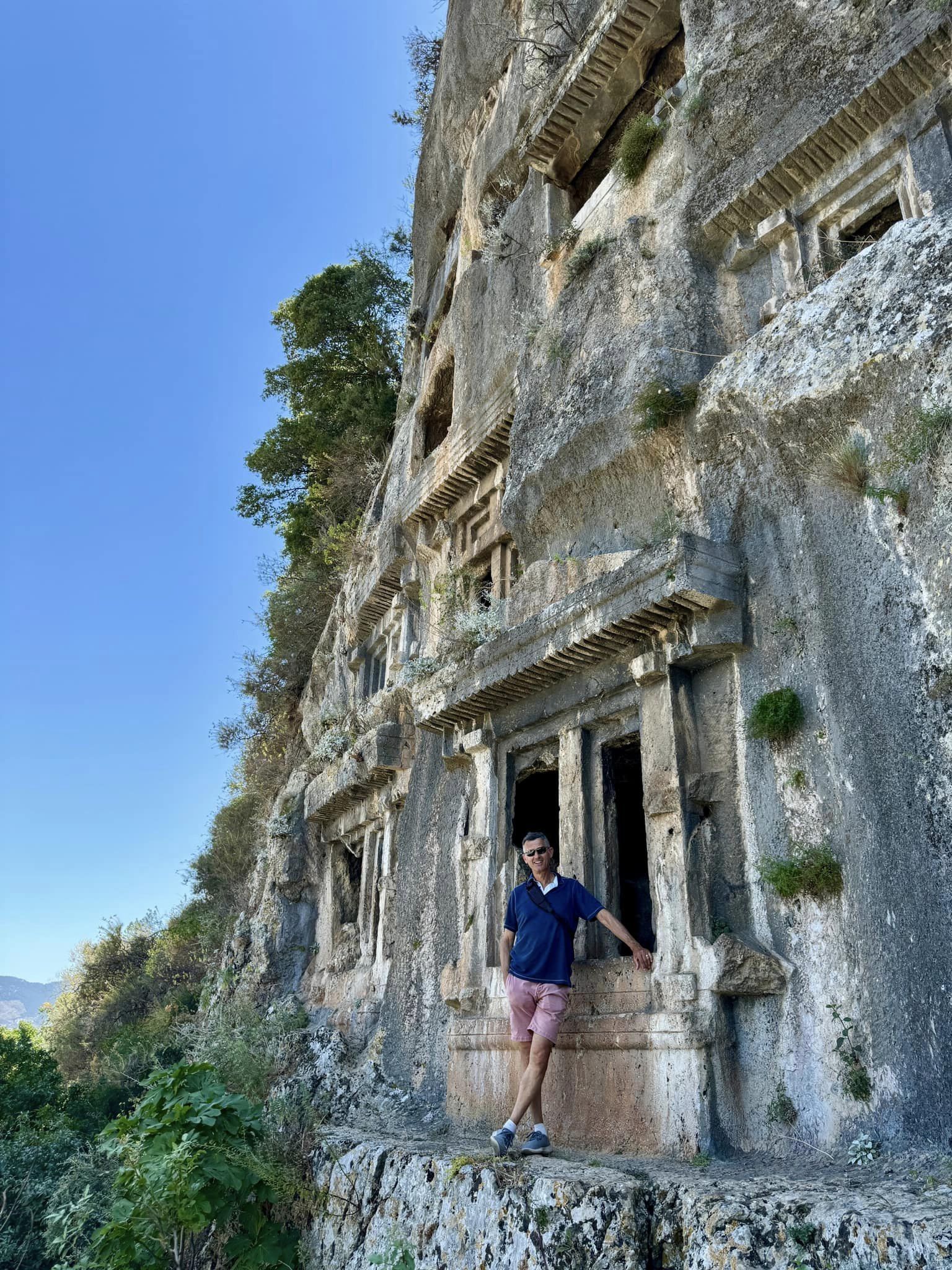
Less important Lycian people were also buried in rock tombs but these are smaller and lower down on the face of the hillside. The Lycians believed that the dead were carried away by magical winged creatures to the afterlife so they put them high up to make the journey a bit easier and more direct.
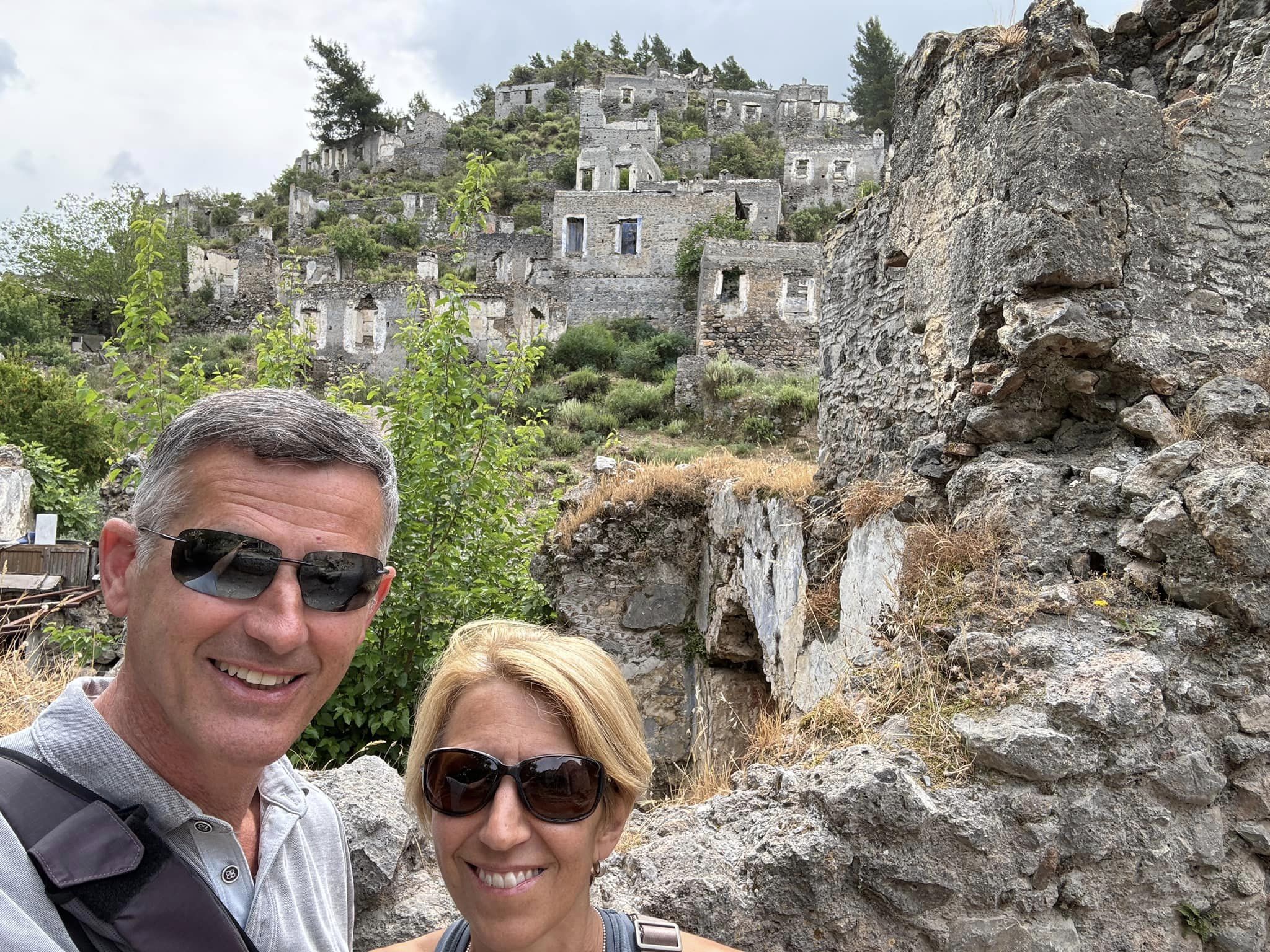
Kayaköy is known as The Ghost Village and has a very sad story in recent history. Once a busy, hillside community full of farmers, highly skilled tradespeople, artists and everyone else who builds a community into a thriving place. People here were mostly Greek Orthodox Christians whose families had been there for generations and lived happily alongside Turkish muslims. Most of the “newer” houses date from the mid 1800s, but some go back further. The community was completely abandoned by 1923 and hasn’t been lived in since. After WWI, the European powers wanted to flex their muscles and scoop up parts of the former Ottoman Empire for themselves. With all the big players distracted by these negotiations, the Greeks decided it was an opportune time to invade Turkey. In three years, Greece lost the Greco-Turk War. This dovetailed nicely with the end of the Ottoman Empire and the rise of Ataturk who took religion out of government. The coexistence of different religions in Turkey was suddenly fraught so the politicians came up with a great idea. Population exchange sounds innocuous. Not so in reality. Bilateral diplomacy, agreement written around a table by bureaucrats who have no concept of a place or the people who call it home. One and a half million people, Muslim Turks who lived in Greece and Greek Orthodox Christians who lived in Turkey, were without warning legally deported to their religious “homelands” in the name of peace. Many of these people didn’t speak the language of their so-called homelands nor had they ever set foot there. Sadly, this event set the precedent for future policies of segregation like walls and apartheids.
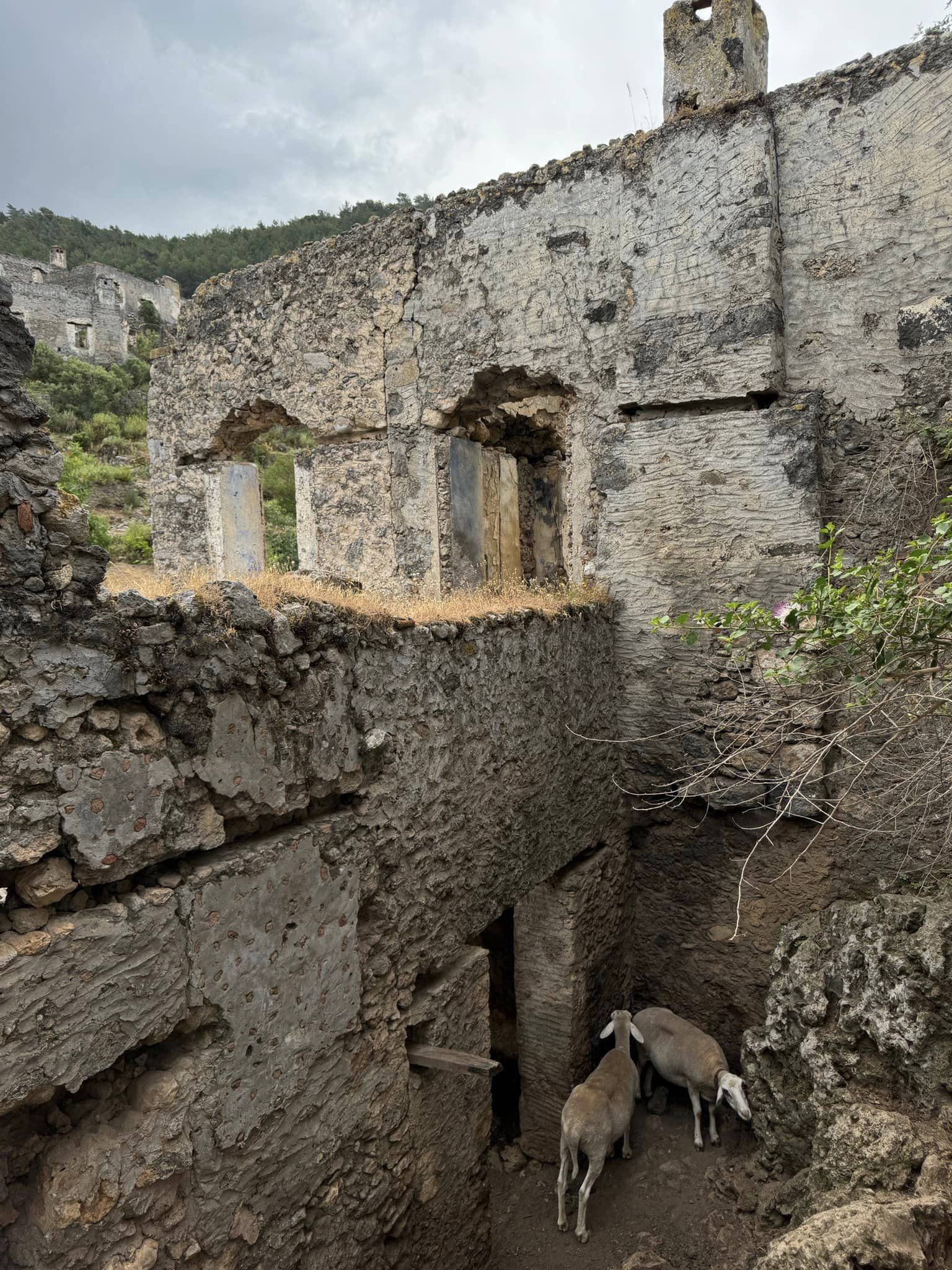
Now, these are the only town residents.
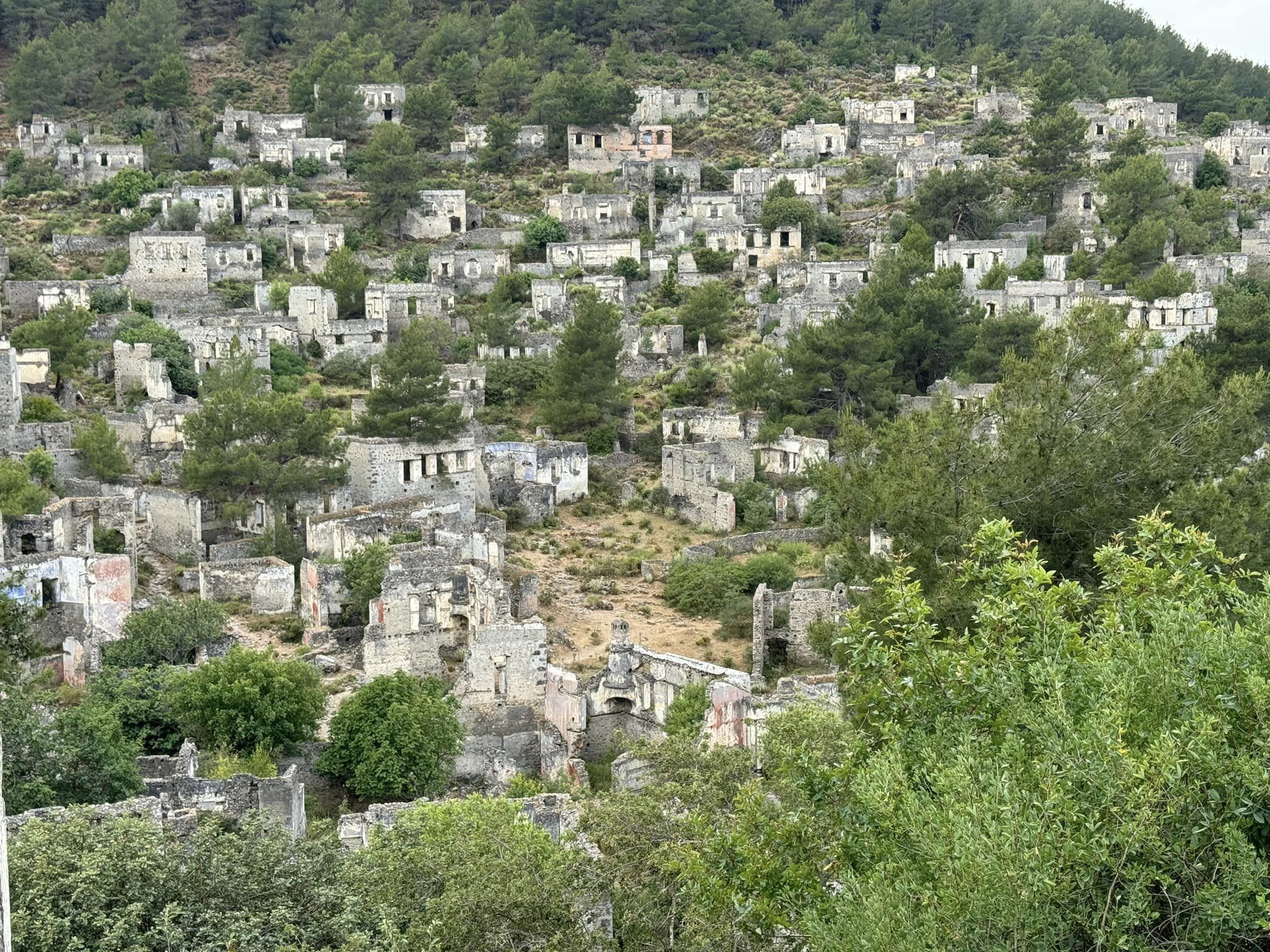
You’d think that in the wake of this population upheaval, the Muslims landing in Turkey would have occupied the 500 houses, two churches and a couple of schools abandoned by the Christians. Not so. In some cases, opportunistic local Turks moved on up into the most appealing vacant homes. In other cases, like in Kayaköy, the arriving Muslims were land farmers and didn’t have the knack for hillside farming and skilled trades that made this community successful.
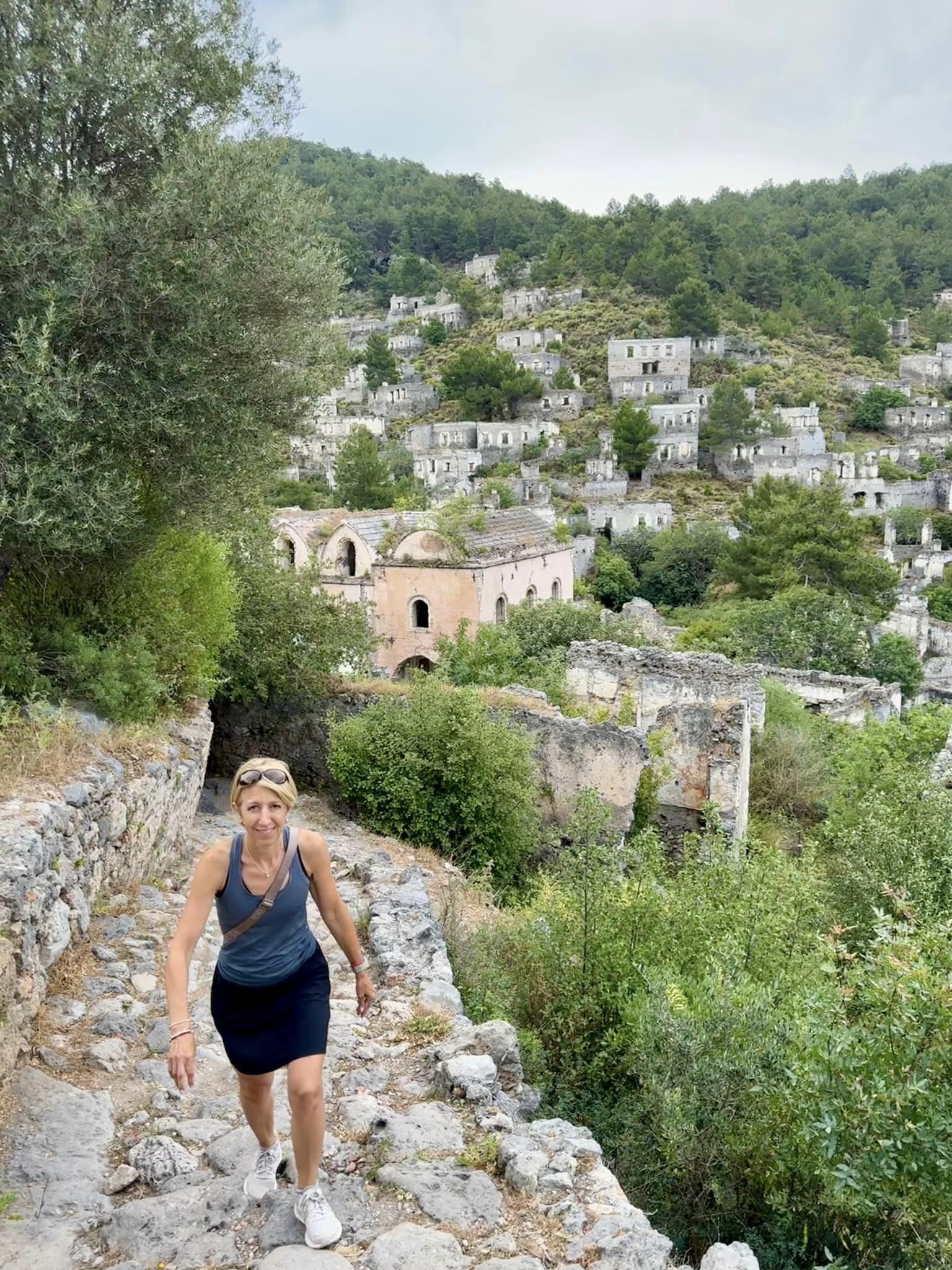
So here we are today, walking among the unnecessary ruins of a once vibrant community of innocent people of a different religion.
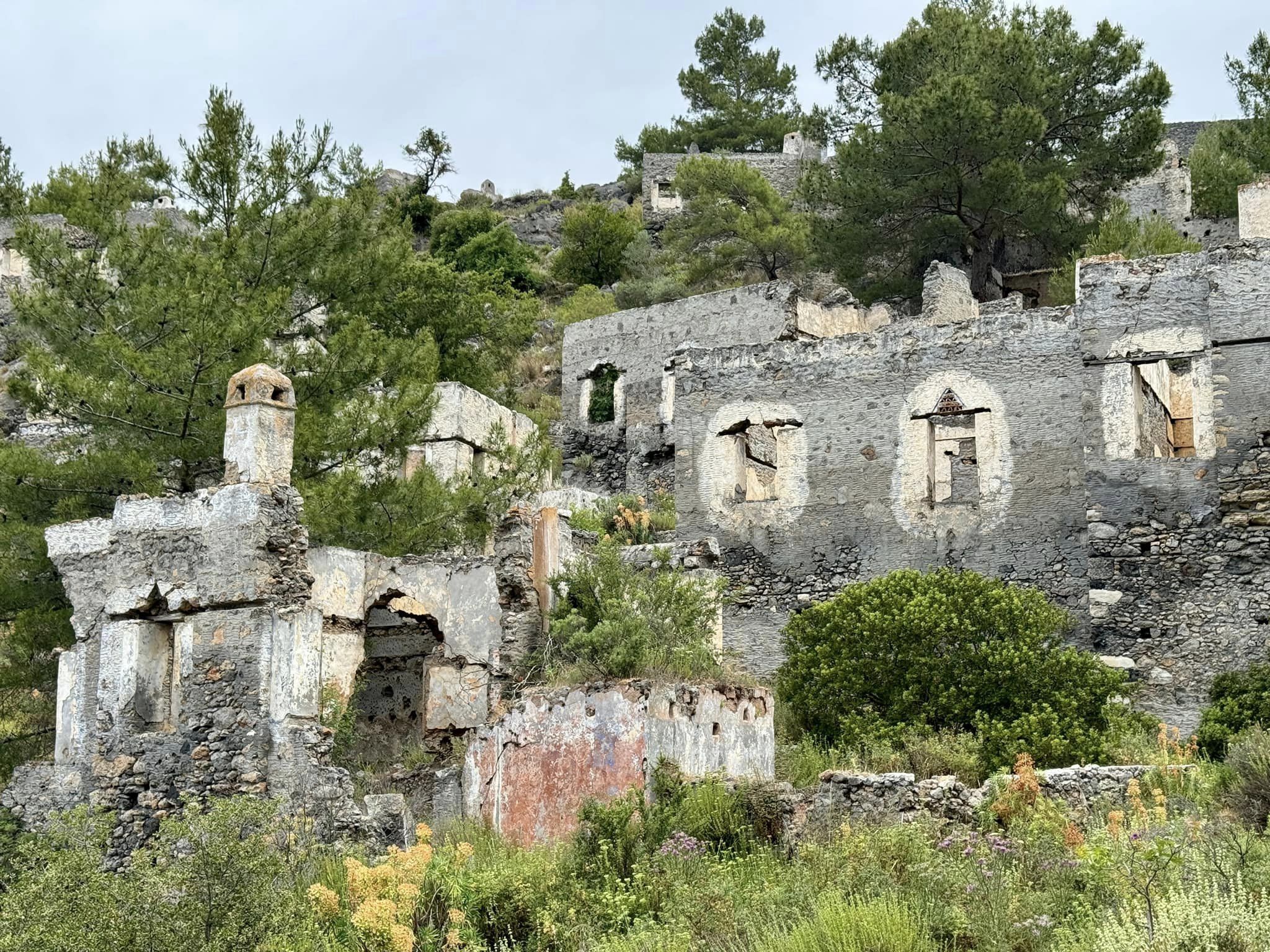
The abandoned town has been overtaken by the local vegetation.
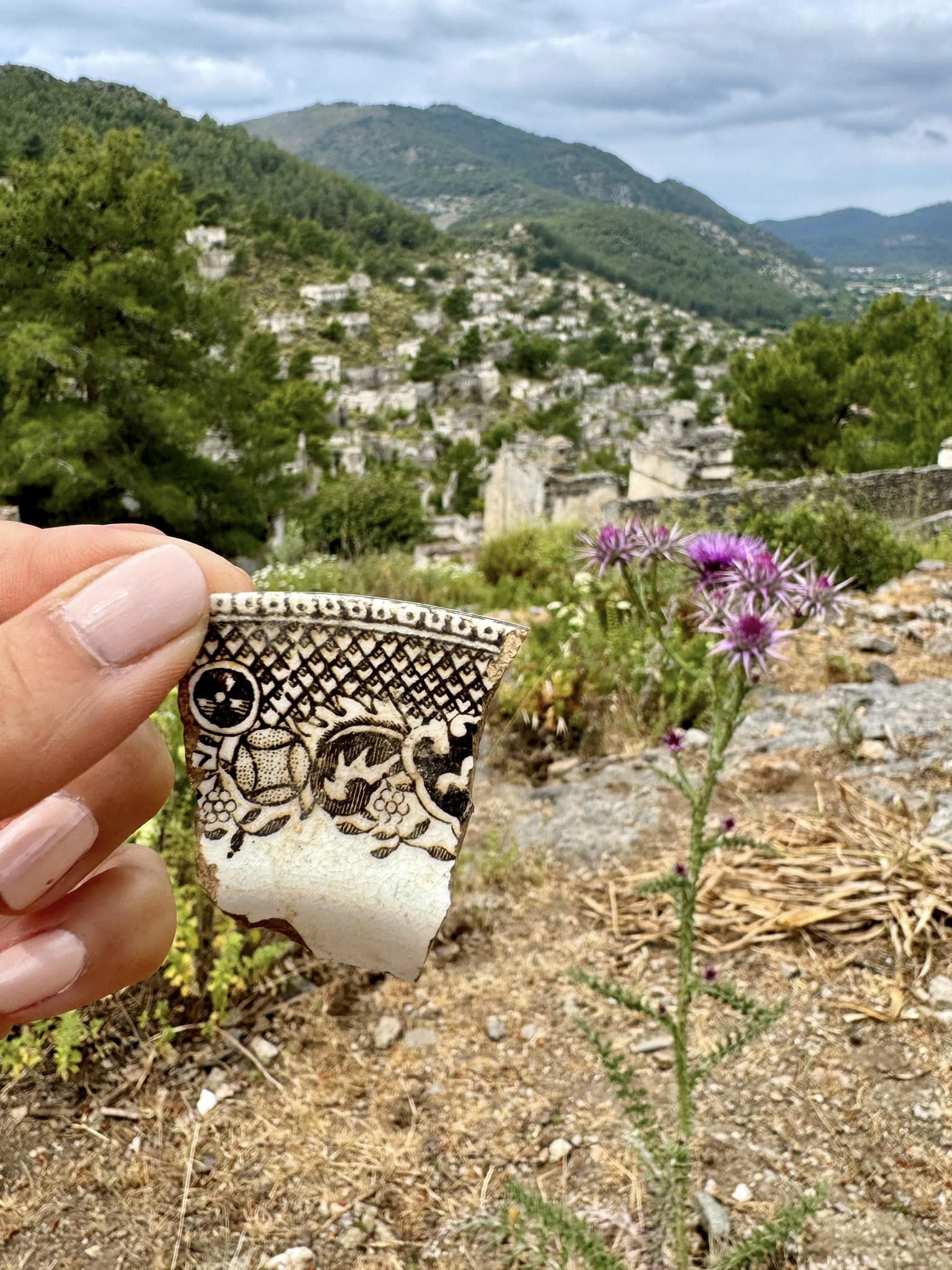
Bits of broken pottery are still lying around.
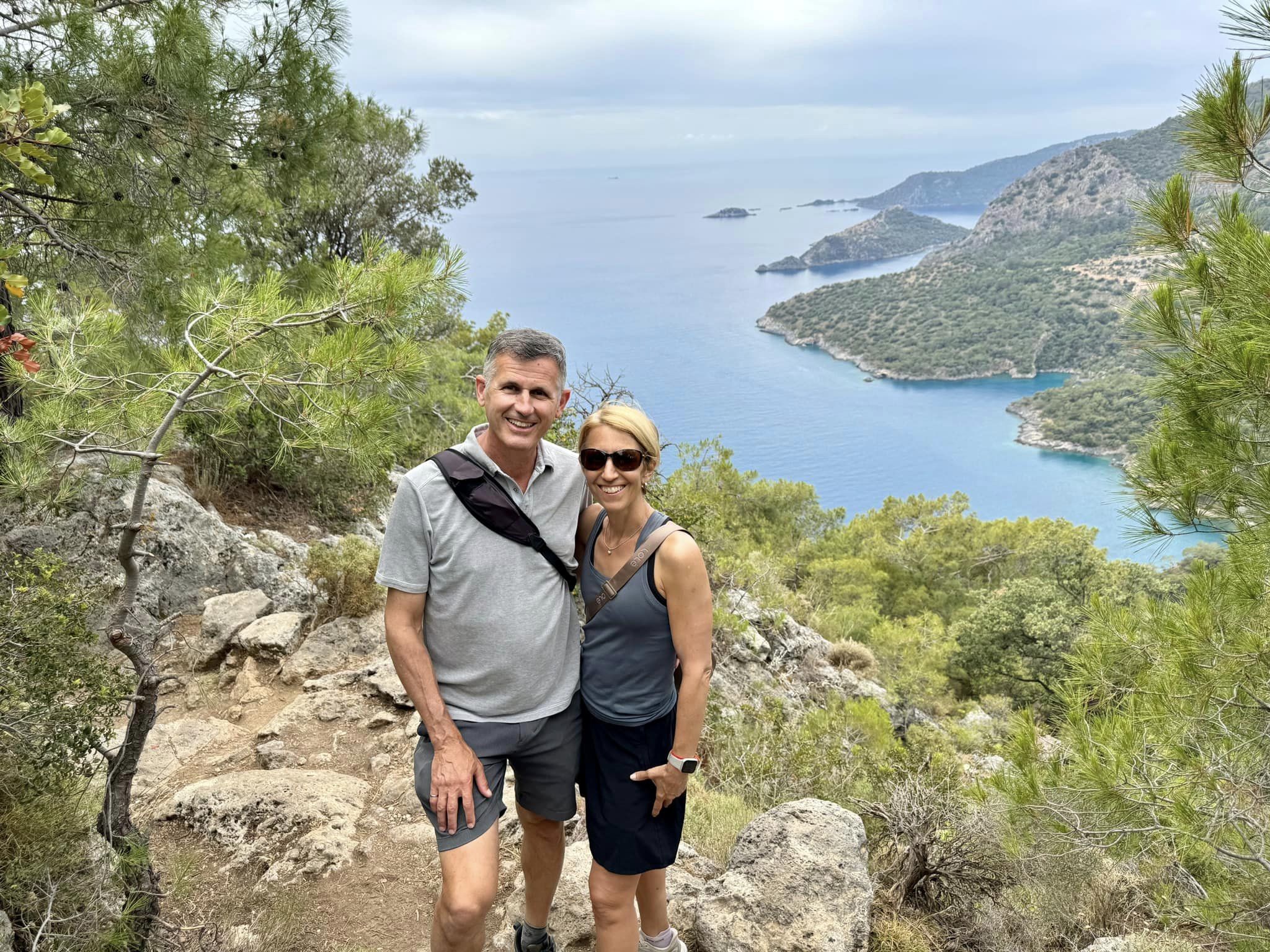
The 520km (depending where you start trekking) Lycian way is the brainchild of British expat Kate Clow who wanted to create a walking route showcasing the stunning coastline of Southwestern Turkey by joining up the paths that ran between the ancient Lycian cities. This is Turkey’s version of el Camino. We hiked the first part of this trail, from Kayaköy to Ölüdeniz. Unparalleled views!
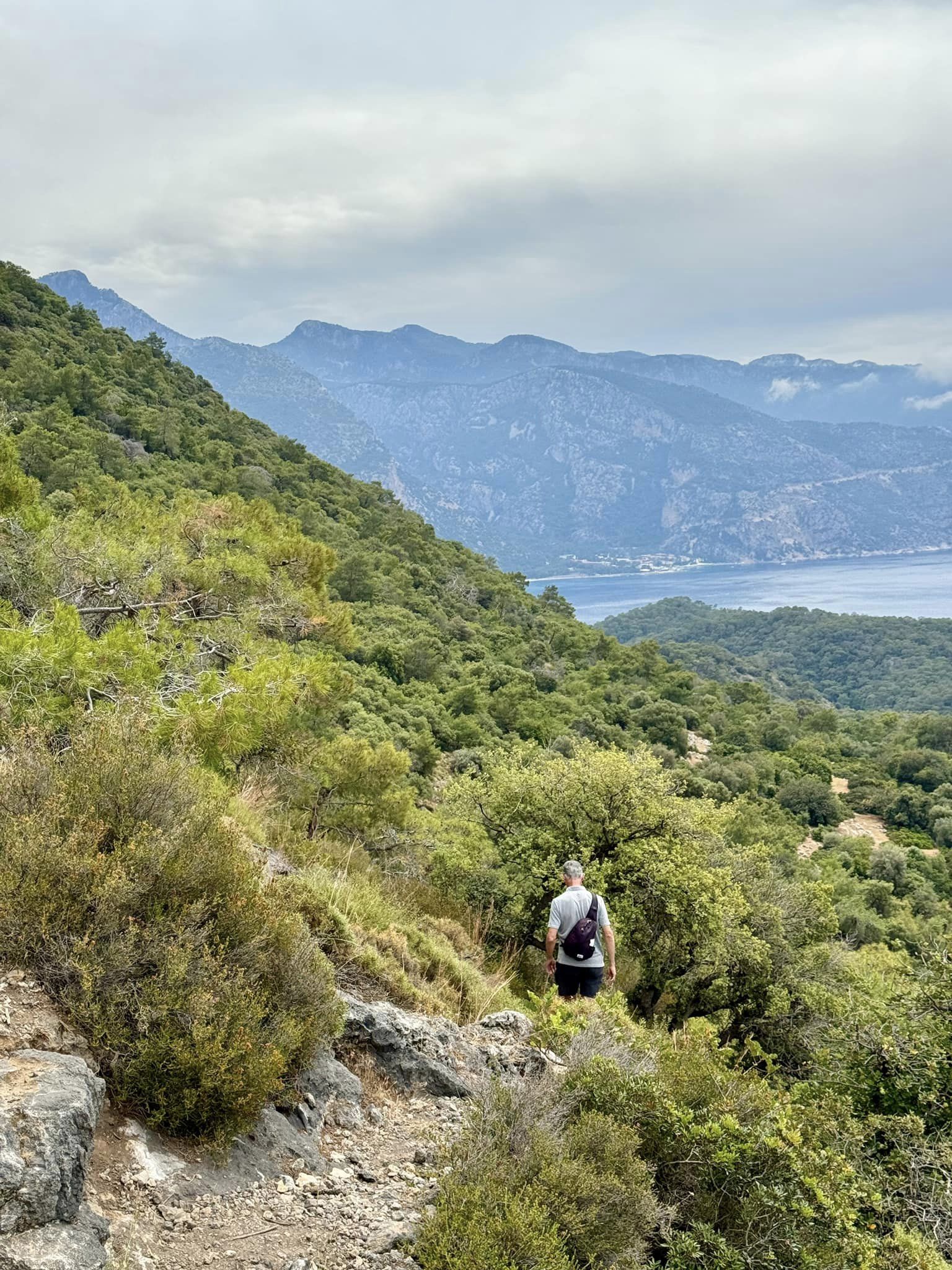
Needless to say, we were in proper footwear for this one!
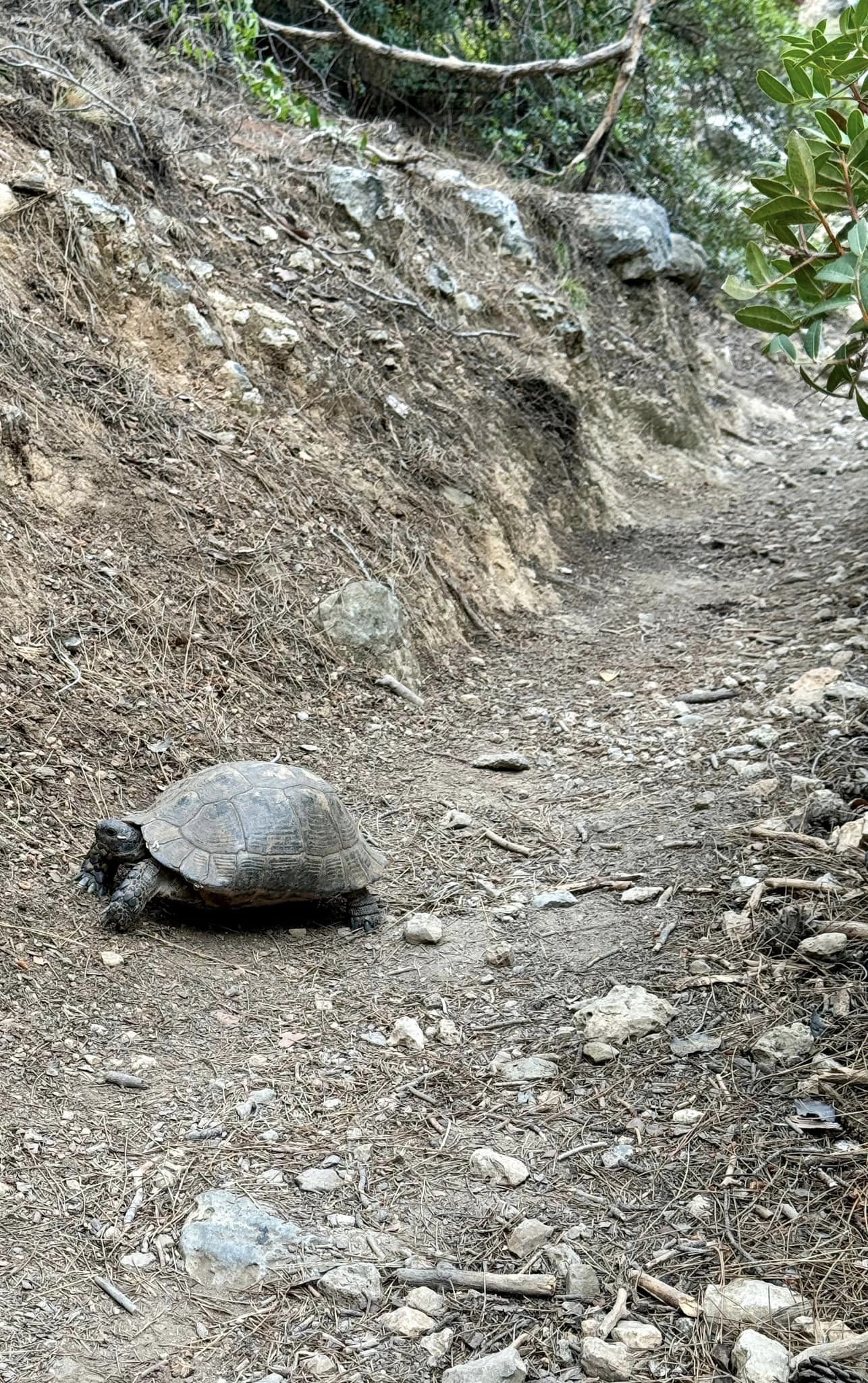
And then, out of the blue, we found this guy barreling down the path.
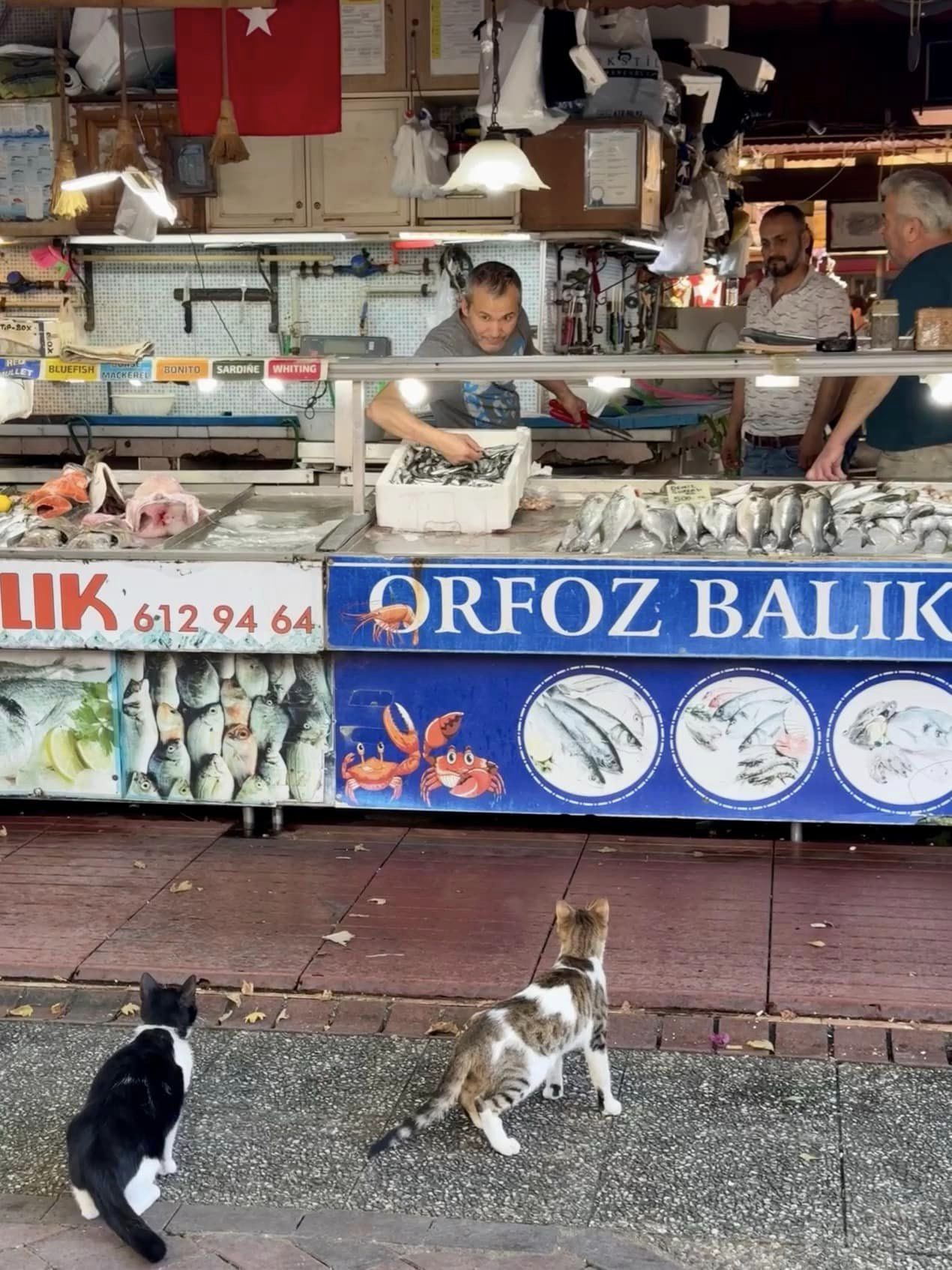
Fish market with a little something extra! This fishmonger is keeping the unofficial staff happy. These workers keep the place clean; nary a rat or cockroach to be seen here!
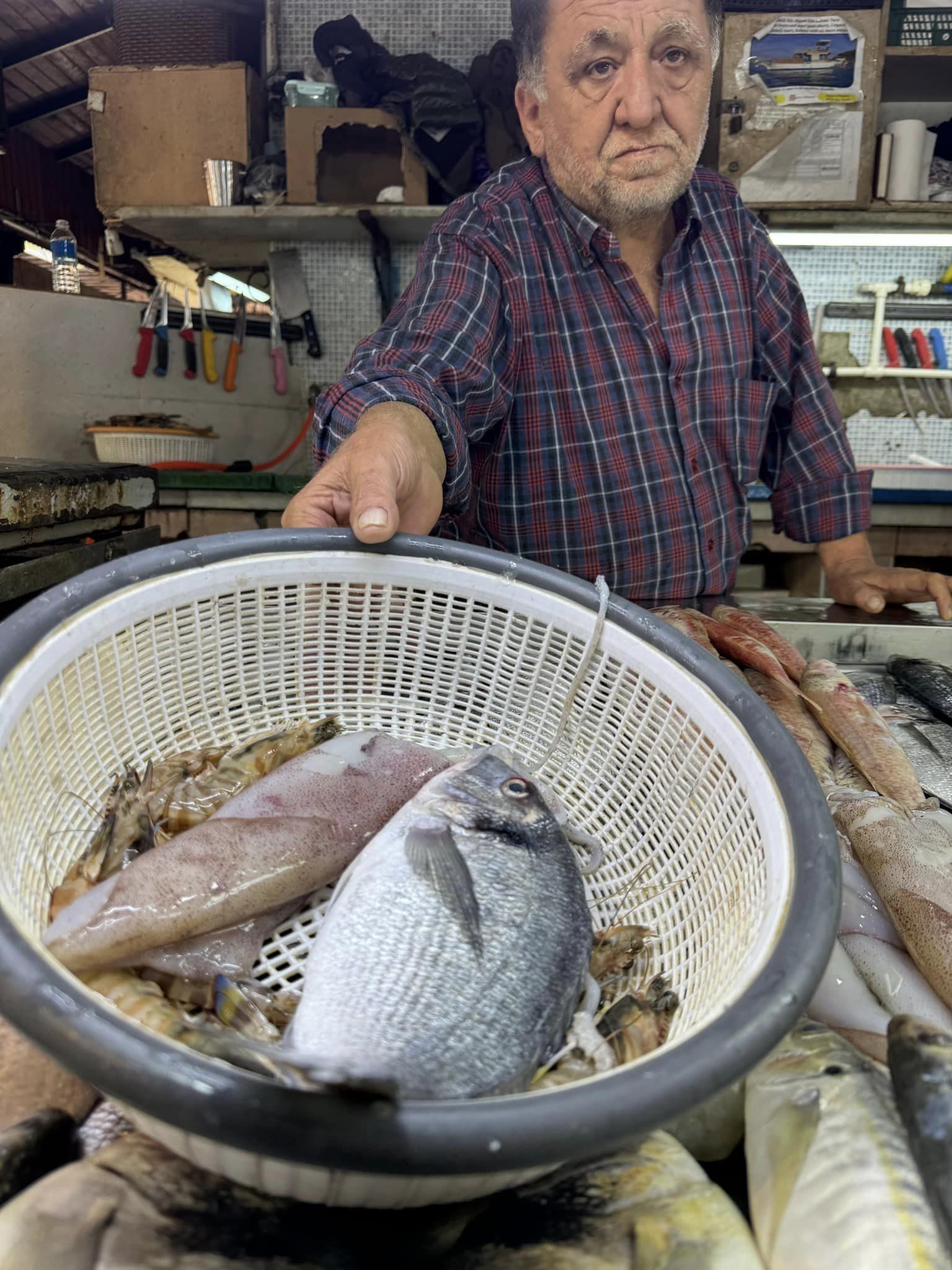
And this fishmonger is keeping his paying customers happy! Here’s the secret sauce of this unusual fish market. This guy is one of about ten vendors in the centre of a big square. We bought a sea bream from him, along with a squid and a bunch of prawns. We pay him and then take our bounty to one of about a dozen restaurants lining the perimeter of the square.
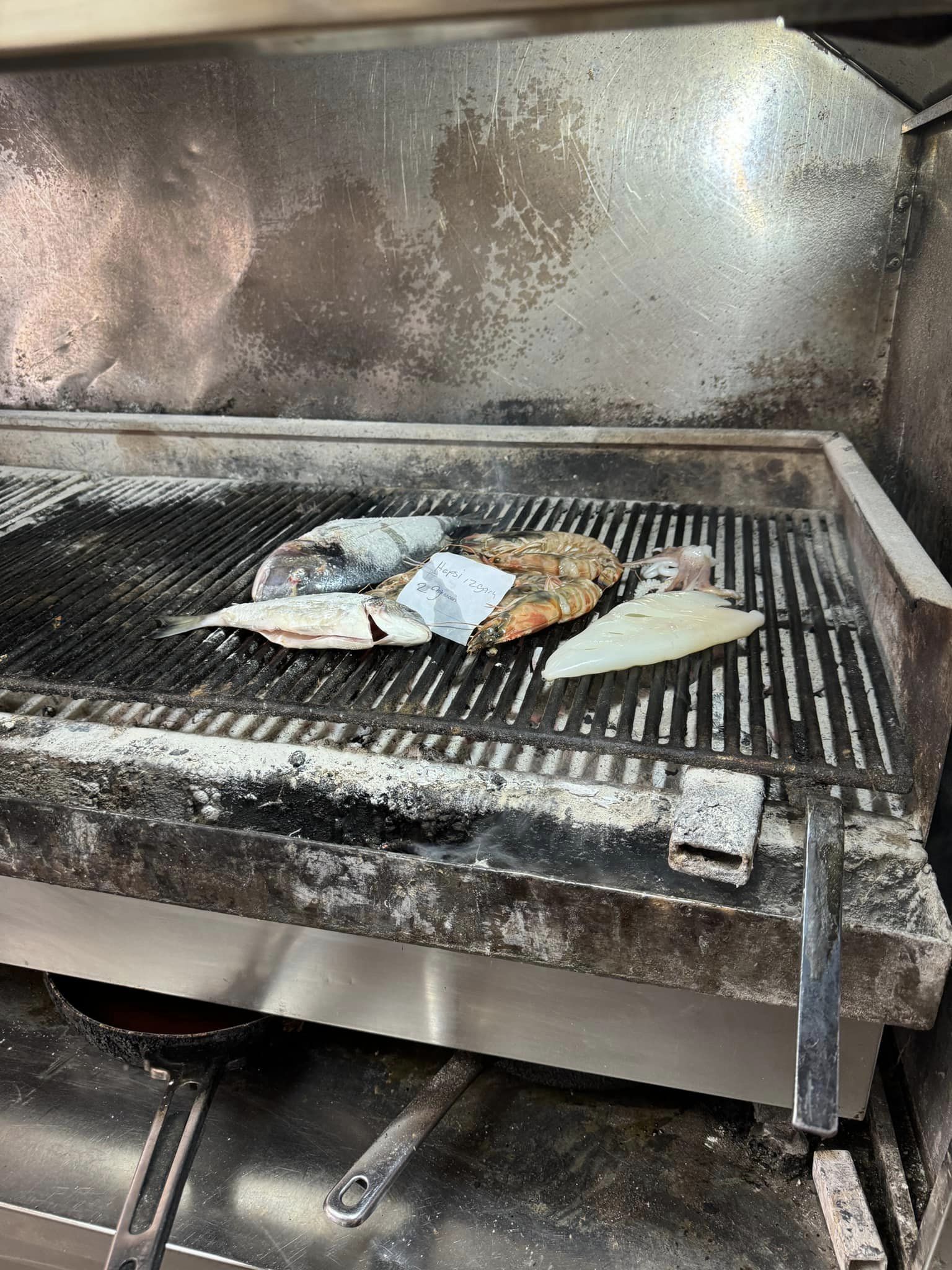
Here’s our lunch on the grill in the restaurant kitchen…with a slip of paper identifying it as ours.
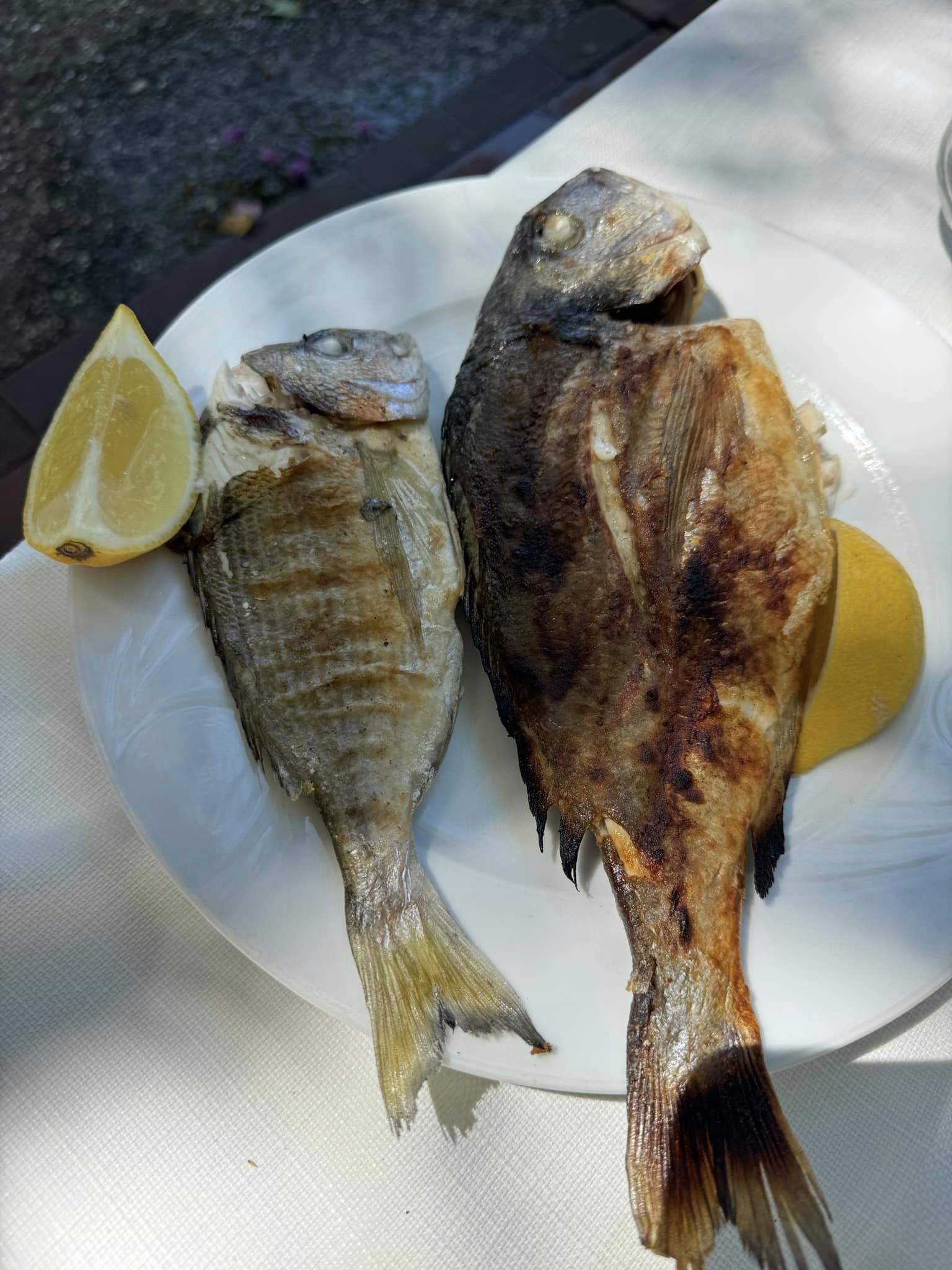
Our lunch! Our friendly fishmonger was quite taken with the fact that we are from Canada so he threw in a baby sea bream. So what’s in it for the restaurants here? Well, they don’t have to carry any fish inventory that risks spoilage if it goes unsold. They charge us, the customer, a cooking fee and they sell us their own meze (hot and cold appetizers) and drinks. Smart business! Even smarter, we realized, when they didn’t charge us one cooking fee, but one per person…per type of seafood! That was six cooking fees!
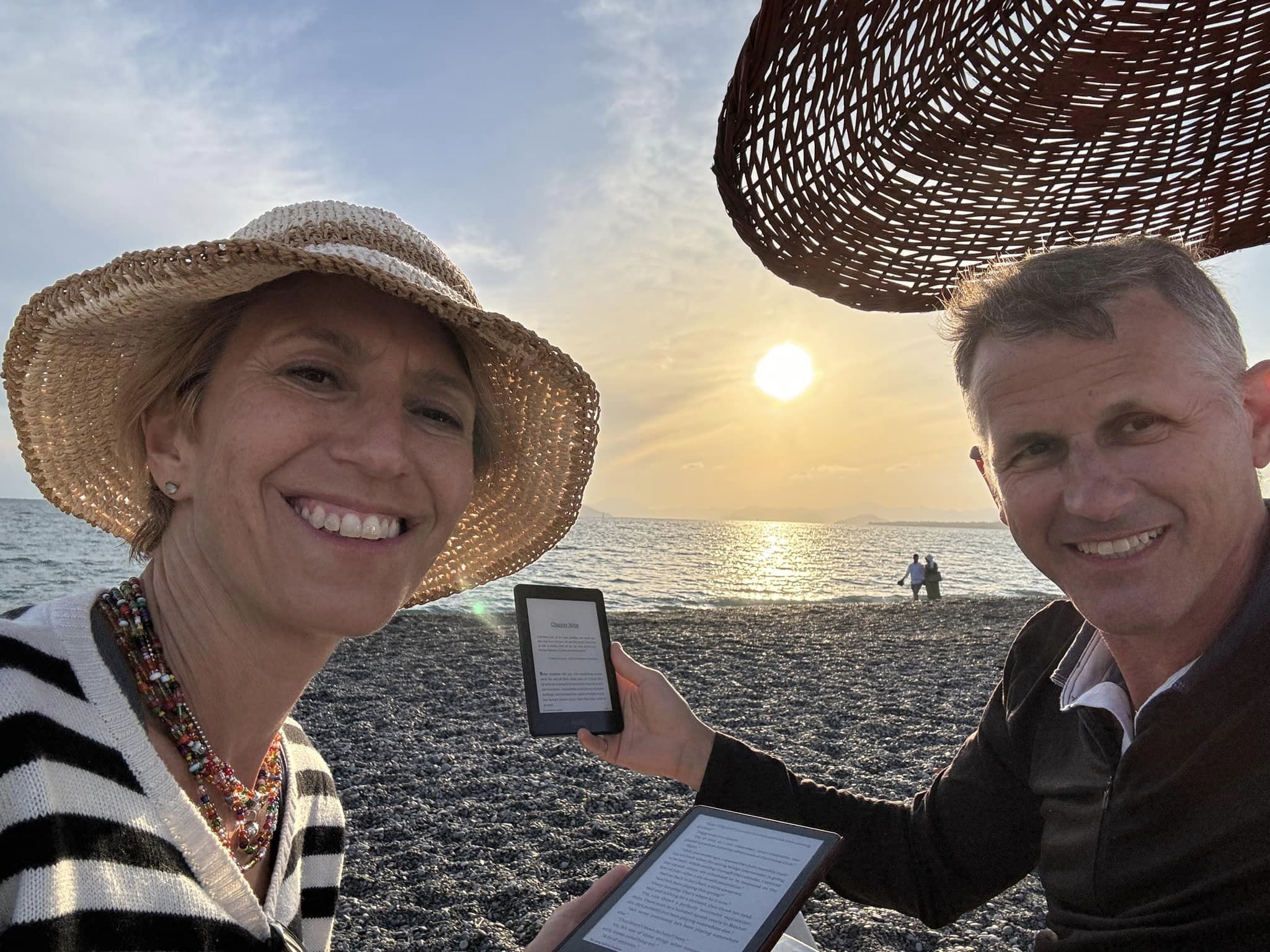
A sunset read at the beach capping our time in beautiful Fethiye. Next is going to be an oldie but a goodie!