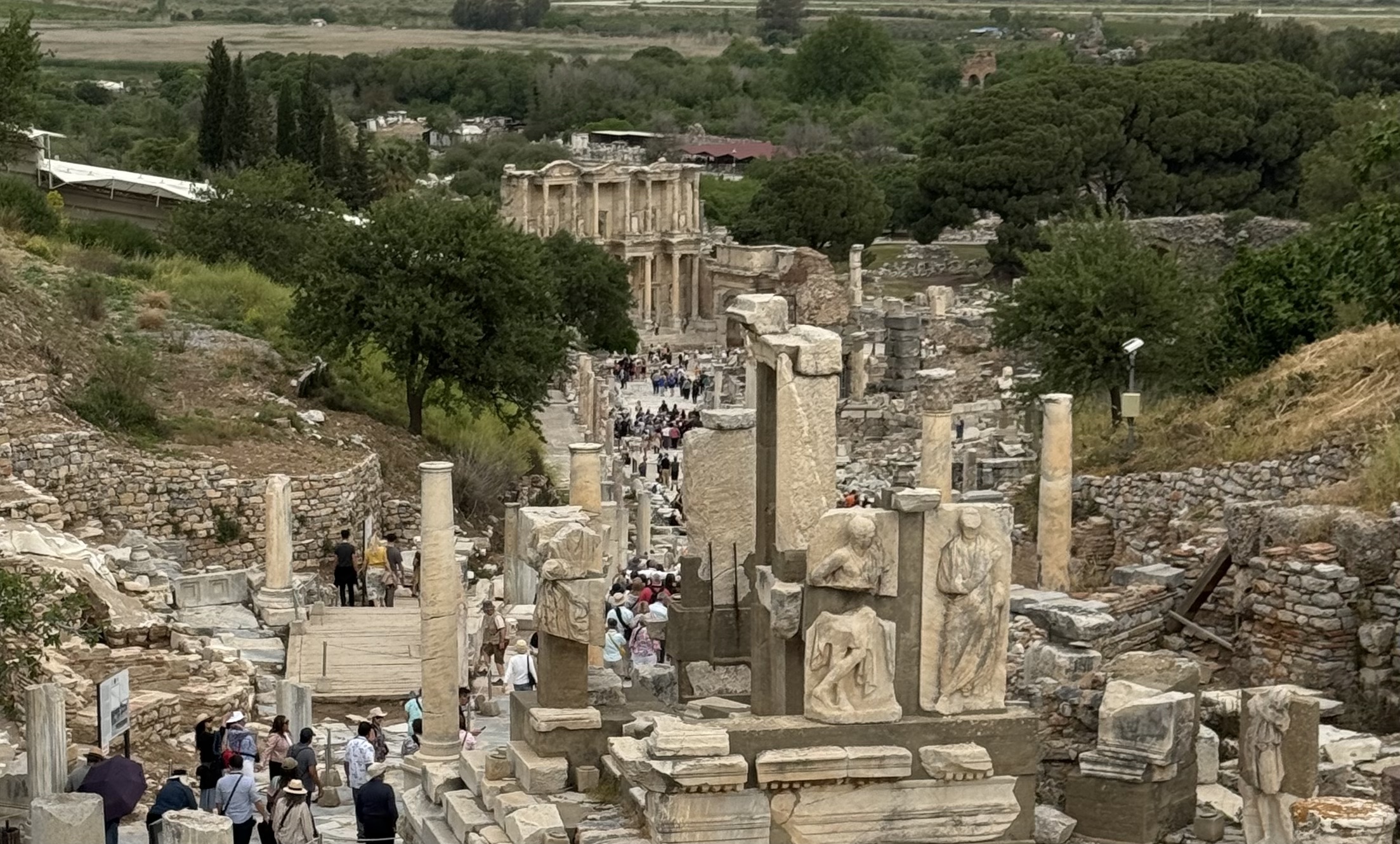
Extraordinary Ephesus
Ephesus is a pretty magical place. Walking the streets here takes us back 2000 years. It’s beyond impressive how advanced the inhabitants of this place were. It always blows my mind how archaeologists can stitch together history by painstakingly unearthing rocks buried metres below the ground we walk on today. Not only that, but how they can identify the different occupants and rulers of a place layered through time. The town of Selçuk, a few kilometres from the site of ancient Ephesus, is a lovely spot worthy of exploring.
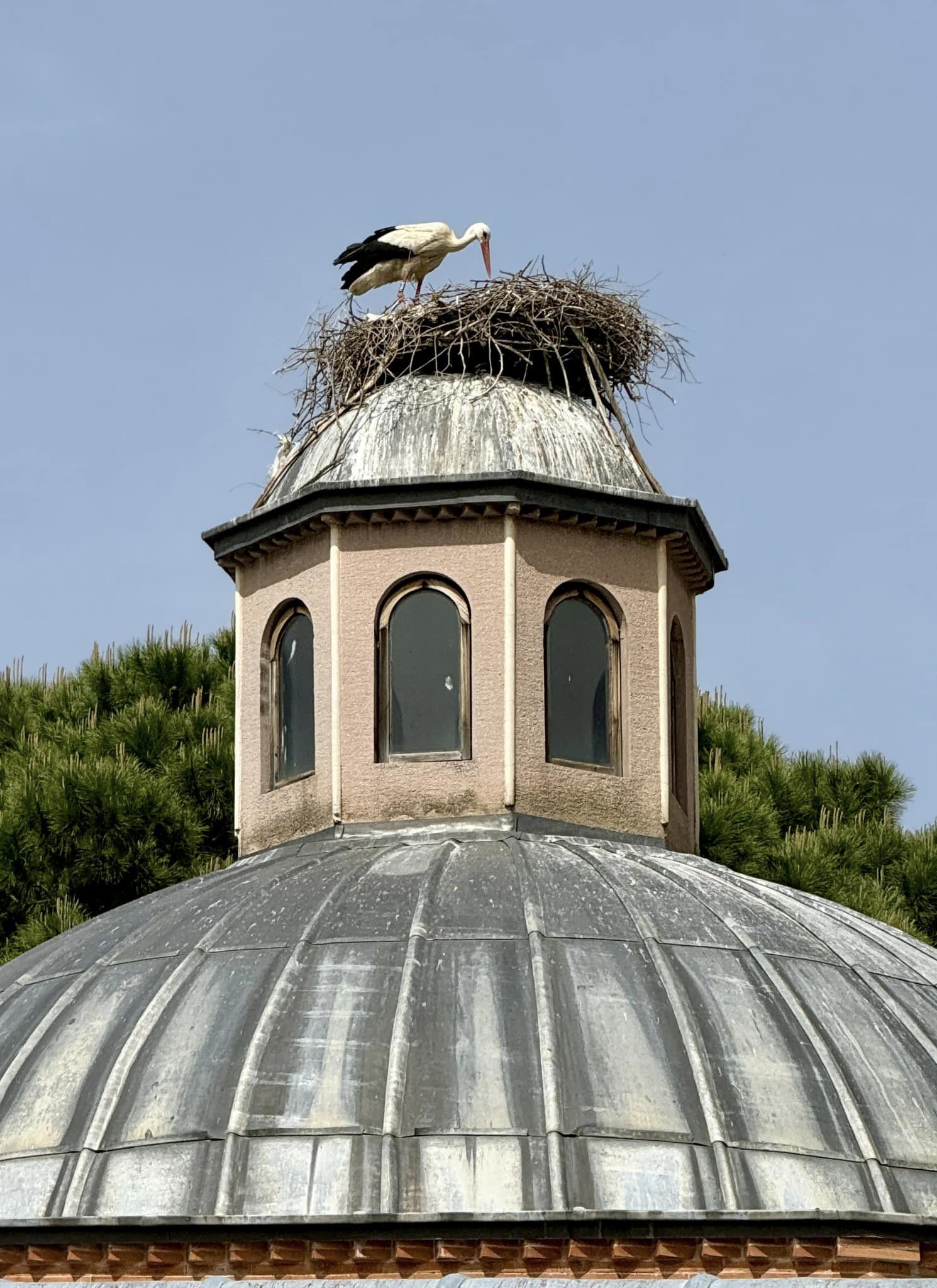
It’s stork season in Selçuk (suburban Ephesus, if you count the suburbs 3km away)! Hundreds of thousands of storks return to Turkey from sub-Saharan Africa in March to breed and nest. In Selçuk, there are about 375 nests. These birds build massive nests weighing anywhere from 60-250 kg and like to build them on top of anything with a view; electrical poles, tops of ancient columns or aqueducts, tops of anything high. As they build their nests and settle in, there’s a lot of poking and prodding going on and this has caused problems particularly when they choose the top of an electrical pole. Power grids have been affected and entire neighbourhoods have lost power when those long and strong beaks hit a wire. So the government has installed wide “baskets” for them to build their homes. They like being high up, not just for the view and strategic protection, but for practical reasons too. Their wing span is about two metres so taking off would be akin to paragliding; best done from a high spot. The storks stick around till the end of August and then head back to Africa. They are creatures of habit and try to return to the same place every year for breeding and nesting so every March, Turkish residents anxiously await what for them is the first sign of spring.
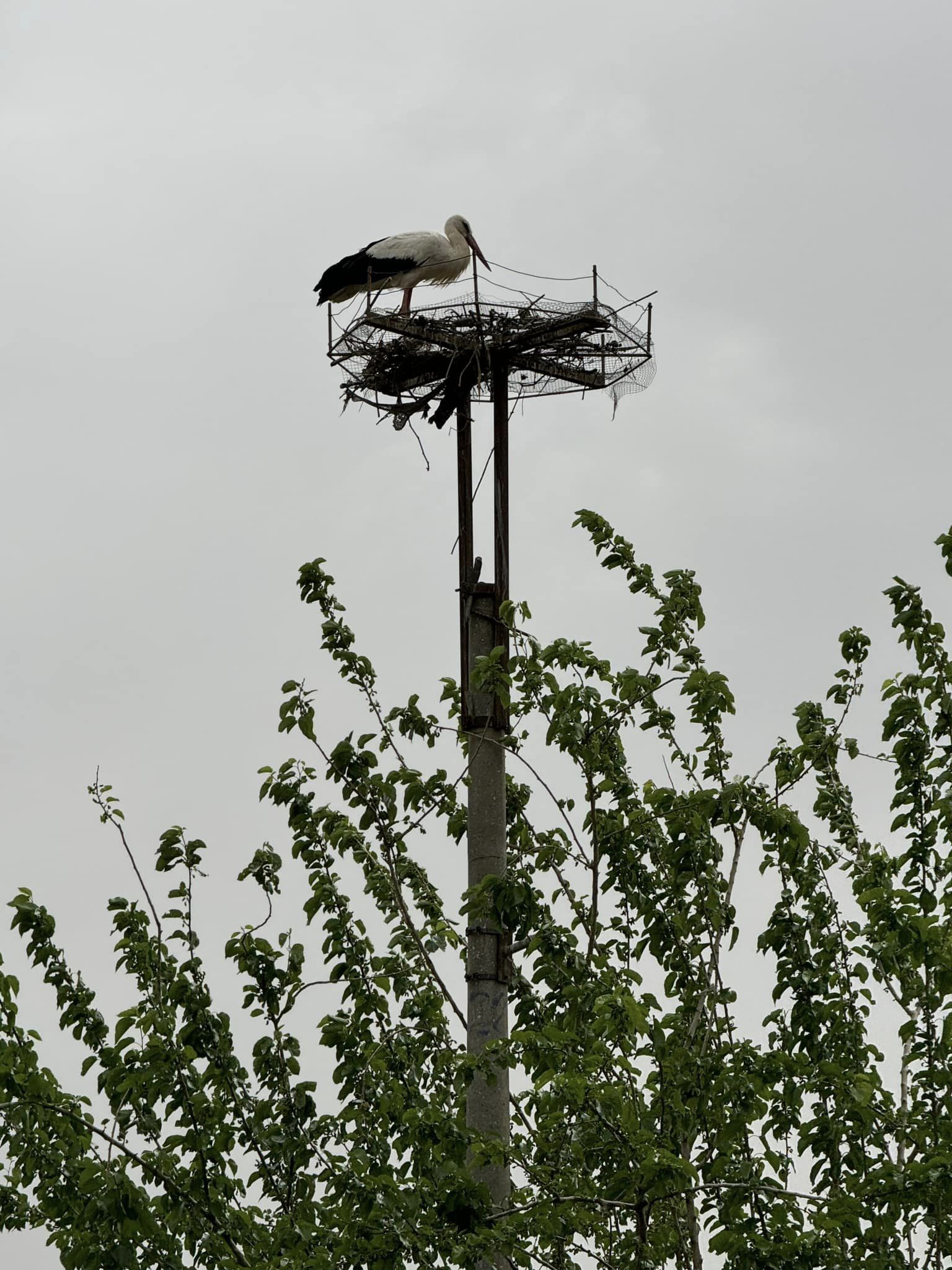
Here’s a government-provided basket. It was either very windy (which it was) or this stork is a bit late to the game.
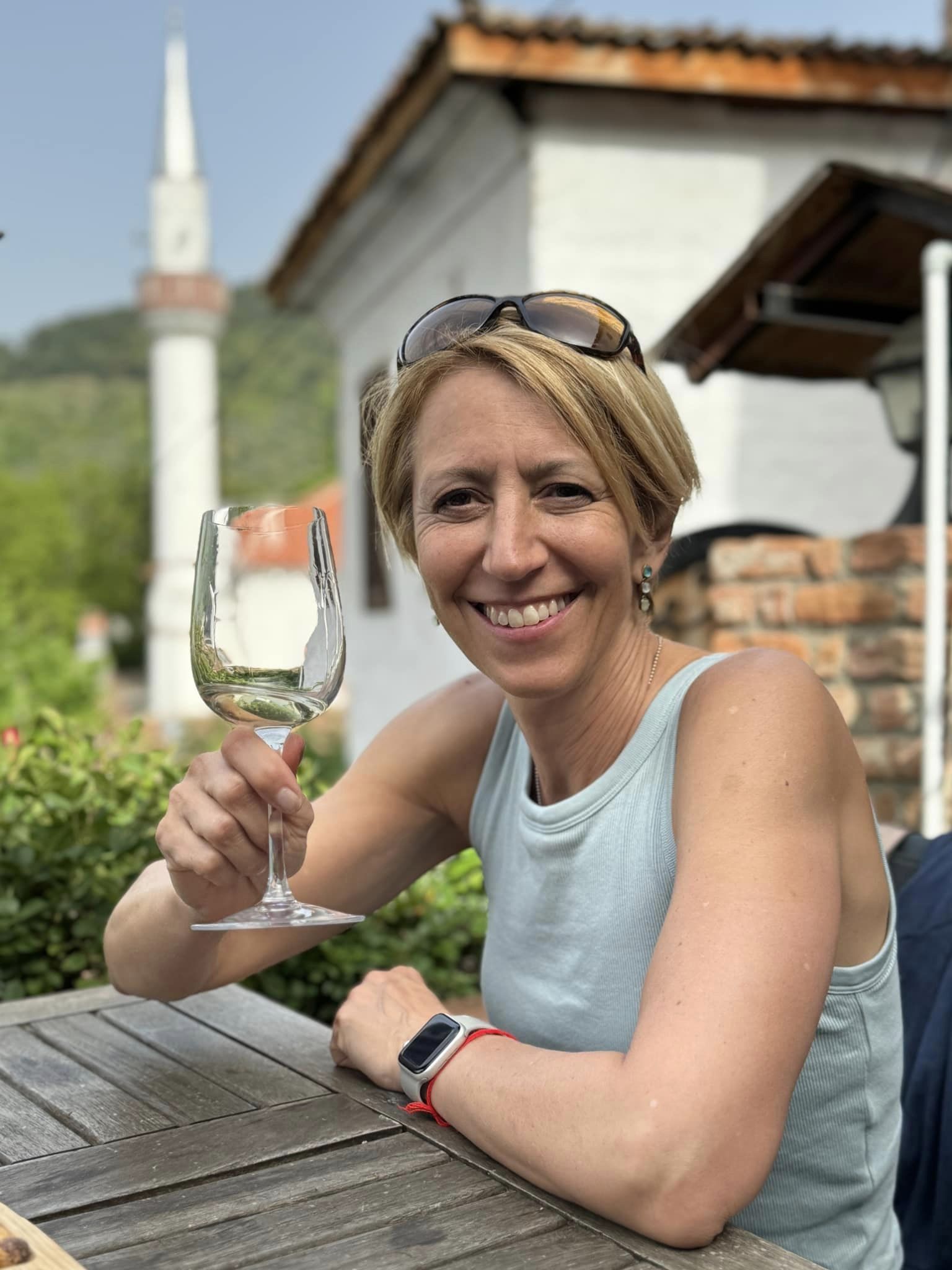
Local wine tasting in Sirinçe. Turkey isn’t known internationally for its wines despite grapes having been grown and wine produced here for millennia…all were nice enough but nothing I would bring home.
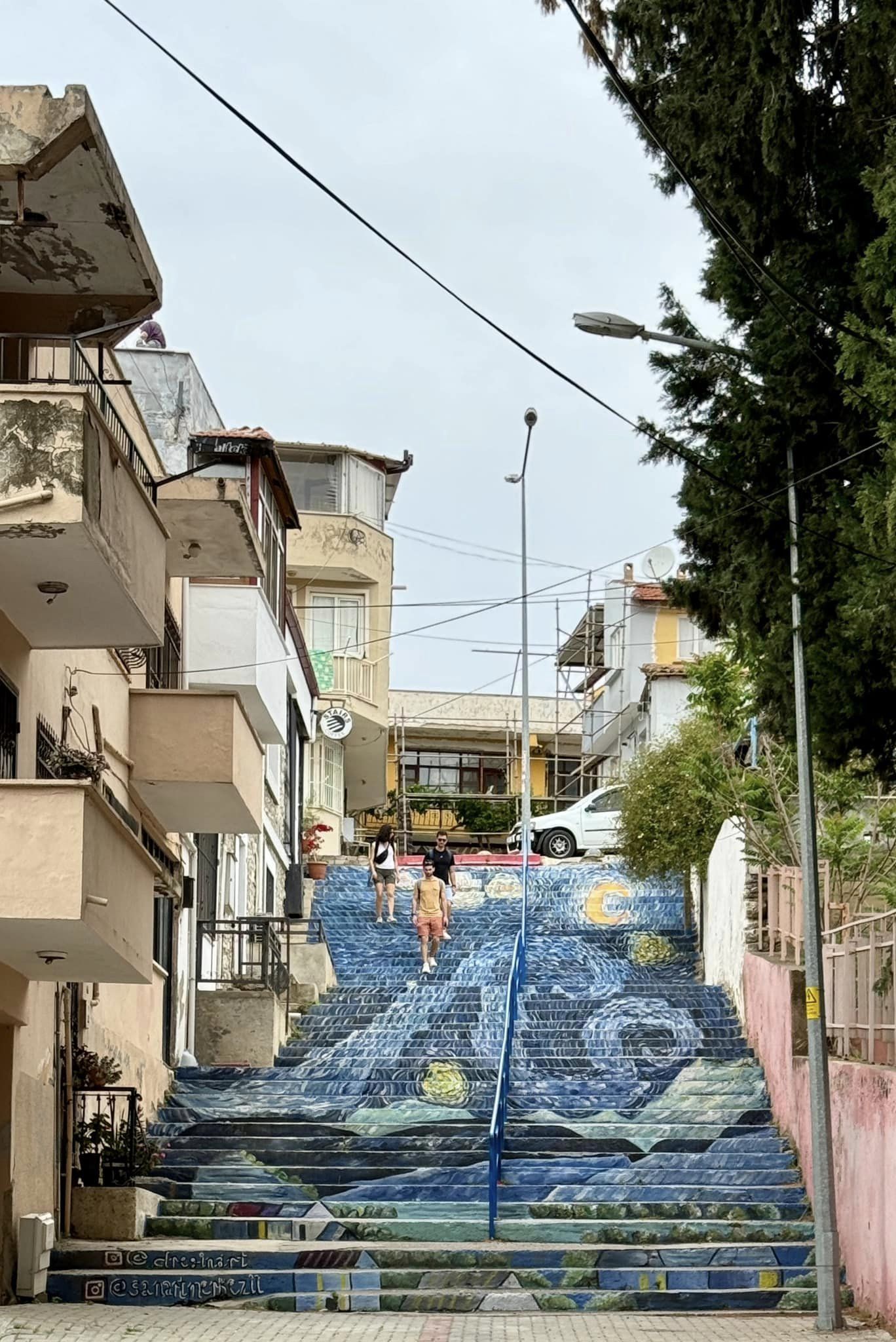
A masterpiece in Selçuk that doesn’t quite rival its famous neighbour.
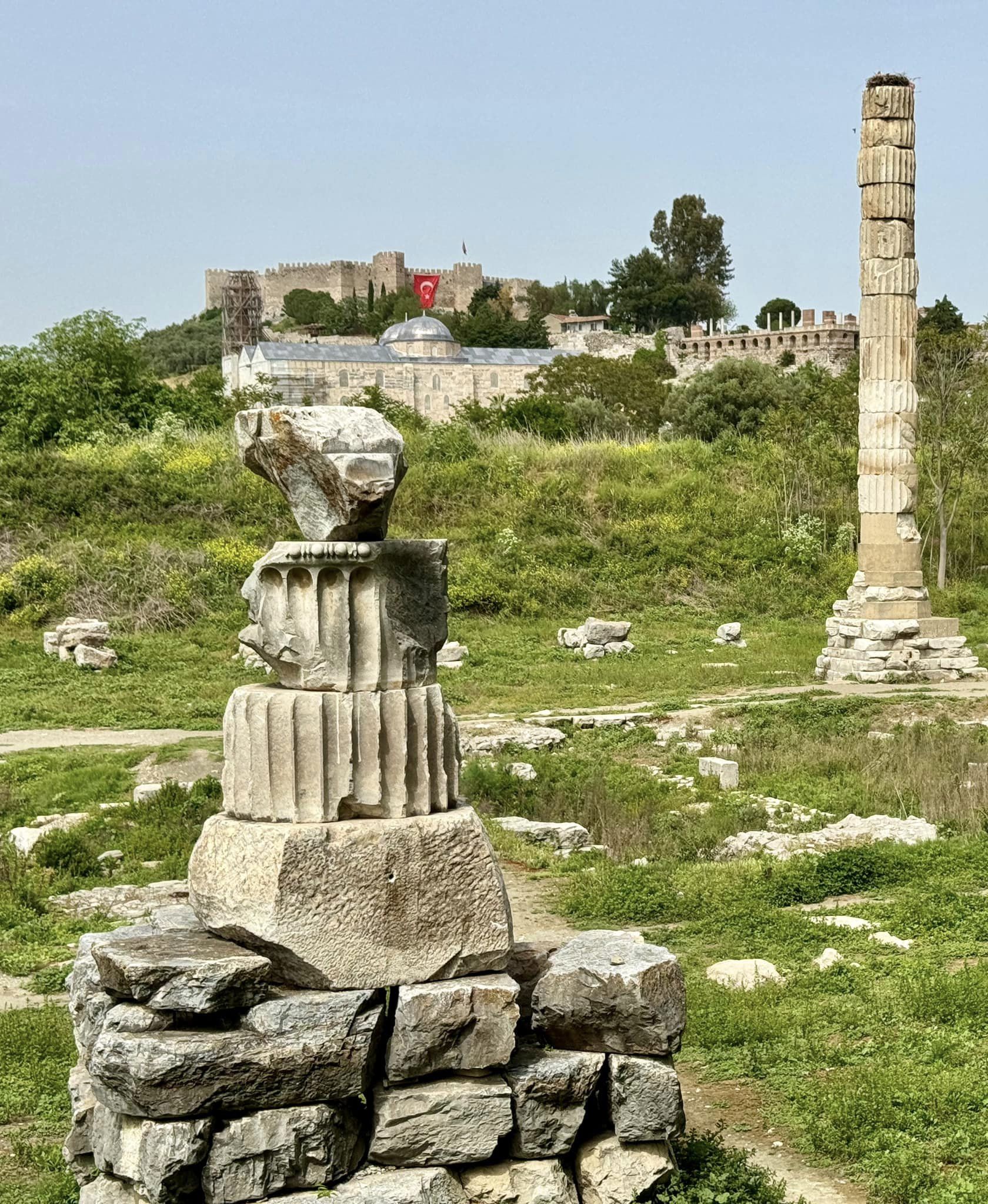
The Temple of Artemis is one of the Seven Wonders of the Ancient World, partly due to its enormity (four times the size of the Parthenon in Athens)…not that you can tell from this picture of all that’s left of it. This temple, in honour of the goddess of lots of important things, notably chastity, hunting, wild animals, forests, childbirth, and fertility (not sure why she was burdened with so many portfolios), was started in 550BC and took 120 years to build. That’s how massive it was. It was put through its paces over the centuries, having been destroyed and rebuilt three times, the final straw being in 401AD after it was destroyed by a Christian mob. All that’s left is this single colum which, surprisingly, still draws in the tour busses. Note the stork’s nest sitting on top of the column. Also notice the citadel in the background.
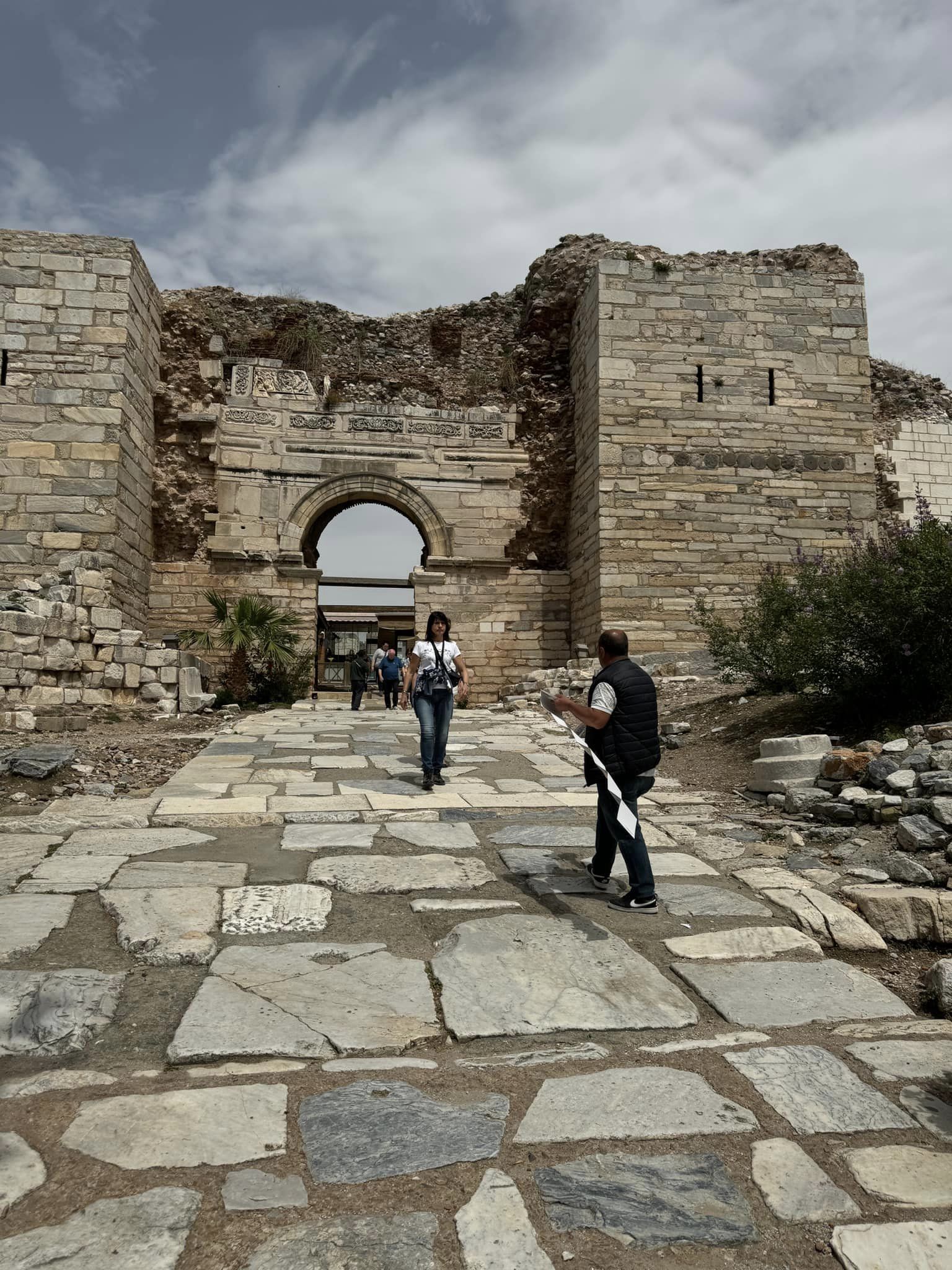
This guy in front of Ayasuluk Castle is desperate for a sale. He will sell anything…even offering up his grandmother! We heard an odd knocking sound and realized he was pounding one of the metal statues of the Virgin Mary on a big rock, trying to make it look distressed and perhaps more authentic. Selçuk’s citadel crowns the highest point in town, Ayasuluk hill with Ayasuluk castle sitting just below it. This is the citadel you can see from the Temple of Artemis. Proximity is important and I’ll get to that in a moment. The Basilica of St John is here and is the main draw. Here’s how it all came to be. When Jesus was crucified and his followers were imperilled, Jesus asked his most trusted disciple, John, to get his mom, Mary, out of town. John and Mary found their way to Ephesus and stayed together for the rest of their lives. It’s a bit unclear when Mary died but John lived to the ripe old age of 100. He left town a few times to preach and was ultimately exiled to the island of Patmos (after a few death threats), in a persecution campaign by Domitian. He came back to Selçuk in 95AD, sat on this hill and wrote his gospel and letters until his death. He is buried here according to his wishes.
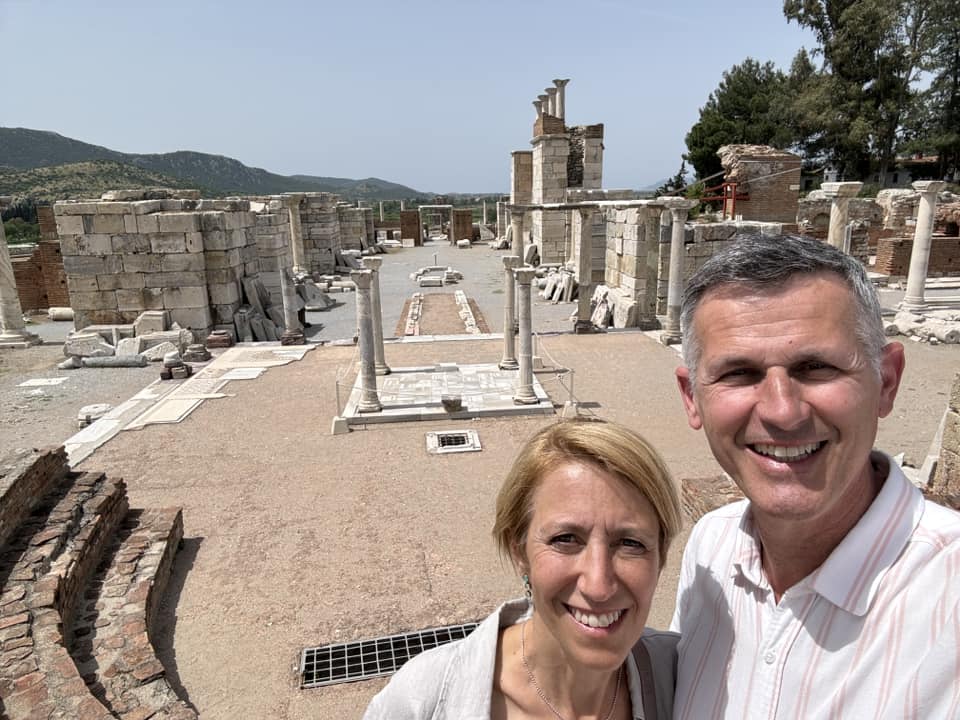
When Christianity picked up pace in the 3rd to 4th century AD, a Monumental Tomb was built over John’s grave. What’s left of the tomb is the square four pillared structure behind us. Then in the 6th century AD, emperor Justinian built a massive basilica around the tomb in John’s name. He collected much of the building materials from the destroyed Temple of Artemis just down the hill. Waste not, want not. A hundred or so years later Arabs started raiding the area so the citadel was built above the basilica along with walls around the temple to protect it. You may remember there were a few interesting relics in the Topkapi Palace in Istanbul, notably part of John’s arm and skull…so what’s under the tomb behind us? Was his grave ransacked?
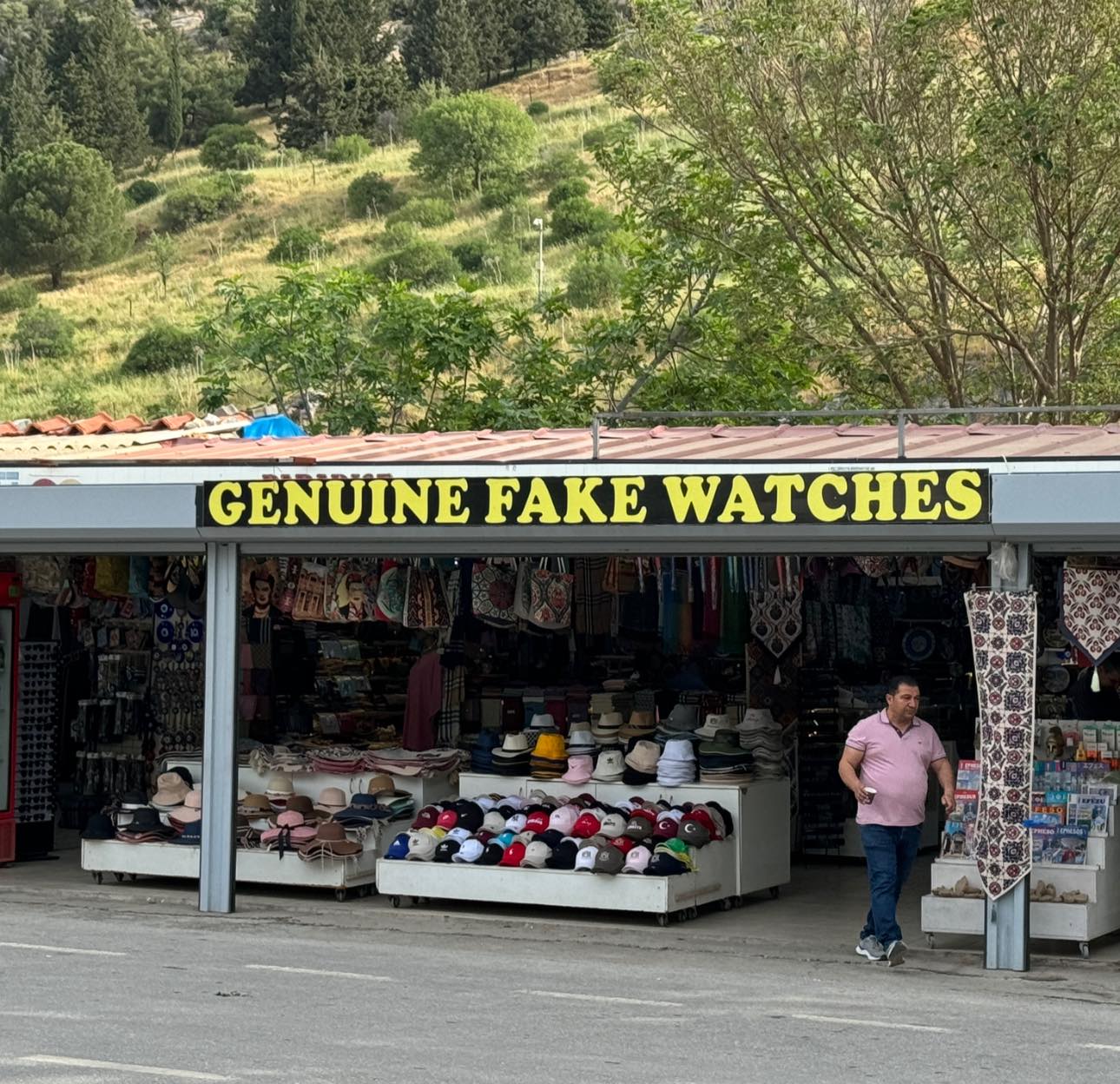
We’ve arrived at the ancient city of Ephesus! This stand was outside the gates but I wonder how brisk business would have been for him in the agora in its heyday. Would the emperor of the time have tolerated fakes, no matter how genuine they might be?
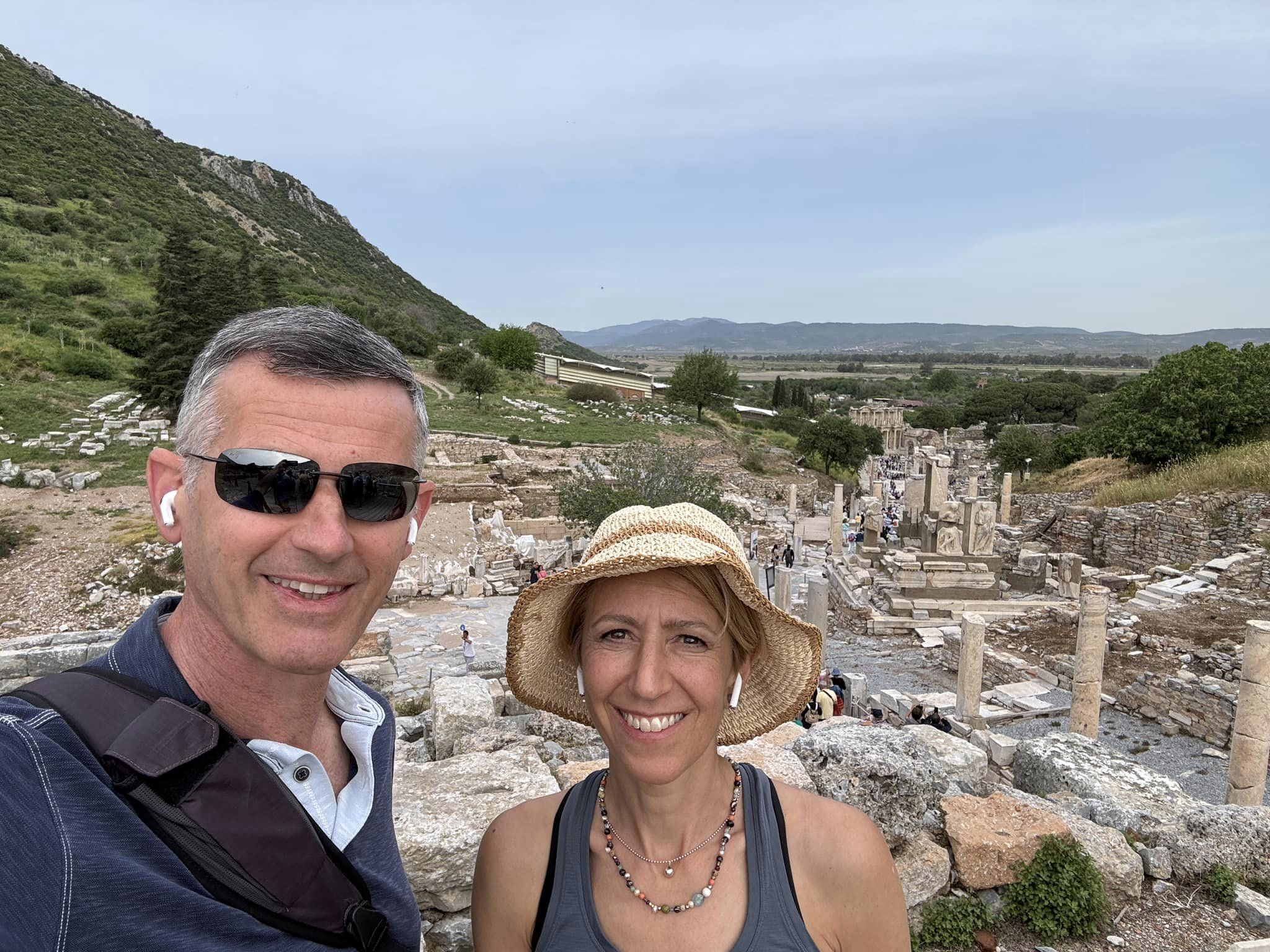
The main thoroughfare, Curates St, joins the upper and lower parts of this unbelievably well-preserved city. Ephesus had a long list of characters vying to rule it over the thousand years it was inhabited. From a simple settlement of people trying to survive in the seventh millennium BC, through the ages, to the wealthiest of the world living in luxury with hot running waster and indoor plumbing, this place saw a lot of action. Various conquerors and earthquakes came and went, destroyed and rebuilt, and ultimately the place was abandoned in the 15th century AD. Too bad earthquake insurance industry didn’t exist in those days! What was so special here? Location! This coast was part of ancient Greece’s growing cultural centre. Ephesus was a busy port city attracting thousands of merchants looking to make a living and thousands of wealthy with money to spend. The Greeks really got this place thriving in the fourth century BC but then the Romans marched in and took over in the 1st century AD and continued its growth for another 500 years. This is when the big, famous building happened. The library, the temples, the theatre, the houses… all serving a population of 225,000 people (beats Pompeii!). The last thousand years of this place before it was abandoned in the 14th century belonged to the Byzantines and became a Christian place.
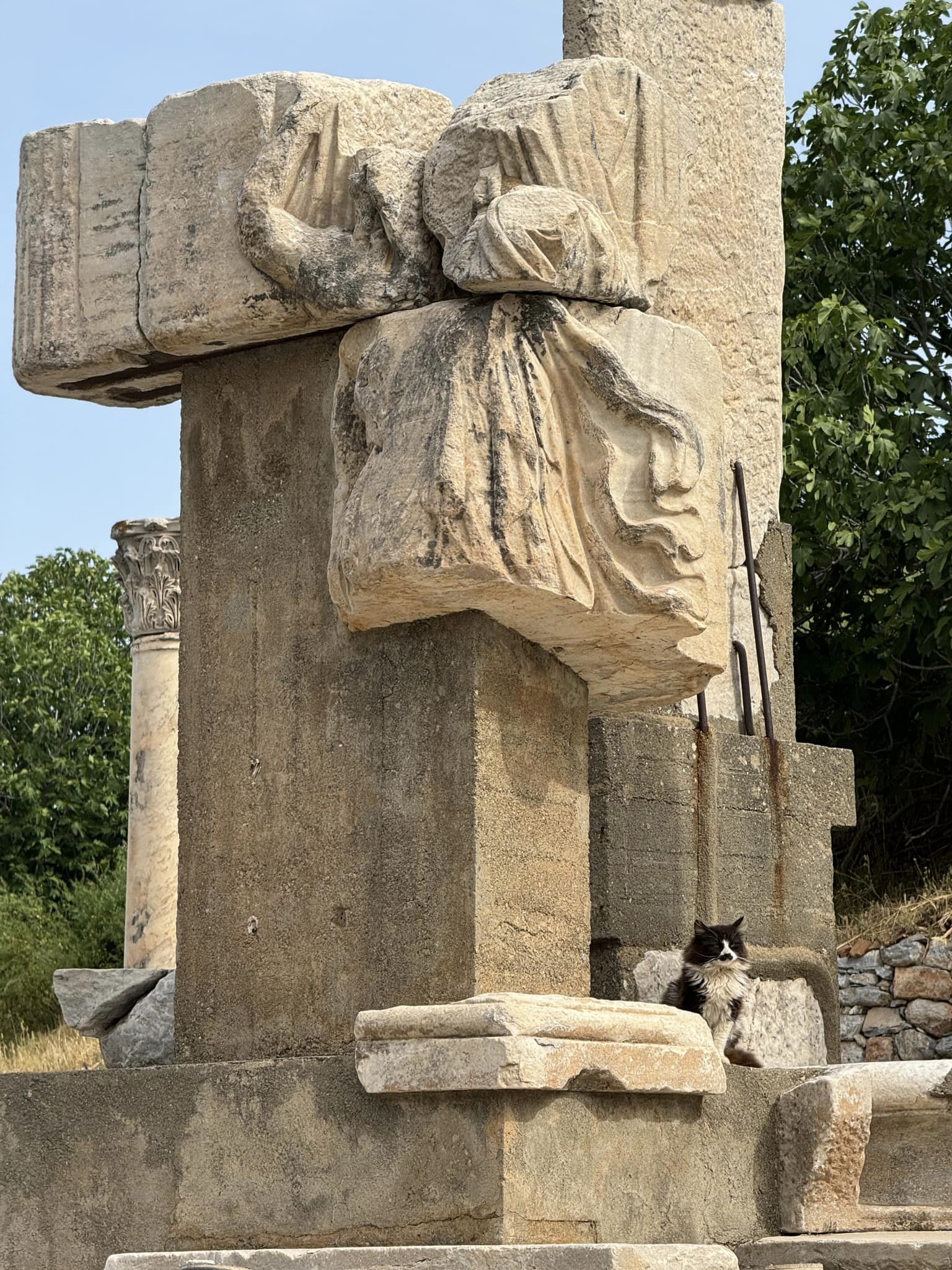
The only residents now are the cats and dogs who call this place home. Pretty bougie digs for strays if you ask me! This one looks like my childhood cat who was a tough tomcat. He disappeared one day…I guess this is where he ended up!
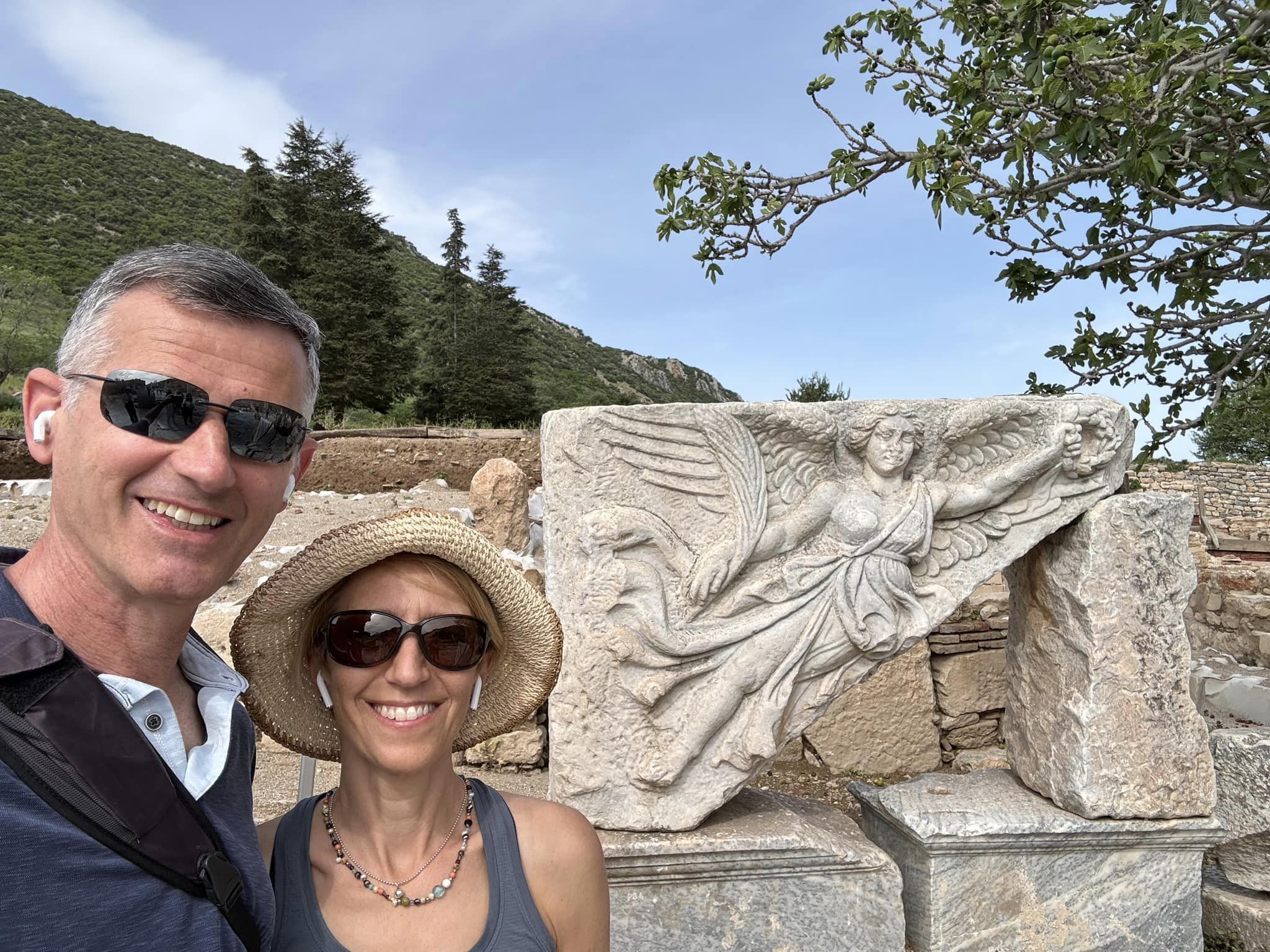
Nike, the goddess of victory, who appears to be shoeless. The shoe company’s logo was inspired by Nike’s wing. There’s a bit of a story here. The logo was designed by Carolyn Davidson, a graphic design student in Portland in 1971. She was paid $2/hour for the 17.5 hours she billed the company. Despite Phil Knight not loving the logo, he went with it anyway. It is now one of the most recognizable logos in the world. Carolyn was ultimately suitably compensated for her work with stock and bucketloads of follow on work as a freelancer. A great example of the value of a network!
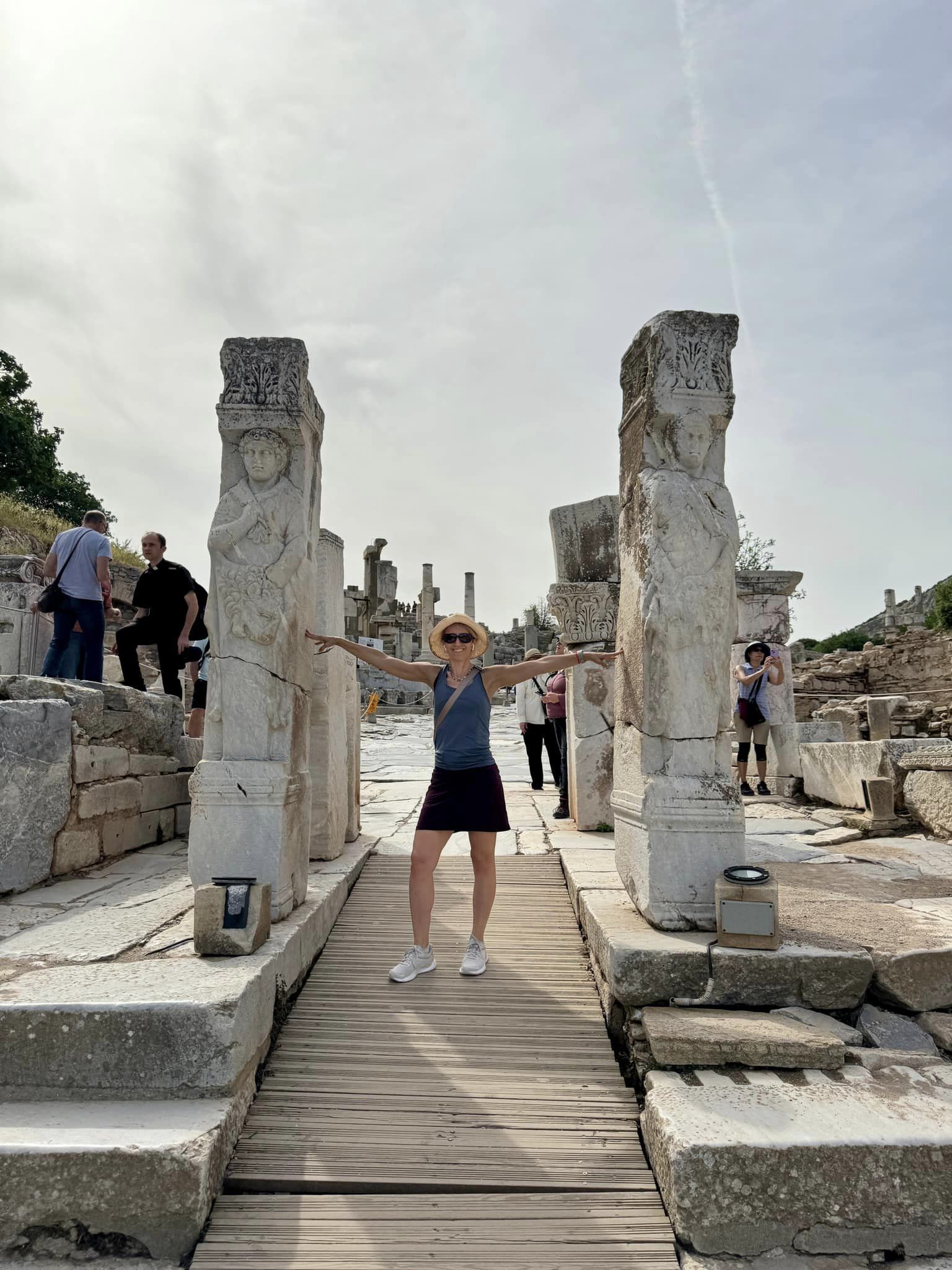
Heracles (aka Hercules) gate. I estimate it is 5’4” wide, given my wingspan measurement. This gate blocked the street to wagon traffic making it much more pleasant as a pedestrian walkway.
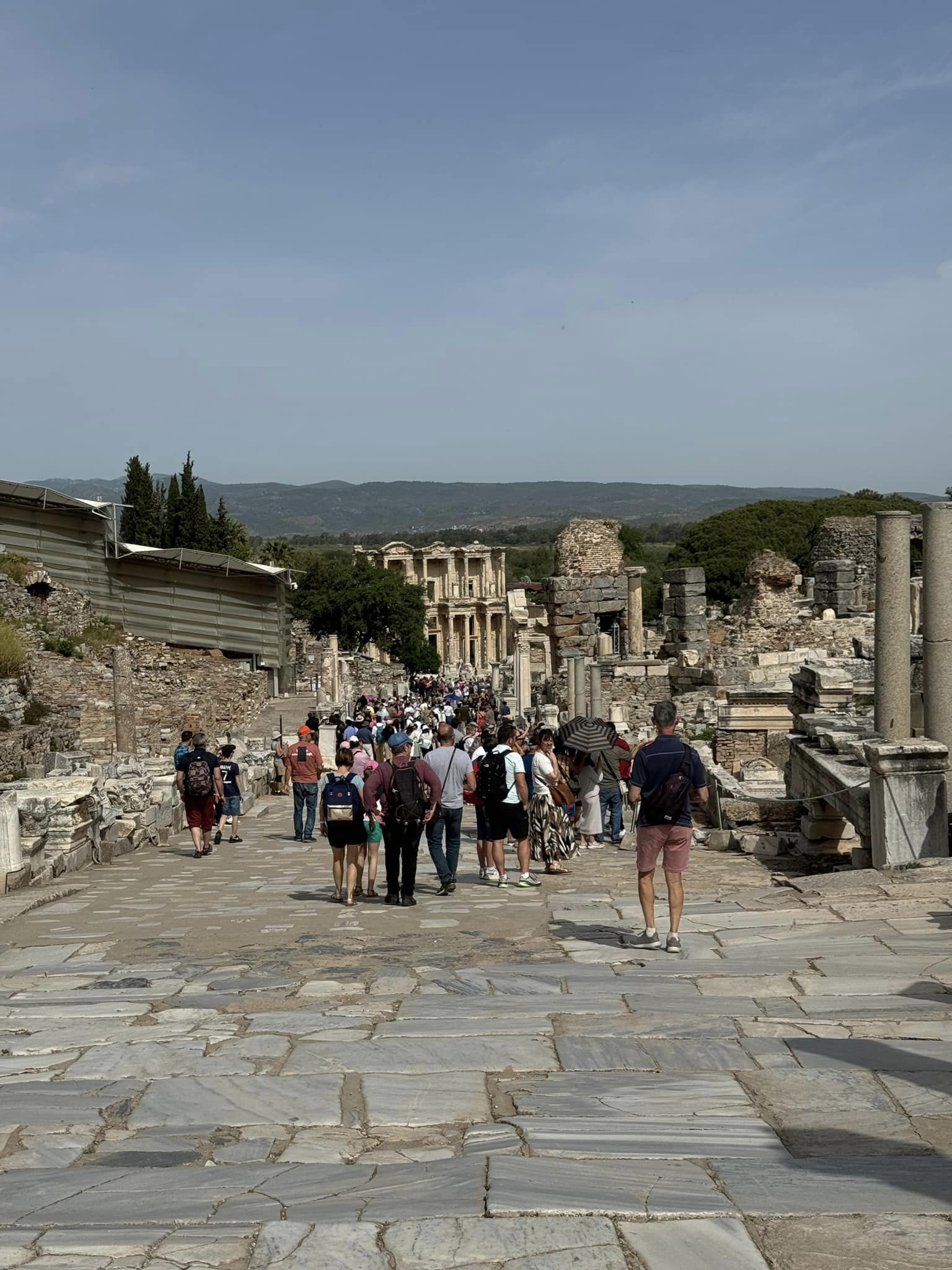
The Sacred Walkway led to the harbour. Here, sacrificial animals would be travel down the walkway to the port, heading by ship to the festival celebrating the birth of Artemis on the island of Delos.
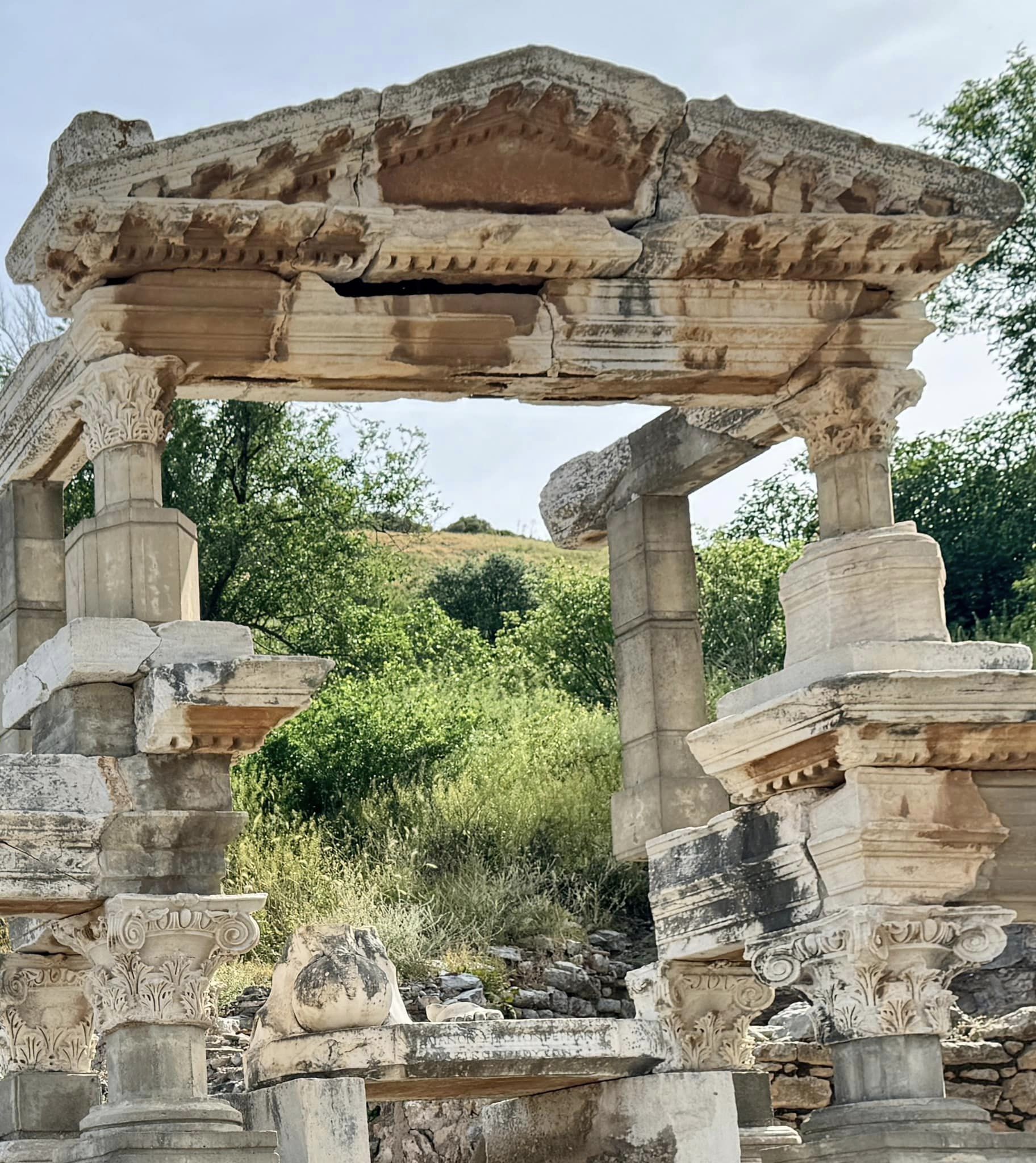
Fountains were important. They provided a vital public service as a social meeting place and source of water (thanks to aqueducts and good plumbing). They were a symbol of prestige for a city so the more of them and the fancier they were, the better. This fountain, built in about 104AD, was decorated with a statue of emperor Trajan. He was standing with one of his feet on a globe. We can still see his other foot and the globe which symbolized his rule over the earth. This proves the Romans knew that the world was round as early as the first century AD.
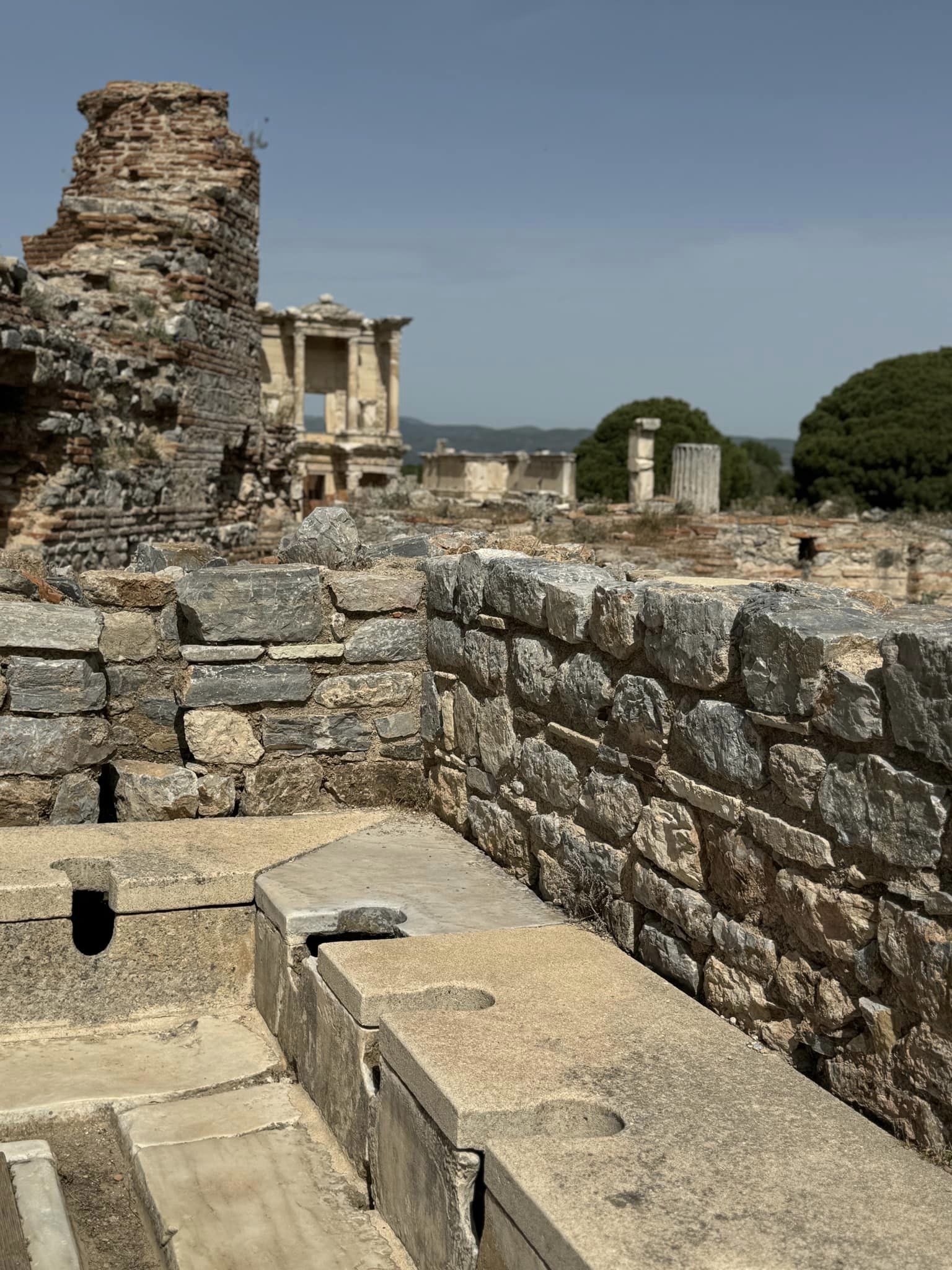
The very public toilets, always a source of amusement to modern day people. Lots of important discussions took place here when there wasn’t much else requiring concentration. Those with private toilets in their homes missed out on the news of the day. Two channels of water ran through here. One larger one was below the seats and served to carry the deposits to the sewage system. A small channel ran along the front of the seats near the sitter’s feet. This was filled with fresh water that would be used for cleansing after taking care of business.
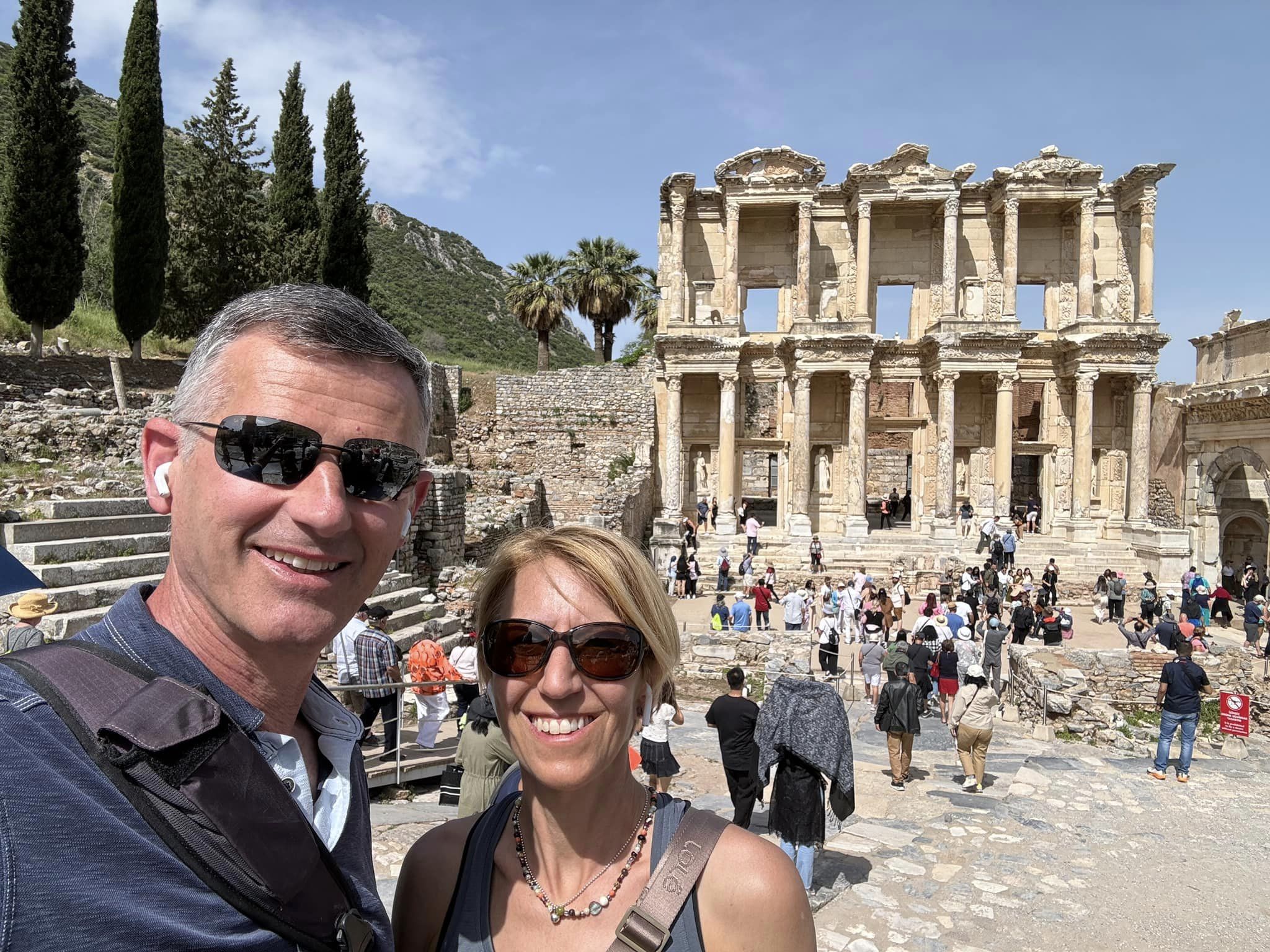
The magnificent Celcus Library. I wonder if my VPL library card works here… The library was commissioned by Aquila, Celcus’ son, and is built above his father’s tomb. It’s one of the only great libraries left of the ancient world and held up to 16,000 scrolls. That’s lots of reading material to keep Celcus busy for eternity. Sadly, the library and all the scrolls burned in 262 AD. The wealthy were expected to act as benefactors in their communities and contribute to the betterment of their communities. The library’s construction, as well as the 25,000 denarii bequeathed by Celcus himself for reading material, was built to honour both Celcus and the town of Ephesus as a whole. People were welcome to come and read but they weren’t allowed to check out any scrolls. Copies of reading material were way too expensive to allow for overdue scrolls.
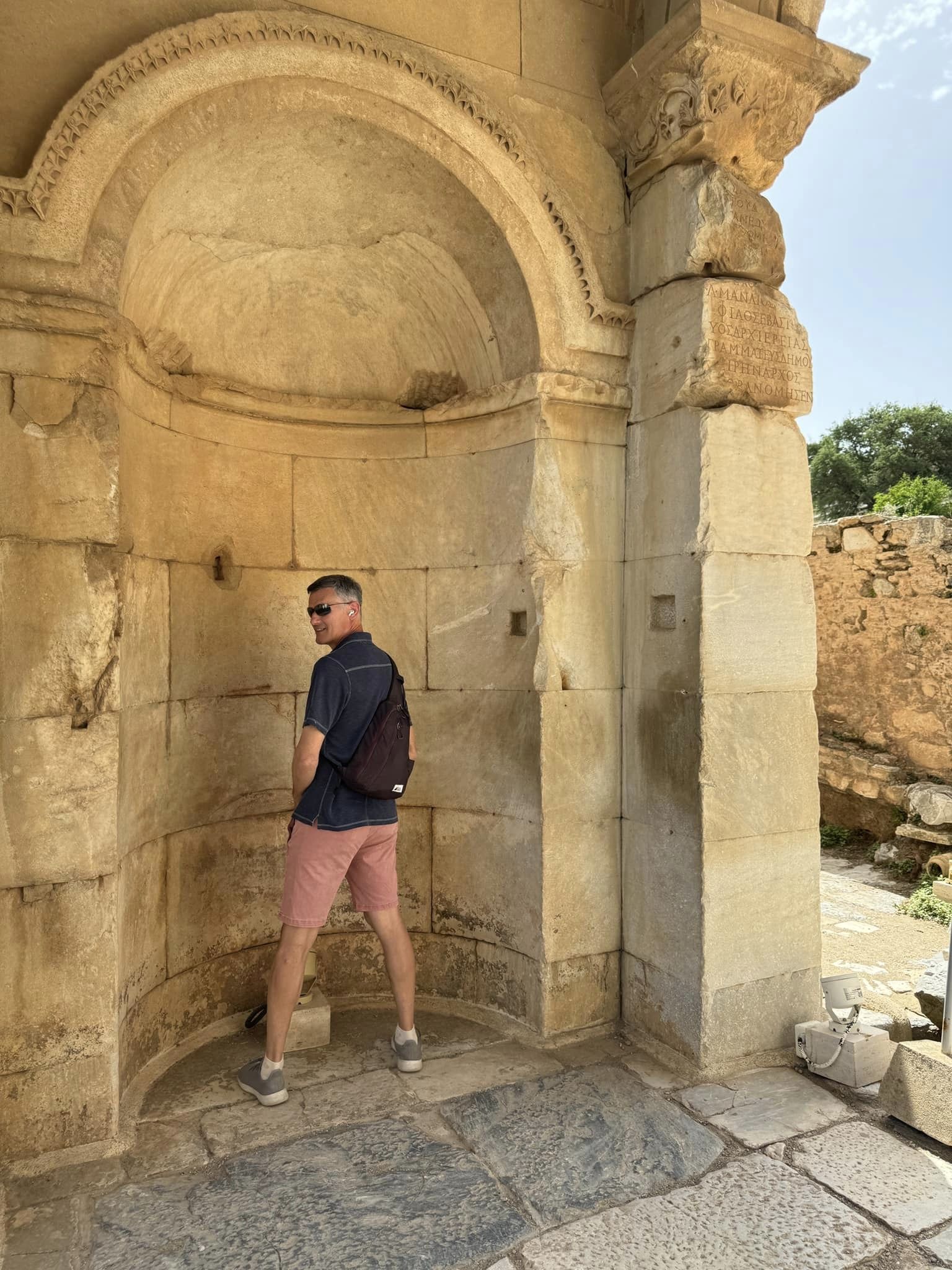
This is part of the South Gate of the Agora by the library. Apparently, this recess was often used as a toilet. People needed all their wits about them when negotiating with merchants. A threat is written on the wall here which reads “whoever urinates in this spot shall be tried in a court of law”.
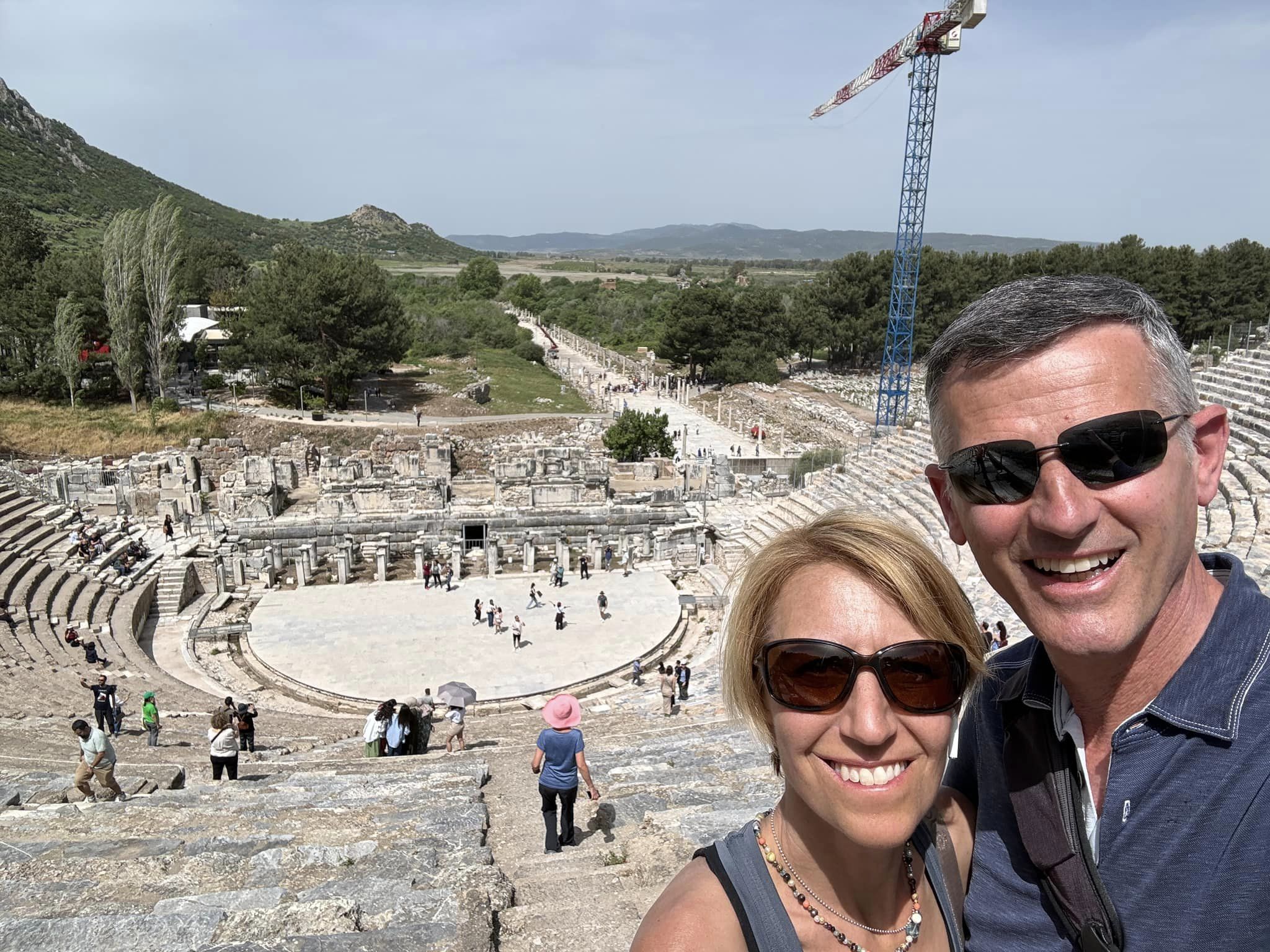
The theatre was the focal point or life in the city. Shows, exhibitions, contests, social and political gatherings took place here. There was room for 25,000 people here. With a population of 250,000, it was probably not a hardship to fill those seats for a good show. Actors wore high heels and masks. The shoes made them taller and more visible and the masks enabled them not only to take multiple roles but also helped amplify voices.
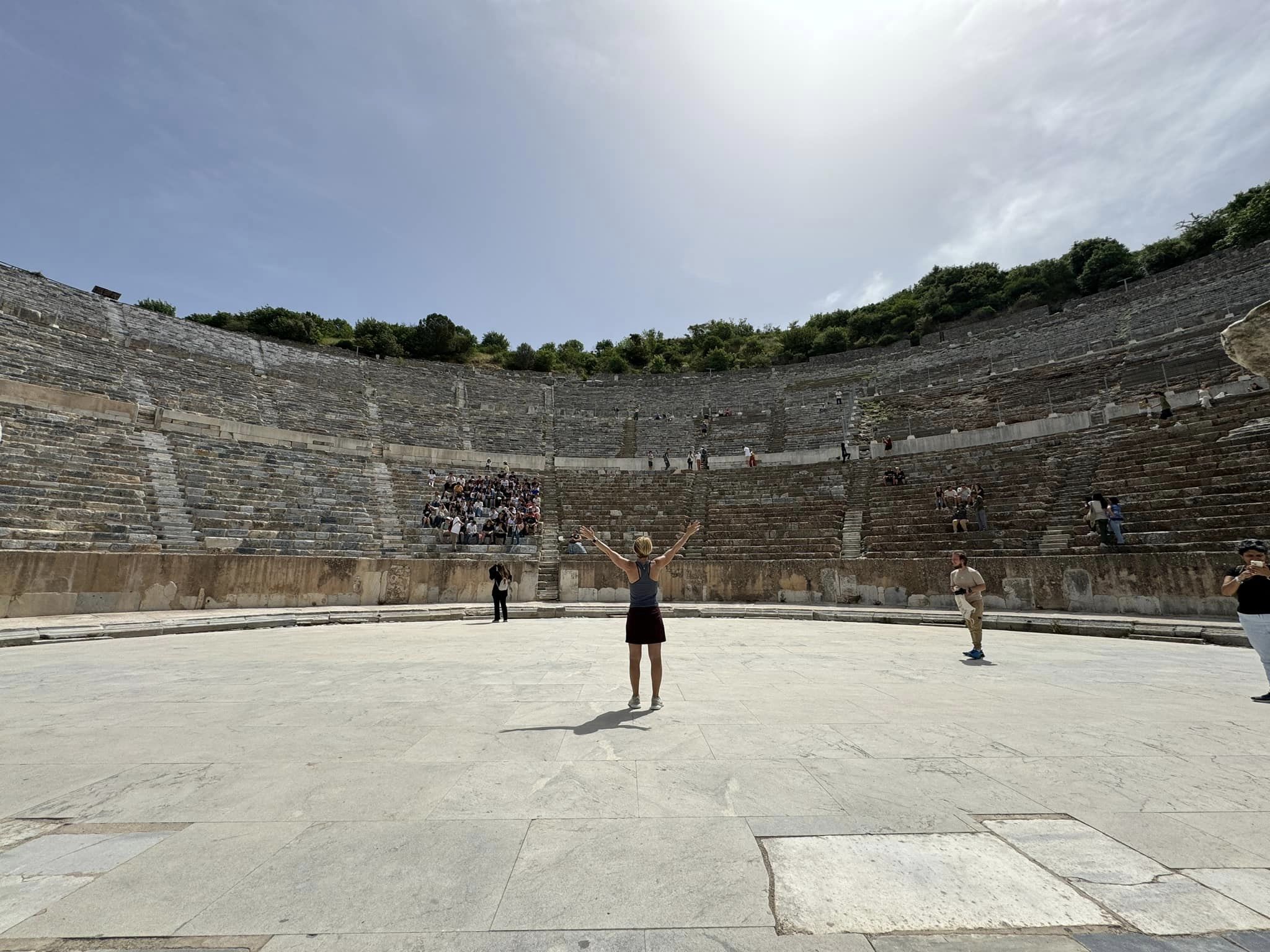
Sadly, I couldn’t sell out the house…
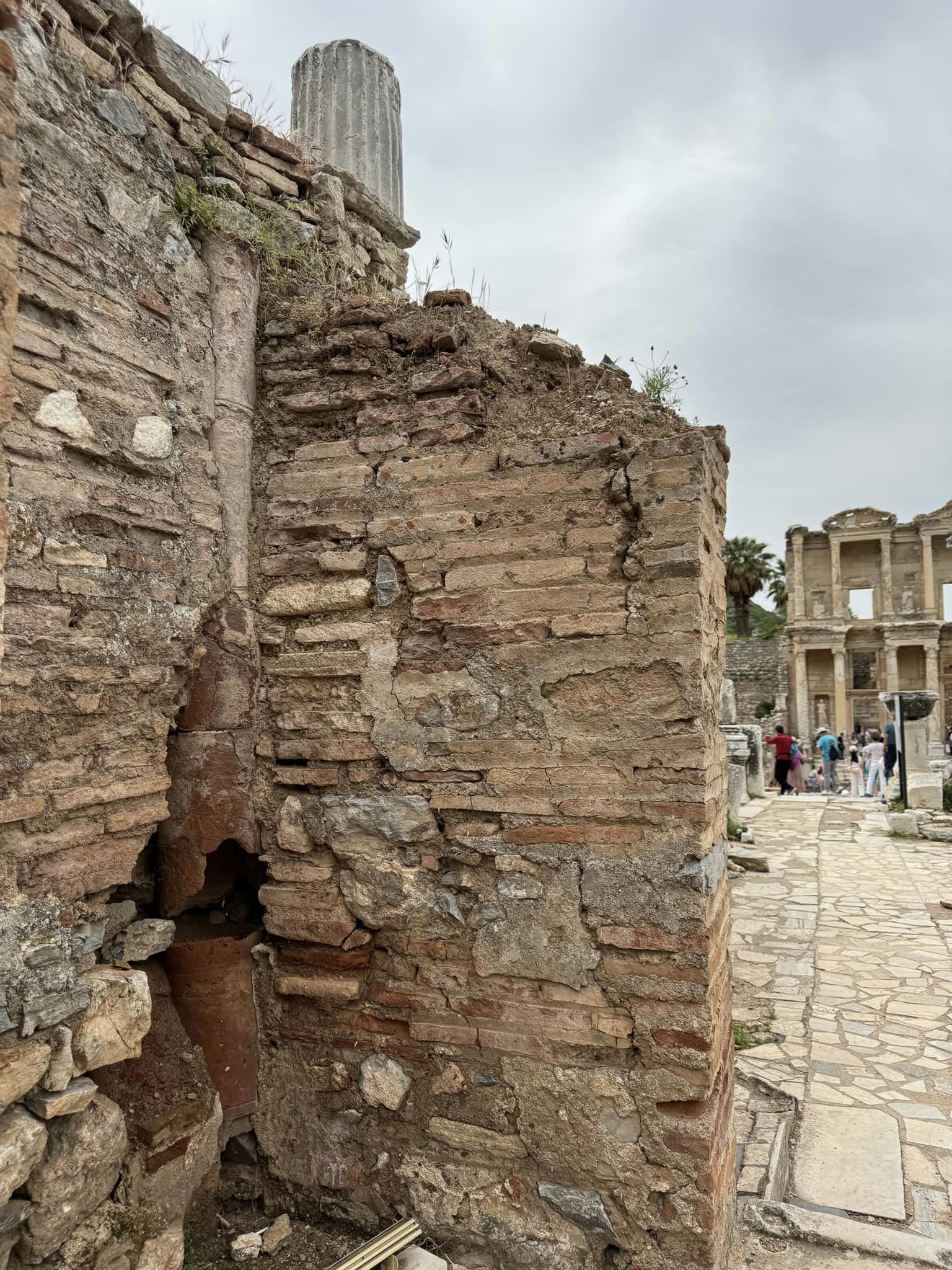
Vestiges of plumbing pipes running through houses. There was an intricate network of separate plumbing and sewage pipes snaking underneath the marble streets with manhole covers to provide access in case a plumber was needed.
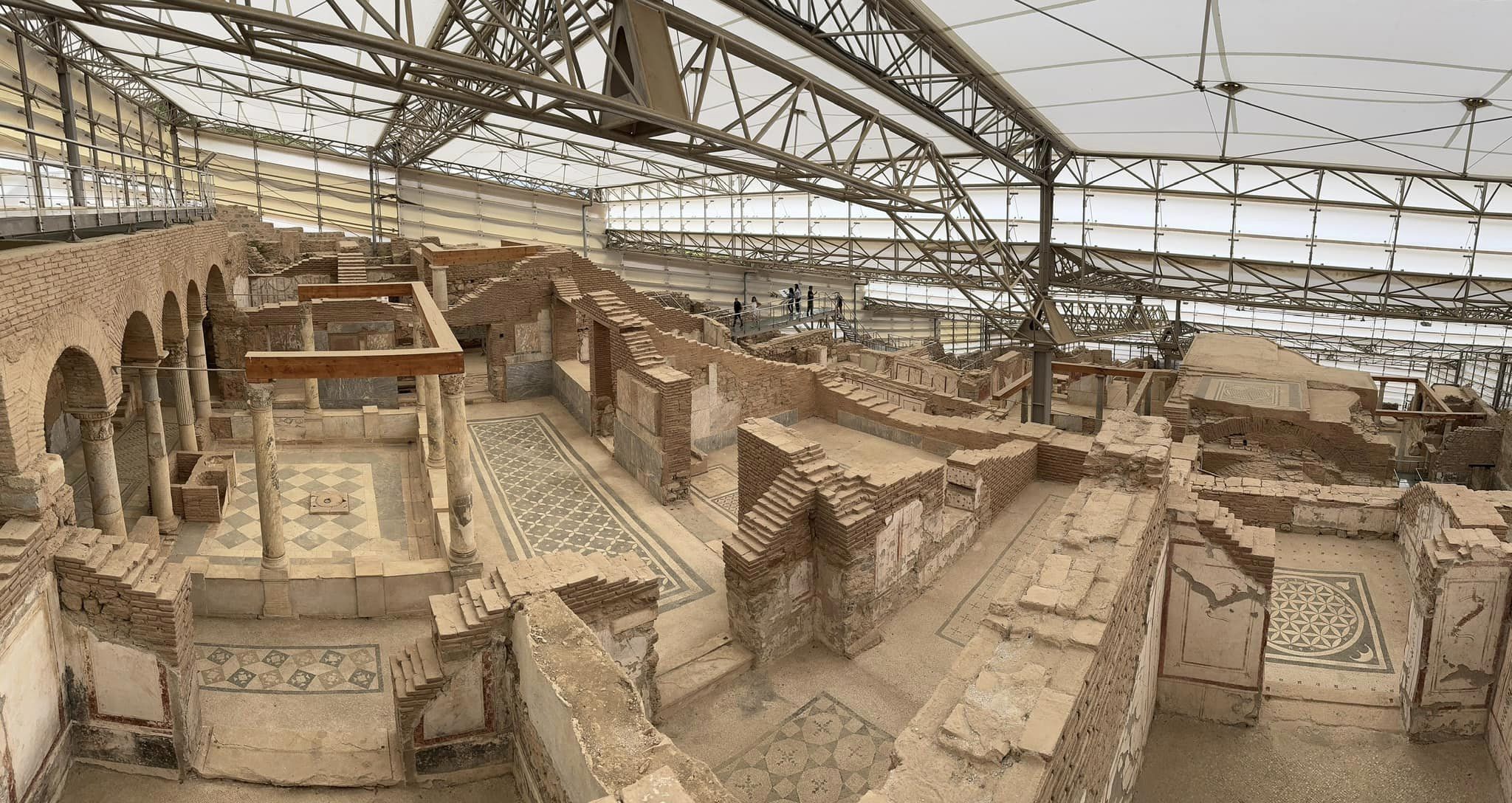
These two and three storey terraced houses were built just after the turn of the millennium in 20AD and first opened to the public in 1985. Frescoes on the walls, mosaics on the floors and private toilets separated these ultra rich from the more common folk. There were six homes here averaging 7000 sq ft each. Massive! Luxurious! Unparalleled! But these people missed out on the talk of the town with their private toilets...
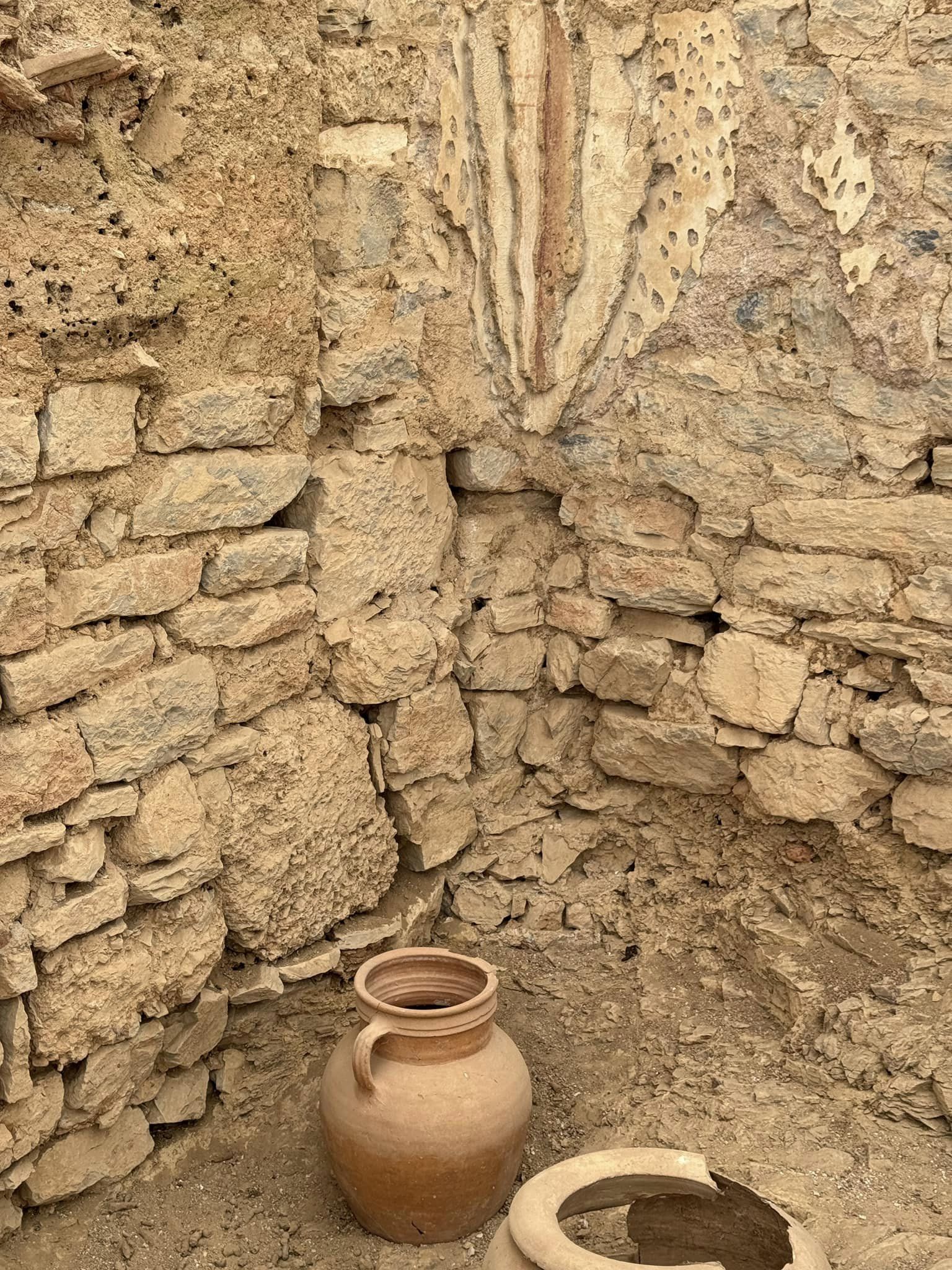
This little detail where two walls meet show a few layers of renovations. Each time one of these houses changed hands, these people added their own style stamp. Layers of plaster with new artwork were spread over the previous. The archaeologists have discovered four or five such renovations.
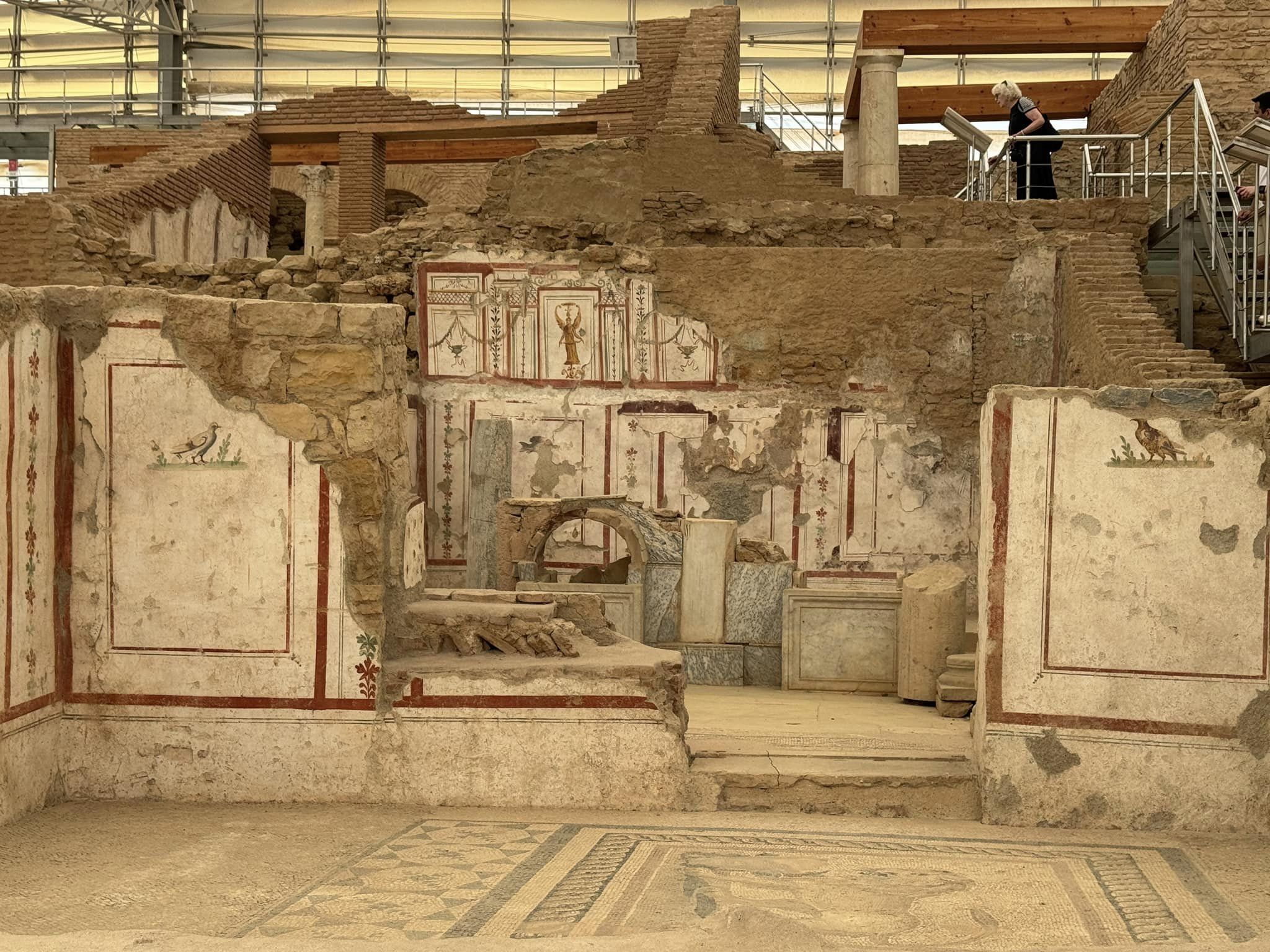
Doesn’t look much different than a modern day renovation. How fortunate that we have such an intimate view into the lives of people more than 2000 years ago.
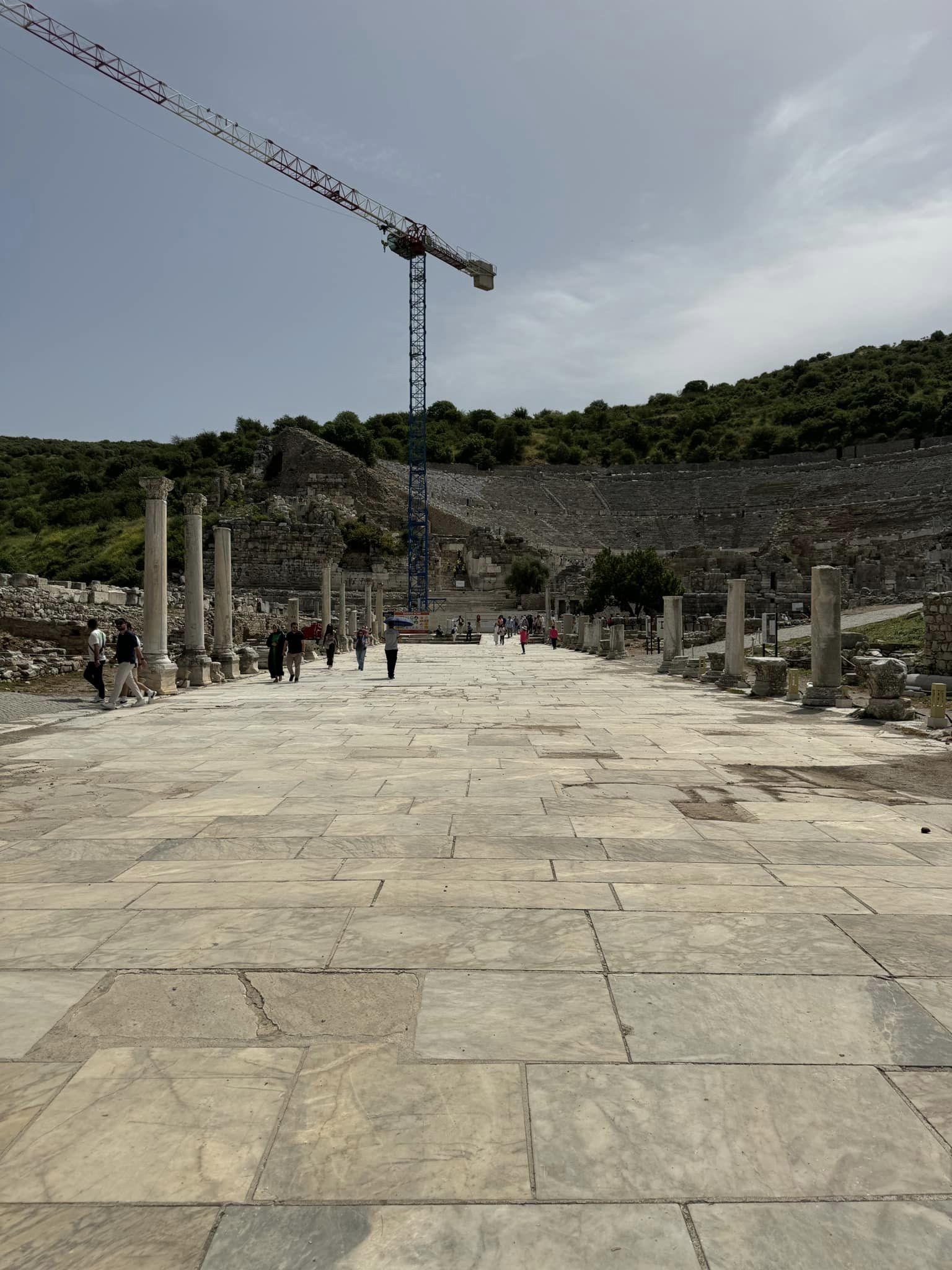
The Arcadiane was the first street sailors and merchants encountered when they arrived at Ephesus. It was also the way kings, emperors, and councilors from other cities would enter the city. These official visitors would be greeted on the street so it was decorated to impress. Huge columns, marble slabs, colonnades, and sculptures adorned the sides of the street. It even had street lights by the 5th century AD. At the time, the Arcadiane was one of only three lighted streets in the empire. An impressive 50 streetlights were placed on the road to light up its colonnades. What led to the rise of Ephesus ultimately led to its fall. One of the main challenges here was that the harbour at the bottom of the Arcadiane, which joined the city to the port, kept silting up. Lots of efforts were made to solve the problem as a port city’s lifeblood is the port! Lots of money was spent diverting the Kaystros River which dumped the silt into the harbour, but by the end of the Byzantine era, it became too much. The port is now 5km from Ephesus.
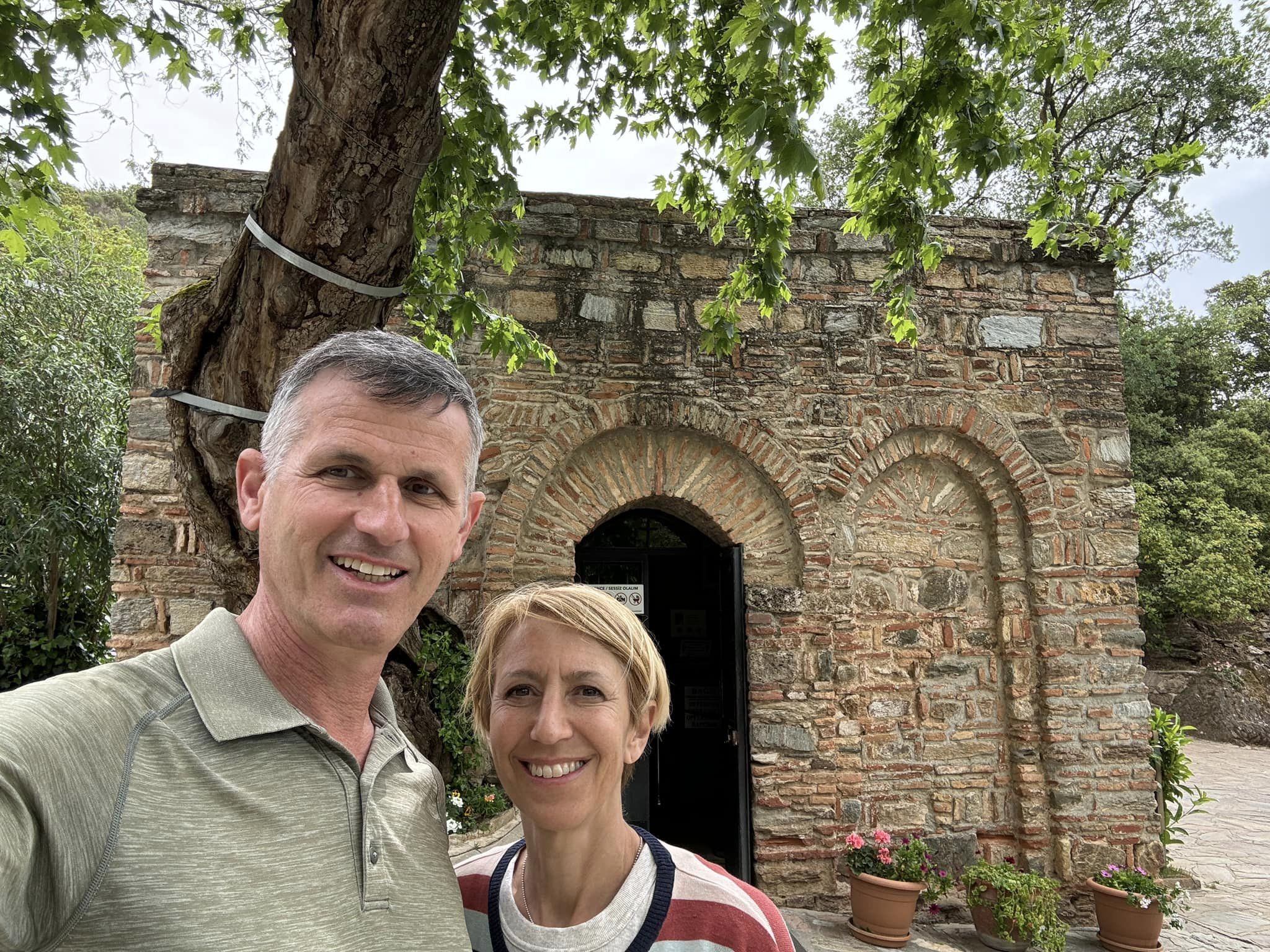
The Virgin Mary’s house. Mary was said to live here when she came to Ephesus with John until she died. Apparently she was buried here but no evidence has been found. This is a massively popular pilgrimage spot. The signs are translated into 12 languages (Ephesus signage was in three languages). The square house, now a shrine, is as big as you see behind us. For a non-Christian tourist, It’s a pretty pricey entrance fee for a minute or two passing in front of a statue of Mary but so special for believers. How did they find this place in the middle of nowhere? The story goes that Blessed Anne Catherine Emmerich, a German nun who lived from 1774–1824 had visions of this house of Mary but she had never been to this area. She was able to describe in detail the hills of Ephesus and the house where she saw Mary living out her final years. Sadly, she didn’t live long enough to find her visions to be true. In 1892 they excavated here and found this house. Divine? Maybe. There’s more to the story. For the last five years of her life, a poet named Clemens Brentano became one of her ardent supporters. He sat with her and documented her visions. He published two books based on his notes nine years after her death to much excitement and fanfare. When the Vatican was considering Emmerich’s beatification, they found inconsistencies between Brentano’s notes and his ultimate publications. A well-intentioned fraud? Her Beatification was suspended. She did manage to become a saint in 2004, not for her visions but for her virtue and sanctity.
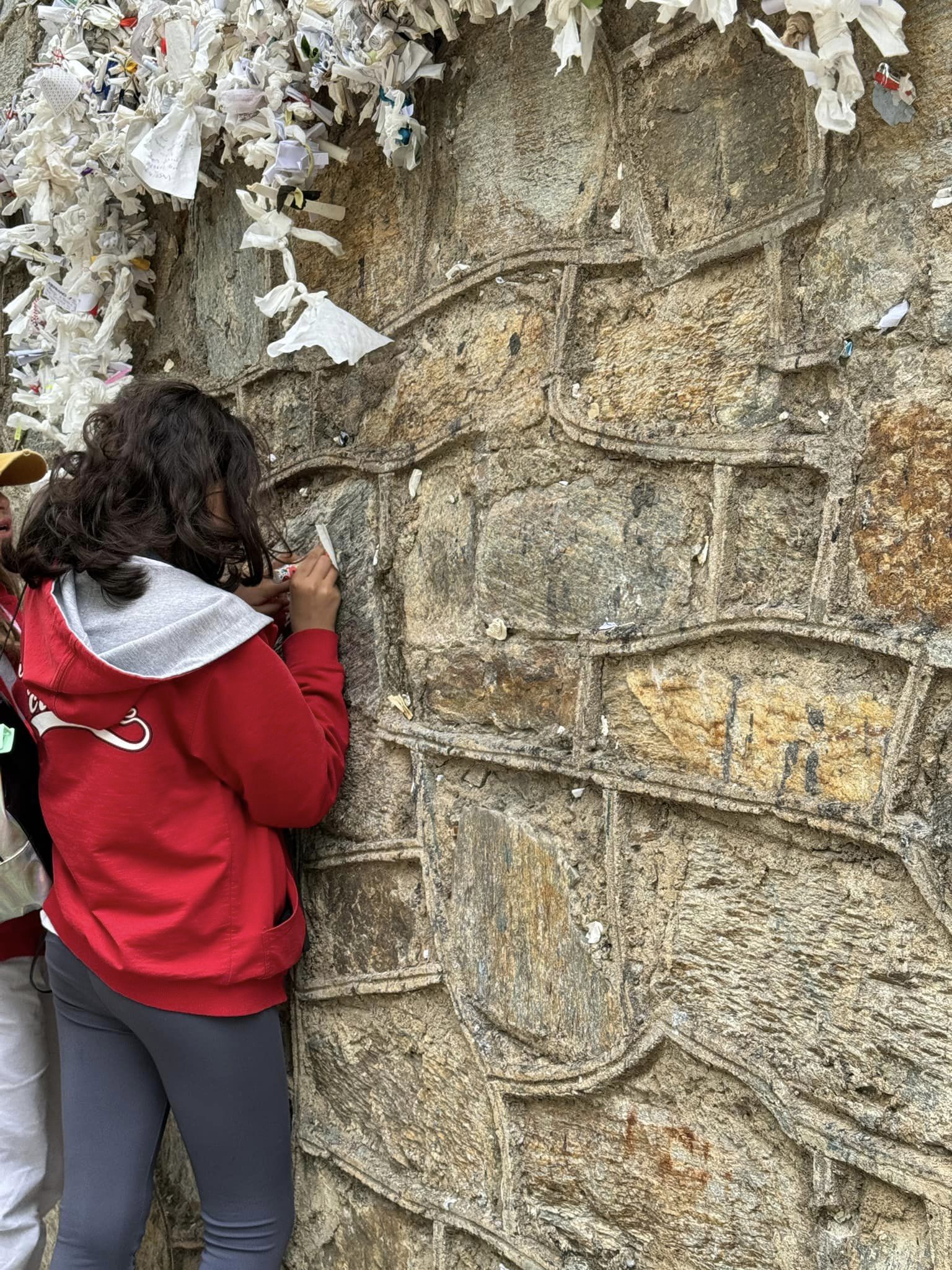
The Muslim tradition of the wishing tree is extended to the walls by Mary’s shrine. Wishes are written on strips of fabric and tied to tree branches as pilgrimage offerings. Here notes on paper are also stuffed into cracks in the wall. Inspired by the Western Wall in Jerusalem perhaps.
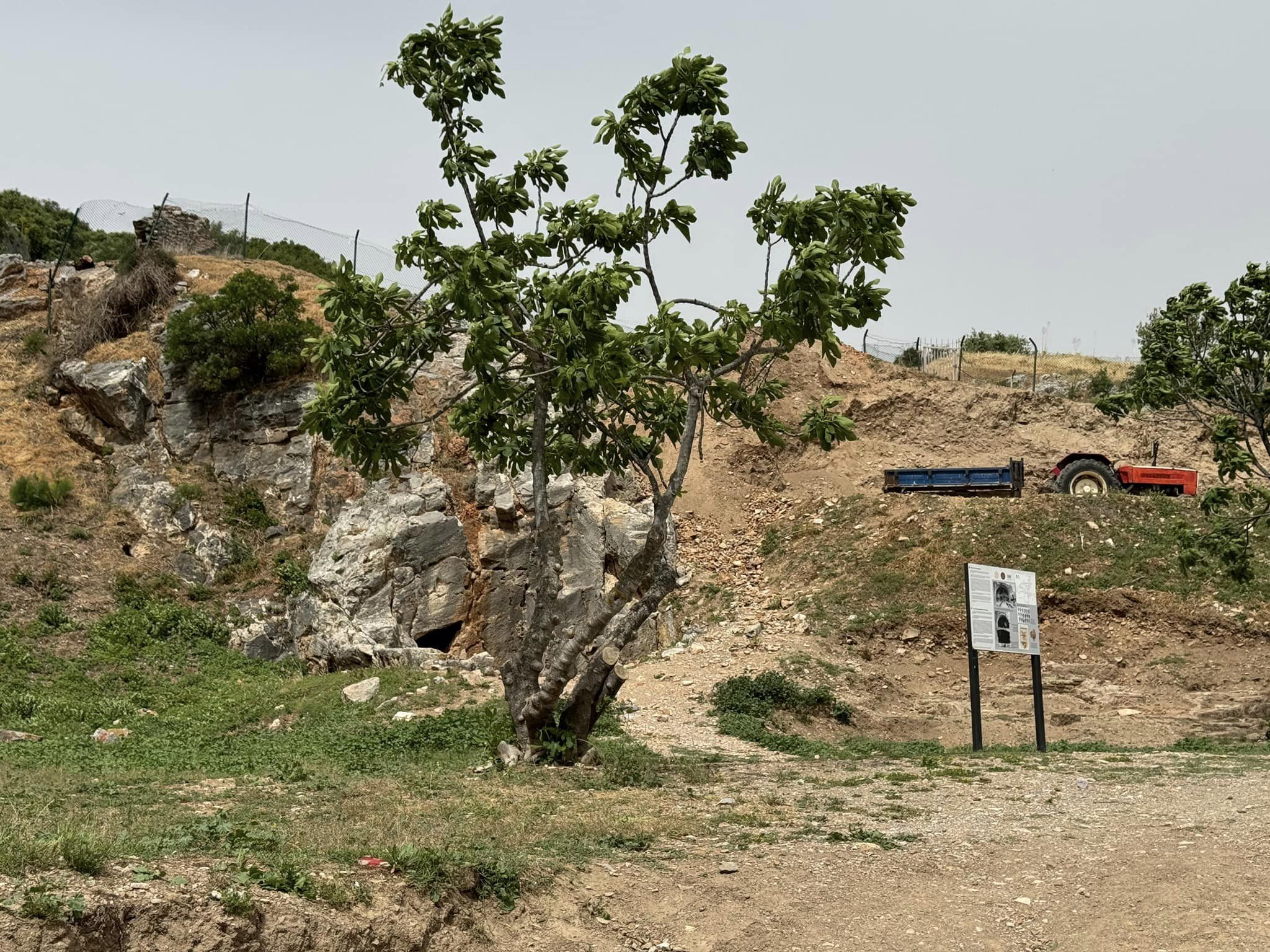
The Grotto of the Seven Sleepers is nestled in a hillside near the ruins of Ephesus. We couldn’t go in to this necropolis as it’s under archaeological restoration. The legend goes that seven young people hid inside this cave during a period of persecution. They fell asleep and woke up 250 years later to find a very different world (very Woody Allen-esque). The Christian legend goes that these seven young men escaped to the cave after refusing to renounce their faith. While sleeping, they were discovered by the Emperor Trajan’s henchmen who sealed up the entrance to the cave. Two and a half centuries later, a landowner wanted to use the cave as a cowshed. He broke the sealed entrance and found the sleeping seven men. These fellows had no idea how long they had been sleeping and were quite shocked to return to Ephesus to find building emblazoned with Christian crosses. How times had changed. They caused a lot of excitement when they tried to buy food with 250 year old coins!