April, 2026
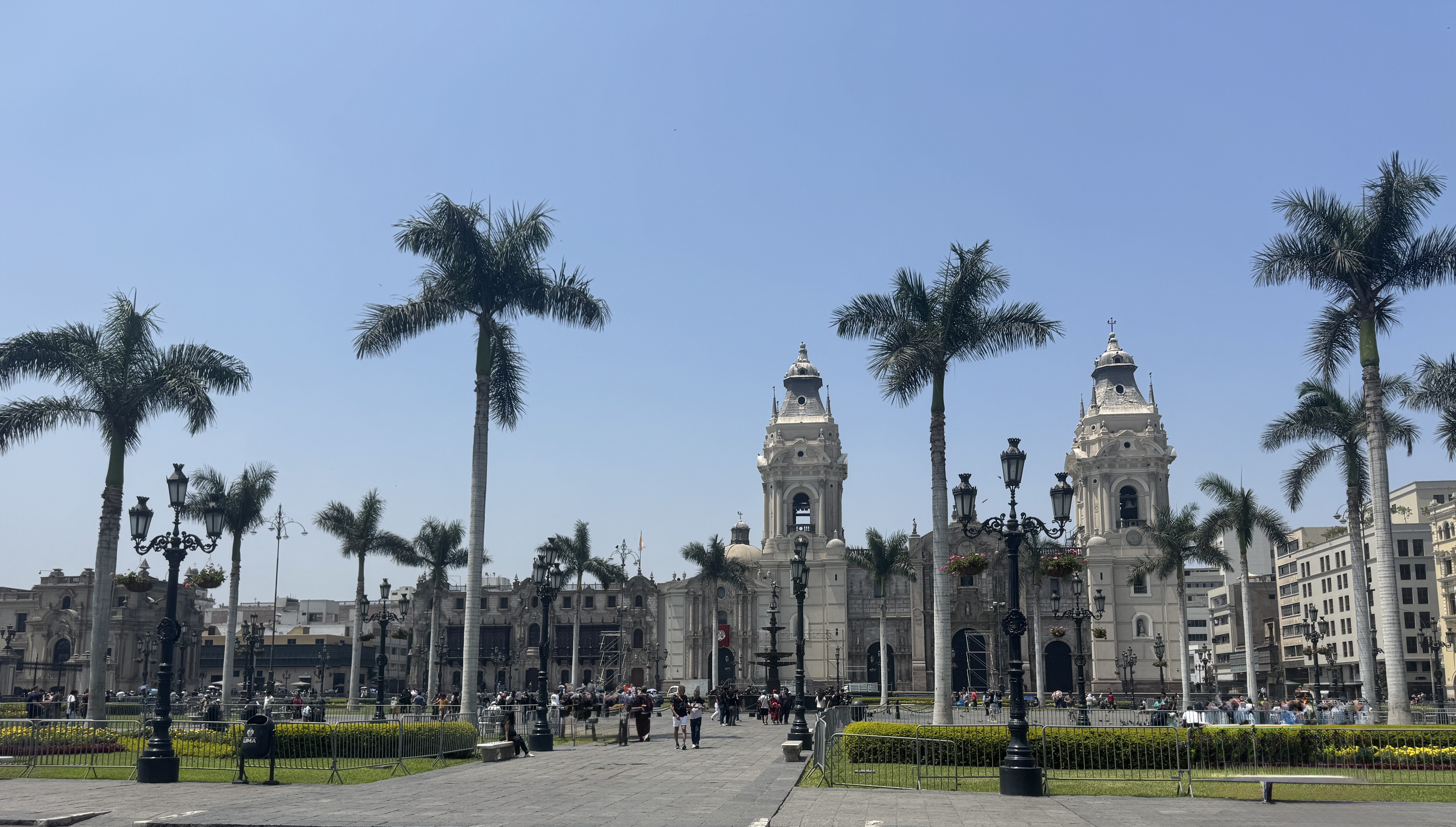
Layered Lima
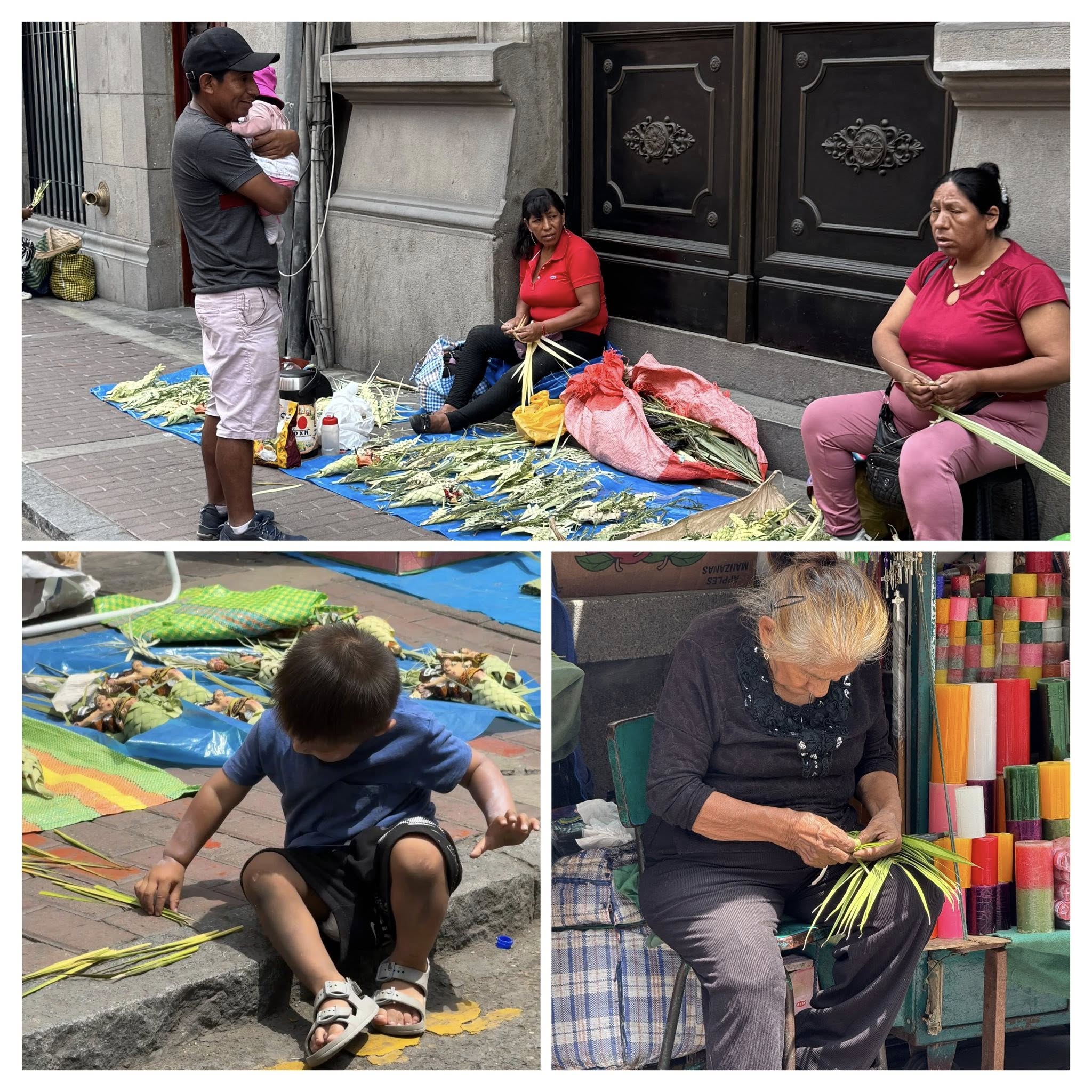
It’s Good Friday and big business for palm weavers. Looks like this art form is a lifelong pursuit.
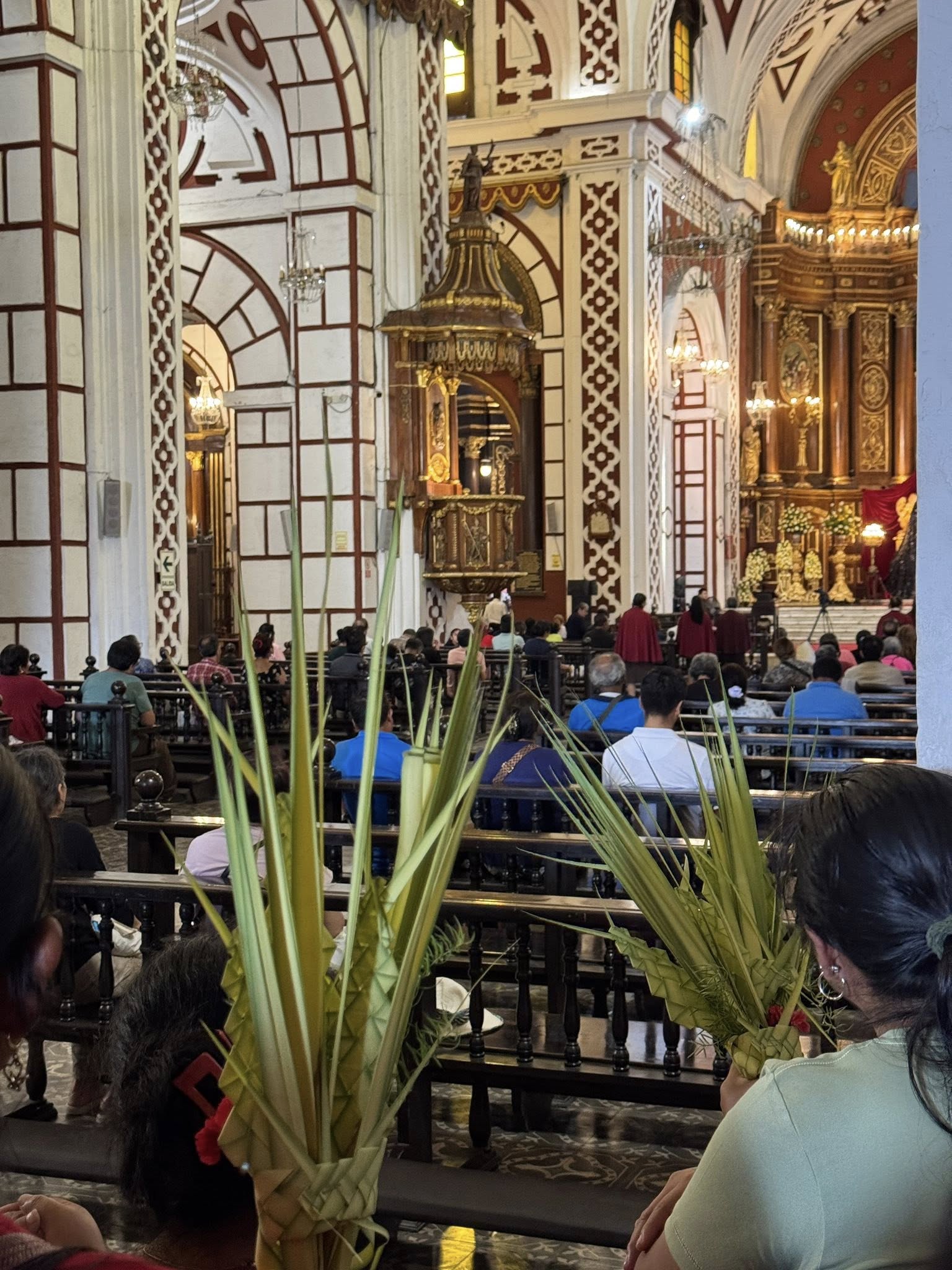
Good Friday was super busy in Lima’s historic old town. It seems like everyone who missed the tradition of las siete iglesias (the seven churches) on Holy Thursday was trying to squeeze it in on Good Friday. The custom is to visit seven churches for a quick prayer, some reflection and a peek at the altar. It has to be quick as people need to get all seven in during opening hours (they typically close between 1pm and 5pm). The lineups to get inside the churches were enormous, snaking around the block. It was enough to make us wonder if we should come back another time. We stuck it out and found the lines moved incredibly fast…clearly time was of the essence! The church crawl is a sort of pilgrimage commemorating Jesus’s final hours before his crucifixion. Each church symbolizes one of Jesus’s stops; one might be the Garden of Gethsemane, another the house of Caiaphas and another Pontius Pilate’s court.
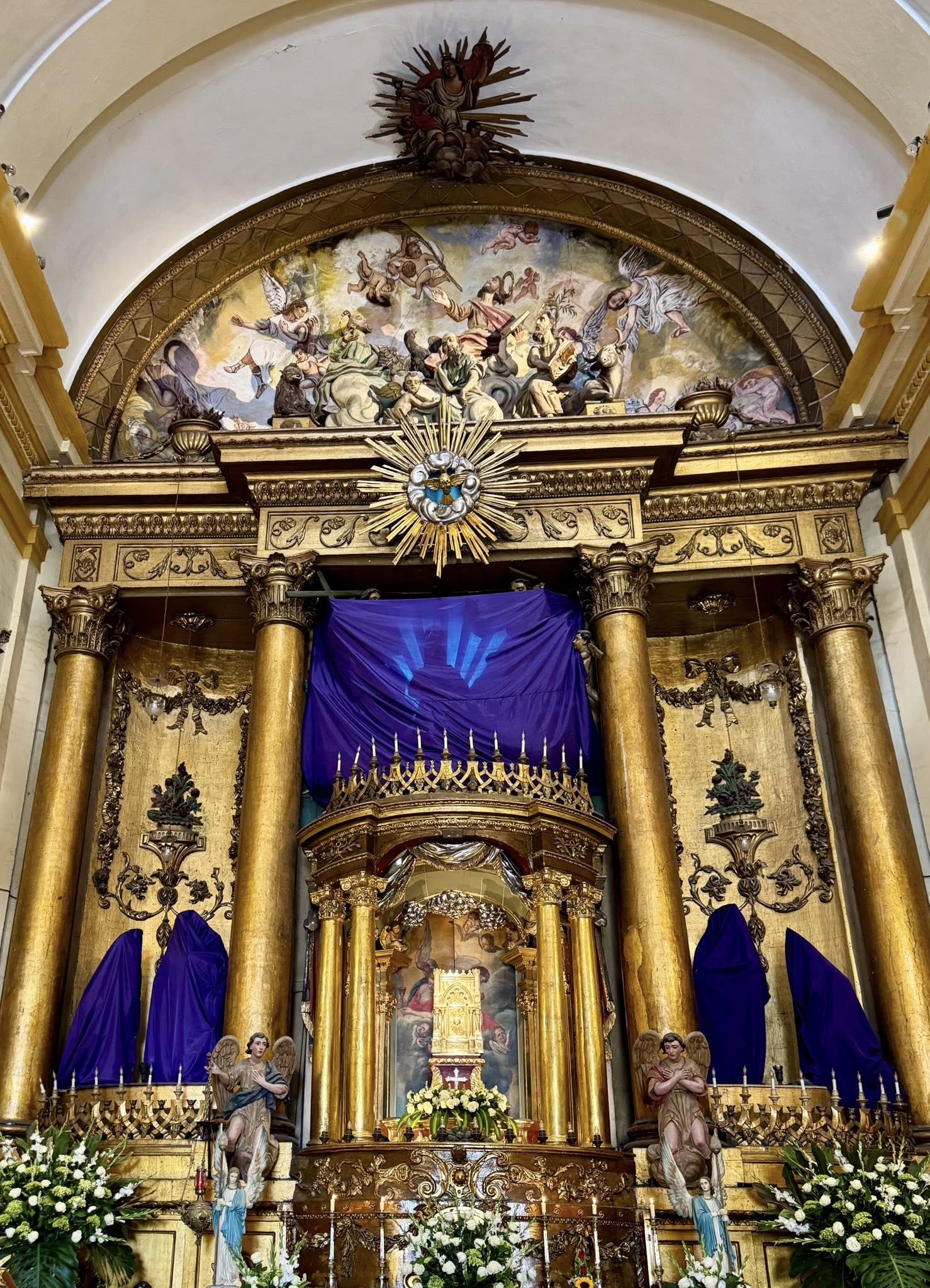
Inside we were surprised to see the sculptures covered in purple cloths. This European tradition starts the Sunday before Easter, symbolizing a period of grief before Jesus’s crucifixion. The typically ornate churches full of art become stark and subdued until the dramatic unveiling a week later creating excitement at the prospect of resurrection. In reality, what we saw was just some of the enormous richness of the church covered; there couldn’t possibly be enough purple cloth in Peru to cover it all!
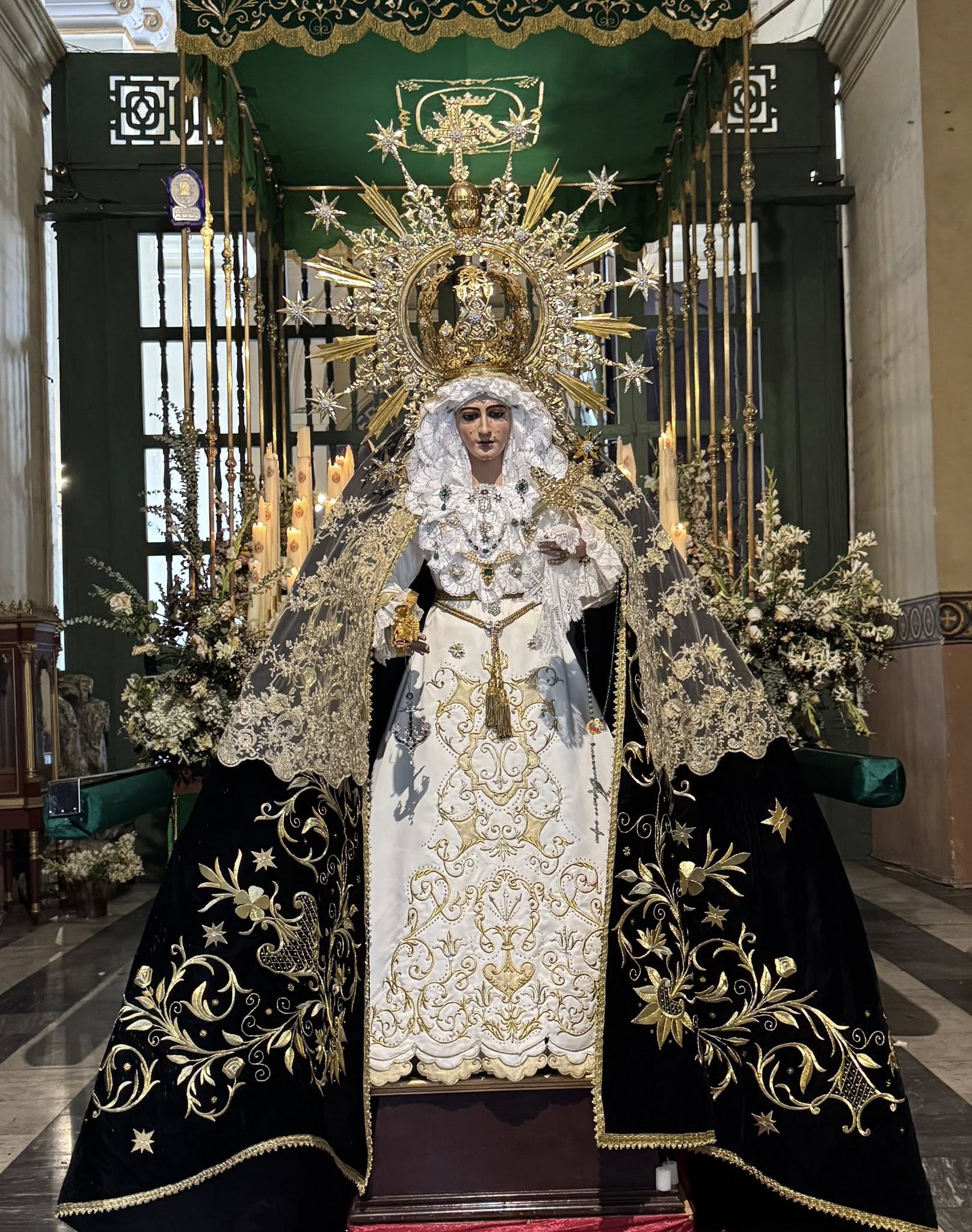
Not covered is a tearful Mary, as witness to the murder of her son. I’m not sure if she’s always dressed like this but this is certainly a very fancy mourning outfit.
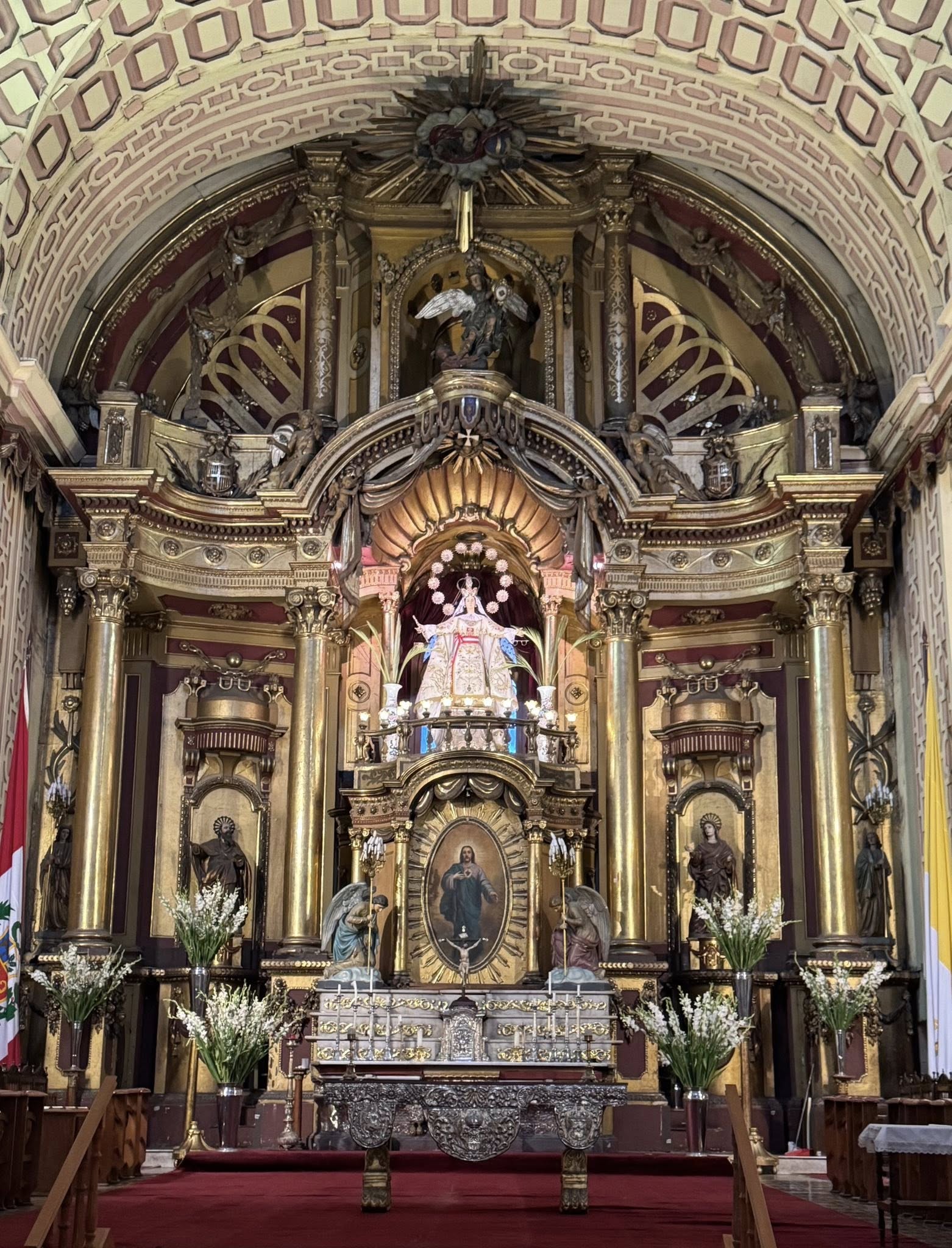
Mary is particularly important in Peru, even more so than Jesus. Check this altar…Mary is ABOVE Jesus! Women represent fertility and Mother Earth. While women and men are relatively equal here, women can do something men can’t: make babies. So that pushes them up in the ranks. And among the indigenous who prayed to the sun, moon and stars, the Mother Earth angle was important. To help with evangelizing the indigenous, Mary is always portrayed with either a sun (crown) or a moon to help make her more relatable. The other interesting thing here in the church artwork is the portrayal of Jesus. To the indigenous, it was quite nonsensical to be praying to a dying person which is how most of the statues portrayed Jesus. So they added paintings of a living Jesus to make him a more palatable god. Ultimately the Spanish conquistadors were pretty good at converting the indigenous and Peru remains a very Catholic country. While most of the population was Catholic, recent years have seen a drop and now estimates are 64% of Peruvians are Catholic.
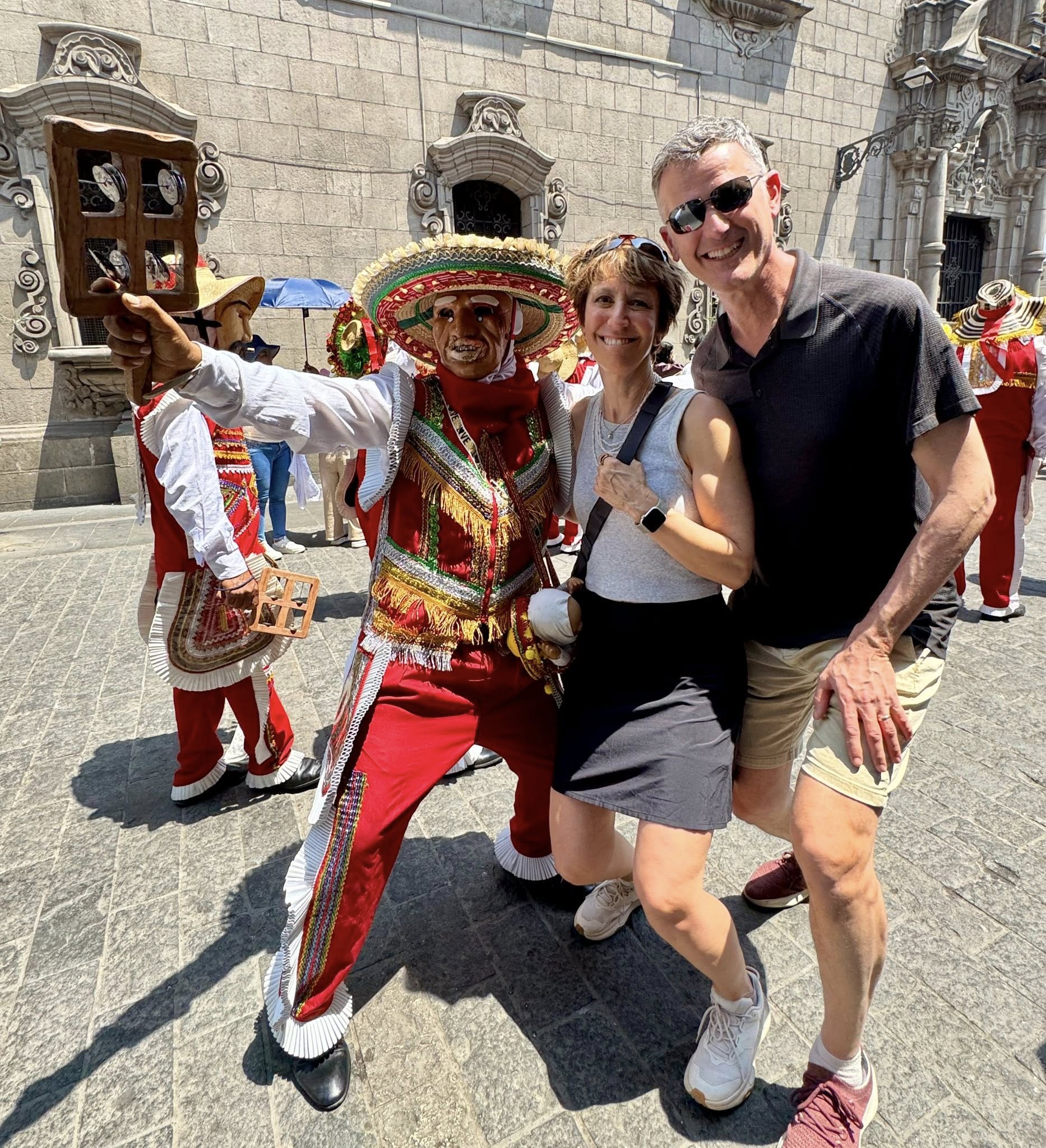
The masks are a subtle critique of the Spanish elite. They are caricatures with exaggerated features that enabled the locals to thumb their noses at their oppressors under the guise of religious celebration. Pretty clever!
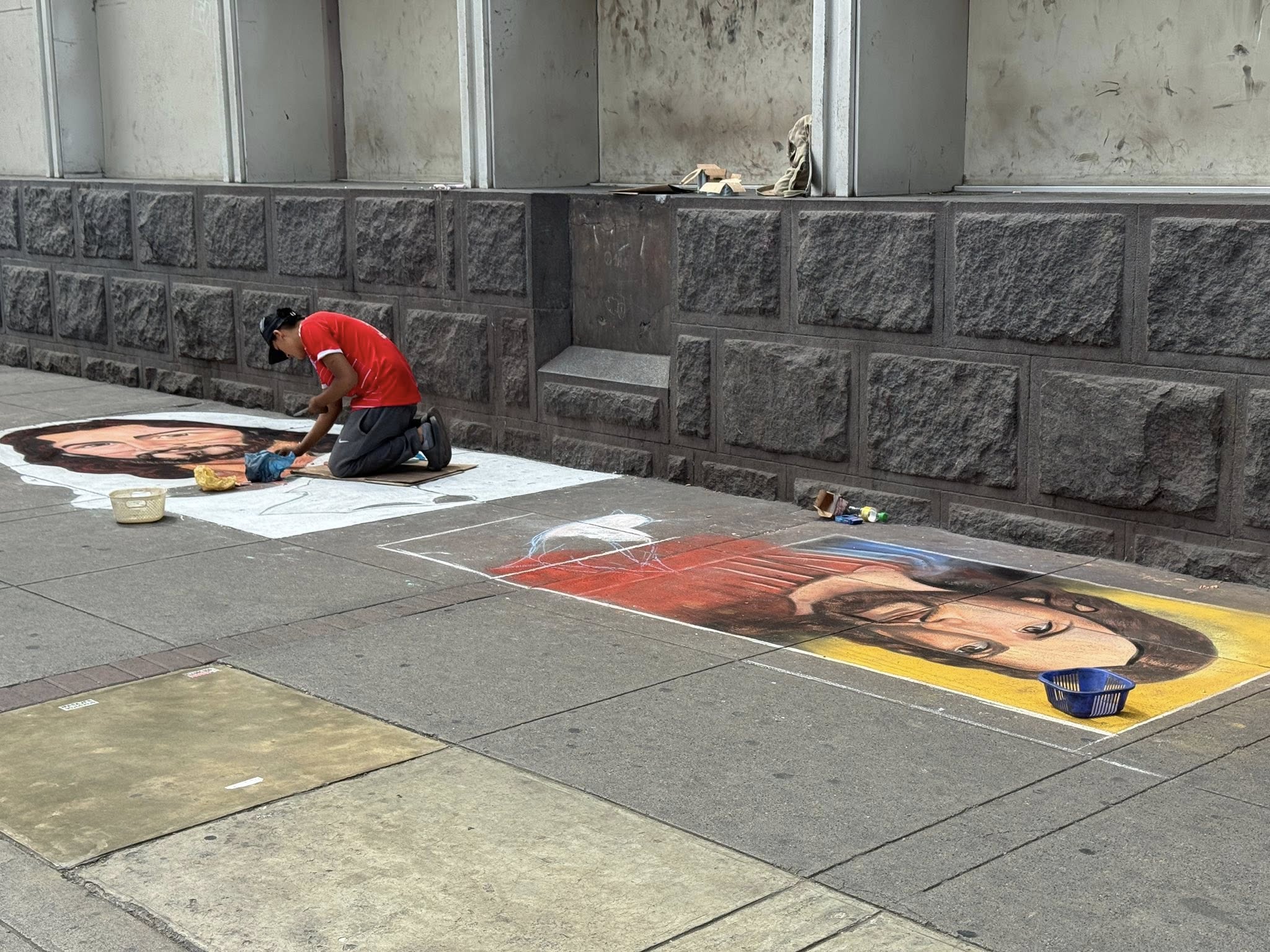
A popular subject this week for chalk art.
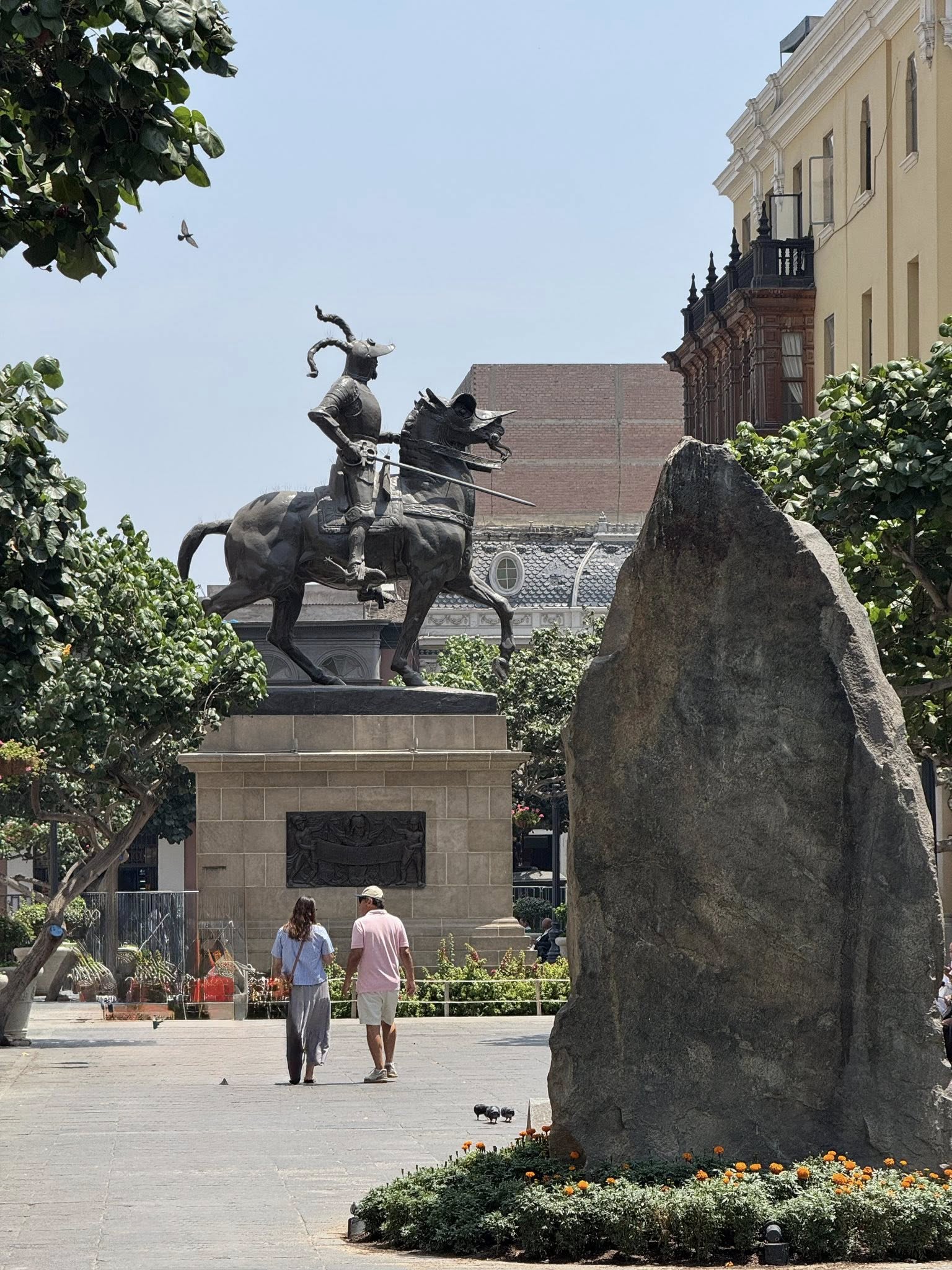
The soldier on the horse is Francisco Pizarro, the Spanish conquistador who managed to defeat tens of thousands of Incas with a teeny army of 168 in 1532. The element of surprise and the foreignness of horses, swords and guns were the winning combination. Pizarro captured the leader, Atahualpa, which destroyed the chain of command and the Inca empire fell. Peru was now officially colonized and Pizarro set up his capital in Lima which was close to the ocean to facilitate sending his spoils back to Spain. It was also easier to control the country from here rather than the Inca capital of Cusco. Now what’s quite funny is the stone memorial facing the statue of Pizarro. This is a memorial to José de San Martín, Peru’s independence hero who unshackled the country from Spanish control in 1821. Somebody had a great sense of humour deciding to place the statue of the man who founded colonial Peru facing the memorial of the man who helped end Spanish rule!
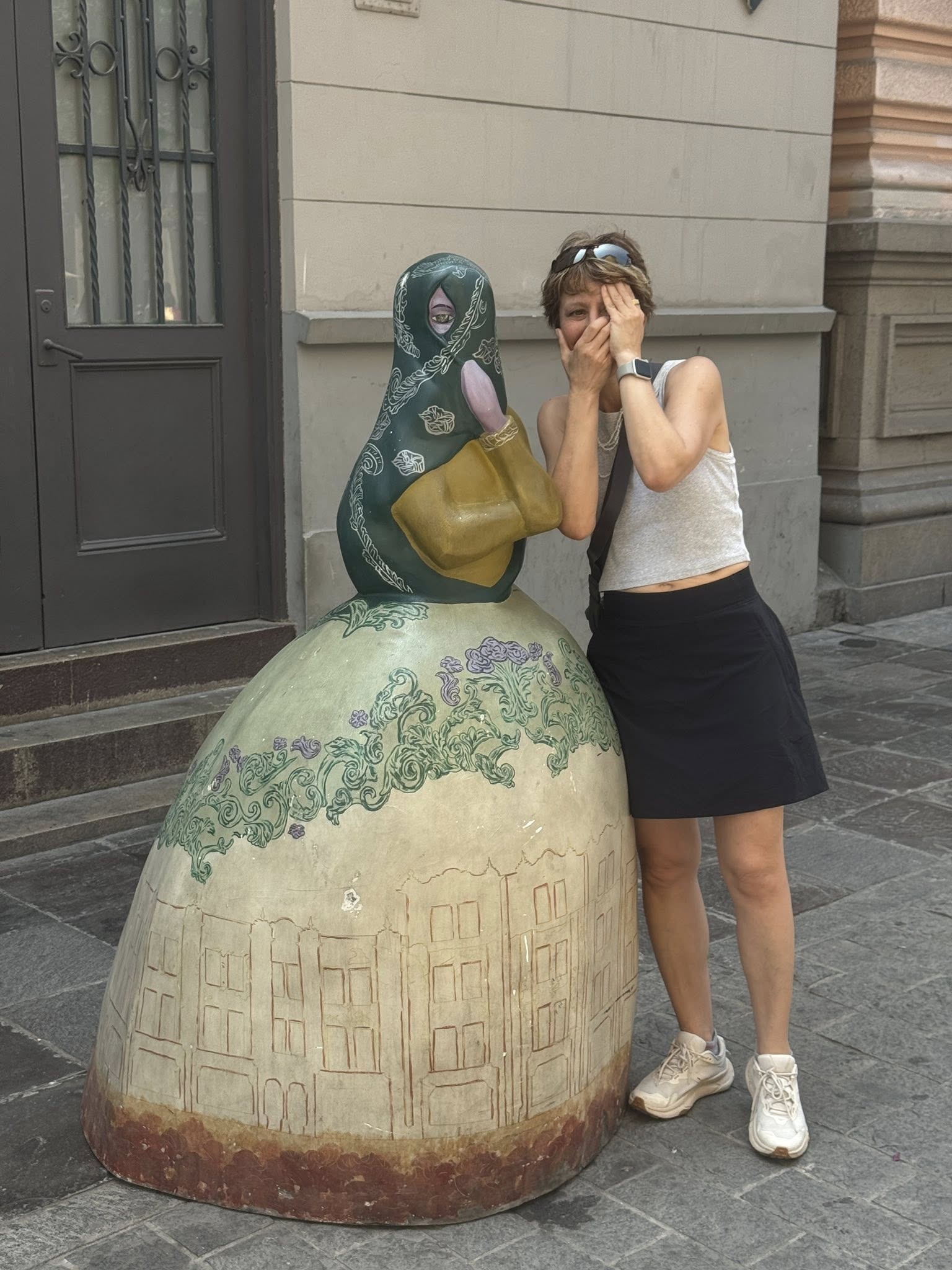
There are a series of sculptures in the historic centre of Lima representing the “Tapadas Limeñas”, women of colonial Lima who wore a distinctive outfit called the saya (long skirt) y manto (veil). The veil was pulled over her head and face, leaving only one eye visible. Now before you accuse the Spanish authorities of oppression, you’ll be surprised to know that these women developed this style on their own and stuck to it for 300 years, despite the authorities trying to ban it so that women would be visible and identifiable. The women wanted anonymity to behave as they pleased and equality among social classes. With all but one eye obscured, there was no knowing who was under the skirt and veil.
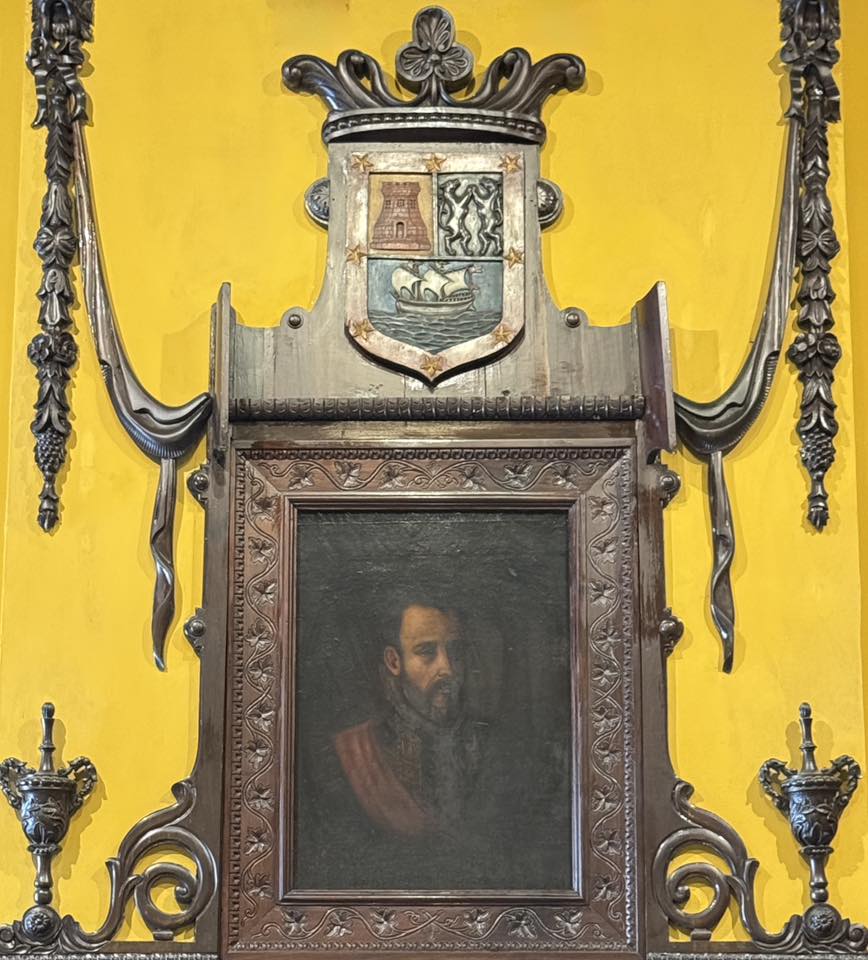
This is Jerónimo de Aliaga, a key conquistador alongside Pizarro, who became one of the founding elite of Lima. He built a house just off the main square in 1835 and it still stands today (despite several earthquakes that destroyed much of Pizarro’s colonial Lima). Amazingly, the house has been continuously occupied by his descendants ever since.
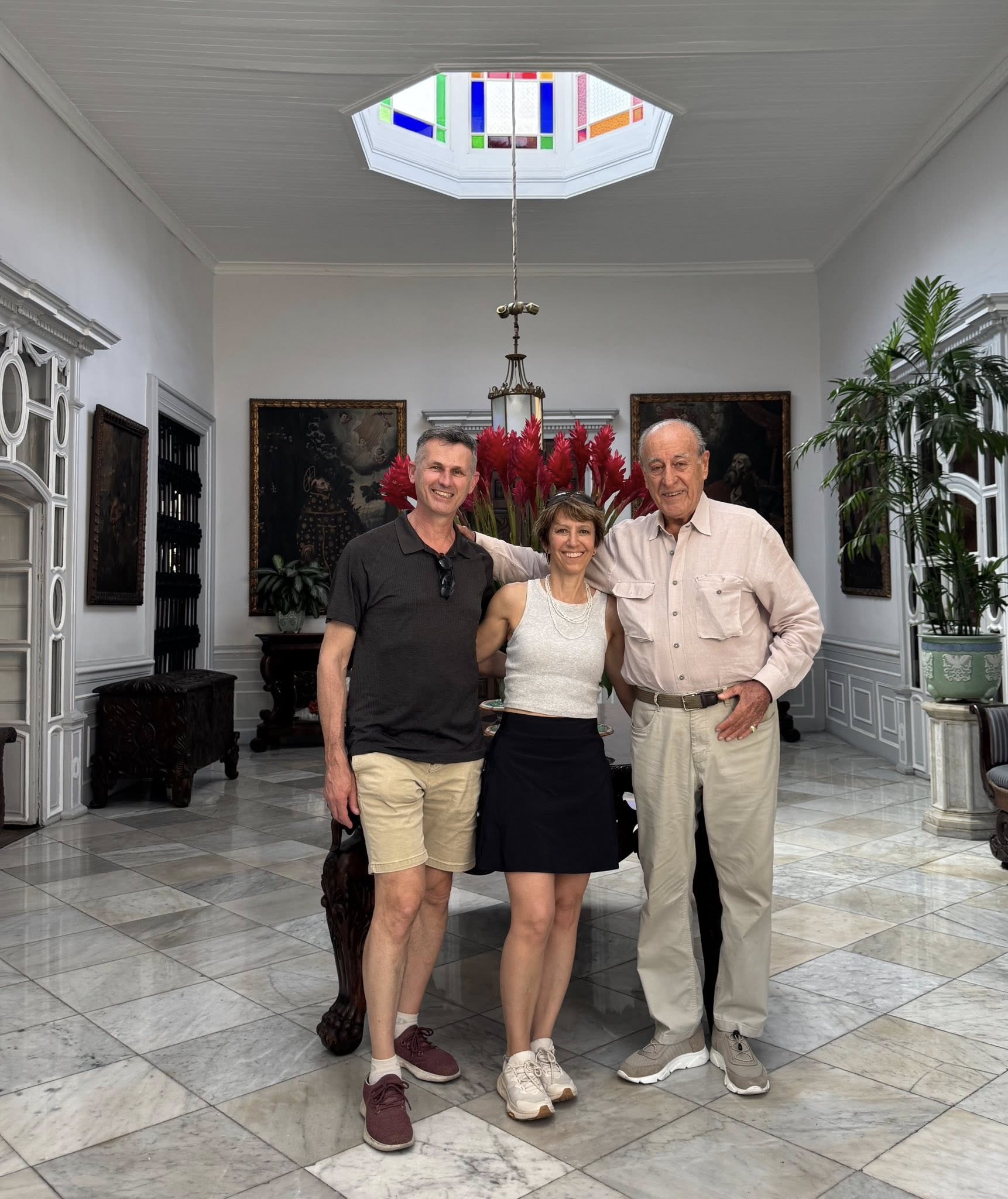
Here we are with Gonzalo de Aliaga, the 17th generation after Jerónimo and current owner of the house. Our guide is one of a few who are allowed to bring small groups in to see the house (it costs a fortune to maintain these old properties so owners like Gonzalo don’t have much choice but to make parts of their historic homes open to the public for a fee). She knows Gonzalo and managed to score a little photo shoot by telling him I was an influencer.
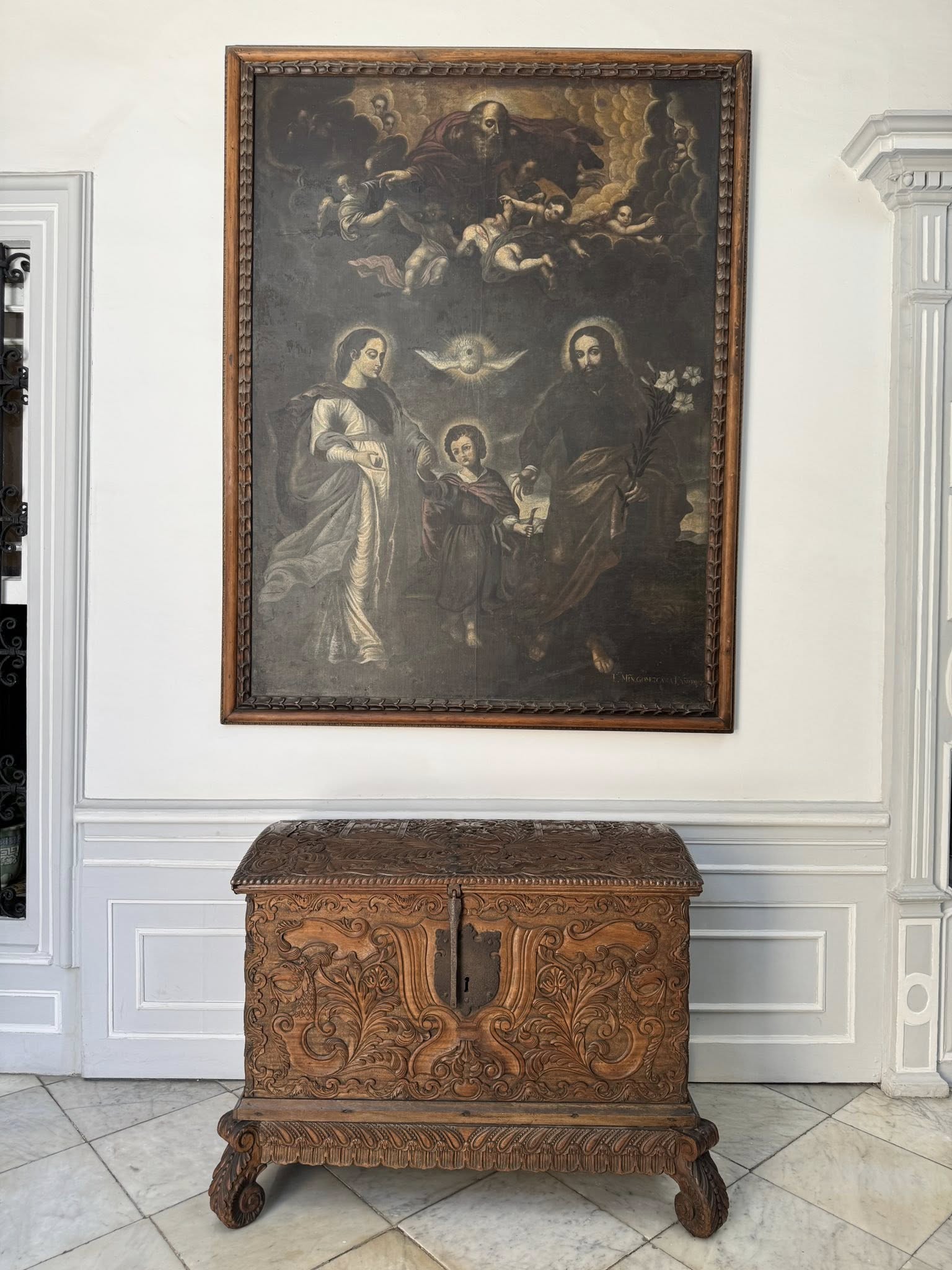
The house was beautiful all the way down to the luggage they used when they travelled from Spain! This intricately carved wooden box ain’t no carry on luggage…but I guess they had people to carry their stuff so weight didn’t matter. And these heavy boxes served an added benefit of helping to keep the ships crossing the ocean stable!
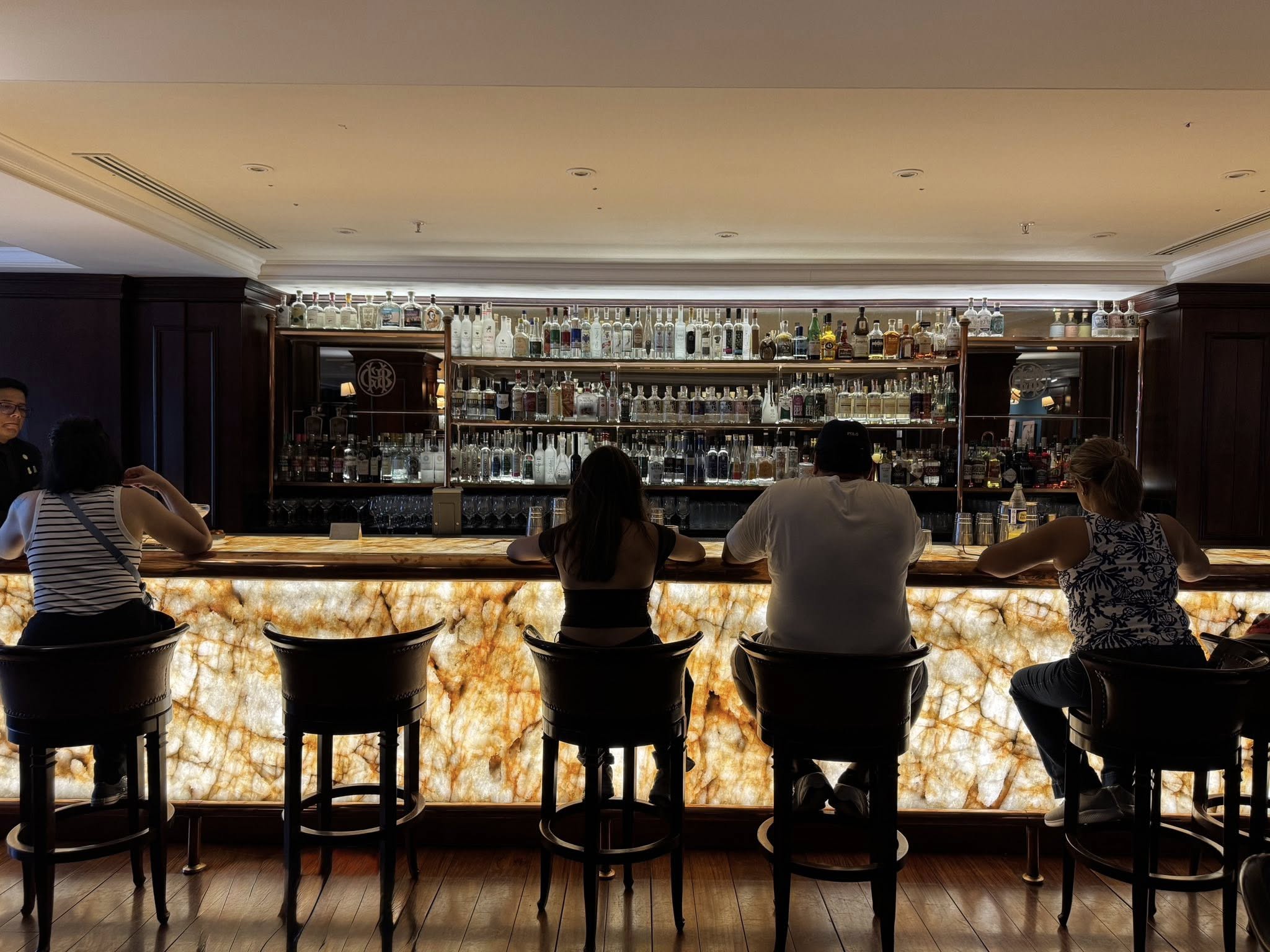
El Bolivarcito, the famous bar at the Gran Hotel Bolivar. Contrary to popular belief, the Pisco Sour was not invented here. Peru’s national cocktail was actually created by Victor Vaughen Morris in the 1910s at his eponymous bar in Lima. A riff on the whiskey sour, subbing pisco, Peru’s grape brandy. When the Gran Hotel Bolivar opened in 1924, the world’s social elite, dignitaries and otherwise famous people who came to Peru stayed there. Bartenders trained at Morris’s Bar migrated to the fancy hotels like Bolivar, bringing the recipe with them (no NDAs in those days I guess). The Bolivar is what put the Pisco Sour on the map where the international visitors “discovered” it. This liquid symbol of Peru has its own day and is celebrated every year on the first Saturday of February as Día Nacional del Pisco Sour.
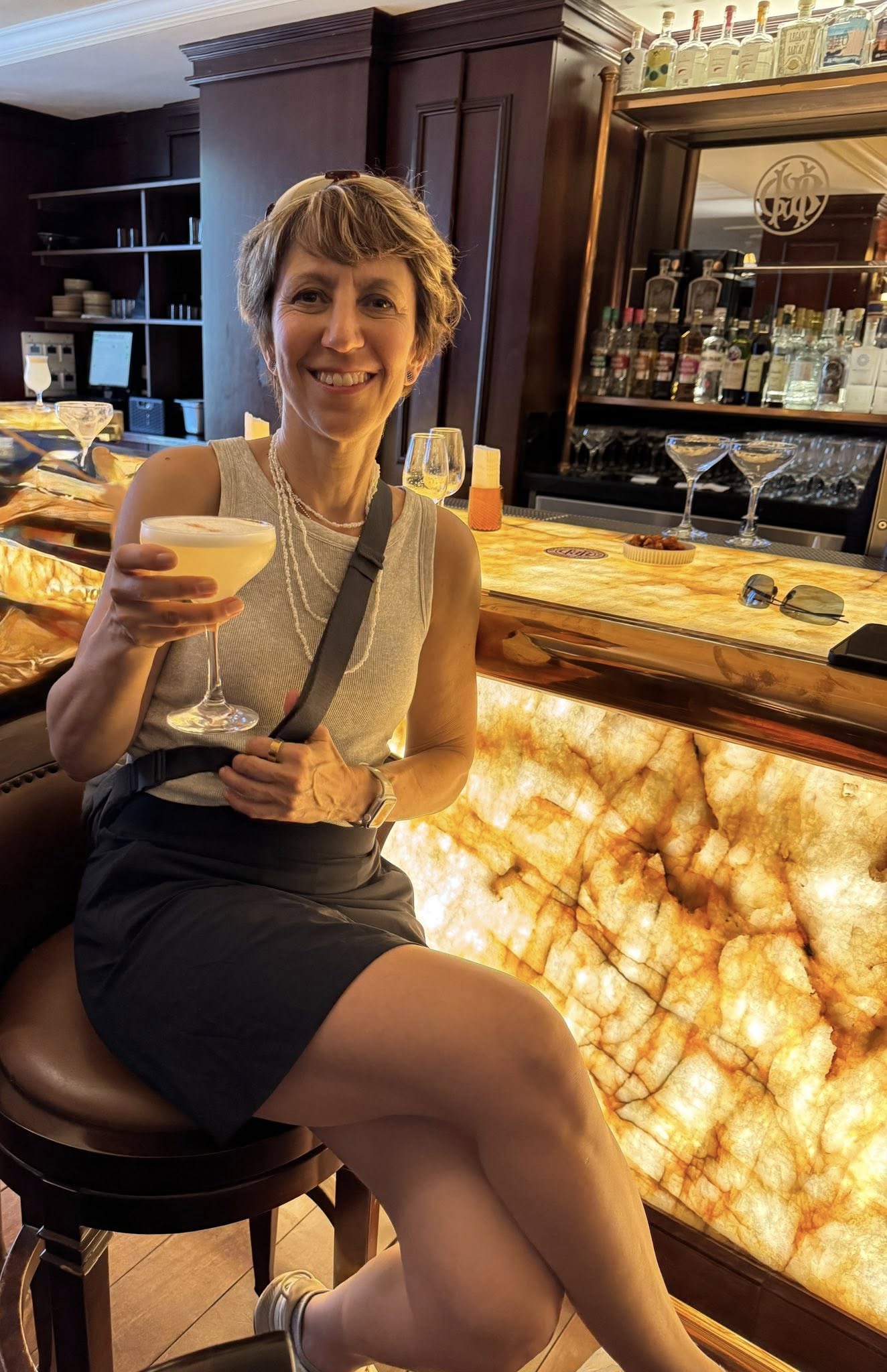
Now here’s the sad part…of all the Pisco Sours I’ve tasted to date, this one was bottom of the barrel. The bartender told us that between the restaurant, this bar and another bar in the hotel, they make 1,200 Pisco Sours per day. That’s a lot of shaking so they use a milkshake blender to speed up the process. And you can tell. Morris would roll over in his grave!
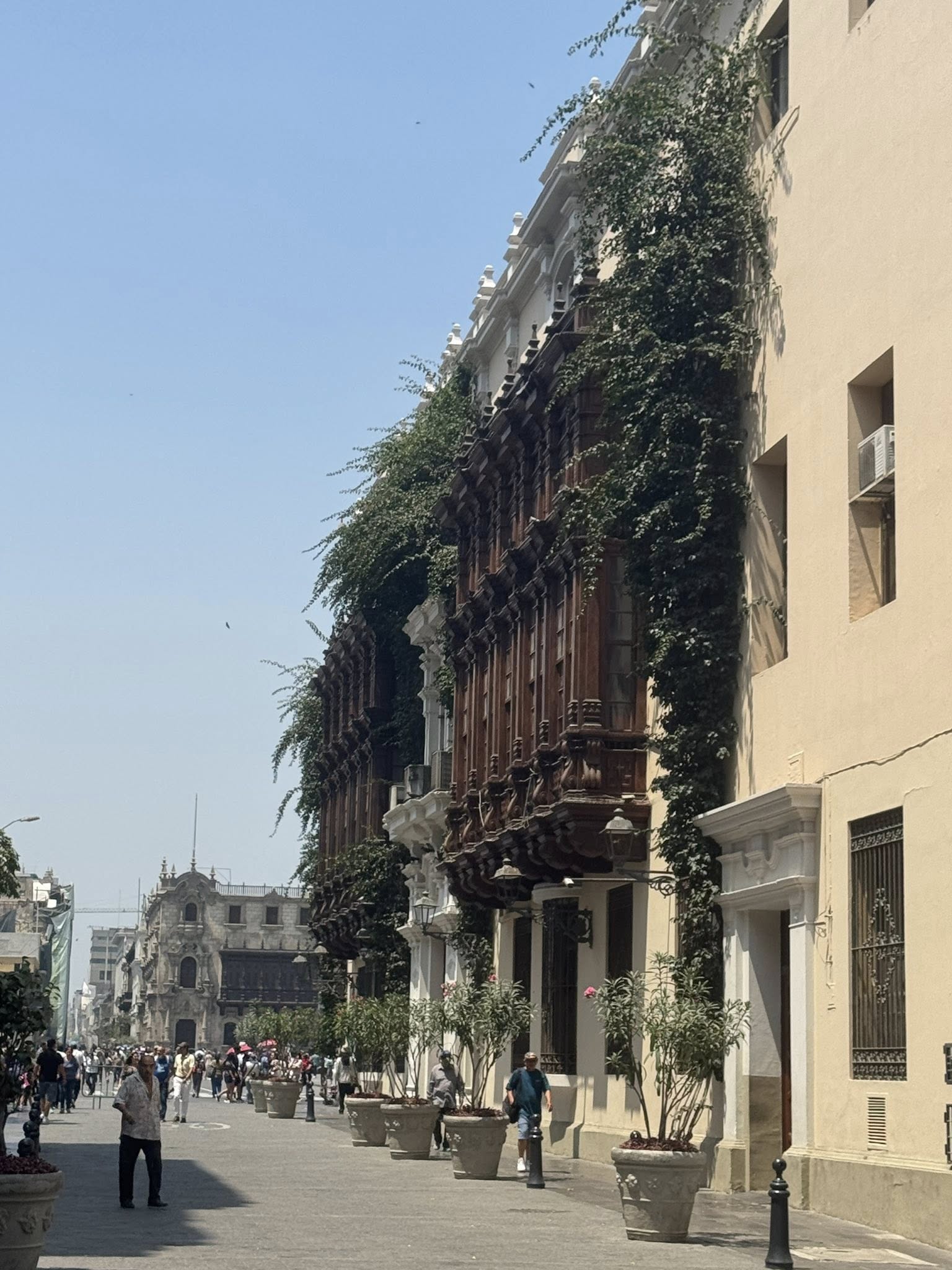
Lima is known as the city of balconies. In their heyday (17th-19th centuries) there were thousands of wooden box balconies (balcones de cajón) in Lima. This is one a few hundred that remain with the others lost to earthquakes and modernization by those who didn’t care about their historical significance. As the status symbol that they were, this would have been a pretty bougie one! The origins are Spanish/not Spanish. They came from the mashrabiya tradition (Middle Eastern wooden lattice screens) which was brought to Spain during the Islamic period and then to Peru by Spanish colonizers. They gave the people in the household a degree of anonymity where they could watch the goings on in the street without being seen, socialize and gossip with friends and generally be places of fun times. They also filled in for air conditioning as they let the breeze in but blocked the sun and heat.
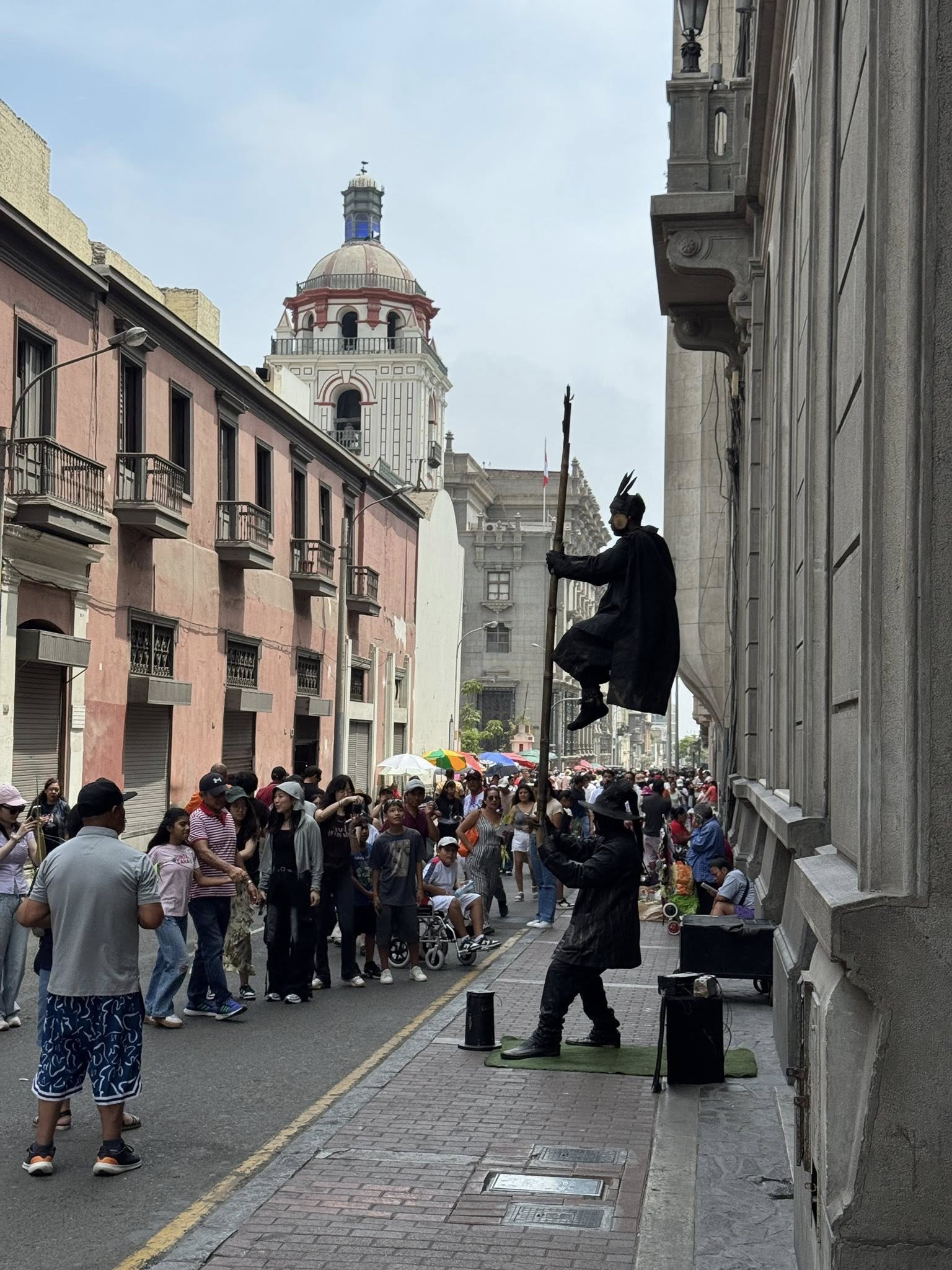
Crowds at the end of Holy Week is a perfect time for street performers. These balancing acts were all over town and if you pay a modicum of attention you can see the trick. There are metal bars and plates fed through their costumes. When I watched these guys, the one at the top stretched his fingers…of the hand holding onto the pole…all that was left touching the pole was his thumb!
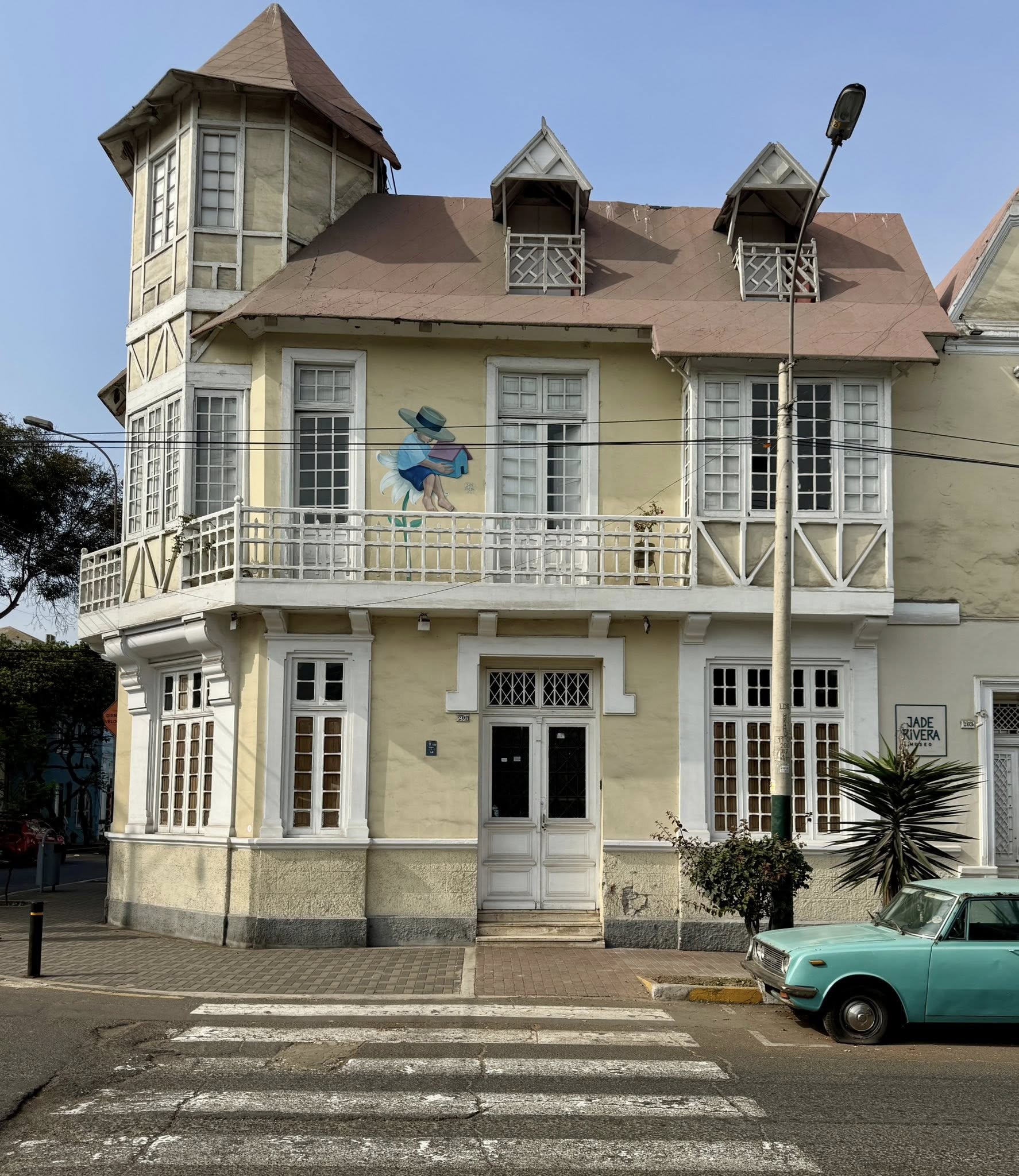
We stayed in the Barranco neighbourhood which is known for its creative vibe. Jade Rivera’s museum is in this beautiful house. He is the artist credited for helping grow the art scene in this area turning it into a street art destination. A self-taught street artist who is now recognized globally, his work is largely focused on social realities and inequality, childhood, memory and emotion.
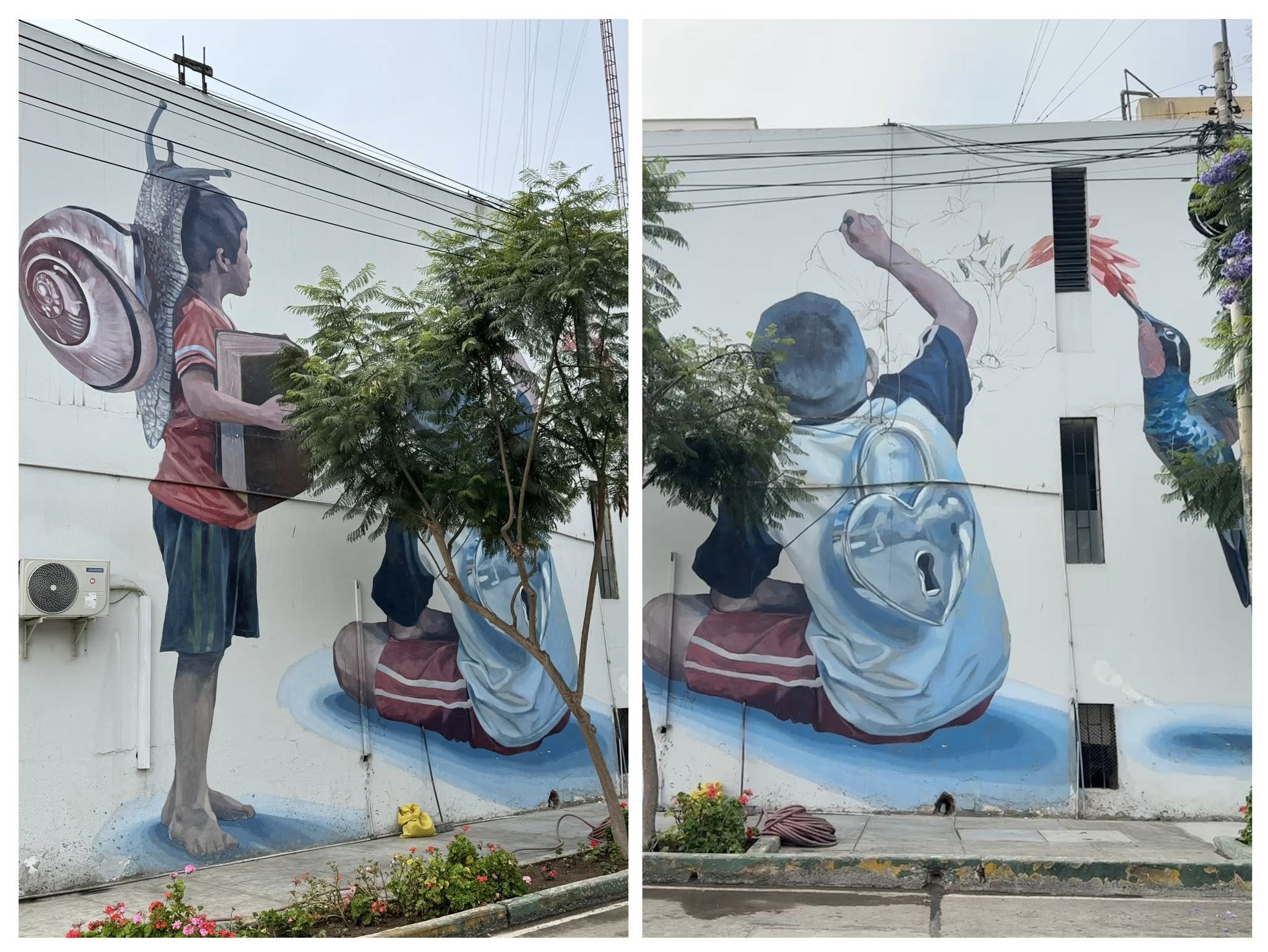
This is a large scale Jade Rivera from 2018, depicting two boys in a dreamlike scene. One stands holding a book (full of his secrets and stories perhaps?), with a giant snail shell on his back—almost like he’s carrying a burden or his home/memories. The other sits, reaching upward to draw (perhaps this is autobiographical and this boy is a young Jade Rivera), wearing a backpack shaped like a heart with a keyhole, suggesting something locked, emotional, or hidden. In Latin American symbolism the hummingbird is linked to hope, resilience, and spiritual energy. The heart-shaped backpack (hearts are a recurring theme in his work) has a keyhole but there is no key suggesting that what’s in there is inaccessible.
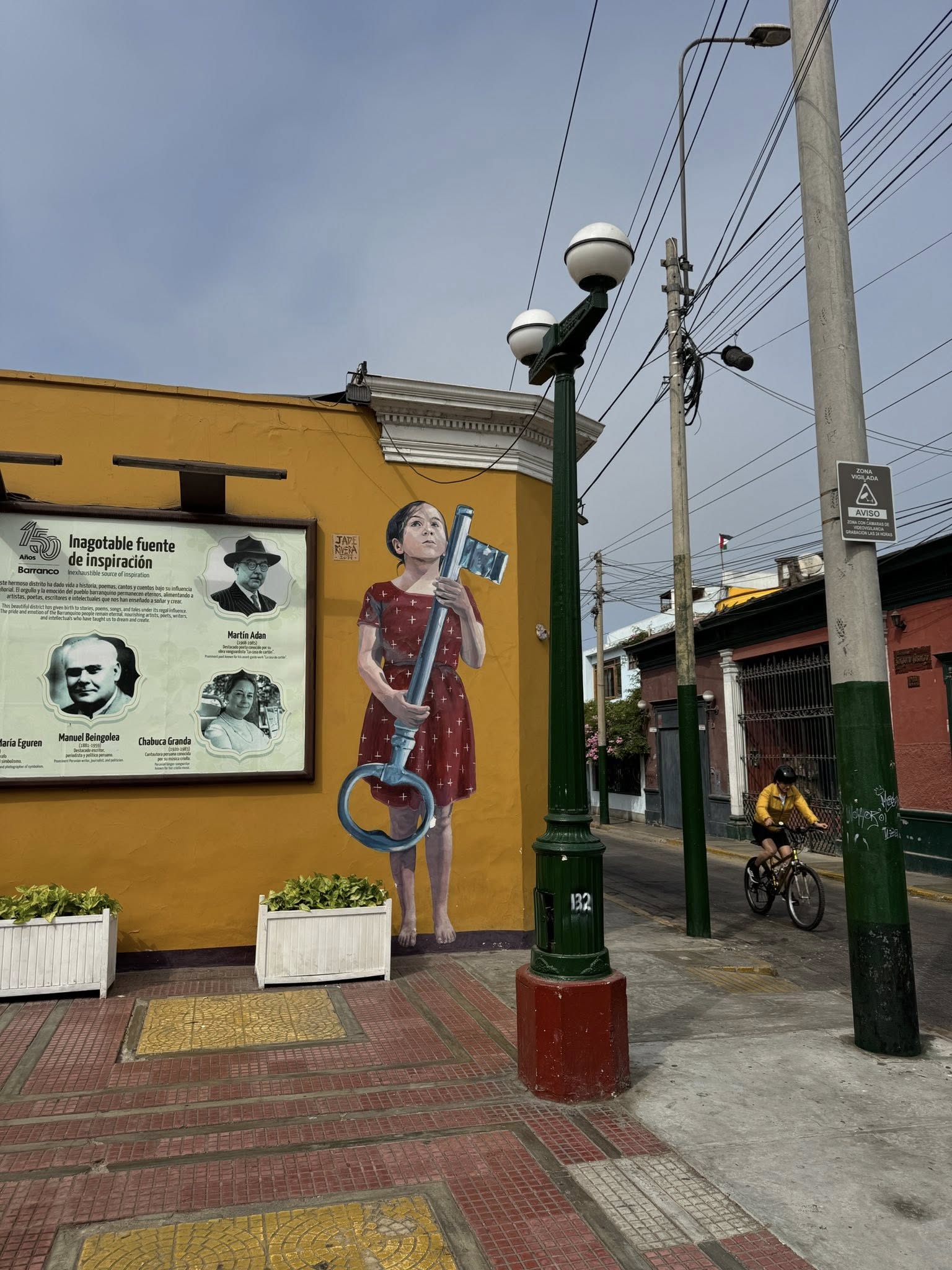
A block away is another of Jade’s murals (2019). I wonder if she’s holding the key to his younger self’s backpack.
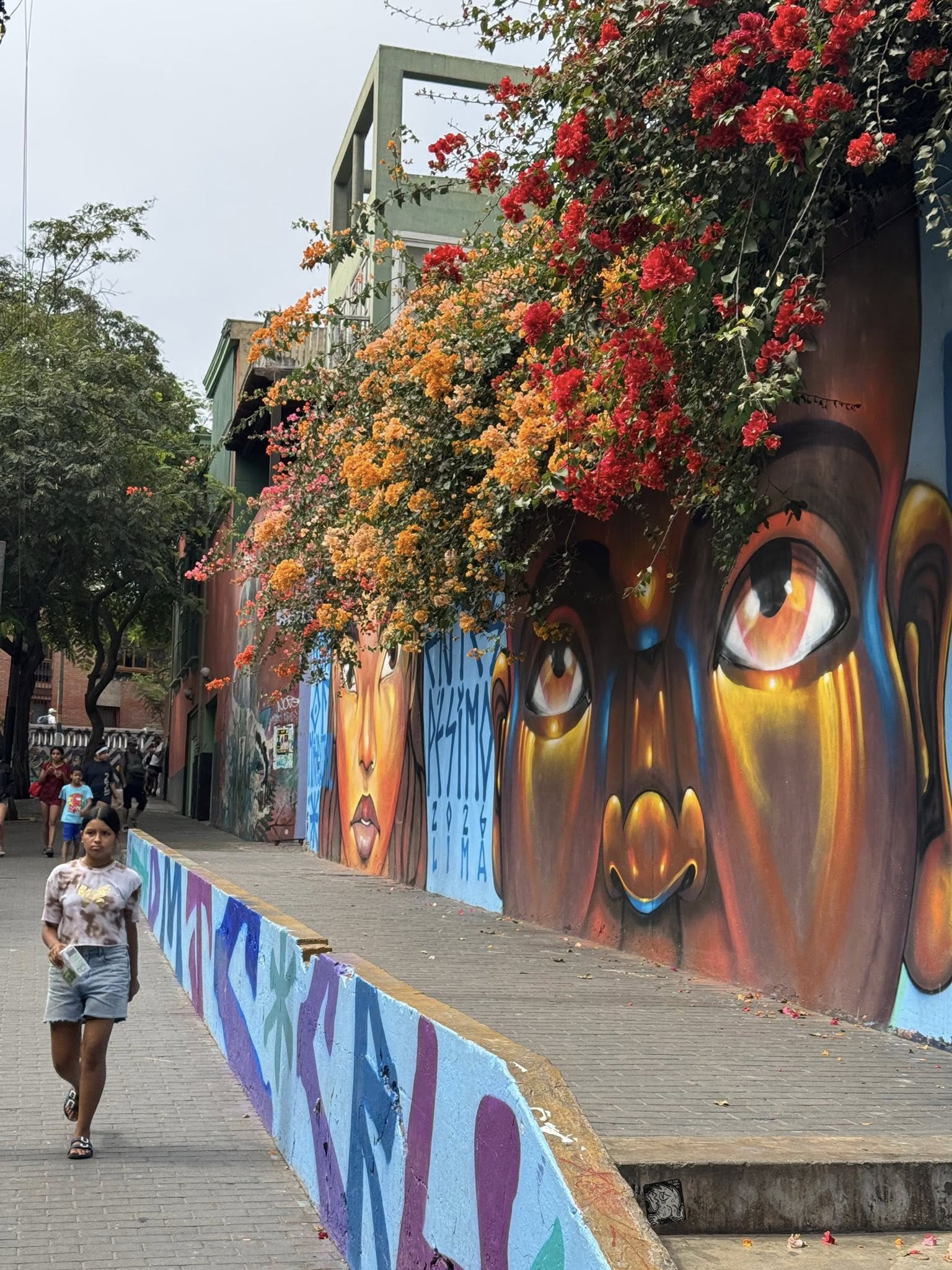
From Jade’s soft, ethereal work to this bold piece (I love the flowers cascading over the women like fancy hats)...
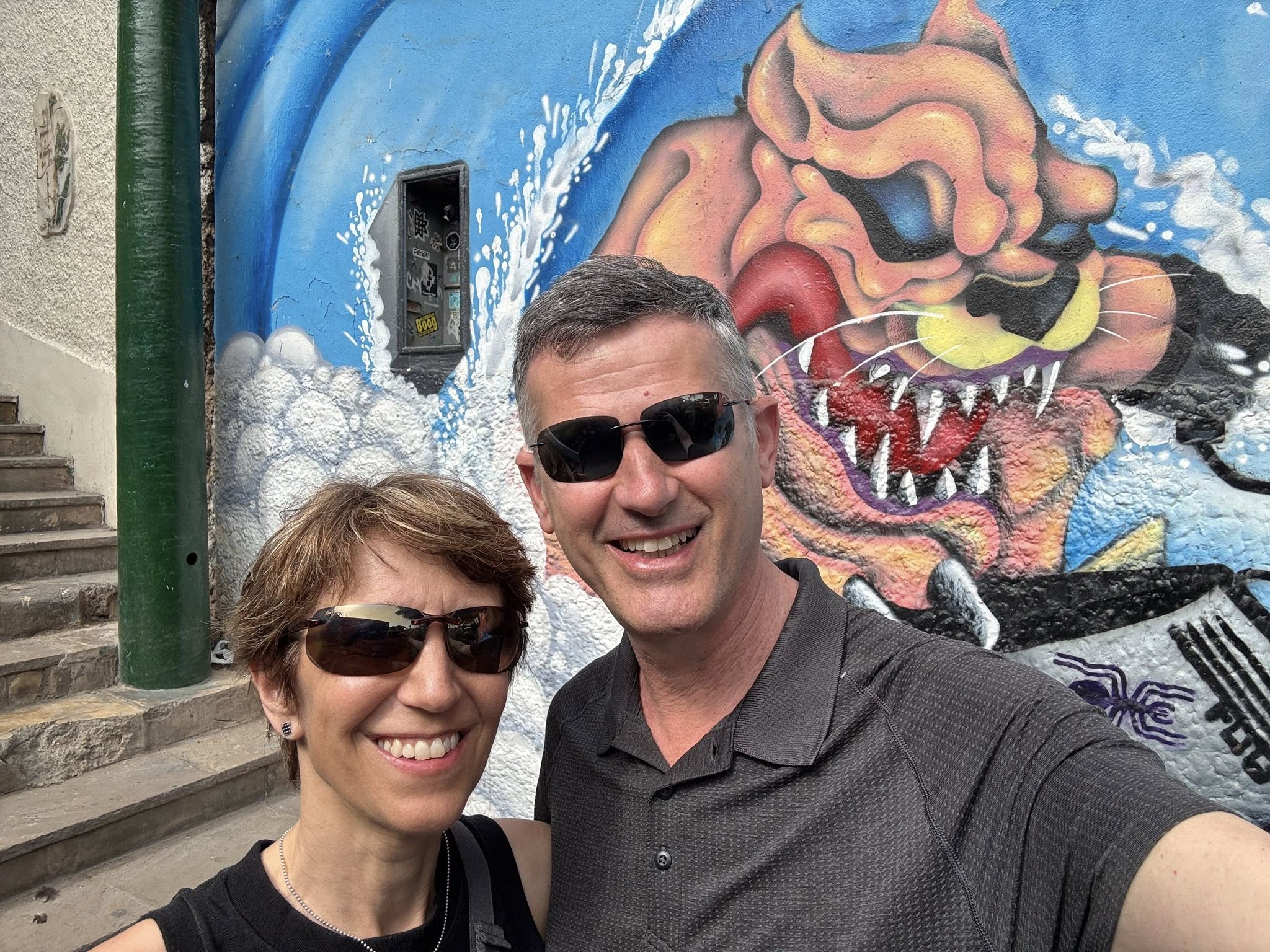
…to this little bit of toothy aggression, anything and everything goes!
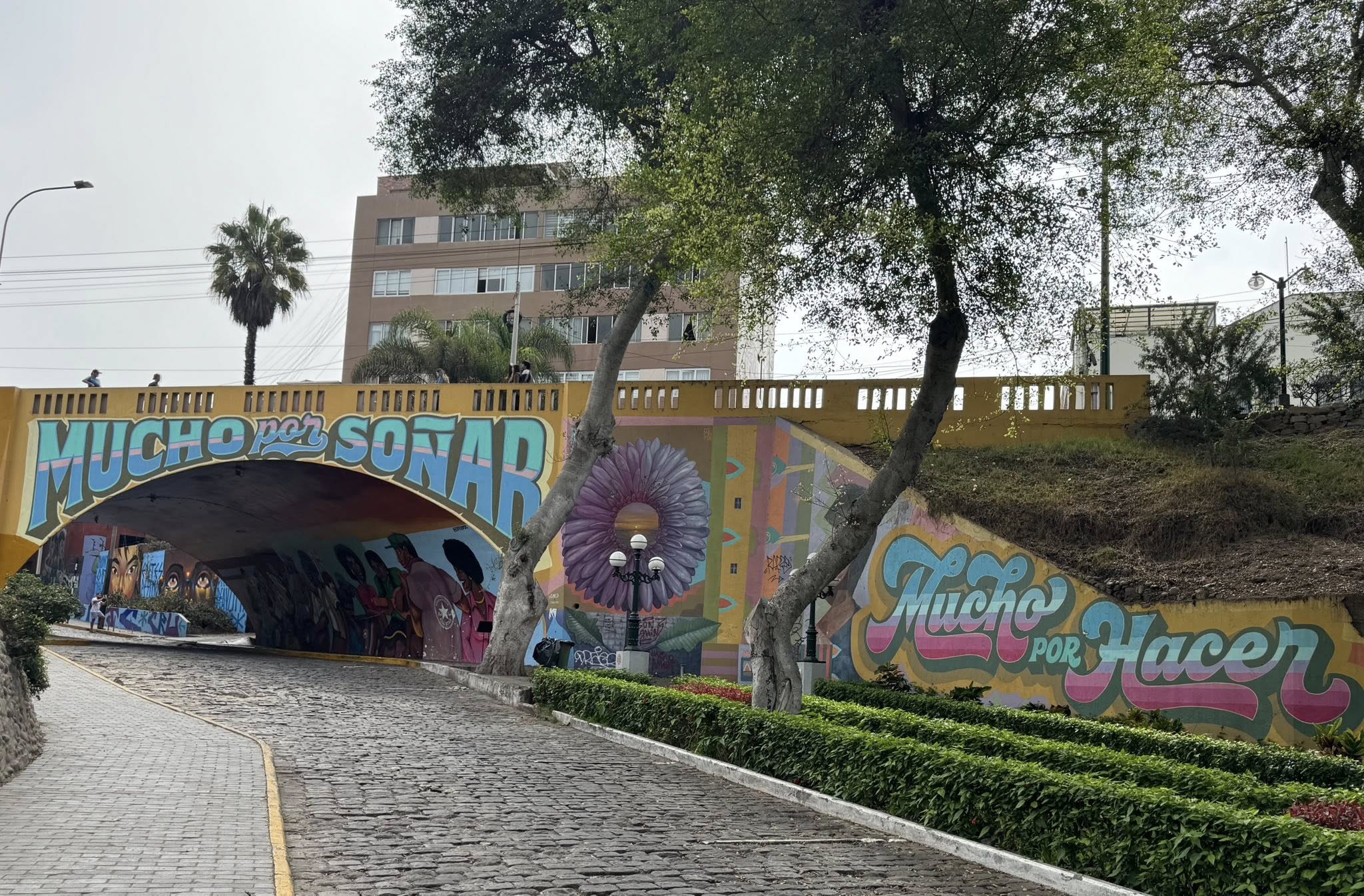
Much to dream about…much to do. Words to live by.
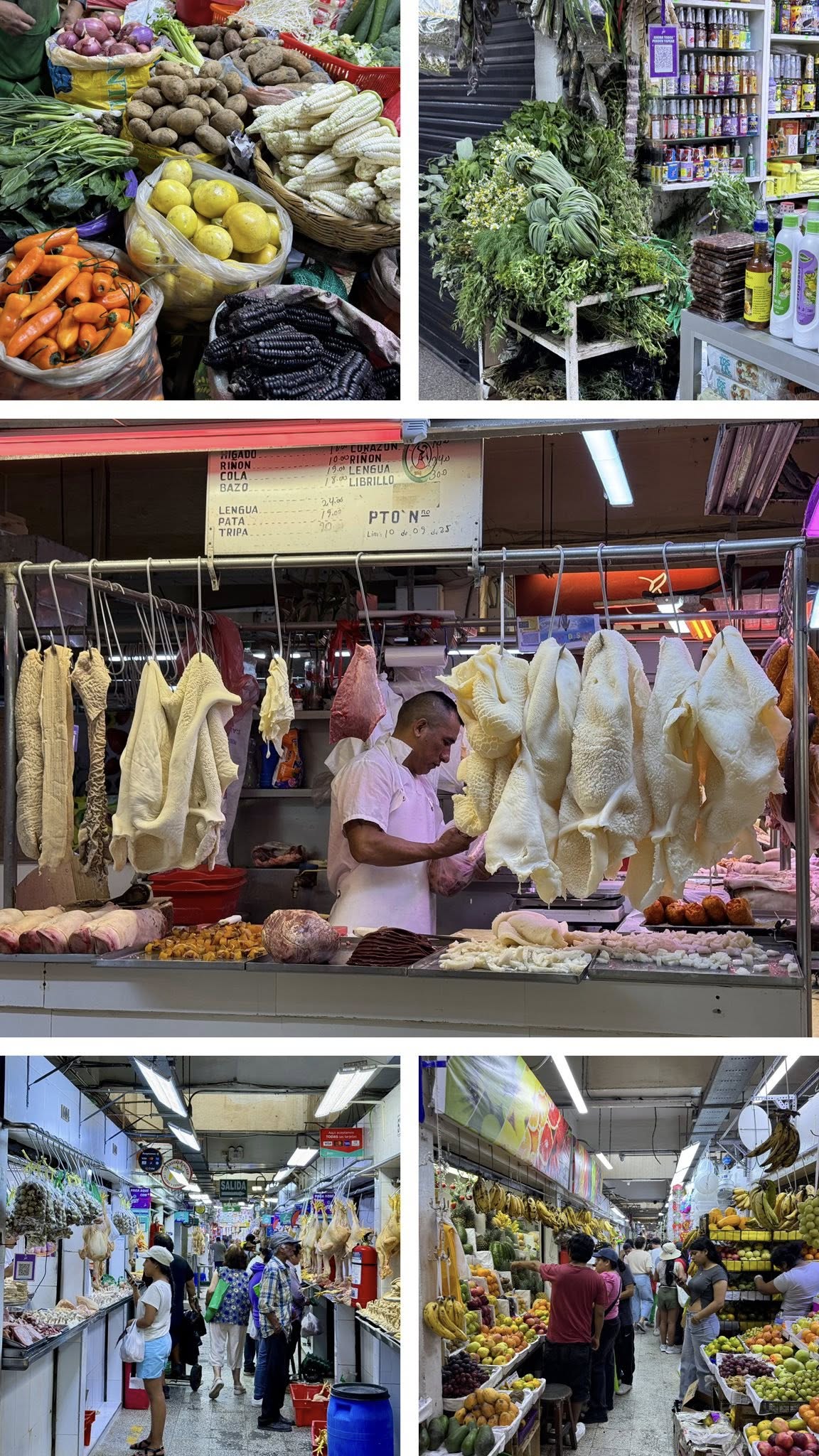
And now to the market! Always a fascinating view into life in a city. Here they organize by aisle: the chicken aisle, the fruit aisle, the vegetable aisle… There’s no waste here in the meat department…every part is used. Oddly I think the guy selling tripe, cow’s feet, organs and goodness knows what else, is doing a booming business!
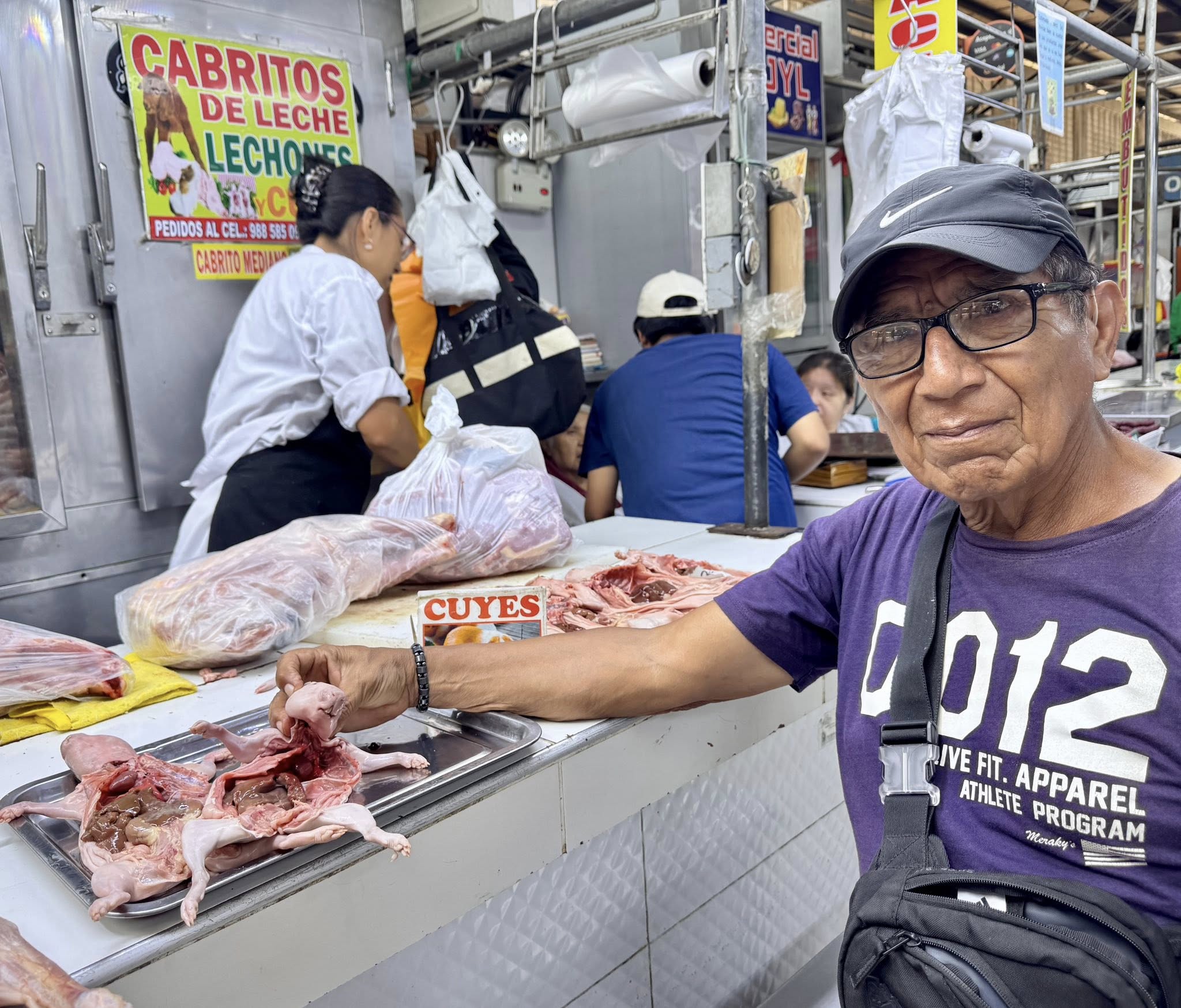
And then there’s this guy having a bit of fun with the Guinea pigs…
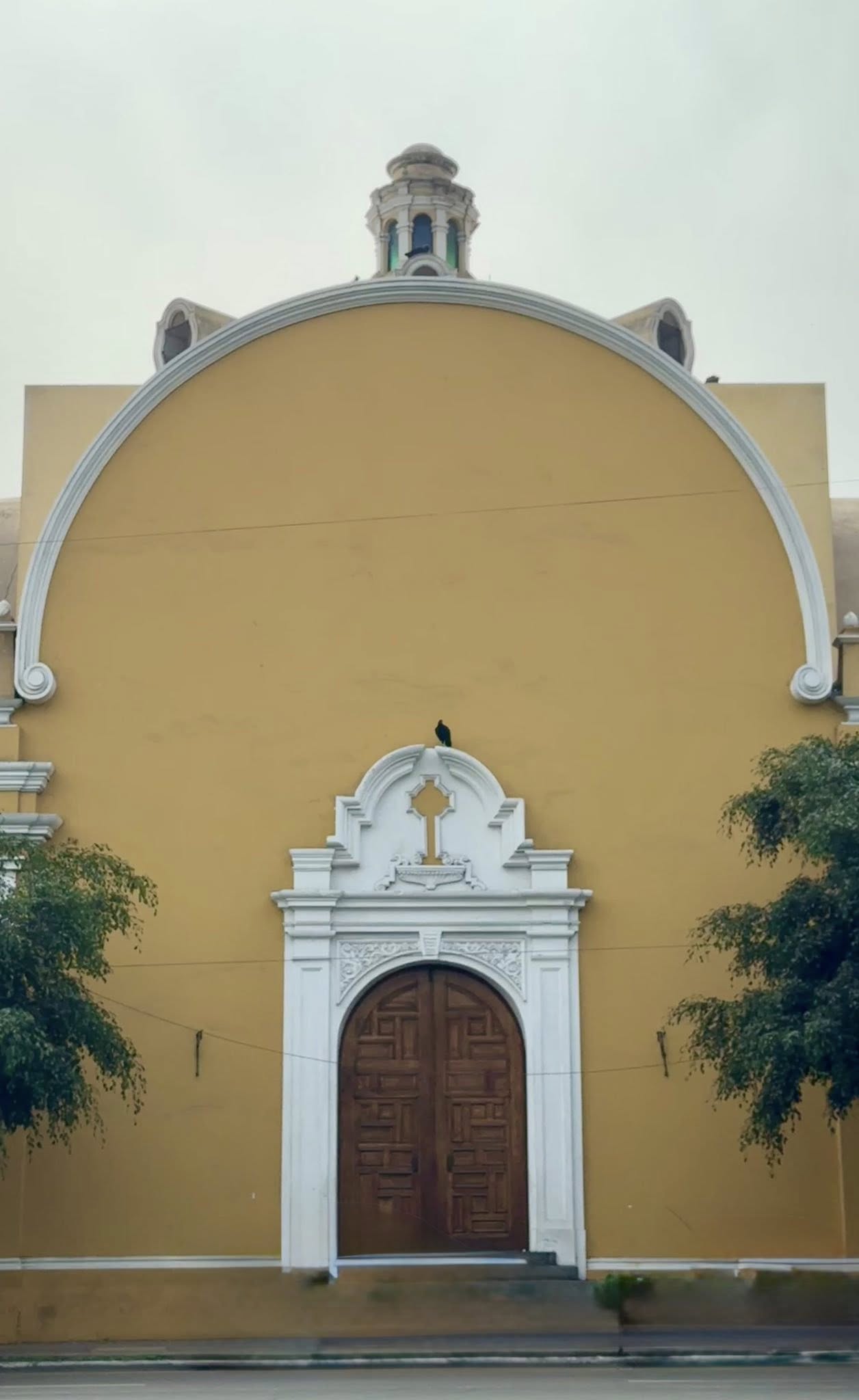
A pretty colonial building with a lone black vulture keeping watch over the door. Lima is chock full of the big birds catching the wind and gliding over the city. It’s a bit eerie to see once you know what they are!
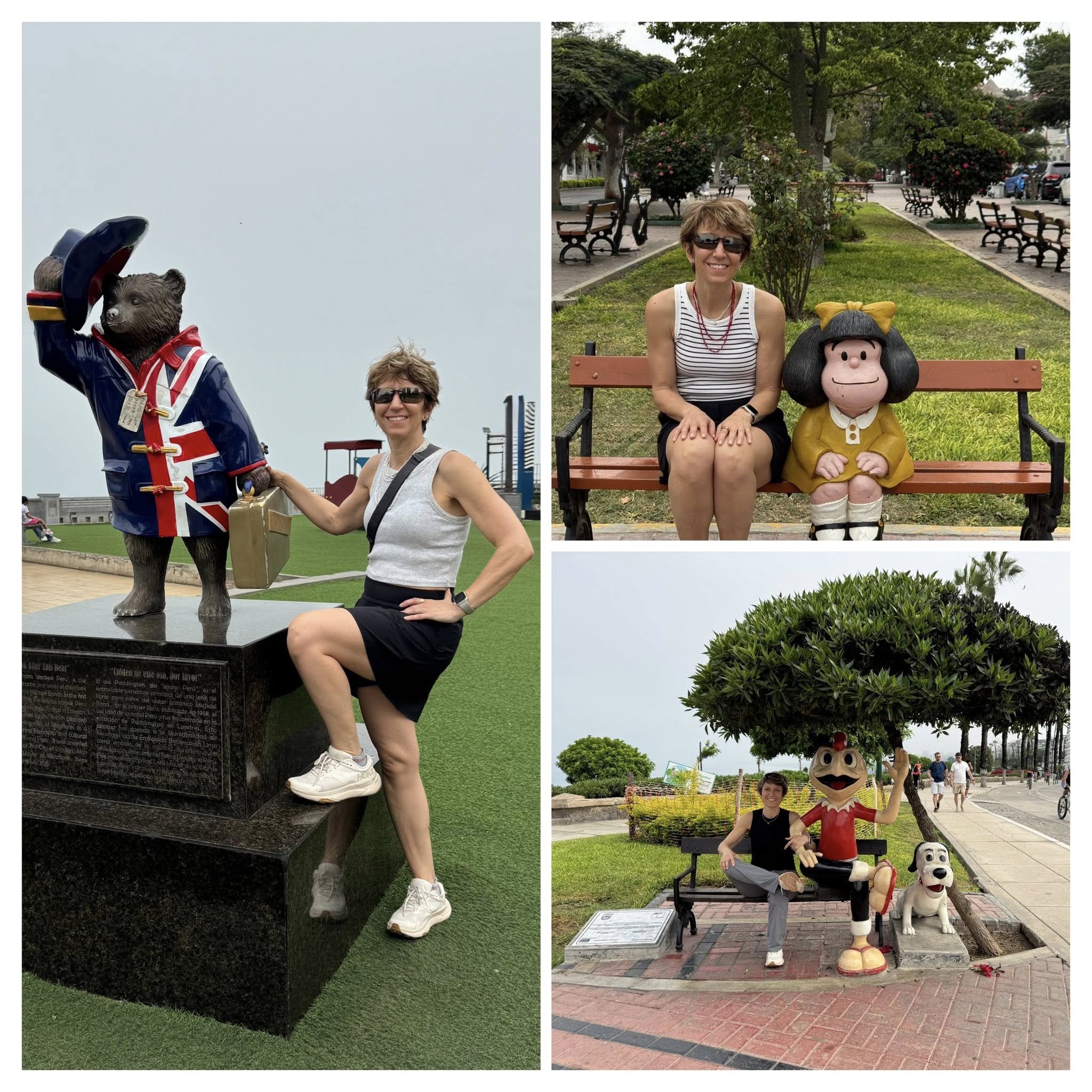
After I had a sit down on a bench with Paddington in a park in Edinburgh a few months ago, I was thrilled to see him at home in Peru! I also made a few new friends on benches in parks. The little girl is Mafalda, a mid sixties-mid seventies comic strip character created by the Argentine cartoonist Joaquín Salvador Lavado Tejón, (aka Quino). She’s a curious and socially conscious six-year-old which to me shows in her expression! She remains a symbol of peace, democracy, and activism in the Spanish-speaking world. The other is the 1949 comic strip antihero Condorito with his dog Washington, created by Chilean cartoonist René Ríos Boettiger "Pepo". The fellow on the left needs no introduction!
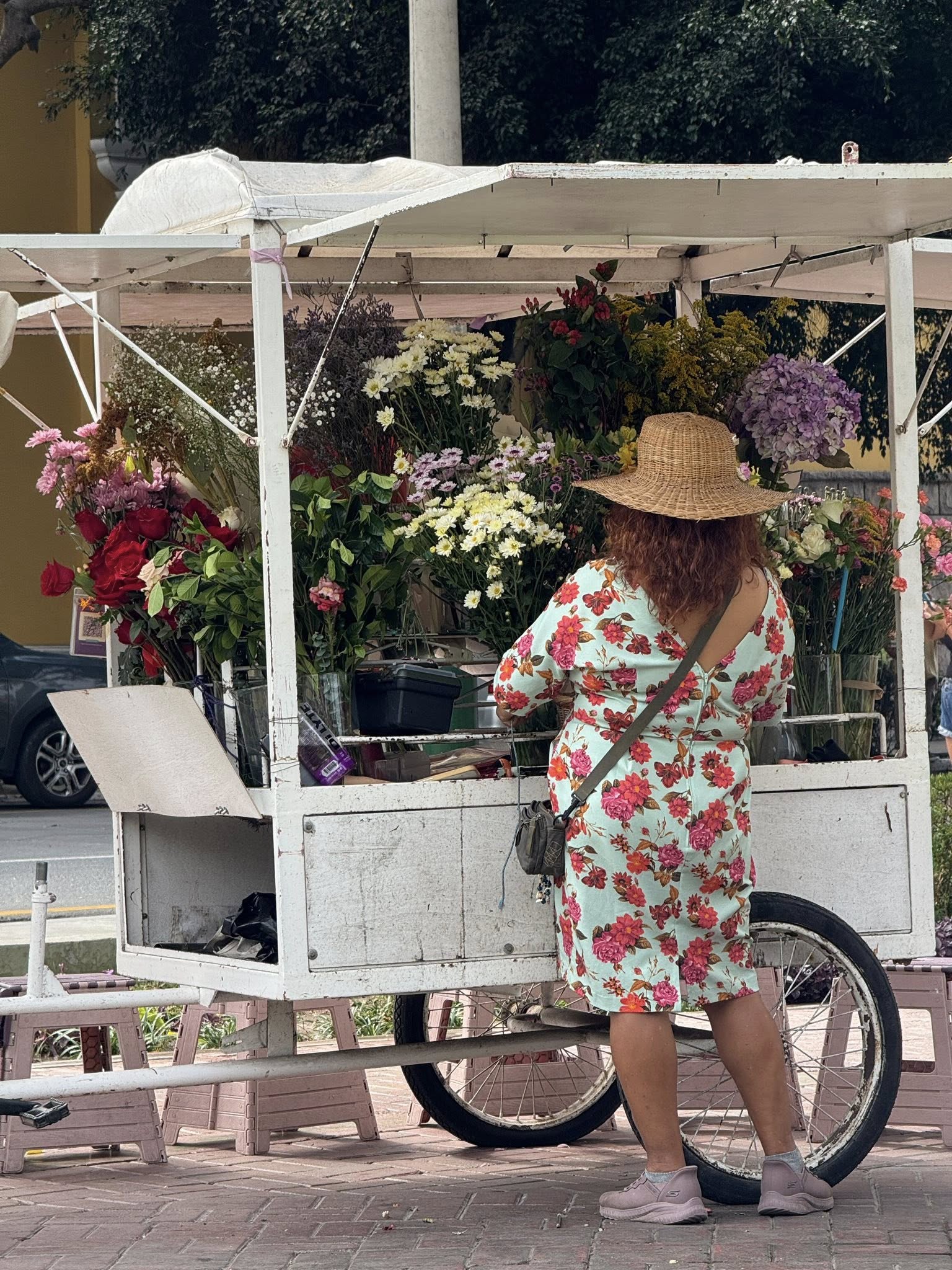
A flower vendor getting ready for her day.
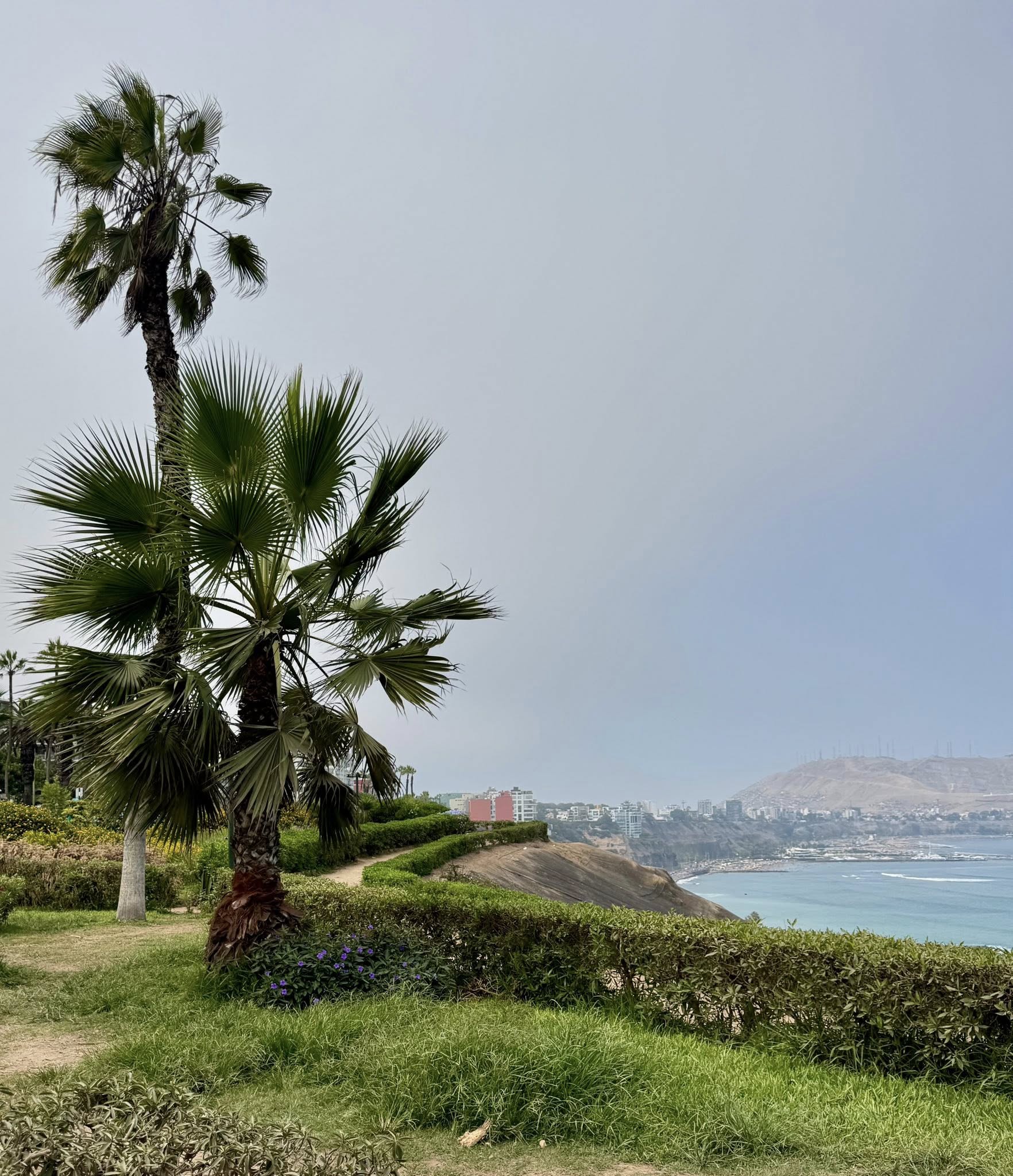
The Malecón is such a treat in this city. This 10km cliff top path between Barranco, Miraflores and San Isidro has stunning ocean views with gorgeous gardens. It’s a great way to get from one neighbourhood to another without the noise of cars and traffic.
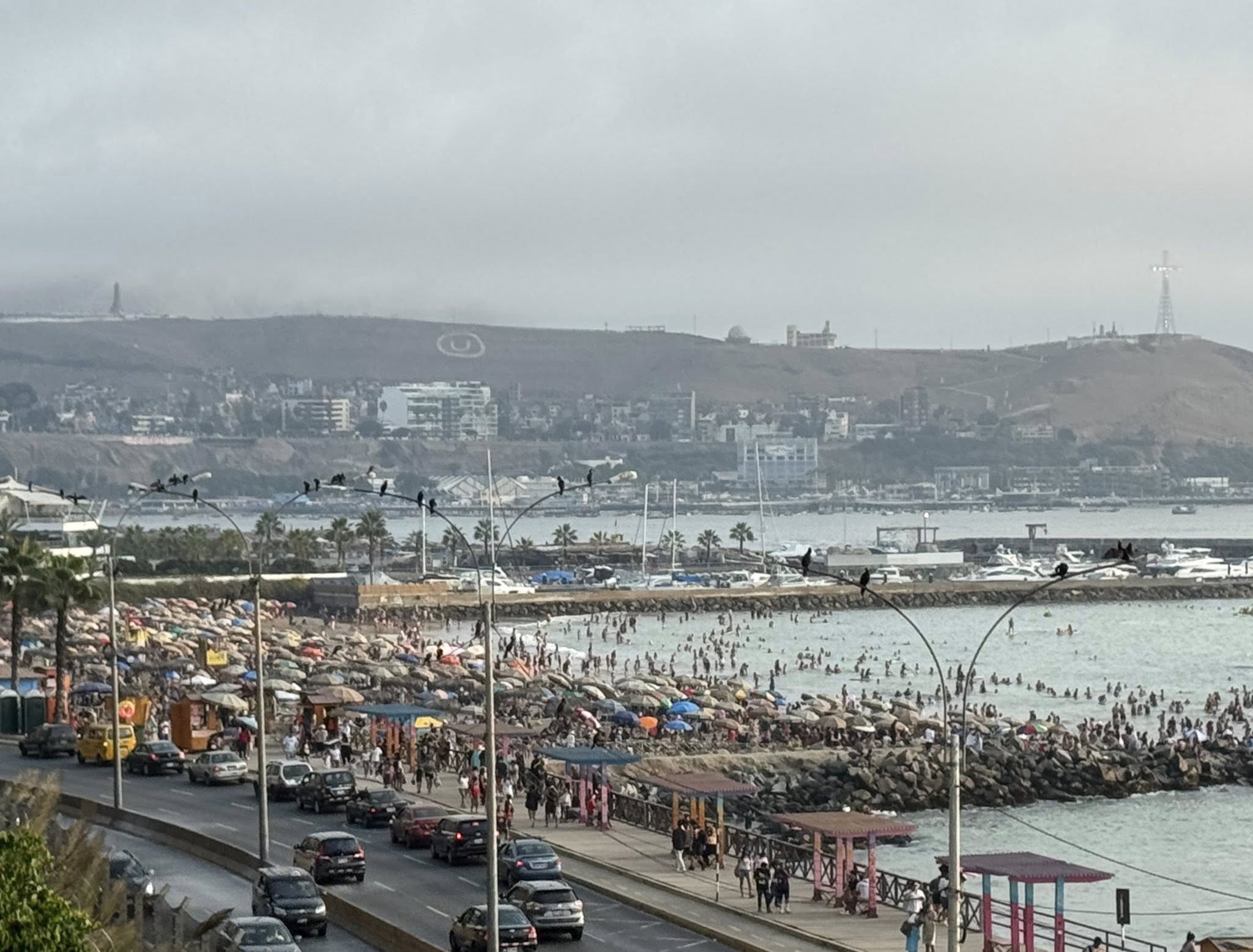
The beach at Barranco was hopping! I took off my shoes and put my feet in, fully expecting warm southern Pacific waters. Nope! It was cold! But there sure were lots of people splashing around!
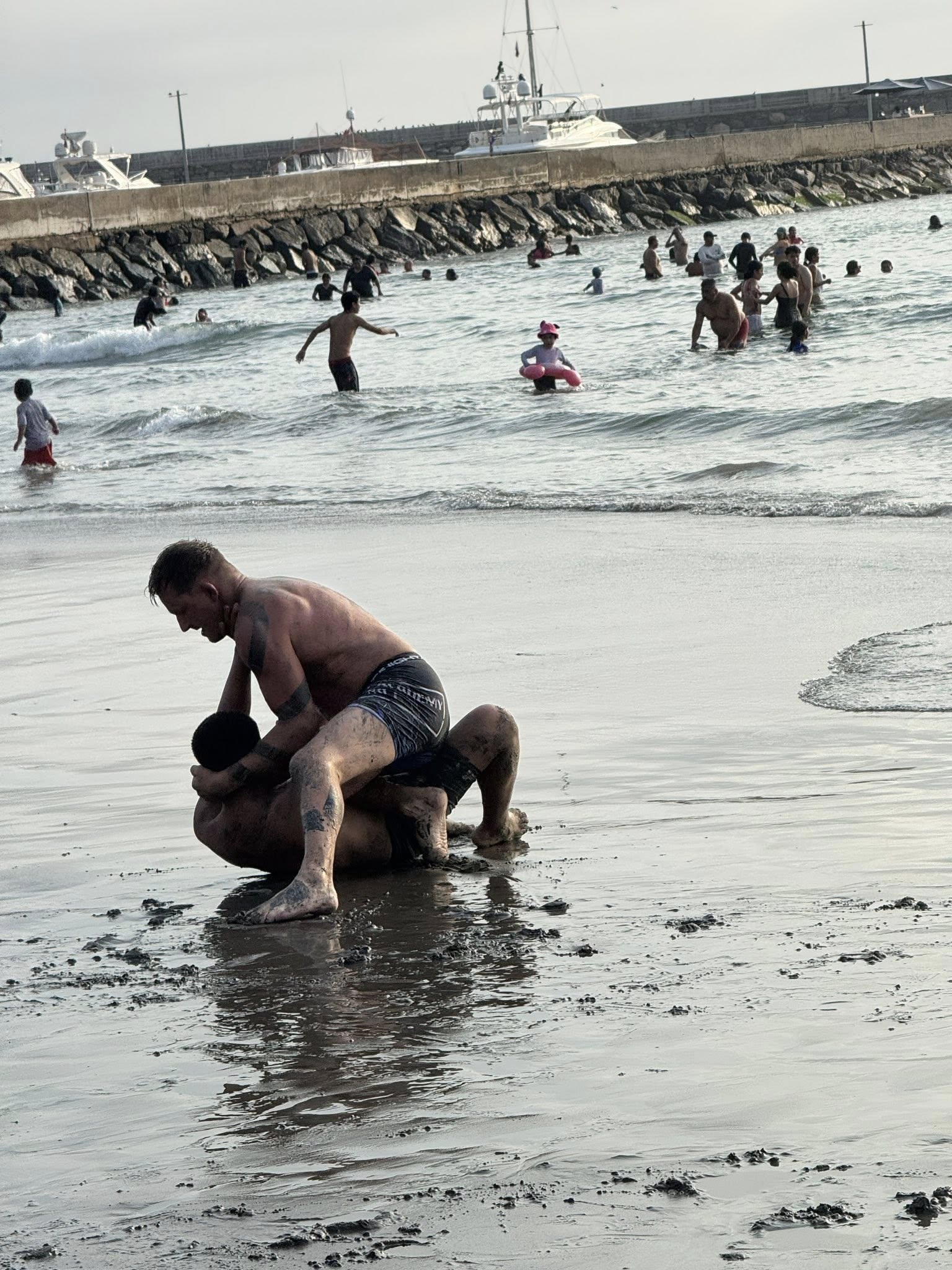
No disagreement on the beach that a bit of mud wrestling can’t resolve.