April, 2026
Calca
Our day started with an early trip to the Calca market, a small local market very much geared to the daily shopping needs of the community (no tourist trinkets to be found) before we went to explore the Ankasmarka archeological site which was quite different from other sites we saw. We then hiked right to the door of our lodge with a surprising incident along the way.
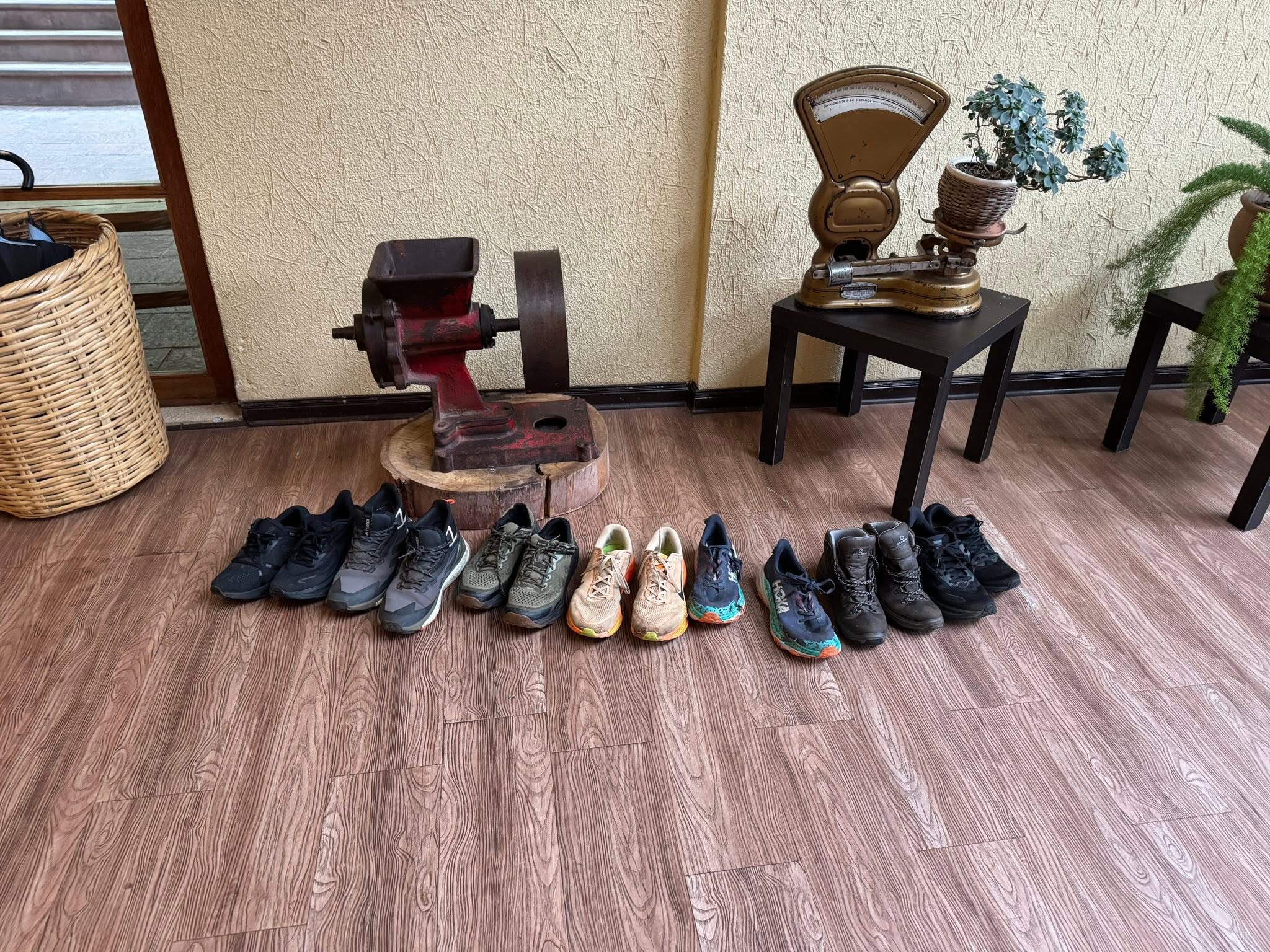
We took off our shoes when we entered the lodge so as not to make a mess of the floors. What a treat to come down the next morning and find them all cleaned up!
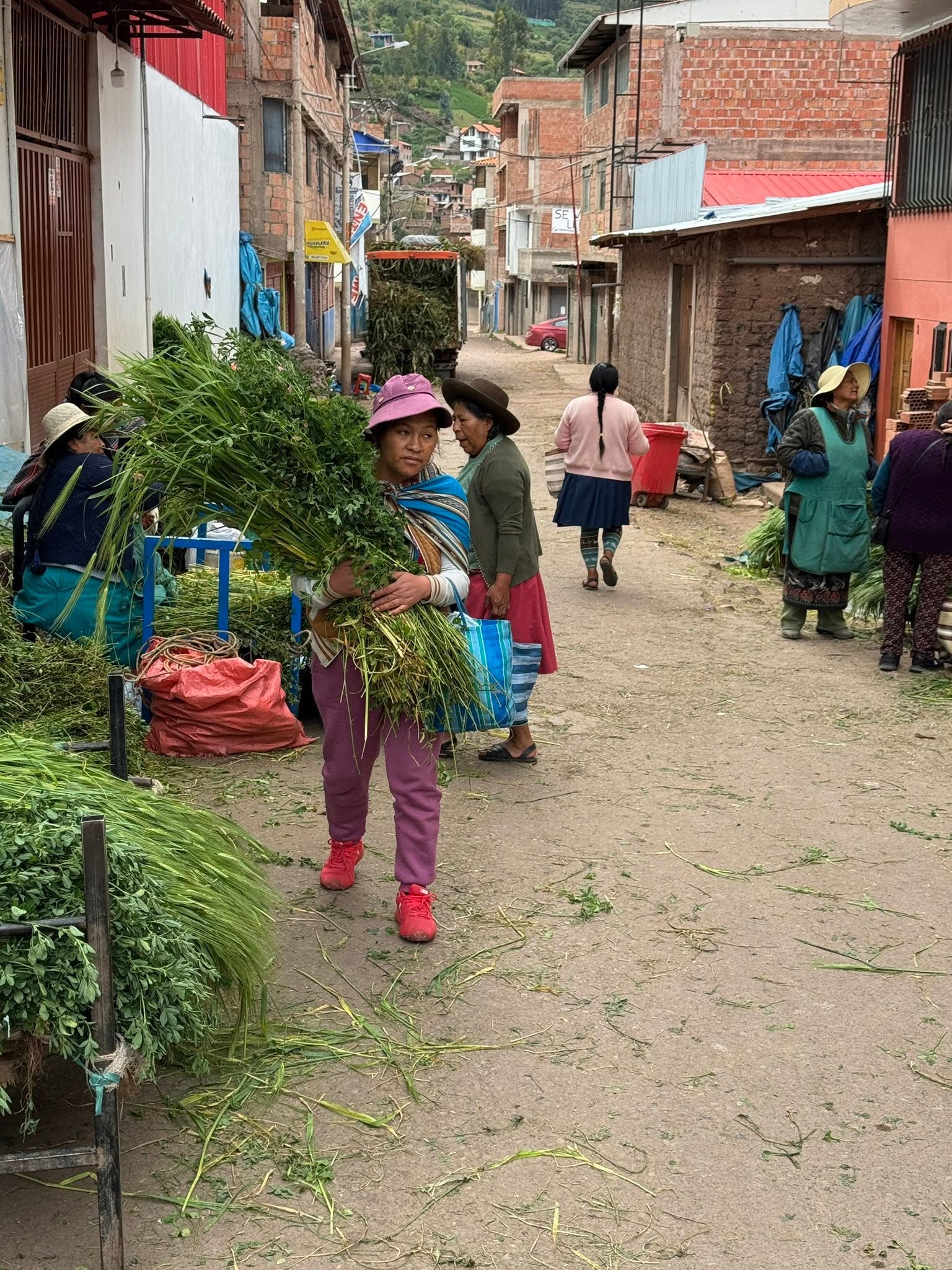
Outside the Calca market is just as active as inside. All this green grass-like plant is guinea pig food. This will feed a lot of guinea pigs!
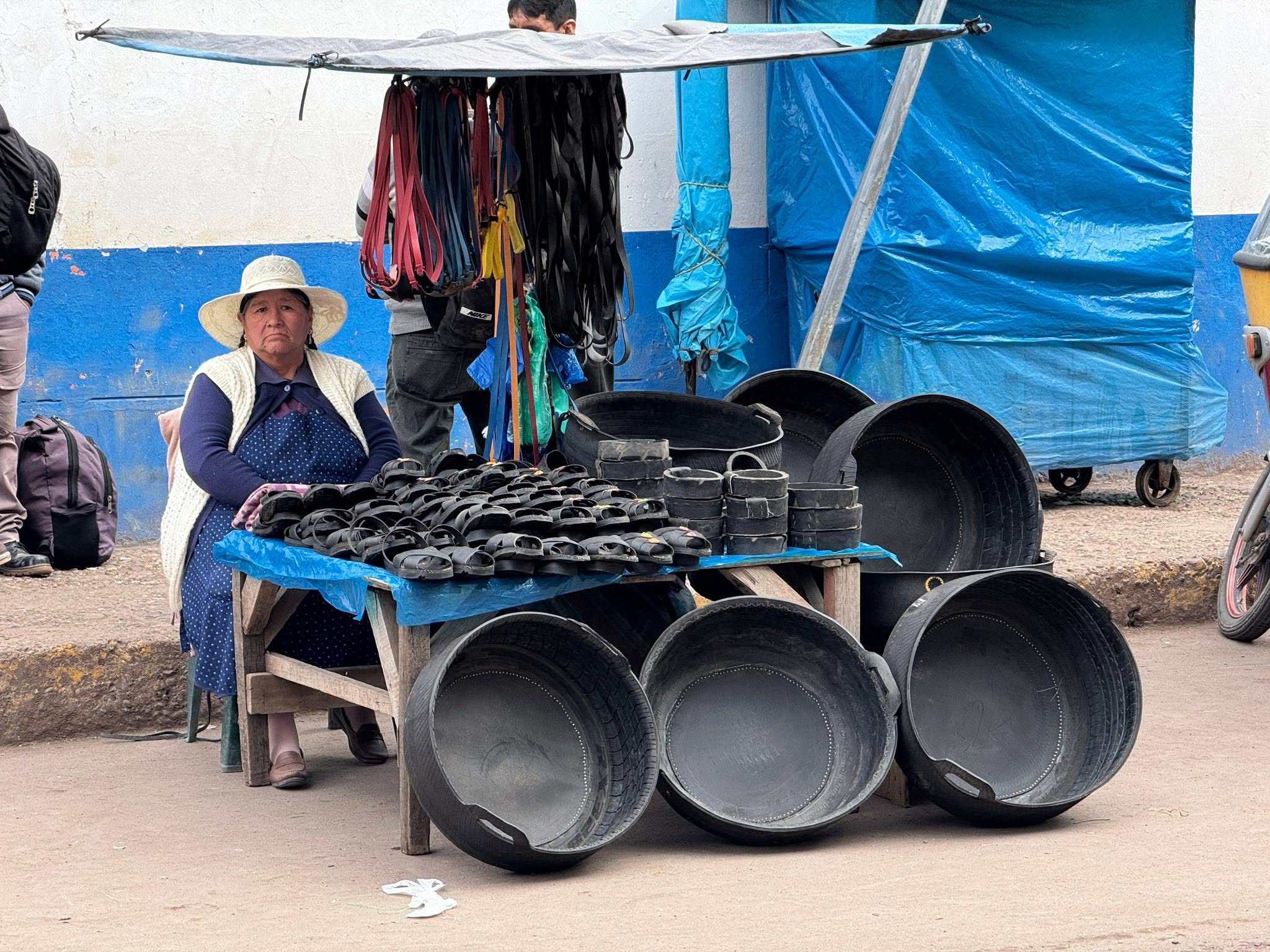
Some of the many ways to repurpose old tires. No need to send these to landfill!
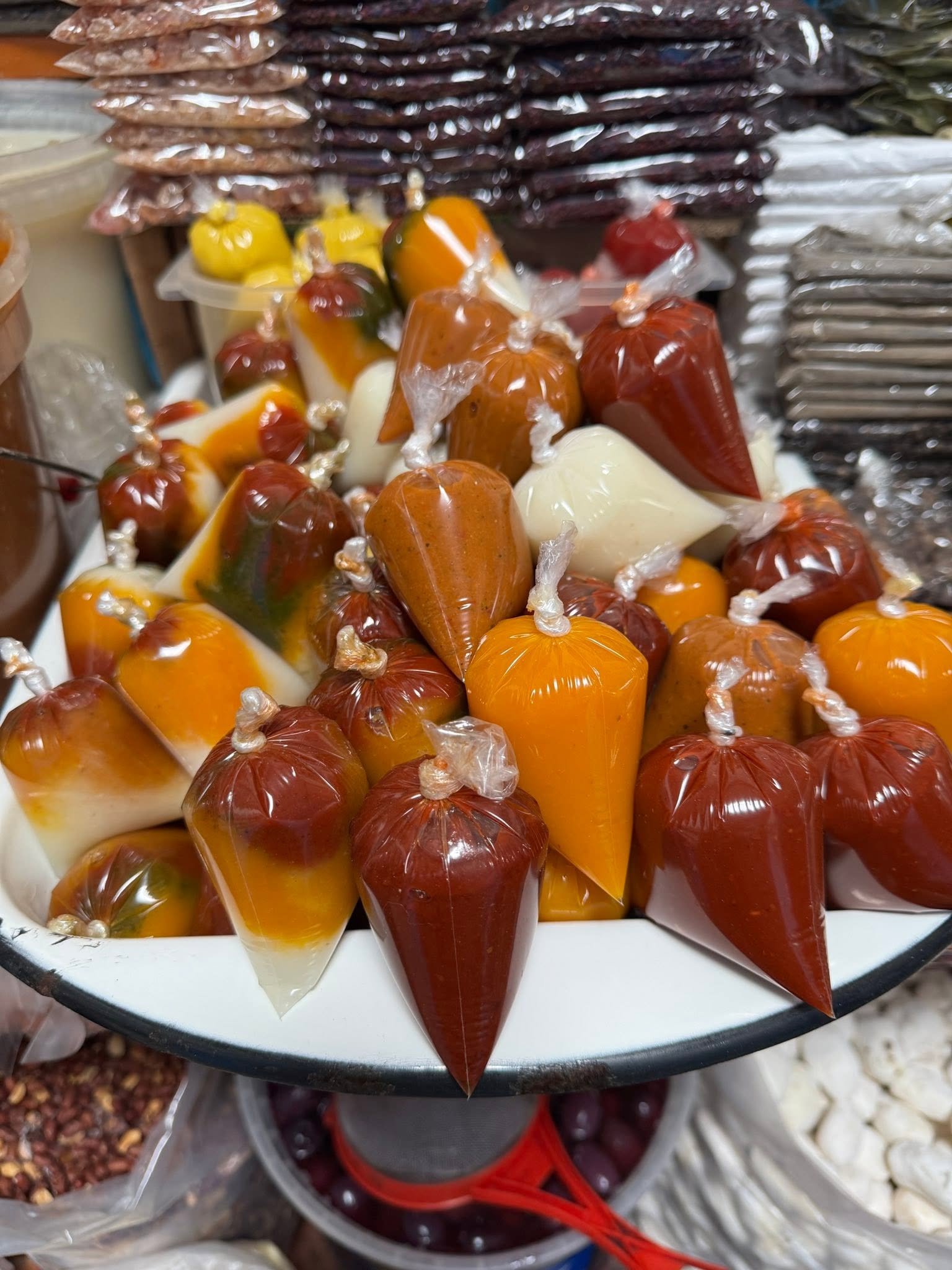
Why make sauces at home when someone at the market will have it ready-to-go? The vendor scoops sauce out of a big bucket into these baggies and knots them tight. Amazing they don't burst!
Surprisingly, this woman has all ten fingers intact! She sits dicing potatoes and selling them in little bags. Another great time saver for the home cook.
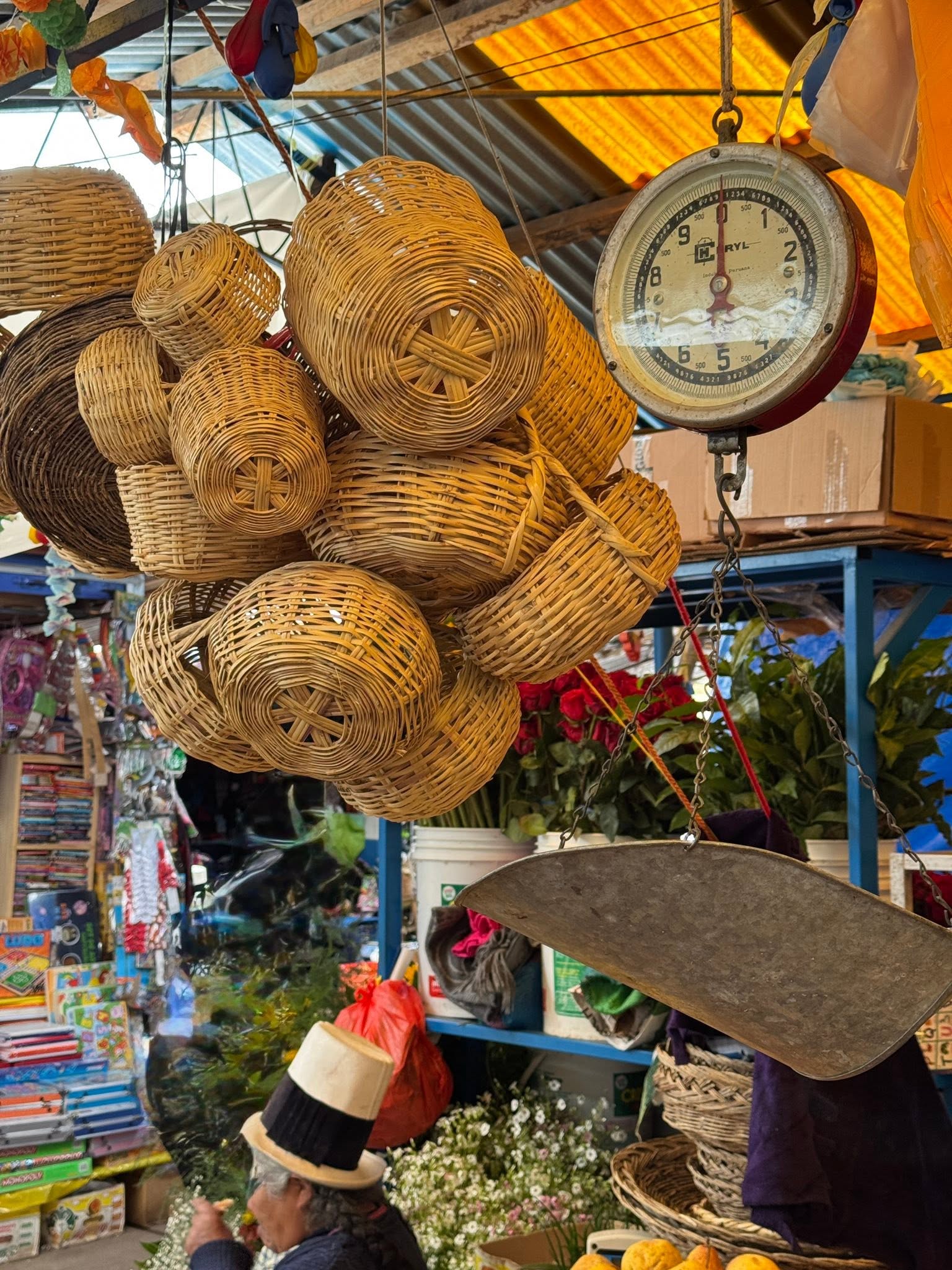
This lady is a fruit seller, mostly peaches…and baskets it seems. All the women of a certain generation and older wear hats and the variety is incredible. The style of hat typically has a meaning. In this case, this woman would be from a village in the northern Sacred Valley (probably from Lares or Amparaes—pretty specific!), she is mature and holds a certain status in the community as an experienced and savvy market vendor. The wide black ribbon makes this a more formal version of the hat that these women would wear in a public facing place like the market. Not surprisingly, this is not a traditional Inca hat but rather a a nod to the colonial influence that has blended into indigenous traditions.
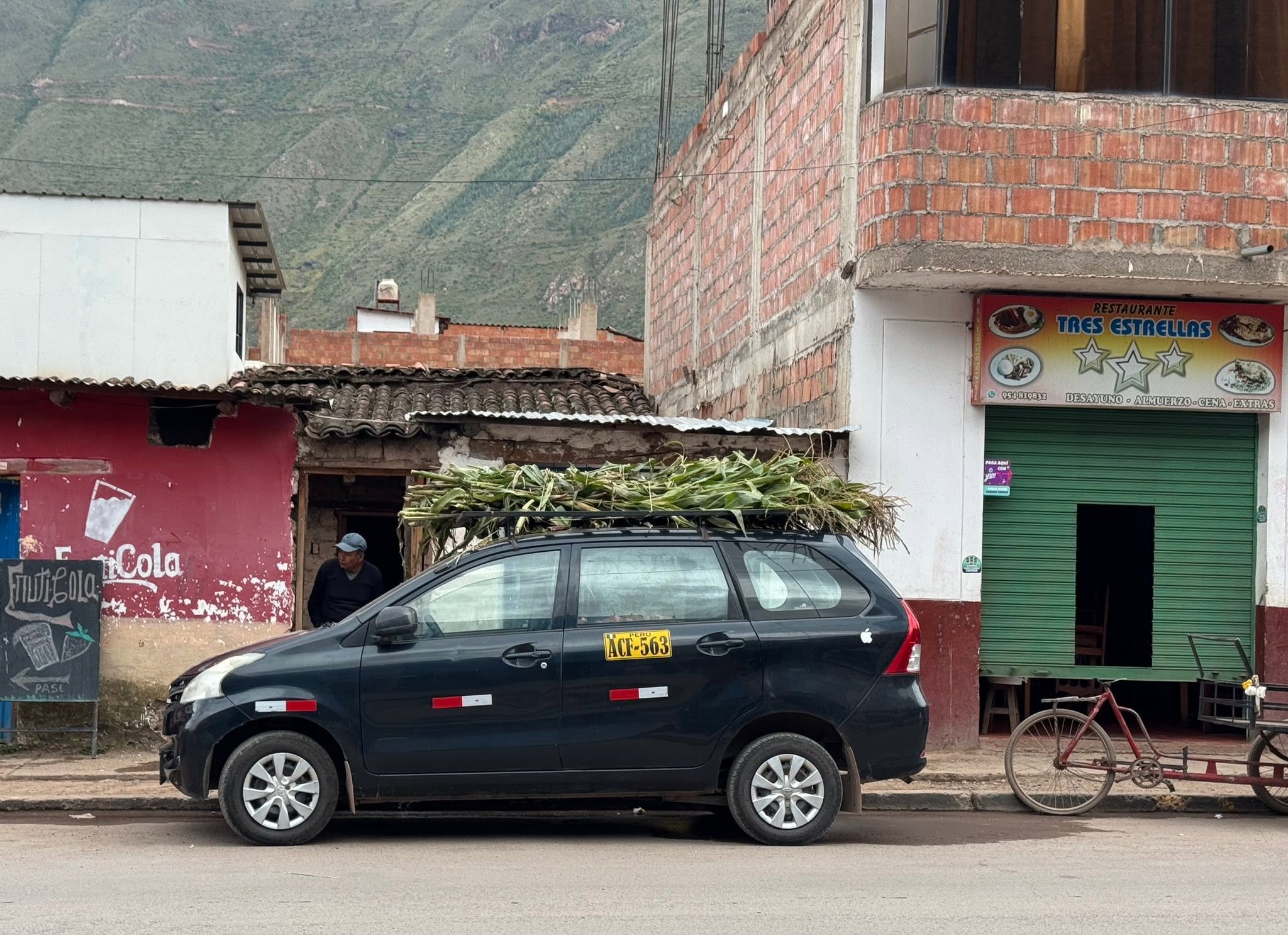
Door dash for guinea pig food! (Cars with red and white stickers are taxis.)
We stopped to buy bread before leaving Cusco to give to kids we encountered on our journey. There is very little bread out in the rural parts as there is no wheat so even though it was in the stale side by the time it got into the kids’ hands, it was still a treat. And I guess nobody has told the kids not to accept food from strangers…
Seems like all we need to do is give this bread a little roll into a donut and call it a bagel! Wood oven is already taken care of.
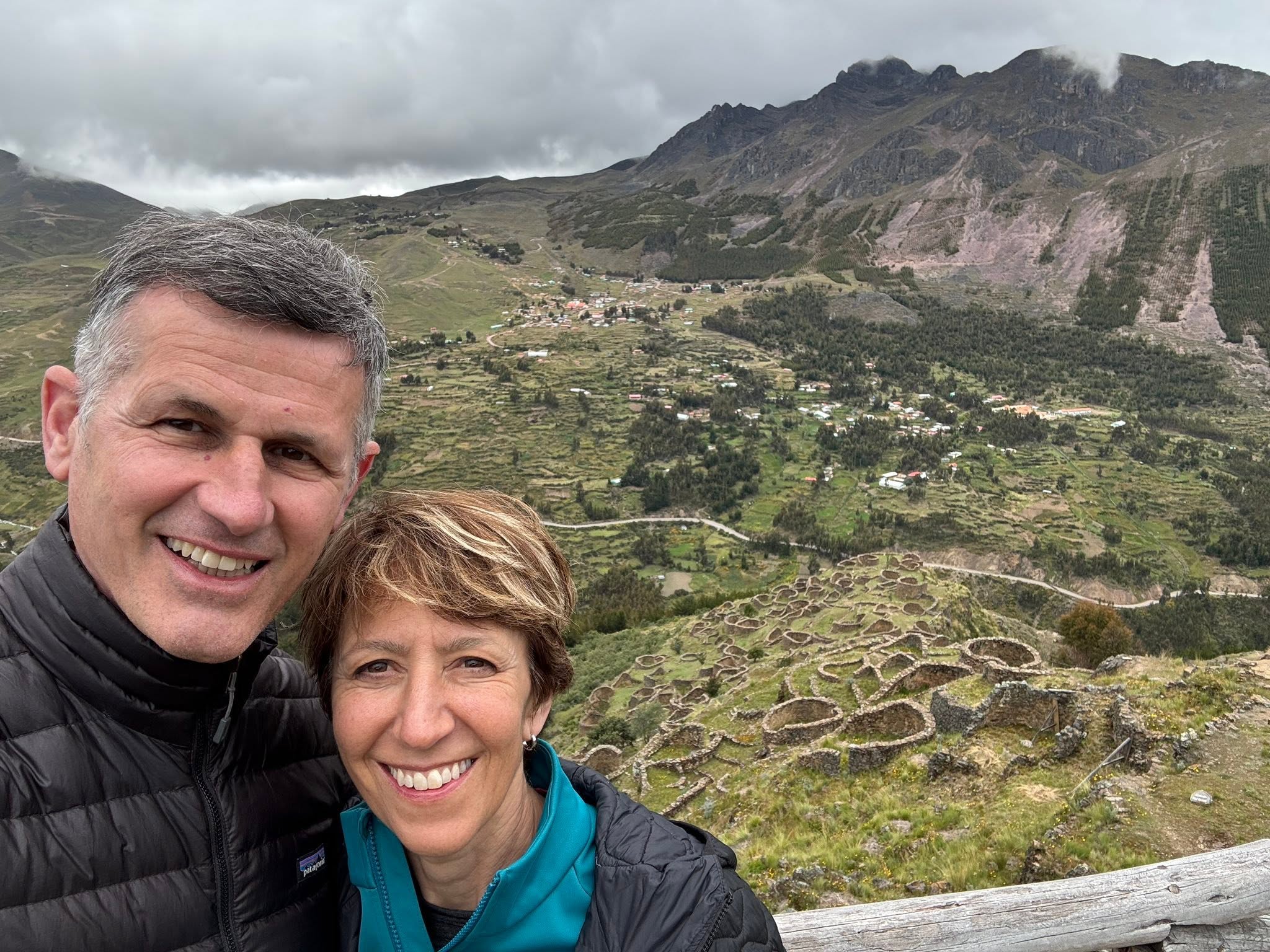
Ankasmarka is another lesser known set of ruins but quite impressive and known for its hundreds of round buildings called qolqas, built by the Killke people (900-1200AD) to live in, for herding and for storage. When the Inca showed up and conquered them, they used the qolqas for food storage. These buildings were made of shale which is what the hillsides are made of.
Unfortunately, despite its historical relevance, it struggles to get funding for conservation. I guess when Macchu Picchu is in the neighbourhood, it overshadows everything else.
There is an Andean legend about Ankasmarka hill. A shepherd had a meeting with his llamas and came to the conclusion that a big flood was coming. I guess shepherding can get a bit lonely and if all you have to talk to is llamas, you start to believe anything. Anyhow, he and his six children climbed to the top of the Ankasmarka hill to save themselves. Magically, the hill elevated itself as the waters rose! When the water receded, the shepherd's children repopulated the region. A little riff on Noah's Ark…
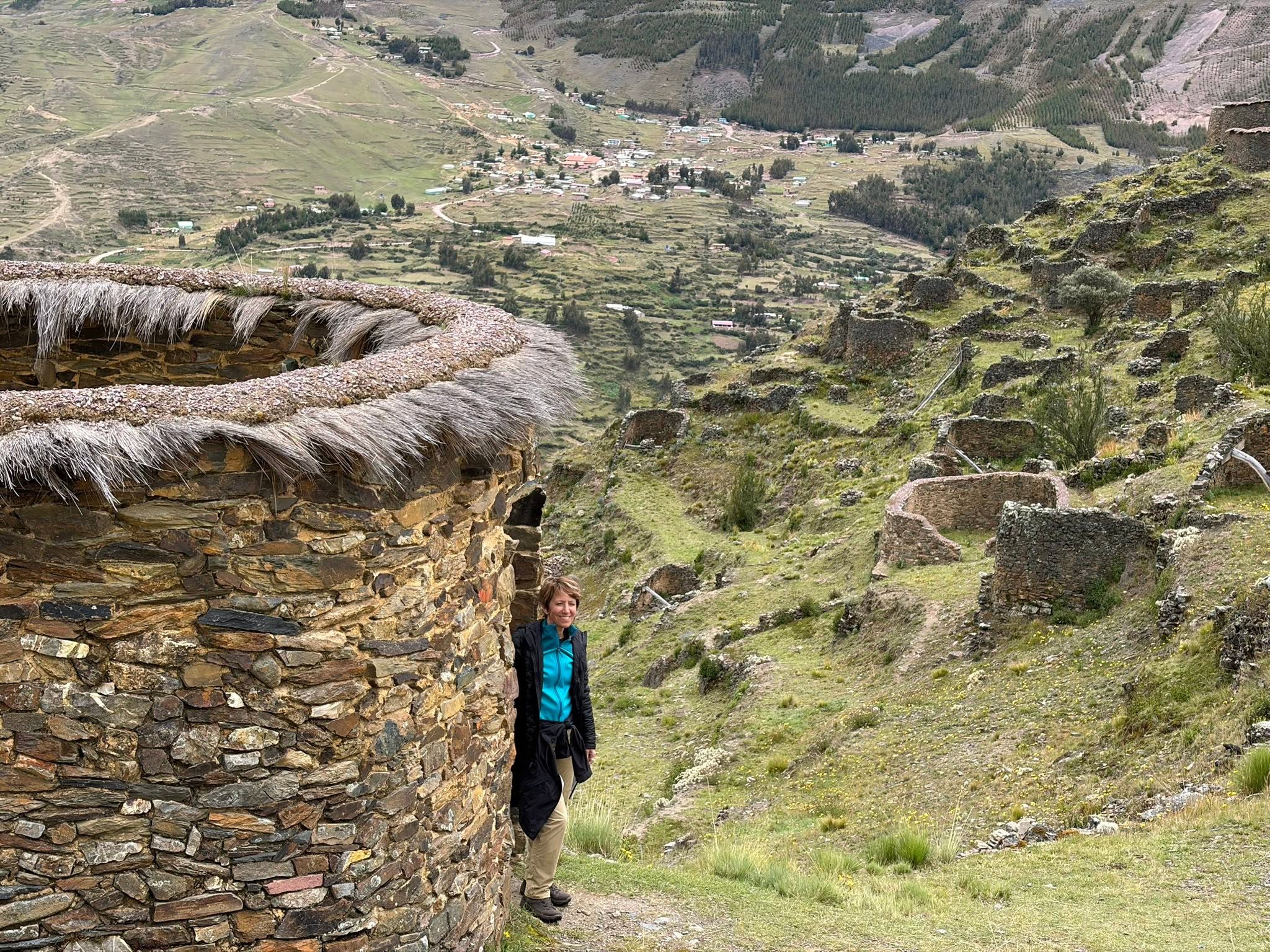
This one has been partially restored to show how big they were but they haven't gotten as far as the roof which would have been a steep conical thatch. It rains a lot here so a steep roof would have helped divert the water from leaking in. There would have been tons of food stores here and wastage wouldn't have been an option for the practical Inca.
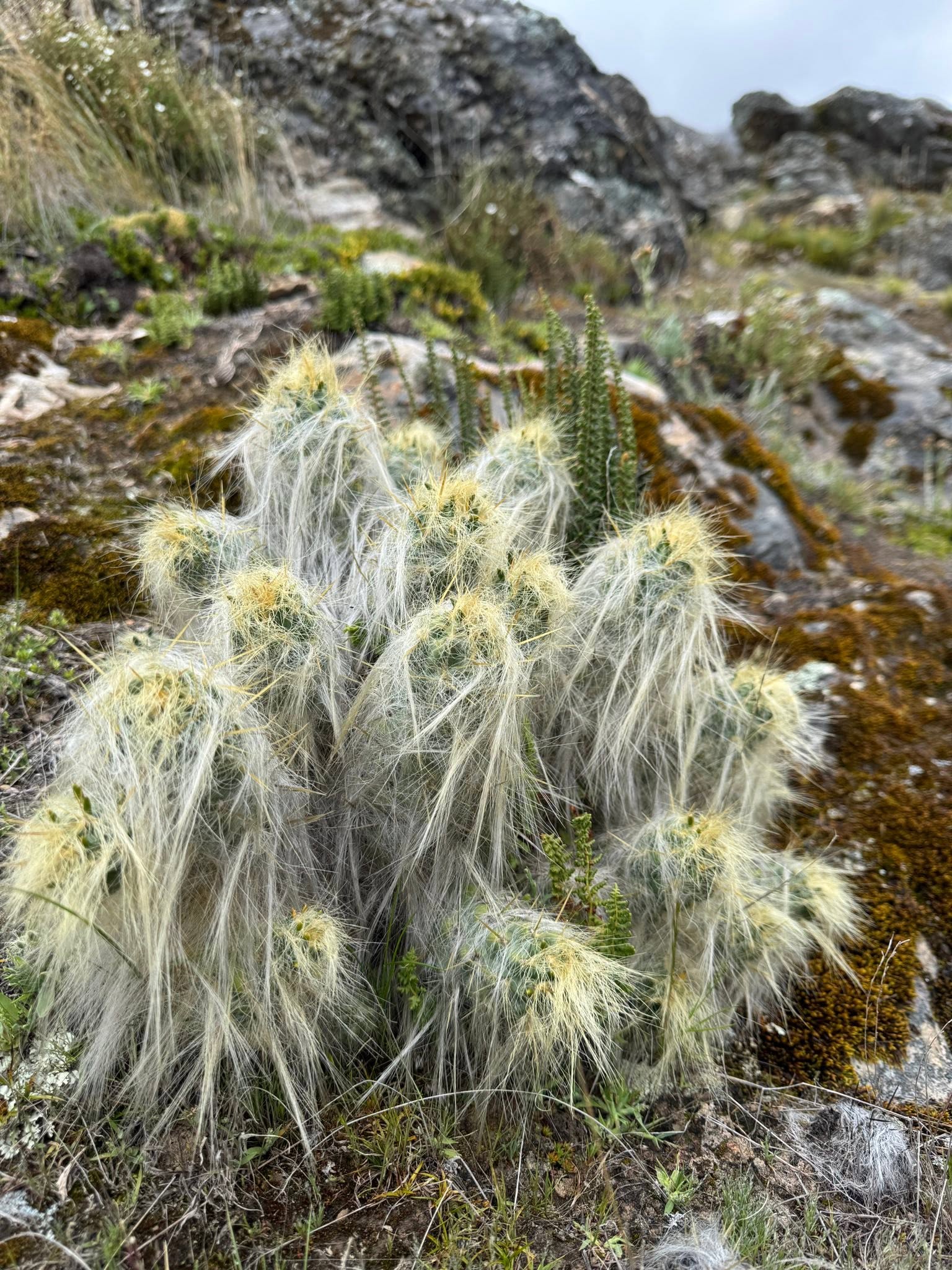
This not actually a bunch of Addam's Fanily “Cousin Itt” dolls. This is a cactus well-adapted to the high elevation of the Andean Mountains. This is known as the “Old Man of the Andes” cactus and is happiest in a cold climate. The long hairs block the high UV radiation up here, traps warmth at night and helps the “Old Man” survive the freezing temperatures. It's such an elegant adaptation to one of the harshest environments on earth!
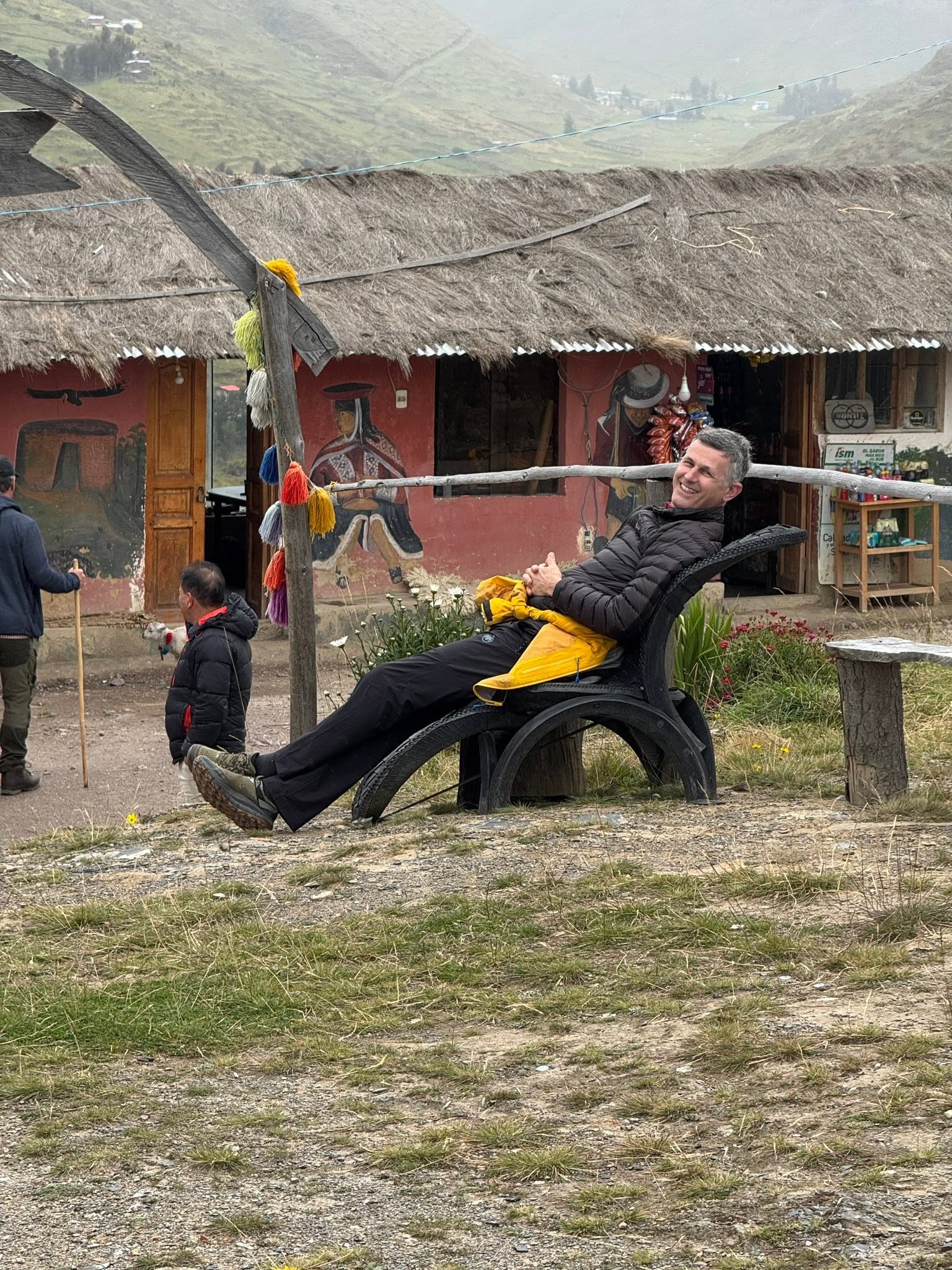
Another use for old tires!
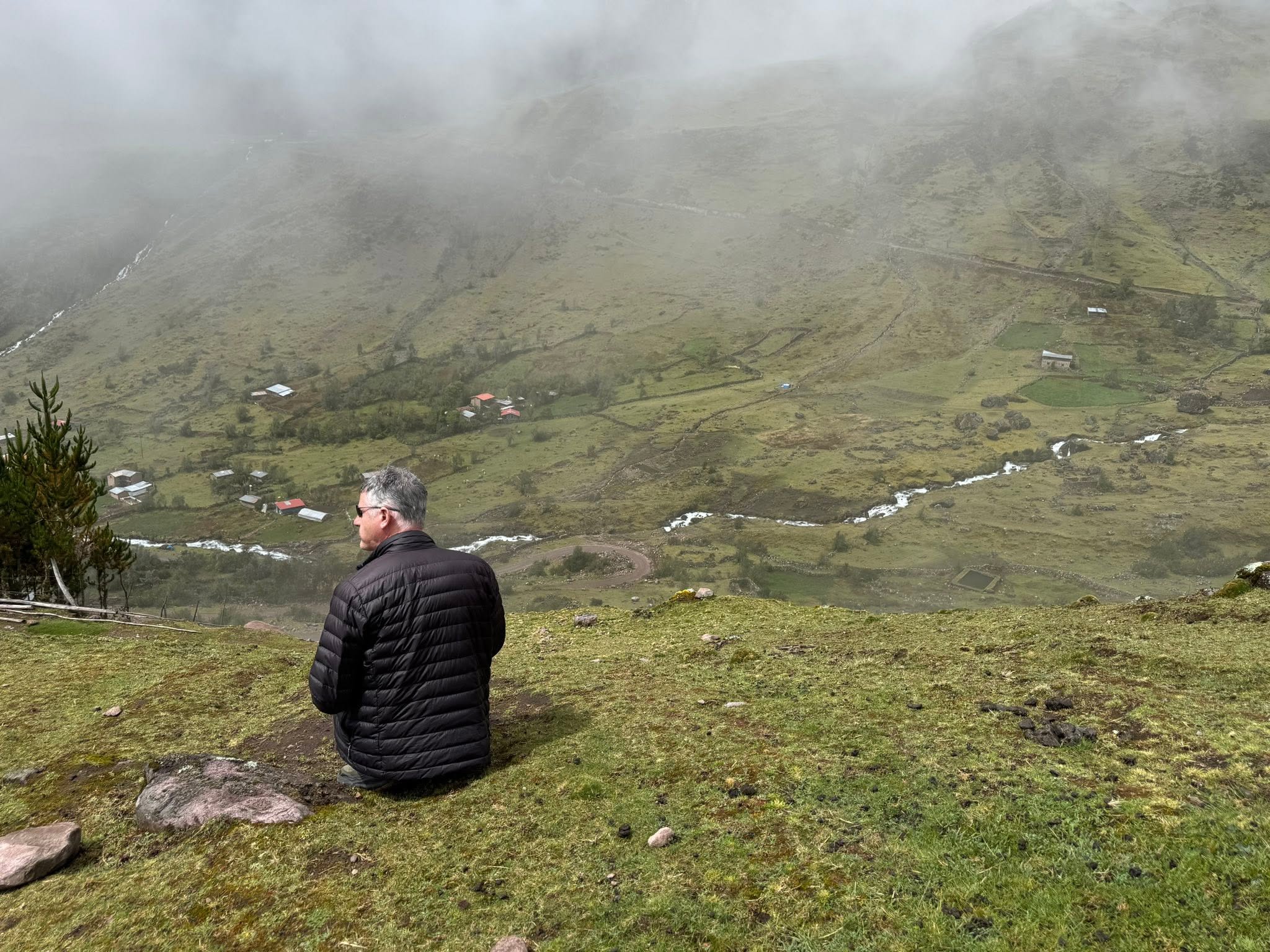
A picnic with a view before we started the Cuncani to Huacahuasi hike.
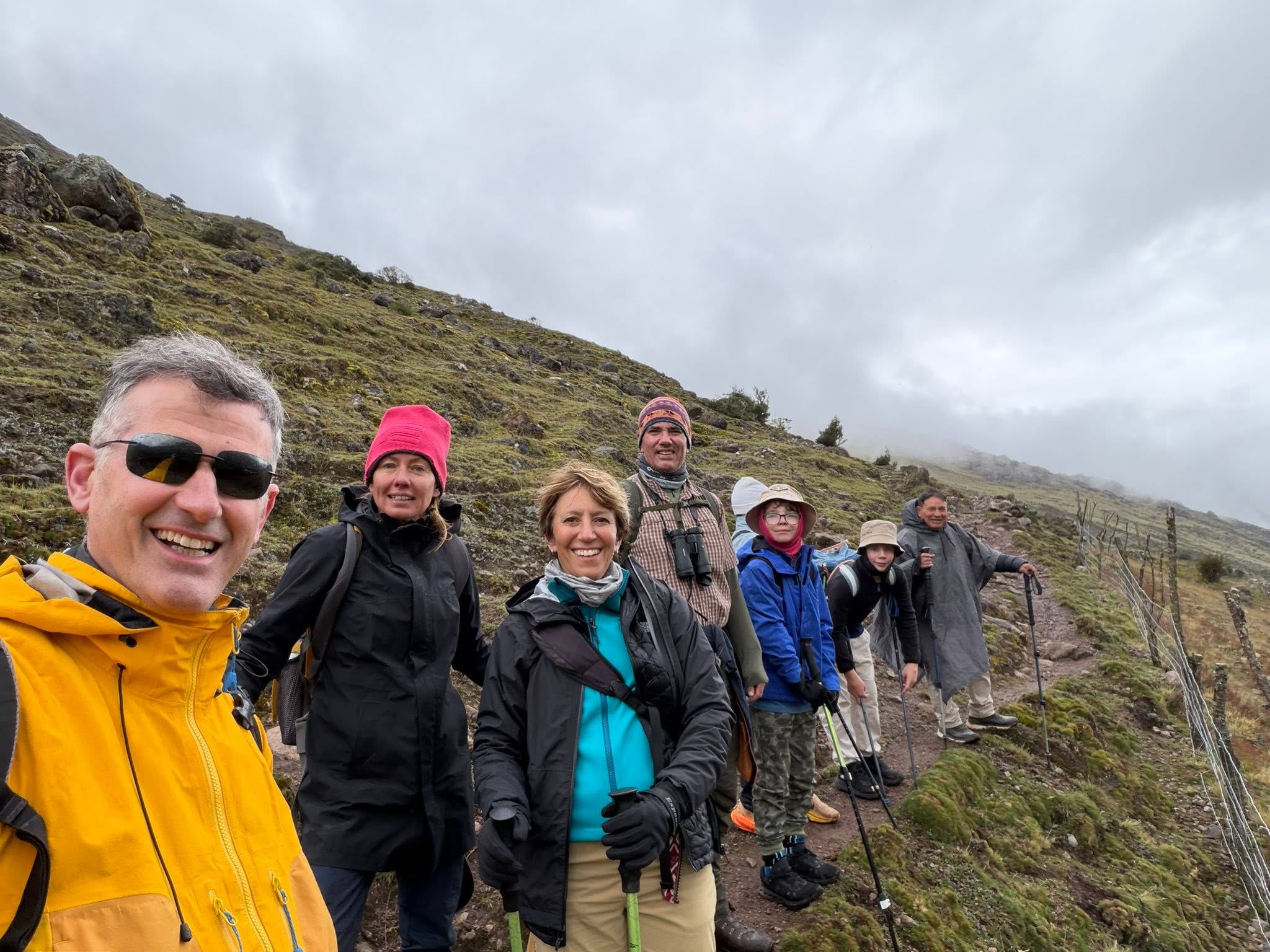
And we’re off! The weather looked dodgy but didn’t follow through on its threats.
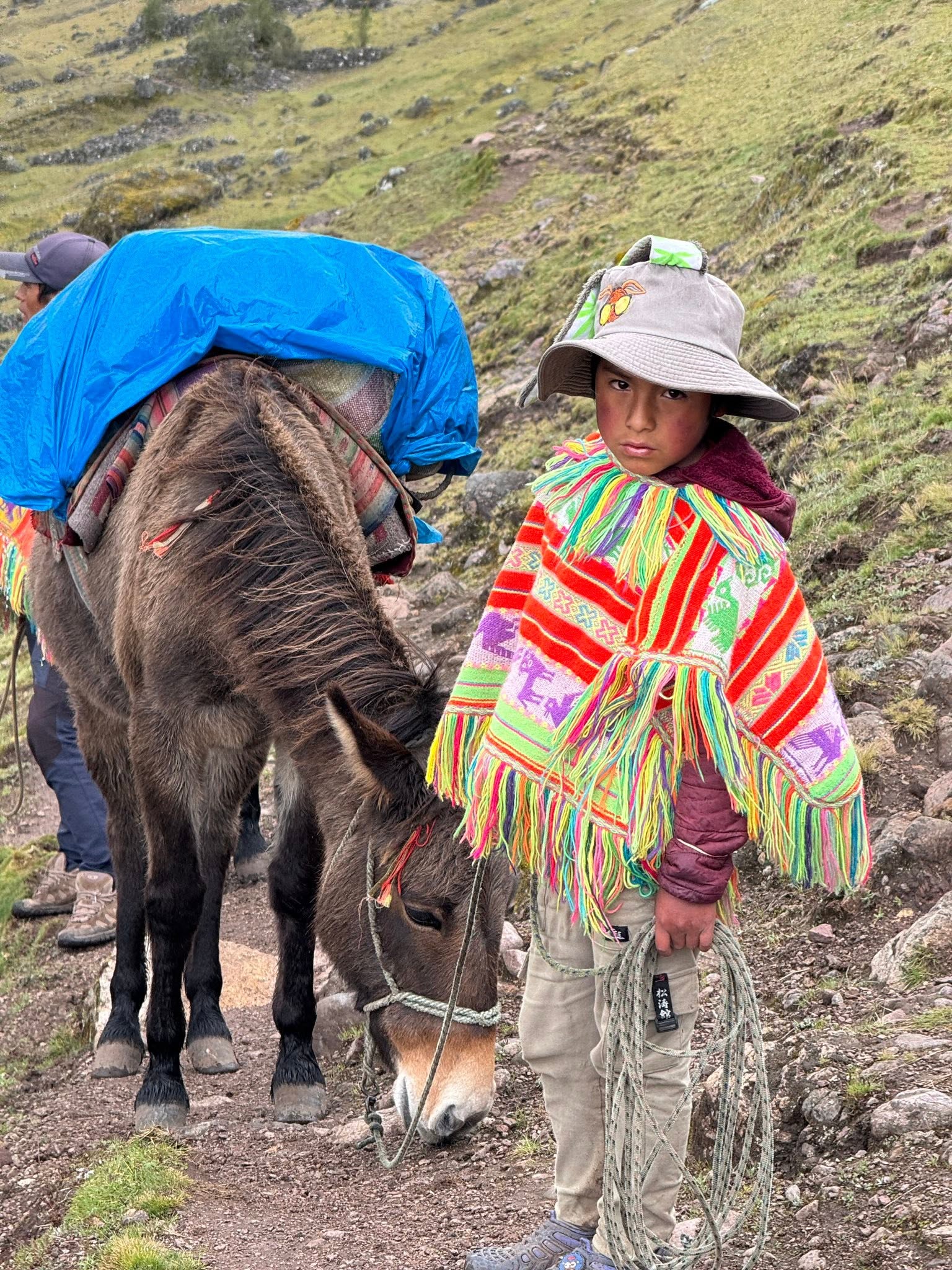
This young fellow and his dad brought two donkeys to accompany us on our hike. They were there to help us as needed, mostly with oxygen as we were climbing to 4200m. He certainly doesn't look like he's excited about our adventure... I also wonder why he's not in school...
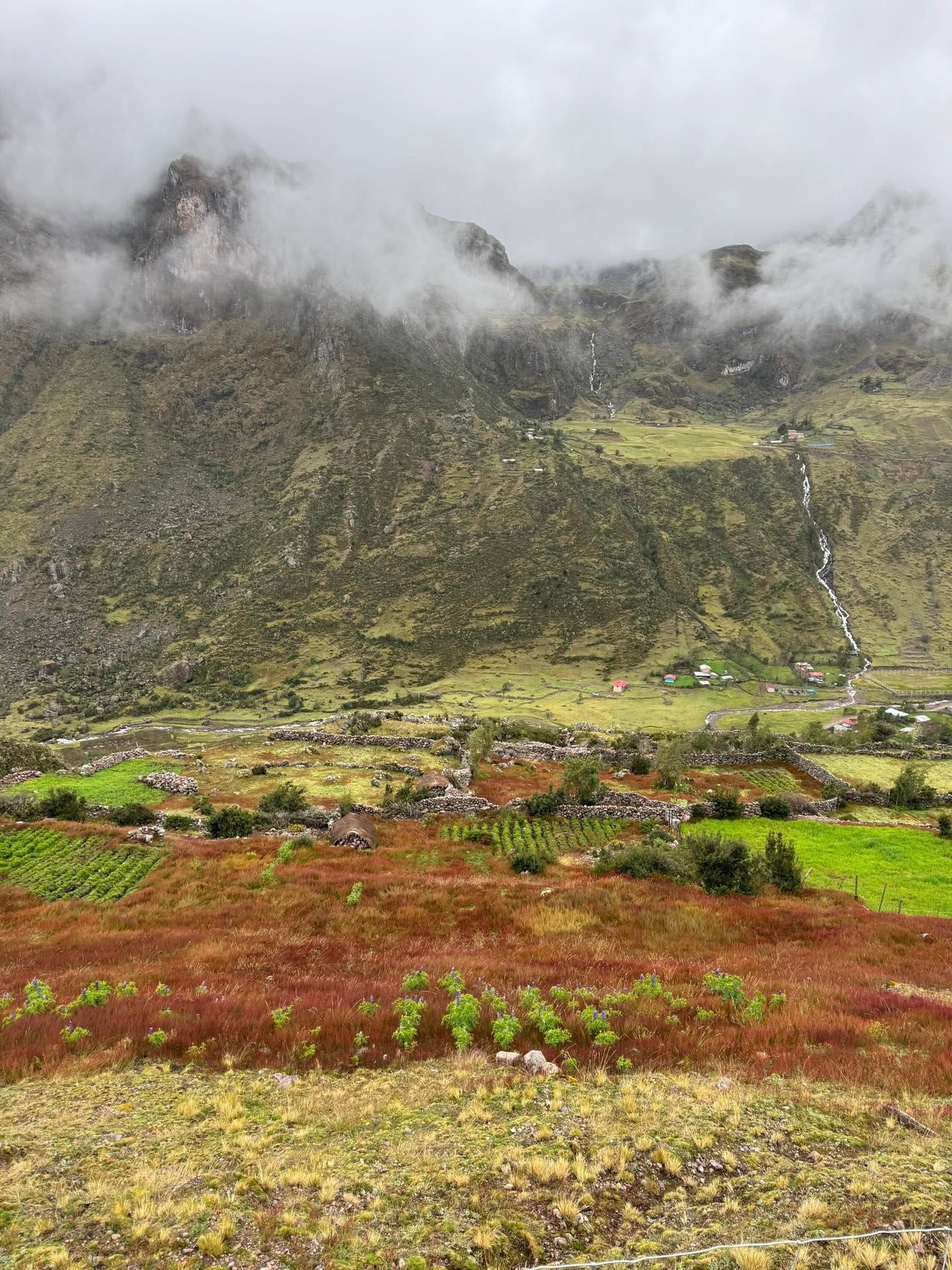
A few of the 4,000 types of potatoes growing down the hillside. Planting happens everywhere possible.
At this altitude, not much more than potatoes can grow so the locals have a potato (and alpaca) heavy diet.
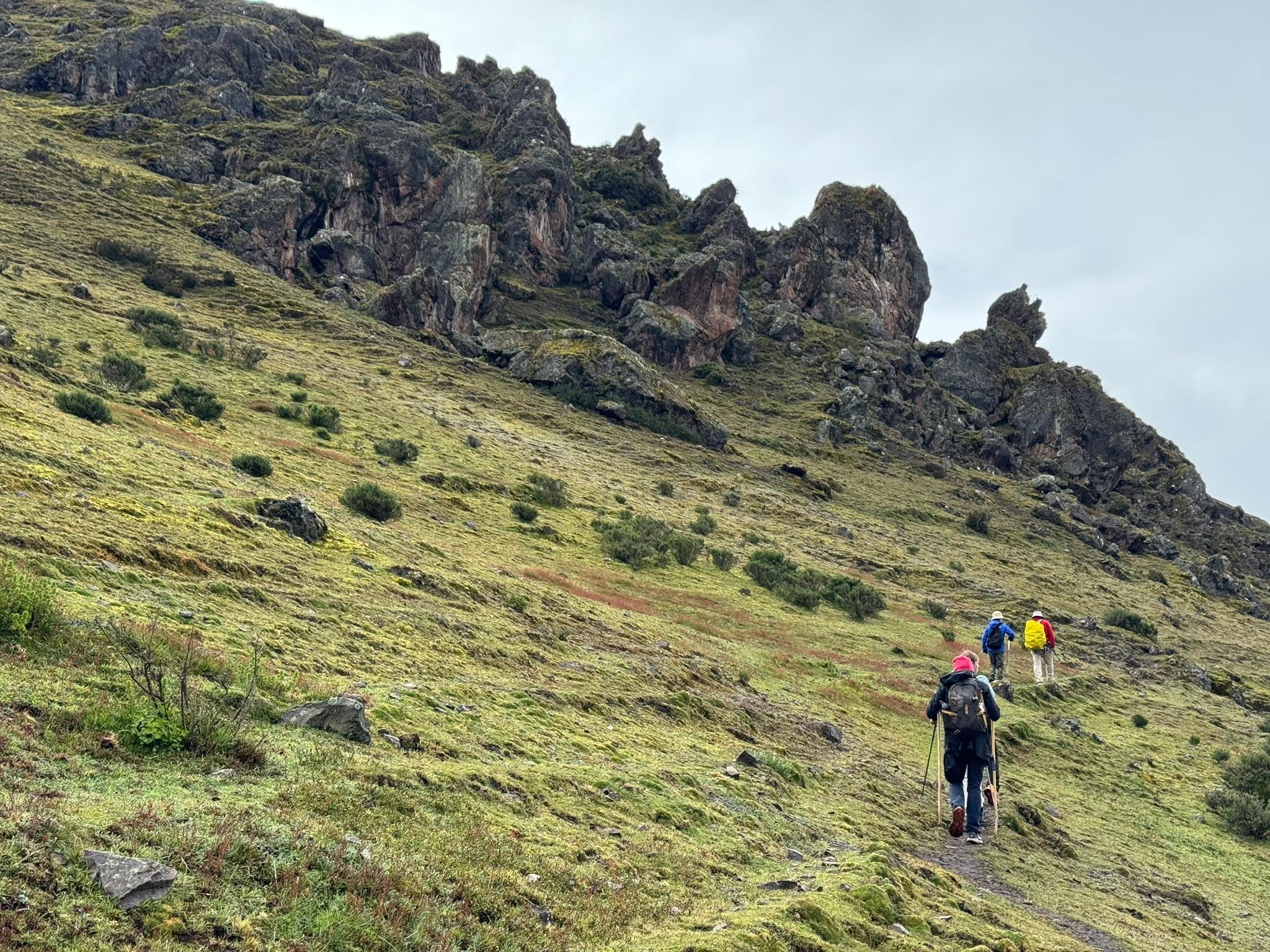
Stunning and such varied landscapes!
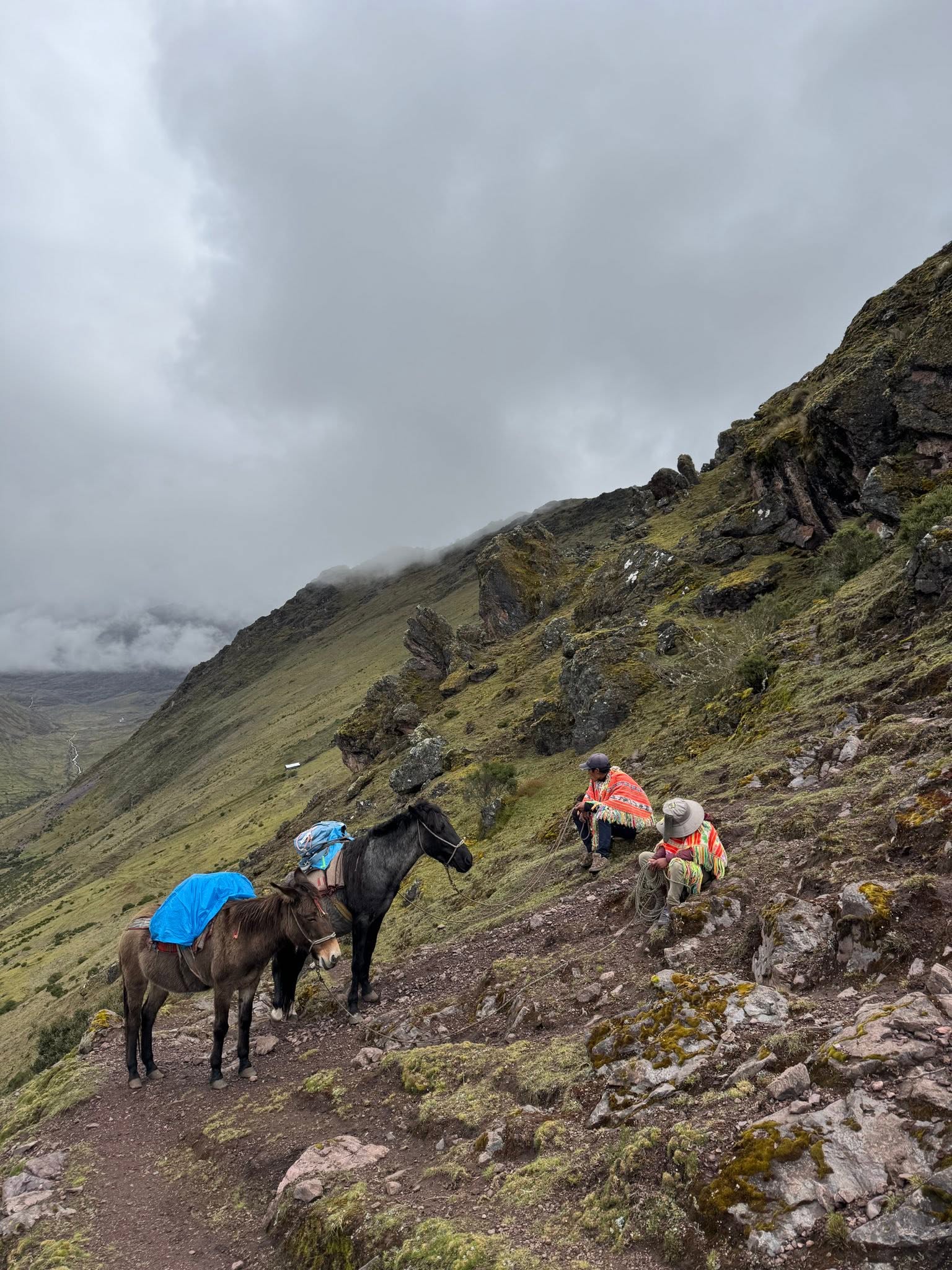
Whenever we stopped to catch our breath (which was not infrequent given the altitude) our donkey companions would have to stop. Being donkeys, it was hard to stop on pitched terrain so they would have to wait for us to get far enough ahead for it to be worthwhile starting up again.
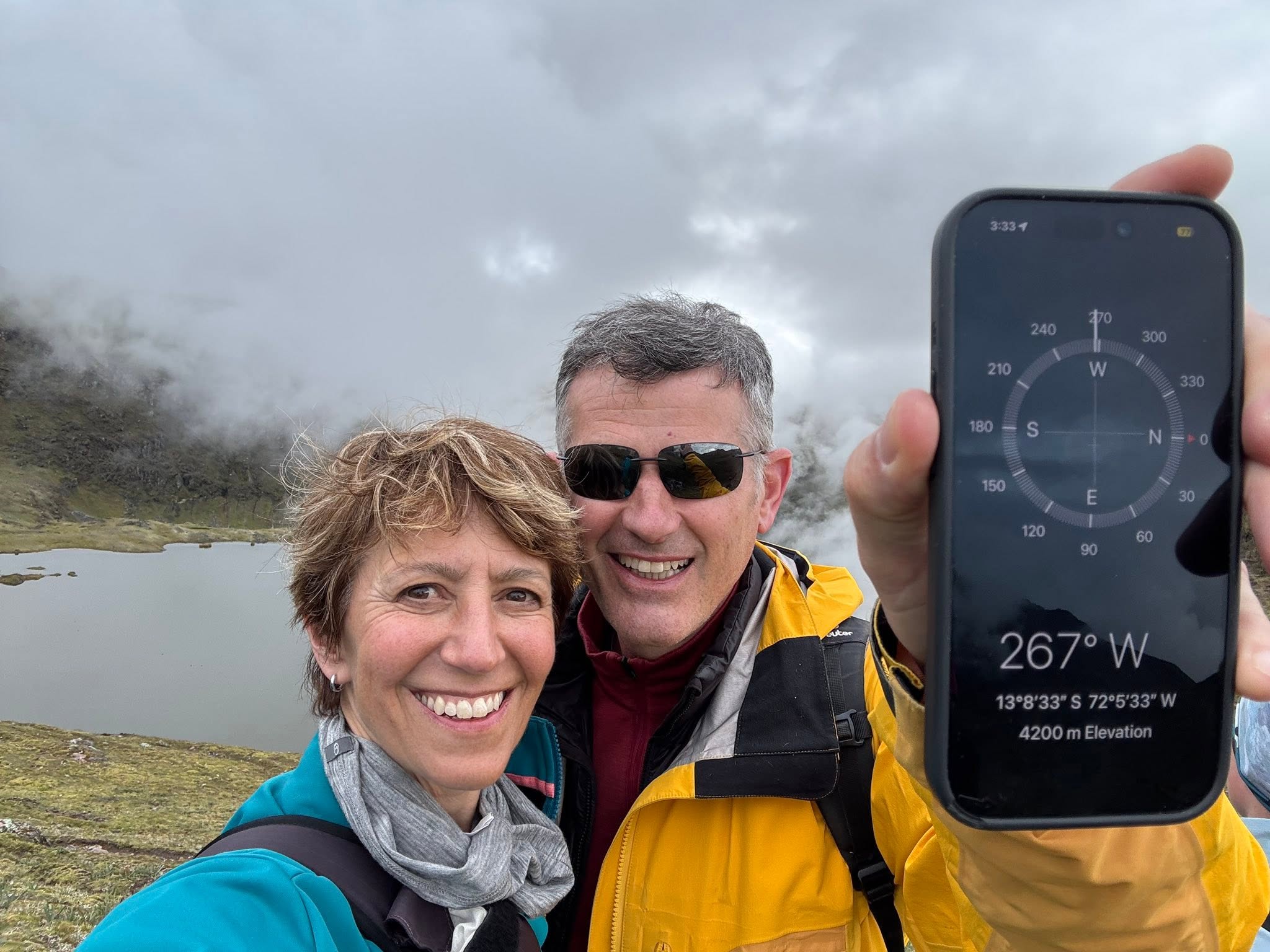
The summit of this hike, 4200m. The scenery takes your breath away, but so does the altitude!
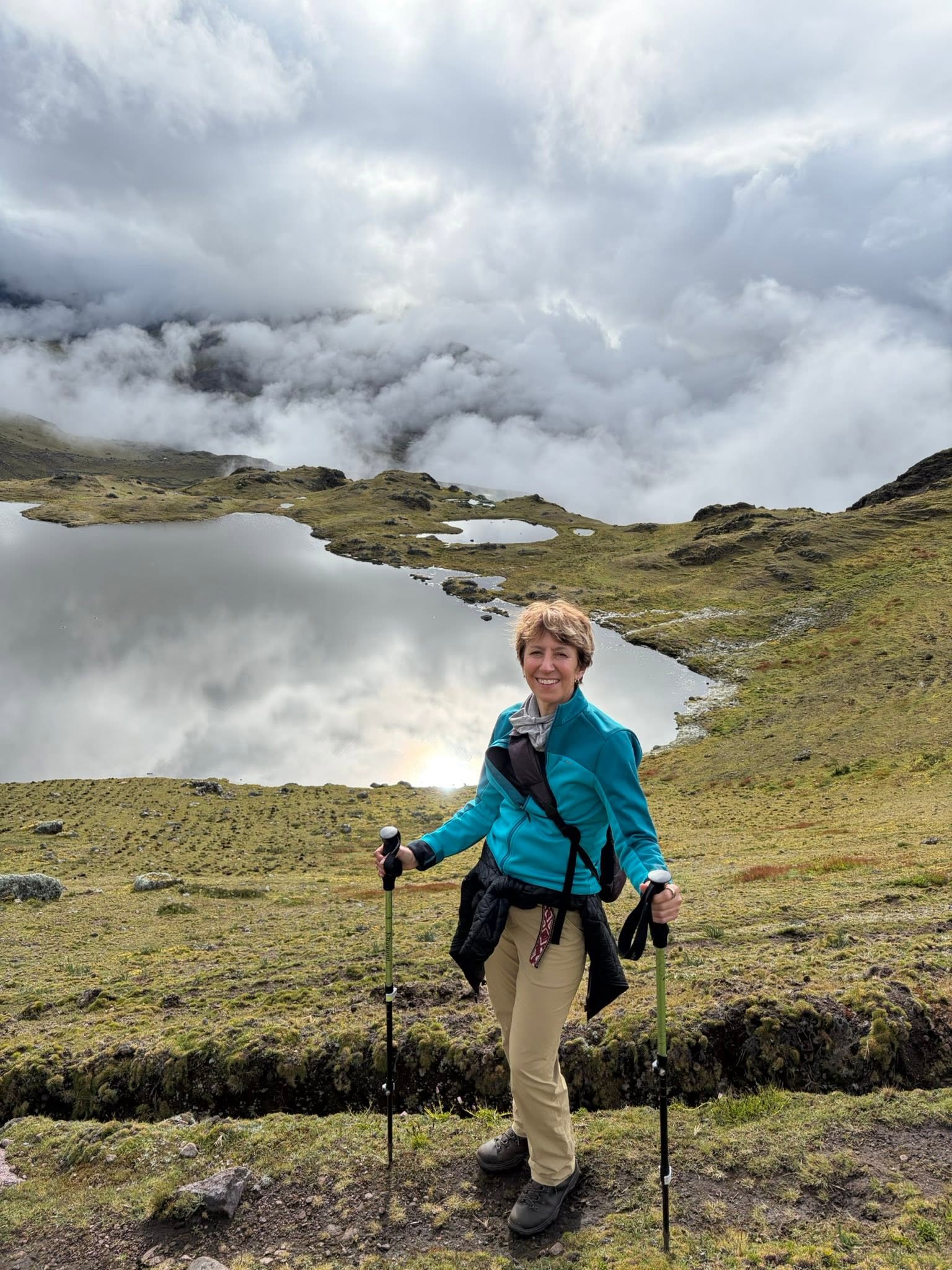
The Ipsaycocha Lagoon at the summit. Nope, not the weather to take a dip!
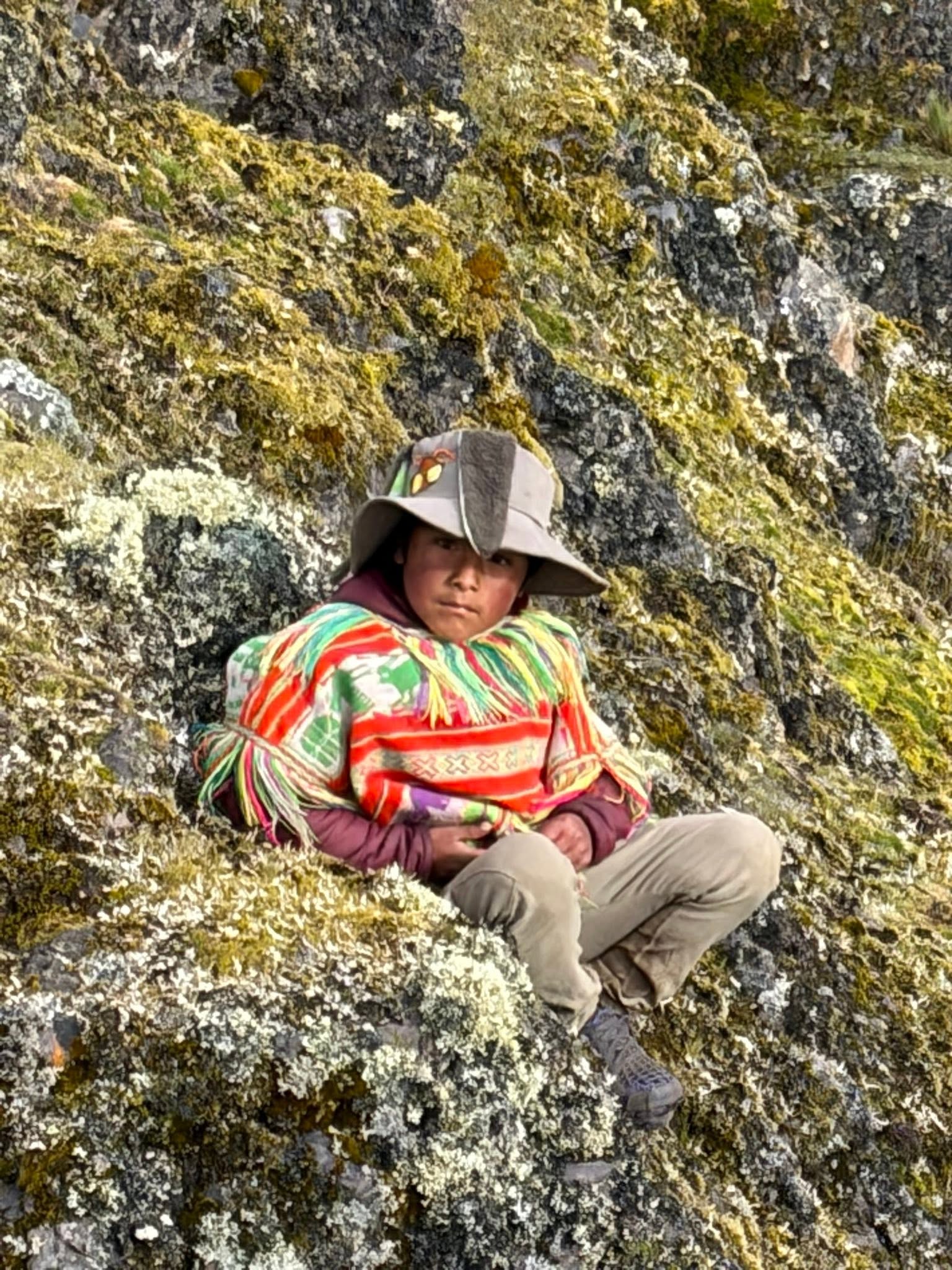
Our fearless donkey guide, taking a break, nestled in a perfect spot in the soft, moss covered rock.
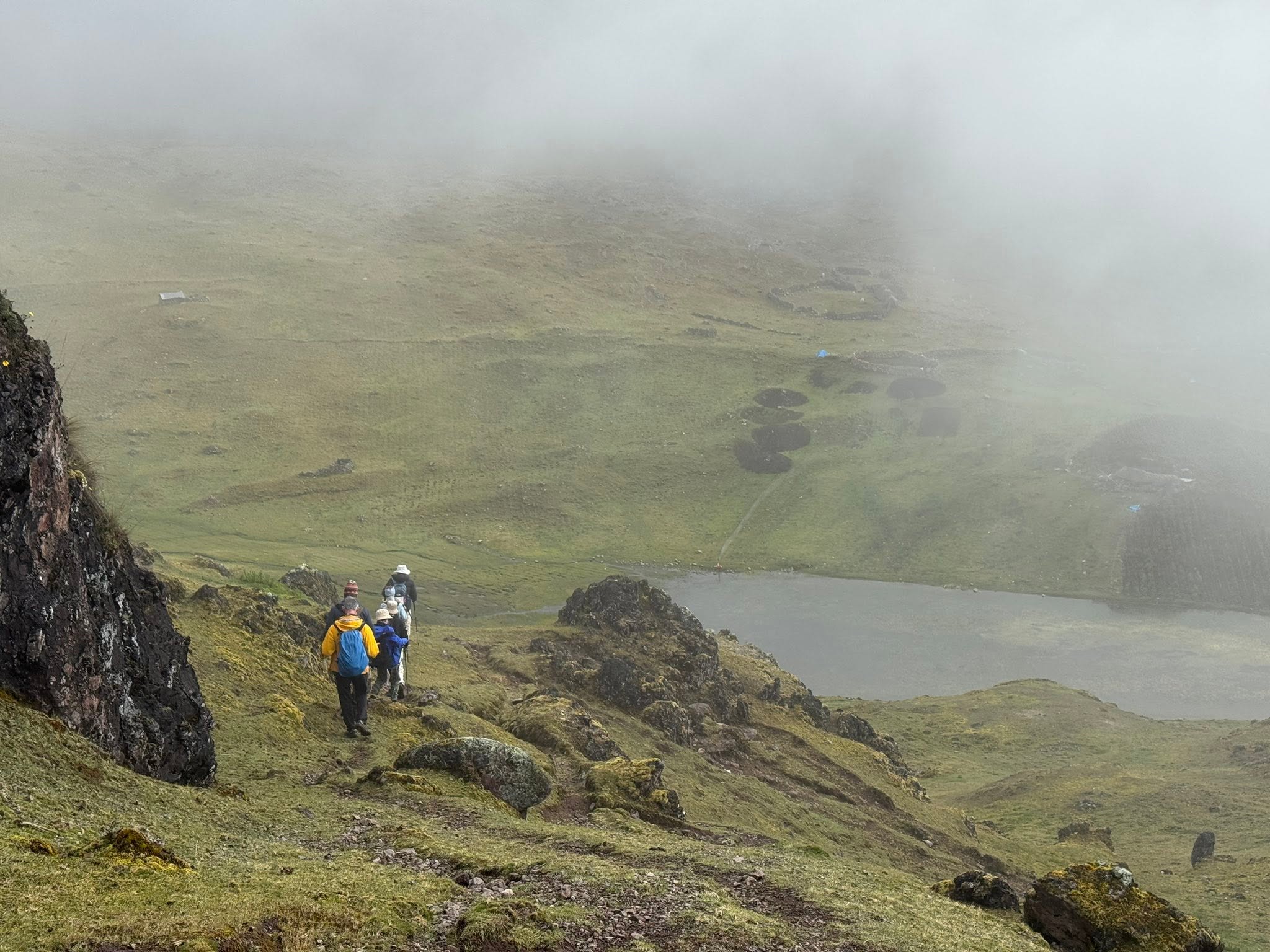
Our descent into the fog, past another lagoon.
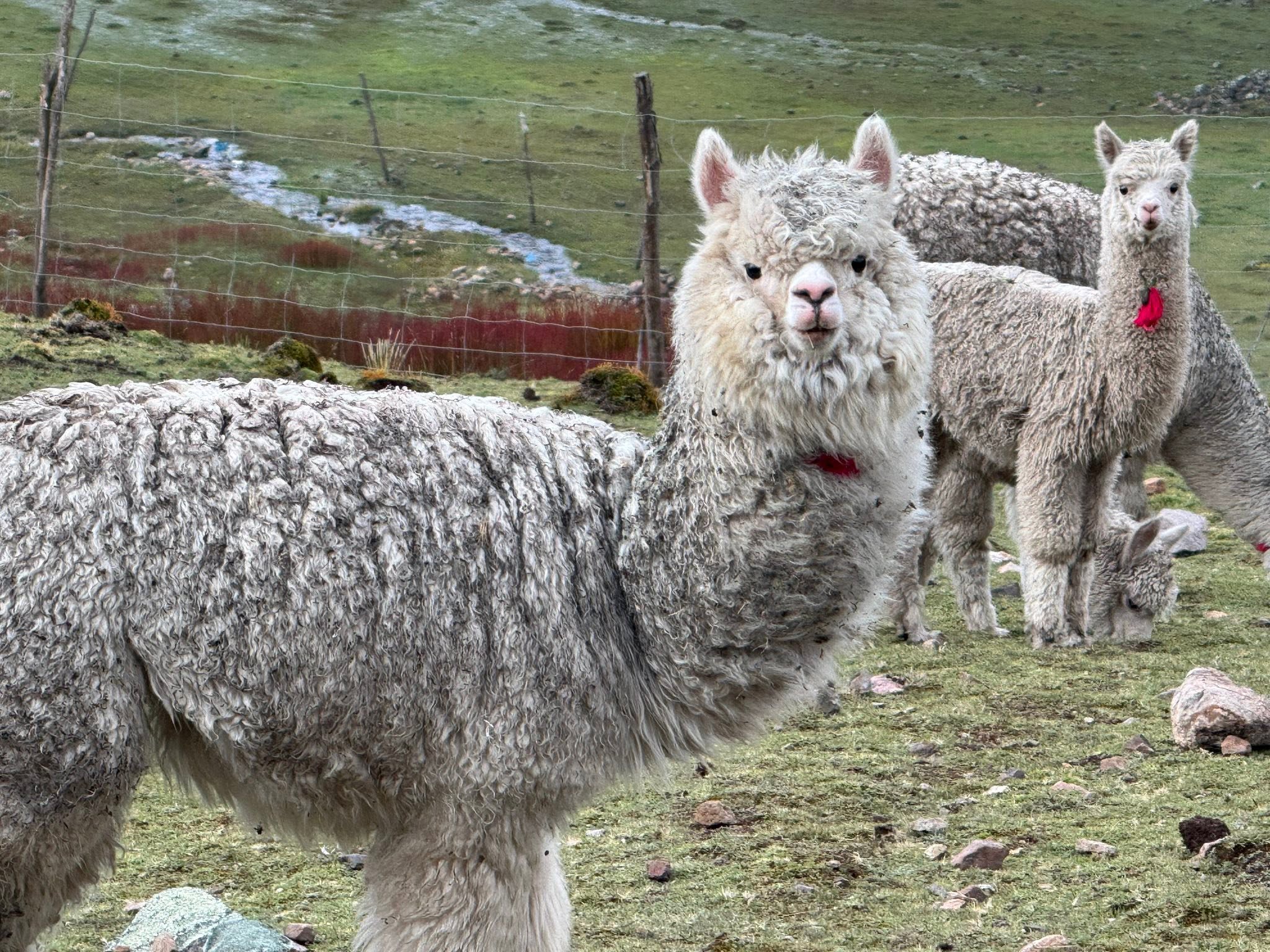
These alpacas always look both surprised to see us and ready to give us a kiss! What’s the difference between a llama and an alpaca? Alpacas have furry faces.
Alpacas are used for their wool and for meat…and for photos at all the tourist sites. Llamas are bigger and stronger, and used as pack animals. Llamas wool is much coarser and would be used to make carpets.
There are so many herds of both on the mountains it begs the question of how farmers identify their own. Unlike in the UK where you see splotches of red or blue paint on the backs of sheep, here they put a ribbon around their necks or they cut the ears into an identifiable shape.
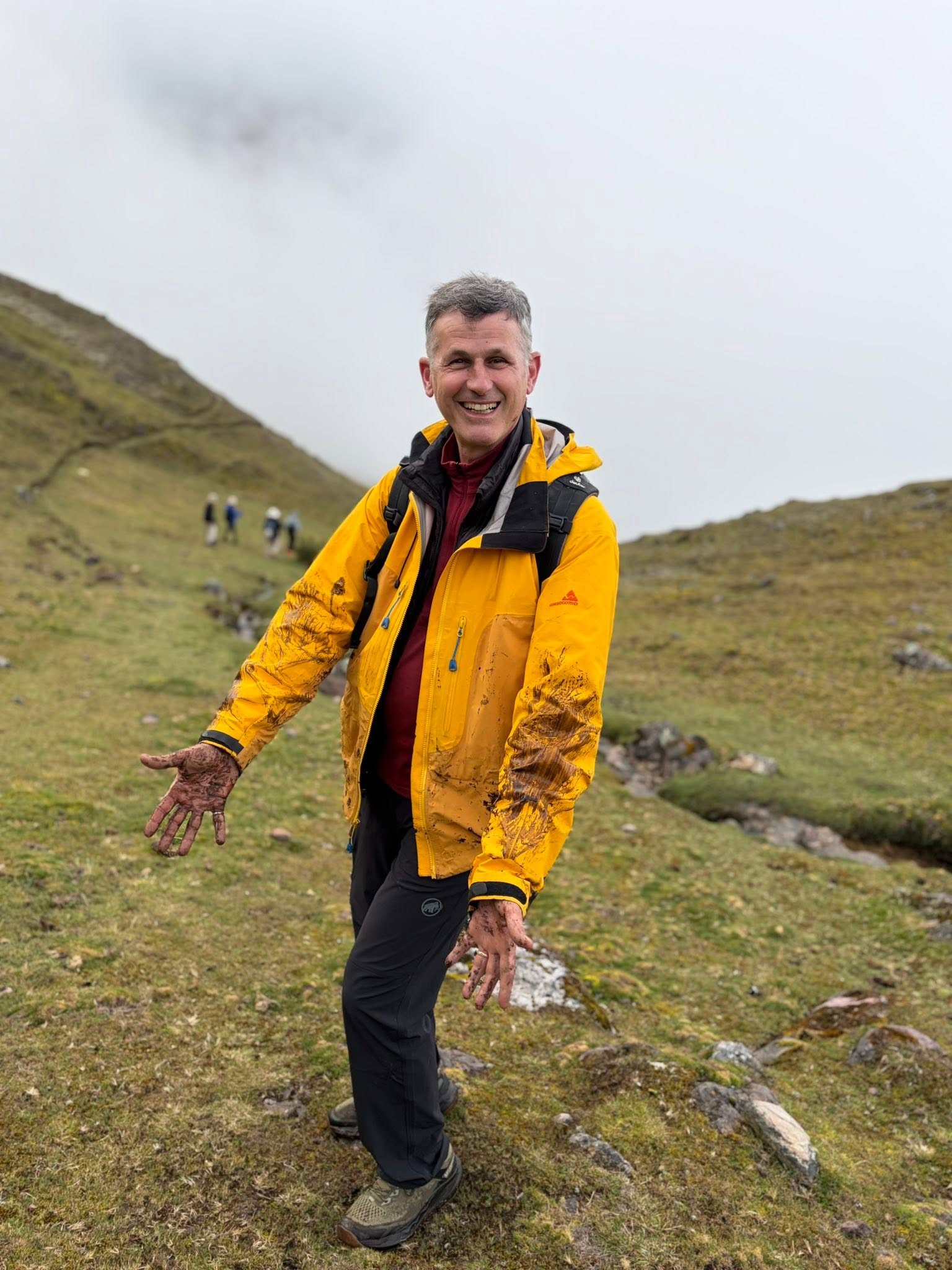
The incident…Adam slipped and fell in the mud!
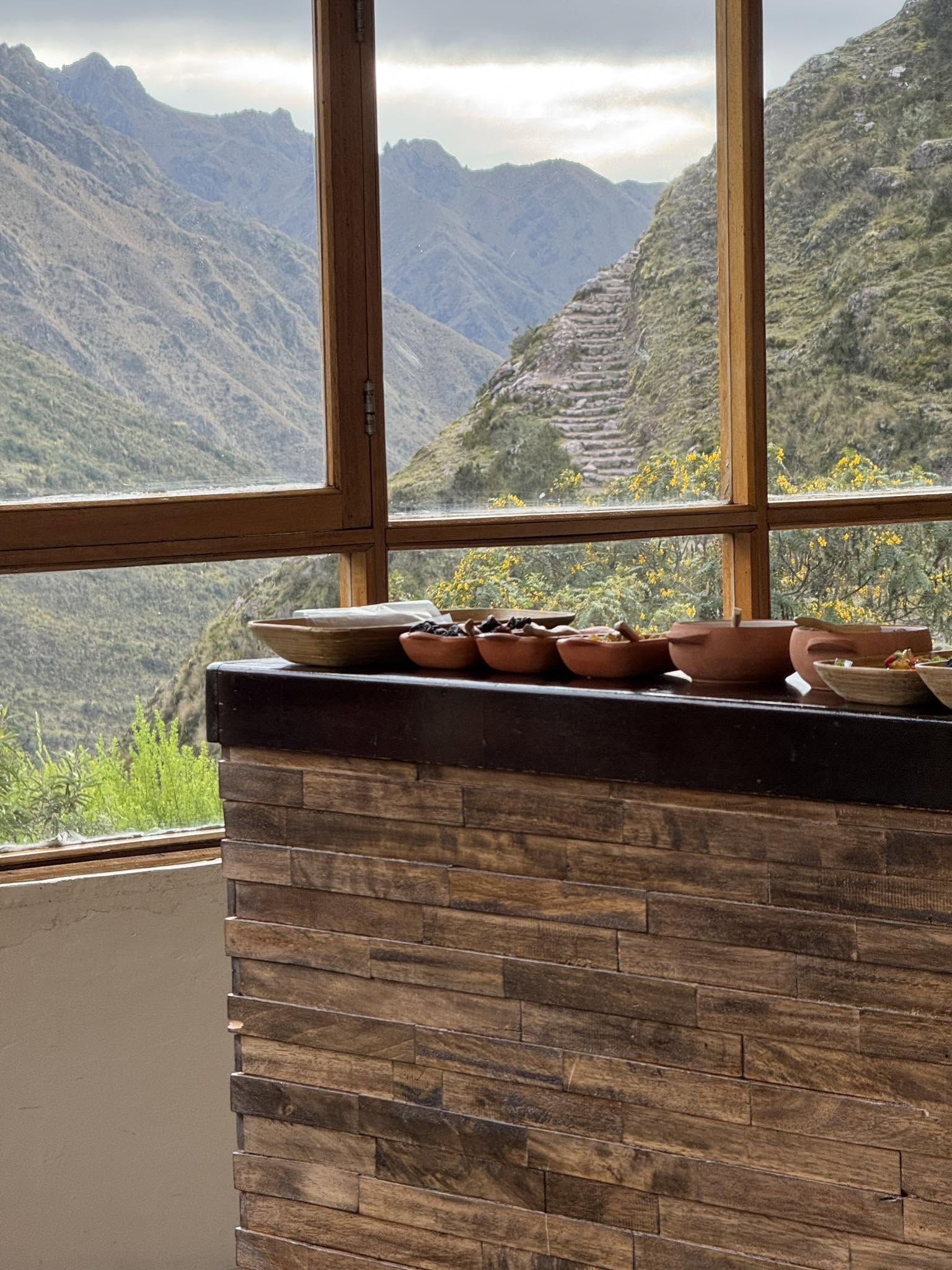
The view out the window of our beautiful lodge is the stone steps we hiked down to get to this oasis in the mountains. Despite the “incident” that preceded our arrival, they still let Adam in. Fortunately, he had the sense not to sit down in the white sofa to enjoy the welcome tea.