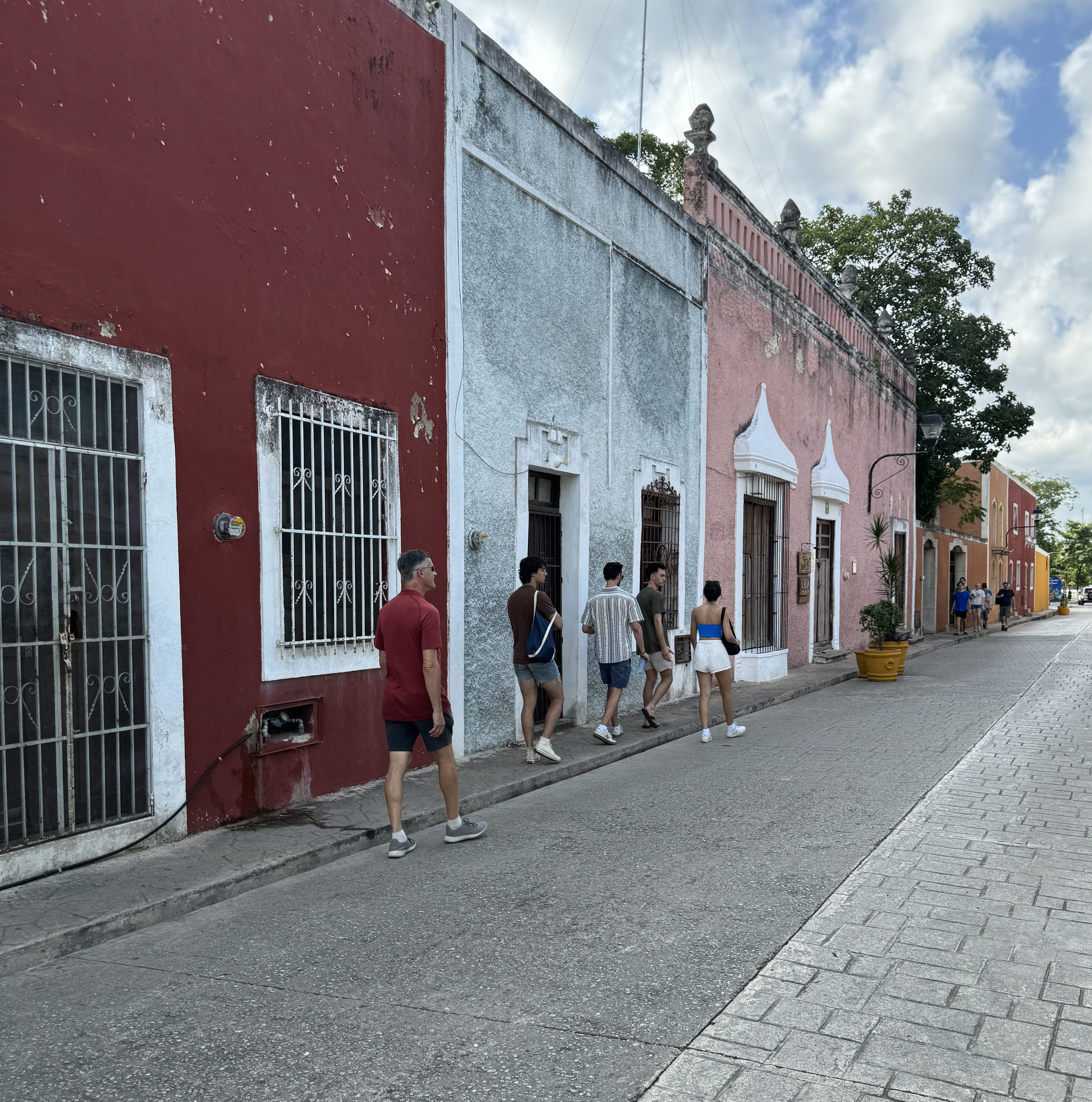
Vibrant Valladolid
Valladolid is one of Mexico’s well-deserved Puebla’s Magicos, officially recognized for its magical qualities of beauty, history and legends. Although touristy, it retains much of its authenticity. Its tourist claim to fame is its proximity to Chichen Itza but most heading to the pyramids make a beeline straight there from Cancun and the rest of the coast and don’t stop in this stunning town. I would come back in a heartbeat and then explore further west to taste the real Mexico.
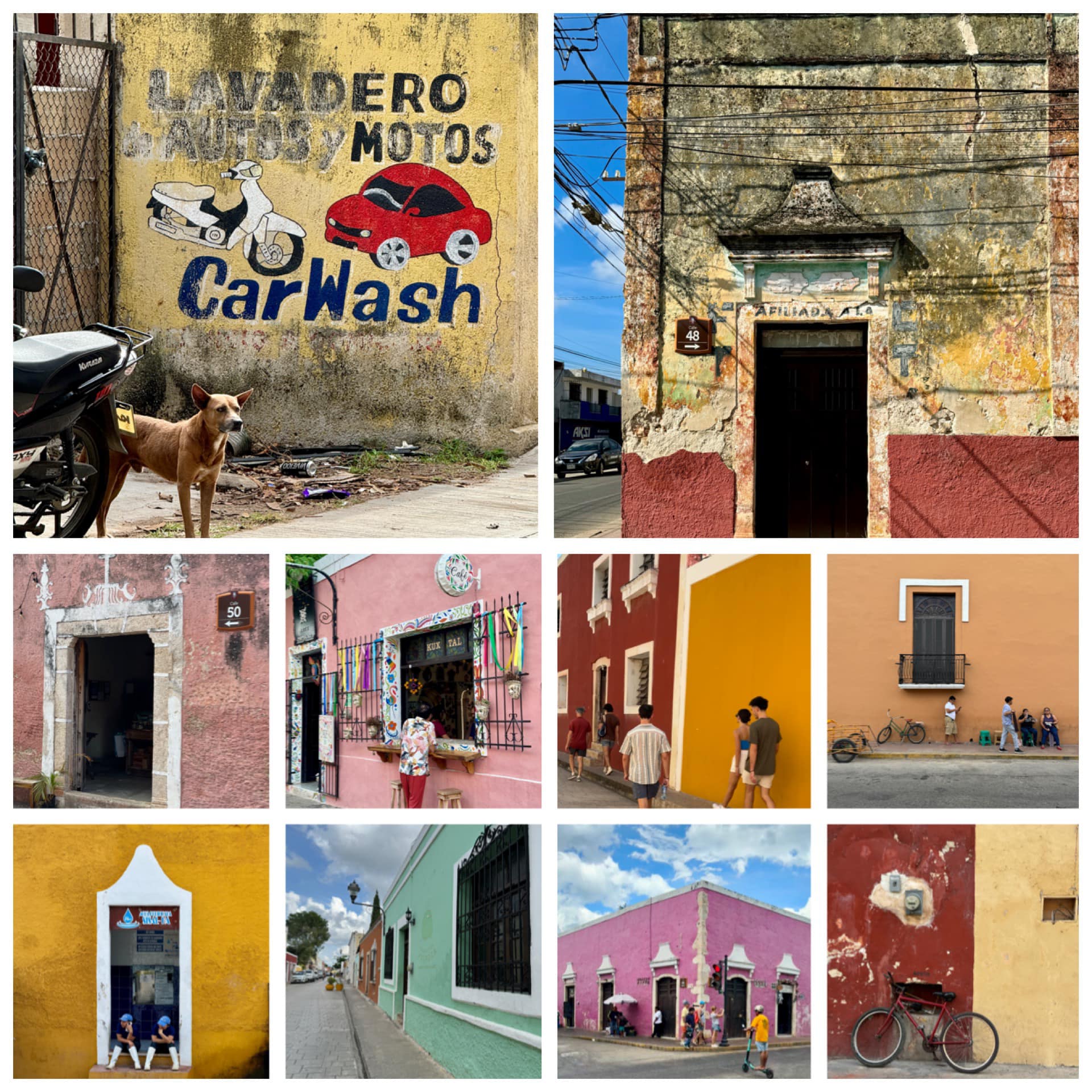
There are just so many beautiful colonial buildings in Valladolid. I had to choose a mere ten from my roll of a thousand!
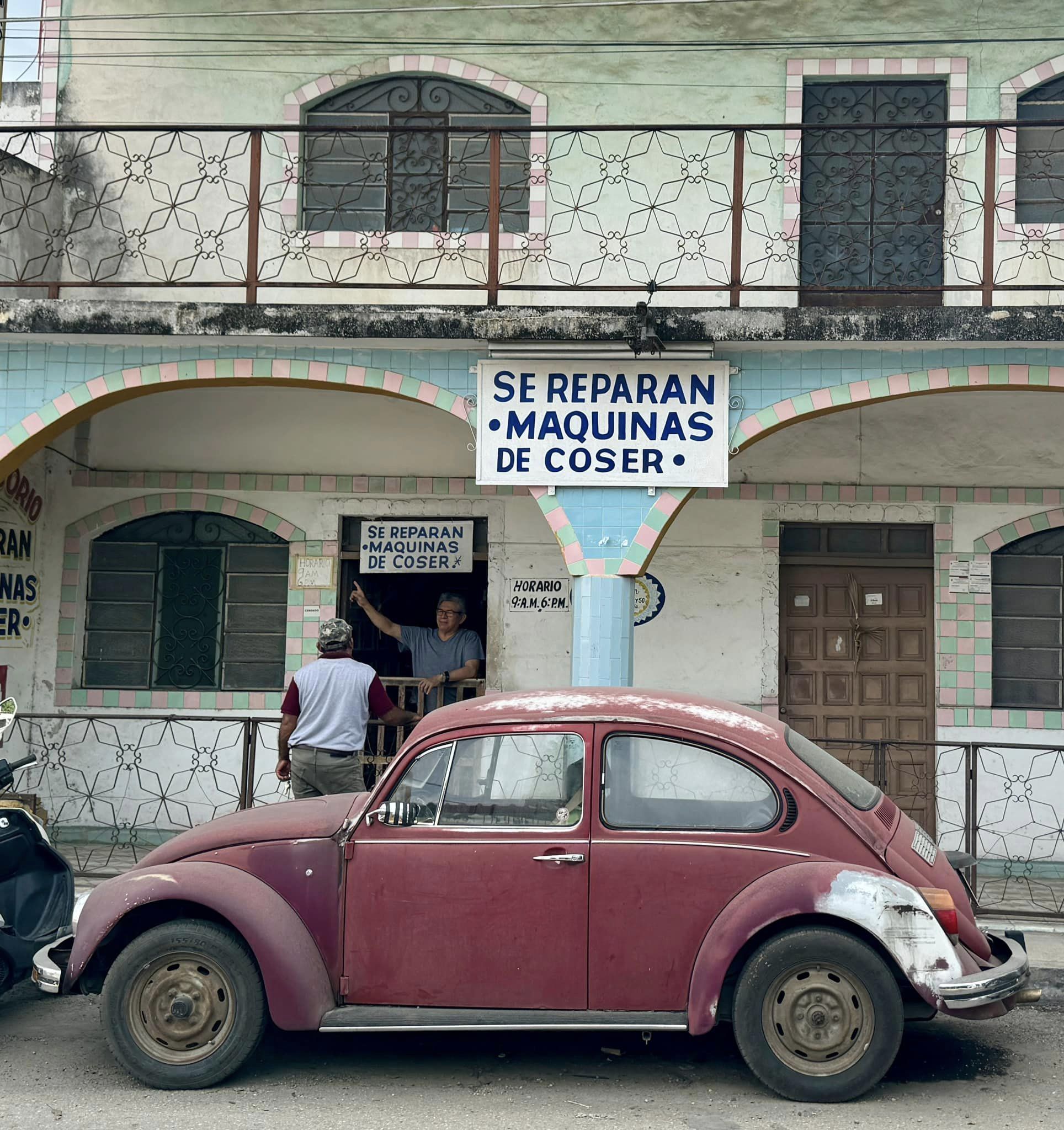
Classic old VW Beetles are all over town in various states of roadworthiness.
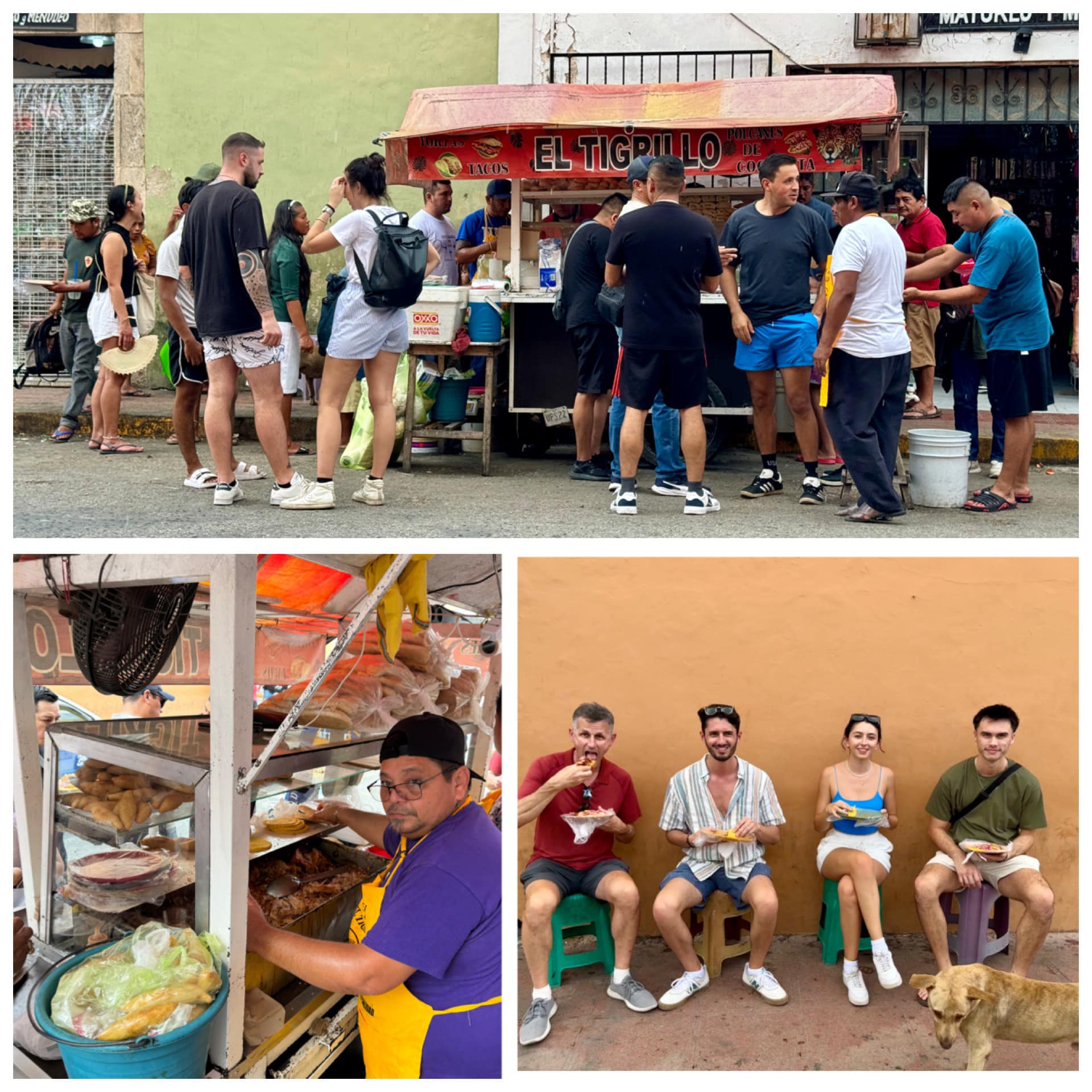
The famous El Tigrillo taco stand on the corner of calle 41 and calle 44 (easy to navigate a town when all the streets are numbered!). Cochinita pibil tacos and polcanes (fried corn dough shaped like a small football and split open like a bun). Spectacular!
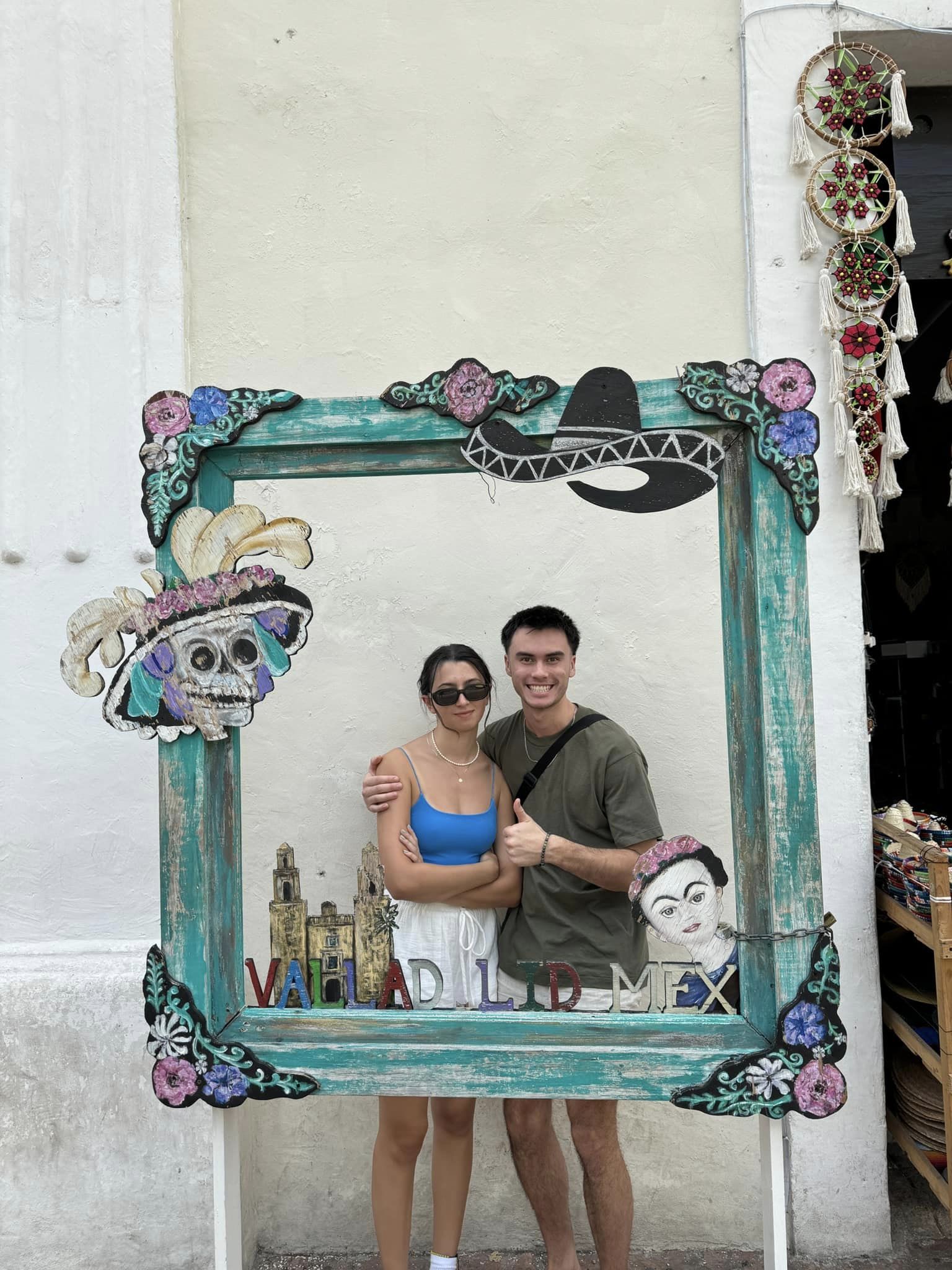
Robyn so didn’t want to be in this cringy photo so we just had to do it!
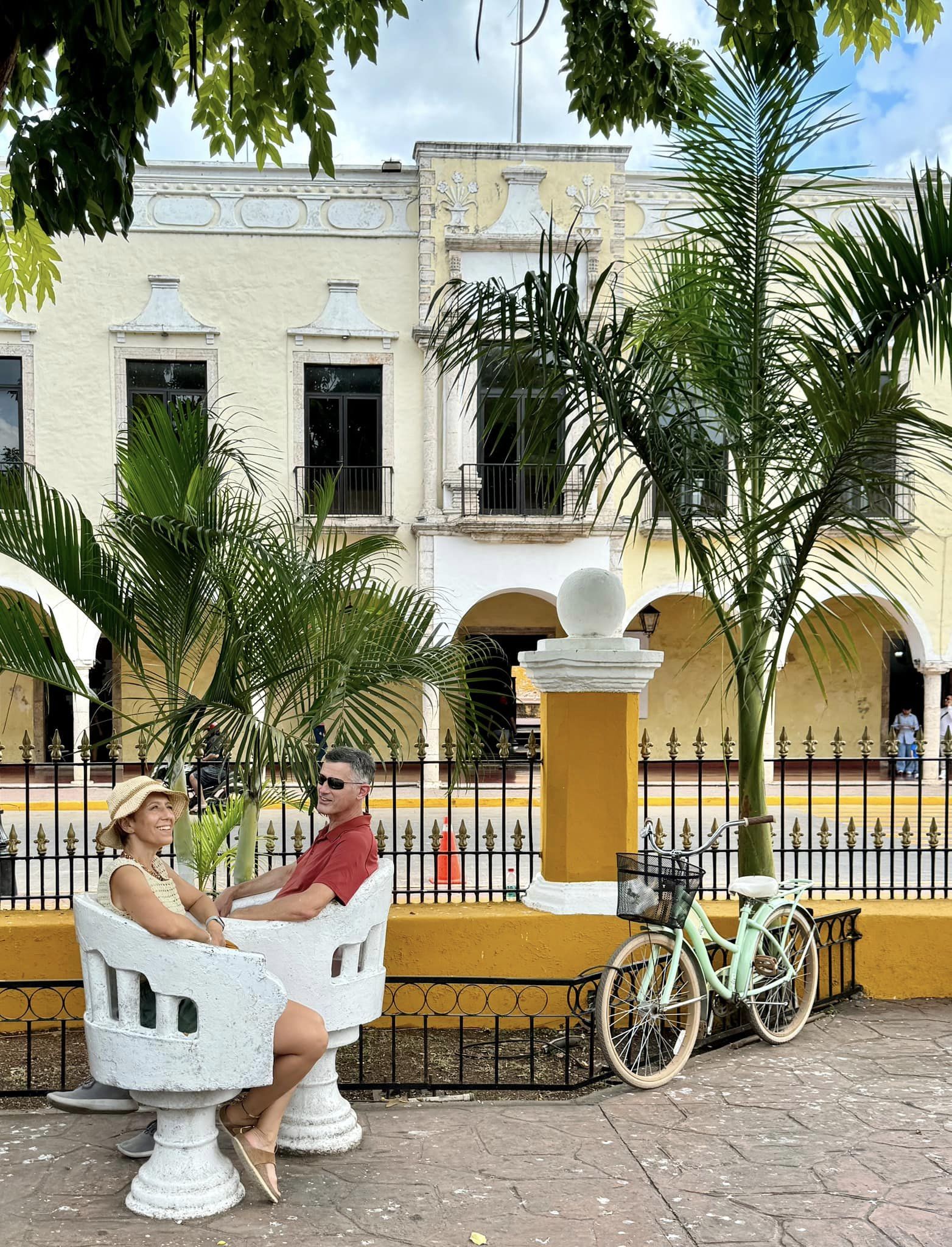
These chairs are all over the town and are called “Confidentes” (confidant), “Tú y Yo” (you and me), “De los Enamorados” (for those in love) and in more technical terms “Sillas Binarias” (binary chairs). Perfect for long conversations without getting a crick in your neck!
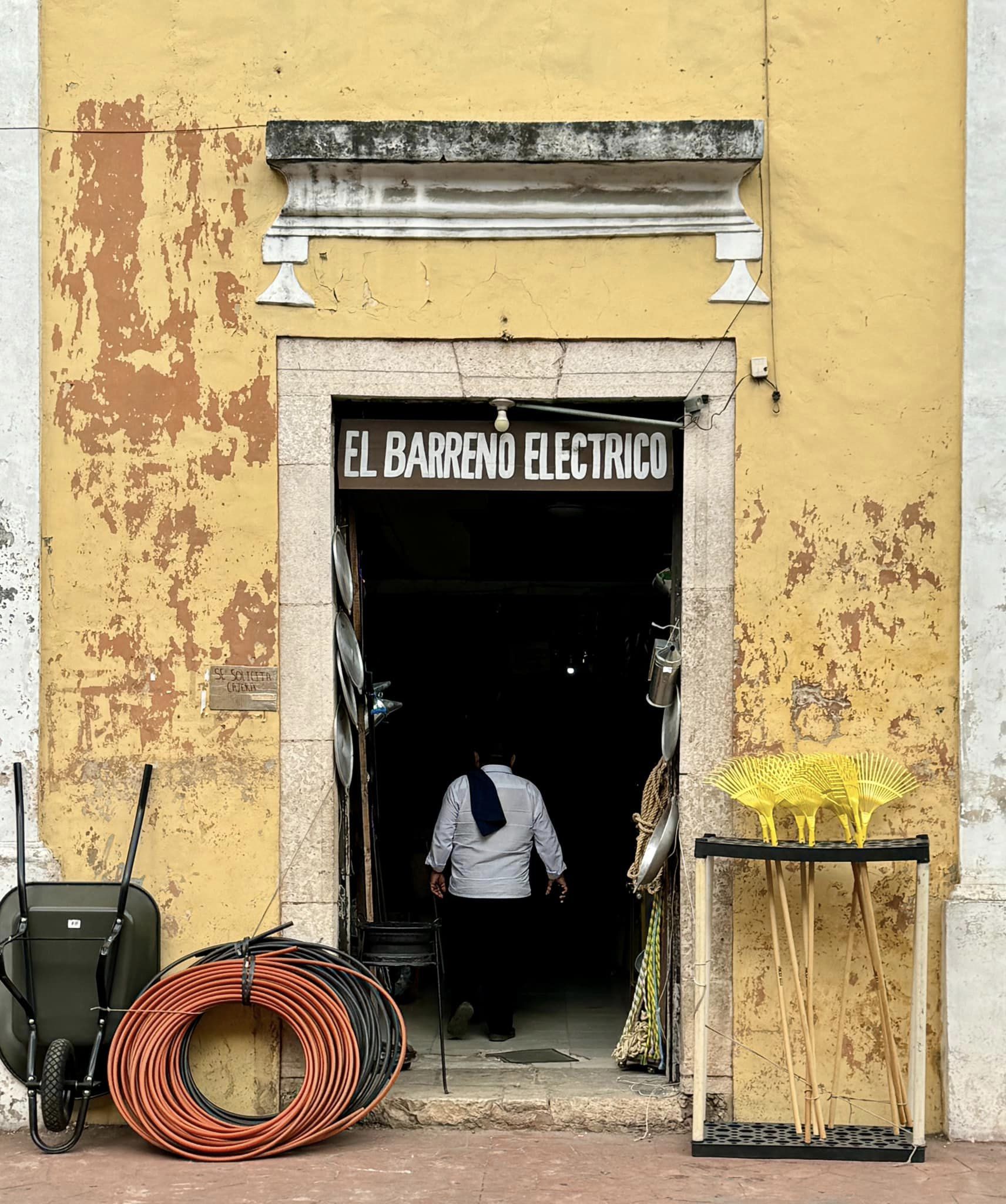
Picking up electrical tidbits.
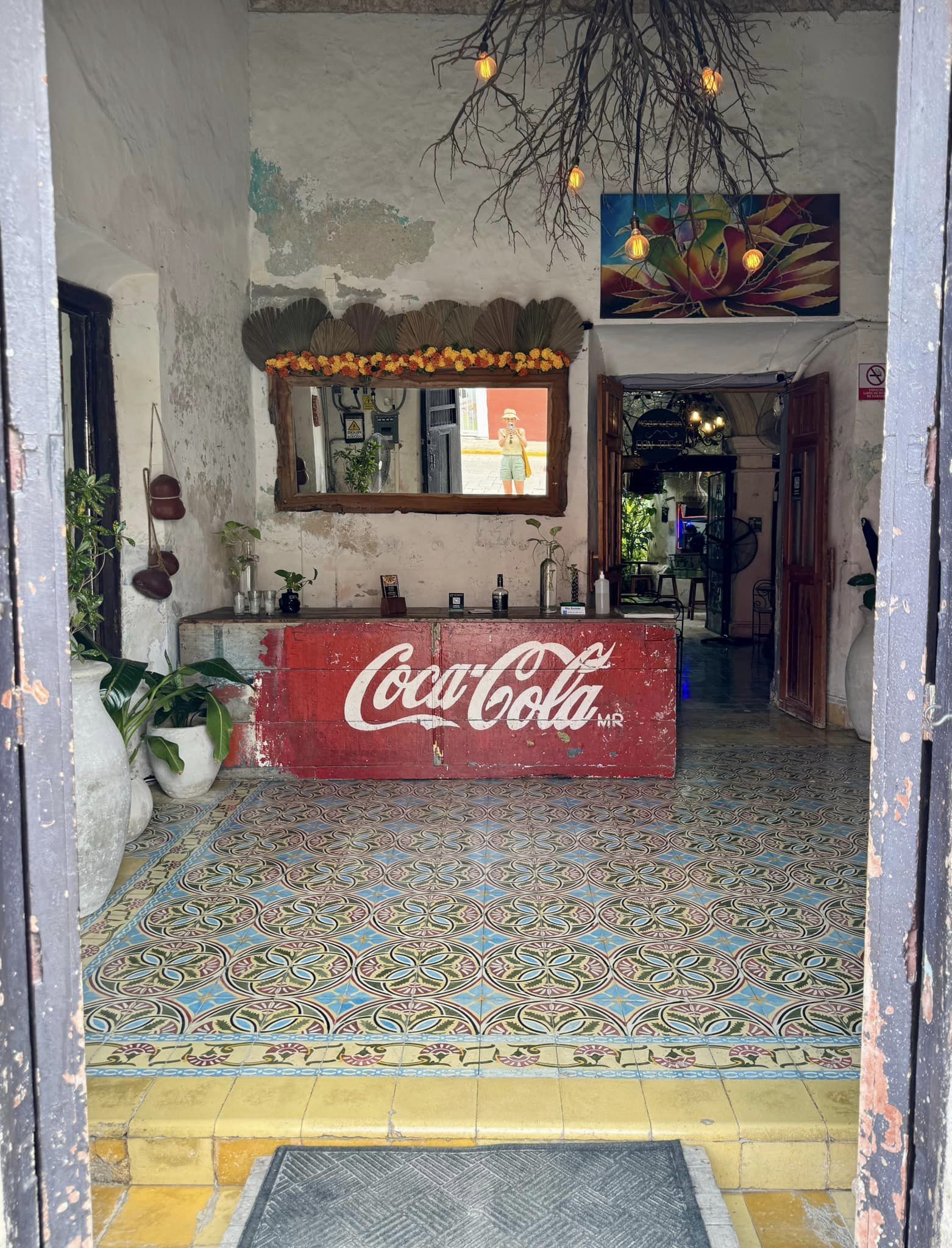
Unintended Mezcaleria selfie.
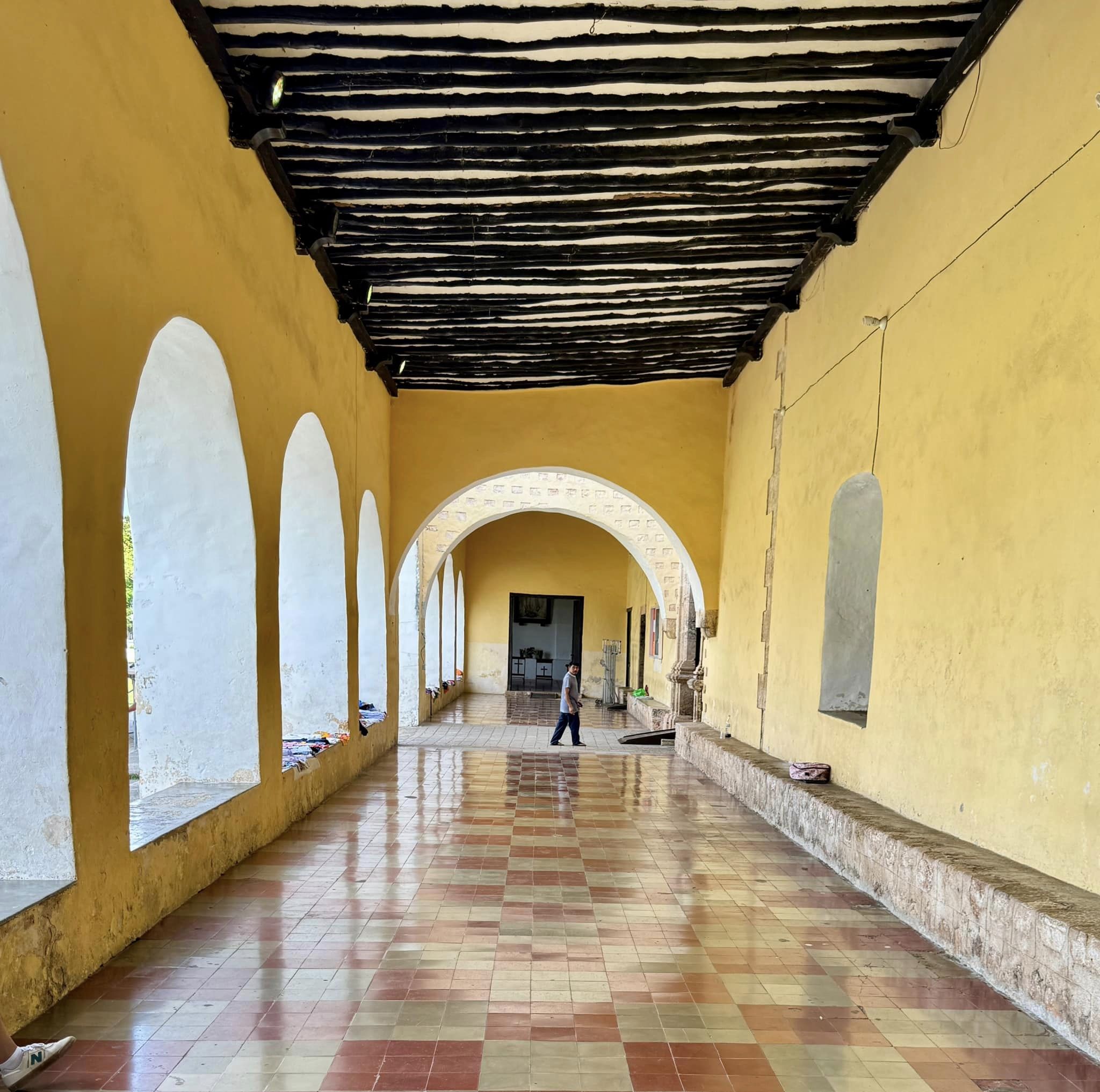
Portico at the former Franciscan Convento de San Bernardino de Siena. This is one of the oldest colonial buildings in Valladolid, dating back to 1552 when its purpose was to convert the indigenous population. It’s still a place of worship but I don’t think we will see any nuns strolling here anymore.
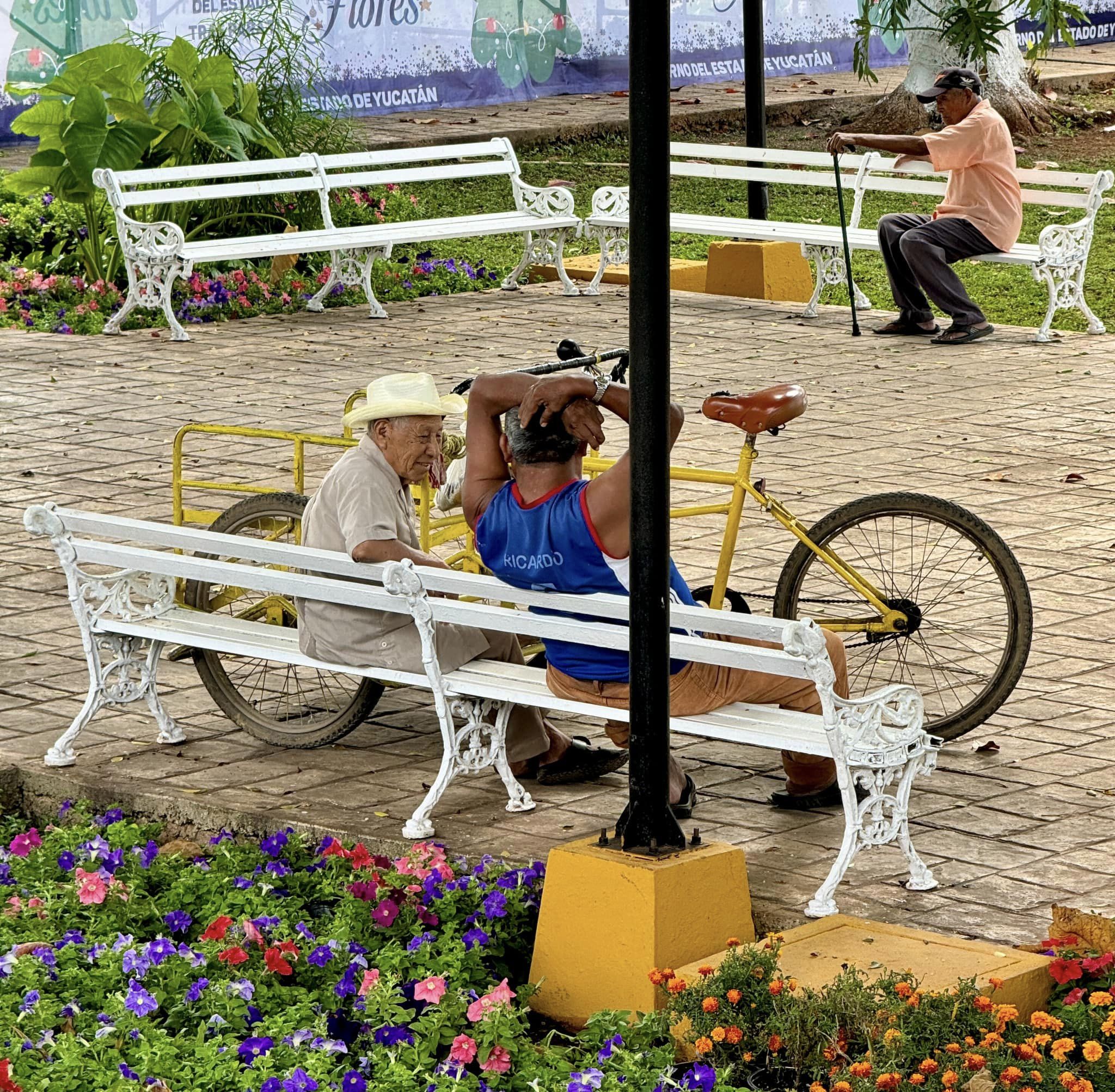
Old men sitting in the park sharing their wisdom and undoubtedly solving all the problems of the world.
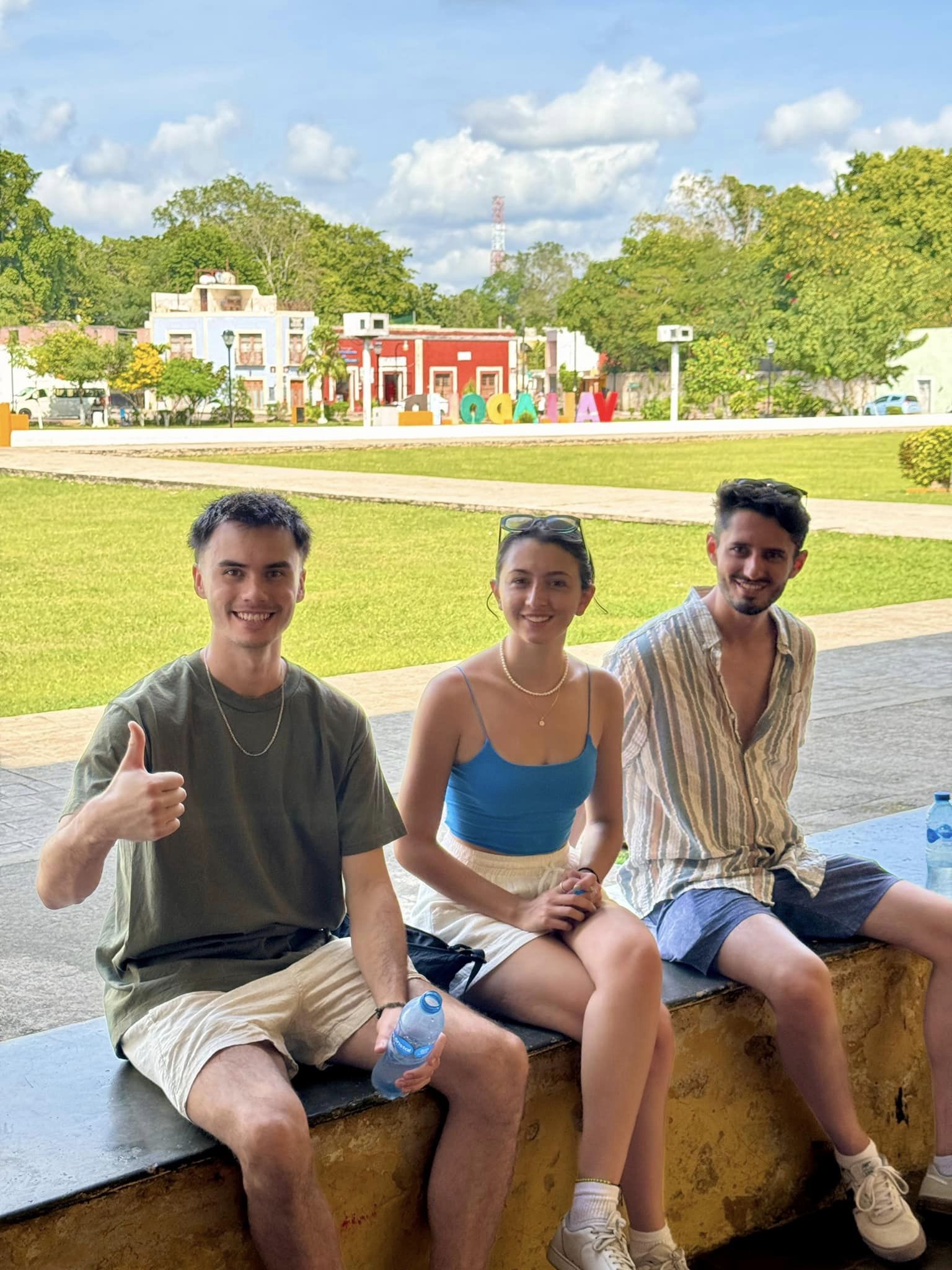
They wouldn’t let me take a picture in front of the Valladolid sign but I sneakily got it, mirror image, in the background.
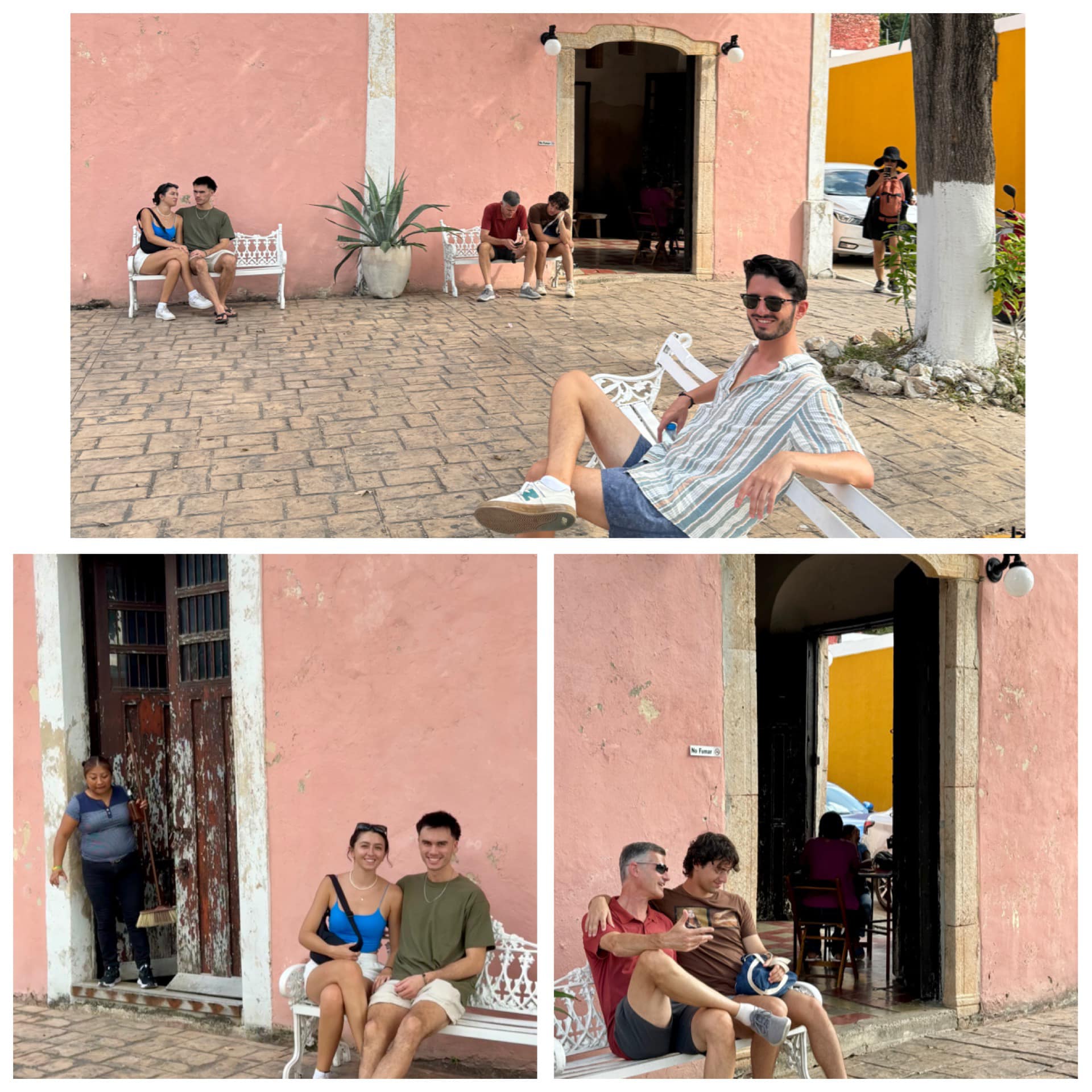
Family ❤️
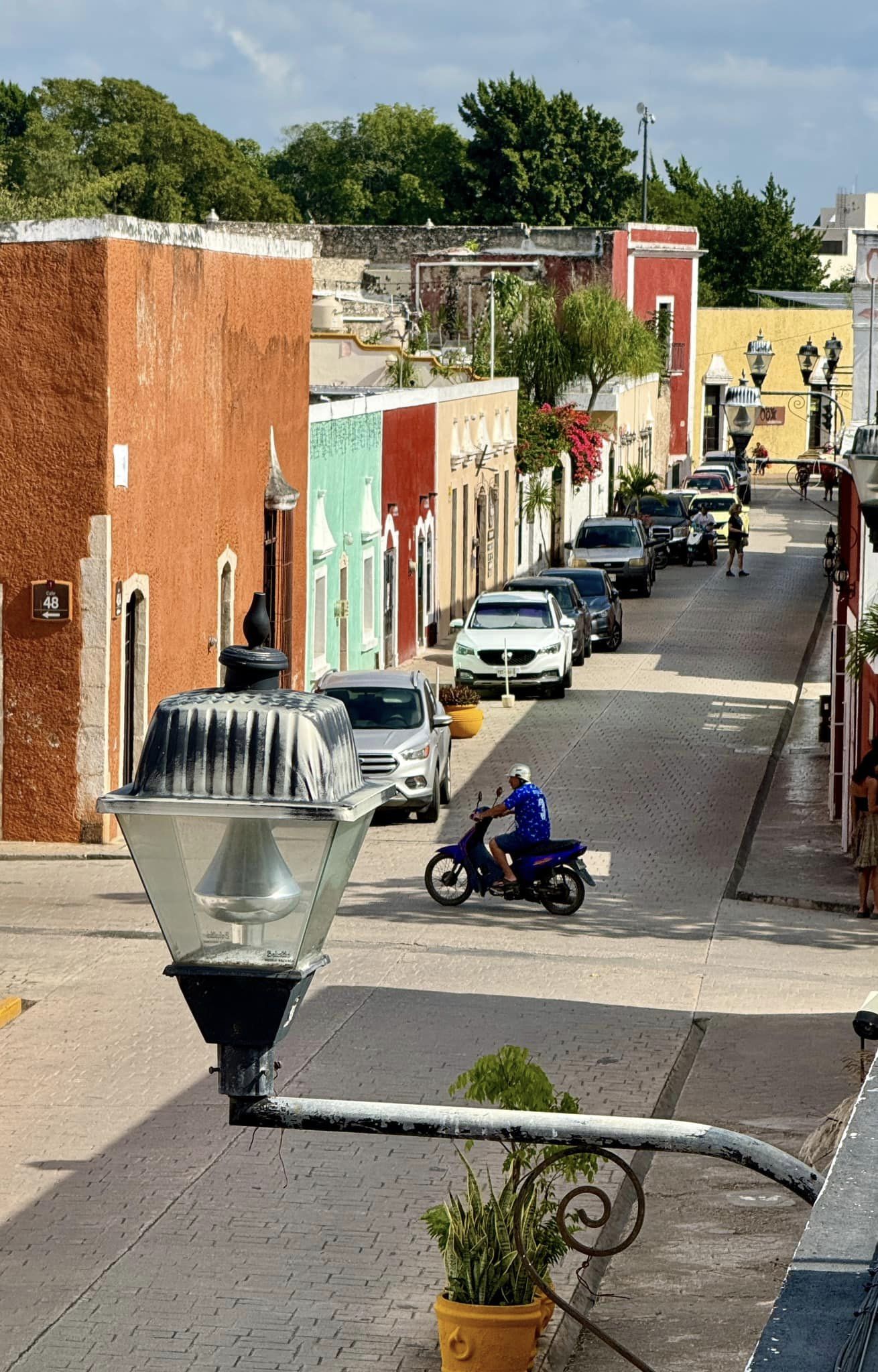
The beautiful Calle de los Frailes. Purpose-built in the 16th century by the Spanish conquistadors to separate themselves from the local Maya population, this road now is a hip hub of fabulous food and shopping. It definitely has different daytime and nighttime vibes.
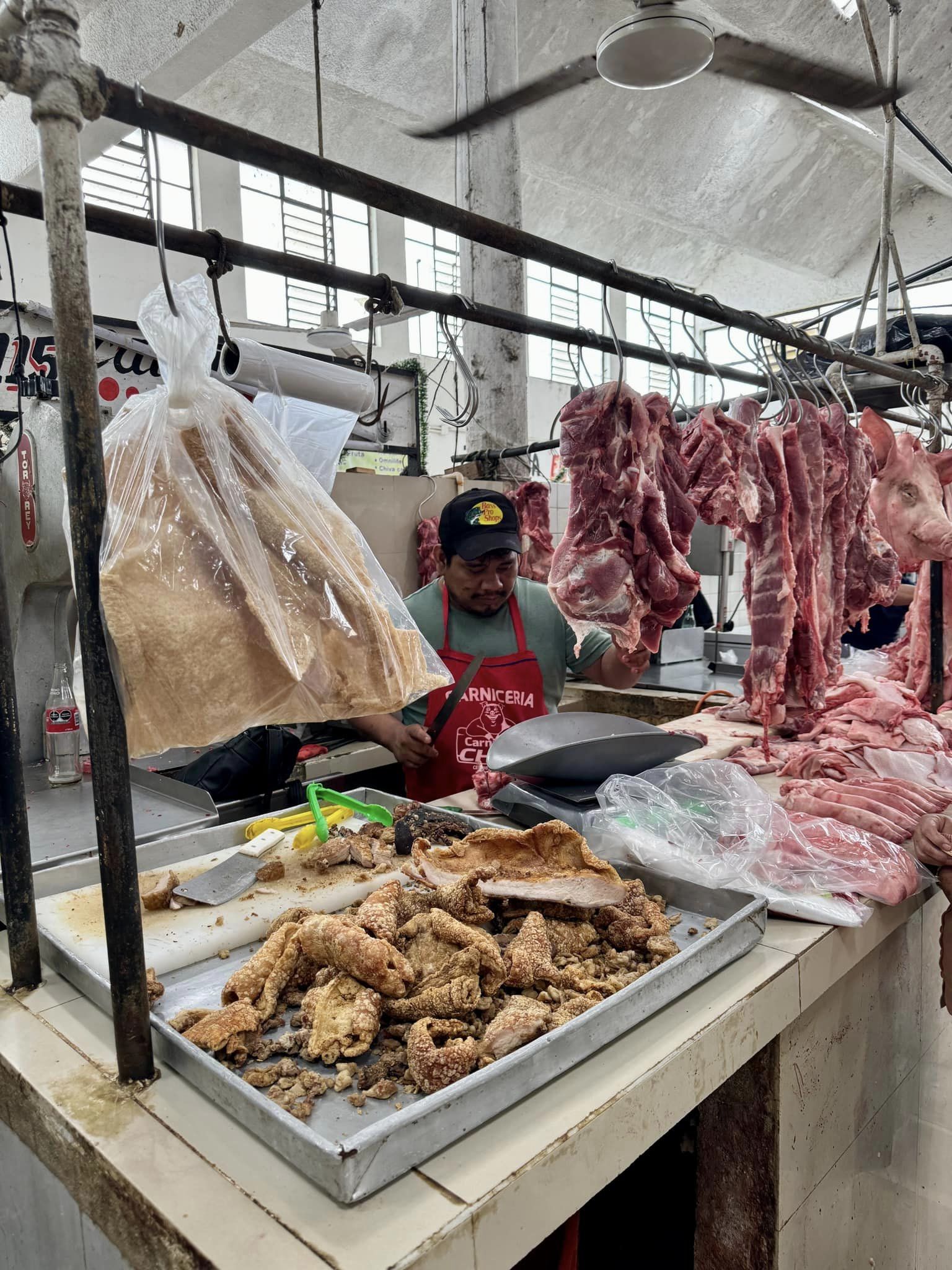
Hunting for fresh chiccarrón…found it at the Mercado Municipal!
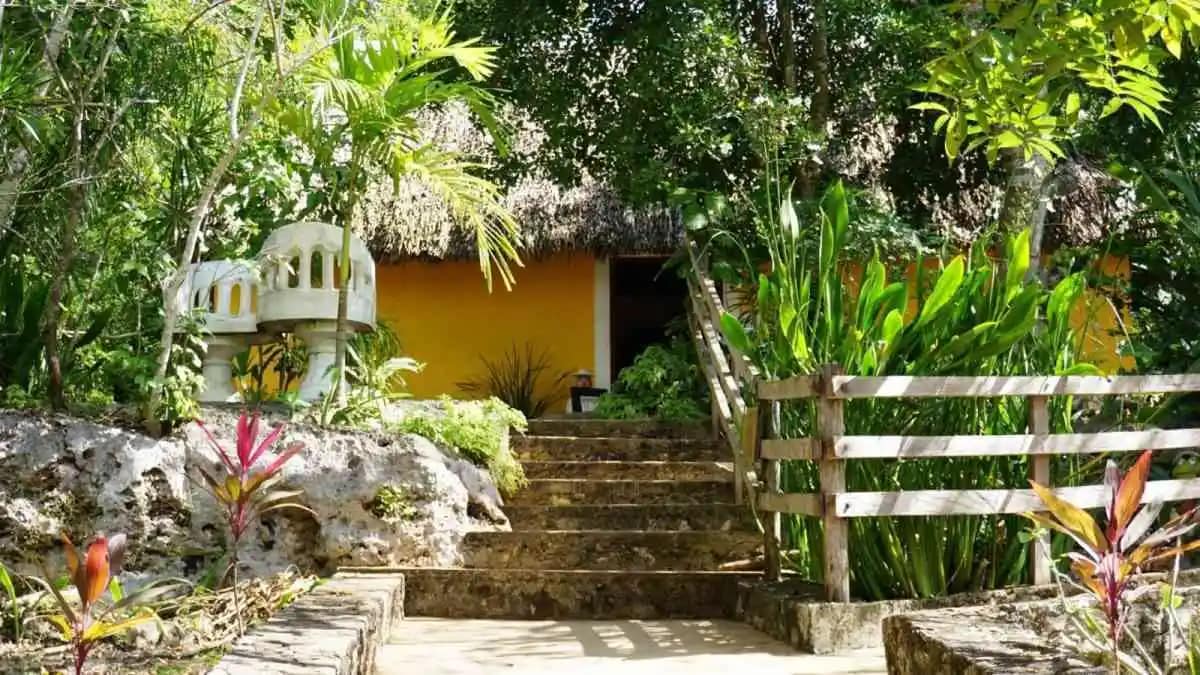
And now, for something completely different. The Xkopek Bee Sanctuary. What a treat! This nature park in a dead cenote (yup, there is a life cycle to the cenote, more on that in a bit) was absolutely fascinating. The name comes from two Mayan words: “Xkop” meaning dry/dead cenote and “ek” which is a type of wasp. This park is all about the stingless Melipona bees native to the Yucatan. These bees are about a third the size of bees we are familiar with in North America and look more like flies. There are five Melipona bees that make their protected home in Xkopek. The xnuk build their nests underground and cover up their access holes with earth and propolis when they are out. Because their nest is easily accessed by predators, they actually have a fake, empty nest nearer the surface of the ground to trick predators. The real nest is about 5 m below ground. Another one I don’t have a photo of (probably because it operates in stealth mode) is the limon kaab which don’t actually make honey. They steal pollen and honey from other nests to survive. Their name comes from the lemon scented pheromones they release to make the guard bees “drunk” so they can gain access. Even though they don’t make honey, they support the ecosystem by being active participants in pollination. The Xunan Kab, the Royal Lady Bee, is the most sacred of bees and is believed to be a direct descendent of the Falling God (the god of the earth) who we saw depicted at the ruins of Tulum.
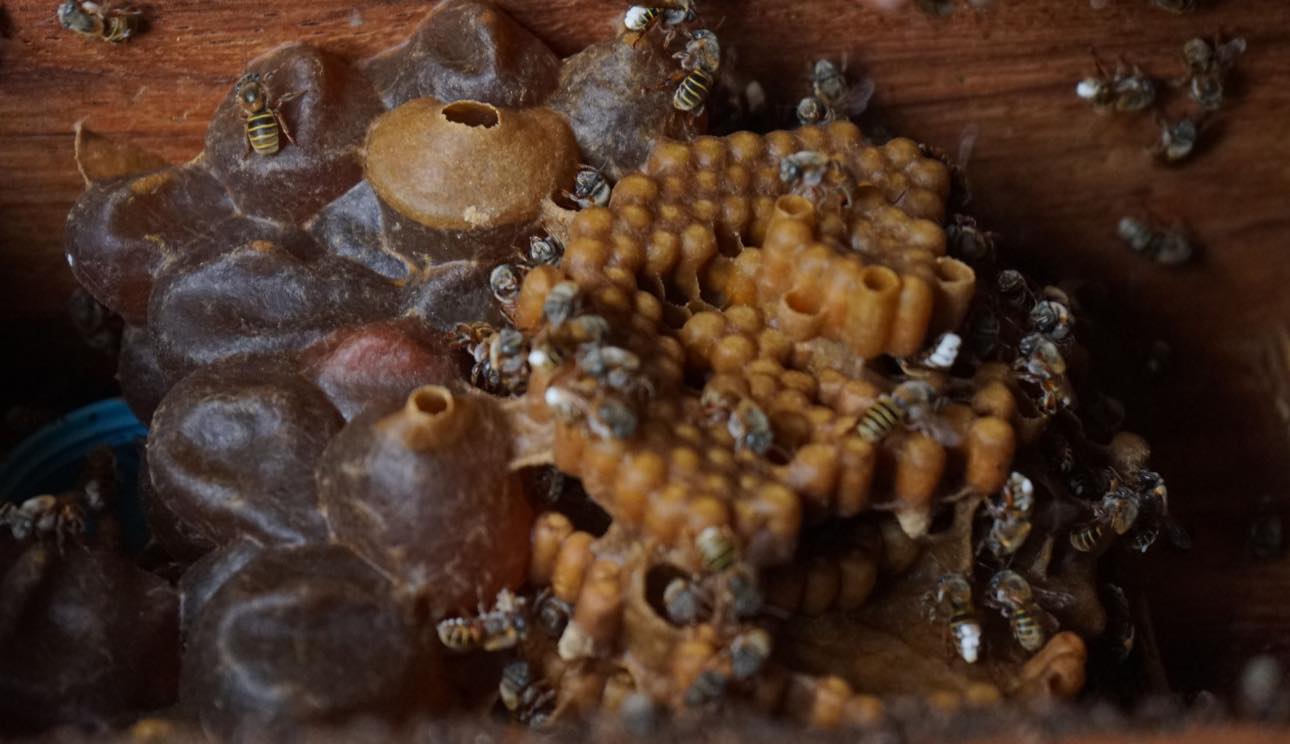
These bees build their nests out of wax and propolis. The structure is hard and honey is extracted using a syringe to avoid damaging the cells. These bees make honey with chemicals that ward off microbial and fungal growth, an adaptation to keep the substance from spoiling in the tropics. It’s quite a magical, healing potion!
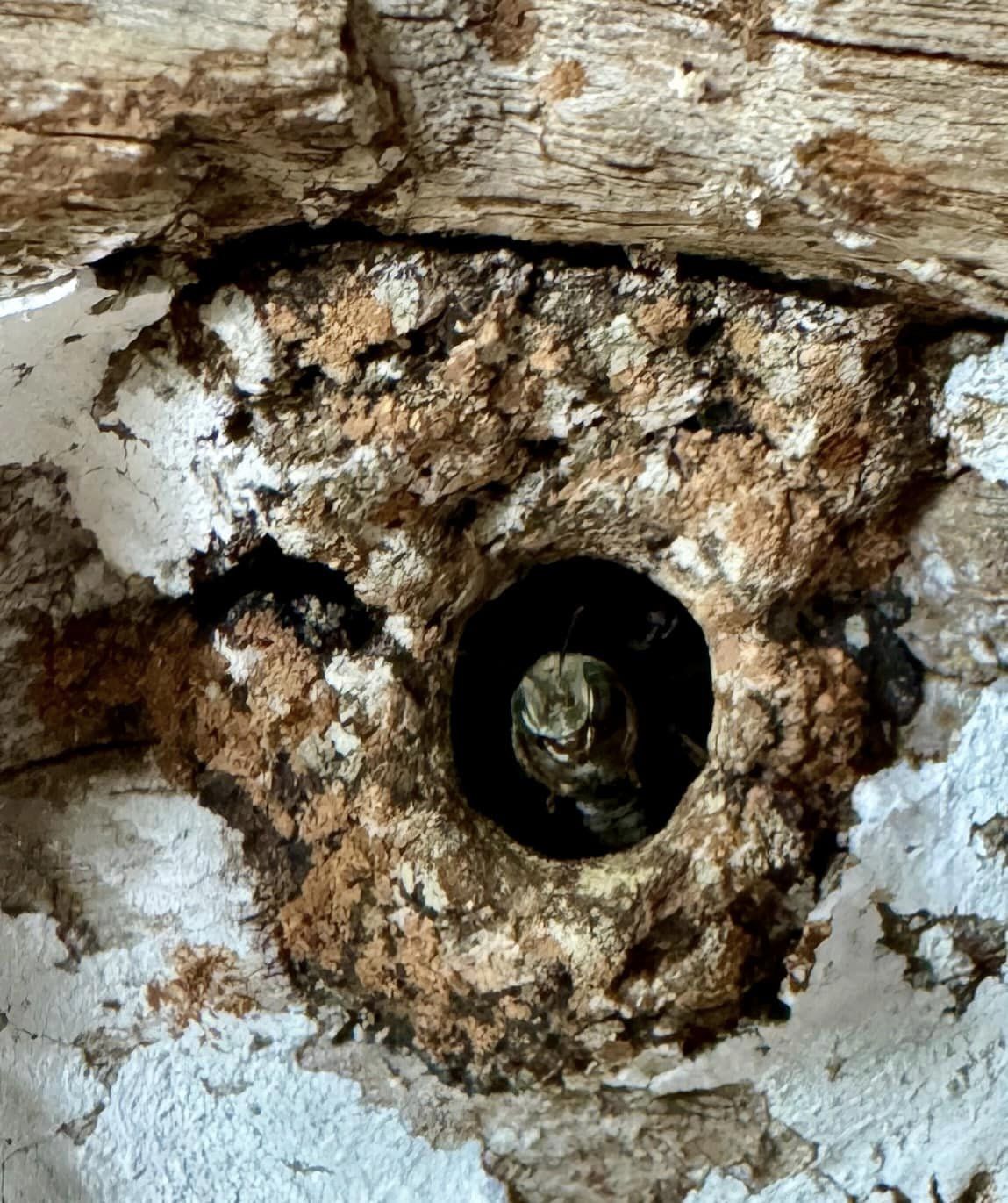
The Sakxik bee (named for the white spot on their wings) don’t produce much honey but focus more on producing propolis, a resin-like waxy substance that is reputed to have a lot of healing properties. The propolis has antiseptic qualities and the bees also use it to prevent the wood of their host tree from rotting. They nest in a hollow tree and like all the others, have a guard bee at the entrance who only lets in his own kind.
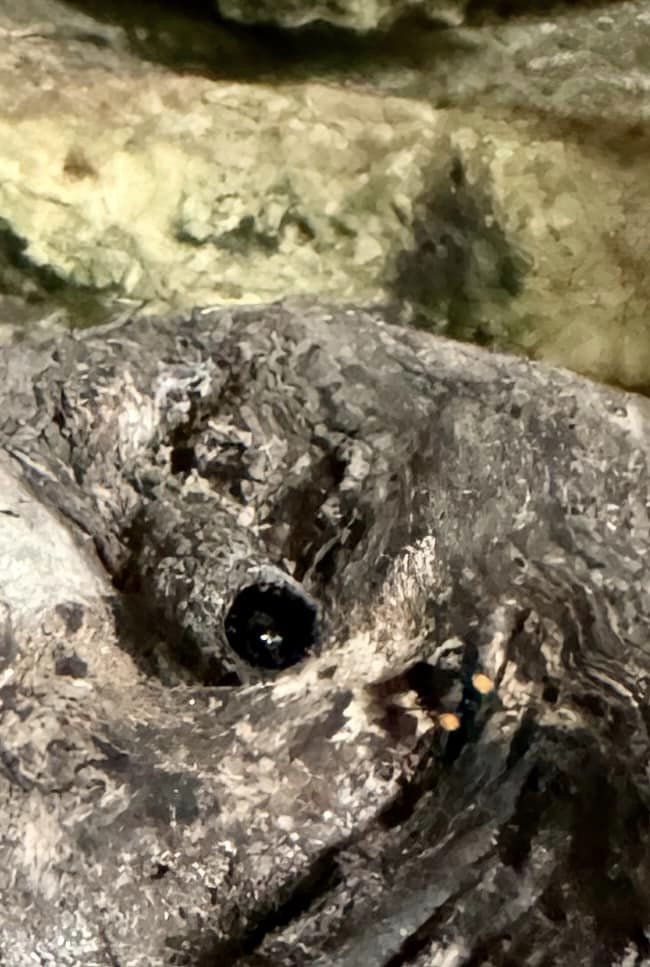
Not the best photo but it all happened so fast in front of us. Here you can see a guard bee at the entrance of the nest and another Sakxik bringing back two little bundles of yellow pollen.
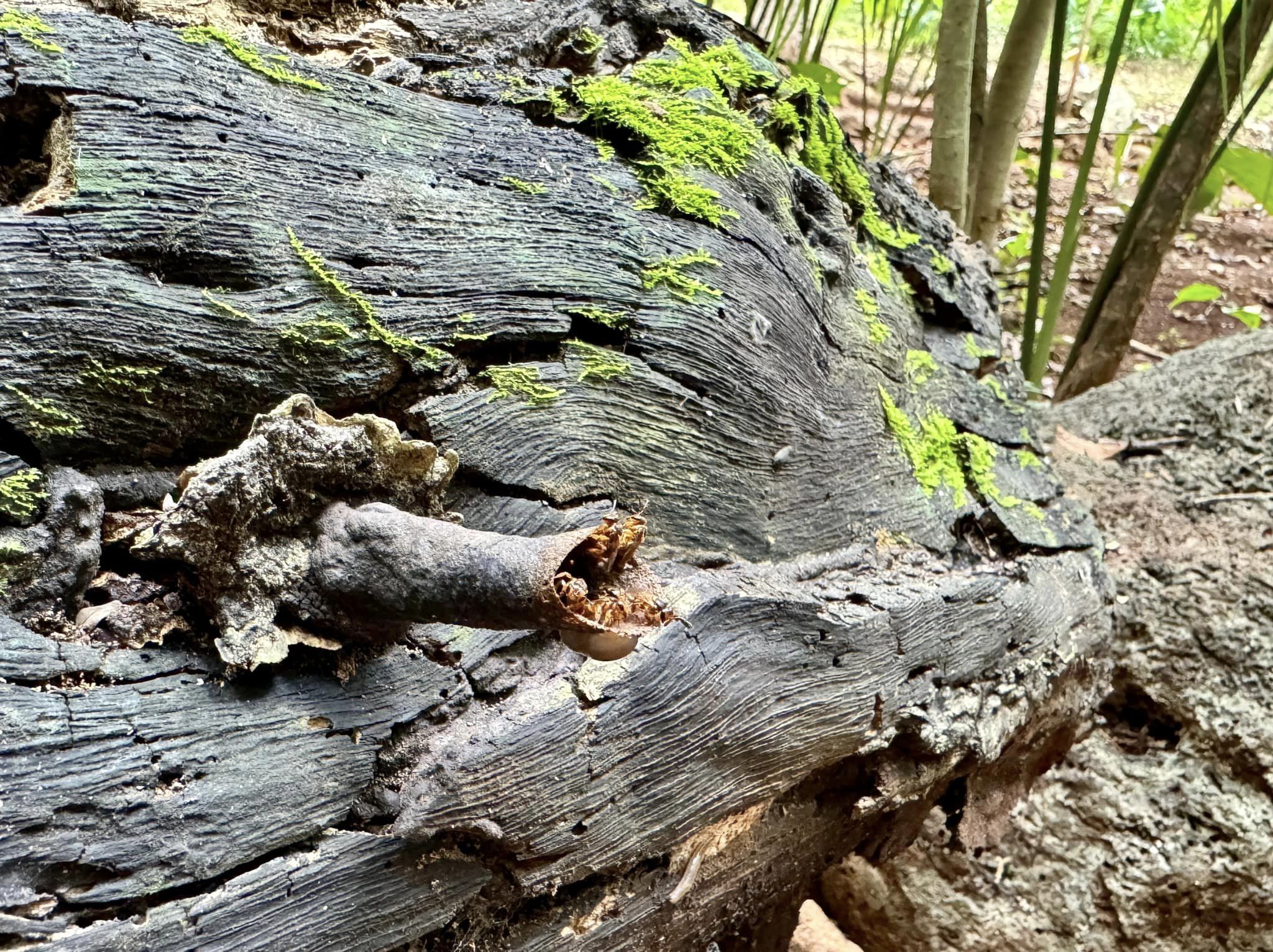
The k’ant’zak is the most aggressive of the community and bites since it can’t sting. This one builds a propolis tube sticking out of a hollow tree to access its nest inside. The black on this tree is actually propolis to seal the wood to prevent rot.
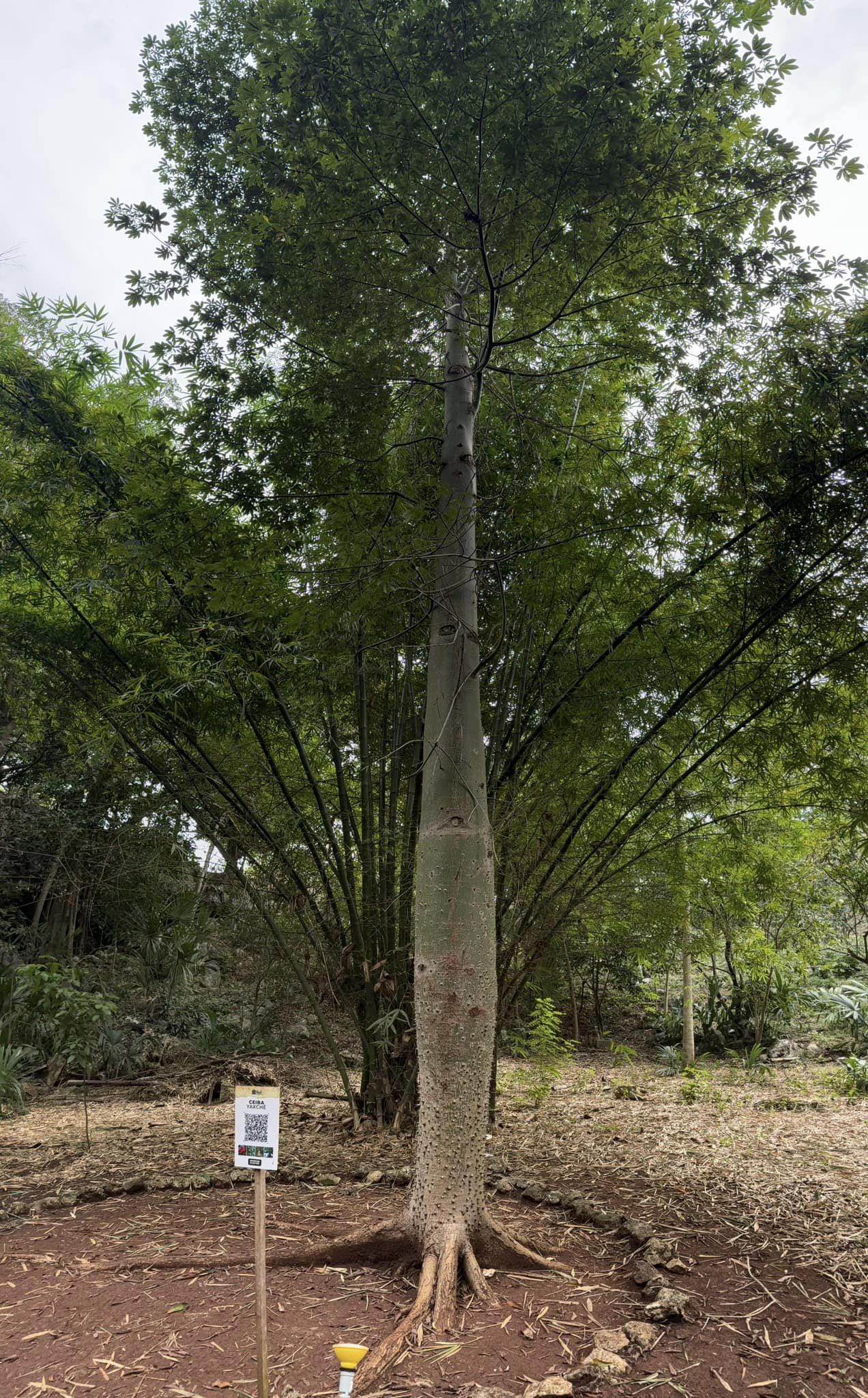
This is a Ceiba tree, sacred for the Maya. It is one of the largest trees in the tropics, measuring up to 70 meters high with roots up to 5 meters deep. No wonder the Maya believed it was the tree of life with its leaves reaching the heavens, its roots connecting to the lower world and its trunk connecting it all to the terrestrial world. As it develops, it is hollow on the inside, enabling humans on earth to ascend or descend after death. While it is hollow, it is less solid so it develops these spikes on its lower portion as a means of protecting it from climbers that can damage its bark.
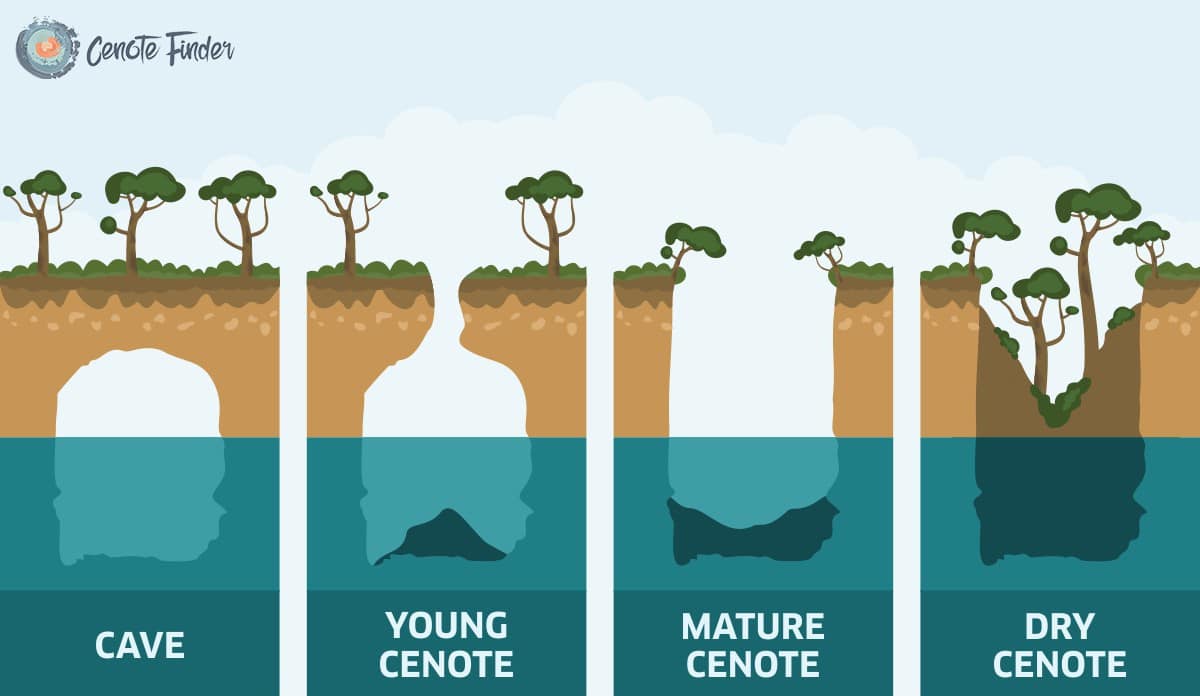
Cenotes are a major part of the landscape here and were formed when an asteroid hit earth 66 million years ago. The centre of the crater left behind is in Merida, a couple of hours drive from Valladolid. At the time, this limestone peninsula was completely under water but after the climate effects of the asteroid, sea levels began to drop, revealing what is now the Yucatan peninsula. What were underwater caves ultimately became cenotes. As there were no lakes and rivers, cenotes were the ancient Mayas source of fresh water. Archaeologists have discovered that the Maya had the strongest bones and teeth of all the ancient populations. Why? Calcium in the cenote water. And they had the cleanest mouths from chewing gum. The Maya boiled the white sap from the chicle tree and used the sticky stuff to stick things together but also to chew it to clean their teeth. It was also used to fill cavities in their teeth. No flavour or sugar in those days! I learned that what we thought were three types of cenote are actually three stages in the life cycle of the cenote before it is considered to be dead, the fourth stage or type of cenote. Cenotes start out as enclosed caves filled with groundwater. The trees growing on top of the enclosed caves have roots as long as 50m which descend through the caves. This can disrupt the ground above the cave and cause it to start to collapse leaving a small hole at the top, letting in light and air and depositing material at the bottom of the cenote. This is now a young cenote. In time, more holes form and get bigger, depositing more and more material at the bottom of the cenote, ultimately closing it off from the groundwater beneath it and filling the space. That’s when the cenote is considered to be “dead” or dry.
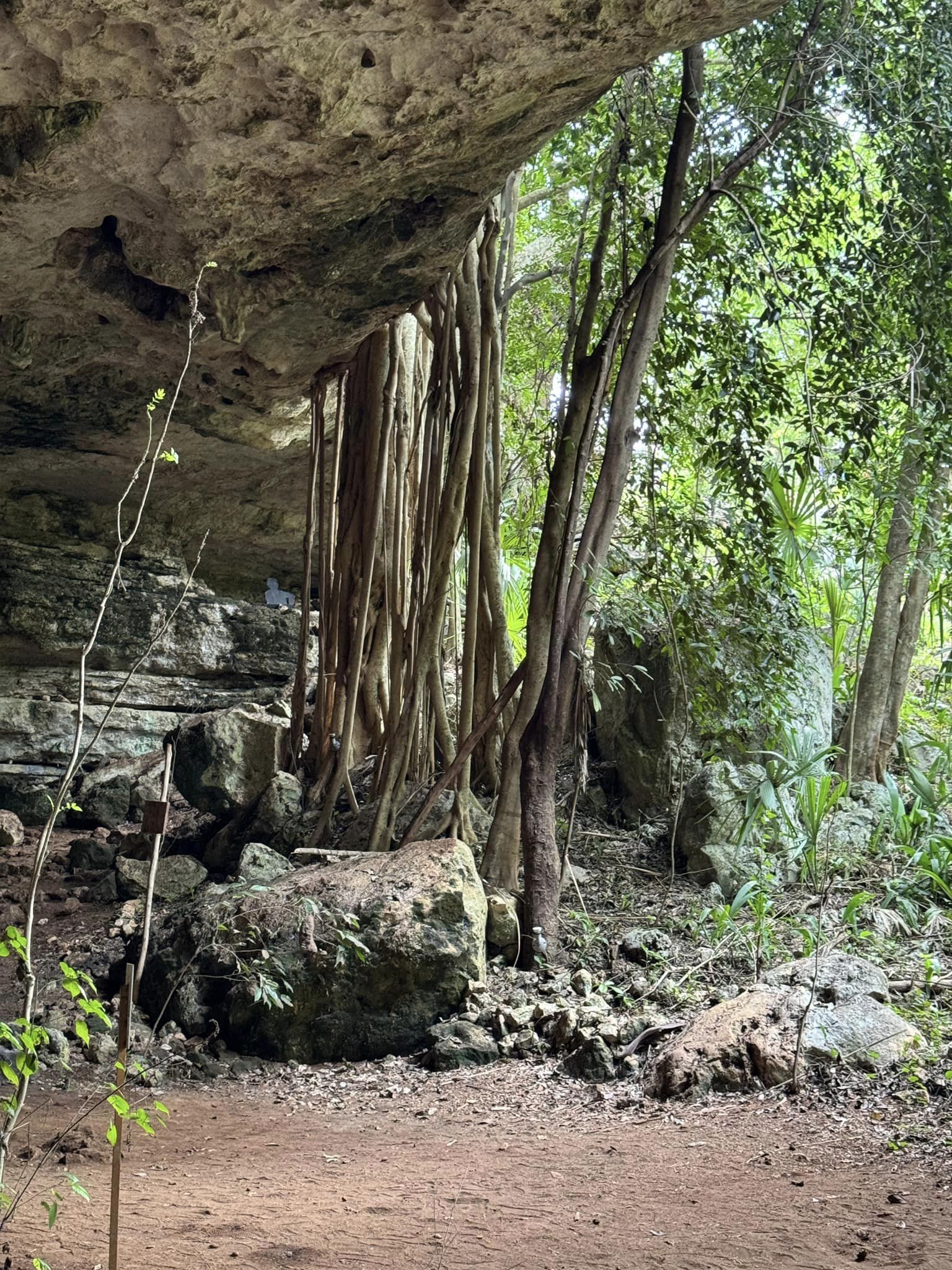
The Xkopec bee sanctuary is in a dead cenote and you can see the roots of the trees that led to its demise.
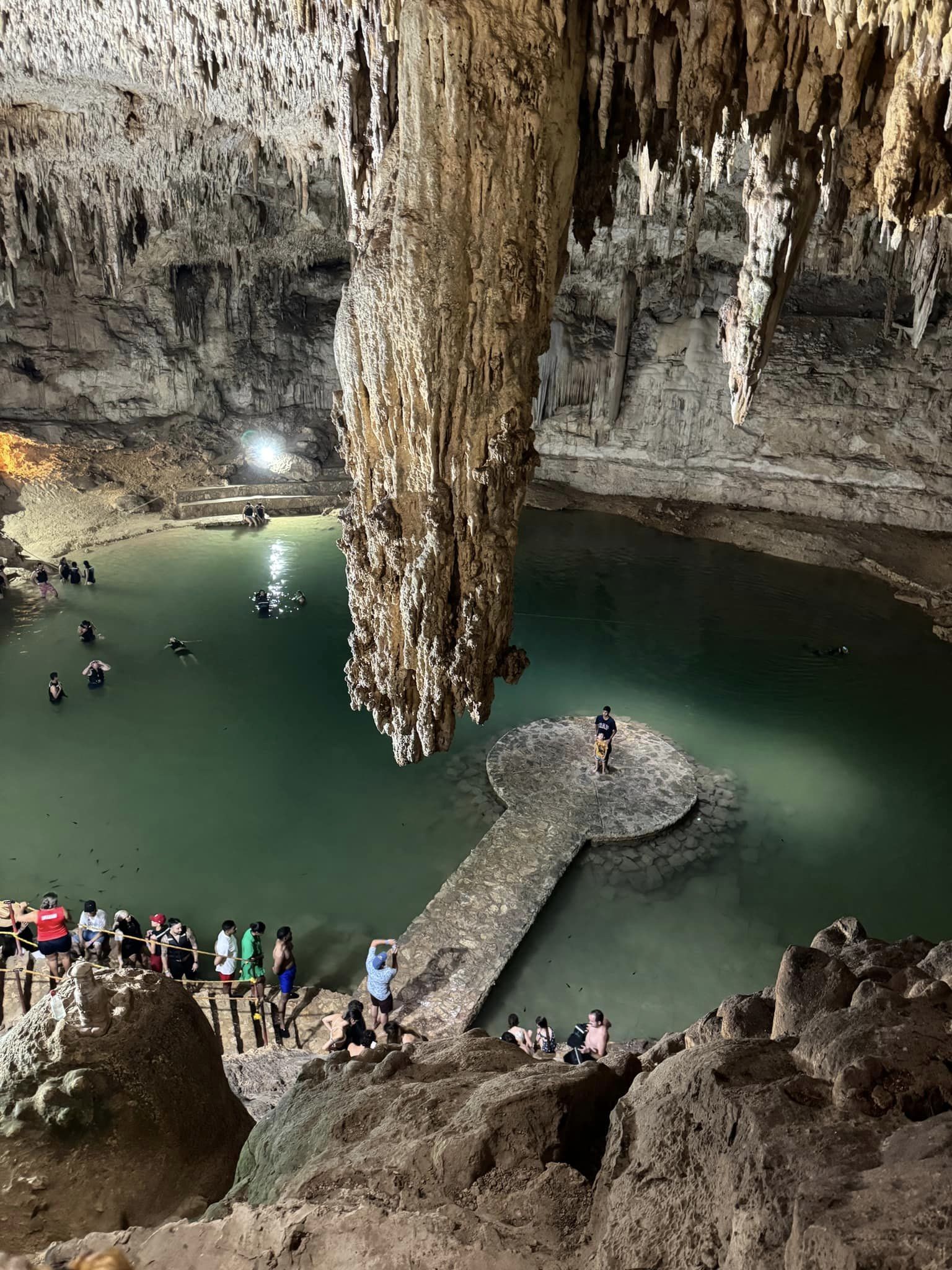
Cenote Suytun had two cenotes on the property. Now that we know about the life cycle we can call this one a youngish one. It had the one hole in the ceiling and you can see how the collapsing from that hole is starting to create a small island beneath it. For photo ops, they built a platform out to the island.
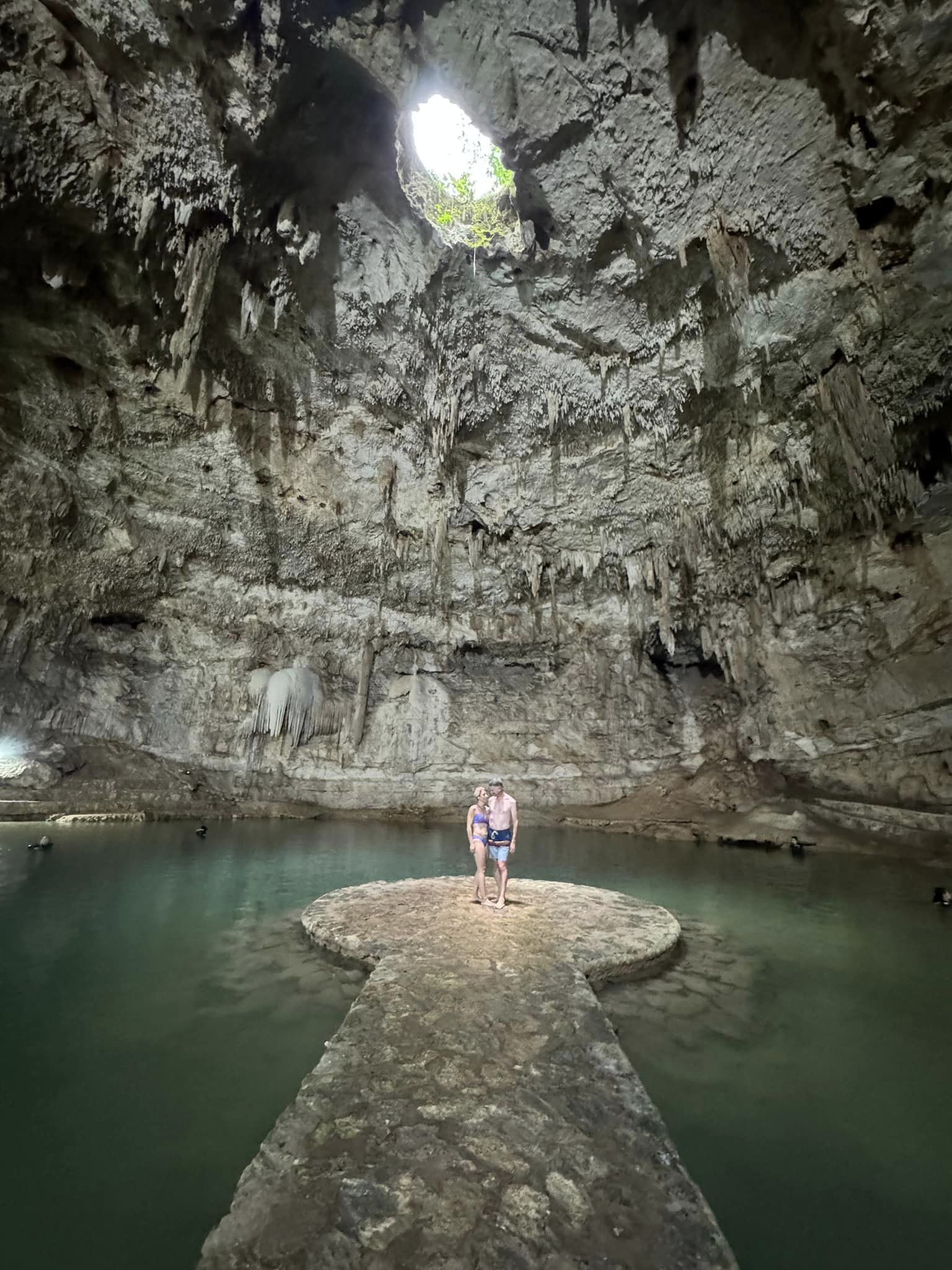
On a sunny day, and just at the right time when the sun is over the hole, we would be bathed in ethereal light standing in this spot!
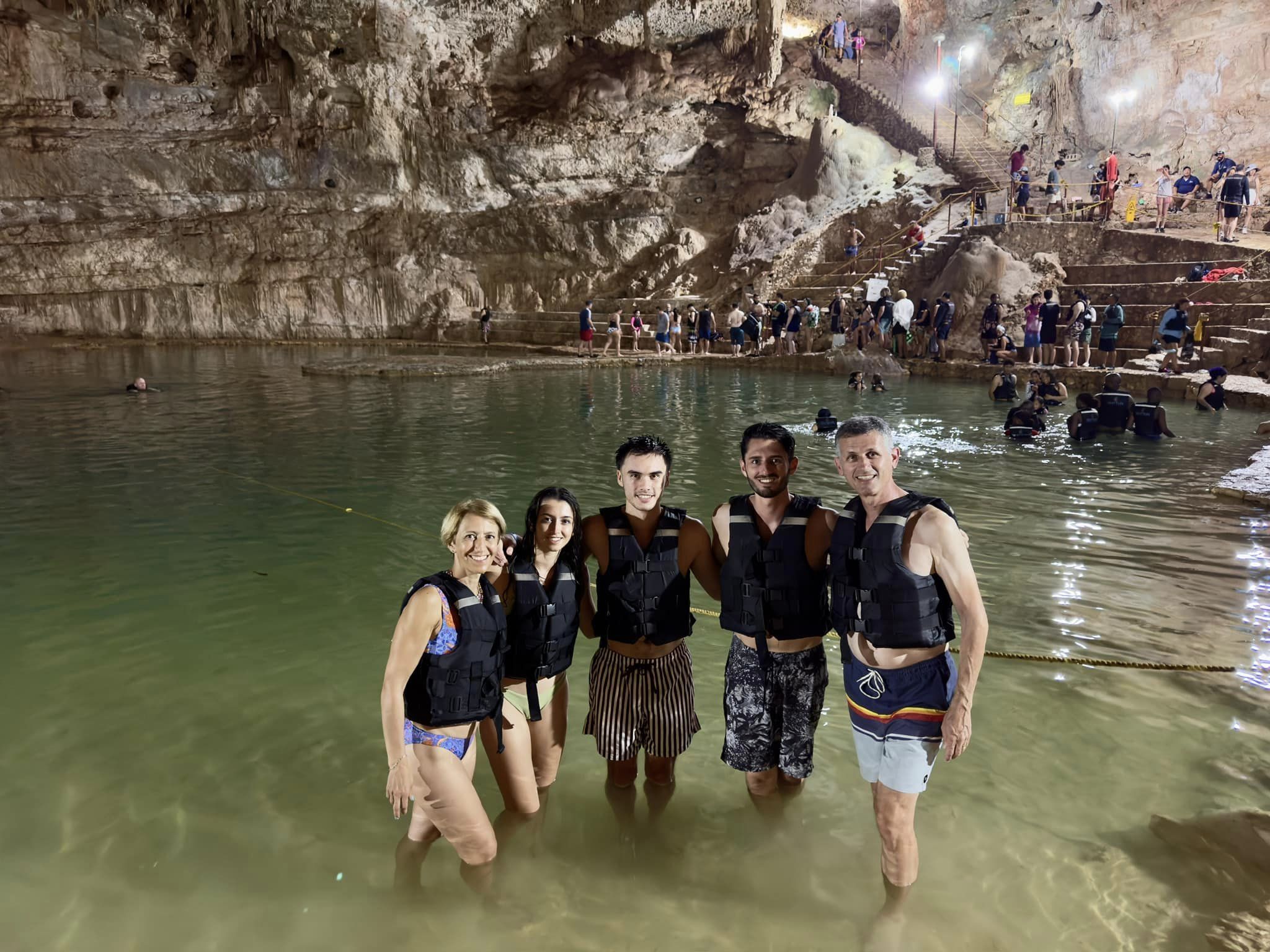
Life jackets mandatory here! At the time we didn’t realize the hidden danger and thought the cenote owners were being excessively risk and lawsuit averse.
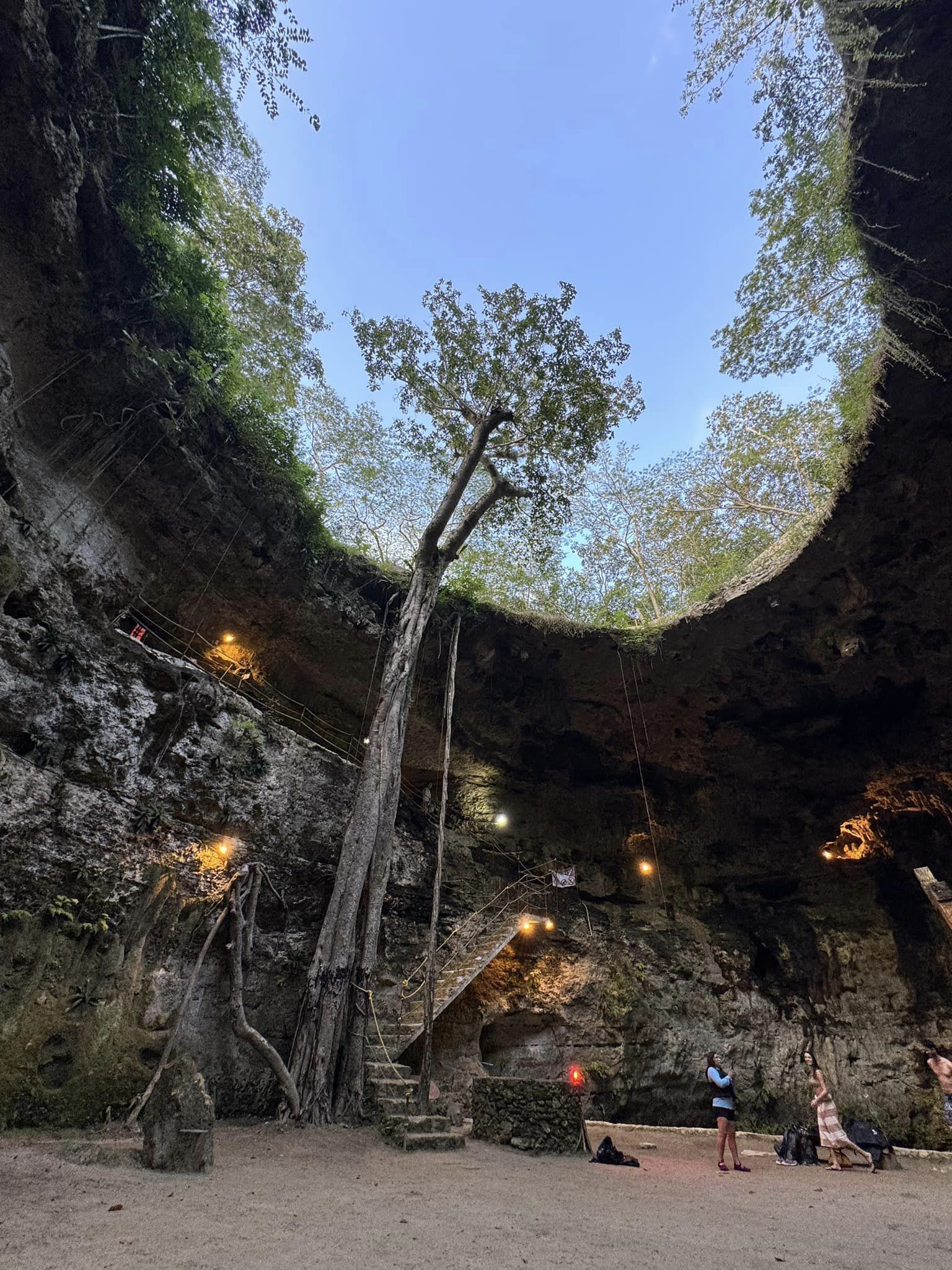
The second Suytun cenote. This one is further along its life cycle. Let’s call it middle aged. It’s much more open to the outside world and the island in the middle leaves a fairly narrow ring of water around the perimeter. Front and centre is one of the roots trees that is contributing to its eventual demise.
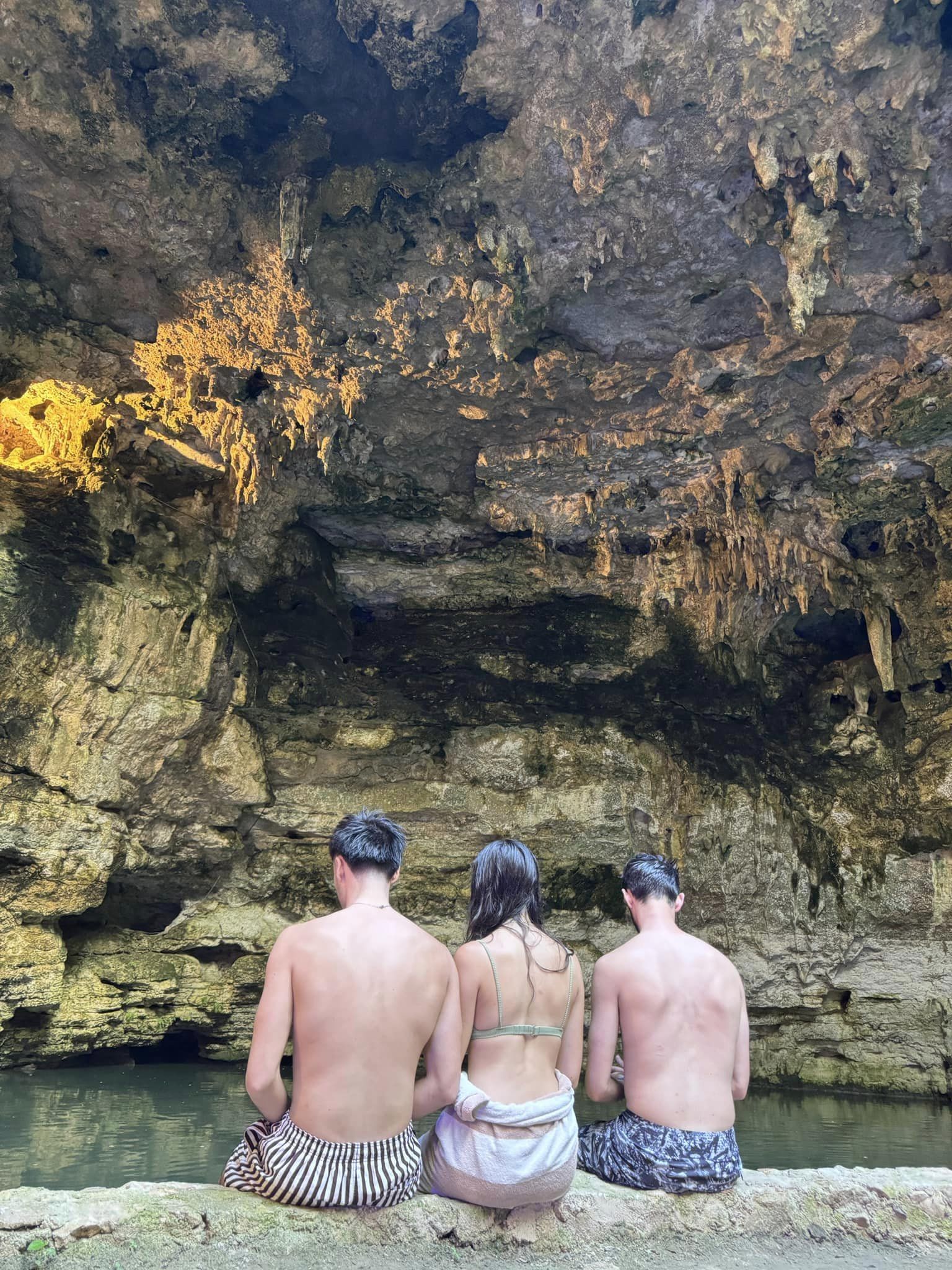
Feet (nibbled by tiny fish) in the remaining channel of water.
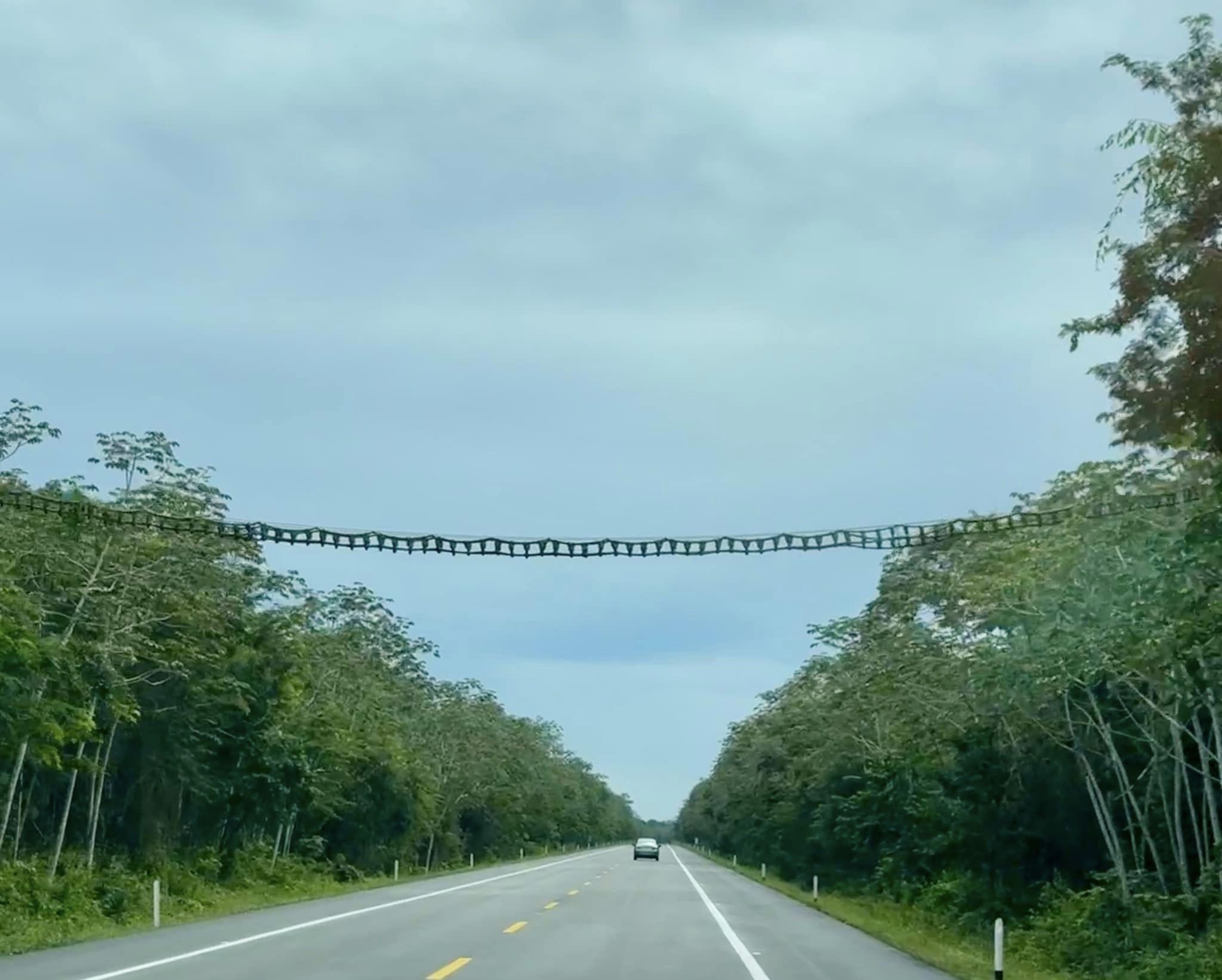
Driving out of Valladolid toward the coast, we noticed little rope bridges crossing the highway every few km. Too small (and dangerous!) for people but what would the purpose be? As it turns out, they are perfect to help a playful monkey, and other mammals, cross the road!
This young man spends his evenings in Valladolid’s Parque Francisco Cantón Rosado making Yucatan’s delicious snack, marquesitas. These are super thin crepes, cooked till they are almost crispy and then quickly filled and rolled. As they cool a bit, they crisp up. The classic is Nutella and grated edam cheese. The first time I had to try the classic, as odd as it sounded, and added banana. It was surprisingly good but a bit overwhelmed by the banana. We went back a second time since Alex missed out the first time. This time, the line was extra long and our master crepe maker was running out not only of ingredients but also gas! They cut the line off about eight people behind us. Just made it under the wire. This time I skipped the banana (he had run out of fruit anyway) and had just cheese and chocolate. Excellent balance of sweet and salty. If only this guy could cook as fast as this…we waited in line for an hour!