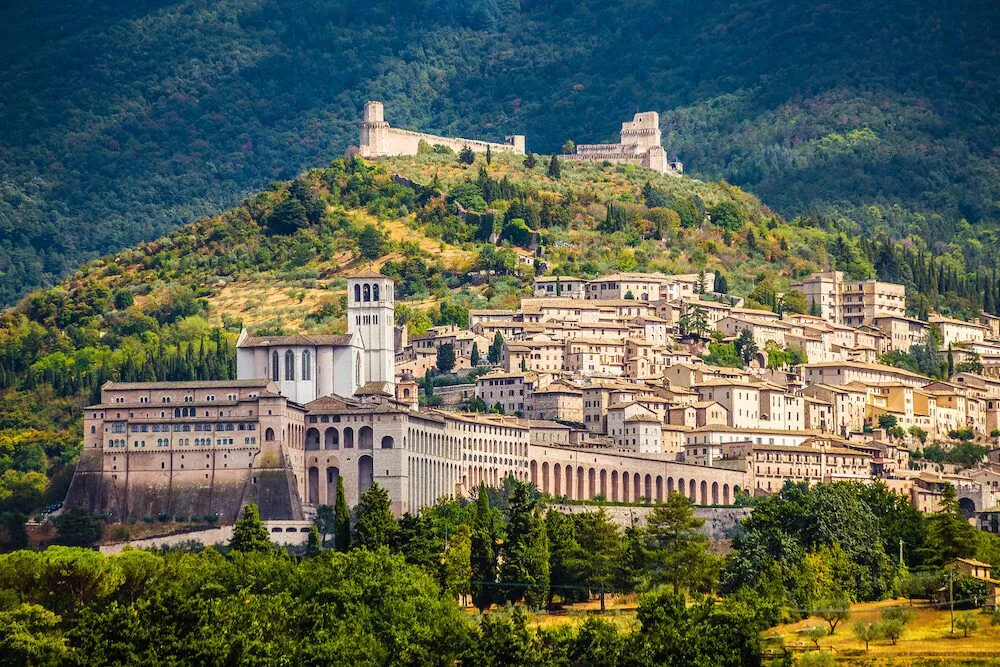
May, 2022
Unequaled Umbria
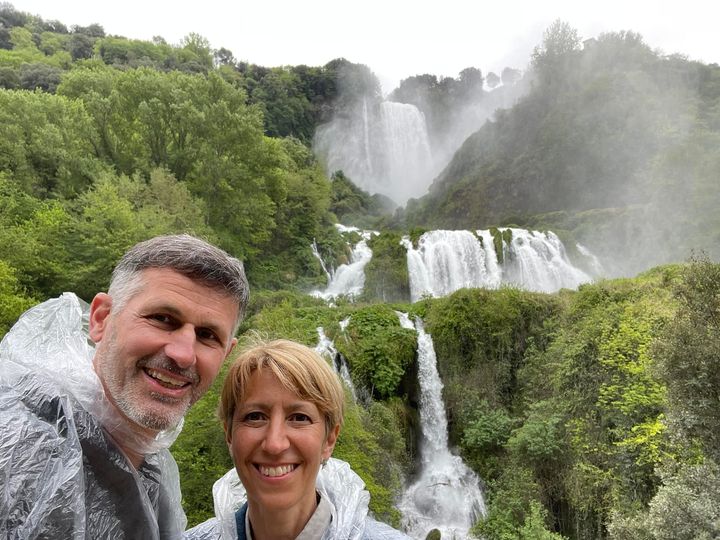
Our first day we ventured out to see the Marmore waterfalls. These waterfalls have an on/off switch! They literally have a schedule to turn them on during the day for visitors and then divert the water to the hydroelectric plant in the evening and overnight. A 165 metre drop generates a lot of power. How cool would it be to be there first thing in the morning for the switch on!
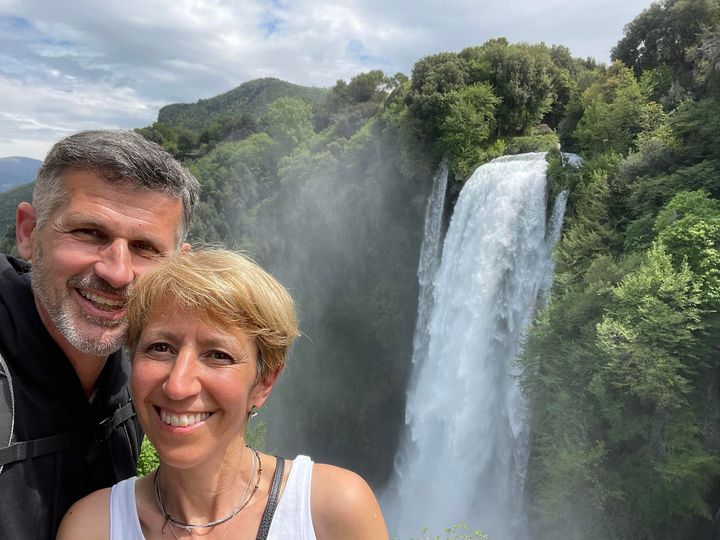
This is not a natural waterfall. Who are the ancient masters of managing water? The Romans, of course! In 271 BC, they must have been running out of space for farming as they decided to divert the Velini lake to reclaim the land. In the late 1800s, someone figured out that energy could be harnessed from the powerful flow of water and it has fed hydro power plants ever since.
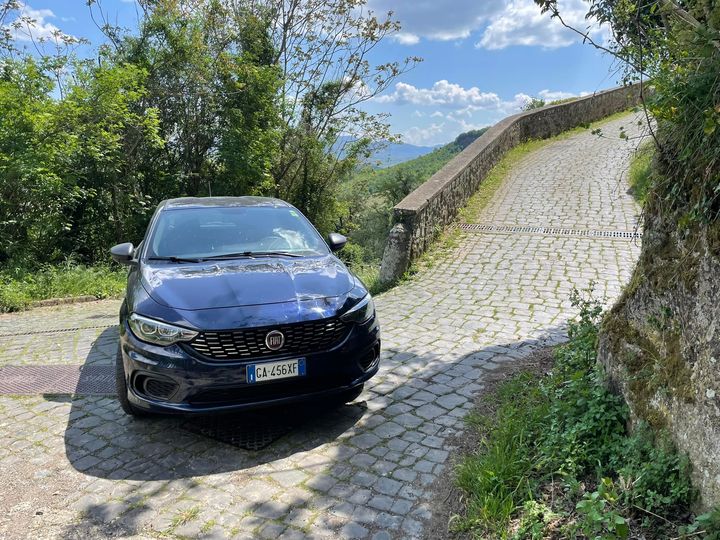
Oh dear, Google. You really got it wrong this time… This was a fun predicament to navigate our way out of. The hill we just ascended, that is blocked by the car, is very steep; it took us three tries to get up. Too tight a turn to go up and nowhere to go at the top. Too dodgy to try to reverse down that hill and make the turn halfway down. How did we do it? Trespassing, of course. I opened up a rusted private gate (thankfully it wasn’t locked…maybe we weren’t the first people Google sent up there) and Adam was able to use the space to wiggle his way out.
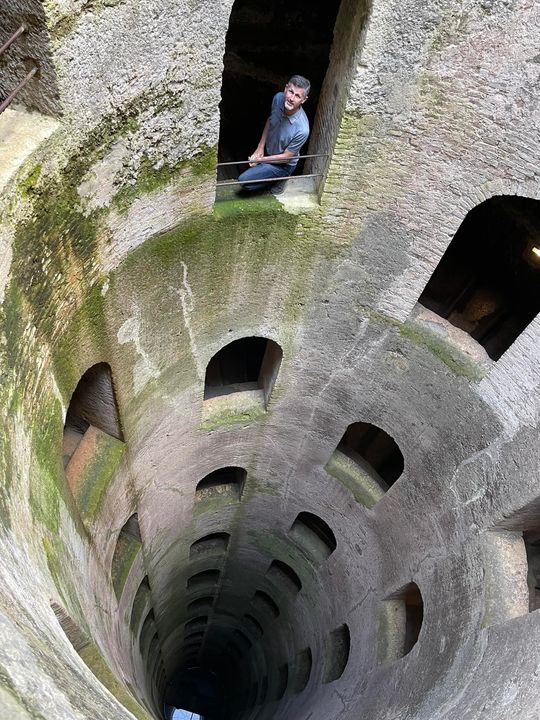
Along the water theme, our first stop in Orvieto was St Patrick’s well. This isn’t the kind of well we are generally familiar with, the bucket and winch kind. Built over 10 years starting in 1527, the central well shaft is surrounded by double helix ramps that allowed donkeys to carry empty and full water containers up and down the 62 m well without running into each other. Apparently they didn’t complain about the 248 steps. Seventy-two windows let the light in, probably a good idea so the donkeys didn’t trip. I love the Latin inscription on the side of the well which says “QUOD NATURA MUNIMENTO INVIDERAT INDUSTRIA ADIECIT: "what nature stinted for provision, industry has supplied”. The mother of invention…
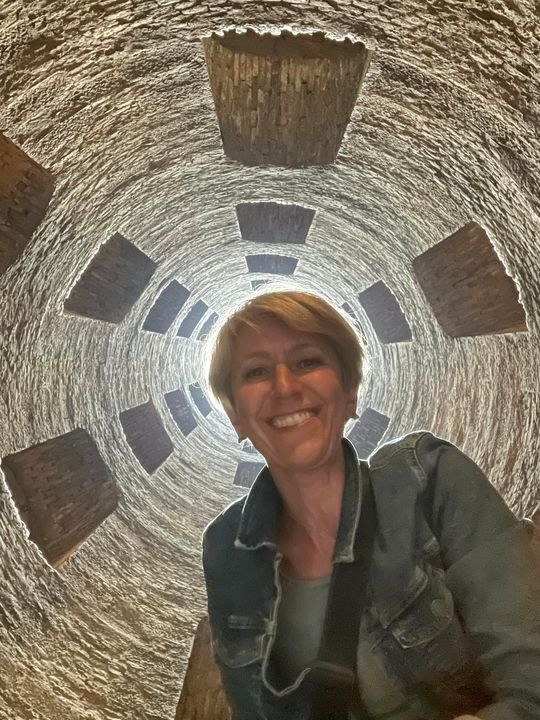
I finally got my halo!
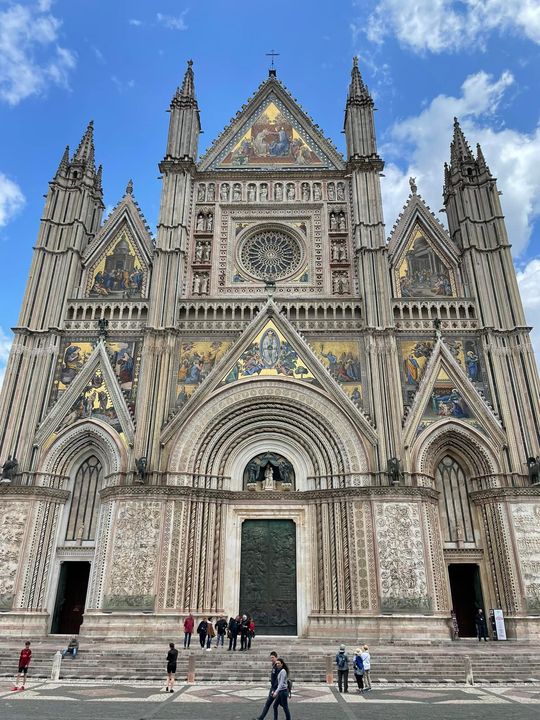
The Duomo di Orvieto is considered to be one of the most beautiful churches in Italy. I’m sure most Italians outside Orvieto would disagree but it is pretty spectacular. Its flagstone was laid in 1290 and it took nearly 300 years to complete. Structural issues had to be overcome, architects came and went, and time kept moving ahead. Marble carvings and statues, mosaics, frescoes, bronze statues. This place is fit for a Pope. In fact, five Popes took refuge in Orvieto in the 13th century (and a few more in the centuries that followed). No surprise that there is such an imposing cathedral in such a small town.
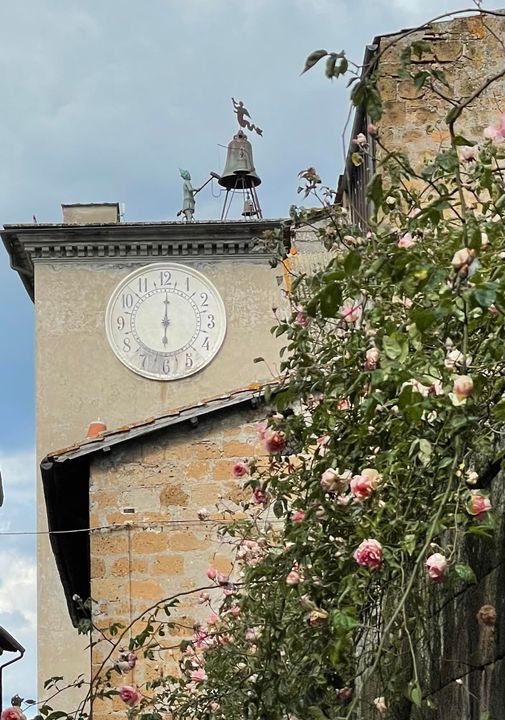
The Torre de Maurizio is by the Cathedral in Orvieto. The bronze statue at the top struck the bell to mark the time for the construction workers building the cathedral. Since it took three centuries to build the cathedral, I guess it was worth building the clock tower to keep the workers' timesheets in order.
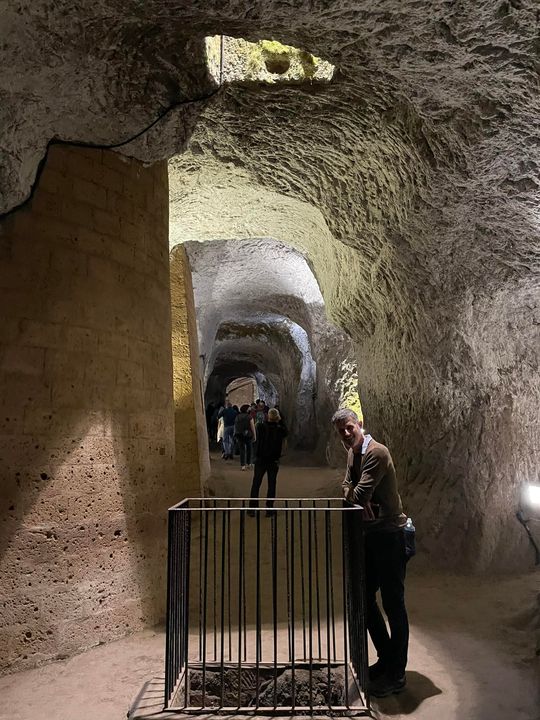
Back in the Etruscan times, the people of the town built a network of tunnels and caves under the houses and managed to stave off a Roman siege for two years. They created wells so they wouldn’t have to go out for water and had an ingenious self-replenishing source of protein which I will amaze you with shortly. Time passed and subsequent occupants of the city ran out of space on their strategic hilltop as the population grew so they made use of these caves as their workspaces. The wells were handy as they didn’t get their version of running water until the 12th century Roman aqueduct was installed. More time passed, geopolitical circumstances changed and the caves and tunnels were forgotten about. Then a landslide in the late 1970s caused a fracture in the cliff near the Duomo and required some investigation. They found the caves and tunnels. There are 1,200 caves and tunnels that they know about but they are mostly private so only two have been excavated to the point of being open to the public. Here is a well and the opening in the ceiling of the cave would have been accessed from the house above. Notches were carved into the walls of the wells so people could climb down to get water.
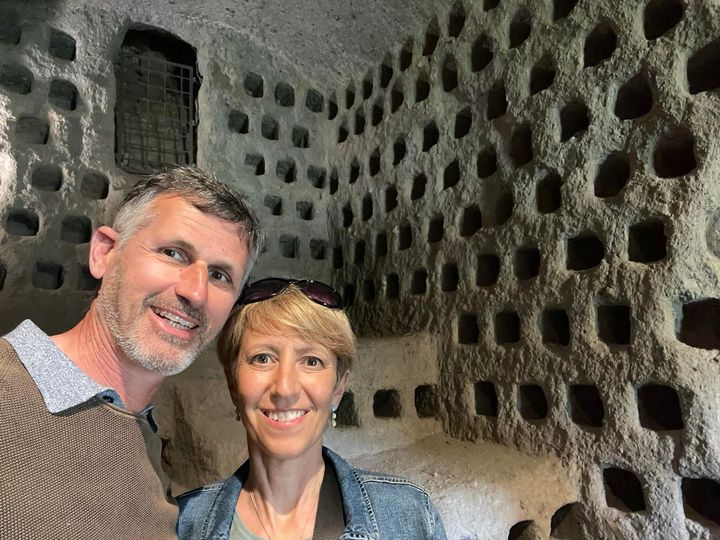
The self-sustaining source of protein for when under siege: pigeons! An open window gave the pigeons in/out privileges. Hundreds lived in these little dovecotes, laying eggs and doing their pigeon business. Pigeon is still popular on menus today. In case you were wondering, it tastes like chicken - yes, we tried it!
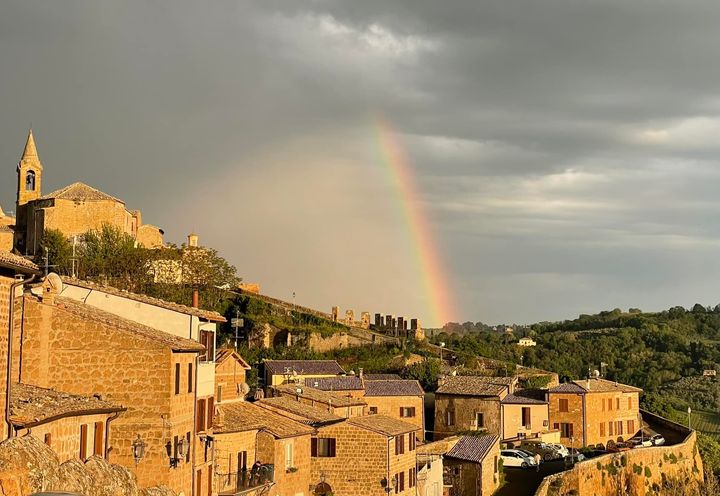
Incoming rain warning!
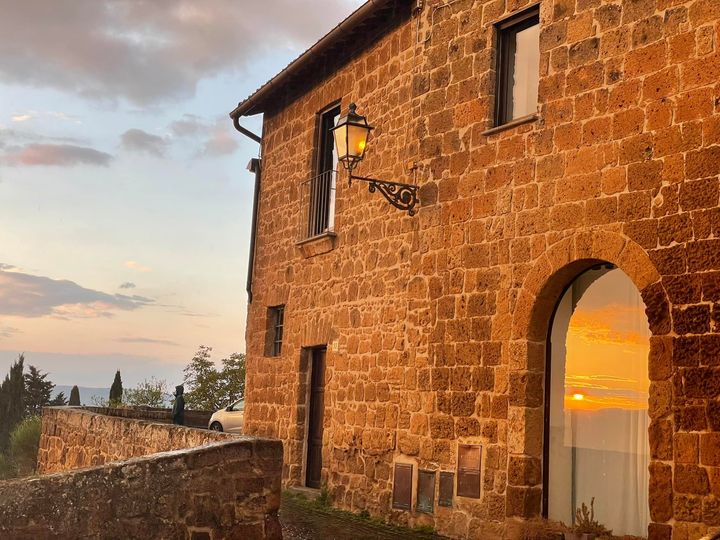
Post-rain sunset in Orvieto.
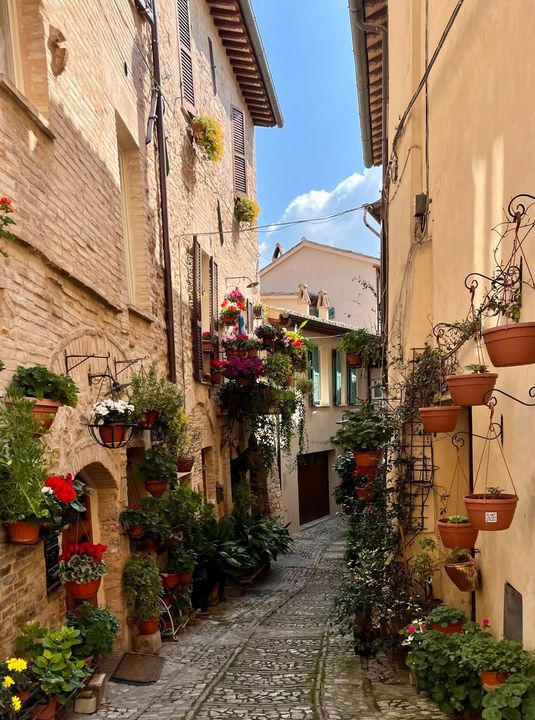
Alongside Orvieto’s claims of the most beautiful cathedral in Italy, Spello is said to be the most beautiful village. Every twisting, cobbled medieval street is more beautiful than the next. Flowers and planters are everywhere.
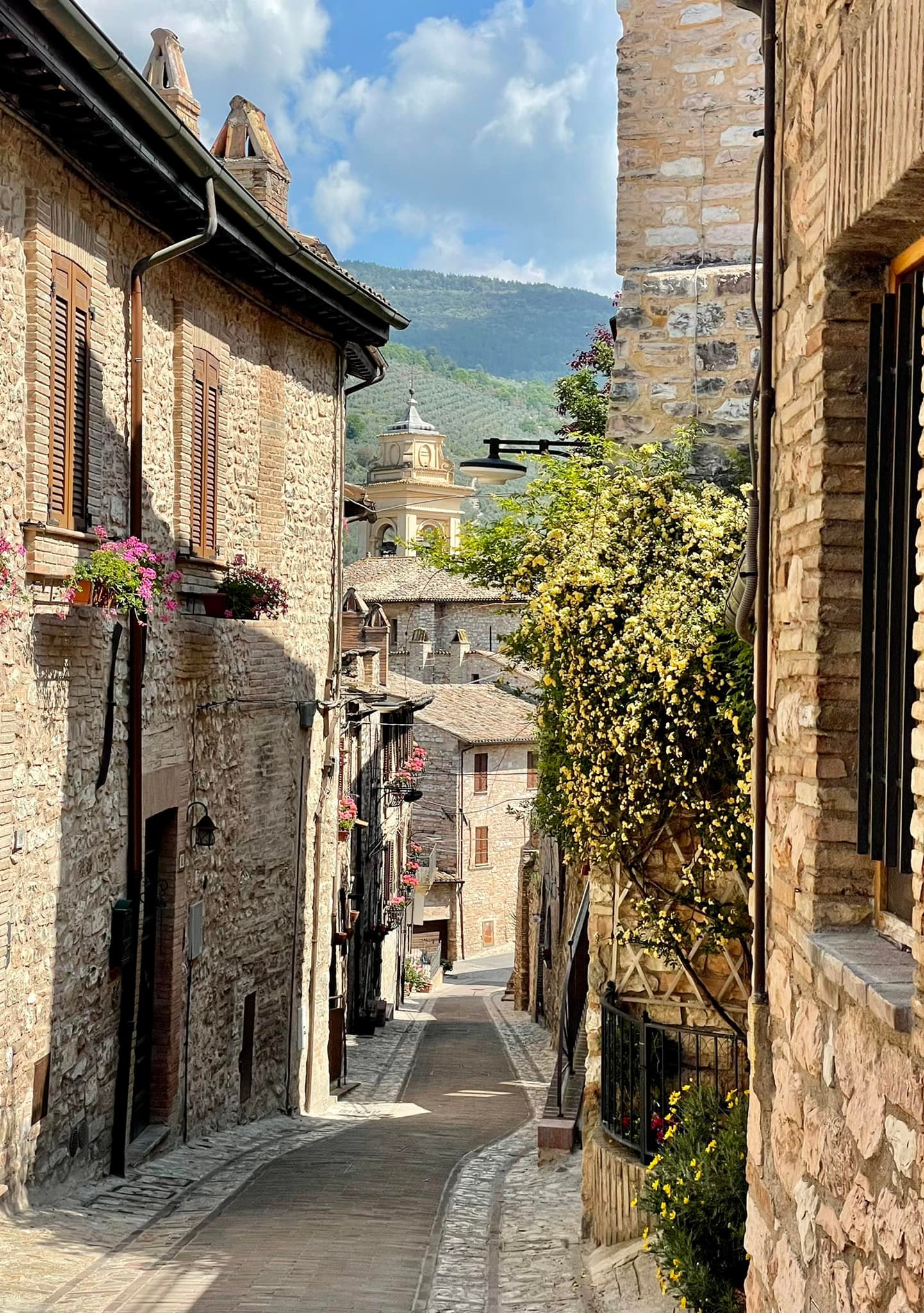
Spello❤️
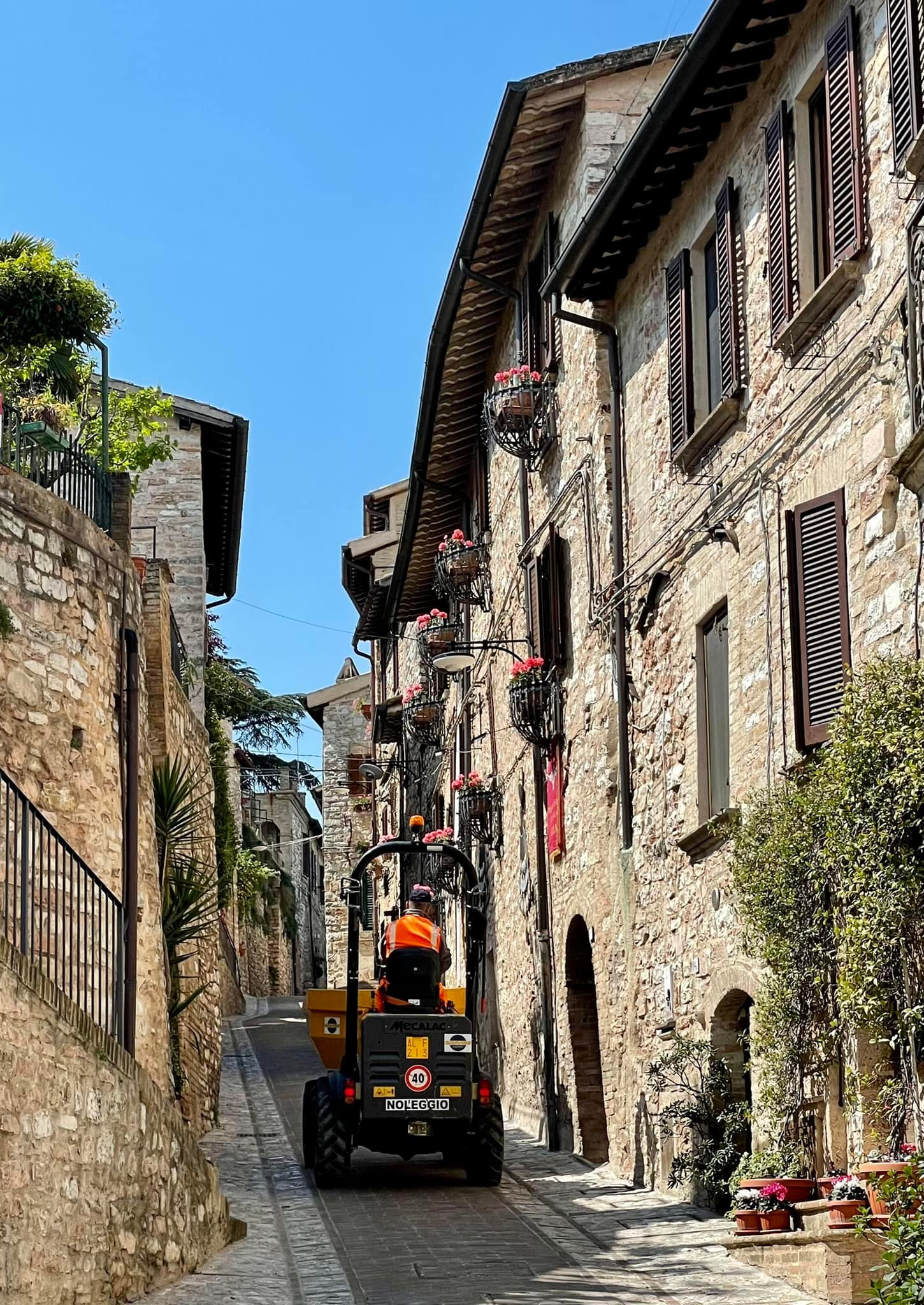
A reminder that Spello is a real city and not just a postcard.
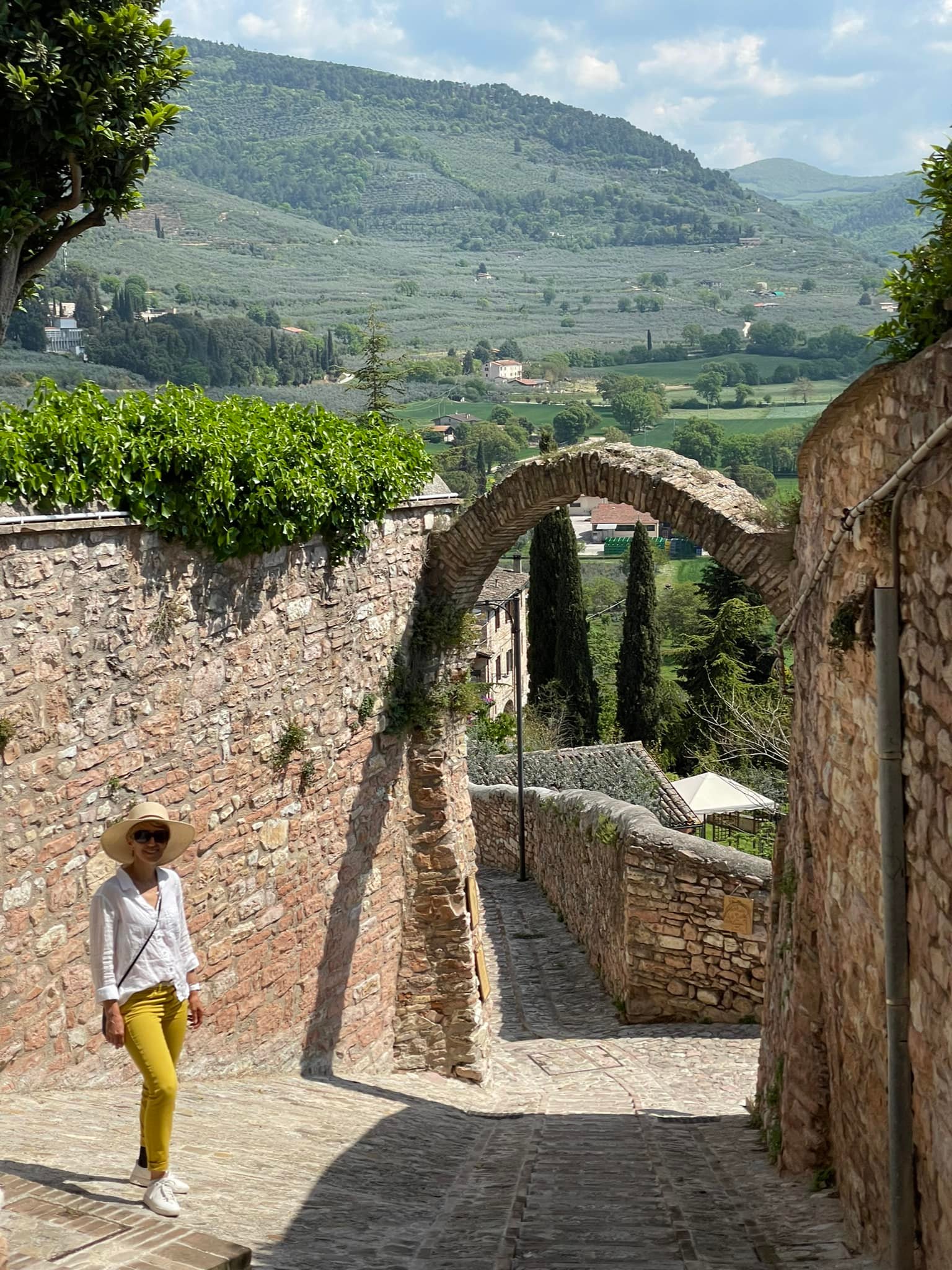
Spello’s medieval walls are still here adding to the beauty.
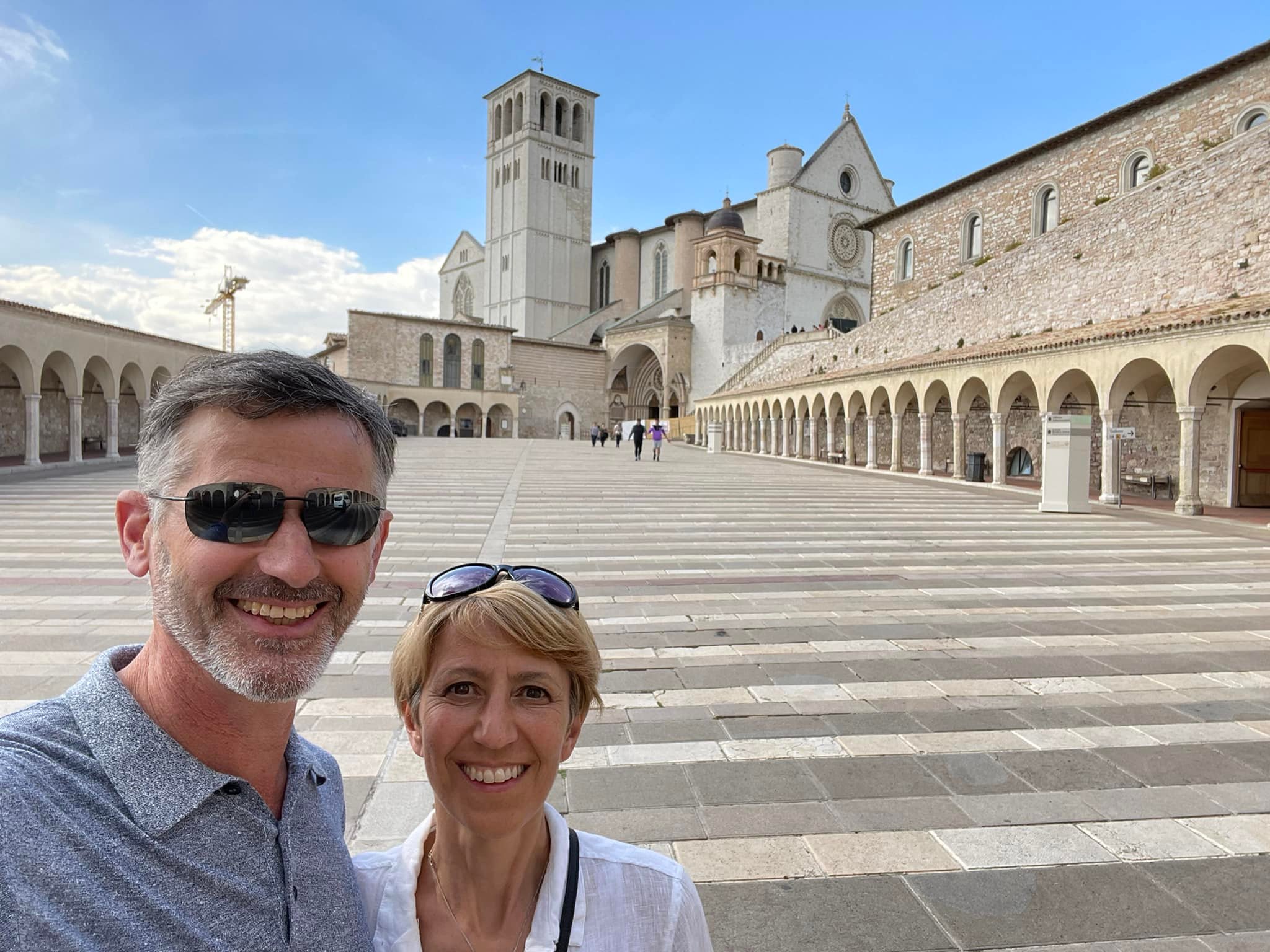
Assisi is another medieval town with a very famous former resident. St Francis (of Assisi) only lived to the age of 44 but was so influential that within two years of his death he was canonized, and construction of an enormous basilica in his name began. Francis chose to emulate Jesus and continue his work. The frescoes even illustrate him as the chosen one by Mary. He is one of the most venerated guys in Christianity…all in a mere 44 years. This major pilgrimage spot is one church on top of another. The lower one is Romanesque and the upper Gothic.
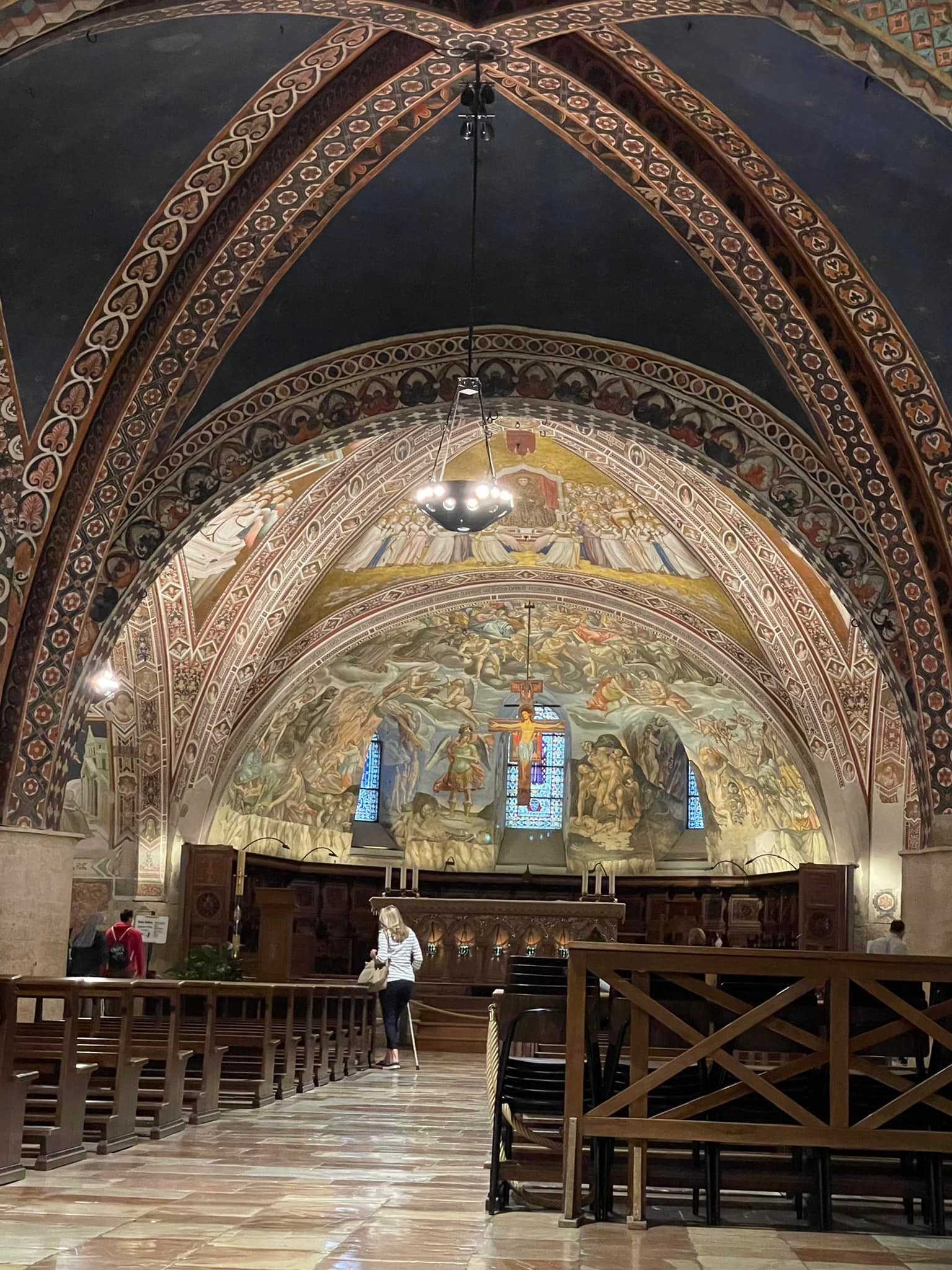
The lower church.
When we went up to the upper church, we came across this quintet. Just some guys who were visiting when we were. It was so beautiful to be in this incredible space with these five a cappella singers. Beautiful voices without the aid of instruments. What is extra special is where the word a cappella comes from. It’s Italian for “in the style of the chapel”; originally, music performed in a chapel was without instruments. So here we were, in an Italian church (albeit not a chapel), listening to a cappella music.
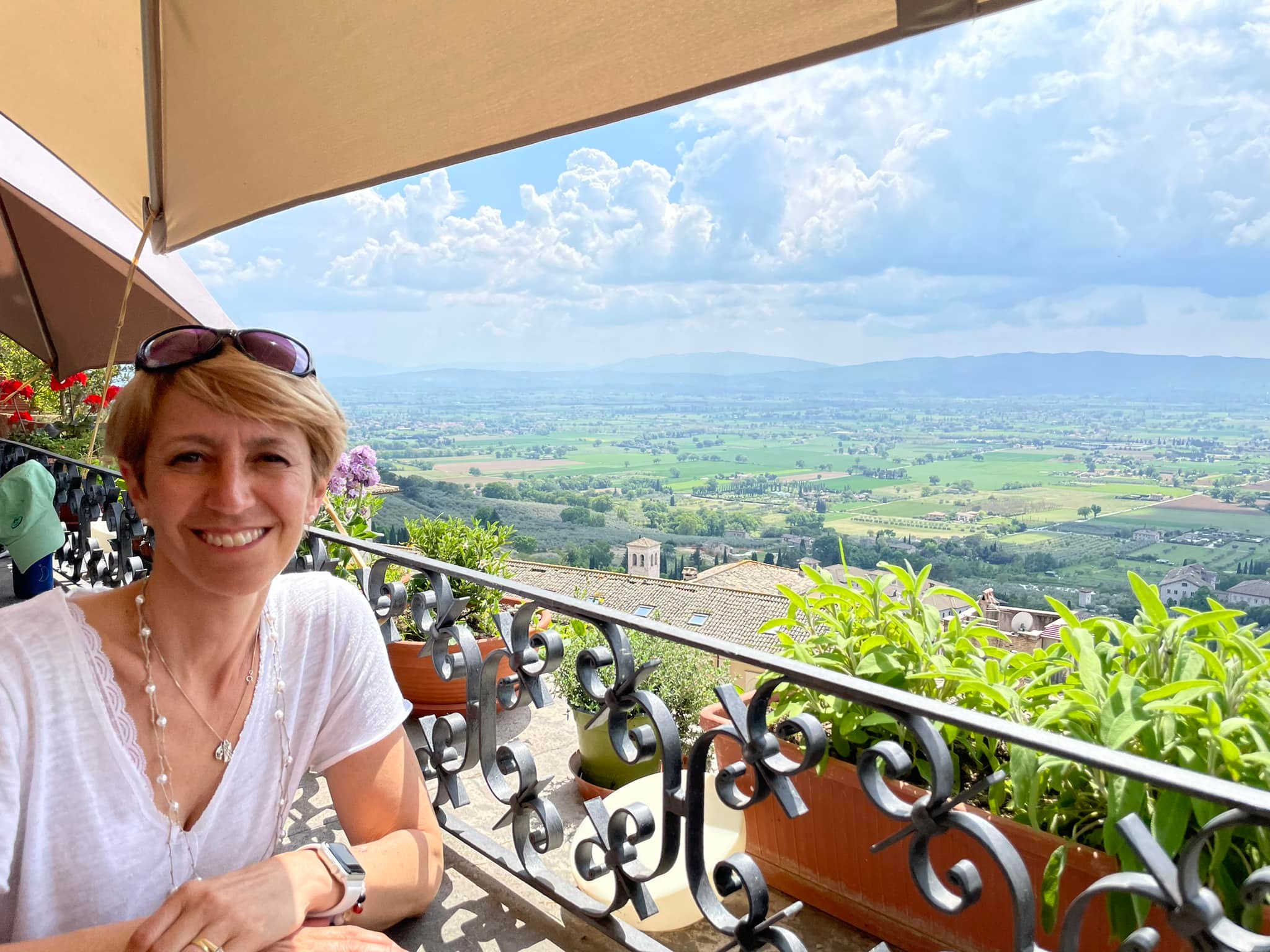
Lunch with a view before the big festa!
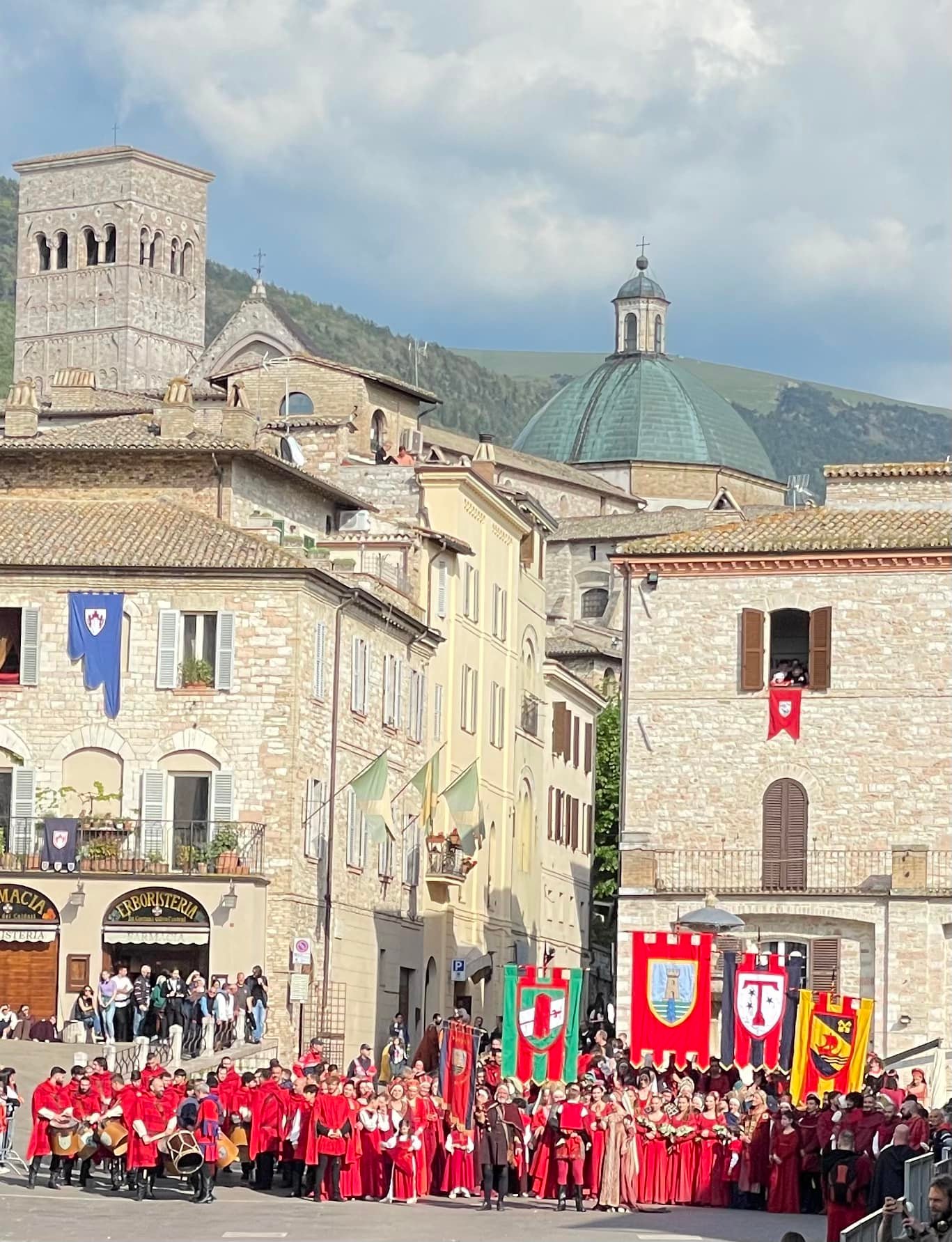
How lucky we were to find ourselves in Assisi for the kickoff of their annual welcoming of spring festival, Calendimaggio. This annual celebration has been a major event in this medieval village since the 50s and this year is particularly special as Covid shut down the festival the last two years. This is no small-scale event. In a town of about 25,000, over 5,000 people work for months to make it happen. It centres around the competition between the Nobilissima Parte de Sopra (the noble upper town) and the Magnifica Parte de Sotto (the magnificent lower town). Over several days, they compete in music, costumes and re-enactments of medieval life. It must be fully authentic in all respects and is judged by a medieval historian, a musicologist and an entertainment personality schooled in medieval style. Even the language they use in their performances is a medieval blend of Italian and Latin. Here we see the Sopra waiting to enter the square.
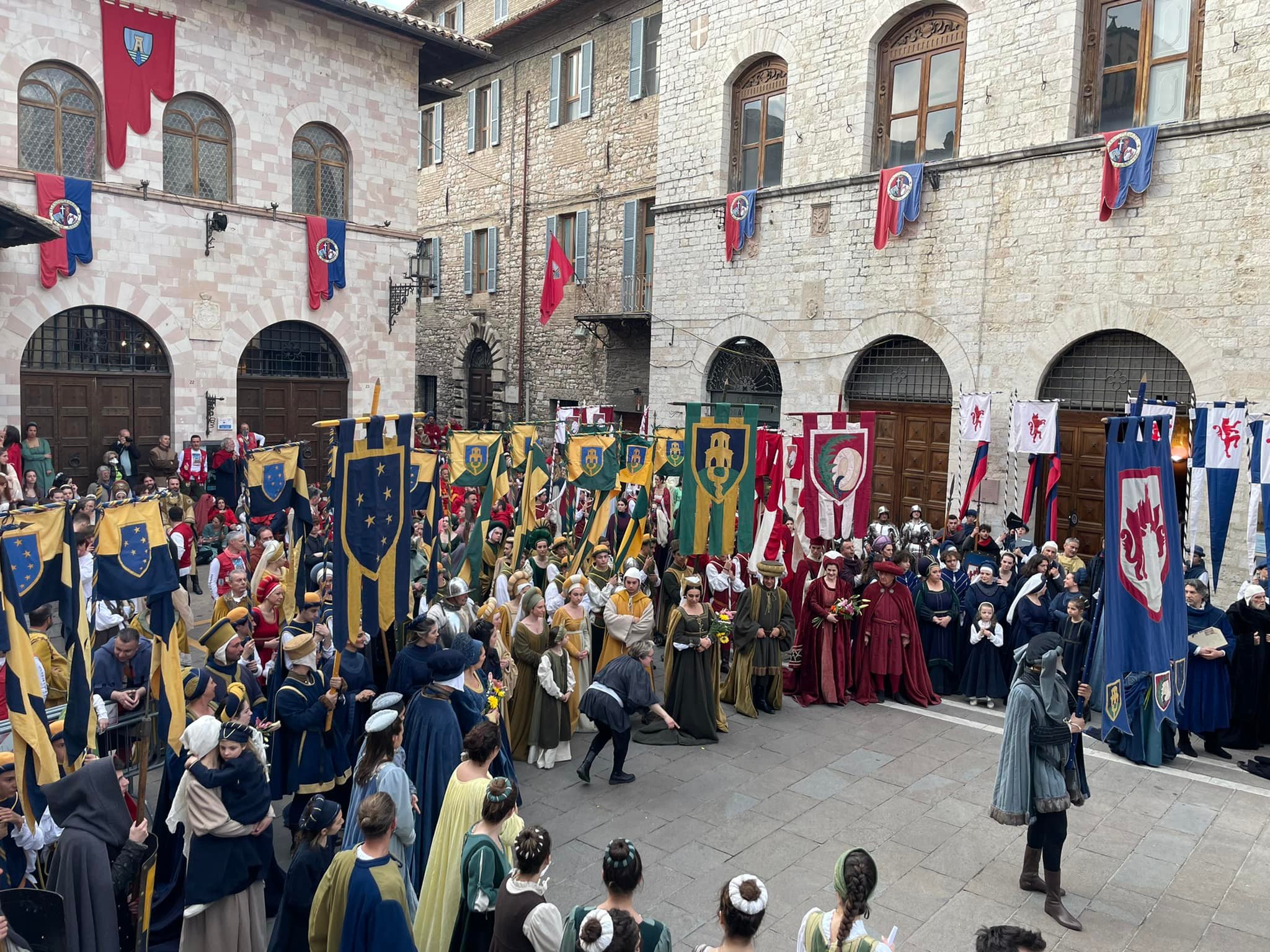
The Sotto, having finished their parade through the square, watch (and jeer) the Sopra as they pass through.
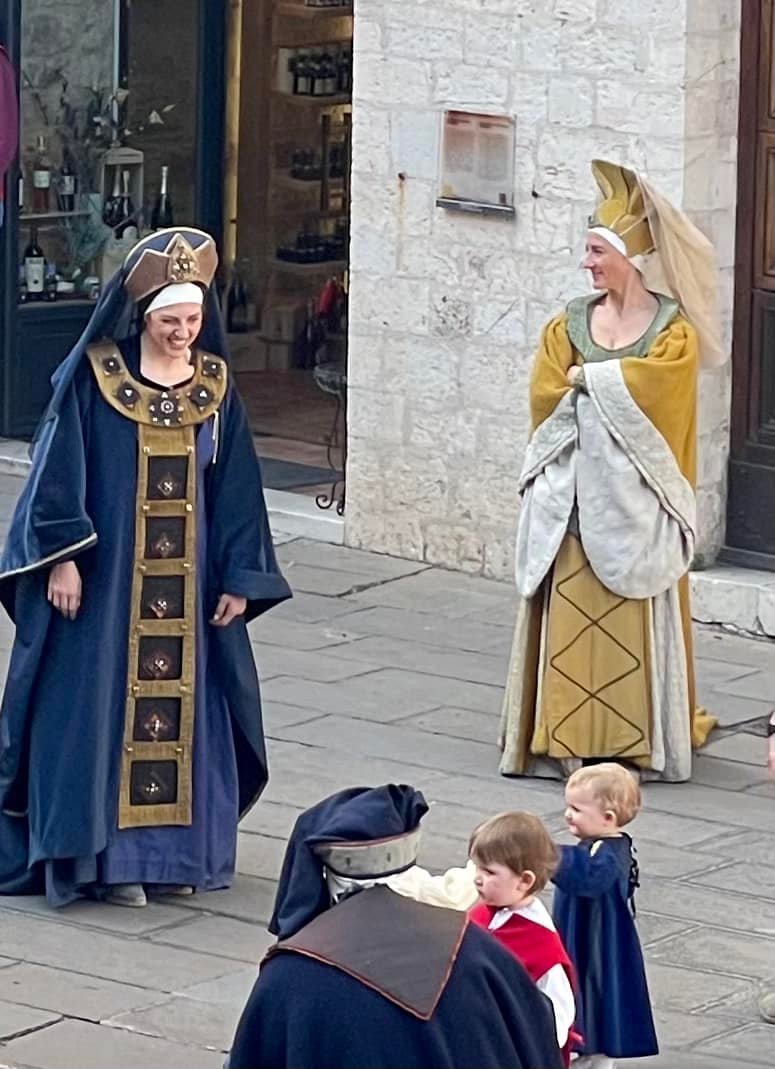
The costumes are unbelievable. Thankfully it wasn’t hot (or raining) as those heavy robes and hats would have been unbearable.
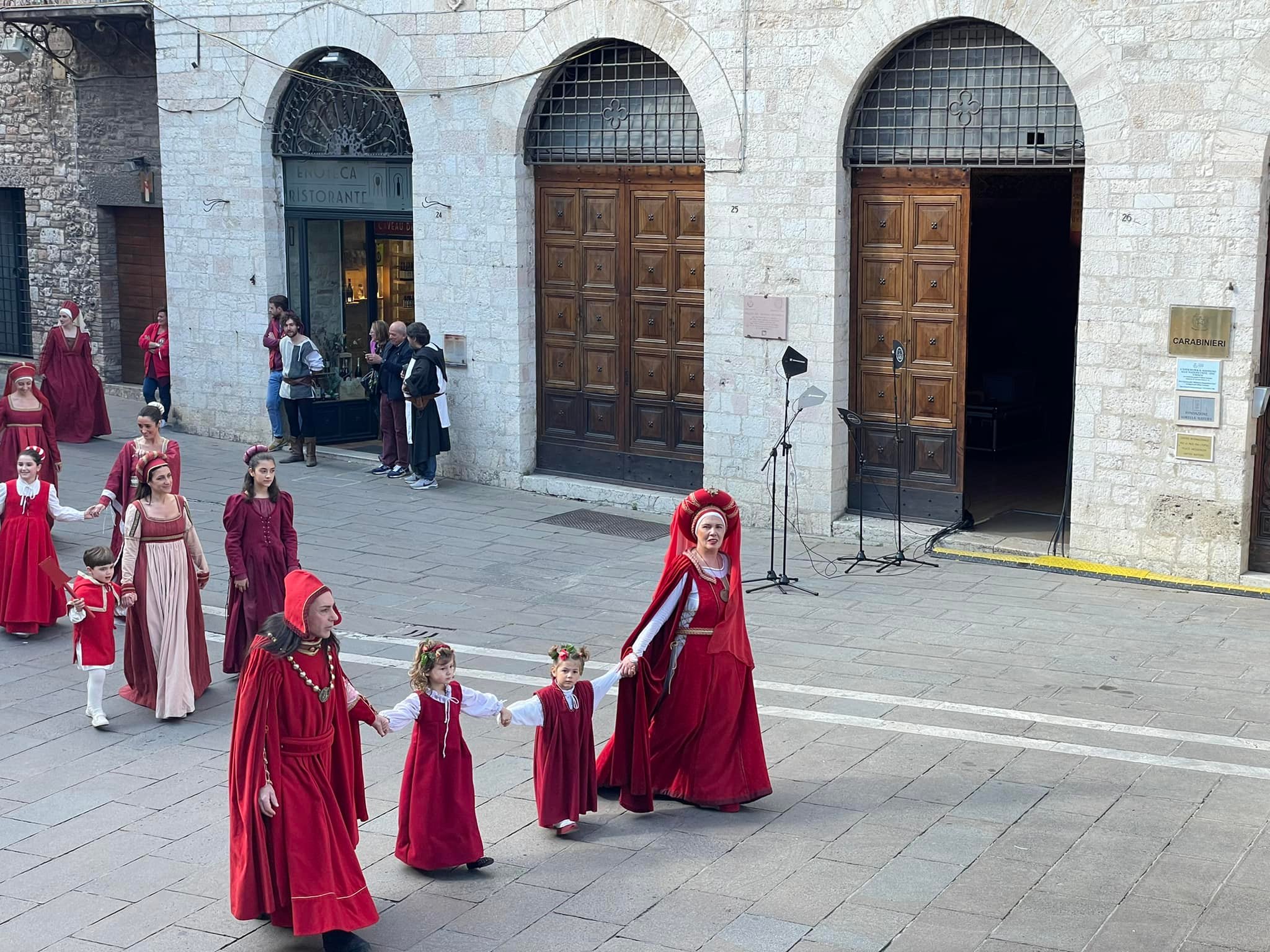
A family affair. Kids participate in various roles as they grow up. You must be born in Assisi to participate and if you want to be in the role of a noble person, you actually have to have a noble family name. Like I said, authentic.
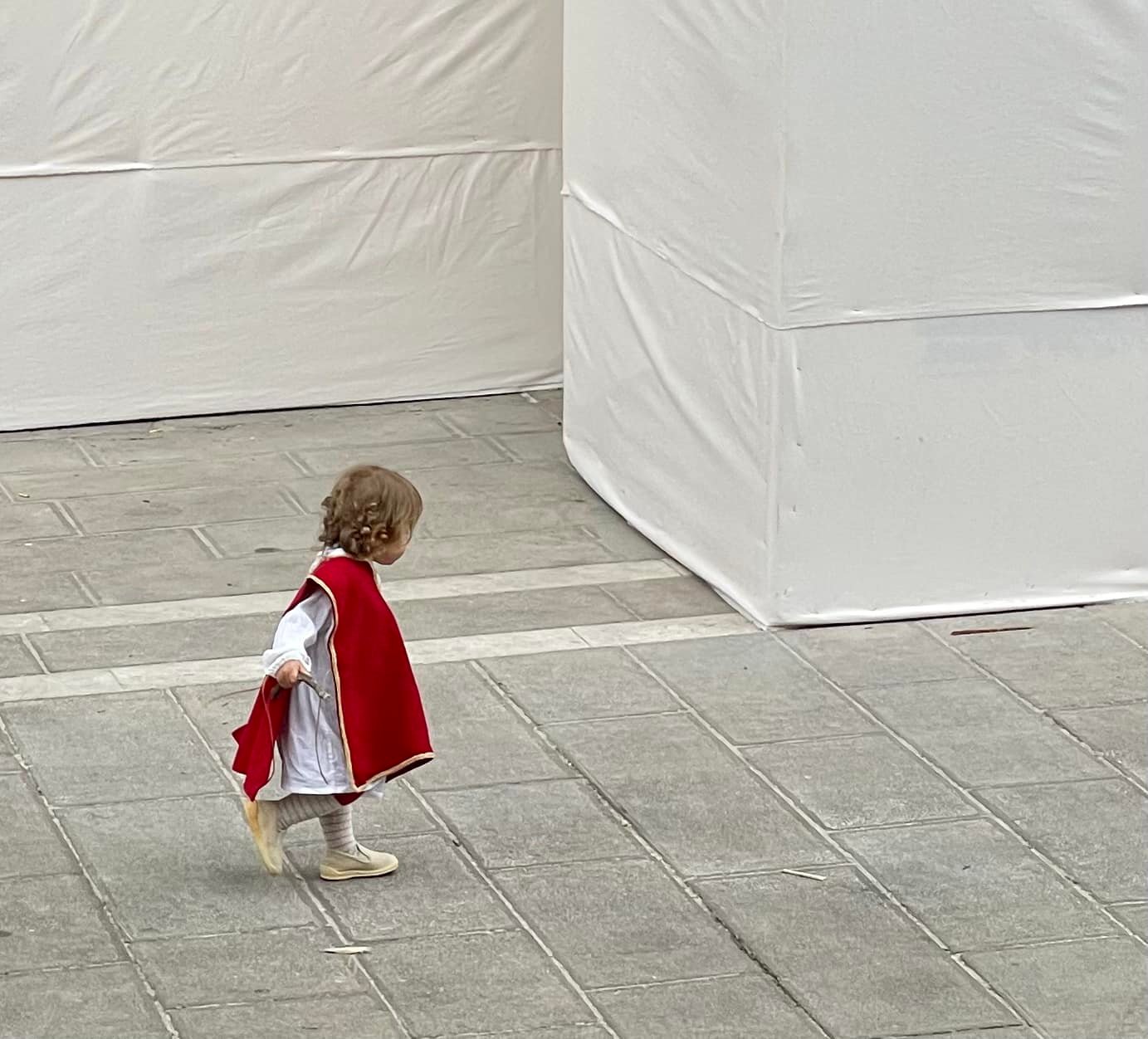
One of the littlest participants taking the parade into her own hands.
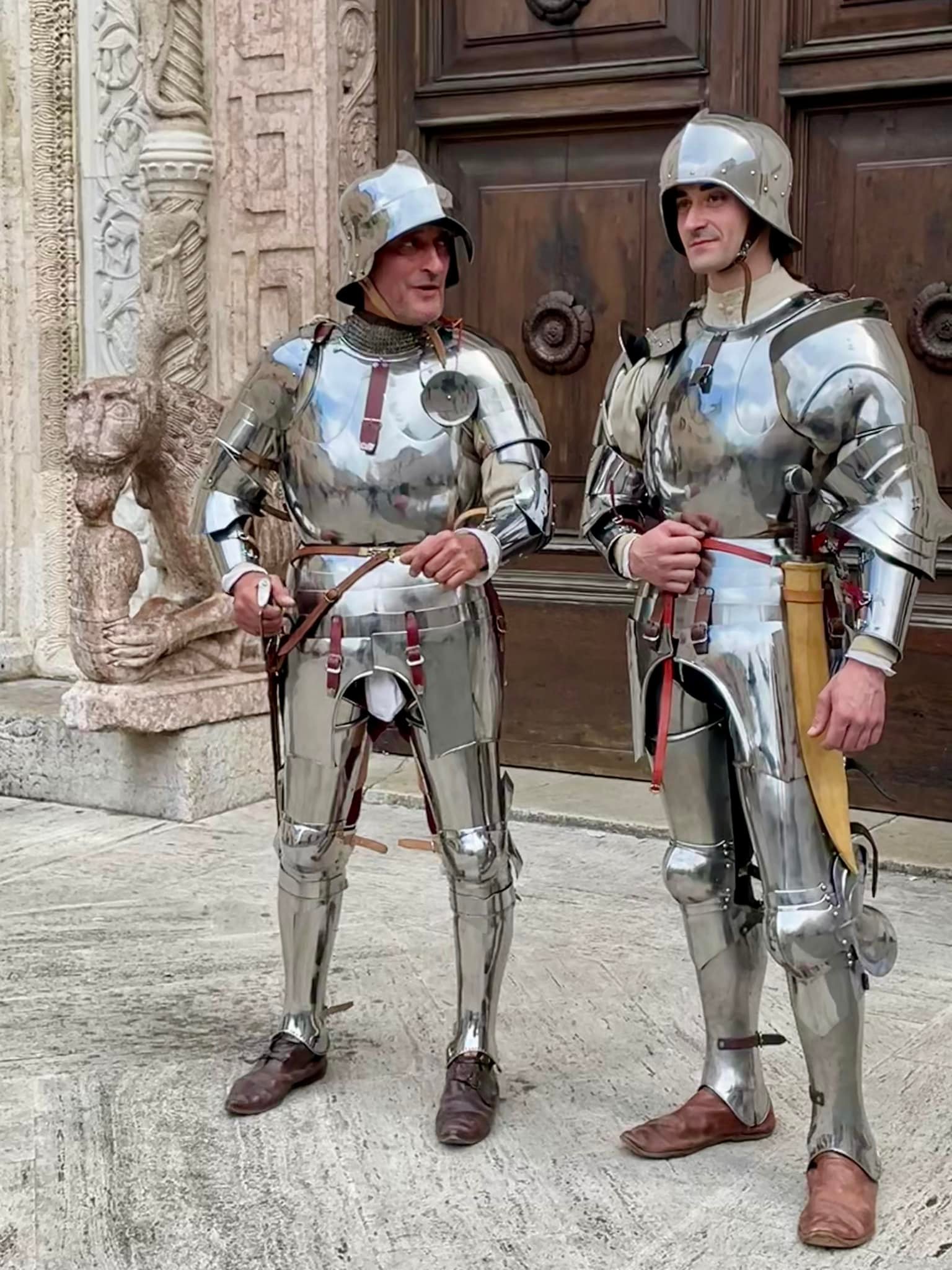
The shiniest performers.
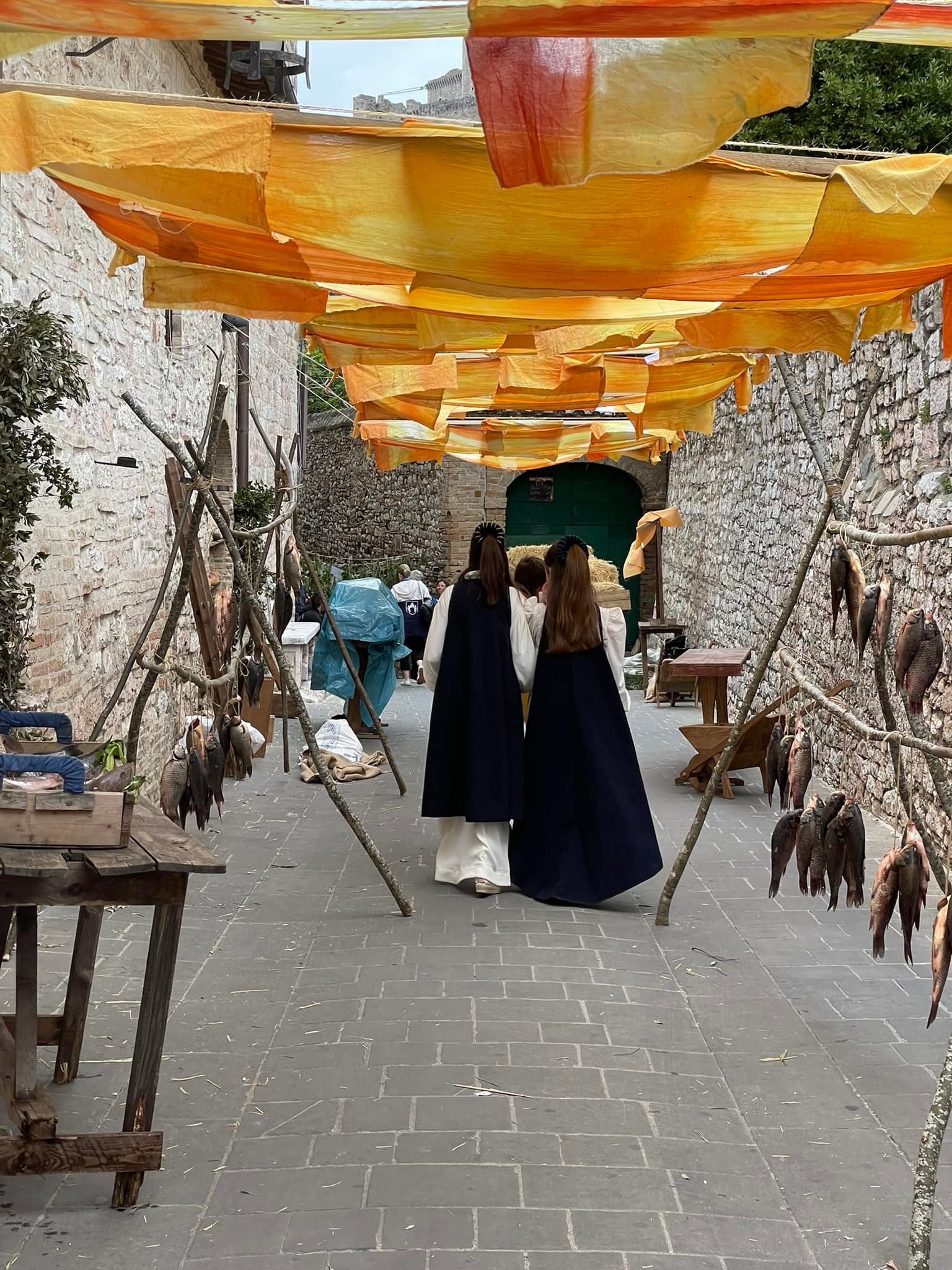
Full-on authenticity. Real dead fish hanging in the fish stall that is still being set up. Thankfully they didn’t stink, but maybe it’s best to be here the first day and not the fourth!
June, 2024
Back to Umbria
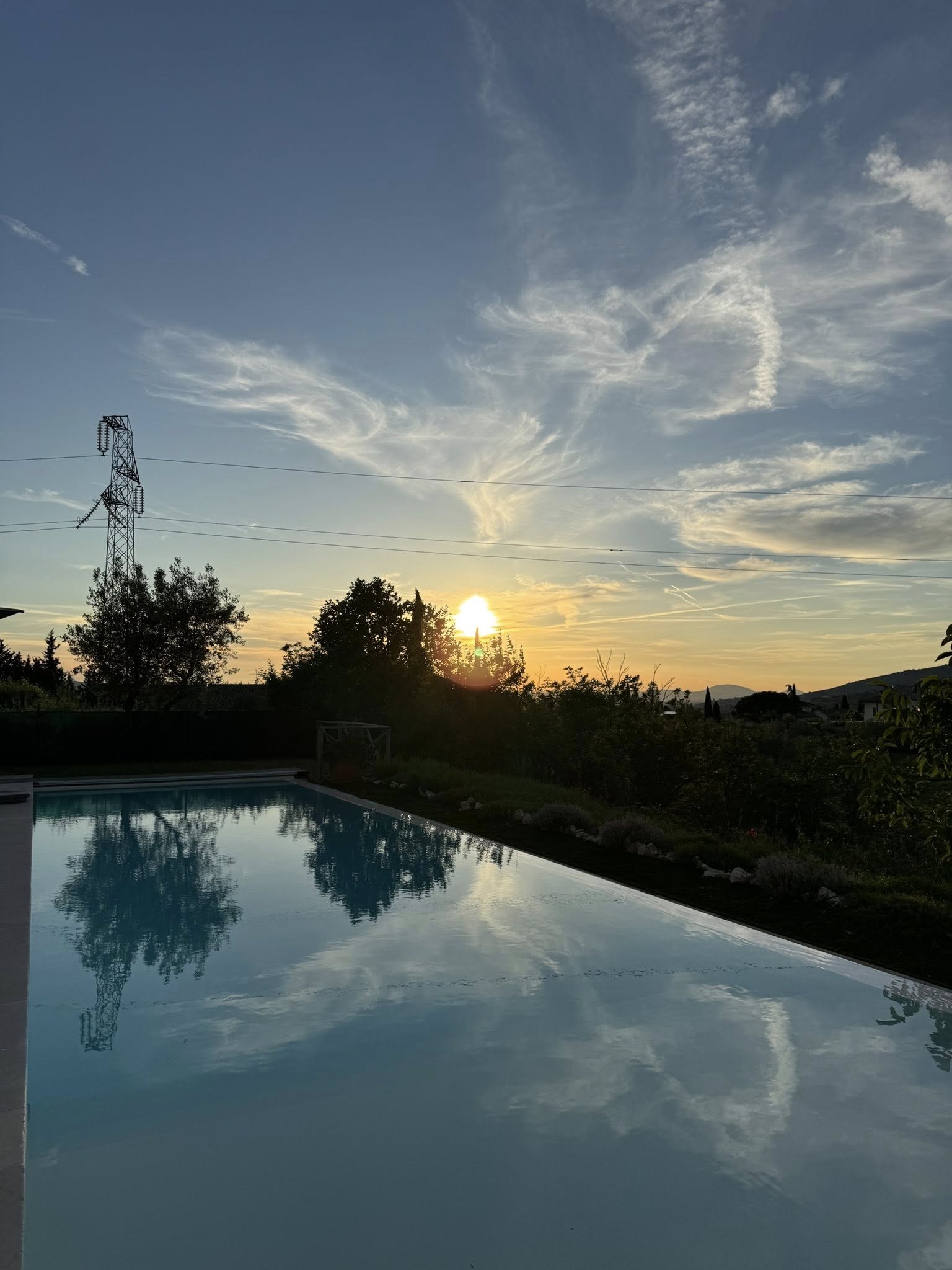
How’s this for a perfect start to an amazing week in Umbria!
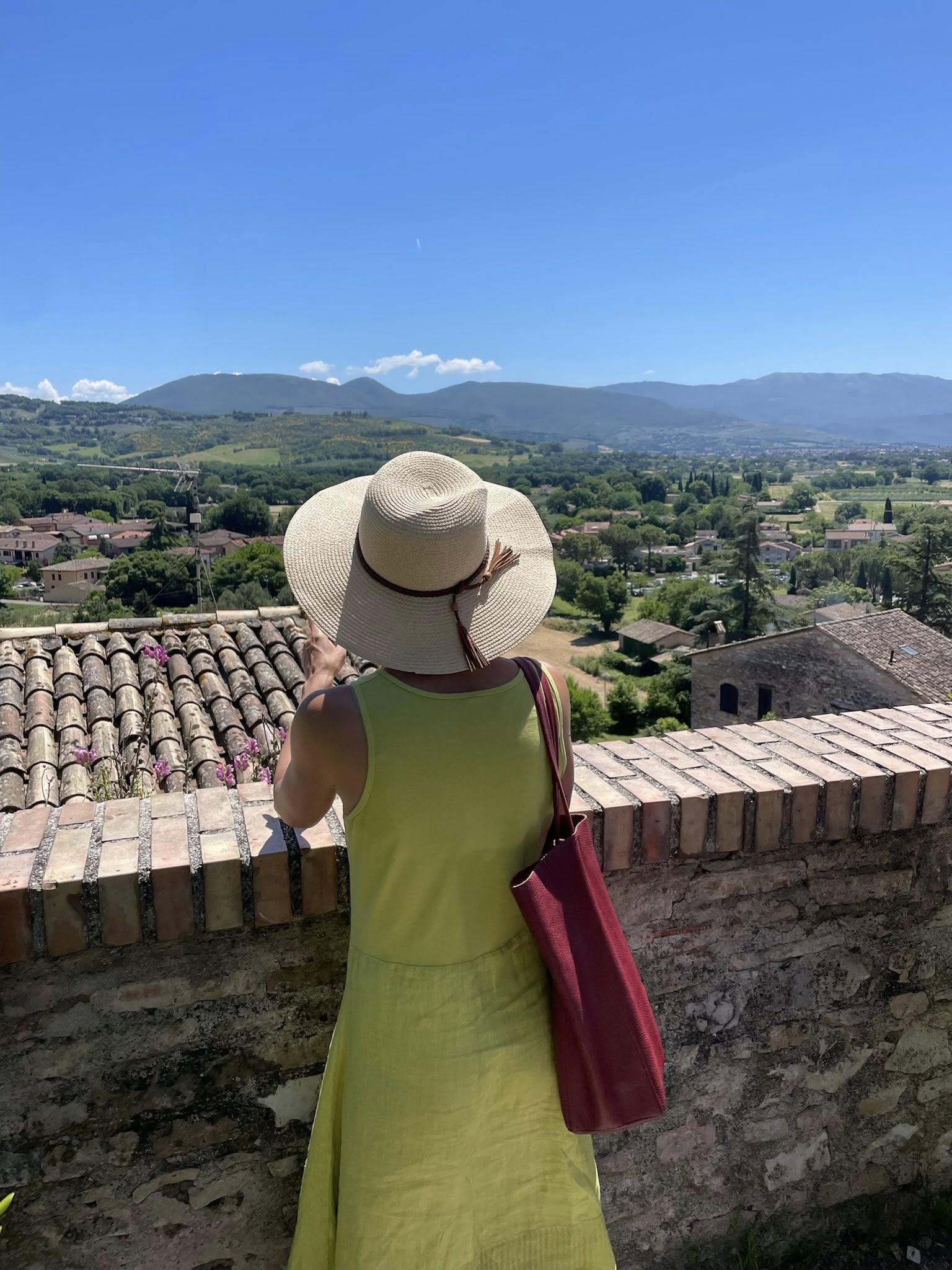
Can’t beat the views from pretty much everywhere.
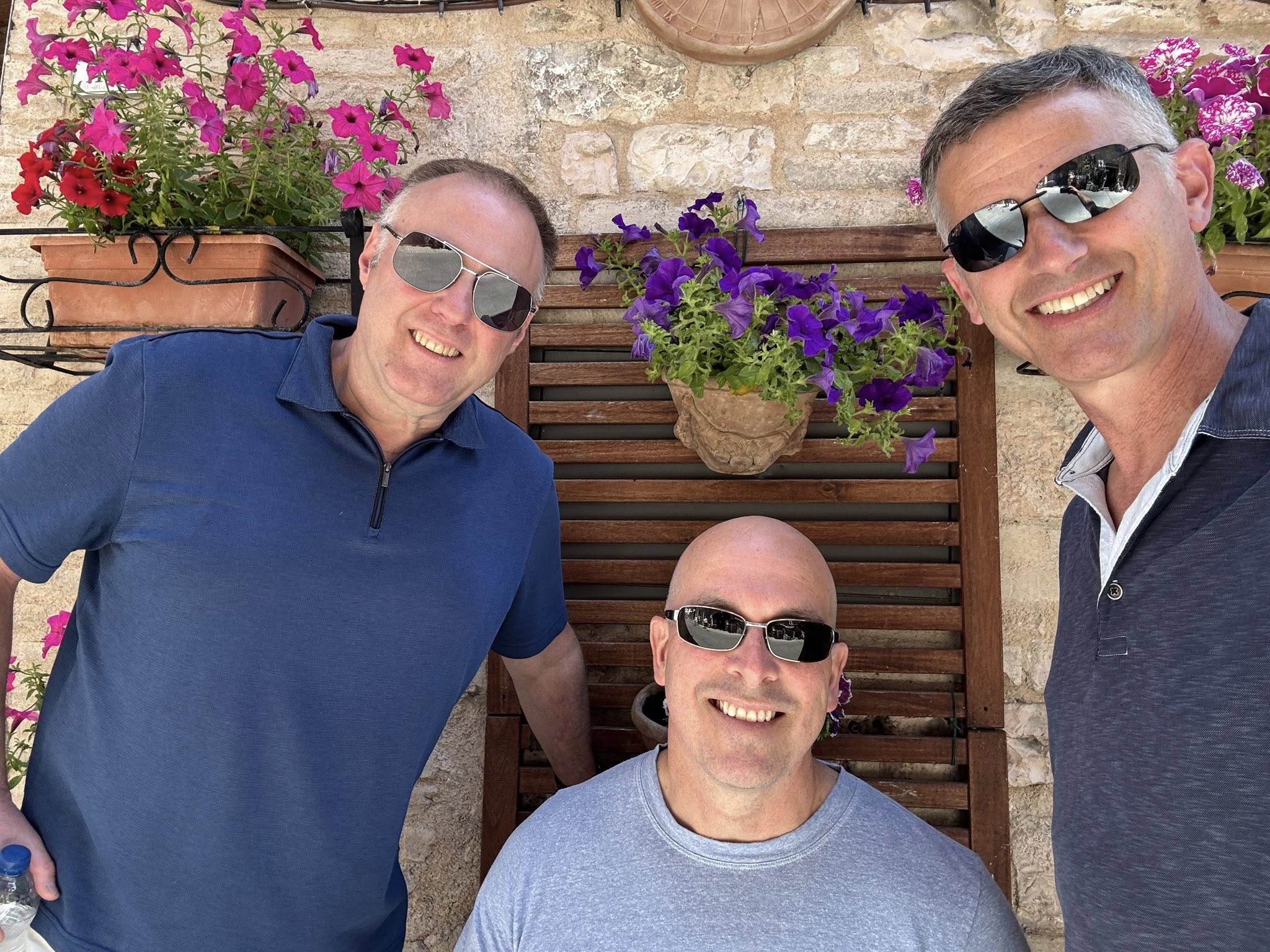
The boys patiently waiting while we are in our favourite shop in Spello.
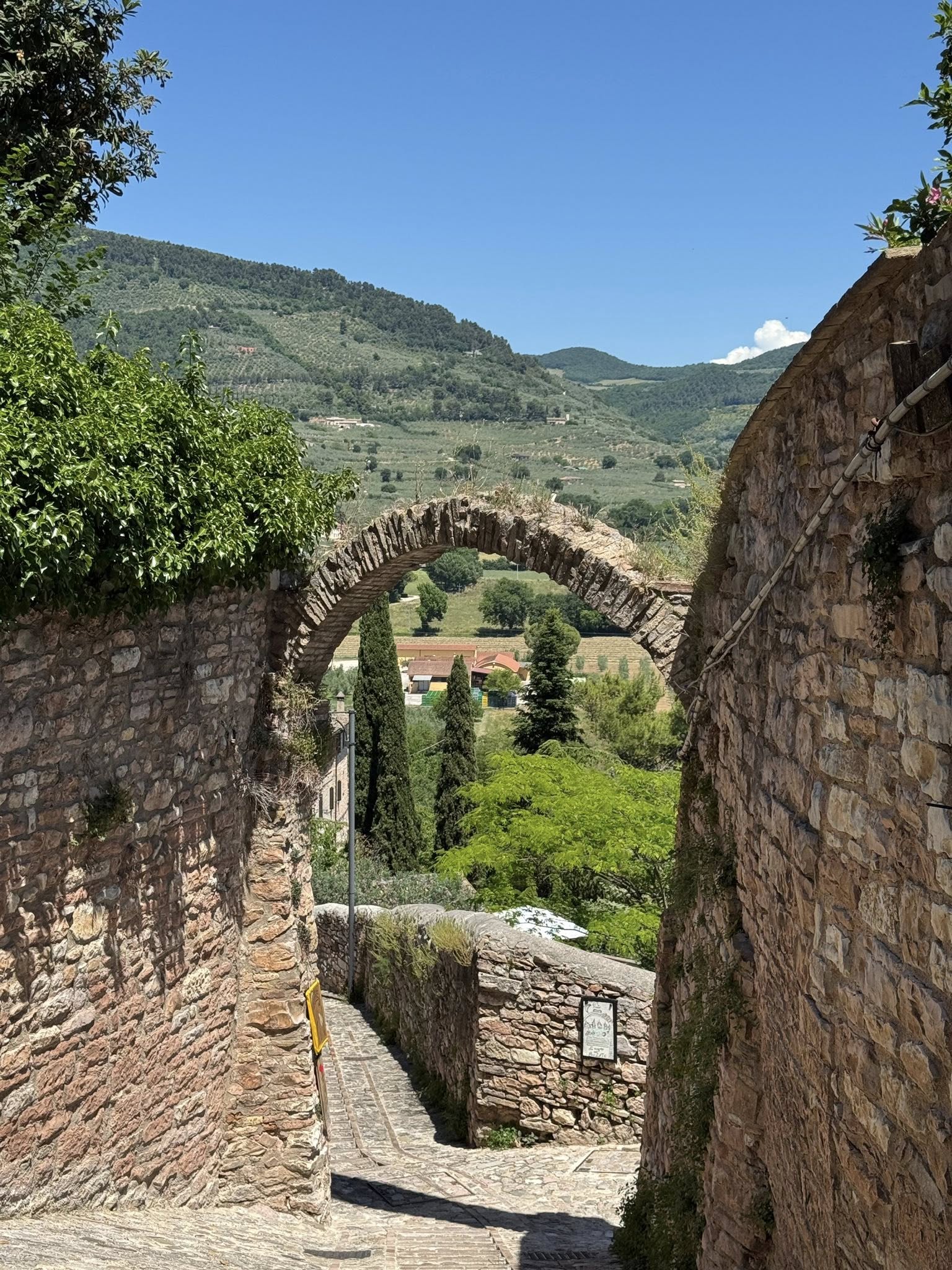
I think something magical will happen when I step through this arch…
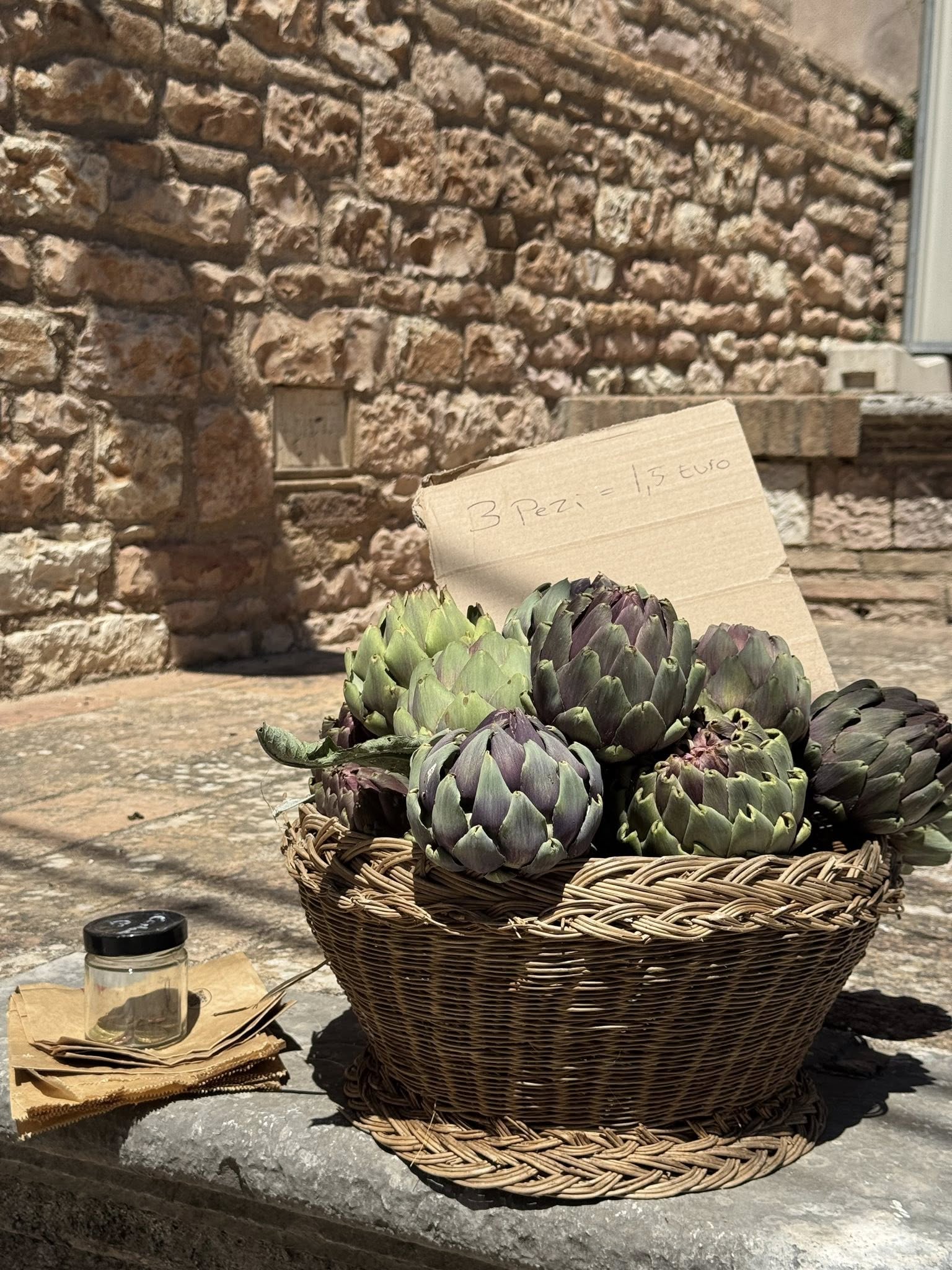
…a magical, missed opportunity! If only I had some change…
This church had an elaborate dinner table set up to welcome the dead.
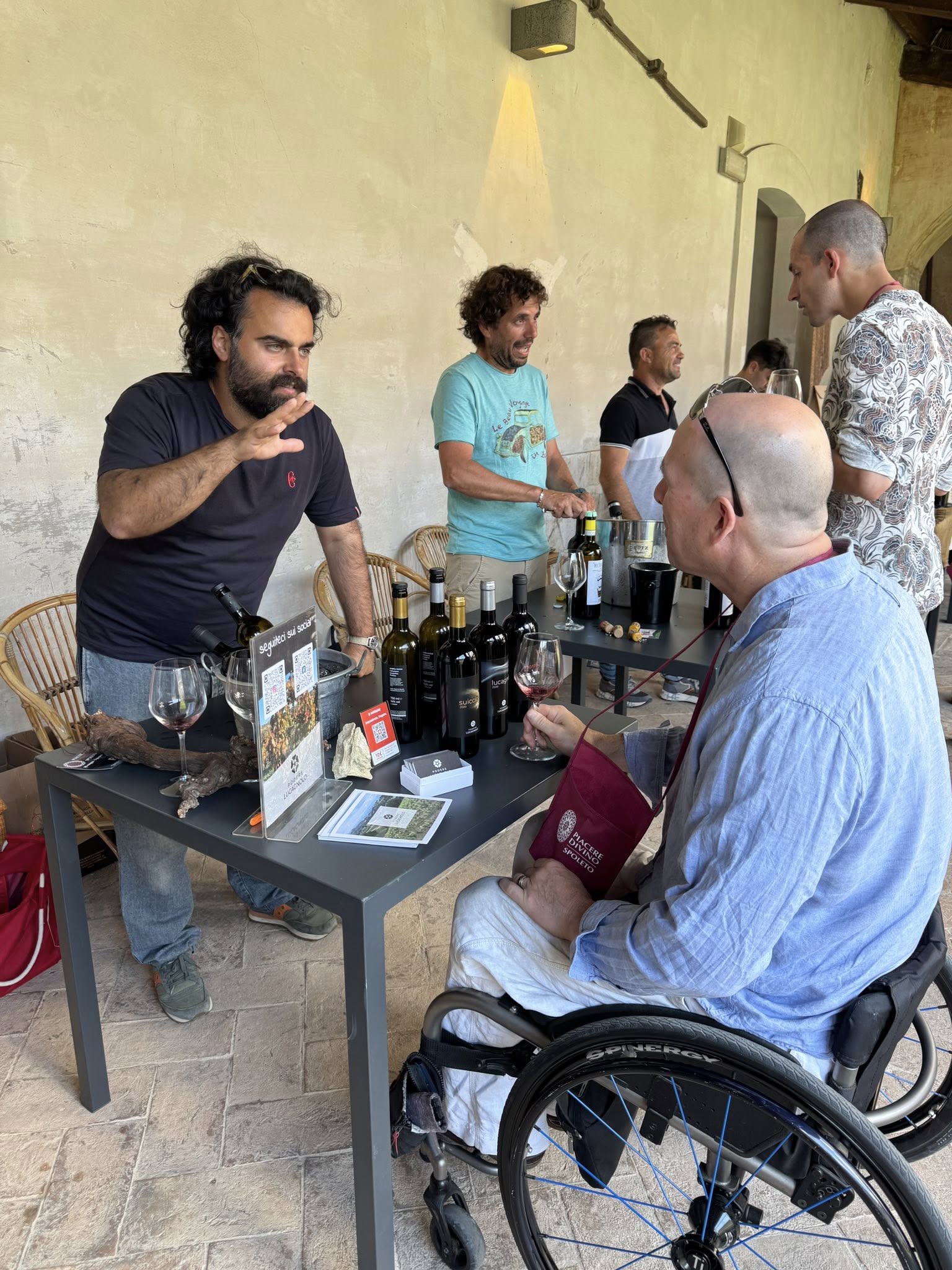
Festivals abound in Italy! This weekend, Spoleto was having its annual Piacere Divino with forty Umbrian wineries participating. We tasted a bunch of wine in this historic 14th century cloister. Sorry, nothing to write home about…
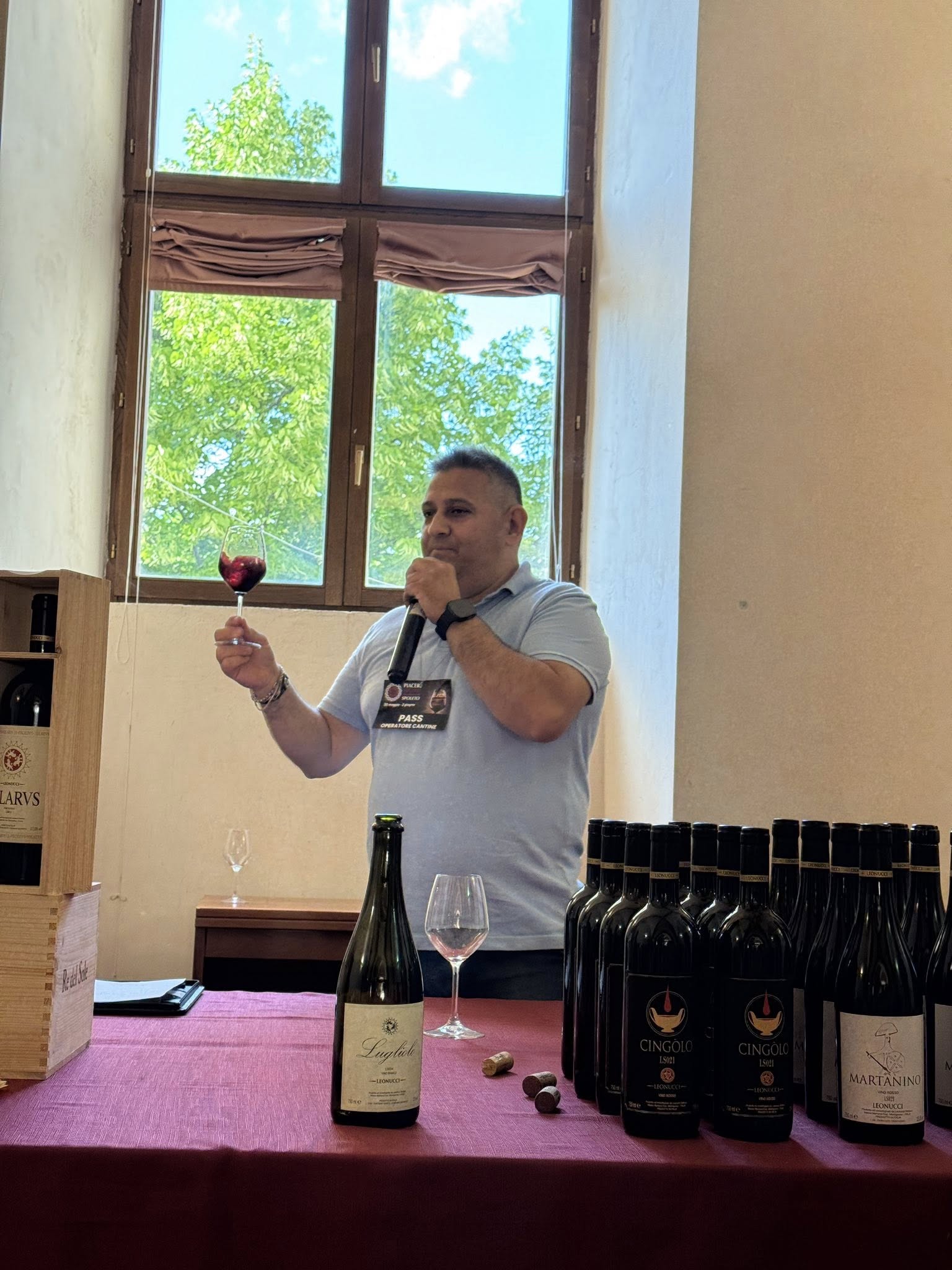
Then we went to a guided wine tasting…didn’t occur to us it would be only in Italian…
These guys were out entertaining the attendees in the courtyard. I can’t get enough of the guy playing the washboard with spoons!
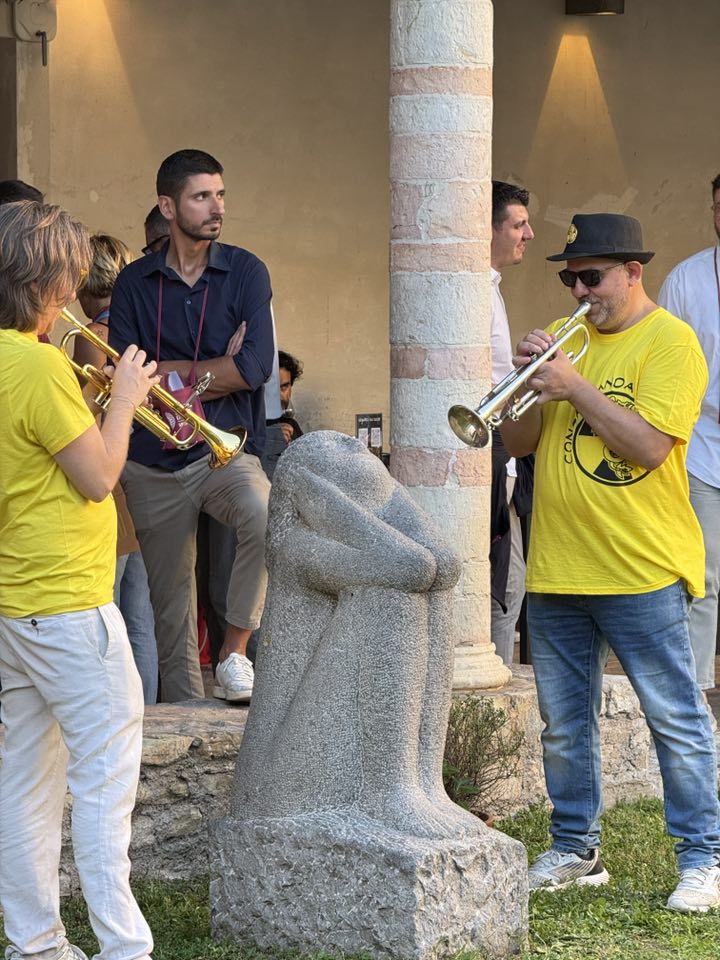
And then they noticed the sculpture in the courtyard!
More music at the Piacere Divino event. This has a bit more of an evening vibe but the yellow band did show up for a bit of jamming!
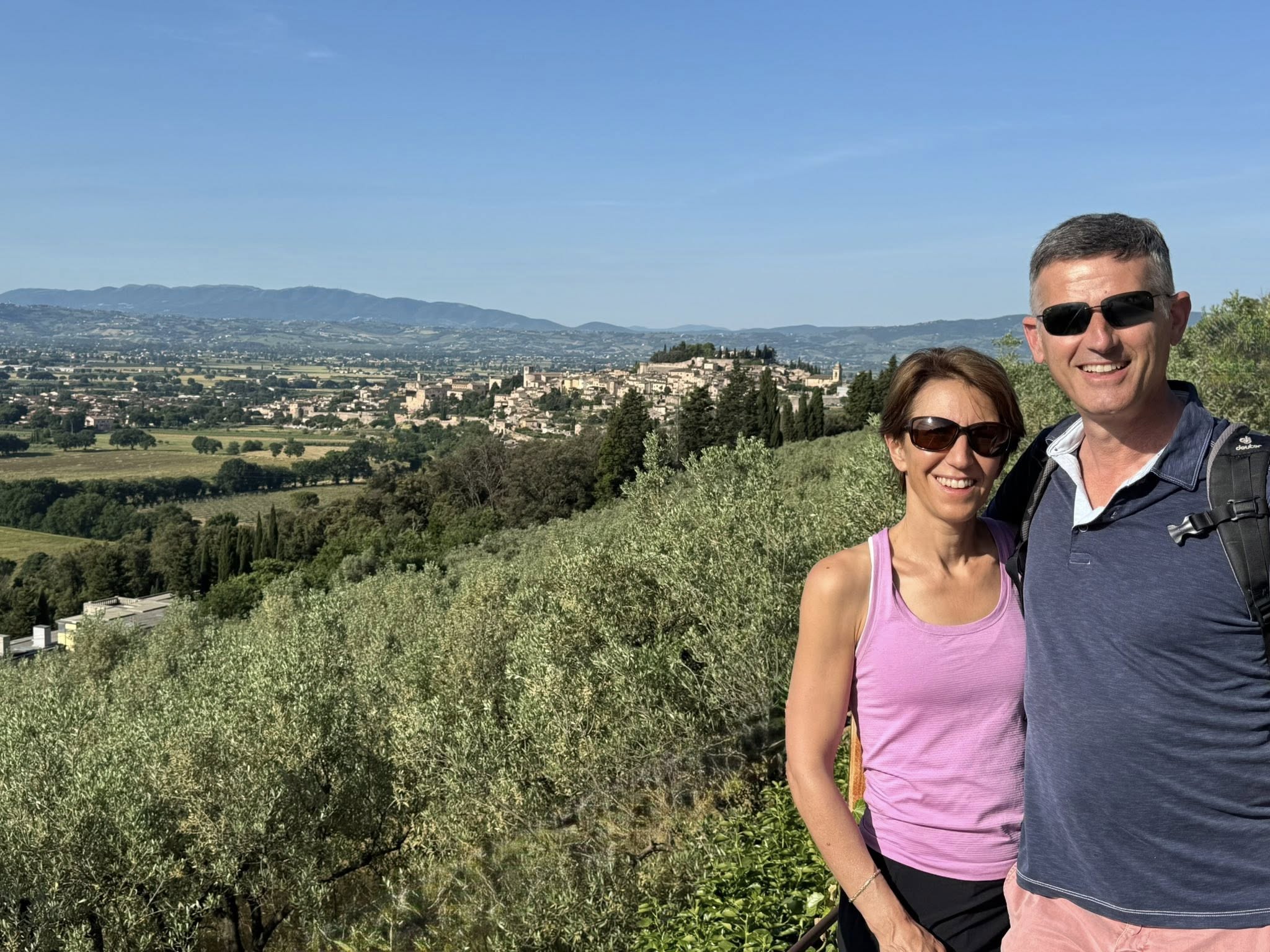
A beautiful hike above Spello along the ancient Roman aqueduct. Early start before it got too hot.
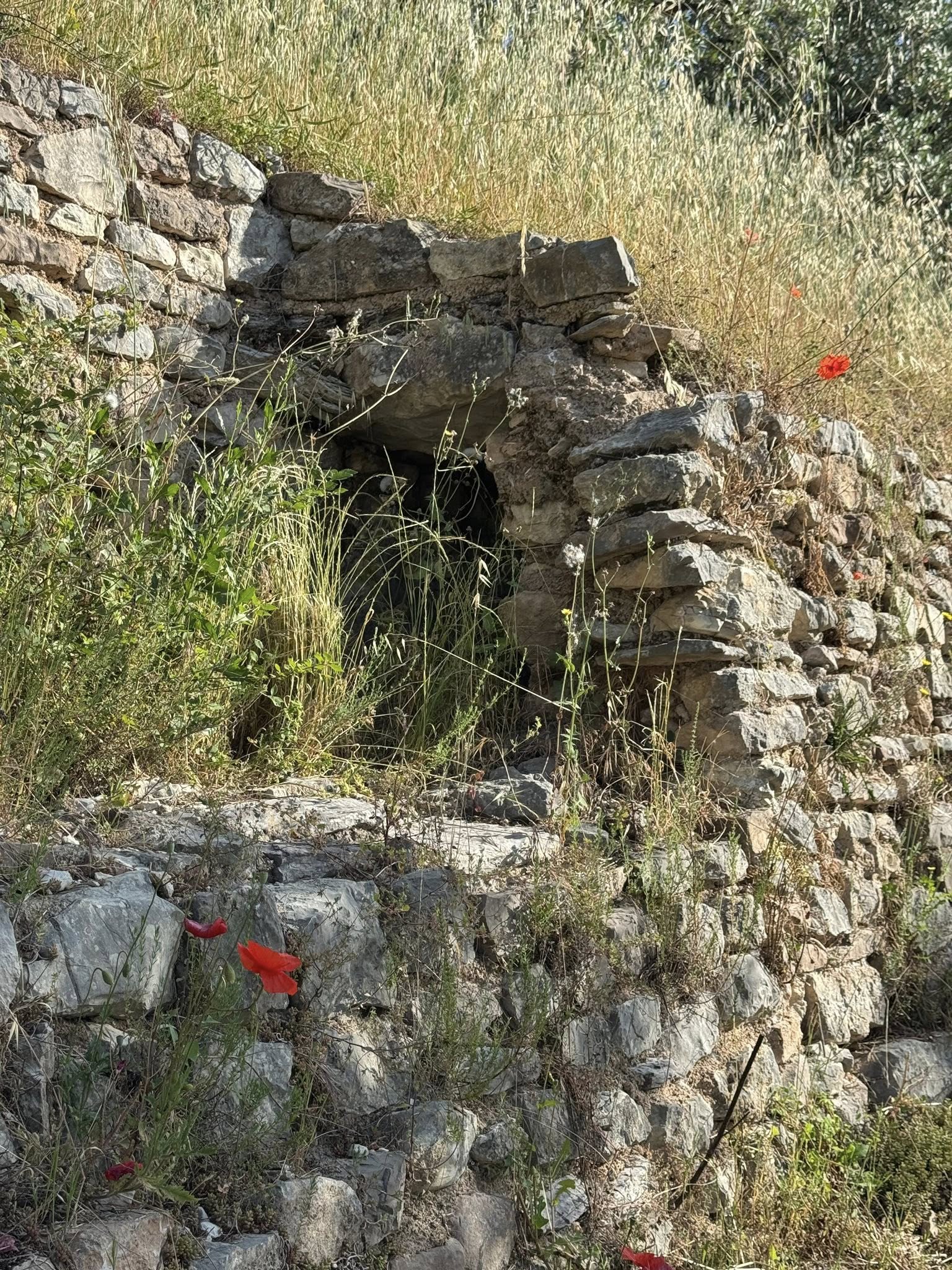
Here’s our accompanying aqueduct. There were lots of little openings along the way.
In true Italian style, there was a teeny town nestled in the hills with a great coffee bar run by Flavio. He’s passionate about all kinds of music, but especially blues and rock. He doesn’t have internet in his village of Collepino (population of 34). All he has is his records!
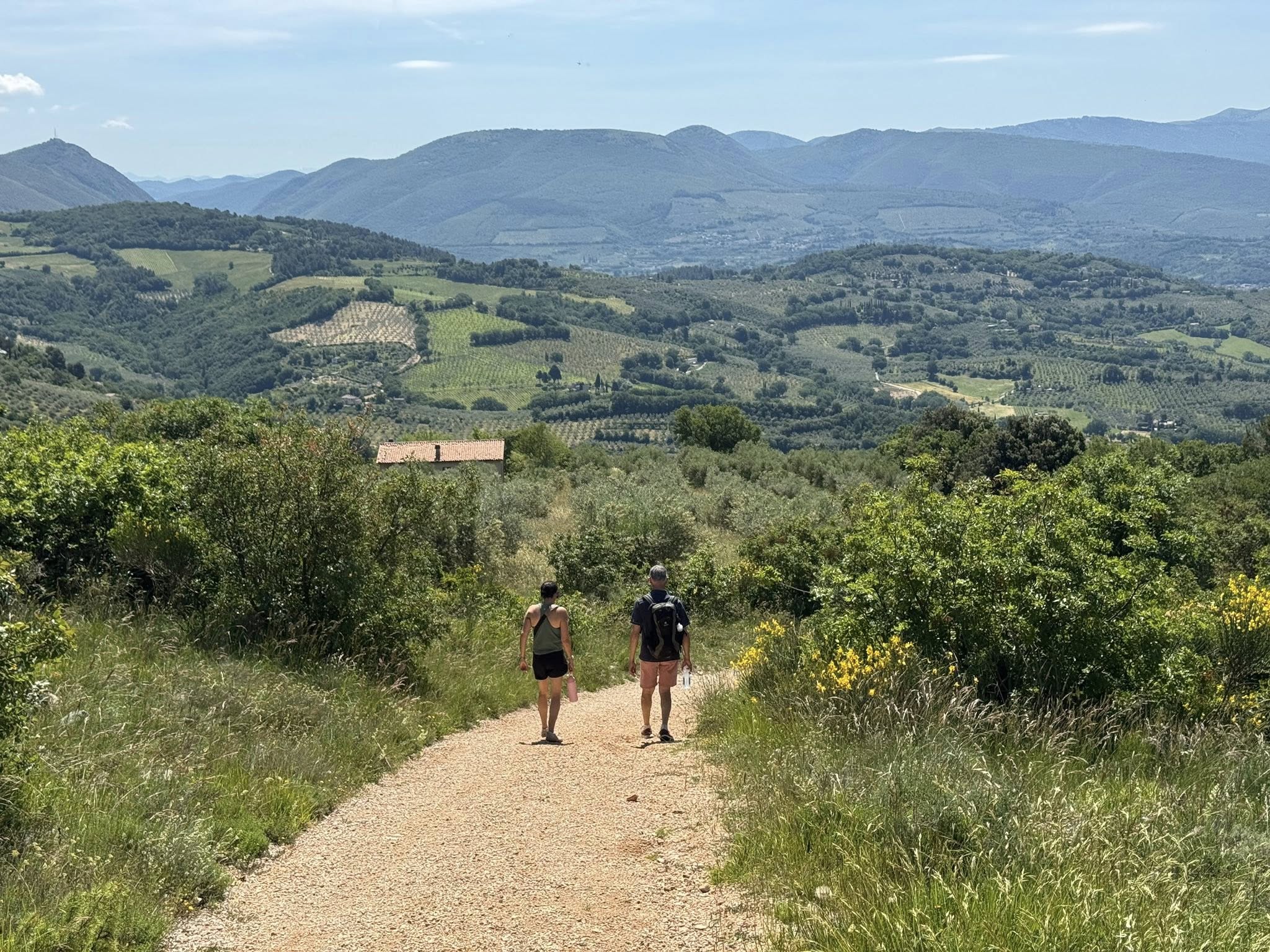
We walked through deciduous and coniferous forests, past lakes, alongside a silent convent, and down a winding path back to Spello. This hike had everything!
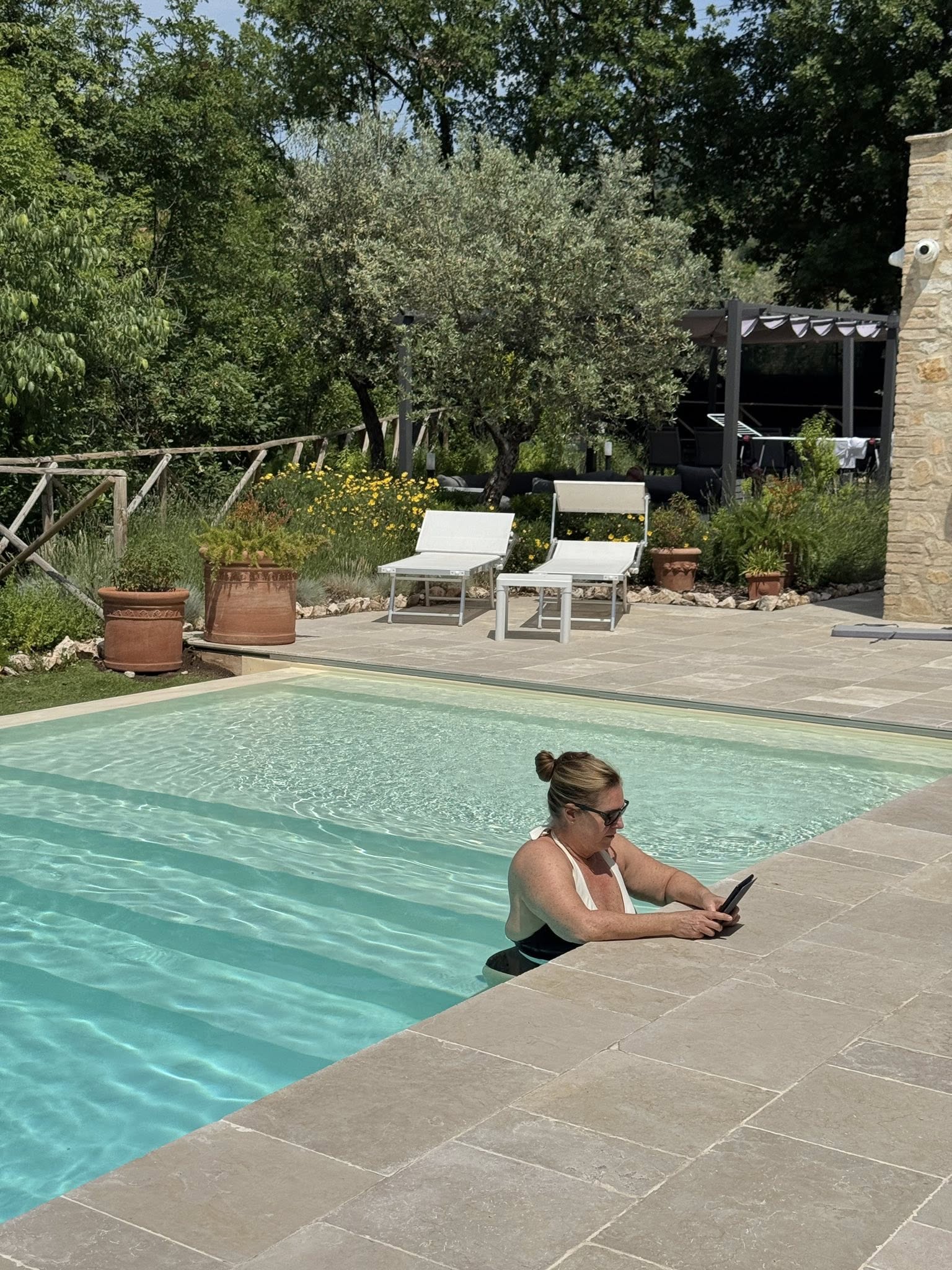
Laura’s book club needs to know just how serious she is about keeping up with her required reading!
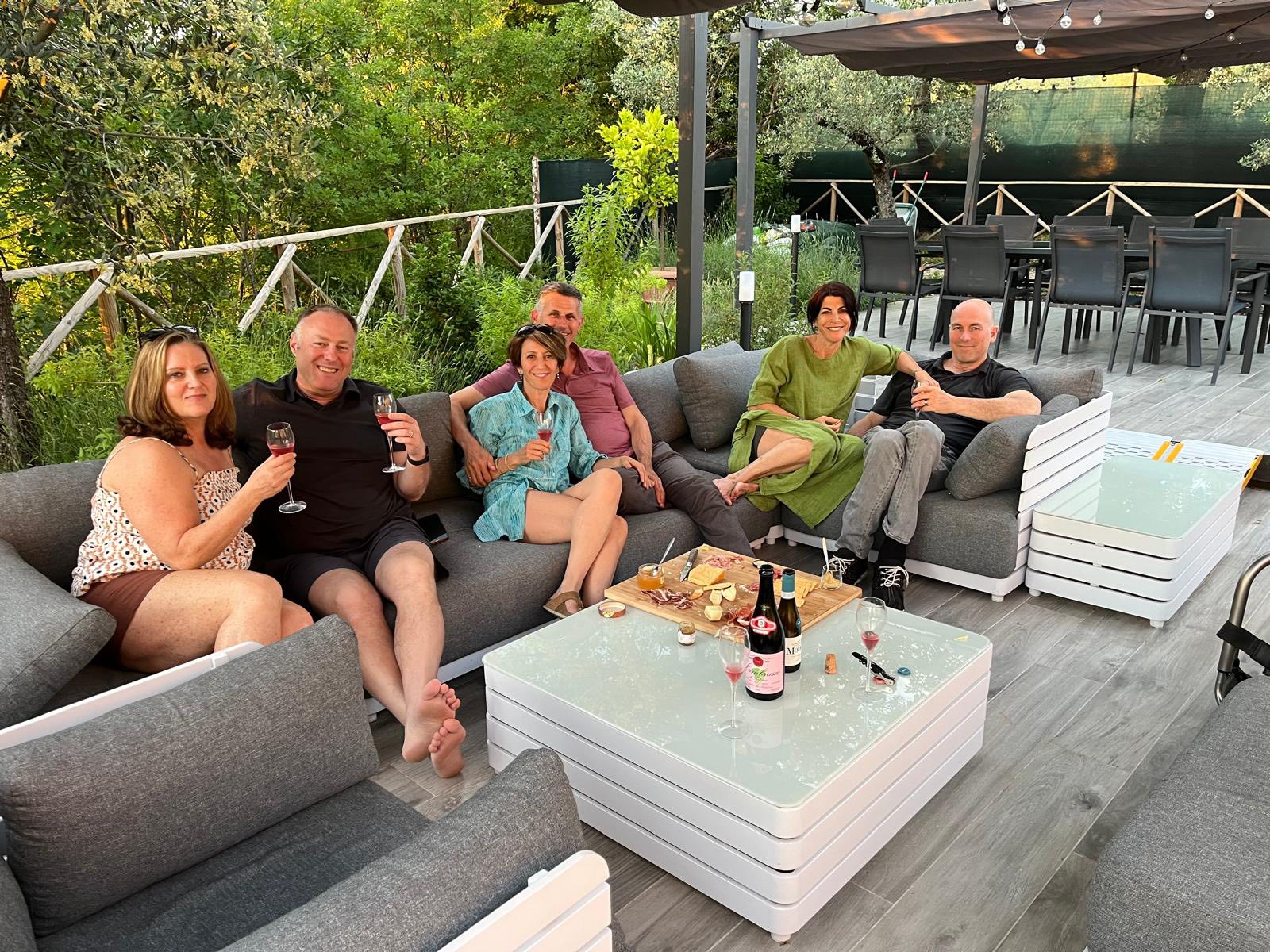
What could be better after a day in the villages and the pool!
Paolo is the truffle guy! We showed up at his warehouse in the middle of nowhere and asked for some truffles. Here he is selecting some for us. Clearly he is serious about his product.
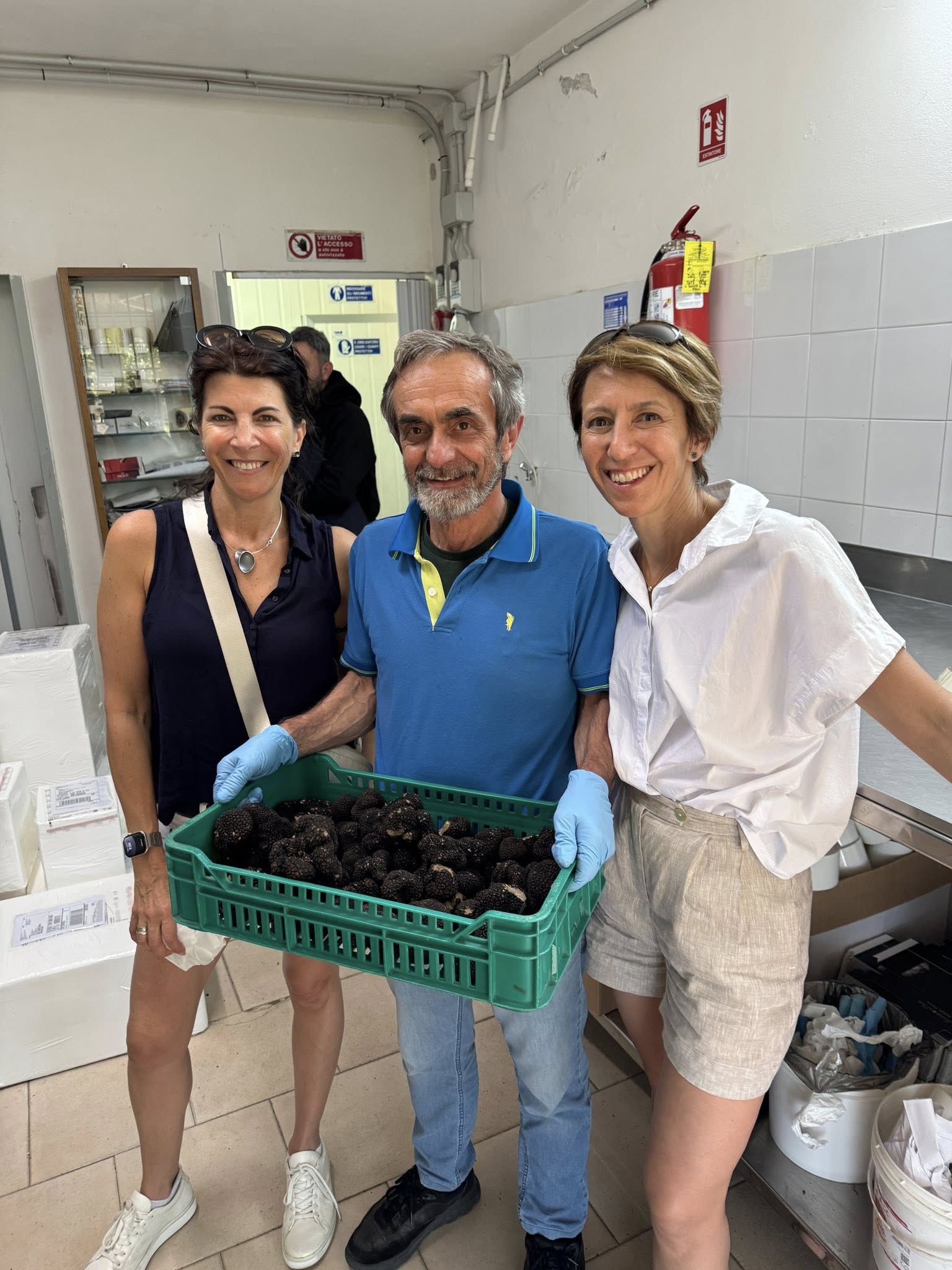
This is the tip of the iceberg of truffles floating around here today. The summer truffle season has just begun and Paolo and his team are packing boxes for shipping. Most of what we saw was going to other places in Europe but he did manage to select four for us!
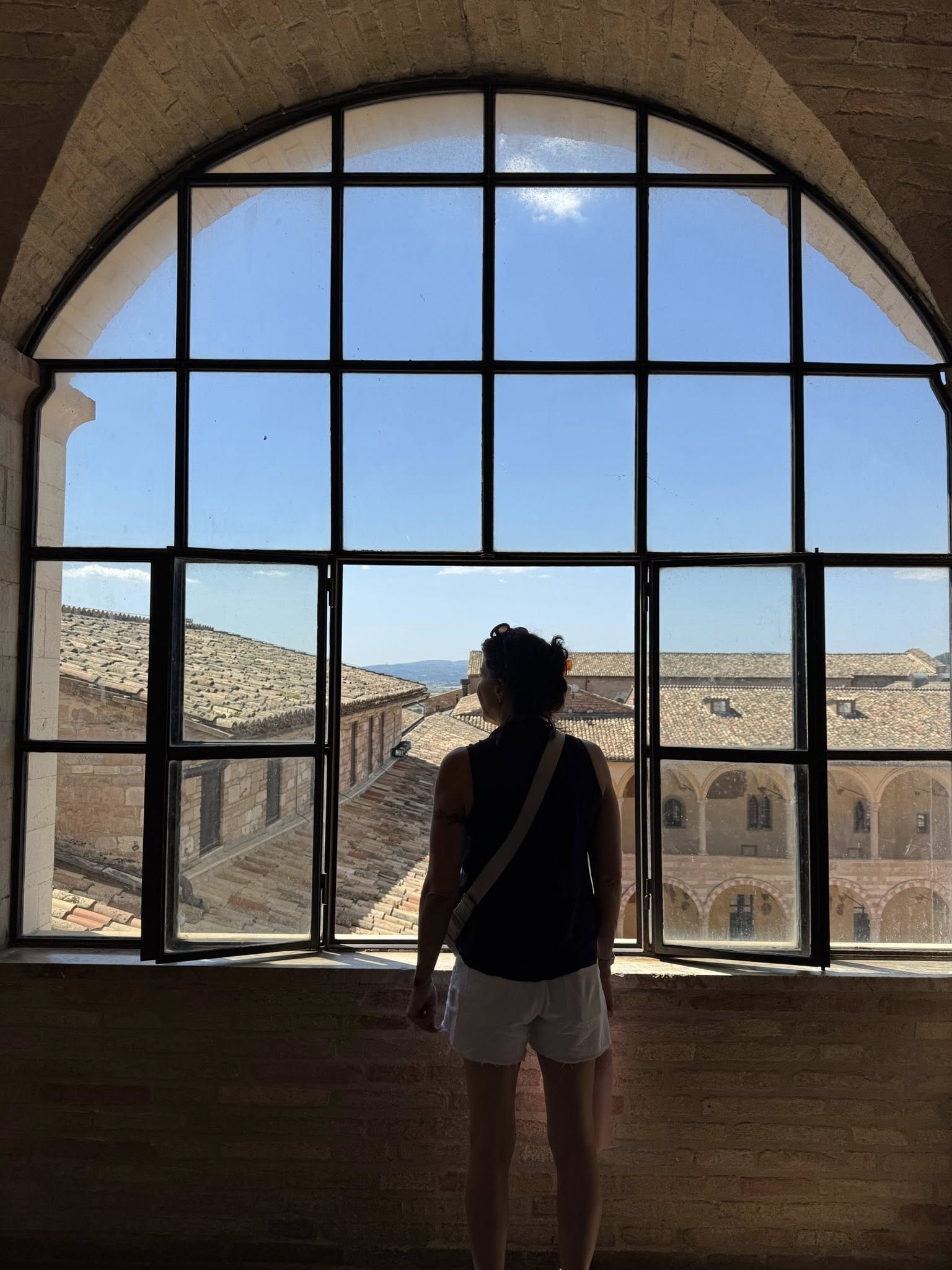
The magic of Assisi.
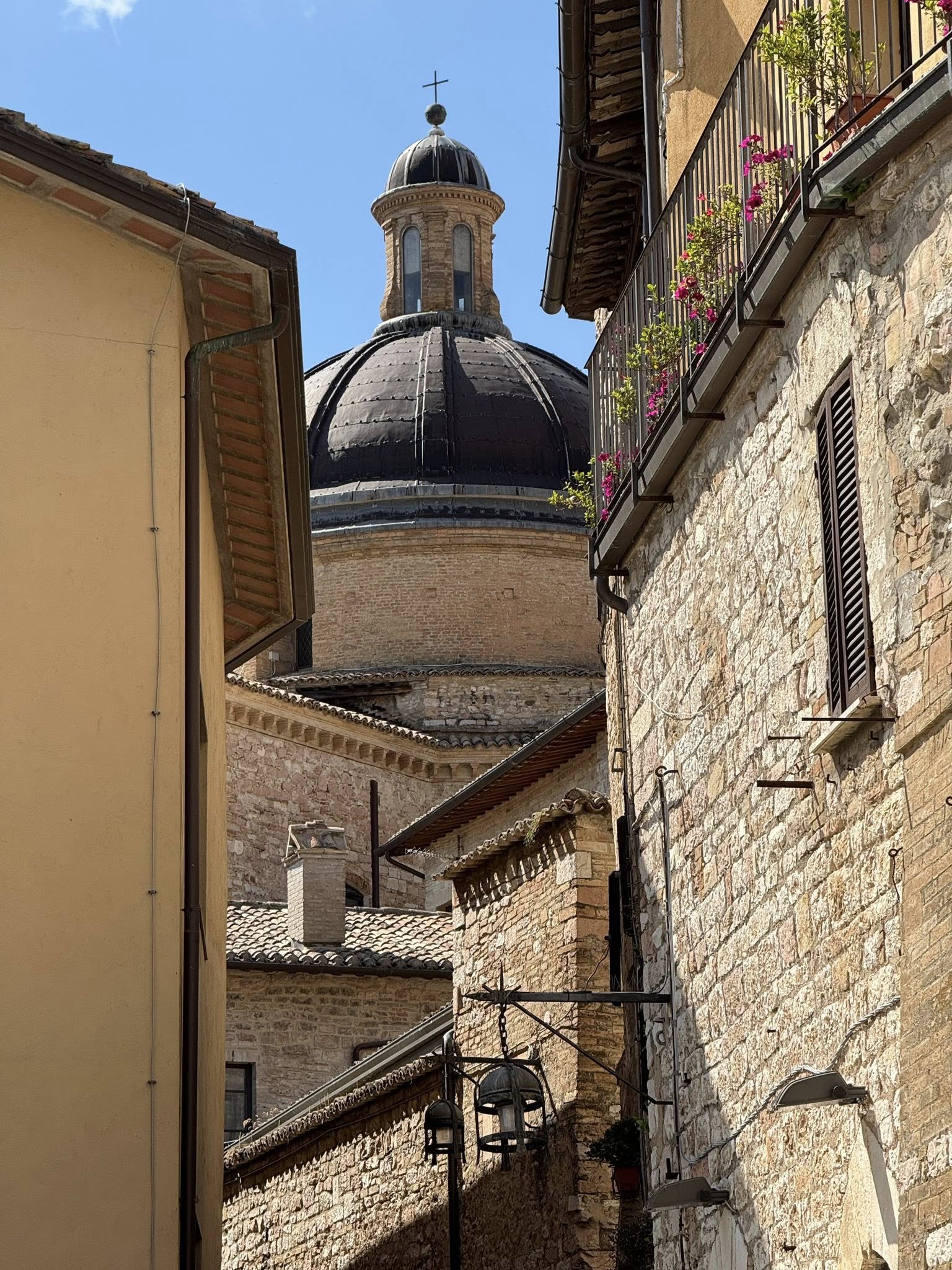
There is such beauty in stacked buildings.
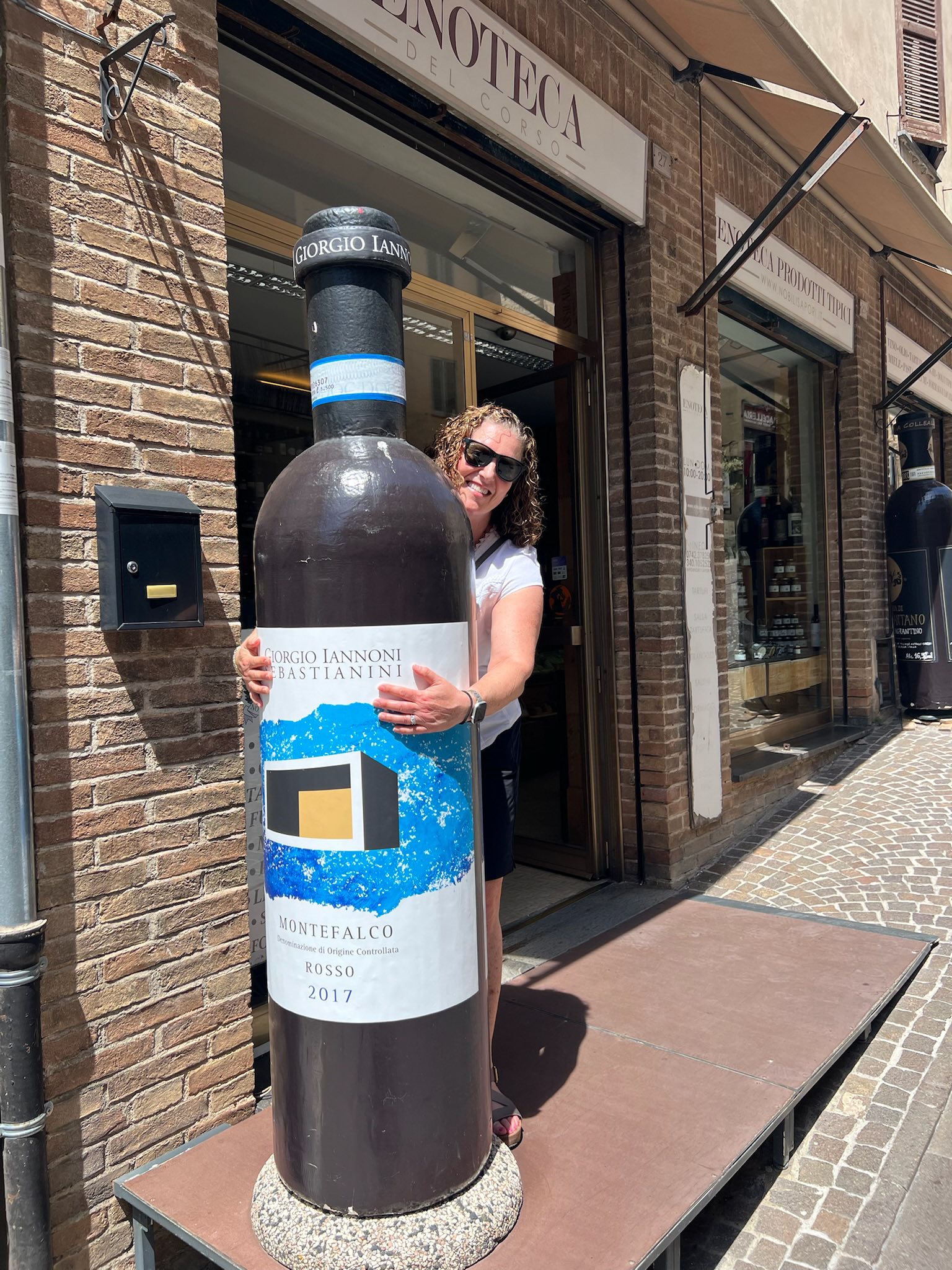
We popped over to Montefalco before going to a wine tasting. Laura was ready to taste!
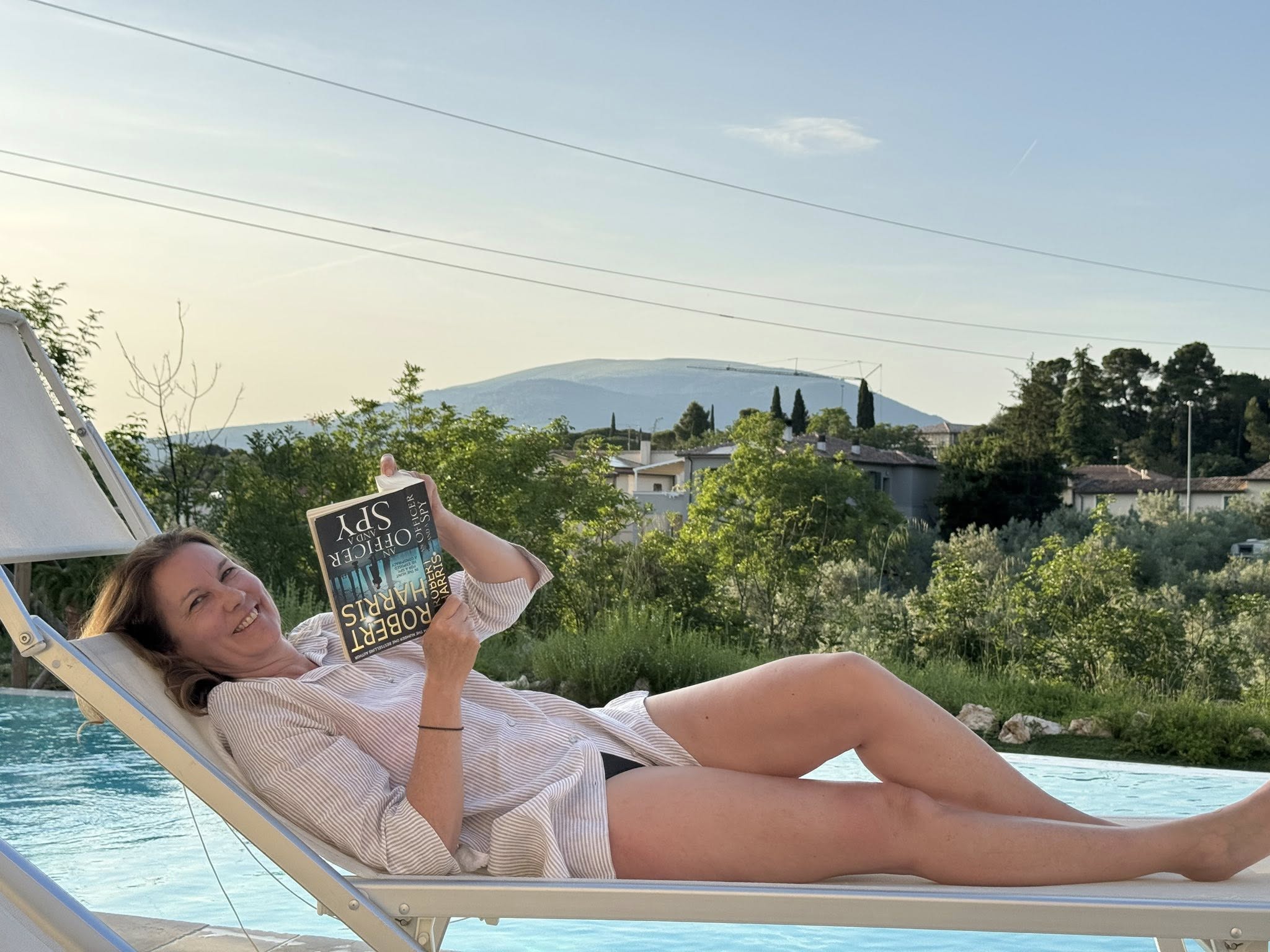
Another serious poolside reader!
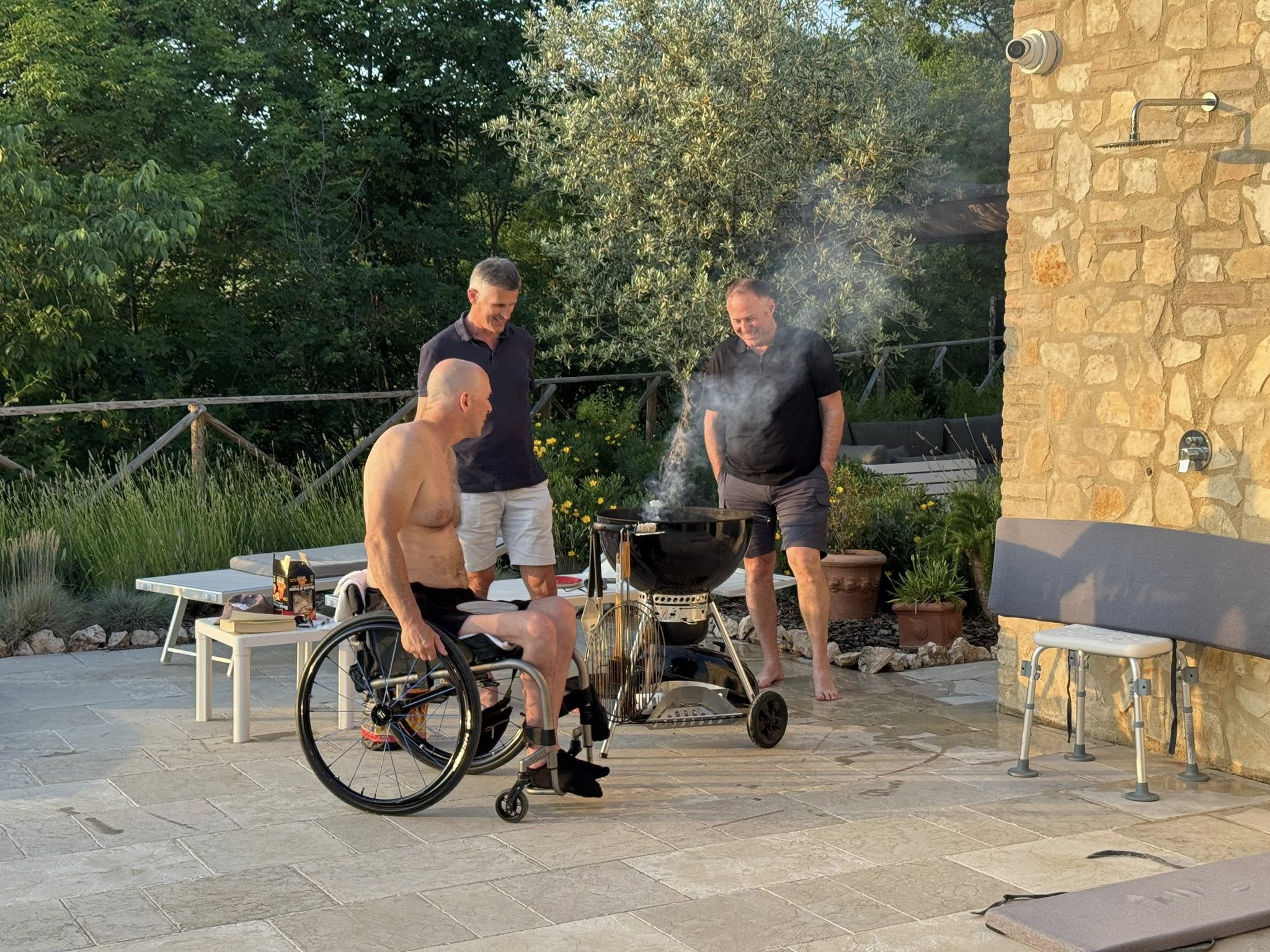
A lot of attention is going into making sure the bbq is ready. There’s good reason why…
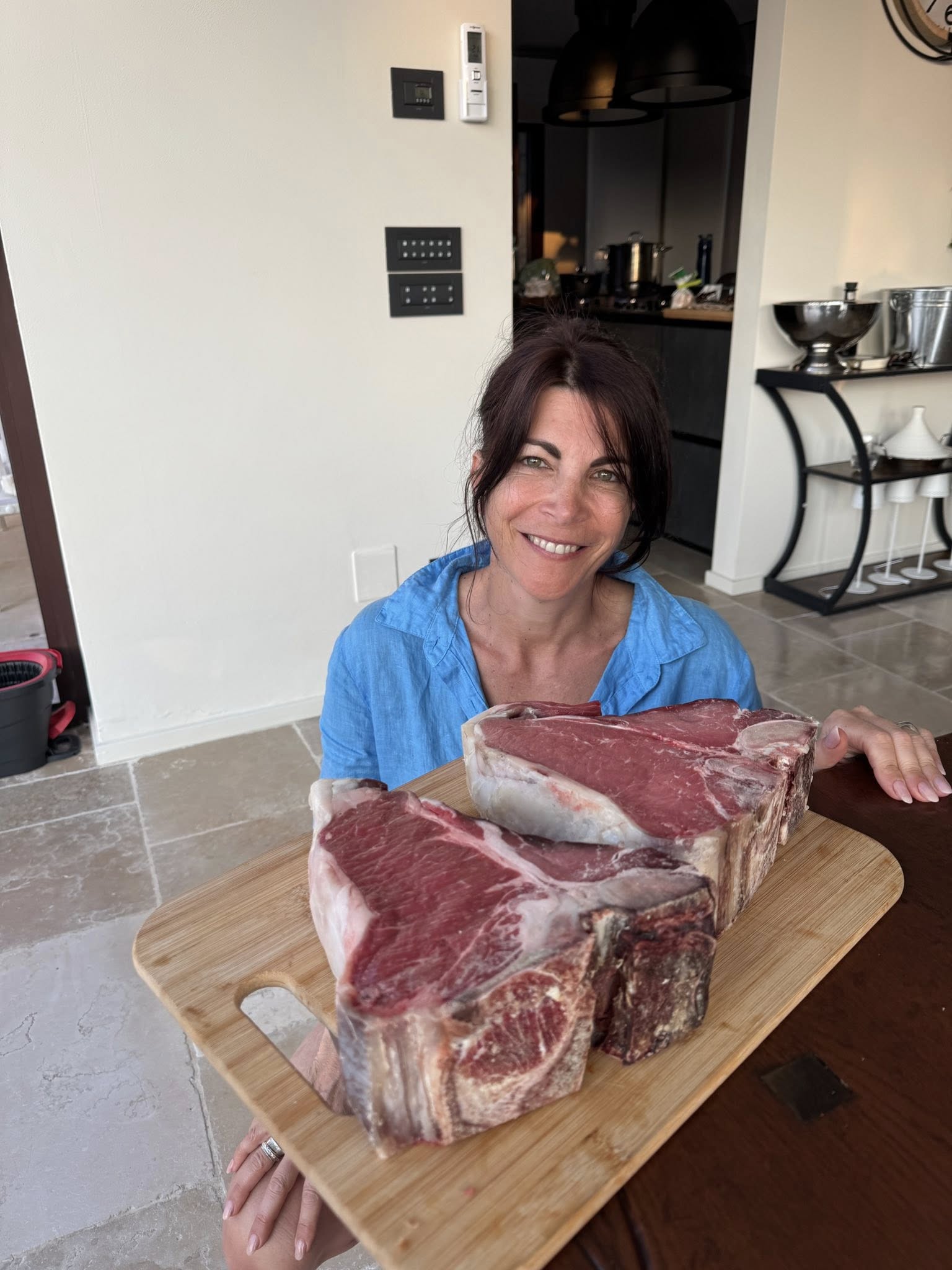
…this is what landed on the bbq!
Observing the bbq action from a distance. Best to stay clear of the outdoor cooks!
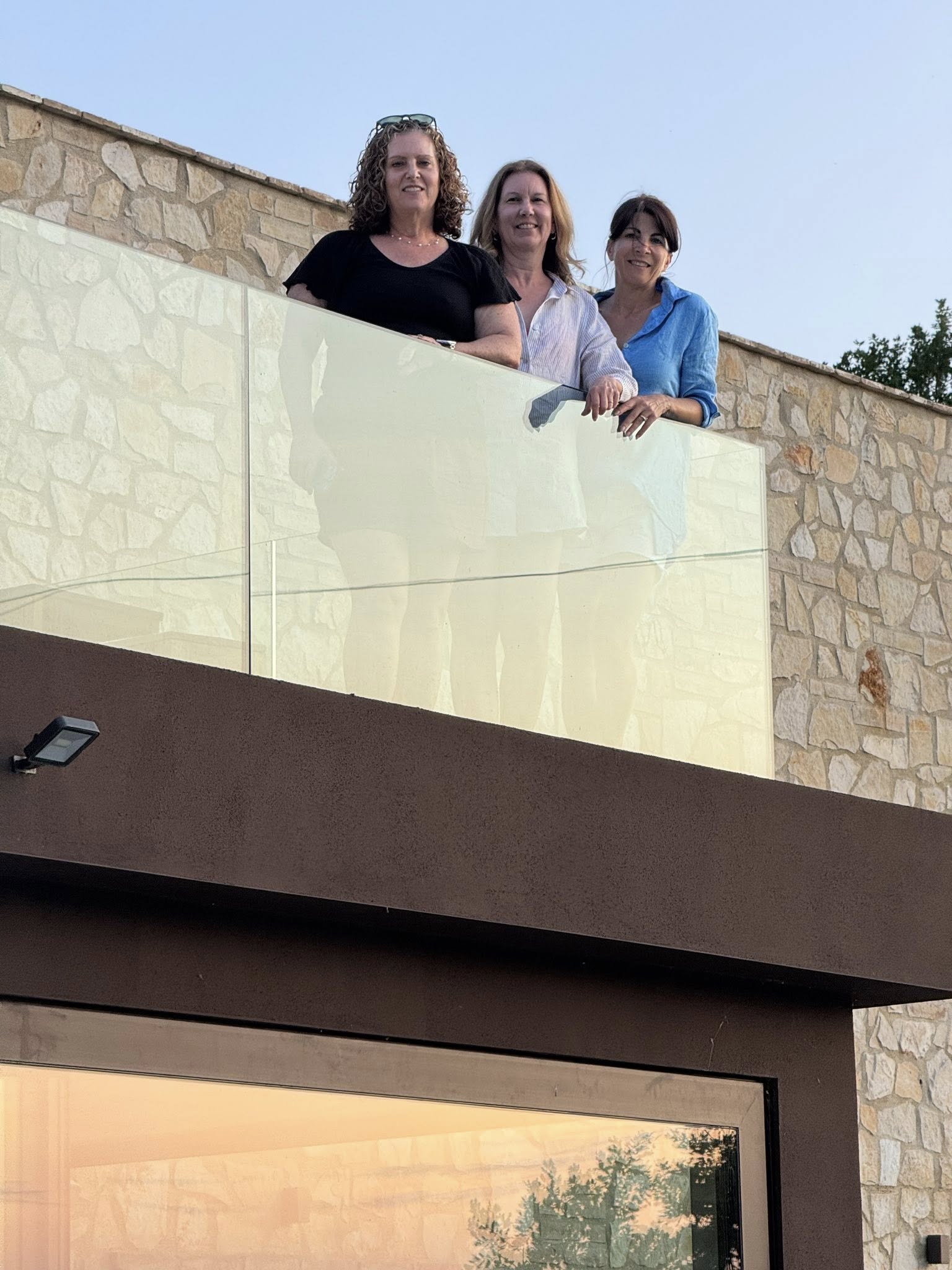
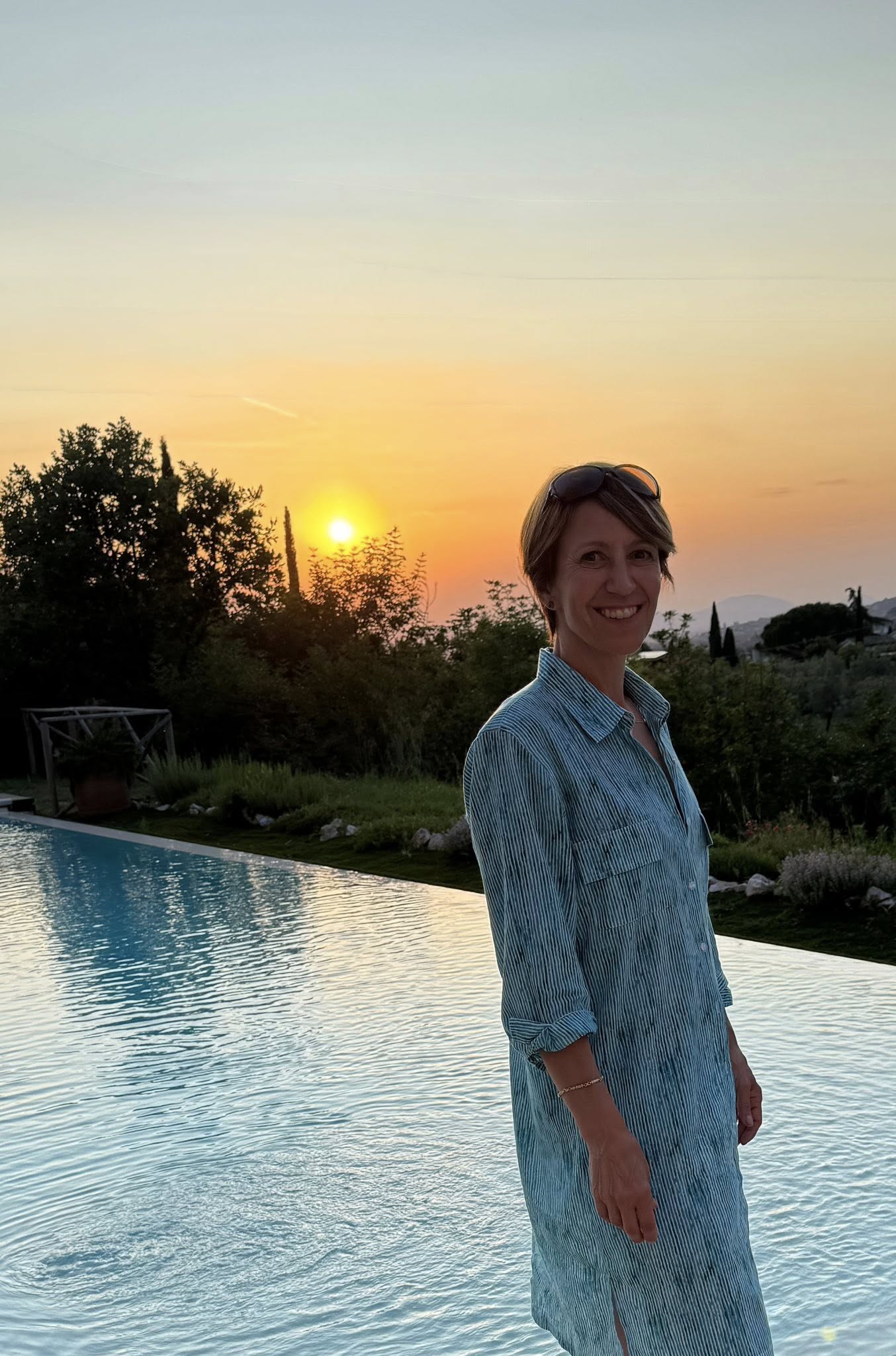
Perfect sunset viewing spot at our villa.
Medieval Gubbio has a very cool two-person gondola to get you up Monte Ingino to the Basilica di Sant’Ubaldo. Designed and built by volunteers in the 1960s in honour of the 800th anniversary of Saint Ubaldo’s death, you simply step onto a red dot on the ground and jump on as the basket swings by. No room for skis in here!
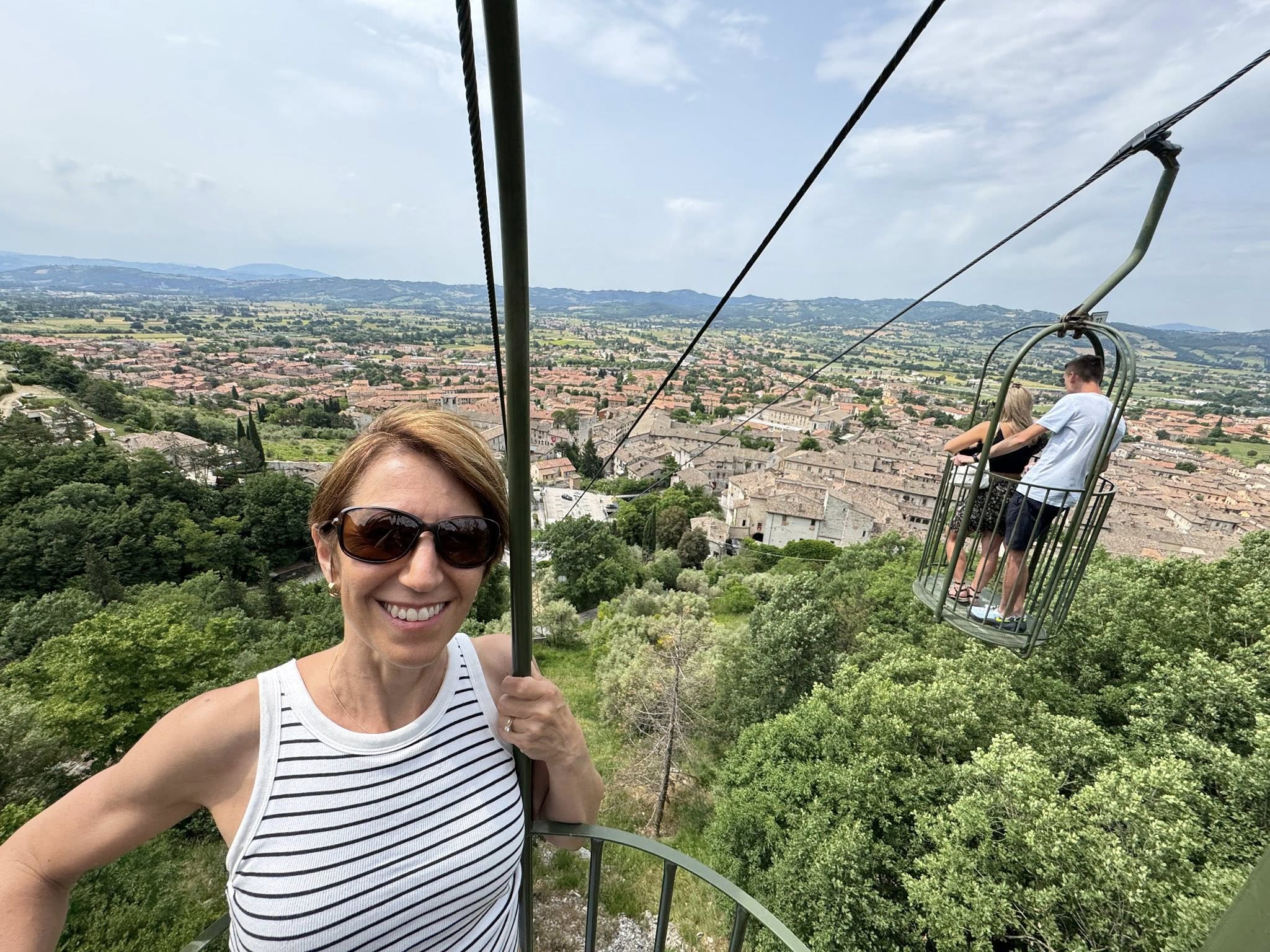
Fabulous views over Gubbio. When it was time to come down, our ticket didn’t work and nobody came to help us so we hopped over the turnstile. I didn’t notice the murmurs from the people behind us but when we got down, I realized I had only bought a one-way ticket up!
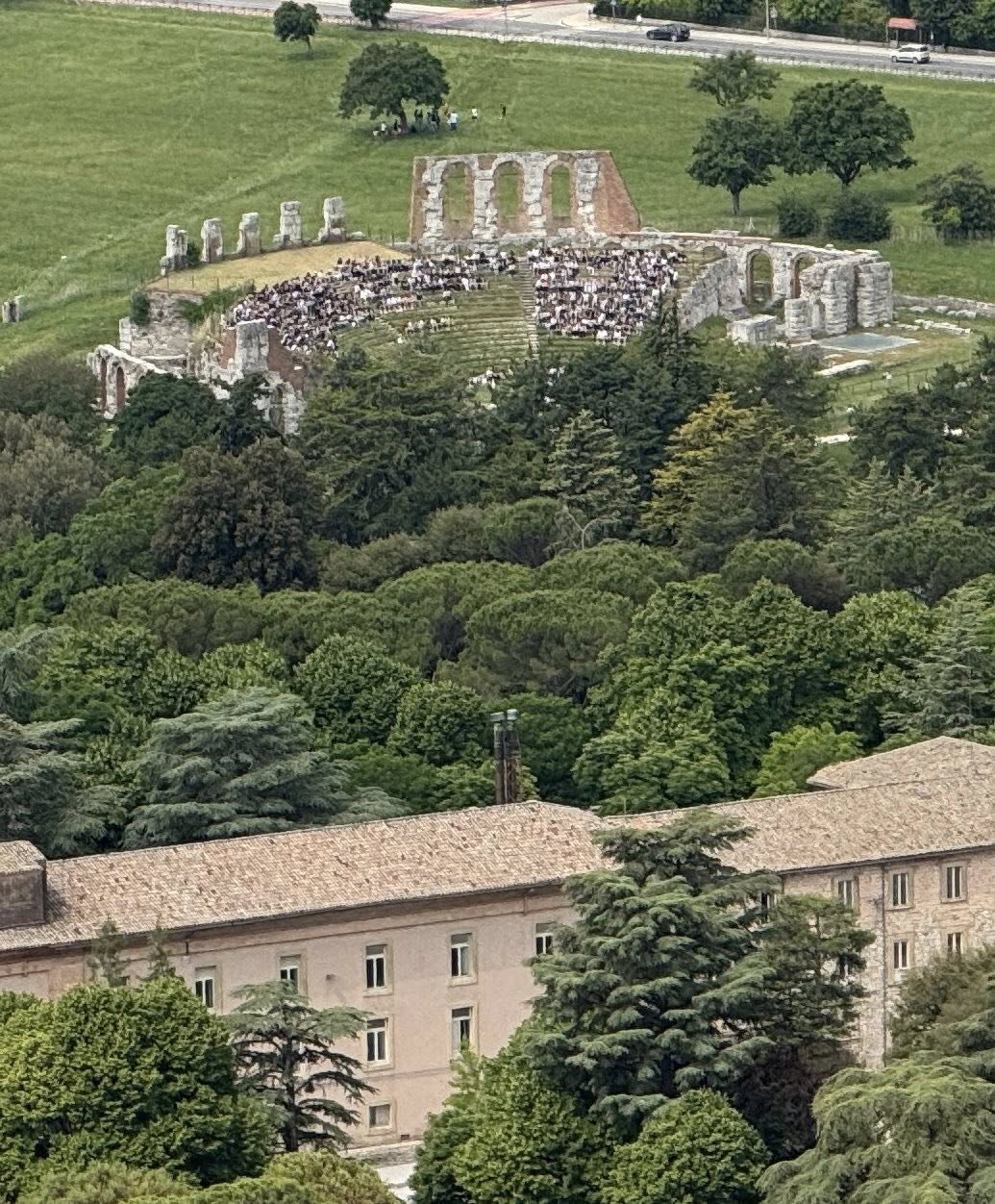
The Roman theatre in Gubbio was built between 55 BC and 20 BC and was one of the biggest in the Roman Empire, seating 6,000 people. It fell into disuse after the fall of the Roman Empire but has managed to be preserved and is in use today for concerts. As we headed up the gondola, we were serenaded with the Beatles. What a place to see a concert!
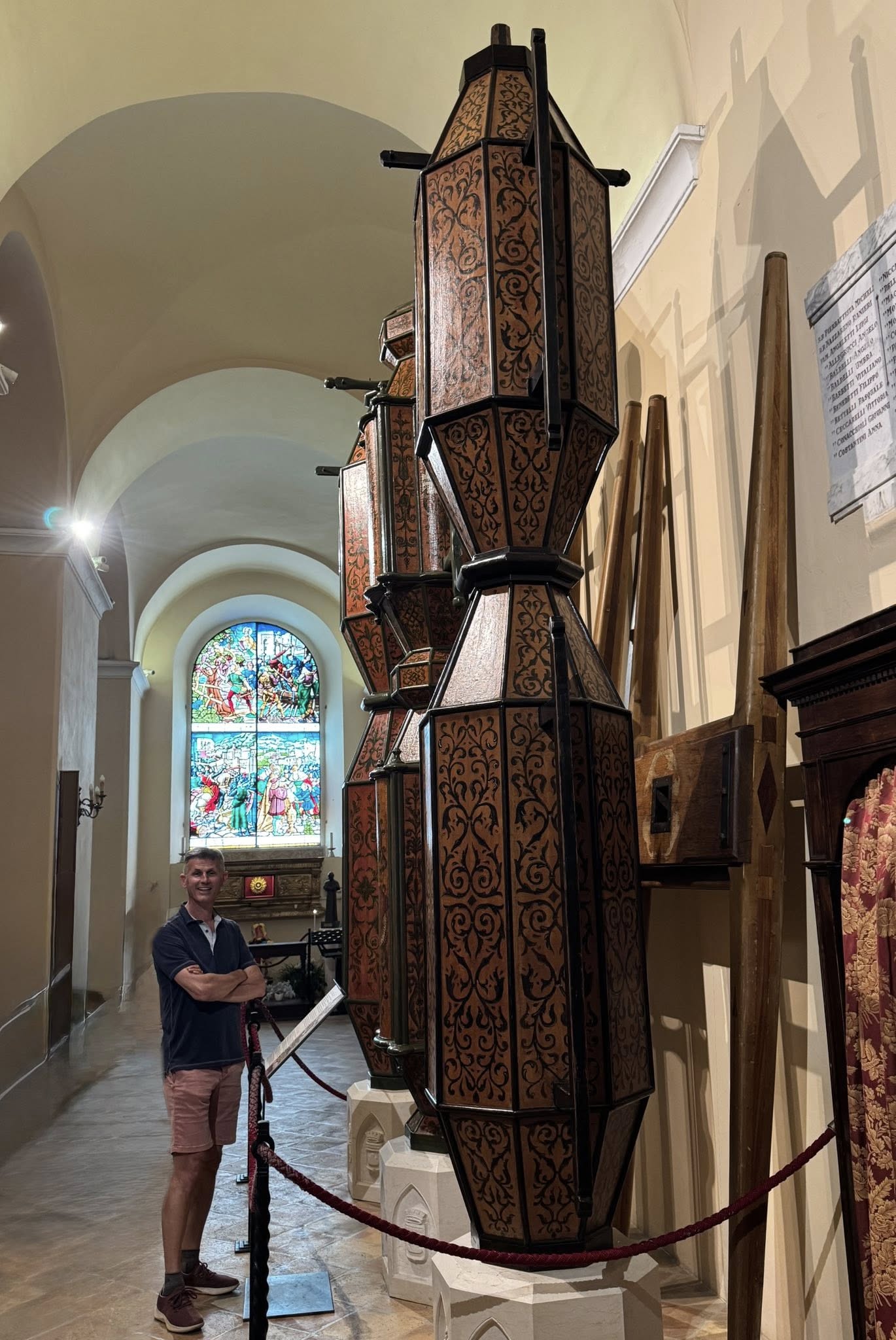
These three Ceri are part of one of Italy’s oldest folk traditions. While the Ceri Festival dates back to the 12th century, the hollow, wooden pillars they use today were built in the 19th century. At four metres tall, they each weigh 300-400 kg. Every first Sunday in May, the Ceri are brought down to the Palazzo dei Consoli where they stay until the festival on May 15. A statue of each of the Ceri’s patron saint is mounted on top and the whole thing is carried through the town and ultimately raced up the mountain (no, they don’t use the gondola), back to the basilica, where the Ceri will stay until the next first Sunday in May. Saint Ubaldo, the most important of the patron saints, always wins.
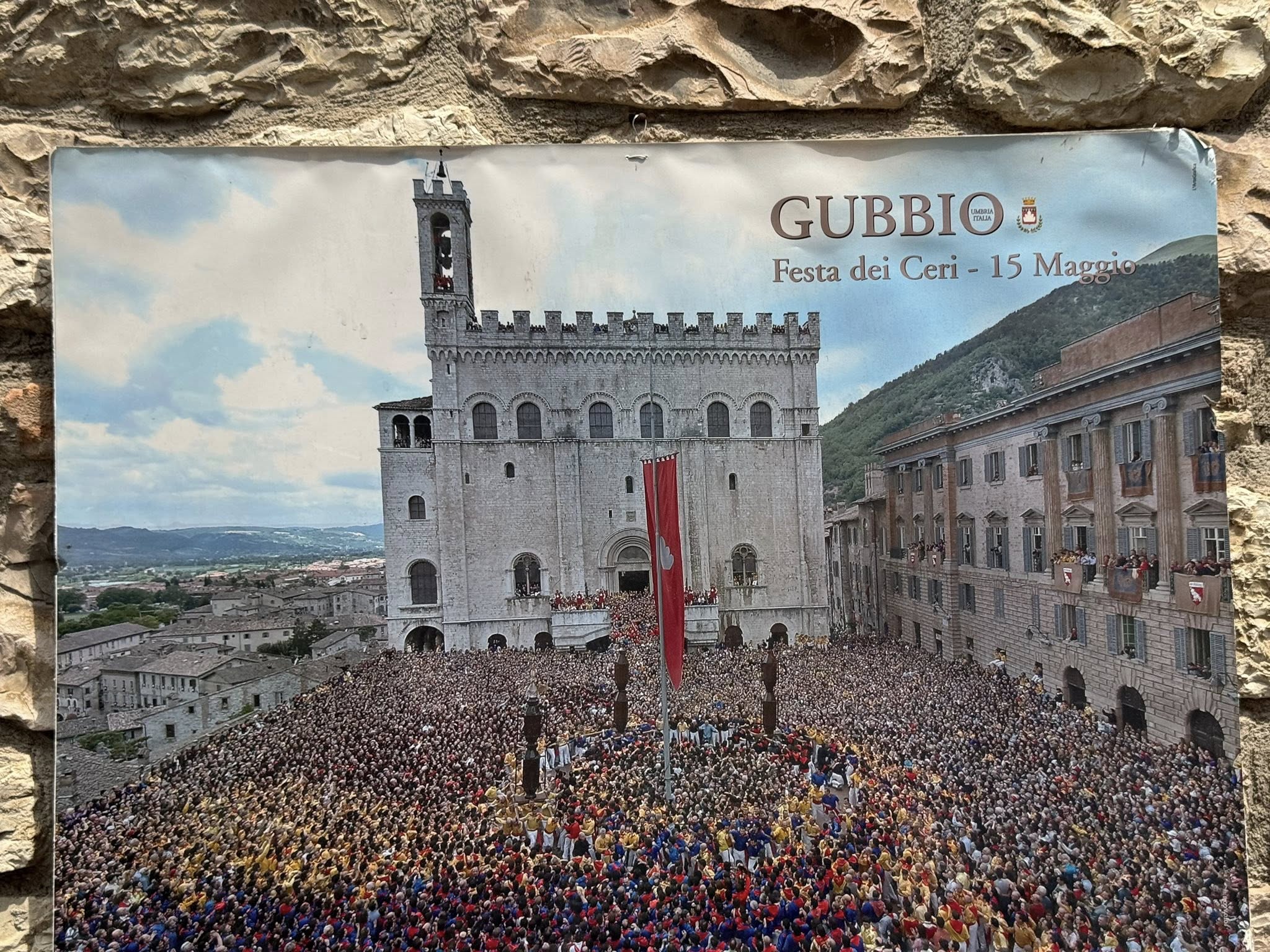
Thousands come out to watch and cheer the parade of the Ceri through town.
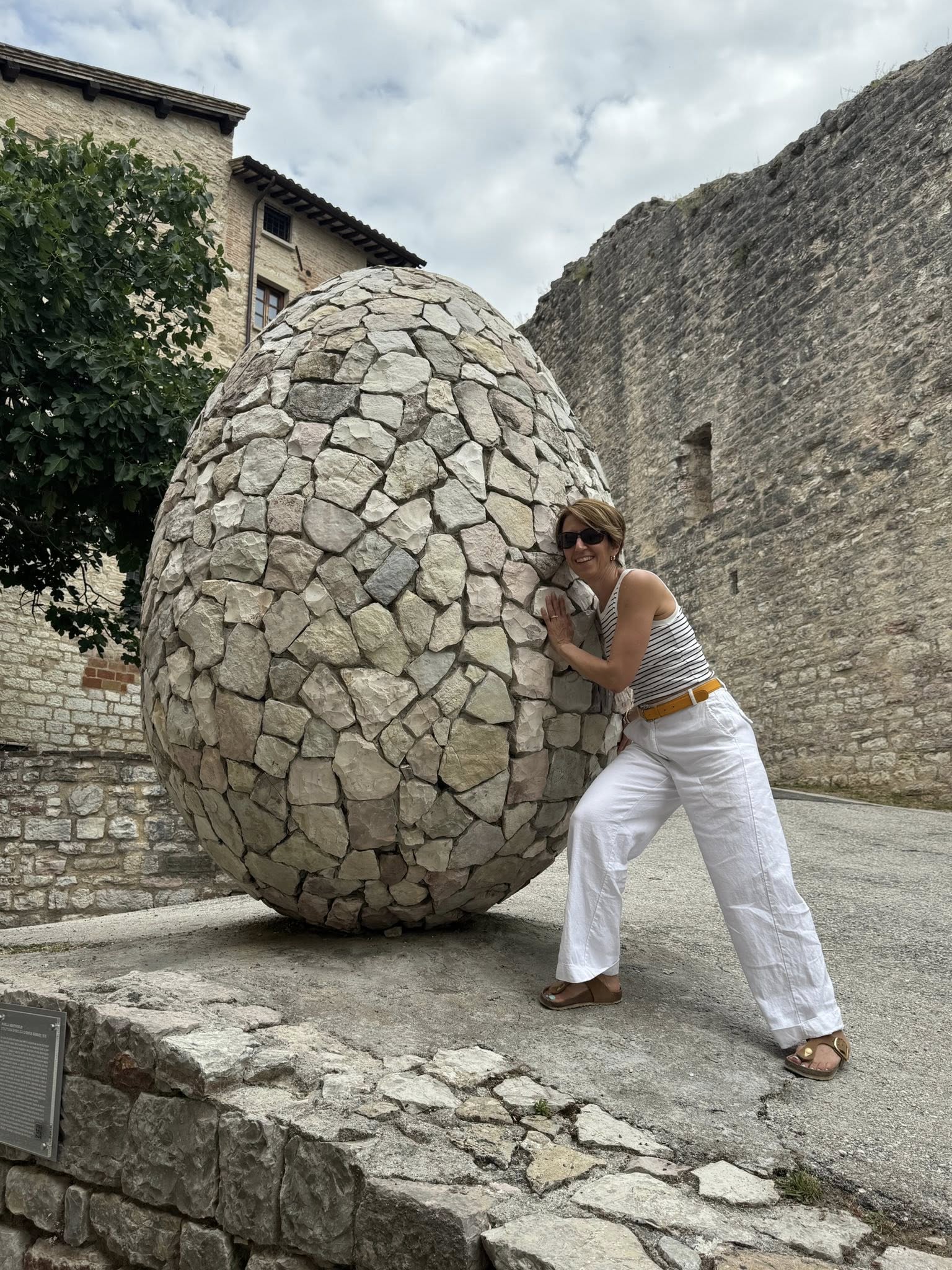
Mirella Bentivoglio’s 2.3 metre Ovo di Gubbio is an amazing piece of public art. The egg is dedicated to adulterous women who were stoned to death in medieval Gubbio. The artist insisted it be placed in the spot where the stonings took place. The egg, a classic symbol of birth, life and fertility, is covered in stone fragments, contrasting life (the egg) with death (stones used for stoning the women). What a powerful feminist statement against patriarchal violence.
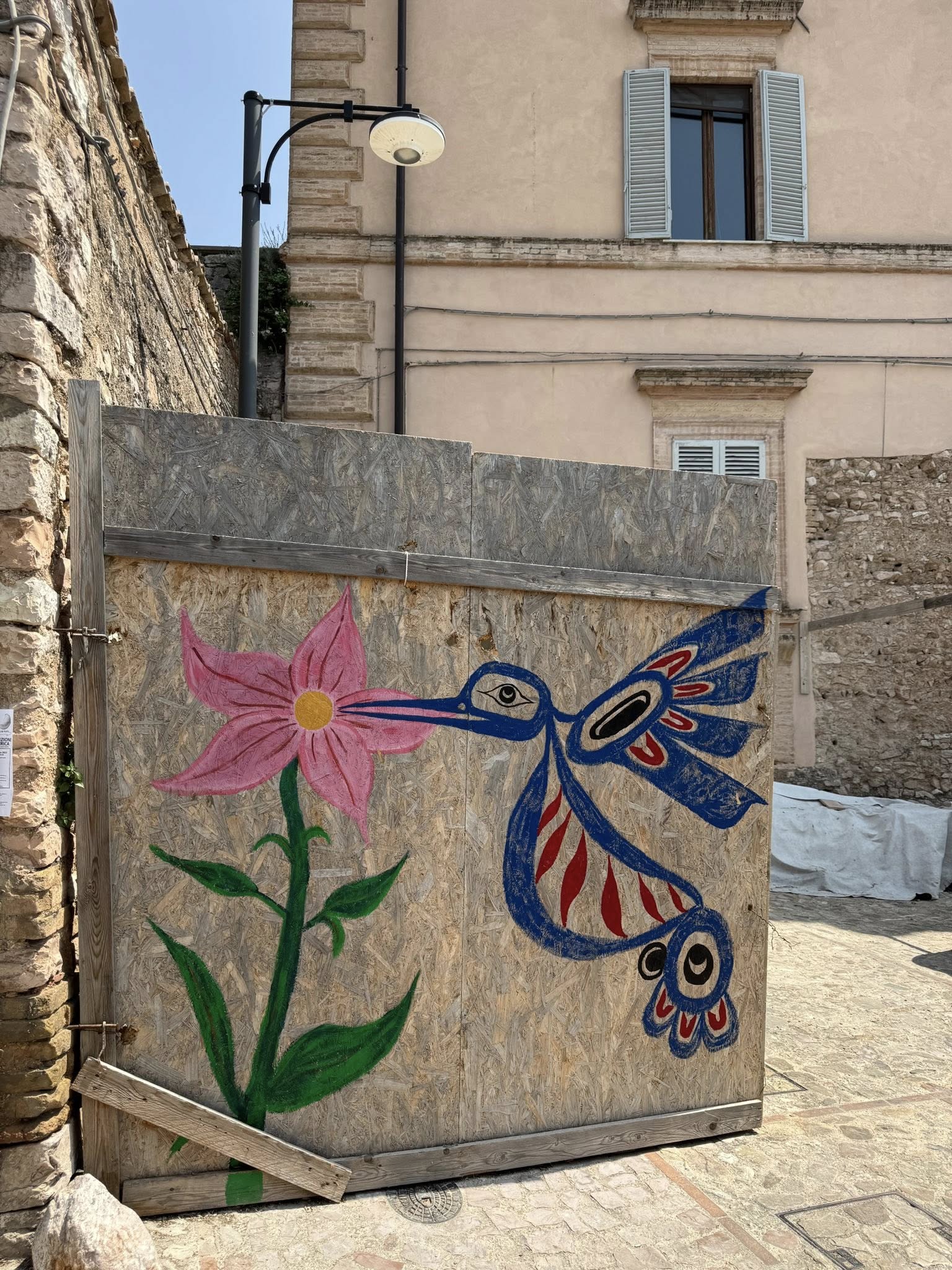
What a surprise to see a riff on a Haida hummingbird in an Italian village!
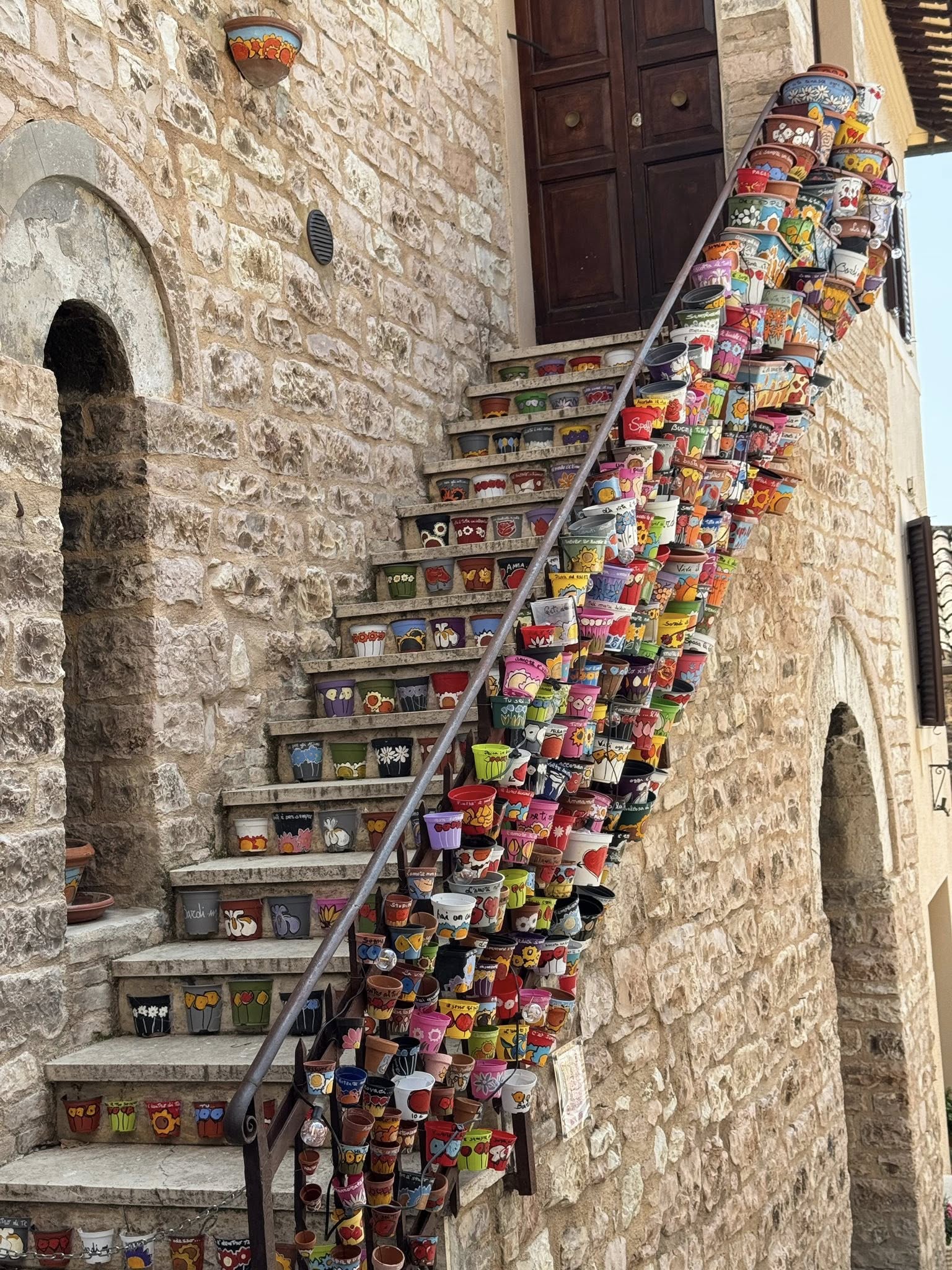
Now I know what to do with all the leftover plant pots I seem to collect at the beginning of planting season.
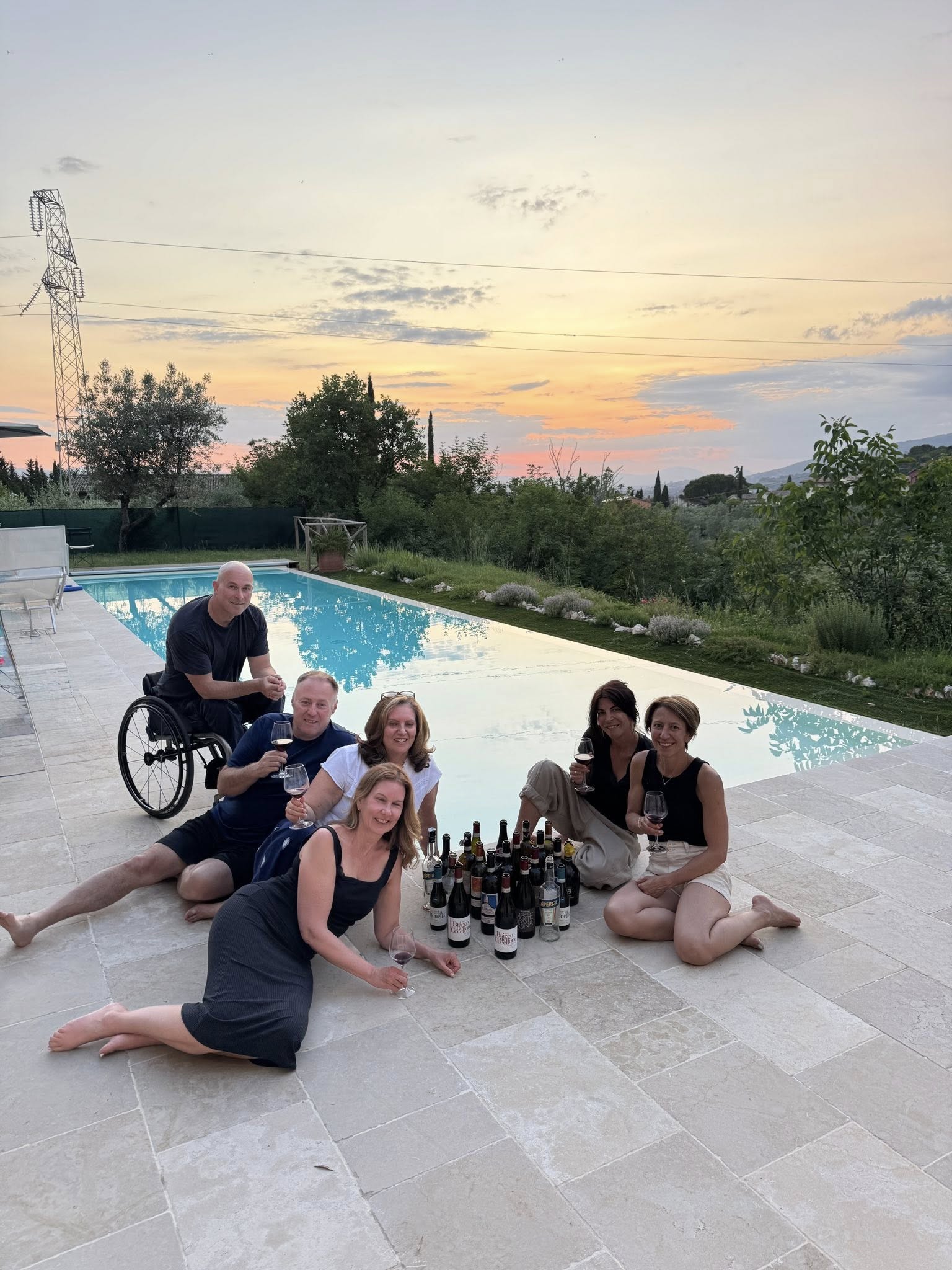
The end of a glorious week in Umbria, with our collection of bottles.
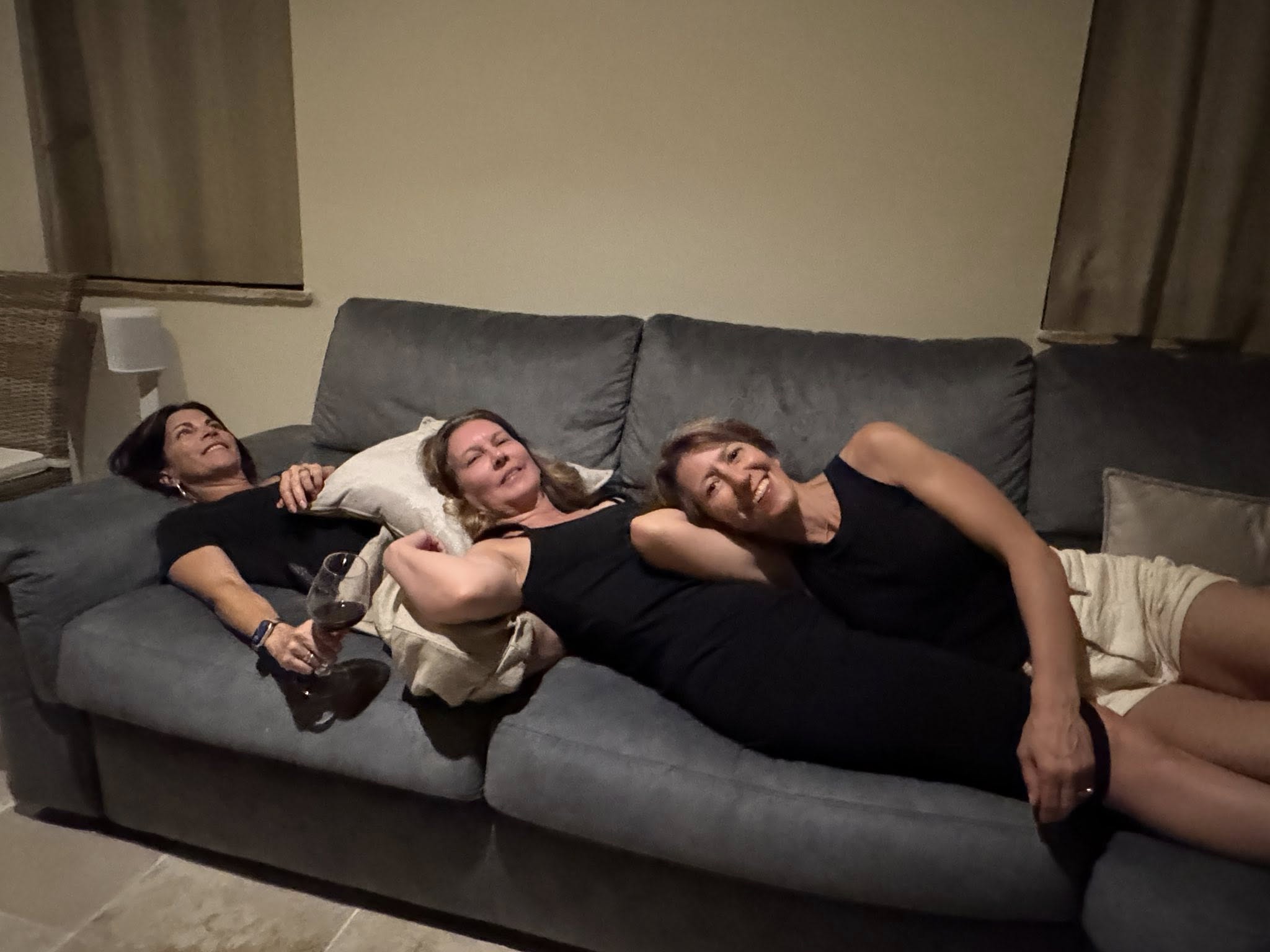
And the end of an amazing month in Italy with mie care amiche. We are sad to say arrivederci to Laurie as we head to France for a week of biking.