November, 2024
Timeless Turin
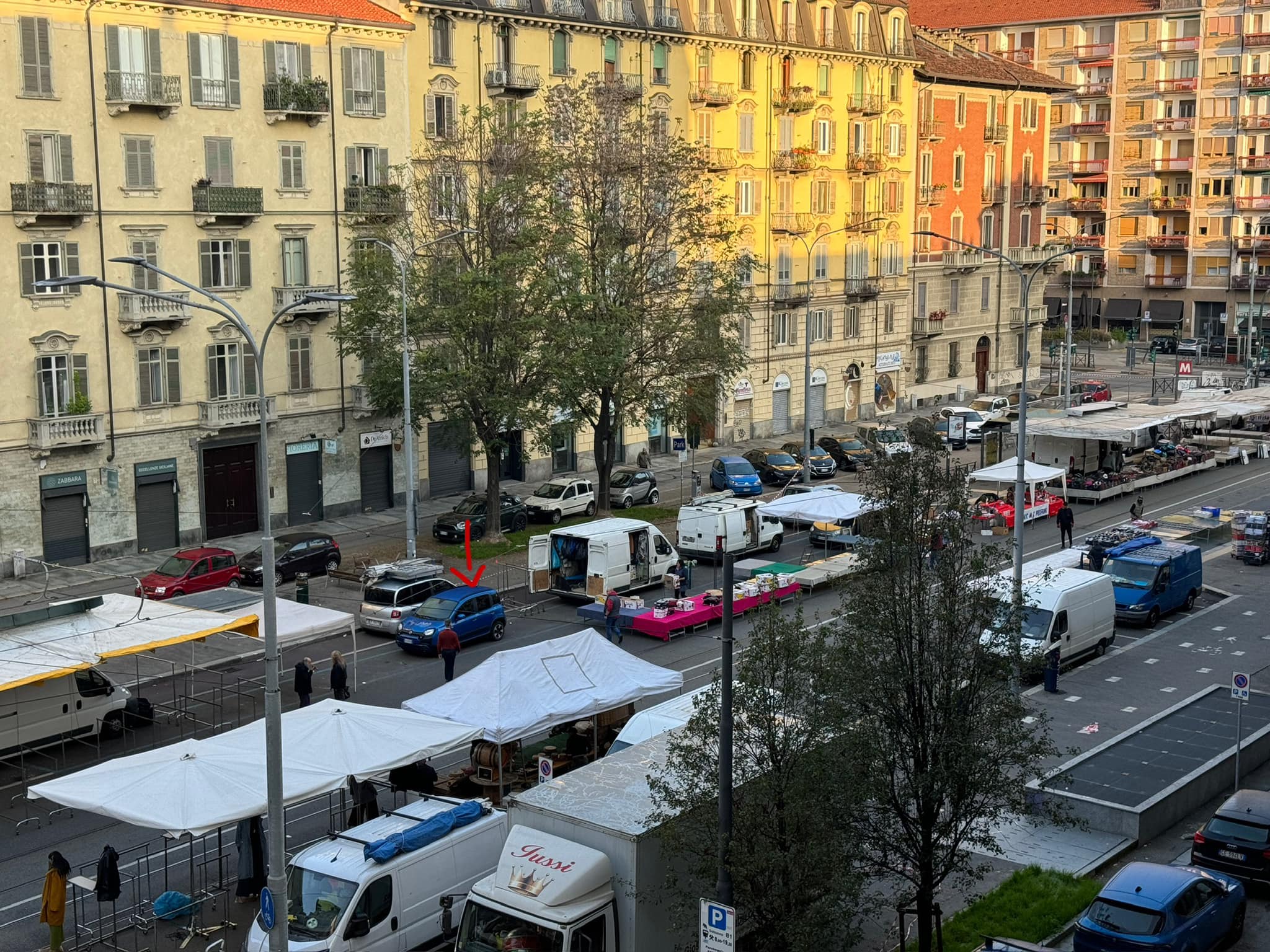
We pulled into Turin well after dark and the hotel staff told us we could park in the street any spots with blue lines. How lucky to find a spot across the street! Come morning, I heard a lot of activity outside so I opened the blinds to see what was going on. They were setting up an annual street market right at our doorstep. How fun… until I realized the reason it was so easy to find parking was that the street was cleared for the market! That’s our little blue car sitting there, preventing one of the vendors from setting up his tent…and that’s Adam walking nonchalantly to the car pretending we had done nothing wrong. The vendor was not happy but he managed to set up in time. Thankfully this wasn’t a jet lag morning with a big sleep-in!
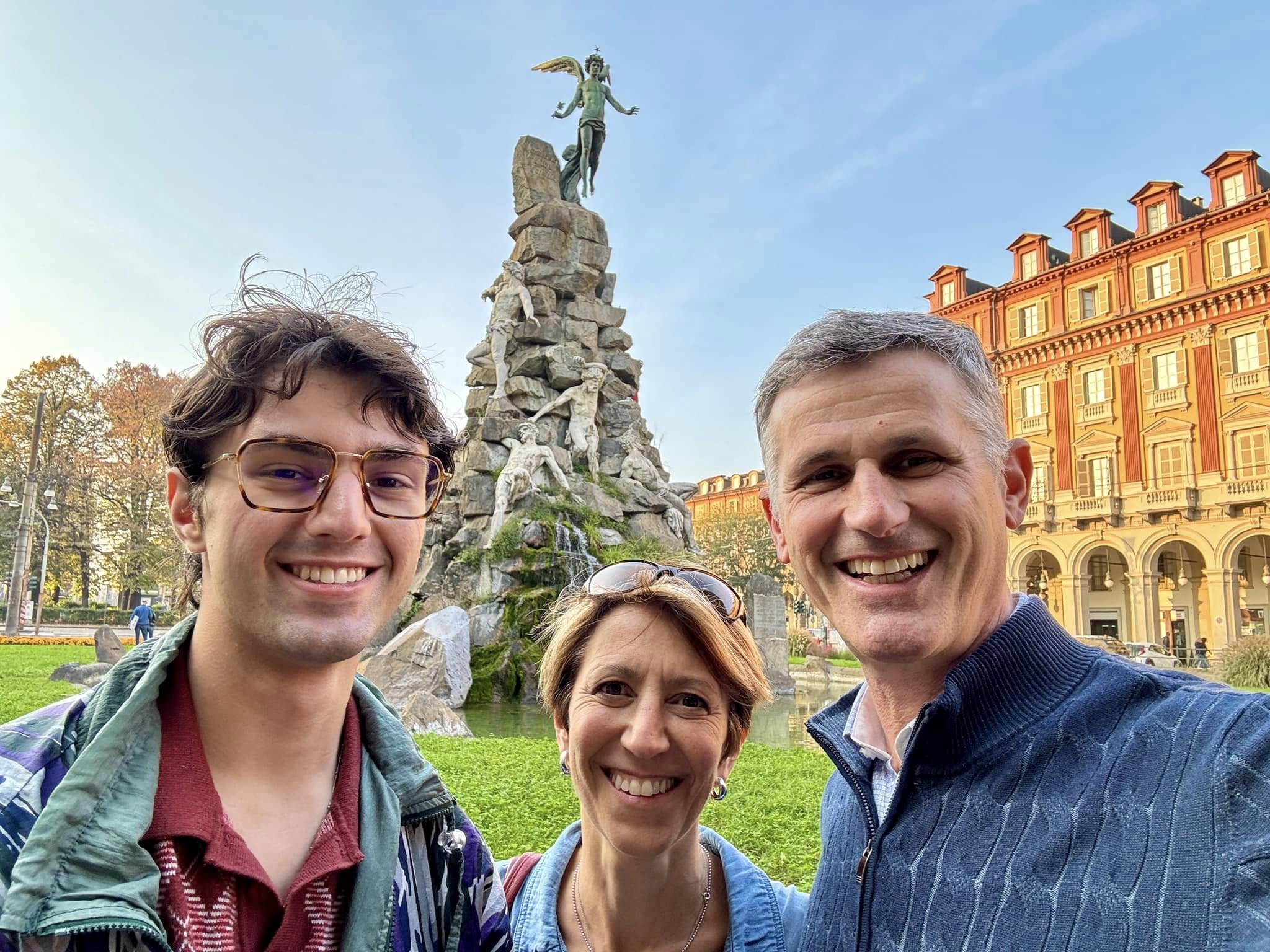
Reading week for Evan so he joined us in Turin for a few days. How amazing to live in Europe and be able to pop over to really cool places on a whim!
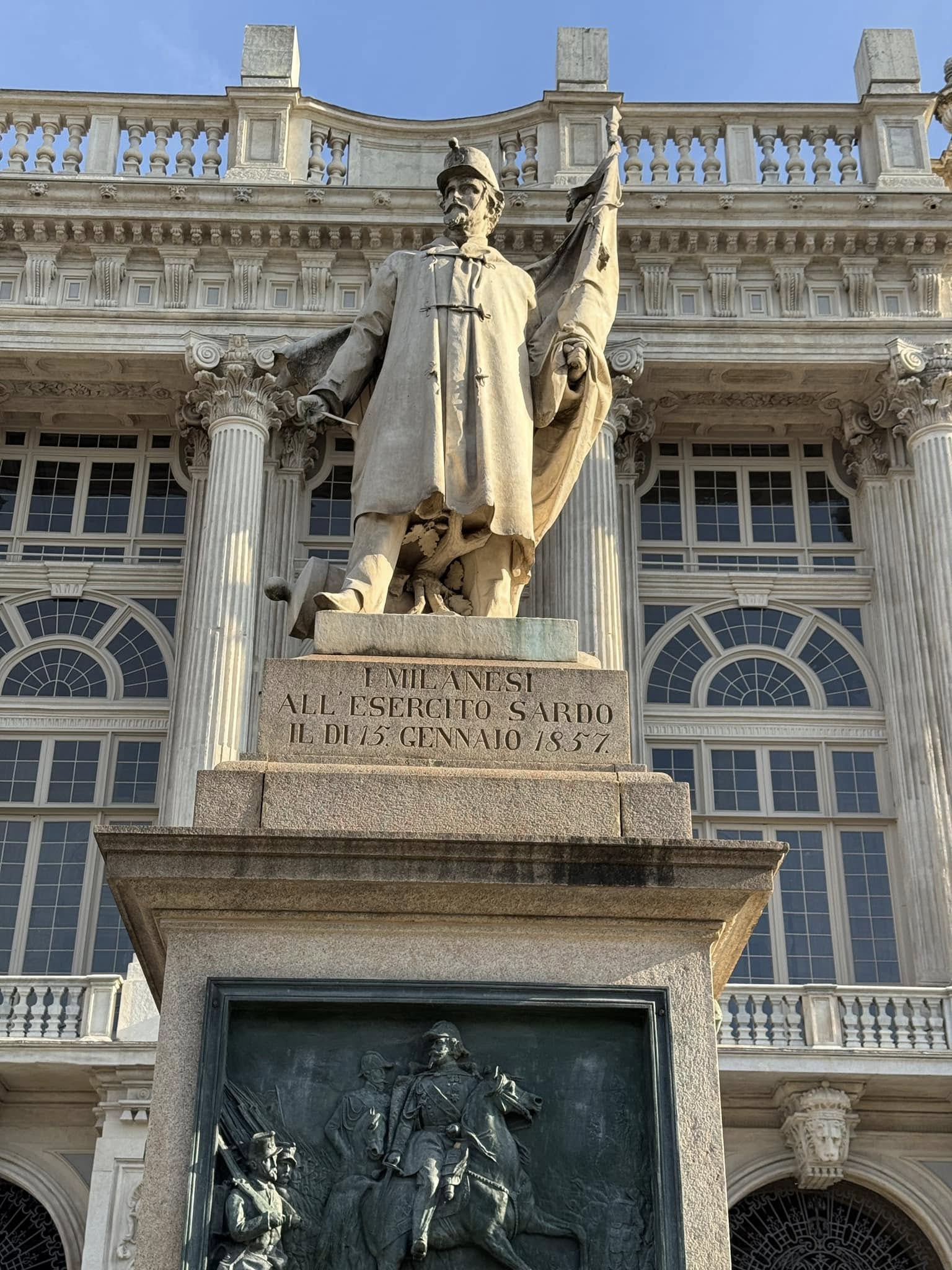
Turin was where all the back-room strategy happened leading to Italy’s unification (Risorgimento) in 1861. Three game-changing leaders managed to knit this beautiful country together as a unified state. The Risorgimento was driven by Giuseppe Garibaldi, Count Camillo di Cavour, and King Victor Emmanuel II whose statues are everywhere. This statue is the Monumento all’Alfiere dell’Esercito Sardo (Monument to the Standard-Bearer of the Sardinian Army) to honour the soldiers of the Sardinian Army who helped make it happen. More on the leaf under his cloak at the end of the history lesson. Buckle up!
King Victor Emmanuel II was already the constitutional monarch of the Kingdom of Sardinia but the seat of the monarchy was in Turin. He and his prime minister, Camillo di Cavour, were both strategic, future-thinking guys who leveraged Turin’s strong economy and military to lead successful campaigns against foreign rule, notably Austria, which controlled large parts of Northern Italy. Meanwhile, Giuseppe Garibaldi was a strong military man with a nationalist fervour. He was busy fighting against Austrian and French control in the south. He was a very charismatic fellow and managed to assemble 1,000 volunteers (known as The Redshirts) to conquer Sicily and Naples which were under Bourbon rule. He handed this success to the king of Sardinia (our other forward-thinking friend) in 1860 which paved the way for the Risorgimento in 1861. Turin enjoyed being the first capital of the newly united Italy, but only for four years before the capital was moved to Florence (a little bit of diplomatic appeasement for France) for a mere six years. When Rome was finally captured in 1870, the official capital moved there and stuck.
Funny how Canada became a country around the same time but Rome wasn’t nearly as steadfast as Newfoundland which took 80 years as the last holdout to joining Canada. And at least Newfoundland got to make its own decision and Canada didn’t have to resort to capturing it!
So the leaf…of course my first thought was privacy from the Peeping Tom who might delight in wondering what a soldier wears under his cloak. In fact, that’s not it. It’s not a fig leaf at all. It’s either an oak or laurel branch under there, both of which are symbols of courage, honour, and military heroism. There you go! If you read this far, you got the story or the stick up the…!
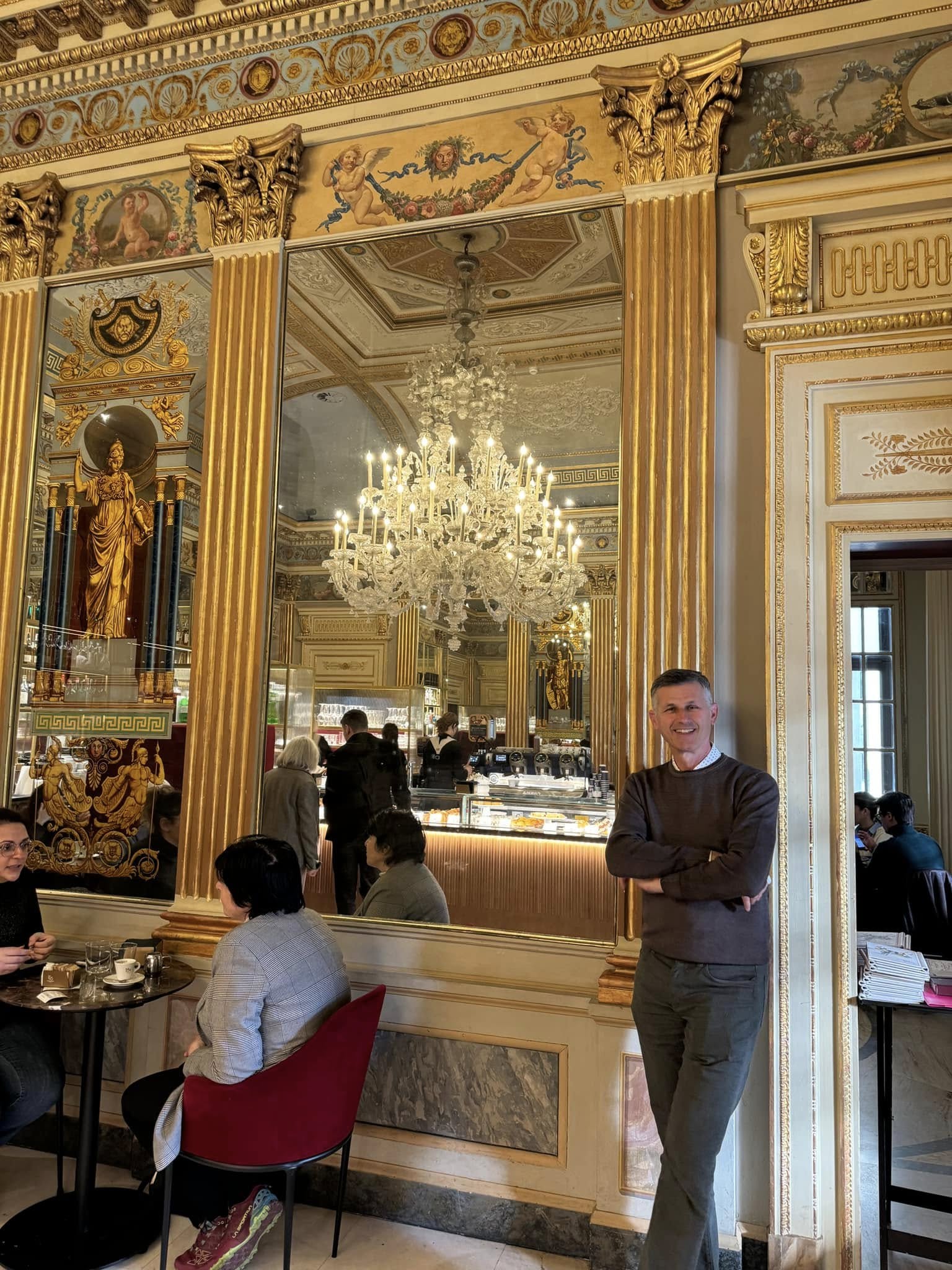
They sure do café decor well here, not to mention the coffee and pastries! I don’t think there’s such a thing as bad coffee in Italy.
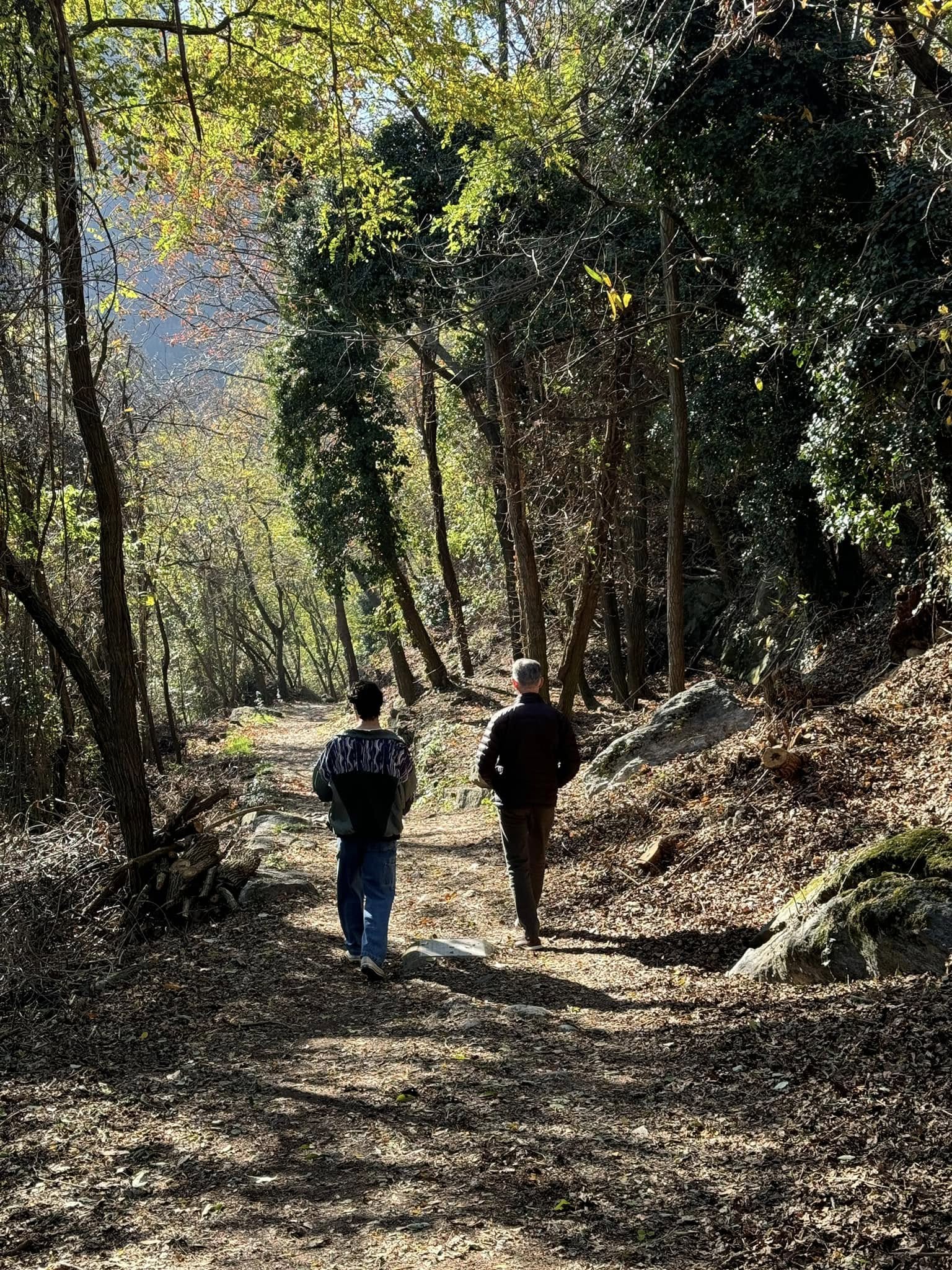
As many pilgrims before us, we hiked up Mount Pirchiriano to the 10th century Sacra di San Michele monastery. This is the place that inspired Umberto Eco’s “The Name of the Rose”, which is set in a mysterious medieval abbey.
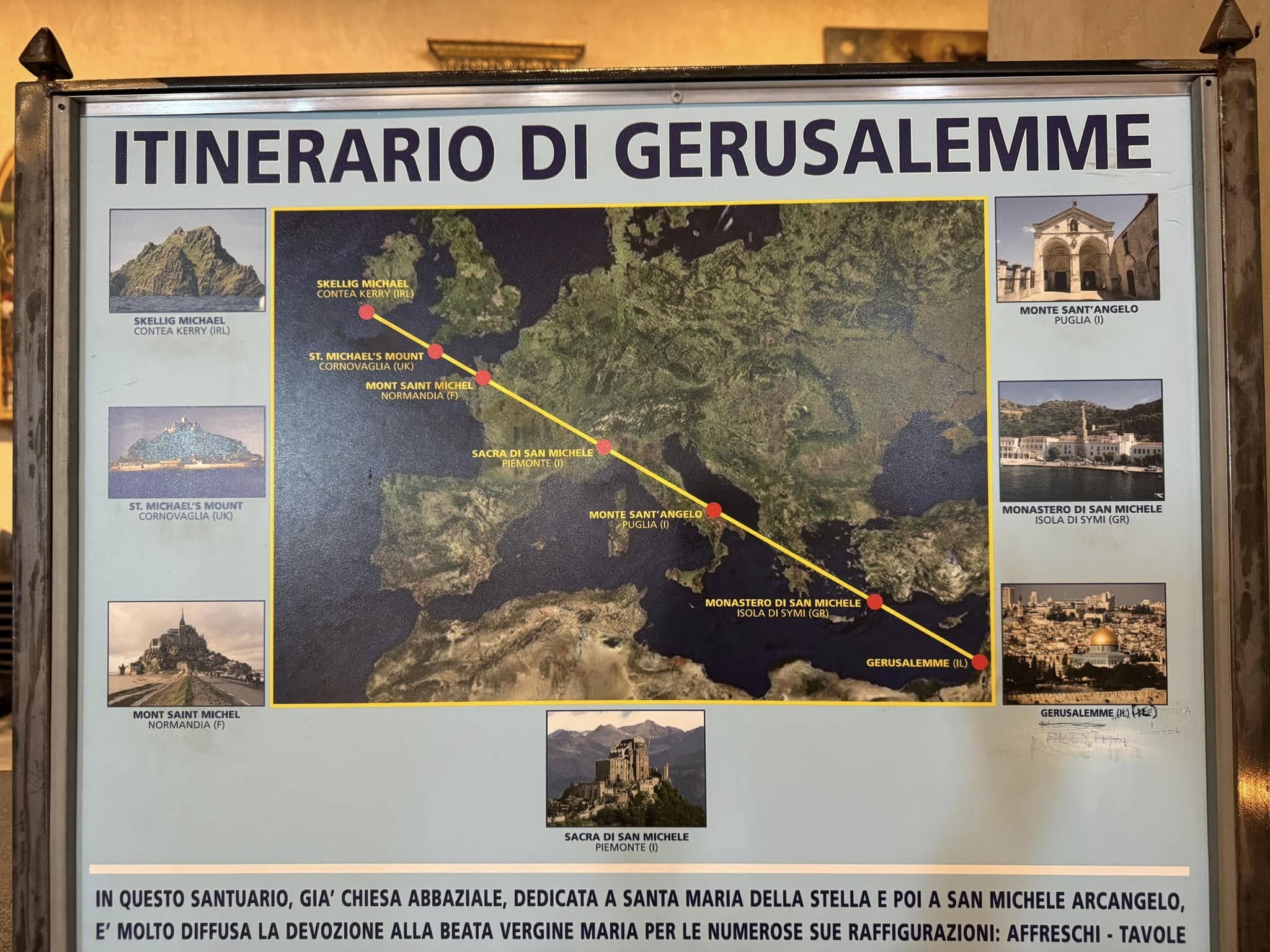
Sacra di San Michele sits almost in the middle of the line of St. Michael’s monasteries across Europe, stretching from Ireland to Israel.
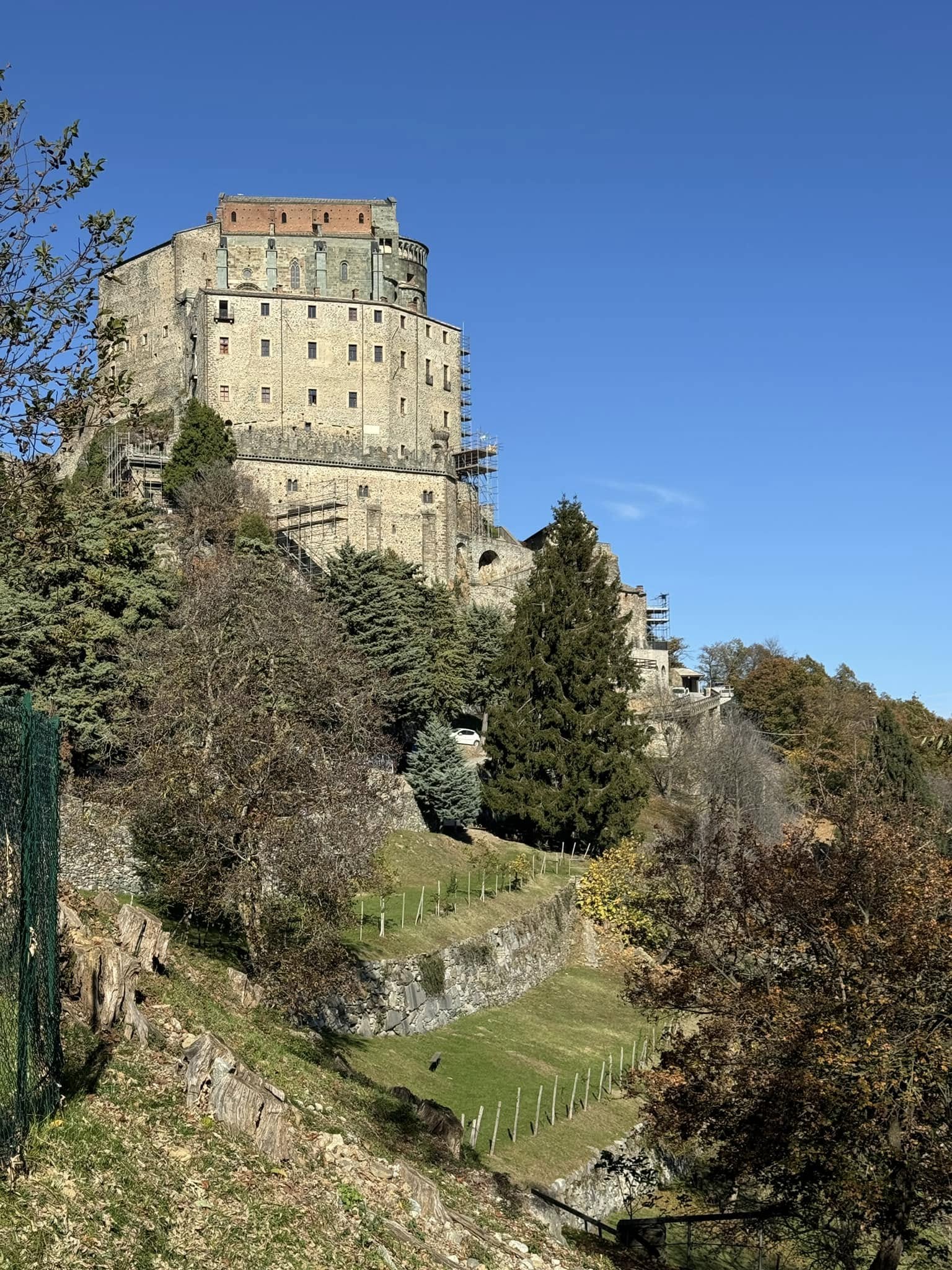
And there it is, embedded in the rocky mountaintop. It’s amazing to think that in the 10th century, they were able to design and build directly into the rock. Legend has it that a giant named Auggiero built the monastery using his supernatural strength to haul the stone up the mountain. The fact that it is embedded in the rock (with mountain rocks poking through the monastery even at the highest levels) has helped it withstand a millennium of weather and earthquakes that would have taken down any lesser monument.
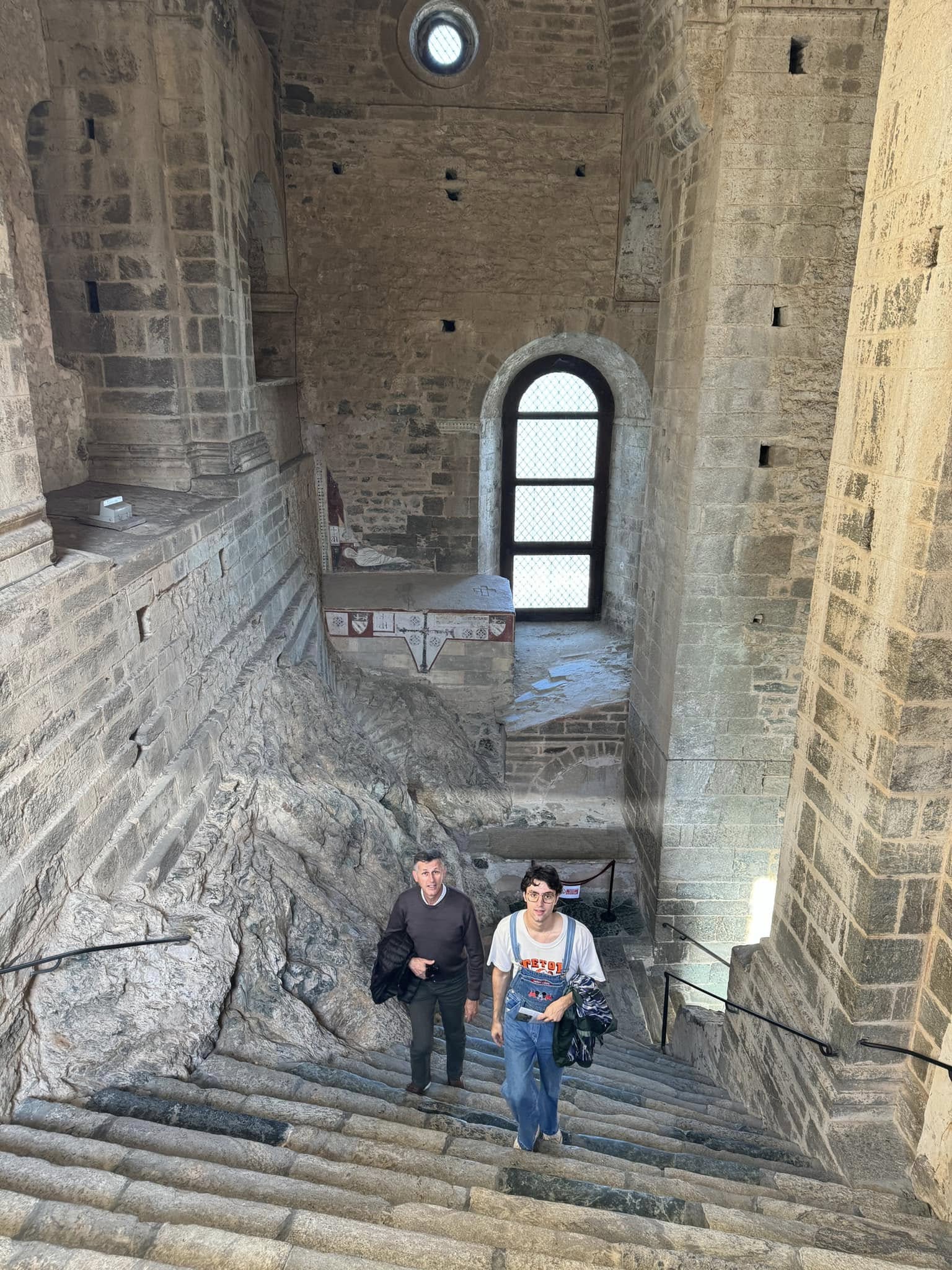
Adam and Evan climbing the steep and winding Staircase of the Dead, flanked by remnants of medieval tombs.
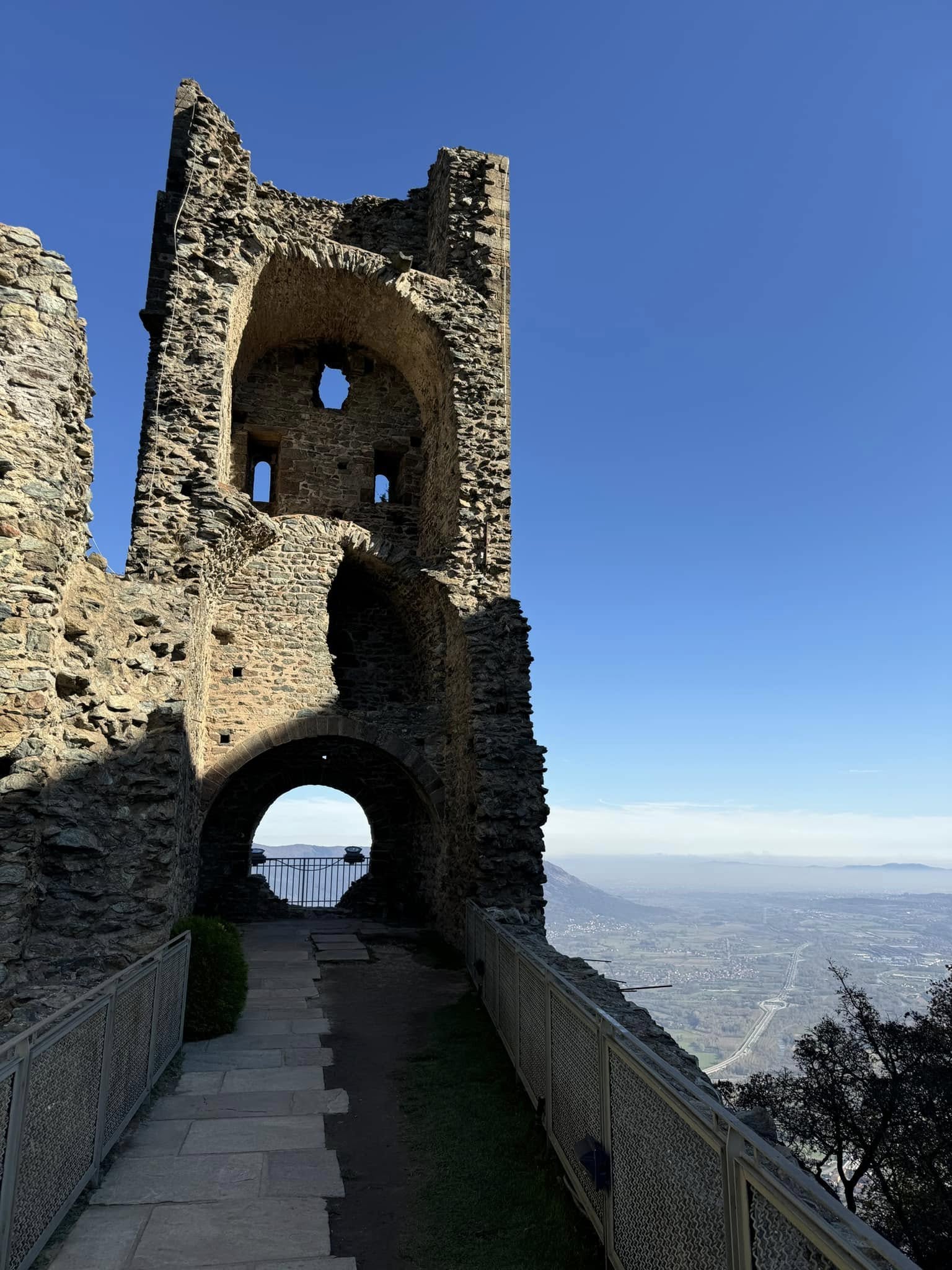
The legend goes that a beautiful young woman named Alda was being pursued by invading soldiers. She ended up at this tower with nowhere to go. She prayed to the archangel Michael for protection and jumped. If you look at the background, it’s very high up! Miraculously, she survived the fall. Here’s where the story veers off into two paths, neither of which we like the ending. One version is that when she told her story, there were some who doubted the veracity of her tale. The other is she wanted to profit from her experience. Regardless of why, she repeated her jump, the second time without divine intervention.
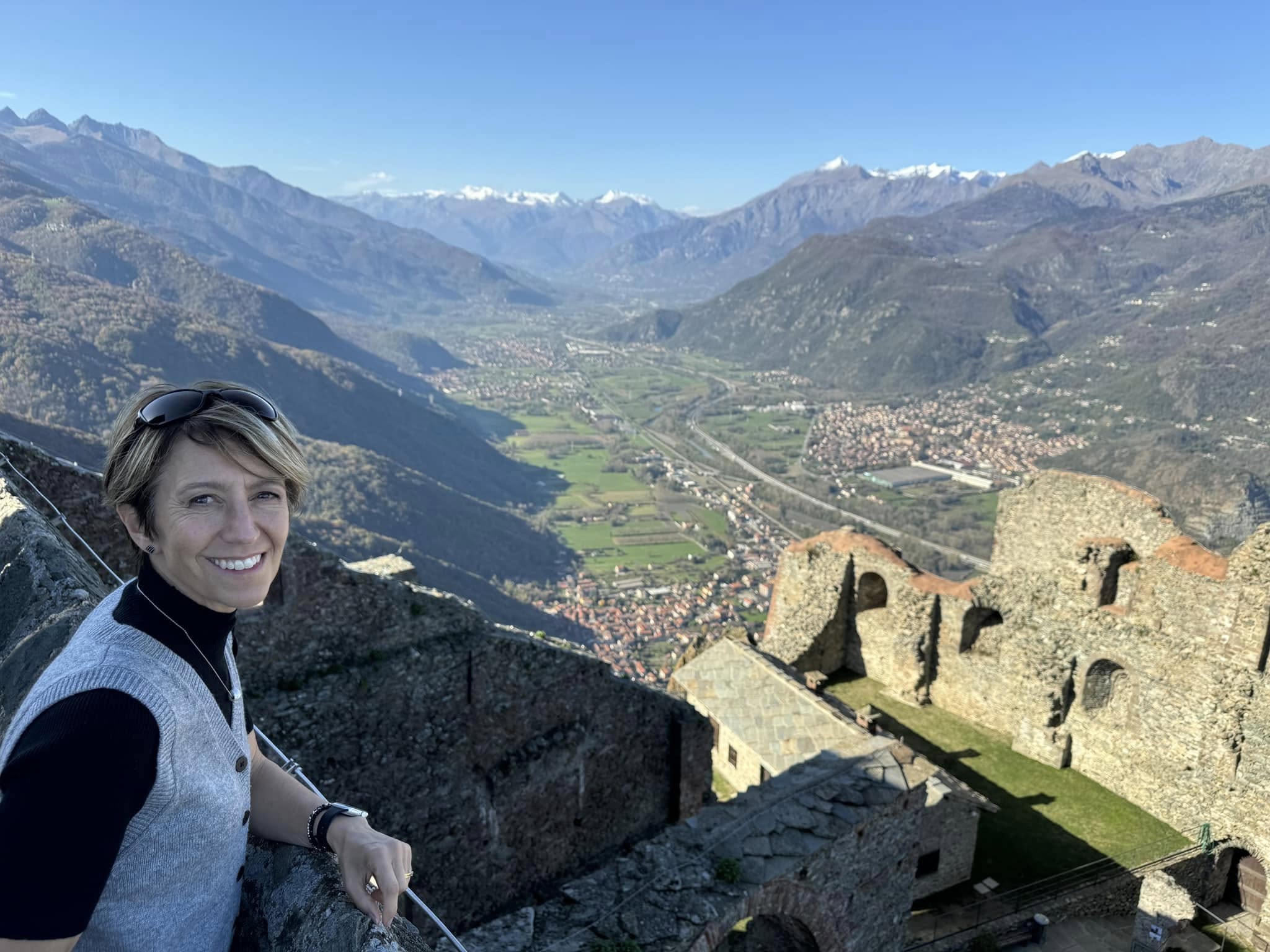
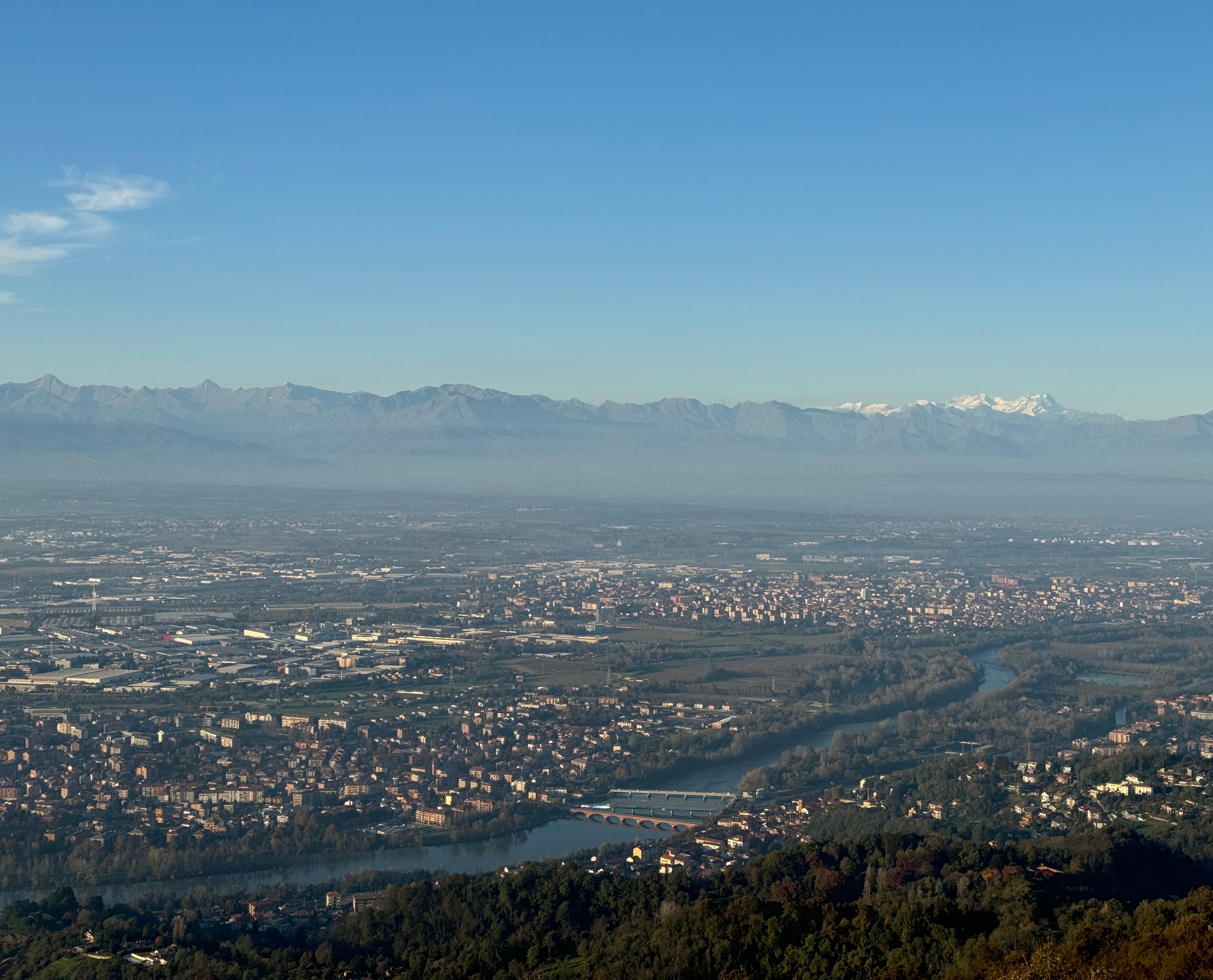
An amazing view over the ancient dwellings of the monks to the urban sprawl of Turin into the Susa Valley and the Alps in the distance. Looks almost ready for skiing!
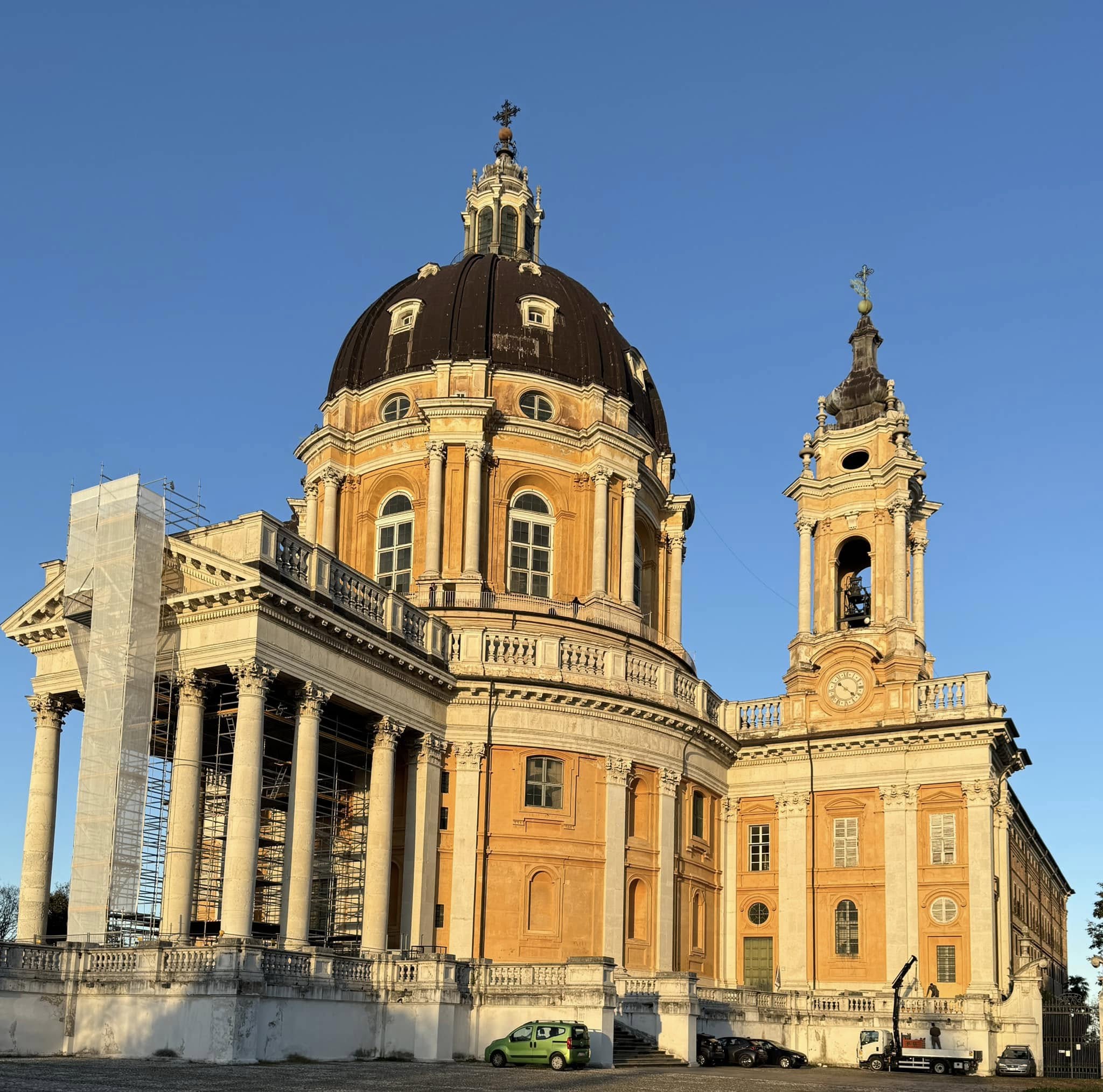
In 1706, the Piedmontese troops were struggling under the French/Spanish army of Louis XIV. Duke Vittorio Amedeo II climbed up Superga Hill to get a drone’s view of the battlefield. He found a little church up there and vowed to the Statue of Our Lady of Grace that if she helped him win the battle, he would build a large sanctuary in her honour in this very spot. I guess she was looking for an upgrade so she interceded, the battle was won and the Duke made good on his vow. To make room for the much larger footprint up there, they had to lower the hilltop by 40 m. It took a hundred men with shovels to accomplish that feat. Then, on to building the Basilica! It was finally completed in 1731, a year after Vittorio retired and abdicated to his son Carlo Emanuele III. I guess like many who find themselves bored in retirement, Vittorio came back and tried to reclaim power. His son, having tasted the big leagues, was having none of that. He had his father arrested and confined to Rivoli Castle…not a bad place to be “imprisoned”. He died a year after the completion of the basilica and was buried there.
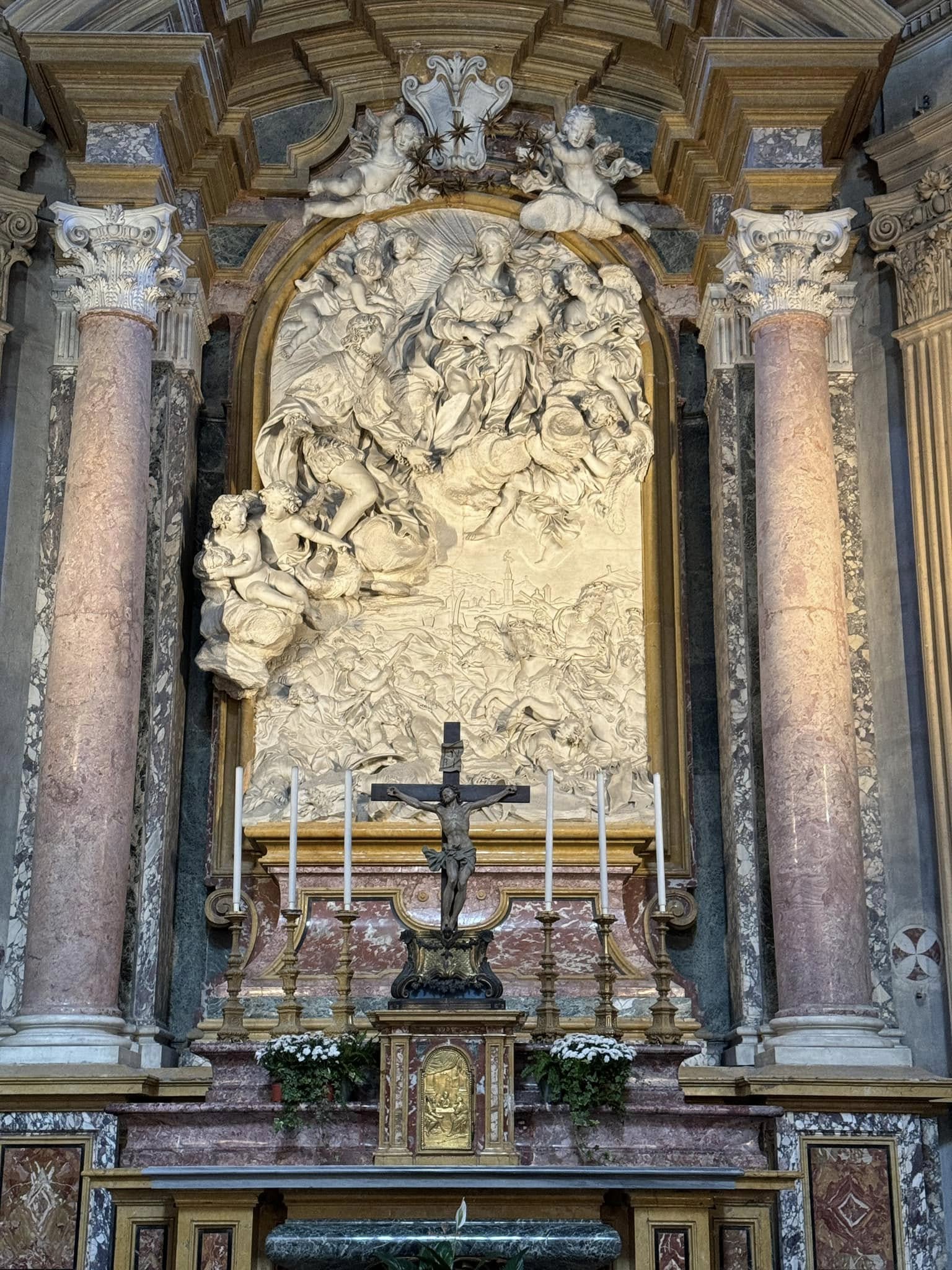
Many of the church interiors are adorned with high-relief sculptures on the walls. This one honours Amedeo IX (a beatified ancestor of Vittorio) who is interceding with Madonna and child, praying for victory in his future 9x great-grandson’s Battle of Turin. By Amedeo IX’s foot, some of the angels were even getting in on the action. What looks like a play date scuffle for a toy is actually the guardian angel of France trying to cling to the crown while the guardian angel of Piemonte is saying “nope, the crown goes to Turin”! Isn't it so cool how you can see the shadows of the angel's finger pointing to Turin!
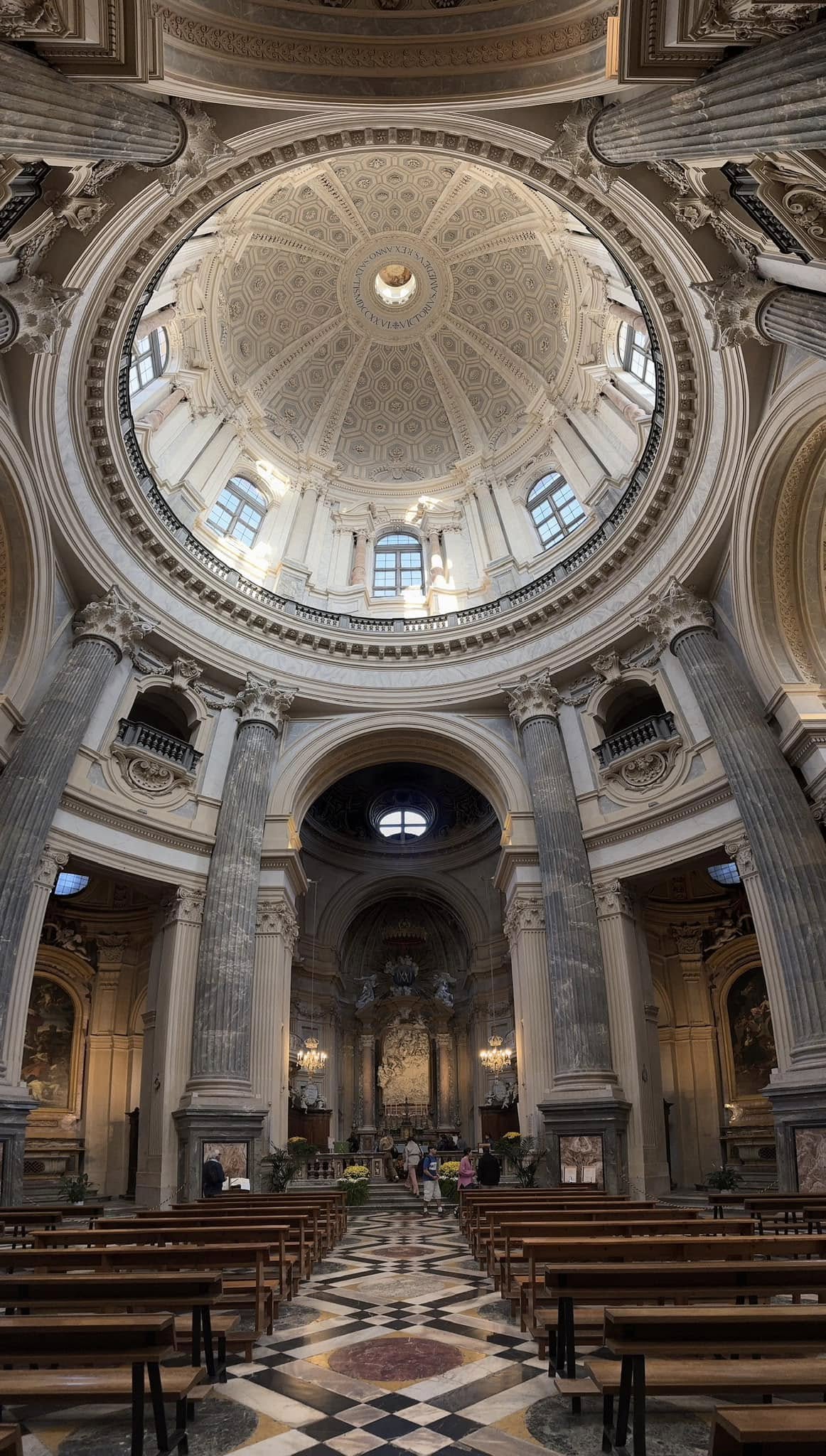
Not too shabby for a church perched at the top of a big hill where there’s not a lot of foot traffic! With no stained glass here, the clear windows in the dome bring in a ton of light.
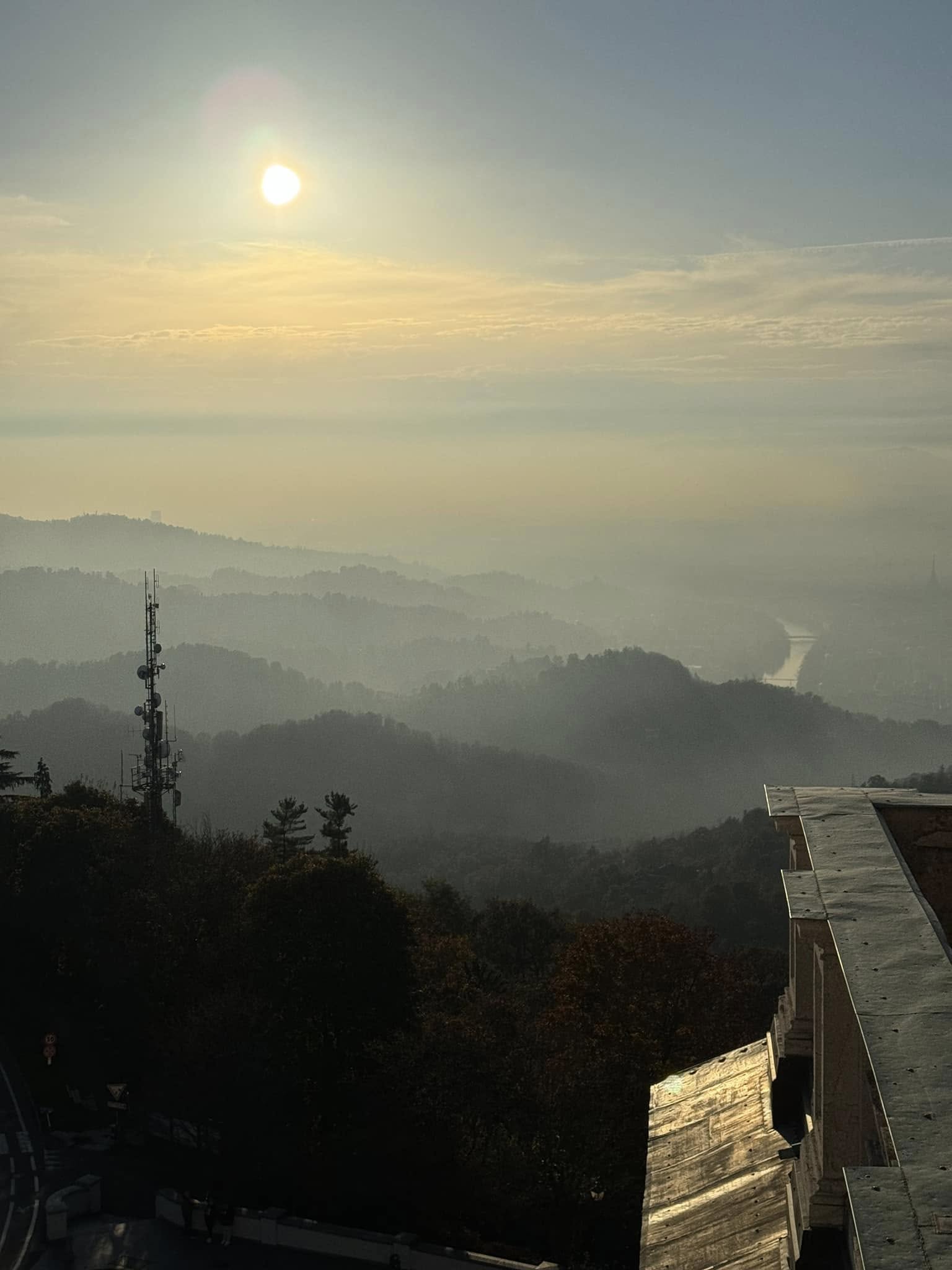
Sunset rapidly approaching over the foggy mountains around Turin. Amazing views from the cupola at the top of the basilica on top of Superga Hill.
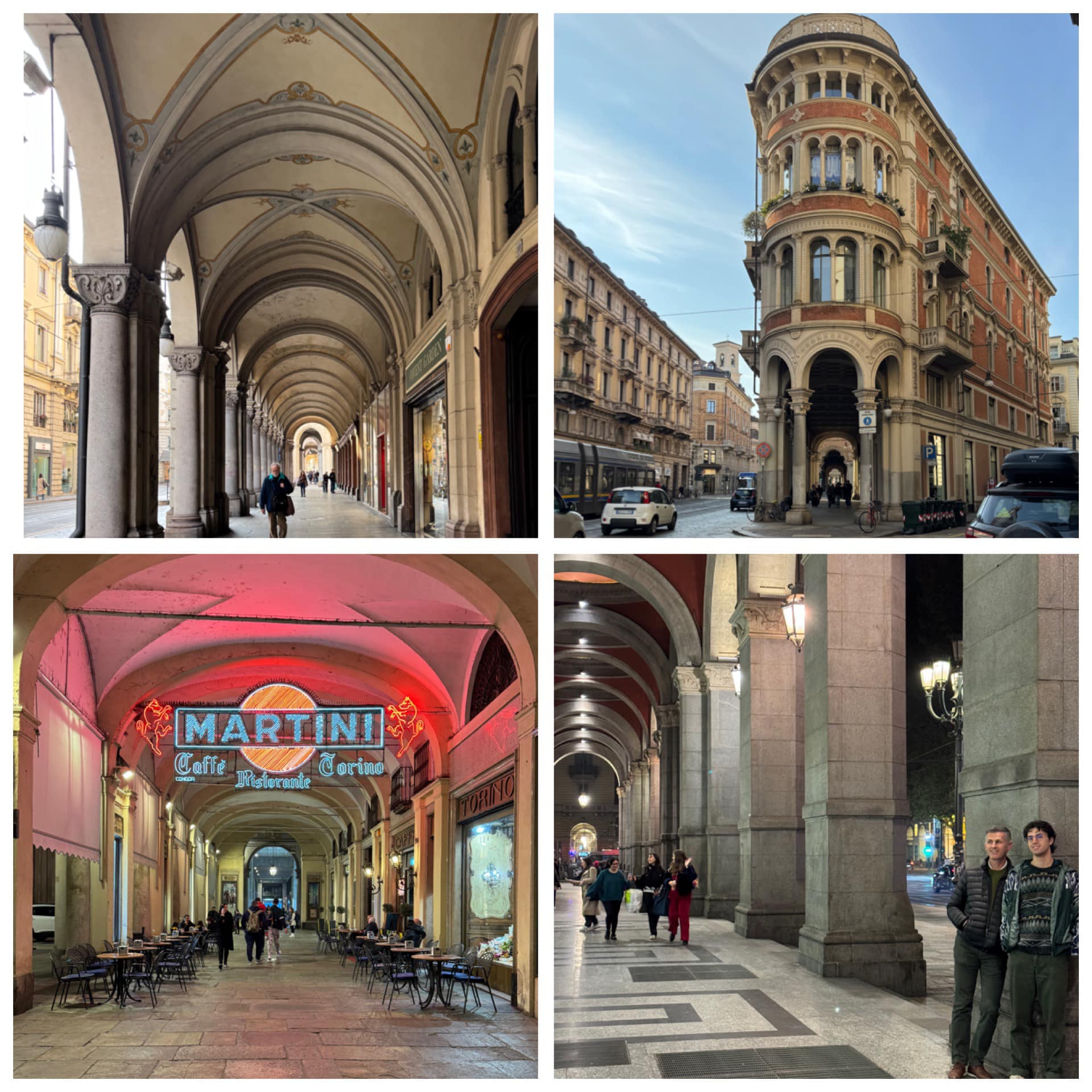
One of Turin’s defining features is its porticos. Back in the 16th century, Emmanuel Philibert, the Duke of Savoy, was one for daily promenades with his court. He built the porticoes so he and his cronies would be protected from inclement weather (too bad nobody thought about that in Vancouver). The idea stuck and the portico network expanded over the centuries and it now covers 18 km of walkways throughout the city. It is said to be a defining feature of the city but it ranks a distant second to Bologna which has a network of 38 km of porticoes. Hmmm, when I’m in Bologna next May, maybe I’ll set a goal of walking all the porticoes…
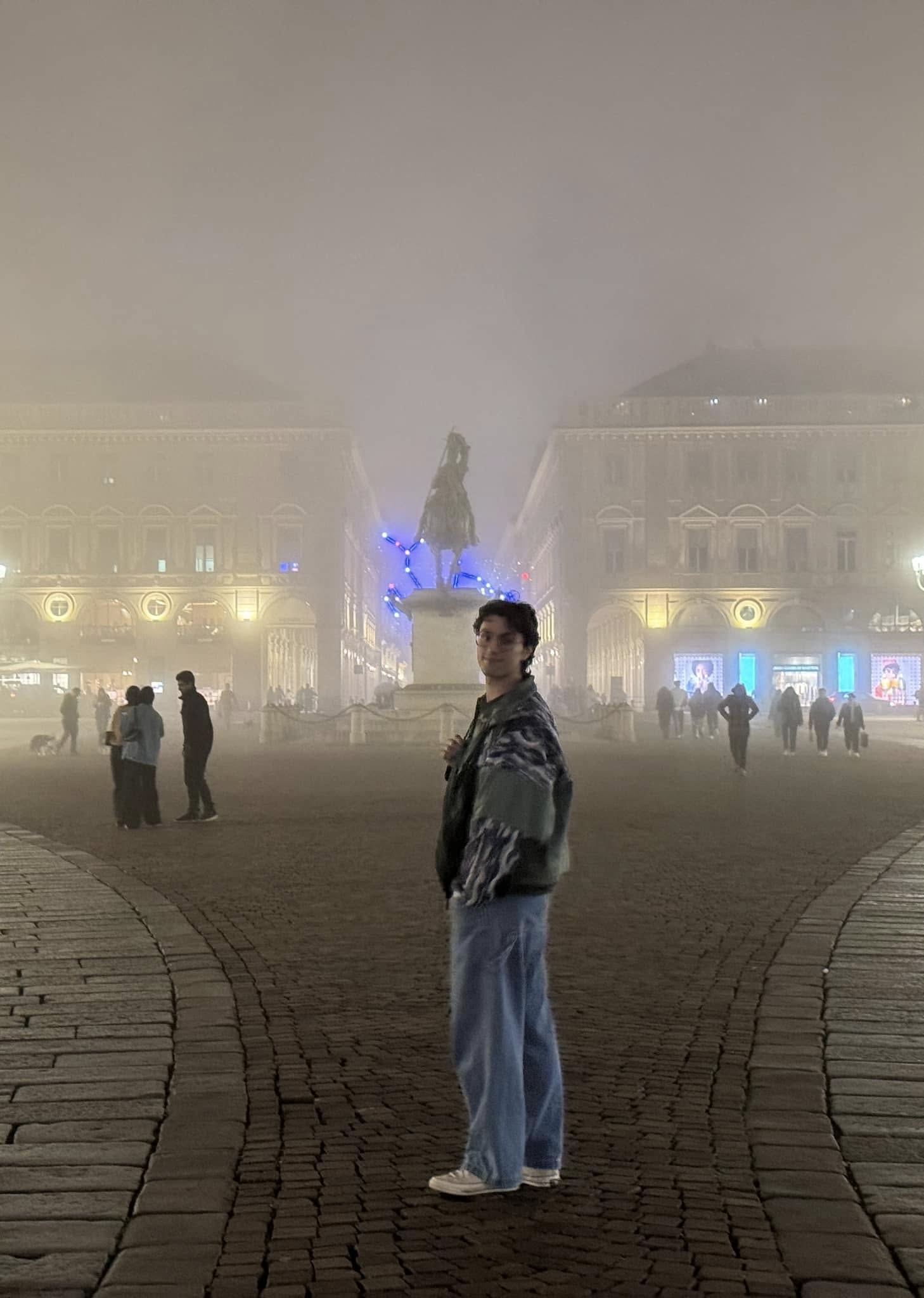
Every night in Turin, the fog descended on the city. But our hero Garibaldi stands strong on his horse, despite the weather. He didn’t need a portico to stay comfortable!
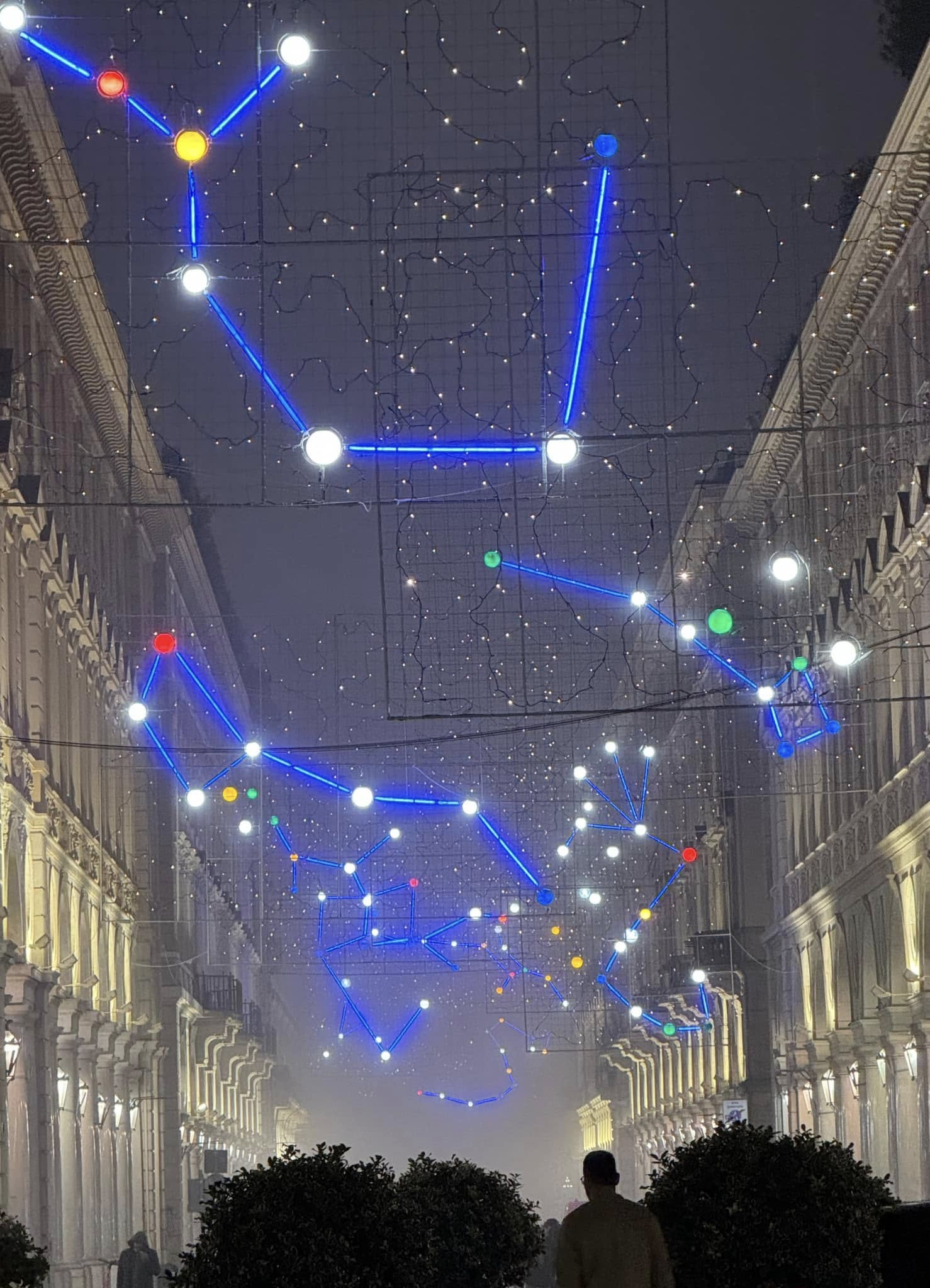
Since the dawn of time we have been looking up at the heavens for guidance by the stars. In Turin you can still seek guidance even if it’s foggy.
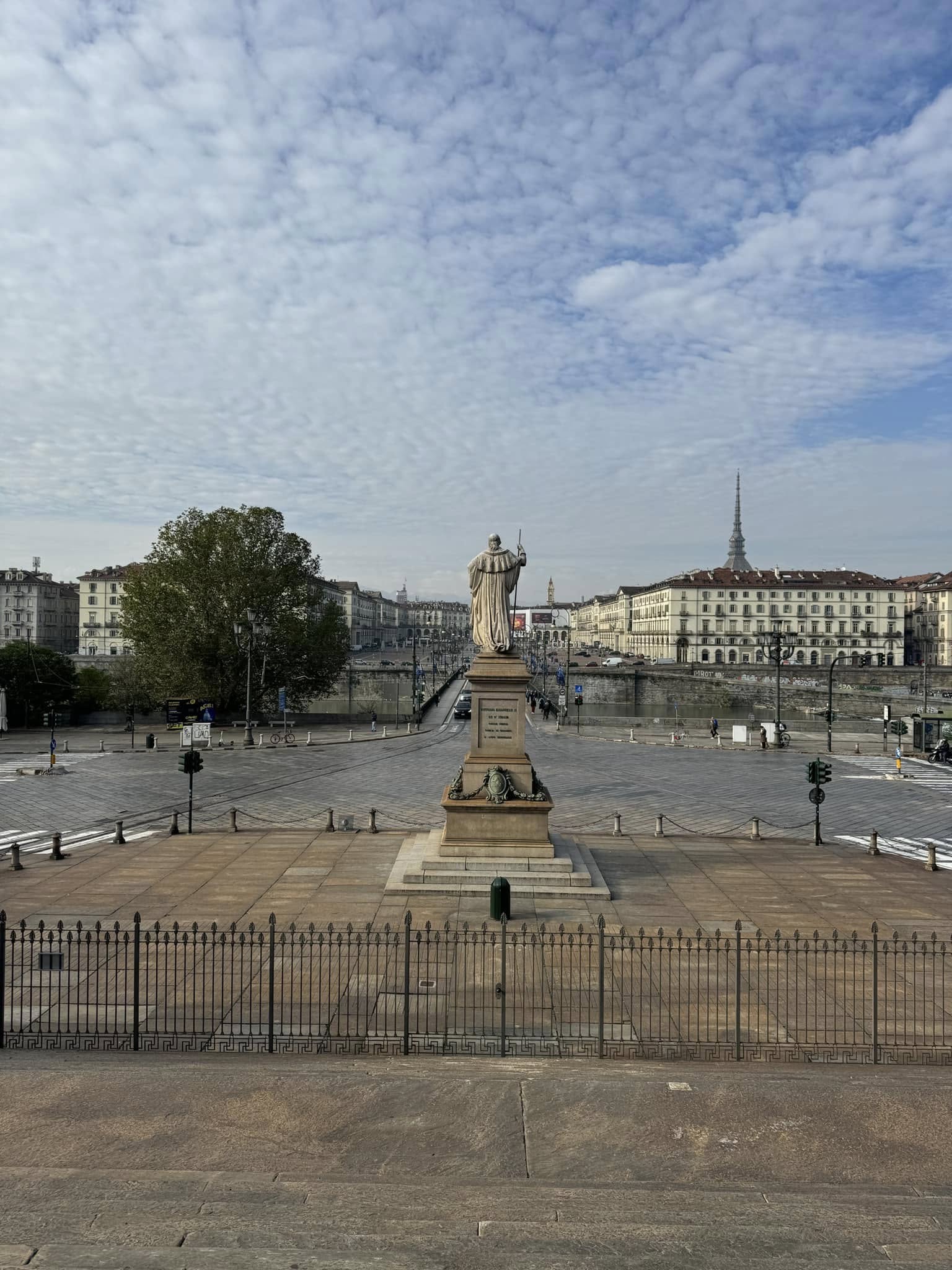
Vittorio Emanuele II overlooking the Vittorio Emanuele I bridge which connects the two sides of Turin over the River Po. Fun story here. When Napoleon took Piemonte (which he ruled for 14 years) this bridge was one of his first public works. When Napoleon was defeated and Vittorio Emanuele I returned from exile, he pledged to destroy every trace of French dominion. But he left this stone bridge intact so that the people of Turin could regularly trample on this symbol of the previous occupation. I guess it was a practical decision too as it would have cost a lot to destroy and rebuild a bridge!
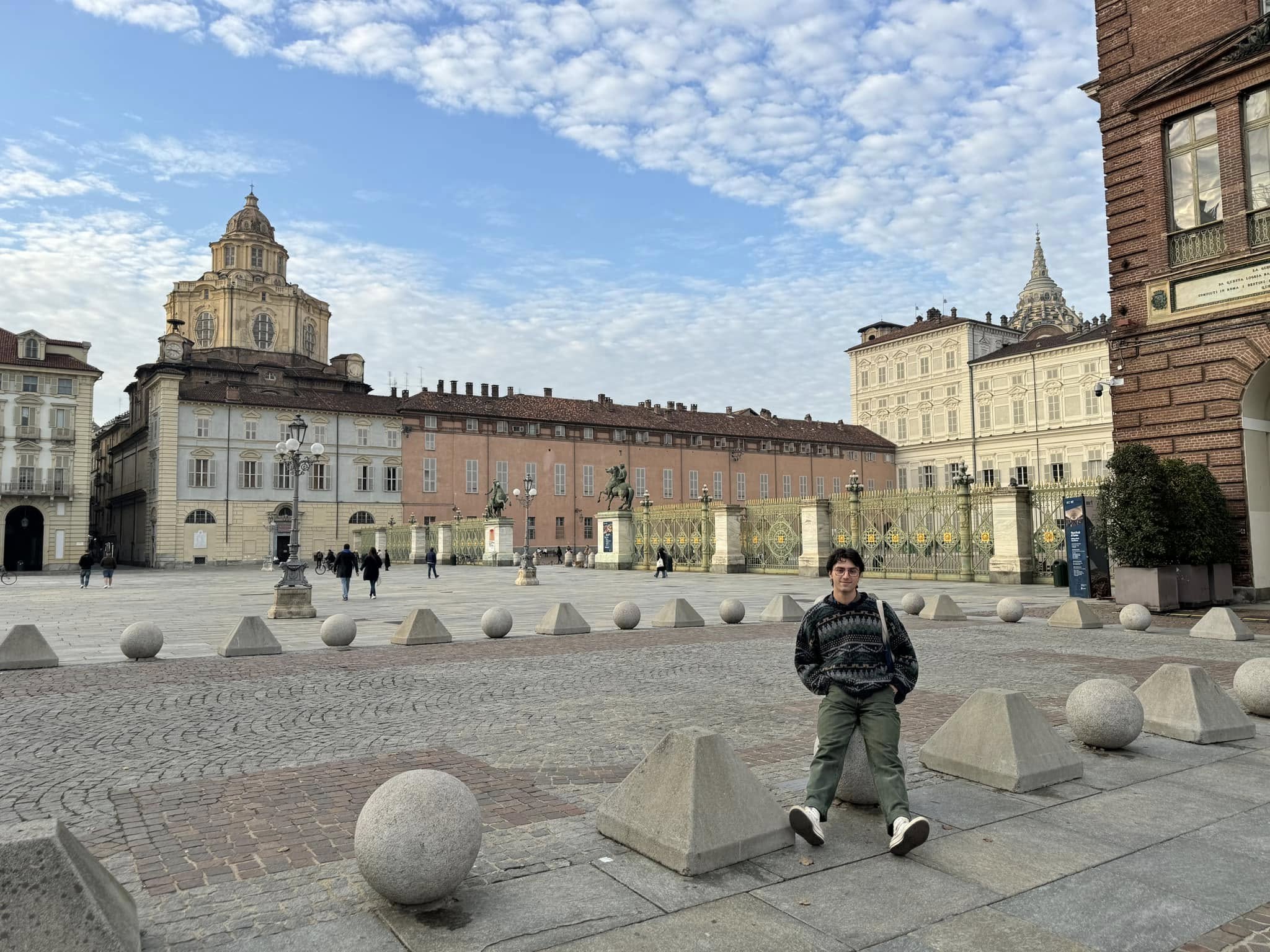
The concrete ball is definitely a more comfortable seat than the adjacent pyramid at the Piazza Castello, a huge square flanked by some of the most important palaces, churches and otherwise fancy buildings in Turin…ringed with porticos of course!
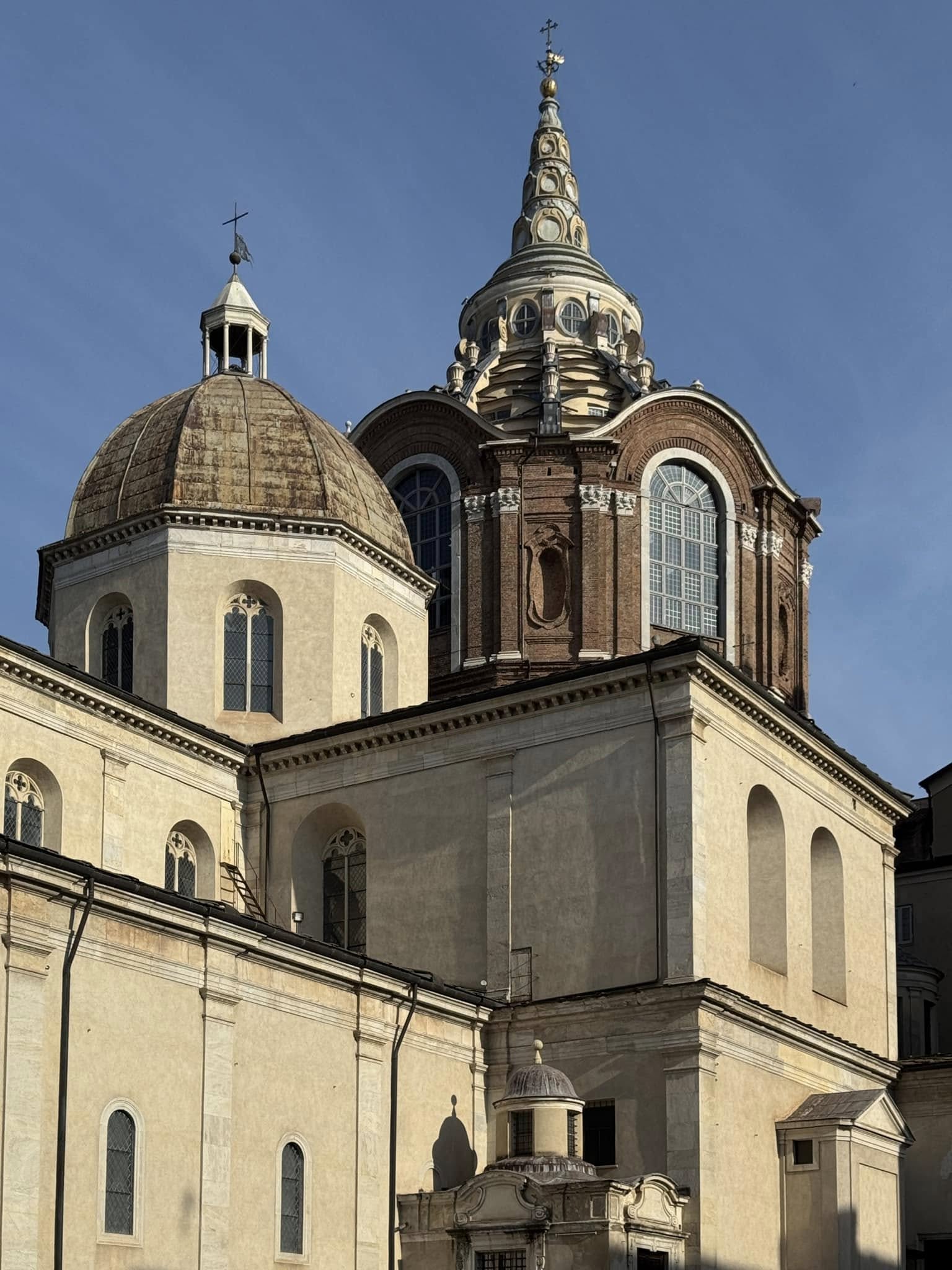
Tucked in the back corner of Piazza Castello is Cattedrale di San Giovanni Battista, the official residence of the shroud of Turin. The shroud is a very reclusive piece of cloth kept under optimal storage conditions and only open for viewing on very special occasions. Last time it was seen “in the flesh” 🙄 was in 2015. If you’re keen, apparently it will be on display again in 2025.
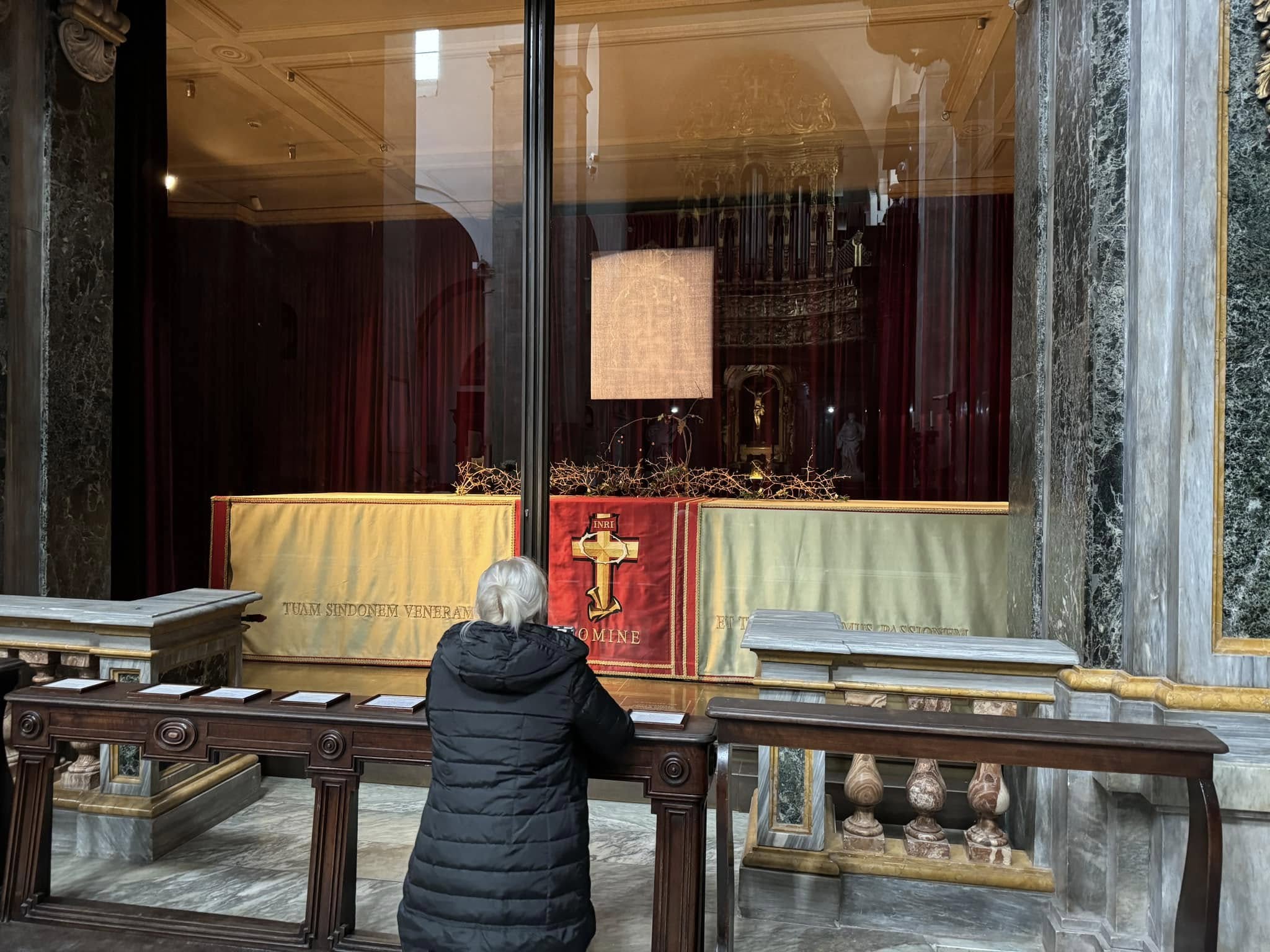
In this five metre glass box, shrouded by a fancy cloth, lies a replica of the real shroud. It’s in a special chapel in the cathedral and is only uncovered for viewing a few hours a day. We didn’t wait…
So, was it really the shroud that wrapped Jesus’ body? Ever since the shroud was found in 1350, there have been naysayers who declare it wasn’t really a faint outline of Jesus. A controversial study in the 1980s established the shroud was from medieval times and not Jesus’ time. But a more recent study using X-rays says the fibres of the cloth can be dated to Jesus’ time BUT (and it’s a big but) the cloth can only be definitively dated to that time IF it was kept at specific temperature and humidity levels before it was found in 1350. And the chances of that? I don’t want to make this a sad Santa Claus reveal and burst any bubbles of faith, but…it’s highly unlikely. Science maintains it’s a medieval forgery as did the bishop of Troyes, Pierre d'Arcis, in 1389, who allegedly identified the artist responsible for the ruse.