May, 2026
Lucca
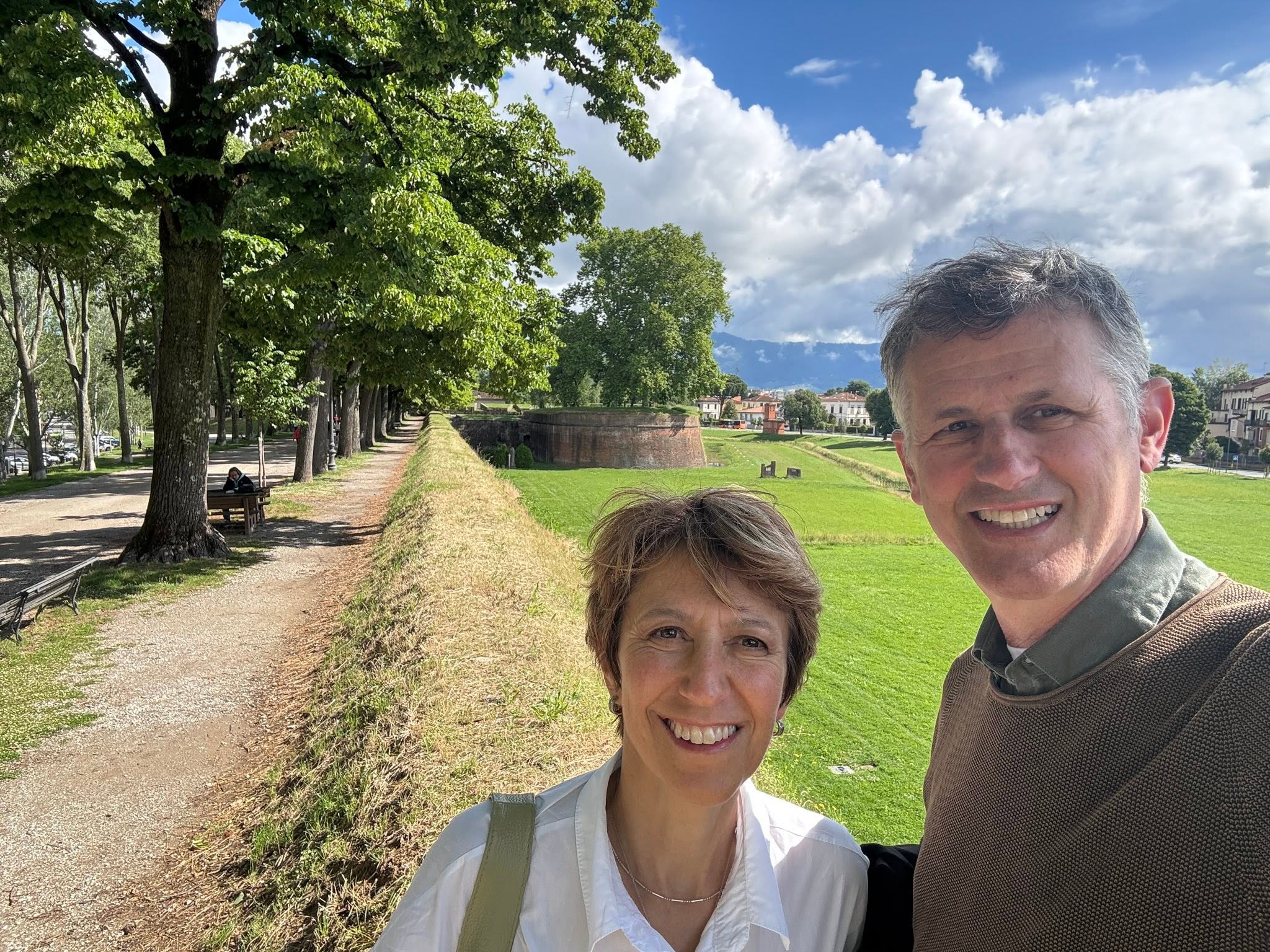
The four km walk along the top of Lucca's Renaissance era defensive wall is the classic activity in Lucca. The walk up here is full of cyclists, runners, walkers and strollers, lots of room for everyone when you have 10m in width. You can tell from the bastion sticking out behind me that the walls are not the height of the earlier Roman and Medieval walls. Called the trace italienne, this was a protection move at the turn of the 1500s when the threat of Florence invading was on everyone's mind. The previous tall and skinny Roman and Medieval walls worked well for warfare strategies of the time: battering rams, catapults, scaling ladders. But when cannons came along, everything changed. Shorter, wider walls (these ones are 30m at the base, tapering to 10m at the top) filled with earth were an excellent shock absorber for incoming cannon balls, and the angled bastions gave a much better position for defenders to spot attackers hiding along the base of the wall. The old medieval towers left a lot of dead zones.
Ironically, once Lucca built its trace italienne there was never an invasion attempt. Interesting since it took 150 years to build so you'd think invaders would take advantage of this. But the wall did save them from a flood in 1812. The city shut and reinforced all the gates and the walls successfully held back the water!
When other Italian cities were busy tearing down their walls in the 19th century to make room for boulevards, Lucca did not. The walls were a symbol of their identity and a monument to their independence as a republic. Lucky for us!
Facebook video URL: https://www.facebook.com/656191360/videos/pcb.10162355330481361/1633909684541334 Luca's wall is also a place for artistic pursuit. The violinist was great but I think the dog pulled in the crowds.
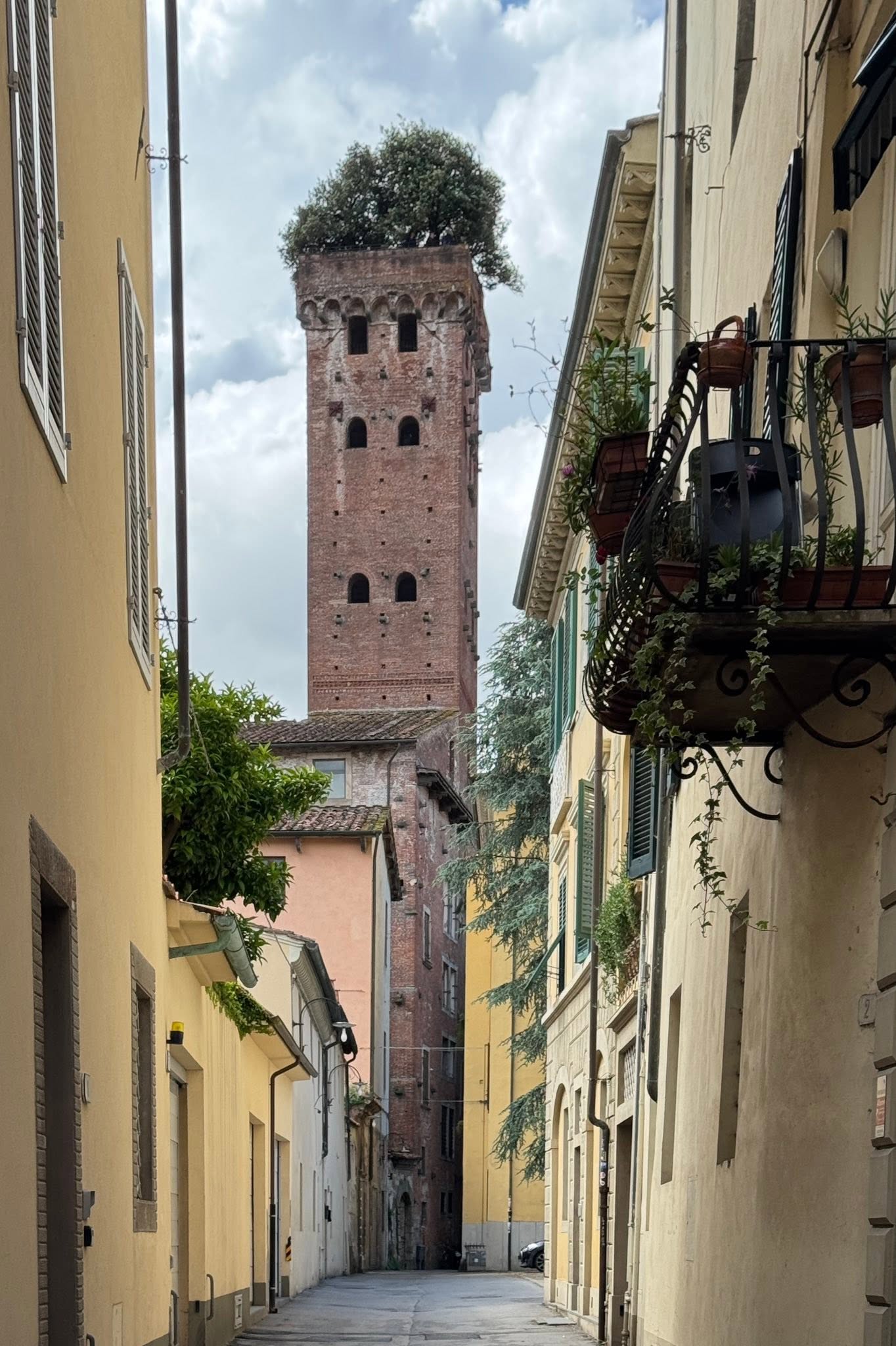
The Guinigi Tower…everybody who's somebody had one on their palazzo, partly as one-upmanship and partly as a defensive stronghold. Lucca had about 250 Renaissance era towers, nine of which still stand today. The most famous ones are the Clock Tower (Torre delle Ore) and the Guinigi Tower, built in 1390 and the only one with trees at the top. Chronicles say that the tallest of the oaks growing on top were planted by Paolo Guinigi himself.
The Guinigi family was one of the wealthy with their money coming from banking and silk. They actually ruled the city quite peacefully after the self-serving leader Castruccio Castracani died. Guinigi lost power in 1430 after Florence attacked Lucca. While the city didn't fall, a popular revolt pushed Guinigi out and led to his murder by his former protector in 1432. Alliances can never be trusted.
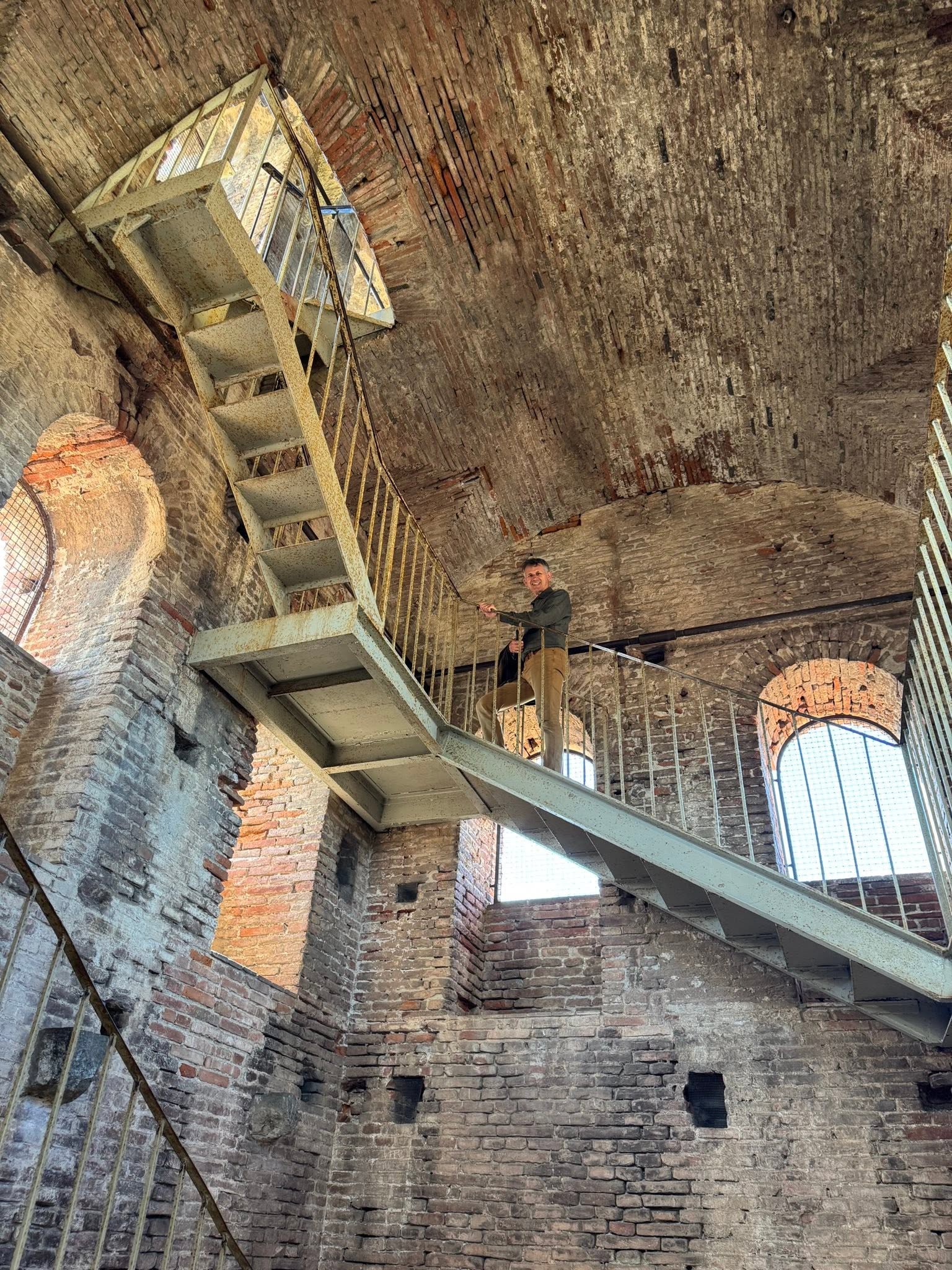
A nice strong base for the Guinigi Tower, no wonder it's still standing! And Adam is happy the 233 steps to the top are solid too!
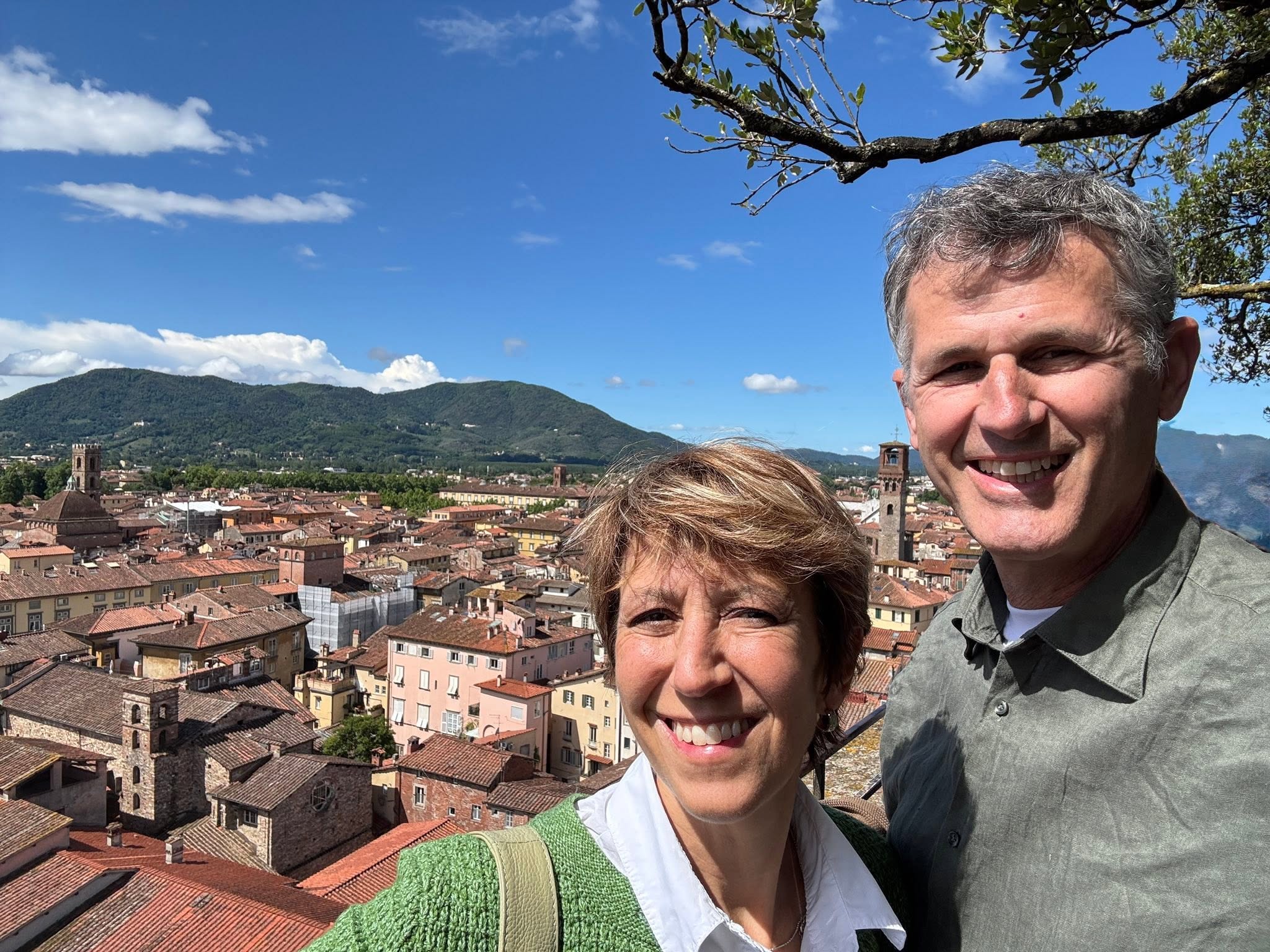
Made it to the top! It was a small footprint up there and far too many people. I guess ticket sales trump safety.
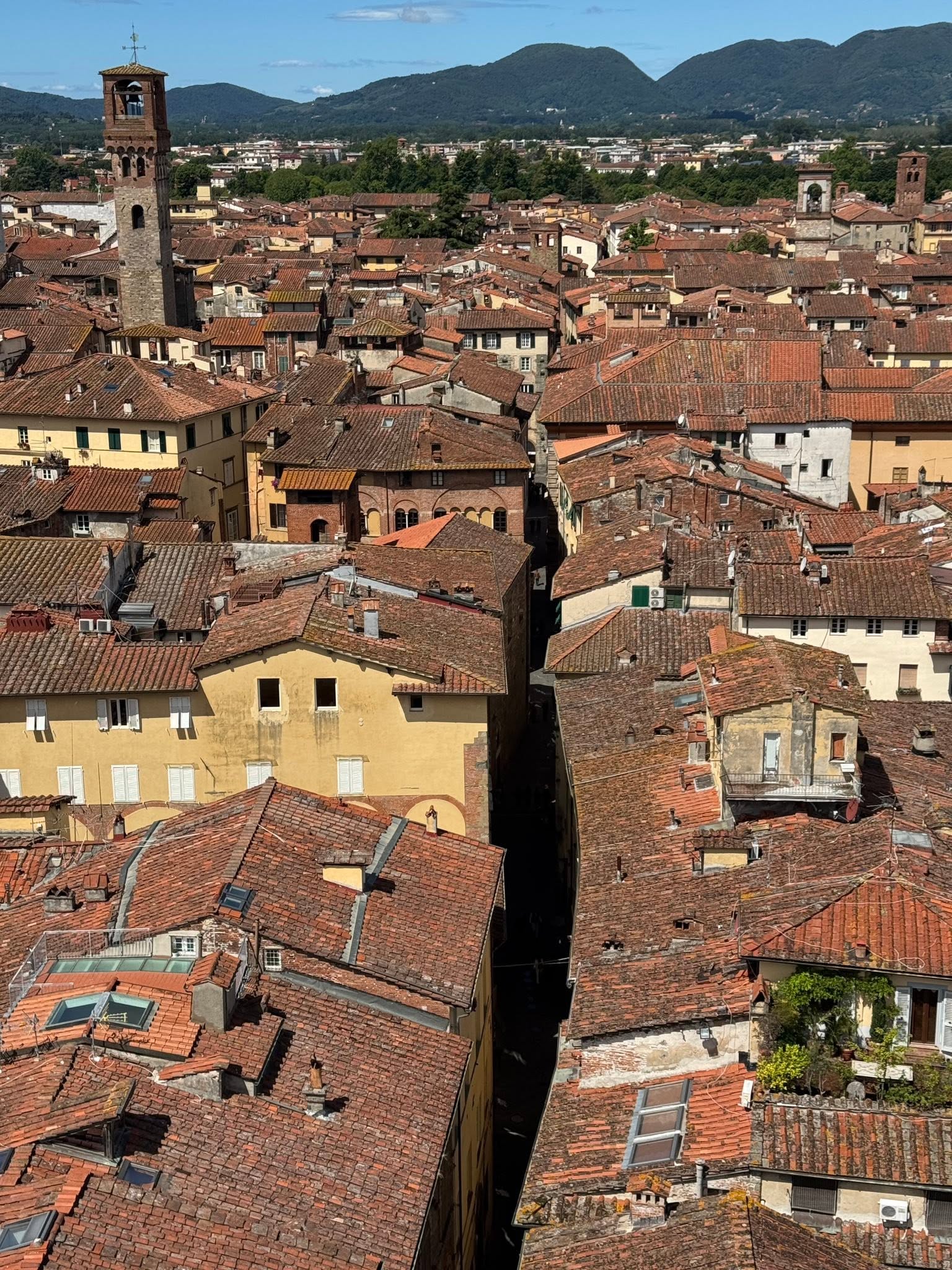
Overlooking the densely packed city of Lucca. Narrow streets flanked by tall buildings look like little cracks from above.
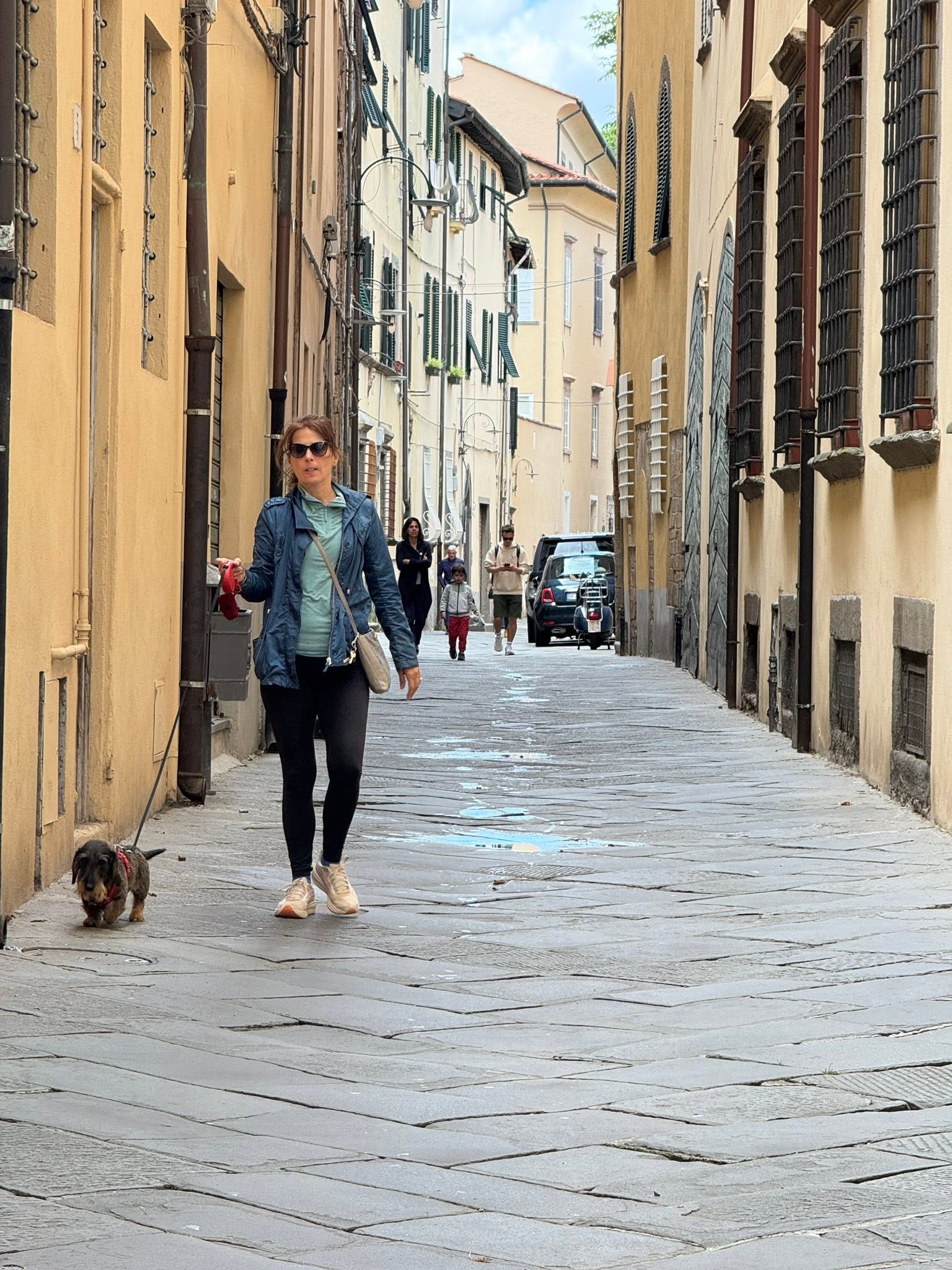
Walking along those same streets they look like cracks from above.
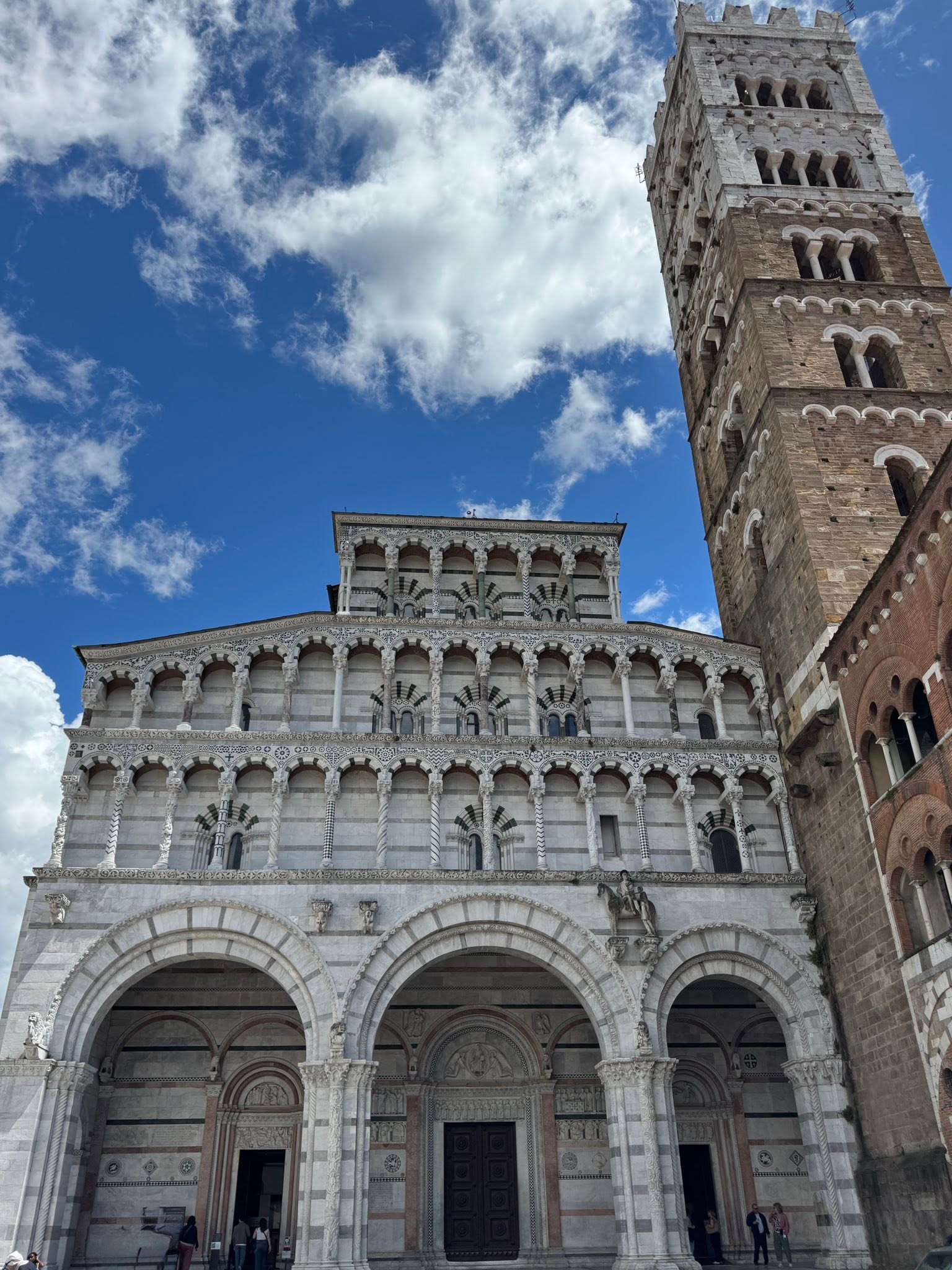
A church has stood in this spot since the 6th century and has stood witness to all the exciting moments in the history of Lucca. The Duomo di San Martino we see today is clearly not the original. It went through at least four iterations in its nearly 1,500 years of continuous use. The bones of this one were built in 1070 by the bishop of Lucca, Anselmo da Baggio, who had since become pope under the name of Alexander II (interesting to have been founded by a future Pope!). In the 12th and 13th centuries, the Romanesque façade and portico were built to welcome pilgrims from all over Europe who came to pay homage to the Volto Santo (more on that shortly). Glaringly obvious is the lack of symmetry. This was not due to a lack of city building codes and inspections. It's because the bell tower was already there when the façade was built at the end of the 12th century. They certainly weren't going to tear down the tower so the architects just made the right side arch smaller. As with any renovation, constraints dictate results.
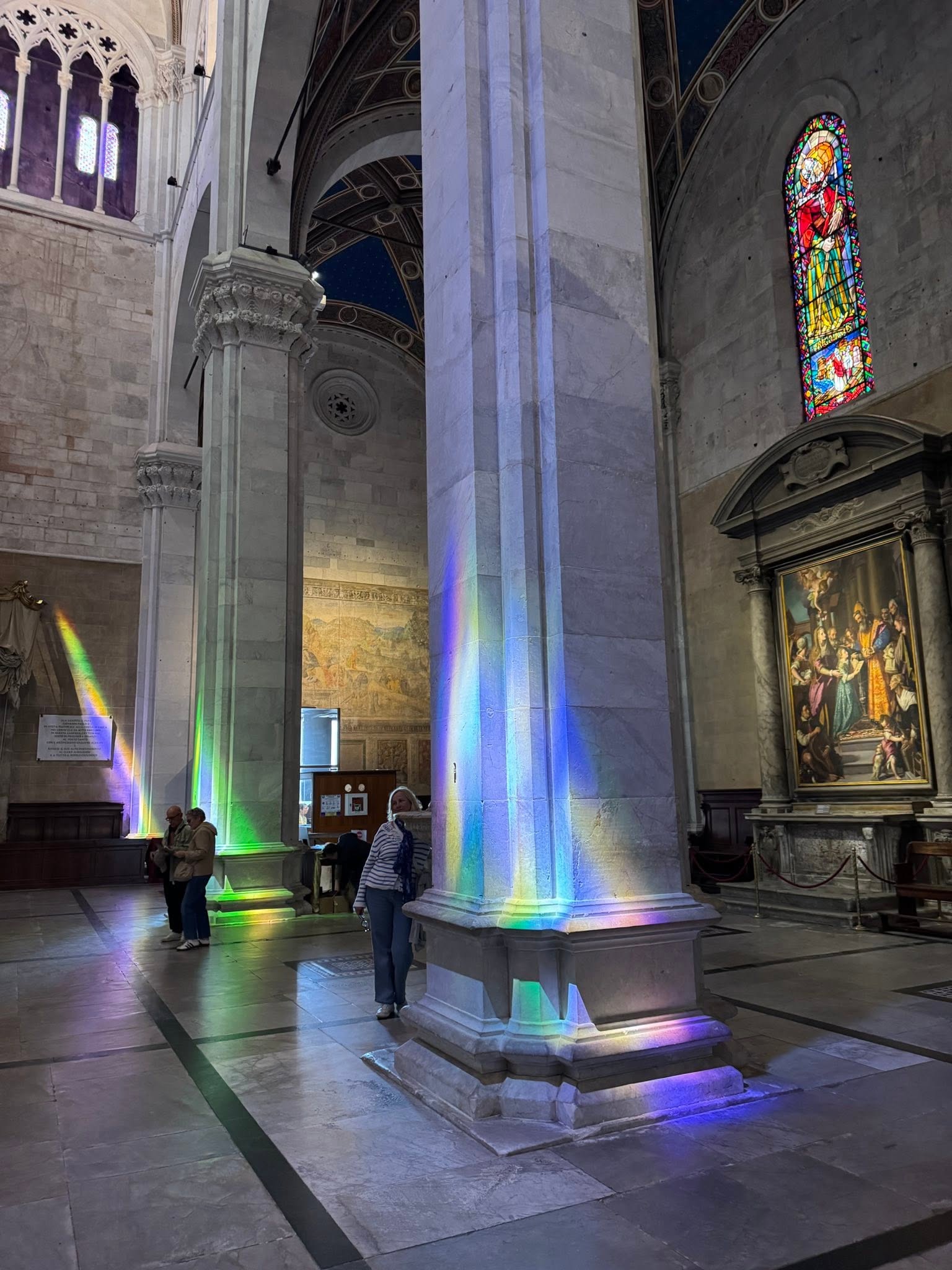
We just stepped inside the cathedral at rainbow time!
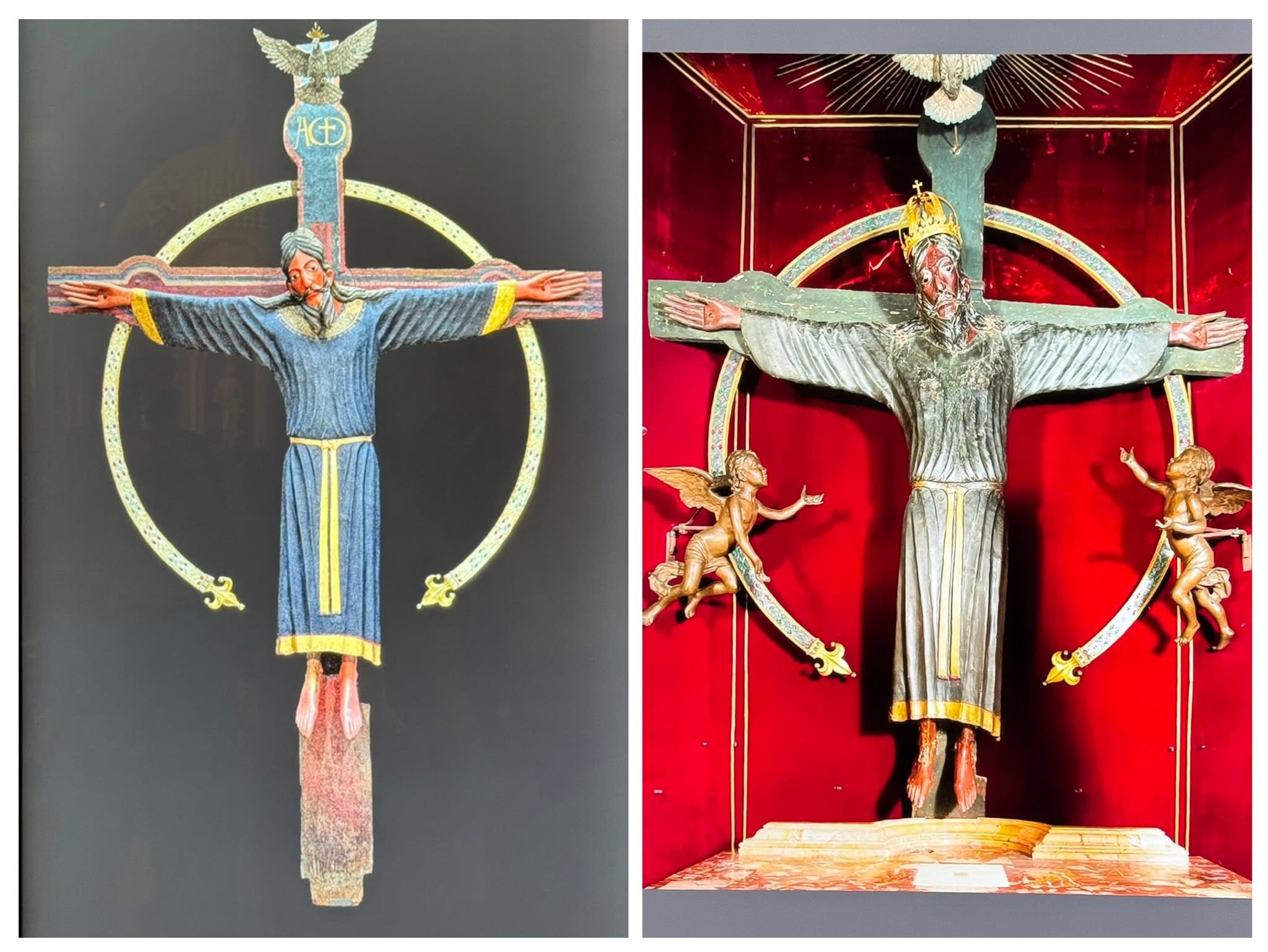
So, back to the pilgrims who came from all over Europe. It was to see the Volto Santo, reputed to be the oldest surviving wooden carving in Europe. Carbon dating places it at the end of the 8th century which coincides pretty perfectly with the legend of its arrival in 782. Here's the legend: Nicodemus, a disciple of Jesus, carved the body but stopped at the neck and fell asleep. When he awoke, he found the face (the true face of Jesus) miraculously carved by angels. Centuries later, in 782, the crucifix was rediscovered in the Holy Land and placed on an unmanned ship, leaving it's destination to divine will. It arrived at the port of Luni, not far from Lucca. The Bishop of Lucca, Giovanni I, was at the port to welcome it because he had advance notice of its arrival in a dream. So, it arrived in Luni but the Bishop of Lucca was warned of its arrival. Who should lay claim to it? To determine which city got the Volto Santo, its journey was once again entrusted to Providence: the crucifix was placed on a cart pulled by wild oxen. Lucca won, but the inhabitants of Luni were given an ampoule of the Precious Blood found inside the sculpture as a consolation prize. Pilgrimage began not long after, once word spread of the relic's presence and by the 12th and 13th centuries, the crowds were such that they built the new façade and portico.
The Volto Santo has just been restored, a process that took nearly three years. It was finished in September 2025 but the special chapel that houses it is now under renovation so the crucifix has been tucked away again. The left side of the photo above shows the restored Volto Santo, cleaned of its centuries of dirt, soot from candles and repainting that you can see on the right side.
The depiction of Christ is very unusual and shows a much older style than the classic medieval appearance. Christ is wearing a long tunic rather than a loincloth, making him look more like a king or priest than a suffering victim. His eyes are also open giving him an alive and triumphant look rather than in agony and dying. And further along the suffering theme, his is upright rather than sagging. The fact that his feet hang parallel is another representation of the older style with one nail for each hand and foot. I have to say, I prefer the strength and triumph portrayed rather than the victim. And this seems more consistent with the strength that Jesus embodies in what little I know in the bible. Correct me if I'm wrong…
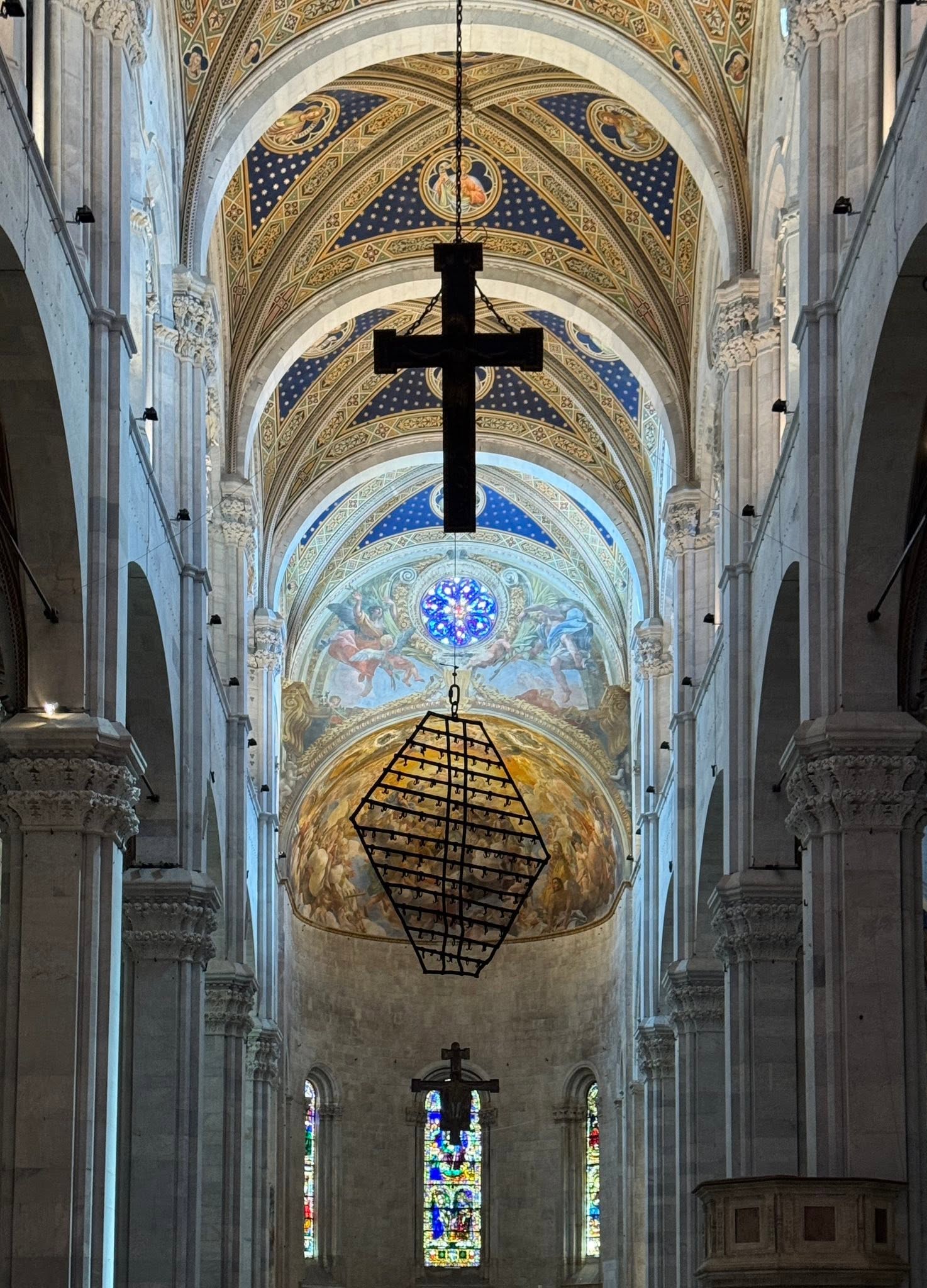
It seemed odd that there was a metal grate hanging in the middle of the cathedral. It turns out it is used for the ancient 'rite of the oakum'. During certain solemn celebrations, the grate is covered with flammable material like straw, and then lit on fire at the exact moment when the congregation intones the Gloria. The flame only lasts a few minutes. This rite is an exclusive privilege of the Archbishop of Lucca, only performed in his presence because, since the Middle Ages, it serves to remind him that earthly glory is as short-lived as a straw fire!
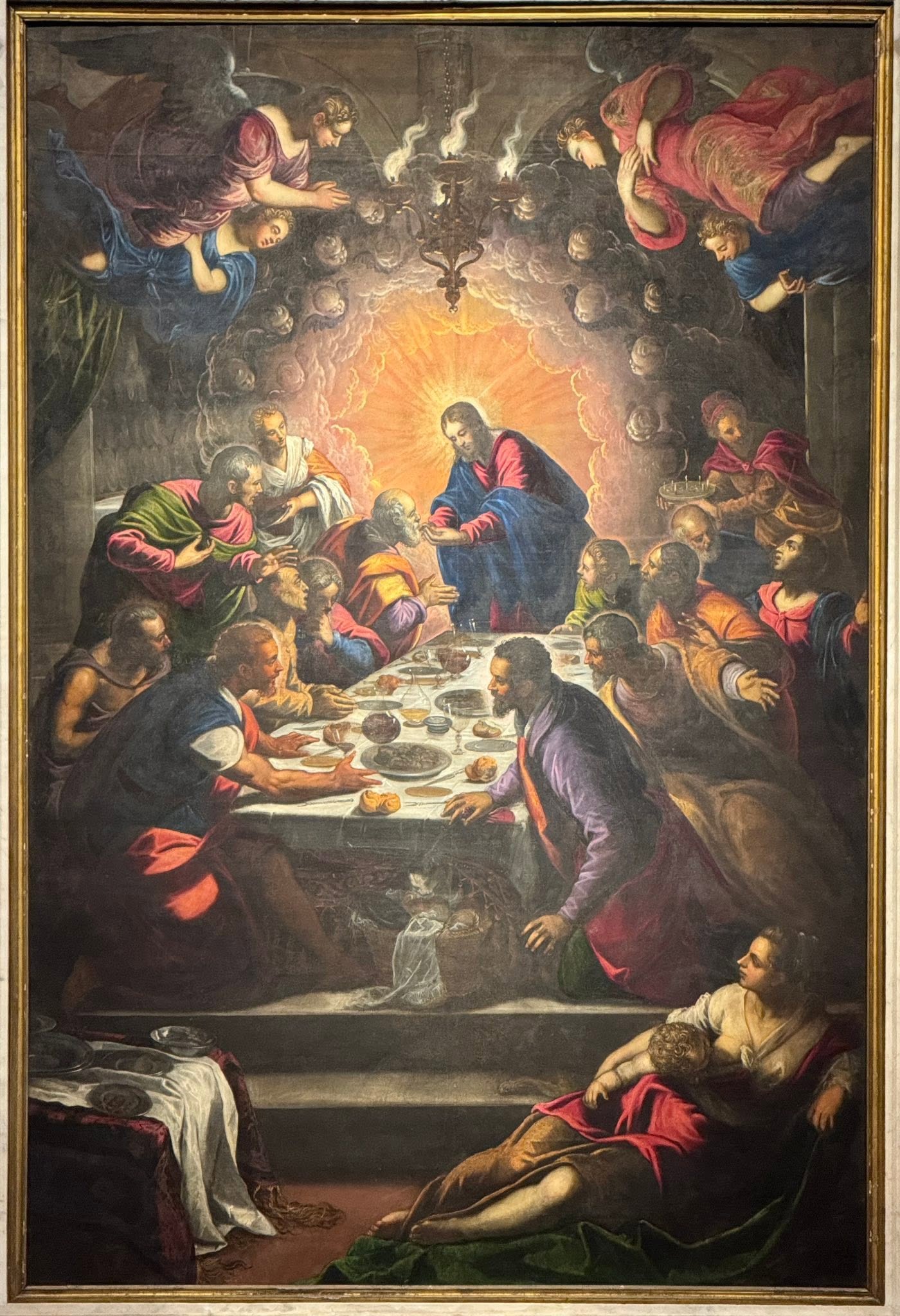
Some of the churches are sitting on a treasure trove of art and this one is no exception! Tintoretto's Last Supper was completed in 1594 and is said to be his last work before he died that same year. And this last work was a doozy as Tintoretto was making a dramatic Counter-Reformation statement with his focus of the painting being on the divine nature of the Eucharist. For Catholics, the bread and wine literally become the body and blood of Christ during Mass. For the Protestants, the bread and wine was symbolic, not miraculous. Protestant Reformation was in full swing in 1594 and Lucca was a city with known Protestant sympathies among its elite so the Catholic Church enlisted artists to push the miracle doctrine.
Unlike Leonardo's version of the Last Supper focussing on the announcement of betrayal, Tintoretto's features Christ feeding the sacred bread to one of his table mates. The heavenly light emanating from Christ reinforces that this is actually a divine event and not just symbolic. The woman breastfeeding in the front of the painting creates a parallel between earthly nourishment and the Eucharist, the food for the soul that saves mankind.
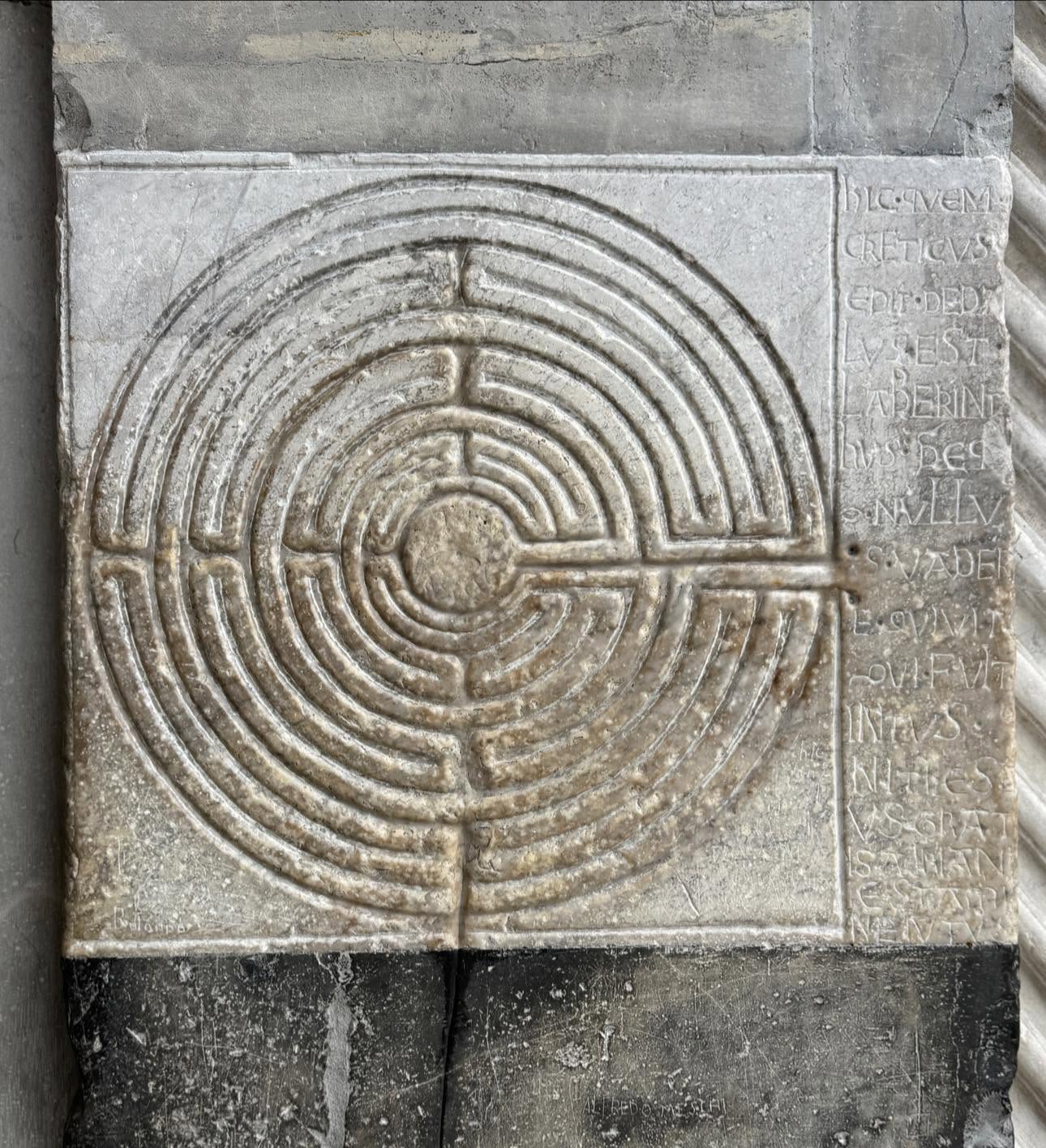
Engraved on the pillar leaning on the bell tower is this labyrinth with a Greek mythology inscription: "This is the labyrinth built by Daedalus of Crete, from which no one who entered could escape except Theseus, thanks to the help of Ariadne's thread". In the Middle Ages the meaning shifted to the pilgrim on his journey in search of God being guided by Faith (and nowadays, faith can be as tenuous as a piece of thread). This labyrinth has only one path and no dead ends because God is not here to trick people: we simply need to have the perseverance to follow the path to the end in order to find salvation.
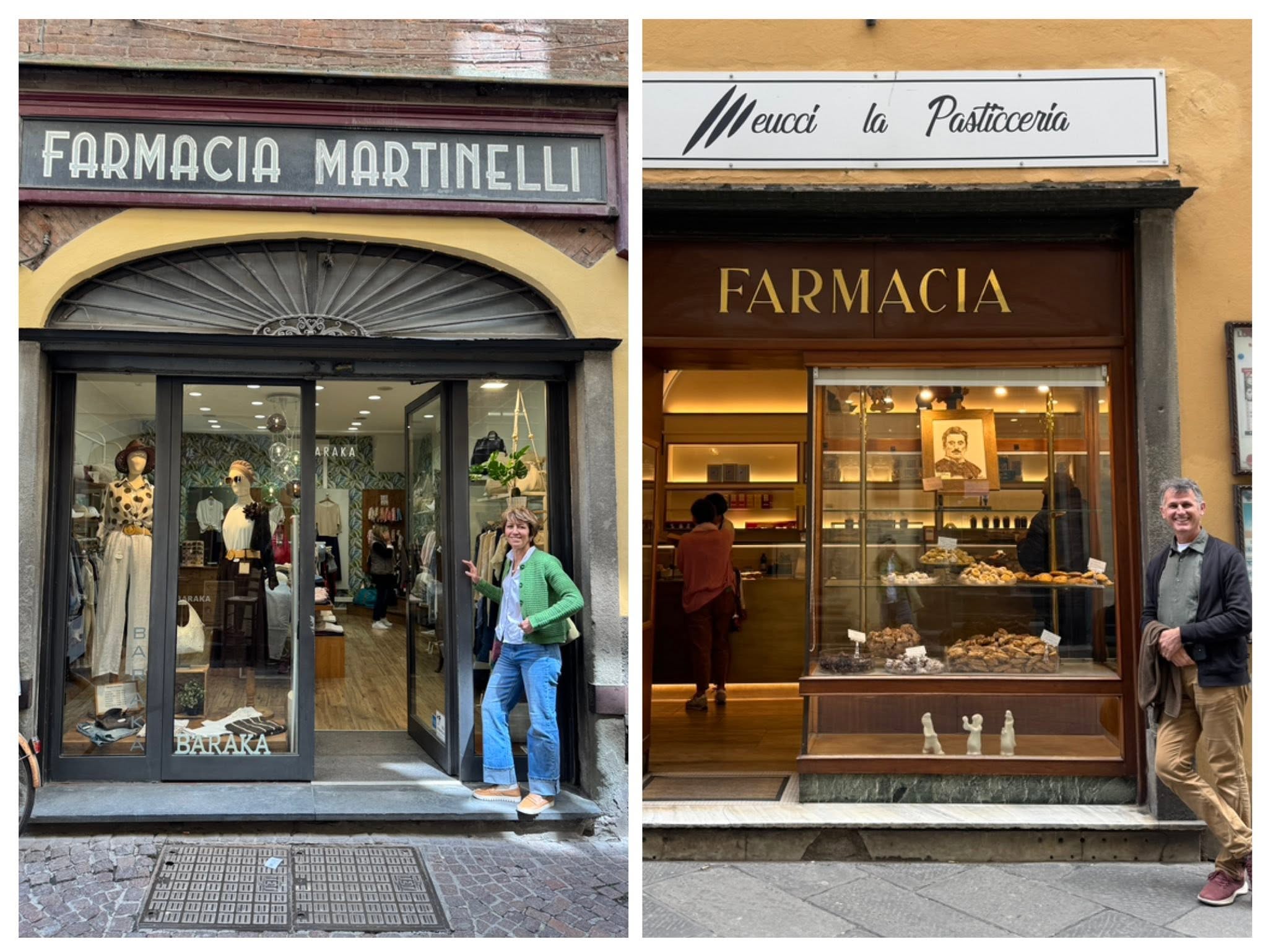
His and hers medicine.
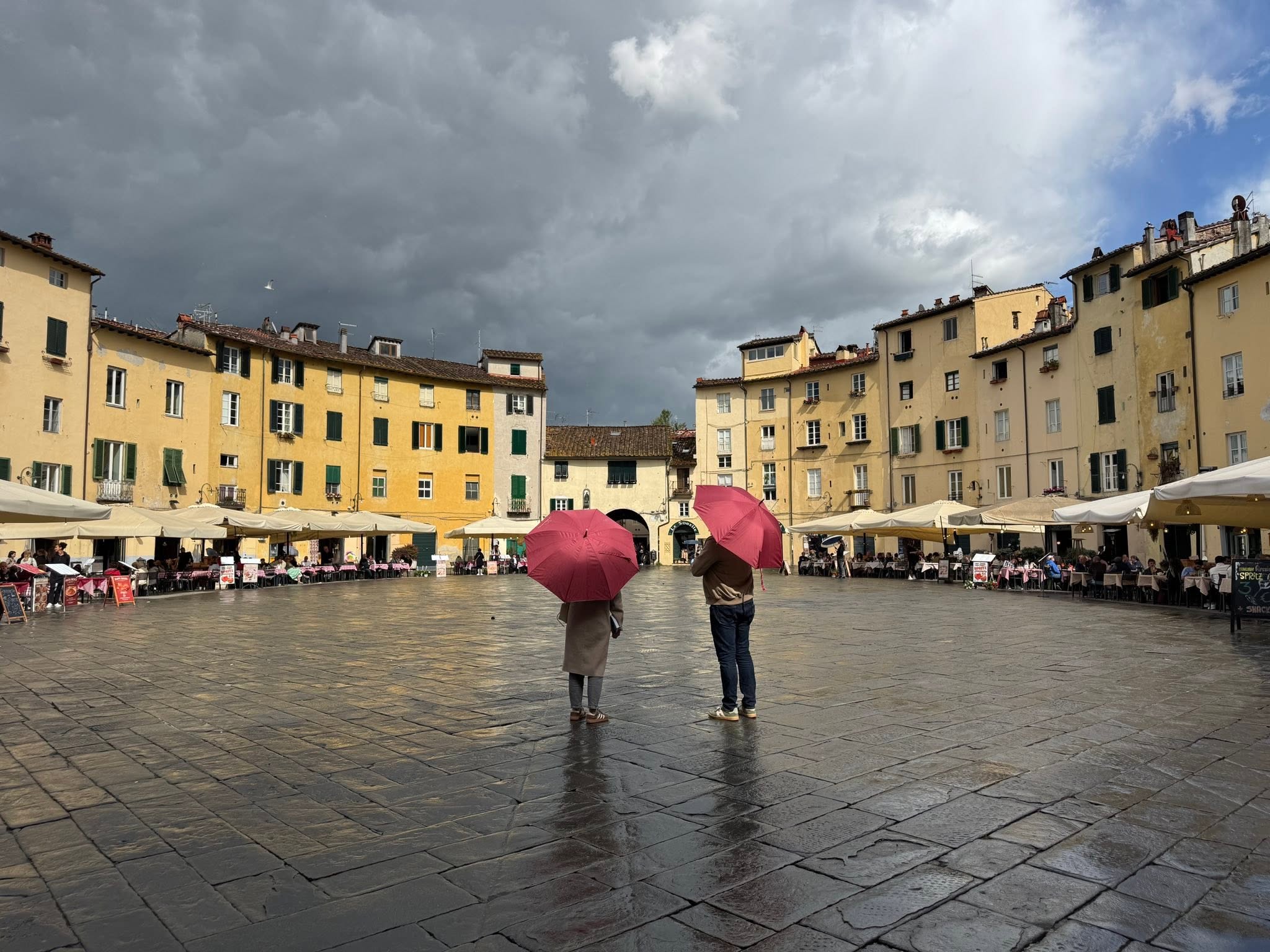
Piazza dell'Anfiteatro is a two thousand year old ghost of a Roman amphitheater. Here's the backstory. Emperor Claudius began building a 10,000 seat amphitheater in the first century AD. After the 6th century Gothic war, terraced houses were built on the surviving ruined structure, while the center of the plaza was divided into portions and used at one point for growing vegetables. Time passed and those terraced houses and central plaza were pretty dilapidated by 19th century when the Architect Lorenzo Nottolini decided to transform the space into a bustling market square. The first market was held in 1839 and nearly 200 years later, it's still a hub of commercial activity!
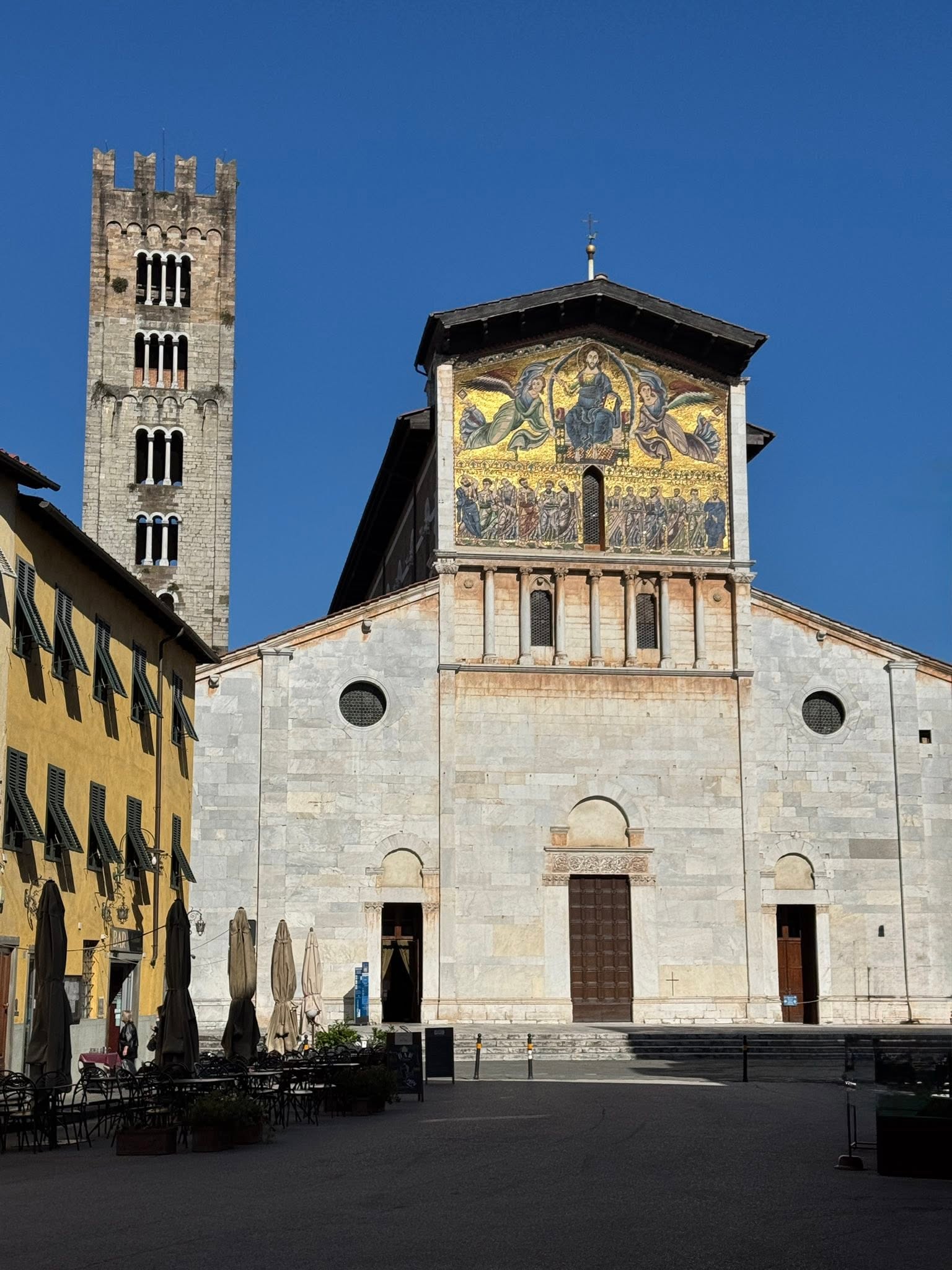
The 6th century Basilica di San Frediano has an amazing gold Byzantine mosaic on the upper façade. We walked by at the perfect moment when the sun was shining on the gold. A short while later, the magic was gone.
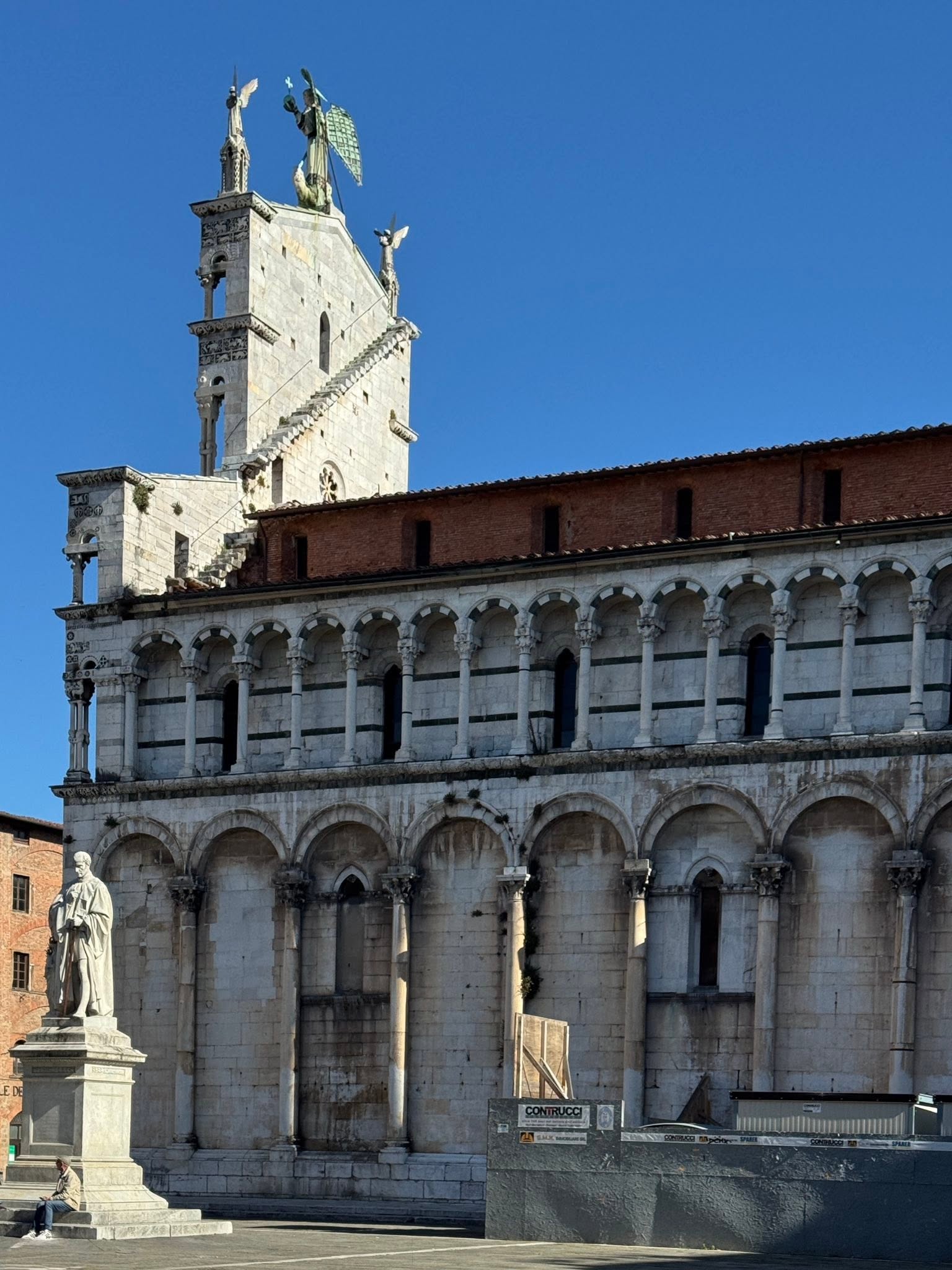
This church, San Michele in Foro, (Foro because it's on the site of the ancient Roman forum, is all about the façade. It's like a movie set! Standing much taller than the nave behind it, it served no purpose other than to impress. I love how we can see the stairs running up the back for maintenance; a pragmatic solution to architectural vanity.
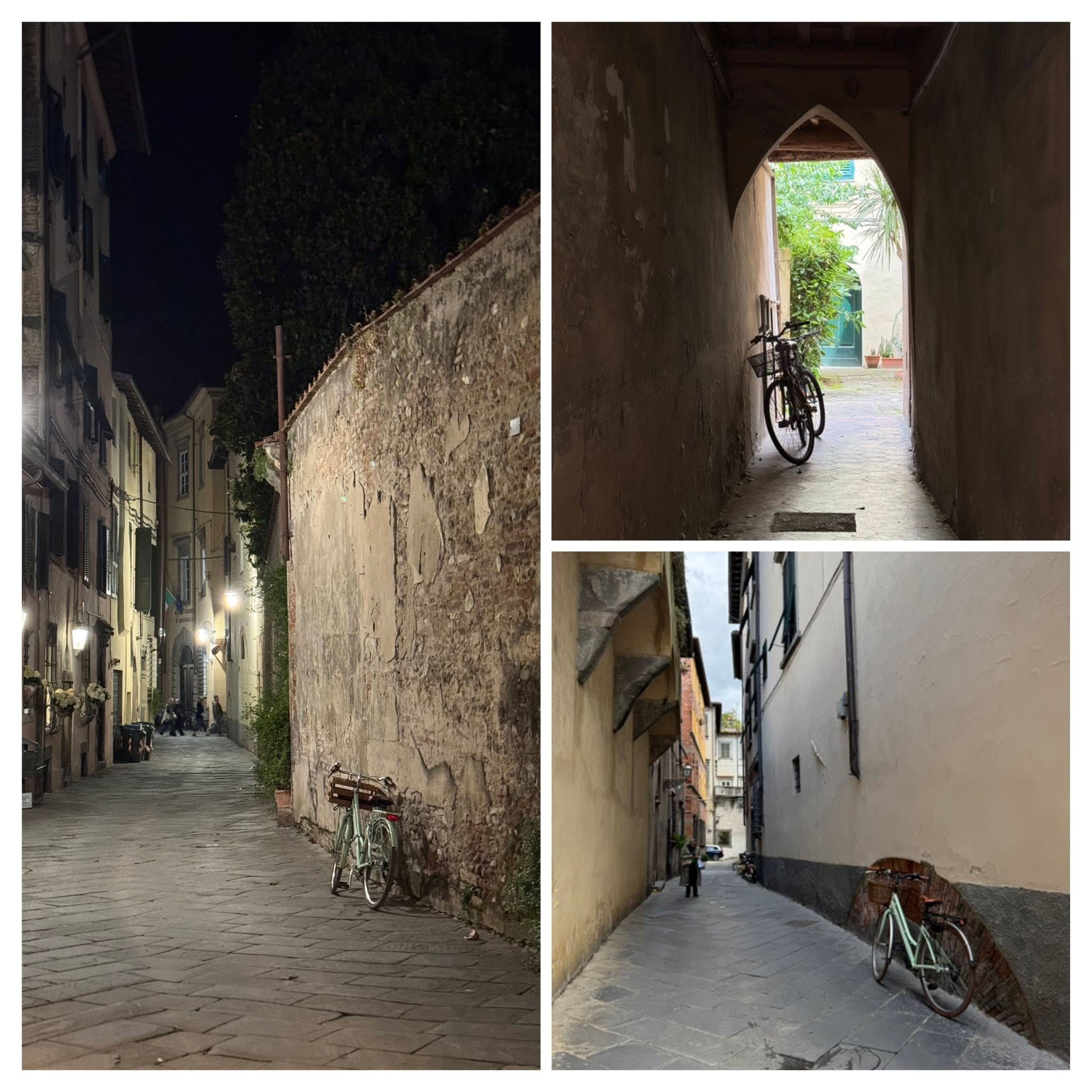
These bikes left around Lucca are much more artful that the Lime and Uber bikes littering the sidewalks.
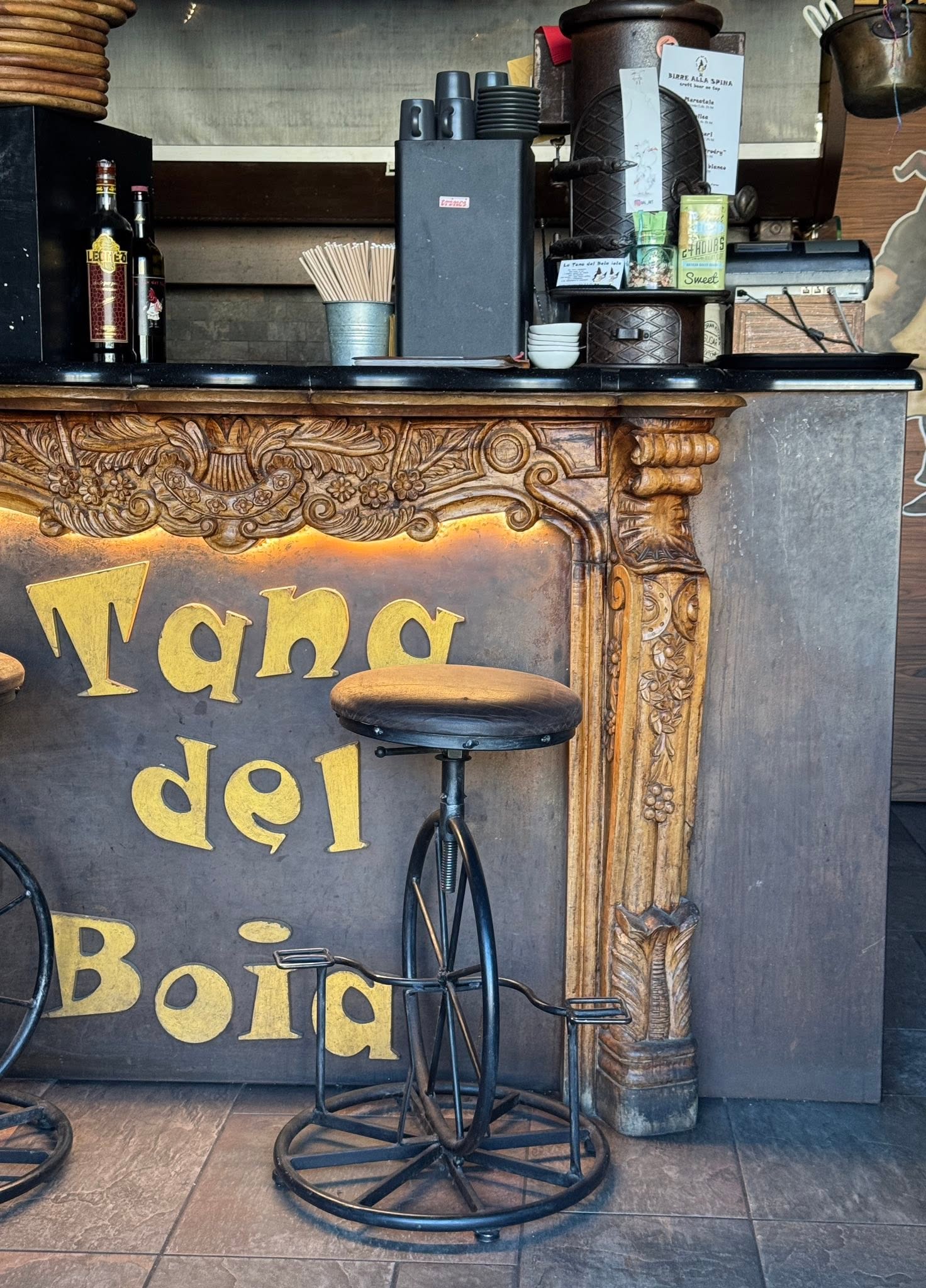
The question is, if you're pedaling while you're drinking your coffee, do you spill more or less that when you're walking and drinking?
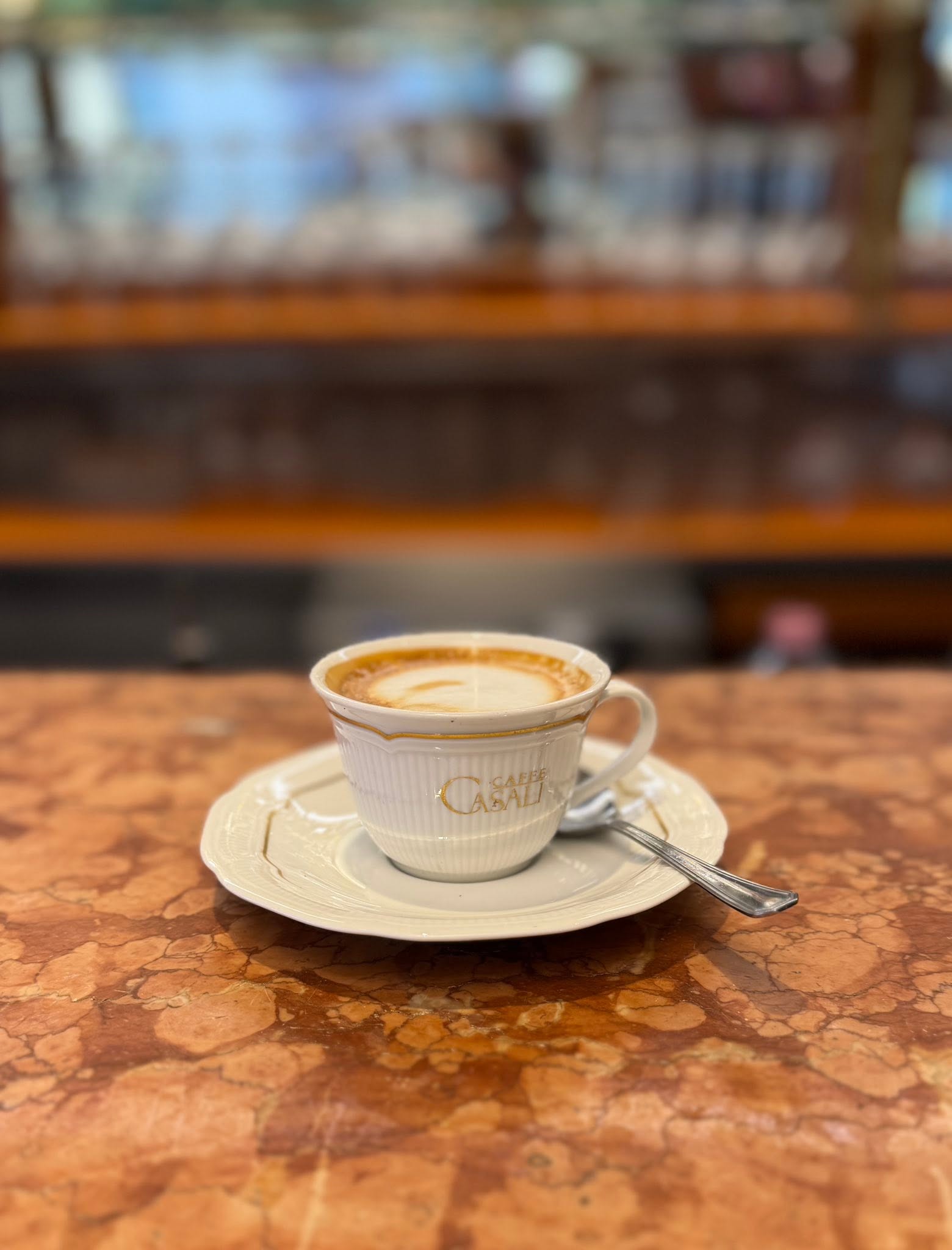
My last coffee in Italy…for now.