November, 2024
Grandiose Genoa
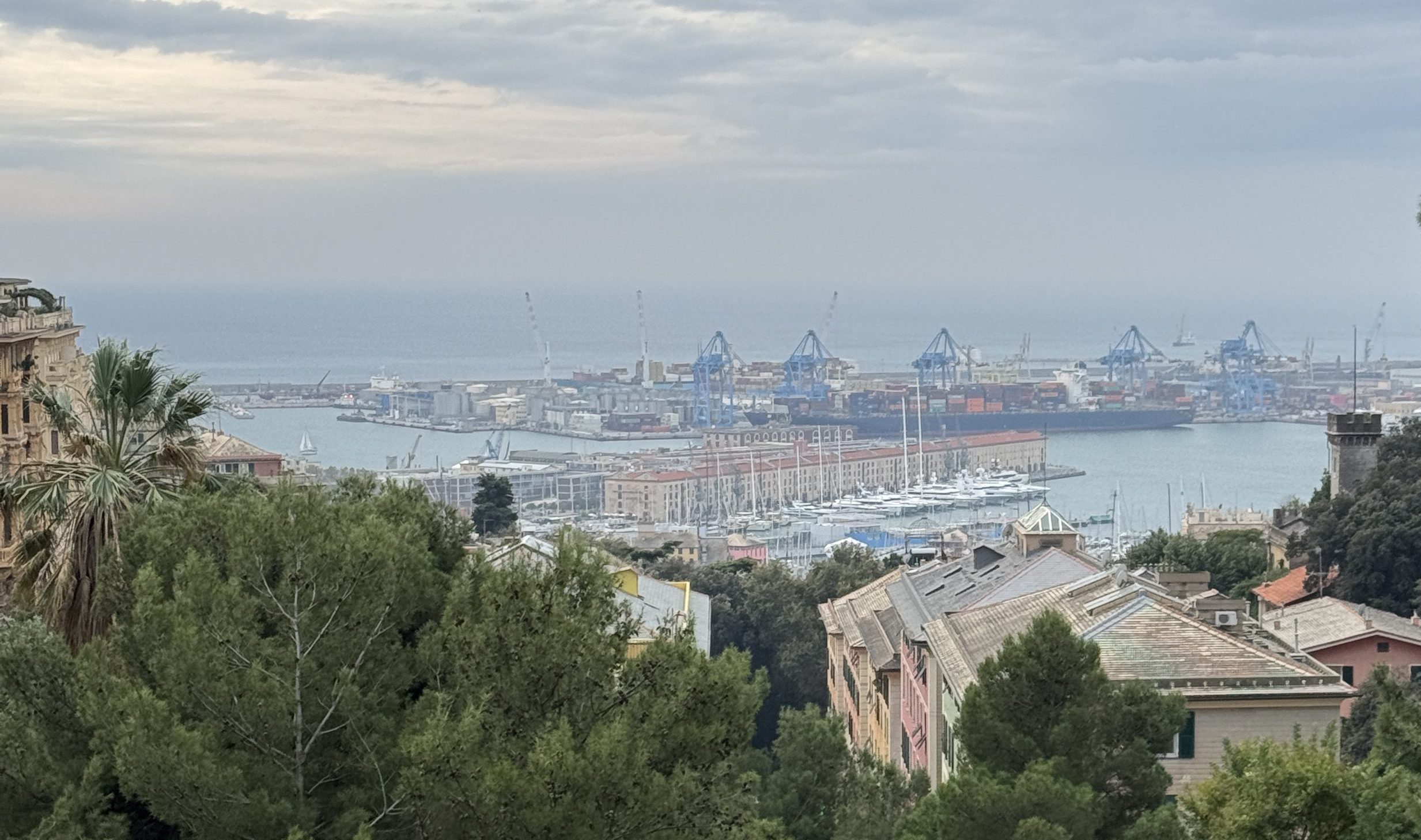
We decided to wing the last bit of our time in Italy, with no plan after Piemonte. The weather ended up being surprisingly fabulous for November so we headed to the Ligurian Coast to explore the Italian Riviera. We based ourselves in Genoa which I found to be a city of contrasts. Stunning architecture, great food, a plethora of palaces put to interesting use on one hand, and on the other, an edginess to the city, through its big port and its medieval winding alleyways. Oh, and there’s a handful of churches…
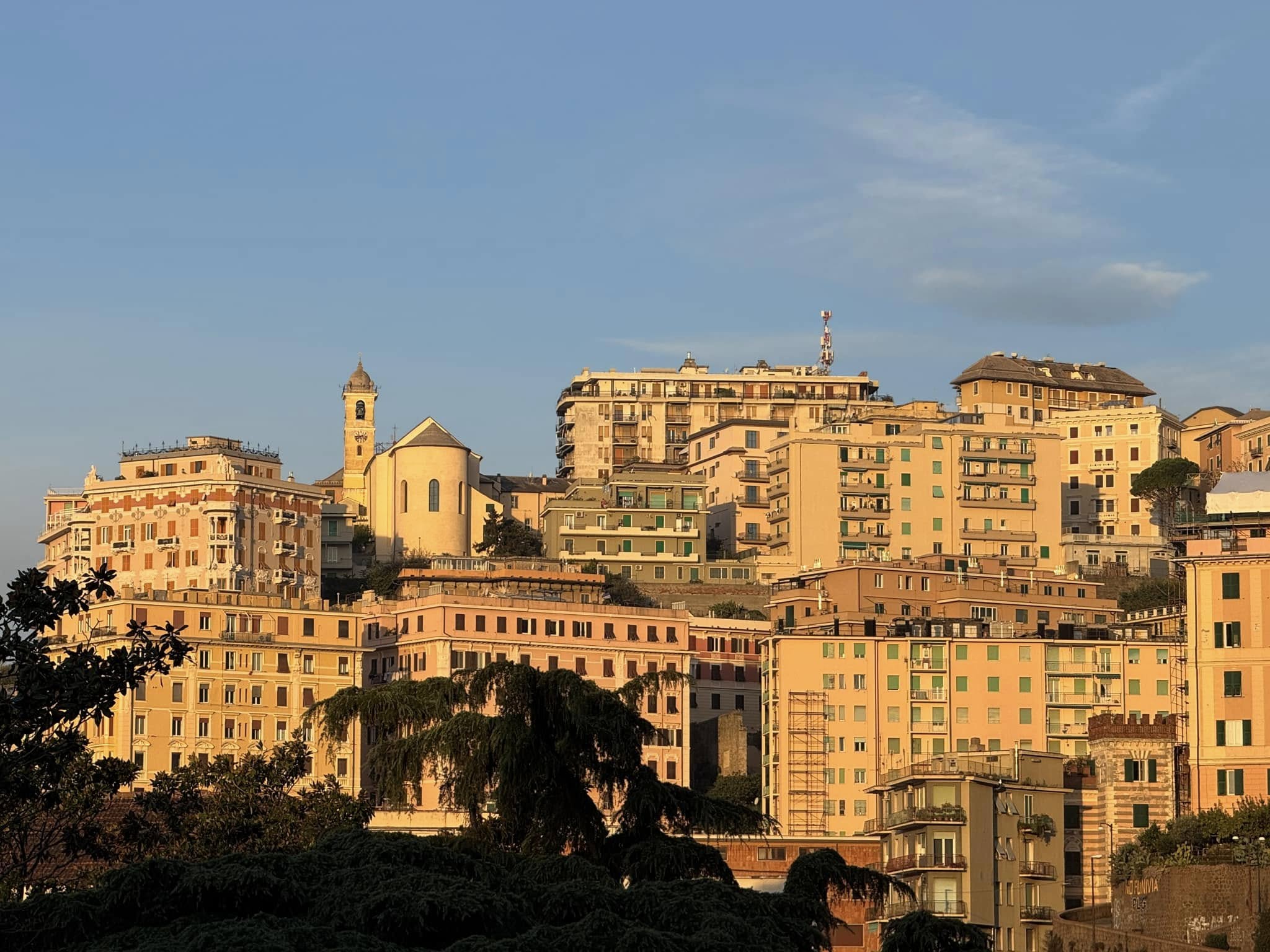
A beautiful view to wake up to our first morning; the golden light brings a glowing warmth to the buildings climbing up the hills of Genoa from the sea.
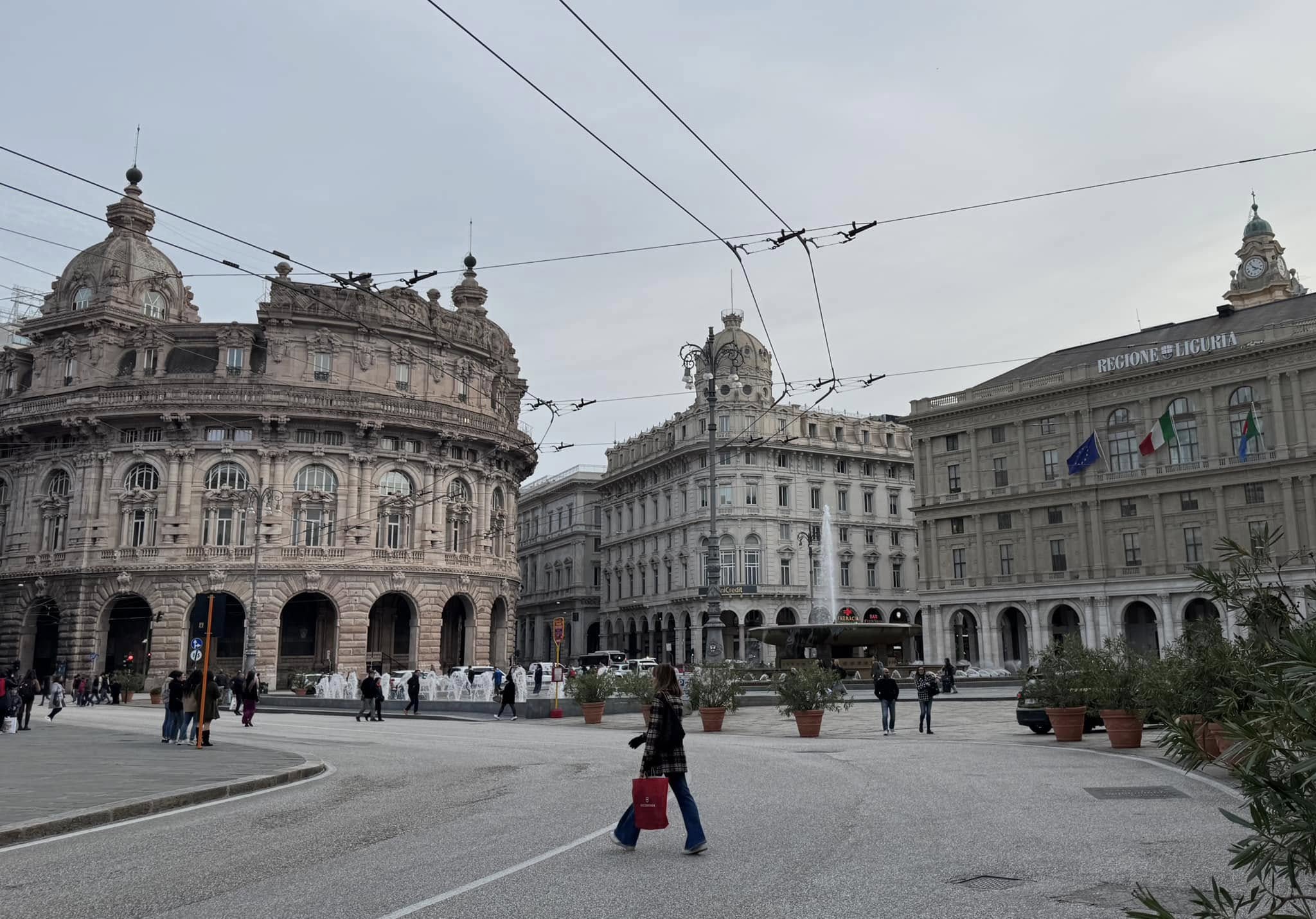
This is Genoa’s iconic main square, Piazza De Ferrari, centred around a huge fountain that looks a bit like a spaceship, much more modern than the neoclassical and baroque buildings that surround it. On the left is the Palazzo della Borsa, a 16th-century building that became the stock exchange. Genoa has a strong financial history and is considered to be the birthplace of modern banking, dating back to the 12th century...long before the Bank of New York was even a twinkle in the eye of Wall Street!
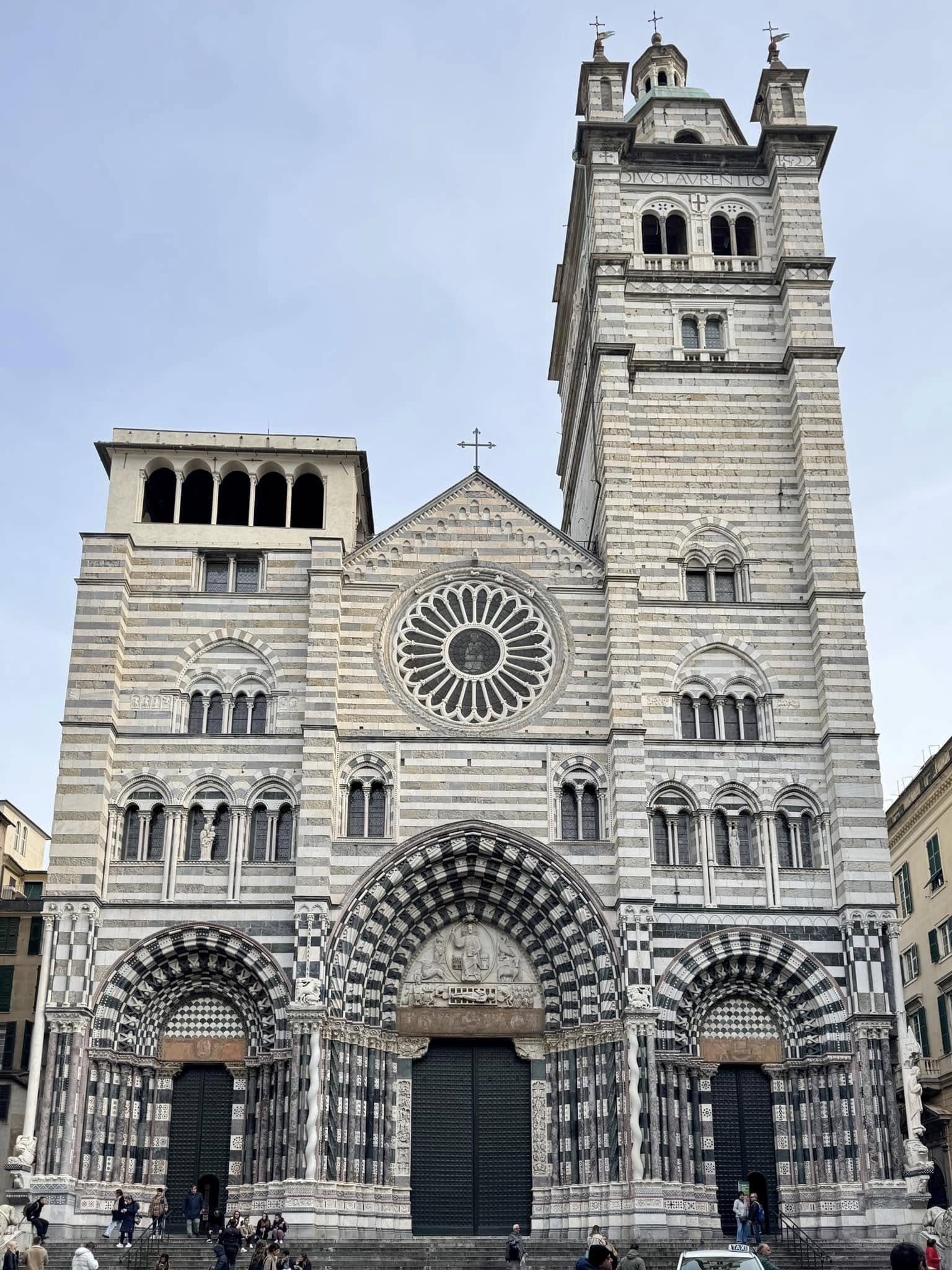
The stunning Cathedral of San Lorenzo’s striped façade reminds me of the cathedral in Siena…just on a smaller scale. Rumour has it that relics of the holy grail are in a crypt under here. There is no proof and I guess it’s best not to disturb the crypt and enjoy the benefits of the legend. The stonework around the doors is incredible and hides a special little surprise!
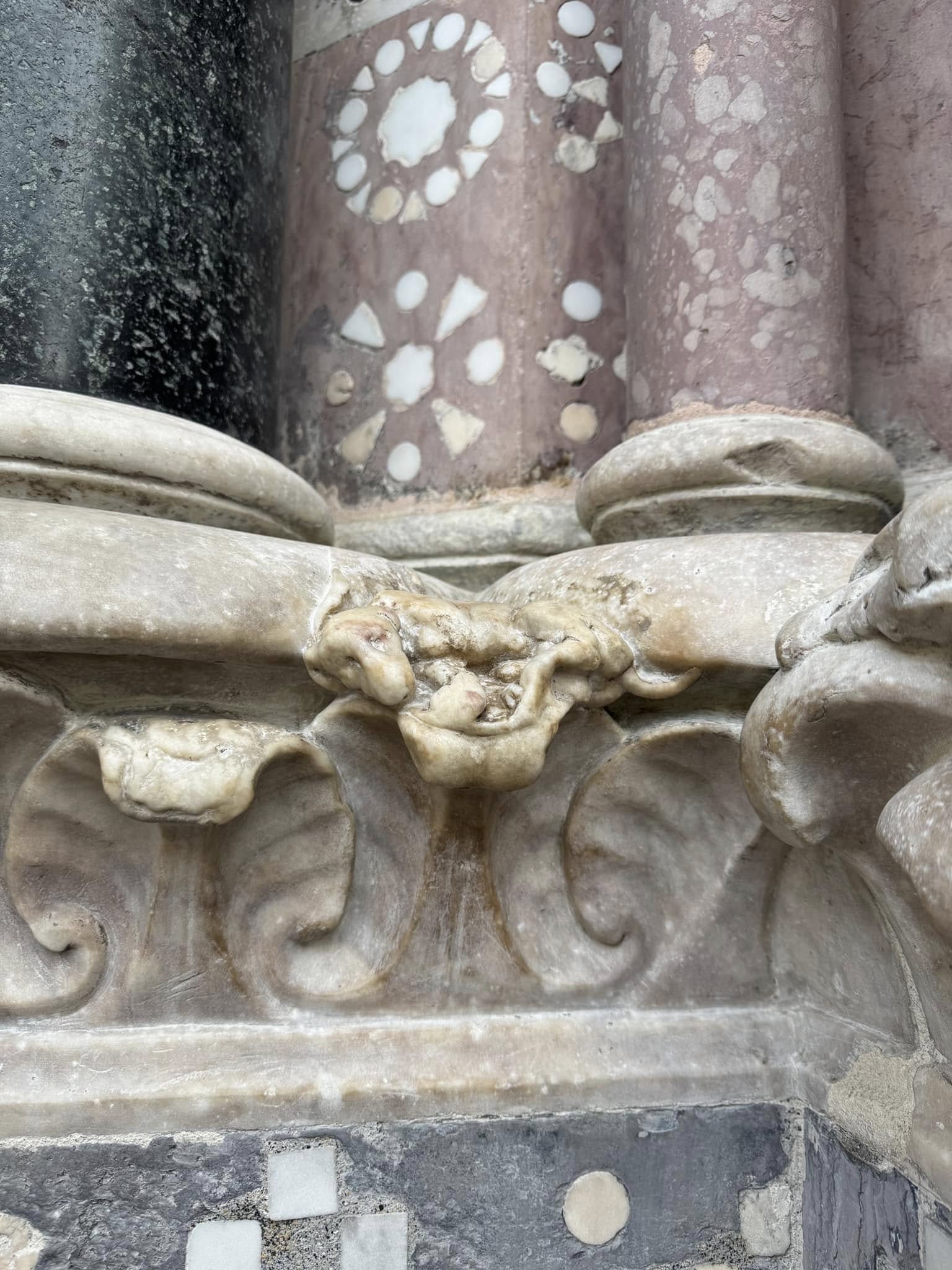
Just to the right of the entrance, a little dog has been carved into the marble of one of the columns. Legend has it that the dog hung around the cathedral as it was being built, spending its days with the sculptors. Near the cathedral’s completion, the dog disappeared and in its honour, the sculptors carved it into the column. It’s small and easy to miss; when you find it (because you are actively searching), it’s quite a reward!
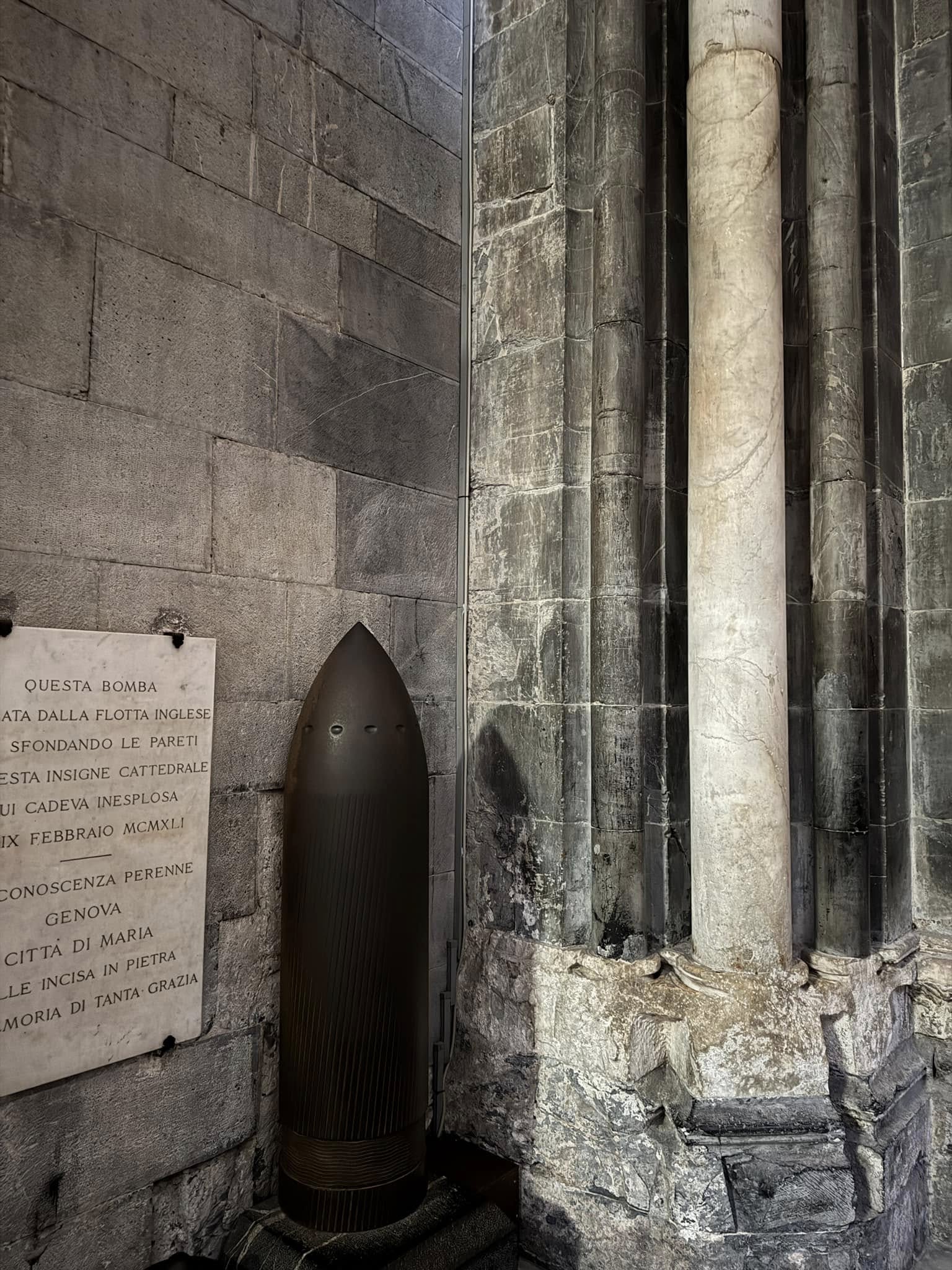
Centuries later, on February 9, 1941, this church seems to have had some divine protection. During WWII, the British launched a bomb which crashed through the roof of the cathedral but didn’t explode. It’s still here (defused) as a symbol of peace.
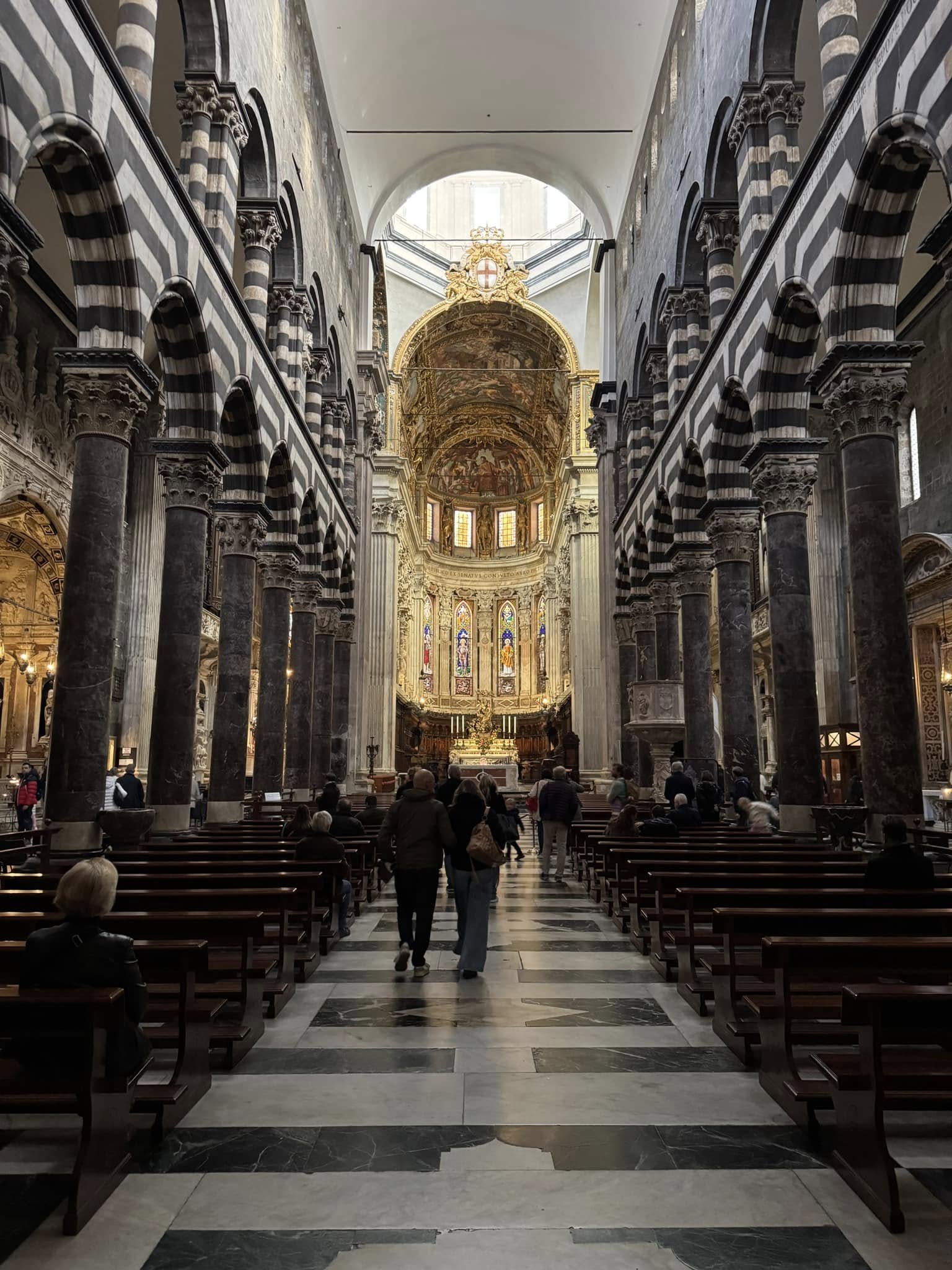
The black and white vibe continues inside the cathedral, accented with lots of gold.
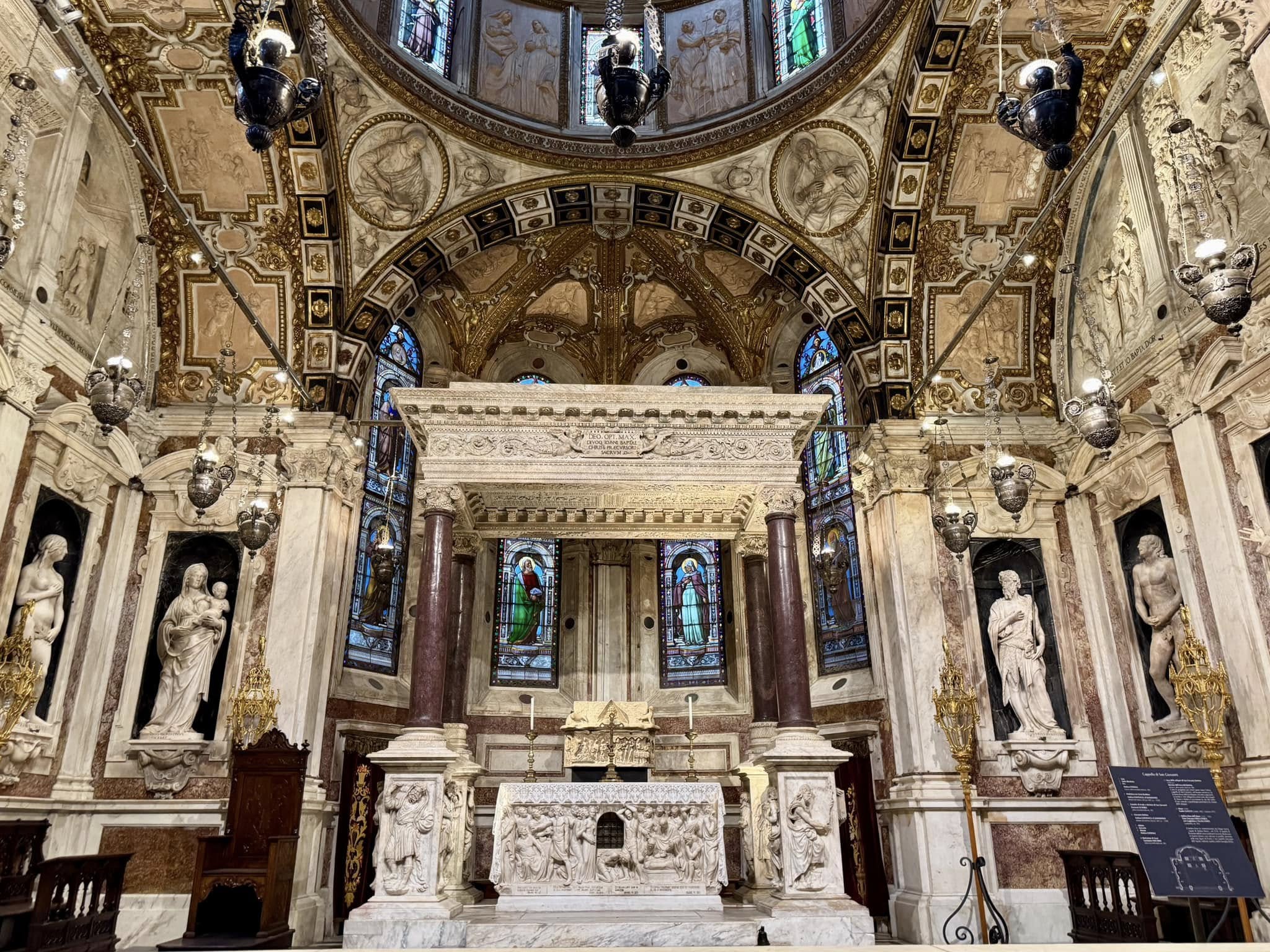
This is one of the big draws of the cathedral, the Chapel of St. John the Baptist. It sits, unassuming, off to the side with the other chapels, until some generous person drops 1€ into a slot and the lights come on. Frescoes, statues, stained glass and gold collide to make this a feast for the senses. This chapel was built to house the relics of St John the Baptist, but I thought we saw some of his parts in Turkey… I guess the First Crusaders who brought them here from the Middle East in 1098 left some behind. The relics are in an ornate silver casket and occasionally the public gets to see them. They are much more accessible than the shroud in Turin which only comes out for viewing once a decade. St John’s relics come out yearly on St John the Baptist Day (June 24, in case you want to book a ticket).
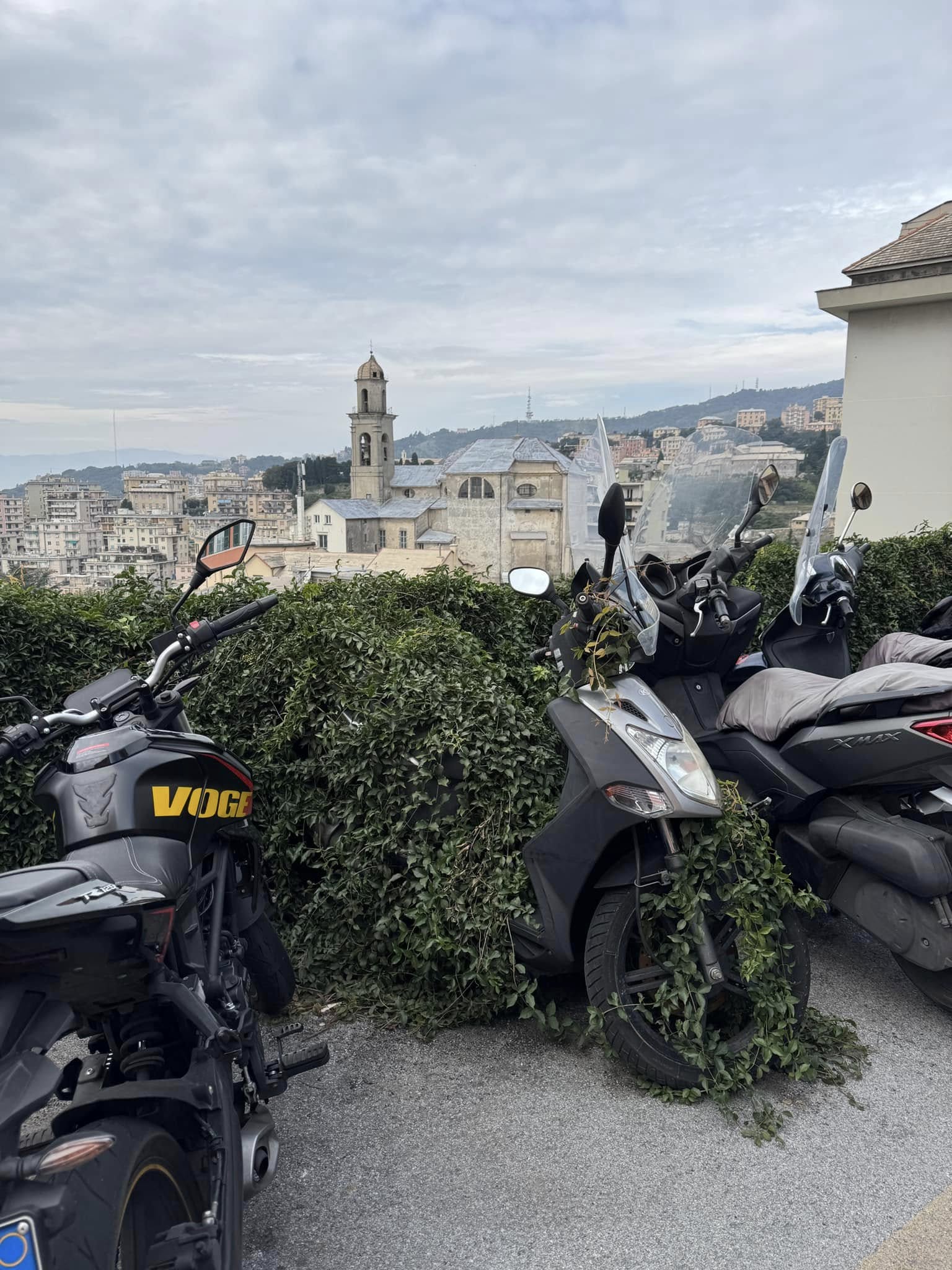
We hiked up a hill one morning in search of a coffee with a view. We found ourselves in a residential neighbourhood with nary a coffee shop to be found. Many of the homes were stunning villas with all the features of the palaces in the historical centre. It was a bit mind-boggling to think that regular (sort of) people live there behind those intricate wrought iron gates. This motorbike was not parked by one of those villas…clearly it’s been here a while. The sign on its windshield said “this vehicle is subject to police checks” and was dated August 13, 2024. I guess that’s when the police came to check it out…seems like a lot of growth for only three months of abandonment.
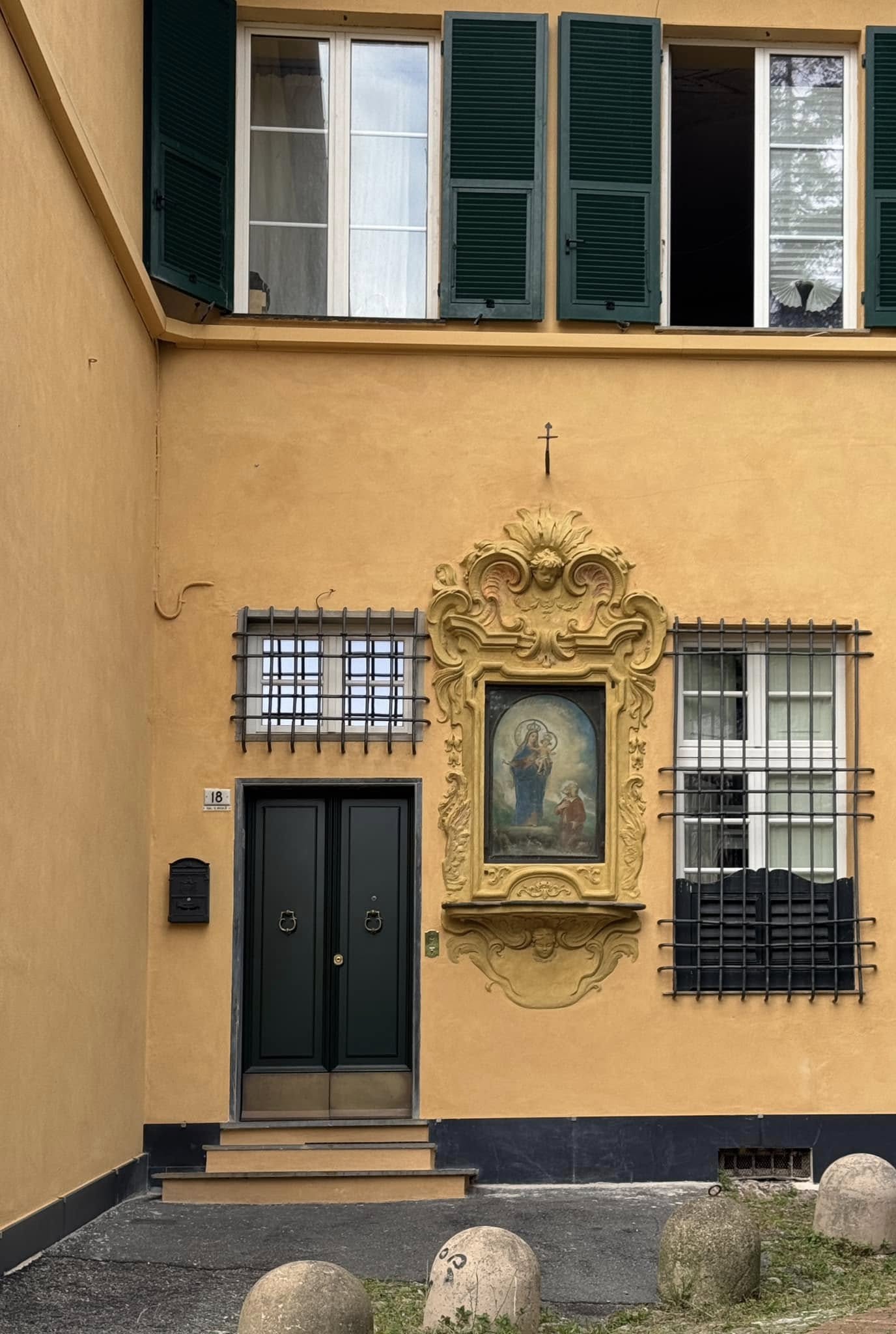
To all my friends who have had packages stolen from their front door, I think this shelf would be a perfect delivery spot. Imagine the bad karma for the thief who steals from under the watchful gaze of the Madonna and Child.
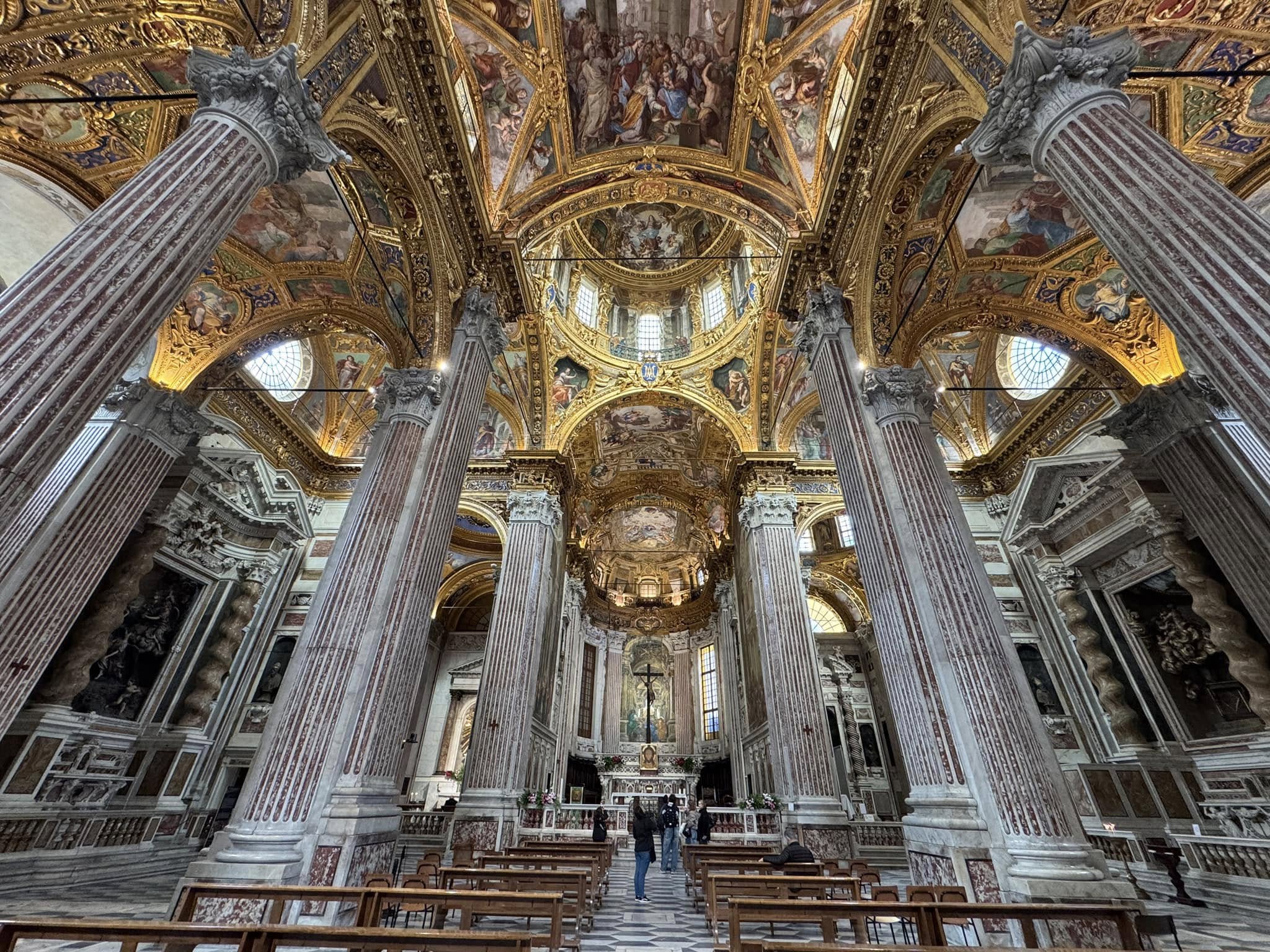
The Basilica della Santissima Annunziata del Vastato is Mecca for Baroque art enthusiasts. Marble, gold, intricate stuccos and frescoes abound on the walls and ceilings in here, oozing with the wealth of the 17th century; you just don’t know where to look first!
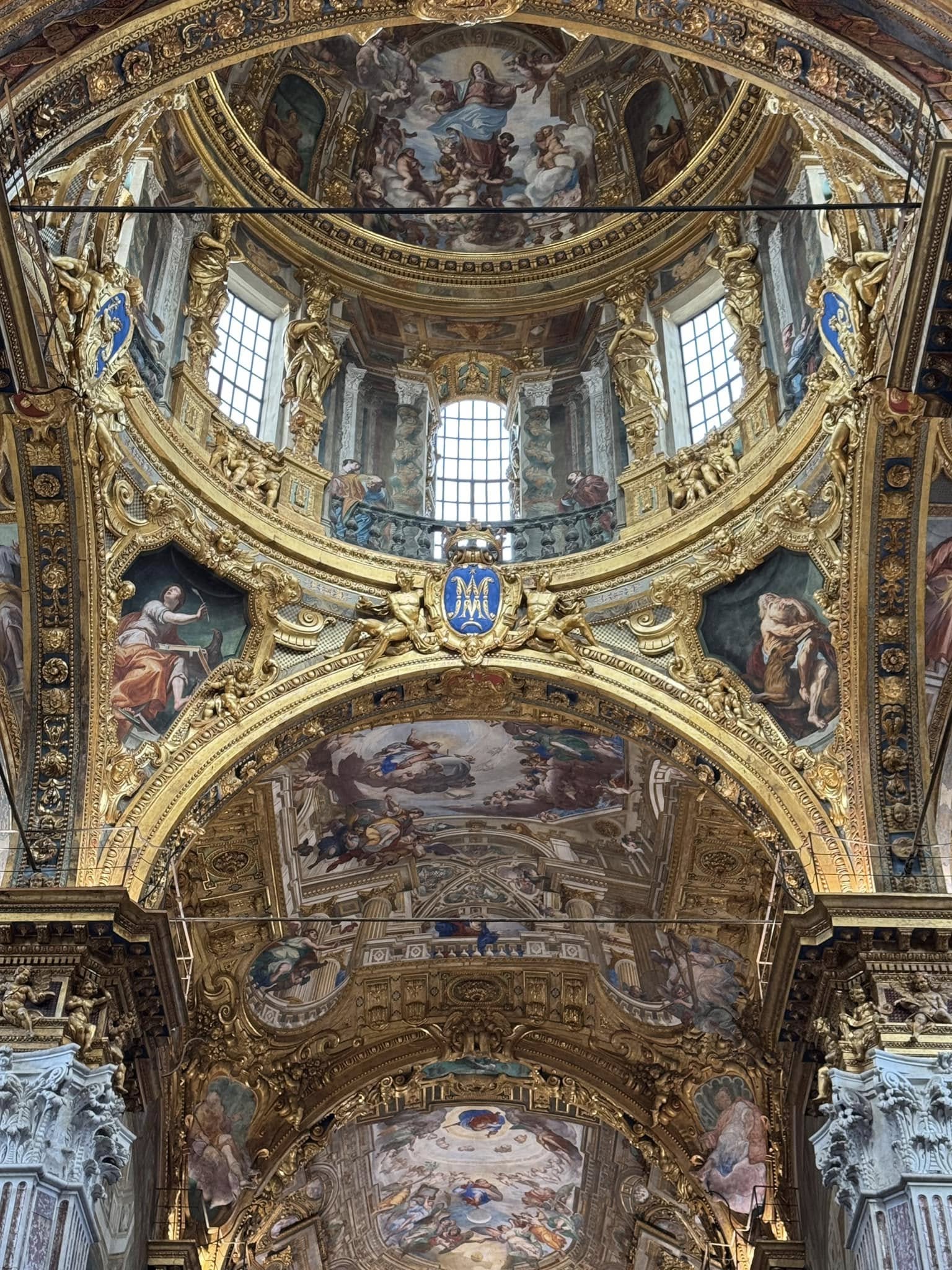
The artwork in here is unbelievable. I discovered a few new (to me) techniques called chiaroscuro (contrast between light and shadow) and foreshortening that give figures a three-dimensional quality. We spent a lot of time looking way up from down below to try to figure it out. We thought it was plaster applied to the artwork to make objects like the foot in the mid-right section and the cloak draped over the railing to the left of the centre window look like they are actually sticking out from the wall. A lot of big Genoese baroque names contributed to the painting of the magical dome, people I’m not familiar with but if you’re an Italian Baroque fan, you’d be excited to hear the main artists were Giovanni Battista Carlone and Domenico Piola.
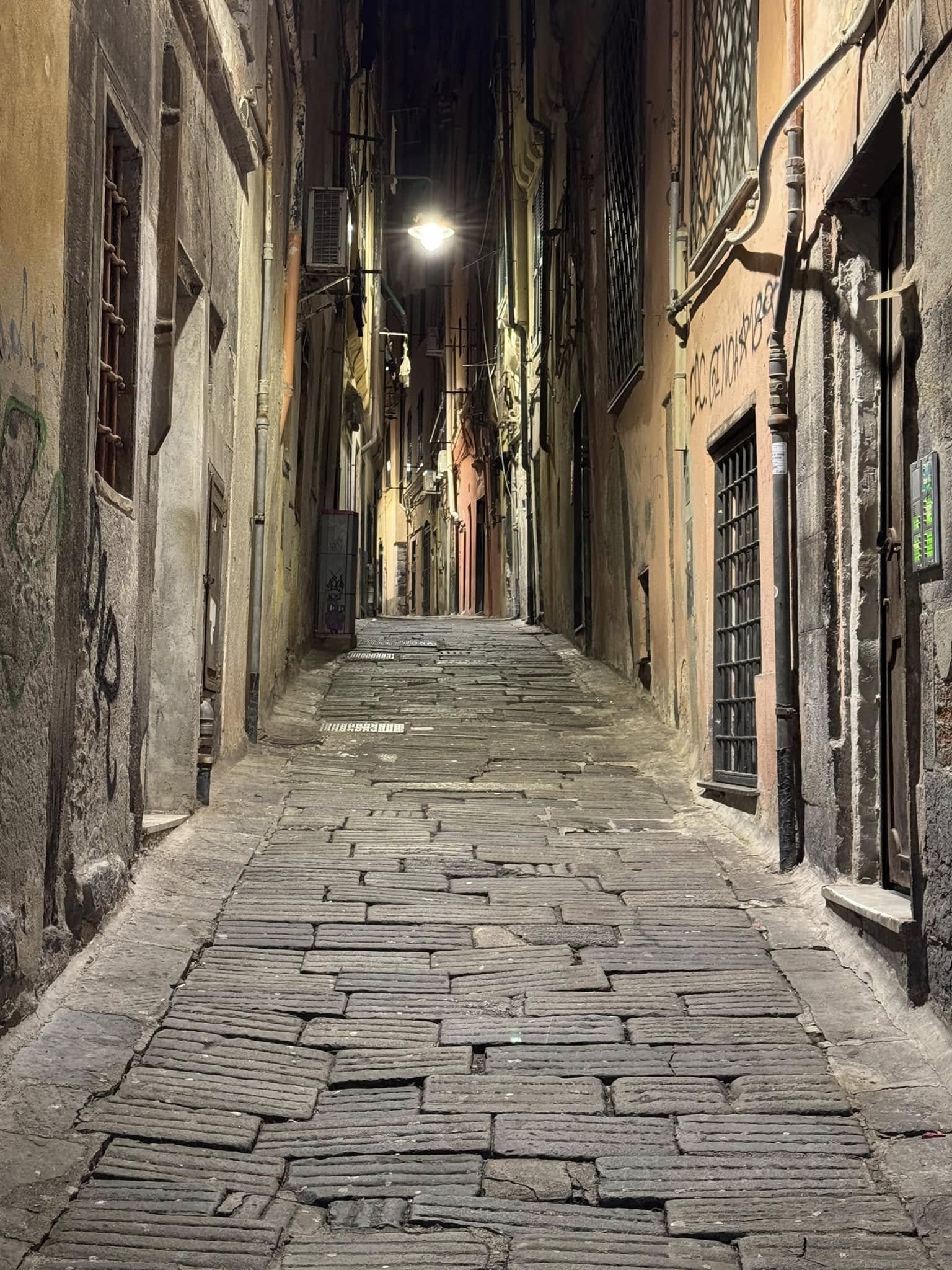
Genoa’s historic centre is a labyrinth of narrow, winding alleyways called caruggi. They were designed to manage the amount of space between the buildings. An added benefit was providing shade during the hot, Mediterranean summers, not to mention protection from marauding pirates during Genoa’s maritime heyday.
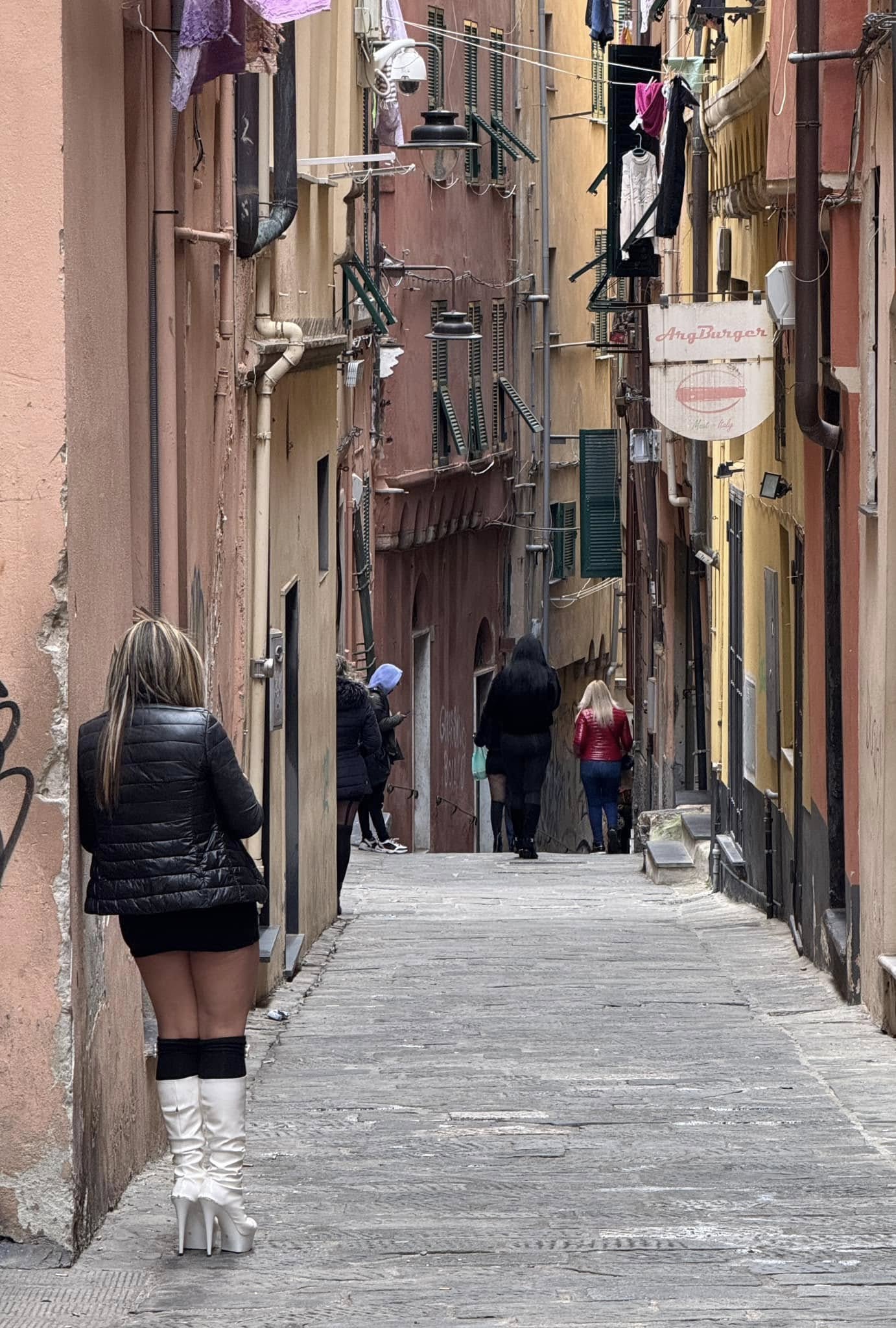
This one is not so narrow…perhaps to accommodate the extra foot traffic the local population may attract.
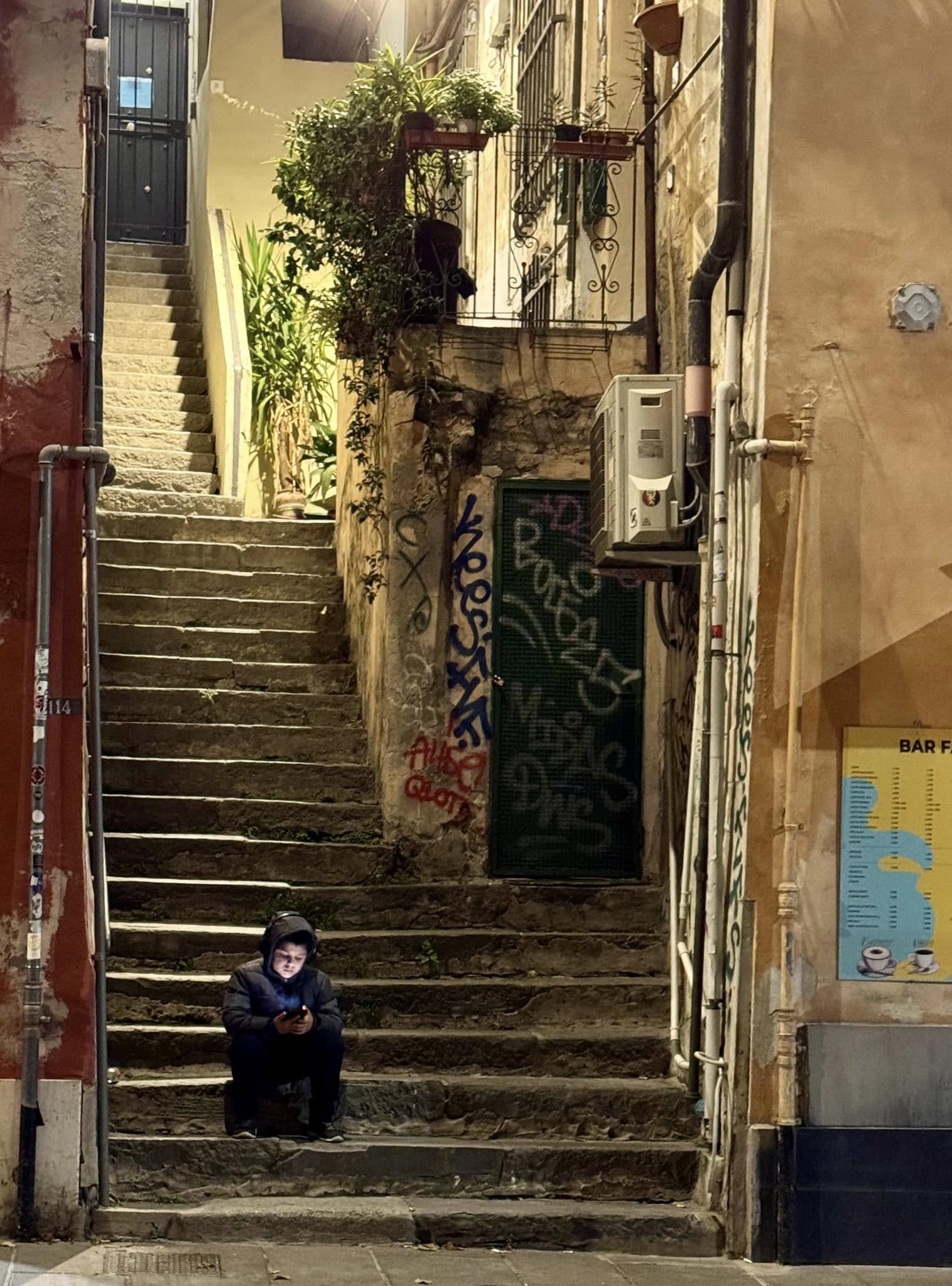
One does wonder what this kid is doing at 10:30pm, all alone on a deserted staircase…and the parents are where? Probably starting dinner.
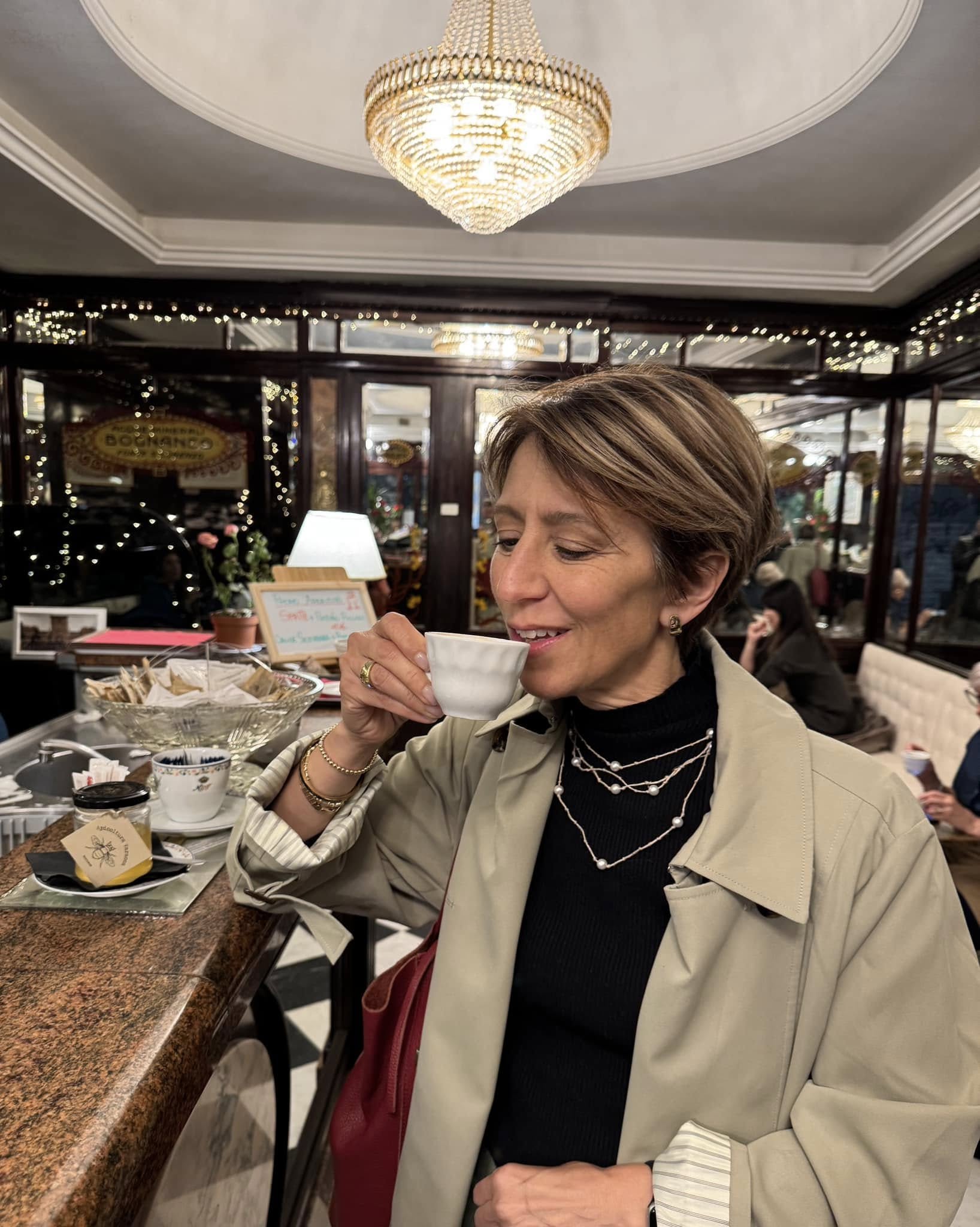
I’ve developed an afternoon macchiato habit.
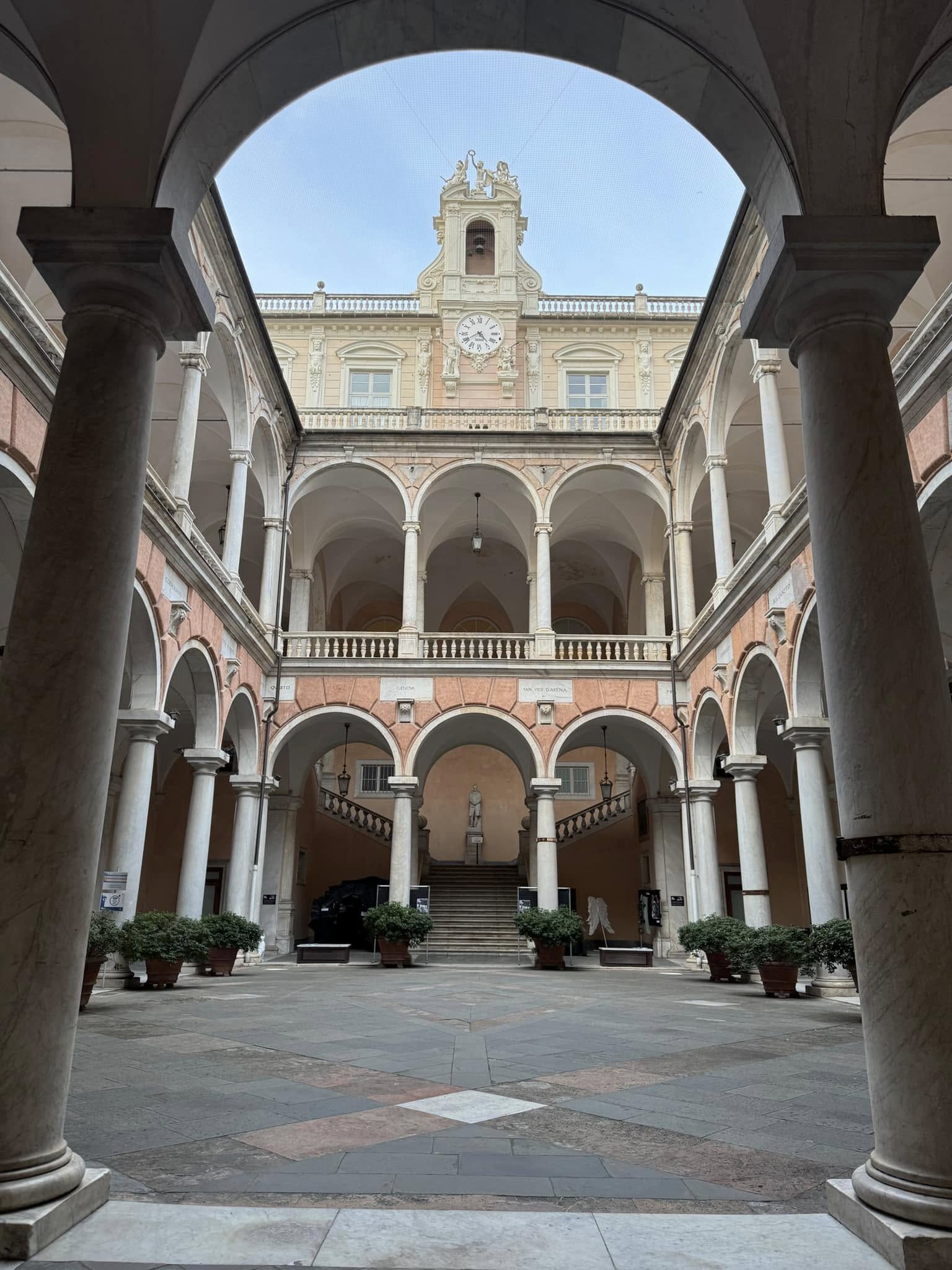
The elegant Palazzo Tursi was built for the wealthy banker Niccolò Grimaldi in 1565. There was quite a crowd of well-dressed people milling about in front of the palace’s open gate. To us, that was an invitation to see what was going on! On the beautiful main floor there was a fun art exhibit using mirrors for selfies. Can you see the big angel wings facing a mirror in the back corner on the right?
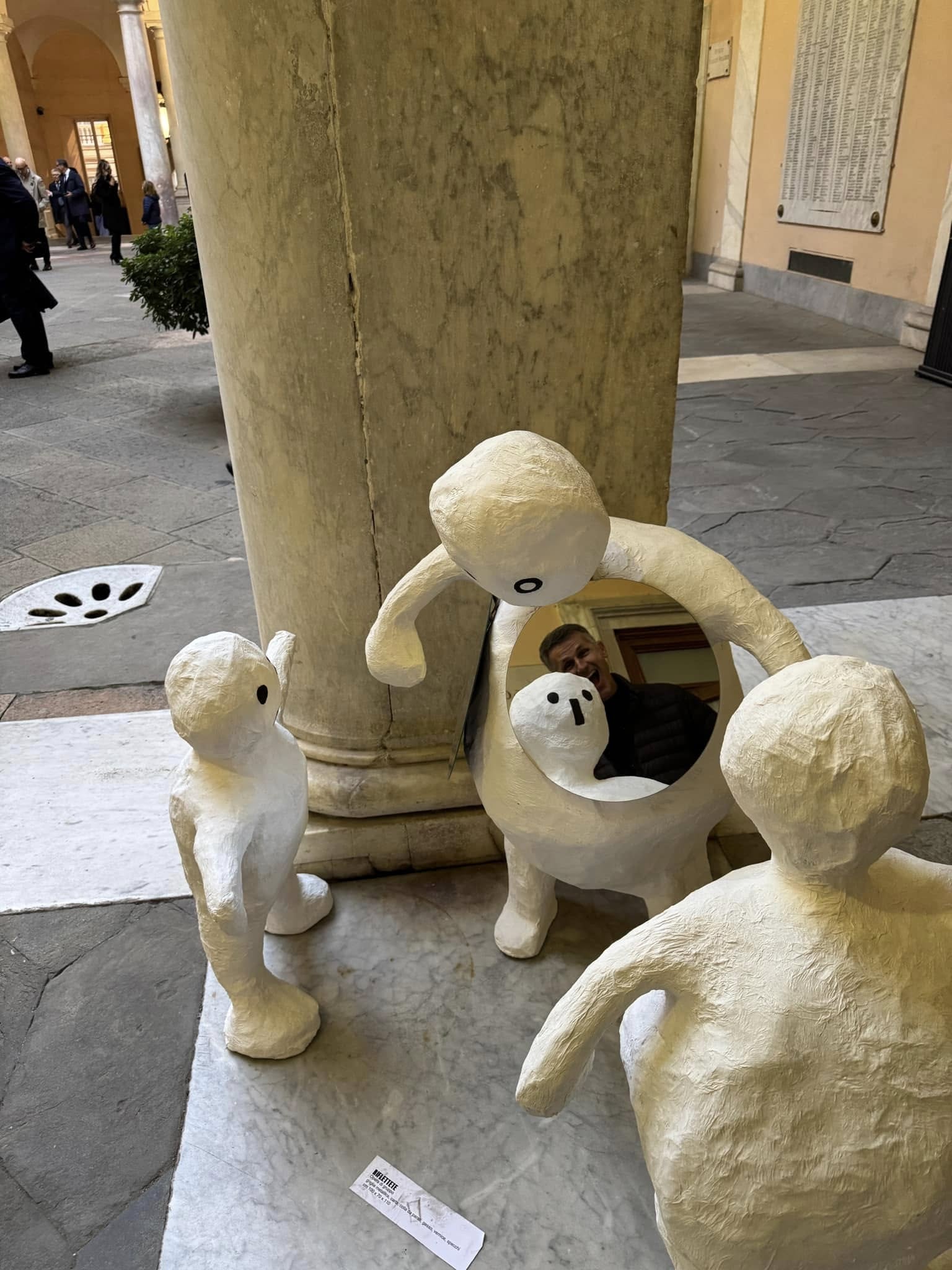
Here’s another installation where Adam got in on the action!
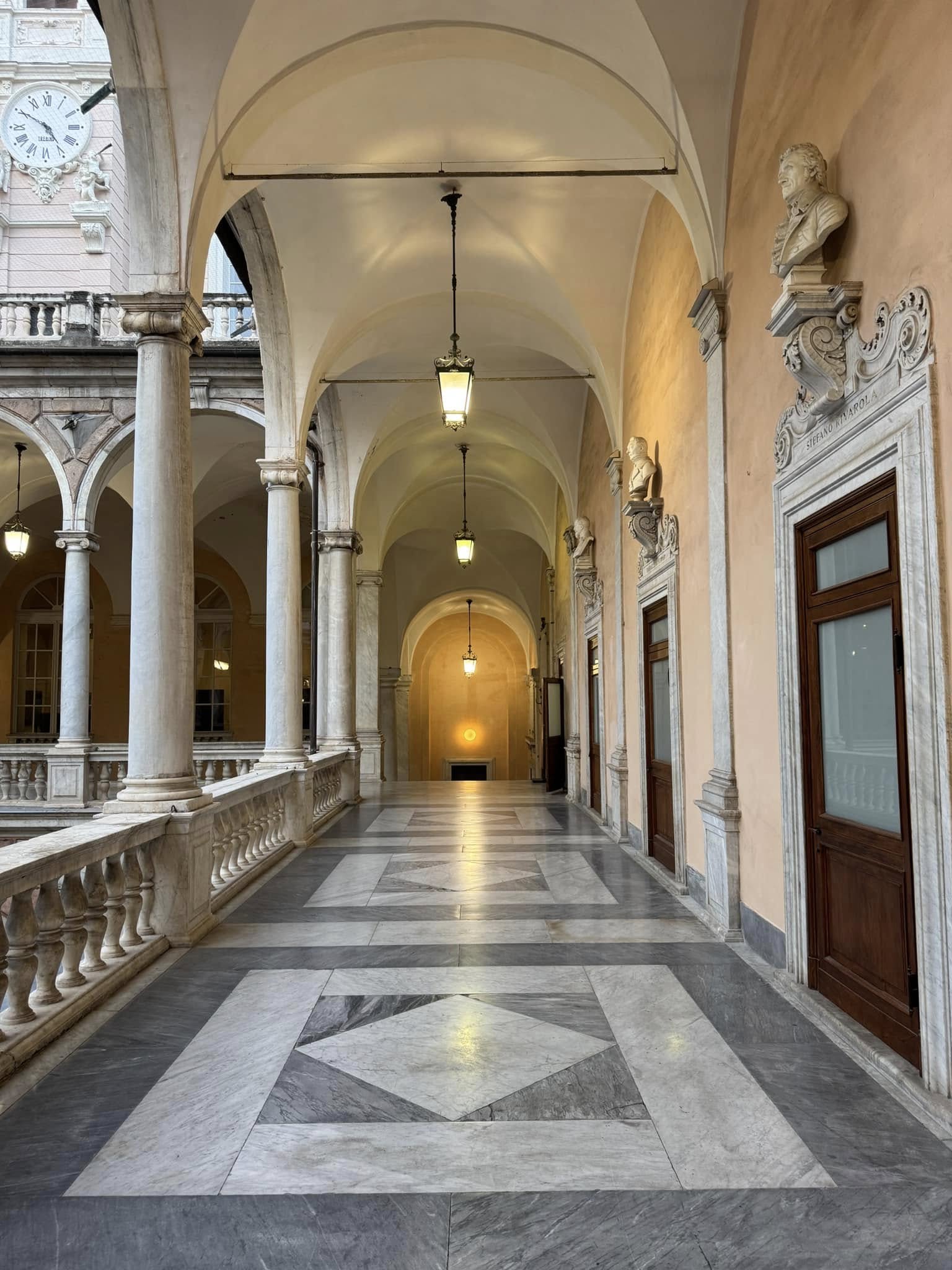
In the palaces’ heyday of the 16th and 17th centuries, the wealthy Genoese inhabitants were required by the government to house visiting dignitaries. Palazzo Tursi was one of the palaces lucky important people were invited to stay in. I must say, I did wonder what they did with all those empty rooms…
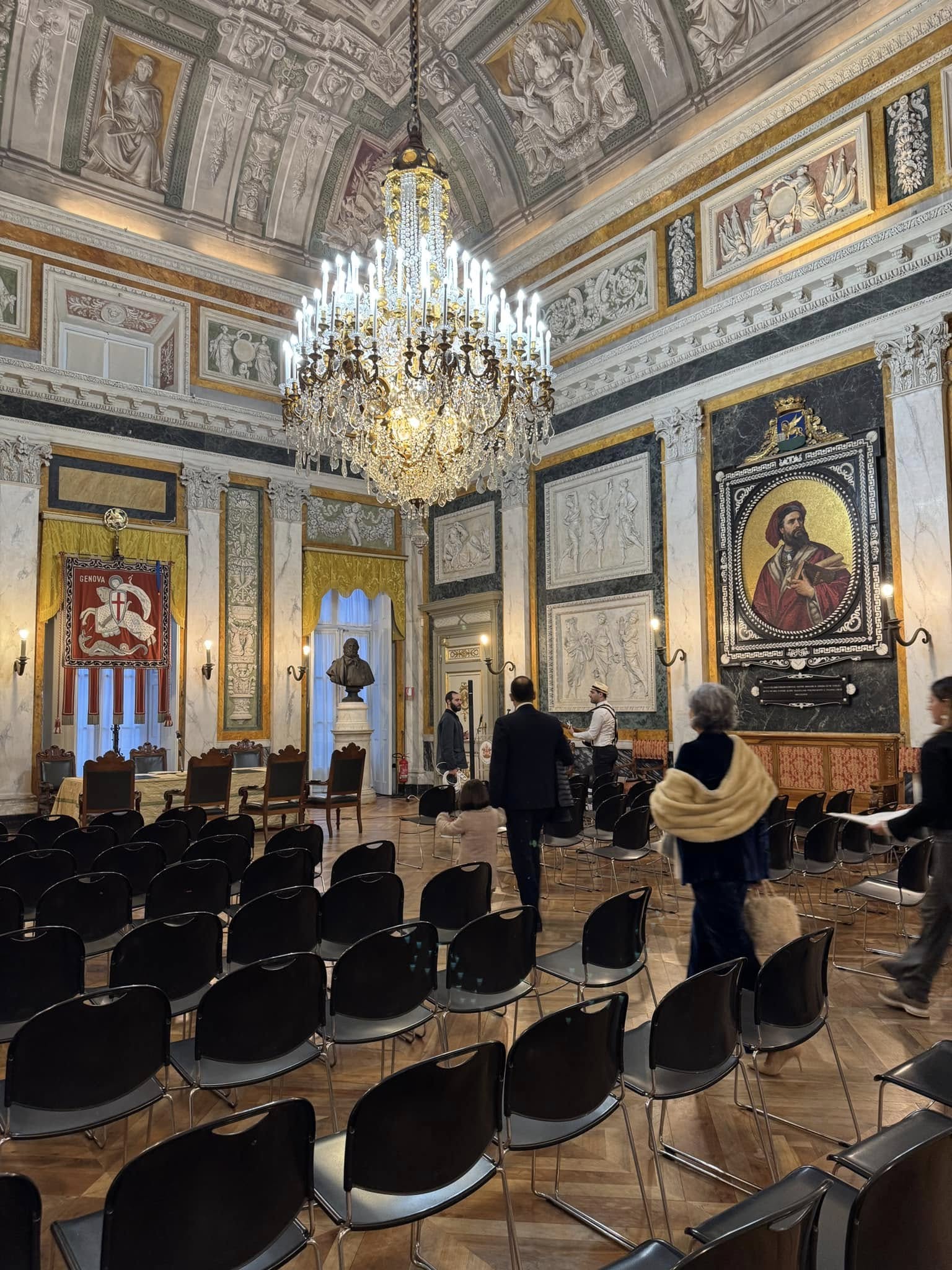
So, when we went upstairs where there were more well-dressed people, we realized what was going on. It was a procession of weddings in the very fancy Ceremonial Room. This palace was once the Town Hall and this room is where the City Council met. Now, wedding ceremonies cycle through here on the hour, under the watchful gaze of Christopher Columbus and Marco Polo.
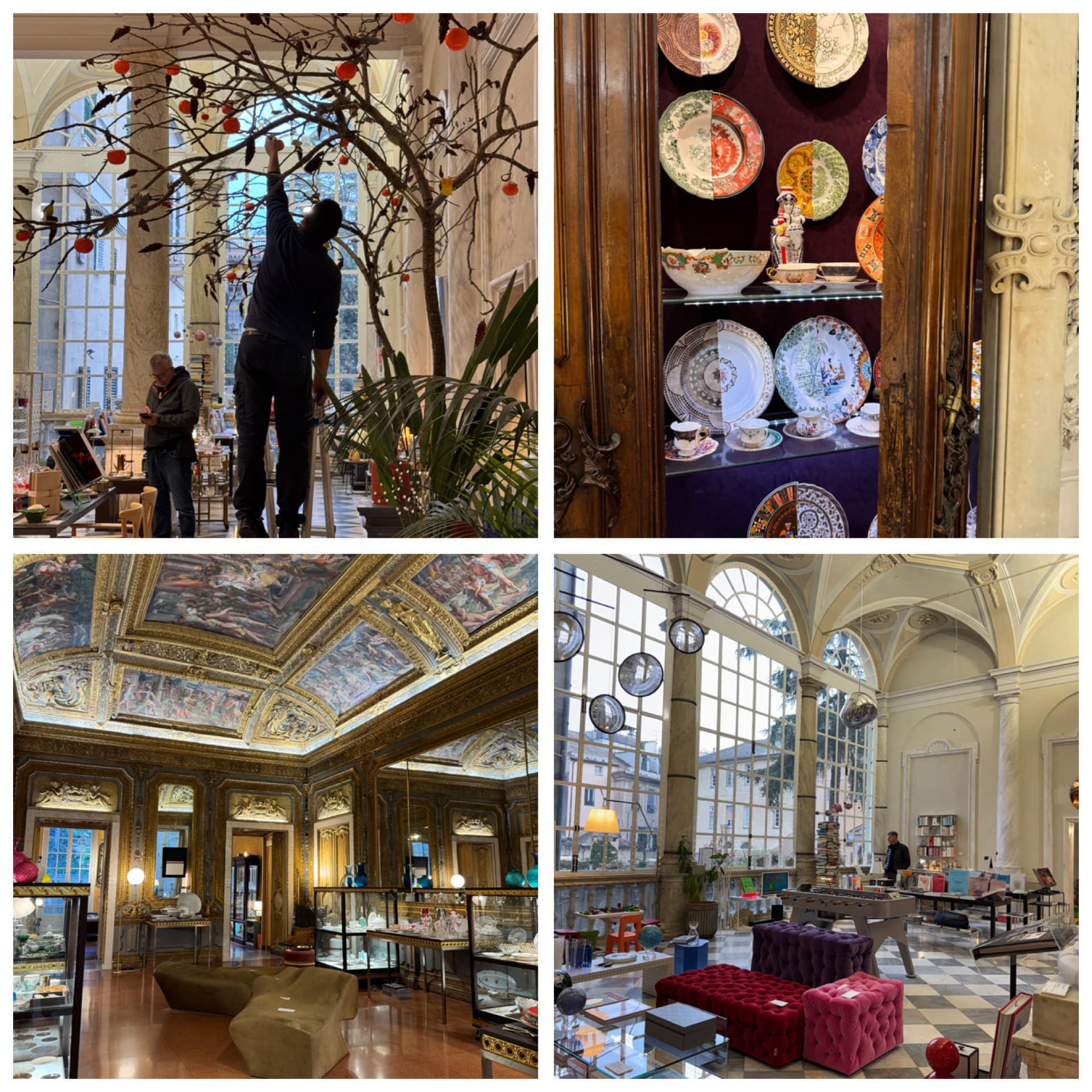
The old palaces around the city are deftly used in modern ways. The UNESCO World Heritage Palazzo Campanella was built in 1560 and is now home to the most fabulous design and home decor store. Contemporary furniture and objects shine in this beautiful historic space.
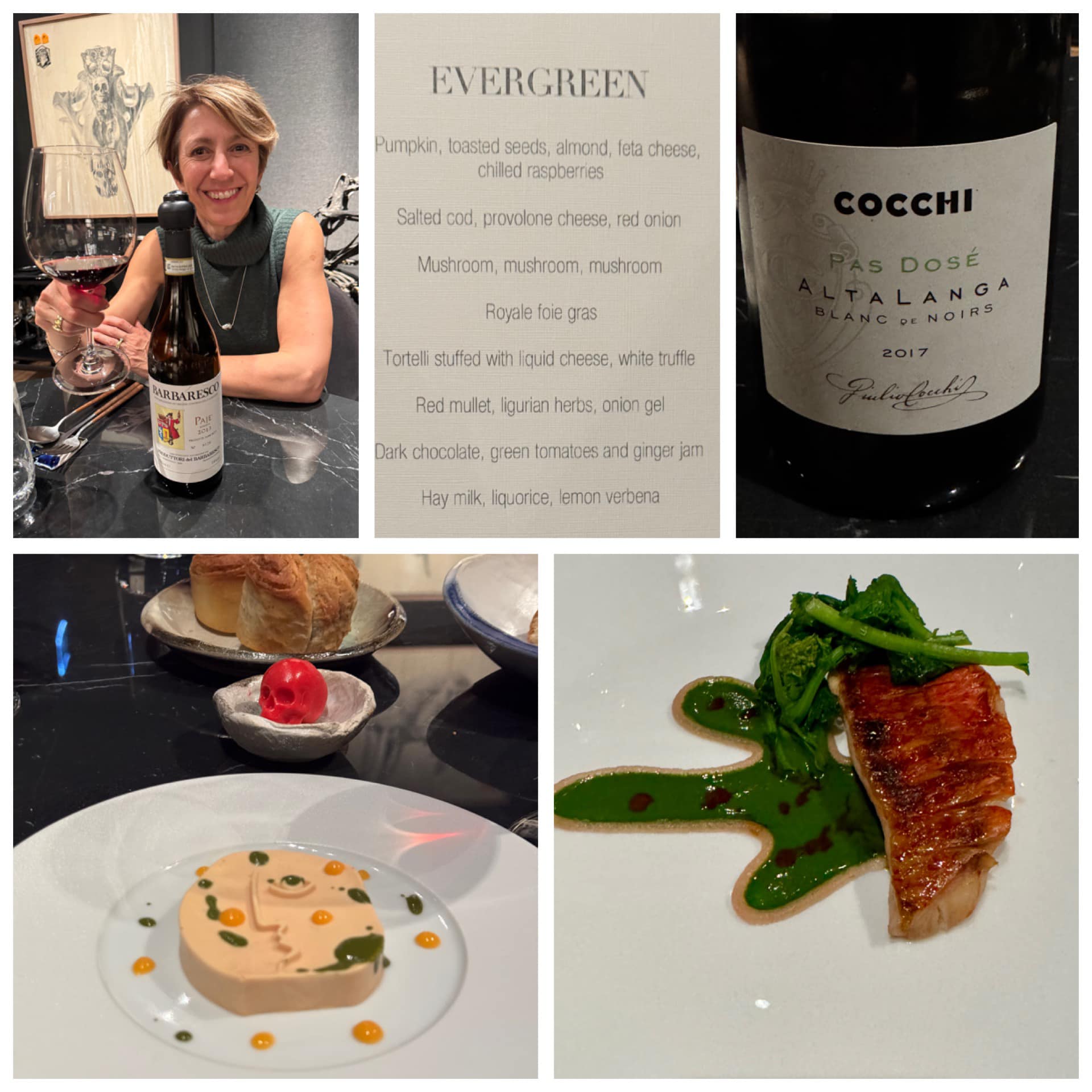
My birthday dinner ranked among the top food experiences I’ve ever had! Etra is a bit hard to find as it is located inside a historic building near the Piazza De Ferrari. The main entrance to the building is guarded by military personnel with guns because also inside this building is the Turkish embassy. No matter, it’s a destination and those seeking it out will find it. It’s a very small room painted black that doubles as an art gallery (but just for the dining patrons) that changes twice a year. The two serving staff (dressed in red to complement the black room) and three chefs deliver an exceptional experience. Evergreen was the tasting menu we chose. I only took two photos of the food, partly because I felt self-conscious and Instagrammy and partly because I was fully into the experience. They knew it was my birthday so they gifted us a beautiful sparkling wine from Alta Langa (where we just were in Piemonte), a 2017 white Pinot Noir. We decided not to do the wine pairing and chose a spectacular 2013 Barbaresco. The first plating that I captured is the foie gras with a Picasso-esque face (the Campari butter in the shape of a skull paired beautifully with foie gras and the bread that was like a cross between a baguette and a croissant). Next is the red mullet with the onion gel bordering the Ligurian herb coulis. I must add that the tortelli with white truffle was the best truffle we’ve had the whole trip! Michelin star to come, I’m sure; the old style star, not the new ones we are getting in Canada that makes you wonder why Michelin sold its soul to tourist boards who pay them to come and check out their restaurants for star potential.