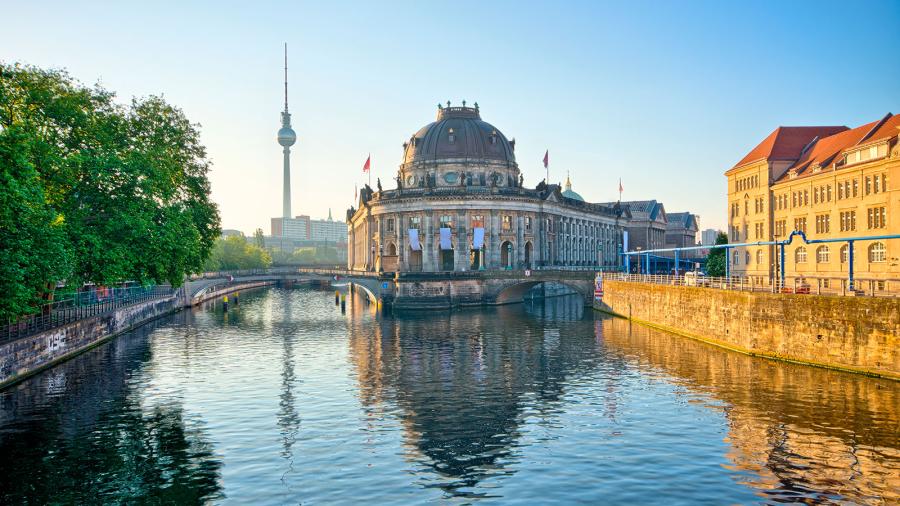
May, 2022
Big and Bustling Berlin
We certainly had a bit of size shock here. As the fifth largest city in Europe, Berlin felt enormous after nine weeks of mostly tiny to small towns. And after nine weeks, we were definitely in “chill” mode so we spent our time roaming around neighbourhoods and exploring the many memorials to the Holocaust and the Berlin wall. I appreciate the position Berlin (and Germany in general) has embraced as a reckoning with its sordid history. We can’t move forward if we don’t accept the past. The last time I was here was on MBA exchange in 1991, a scant two years after the wall came down. At the time, the psychological and cultural divide between the former east and west was palpable even to an outsider. There was resentment from both sides. I’m happy to see that the city now feels very much like one city with lots of neighbourhoods brimming with their own personalities. However, understanding the scary place this city had to navigate out of since the 1930s, I can’t help but be saddened by the many countries in the world heading down a similar, destructive path. How can the powers that be open this door again?
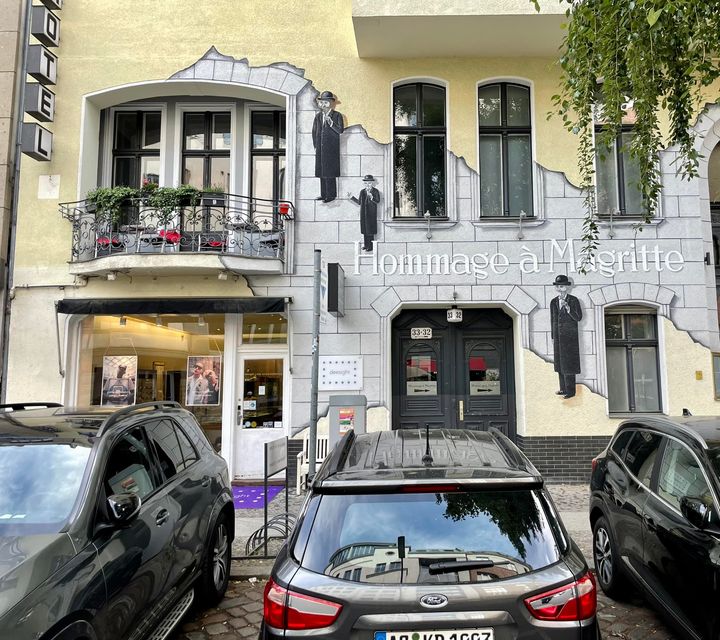
Ceci est un hôtel…
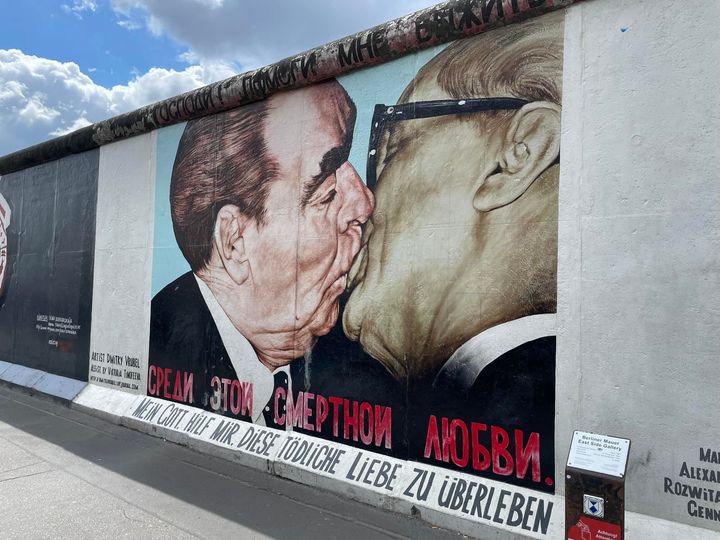
Many of these works became iconic and world-renowned. “The Mortal Kiss” by Dmitri Vrubel, showing Erich Honecker and Leonid Brezhnev deep in a passionate kiss.
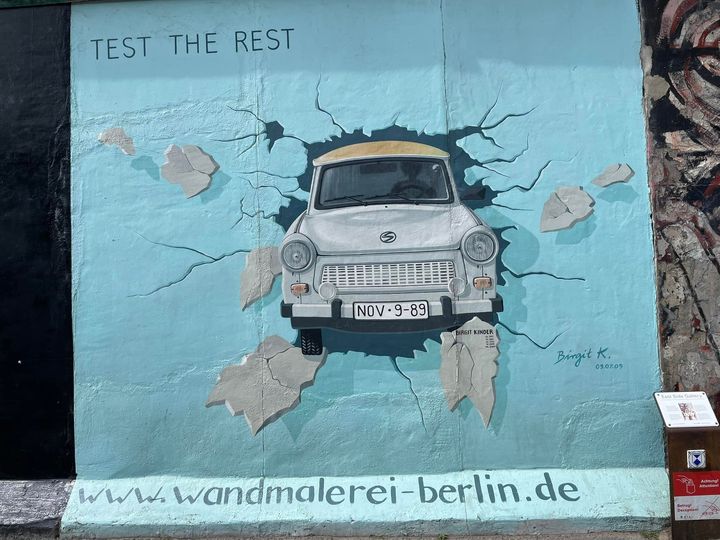
Birgit Kinder's Trabant crashing through the Wall.
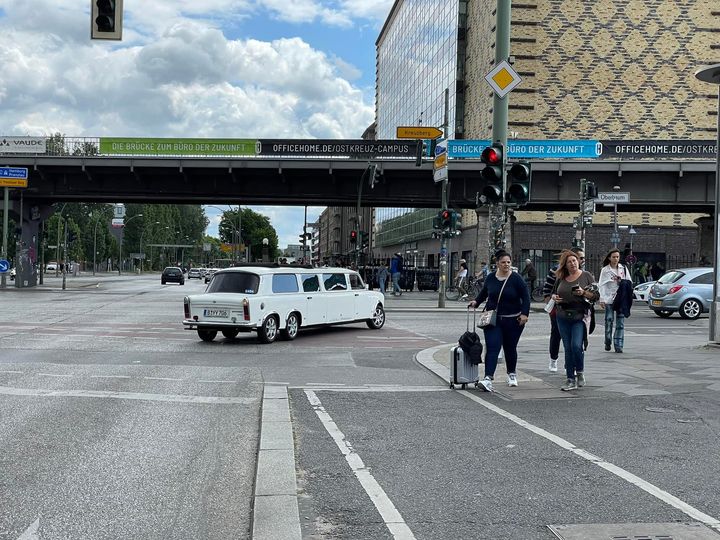
Funnily enough, this stretch Trabant drove by us at the Gallery.
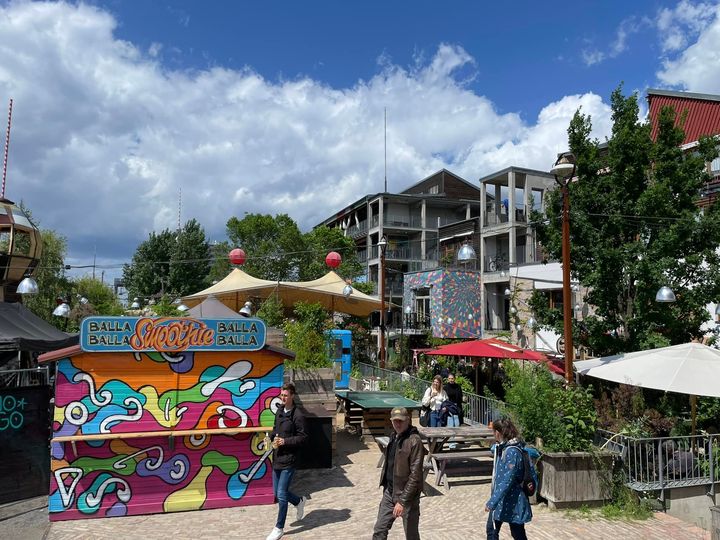
Holzmarkt is a very cool, hippyish community in the middle of the big and bustling city. Sitting on the bank of the Spree River, this little enclave is home to artists, organic gardeners and like-minded people who want to live and play together. Restaurants, food stalls, a theatre and fabulous street art make this a place of festivals (they were setting up for a music festival while we were there) and a spot to experience a very different side of Berlin. A handful of people came up with the idea literally on the dance floor of a club that was in that very spot. They worked to get funding to buy the land and spent four years building their community.
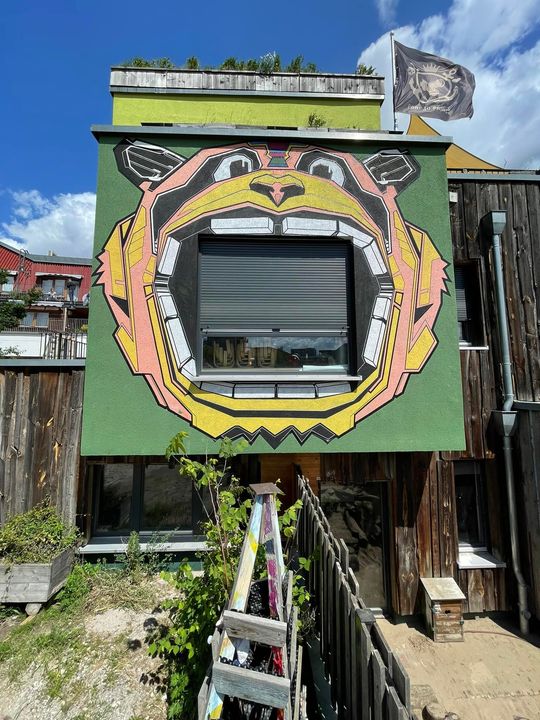
Open wide!
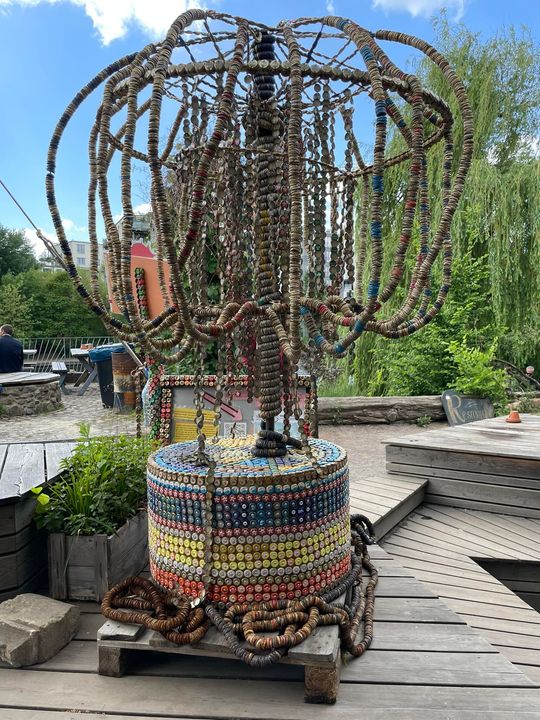
There’s a very strong green/recycling vibe here. This is an aesthetic creation made from trash. Meet “Kronk”, made from way too many bottle caps that never made it to recycling.
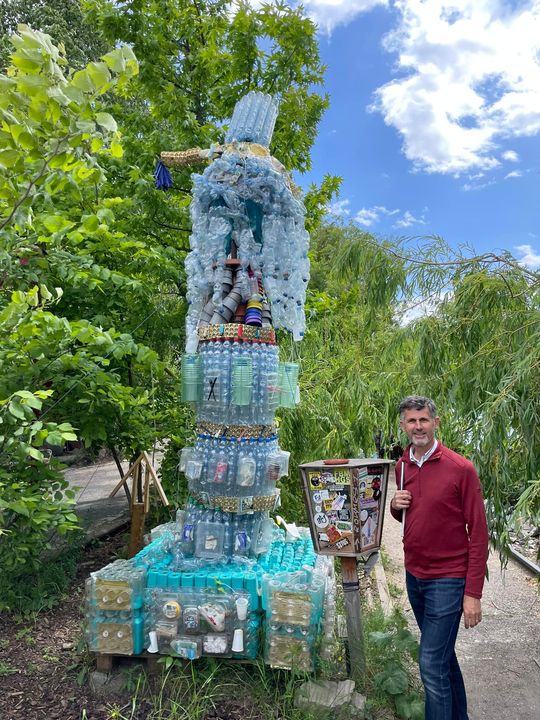
And this big single use plastic fella…
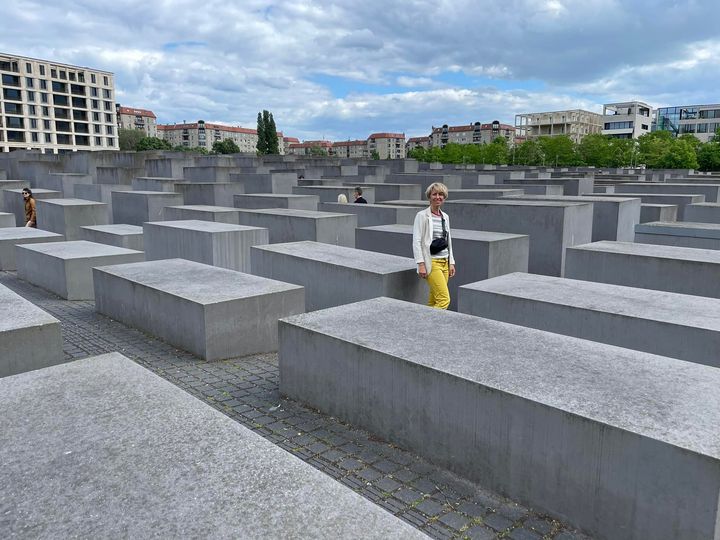
The Memorial to the Murdered Jews of Europe (2005) is a sobering site made up of 2,711 concrete slabs (54 rows by 87 rows), none of which are identical, symbolizing the individuality of every Jewish person murdered by the Nazis. New York architect Peter Eisenman won the design competition and created an unusual 19,000 square metre memorial. It has no beginning, middle nor end and is a place to be present and to reflect. As you walk through it, the ground is wavy and on a slope to destabilize you. The concrete slabs at one end start low and get taller as you move through the channels, ultimately towering over your head and then shrink down again. It was intended to create an uneasy atmosphere with a nod to the orderly Nazi system.
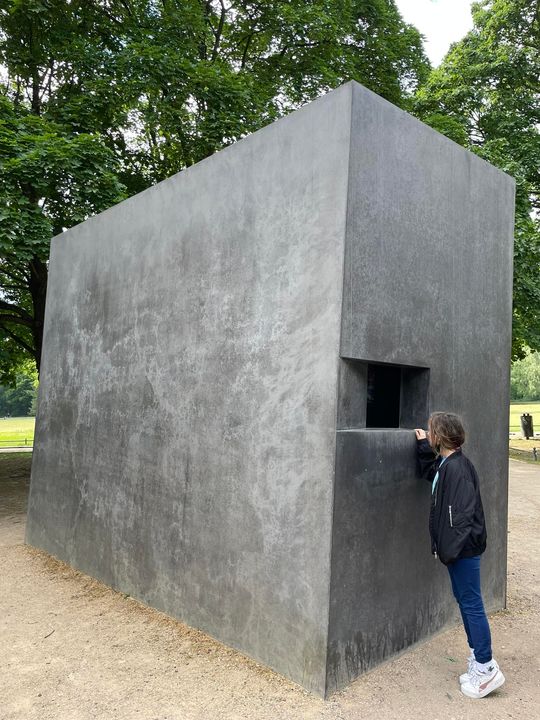
The Memorial to Homosexuals Persecuted Under Nazism (2008) was designed by artists Michael Elmgreen and Ingar Dragset. In Nazi Germany, homosexuality was a crime, with a simple kiss being sufficient grounds to prosecute. There were more than 50,000 convictions resulting in prison sentences and even castration. Gay men were seen to be more threatening than women who were largely left alone with thousands of men being sent to concentration camps where many died of starvation, disease, abuse or targeted killings. The gay community was not recognized in any public commemorations with the anti-gay section in the criminal code remaining in force until 1969 when it was reformed (ie, decriminalized). It wasn’t repealed fully until 1994. The memorial is quite poignant. It is a closed concrete cuboid with a small window opening into a chamber with a video on endless loop. Closed and closeted, still hidden from open view.
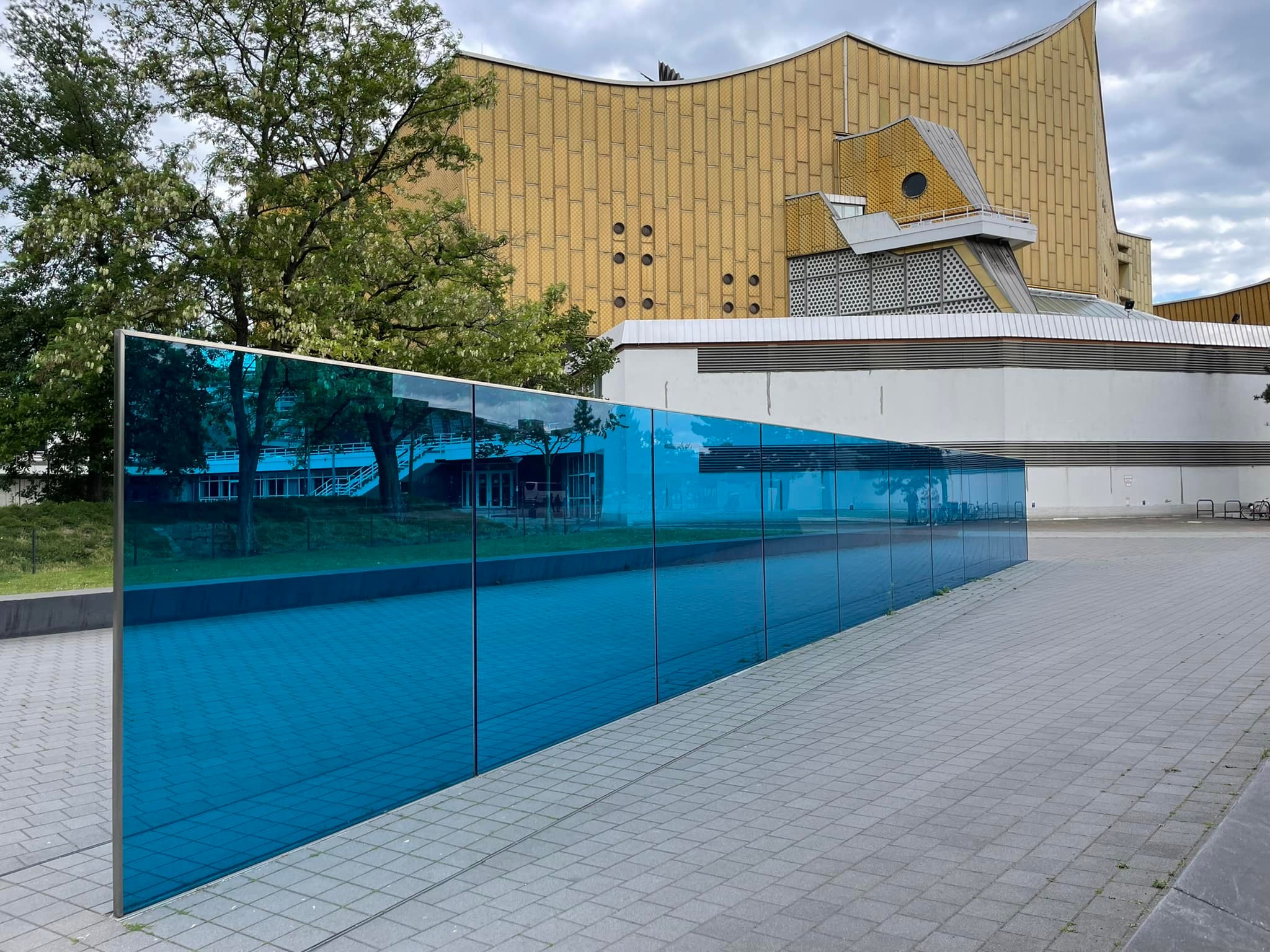
The Nazis also went after the physically and mentally disabled who they deemed inadequate. From 1939-1941 they organized a murder campaign called Aktion T4, a nod to the location at Tiergartenstrasse 4 where they organized the campaign. They killed about 95,000 institutionalized patients before the program was shut down in 1941. The complicit nurses and doctors went on to kill another 90,000 after the program ended. This is the T4 Memorial for the Victims of the Nazi Euthanasia Program. The 24 metre blue glass wall is meant to stand out against the grey concrete ground and evoke the sky. The use of glass symbolizes how even though one is visible, how easily it is to exclude them.
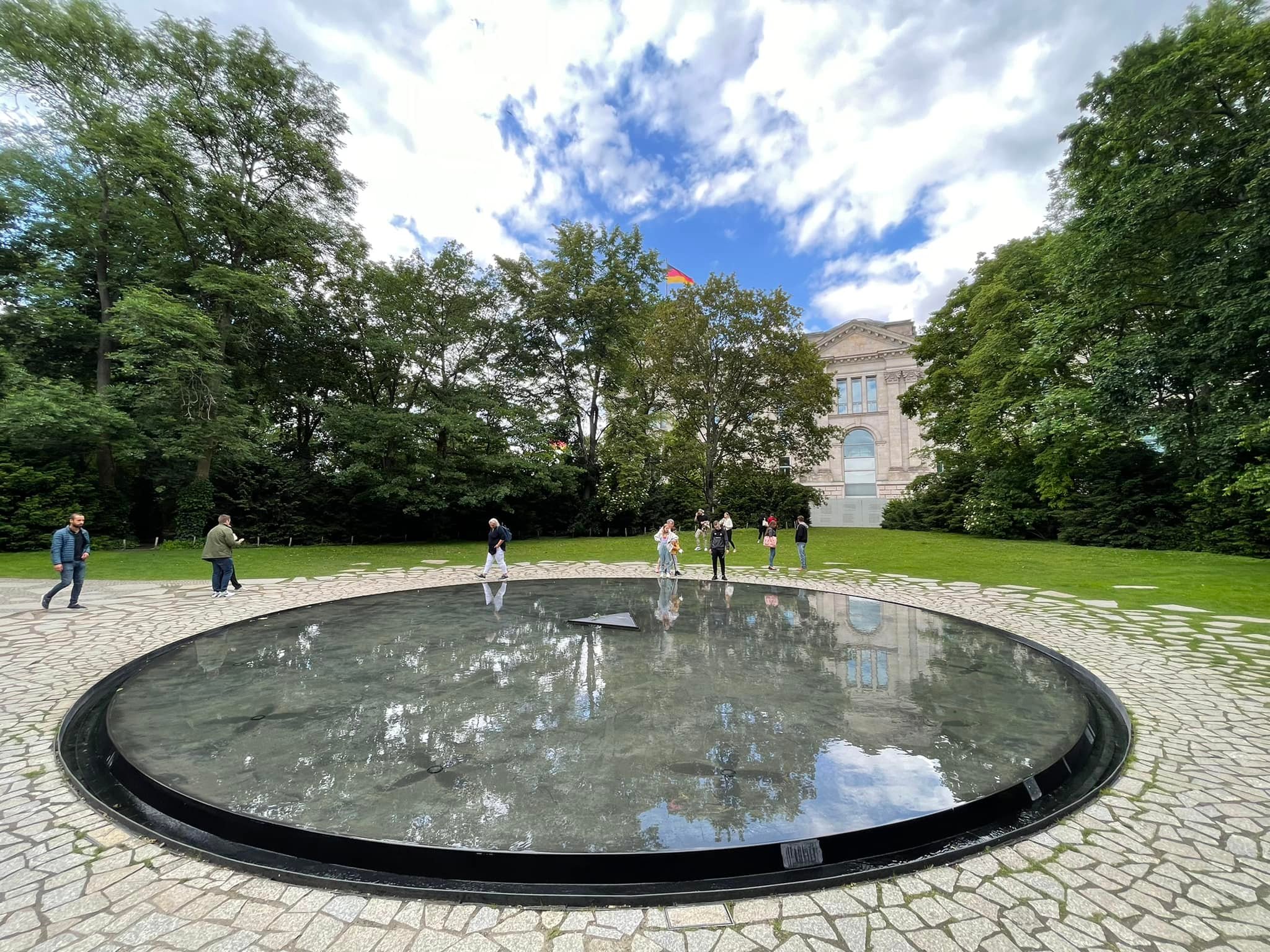
The Memorial to the Sinti and Roma Victims of National Socialism (2012) was designed by the Israeli artist Dani Karavan. The murdered Roma and Sinti numbered between 220,000-500,000. The triangular stone in the round reflecting pool symbolizes the black triangle they were forced to wear on their prison uniforms. The stone is retractable and a fresh flower is placed on it every day. Around the perimeter is a poem called “Auschwitz” by the Roma poet Santino Spinelli: Gaunt face dead eyes cold lips quiet a broken heart out of breath without words no tears
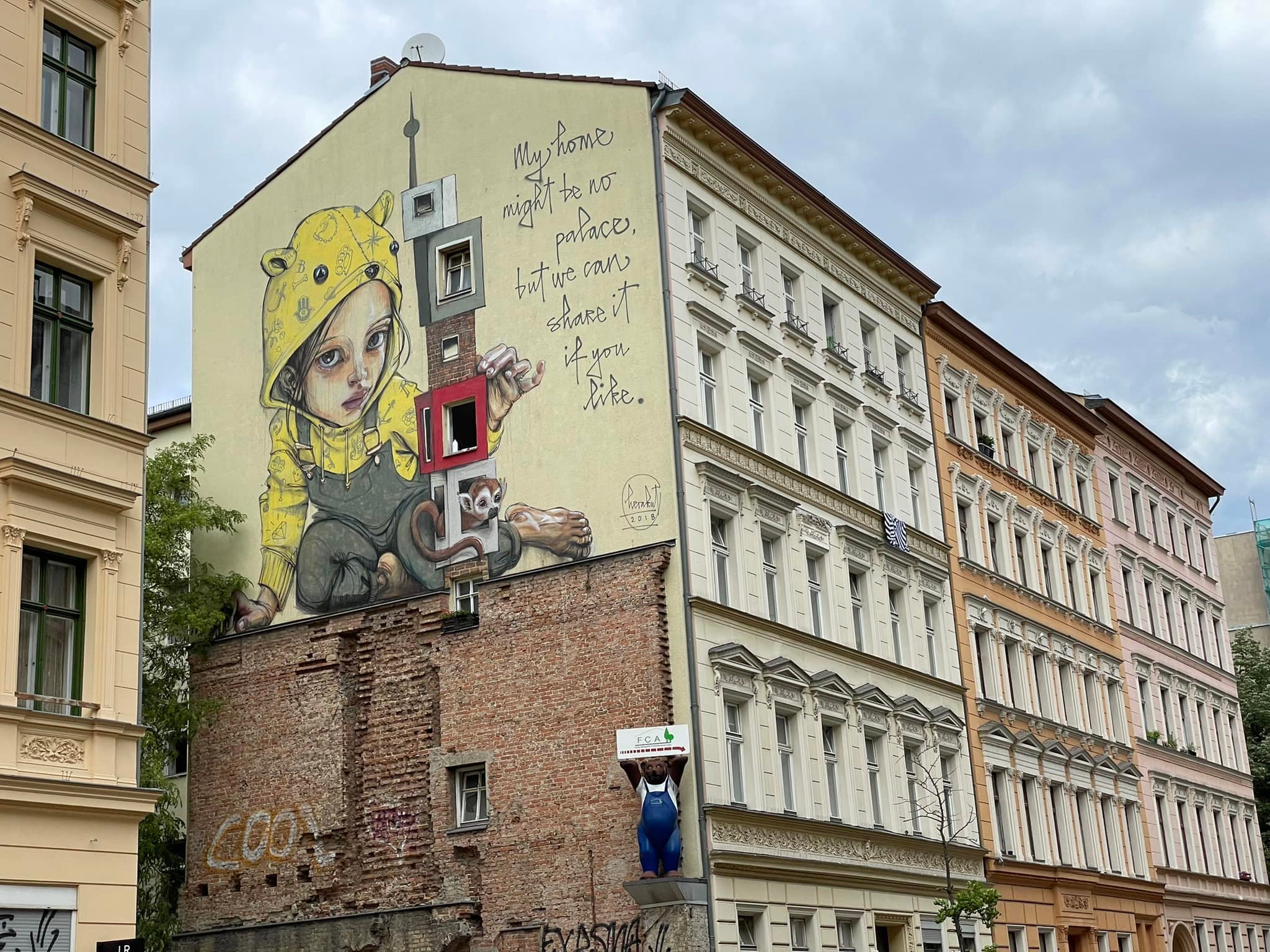
Street art in Berlin sneaks up to surprise you, high up at the top of buildings…
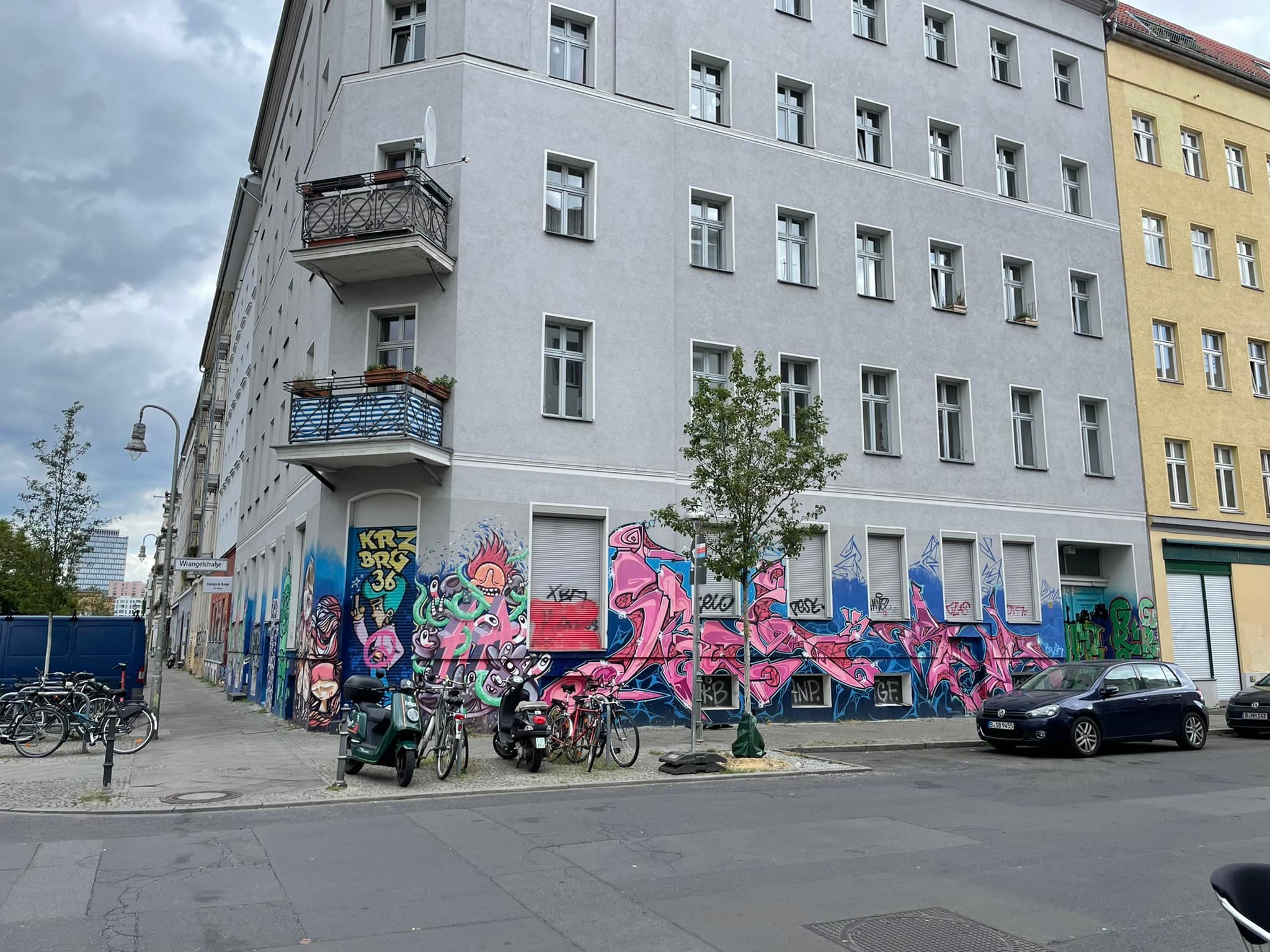
…and low down by the ground.
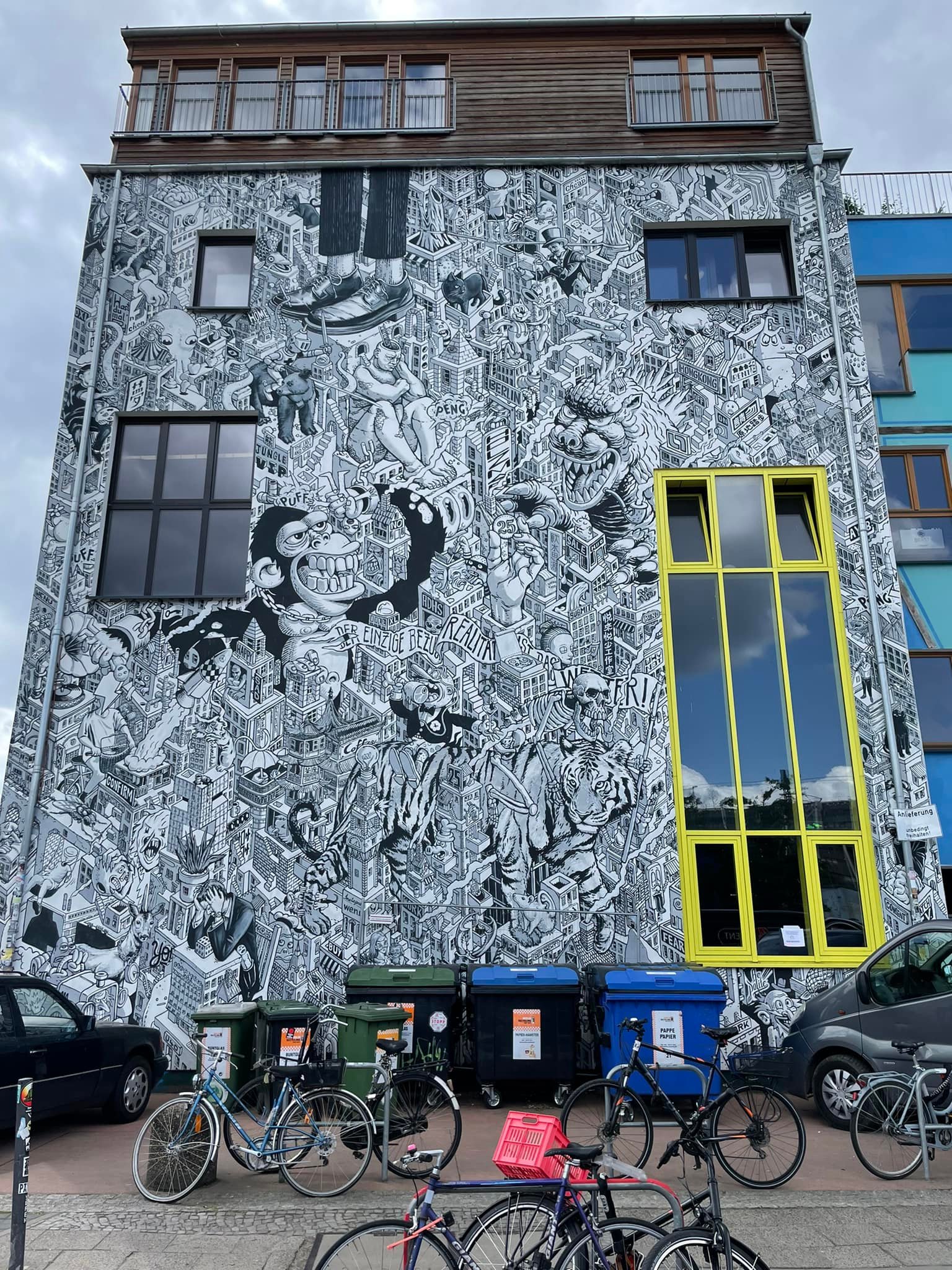
So much is going on in this mural, you could look at it all day.
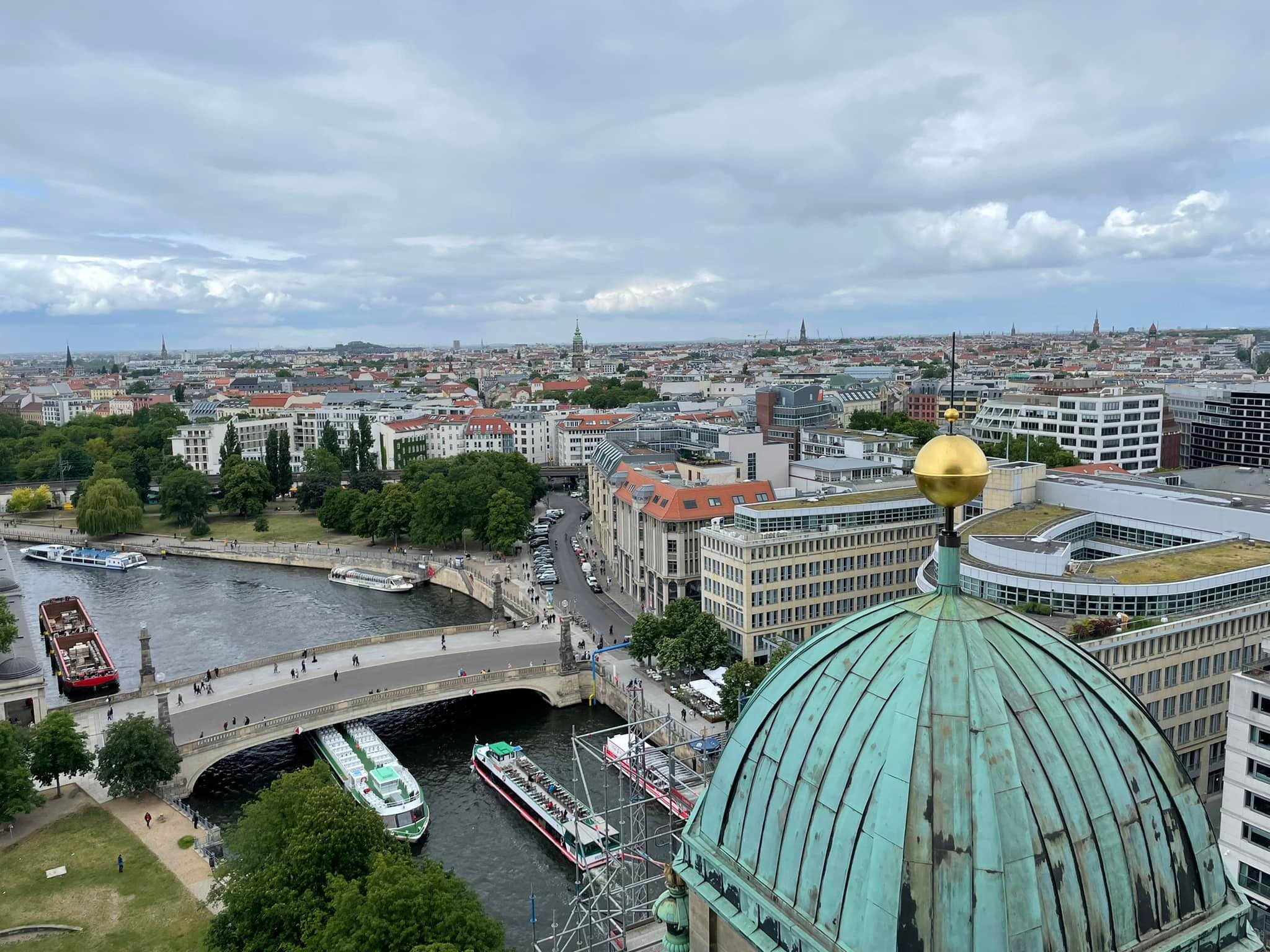
The top of the Berlin cathedral, overlooking the Spree River and the distant landscape of spires and cranes.
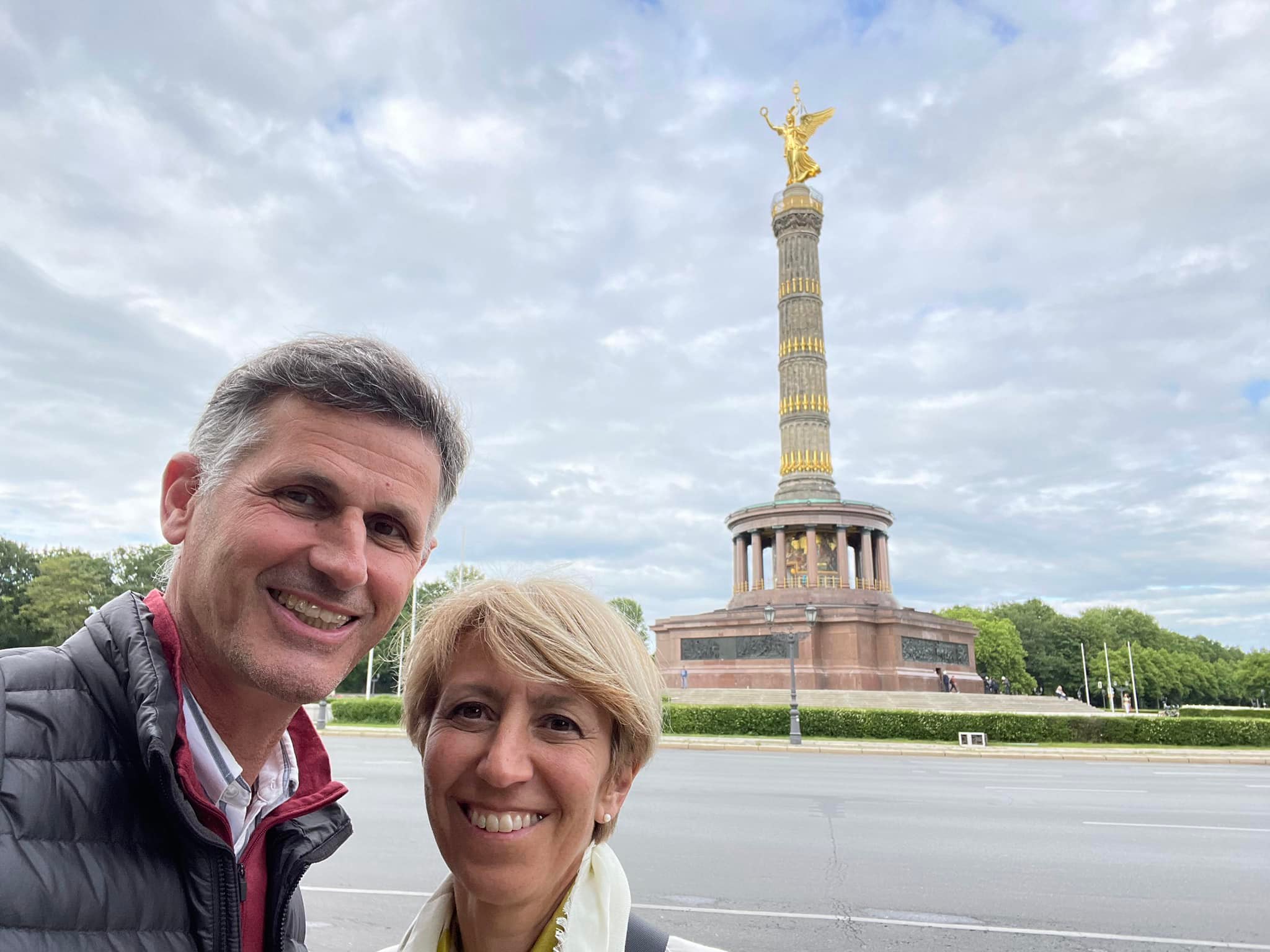
The Berlin Victory Column was designed in 1864 to commemorate the Prussian victory in the Second Schleswig War and by the time it was inaugurated in 1873, Prussia had won two more wars so it had even more purpose for this warring nation. It survived WWII with minimal damage and has flown the flag of other countries when they defeated Germany.
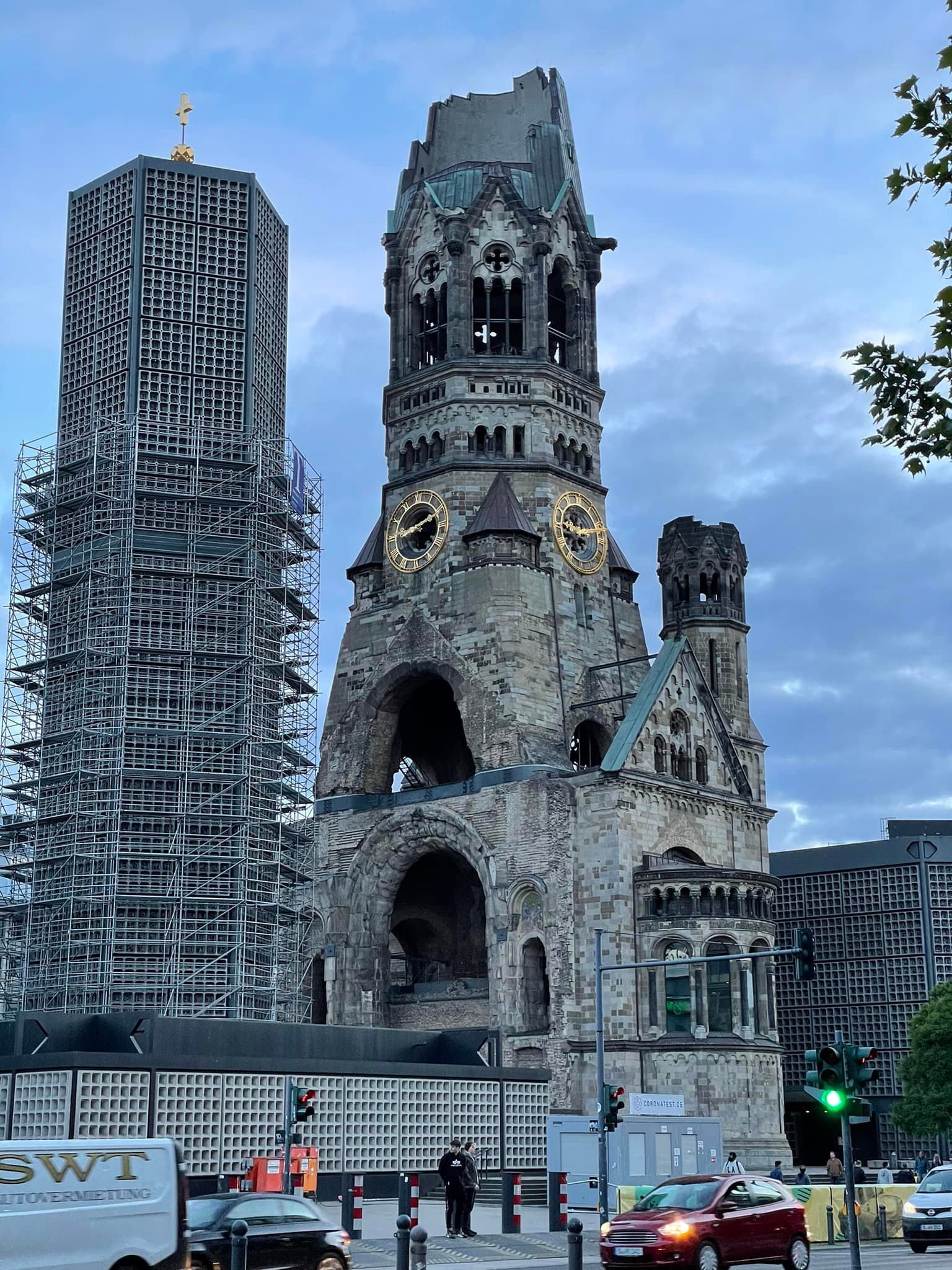
The Kaiser Wilhelm Memorial Church was damaged during a bombing raid in 1943. The city decided not to rebuild it but rather leave it as a memorial. Berliners nicknamed it “the hollow tooth”.
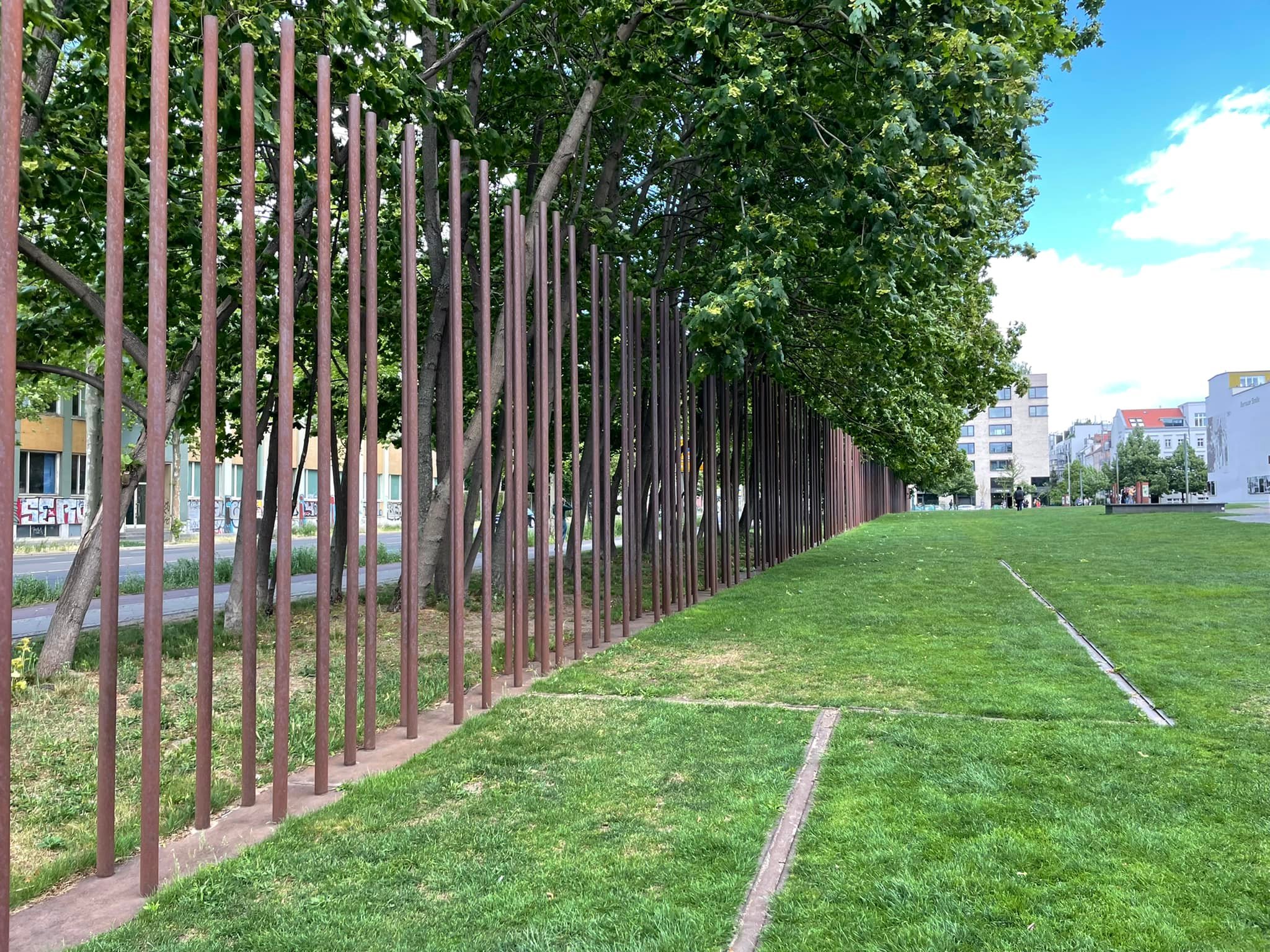
The Berlin Wall Memorial was opened in 1998 to commemorate this dark period in Berlin’s history. The location at Bernauer Strasse was chosen as this spot was teeming with activity. Along this 1.4km memorial, there are various metal elements identifying parts that are no longer in place. The tall vertical bars represent the outer wall. In this photo we are looking at it from inside the East side. The Berlin Wall was built in 1951 and was 96 miles long and some parts ran through a cemetery (in this memorial location) and some parts actually butted up against houses (also in this location). In the early days, this was an escape opportunity as people could jump out their East side windows above the wall and land on the West side. The fire department kept members on the West side to catch them. The police forced people out of those houses and bricked up the windows. Ultimately, they demolished those houses.
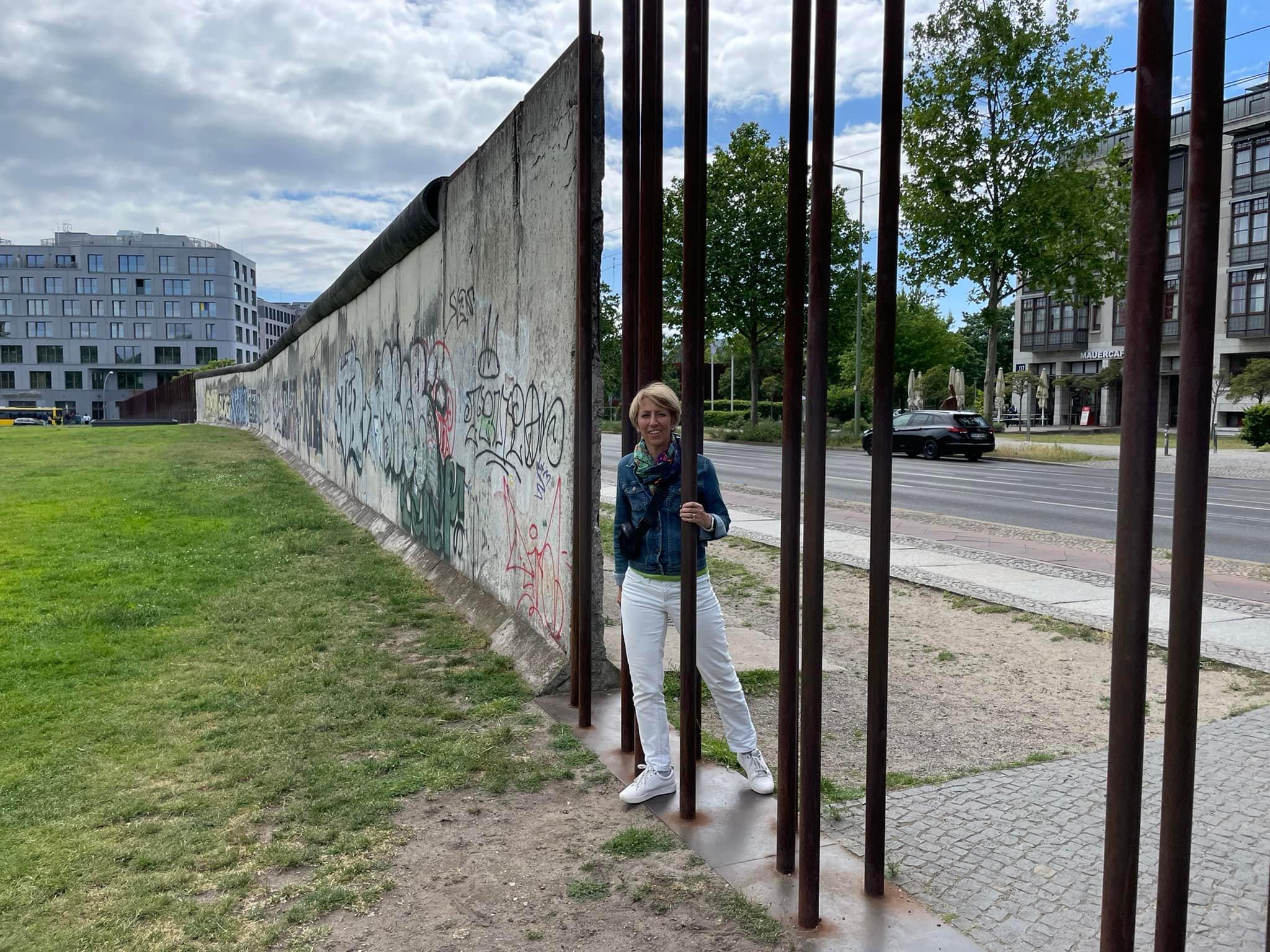
Walking through the “wall”…
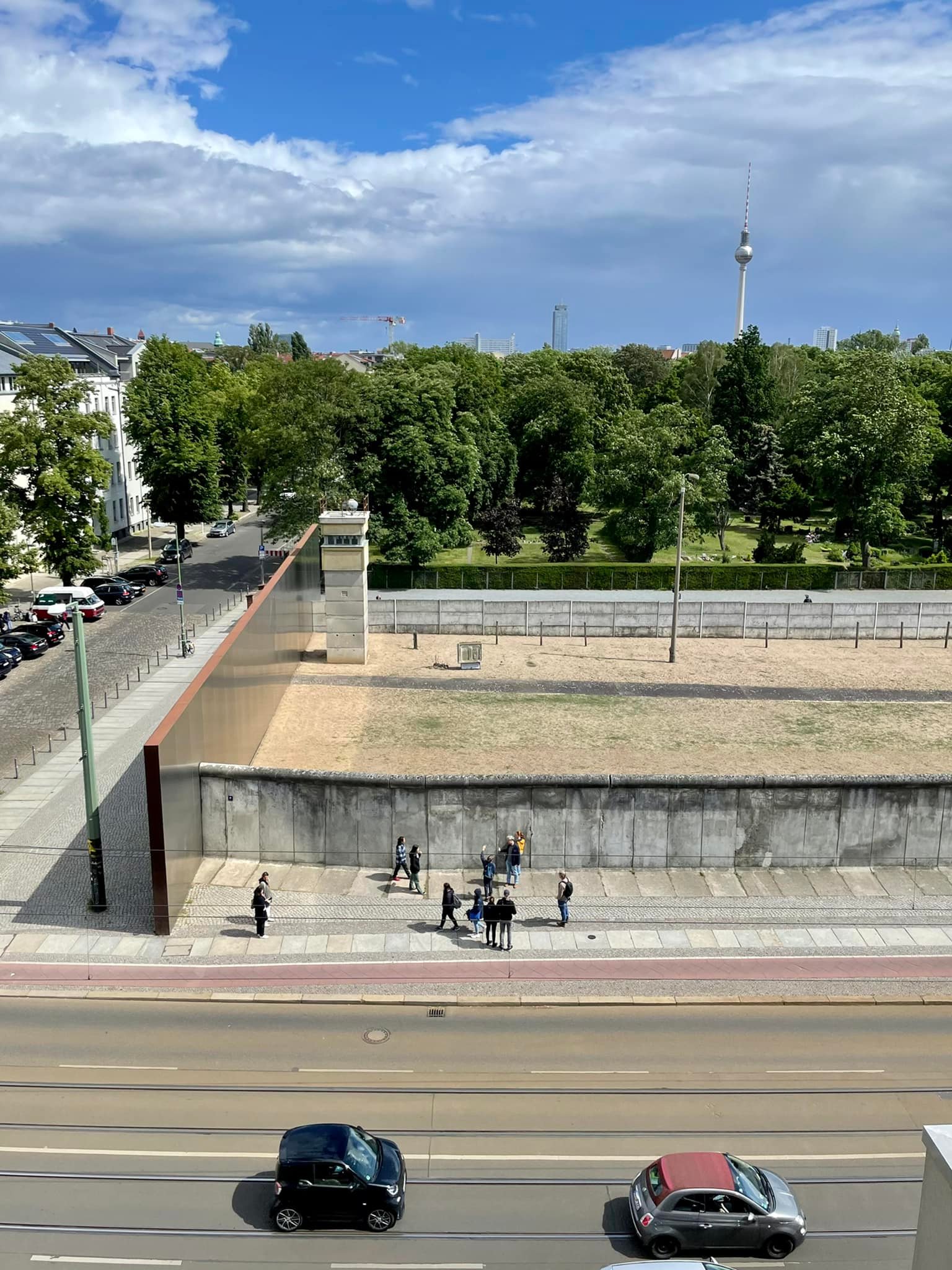
Here is a bit of a reconstruction of how the perimeter system worked. I hope the description is not too onerous to follow. Suffice it to say it had many checks and balances to keep people in. The road at the back, between what is now green space and the first wall, was called the Border Area. People needed a special permit to enter this area; it was a means of keeping people as far as possible away from the wall to prevent escape. Next, you have the Inner Wall which, in some spots, had barbed wire reinforcements. Then, what looks like fence posts, was the electrical Signal Fence that, if touched, would sound an alarm in a nearby watchtower, unbeknownst to the fugitive. After this there are the very bright Border Lights. The Watchtower border soldiers kept an eye on the area behind their tower, the border road and West Berlin and of course we’re alerted if the signal fence was touched. The Patrol Road is the dark strip of asphalt in the sandy part that enabled the guards to move around the area. The sandy area, called the Security Strip, left a fugitive’s tracks for analysis. Then came the 3.6 metre high concrete border wall. This is an original 200 metre piece of the wall with the following inscription: "In memory of the city's division from 13 August 1961 to 9 November 1989 and of the victims of communist tyranny". It was quite a layered system and every time there was a successful or failed escape attempt, lots of analysis took place to find ways to make the border as impenetrable as possible.
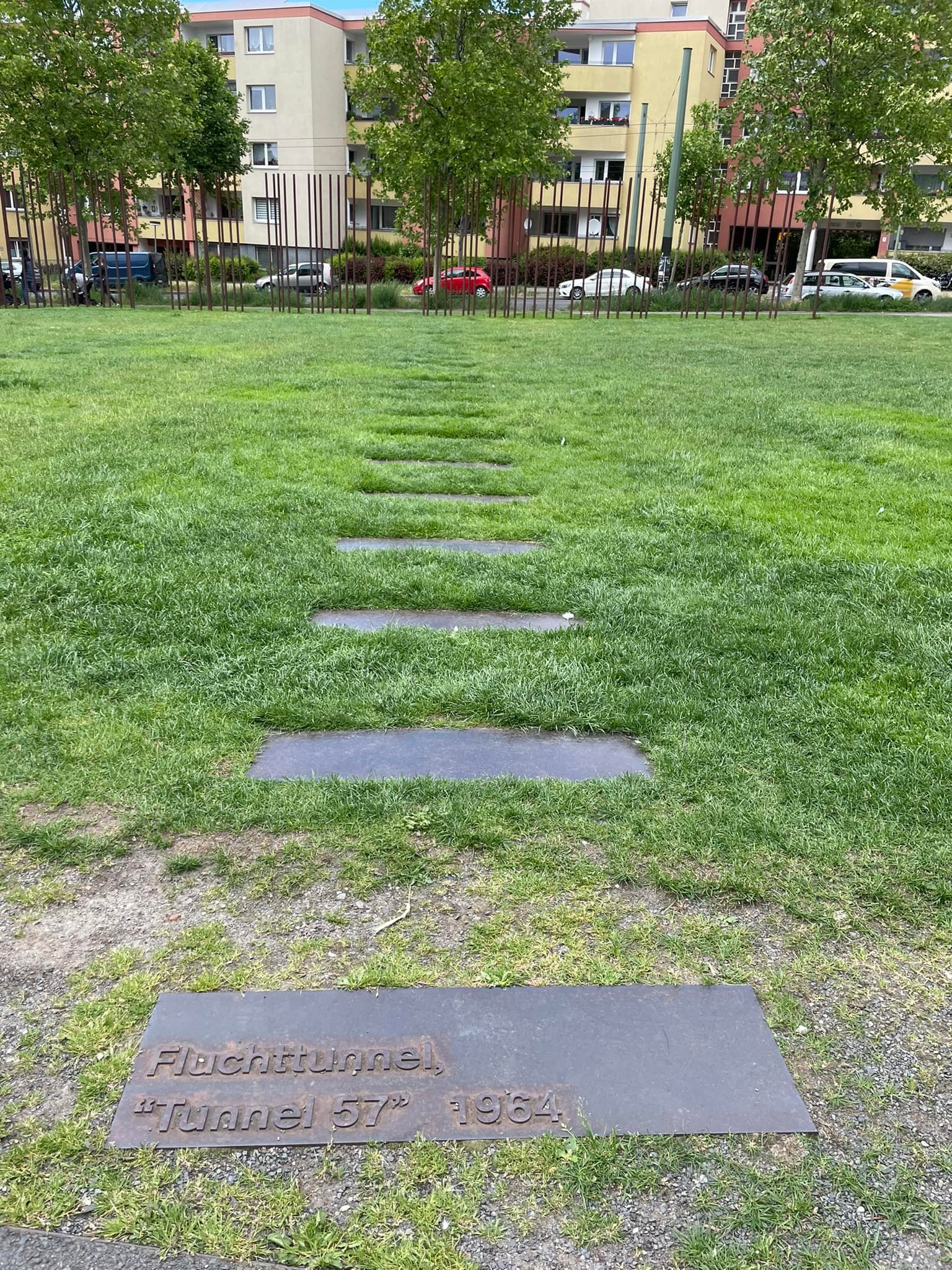
There were also a number of escape tunnels along this street. Very famous is Tunnel 57 which was right here underground. It was named for the 57 people who escaped through this tunnel before it was discovered and shut down. They believe that some 5,000 people successfully escaped from the East side over the 28 year life of the wall and about 150 died while trying to escape.
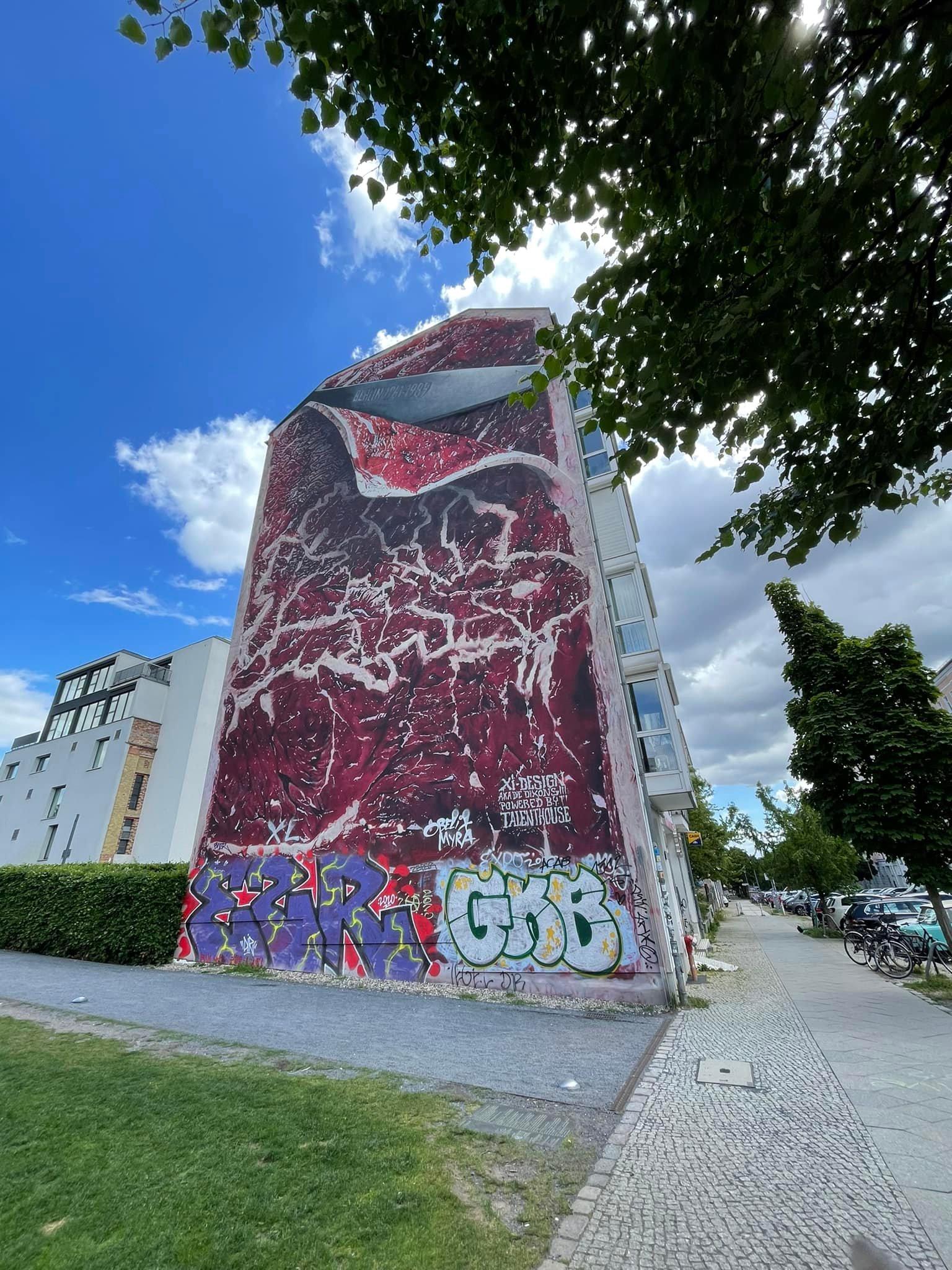
The Division Went into the Flesh. A very apt title of this huge mural at the Berlin Wall Memorial.
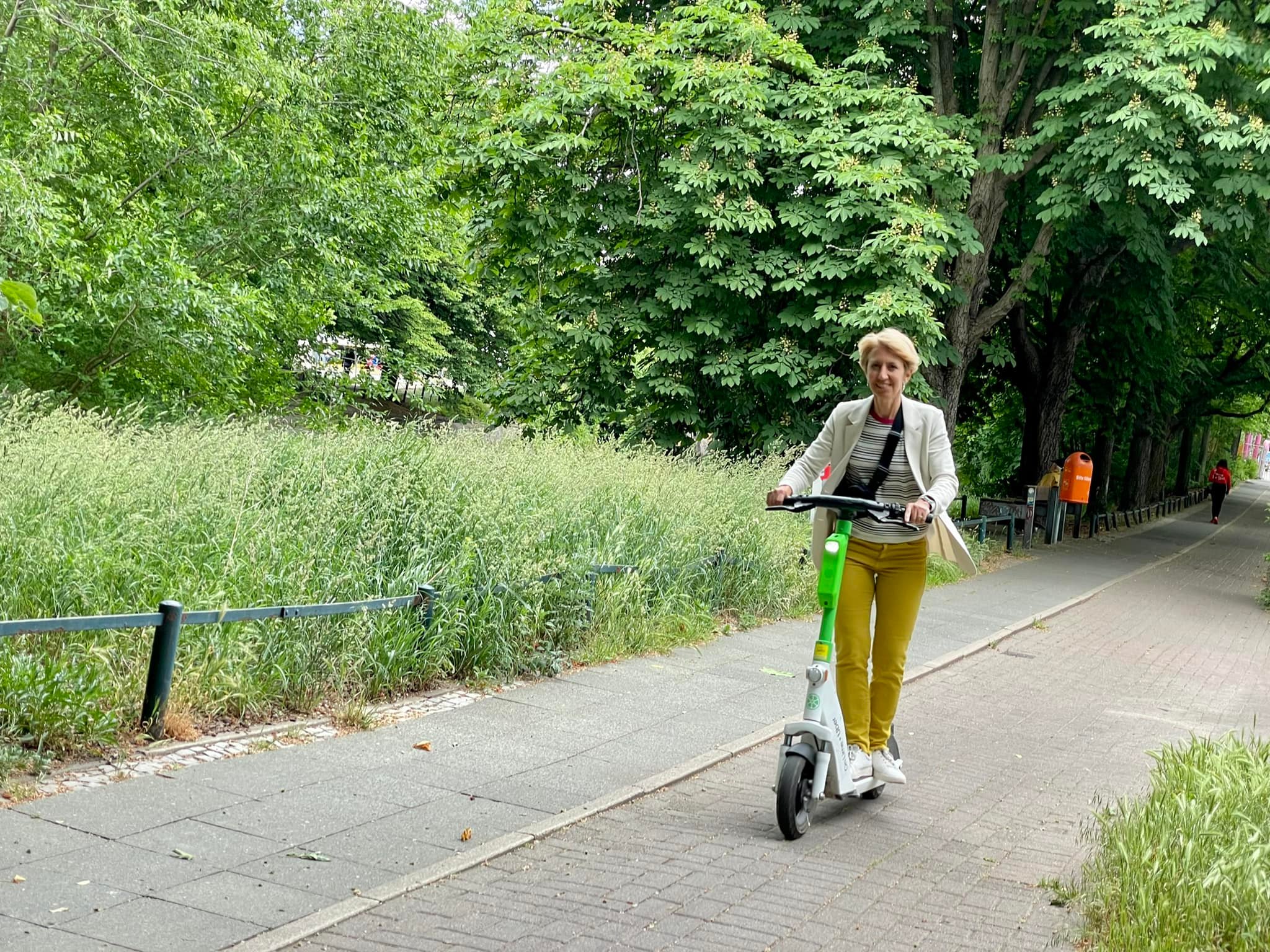
A fun little break from walking.
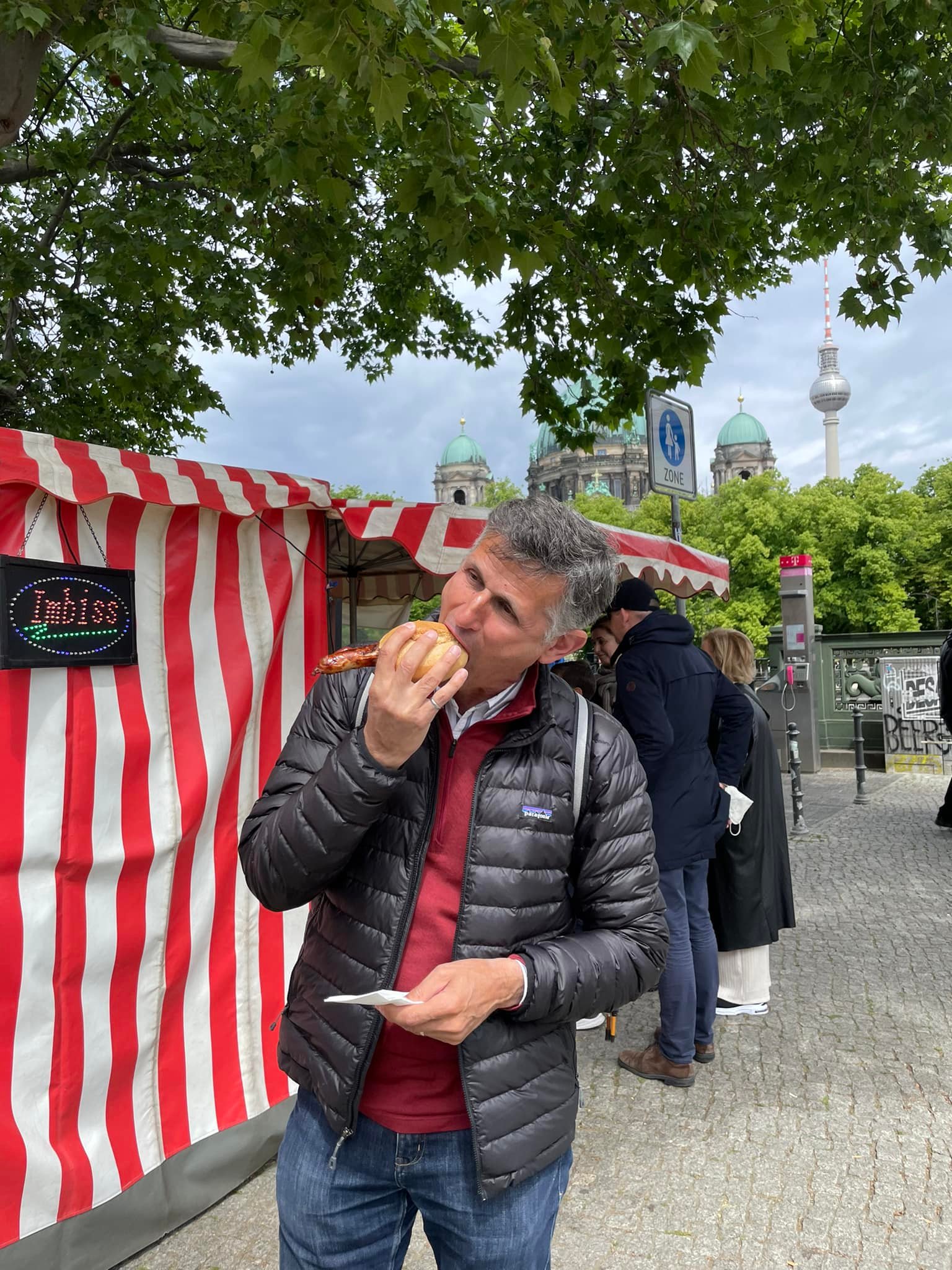
When in Germany, someone has to have a sausage on a bun!
Covid travel...