March, 2025
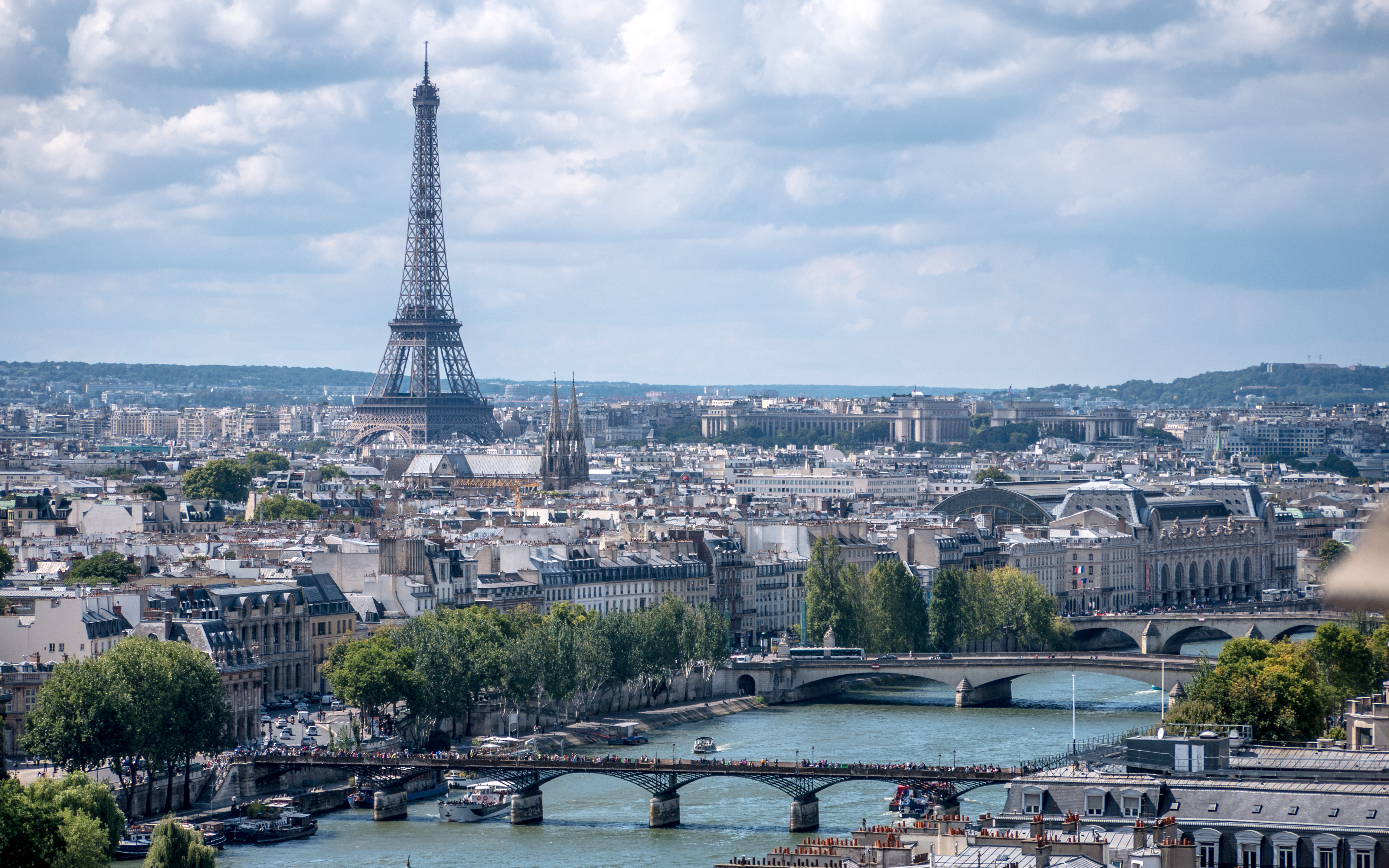
You know you’re in France when, every night, your bedtime reminder pings and you’re in the middle of dinner! Paris is a pleasant assault on all the senses. The food! The neighbourhoods! The art! We spent the first half staying on the left bank by the Sorbonne with a hop across the Seine for our second half. Perfect strategy. Allons-y à gauche!
Laid-back Left Bank
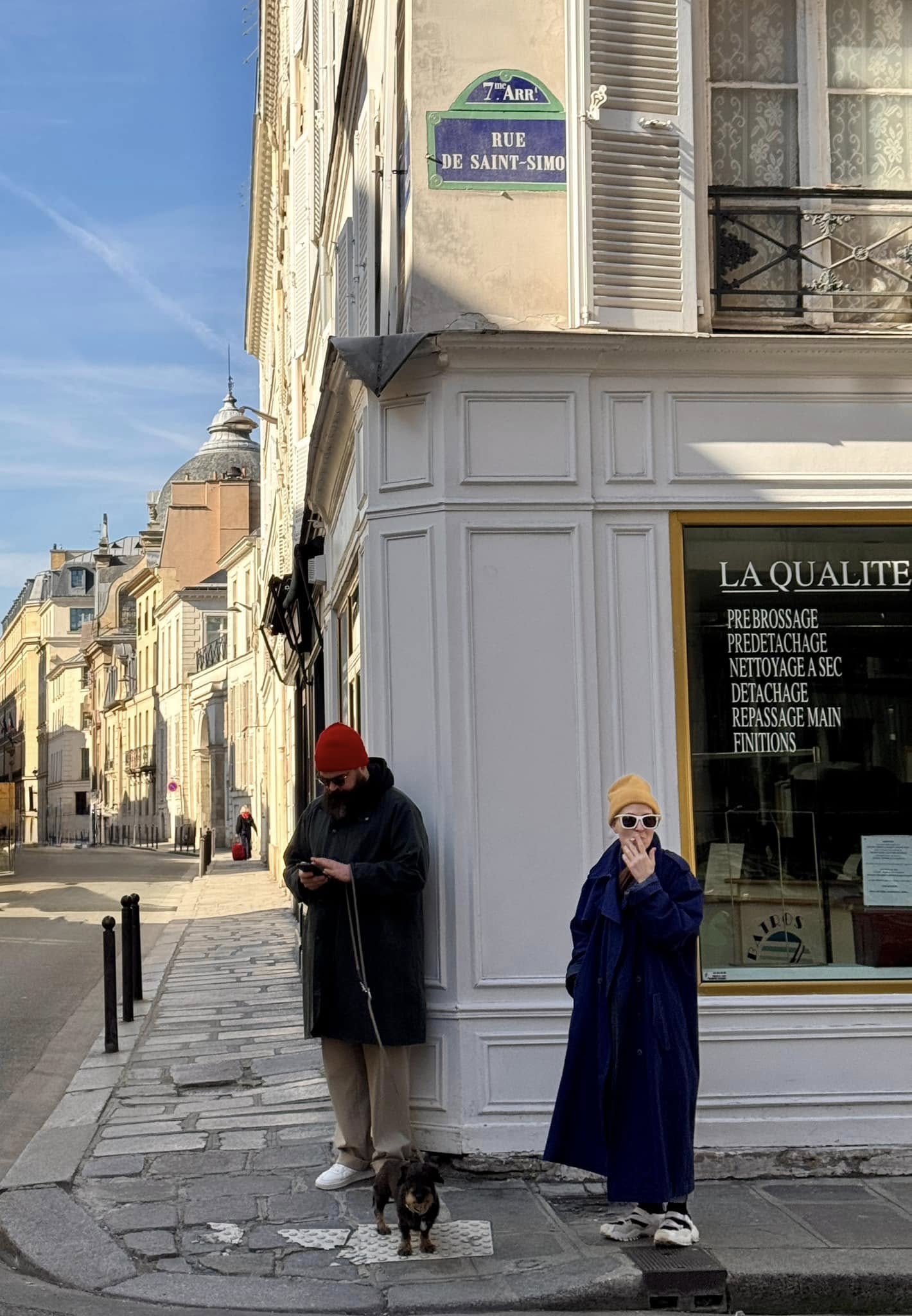
The classic French street corner…cigarette, cellphone and un petit chien.
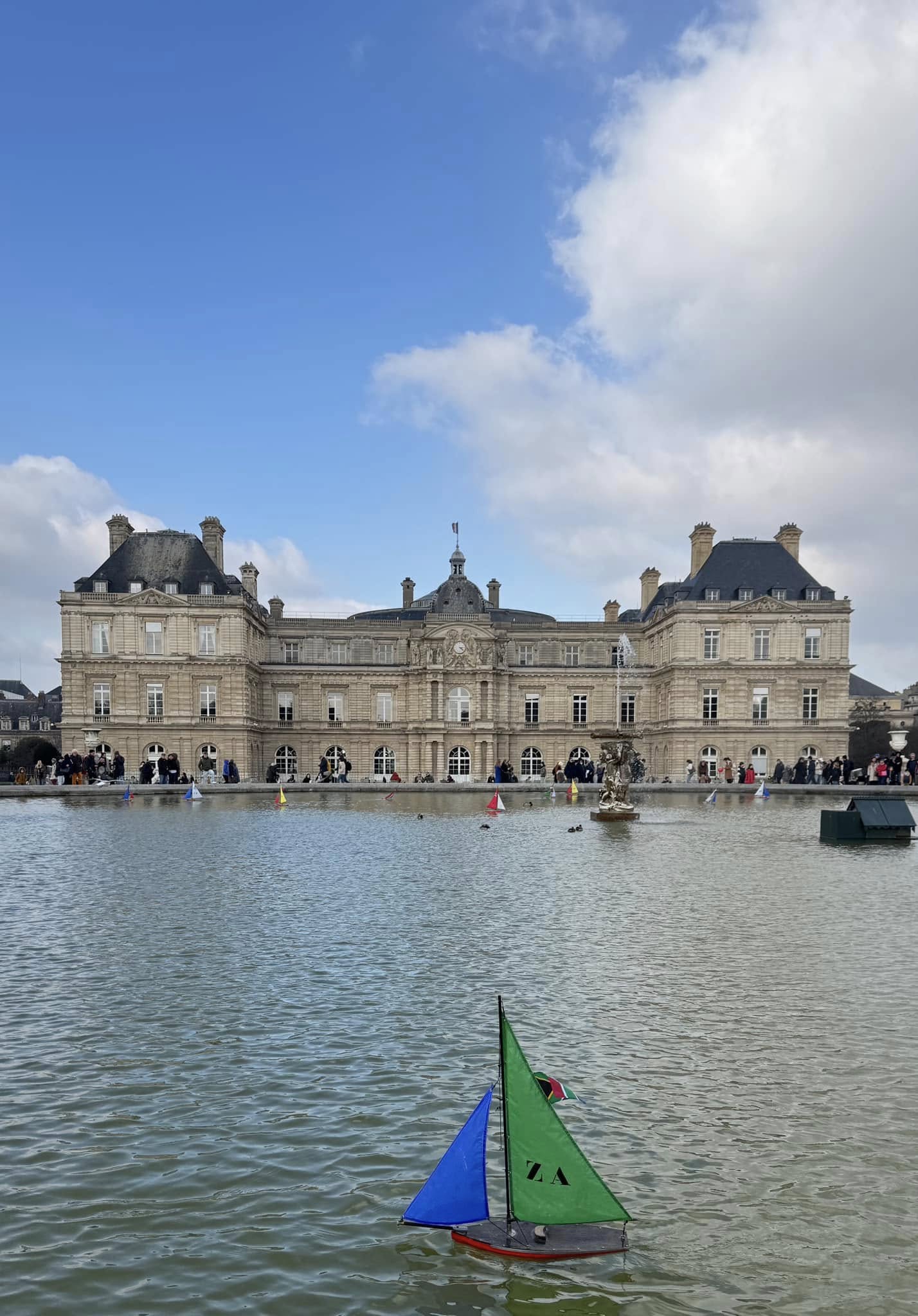
The sailboats in the Jardin du Luxembourg are still here…
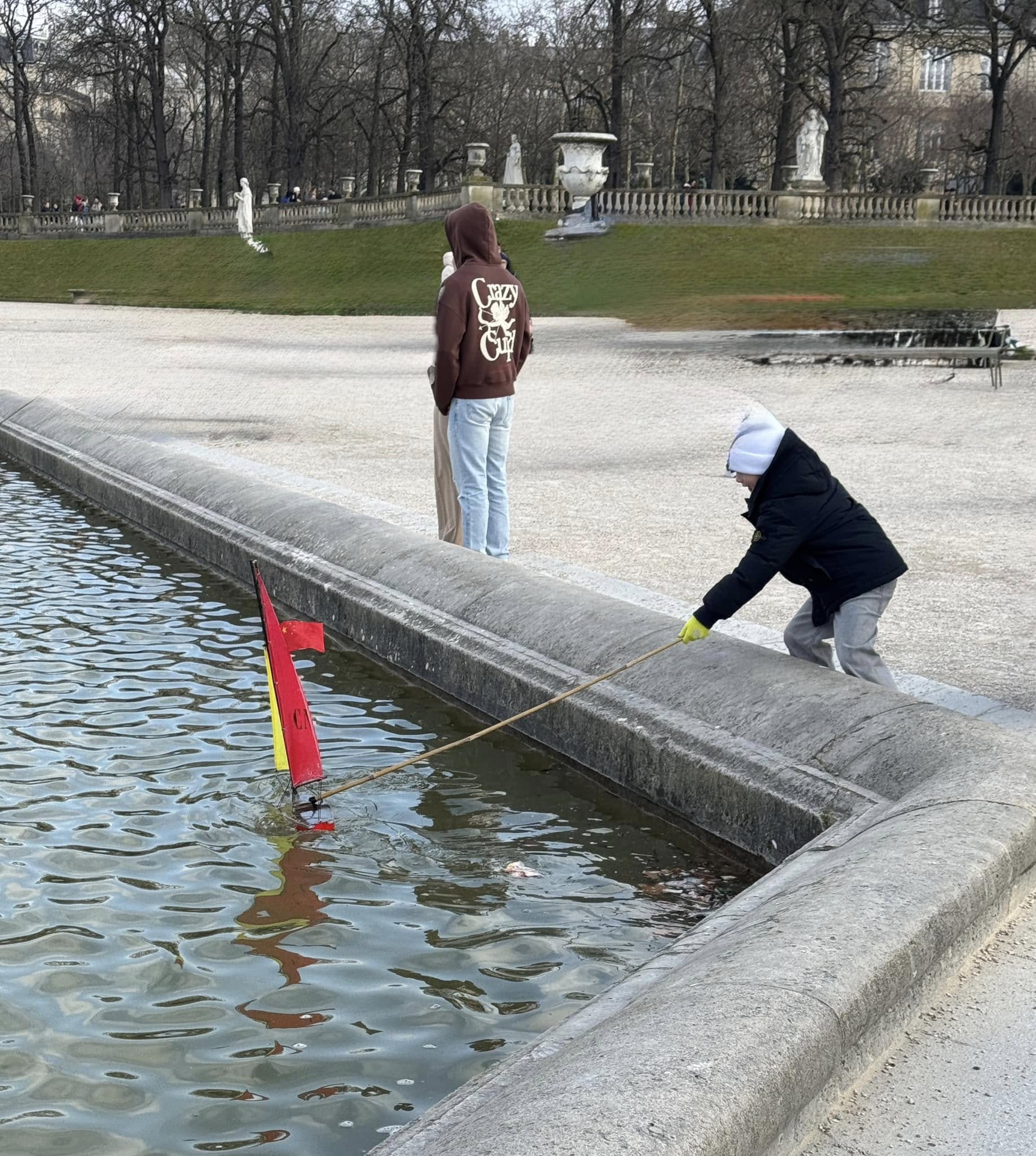
…and being captained by the children!
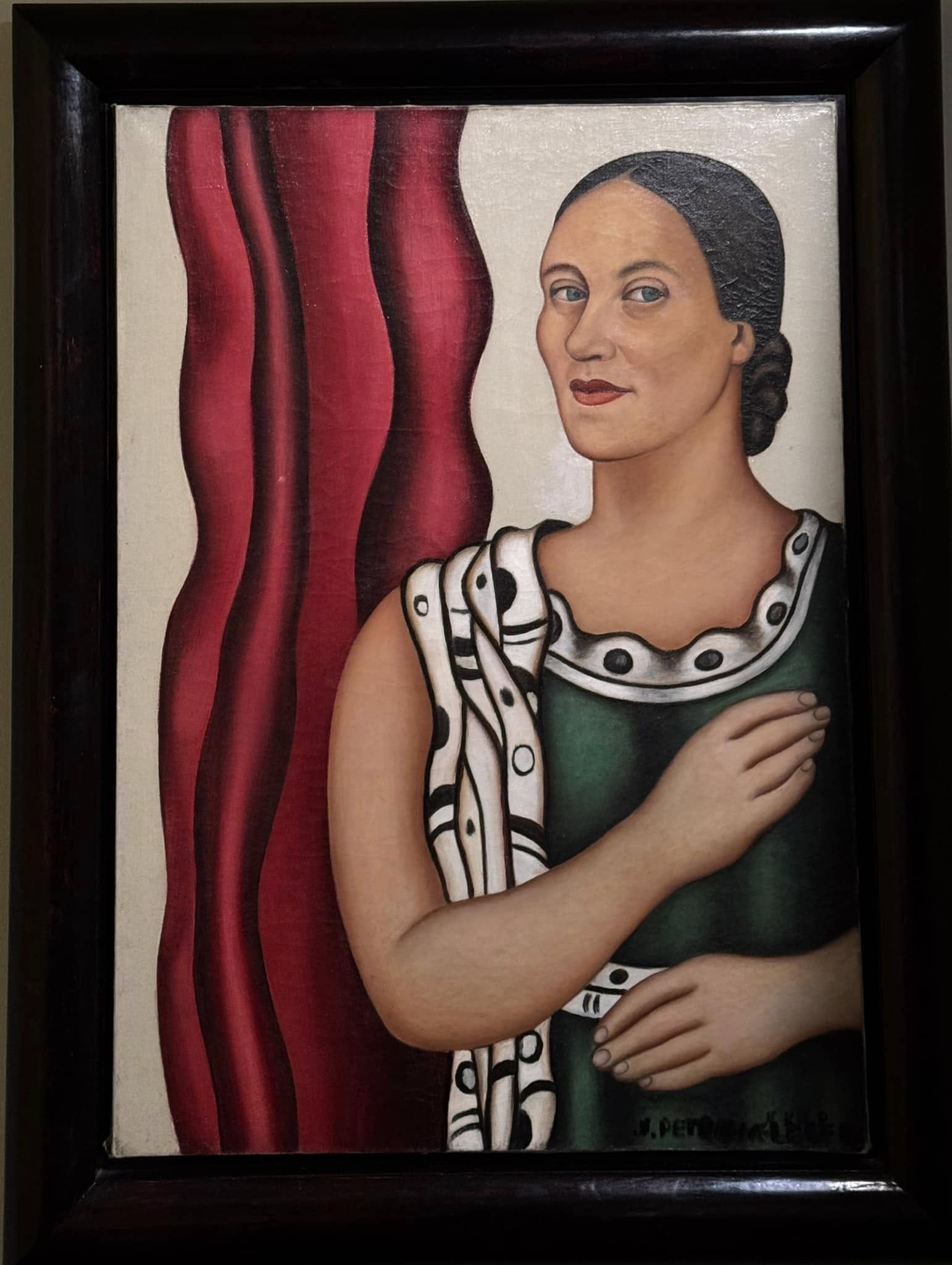
I’d never heard of the avant-garde artist Nadia Léger until we serendipitously stumbled upon an exhibition of her work! While she remained less known during her artistic career, she asserted her spirit in a lot of self-portraits. Don’t mess with this woman! I would love to call her a doyenne of the avant-garde but she never got that recognition. Talented, yes, but her position in the art world was thwarted by a few things. Her biggest coup but also her biggest stumbling block was her early association with Fernand Léger who completely overshadowed her. While they influenced each other to some degree, she never developed her own distinctive style. You could also blame sexism and her staunch communist leanings working against her but really, she was eclipsed by her teacher/lover/husband. Now, there finally seems to be a revival of interest in her, as we discovered!
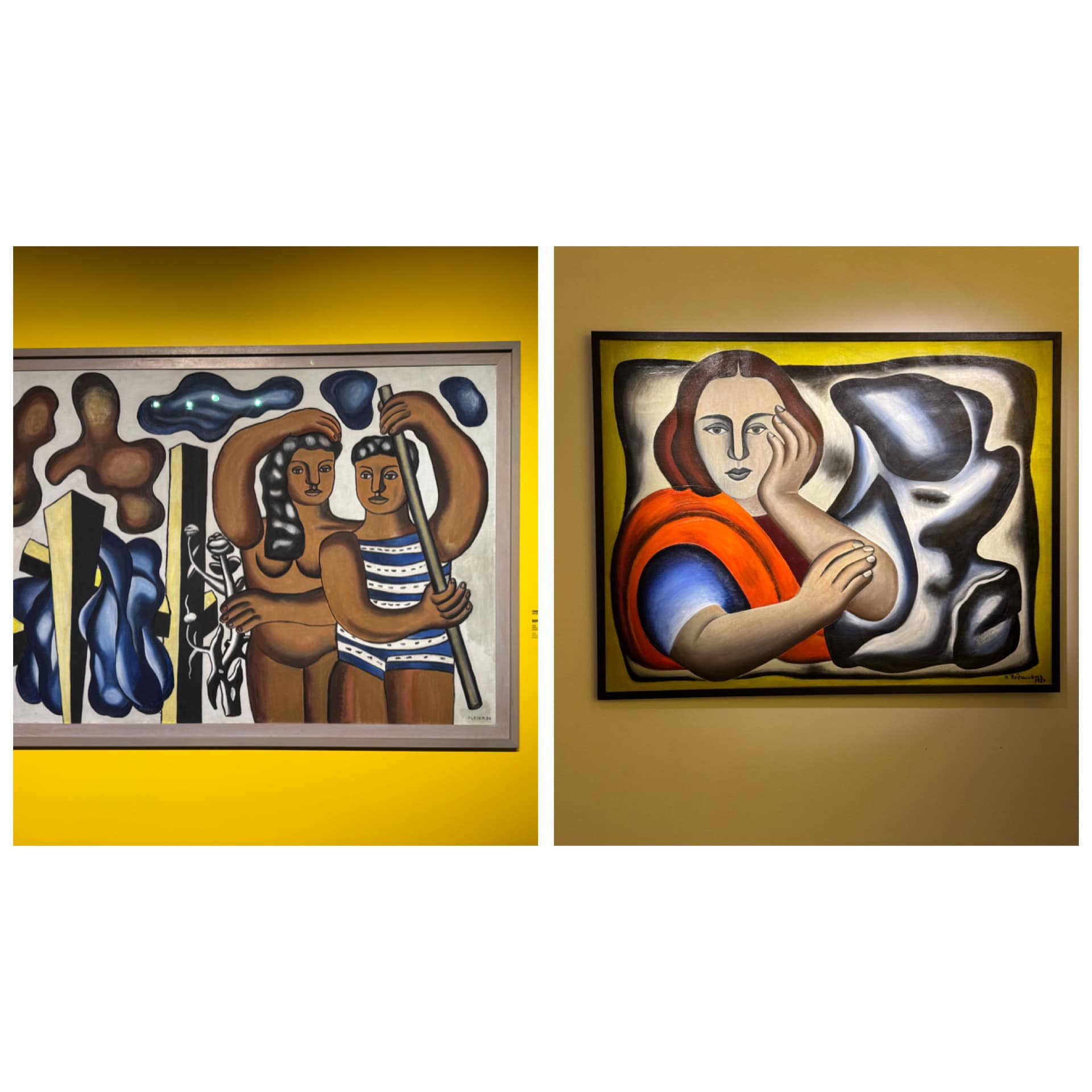
At 17, she saw Léger’s work in a magazine and decided to move to Paris from her native Russia. She found her way into his classes at the Atelier Moderne, first as a student (and quite expeditiously as his mistress), then as his assistant and finally as his wife. After he died, she spent the rest of her life promoting Léger’s work. Maybe she struggled a bit with her identity as she signed her work in a variety of ways. Sometimes as Nadia Petrova (her father’s Russian name), sometimes as Nadia Khodossievitch (her given name), sometimes she inserted Léger’s name even before she married him. Her work does seem to echo his but she tended to make the subject of her paintings the central element where he was more about how the shapes and colours interacted. It feels like there’s more humanity in her work.
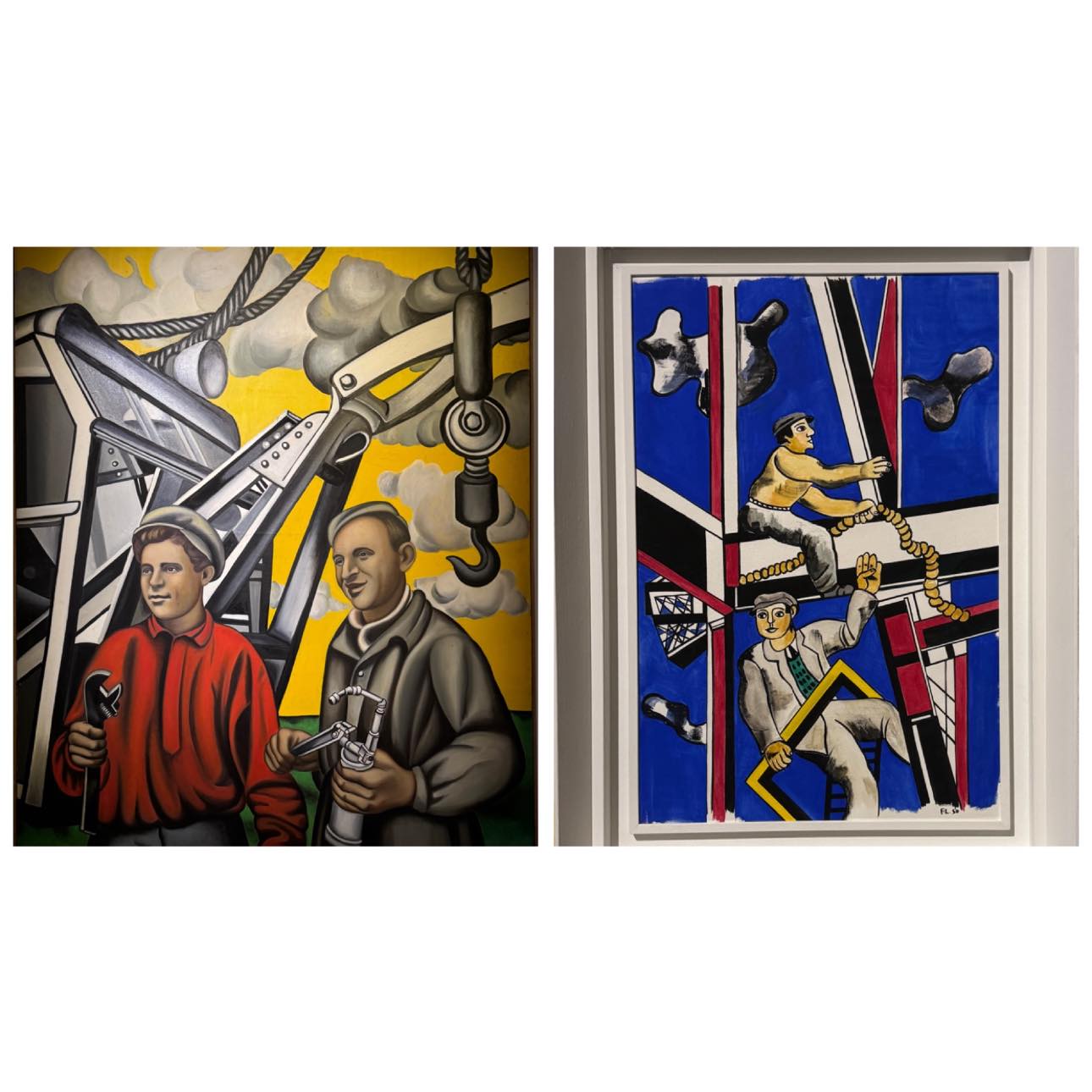
They both painted series depicting the worker in the 1950s. Here, both titled Les Constructeurs, Nadia (left) and Fernand (right) are showing construction workers on the job. The art historians graciously give Nadia the edge on this one saying Fernand followed her palette and composition.
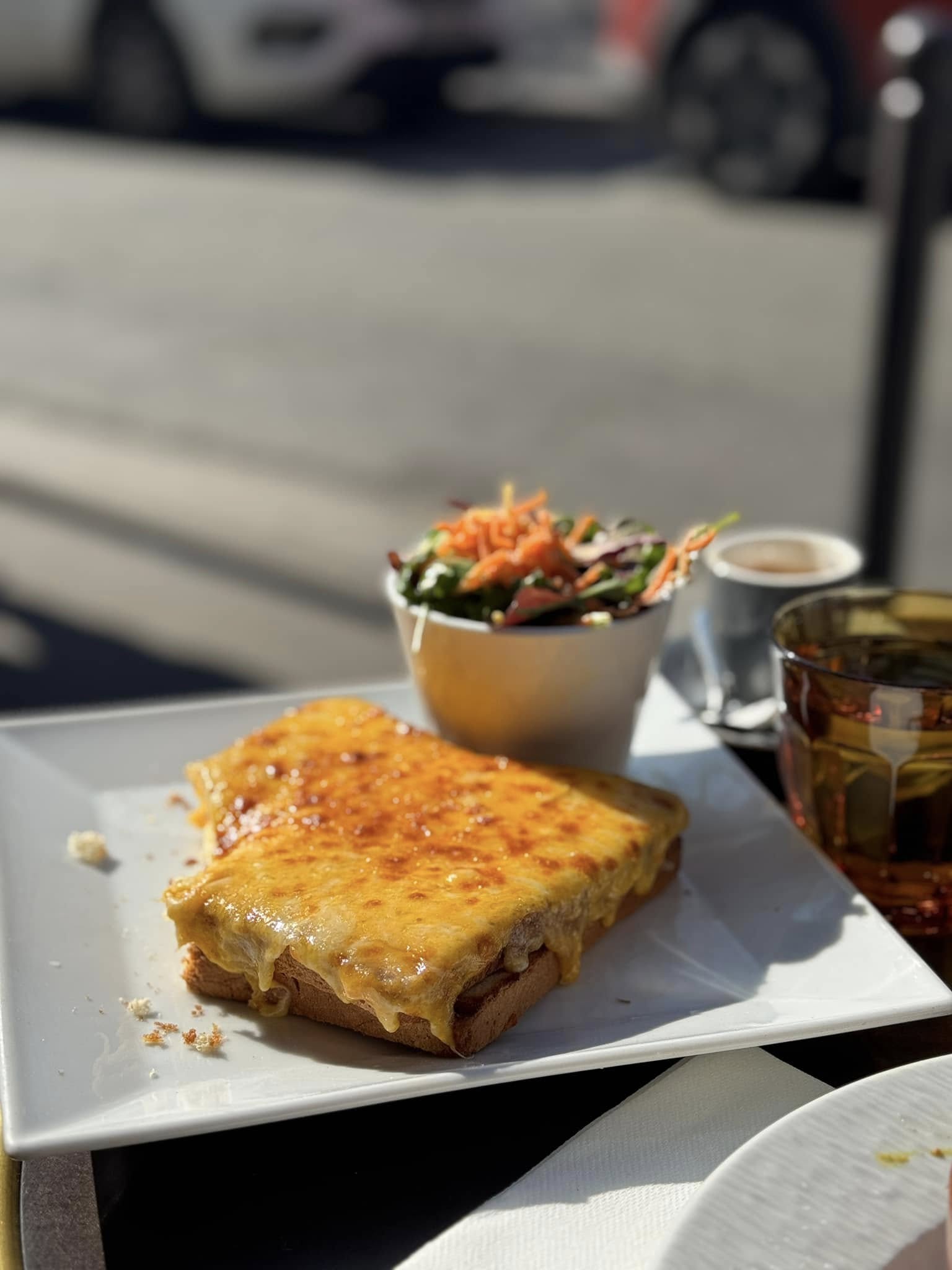
All that art makes one hungry! We began our search for the best croque monsieur in Paris.
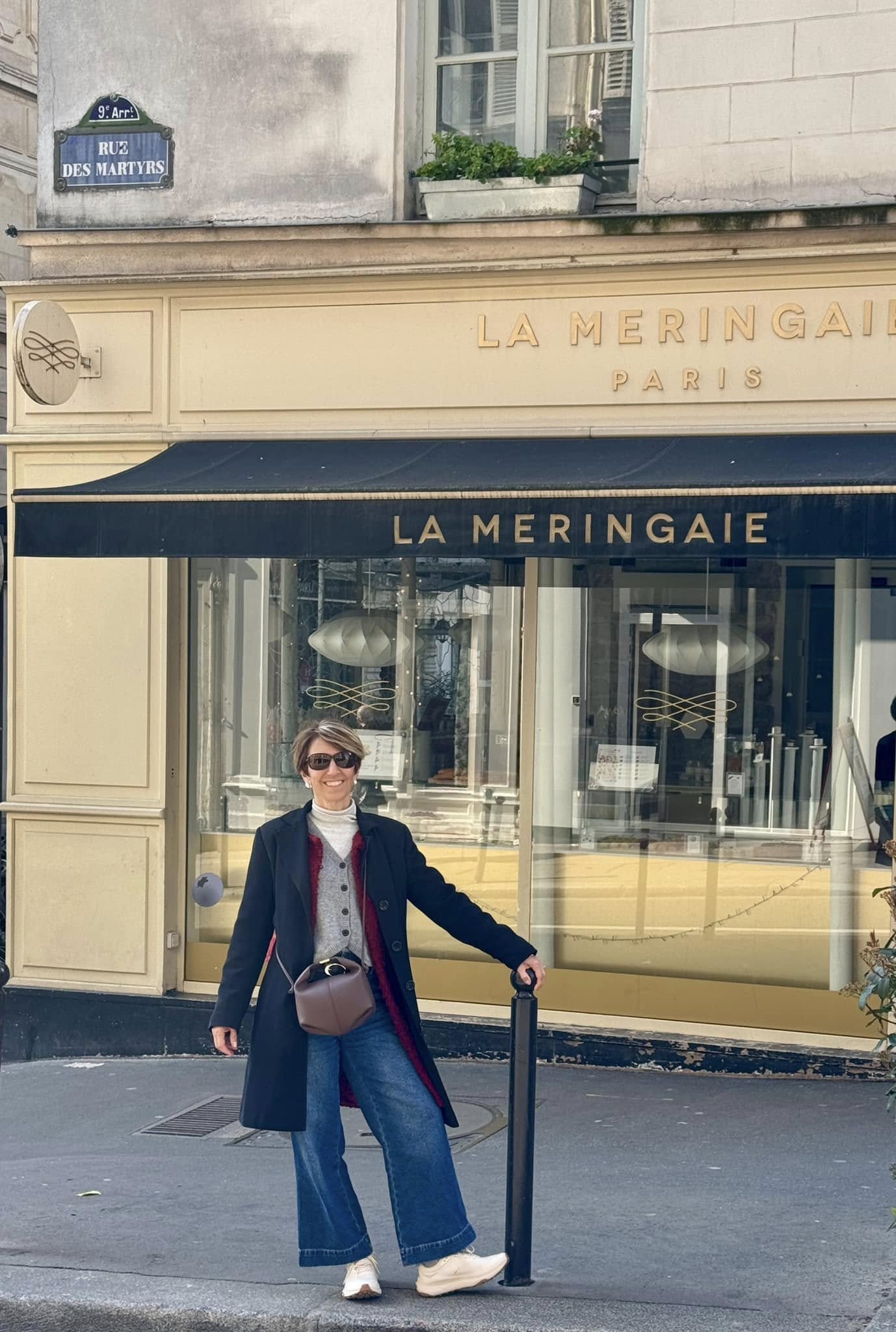
And then there’s the hunt for pavlova excellence! We had an important clue on this one. We have the cookbook from La Meringaie and have made variations several times. We needed to come and see how it’s supposed to be! I’d say we have done a pretty good job but I need to up my meringue piping skills.
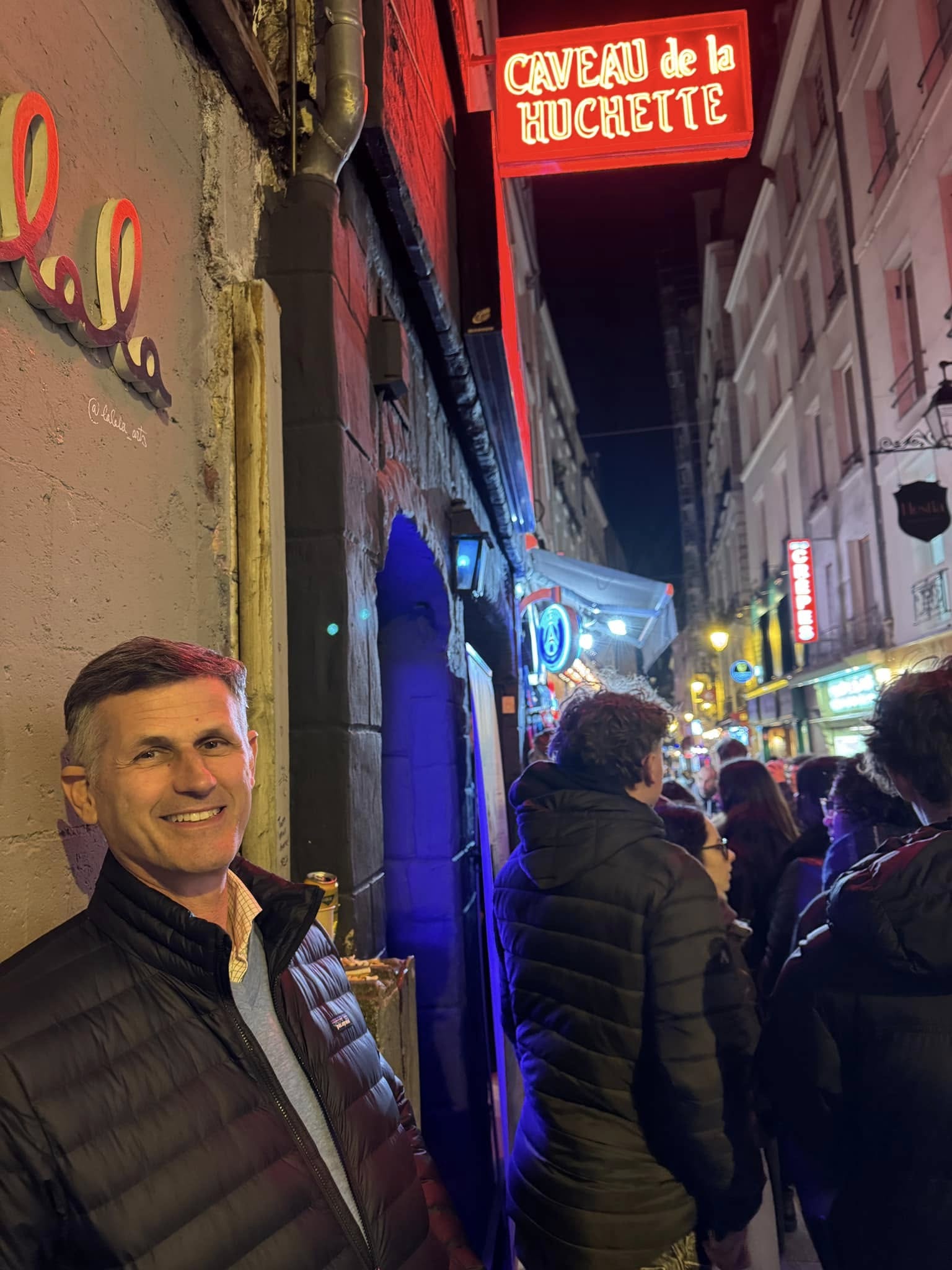
Adam lived in Paris for a summer 34 years ago, learning French in the mornings, reading French poetry in the Jardin du Luxembourg in the afternoons and hanging out in jazz clubs in the evenings. This one, Caveau de la Huchette, was his favourite and it has endured!
Front row at the knees of the musicians! The vibe here hasn’t changed!
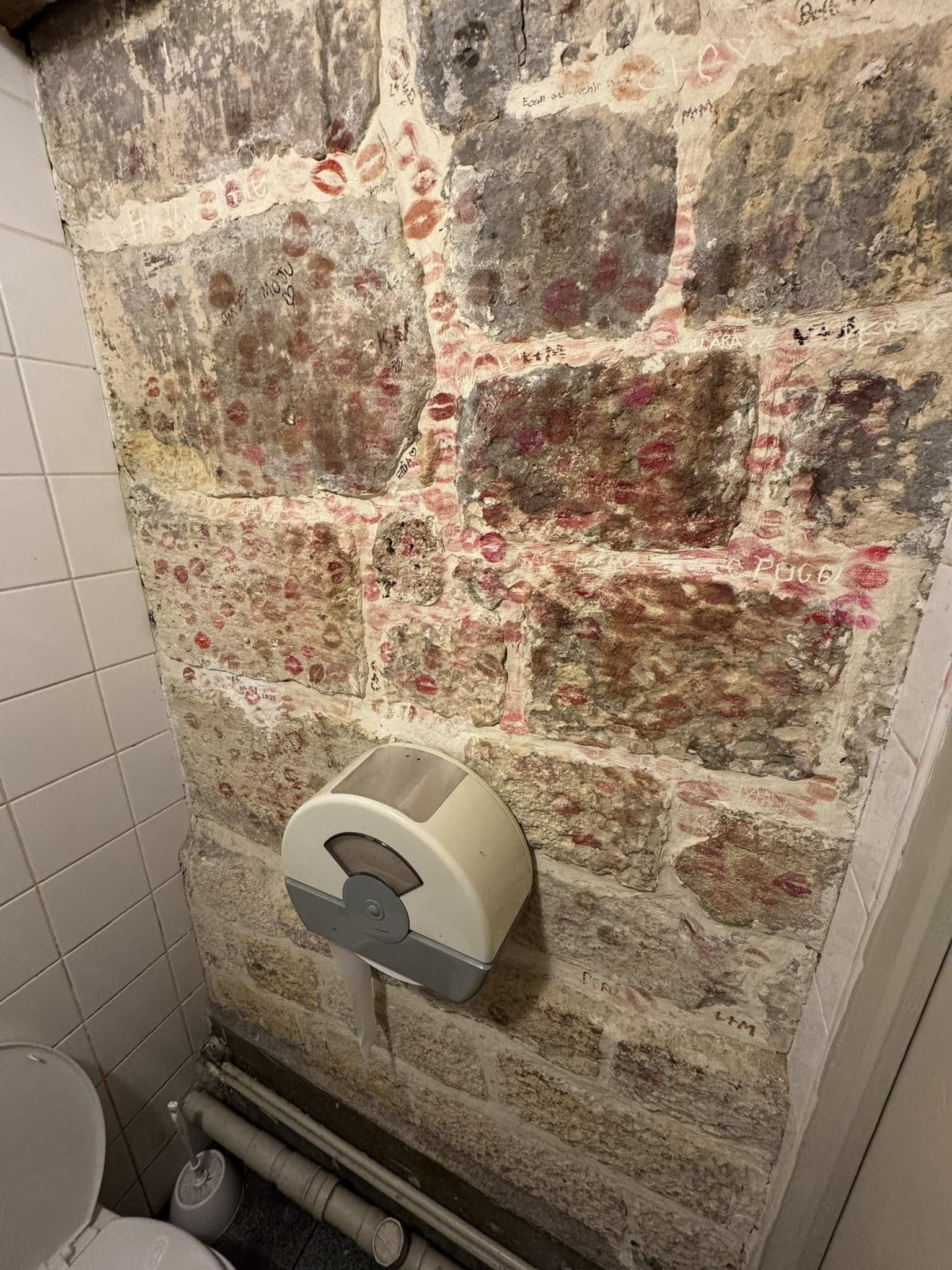
The washroom walls in Caveau de la Huchette are full of graffiti as are most public toilets. But I can tell you I wouldn’t kiss any wall let alone a wall in a place like this. My mother taught me never to sit on a public toilet seat and I extrapolated from that.
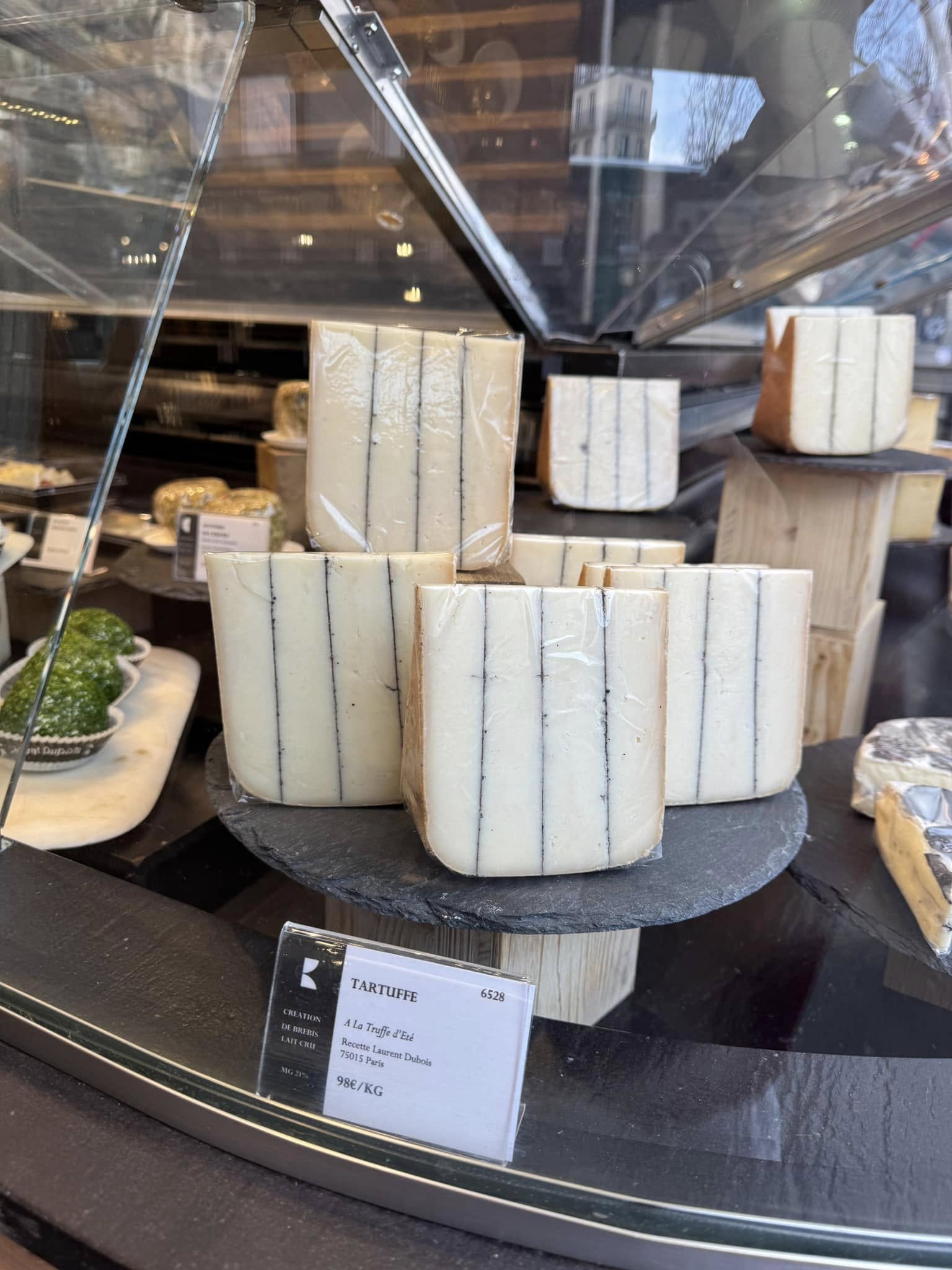
Pinstriped truffle cheese, how elegant!
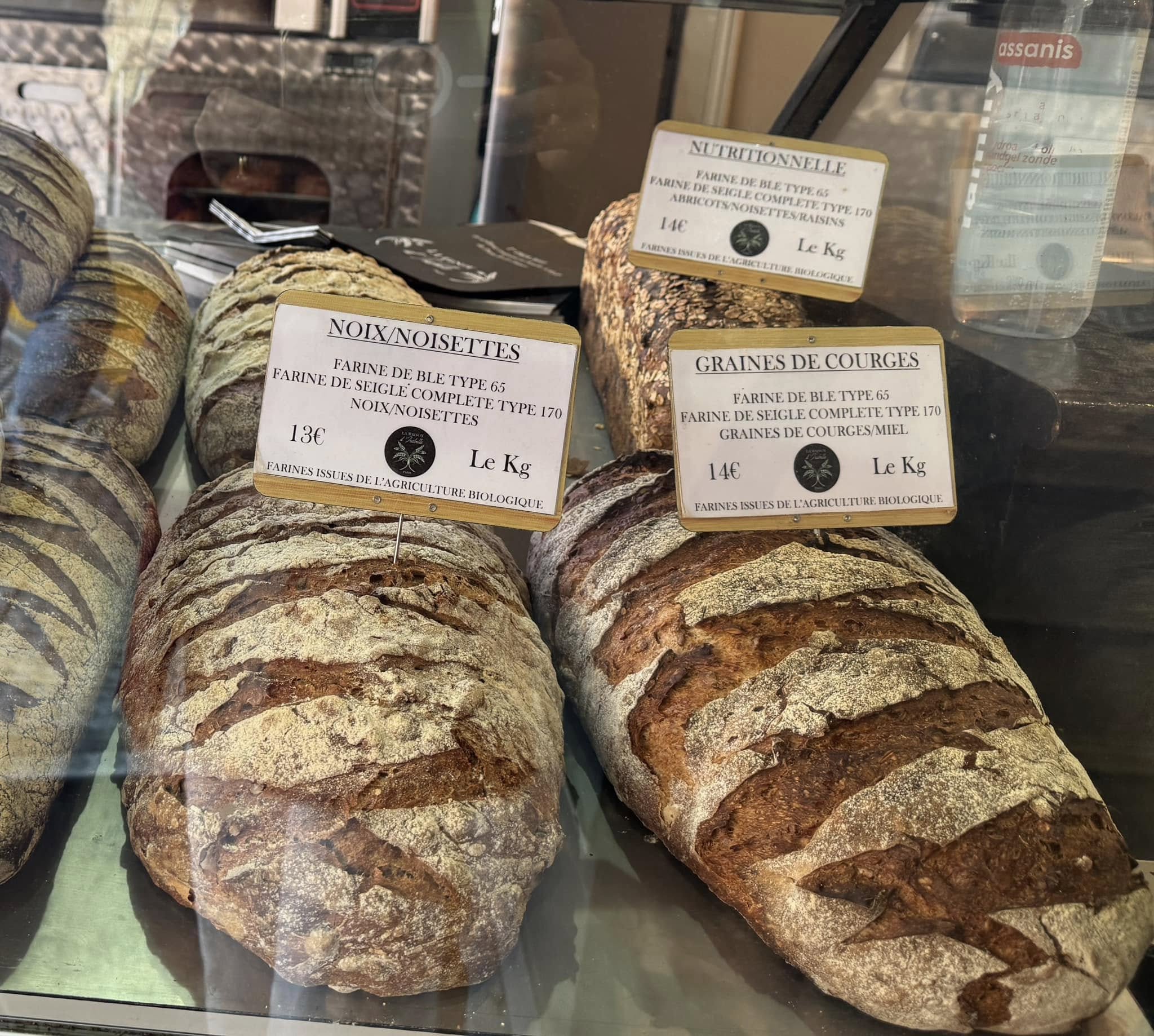
Bread sold by weight. They cut as much as you want and you pay accordingly. Best way to get fresh bread daily!
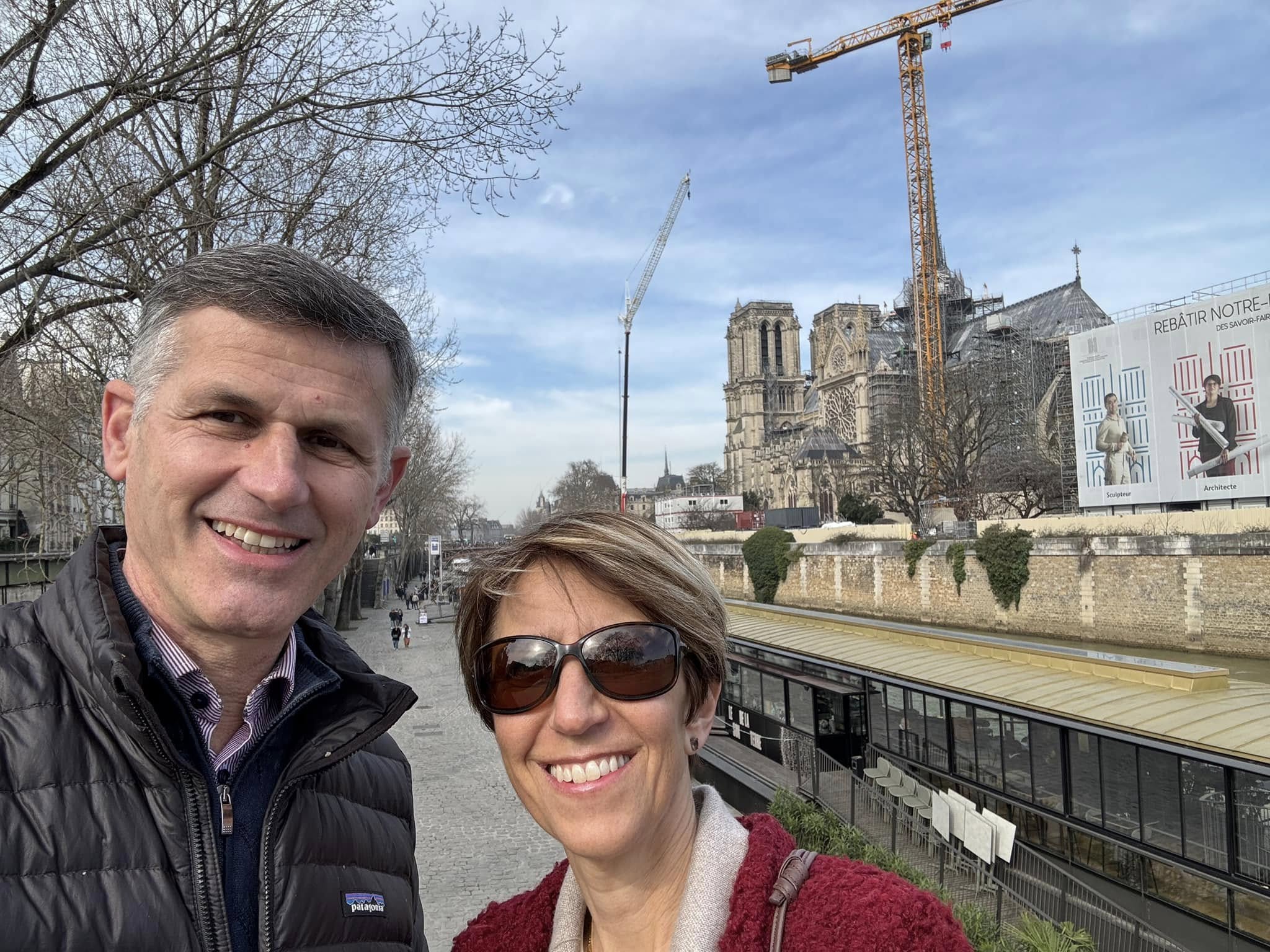
Notre Dame is open but not quite done with the post-fire renovation. I waited till midnight to book a pair of the 15,000 daily tickets that would have been sold out for two days hence if I had waited till the morning. The line for no tickets was long but it moves…I guess there’s only so much time most people spend in a church.
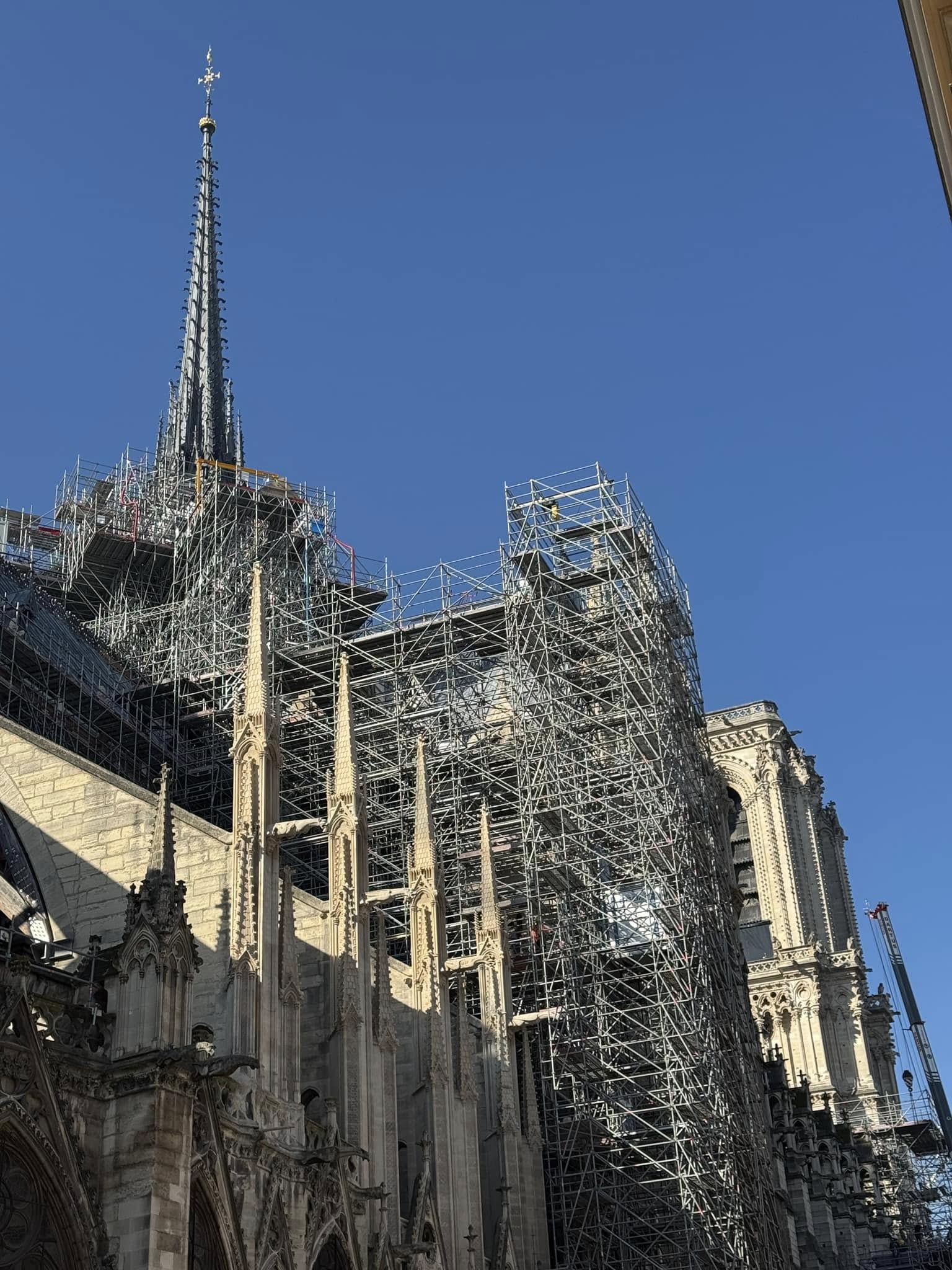
What a sight to behold. They’ve done a fantastic and oh so tasteful job of bringing the majestic Dame back from the ashes. They set an impressive objective of opening the doors to the public within five years and have done so without forgetting to acknowledge and thank the firefighters, the 340,000 donors who opened their wallets even before the flames were doused, and the 2,000 builders who meticulously cleaned or remade 2,000 statues, gargoyles and chimeras. That and the 2,000 oak trees, the 1,000 cubic metres of new stone added to the existing 41,000 square metres of freshly cleaned stone and the 4,000 square metres of lead roofing made the dream a reality.
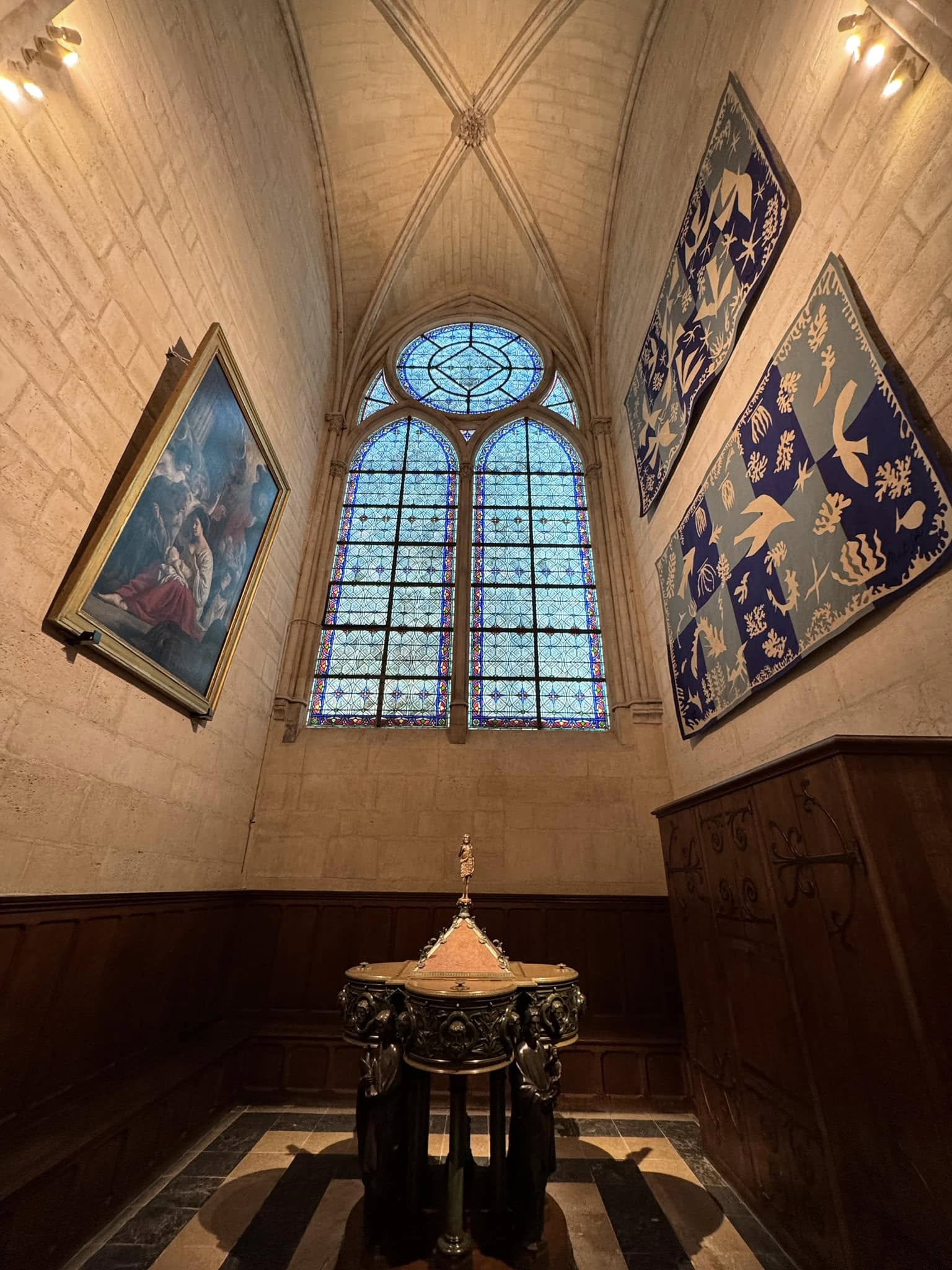
So much was lost in the fire that may have been caused by an electrical spark or a stray cigarette butt dropped near the 1,000-year-old wooden roof framing (who the heck smokes inside a job site…oh, right, the French), but what an opportunity to respect the old and bring in the new. From modern works facing classic paintings in the chapels like this 1972 tapestry based on Matisse’s “Polynésie, le Ciel Polynésie, La Mer” opposite this 1640 “Birth of the Virgin” by Baroque brothers Louis and Matthieu Le Nain...
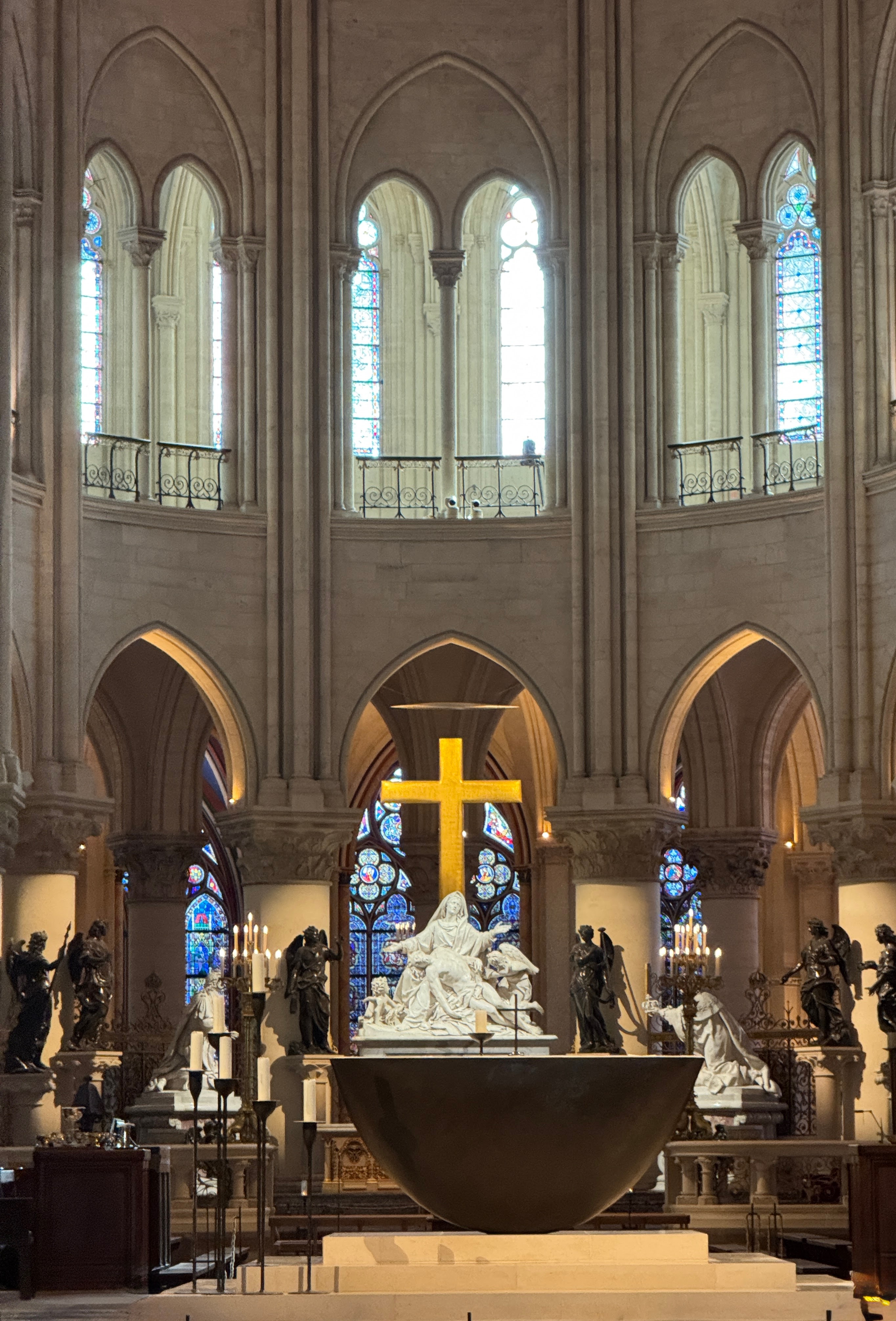
…to a fresh new bronze altar by Guillaume Bardet that looks like a salad bowl any of us would covet.
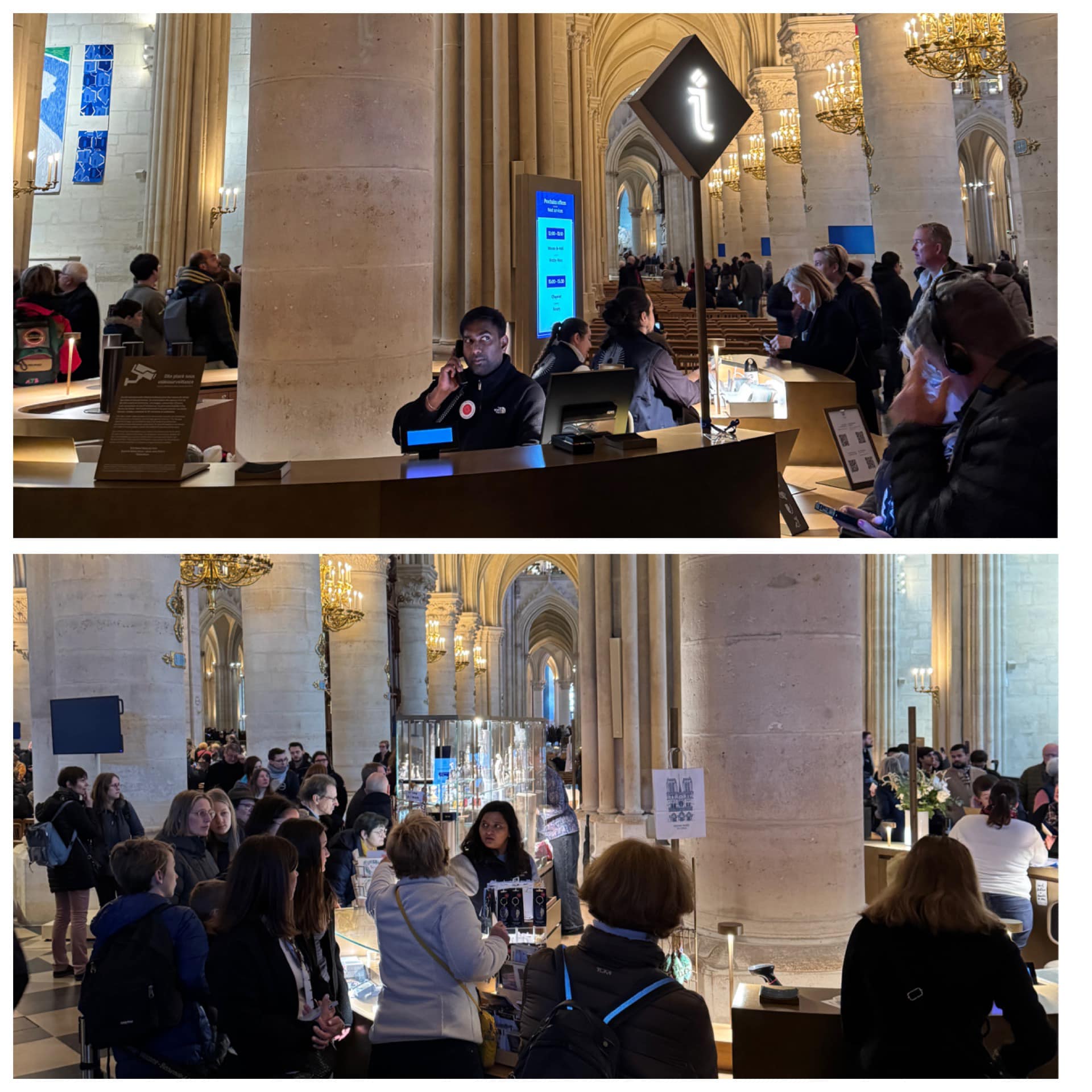
And of course, any cathedral would be remiss without an information booth at the entrance and a gift shop at the exit!
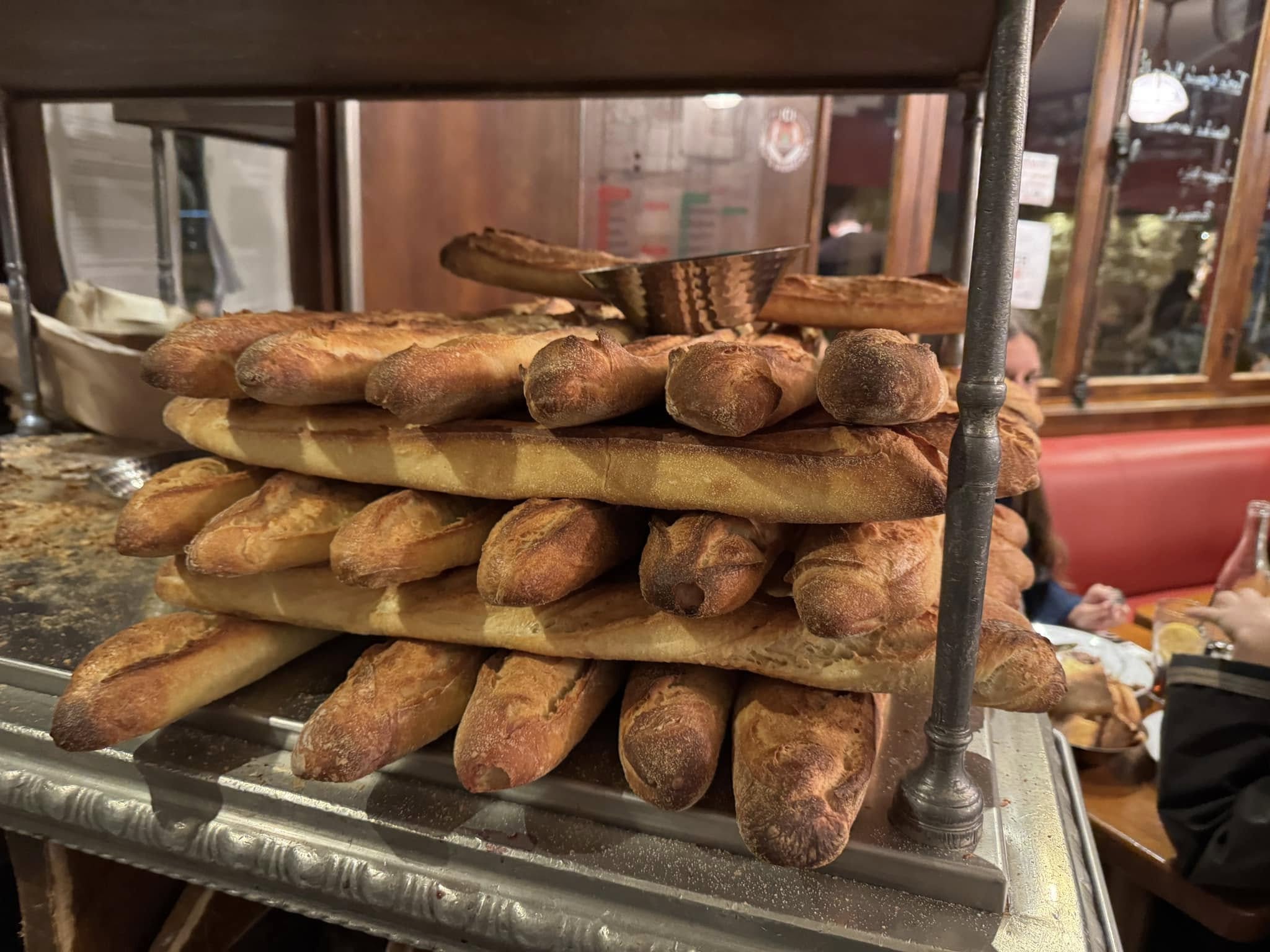
Baguette Jenga!
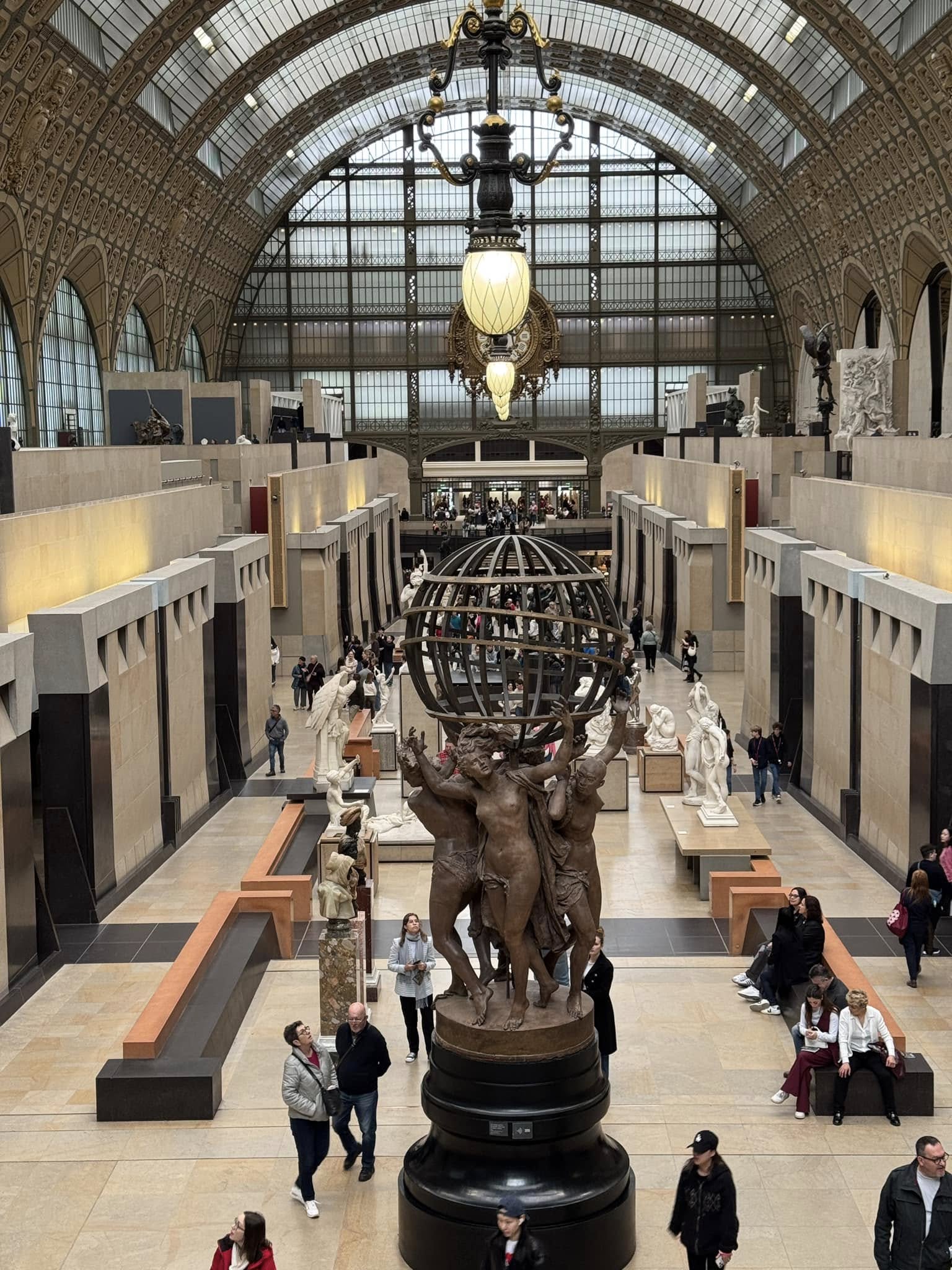
The Gare d’Orsay, the leading edge train station inaugurated for the World’s Fair in Paris in 1900. Its edge didn’t last long; by 1939 its platforms weren’t big enough to handle the new, longer trains and the station was relegated to local trains. Obsolescence came quickly and the building went through a few attempts at usefulness (a mail centre during WWII, a theatre and a film set) before it was slated for demolition in the 1970s. The French government gave it a last kick at the can and renovated it into the Musée d’Orsay, an art museum to bridge the gap between the classical Louvre and the modern Pompidou. Here is where it has flourished and will stand the test of time.
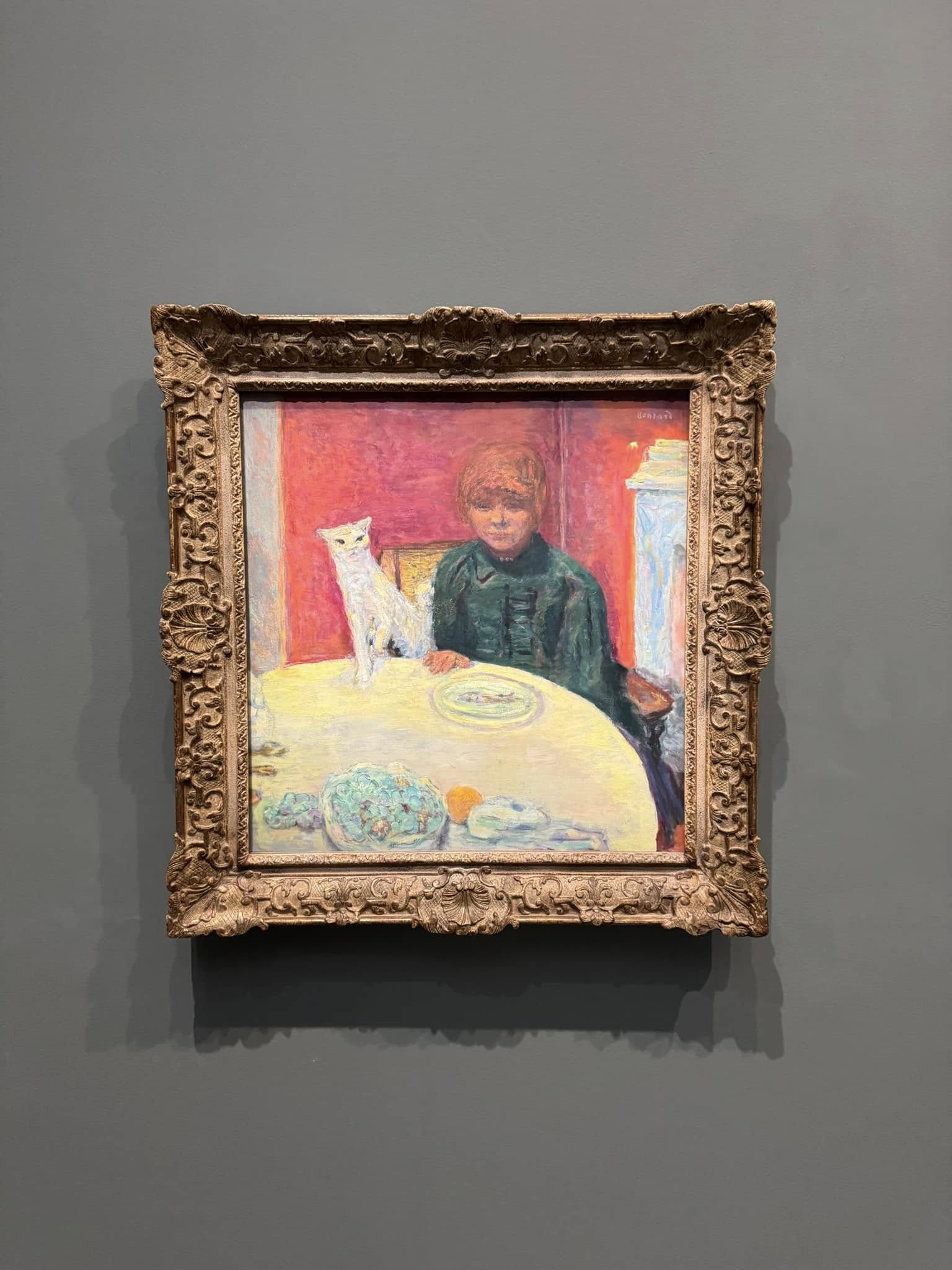
The original “crazy cat lady”!…credit goes to Pierre Bonnard.
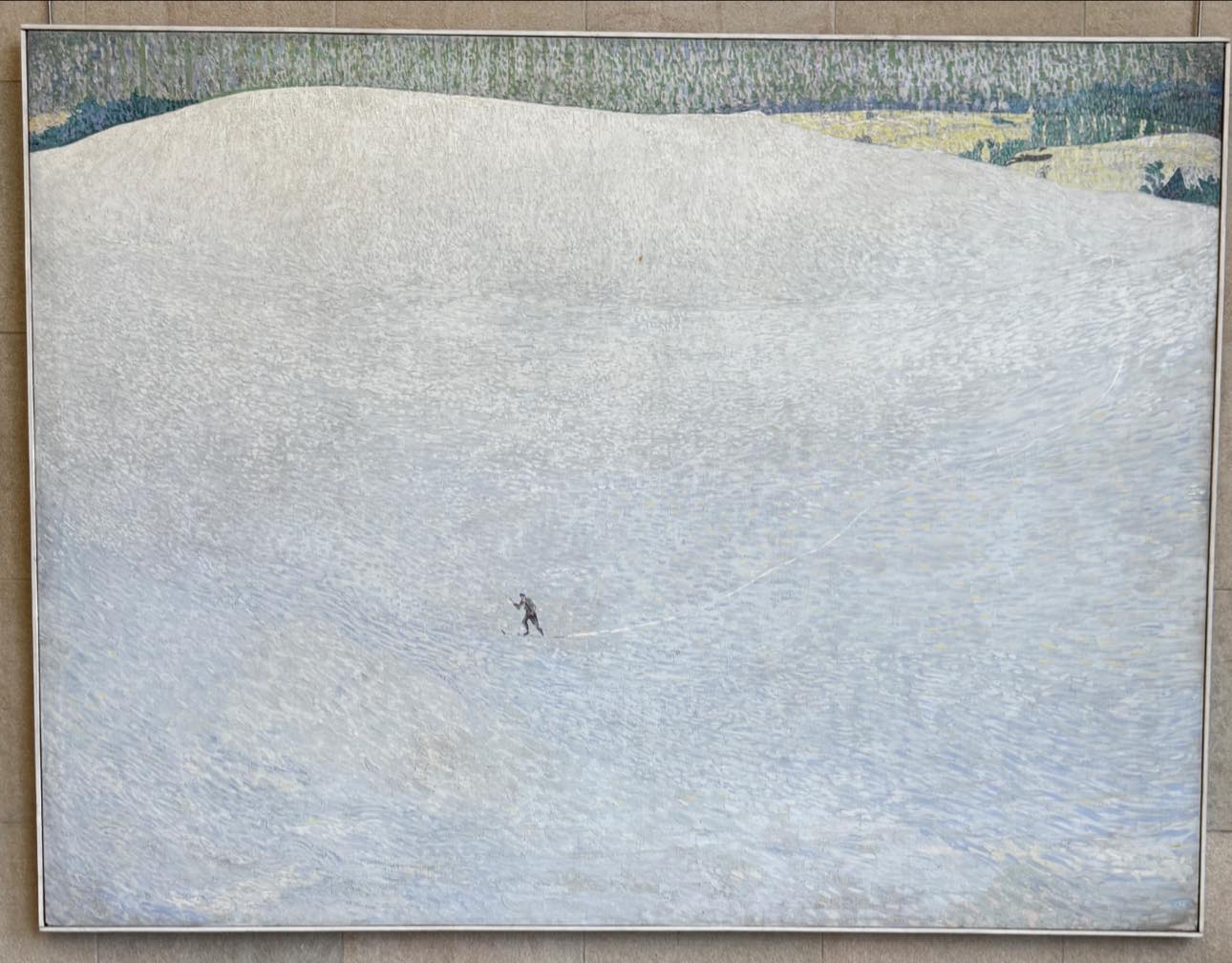
In Paysage d’Hiver (aka Grand Hiver), the vast expanse of nature is the dominant force over man. But the skier is pushing through the harsh landscape and not taking the easiest route. When Cuno Amiet painted this in 1904, who knew that human destiny in the face of climate change would be challenged. Is the skier a representation of all of us trying not to be engulfed by the crumbling of our planet? This painting is part of a selection of works in Mainland France “100 Works that Tell the Climate” to raise awareness about climate issues. It seeks to make a connection between art and science, showing the evolution of climate since the mid-19th century. Fifty-one of the artworks are here in Musée d’Orsay and 49 have been loaned to other galleries around the country.
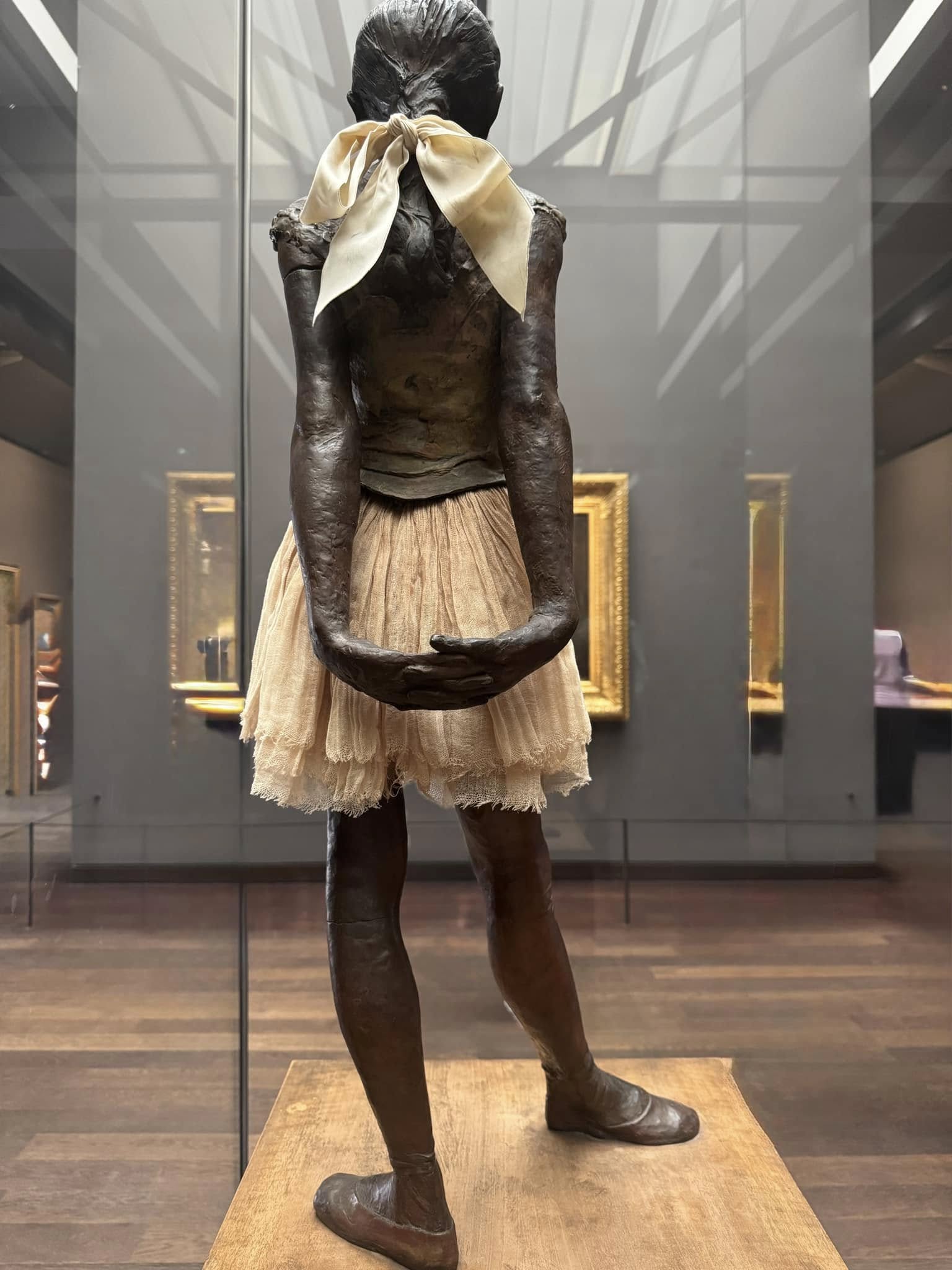
An alternate view of Degas’ Little Dancer aged Fourteen which was criticized by the art establishment because she wasn’t classically beautiful. She wasn’t deemed to be pretty and her pose was simply natural, lacking the desired elegance of the human form. Degas was interested in the realities of the working class dancers (in those days, ballerinas were considered lower class and morally suspect) not some idealized and artificial expression. He also dressed her in a real fabric tutu with a satin ribbon in her hair which was considered to be radical (the art world had a hard time with radical in those days). Of course, after his death, this sculpture was considered one of Degas’ most celebrated works and is now recognized as a masterpiece of impressionist sculpture.
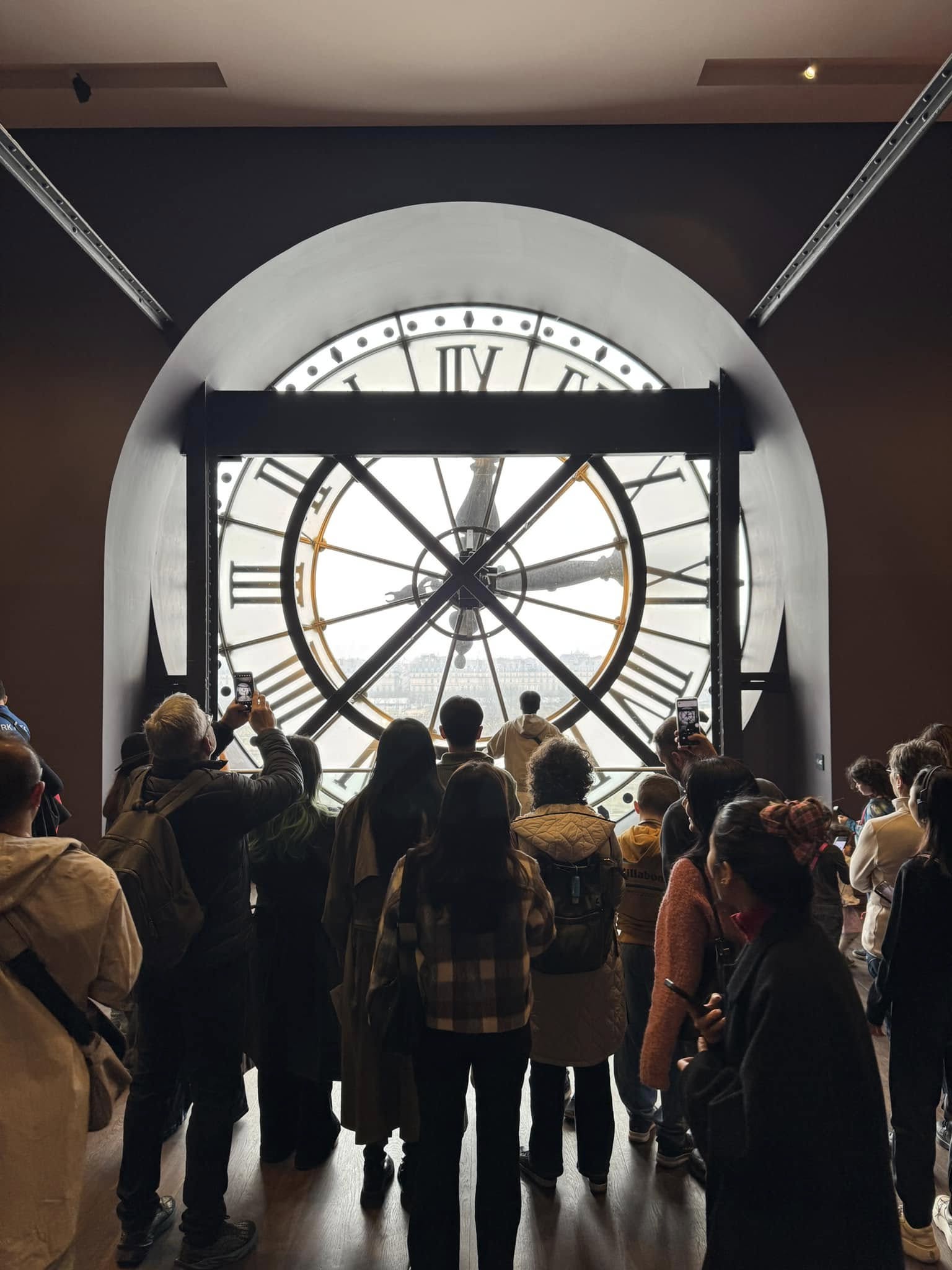
Just as many people were stacked in front of the famous backside of the clock in the Musée D’Orsay for a photo as in front of Monet’s water lilies or Van Gogh’s Starry Night.
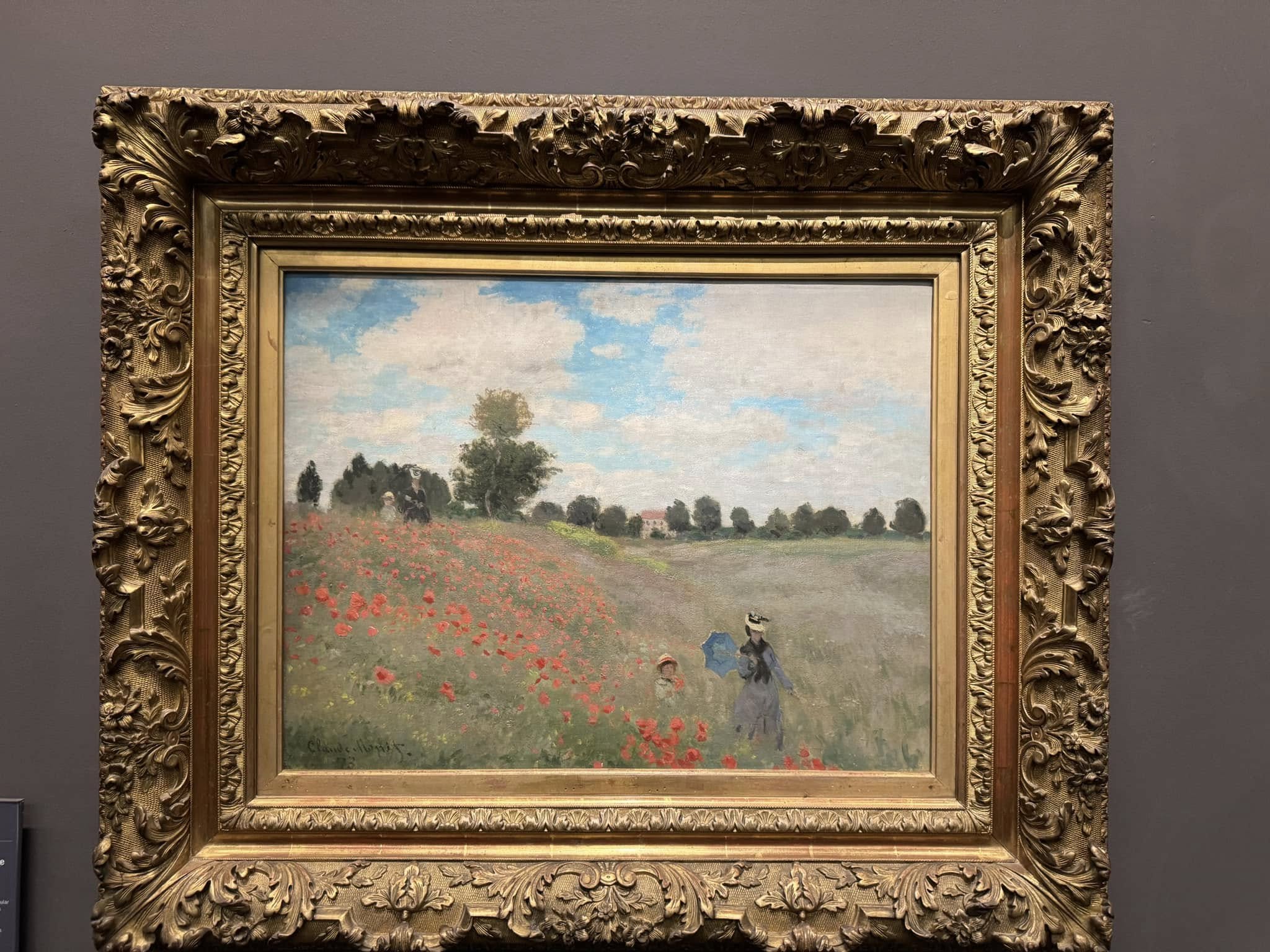
Monet’s Poppies (aka The Promenade). Poppies also figure in the 100 Works that Tell the Climate circuit. Poppies took a beating from pesticide use in the 1970s and 1980s and their comeback symbolizes respect in agriculture, acknowledging the importance of pollinators and beneficial insects in biological control and soil diversity. Monet would never have dreamed we’d be discussing his painting 150 years later in the context of climate change.
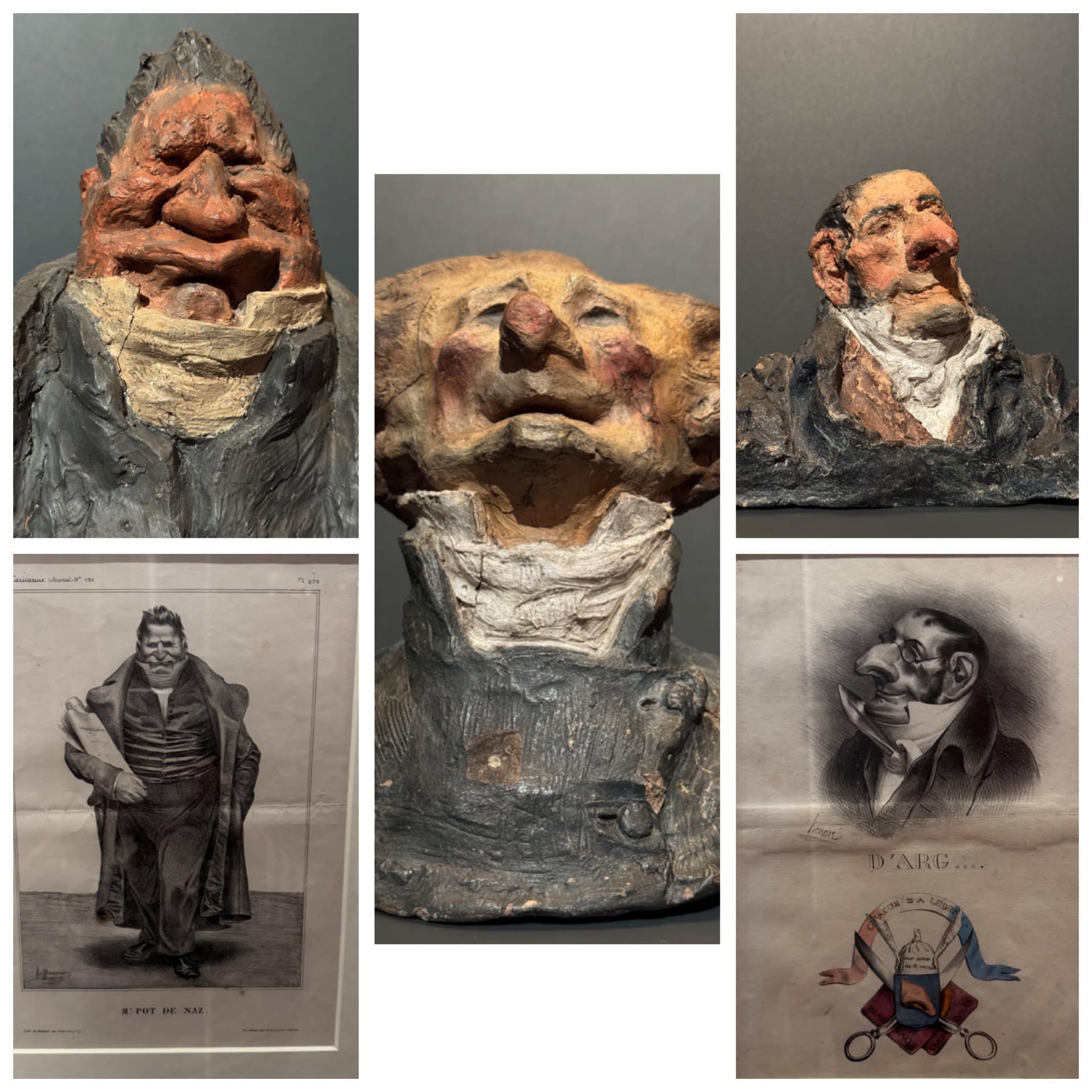
When King Louis Philippe acceded to the throne, he gave a speech saying he wanted to maintain a “juste milieu” away from the excesses of popular power and the abuses of royal power. Charles Philipon, editor of the satirical newspaper “La Caricature” was inspired! He commissioned Honoré Daumier to produce a series of caricatures in 1832. Daumier started by making clay figurines as models before creating the lithographs of The Celebrities of the Juste Milieu. These caricatures were of members of the Parliament of the time. Daumier was a Republican (the French kind!) and this crystallized the corrupt politics of the bourgeois regime. In these times, one had to have a certain level of income to vote and even more to be elected (hmmm, plus ça change, plus c’est la même chose). Most of these were industrialists, magistrates and bankers, clearly folks who likely didn't have the best interests of their constituents in mind! That’s the idea guy, Charles Philipon in the middle (of course Daumier had to immortalize him!), flanked by the clay figurines and the subsequent lithographs of two of the MPs.
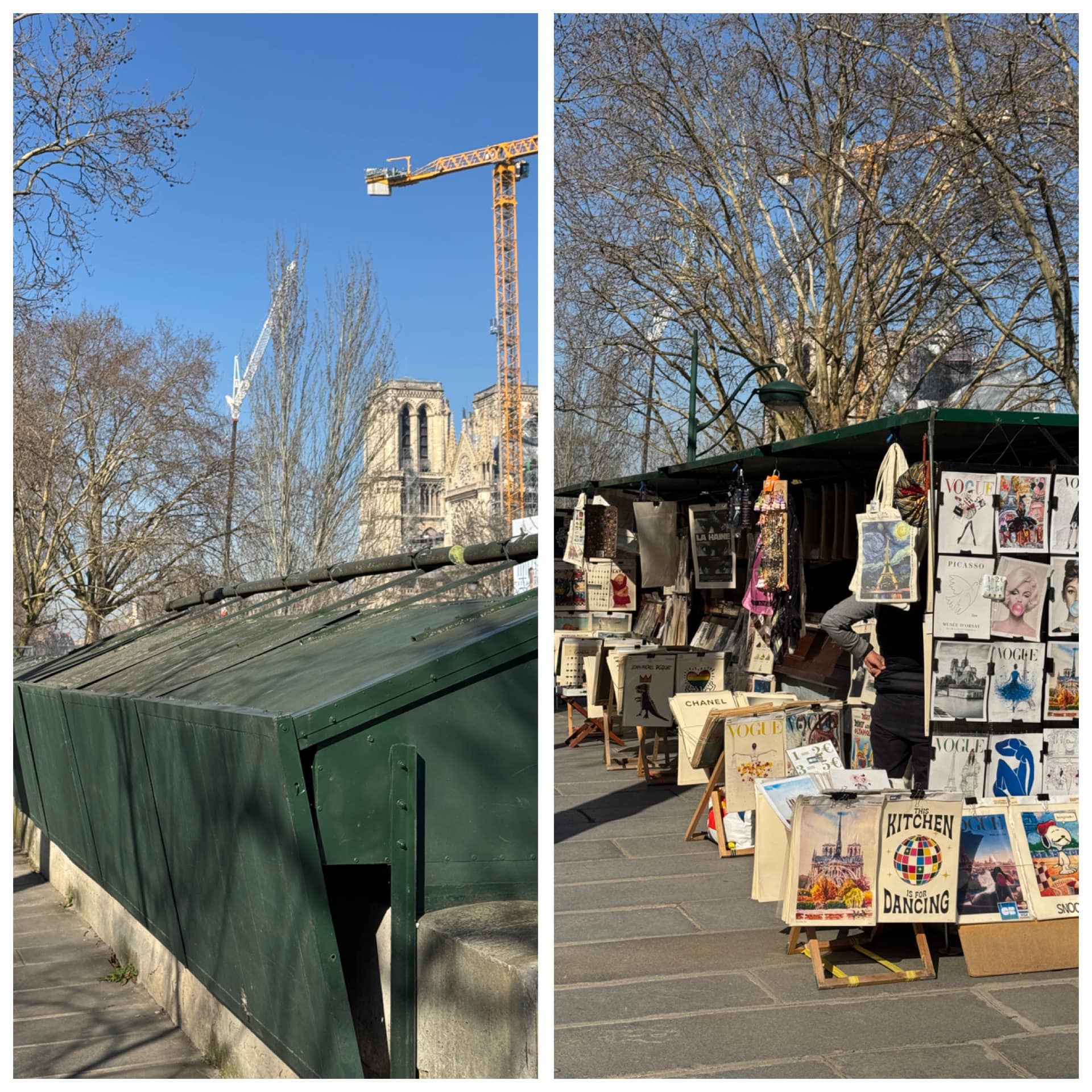
The iconic Bouquinistes that flank the Seine in Paris date back to the 16th century. These stalls that once enabled itinerant book sellers to make a franc have been elevated to UNESCO cultural tradition status. Back in the day, book selling was tightly controlled by guilds and printers, and only those with official licenses could own bookshops; a pricey proposition. This forced the itinerant booksellers onto the streets where they could not only avoid the overhead of owning a shop, but could also discreetly sell books banned by the church and be where the intellectual buyers hung out, along the bridges and quays of the Seine. Napoleon figured this was not a bad thing for the intellectual hub that Paris was so he officially allowed the booksellers to put aside their baskets and get set up in the permanent wooden stalls we still see along the River. The city later required them to all be painted the same dark green for consistency. There are around 230 Bouquinistes nowadays with over 900 green boxes filled with books, prints, and old postcards. It’s a booming business, especially in summer.
Refined Right Bank
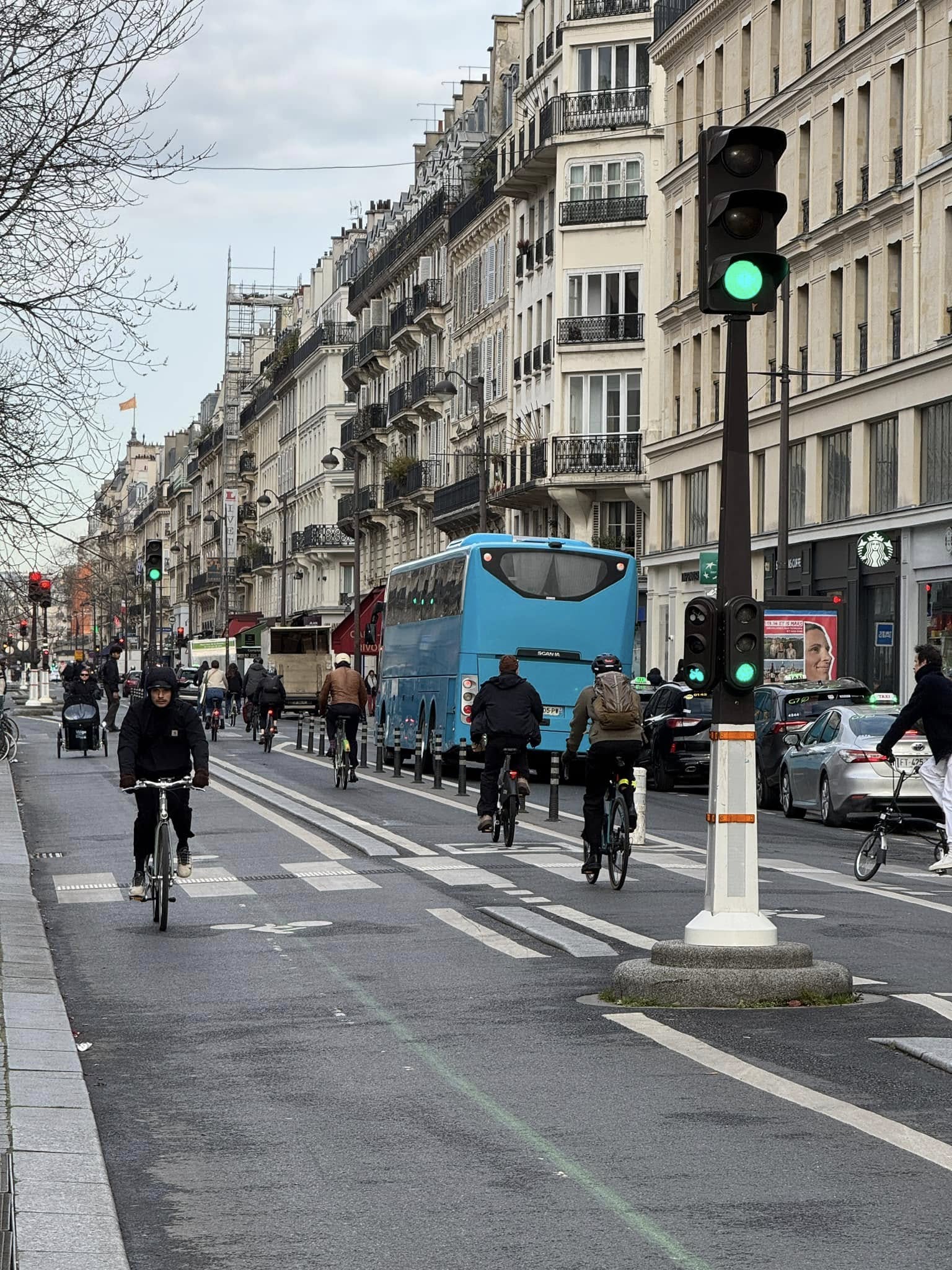
Transportation in Paris has jumped on the environmentally-friendly bandwagon. Every street seems to have very well-used bike lanes (not well-protected cyclist heads, mind you), tons of bike share stands and almost every bus we saw was either electric, hybrid or powered by biogas. The city’s goal for its fleet was to be 80% electric and 20% biogas by 2025, not yet achieved but hopefully soon and hopefully a model for other cities.
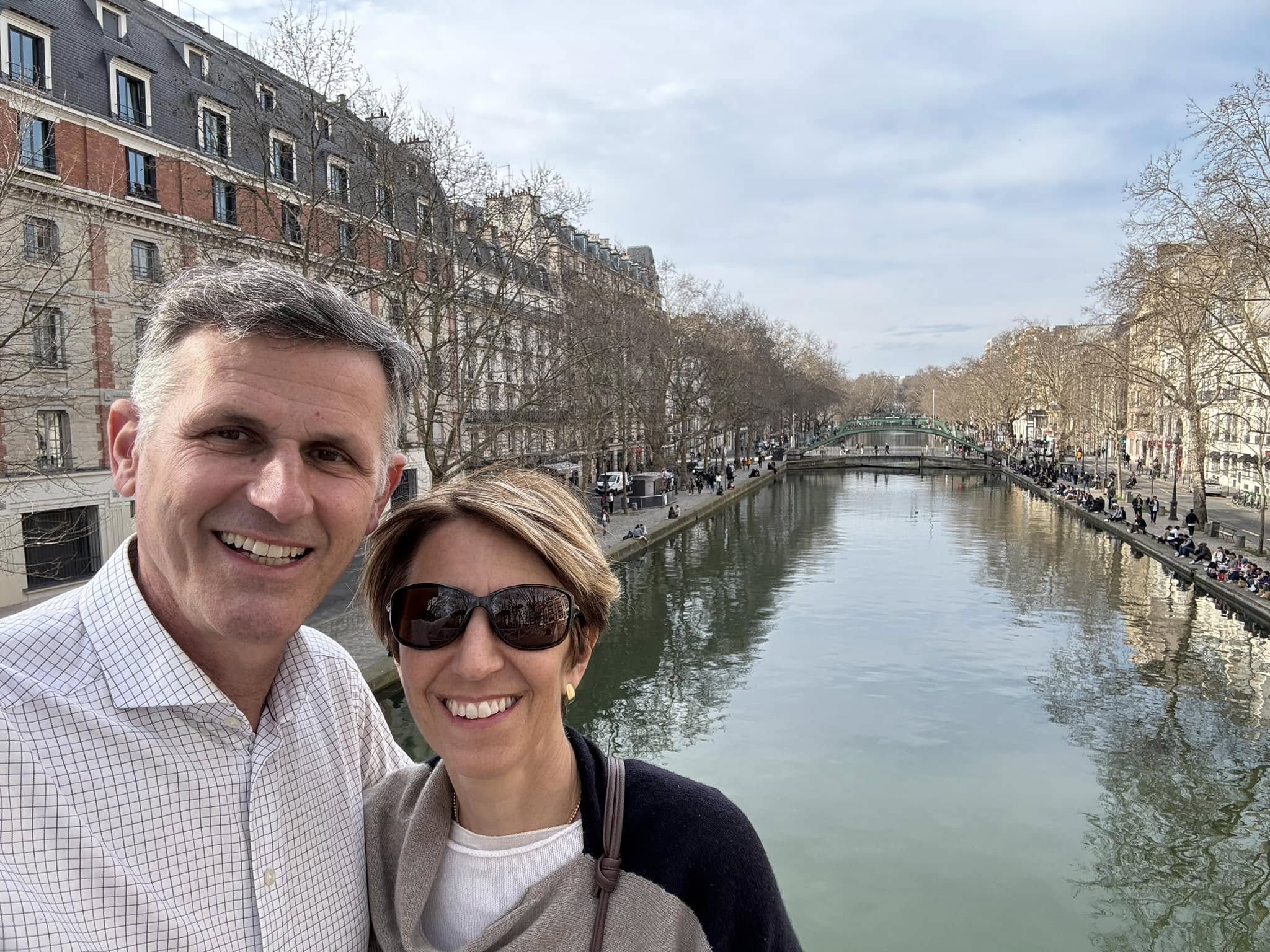
The Canal Saint-Martin feels like another world inside Paris, a hip little neighbourhood with a relaxed vibe…but really, Paris is very much a collection of many worlds to be explored. This is one of many canals that dump into the Seine (which, by the way, looks as dirty as it ever did…I can’t imagine the Olympians swimming in it). This canal is drained and cleaned every 10 or 15 years and I’m sure it’s quite an event for the locals to see what is lurking among the literally hundreds of tons of stuff at the bottom. It does beg the question that if all the canals that lead to the Seine are cleaned, why is the Seine so dirty?
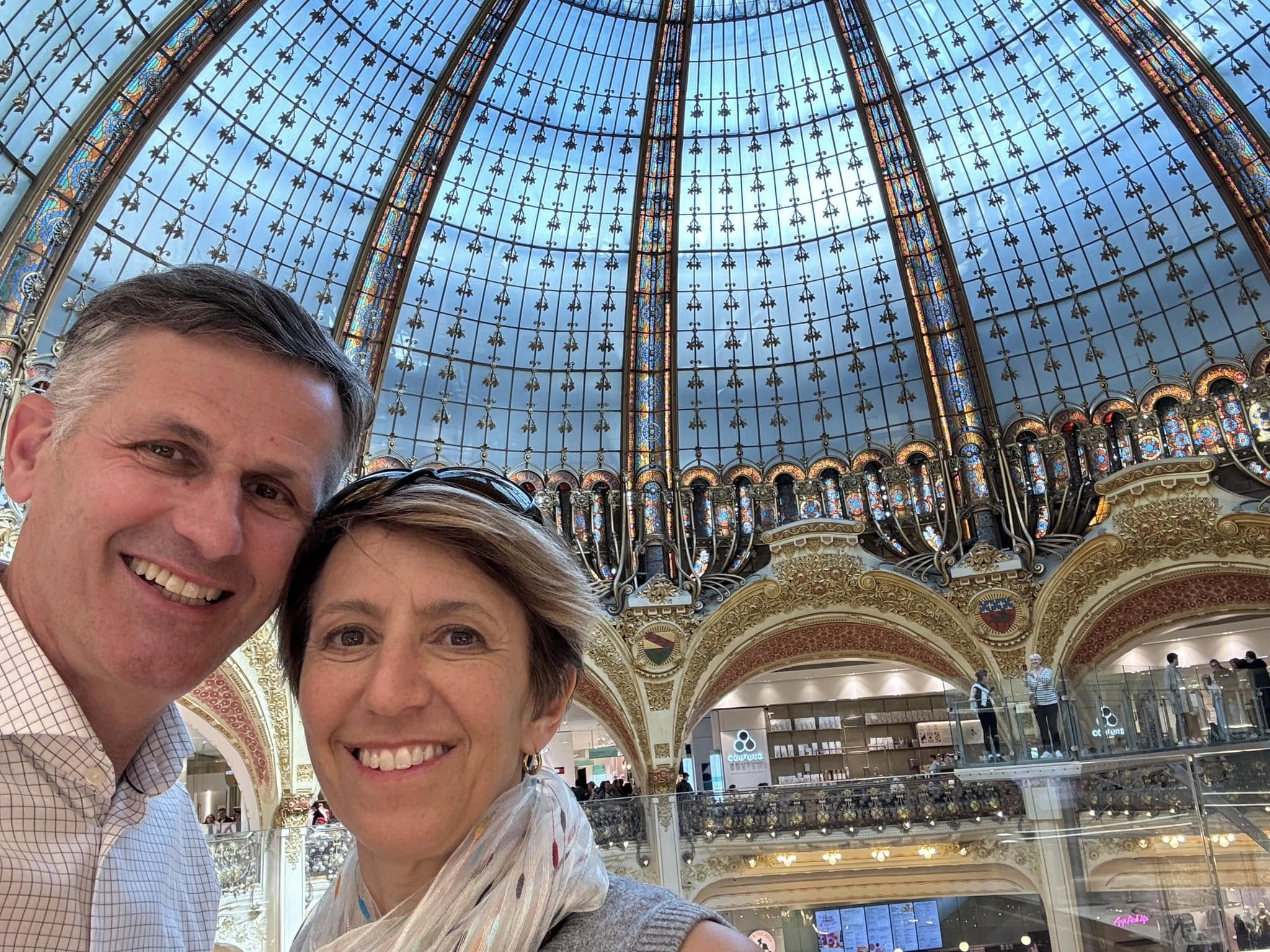
The only way to get Adam into a shopping mall is if it's an artistic marvel. And the central dome in Galleries Lafayettes certainly is!
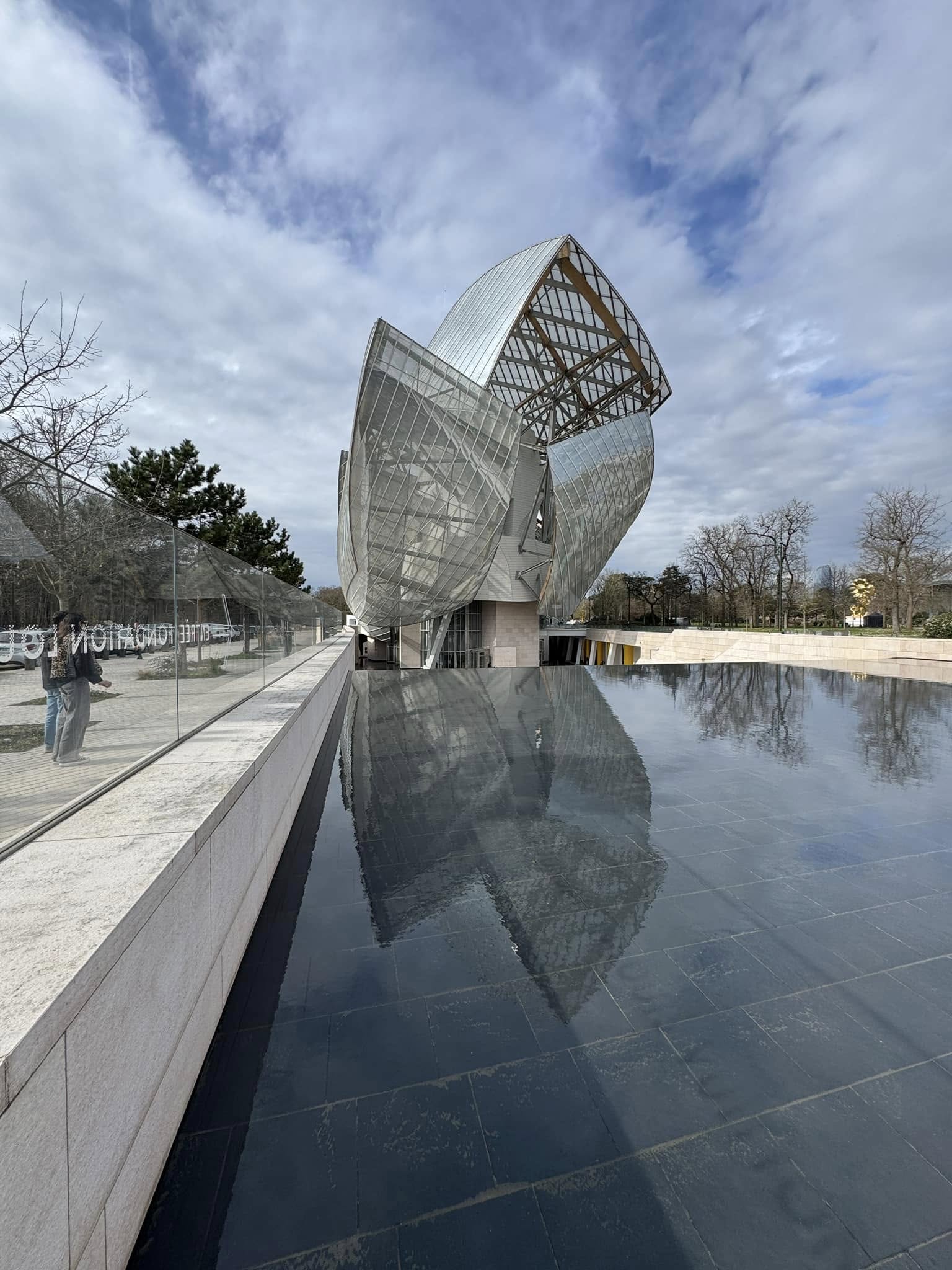
The Fondation Louis Vuitton is an absolute must visit! Adam had no desire to go, until he found out it was a Frank Gehry designed building. Art and architecture trumps the risk of fashion and shopping. And this place has nothing to do with fashion. Set beside the Bois de Boulogne, Gehry had a fair bit of freedom to circumvent many of Paris’s rules and restrictions on construction. For example, this building is 46 metres tall but officially only has one floor so it falls well within the number of stories rule. How did he get away with it? Probably part charm and part convincing the city planners that all those levels were outdoor spaces and did not constitute stories. Completed in 2014, this is truly an architectural and artistic masterpiece. And Frank Gehry is not done! He just celebrated his 96th birthday and is working on a new Guggenheim Museum in Abu Dhabi.
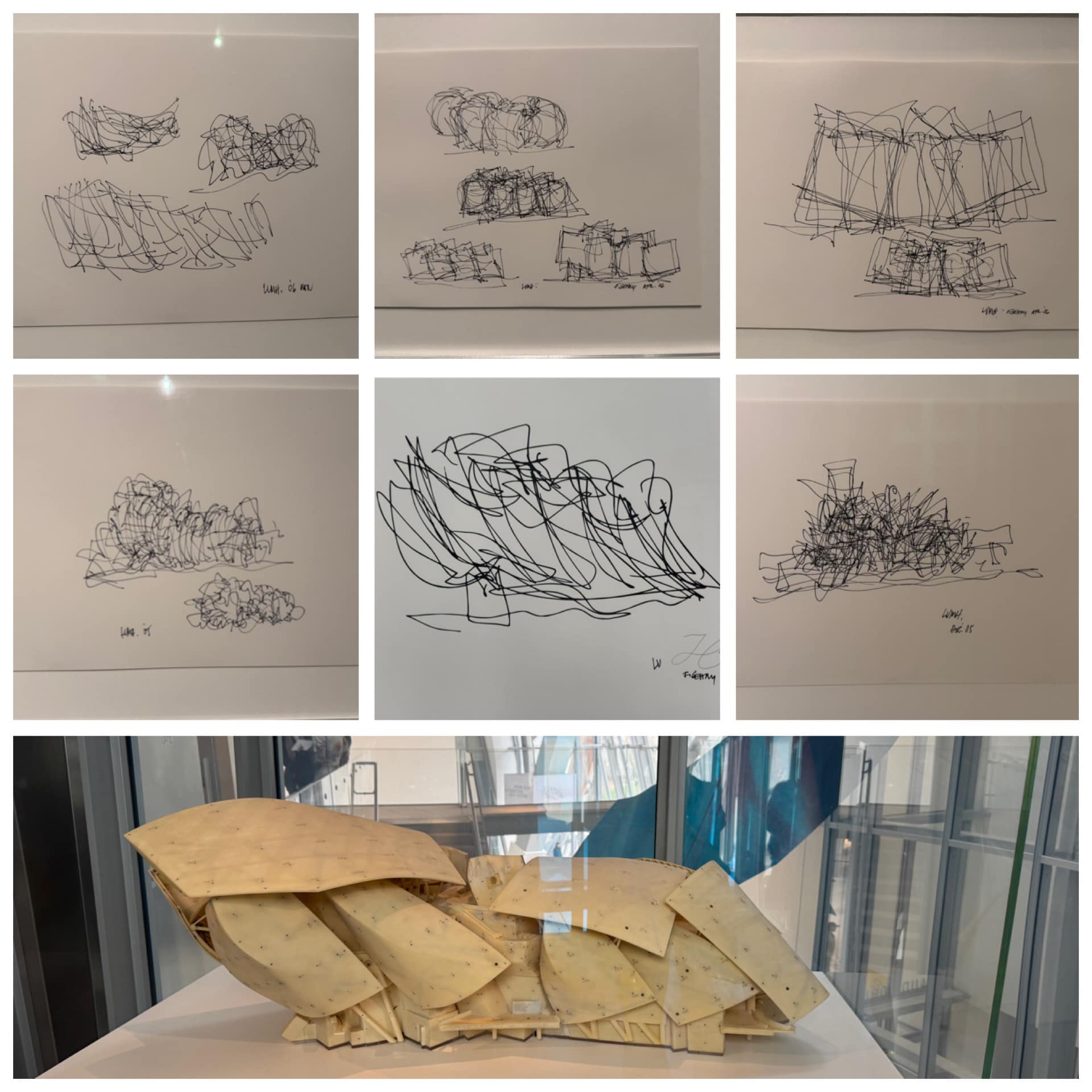
The Chairman of the LVMH Group commissioned Frank Gehry to design the Fondation Louis Vuitton after seeing his Guggenheim in Bilbao. Frank came to Paris to see the site and talk about the goals of the project and on his way home, he started doodling during the flight. It’s quite unbelievable how those doodles reflect so closely what was eventually built.
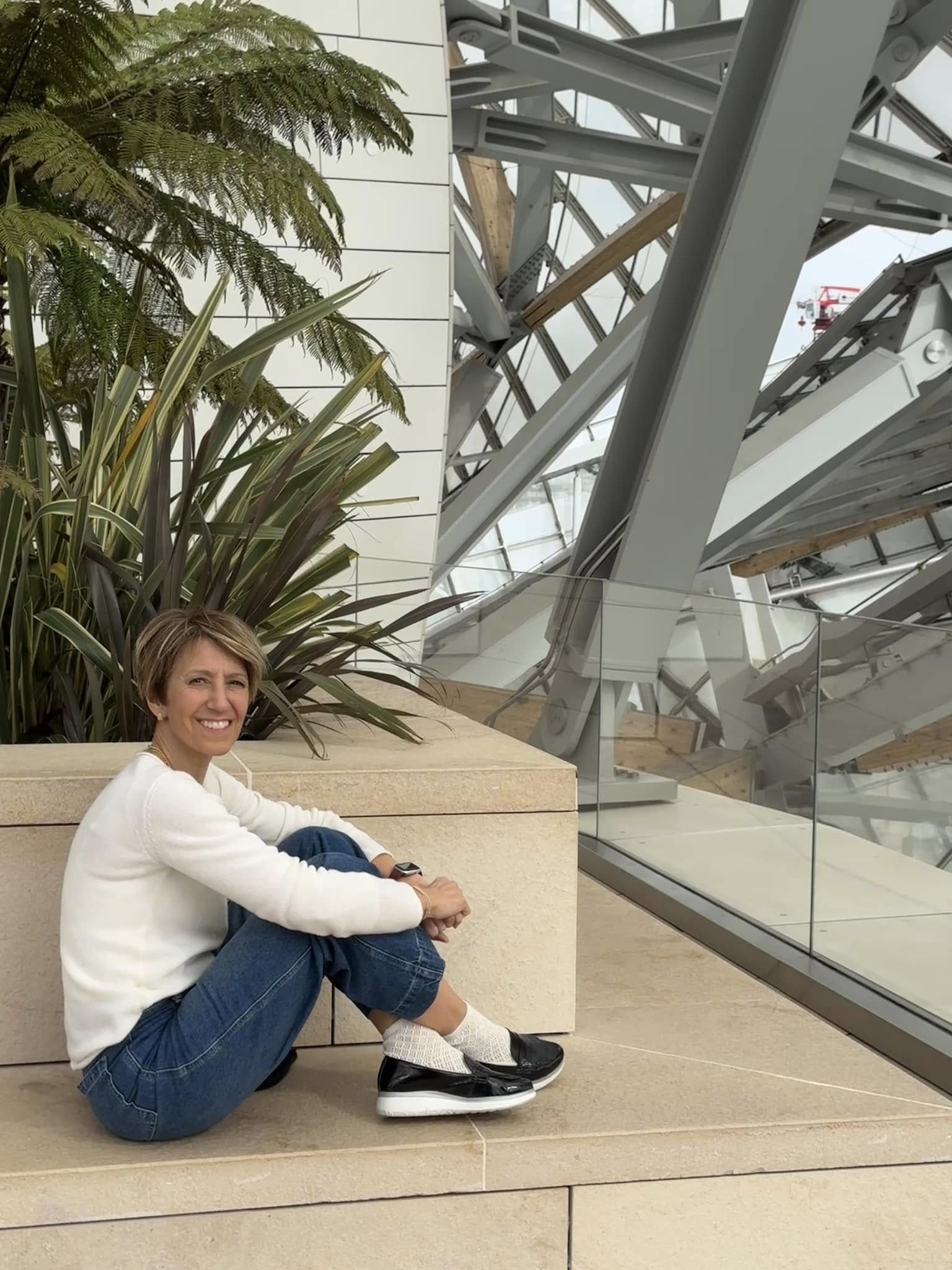
The building is made up of 11 exhibition galleries sprinkled among a series of outdoor balconies which surround what Gehry called “the iceberg”, the building’s central core. In this photo, we can see all of the materials used to create Frank’s dream. I’m sitting on Rocherons Doré limestone from Burgundy in front of a few of the 19,000 white ductal panels that make up the exterior of the iceberg. One of the 12 giant glass sails is overhead, held up by the supporting structure of steel and glue-laminated timber. Every single sail, panel and structural component was meticulously crafted and shaped. The technology involved here was groundbreaking and resulted in the filing of more than 30 patents.
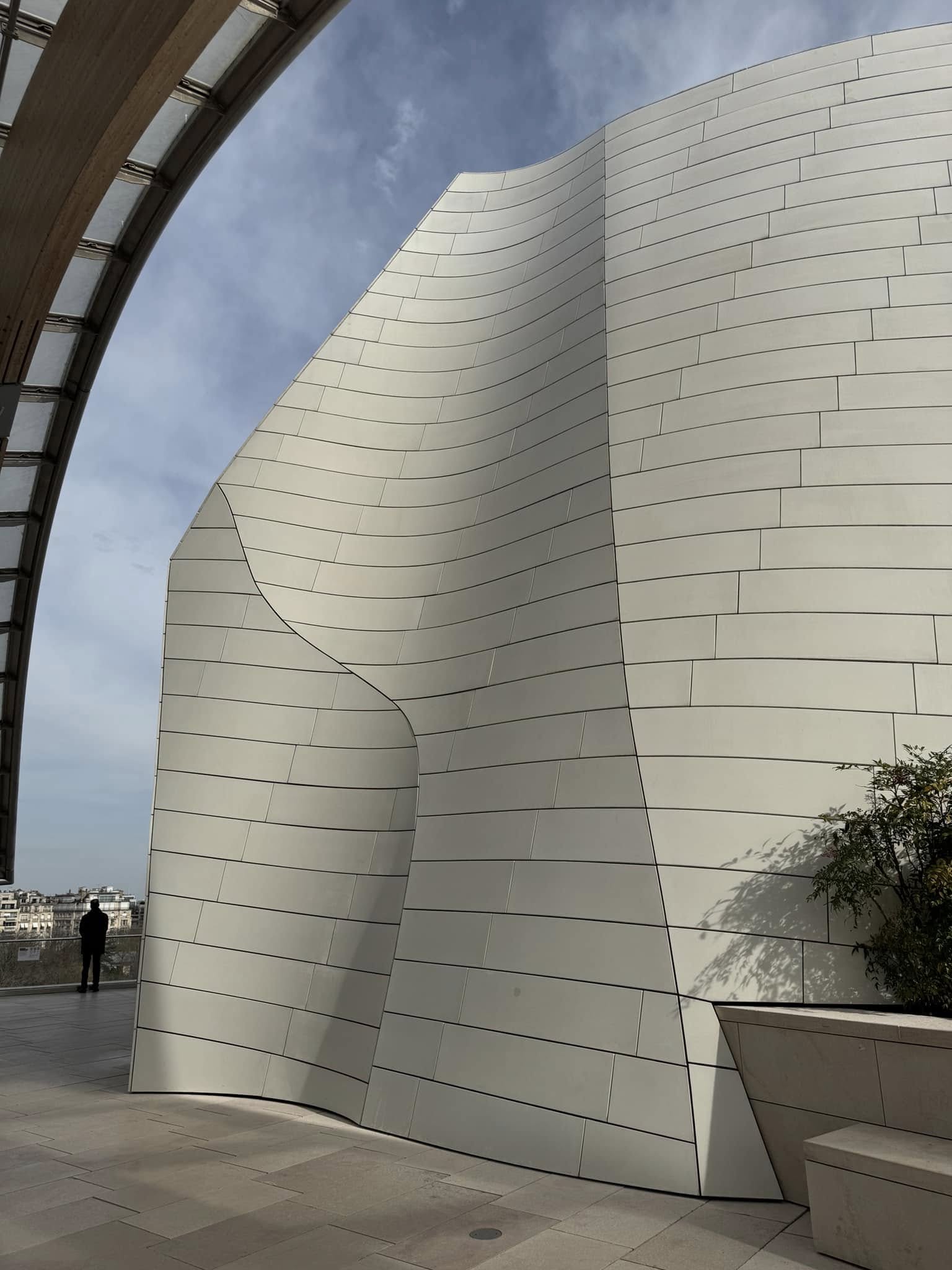
The tip of the iceberg.
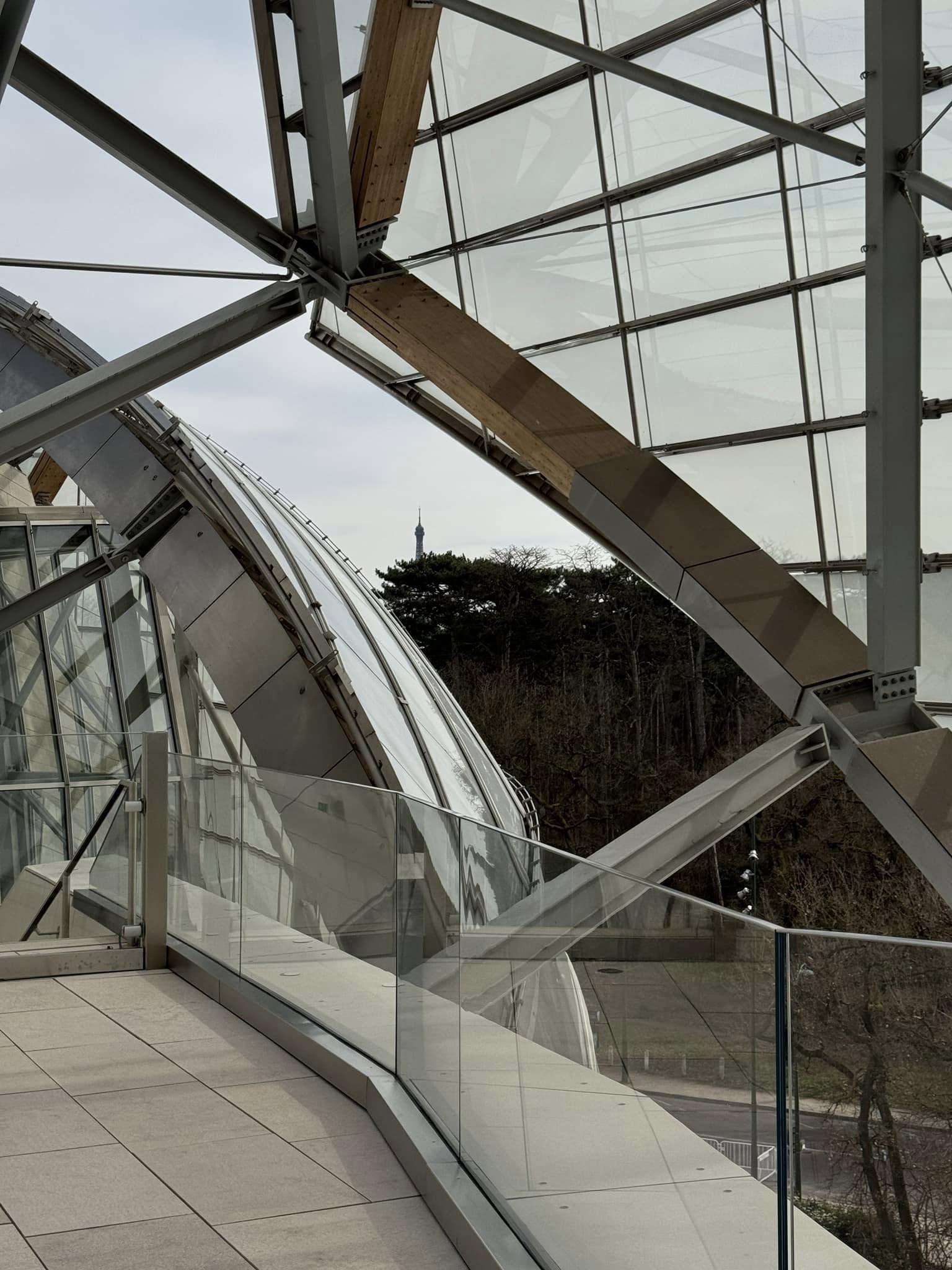
There is a definite ship vibe to the structure of this building and the Eiffel Tower, visible from a variety of different areas, is like a lighthouse.
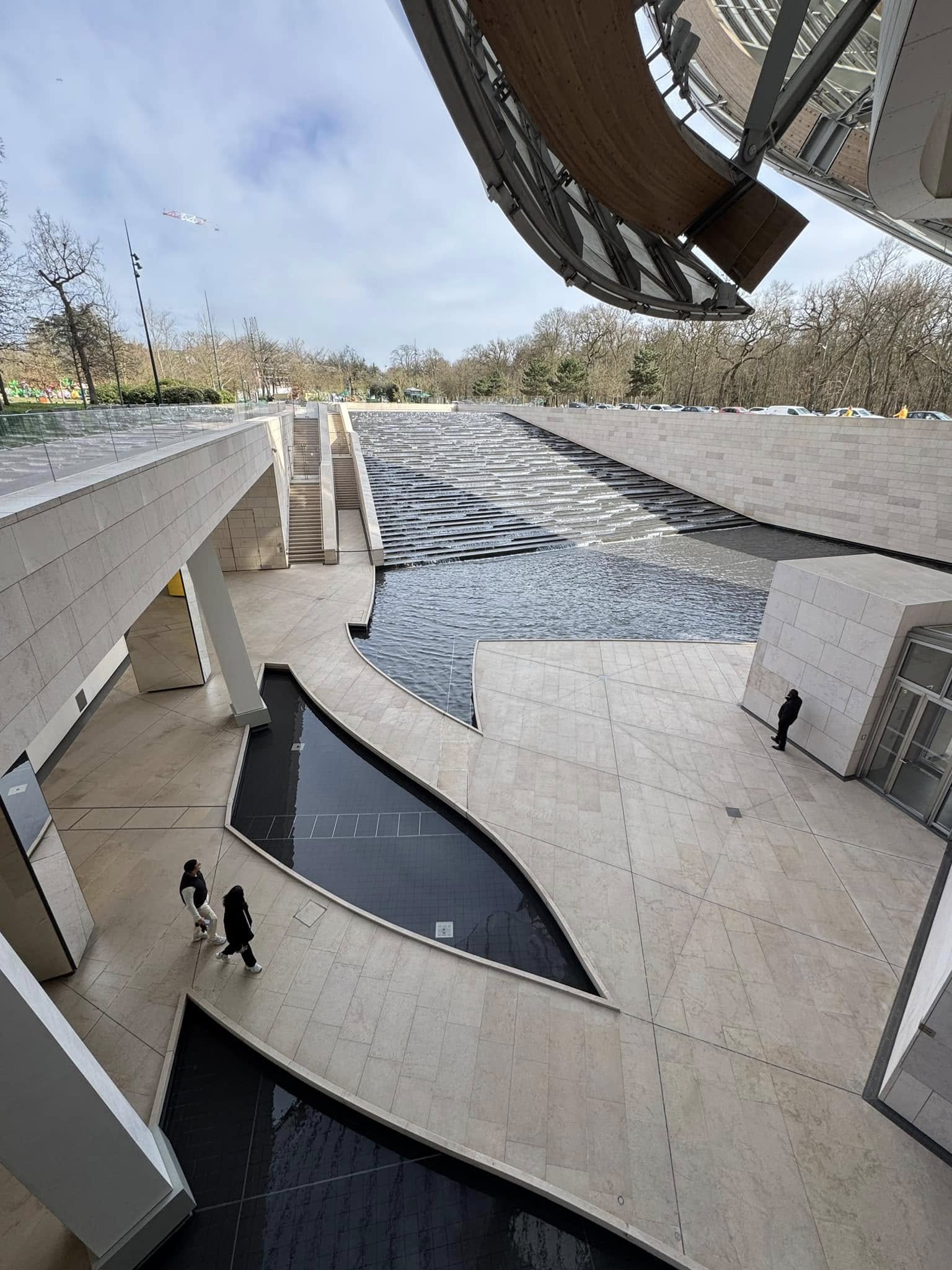
The curves and lines of the building are echoed in the outdoor space and help make the Fondation an indoor/outdoor experience.
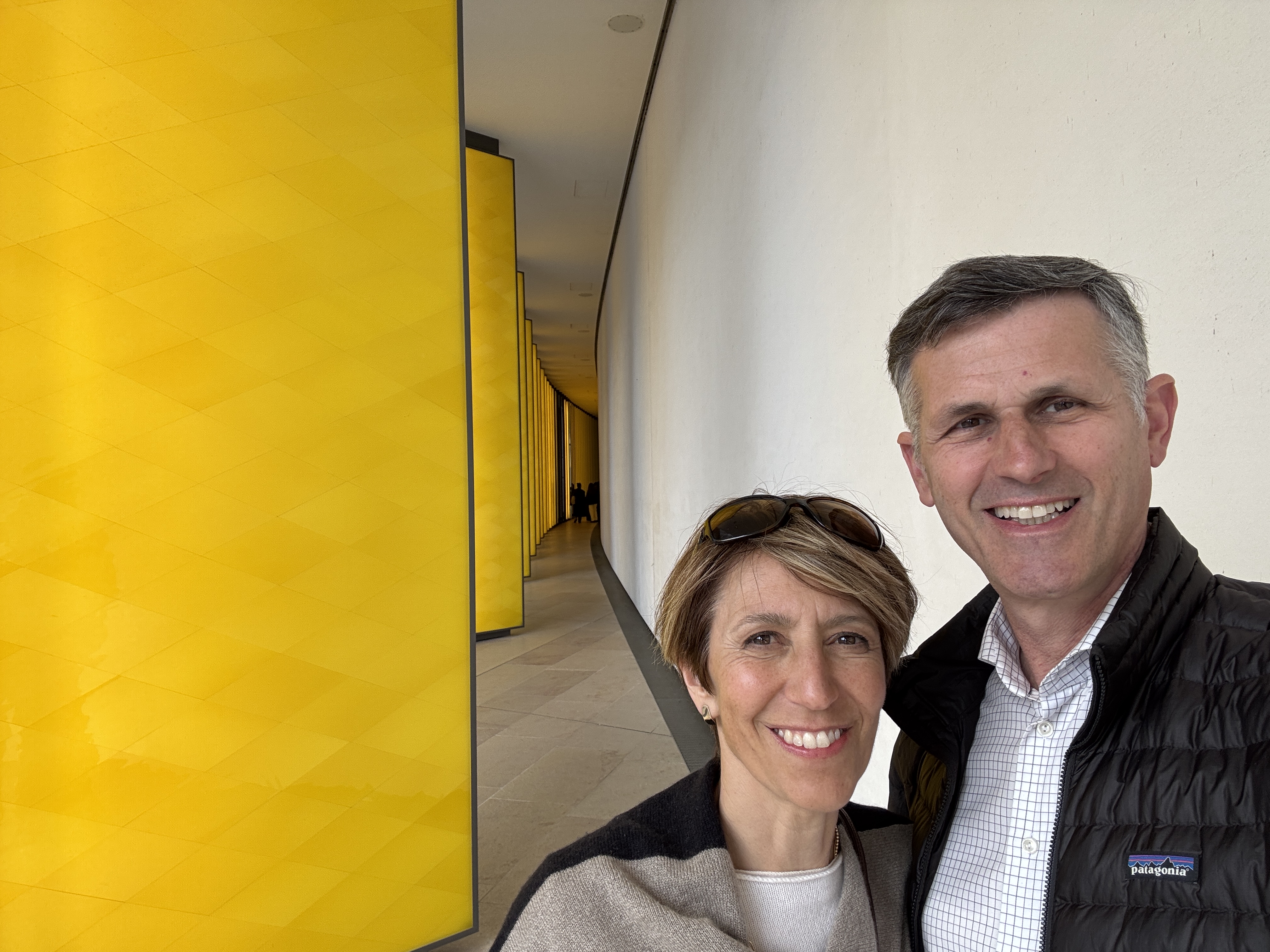
There are a number of permanent artist commissions, designed to be part of the space. Here, Danish artist Olafur Eliasson has created “Inside the horizon” using a series of 43 triangular columns of mirrors and yellow glass mosaic like a giant kaleidoscope. We walked in and around and through creating our own reflective art.
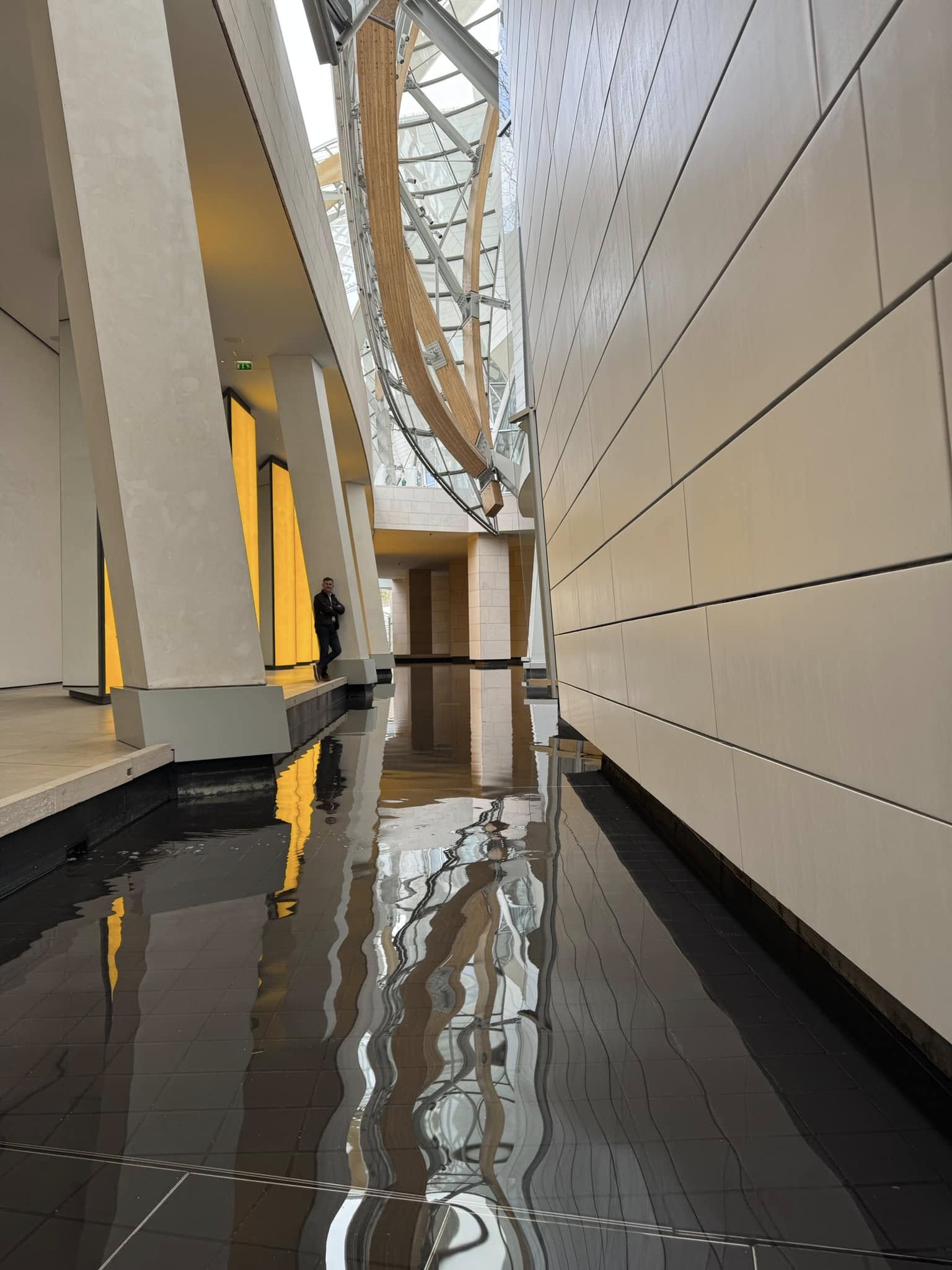
“Inside the horizon” follows the 91 metre length of the reflective pool which creates more changing art where we can see the glass, timber, steel and ductal reflecting in the movement of the water. This is truly an inspiring place. No exhibitions were running when we were there but there really was no need; we were engrossed with building itself. And can you imagine if there was a fashion exhibit?! I might never have convinced Adam to go!
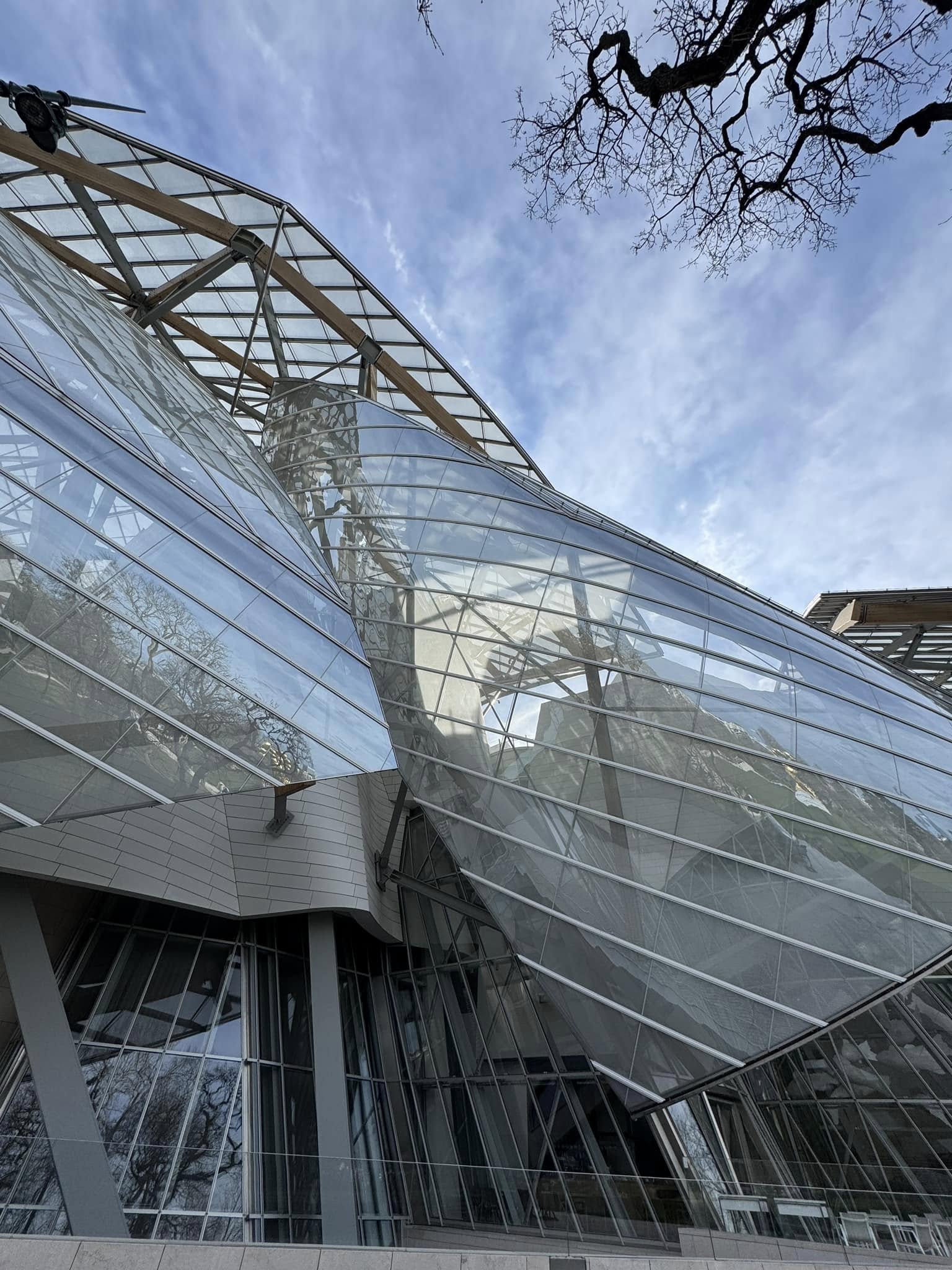
Paris is known for its abundance of pigeons but there are no pigeons here. It’s not like it’s too far to fly. It turns out, they bring in a falcon to chase them away. Apparently pigeons have a short memory so the falcon gets a regular, weekly gig.
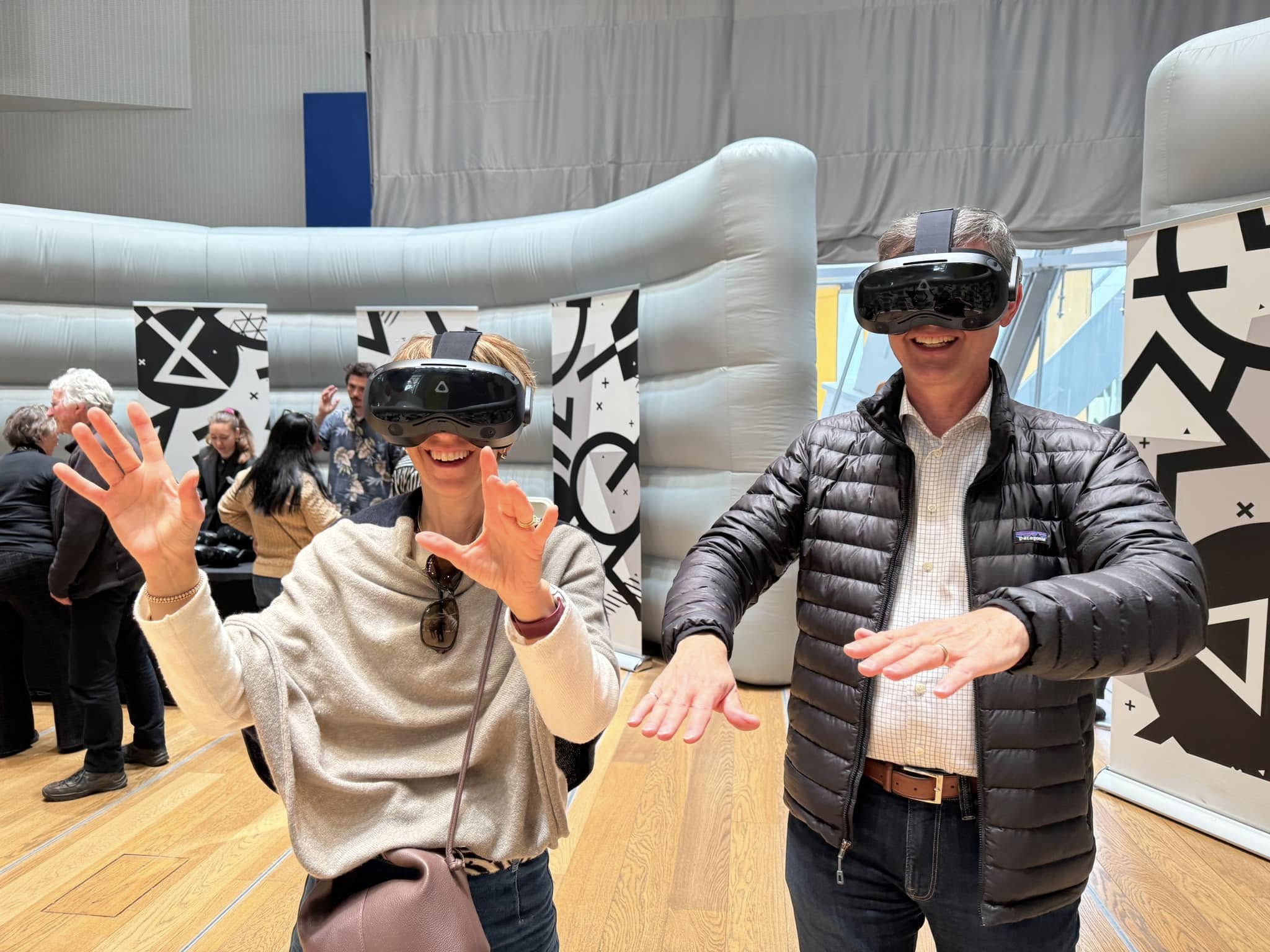
For a whopping 2€ extra, we took part in an amazing VR section. The best 2€ I’ve spent in a long time. The VR takes you to parts of the building inaccessible to the public. We walked through walls to see what was inside and could explore the structure of the building and spaces. We crawled around to peer over edges that really felt like you could fall off if you weren’t careful. We even stepped off the roof and floated outside the walls of the building. What an experience!
This was the group that followed us. We must have looked as odd as this to onlookers. You really have no sense that you’re surrounded by bouncy castle walls.
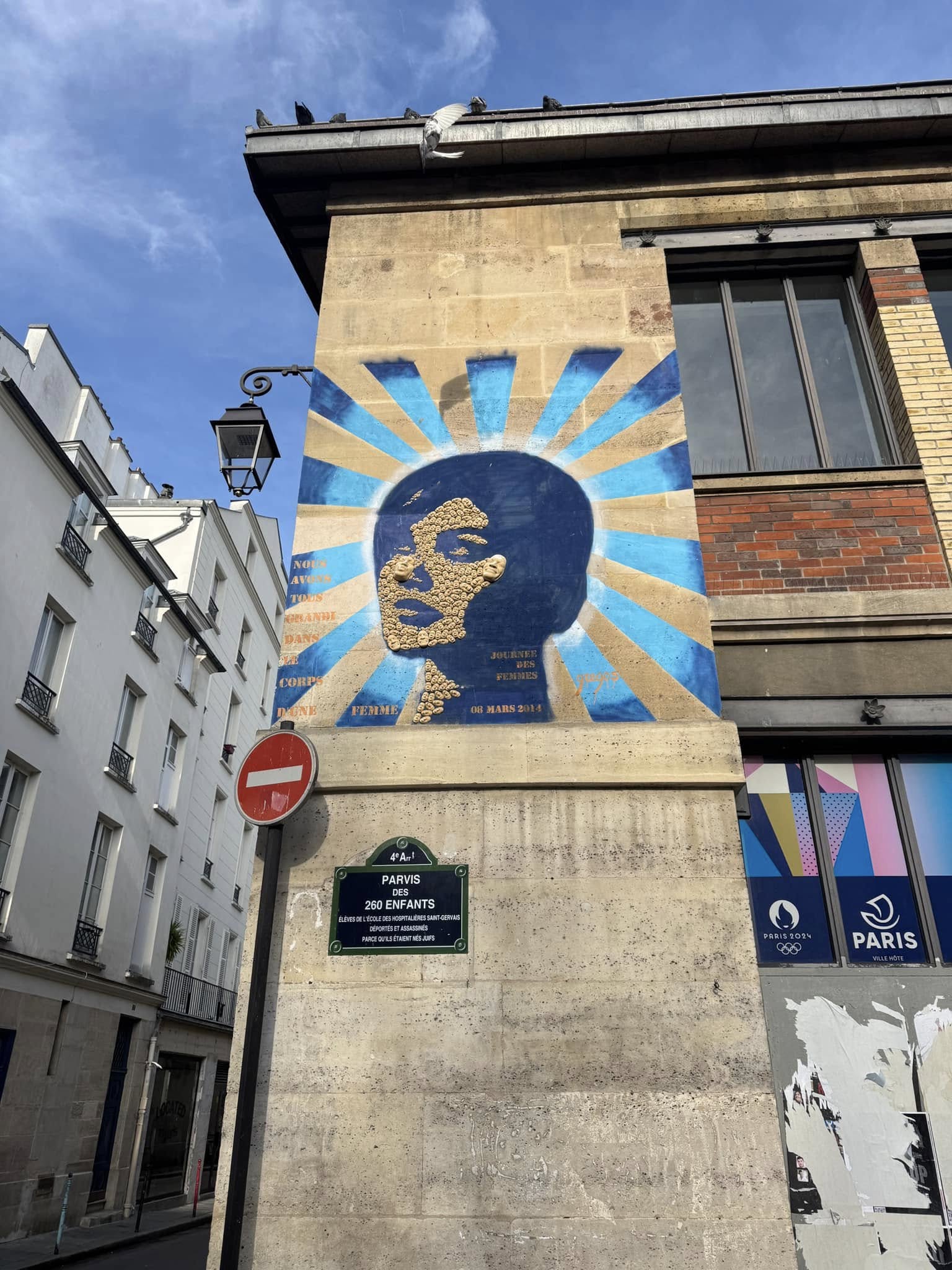
It was meant to be…we walked past this mural on International Women’s Day. Up close, it’s hard to appreciate. It just looks like a bunch of ceramic faces stuck on the wall. But from a few steps away you can see that all those women’s faces create the face of a woman. This mural was done for International Women’s Day in 2014 and the caption reads “nous avons tous grandi dans le corps d’une femme”, we all grew in the body of a woman.
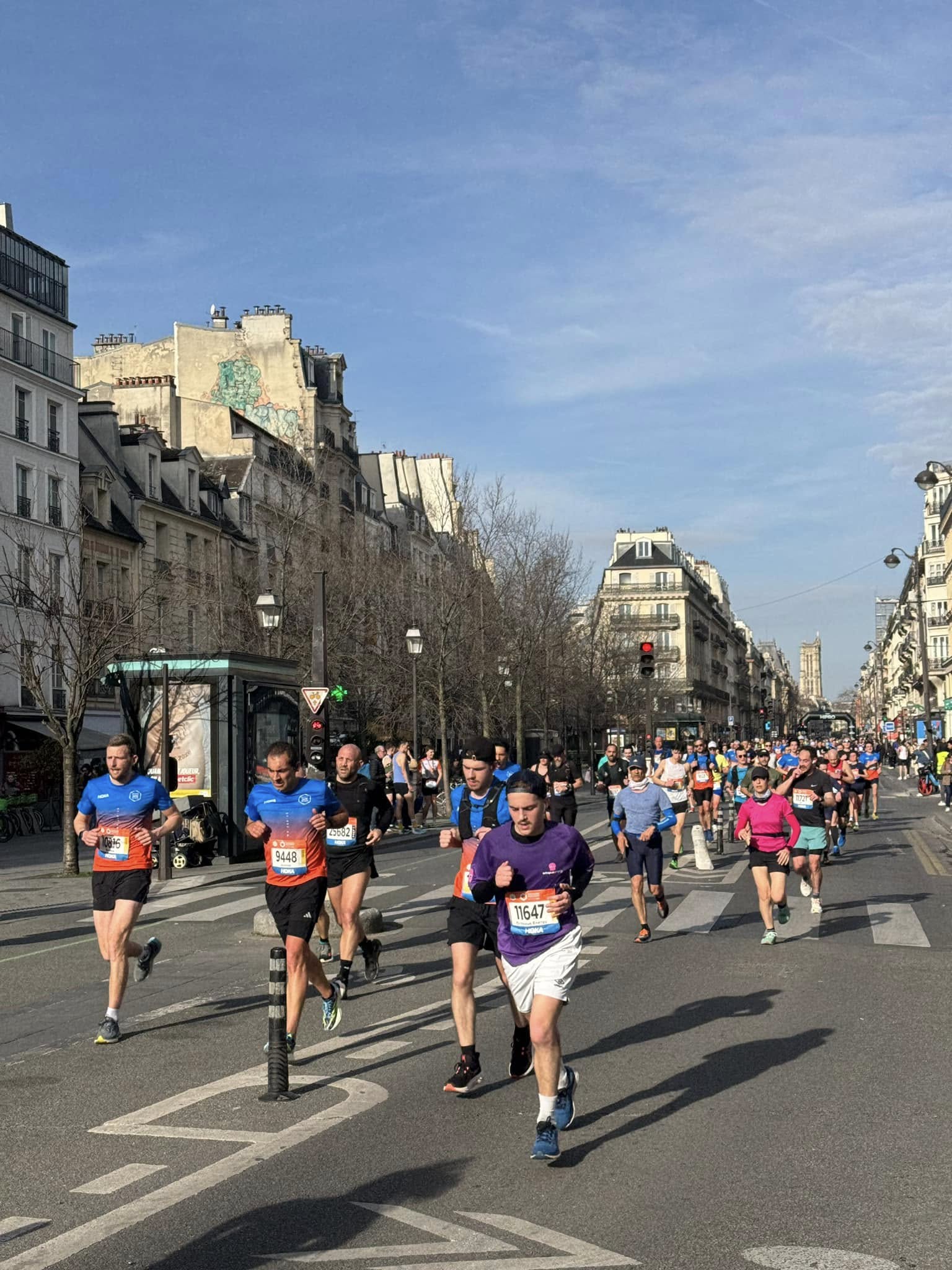
The Paris half marathon ran past our hotel! What an amazing mix of runners; people of all ages and degrees of seriousness about running. Clearly some were doing this as prep for the full marathon in three weeks, others were out for a run with friends and still able to talk at this stage, and plenty looked like they were about to collapse (one did across the street from where I was standing). The street was lined with people who were cheering everyone on. When someone stopped, having had enough, despite being so close to the finish, strangers encouraged them to keep going, which they did!
The Bibliothèque Nationale de Paris, across the street from the Polène store…hmmm, which line should I join?
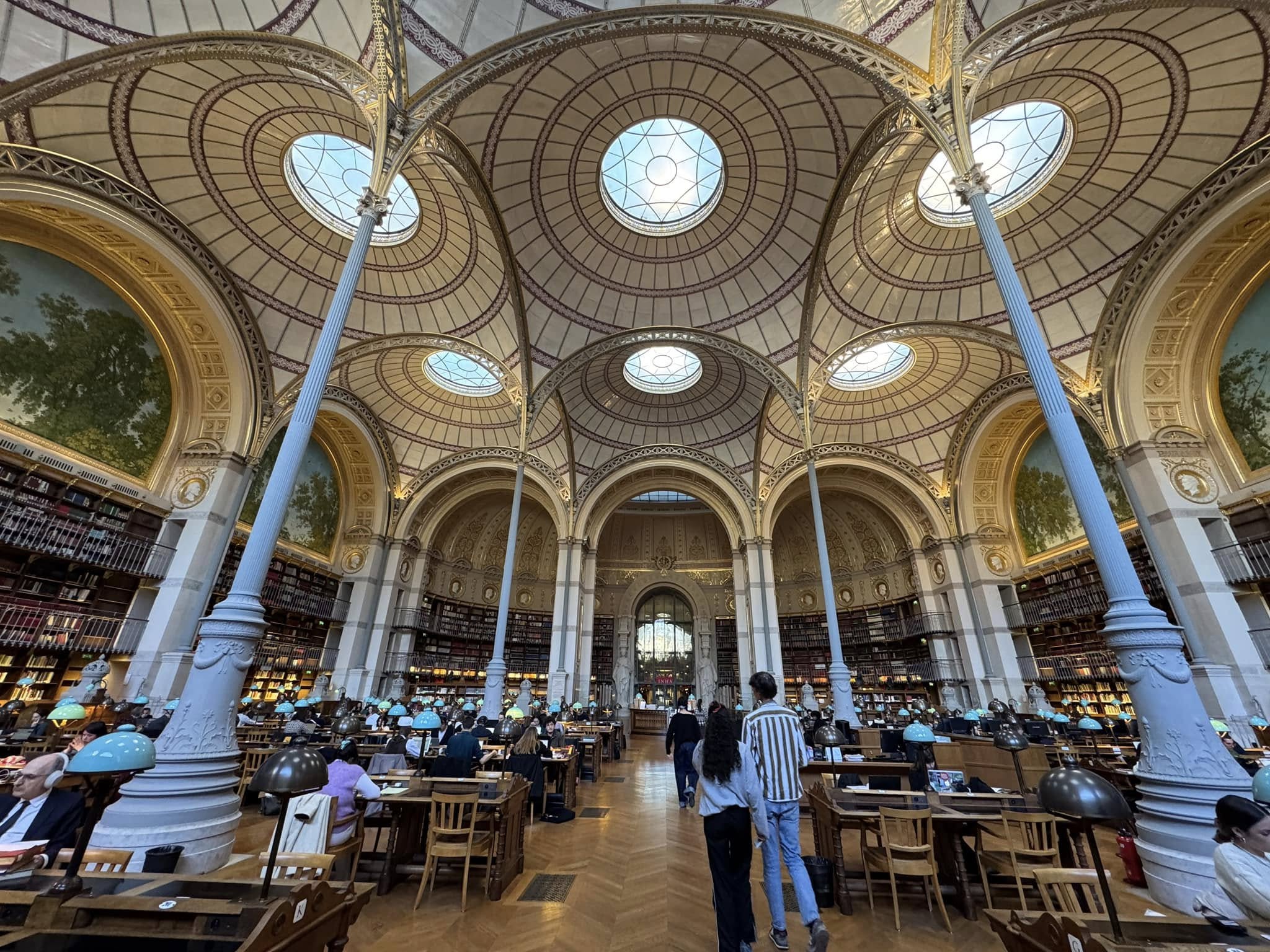
I joined the library line…way too much pressure to buy a handbag if I waited the hours to get into the shop. A beautiful library but we could only peek in from the entrance. How fun it would have been to peruse the collection and sit down and read our books in this stunning place but you need a special library card to enter. All that is published in France lives here (42 million items and counting). It all started in 1368 when King Charles V established a royal library at the Louvre Palace. Over centuries, it grew as kings and scholars expanded its collections. By the late 18th century it had become the world’s largest library and had a particular uptick in publications during the French Revolution when books from aristocratic and church libraries were seized and added to its collection. It long lost its status as the world's biggest library; that claim to fame now goes to the Library of Congress in Washington, DC.
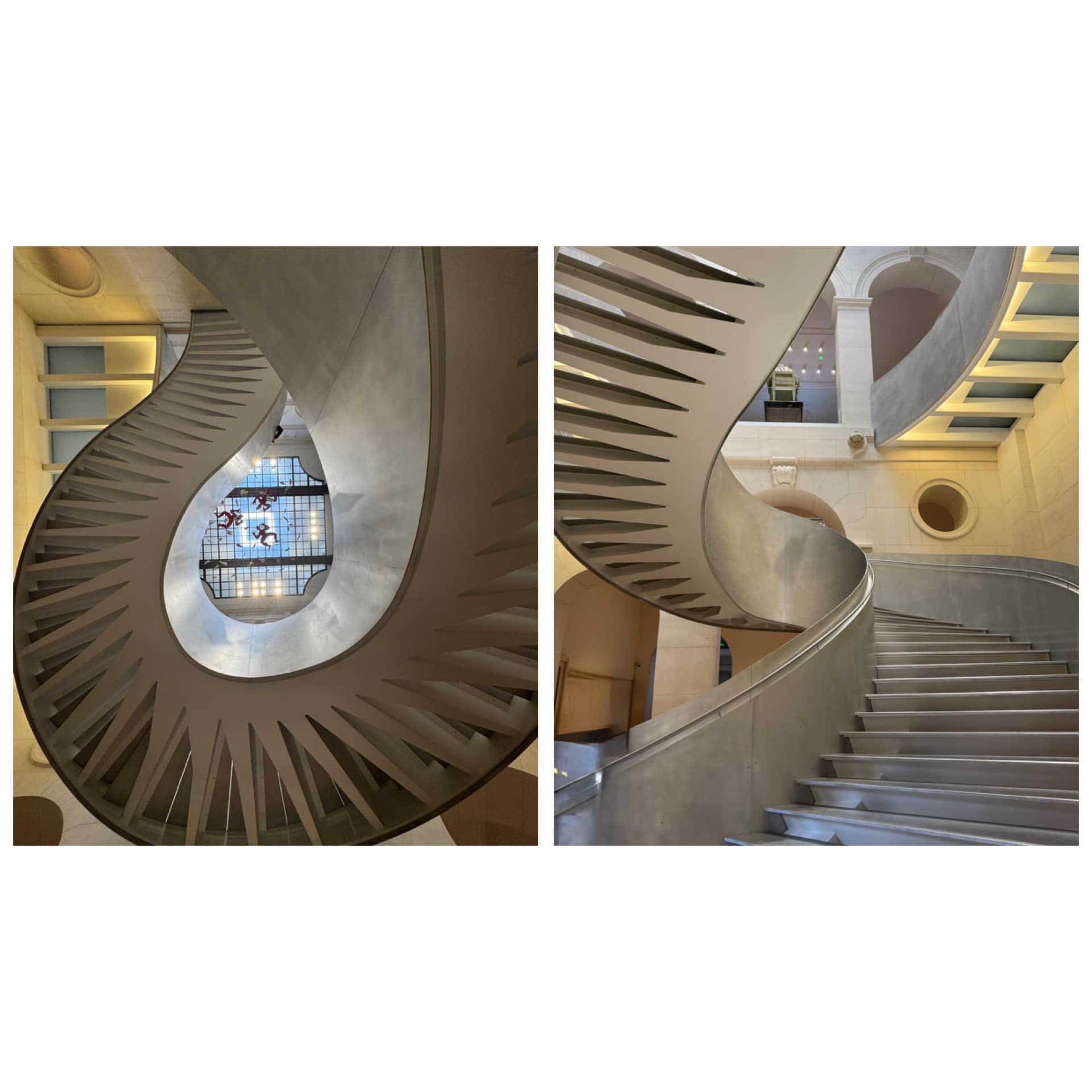
This is the new staircase in the library building designed by architect Bruno Gaudin in 2022. It flows with such grace. And if you peek through the teardrop shape, there’s a fun book sculpture to see hanging from the ceiling. Again, no card so we weren’t allowed up…
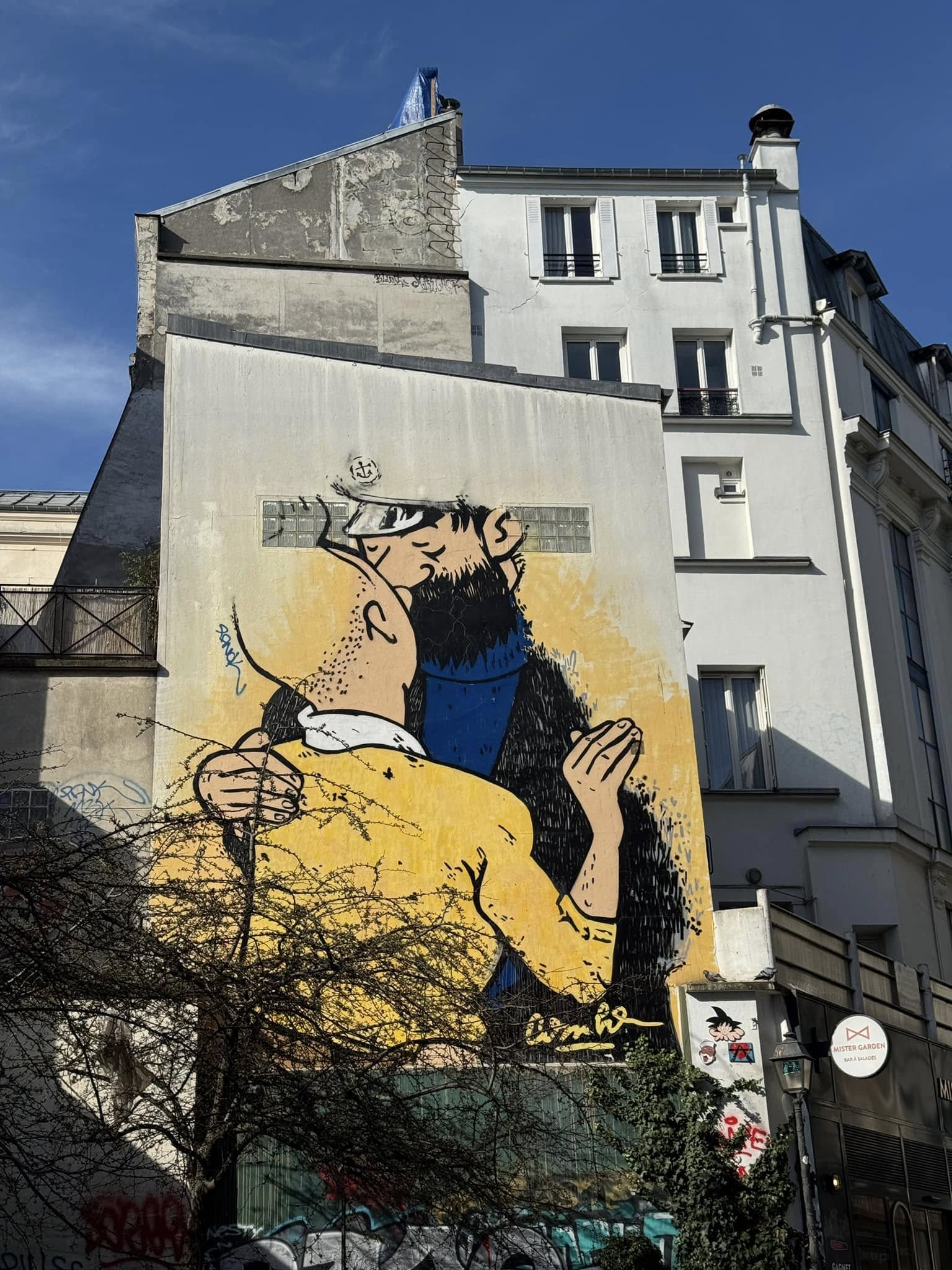
A whole new spin on Tintin and Captain Haddock. French street artist Combo created this mural to spur conversation about LGBTQ+ representation and that it has! It’s controversial for some, admirable for others and shows the power of street art to reach the people. There’s nothing like using familiar characters to force thought and dialogue!
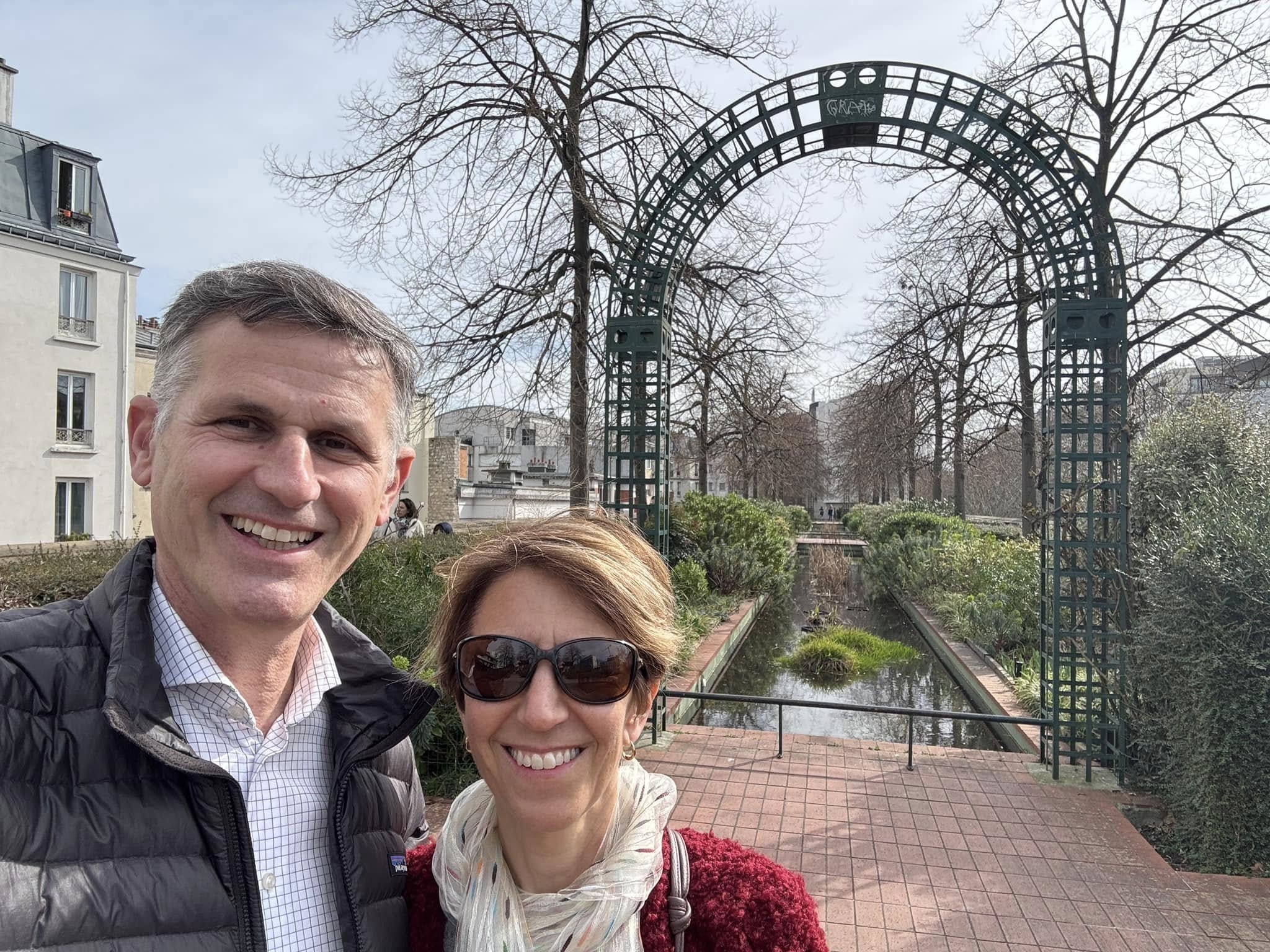
Some people say the Coulée Verte René Dumont is like the High Line in New York. Actually, it was the Coulée Verte that inspired the High Line. Opened in 1993, this was the first elevated park in the world. We strolled end to end along its 4.7km length and I can only imagine how lovely it will be in a month or two when the trees are leafed and the flowers are in bloom. It is named for René Dumont who was credited as the first to warn the French of the dangers of industrialization and unsustainable development. This walkway along a disused railway line was not René’s idea but embodied his values of bringing together green space and urban renewal. It must have been very gratifying for him to see this project realized and named in his honour.
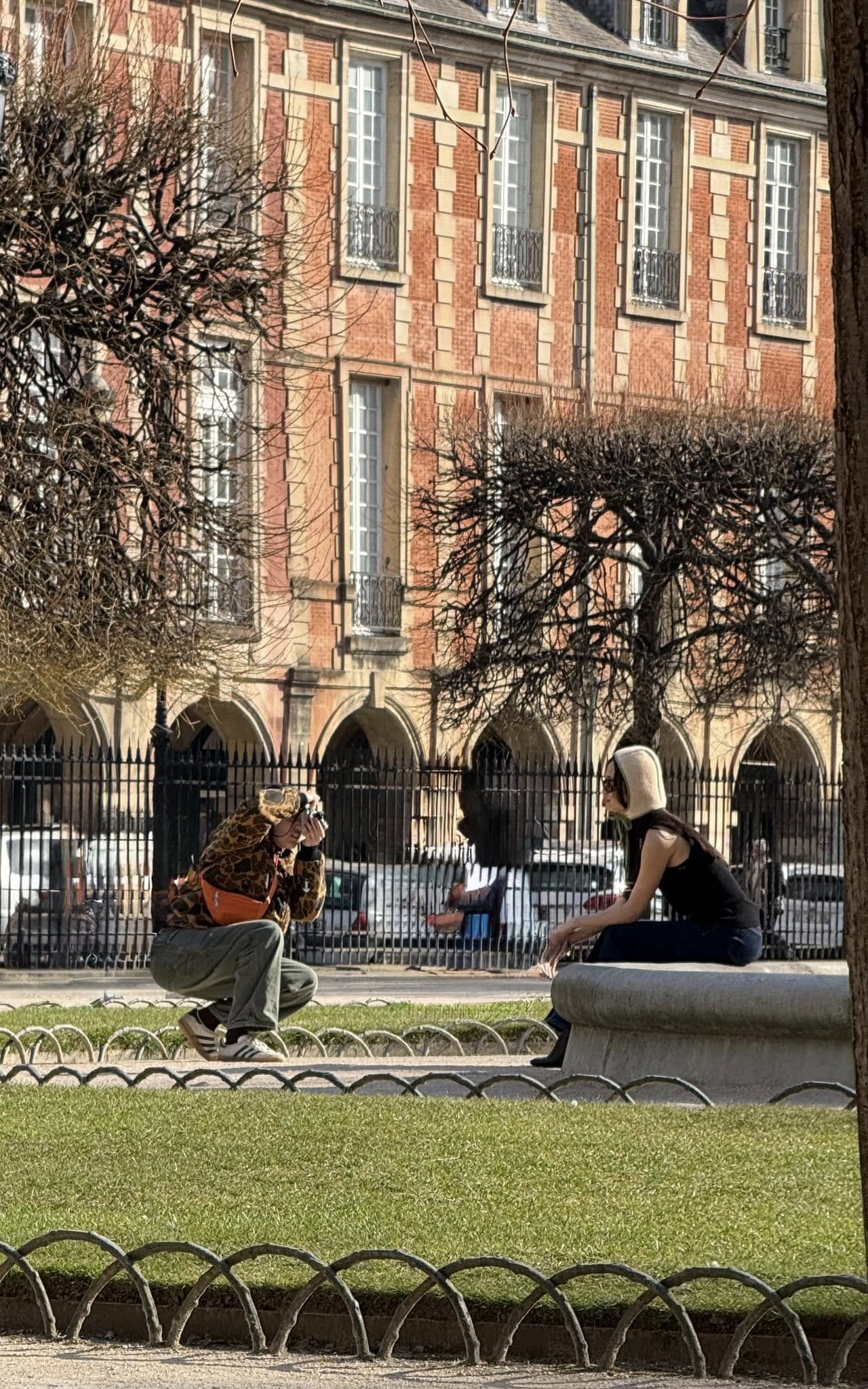
It’s fashion week in Paris (again…but I really think every week is fashion week here) and it seems there are little photo shoots happening everywhere we turn! This young woman is modelling a hat just like the furry one I had (and loved) in the early 70s. Should have kept it…
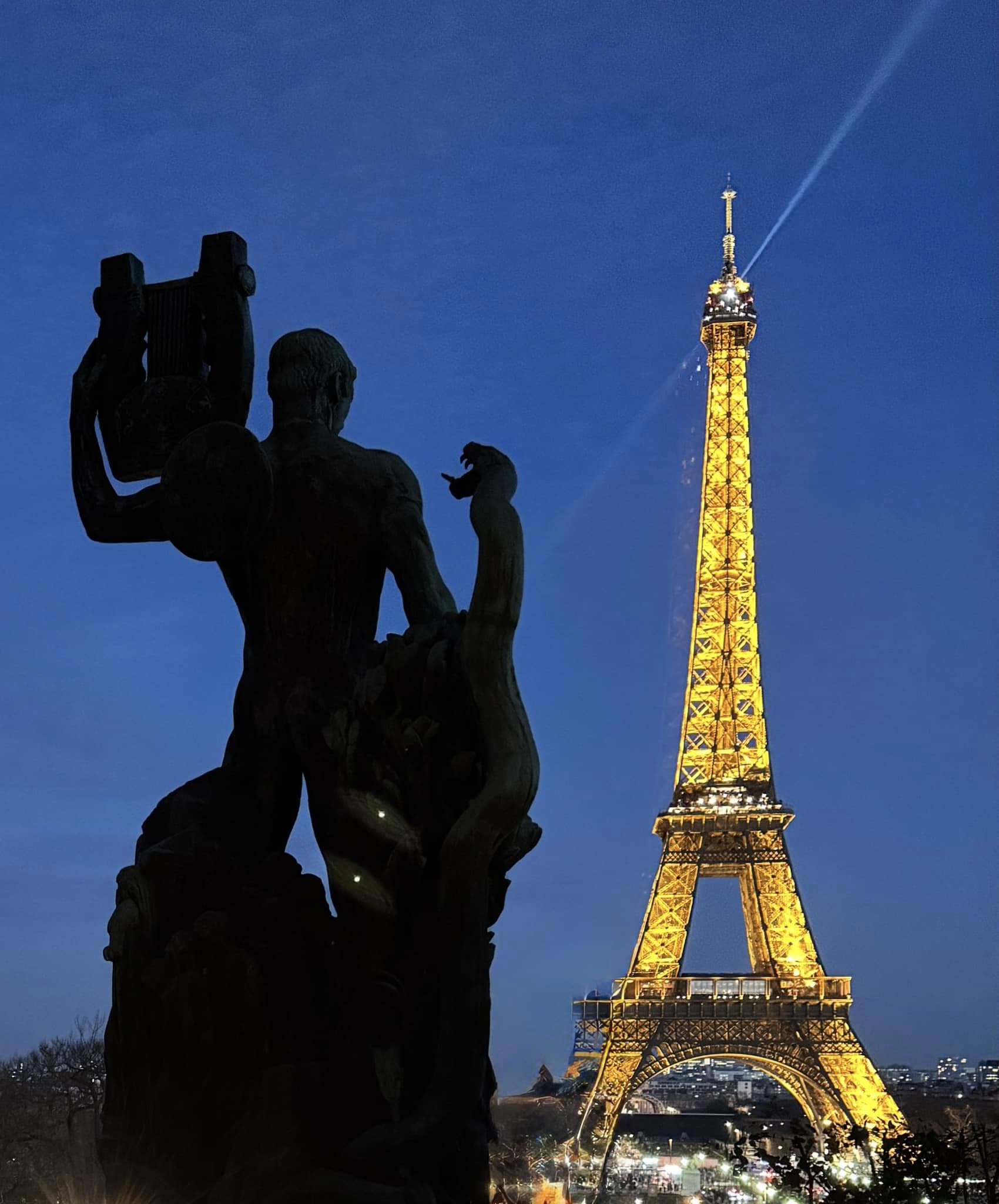
The stunning view from Girafe where we had a spectacular meal. I dare say we had the best seat in the house!
And after dinner we came out to this!
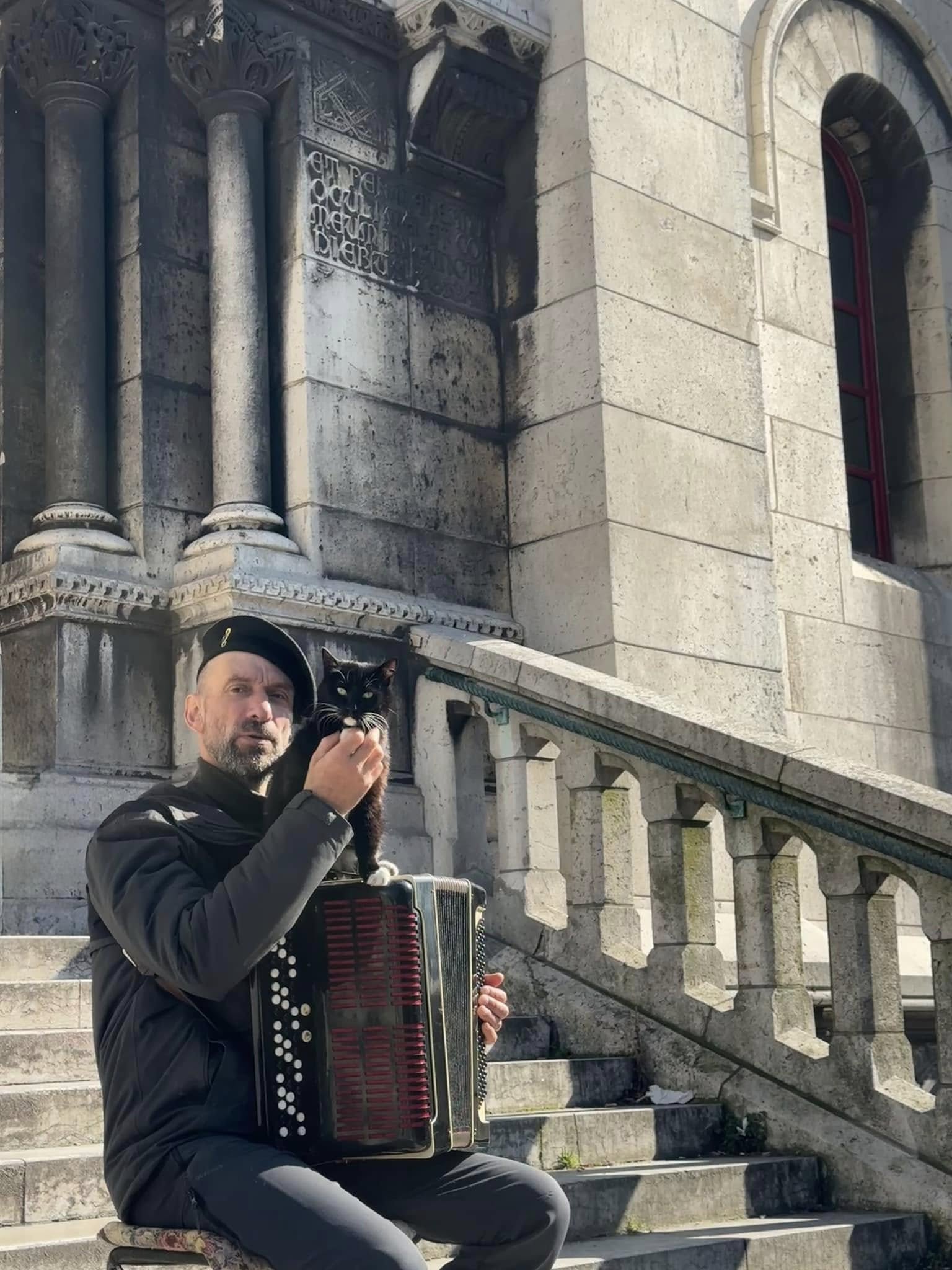
Some people have cats that climb on their keyboard or newspaper seeking attention. This one sat on the accordionist’s shoulder while he played and then navigated to his instrument forcing a brief pause in the performance so his toes wouldn’t get caught in the bellows.
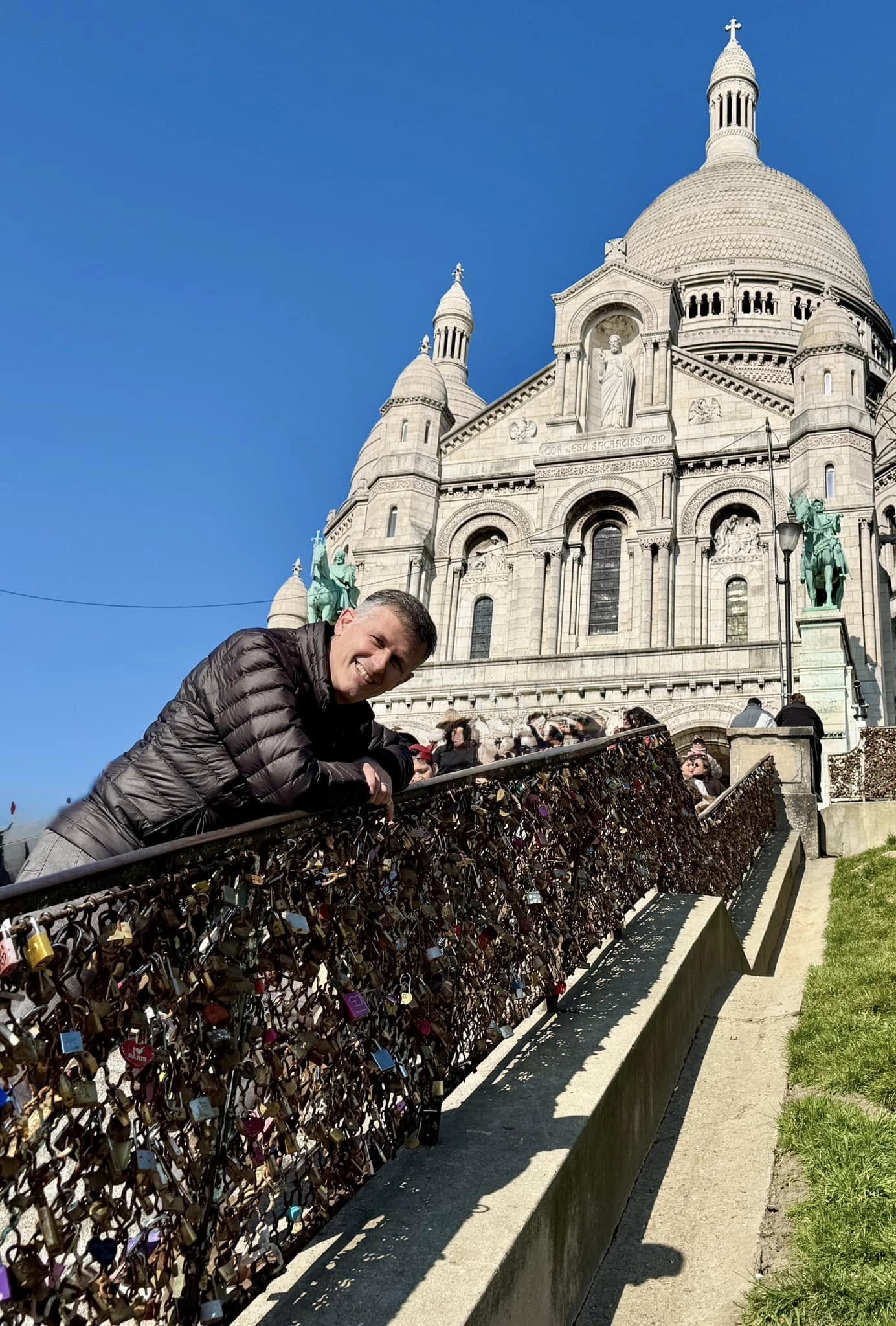
You may recall how the thousands of love locks that covered one of the bridges in Paris had to be removed because the sides of the bridge were at risk of falling down due to the weight? Well, love simply cannot be stopped and locks professing love for one another have found new perches. Hopefully this fence keeping safe the faithful climbing up to Sacré Coeur will remain intact.
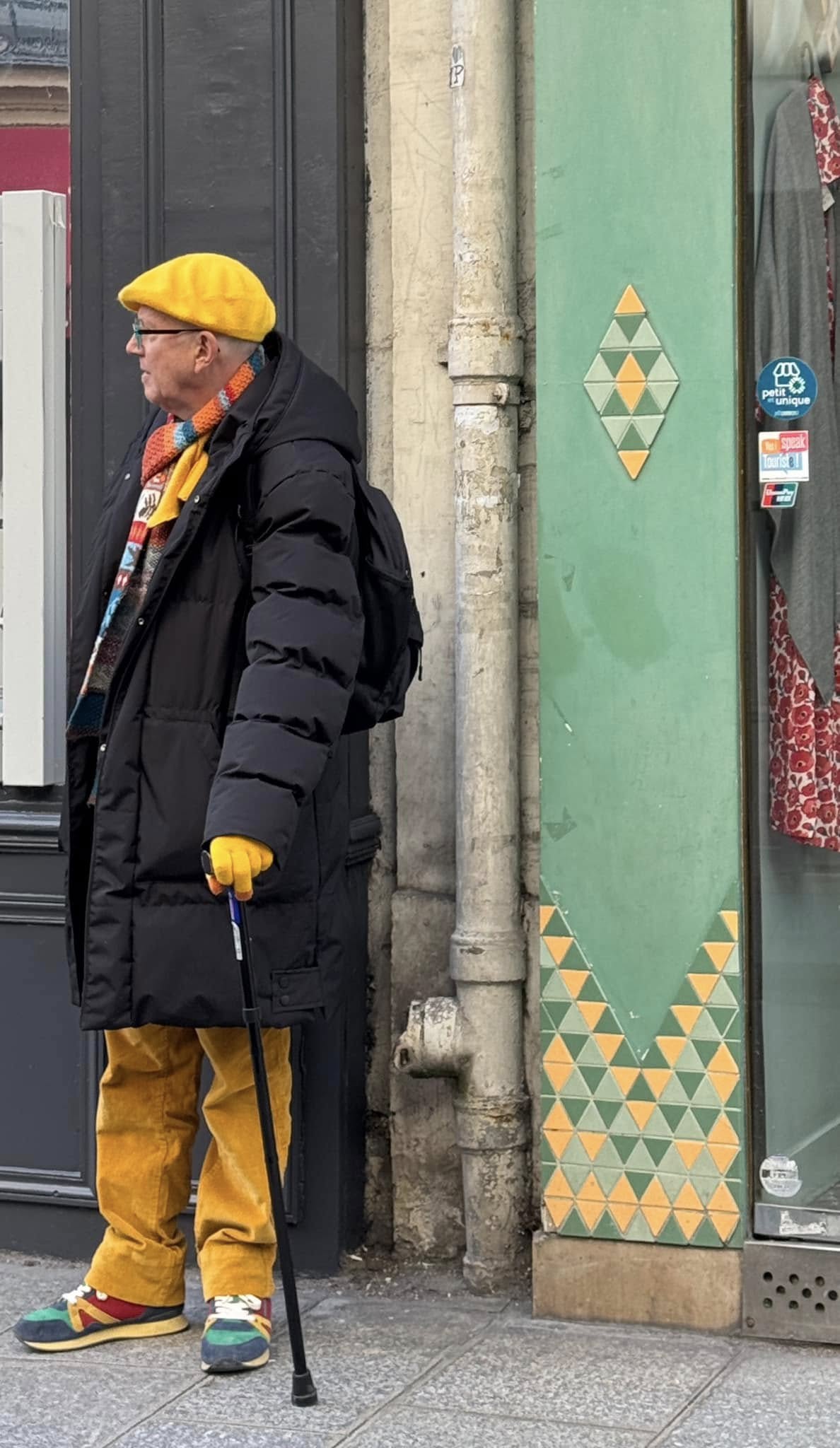
French men do colour really well!
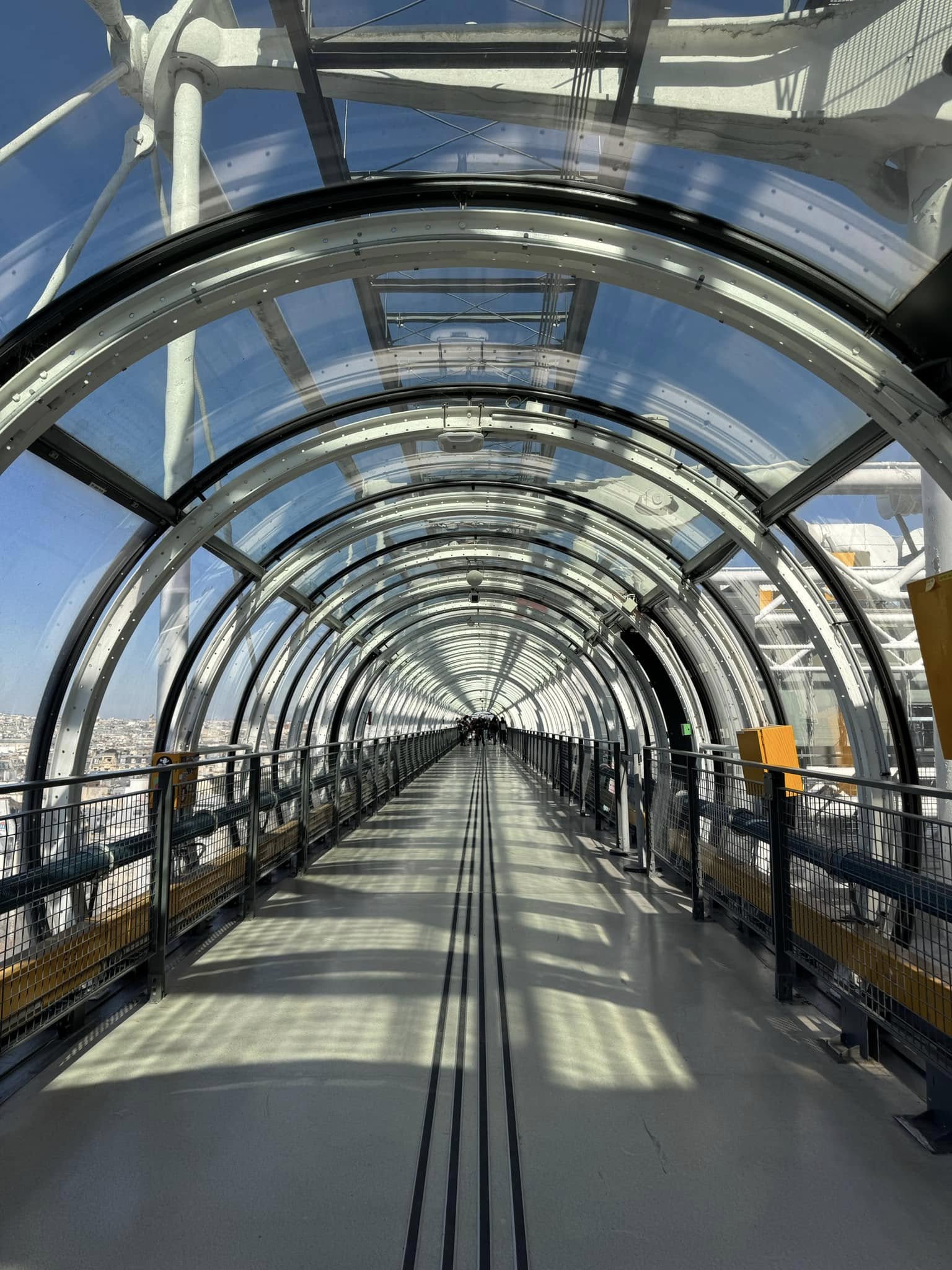
No visit to Paris would be complete without a pass through Pompidou! But you’d better hurry as it’s closing soon for a five-year renovation. There will be a gradual removal of the artwork starting on March 17 and the place will be fully shut down in September 2025. Asbestos removal, energy inefficiencies and security upgrades will all be attended to over the next five years. There is so much to share in here but I’ll pick just two installations that I found to be memorable. The rest, you’ll have to wait till 2030!
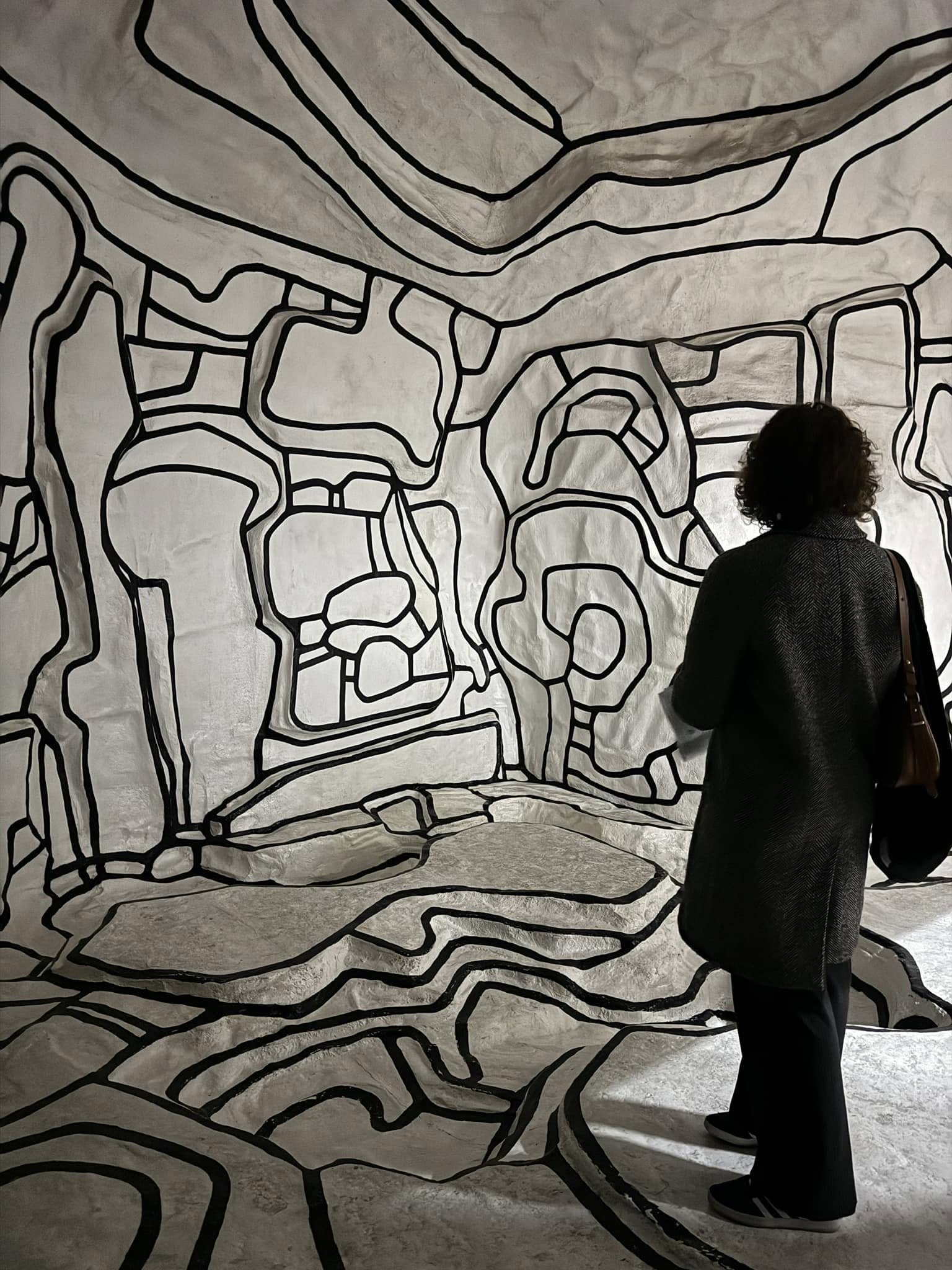
Jean Dubuffet’s 1974 Jardin d’Hiver (Winter Garden) is such a cool immersive art installation. His black and white cave envelopes you into an otherworldly place. It’s fun to sit in there and try to find recognizable images kind of like lying in the grass and identifying shapes in clouds. Dubuffet was a pioneer of Art Brut (“raw art”), which was all about spontaneous, outsider and non-traditional creativity. This definitely has a graffiti feel to it. When I first went in, there was a dad lying on the ground trying to corral his three kids into position so he could take what might have been an awesome photo. I think they were fine with the photo shoot until I came in and then they got embarrassed and lost their patience.
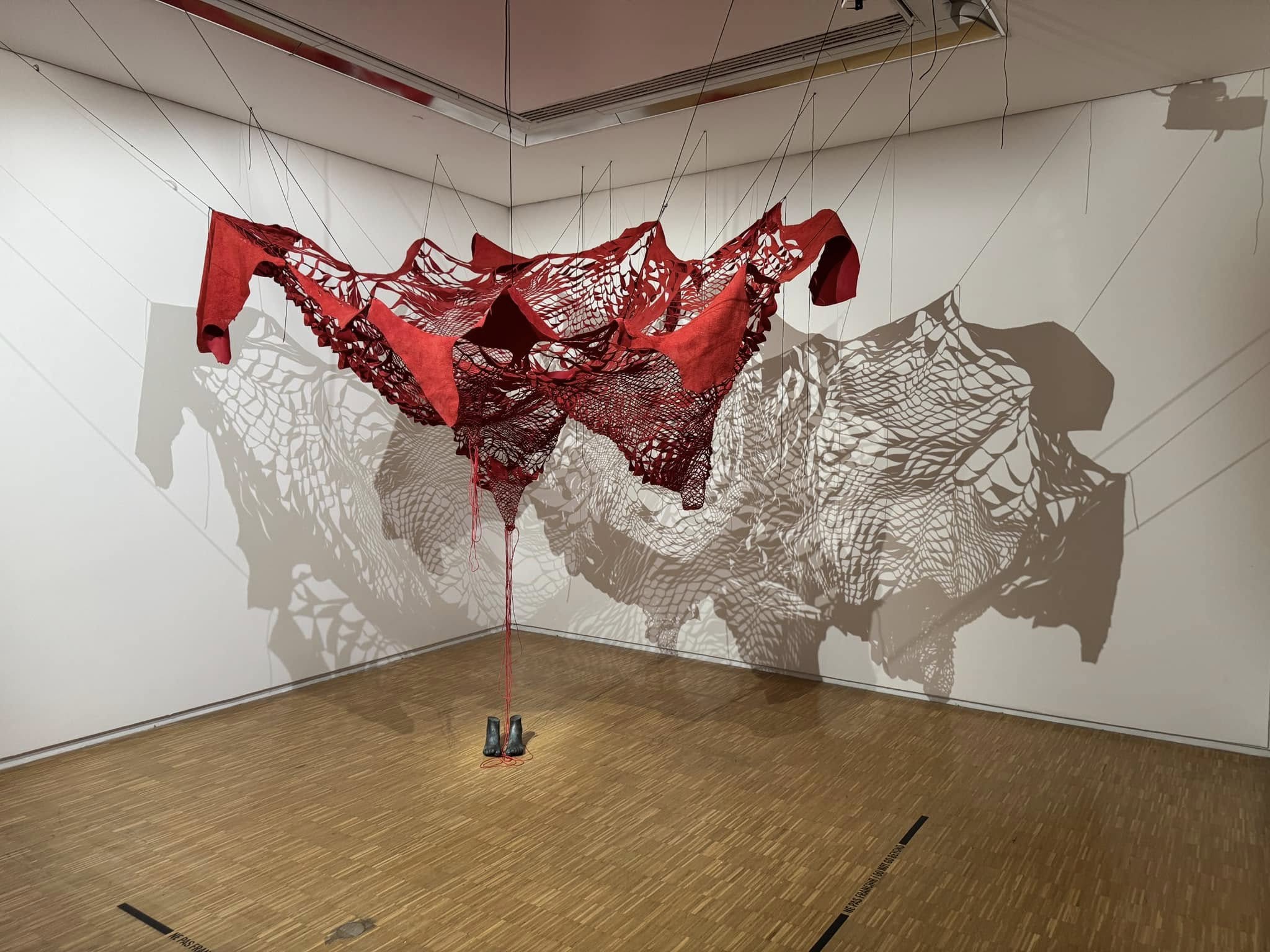
This is Japanese artist Chiharu Shiota’s Out of My Body. Her art comes from her personal experiences like life, death, relationships and, in this case, illness. In this work, she is sharing her personal fight with cancer. The shoes on the floor are bronze with red cutwork leather floating above. She talks of how the barrage of testing and treatments make her feel dispossessed from her own body: "In hospital, my body was no longer my body, it was subjected to a system, broken down and recomposed until I was whole again. My body has healed again and today, when my feet touch the ground, I feel connected to life". We saw another installation of Shiota’s work at the Art Gallery of South Australia in Adelaide. That one was also inspired by a cancer diagnosis and treatment and featured a web of 180km of red wool strung around a room with body parts on the floor. If you’re interested, here’s the link to my post about it (https://travel119239170.wpcomstaging.com/2023/10/31/adelaide-australia/).
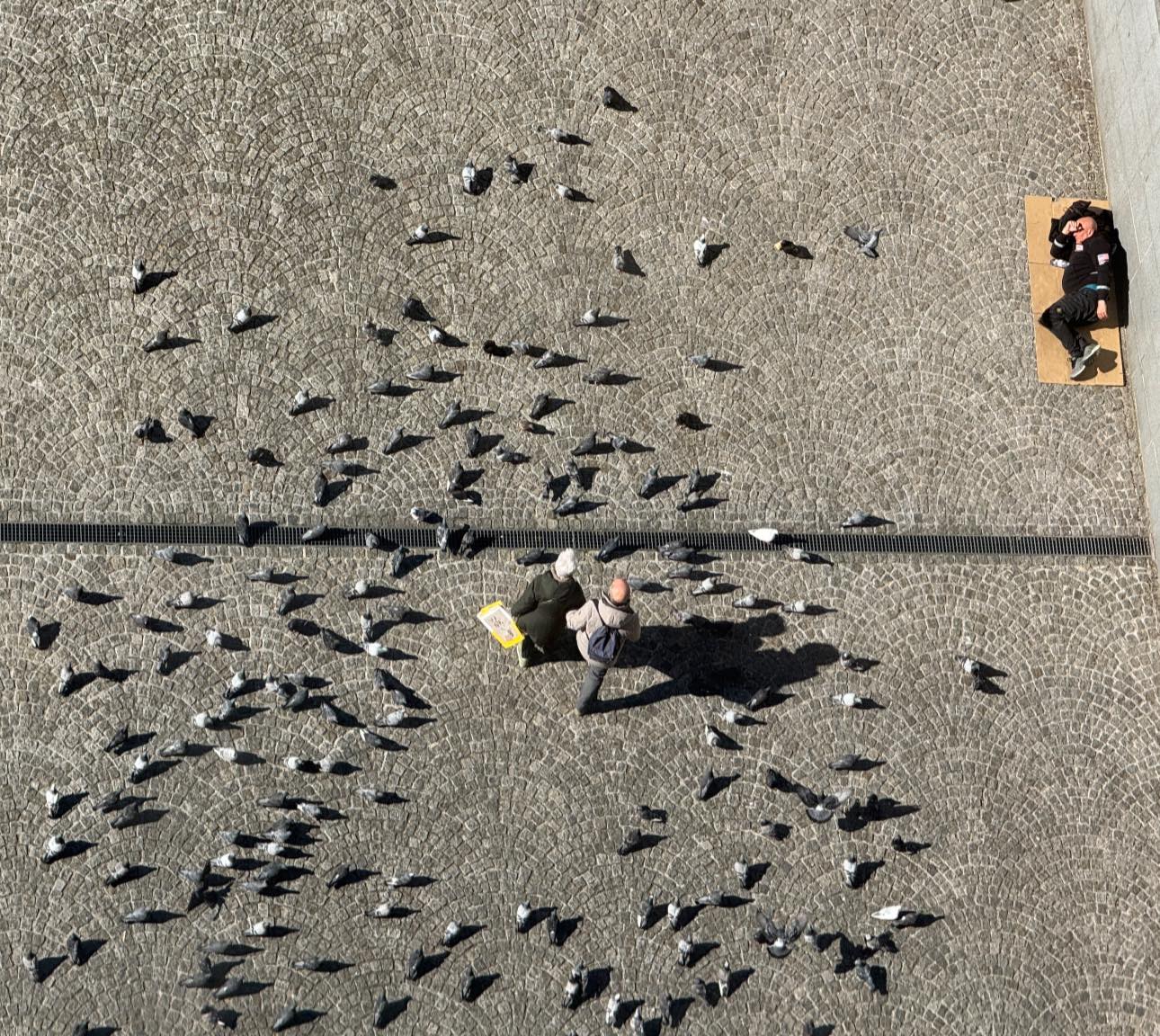
What would happen if a falcon came to Pompidou for pigeon control? The whole vibe would change!
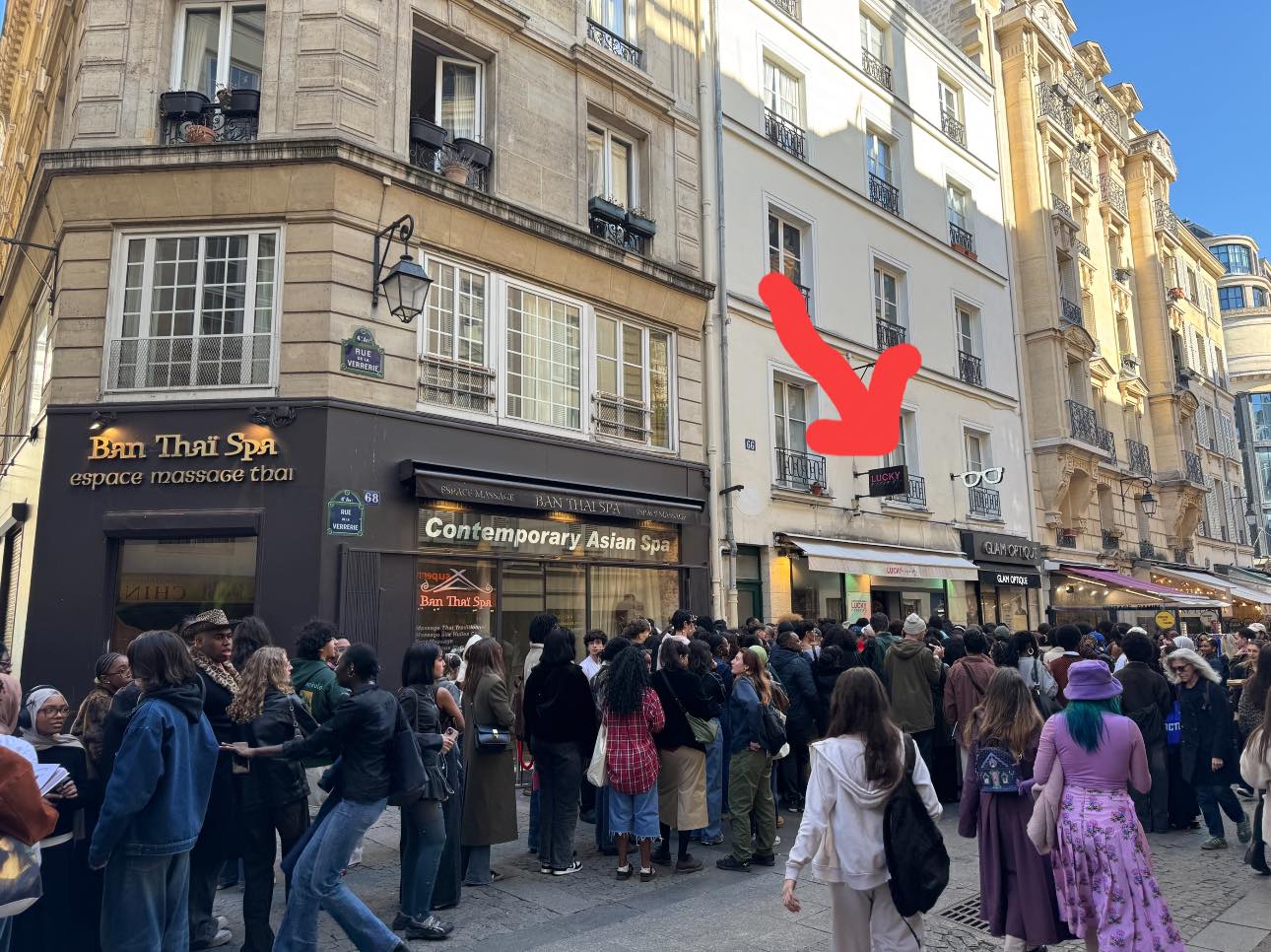
How exciting, Doechii is promoting a new album at Lucky Records in Paris. This is the front of the line. There must have been another 500 people, or more, snaking all the way around the block. As I was looking up who the heck is Doechii, a huge roar of applause erupted. I guess Doechii has left the building, and left six or seven hundred fans disappointed.
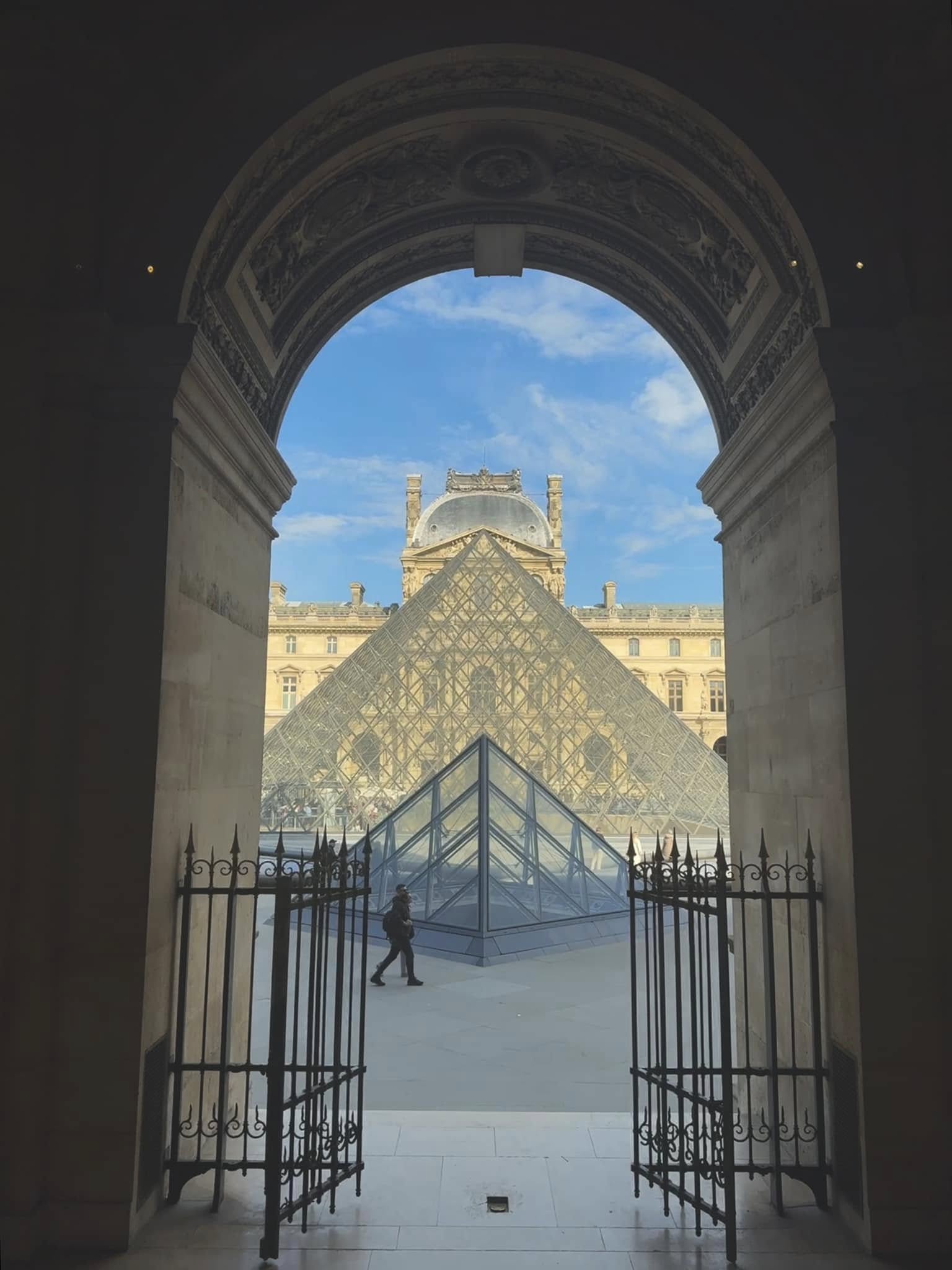
The Louvre! I haven’t set foot in this place since 1987! Advance, timed tickets are required and we were booked for 10:30. I’m so glad we didn’t go for the 9am museum opening time slot. We got there at 10:25 and the line was insane! I asked one of the museum staffers outside what was going on and she said the museum had only just opened (1.5 hours late) because they were having a meeting. Right…a meeting that shuts down the entire place and blows off an hour and a half worth of prepaid, timed entry! You know you’re not in France if there are no strikes going on! Admitted or otherwise.
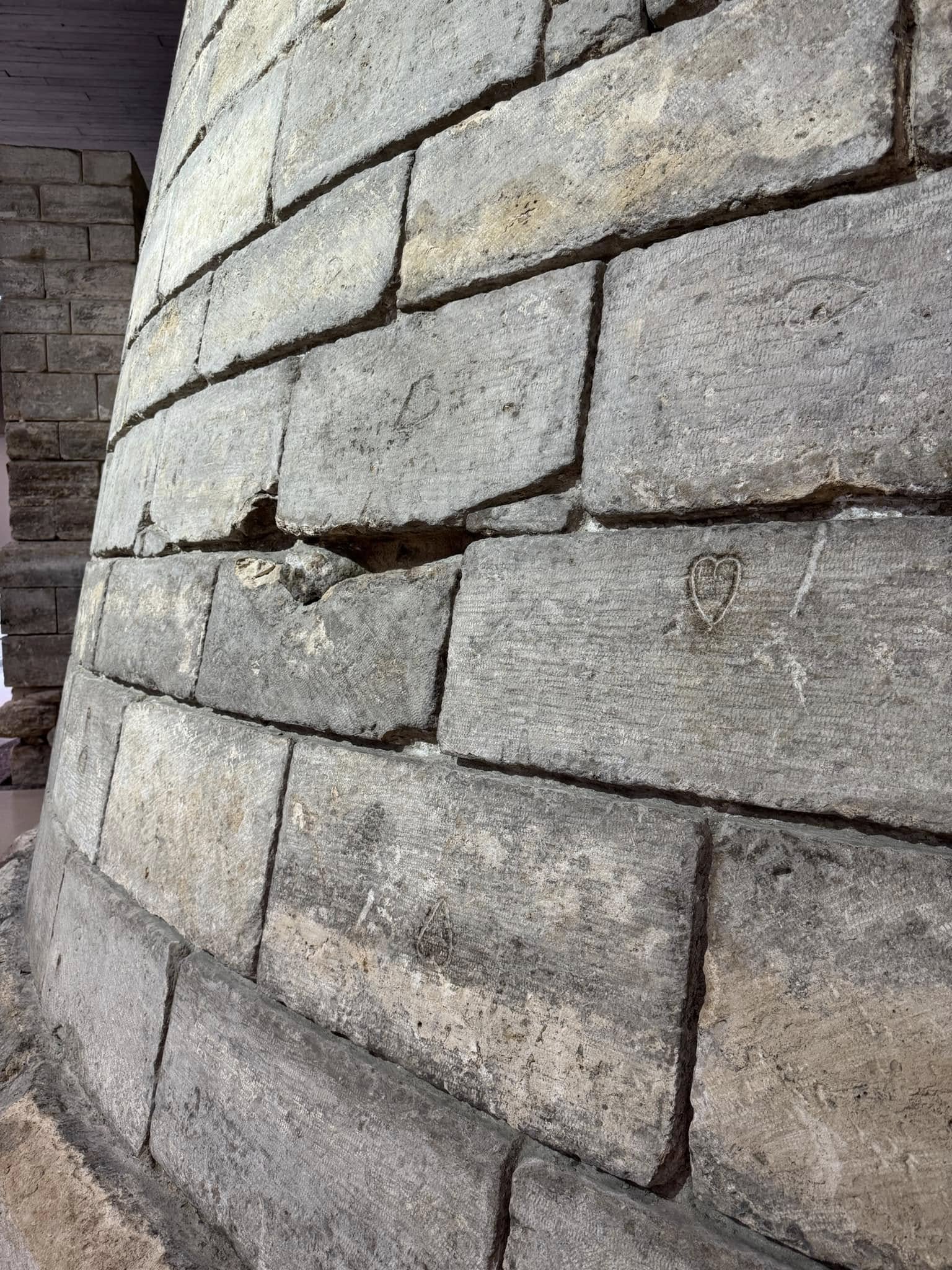
The Louvre Museum was built on the foundations of the medieval Louvre Castle, which was originally a fortress built by King Philip II in 1190 to protect Paris from invaders. As Paris expanded its footprint over the next few hundred years, the fortress became less necessary. In 1528, King Francis I must have seen good bones in the building as he decided to turn it into a royal palace. Ultimately, a grand royal residence must have seemed excessive and it transformed into a museum. When you (finally!) enter the Louvre, you walk through the basement past these foundations. I noticed kids running around counting these carved hearts. Of course I had to find out where they came from! Well, it’s a bit of a mystery. In medieval times, stonecutters would make identifying marks on their work to ensure they would be paid for work completed. Hmmm, hearts? I don’t think so… Another option is the worker’s expressions of love (inspired the future love locks perhaps?). But would they have actually snuck their lovers onto the job site to see what they’d done in the name of love? Doubt it. That leaves one last theory. Graffiti.
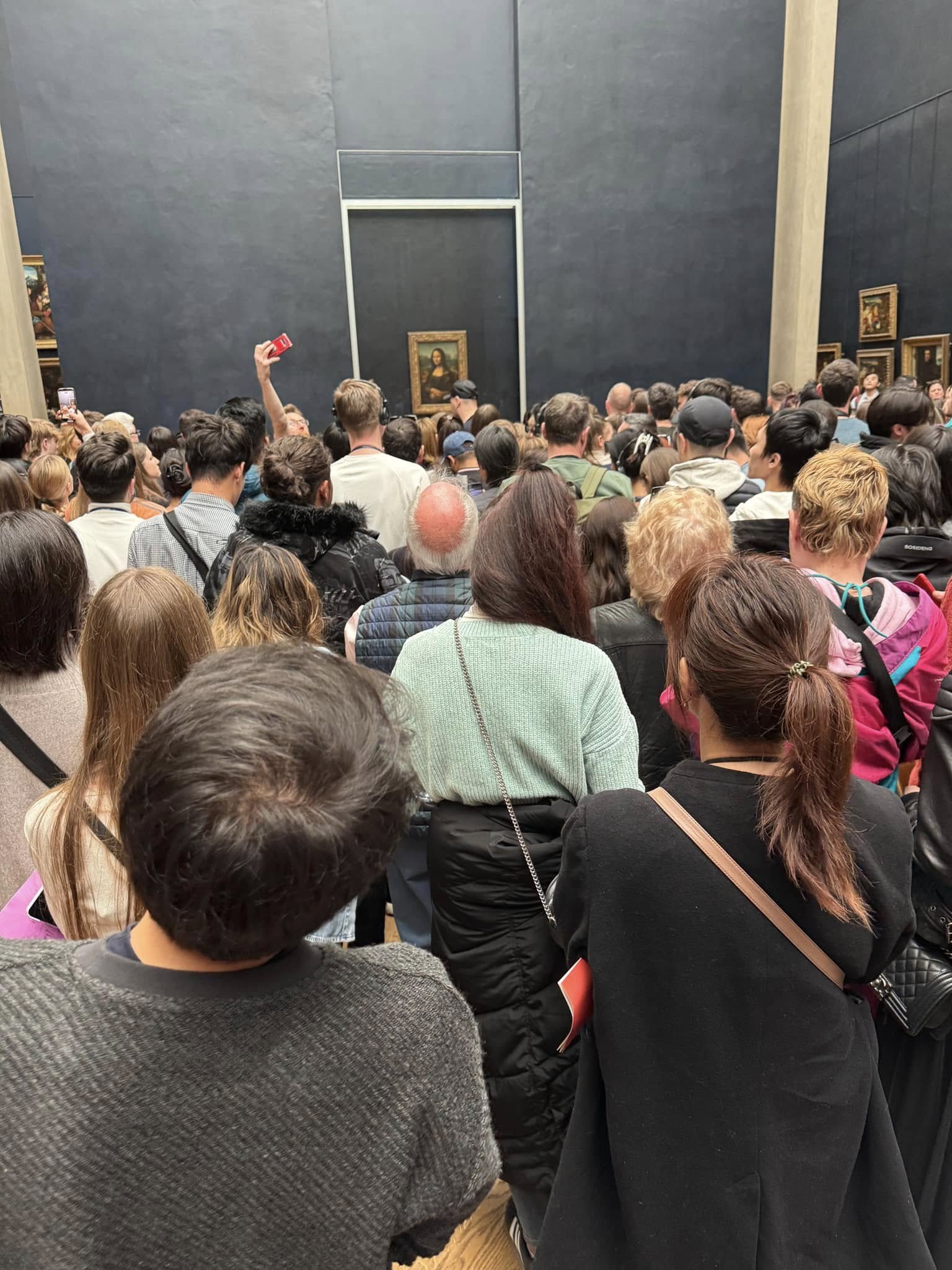
Yup, she’s still the biggest draw…
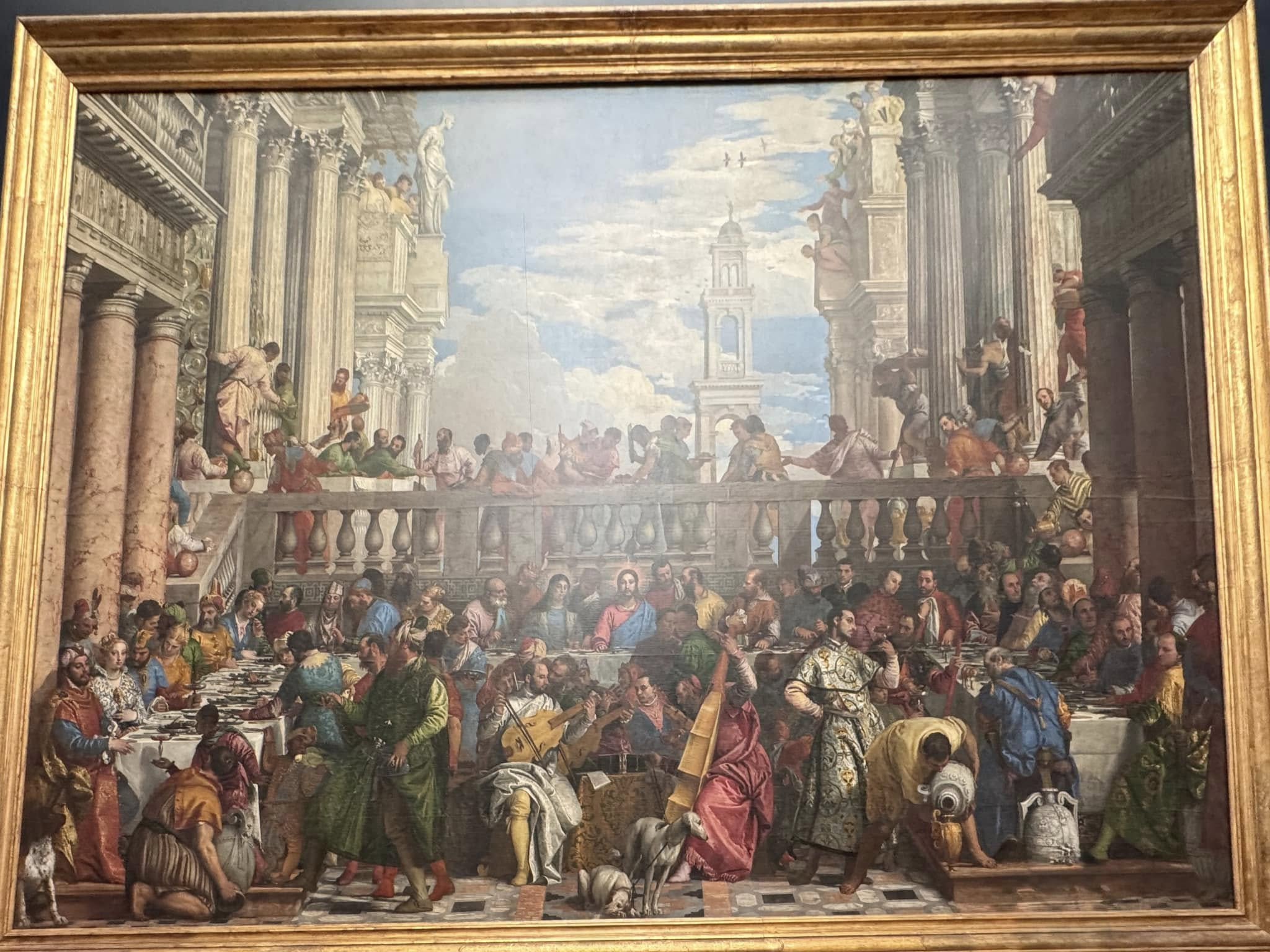
Here’s a fun one! Paolo Caliari’s Wedding Feast at Cana, painted in 1562-1563 for the Benedictine refectory of San Giorgio Maggiore in Venice. You’d need a refectory for something this huge! It’s actually the largest painting in the Louvre. Jesus was an invited guest (interesting that he is sitting in the middle with Mary beside him...not sure where the bride and groom are) and this is where he performed his first miracle. Mary tells him that the party is running out of wine (at least she is as her glass is looking empty) and he should turn some water into wine. I guess she wasn’t ready to go home yet!
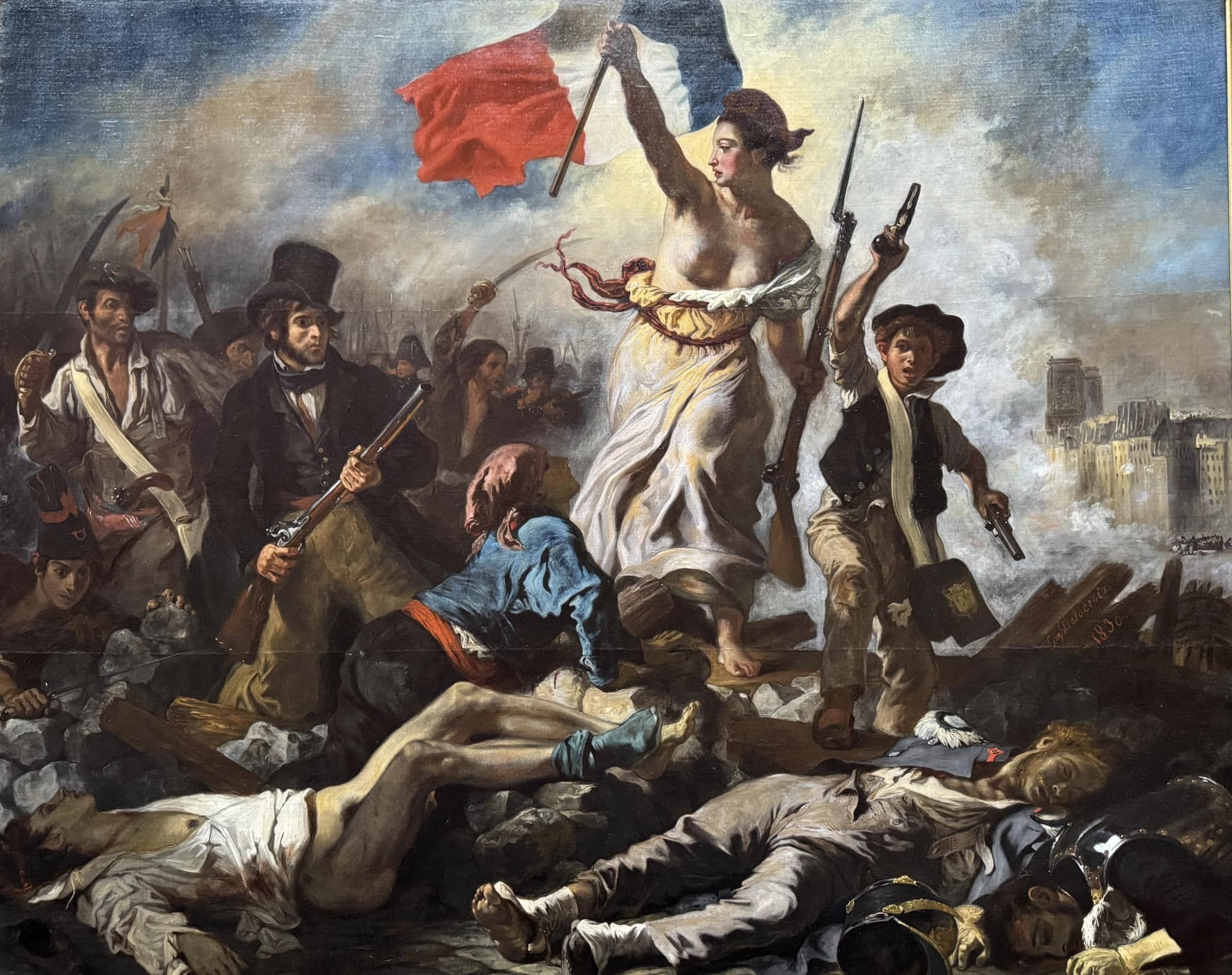
On the 28th of July, 1830 the people of Paris rose up against the authoritarian regime of King Charles X. Delacroix painted Liberty Leading the People showing the brutality of the three days it took to overthrow the king and didn’t hold back. The dirt, the grime, the crude barricades of debris. Insurgents and grenadiers alive and dead. The allegory of Liberty rises in the centre in her white dress and carrying the red, white and blue flag (symbolic of the 1789 French Revolution) that had been banned under the restoration of the monarchy between 1815 and 1830. Pushing that ode to liberty, Delacroix layers in a bunch more red, white and blue: there is a tiny French flag on Notre Dame in the back right corner; the wounded man imploring Liberty is wearing a blue jacket and red sash with his white shirt peeking out; the naked, dead insurgent in the lower left is left wearing a white shirt and blue sock, with red blood seeping out of his head. The boy mimicking Liberty’s pose is probably what inspired the character Gavroche in Hugo’s Les Misérables which he wrote 30 years after Delacroix painted this. Delacroix didn’t participate in the uprising but watched parts of it from his window. Through this painting, he showed his commitment to the cause.
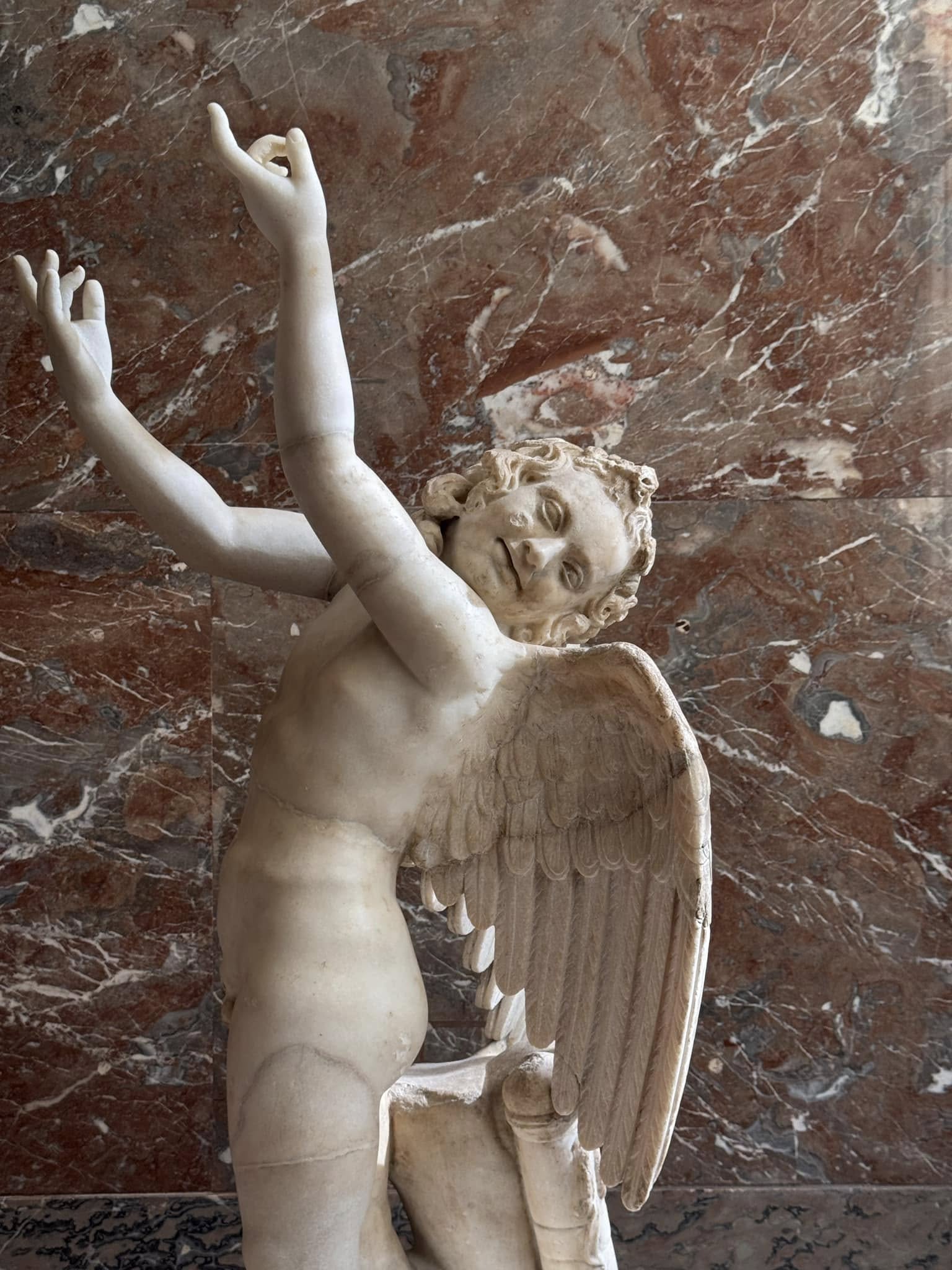
Who wouldn’t want to be shot with an arrow by this joyful Cupid.
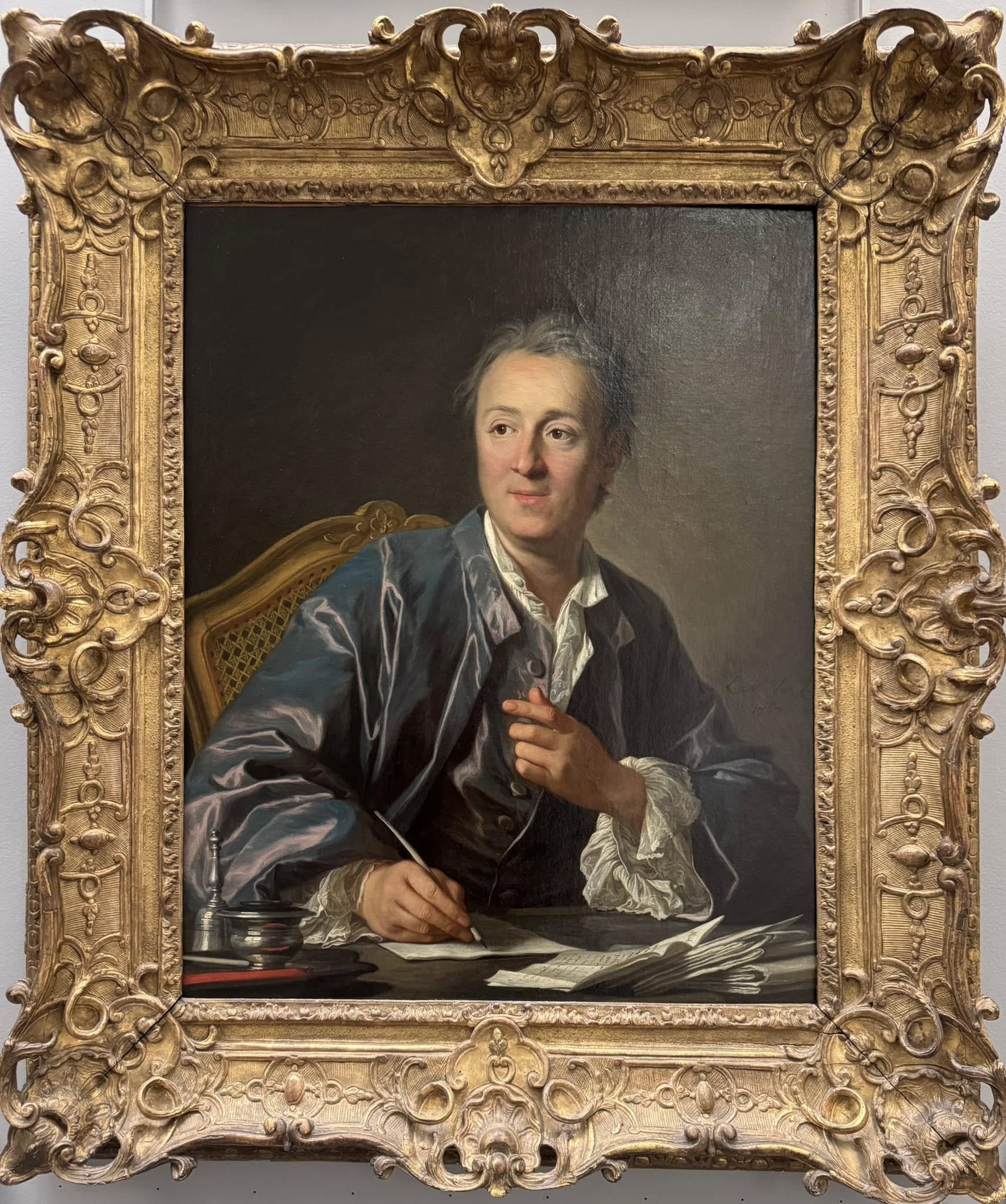
Diderot was the first "art critic". Every other year, the Salon art exhibition was held in the Louvre and from 1759-1781 Diderot took on the role of art commentator. He reported on these exhibitions, describing each painting and sculpture in detail along with his own esthetic and philosophical commentary. He didn’t think much of this portrait by his friend Louis-Michel Van Loo. He said it was not him (in jest) “a laughing, cute, effeminate, old flirt” and what would his grandchildren think when they saw it!
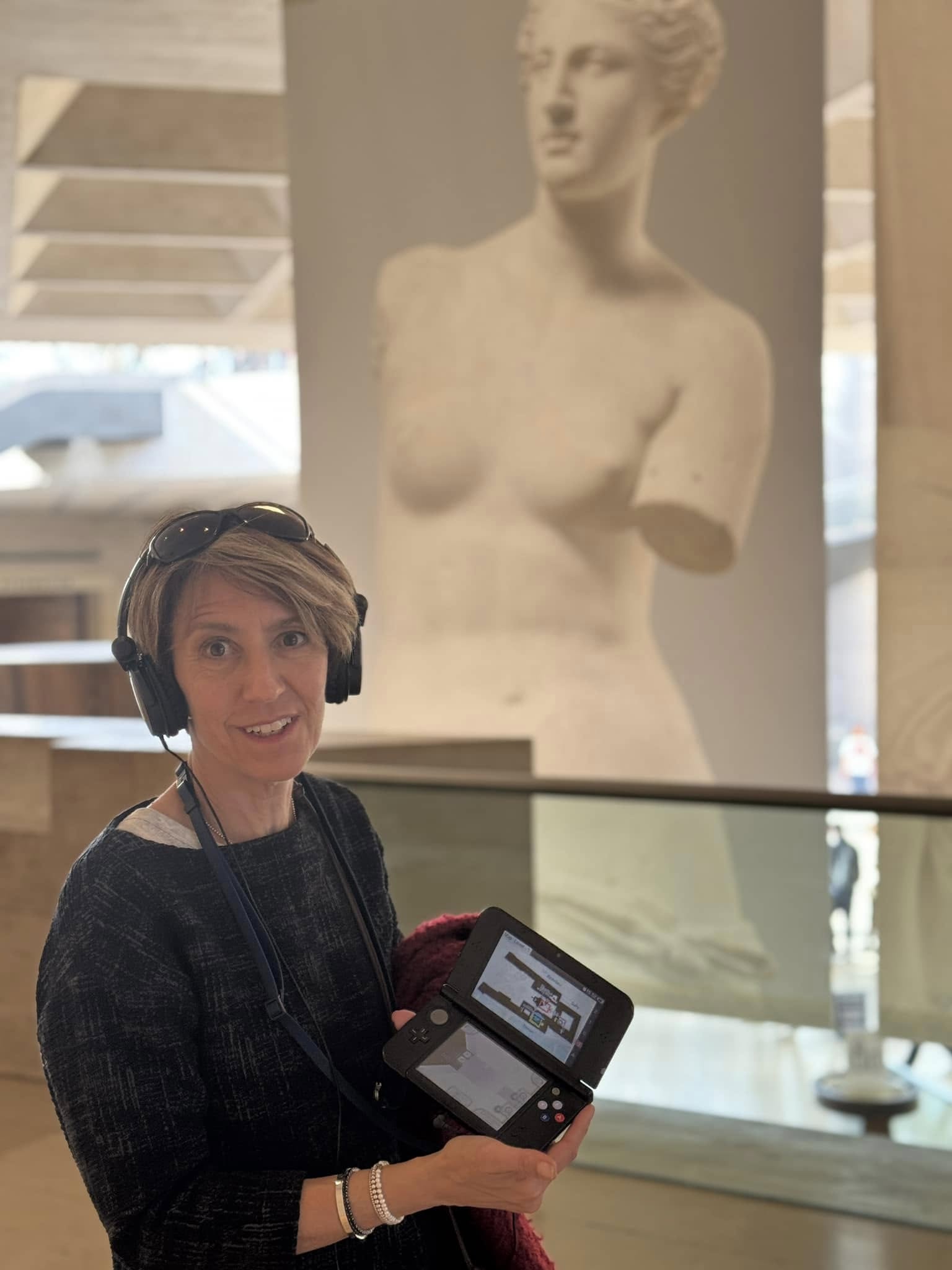
The audio guide inside the Louvre was a Nintendo DS! Insanely difficult to navigate. I should have paid more attention when my kids were obsessed with that device!
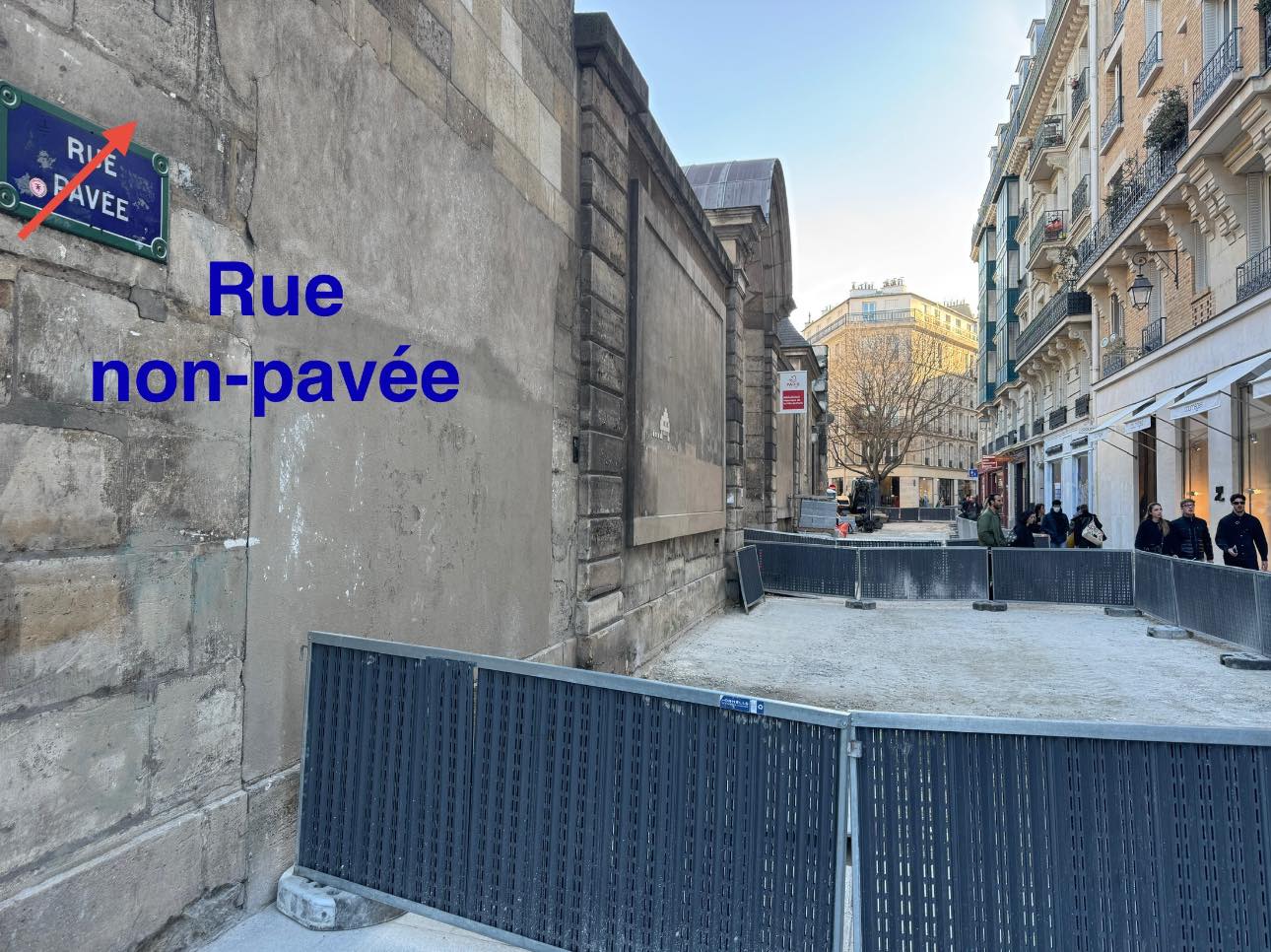
Couldn’t have happened to a better street.
Perfect Paris
July, 2016
Leaving Paris after a mere four days with the kids in this amazing city. Food, glorious food…
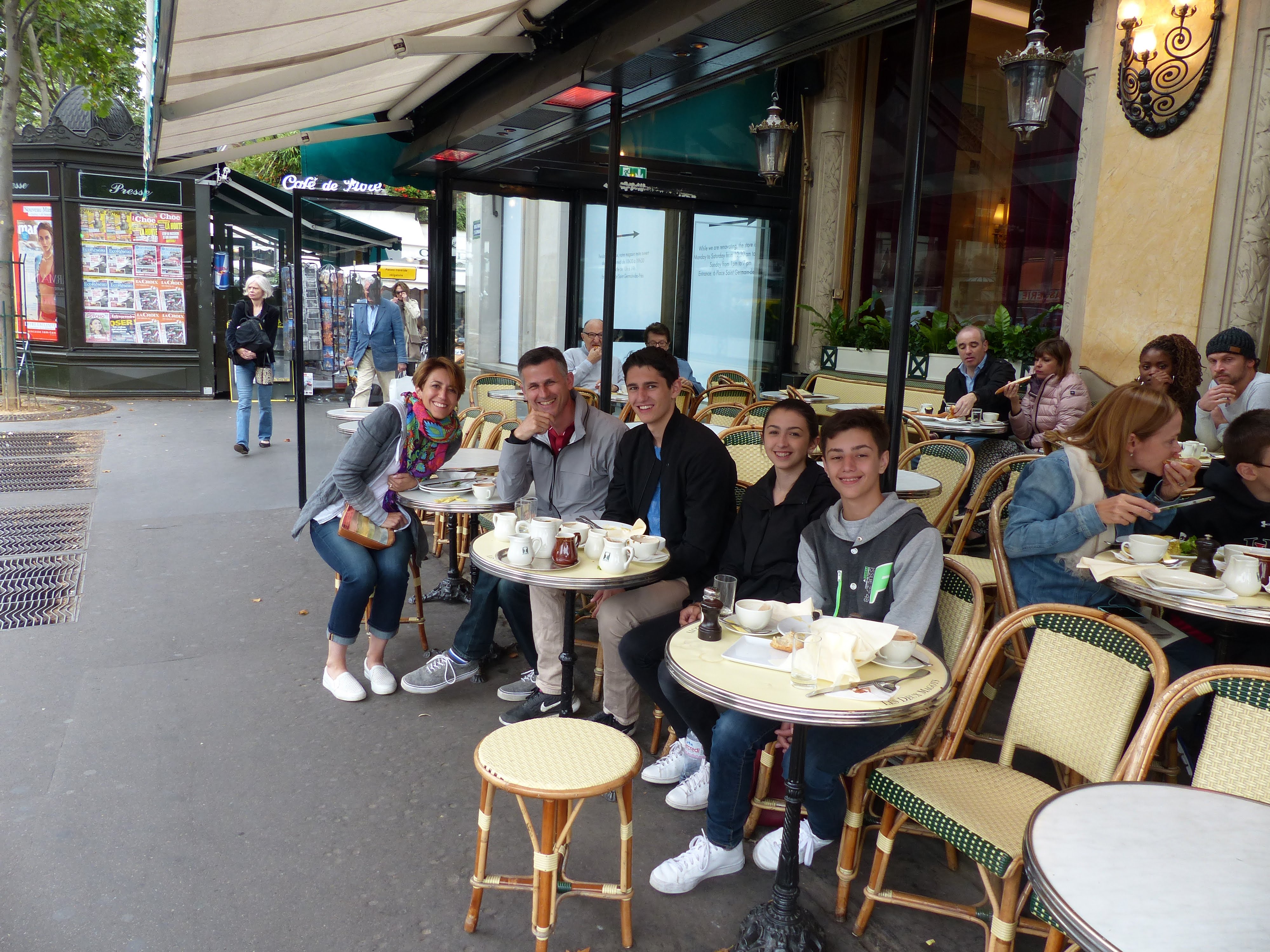
Le petit déjeuner.
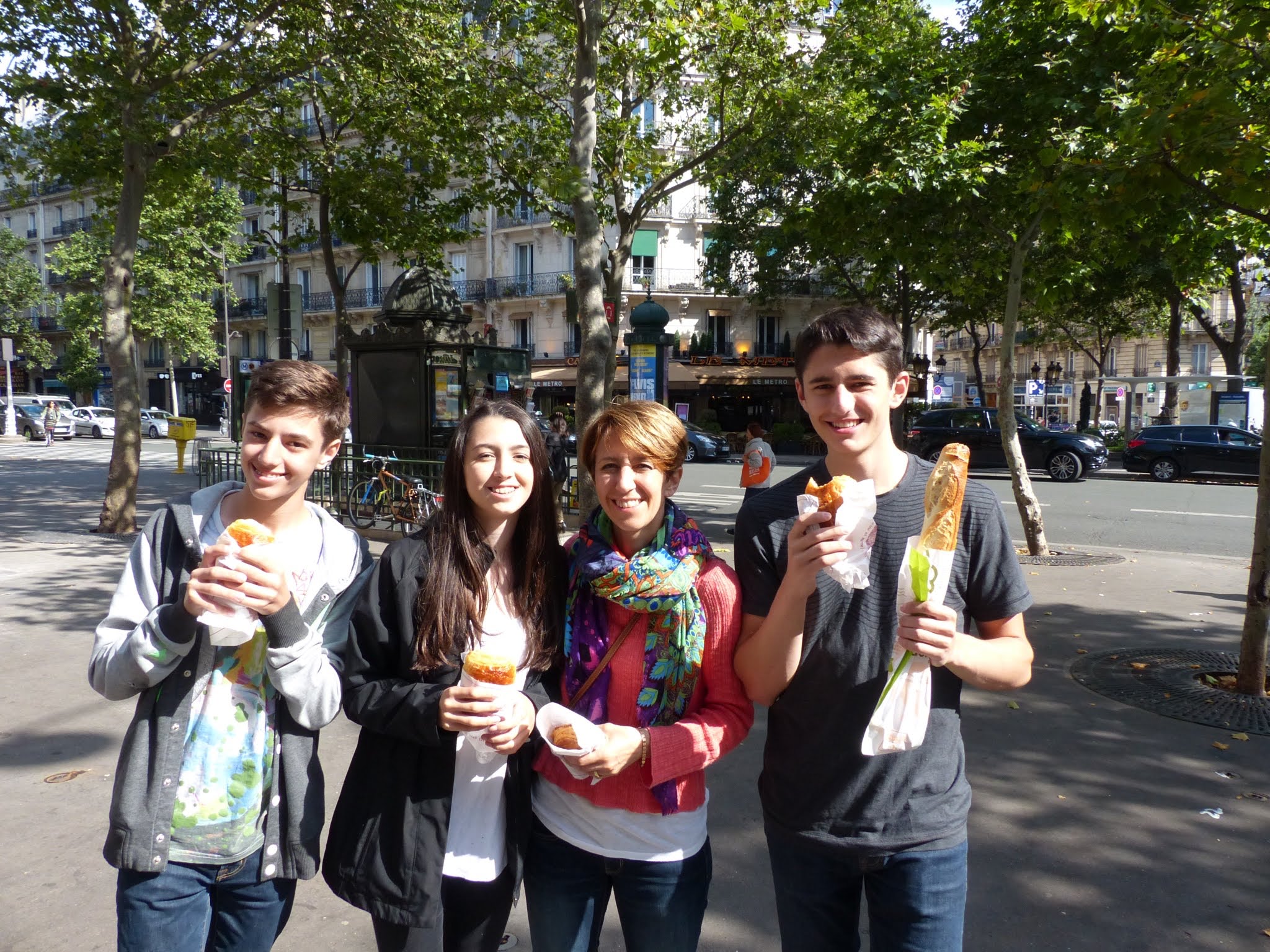
Can't get to the next corner without a stop at the boulangerie!
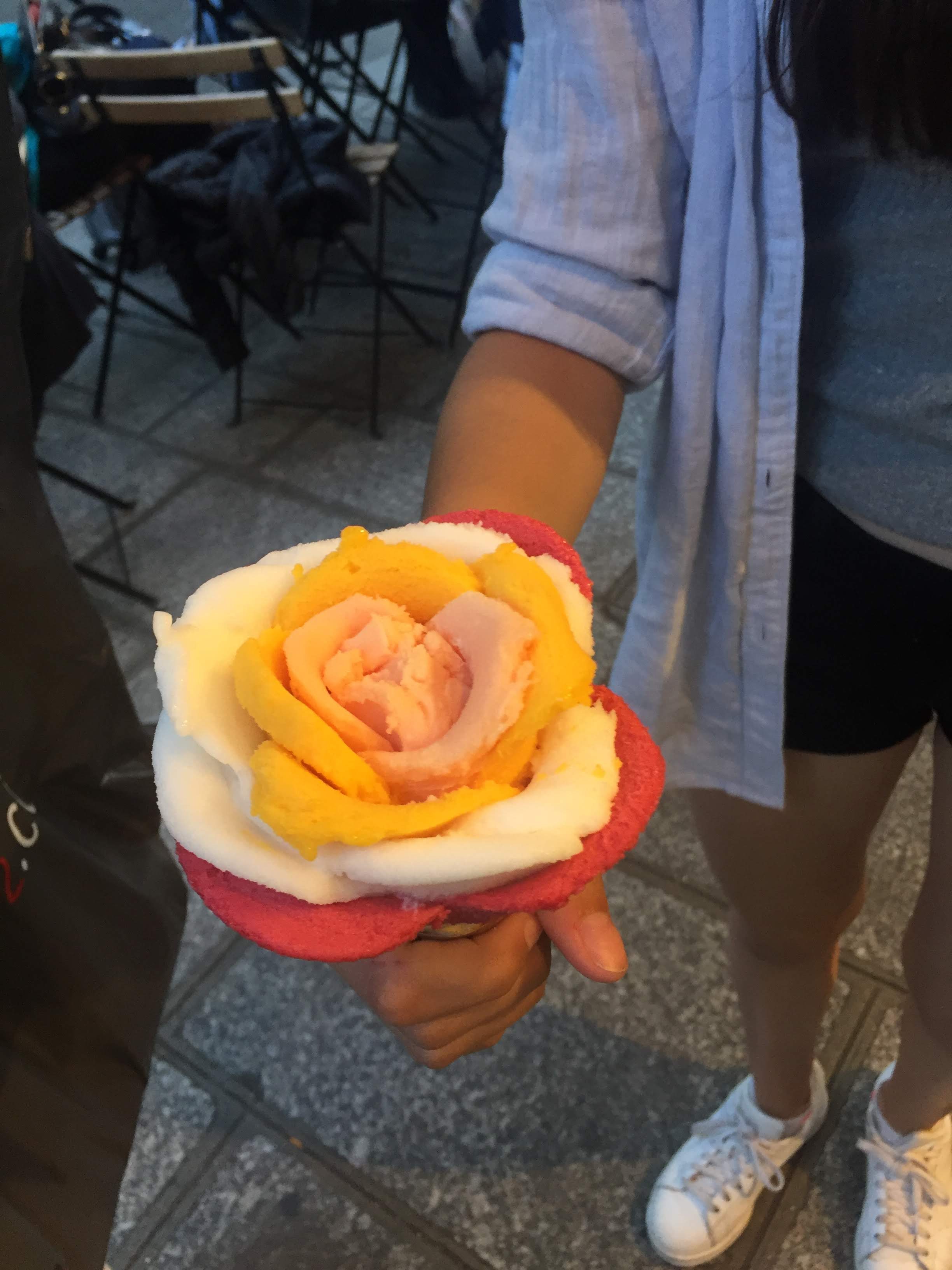
A rose by any other name...a shame to eat this gelato beauty.
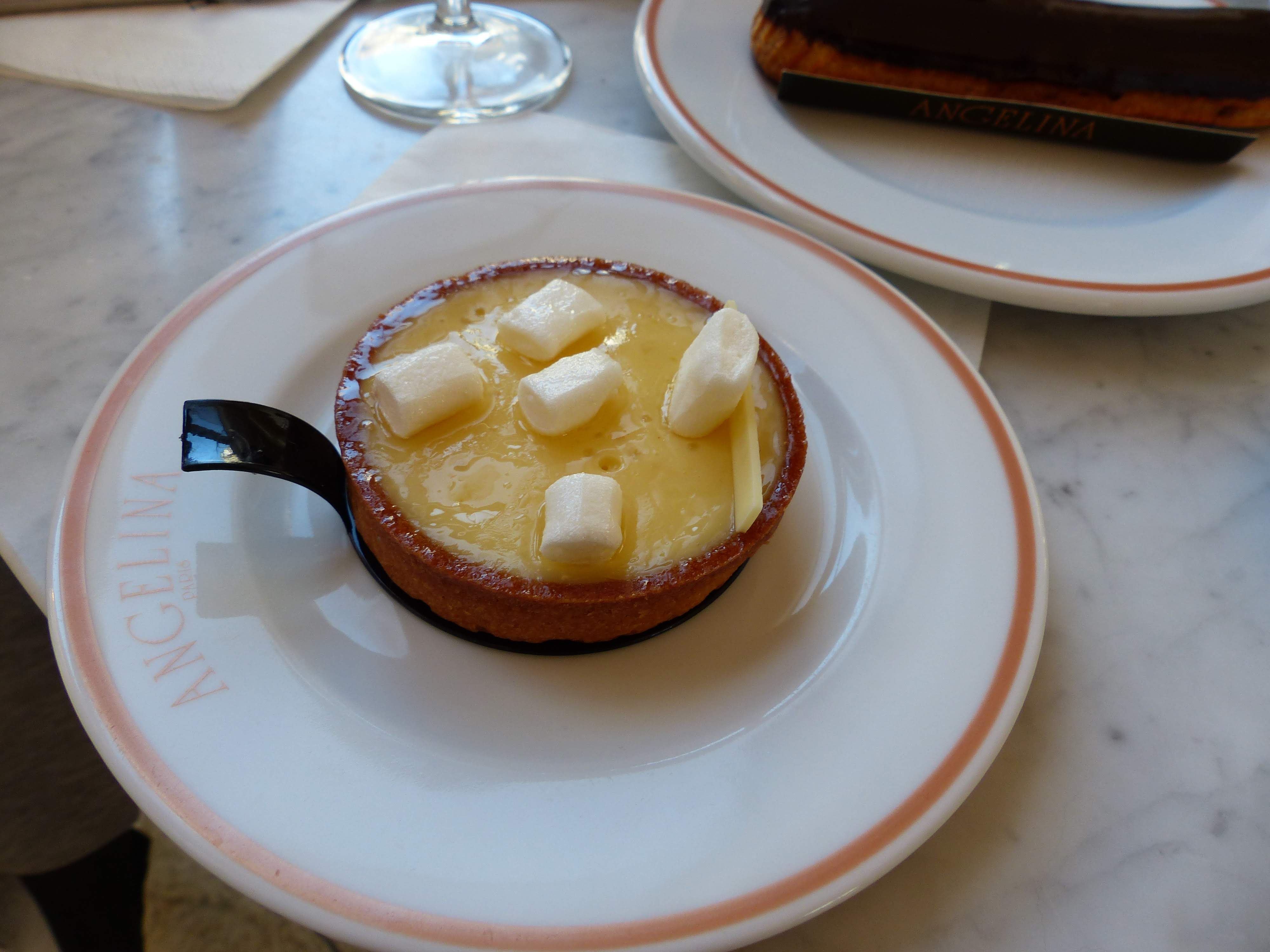
Tarte au citron at Angelina.
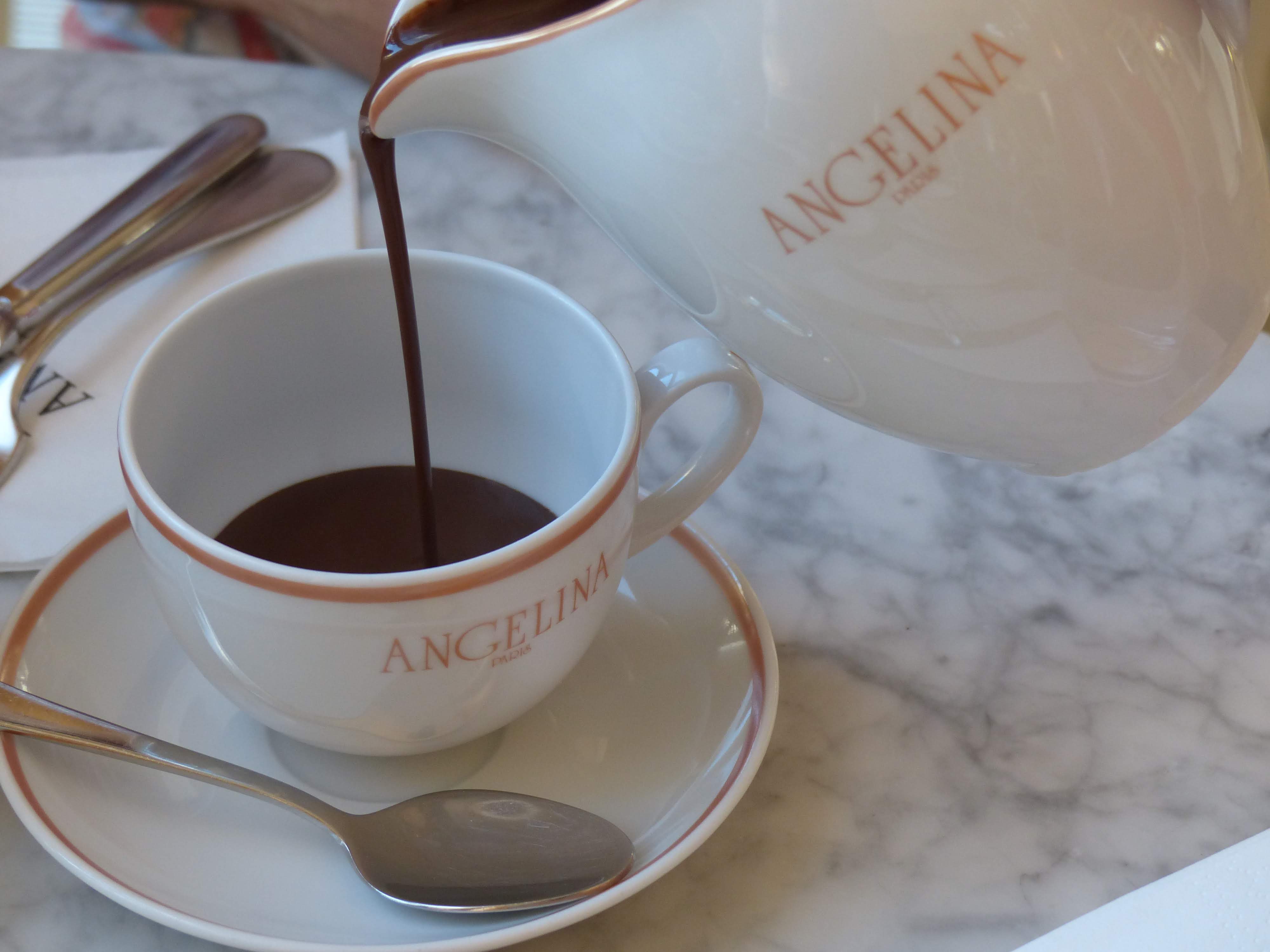
Liquid or solid? The best chocolat chaud in Paris.
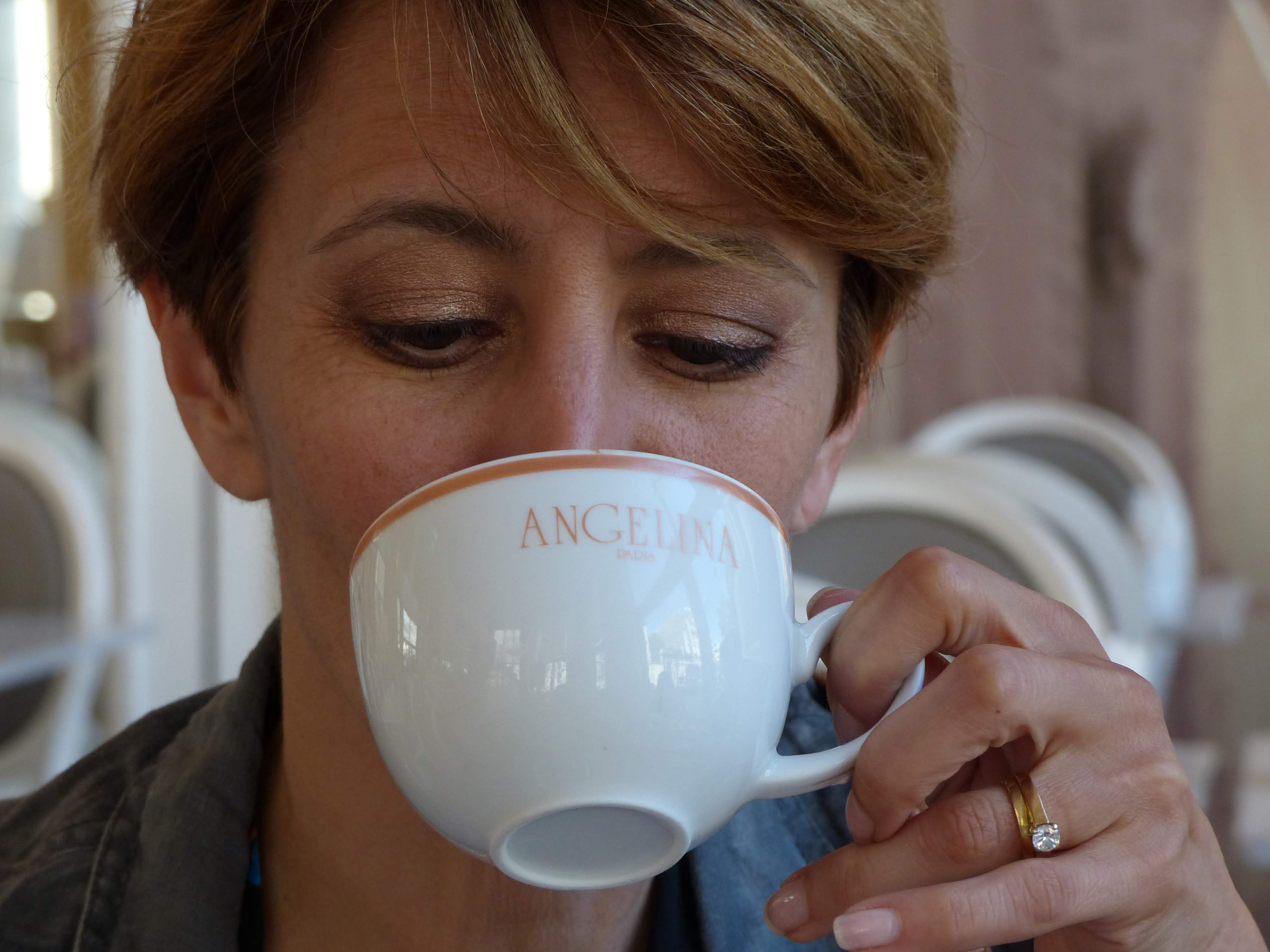
All my attention!
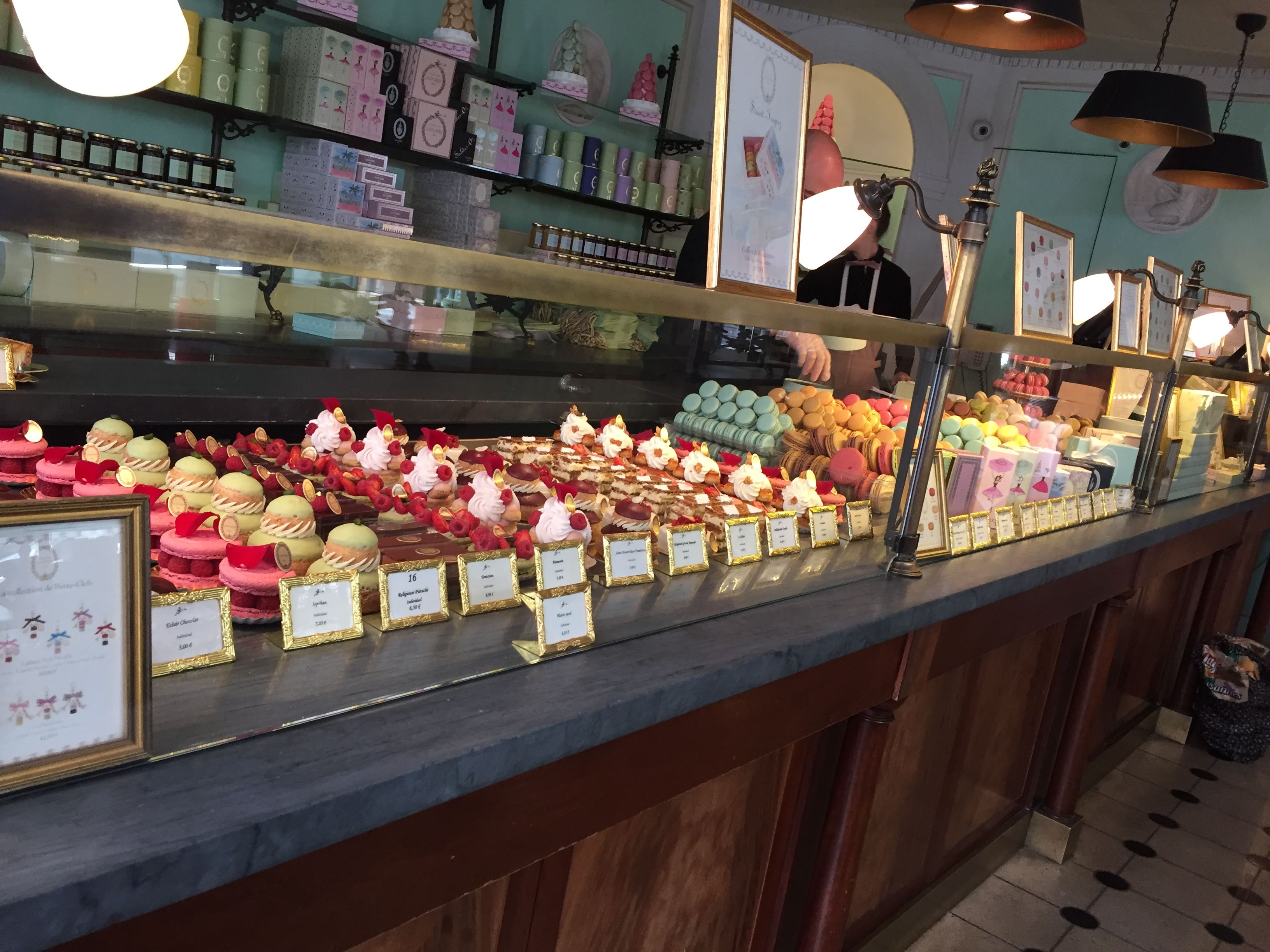
Which are the best macarons in Paris? Is Ladurée up to snuff?
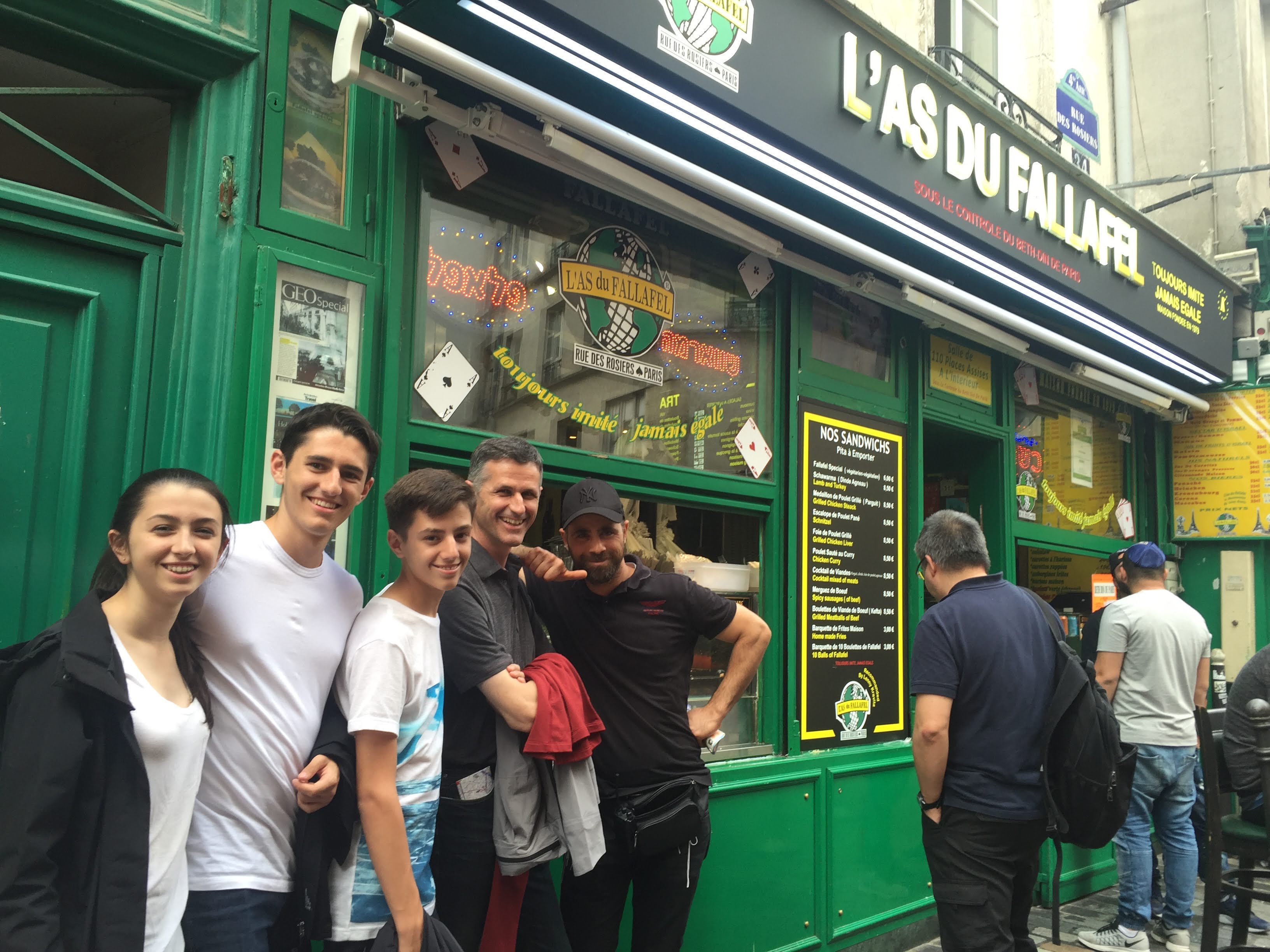
Best falafel outside of Israel.
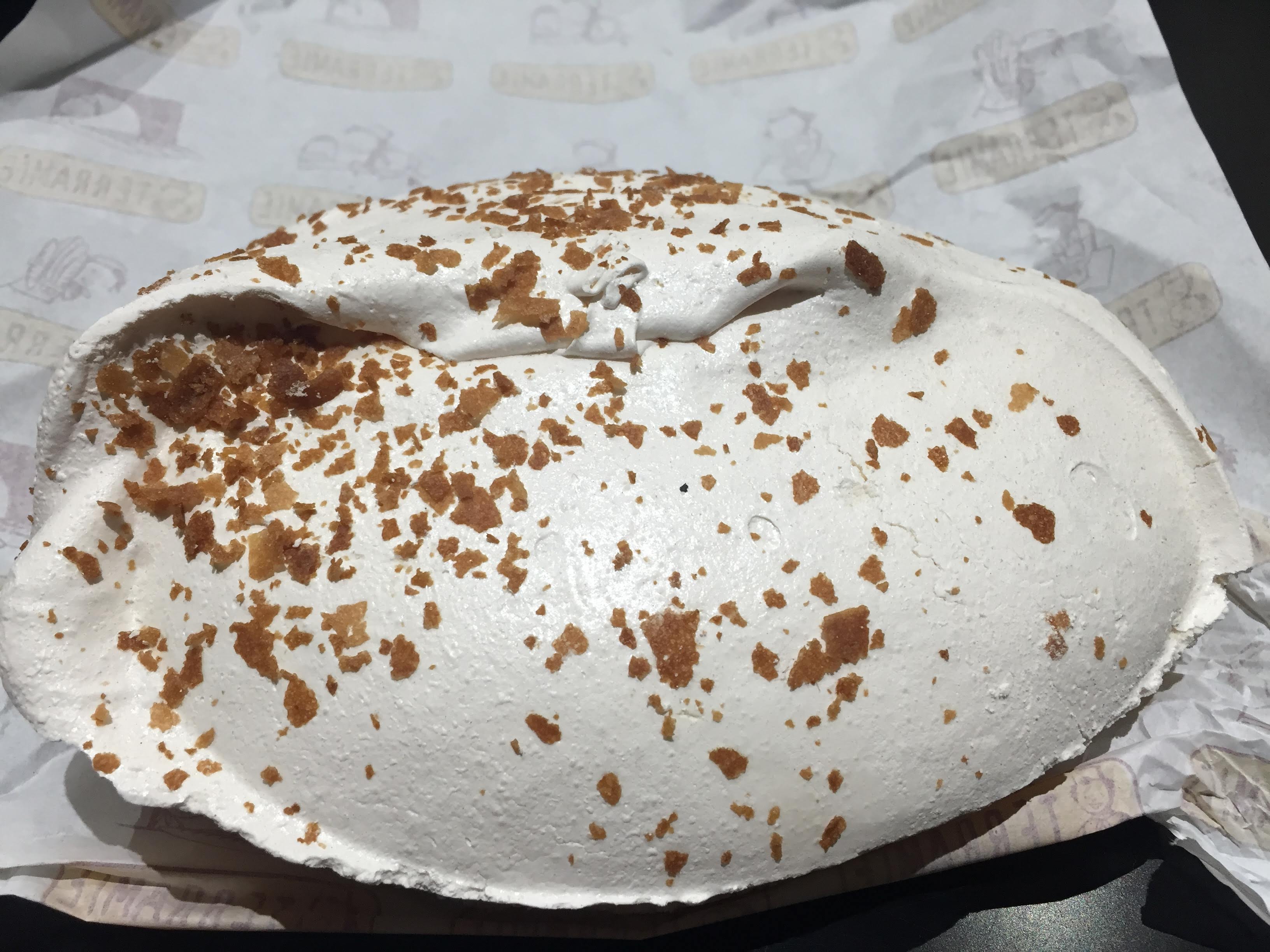
A meringue loaf!
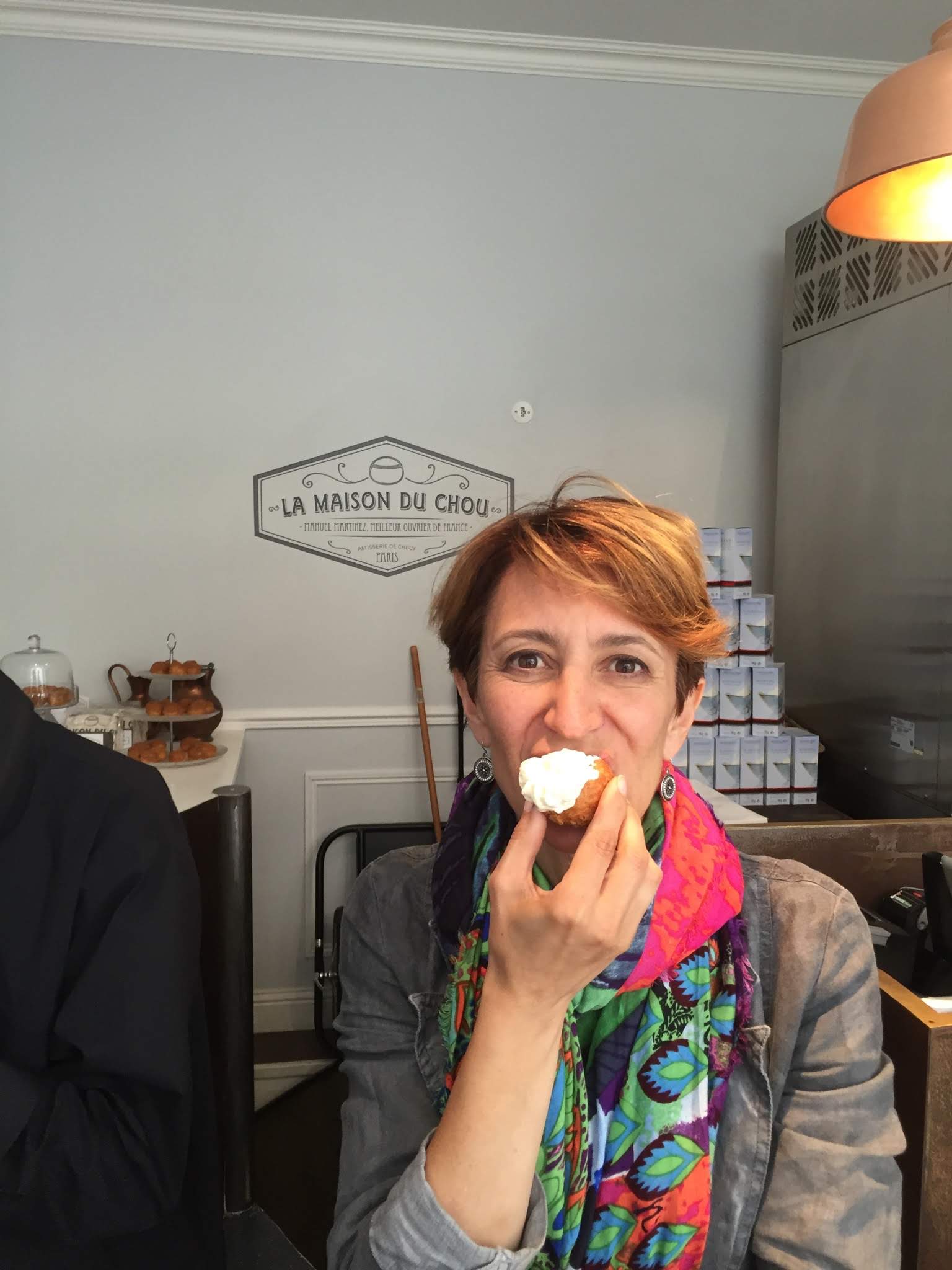
Cream puff unlike any before it.
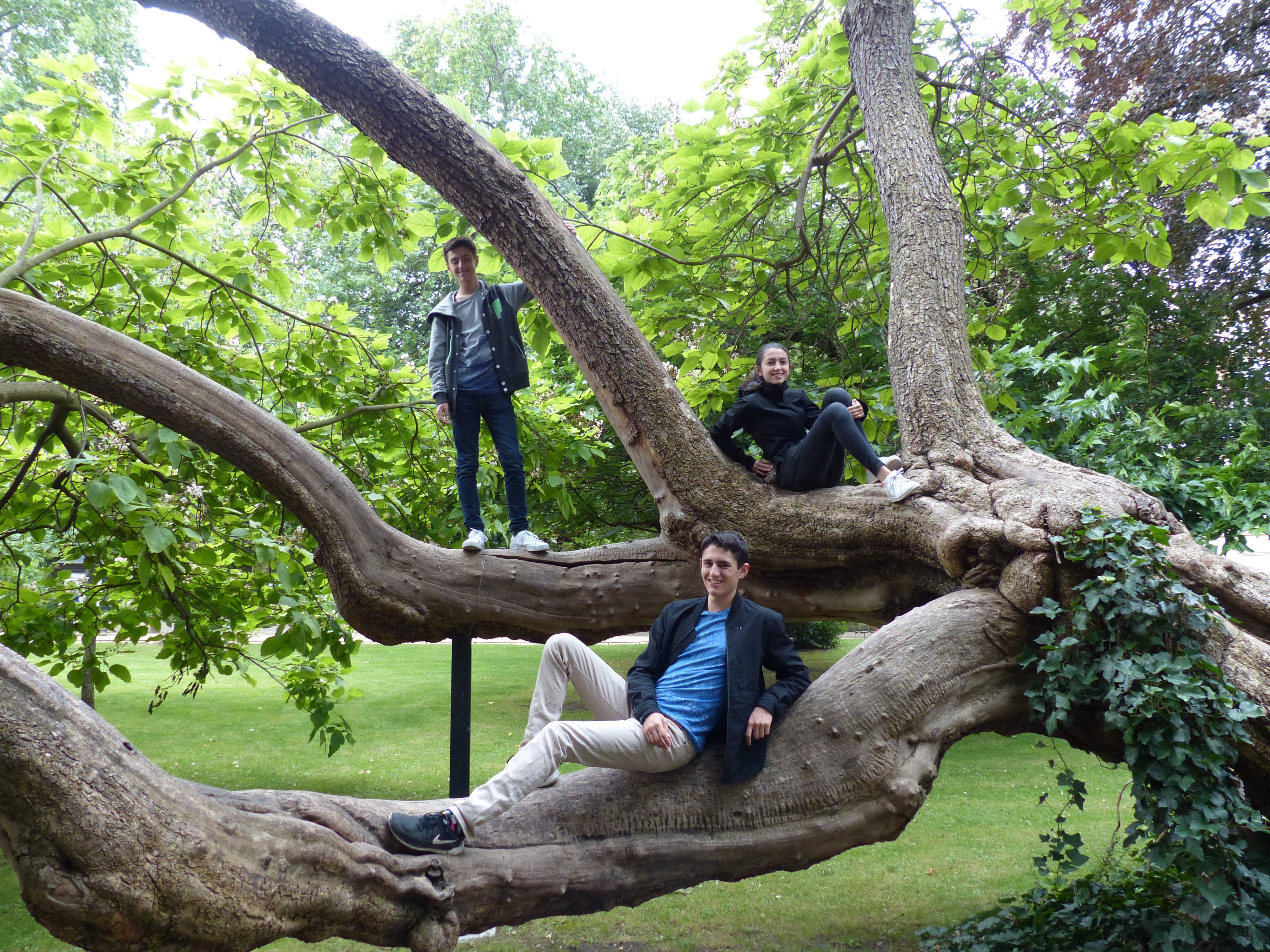
Need to work off all that food somehow. Nothing better than a bit of tree climbing!
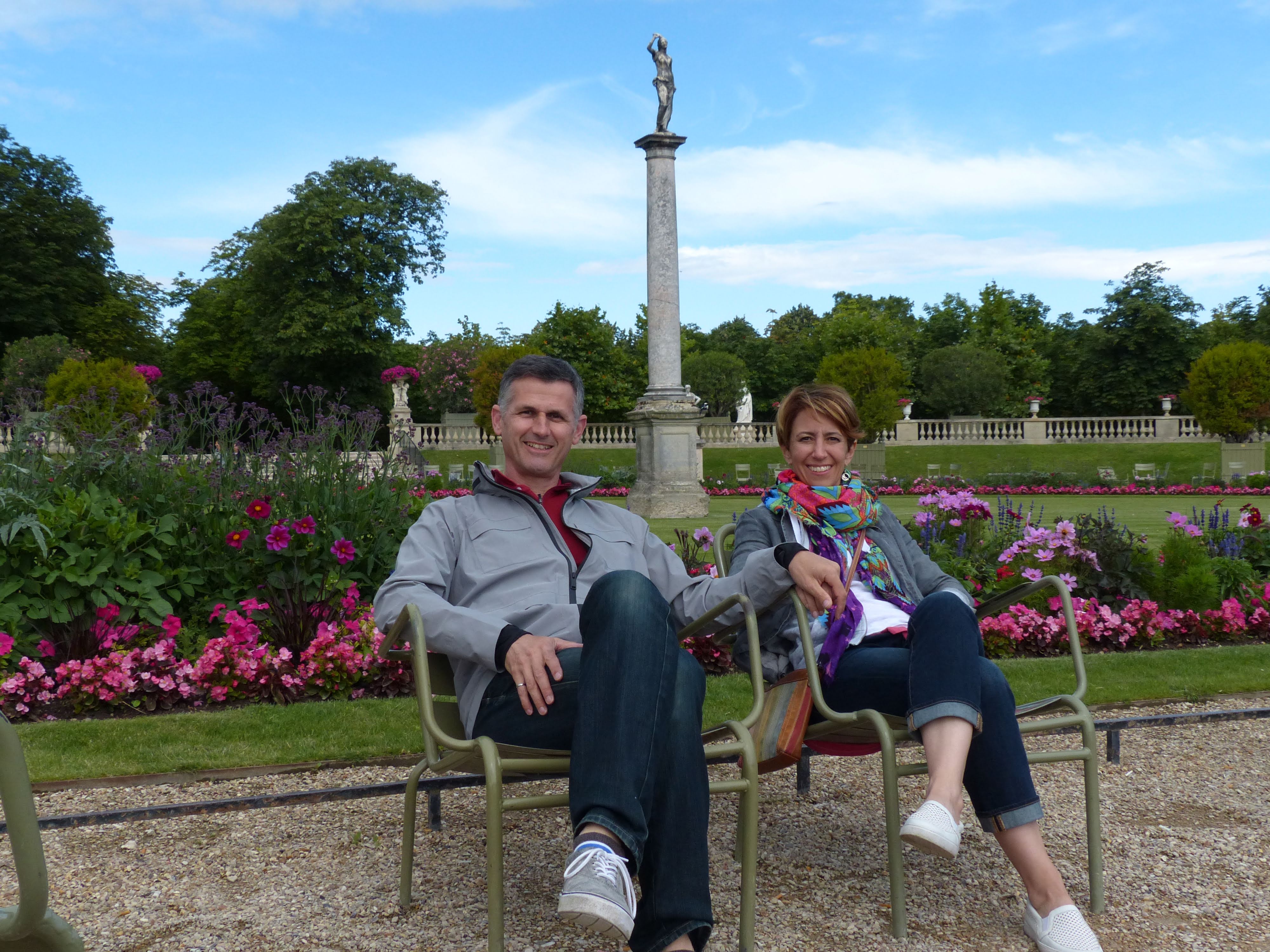
Adam's favourite place in Paris. The scene of many readings of poetry and philosophy... because that's what you do in the Jardin du Luxembourg.