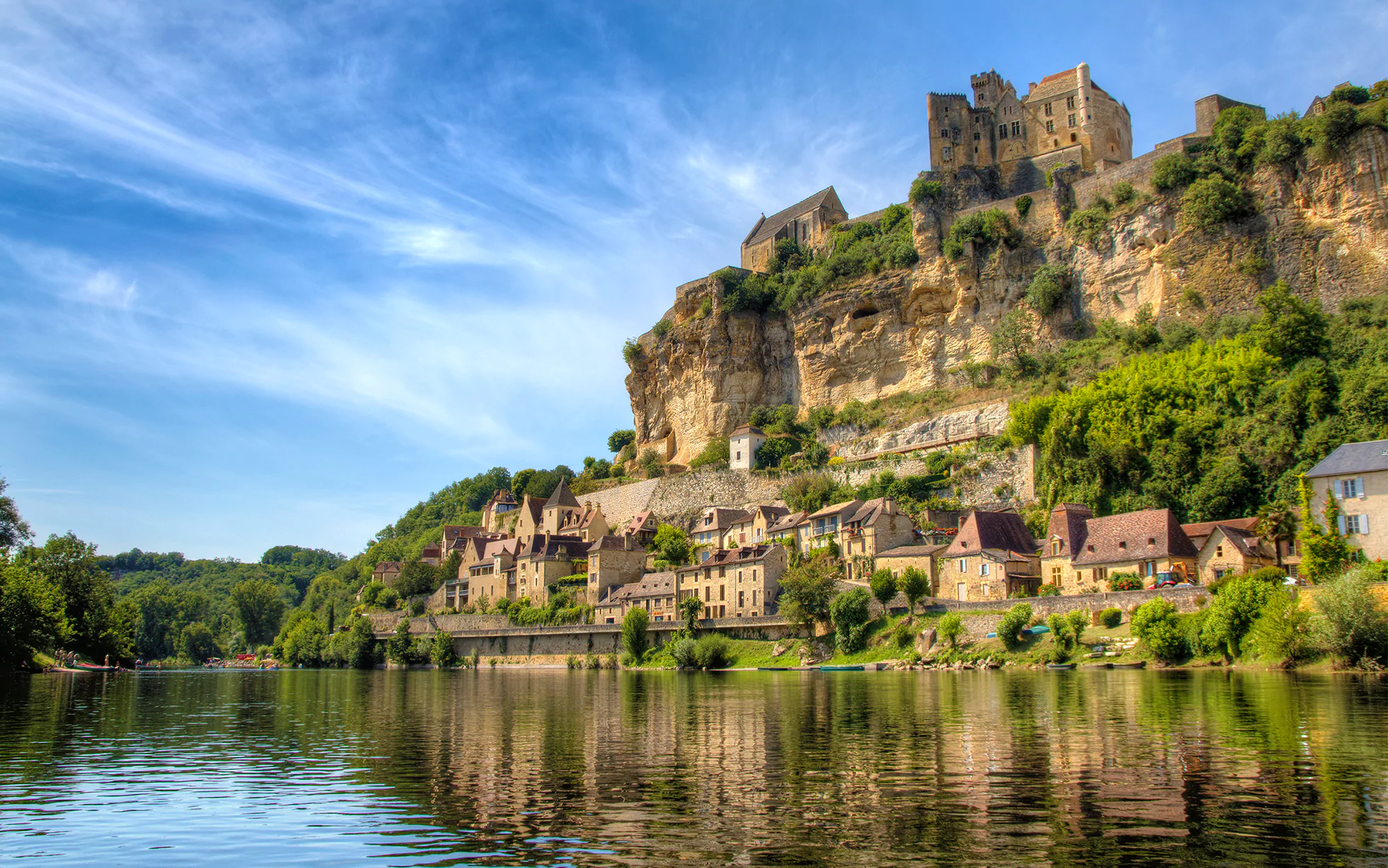
May, 2022
Delicious Dordogne
Why Dordogne? Honestly, one of my favourite guys at a wine store in Vancouver told me about it years ago. He and his wife would rent a holiday home there for a month every year. I wondered how they didn’t get bored going to the same region again and again. So when we were throwing a dart at the map to decide where to go after Bordeaux, Dordogne came to mind. Now I can see why he and his wife returned year after year. Truffles, foie gras, markets, châteaux and many of the Plus Beaux Villages de France. It’s a place to relax, to explore, to simply enjoy. Bliss, really. And the locals are absolutely lovely.
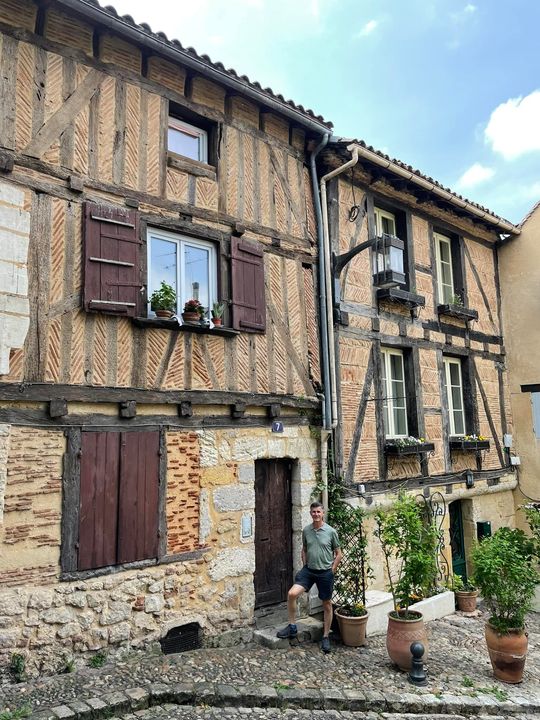
On our way to our home for the next six nights, we stopped in Bergerac for lunch and poked around the old town. Lots of beautiful half-timbered houses and cobbled streets.
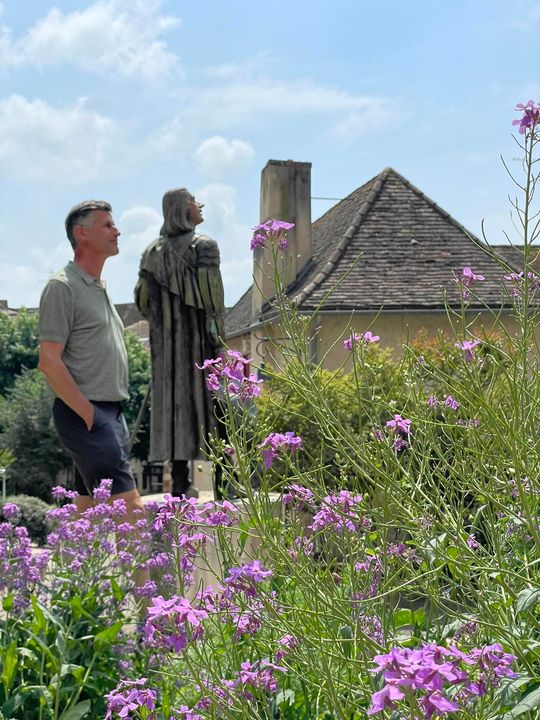
It also has a famous namesake who, truth be told, never actually lived there (or even visited for that matter). Cyrano de Bergerac actually got his name from a fief somewhere in France called “de Bergerac” that his family had acquired. Some nose envy going on here…
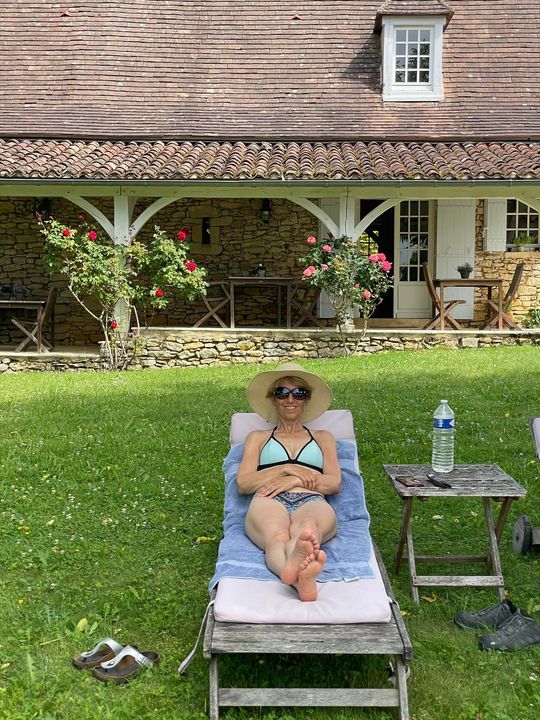
We arrived at our most lovely accommodation imaginable. Les Clos Lazcazes in Le Buisson-de-Cadouin. The absolute perfect place to stay to visit villages up and down the Dordogne and and the Vézère rivers. The pool was more than welcome given the few days of heat wave we had while we were there. We would return in the afternoon and cool off in the pool.
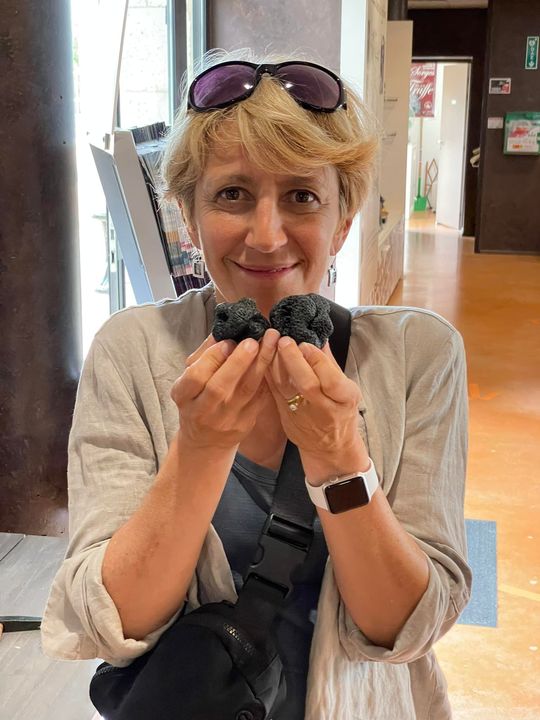
Our first day we went to truffle territory. While the whole region is truffle territory, Périgeux is THE place to go for everything truffle. If we had been there in truffle season, we could have actually gone truffle hunting, but sadly we were there months too late (or early, depending on your point of view). The truffle museum was a great education for us, though. Now we know why some truffles are tasteless. Like with many foods, time and heat can zap flavour, freezing messes with texture and alcohol and oil will pull flavour out. So, know that a fresh truffle will only last 8 days and the best are the Tuber melanosporum, harvested in winter. And never buy truffles that have been sterilized as the heat will kill their flavour.
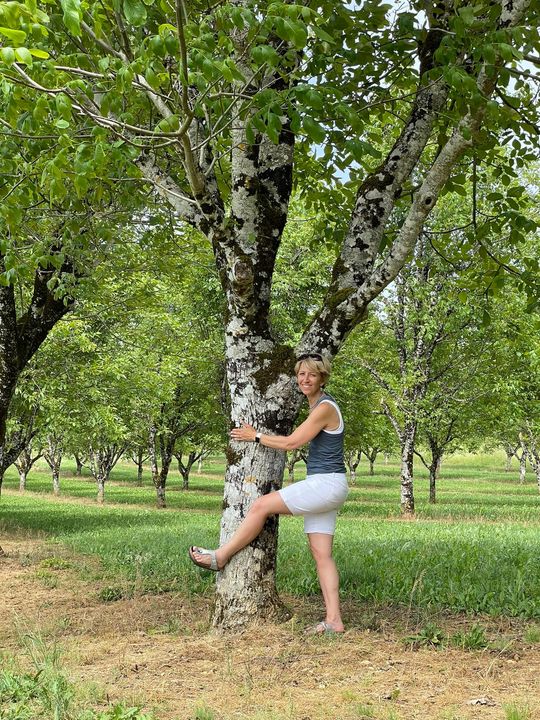
Who expected me to become a tree hugger? When it’s an oak with truffles growing on its roots, I’m more than happy to cozy up!
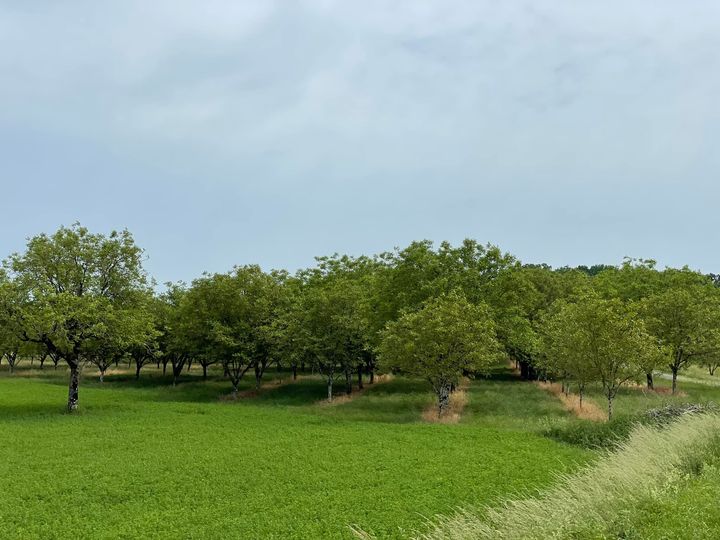
A truffle orchard!
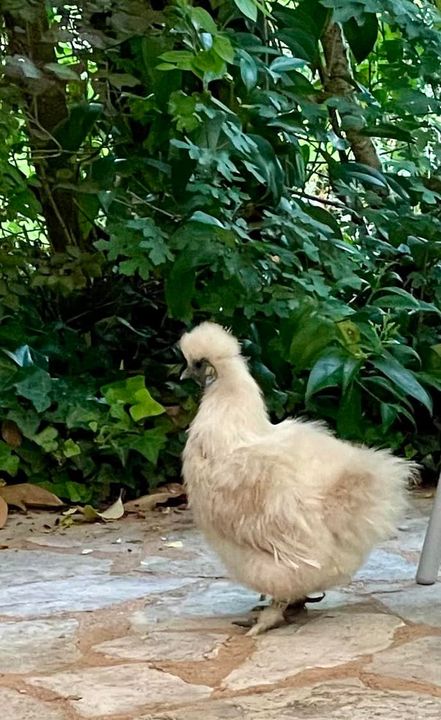
A silkie chicken was hanging around our dinner table. Strangest chicken I’ve ever seen. Soft like a cat (and apparently likes to be cuddled…I didn’t try), with a black skin. Which you can see in its face. Does one eat them? Yes, edible but most people are turned off by its black flesh and bones!
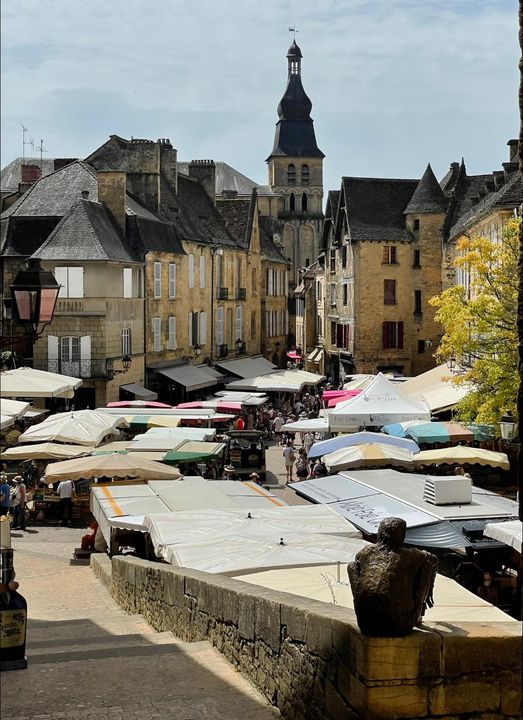
It was market day in the gorgeous medieval town of Sarlat. Weekly markets bounce around most of the towns in Dordogne with a market daily in a town that is surely not too far away.
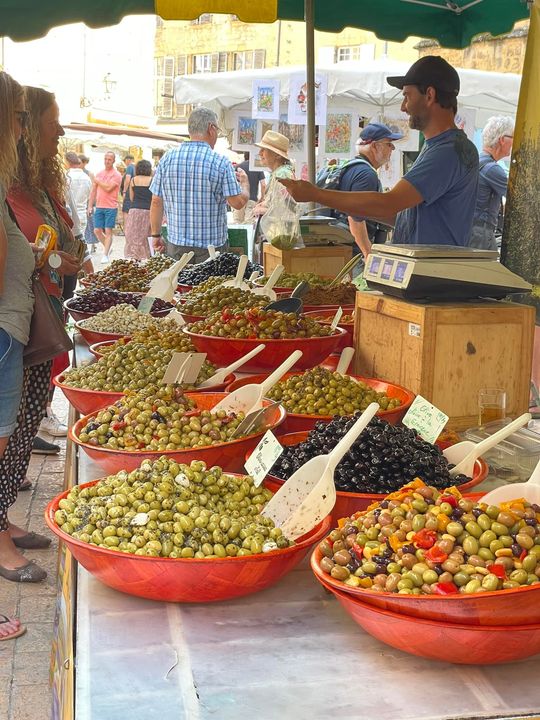
Olives anyone?
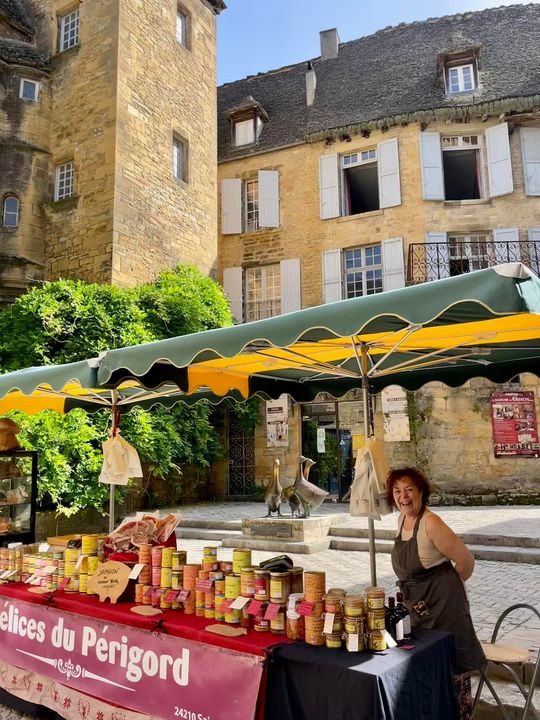
Délices is an understatement
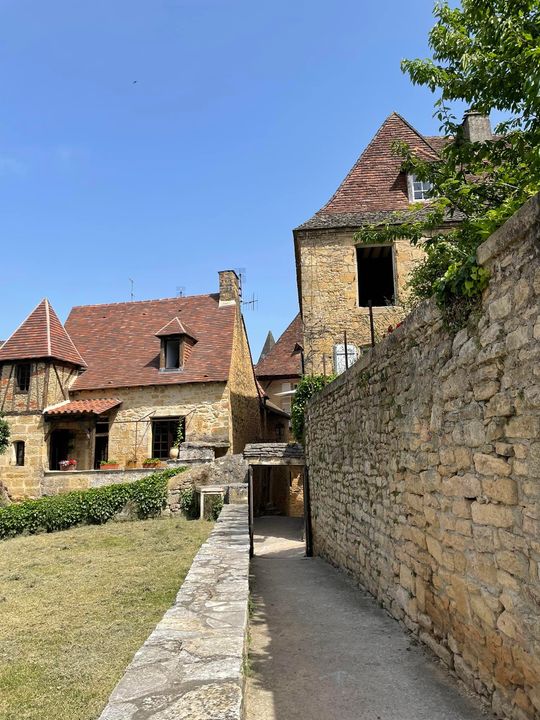
In 1962, Sarlat-la-Canéda (its full name) was the trial town of a new law called the loi Malraux which was all about preserving the heritage of French towns. Sarlat was the first of many towns to receive funding to restore its old buildings. I think it must have received extra cash as the guinea pig and to make sure the law stuck because it is really stunning. It has the highest density of “Historic Monuments” and “Classified Monuments” of any town in France, and is apparently on the UNESCO World Heritage Site wait list.
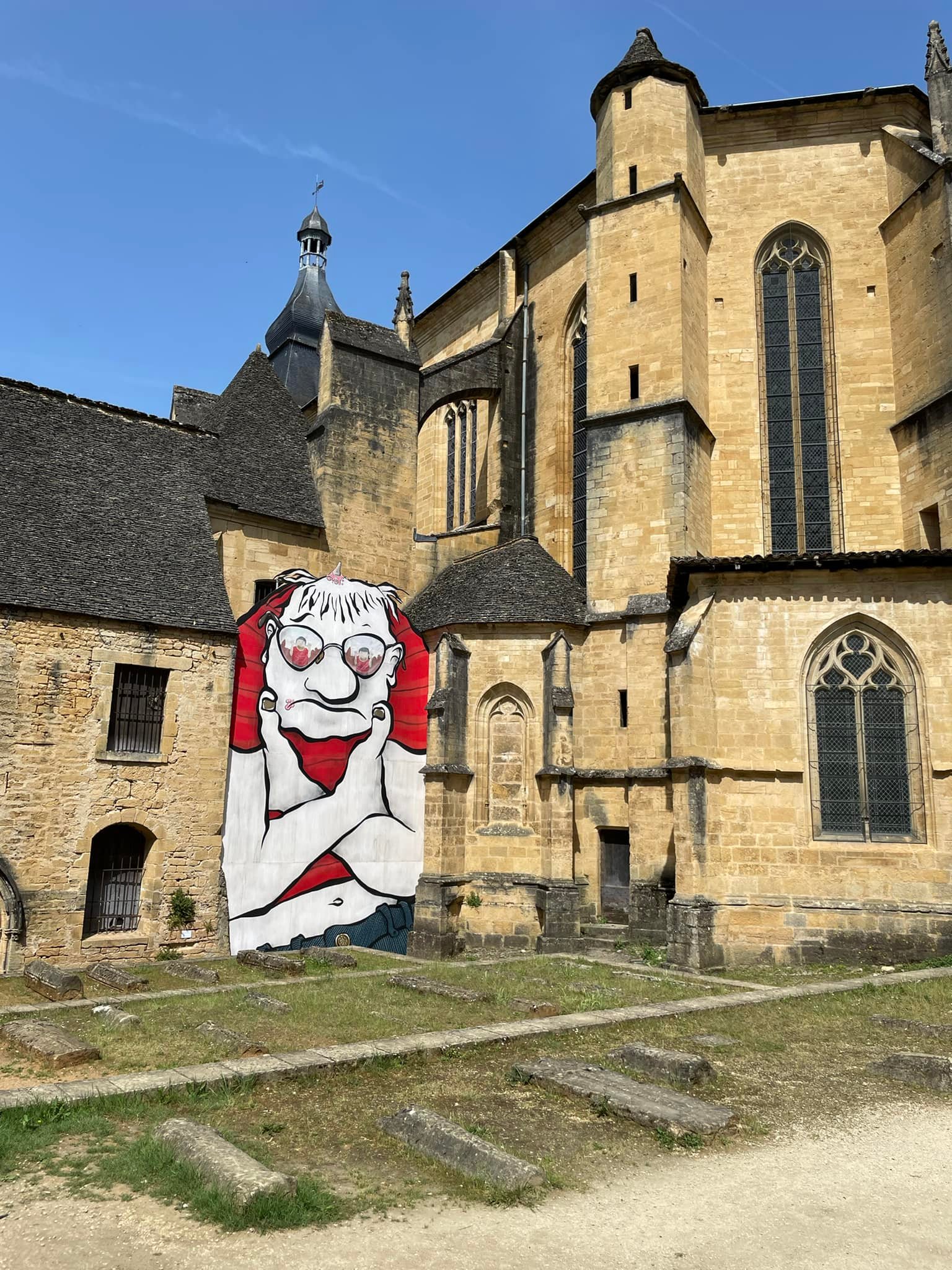
A bit of levity overlooking the old cemetery at the Sarlat Cathedral
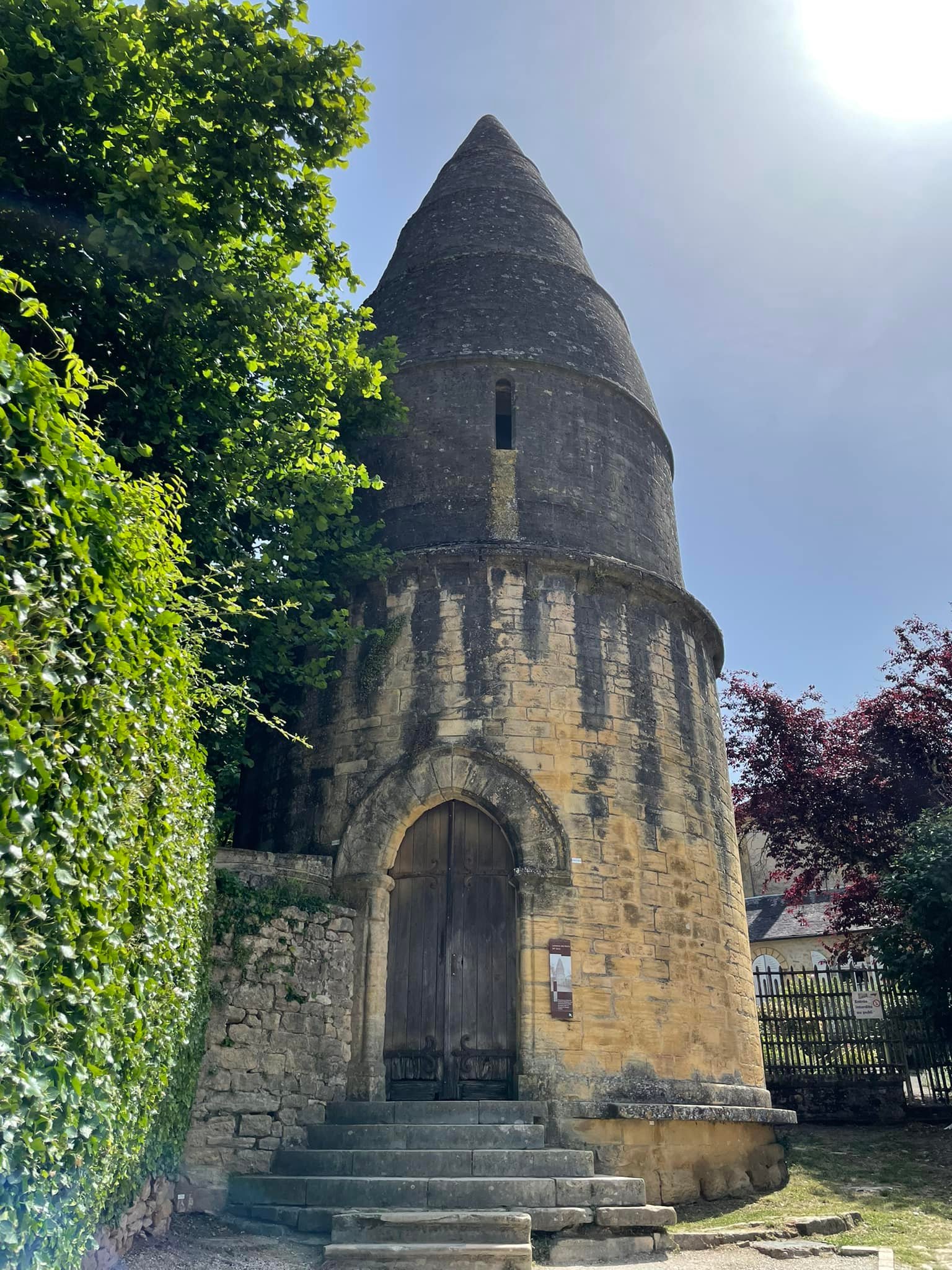
The bullet-shaped Lanterne des morts is quite a mystery. This hollow tower in the cemetery dates back to 1180 and nobody is really sure of its intent. The general consensus is that a lamp was hoisted up into the tower at dusk to shine through the hole at the top to light the way for the souls. It is also thought to identify the location of a cemetery at night. And, another theory is that the light coming from these towers would keep Death in the graveyard and stop “him” from seeking out new victims.
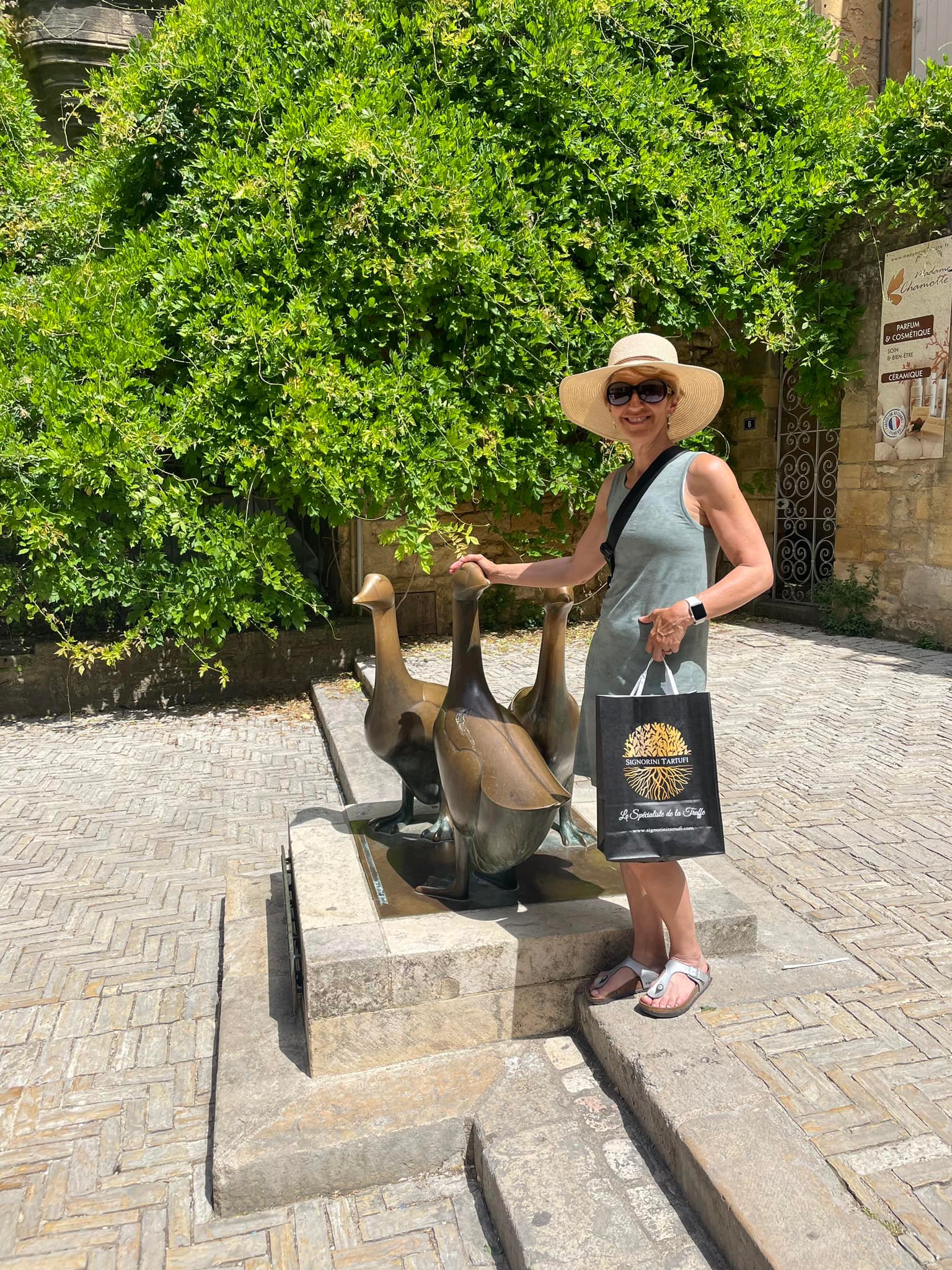
If Périgeux was truffle central, then Sarlat is foie gras central. There’s even a statue of geese to commemorate the ancient goose market at Place du Marché des Oies. Note the evidence of the trip to the truffle shop.
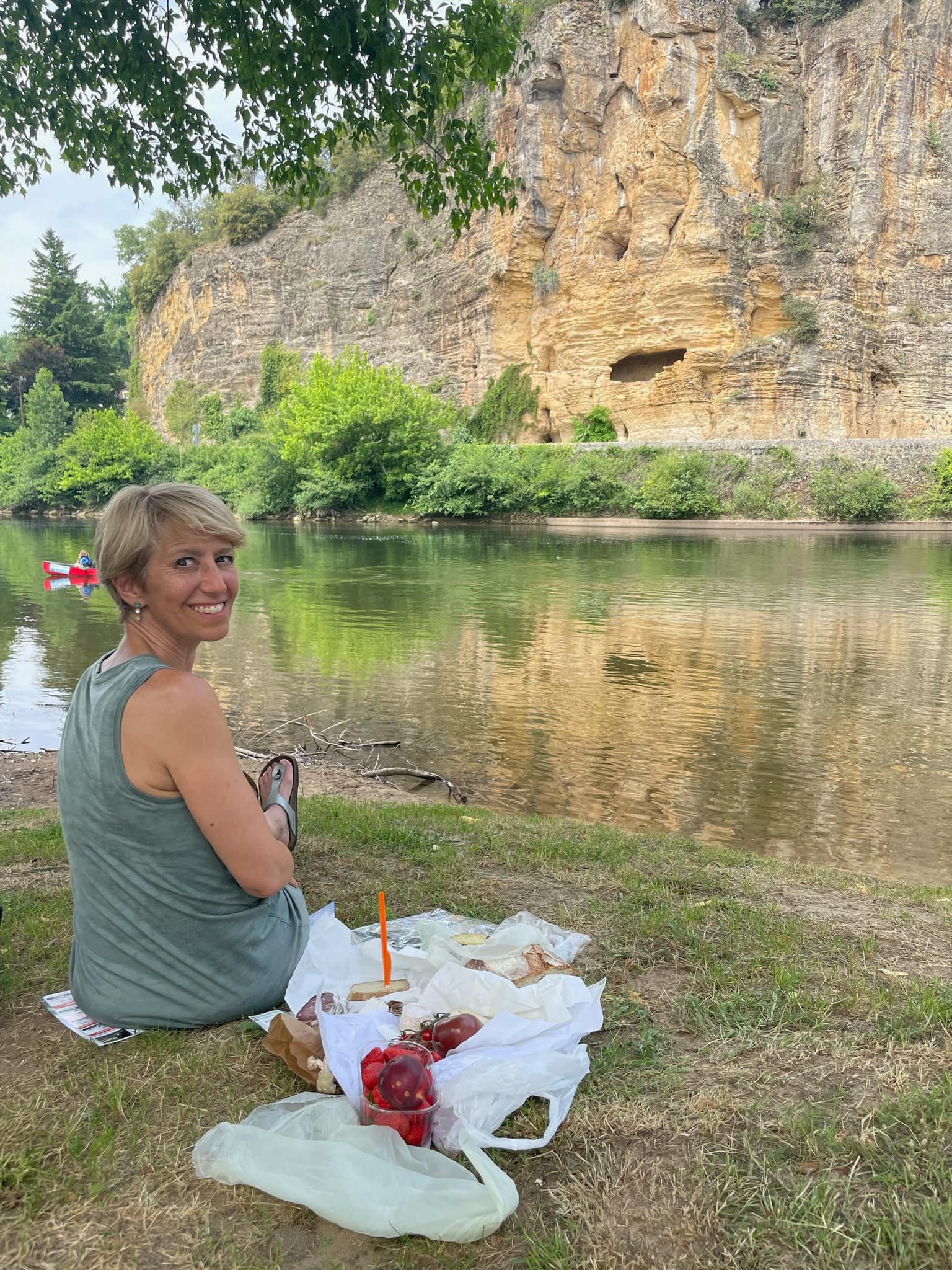
We availed ourselves of some market treasures and had a picnic by the Dordogne River.
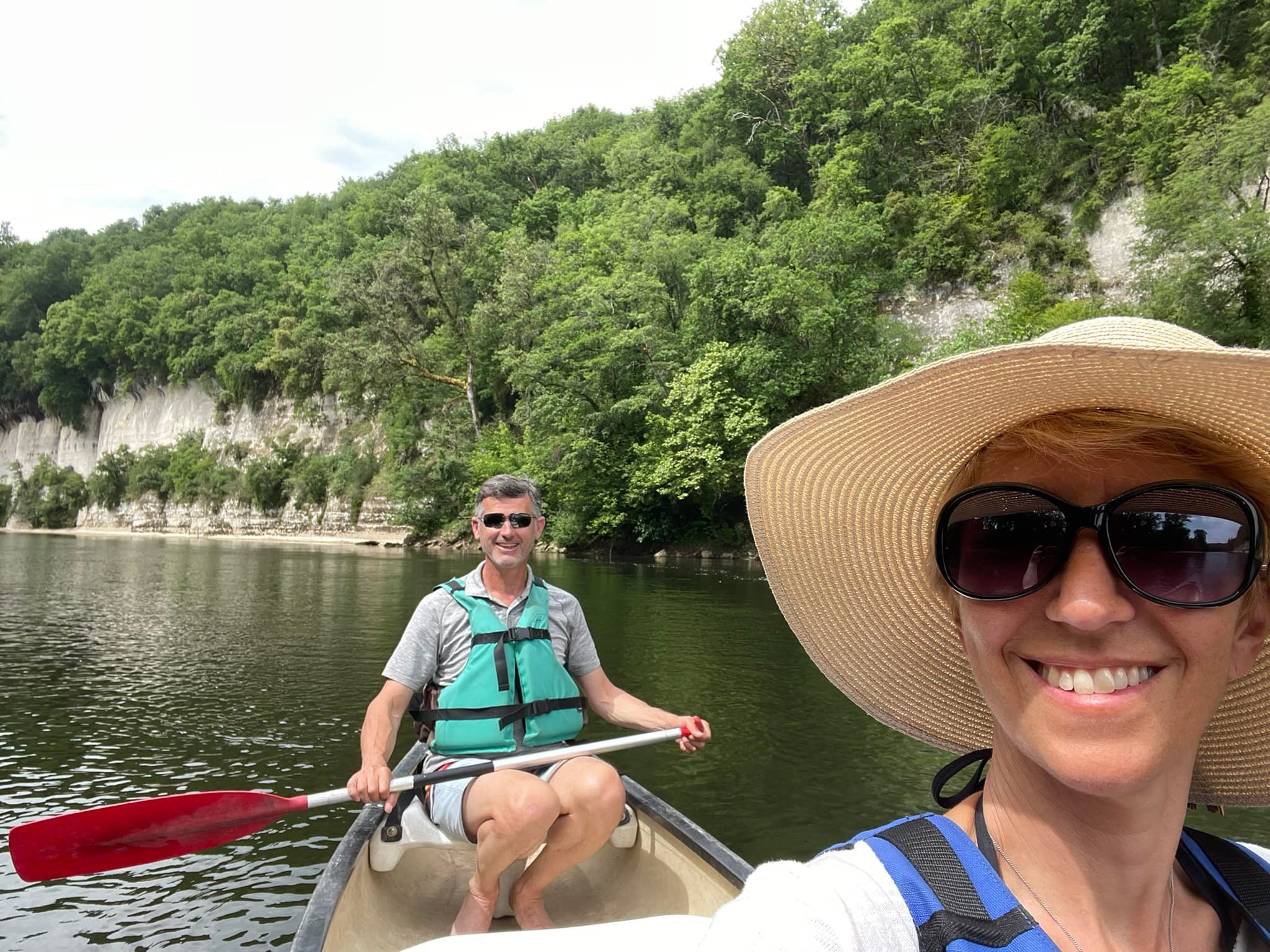
Our 28th anniversary was spent canoeing along the Dordogne past villages and châteaux. We managed to scout a few locations for visits over the next couple of days.
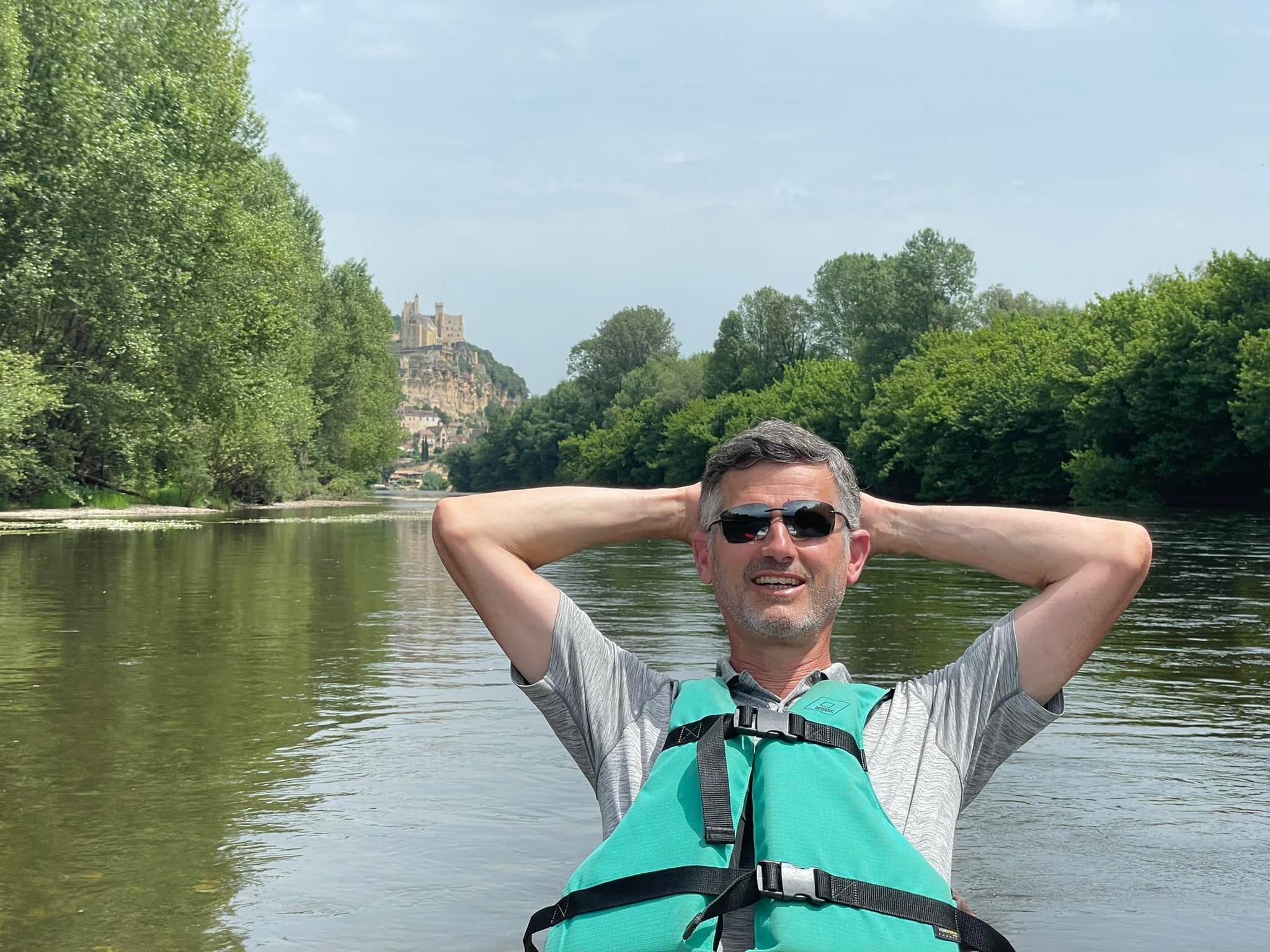
Who needs a castle when you’ve got a canoe?
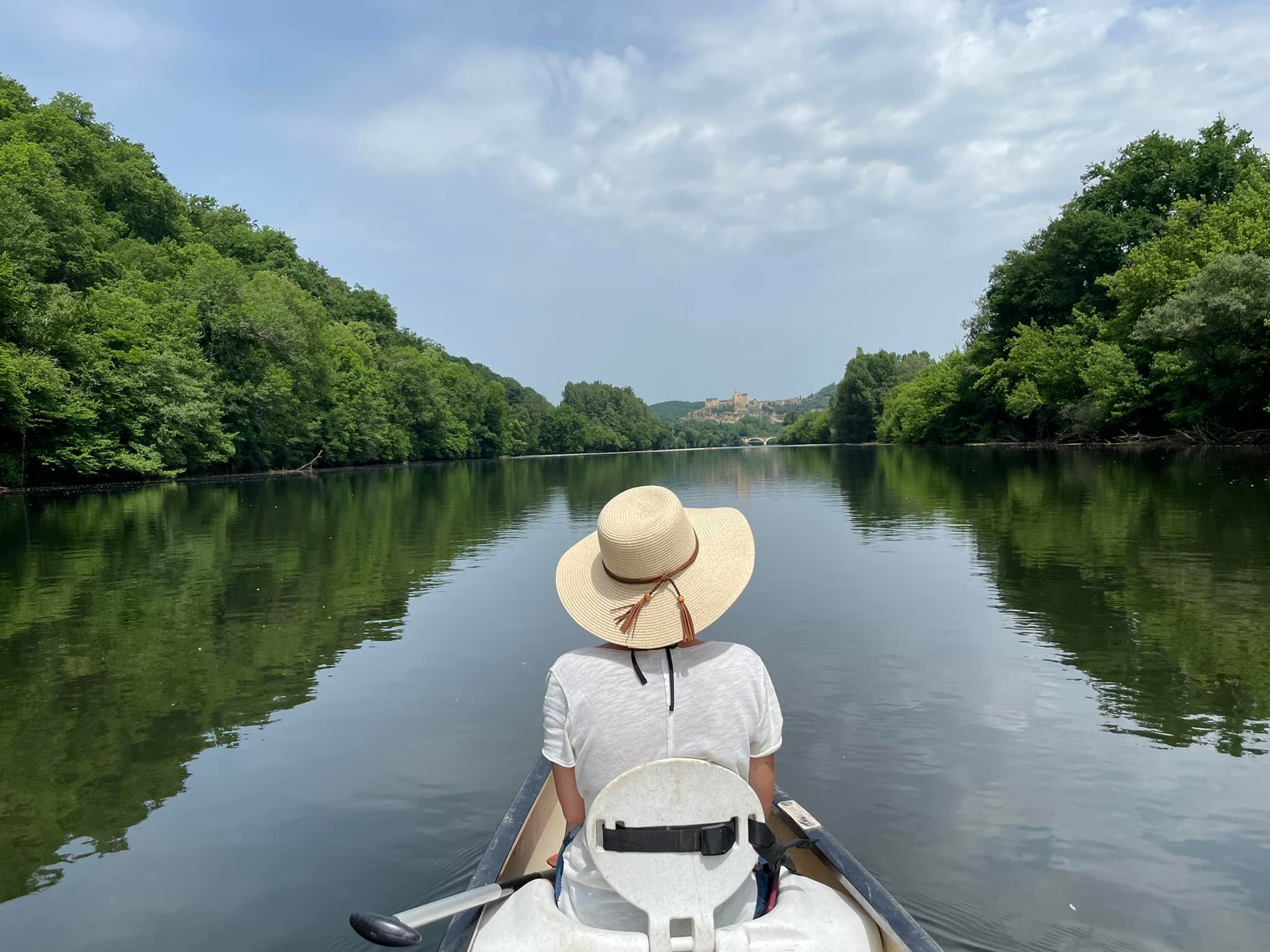
Serenity
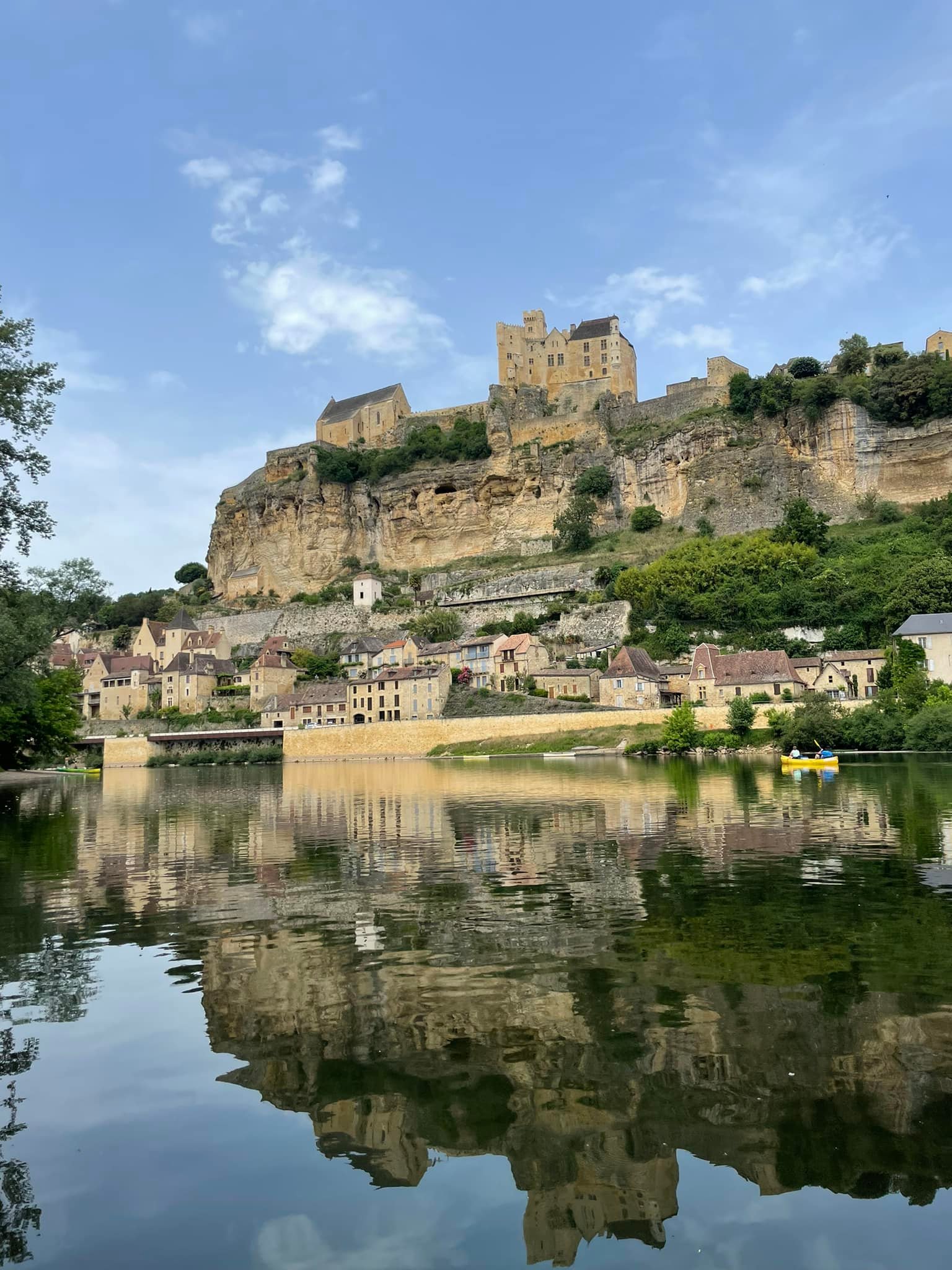
Does it get any better than this?
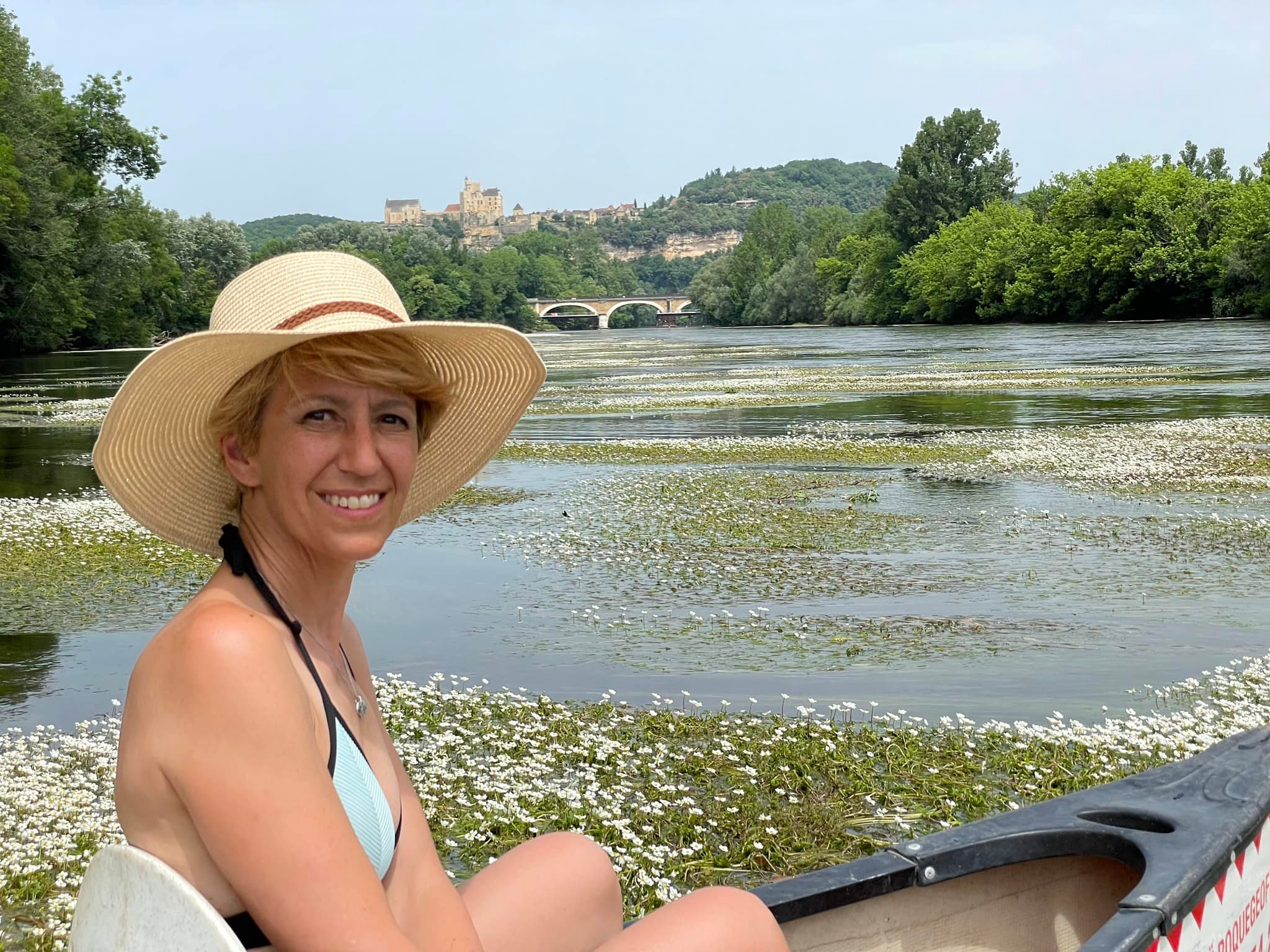
Stuck in the weeds
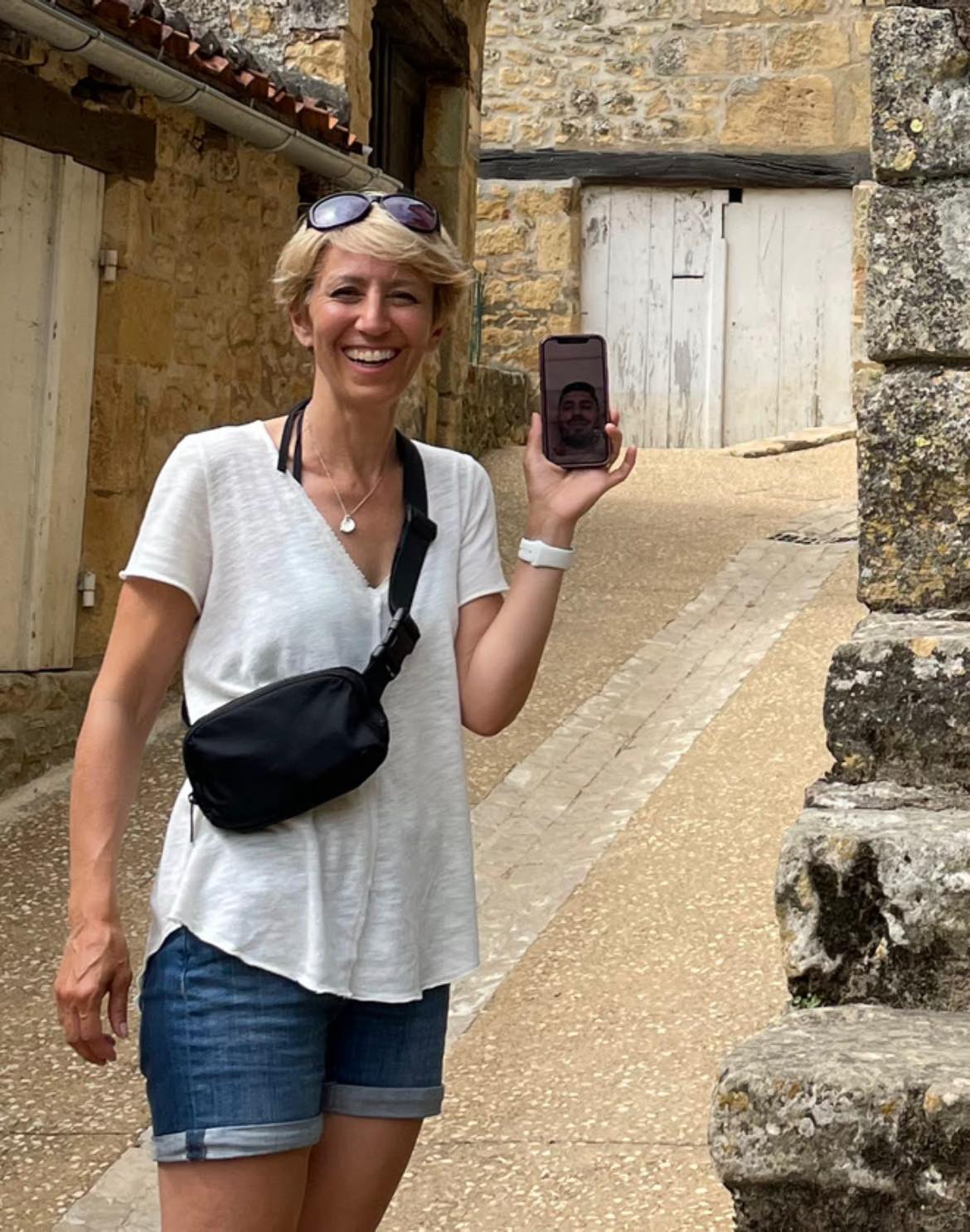
We even managed to get a picture with Alex!
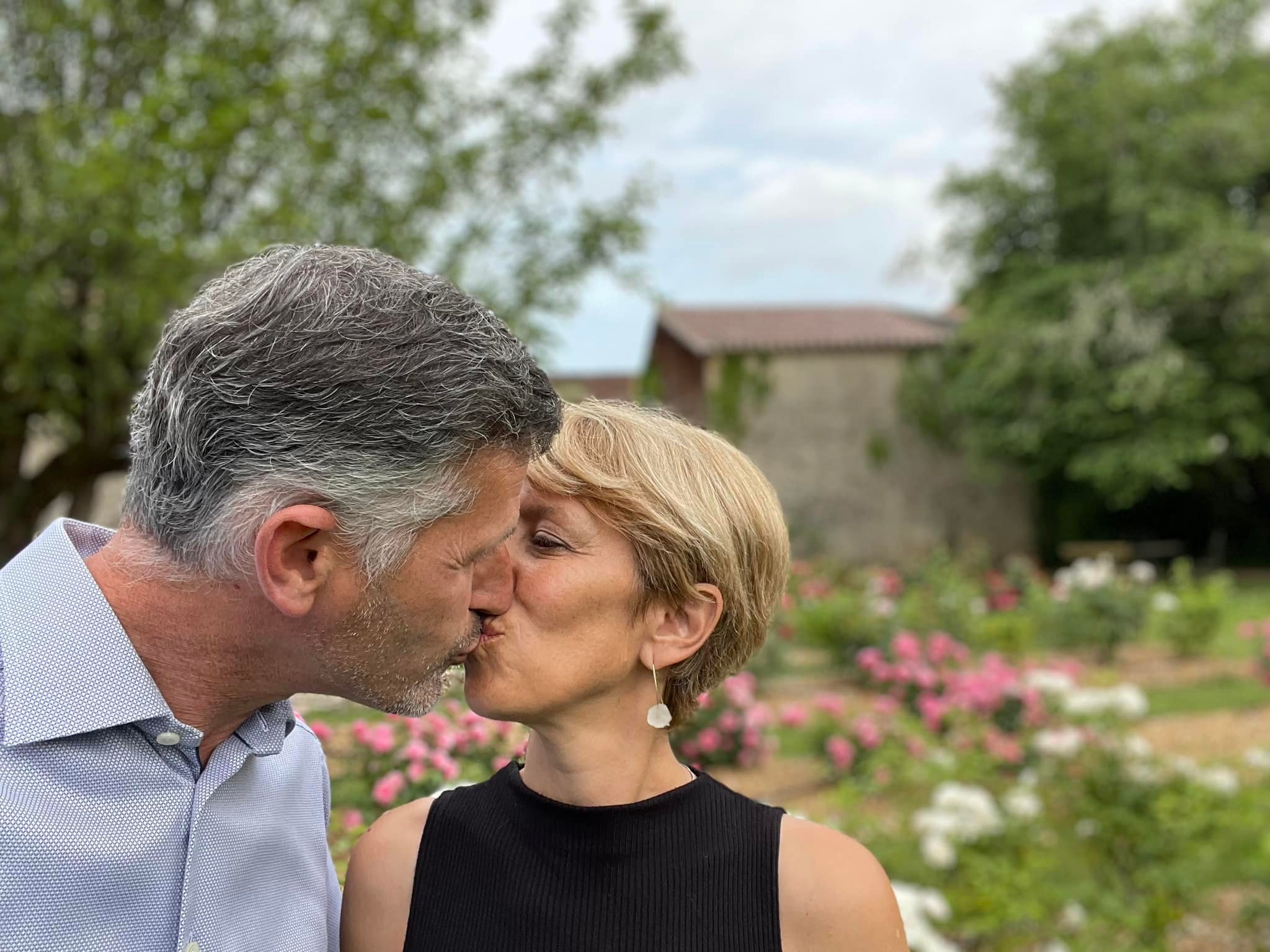
Dinner was at the fabulous Relais & Château Le Vieux Logis. Great food and beautiful gardens.
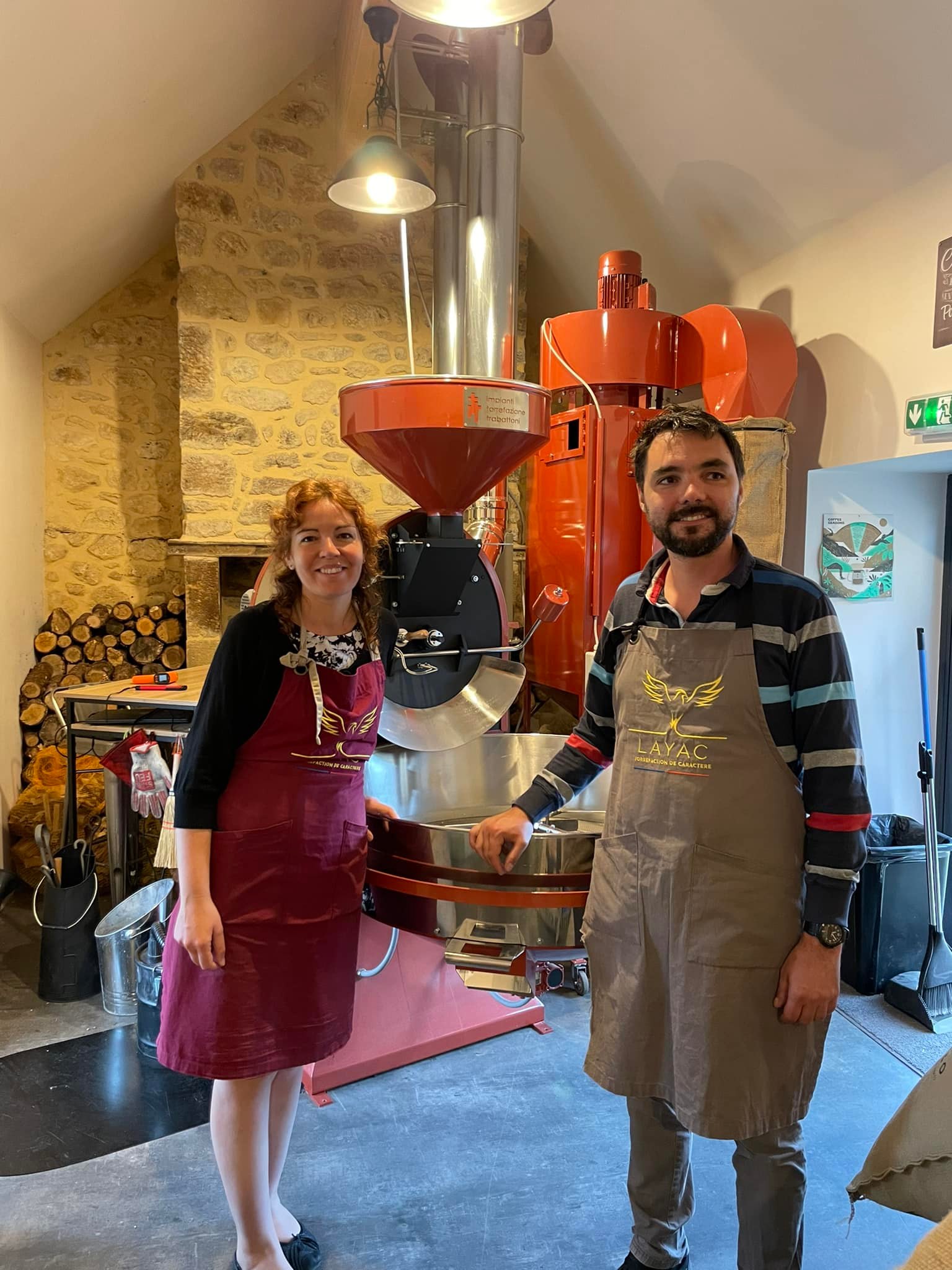
We had to start our 29th year with good coffee! Italy was amazing with coffee and meh, with pastries. France’s pastries are amazing but the coffee, meh. Until we discovered Céline and Julien, proprietors of Cafés Layac, in Vitrac, near Domme. Tucked beside a little school (lucky parents!) they roast their own beans using a wood-fired roaster. This pair know their stuff and make amazing coffee! They even offer roasting education and experiences. Six months in business so far, I wish them success!
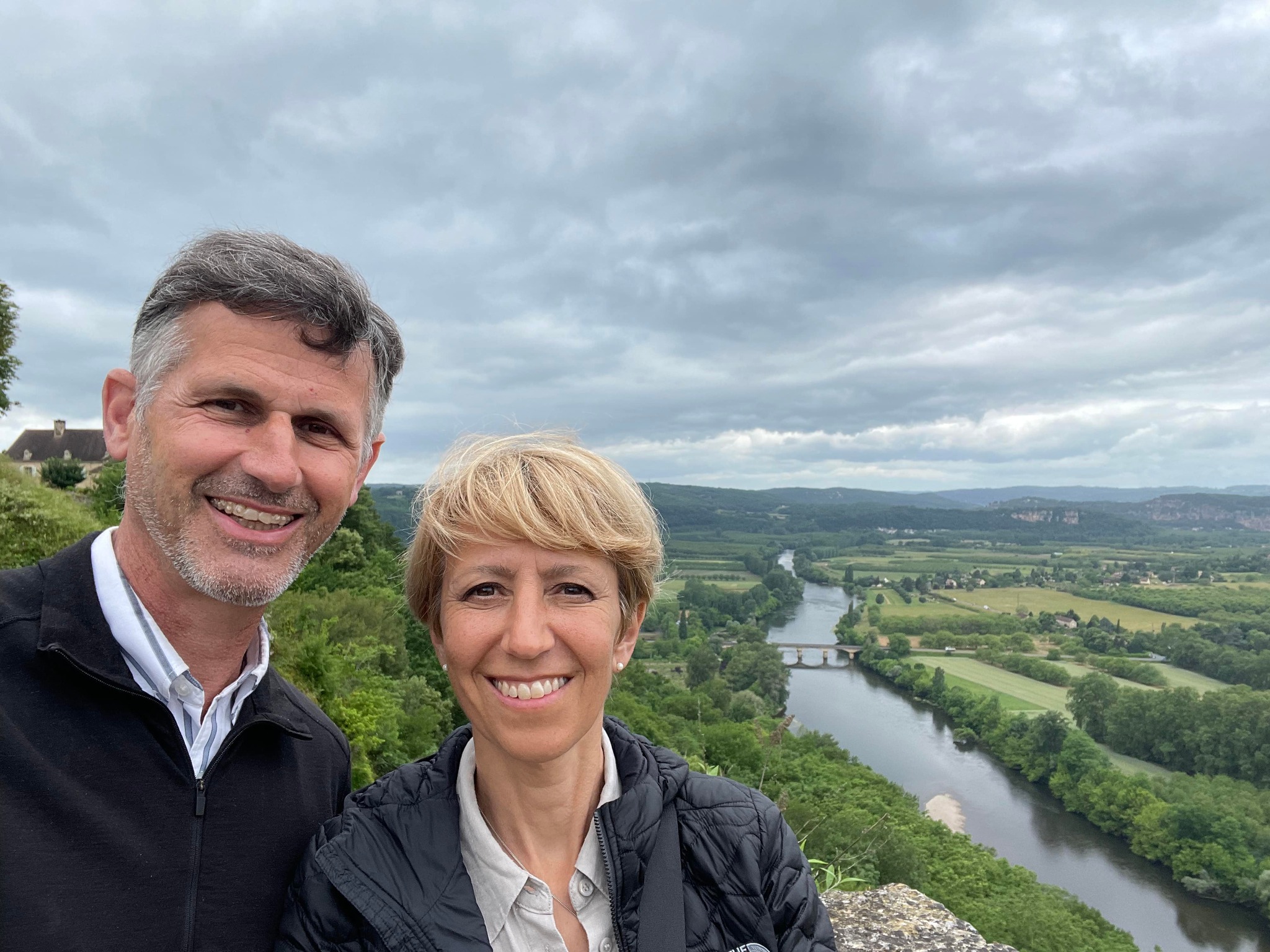
Domme sits high above the Dordogne River. This Bastide town was among 700 built over 150 years between 1222 and 1372 as a means by which the French and the British tried to lay claim to as much land as possible. Over time, each conquered the other over and over again throughout the various tussles and wars over territory usually in the name of money and religion. Domme was founded by the French in 1281 with a classic medieval defensive architecture: it has a geometric (usually rectangular but not in this case due to the surrounding cliffs) layout with its ramparts right along the edge of the cliffs.
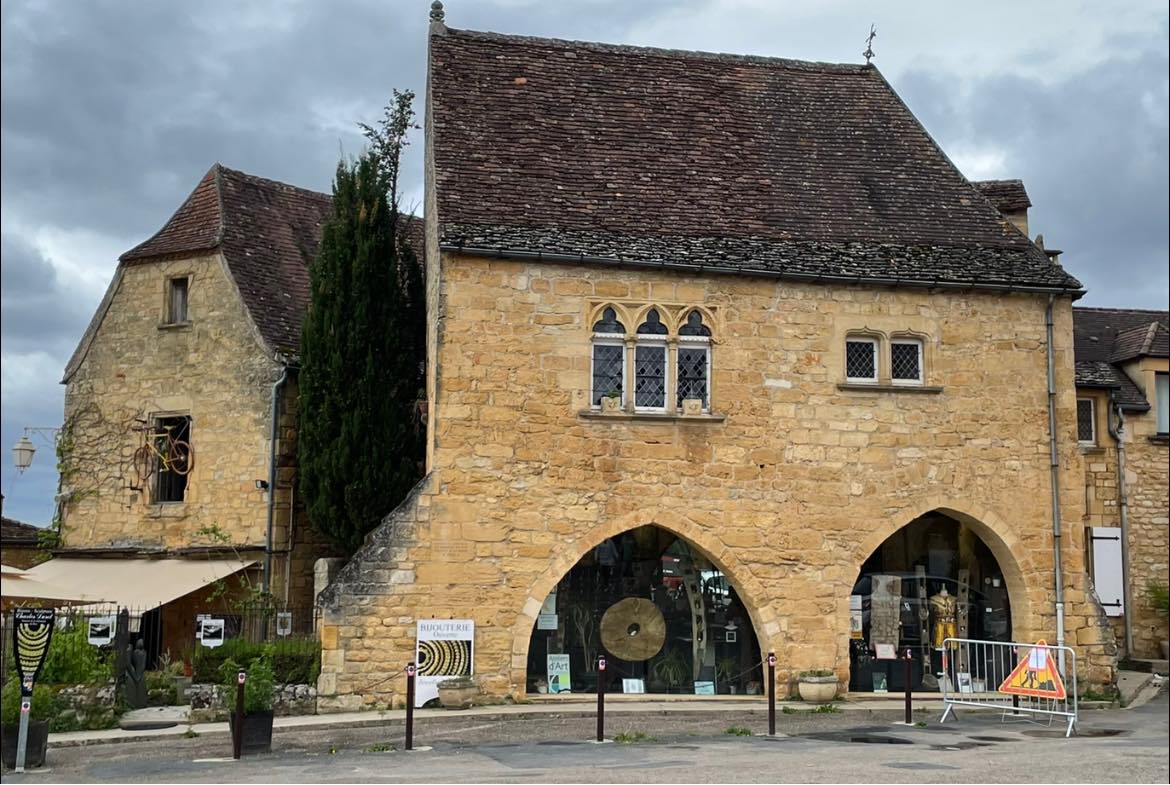
In 1282, the King gave Domme permission to make coins and the house of the coin maker stands today. Interestingly a jeweller owns the building now and is making money not from coins but from beautiful jewellery; feels like a logical progression.
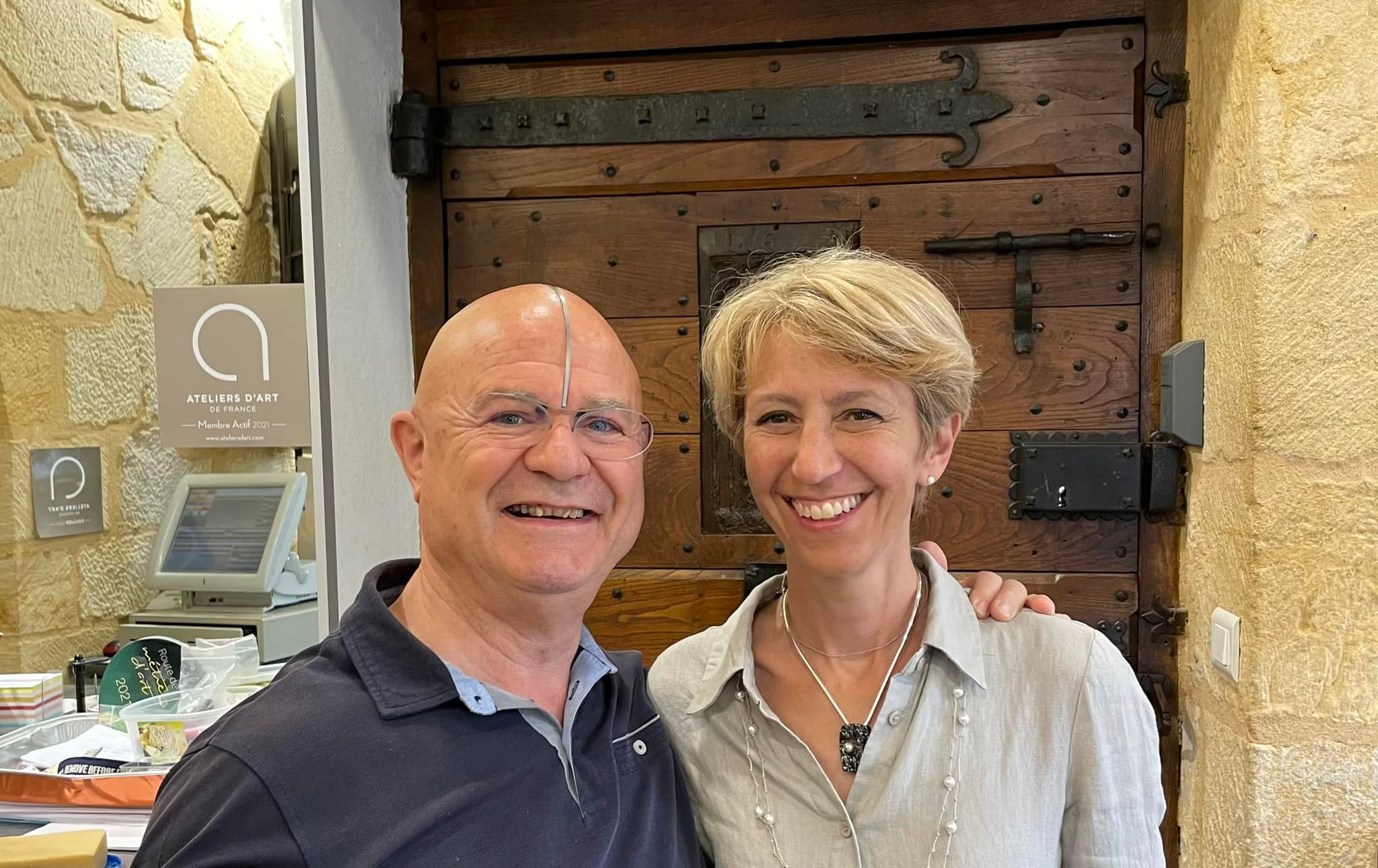
We spent some time with Charles Duret who is a lovely man with strange glasses (of his own design) and passionate about his craft. He infected me a bit with his passion…
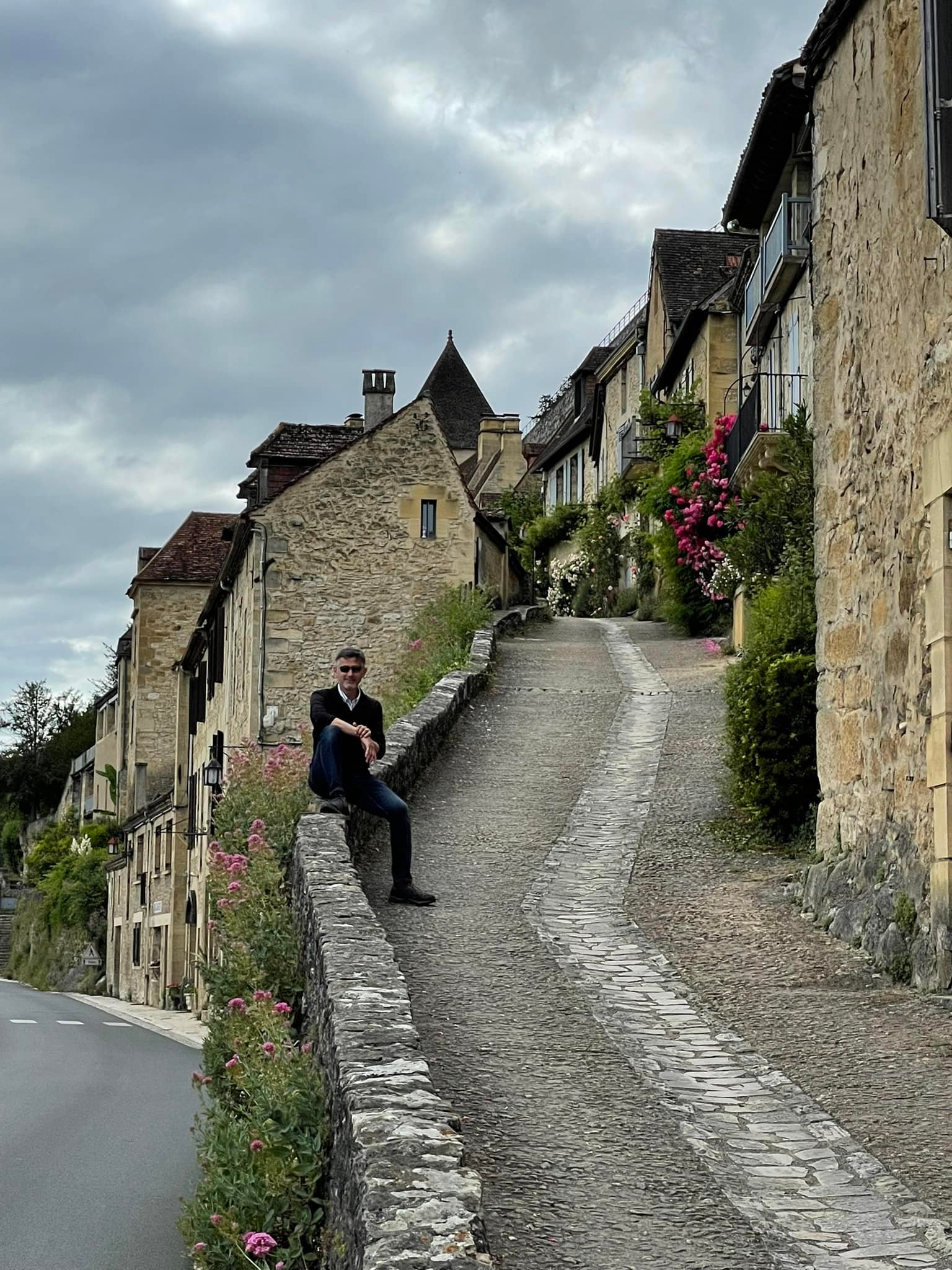
After we said goodbye to our new friend Charles, we followed up on a passion Adam needed to pursue. When we canoed along the Dordogne past all the lovely villages, Adam saw a little street weaving up into a village and said “I need to walk up that street!” That little street is in Beynac-et-Cazenac. I guess at some point, tiny villages, even if they have a castle, need to merge with another tiny village to survive.
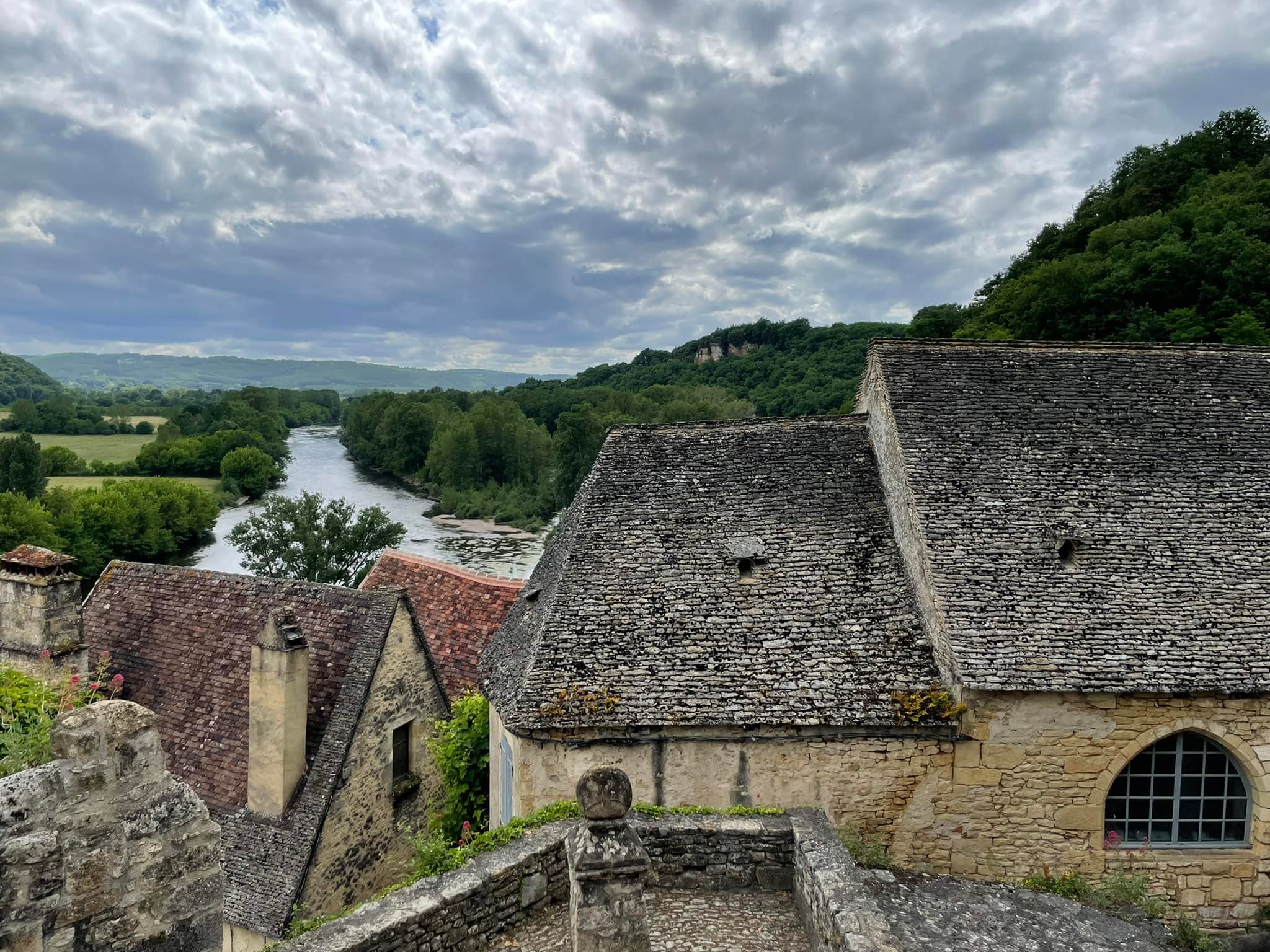
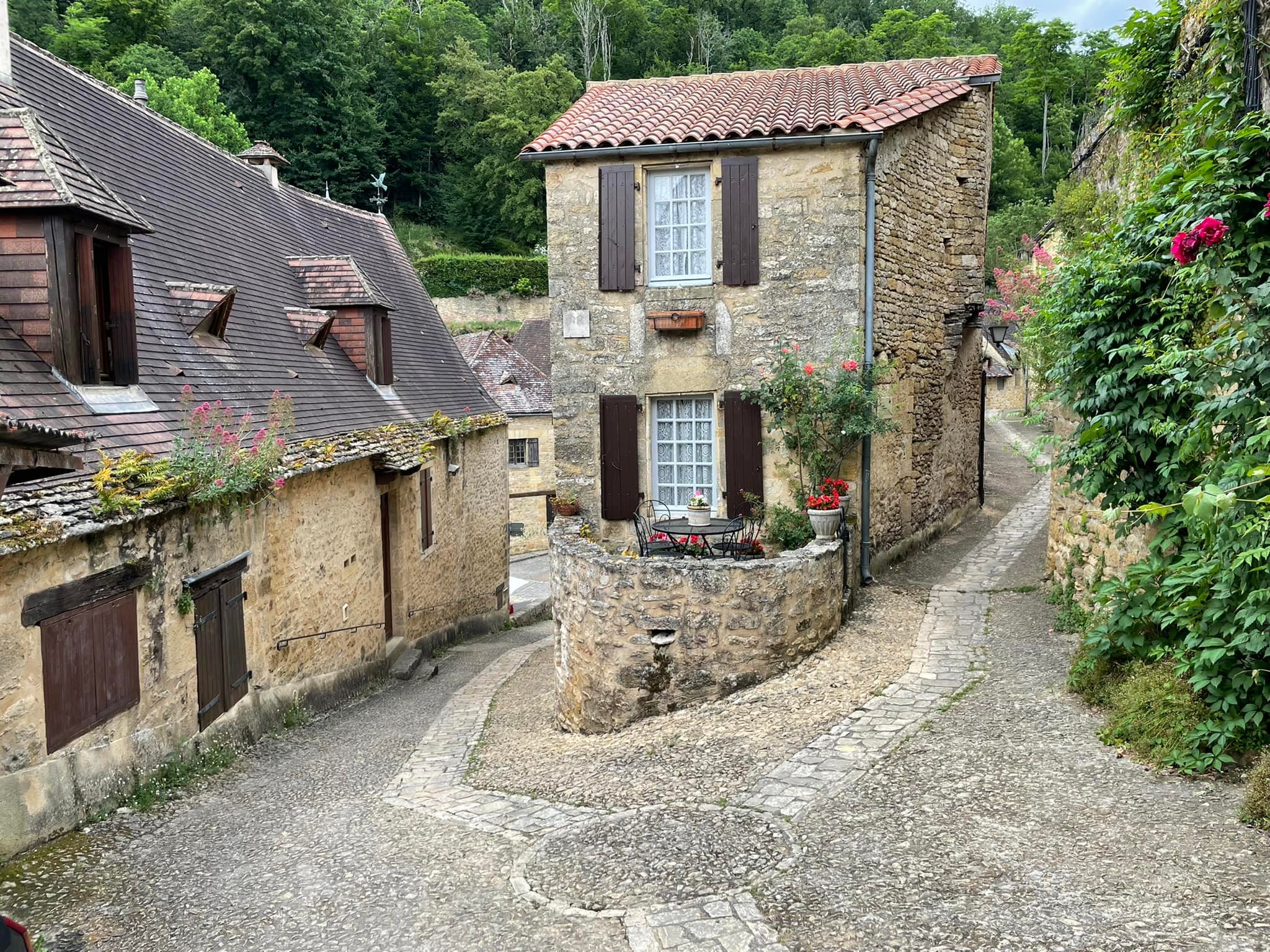
Another Plus Beau Village de France, Beynac, is a swirl of curving, cobbled streets lined with stone houses and flowers. Absolutely charming. The roofs of these houses are very interesting. They are made of flat limestone rocks that farmers cleared from their fields. The technique to handle and precisely cut the enormously heavy stones (300-900 kg/square metre) has been handed down through the generations and there are few left today with the know-how. The extreme pitch of the roof distributes the weight and once set in place properly, the roof will not fall. They are unsealed with gaps and purpose built openings for airflow. Despite the gaps, they don’t leak. They were a poor man’s roof. Now, they are a rich man’s folly for those who want to build with a “traditional” roof. These roofs last 200 years, a pretty good depreciation period, if you’re around that long to reap the benefits…
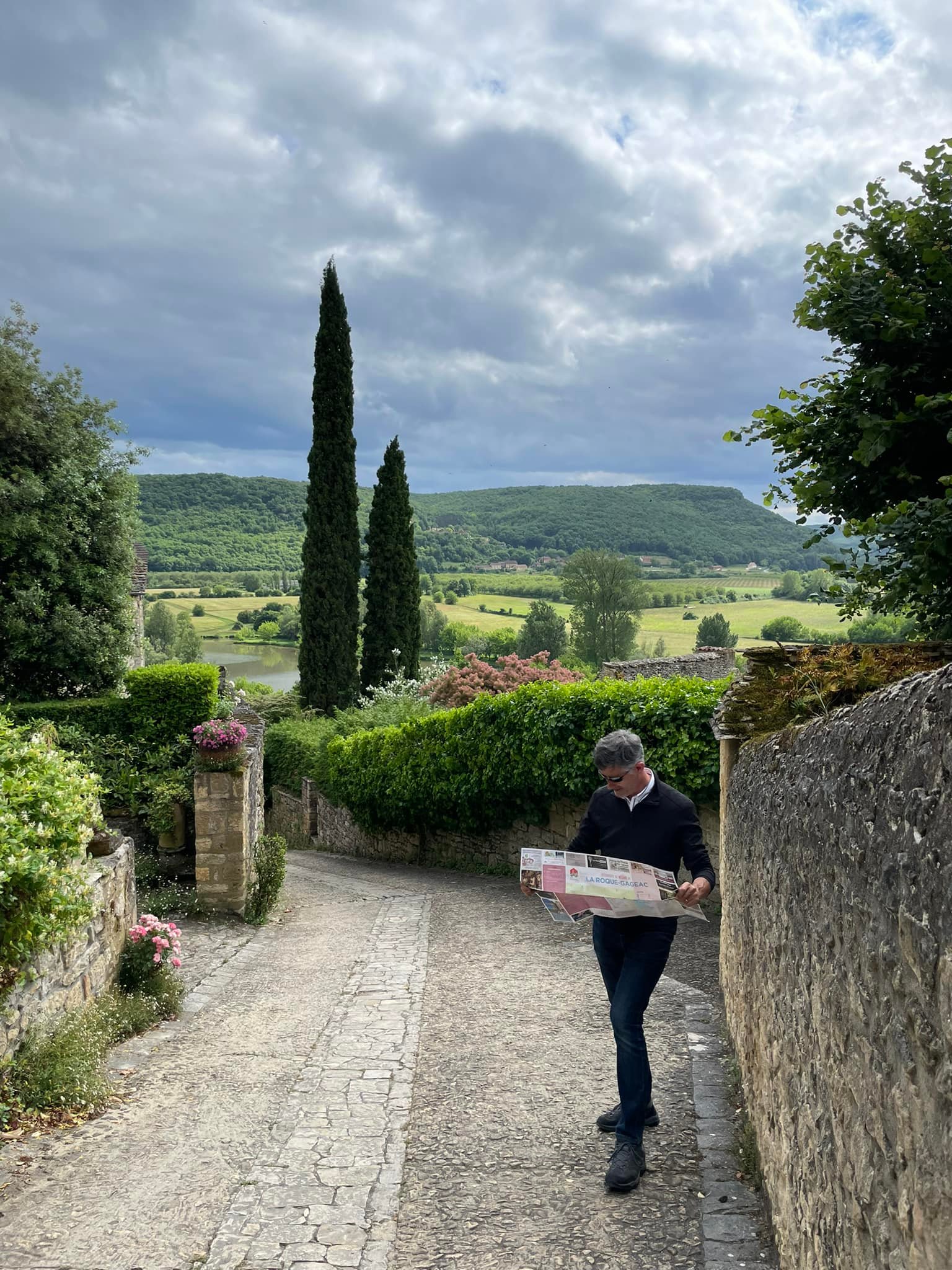
An old school moment.
It’s quite a hike up to the castle but so worth it. Walking through the village is just beautiful and the destination is fascinating.
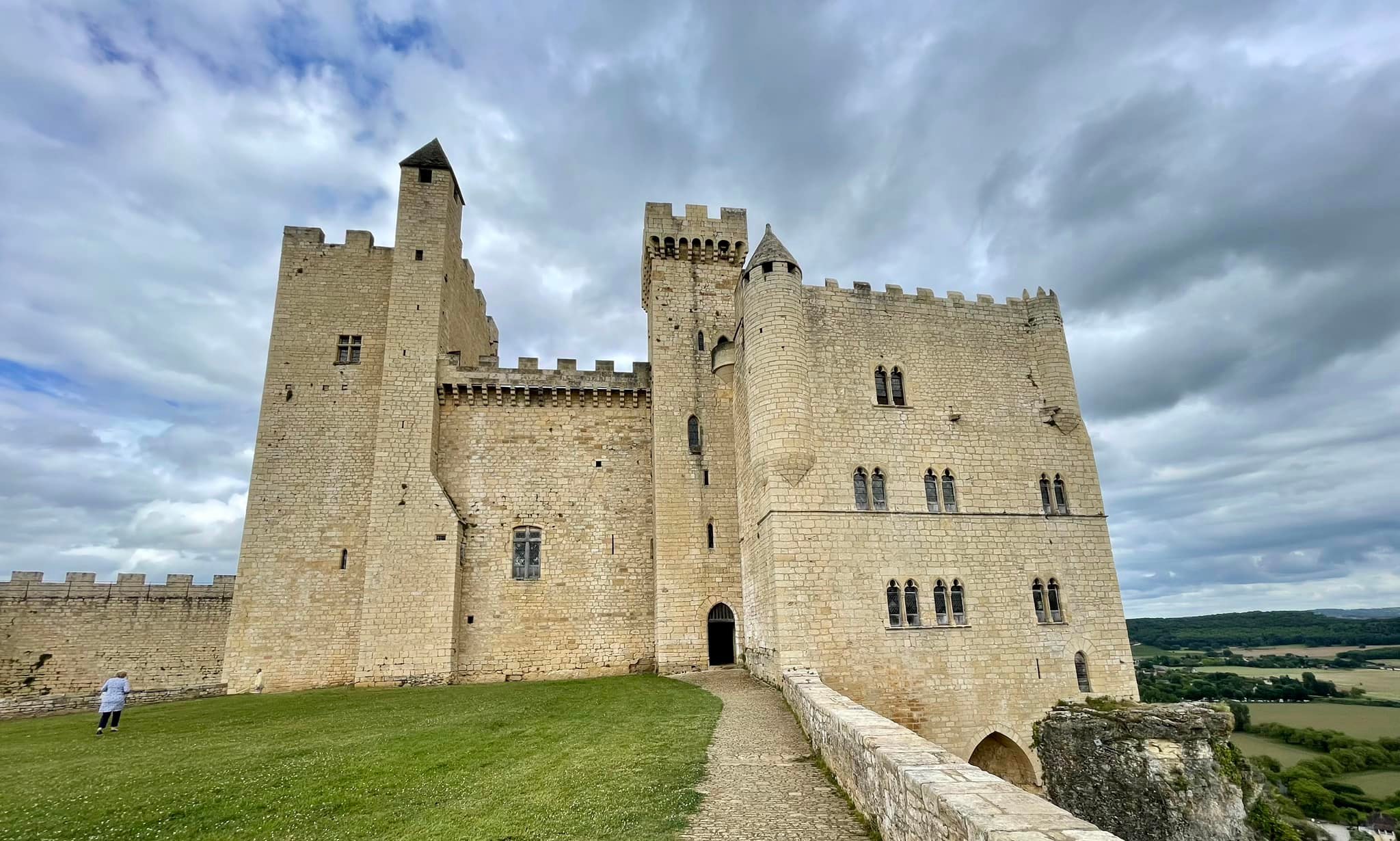
The castle looming over the top of the village is definitely one that means business, both financially and militarily. It is a well-fortified place, strategically located right on the Dordogne which was a major trade route. Anything passing up and down the river pretty much passed through here and was subject to taxes. The castle remained in the same family for over 900 years, with a few brief periods of armed handoffs. One of the out-of-the-family interludes included Richard the Lionheart who swooped in for 10 years before he had an unfortunate and lethal crossbow accident, opening the door for the original family to take it back.
The first known Baron of Beynac built a fortress here around 1050 AD and the tower was the first part of the existing château, built in the 1100s. It has grown over time and in 1962 was sold for the first time to a private buyer (ummm, who actually buys a medieval castle?!) who lives there and manages the ongoing restoration.
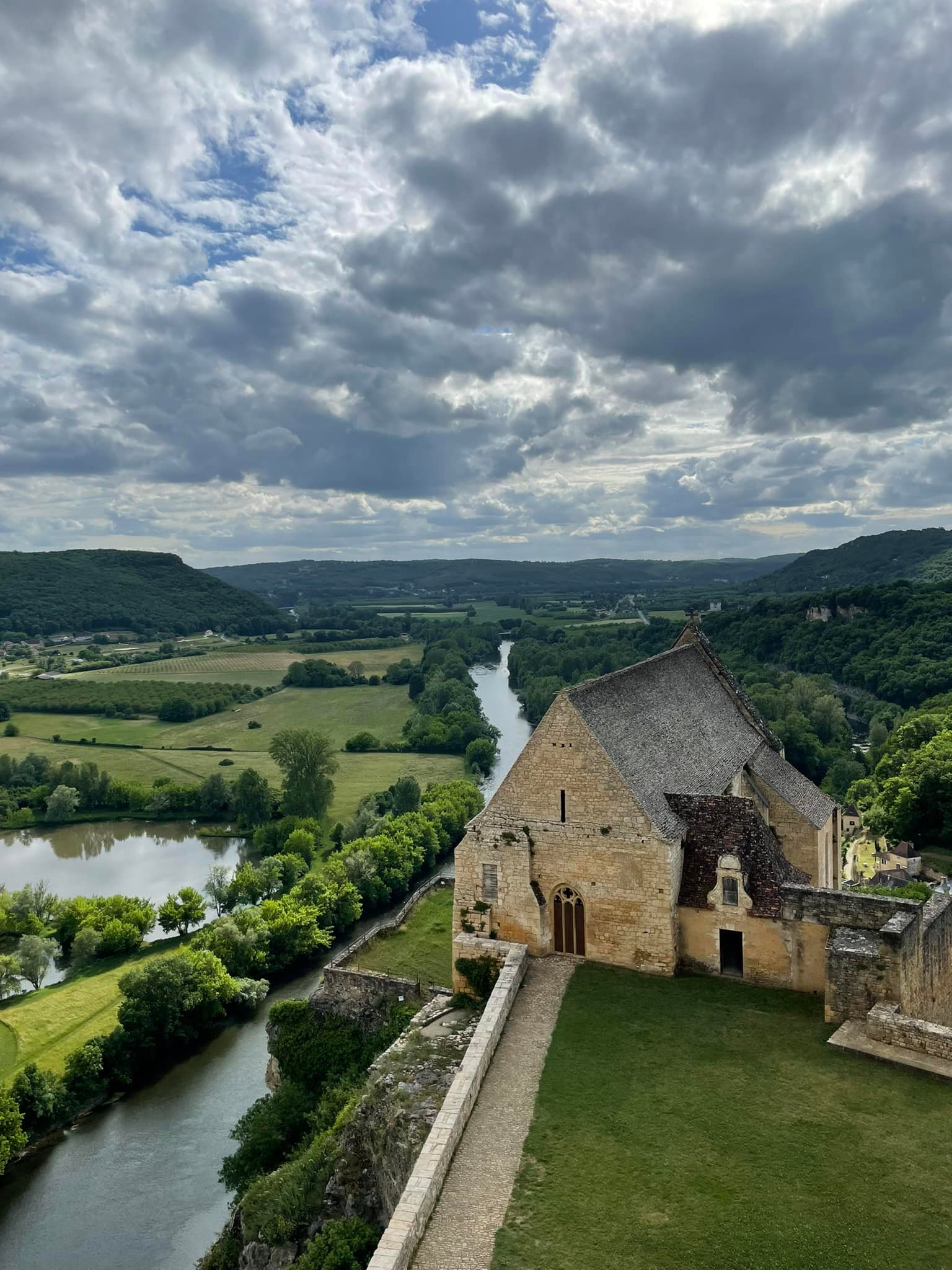
The view is spectacular and ensured there was no escaping the commercial passage taxes. No chance of missing cargo heading up or down river from this vantage point!
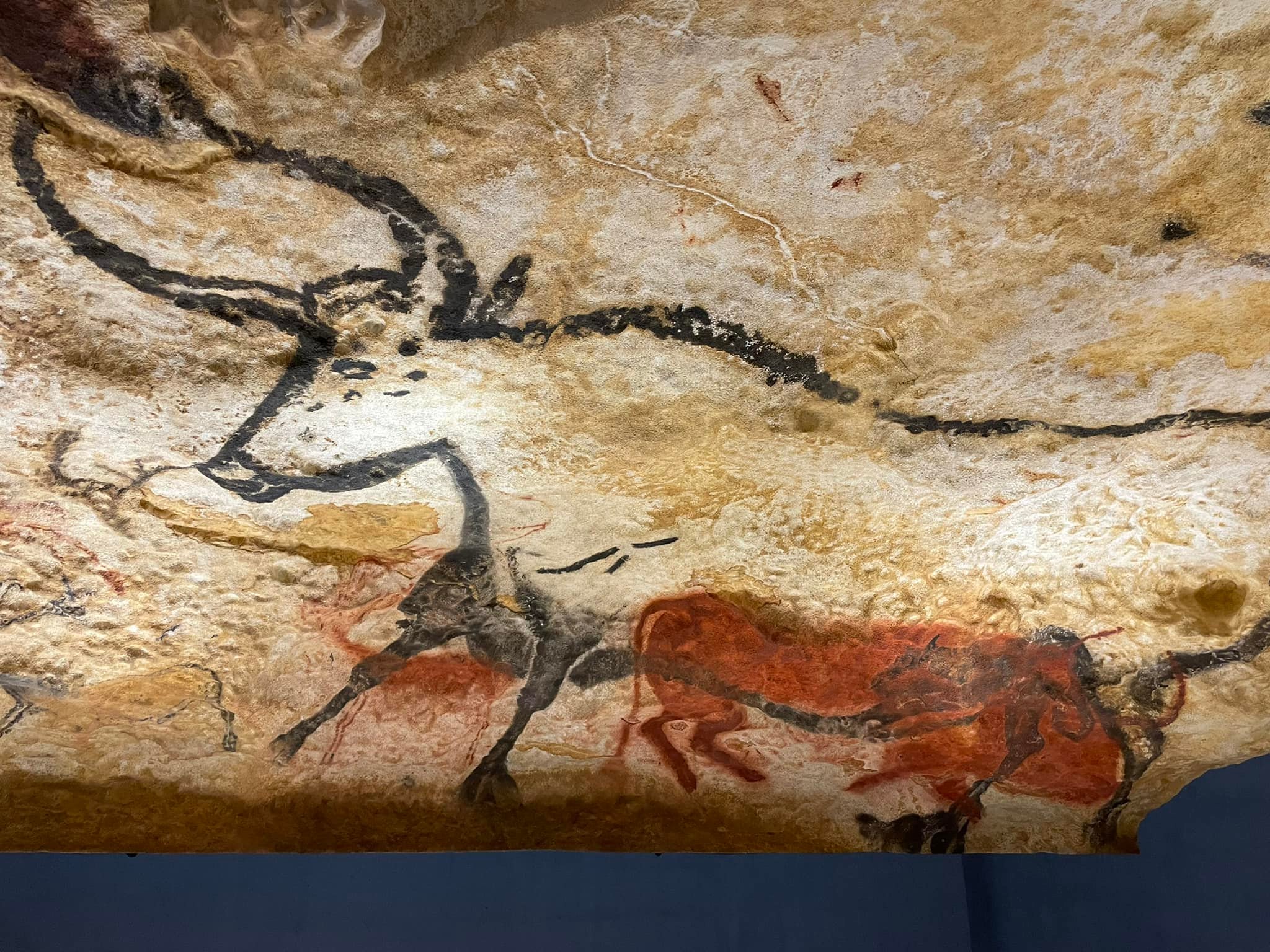
Our last day, we headed up to the caves of Lascaux which were discovered by a few teenagers in 1940. One of the boys’ dog ran off chasing a rabbit and disappeared through a hole. The boy tossed in a few rocks to get the dog out and noticed that there was quite a delay before the rock landed.
There was a legend in the village about a secret tunnel that led to buried treasure and this fellow thought he might have found it. He returned with friends and some equipment and they made their way through the hole, only to discover one of the world’s most important collections of prehistoric paintings. Historians believe the paintings date back 21,500 years. These paintings are remarkably executed and some are huge. Mostly animals, bulls, stags and horses. Interesting use of foreground and background here.
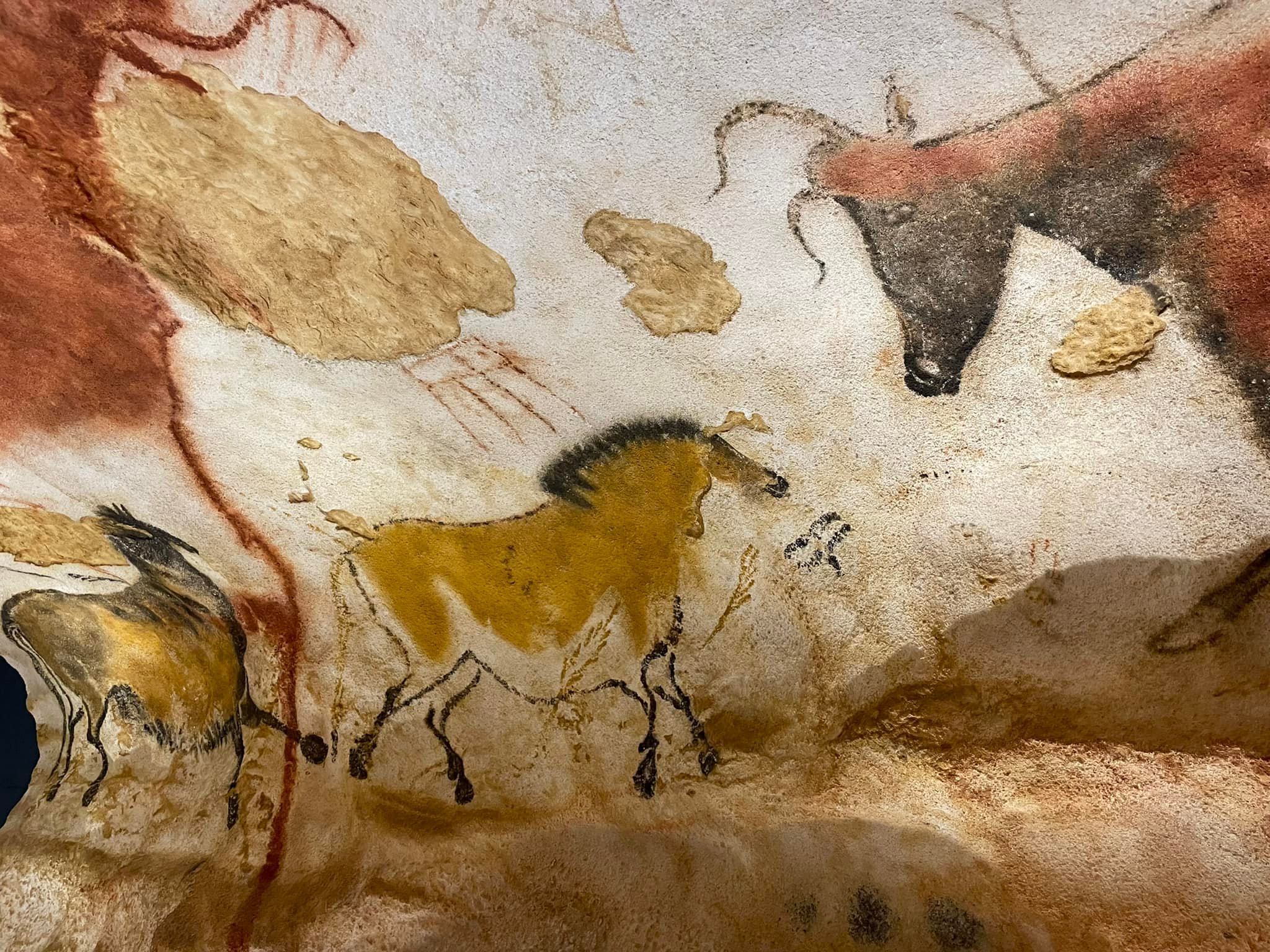
Everyone was very excited about the discovery and thankfully, the boys were given credit. Over the next 23 years, so many visitors to the cave started damaging the artwork through the humidity they brought and the lighting used to show off the paintings. The French government permanently closed the cave to visitors and have painstakingly rebuilt the main part of the cave so the world can see this extraordinary place. We were a bit worried that it might be Disney-esque but it is so well done by the historians, archaeologists and artists that you feel you are inside a real cave. No pictures are allowed inside but at the end of the tour, they take you through the “workshop” where you can see how they built the replica cave. Some of the paintings are reproduced here and those you can photograph.
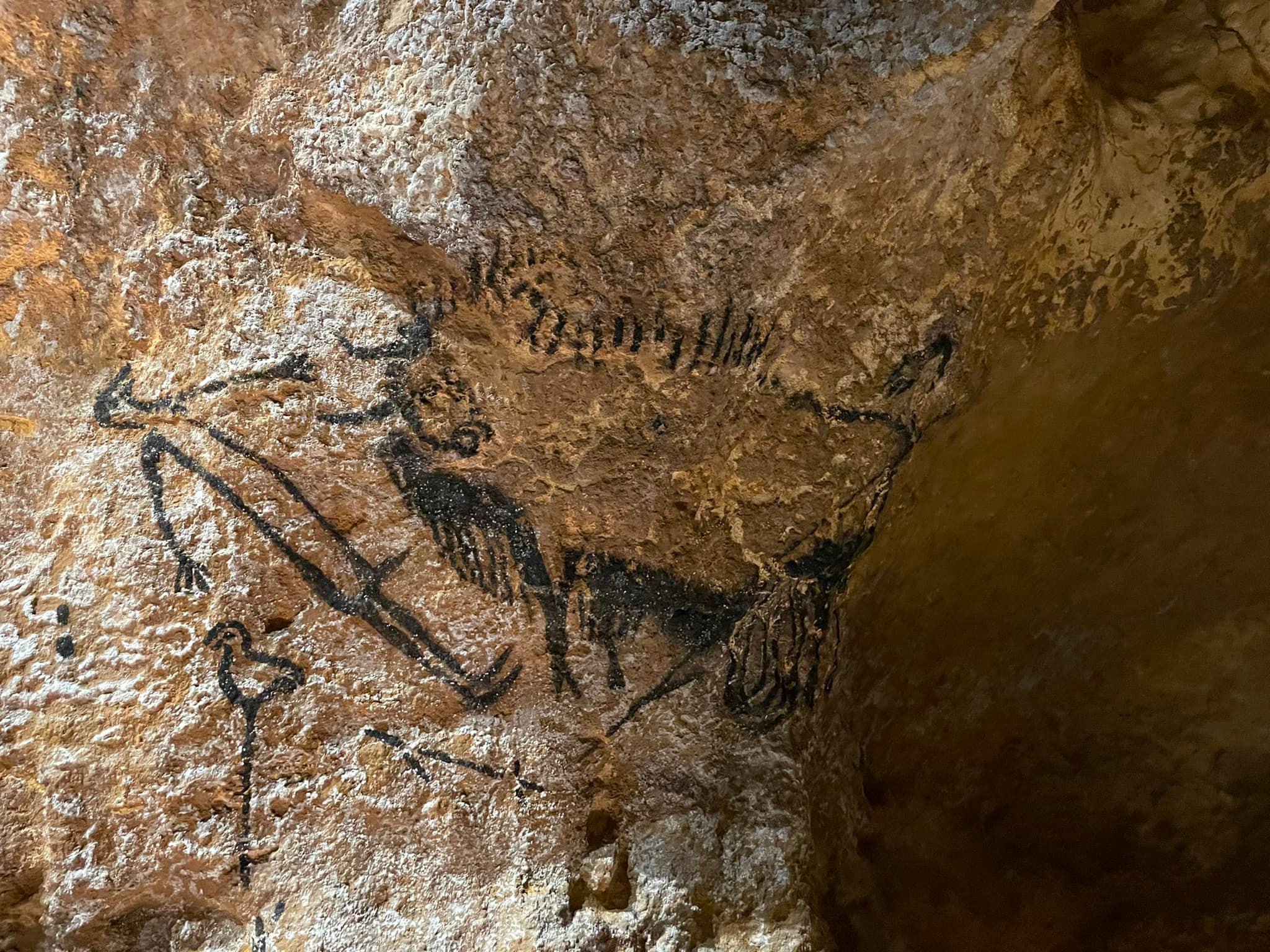
An odd painting of a human with a bird’s head suggests a shaman.
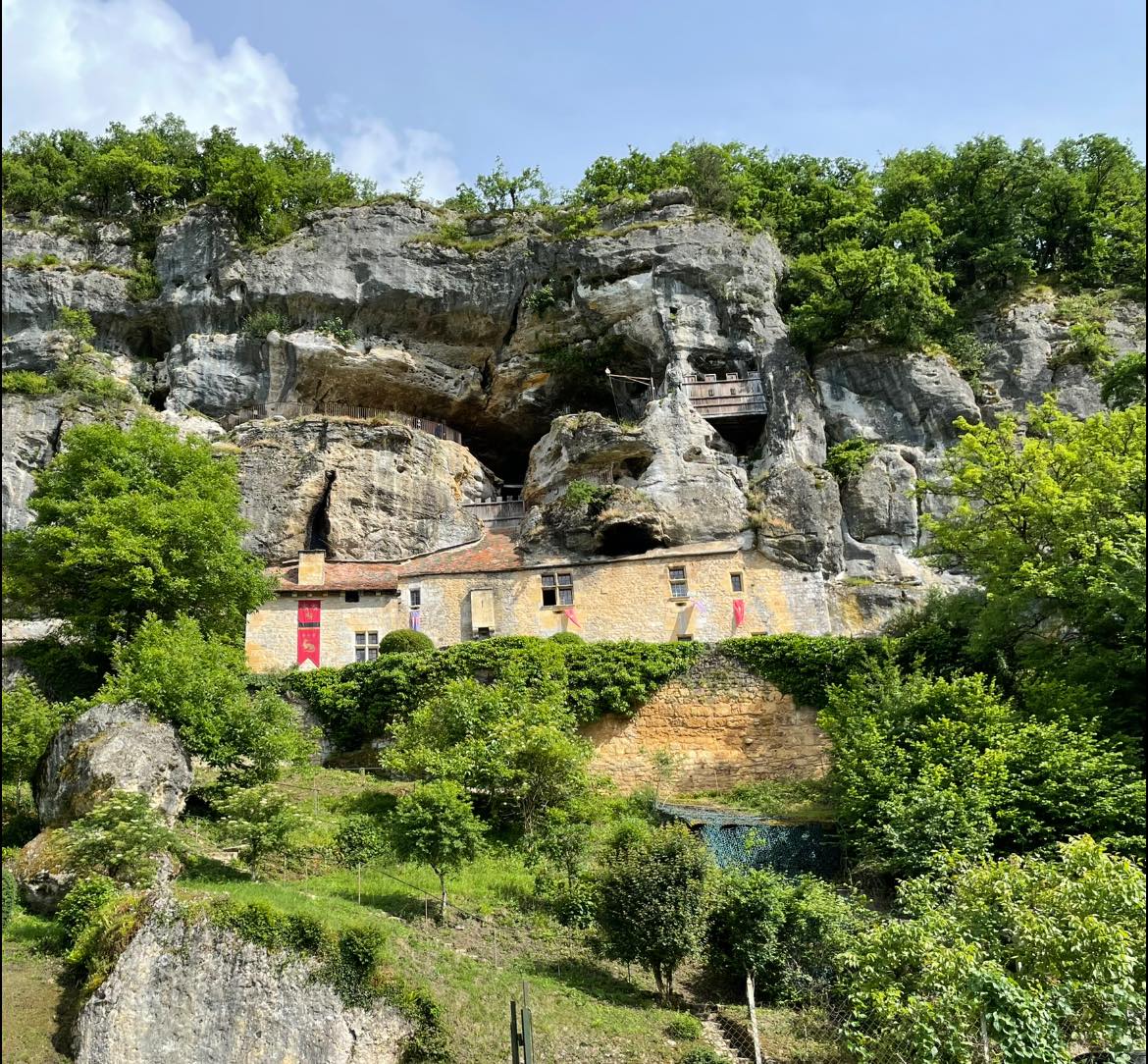
Our last stop in Dordogne was one of the most unusual fortresses in the region, the Maison Forte de Reignac in the village of Tursac. It is half house and half troglodyte cave dwelling. It looks quite small from the outside but it is built deep into the rocks and is surprisingly large. The fact that this is classified as a historical monument and the most intact cliff fortress in France didn’t convince Adam that the history of this fortress dug out of the cliffs wasn’t largely based on some creative imagination. I think he was a bit sceptical when he saw the room set up like a museum with a mix of real and replicas of prehistoric tools, skulls, jewellery, weapons and toys. It is believed that the caves were first occupied by prehistoric people some 200 centuries ago and were further built out through the ages until the last occupants left (a Lord and his family and staff) in the mid-1800s.
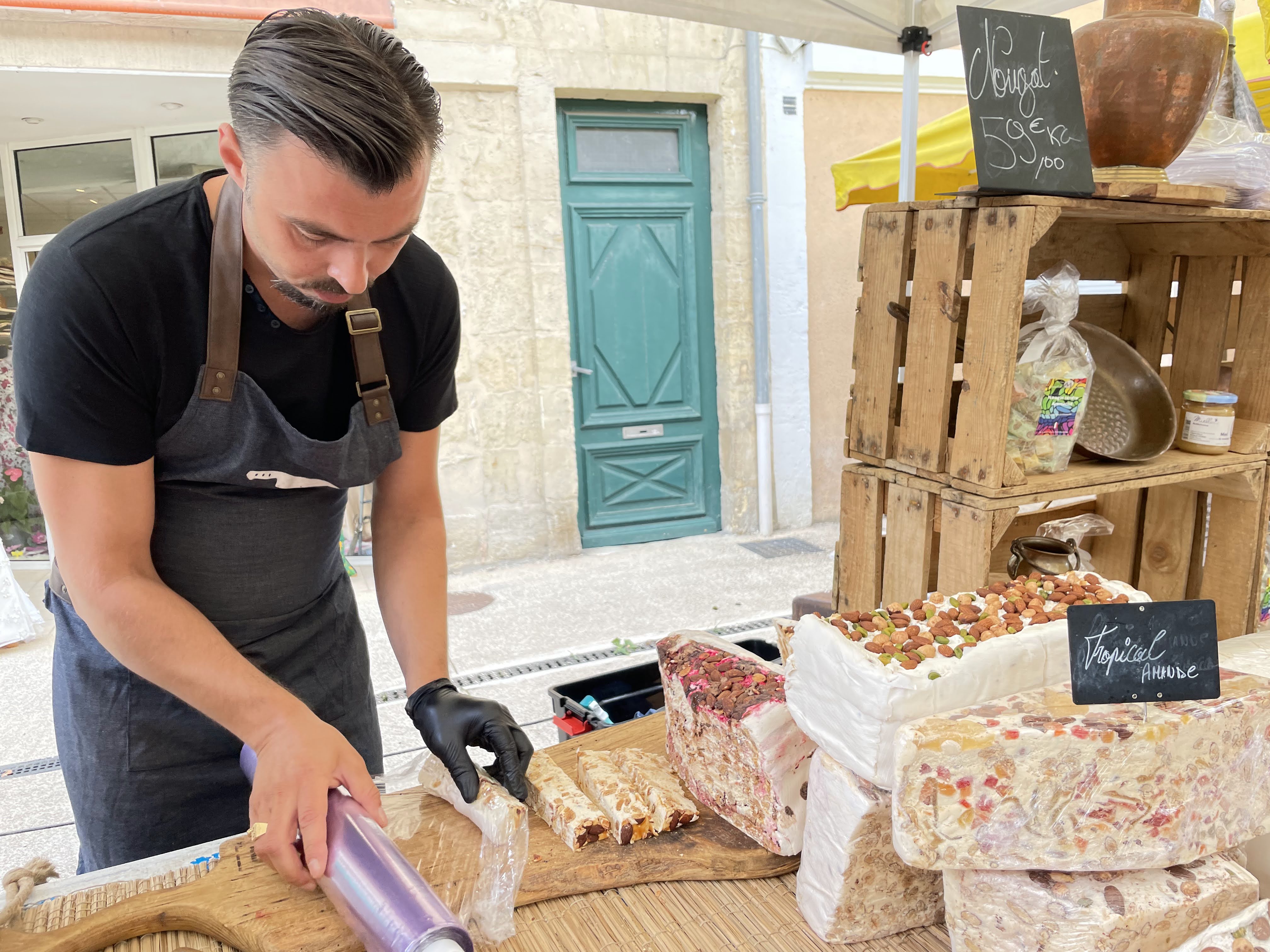
Another market moment in Le Bugue. I never appreciated nougat until I tasted this! Soft, nutty, fruity and absolutely delicious.
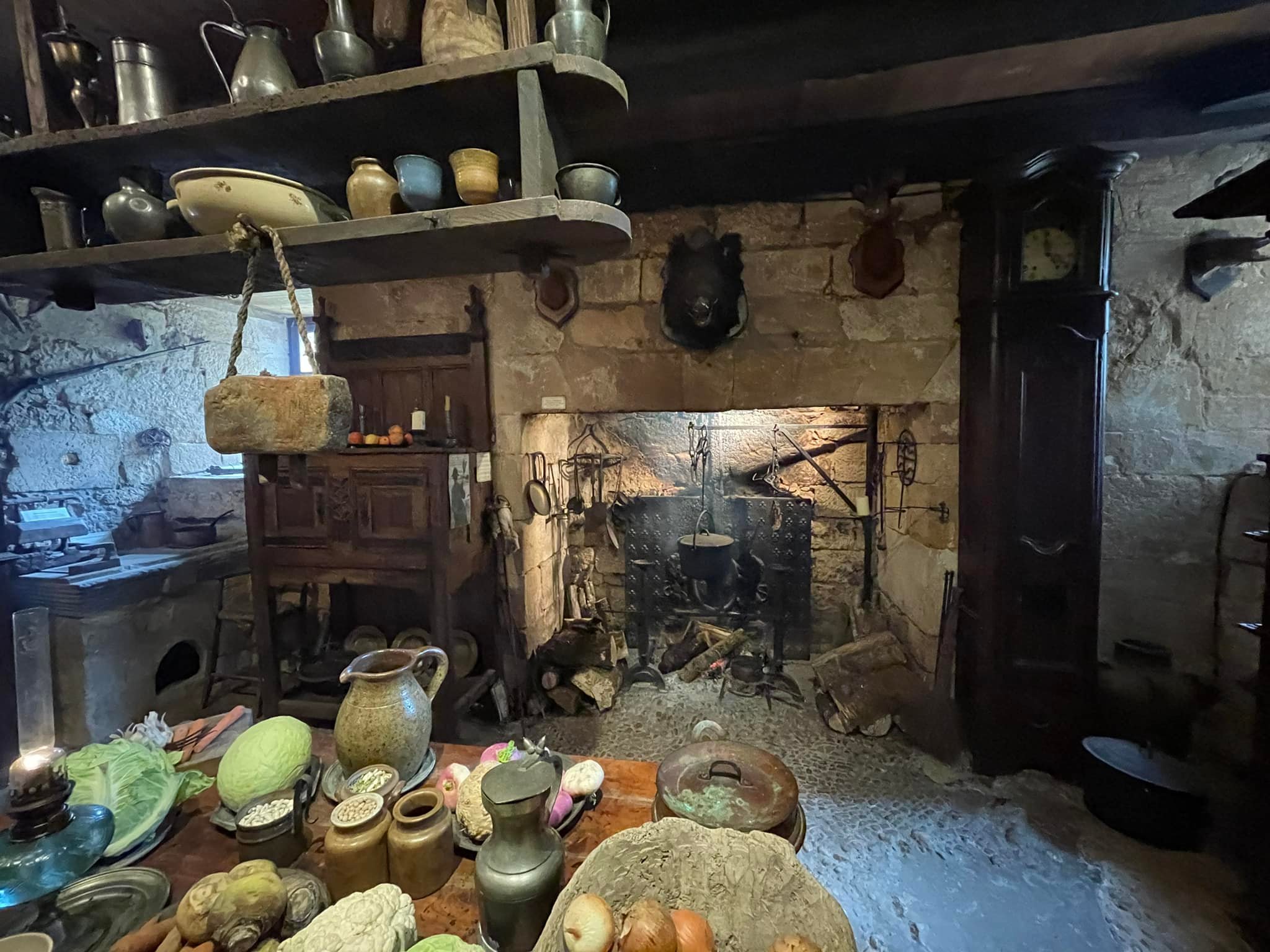
The fortress is full of furnished rooms as they would have been over the last few hundred years. The kitchen and living room even have fires lit in the fireplaces. Needless to say, we smelled like a campfire for a few days after.
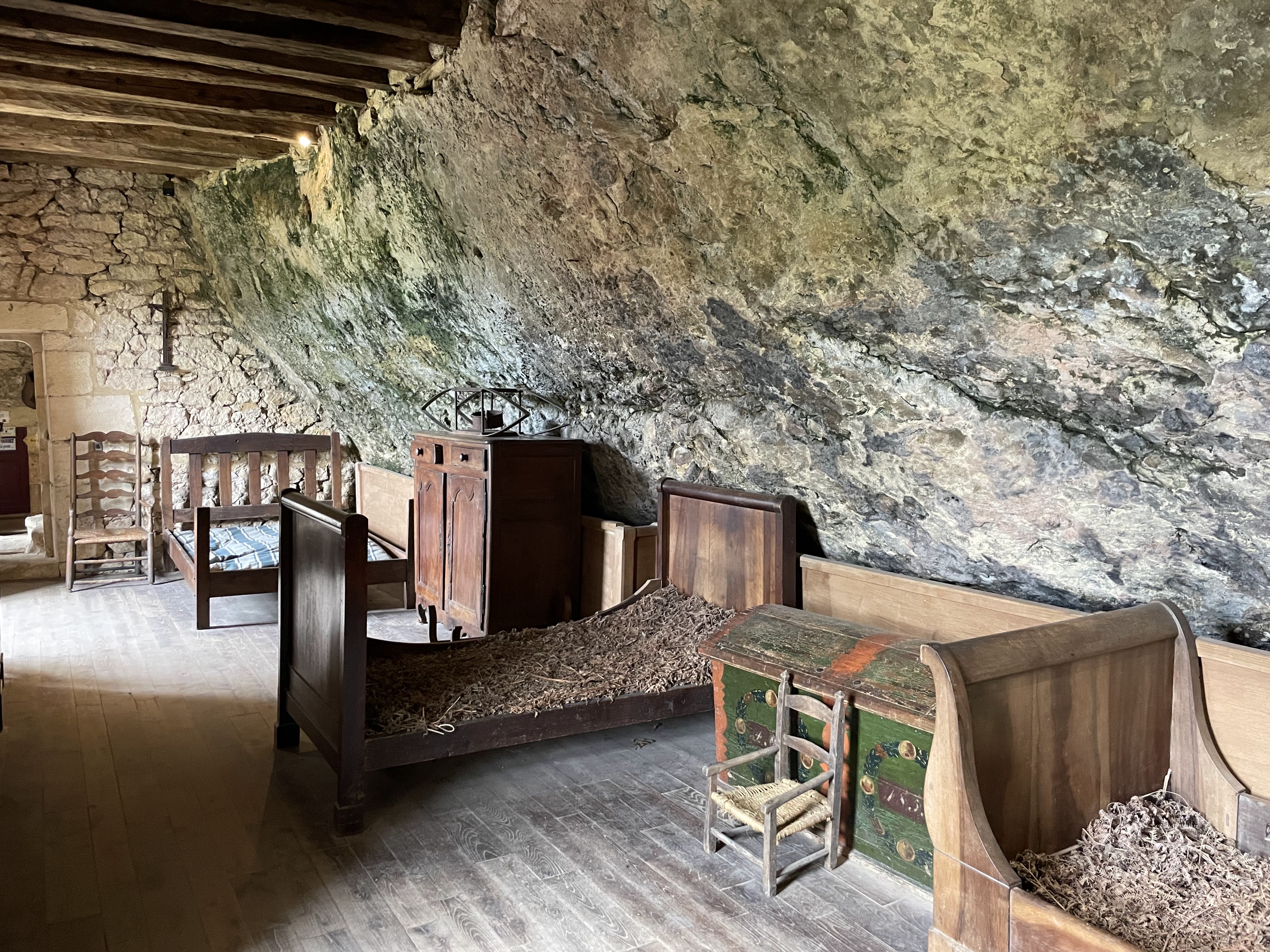
Thankfully the beds at our lovely accommodation in Le Buisson-de-Cadouin were many steps up from this!
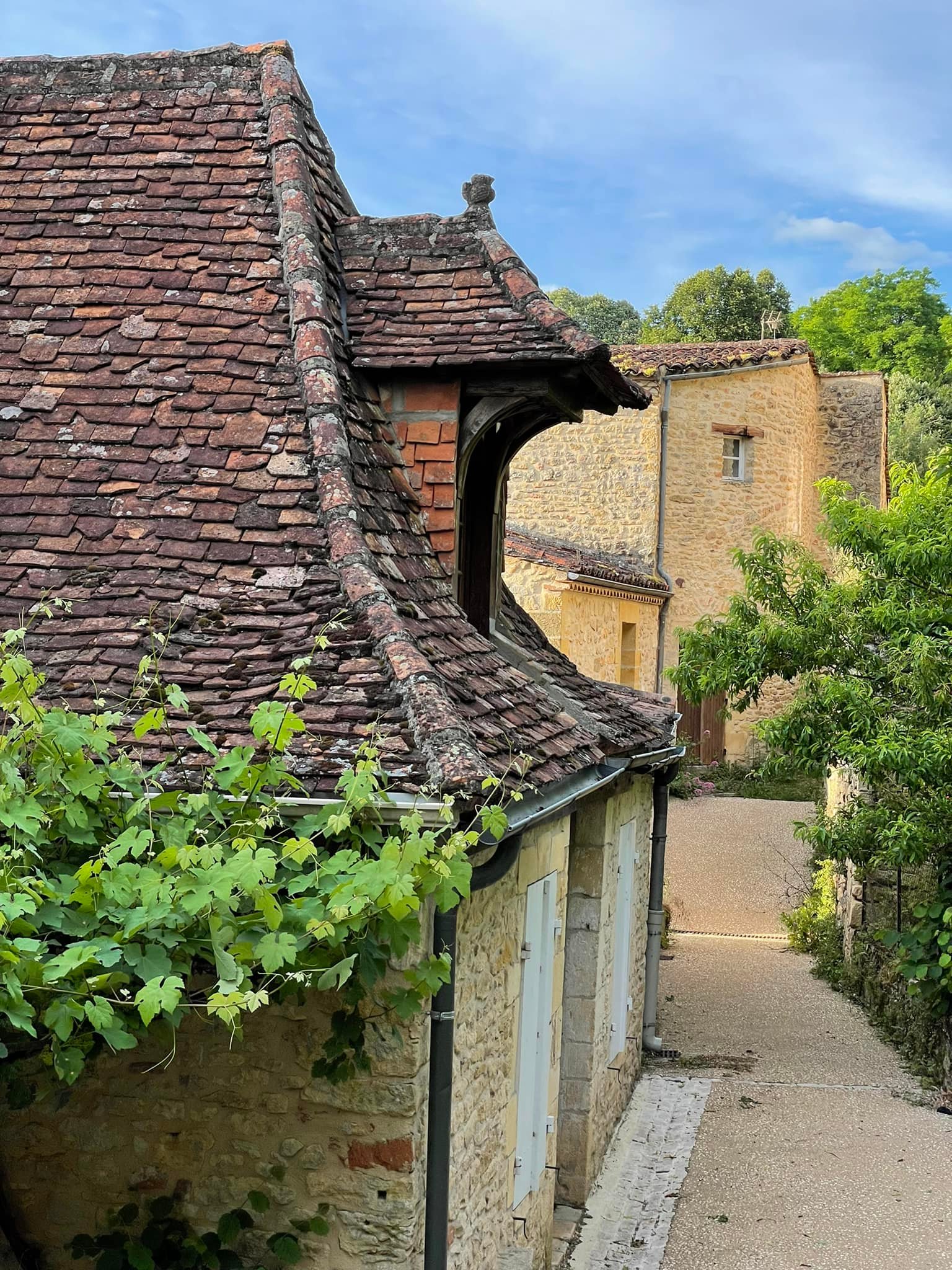
Our final dinner took us to the tiny and quaint Limeuil where you have to climb up a fairly steep path to get to the upper village. With a population of a few hundred, it’s amazing that restaurants survive in these little villages, but they do and they are great.
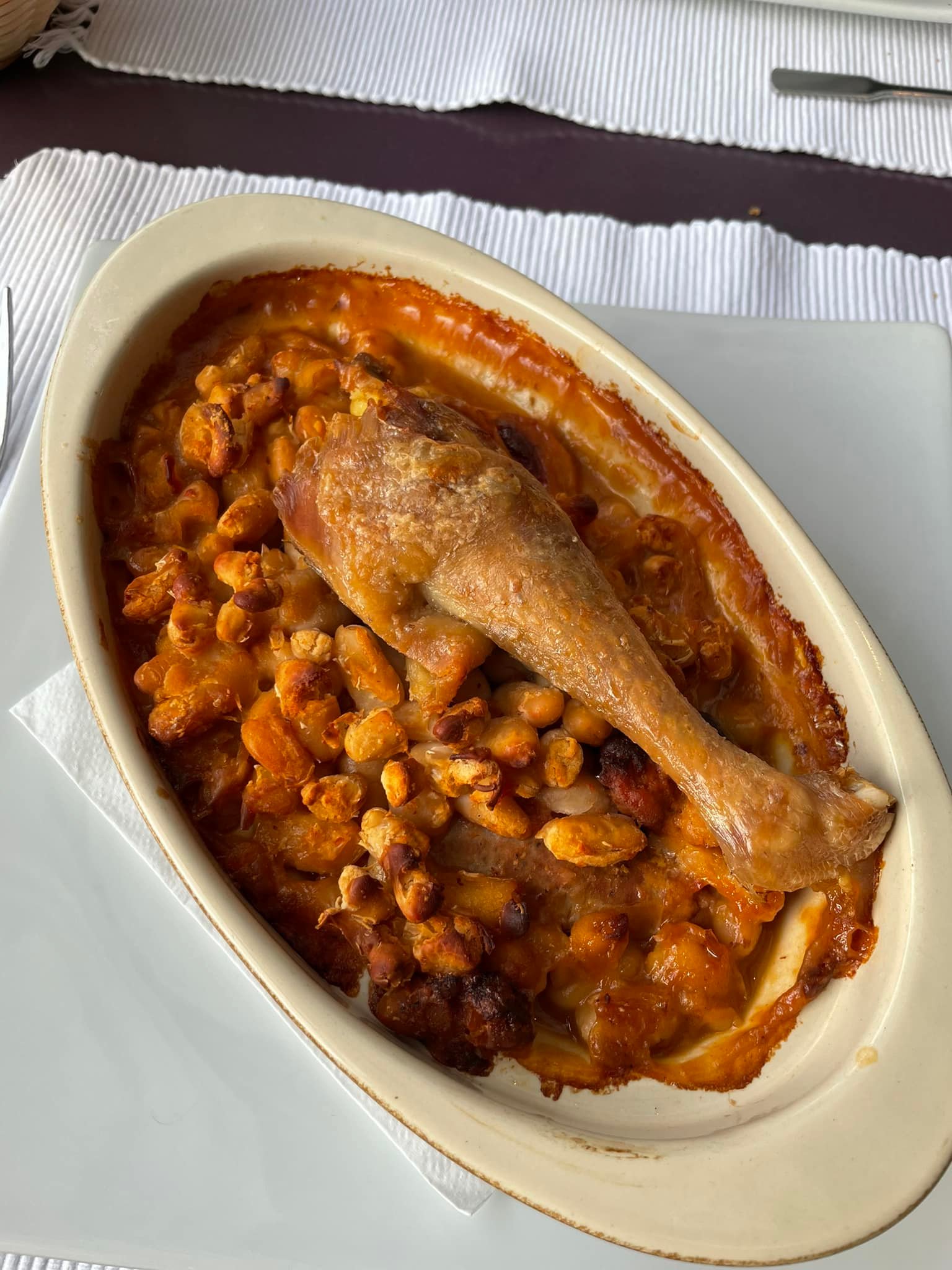
Our last night in Dordogne and I managed to enjoy a cassoulet!
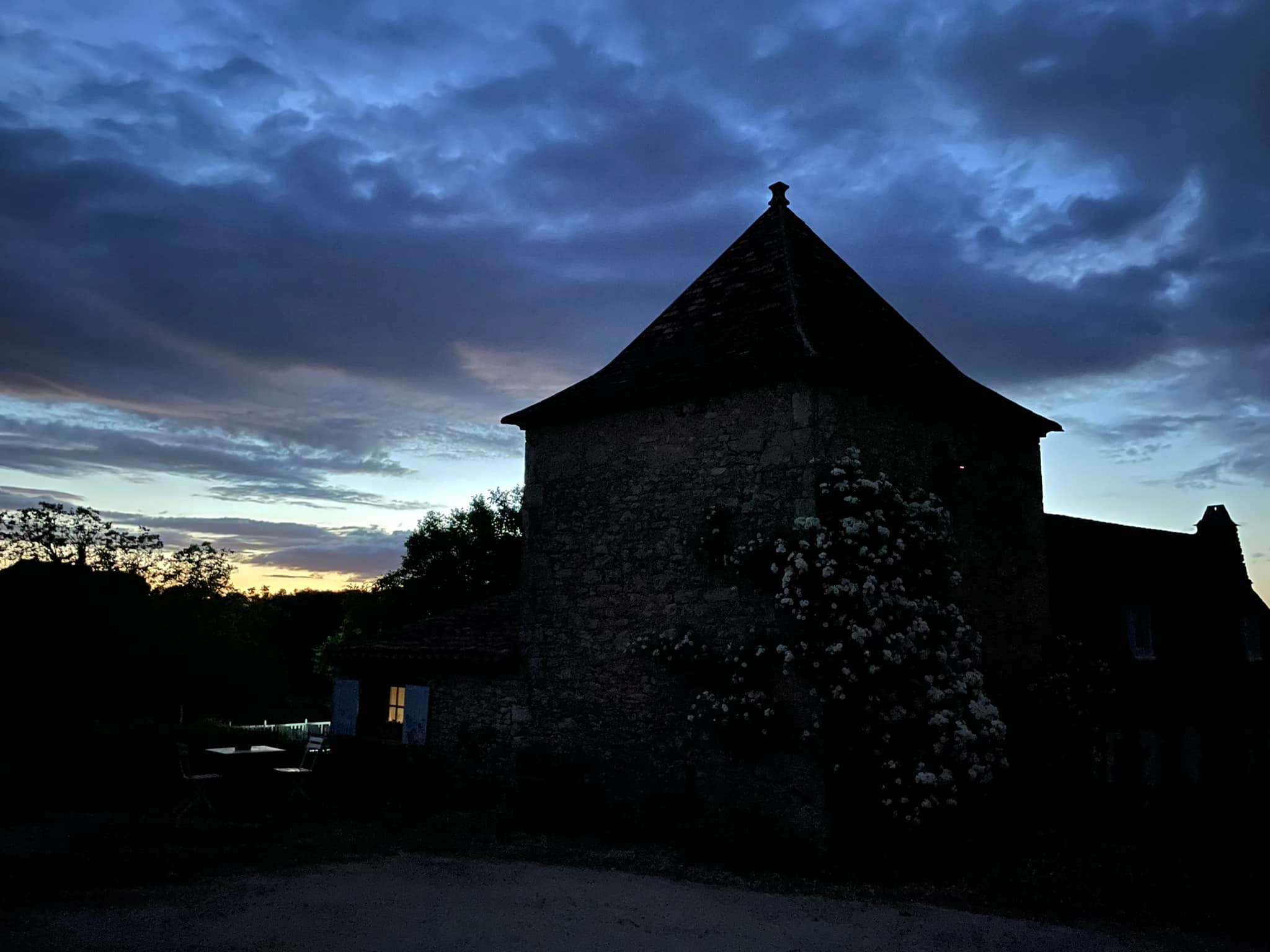
Goodnight and farewell to our little oasis in Dordogne.