May, 2022
Bottles and Beaches in Bordeaux
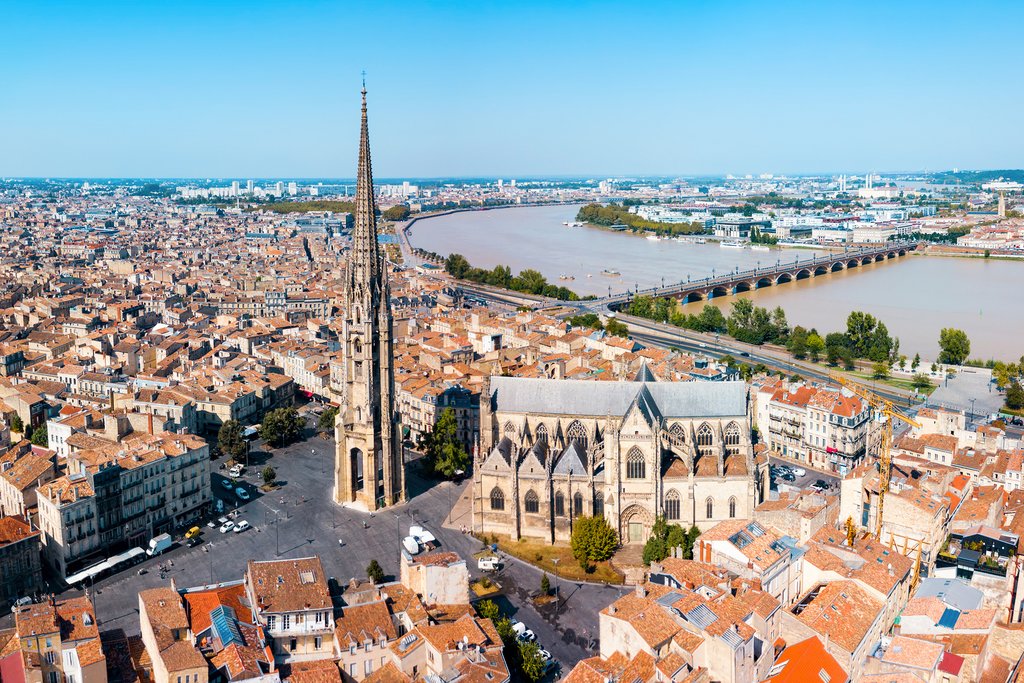
Bordeaux felt a bit like Bologna. Big enough to have a lot of interest and small enough to not be overwhelming…a little cousin of Paris with its own young and vibrant panache, perhaps. This region is recognized as a world wine leader and it did not disappoint!
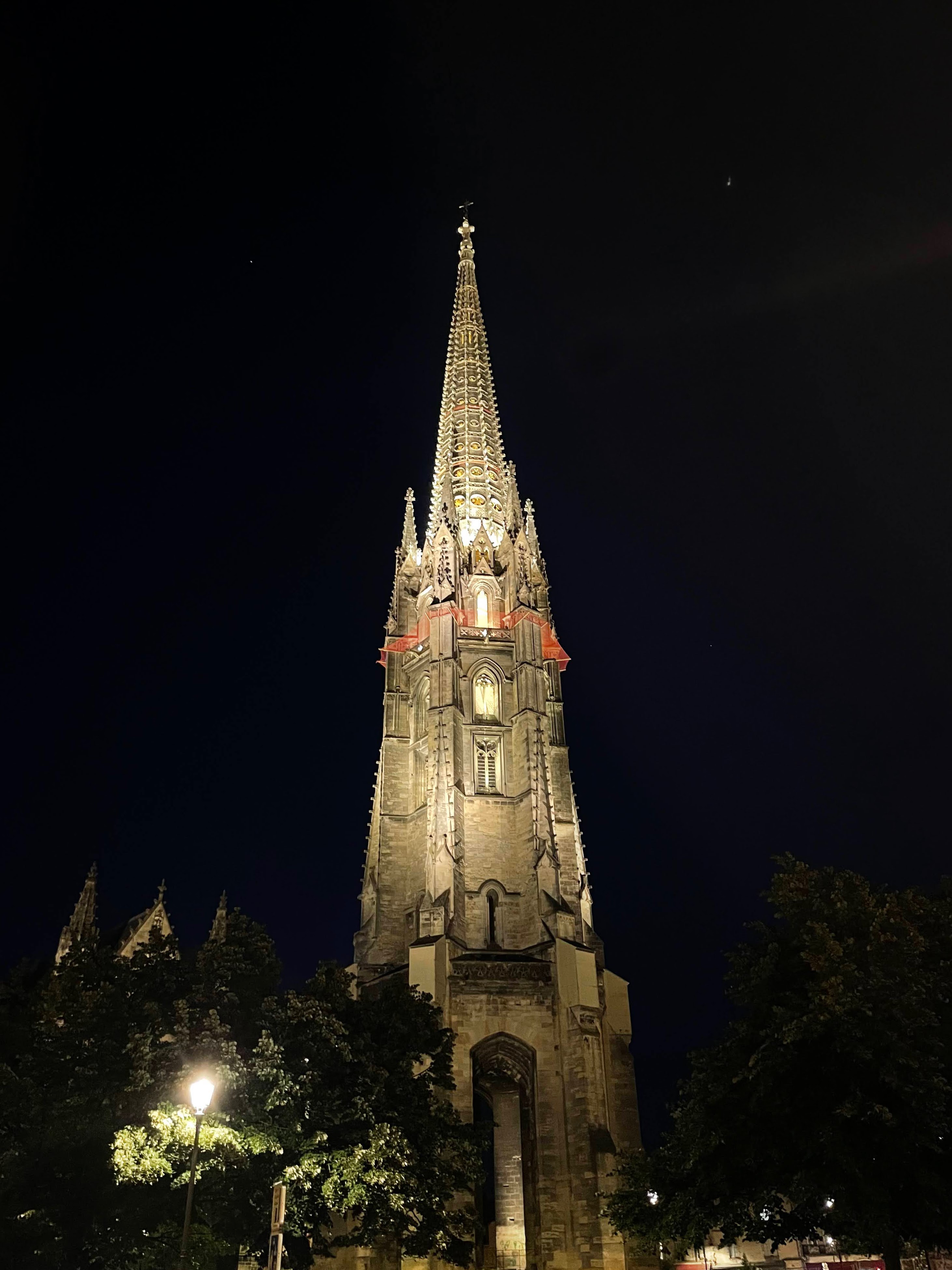
Beautiful cobbled streets with the Garonne River running through it, Bordeaux has some impressive churches.
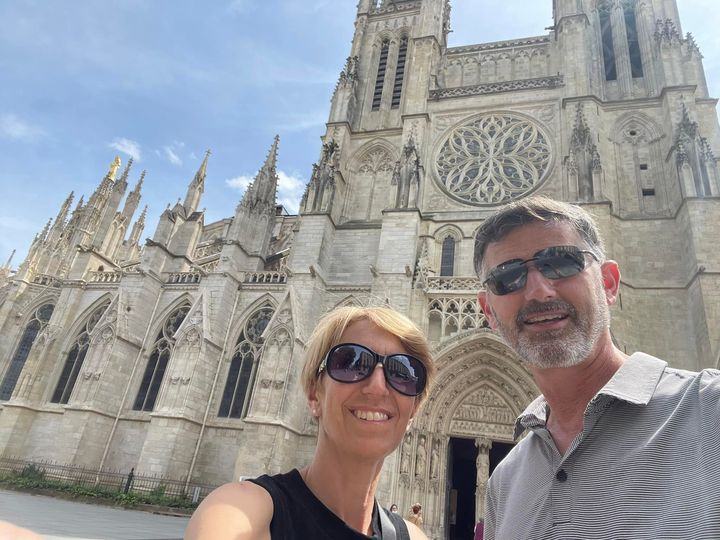
Churched out from nearly seven weeks in Italy, we weren’t compelled to enter but we went into the Cathédrale St André, Bordeaux's main one, because it was our first church in France. Nearly 1,000 years old (it was consecrated by Pope Urban II in 1096), it's lost most of its Romanesque origins, built over in the Gothic style between the 13th-16th centuries.
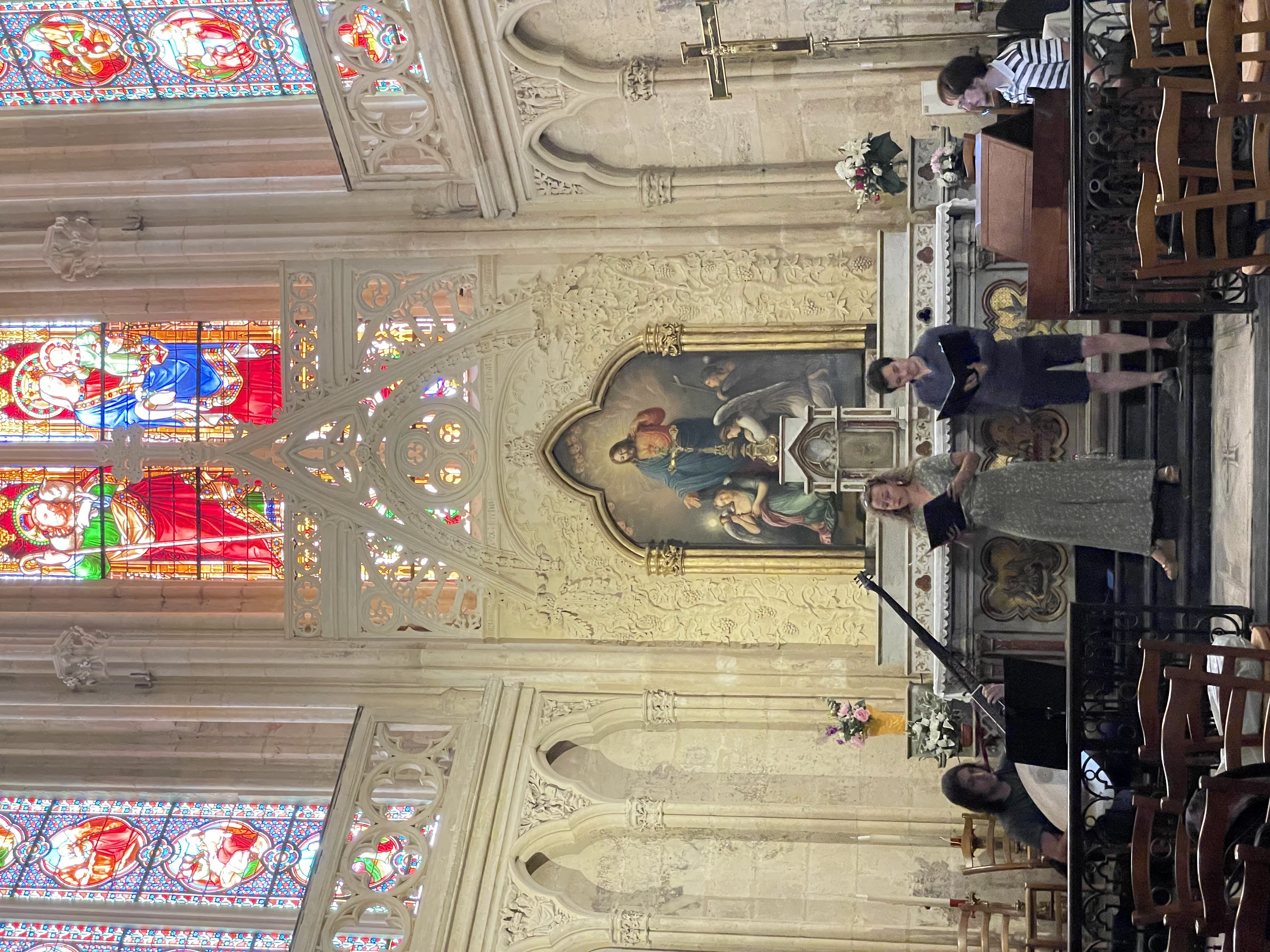
Lucky for us there was a little something special going on. We caught a rehearsal with quite a spectacular backdrop.
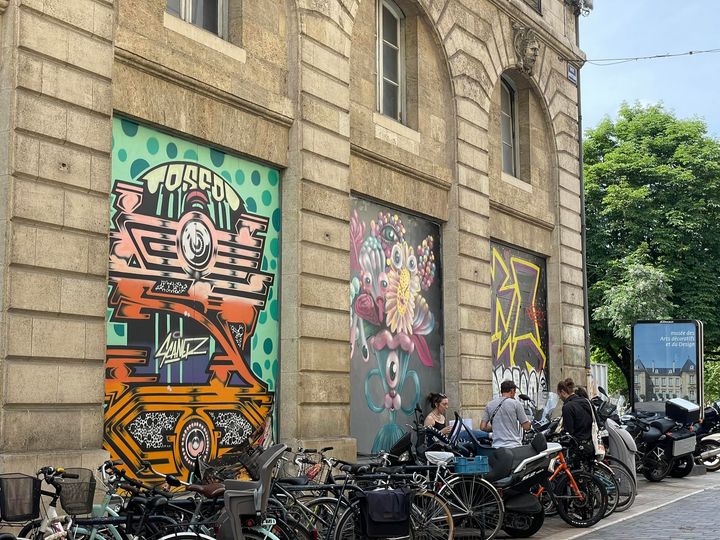
Much tidier graffiti here than in Naples.
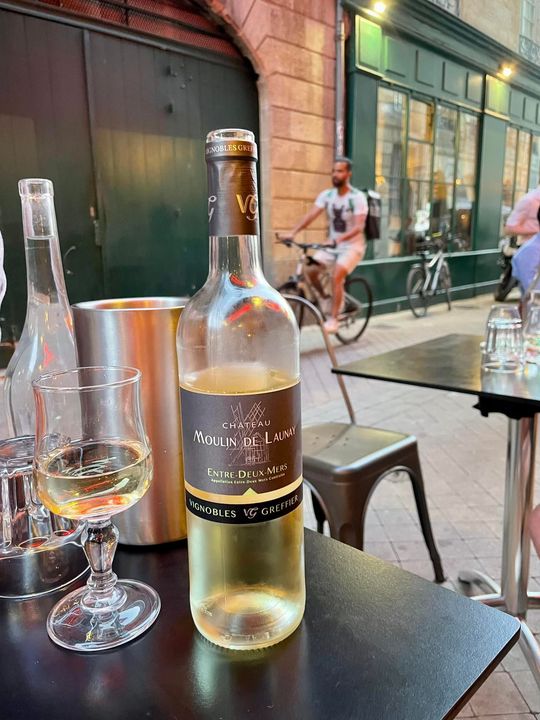
The beautiful old town comes to life in the evening with tables spilling into the streets. During our meal, a pair of minstrels spent 15 minutes serenading the diners up and down the block before passing their hat.
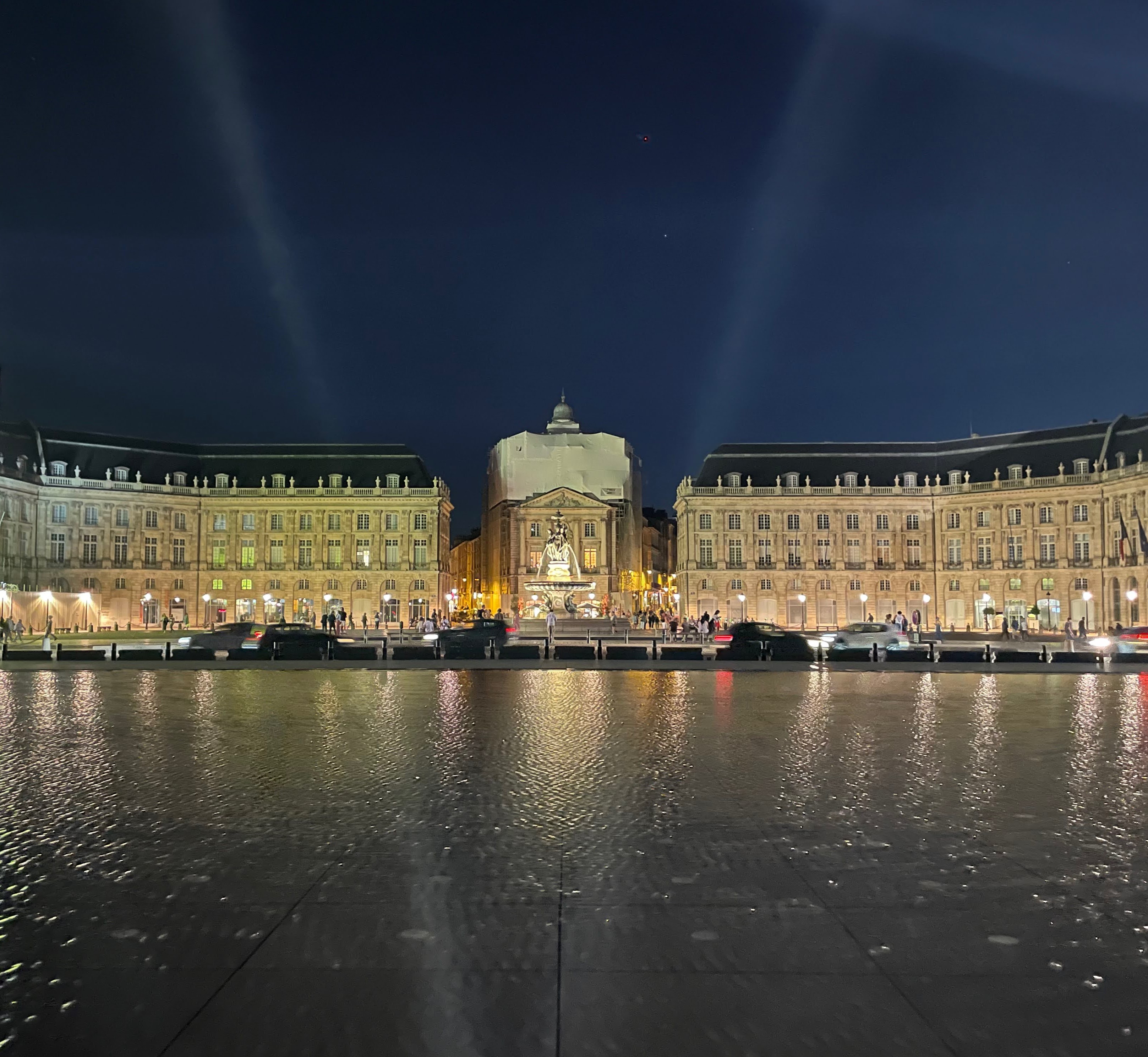
The Miroir d’Eau, facing Bordeaux’s Place de la Bourse, is the largest reflecting pool in the world (3,450 square metres). Unfortunately it was a bit windy when we were there so it’s not as dramatic a reflection as when the water is perfectly flat.
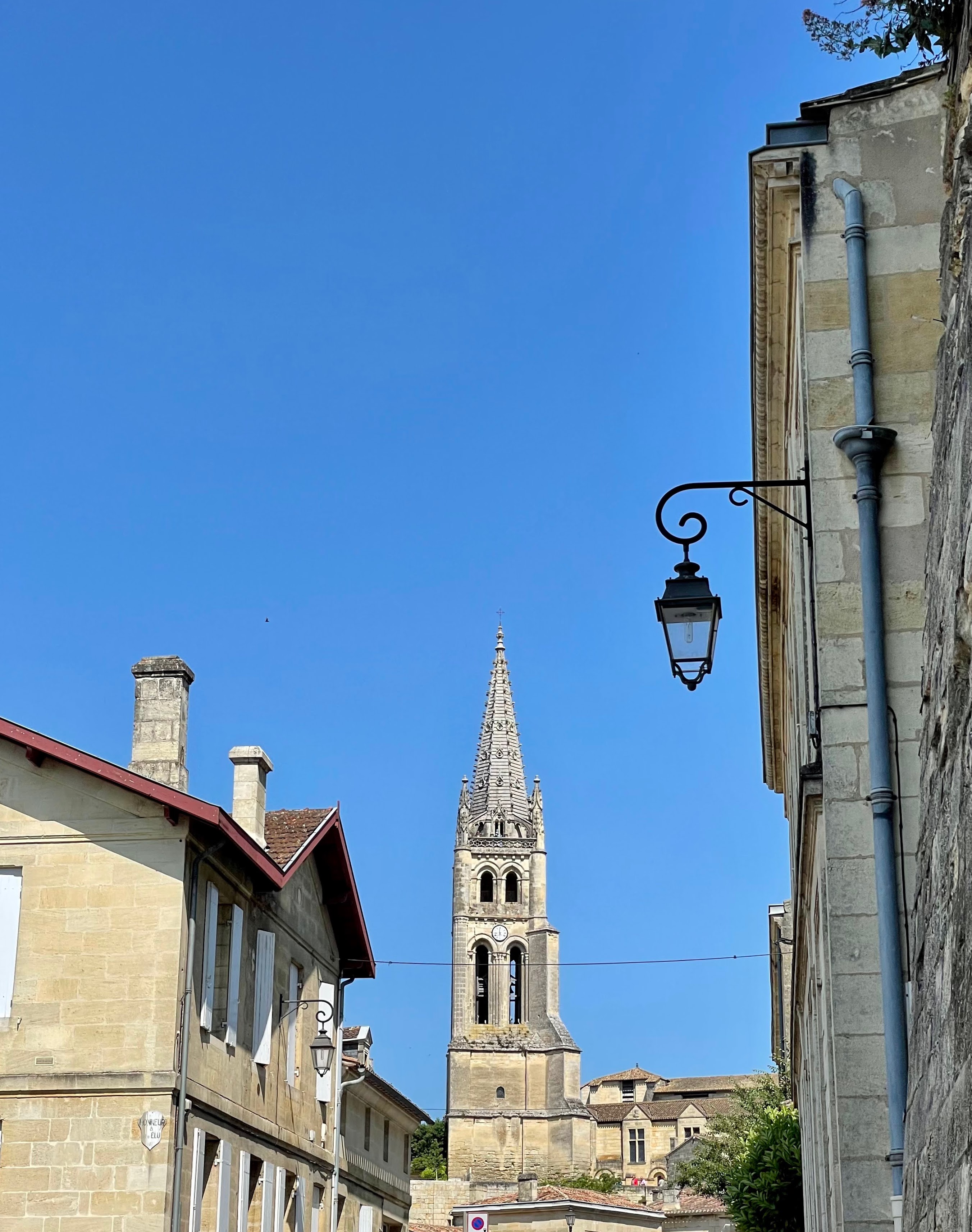
We used Bordeaux as a base and took a couple of day trips. First day we hopped on a train to Saint Émilion, merlot central. This stunningly beautiful area is the Bordeaux region’s oldest active wine-producing appellation, having been making wine since the first century AD.
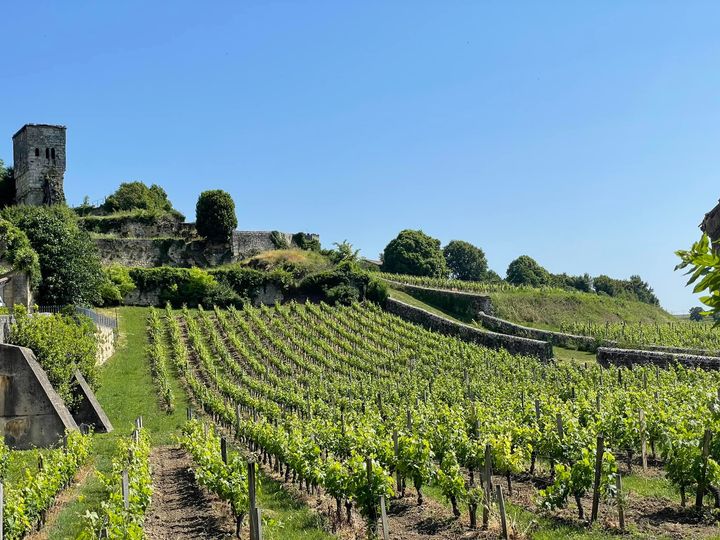
The beautiful landscape filled with rows of vines and dotted with old stone buildings and towers.
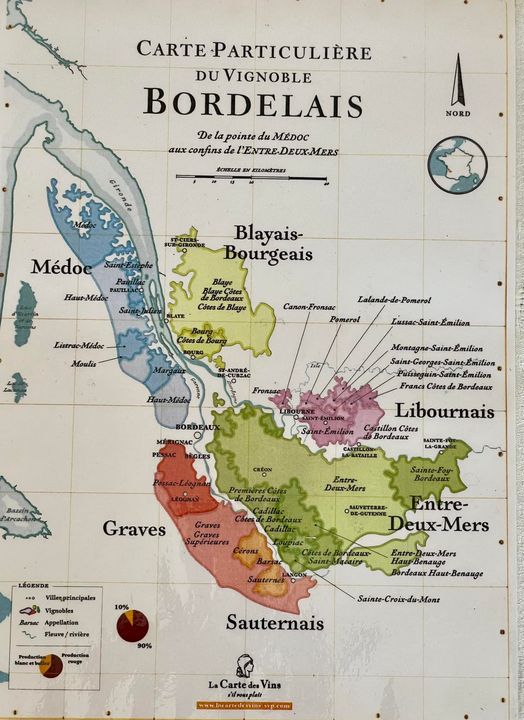
They are very serious here about wine and appellations. Wine from one appellation may be sold in another appellation’s area but may not be bottled there. So if you have vineyards across other appellation lines, you can’t make use of your bottling facilities in one location by bringing over your wine from next door for bottling. Makes Canada’s provincial border rules seem like nothing.
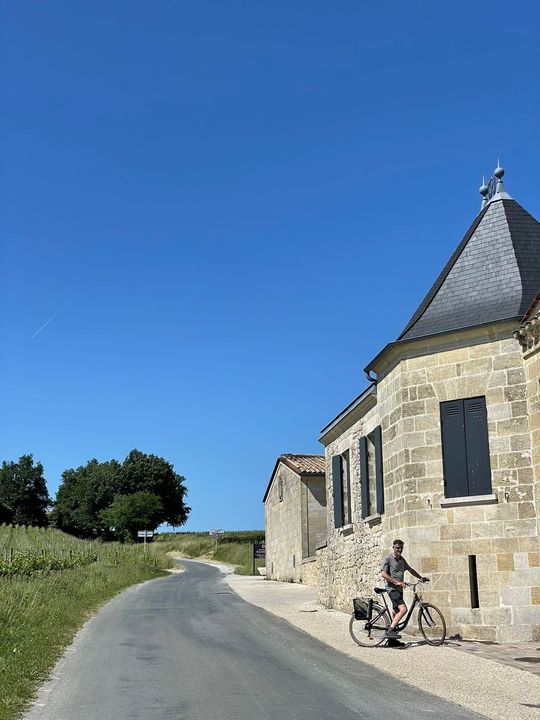
We rented bikes and pedalled to the outskirts of town to visit a few wineries perhaps a bit less under the tourist crush. We lucked out with a couple of lovely tours and some great learning about the region and rules in France. Interestingly, both tours were given by university business students, one of whom was doing an MBA in Luxury… quite a specific specialty that sadly wasn’t an option when I did my MBA.
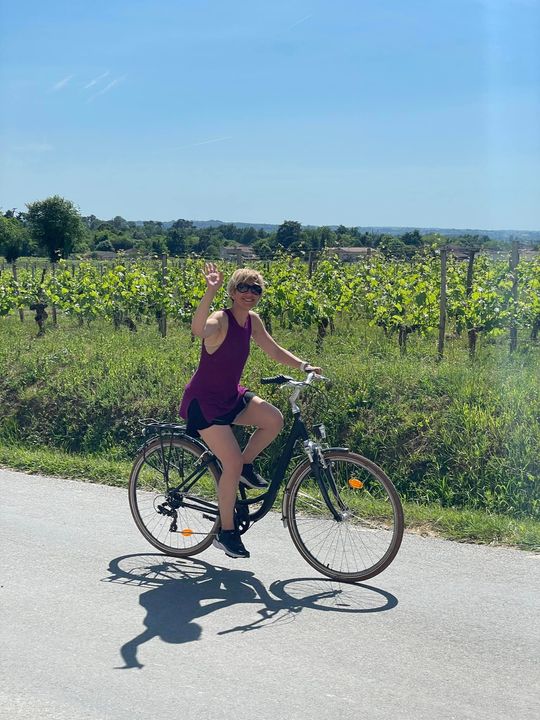
I can still ride in a straight line and one-handed to boot!
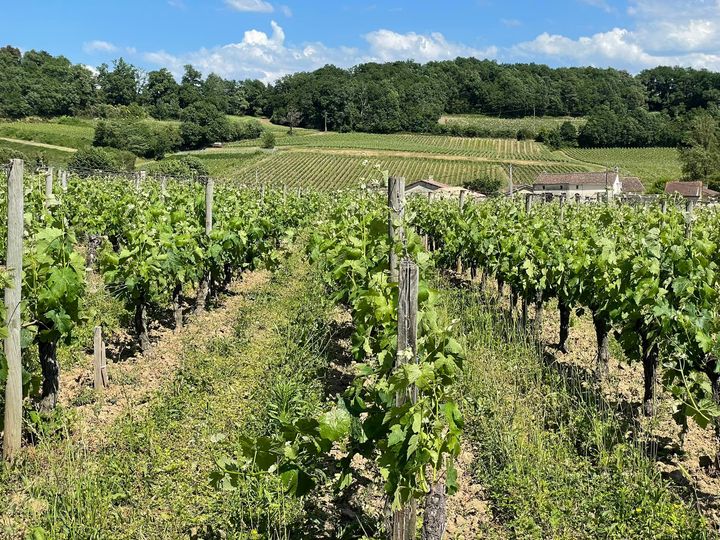
The vineyard at Château de Candale.
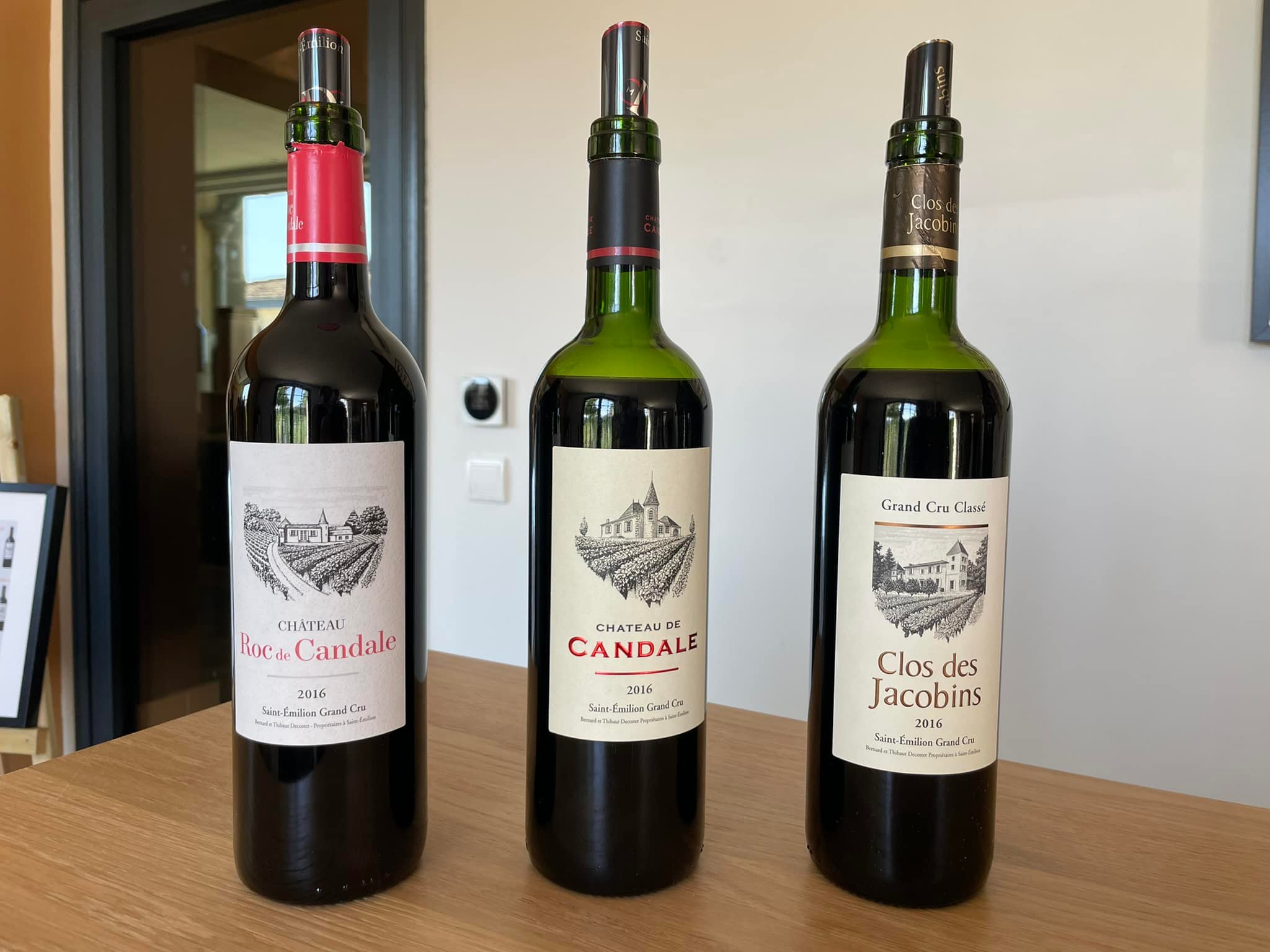
An example of the rules preventing the passage of unbottled wine across appellations. These three vineyards have the same owner but have completely different wineries listed on their labels. Efficiency might suggest one label with three different wine names.
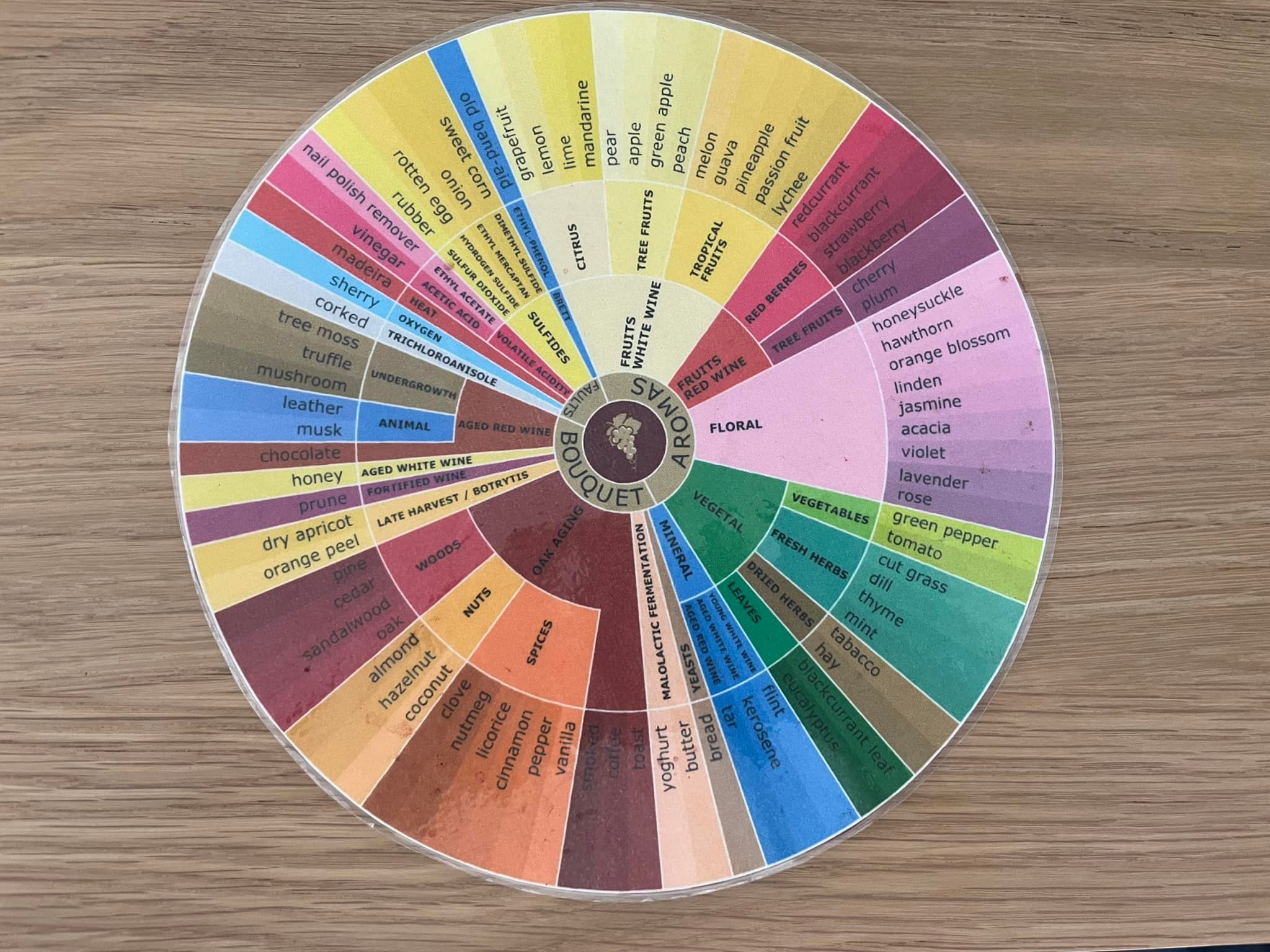
Maybe this handy wheel will help me learn to articulate the flavours and aromas of wine.
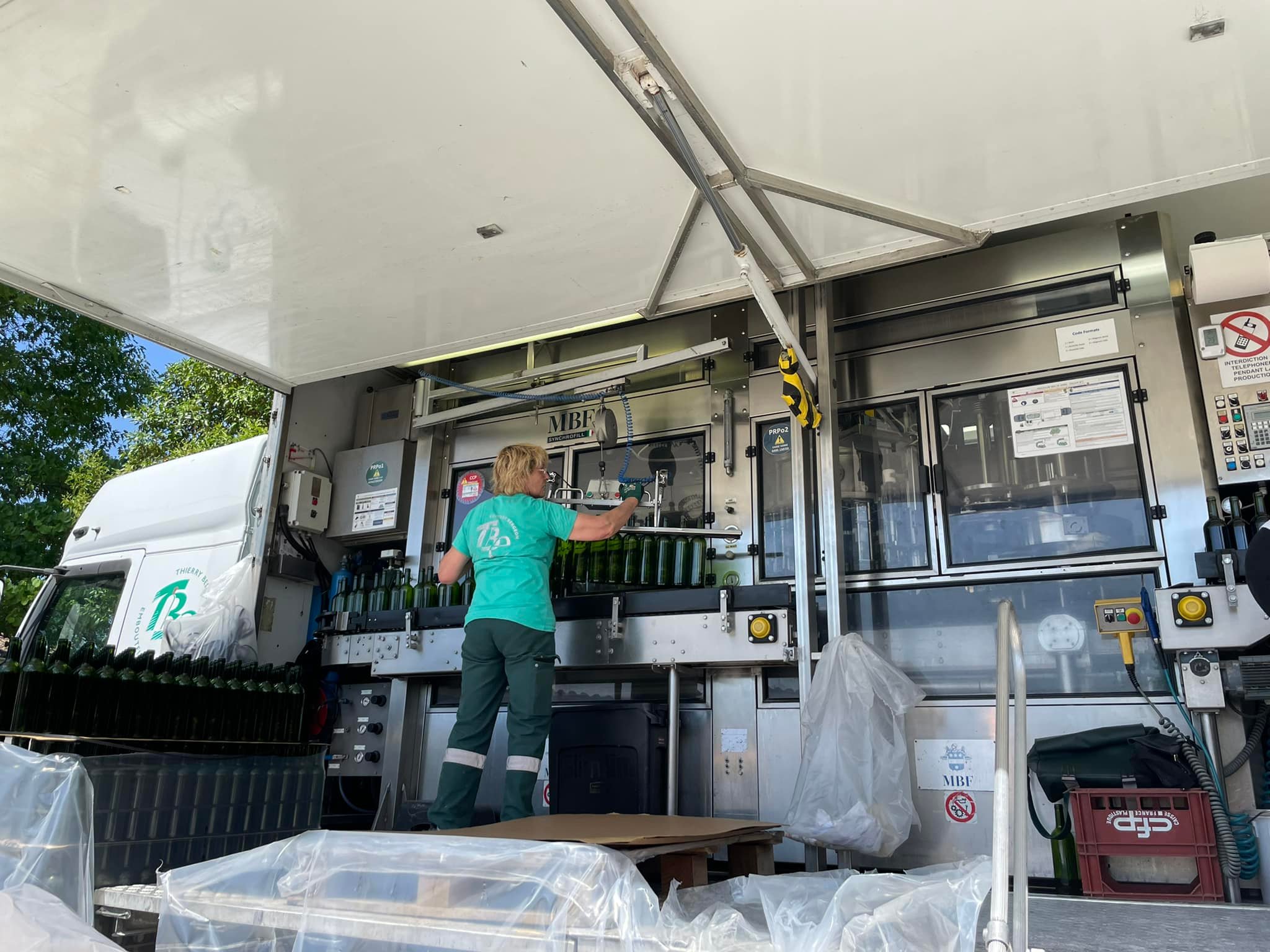
A mobile bottling truck at Bardet winery. This winery has been in constant operation since the mid-1700s. They are bottling their Dirty South label. This name is a nod to the region’s poor wine reputation back in the 1970s. The winery rents the bottling truck for a day and a truck this size can fill 3,000 bottles per hour. Kind of like using a co-packer, this is a great way to keep costs down by not having to invest in underutilized equipment, but you can still control the process.
Ok. Here’s how it works. The video is kind of backwards in terms of process but you’ll get the gist. We open with the friendly fellow in the baseball cap loading clean bottles onto the conveyor belt. The bottles then cycle through to be filled and corked. The woman and man then take the filled bottles off the truck and load them into metal cages to get taken away for labelling. Now let’s talk about how the wine gets to the truck. On the way from the steel tank (that gets brought over here from the winery), the wine travels along hoses and passes through machines that manage the filtration, oxygen levels and the flow rate.
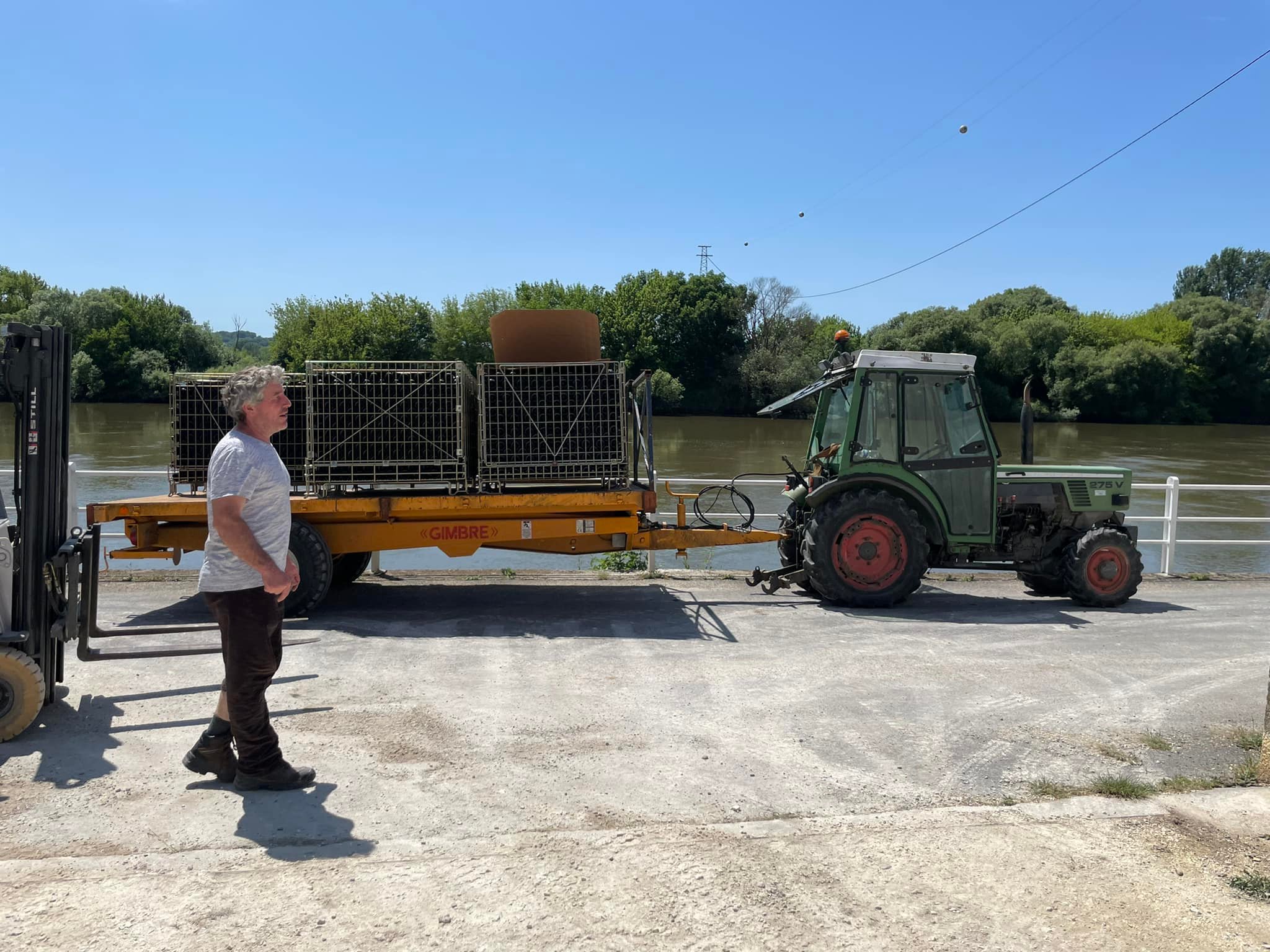
Loading up the filled bottles to be taken away for labelling, boxing and storage or delivery.
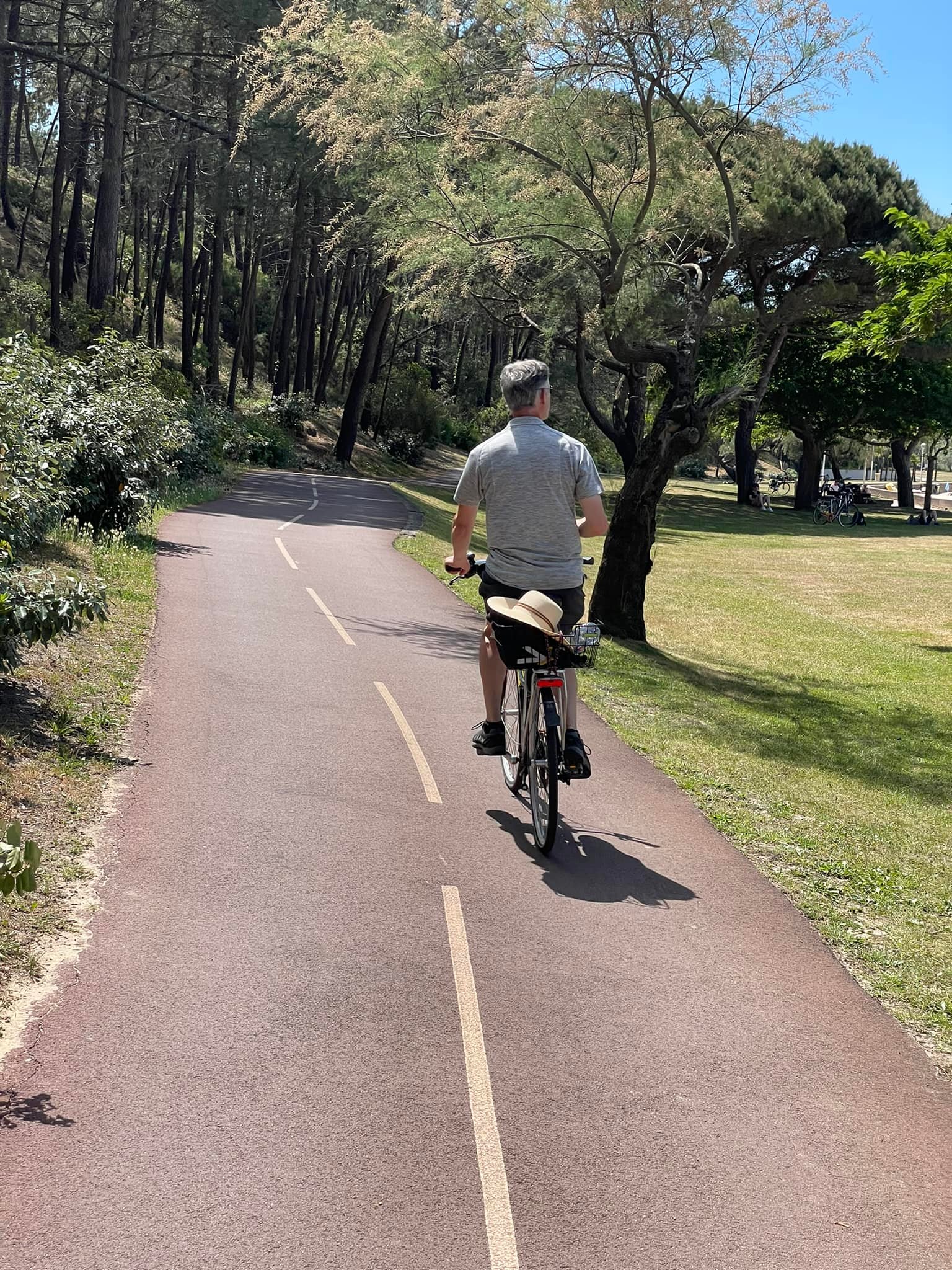
The next day, we took the train to the seaside town of Arcachon. With temperatures forecast to hit 34C, we thought a beach day on the chilly Atlantic would be a good idea. Arcachon is divided into four seasonal “cities”. After a lovely salad lunch in the Ville d’Été (we were in desperate need of greens and some quinoa after nearly seven weeks in Italy), we rented bikes to get to a beach further away from the throngs at the main beach in town.
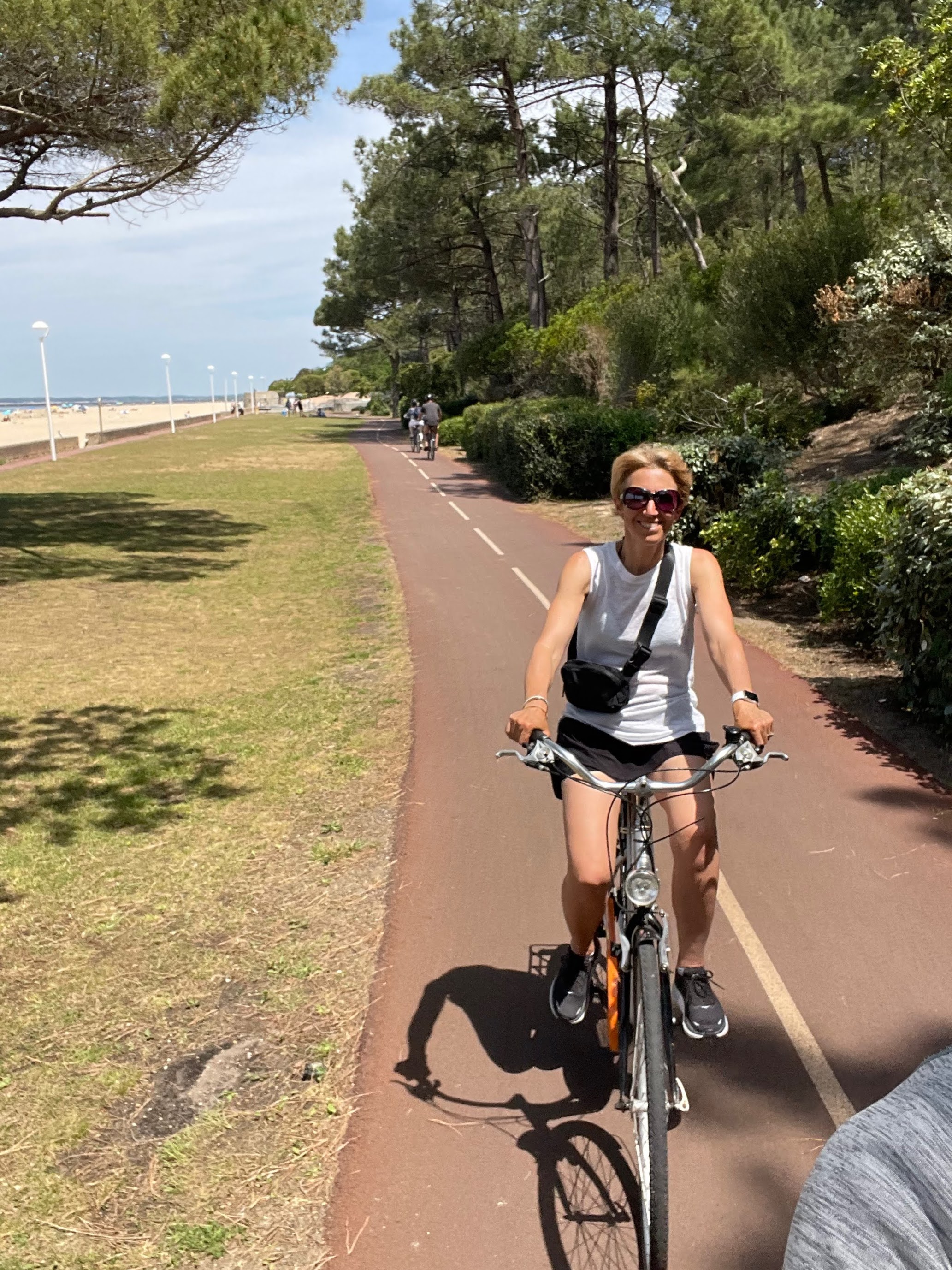
Beautiful cycling paths in Arcachon.
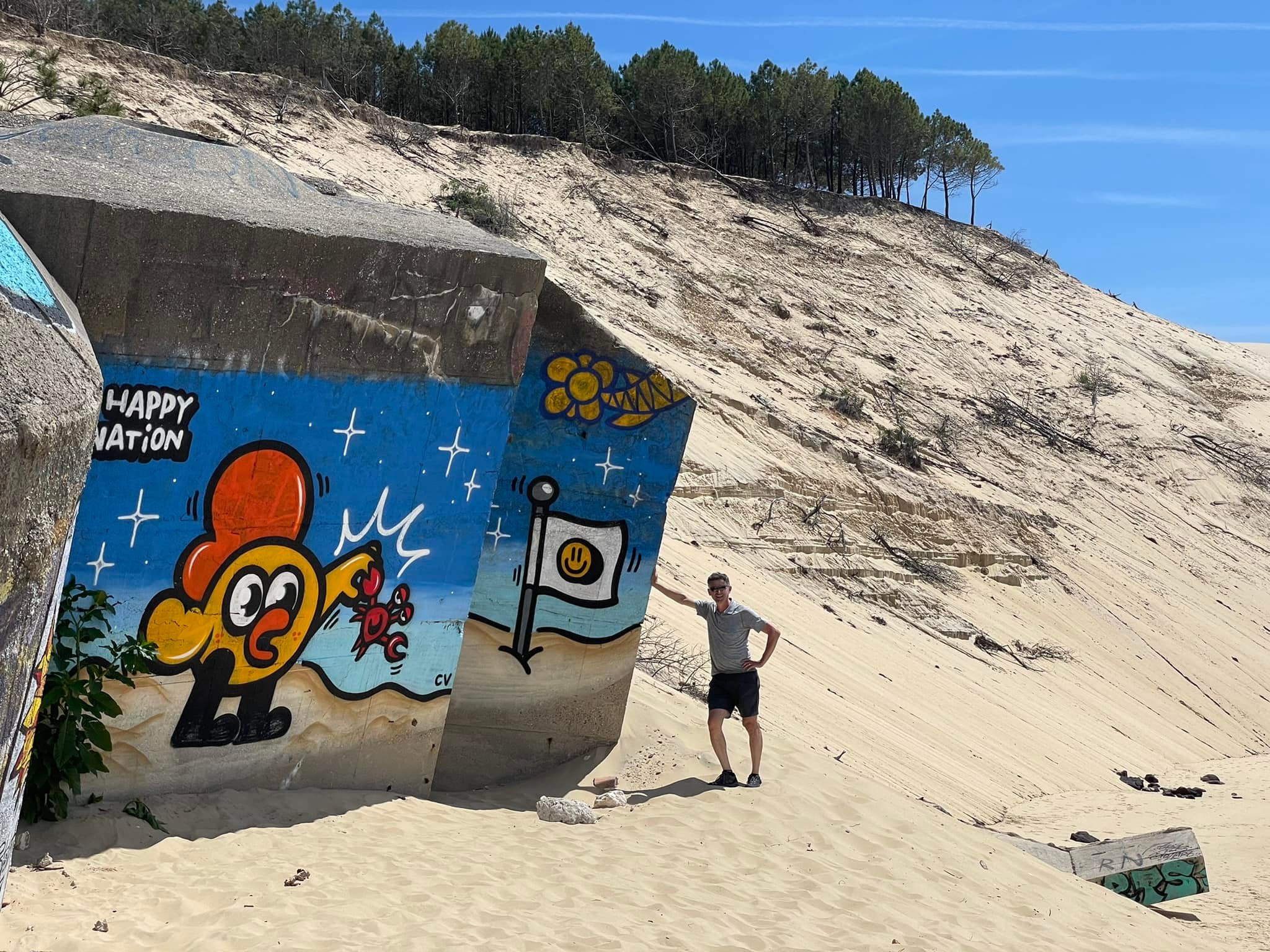
Destination! The beach at the Dunes de Pilat. It feels like we have arrived in a land of giants.
The Dunes de Pilat is Europe’s largest sand dune, 110m high, 500m wide and 2.7km long. Massive! Cap Ferret to the left, the Banc d’Arguin nature reserve just in front and a pine forest that is slowly being reclaimed by the sand and to the right.
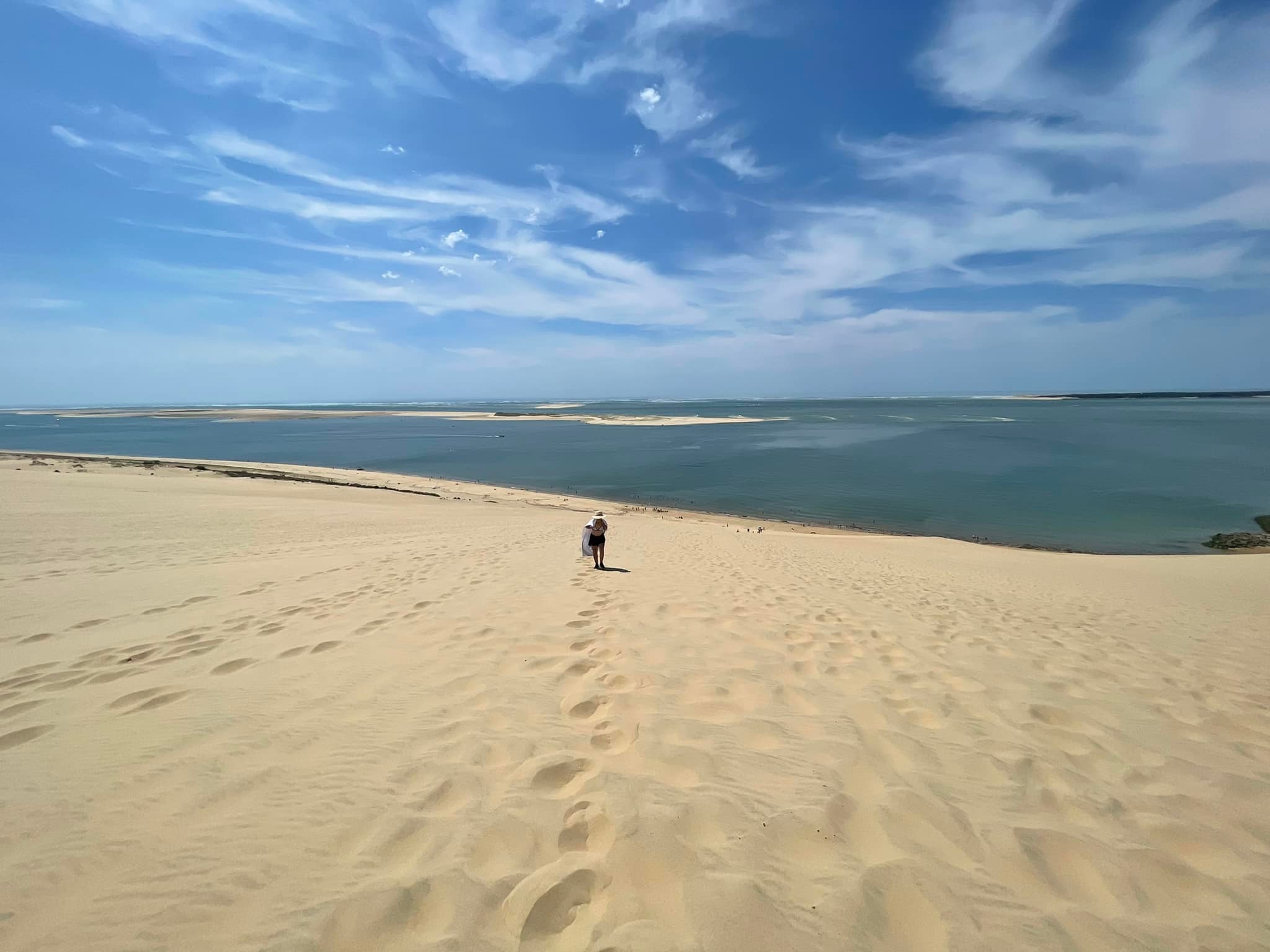
Trying to accommodate everyone, they install temporary stairs on the backside of the enormous Dunes de Pilat from May to November. We approached from the beach side and paused for a swim before scaling the sand, carving our own stairs only to have them blow away. The air temperature of 34C felt like 40 on the blazingly hot sand. That’s me, trudging along well behind Adam. I could blame it on a bum ankle but in reality it was hard work!
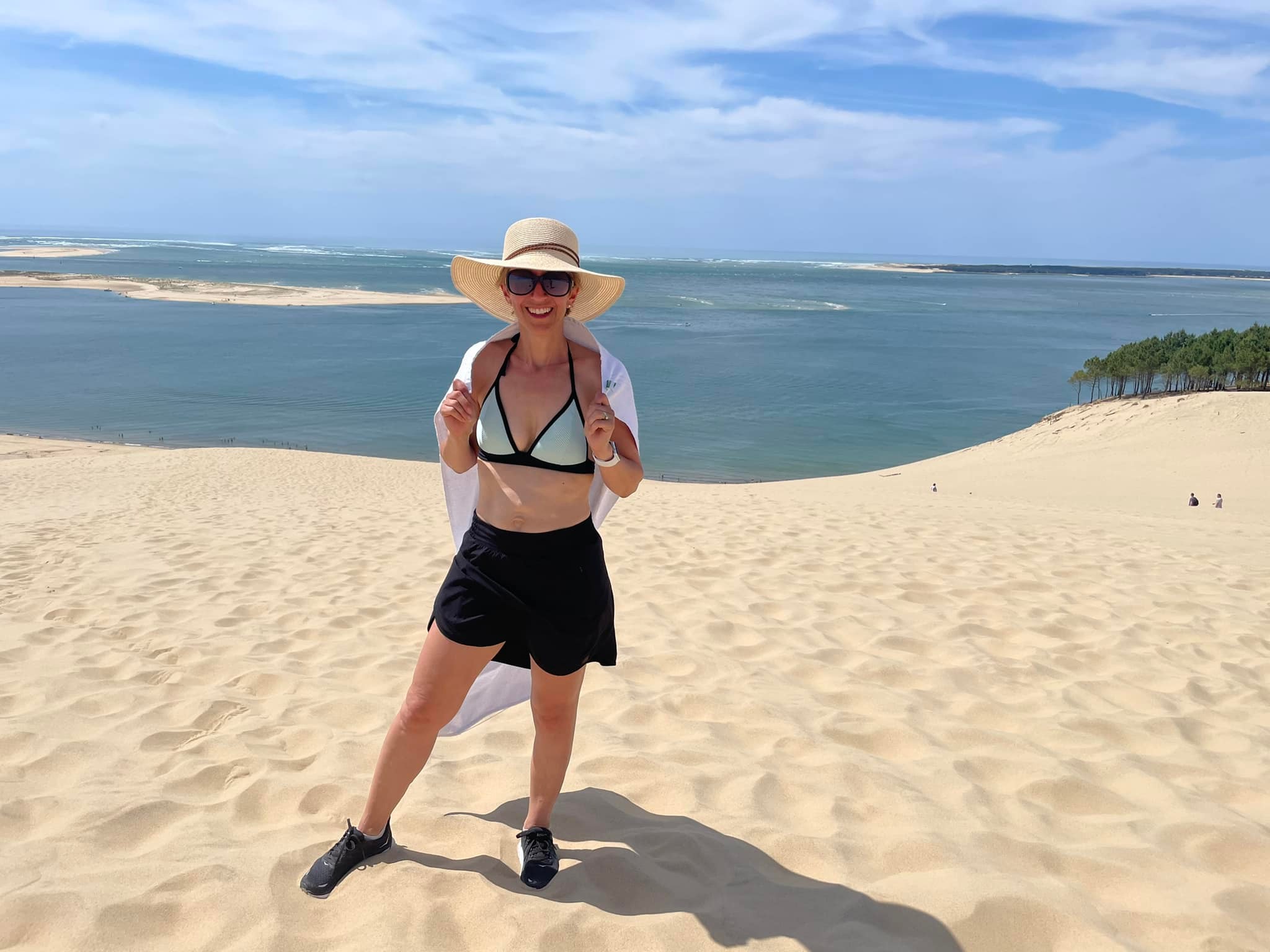
Channeling my inner superhero in an effort to get to the top. I think I would have been well toasted if I didn’t have my “cape”.
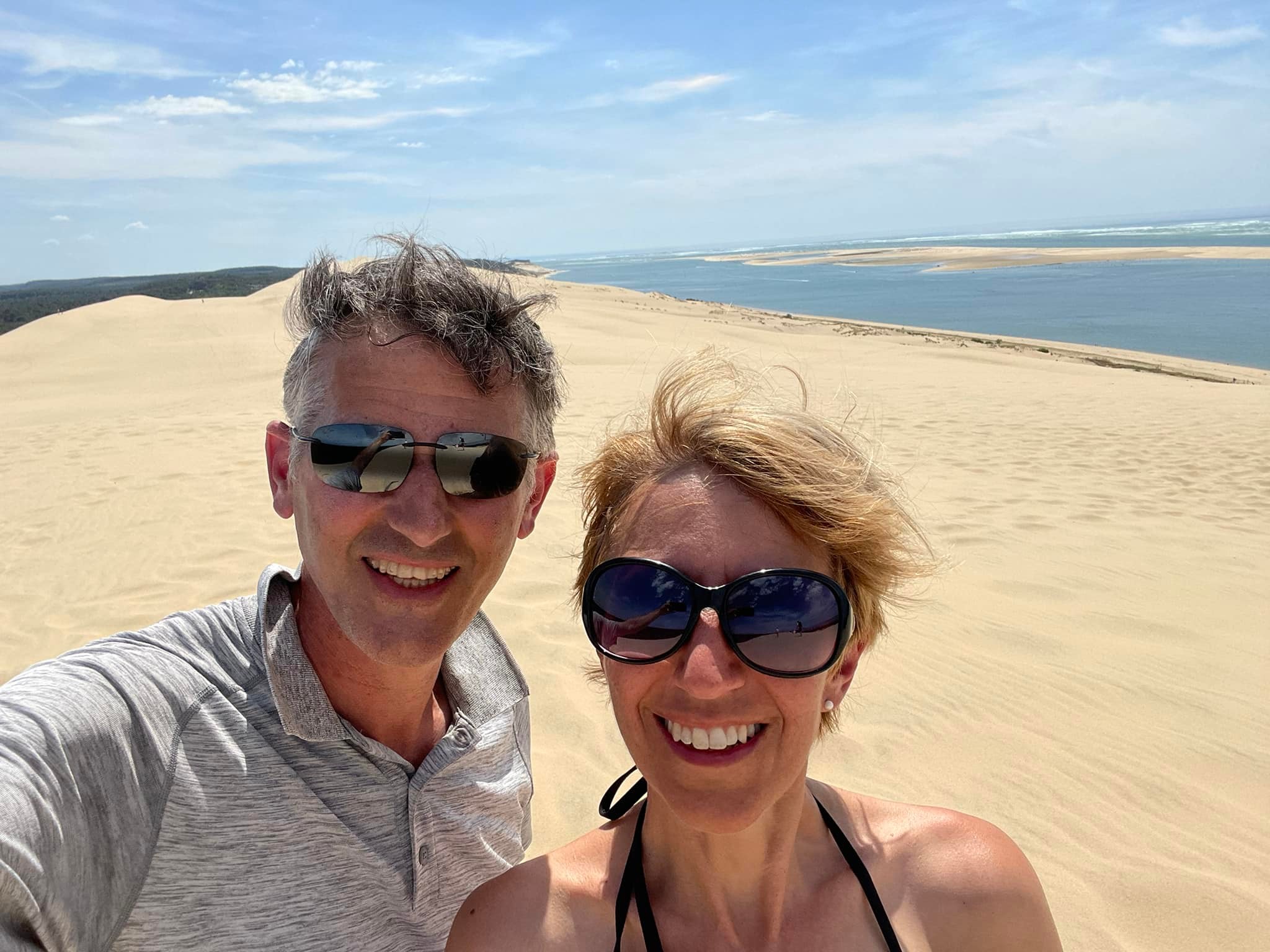
Top!