June, 2023
Picturesque PEI
Technically and locally, we’re ON Prince Edward Island.
We had a four province day to get to PEI; a Toronto to Halifax flight and a drive through New Brunswick over the Confederation Bridge to PEI. This tiniest province of Canada (population of 180,000) packs a geographic punch. Never-ending beaches, not-anymore-towering dunes, more lighthouses per capita than anywhere else and world-class lobster rolls. What more would anyone want?
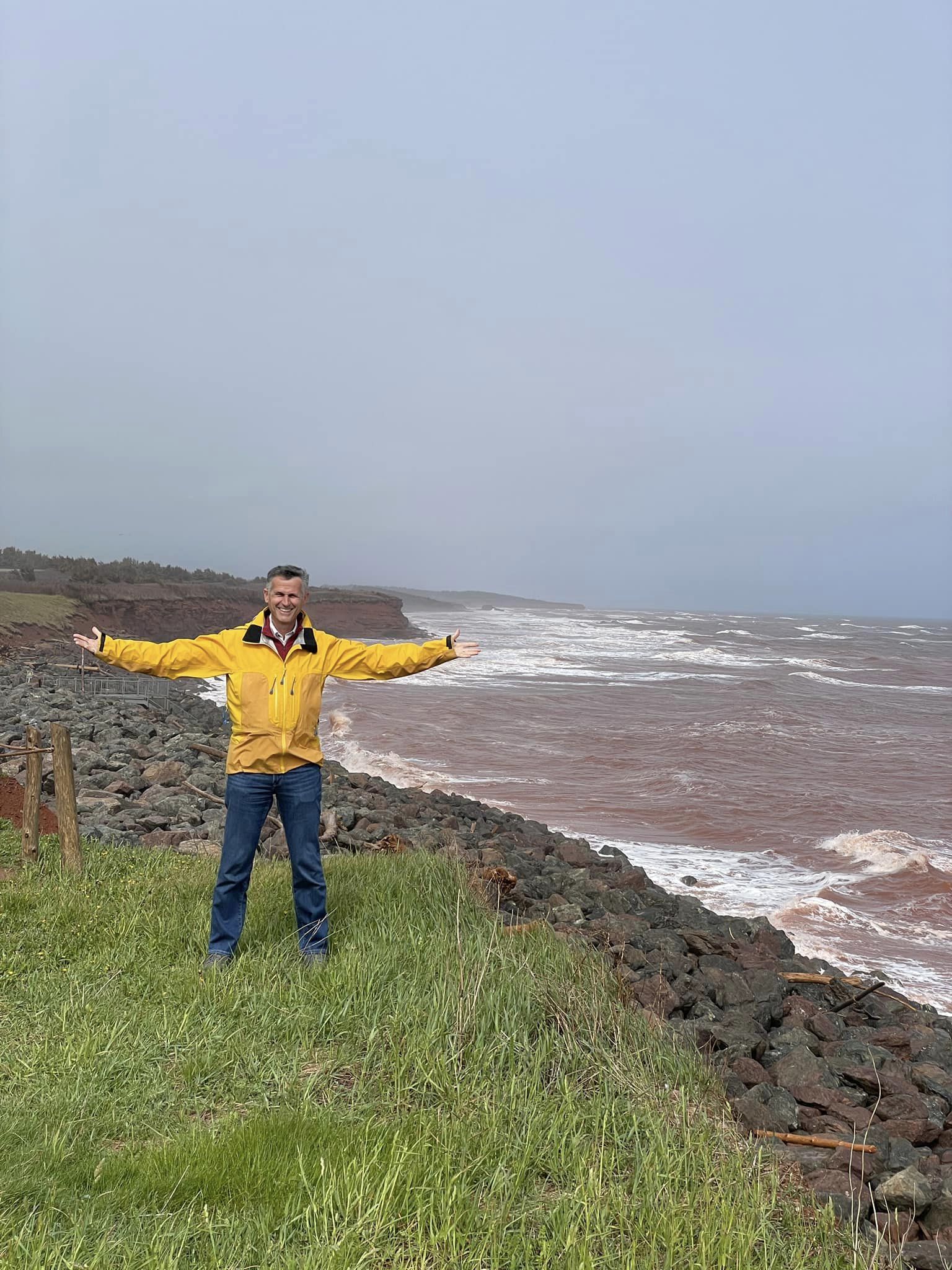
We were met with rain but we came prepared!
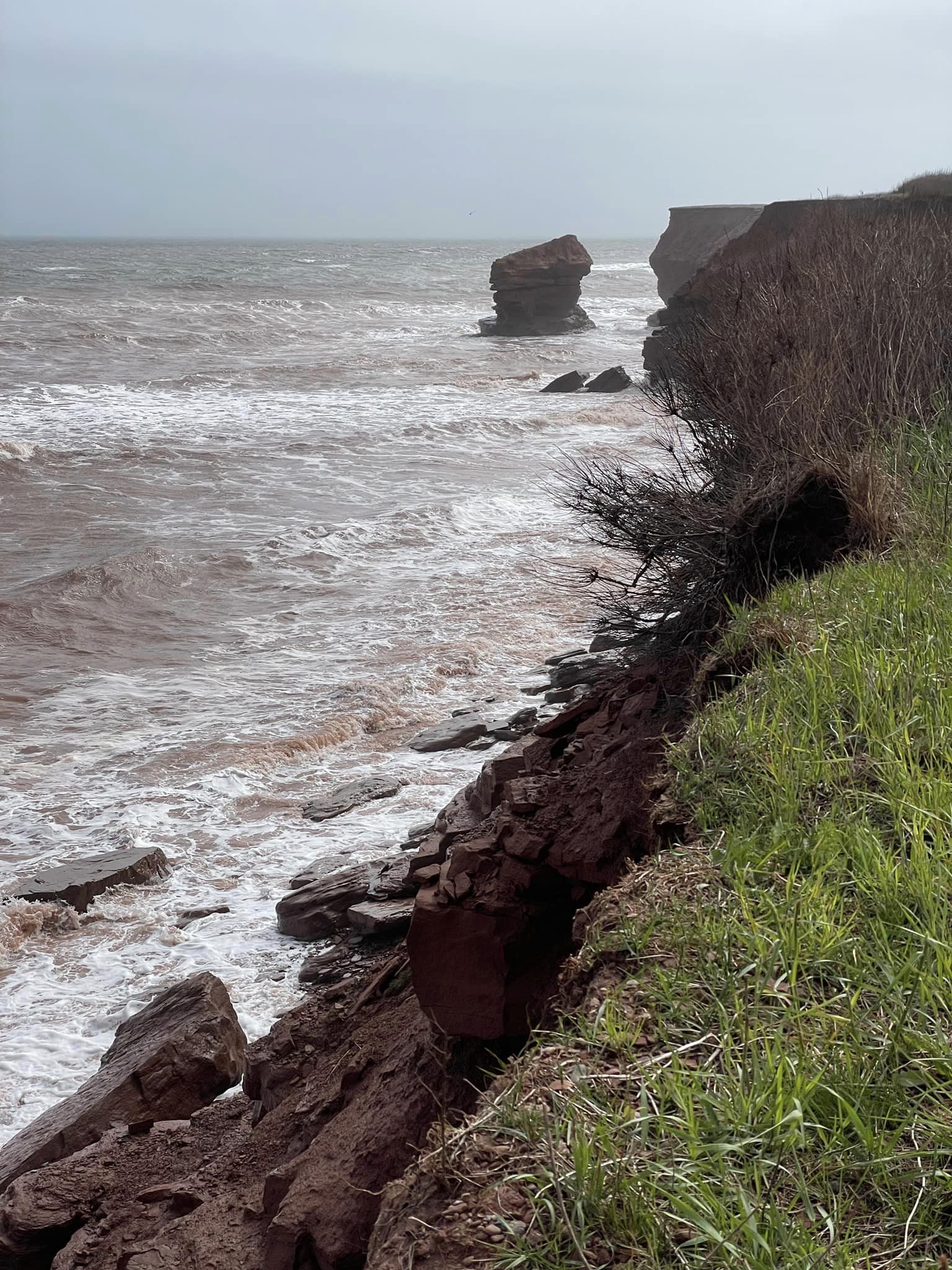
Eroding coastline along PEI’s central north shore. Hurricanes certainly don’t help maintain this fragile ecosystem.
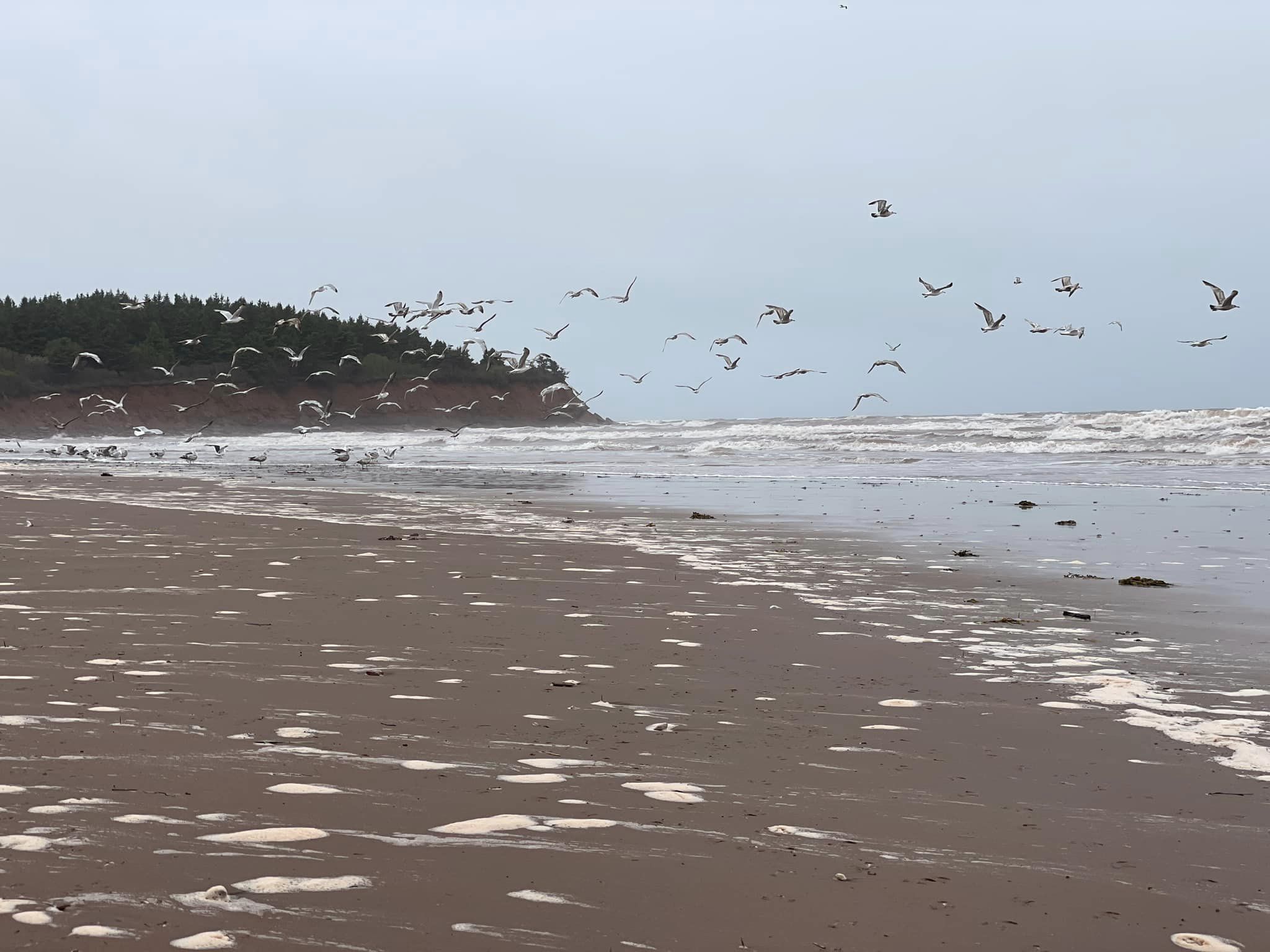
Seagulls galore, swooping in and out to feed on treasures nestled under the sand.
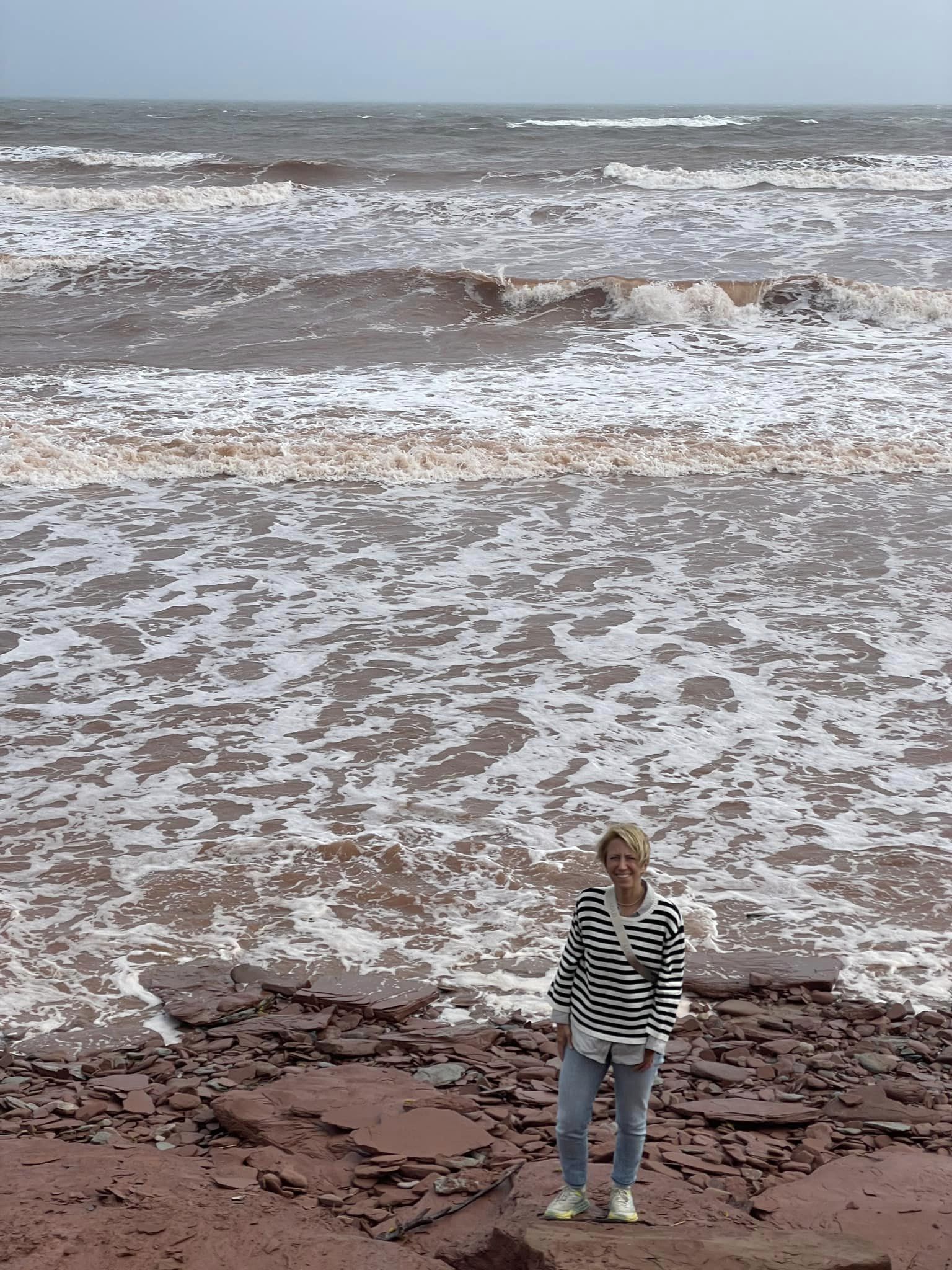
Pounding surf that we learned follows the storms…the storm we drove through the night before!
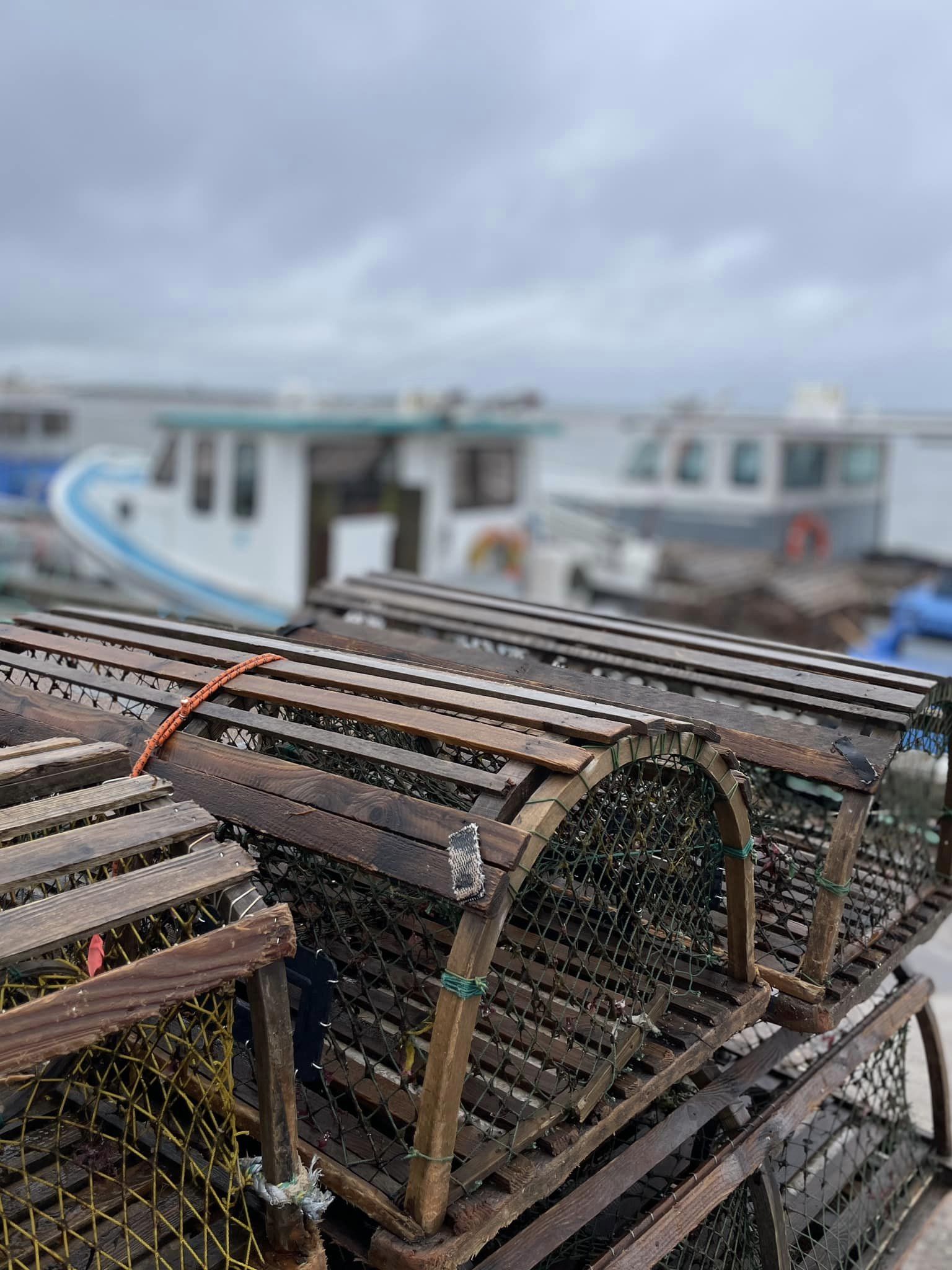
PEI is the source of 30% of the lobster consumed in Canada and 80% of our mussels. This is big business here. The quality of the seafood is unbelievable. As good as they are, we wondered why lobster, which has its roots as peasant food, is so expensive. Turns out there’s no farming of lobster to boost efficiency, it takes lobsters seven years to grow to market size and they change their location in the ocean at their own will (one year they may be 500m off shore and the next they may be 3km off shore). They just keep the fishermen guessing!
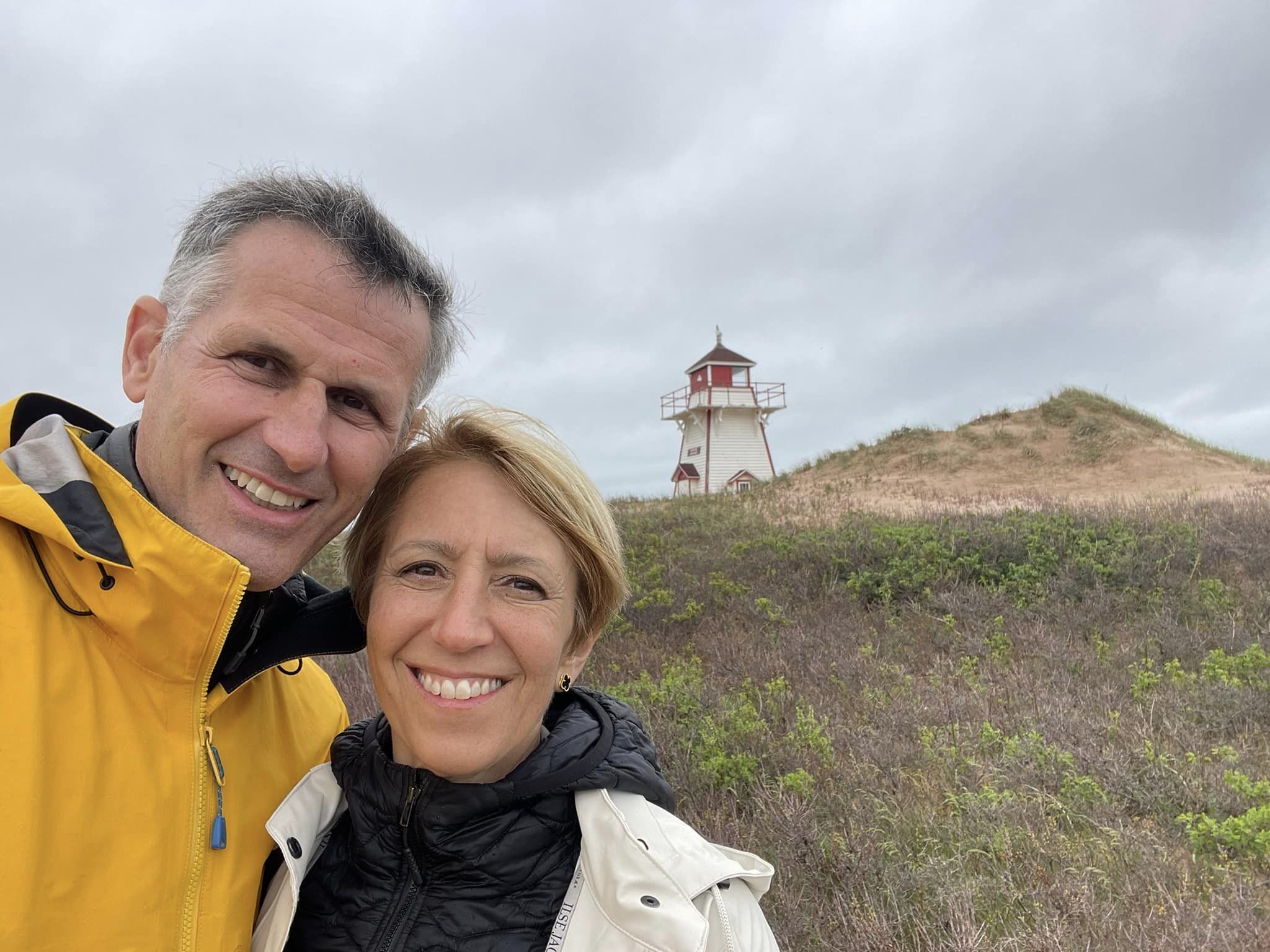
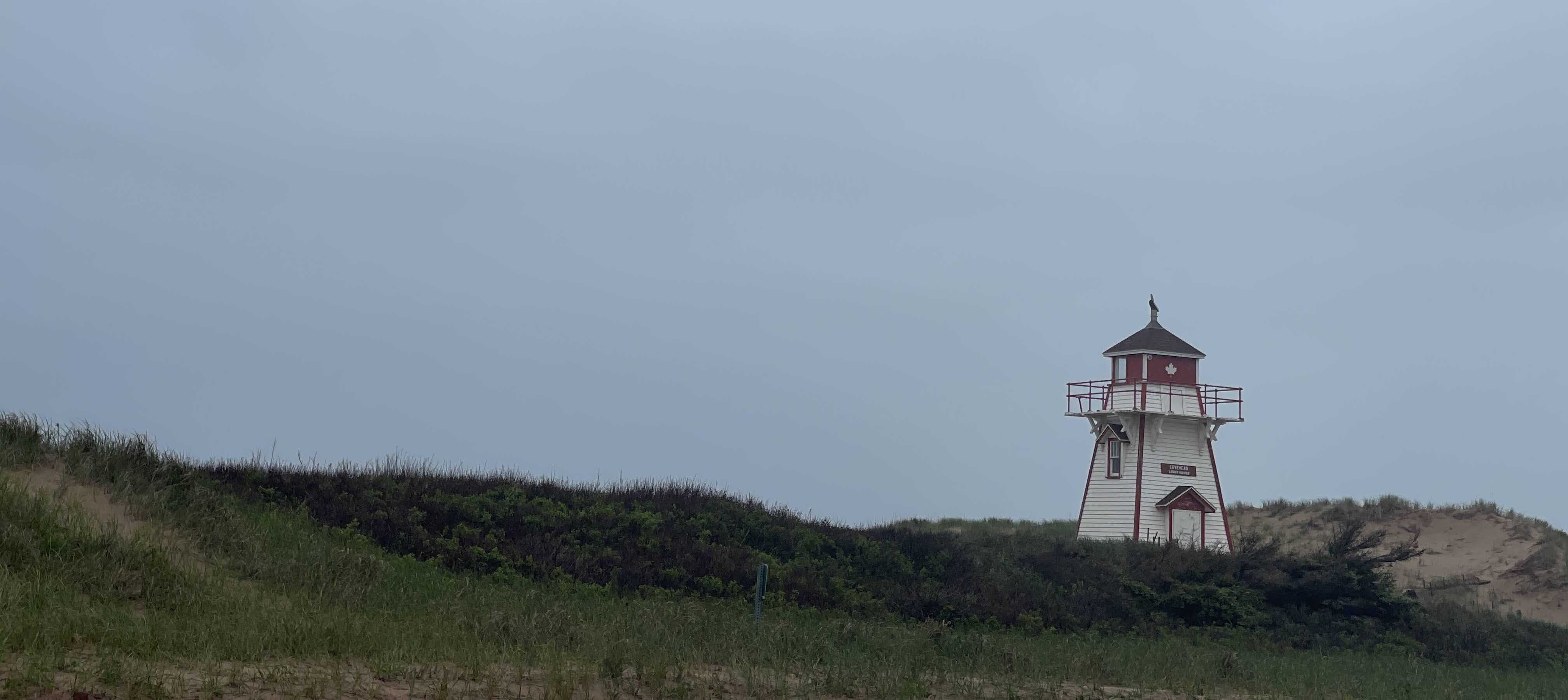
Our first lighthouse of the trip. Covehead Harbour Lighthouse. The bonus about this one was the timing coincided with lunch. We noticed a little fishing marina with a few shacks down by the water. Down we went and noticed a place called Richard’s selling lobster rolls. We figured we needed to give it a try since we are in the land of lobster. So good and who knew Richard’s is one of the best places on the island for lobster rolls!
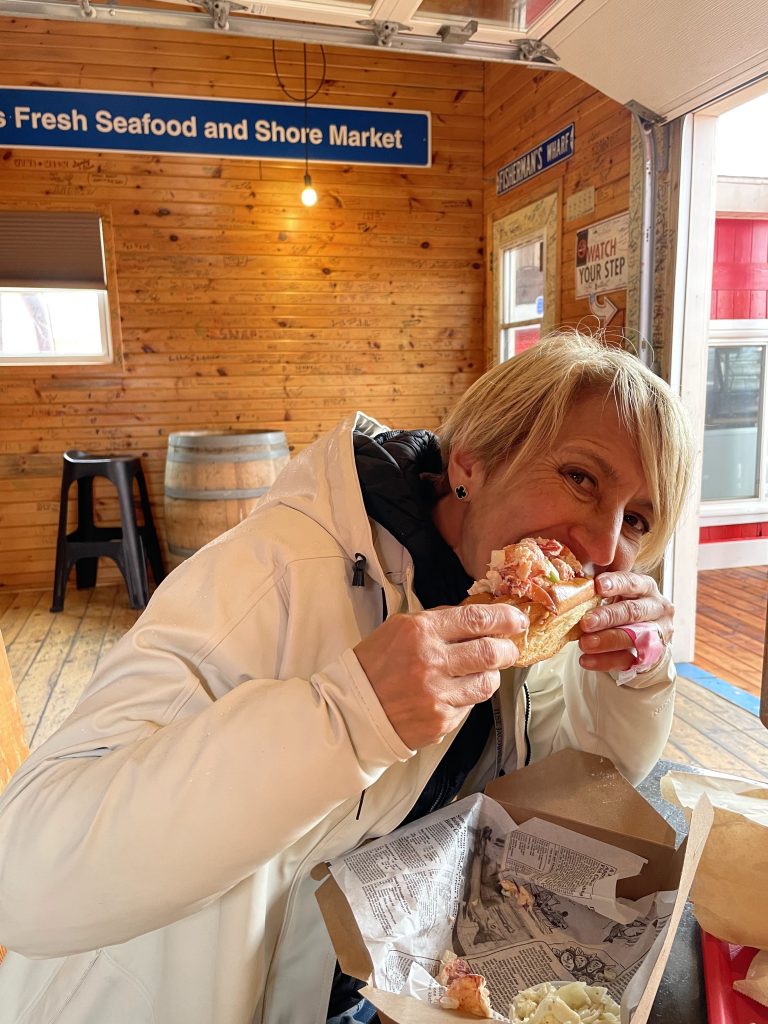
...said lobster roll from Richard's...
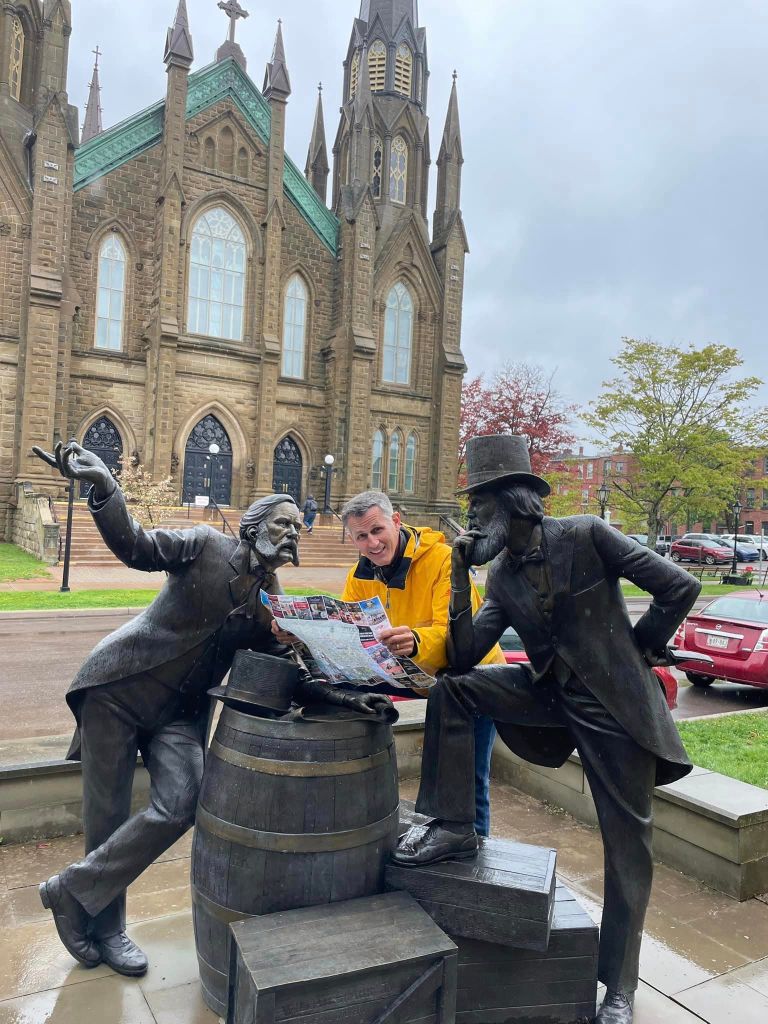
Adam getting some directions from Charlottetown locals in front of St Dunstan’s Basilica.
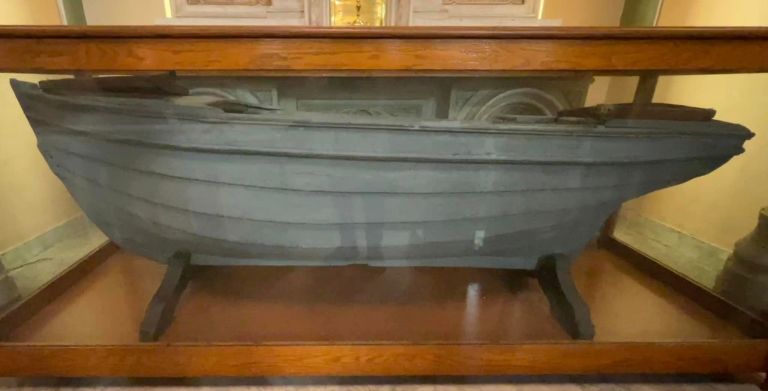
Bishop Maceachern’s boat. Along the lines of the Mailman’s creed—Neither snow nor rain nor heat nor gloom of night stays these couriers from the swift completion of their appointed rounds—the first Bishop of Charlottetown didn’t let anything get in his way of making his pastoral visitations. The clever Bishop crafted this half boat/half sled to ensure the safety of all the valuable bits needed for the celebration of mass and other sacraments as he made his way throughout the settlements around the province. The rails on the bottom enabled him to travel through the snow and ice (look closely and you’ll see a pair of snowshoes strapped to the bow and stern of the boat) and if his horse pulling the sled should fall through the ice, his precious religious objects would stay afloat in the boat.
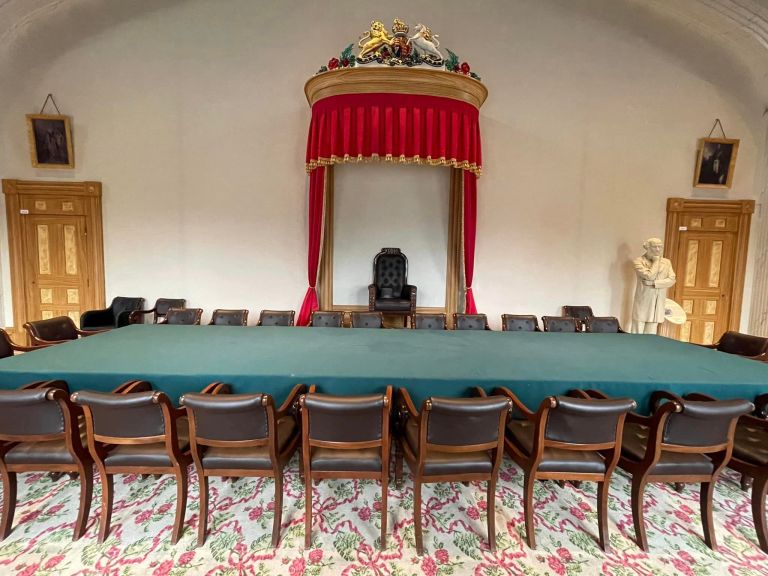
PEI is the birthplace of Confederation and all the magic started right here at this table at the Charlottetown Conference. This first meeting in 1864 was intended to discuss the union of the three Maritime provinces. Upper Canada (Ontario) and Lower Canada (Quebec) asked to come as observers and they managed to switch the direction to set the stage for the union of upper and lower Canada, and the Maritime provinces. These men sealed the deal in 1867, of course without including representatives from more than half the population: women and First Nations peoples.
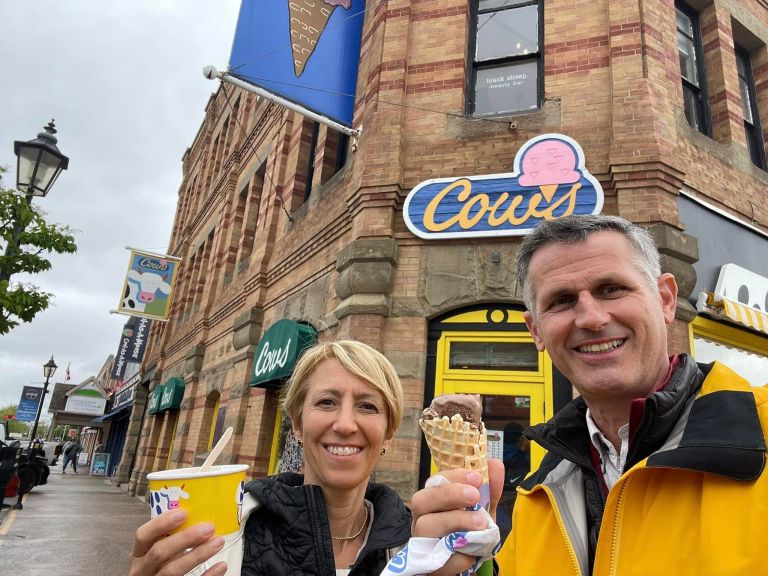
Had to have some Cow’s ice cream while in PEI. The shop is housed in an historic building from 1901 whose original occupant was an apothecary. I guess one form of medicine to make you feel better is replaced by another. Excellent marketing for this popular ice cream…as for the product, it’s not worth writing home about…
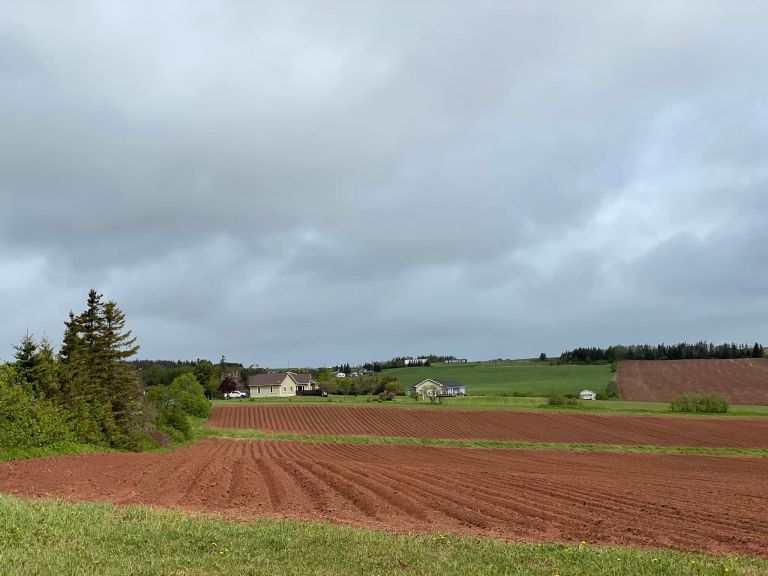
Classic red clay fields ready for planting, most likely potatoes.
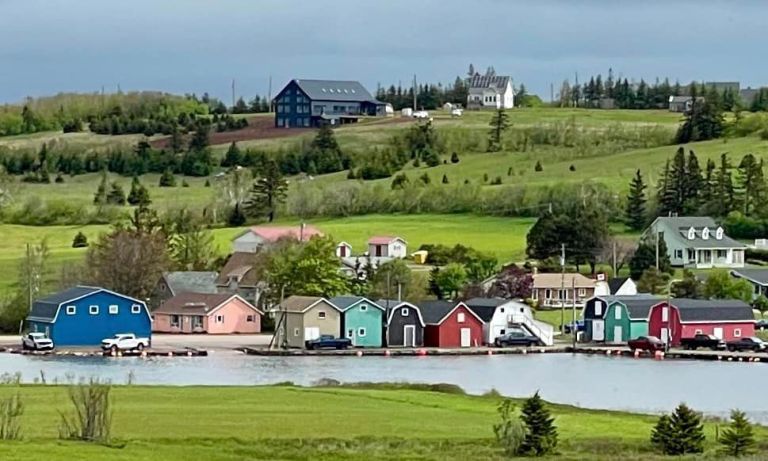
The very picturesque village of French River.
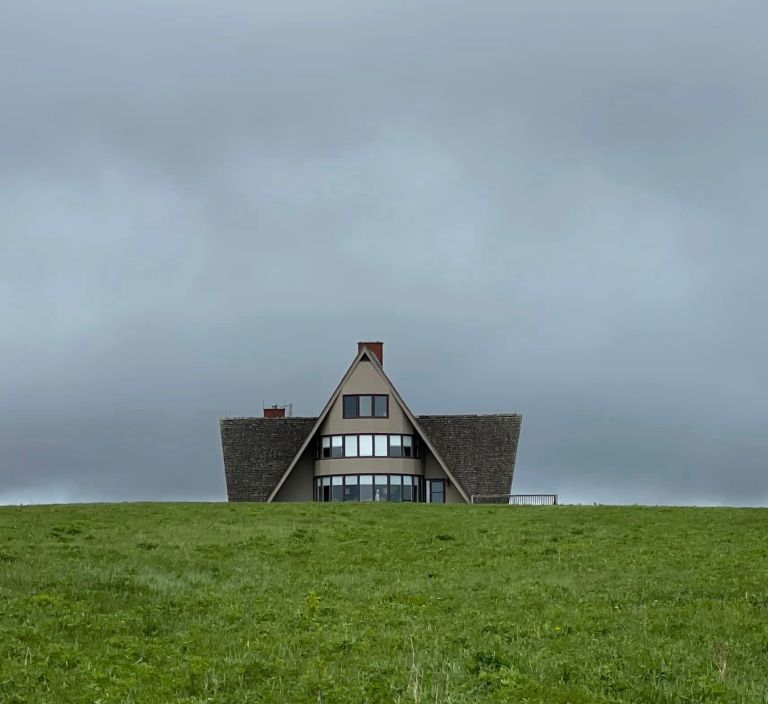
Architecturally funny house perched by itself on a hill in French River. Inspired by The Flying Nun or perhaps the wimple (hat) of the nun’s habit of a bygone era?
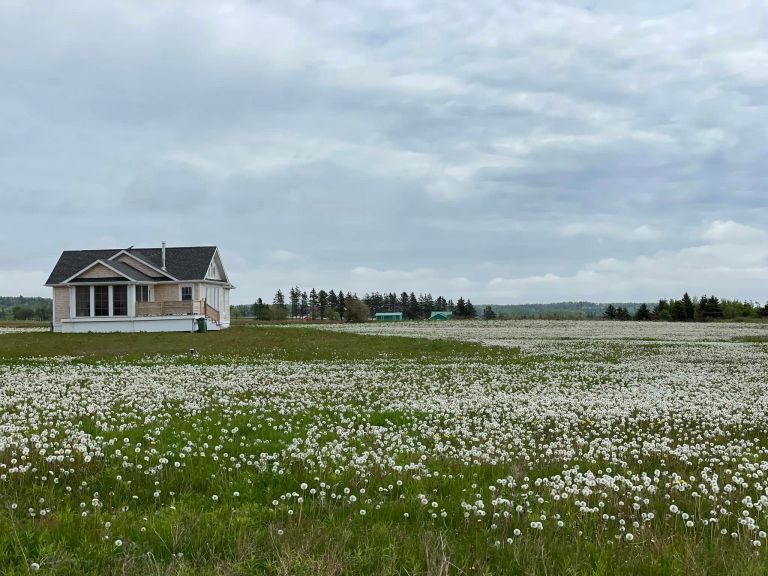
Dandelions are everywhere on PEI! Fields covered in white and yellow as far as the eyes can see are in aid of bees. The pollen in these early season “weeds” is critical for the nutrition of the bees before the rest of the spring and summer flowers bloom. I think we should elevate the humble dandelion to flower status.
Adam doing his part to help feed the bees.
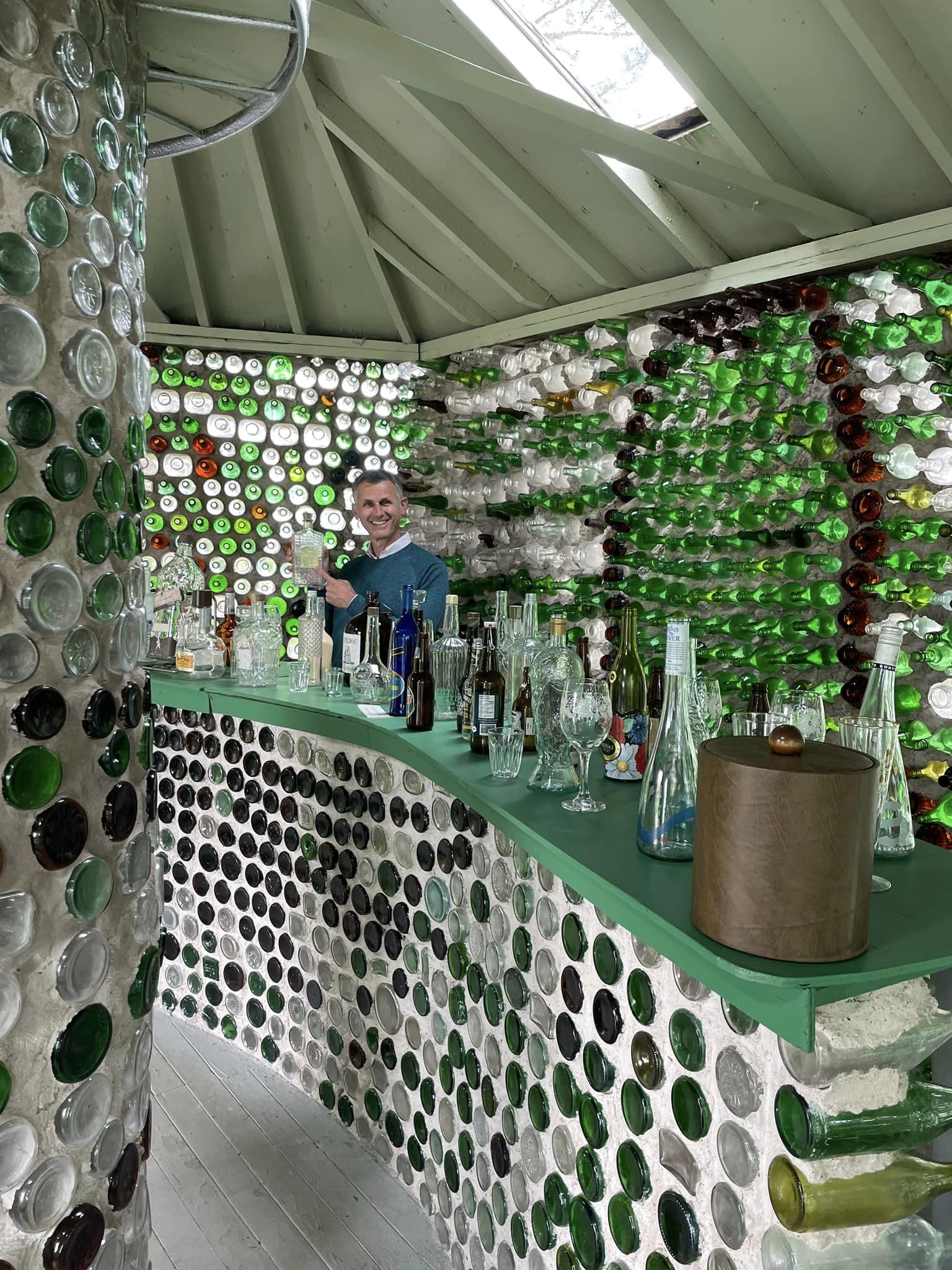
The Bottle Houses in Cape Egmont were a retirement passion project of Édouard Arsenault. His creative spark was ignited in 1979 when his daughter sent him a postcard of a bottle house during her travels to Vancouver Island. After a classic PEI career as a lighthouse keeper, lobster fisherman and carpenter, he started collecting bottles long before recycling was a thing. In those days, only pop and beer bottles were recycled. Édouard loaded up his truck with bottles he collected from the local dance halls, restaurants, the legion and the dump. In all, 30,000 bottles were used to build three structures over the course of three years. His first bottle structure (12,000 bottles) garnered the attention of the community who then turned him into a recycling depot, bringing him their bottles. This is his second structure, The Tavern, 8,000 bottles strong.
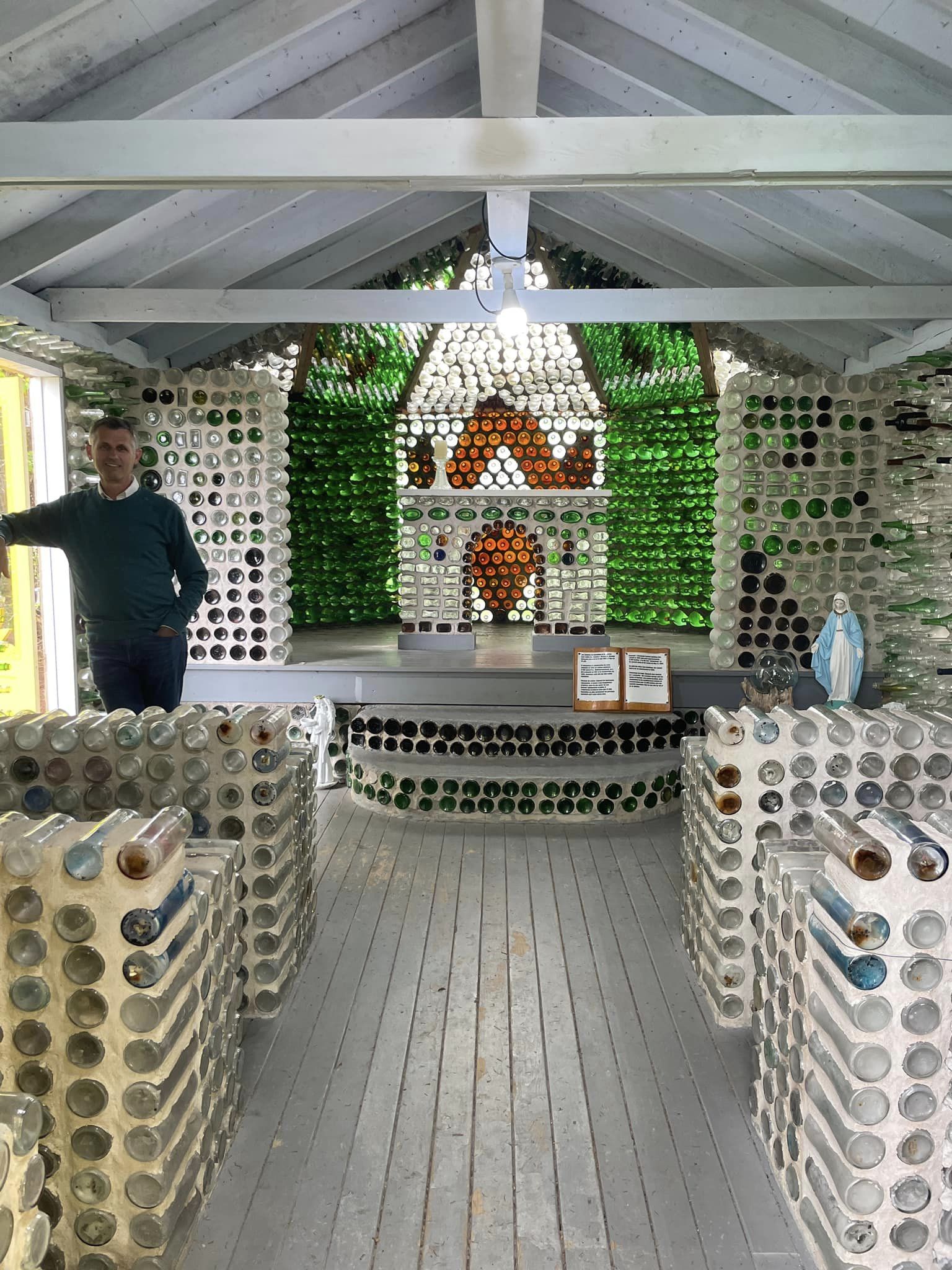
This is the chapel, his third and final structure, complete with an altar and pews. Ten thousand bottles went into this one, mostly discarded votive holders from the local Catholic parishes. Very fitting.
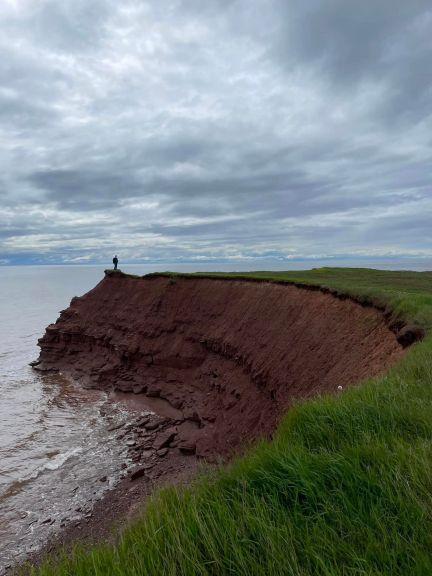
Overlooking the shore at Cape Egmont, where Édouard Arsenault was the last lighthouse keeper before its automation in 1958. That ended 74 years of various lighthouse keepers tending to the safety of sailors.
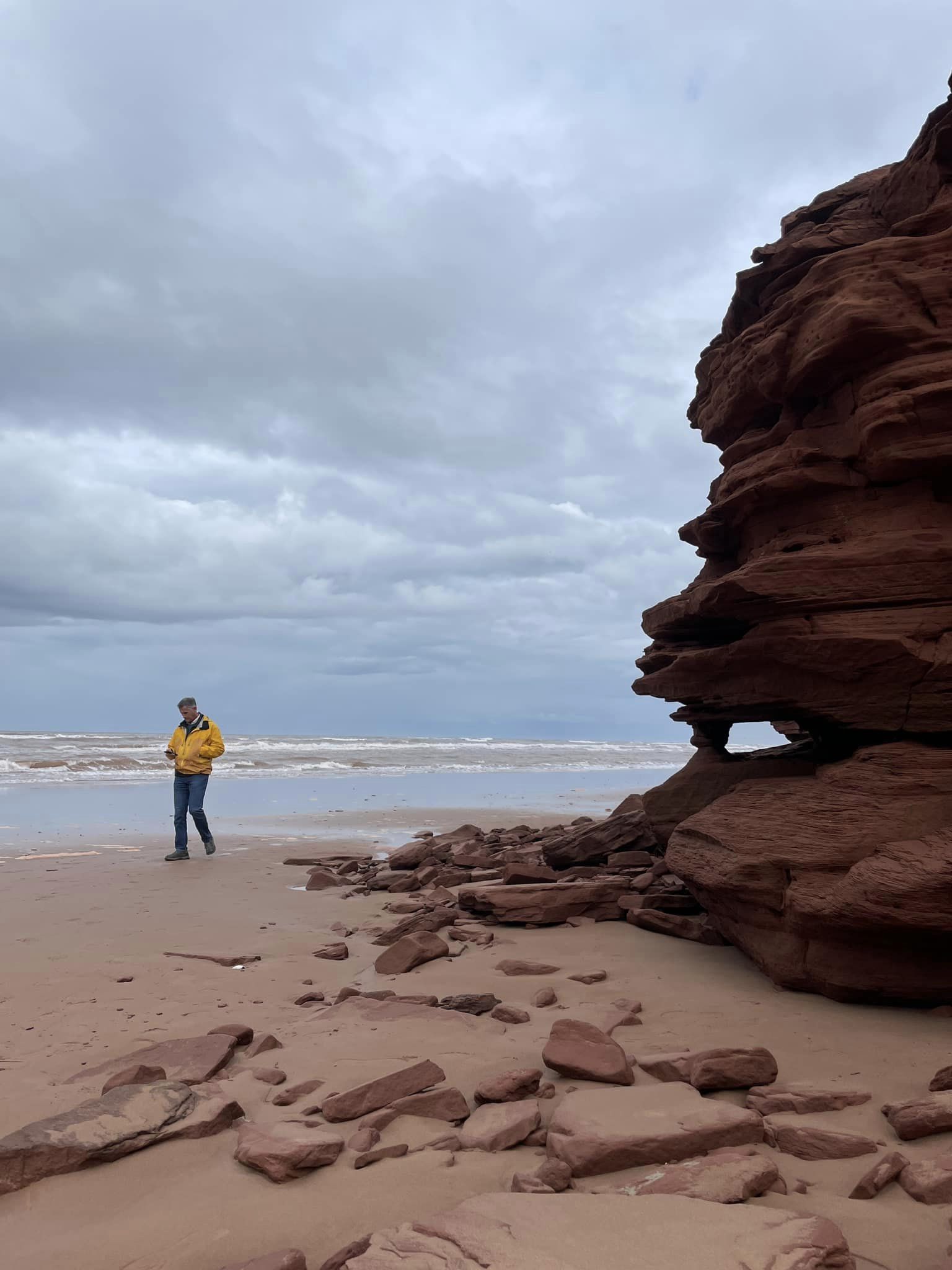
Thunder Cove beach is a beautiful beach with an intricately carved red sandstone backdrop. The crashing waves on the northeastern shore have etched the layers of sandstone into precarious structures. One of the most famous on PEI, the teacup, was destroyed last year by Hurricane Fiona, leaving behind its “saucer” base.
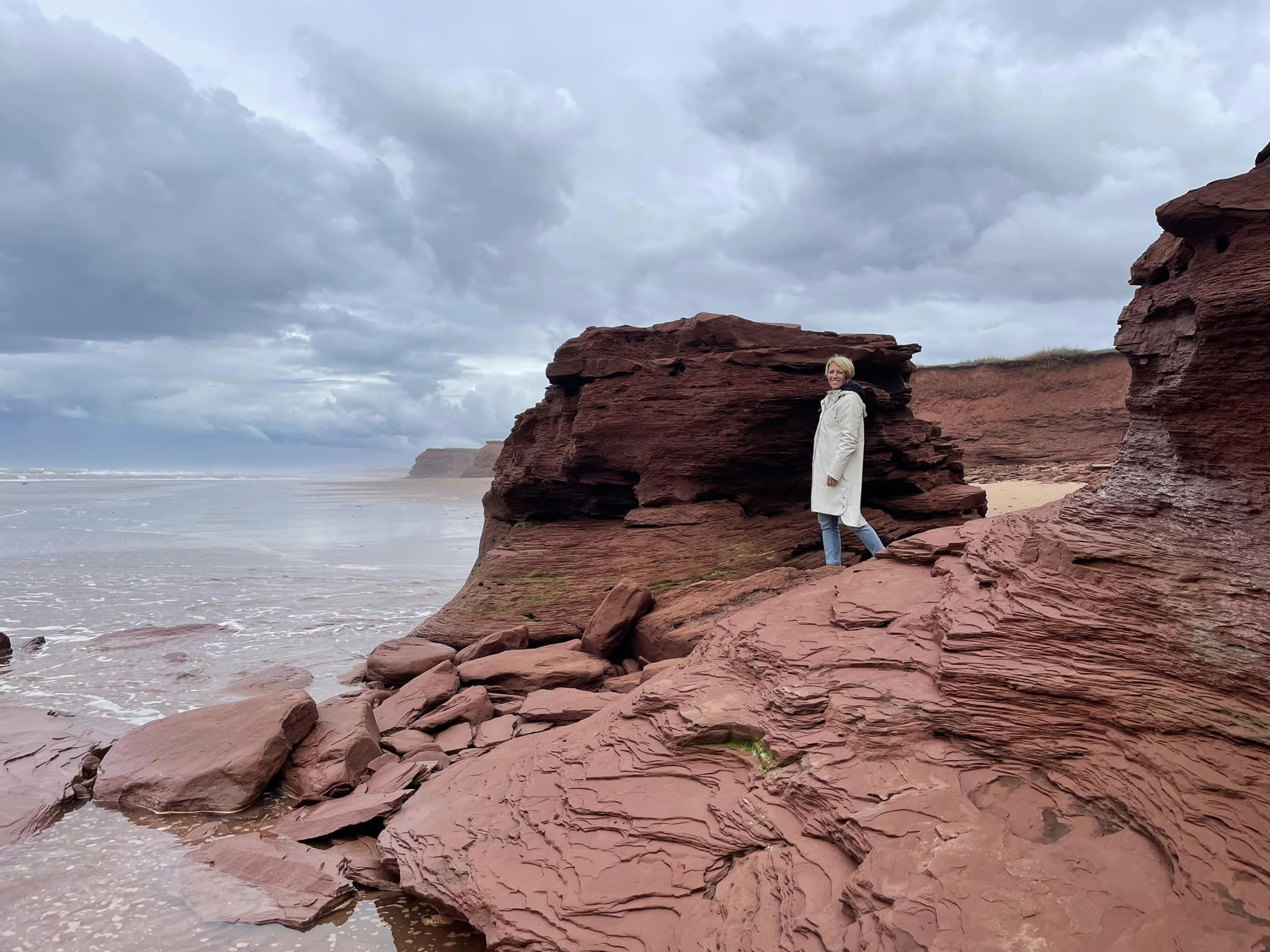
Layers upon layers upon layers.
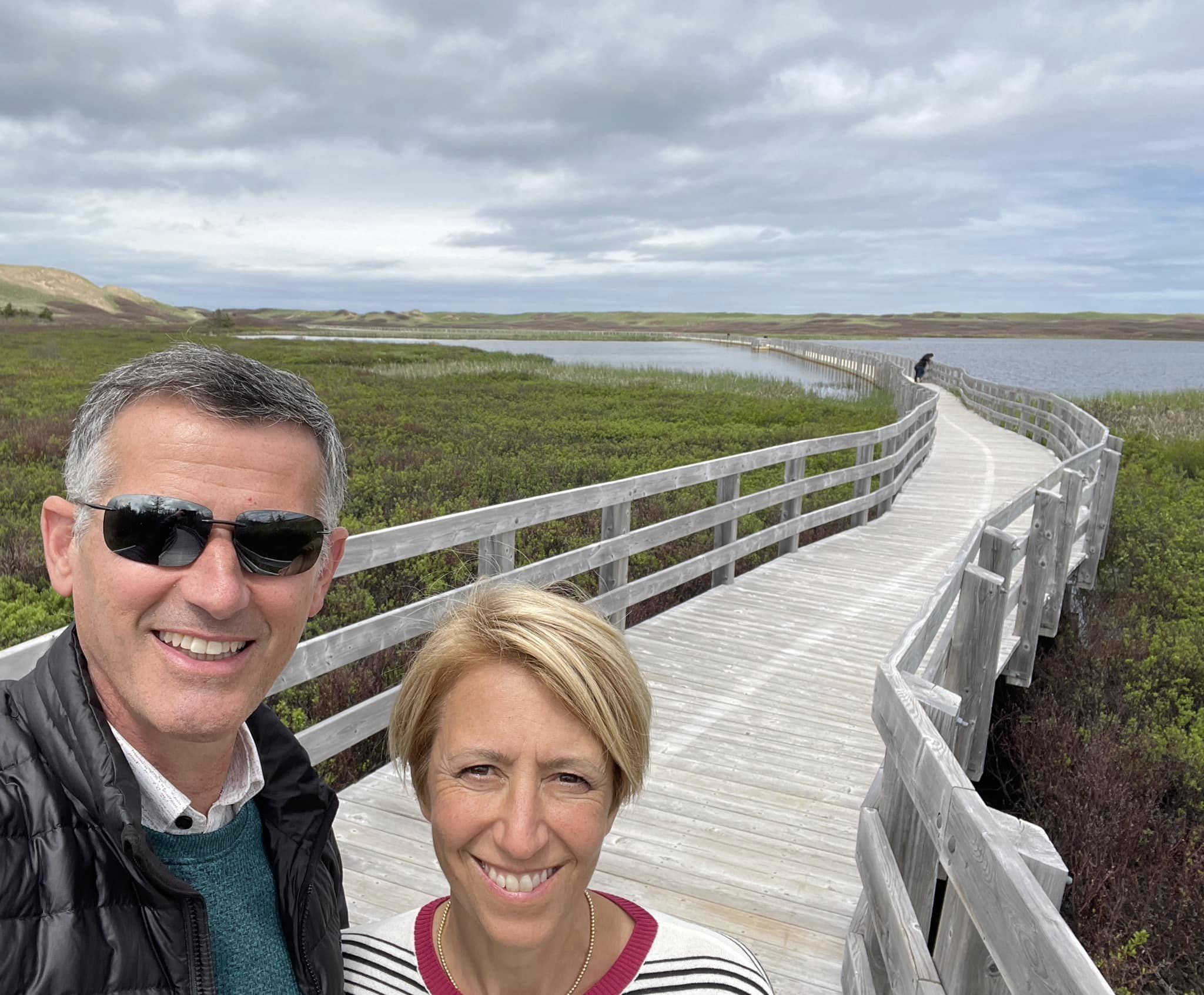
The .75km floating boardwalk to Greenwich Beach and dunes. Who knew I’d need sunglasses. Apparently someone else was prepared!
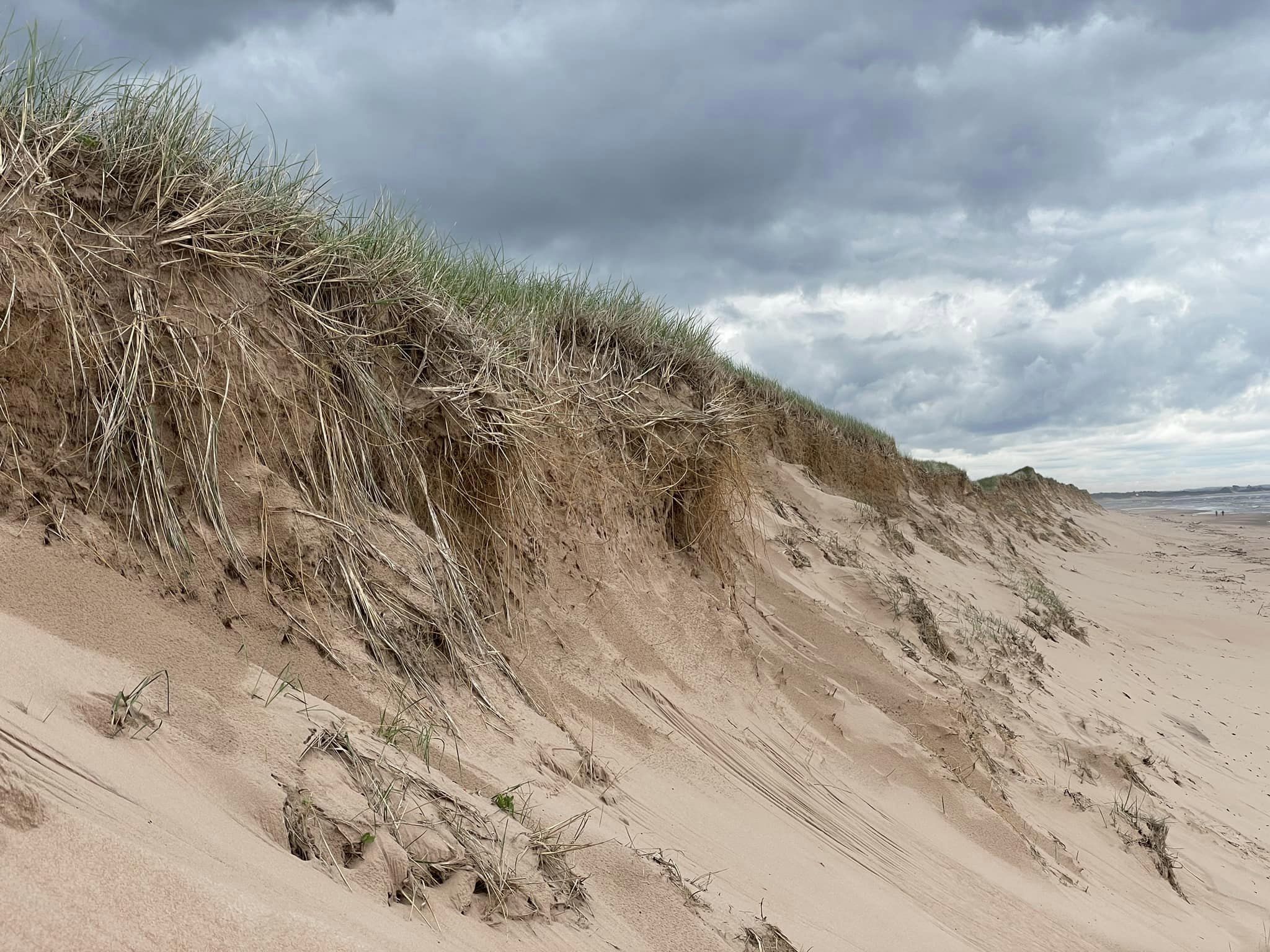
Part of the parabolic dune system at Greenwich Beach. Marram grass is critical to stabilizing the dunes with its matted root system (just like the weeds in our garden at home where I’m sure no soil stabilization is required) that enables other plants to take root. The dunes are not what they were prior to last year’s hurricane Fiona. Many sections of the dunes around the island, particularly on the more exposed north coast, were either completely levelled or are a shadow of their former selves. We overheard some people who had been there before lamenting about how different it all looked and how sad.
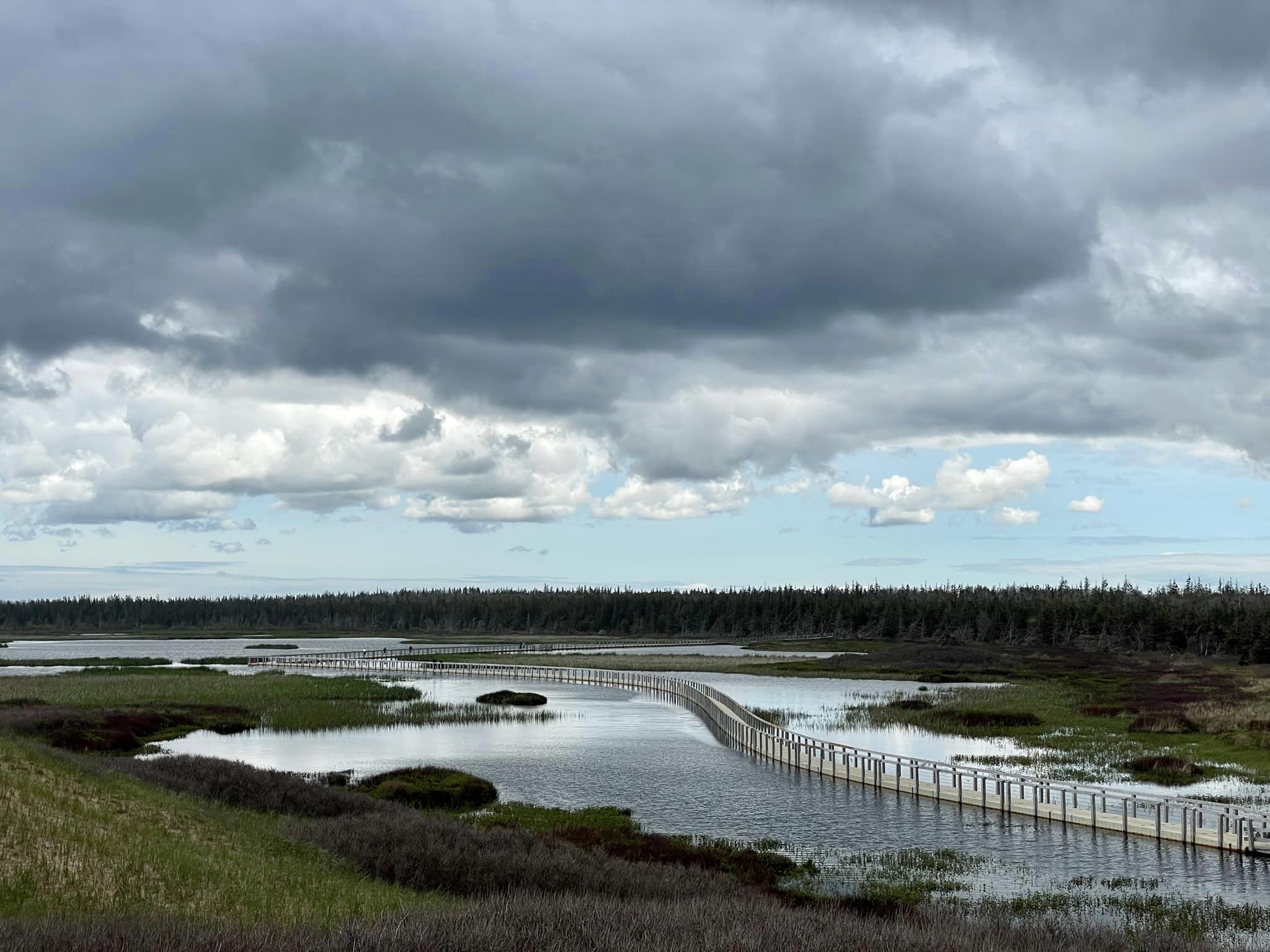
The curving floating boardwalk at Greenwich.
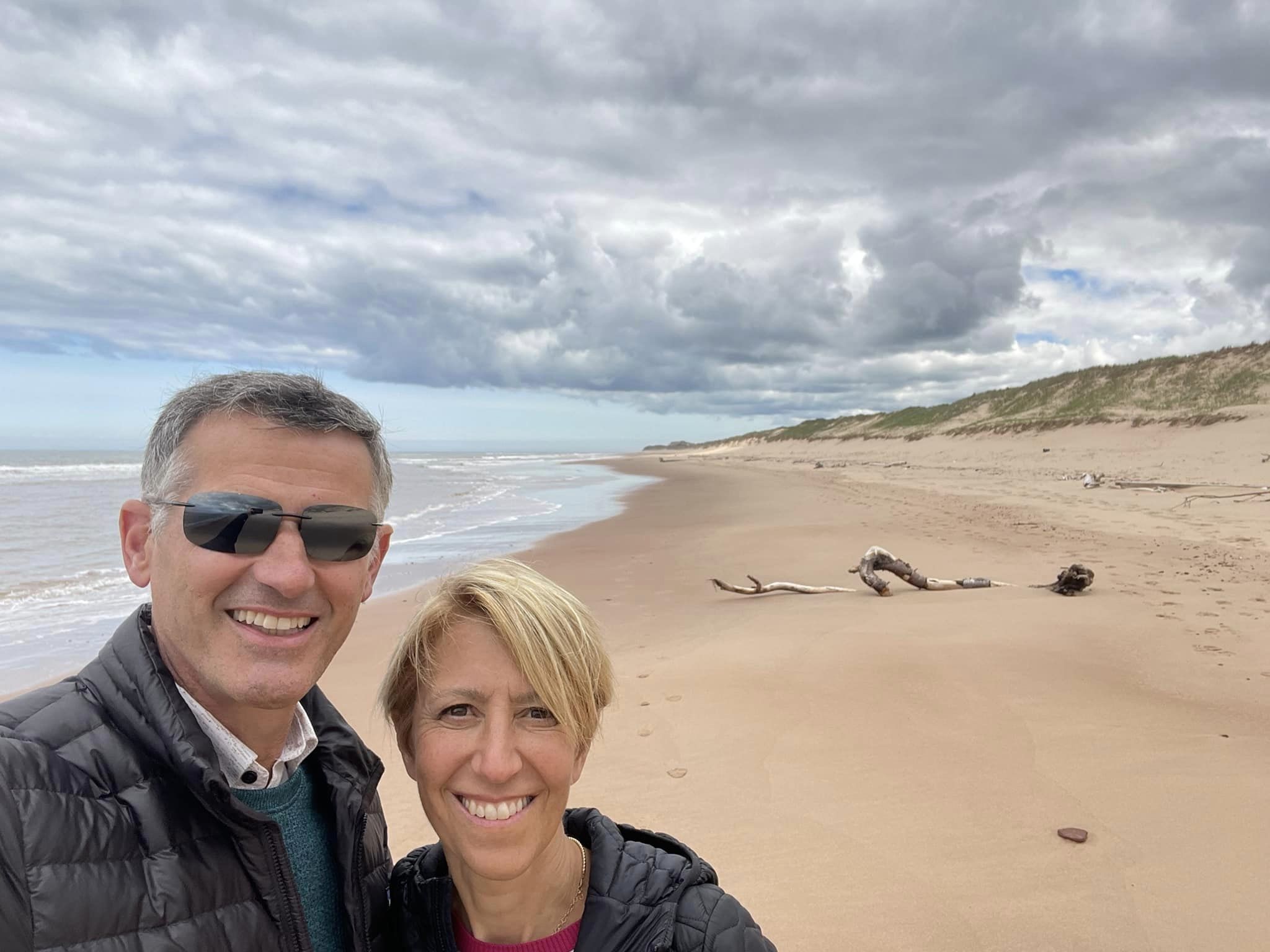
One of the benefits that perhaps outweighs the cooler, rainy weather is we find ourselves alone on the 6km long beach at Greenwich on the Gulf of St Lawrence. PEI is known for its red beaches, so what’s with the white sand? The north shore sand is not as red as the south shore. It’s not different sand, it’s just that the north shore is a harsher environment and the sand gets carried back and forth from the beaches to offshore sandbars to the dunes. All this movement ultimately erodes the iron-rich red coating leaving softer and whiter sand.
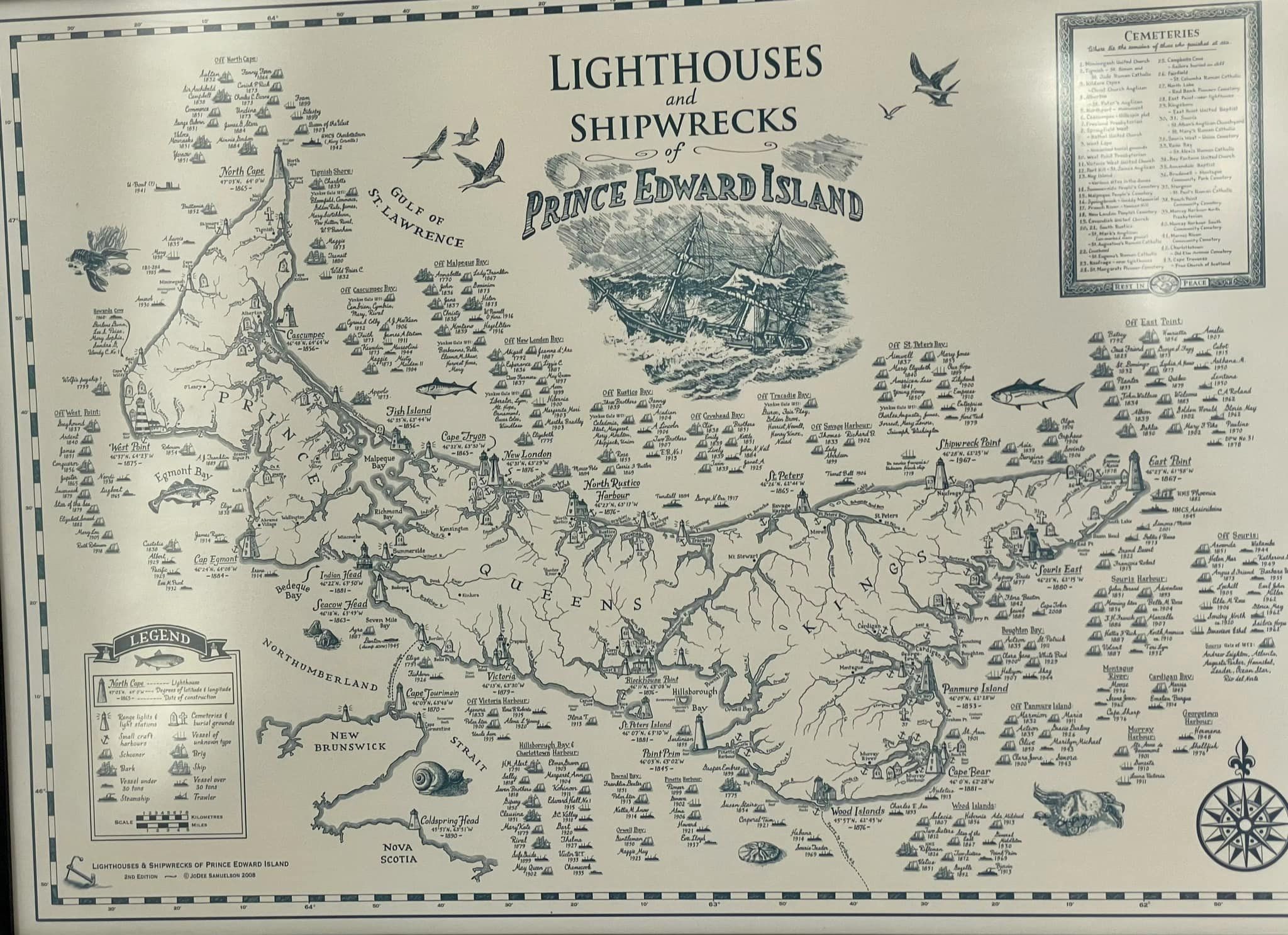
PEI has the highest concentration of lighthouses in North America with one every 55 kilometres totalling 63. It’s a pretty dodgy coastline as evidenced by this map showing shipwrecks around the coast! This map doesn’t actually show what is estimated to be 15-20 thousand local shipwrecks. Most of the lighthouses were built in response to wrecks but sadly, many ships ran aground after the lighthouses were built.
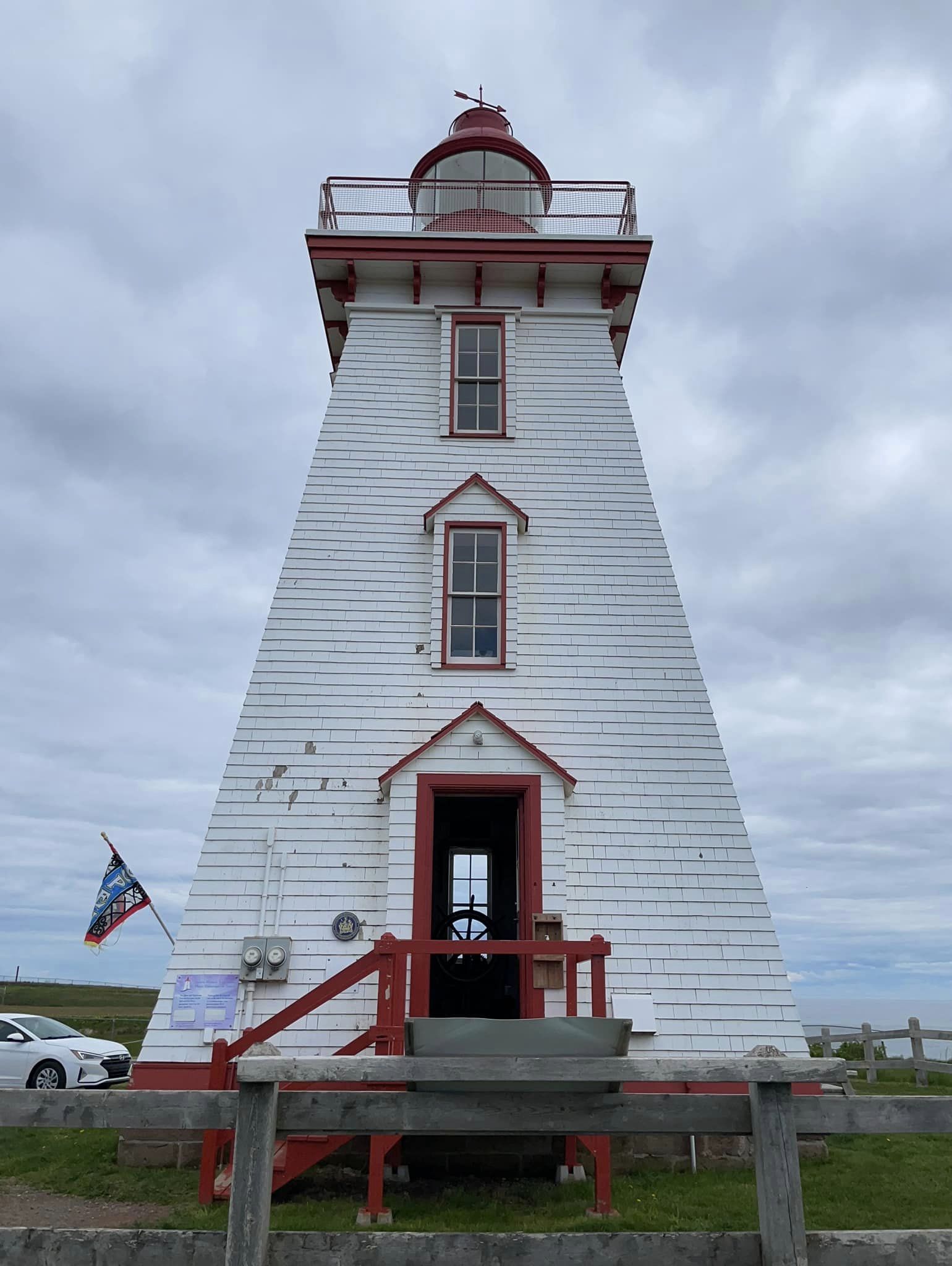
The 1880 lighthouse at Souris. The town was named as such in 1724 when the Acadians living there were infested with a plague of mice. They called it like it was. I think Evan would put in a proposal to rename Halifax “Cockroach”.
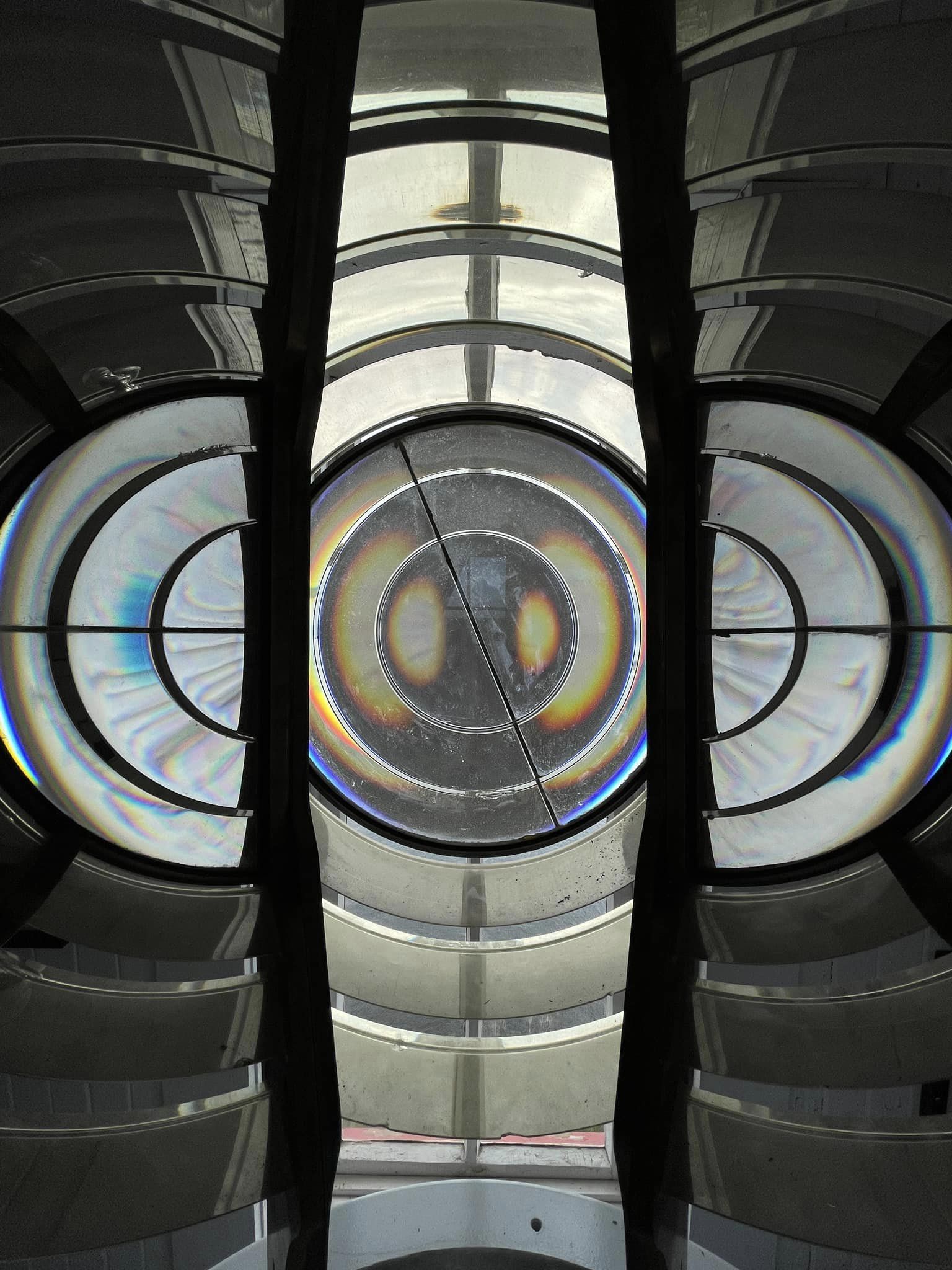
Looking through the lens of the Souris lighthouse.
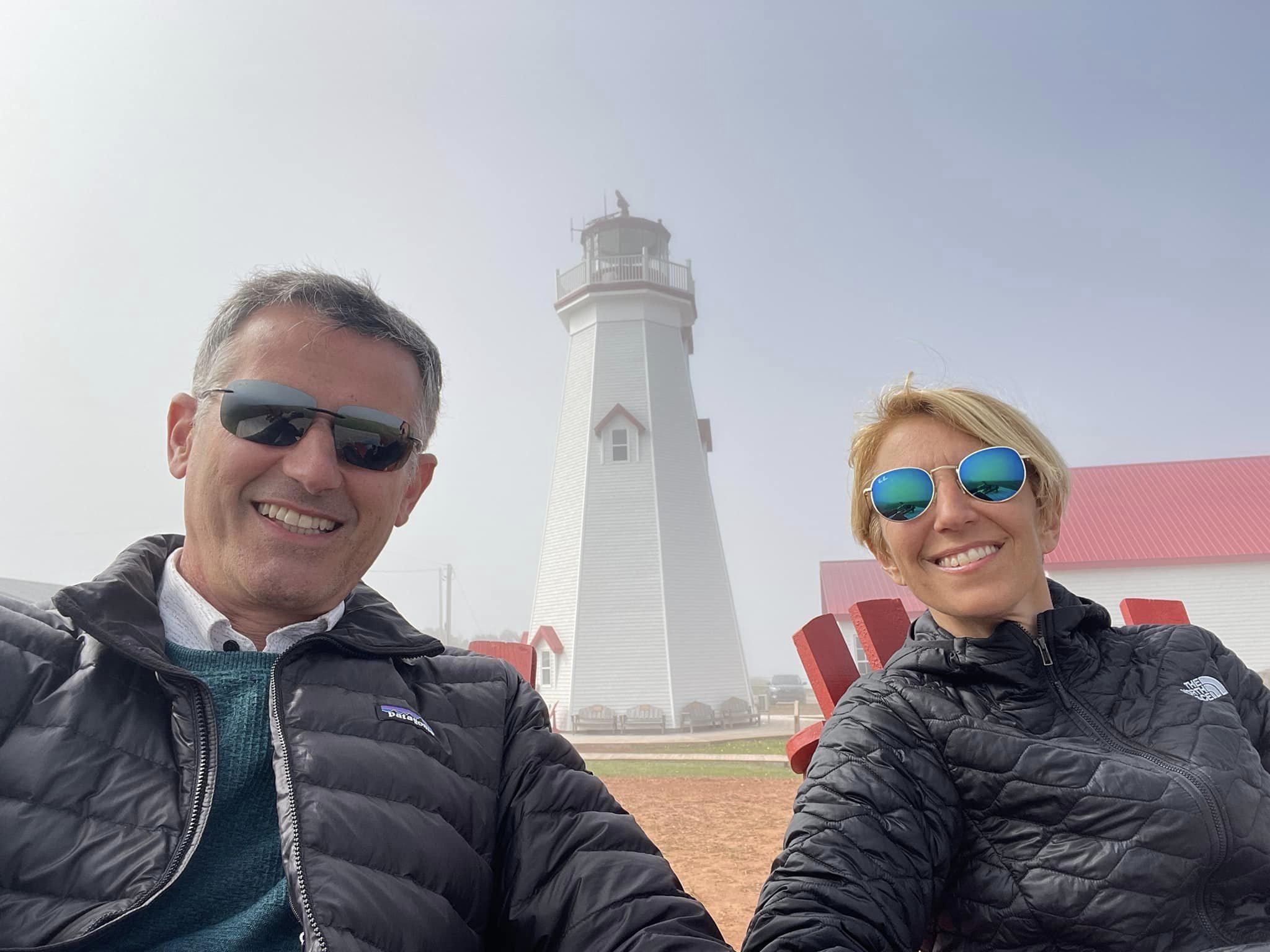
East Point Lighthouse is perched on the eastern tip of PEI. The Atlantic Ocean, the Northumberland Strait and the Gulf of St. Lawrence collide at this tip of PEI which made navigation quite dodgy so the marine powers decided that a lighthouse was needed. Known as the Confederation lighthouse (guess when it was built), it didn’t take long to realize its location was a touch off the Admiralty Charts. One of PEI’s most notorious shipwrecks happened here in 1882. The lighthouse was set back too far so the navigation tools of the British warship HMS Phoenix made some critical miscalculations, hit a reef and sunk. The lighthouse was moved and a foghorn was installed. We can attest to the need for a foghorn, noting the fog behind us. As a side note, as we were driving to the lighthouse and saw the conditions, we assumed there was a fire. The fog ultimately lifted and I climbed the 67 steps to the top.
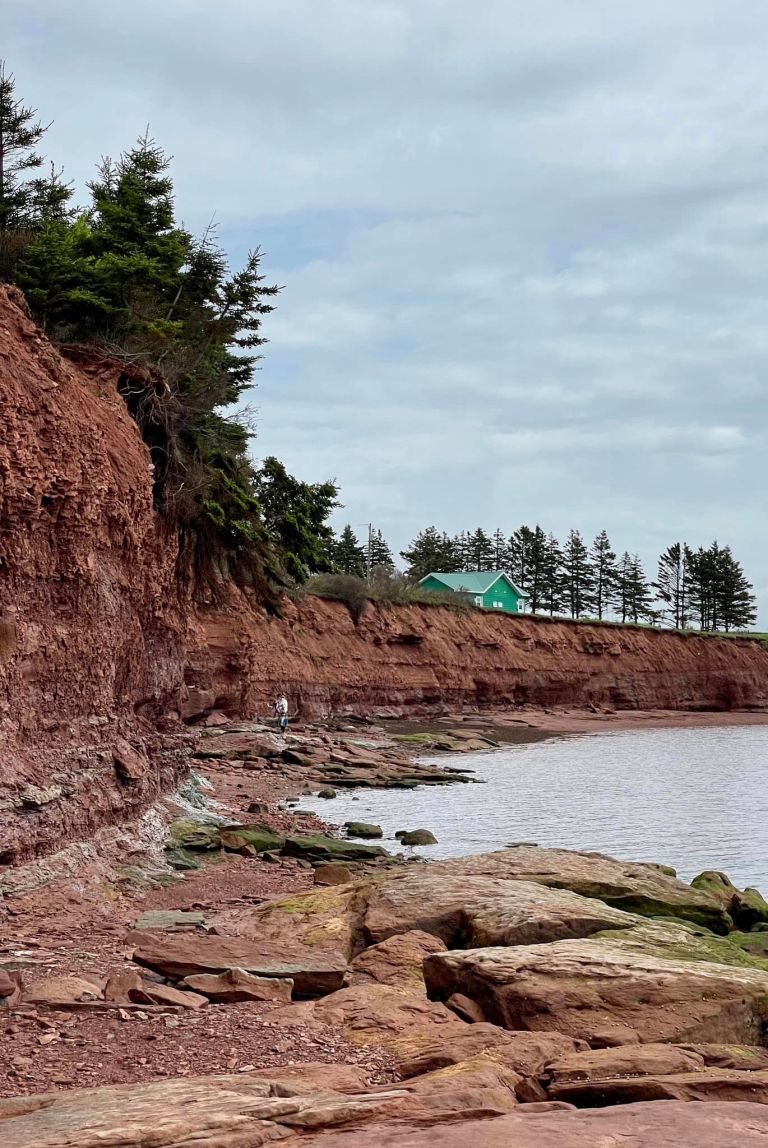
Overlooking the Northumberland Strait, Argyle Beach is a perfect example of the red south shore. Here the tide is in but as it goes out, the sand is pretty much as red as the sandstone cliffs. Despite the somewhat calmer weather on this side of the island, there’s still lots of erosion with trees teetering over the edge, hanging on by bits of root. As we walked along, we heard bits of rock dropping off the edge to the beach.
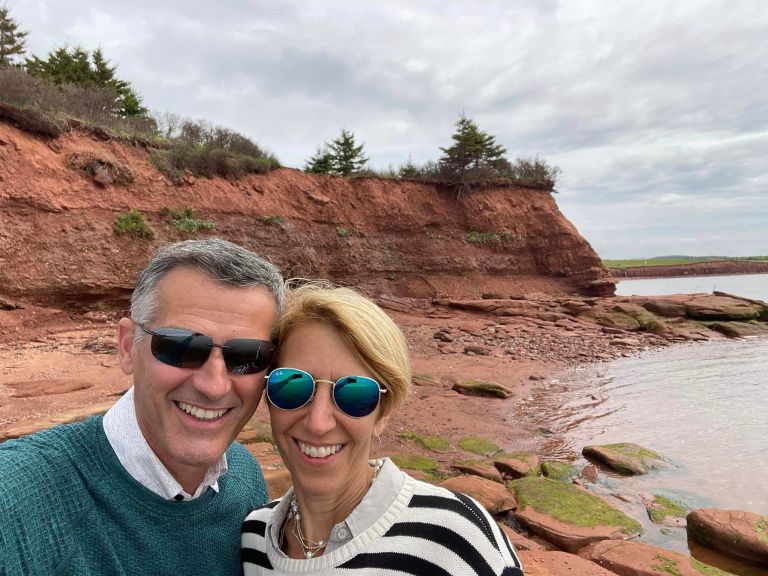
Last day on PEI and I remembered to bring sunglasses!
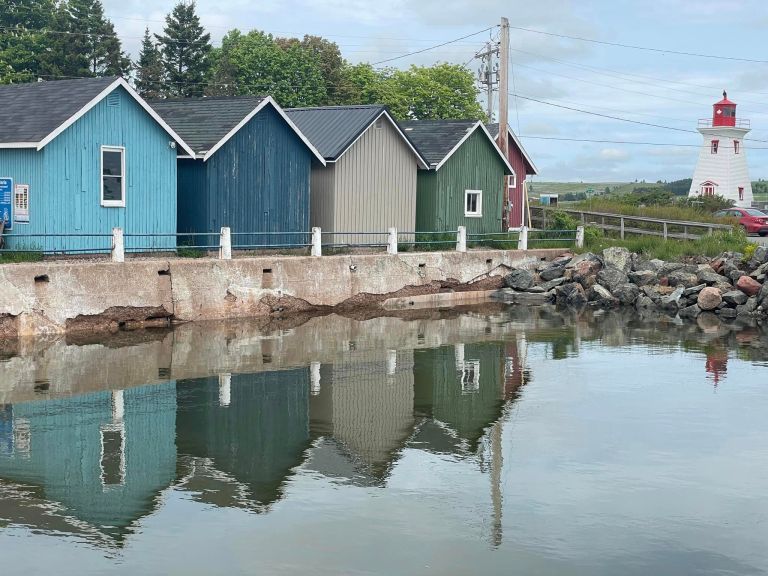
A stop for lunch in the lovely town of Victoria-by-the-sea. Here is where we had our third lobster roll, winner of our private contest. Kudos to the Lobster Barn for an amazing lunch of perfectly cooked lobster, stacked inside a buttered bun with just enough garlic and mayo. There’s a second location of Richard’s (our first lobster roll) across the street which was closed for a bit of renovations before the tourist season hits. I wonder which will have the longer line ups… By the way, the fries on PEI are also the best anywhere! That’s what you get, I guess, with local potatoes.
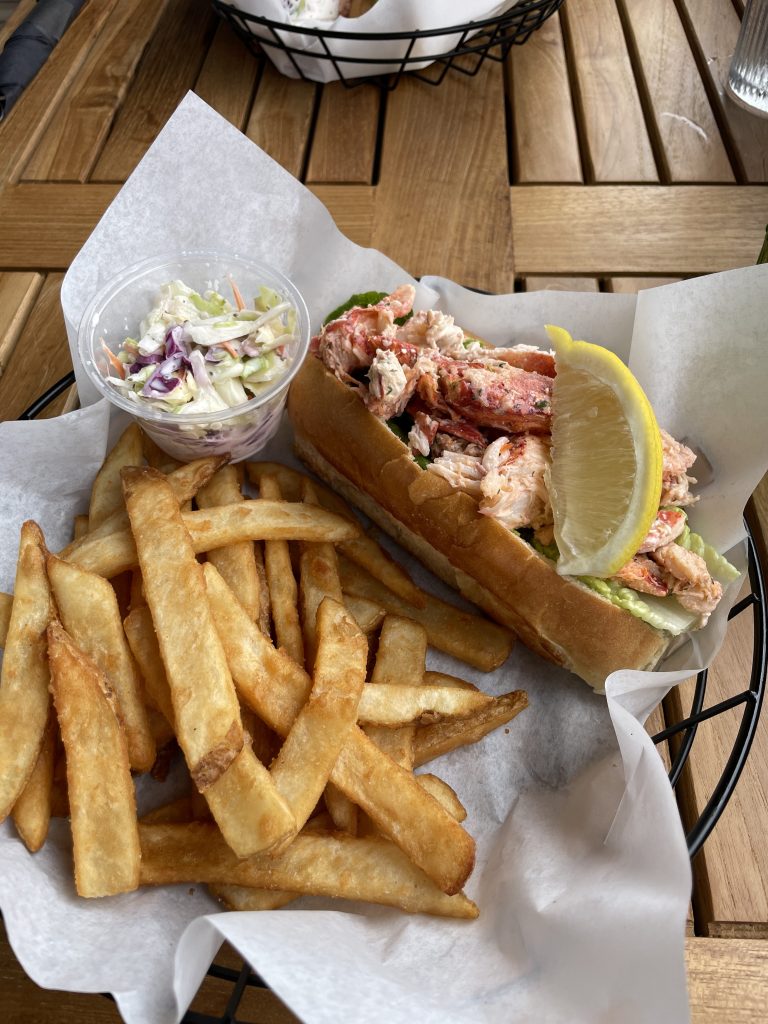
THE best lobster roll.
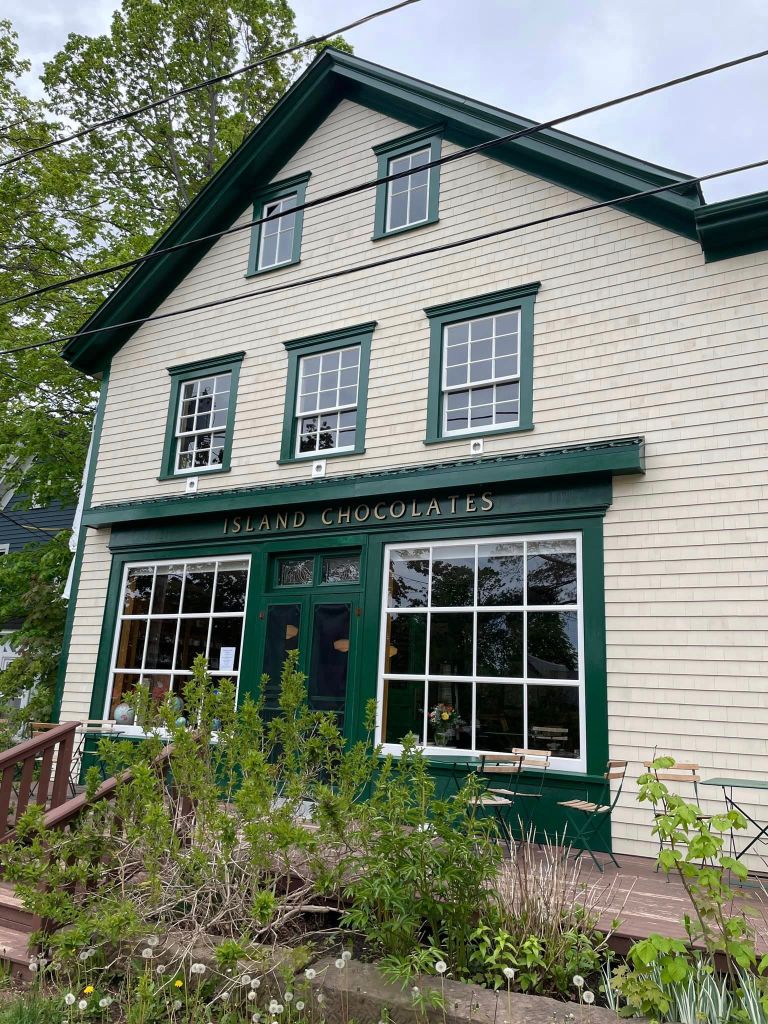
After lunch, we wandered around Victoria-by-the-Sea’s various artisan shops. We met the owner, Eric, who took over the chocolate business his parents started in 1987. His American parents' back story, long before they landed in PEI, starts with their giving up law and accounting practices and moving to become farmers in the BC Interior. As a seasonal business, Eric’s dad, Ron, supplemented the farm income writing magazine articles. When writing a series about BC chocolatiers, he met Charlie Sigvardsen, owner of Charlie’s Chocolate Factory in Vancouver. The two hit it off and Charlie told Ron he’d teach him to make chocolate if he was ever interested. Years later, after a holiday in PEI, Ron and his wife fell in love with the place and moved the family to Victoria-by-the-Sea. They remembered Charlie’s offer and went back to Vancouver for training. Thirty-six years later, we walk in the door and get this bit of history and Eric’s story. Every year in the off-season, Eric travels to Ecuador and works with cocoa farmers, harvesting, roasting and winnowing the beans until he can make cocoa nibs to ship back to PEI for his chocolate-making. Now that’s real bean to bar! Oh, and the chocolate is fantastic!
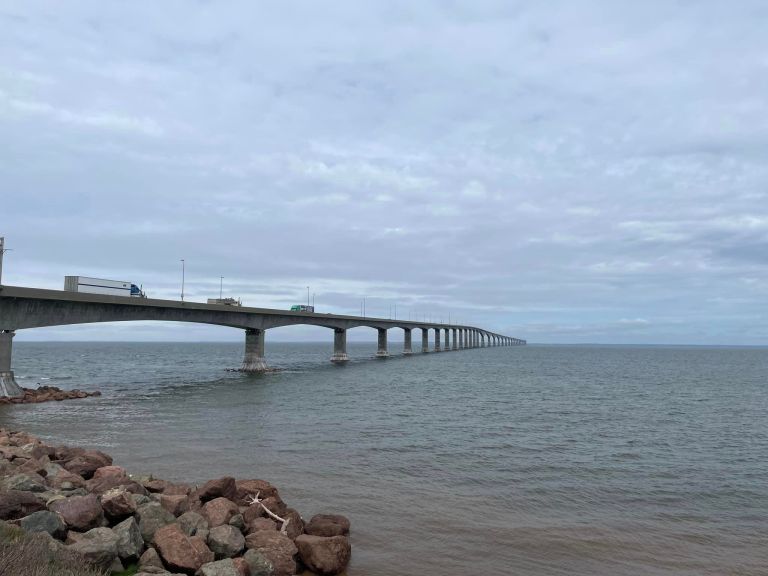
The Confederation Bridge joins PEI to the mainland through New Brunswick. Opened in 1997, this 12.9 km bridge remains the world’s longest bridge across iced-over waters and is considered to be one of Canada’s top engineering feats of the 20th century. I felt pretty proud to cross it!