March, 2023
Astounding Angkor
I truly am at a loss for an adjective to describe the Angkor Archaeological Park. It is mind-blowing and awe-inspiring. What’s really astonishing is how we tourists can still stroll through this ancient and crumbling place…I suspect like other historical sites, it won’t be long before it is placed behind barriers to be admired from afar.
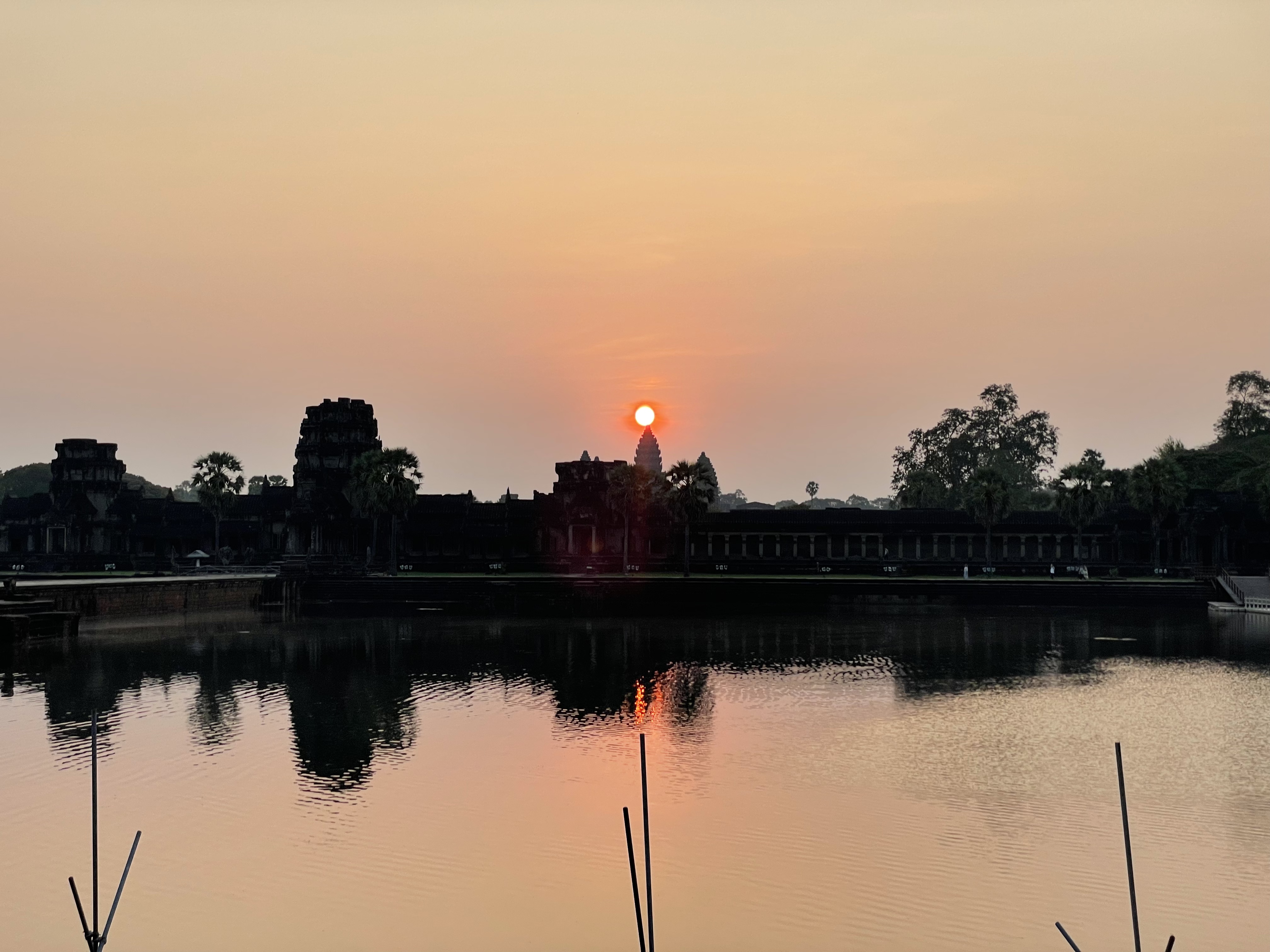
Angkor Wat has been on Adam's travel bucket list for decades! We left the hotel on bikes at 4:30 am for a 6:15 sunrise. I thought it might be dodgy riding in the dark but there was so much activity roadside! Stands and markets selling fruit and veg and who knows what else were bustling. Now I know why there’s so much public napping!
By the time we got there, the sky was a pale, dusty pink and I figured we missed it, even though it was 5:30. Then this happened, right on time!
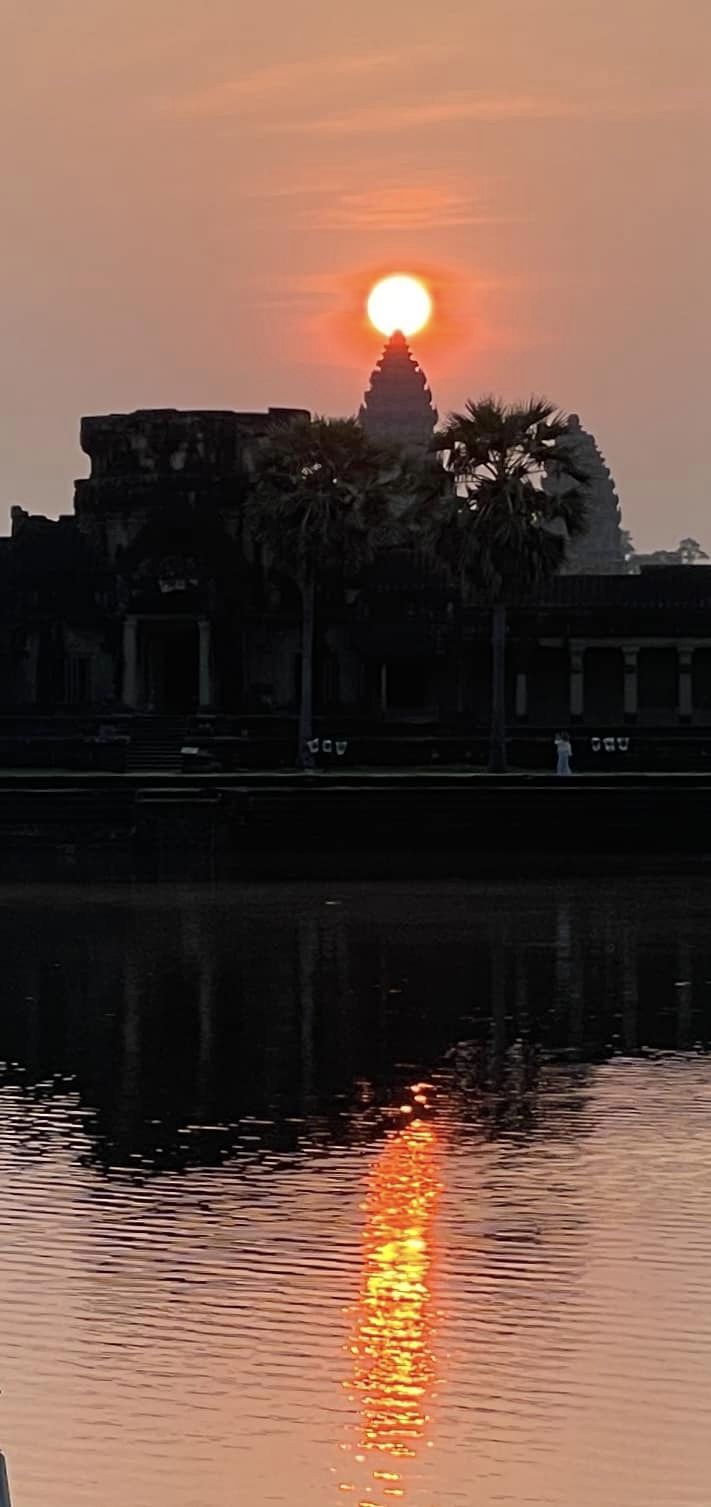
So worth the early wake up.
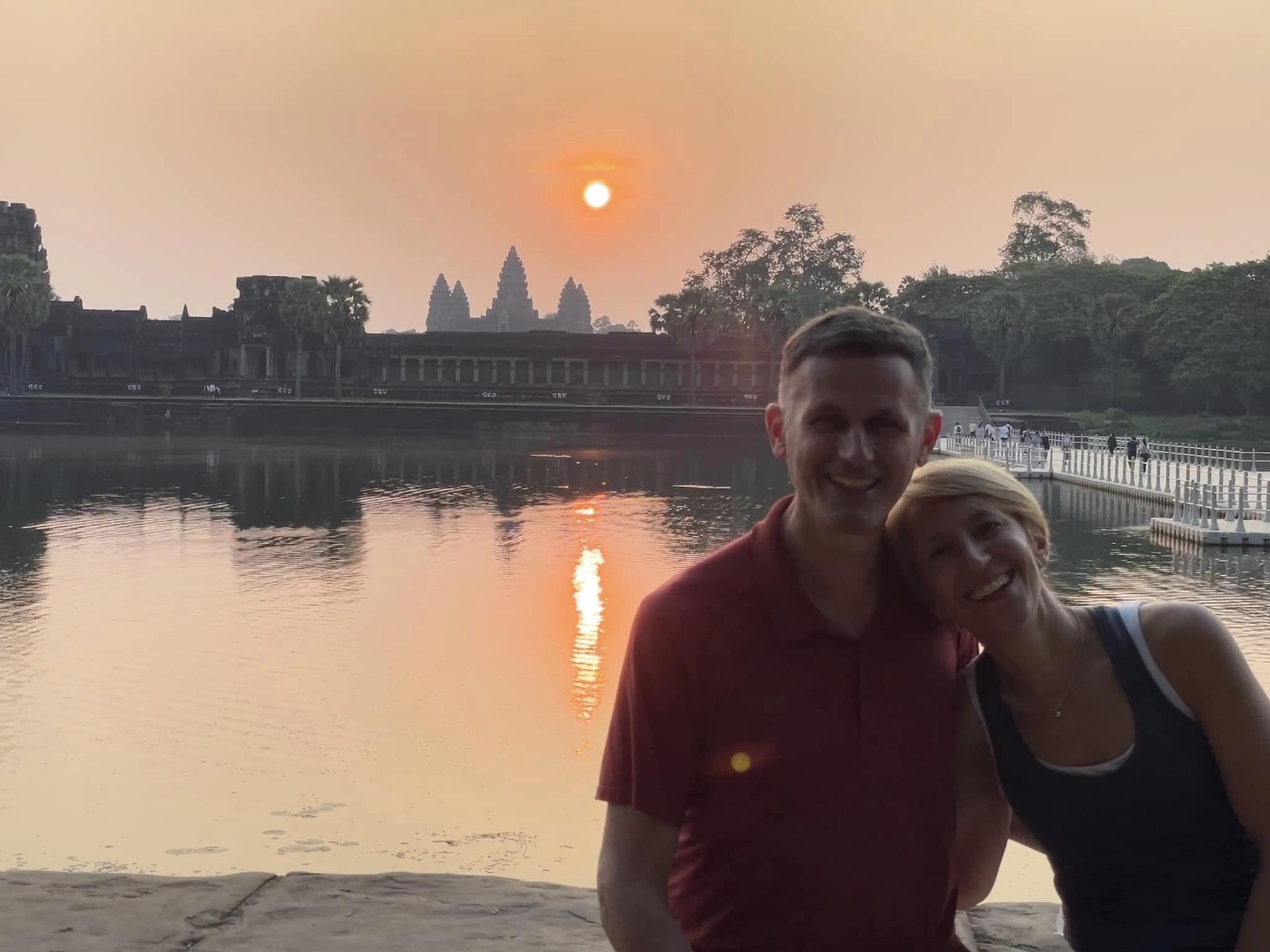
What a magical moment.
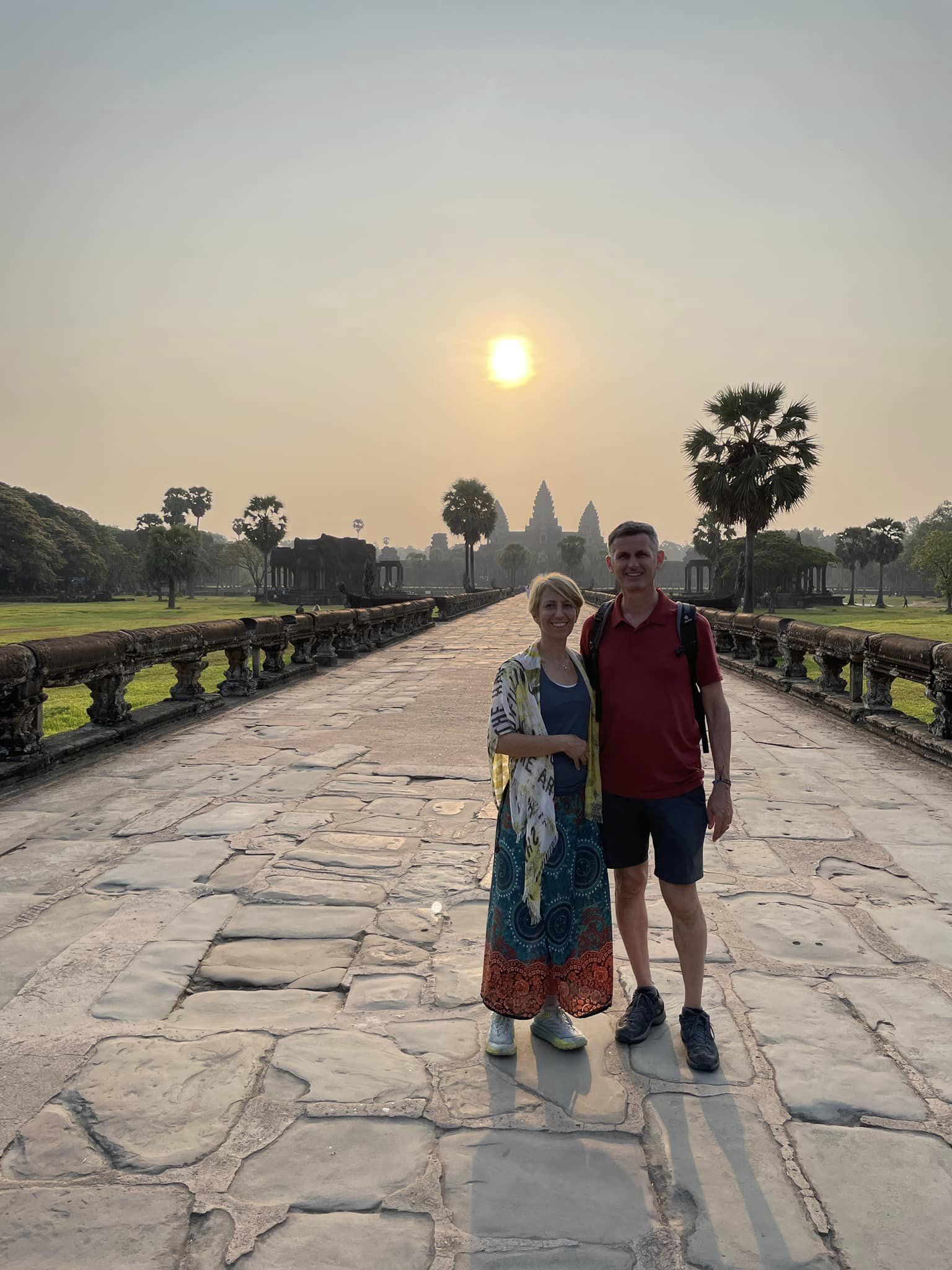
Many people, us included, think of Angkor Wat as one big temple. Actually, Angkor Wat is one temple among 72 major temples and several hundred minor ones here. At 400 acres (four times the size of Vatican City), Angkor Archaeological Park is the largest religious monument in the world. Built between the ninth and 13th centuries, the city of Angkor was the seat of the Khmer empire until it was abandoned in the fifteenth century. Angkor Wat itself, a maze of five central Hindu shrines and 1,000 enclosed structures, took 30 years to build; we are partway down the 200m bridge that leads to the site. Although it was originally built as a Hindu temple during the 12th century by King Suryavarman II, it gradually transformed into a Buddhist temple by the 13th century when the next king, Jayavarman VII, felt that the Hindu gods had failed him. He built Angkor Thom and the Bayon as a Buddhist temple and then converted Angkor Wat.
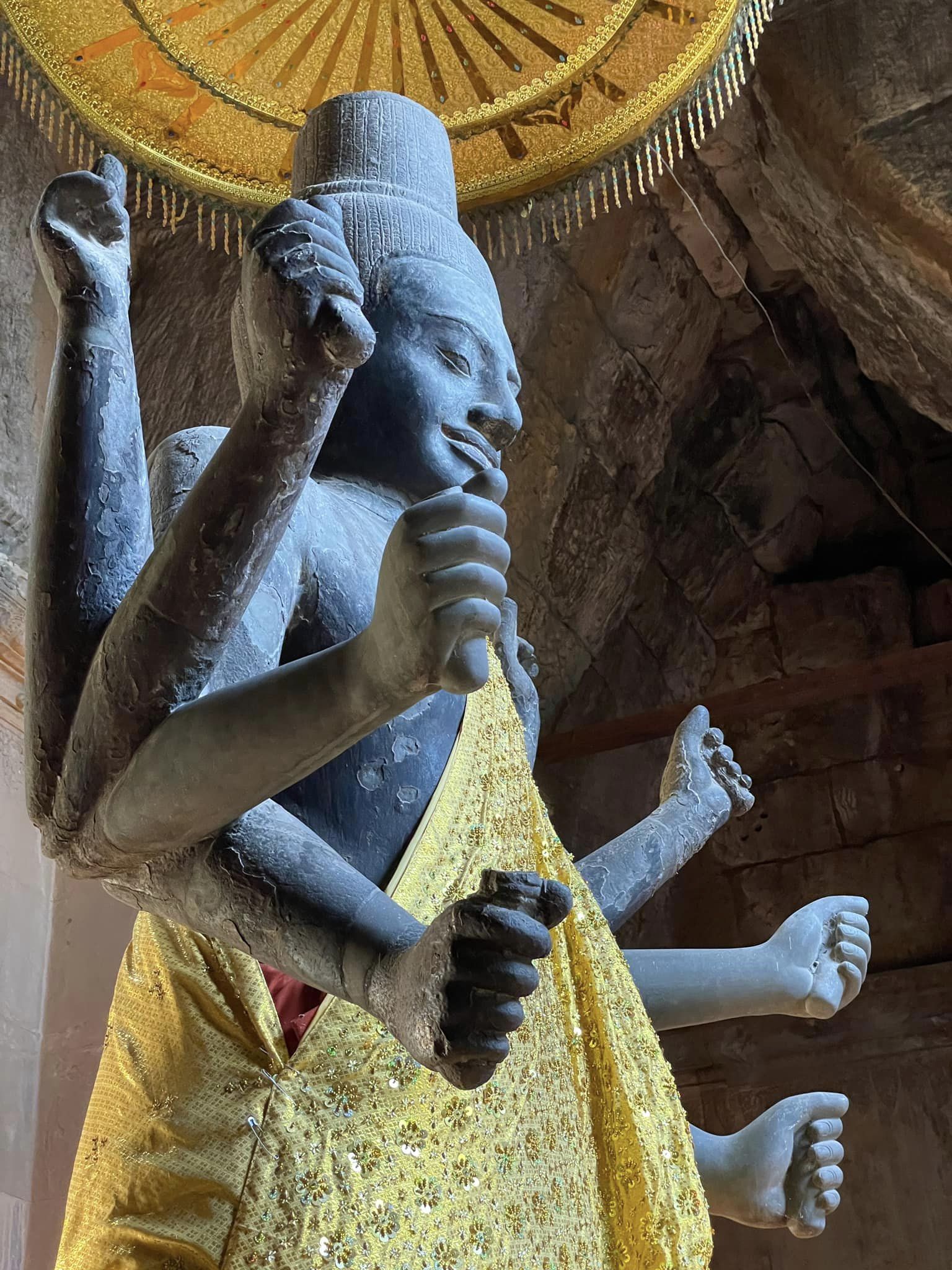
Ta Reach, at the western gate, is an eight-armed, three metre tall statue of Vishnu to whom locals pray for happiness. I’d be happy too if I had eight arms; life would be so much easier but I’d need to move to a sleeveless wardrobe.
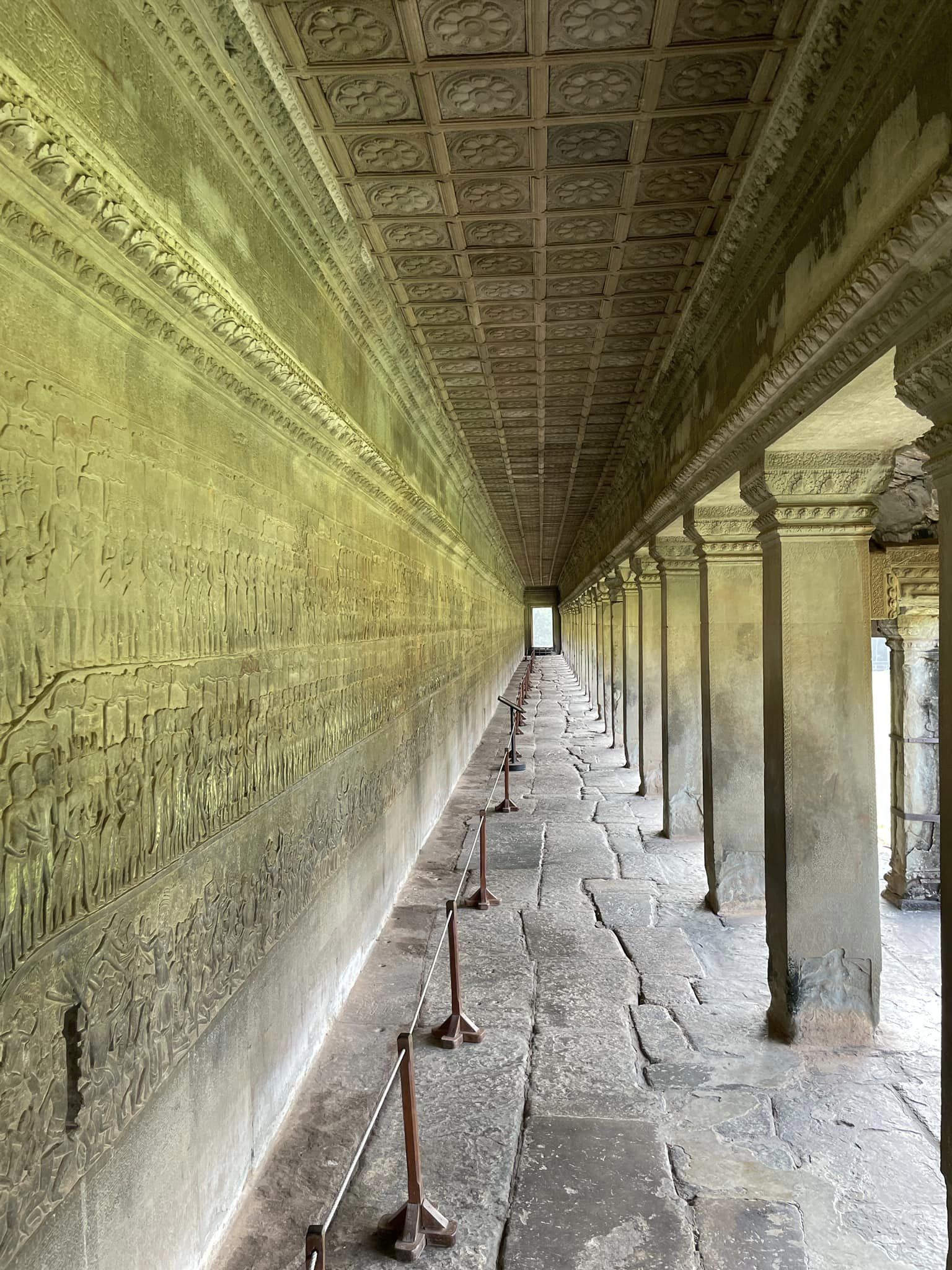
The temple walls are covered in 1,200 square metres of bas relief sculptures depicting Hindu gods, ancient Khmer scenes and mythical stories. The Ramayana story we saw at the Royal Palace in Phnom Penh is repeated here…but based on chronology, this one came first so technically, it’s repeated in the Palace. We later visited an artisan workshop where the artists were hand-carving similar panels out of sandstone. A two-foot by four-foot panel takes three months to create…no wonder it took 30 years, 300,000 workers and six thousand elephants not only to build but to quarry the necessary five million tons of sandstone from the holy mountain of Phnom Kulen around 50 kilometres away!
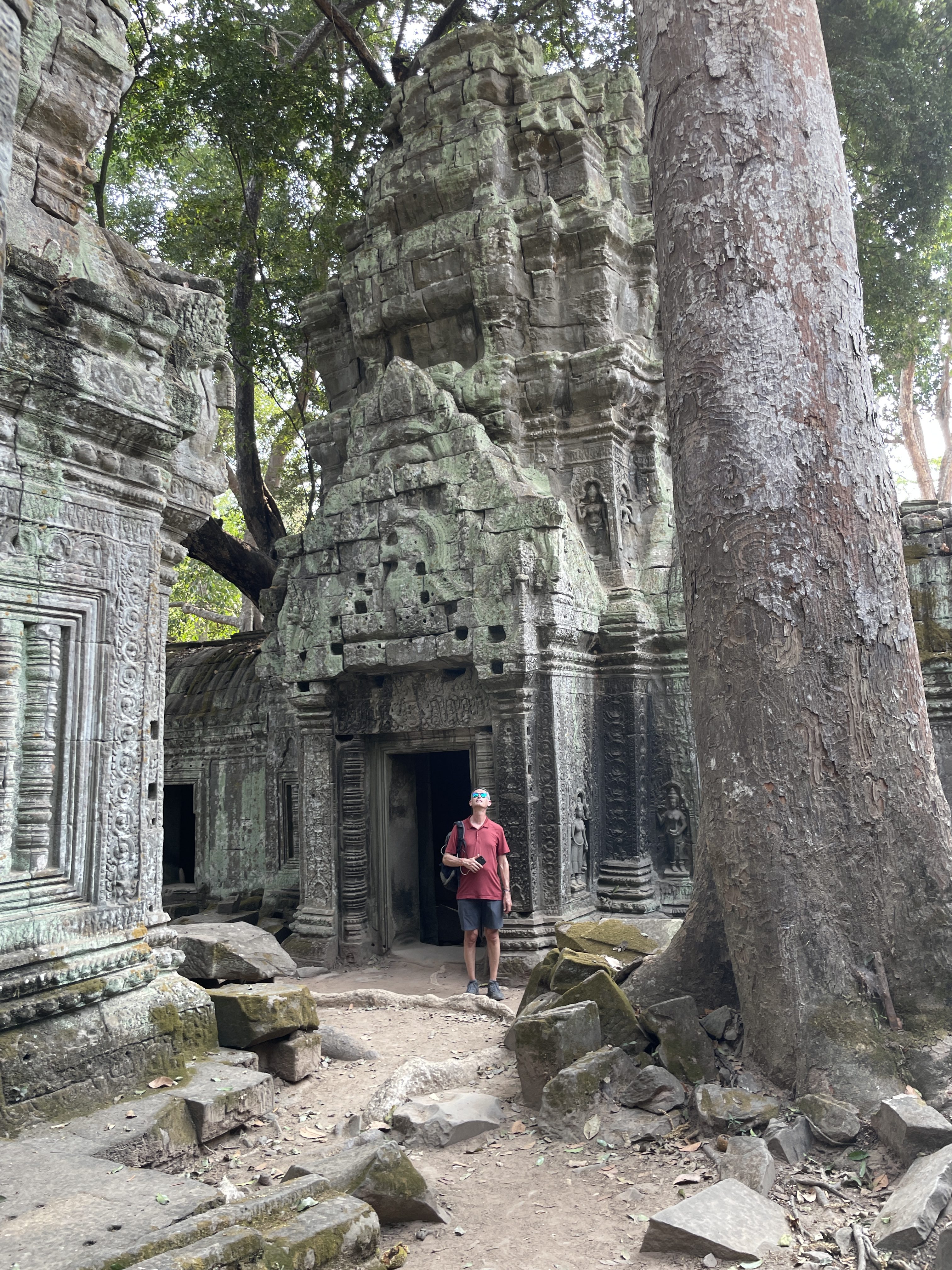
The scale is incredible.
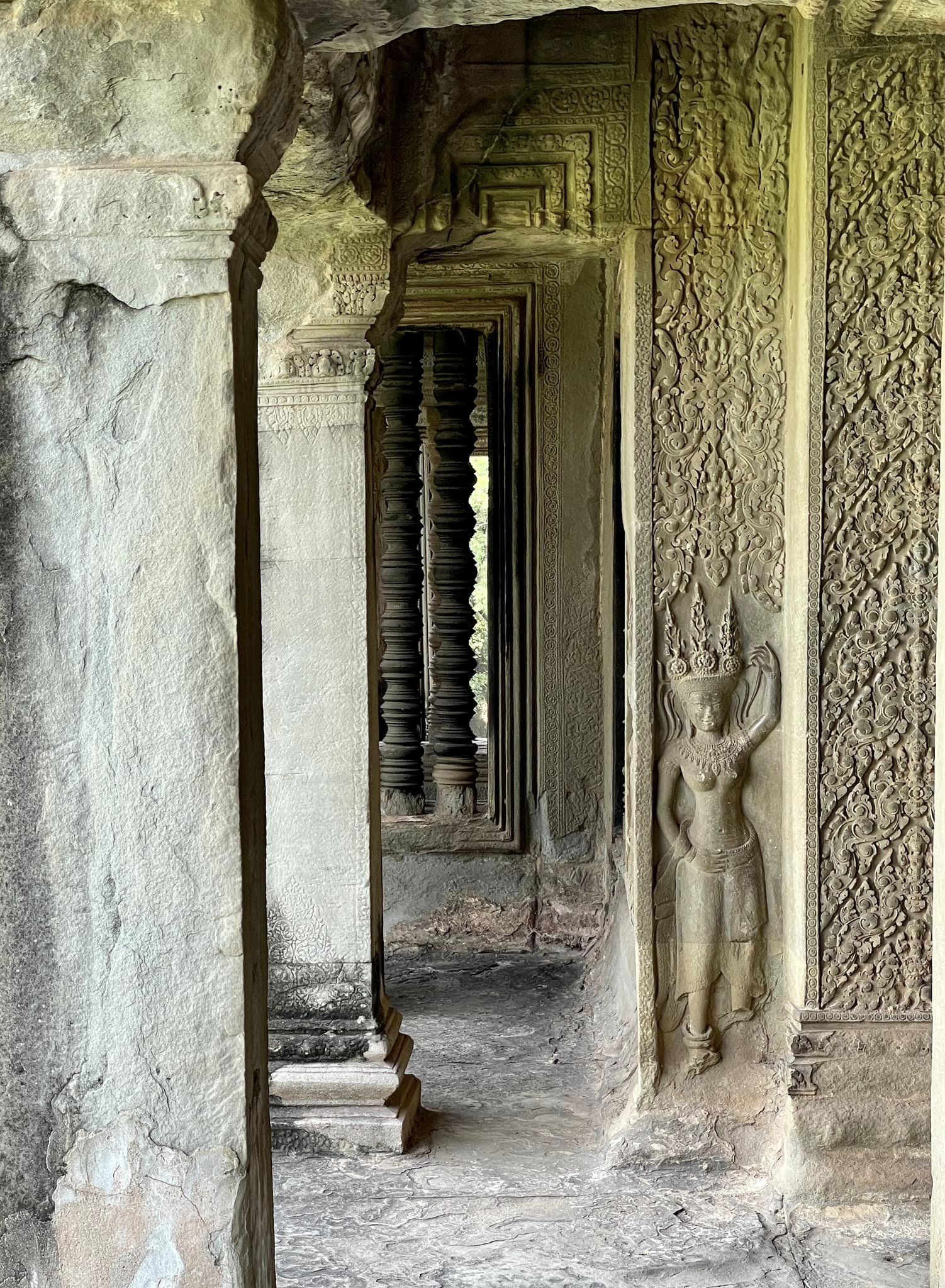
Carvings remain virtually everywhere in Angkor Wat: walls, ceilings, columns and lintels. While some are quite worn, and much has been restored, others are remarkably well-preserved. Sadly, gold, silver and jewels as well as most statues have long since been looted or destroyed.
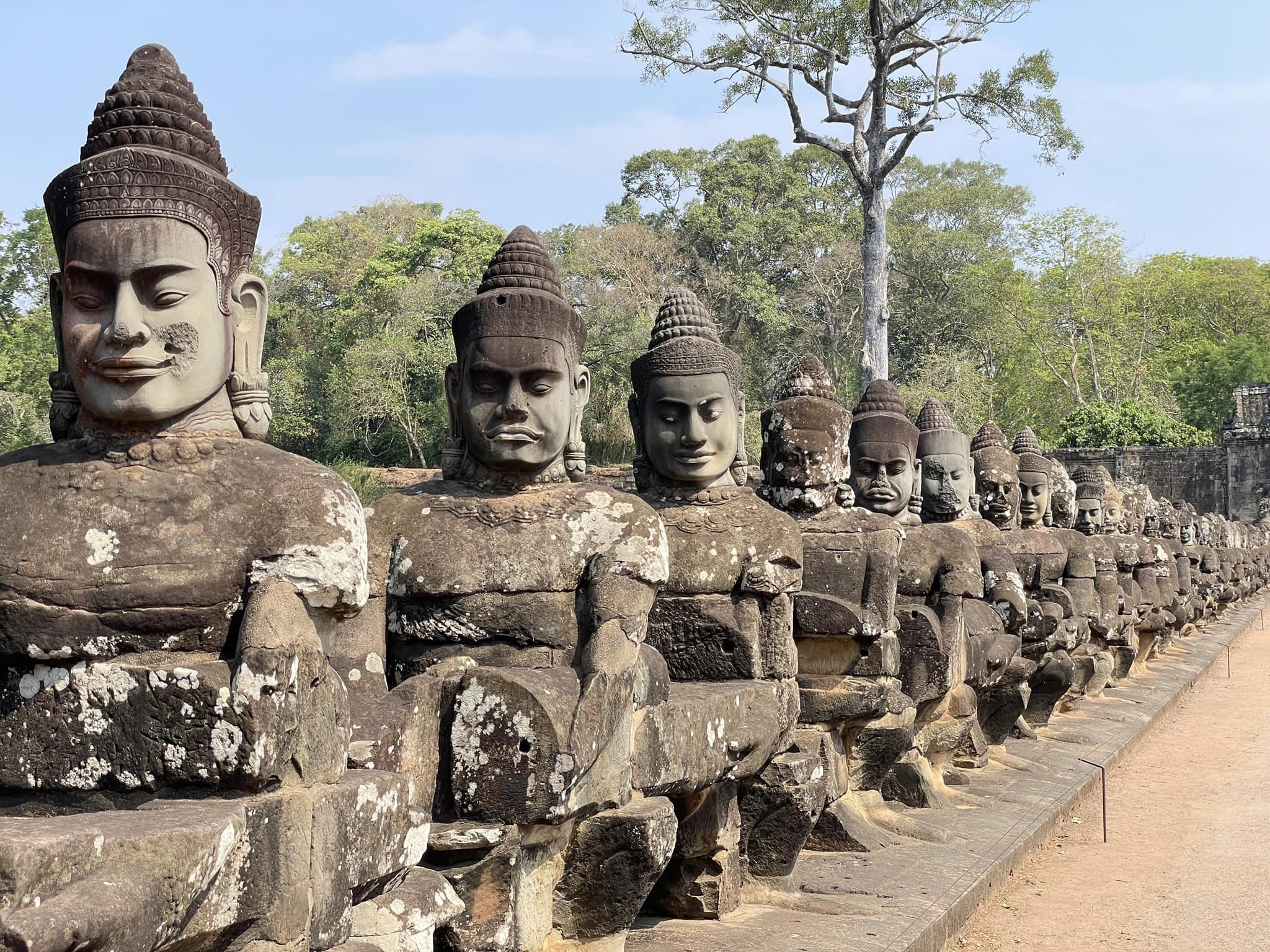
The bridge over the 100m moat leading to the South Gate of Angkor Thom. Fifty-four statues of serene Devas (benevolent gods) flank one side of the bridge, pulling on the mythical naga serpent. The other side has 54 Asuras (demons) pulling on the naga, representing the endless tug of war between good and evil.
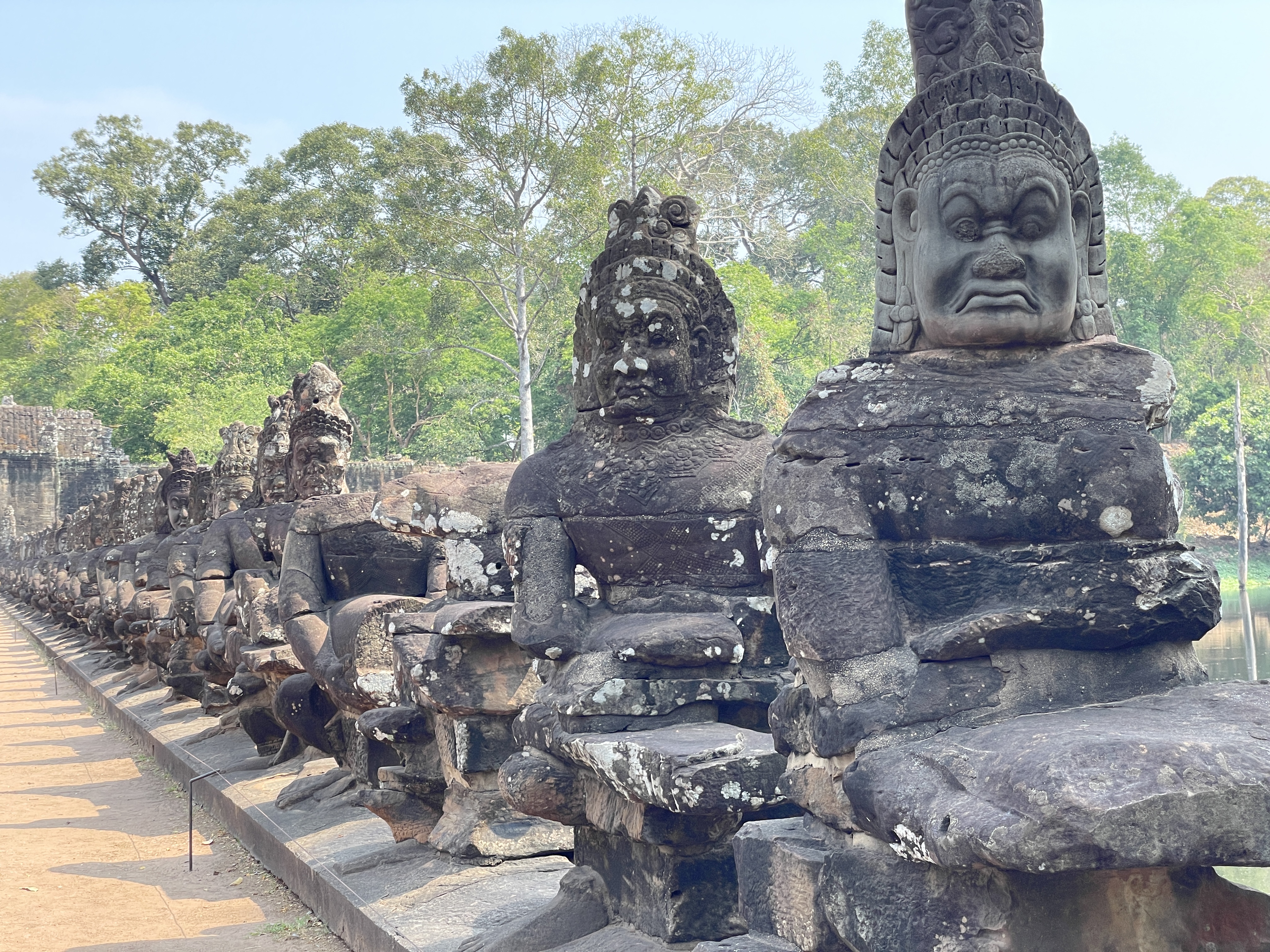
The not-so-serene Asuras (demons), grimacing on the other side of the bridge leading to Angkor Thom.
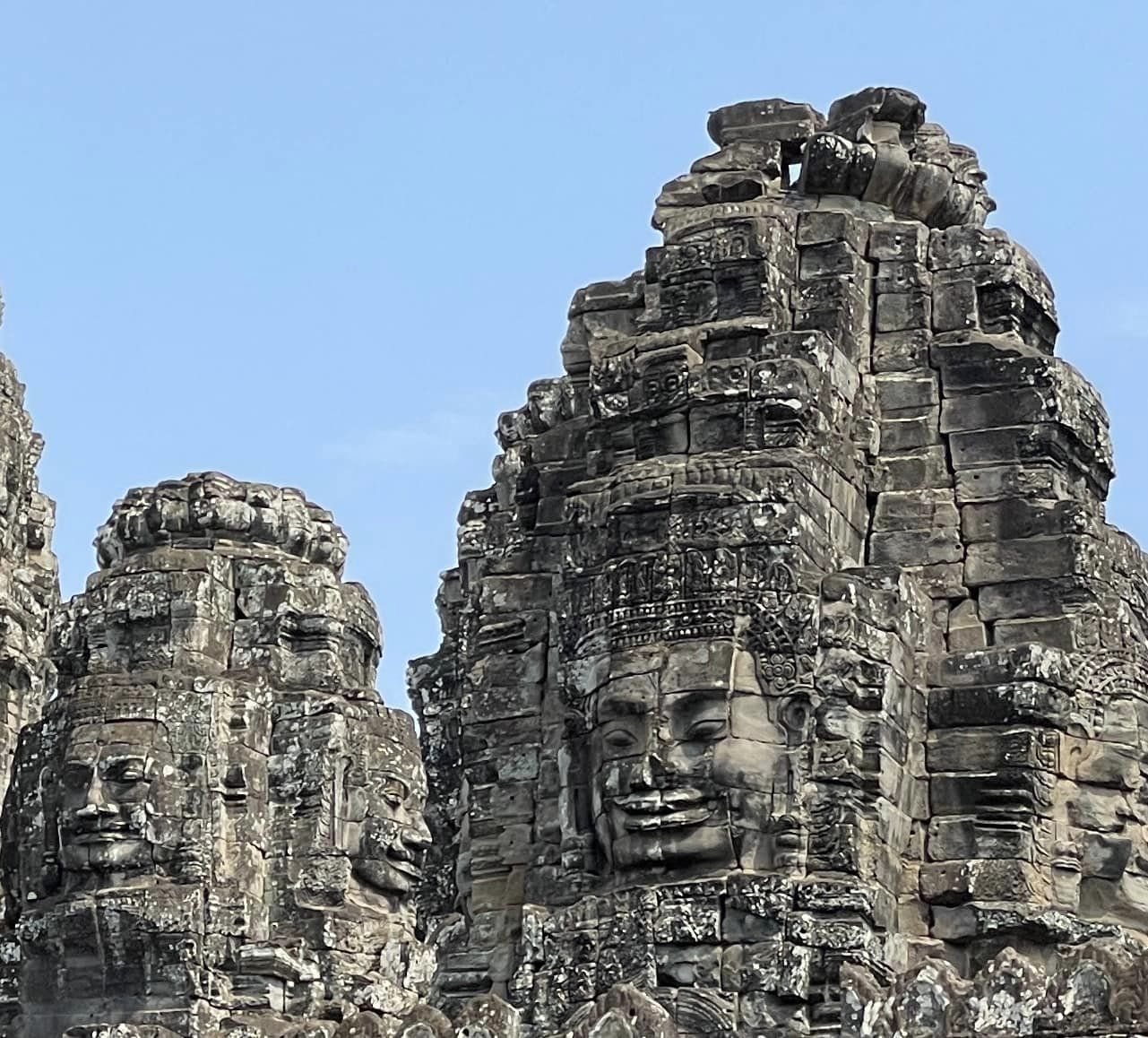
The Bayon Khmer Buddhist temple in the centre of Angkor Thom, dates from the late 12th or early 13th century. Serene and smiling faces of Brahma face four ways on each tower. That’s a lot of smiles from 54 towers. It actually felt calming here. The varying heights of the towers represent the peaks of Mount Meru, the center of the Buddhist universe. There are only 37 face-towers left.
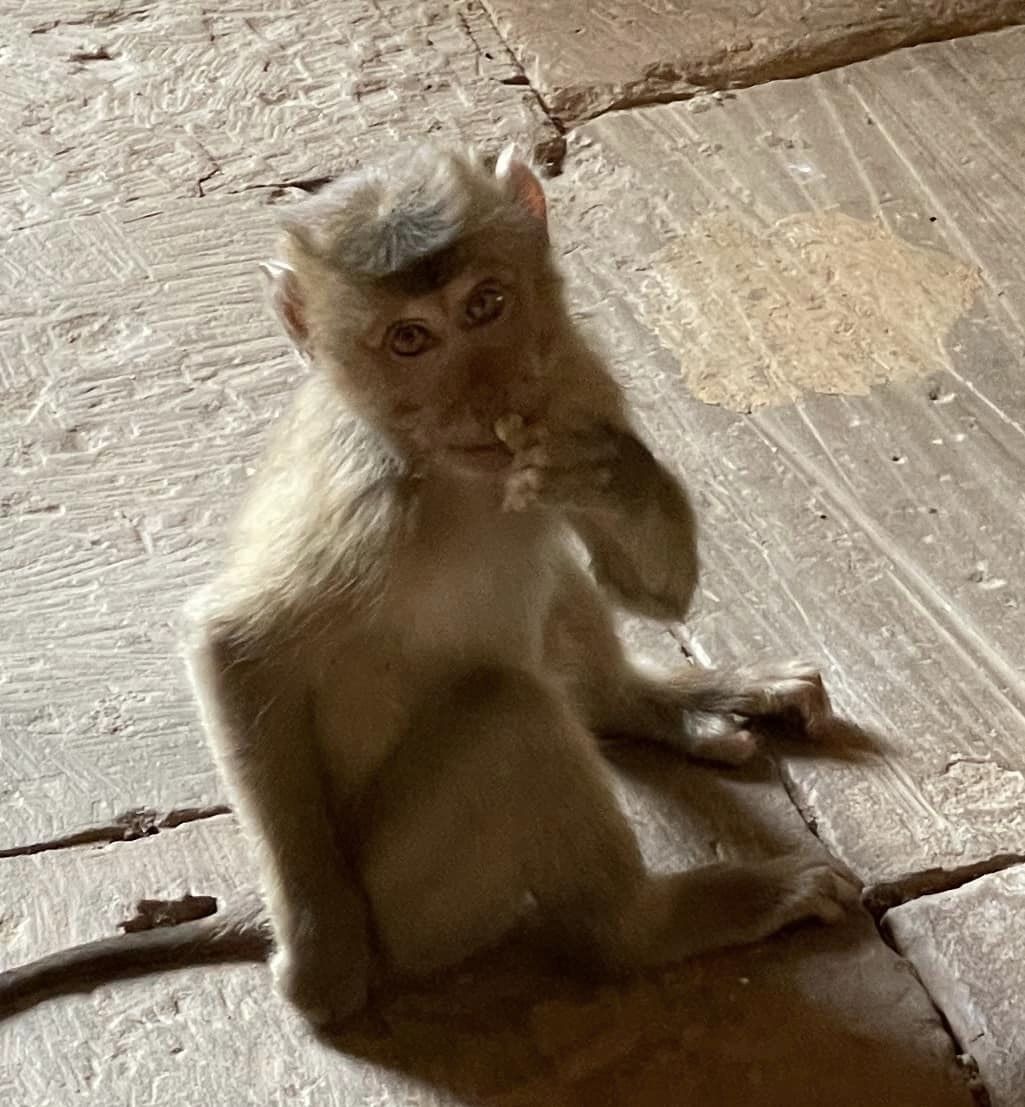
One of many monkeys, monkeying around Angkor.
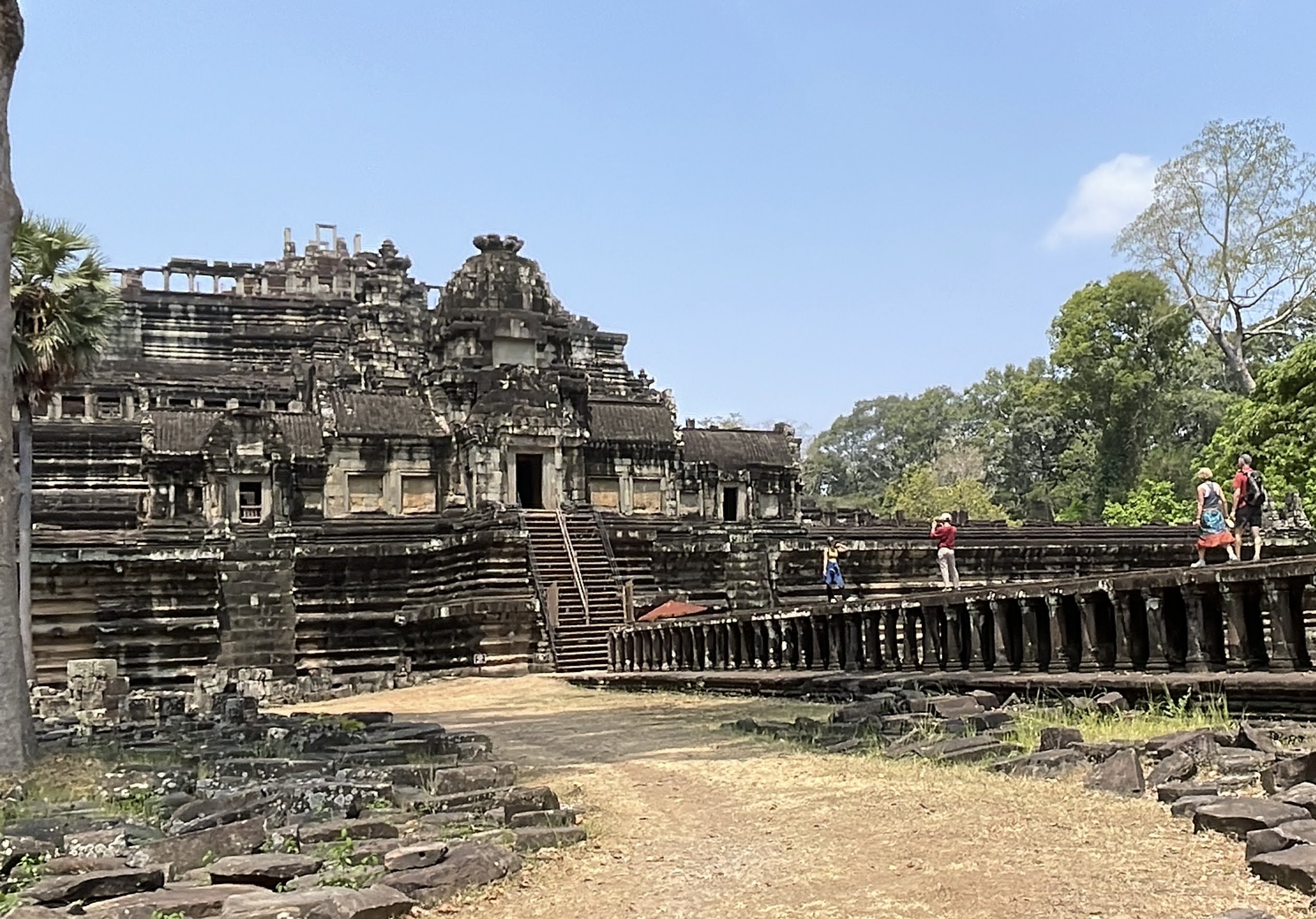
The grand terrace leading to the Baphuon Temple.
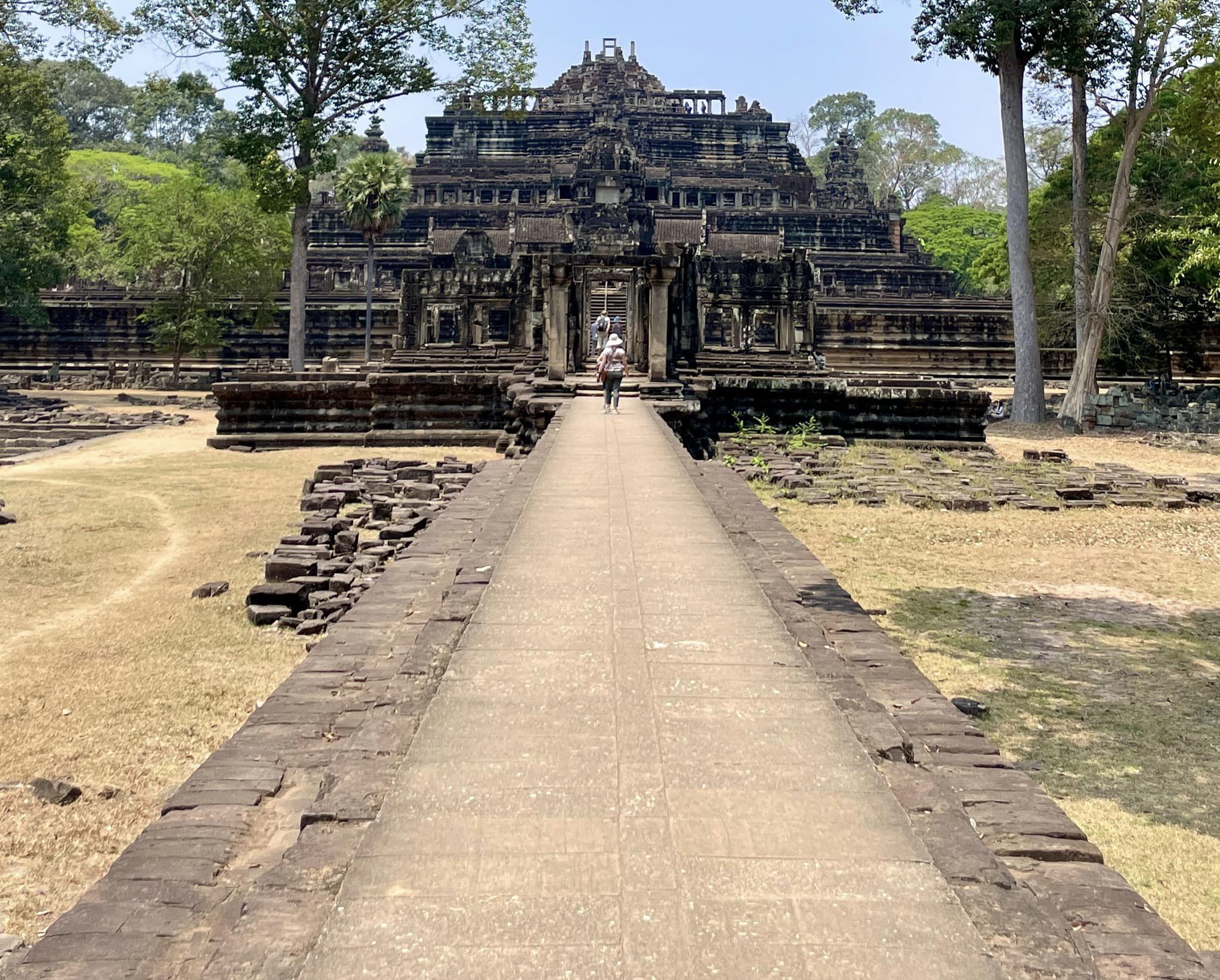
The Baphuon Temple is another example of a Hindu temple converted to a Buddhist one.
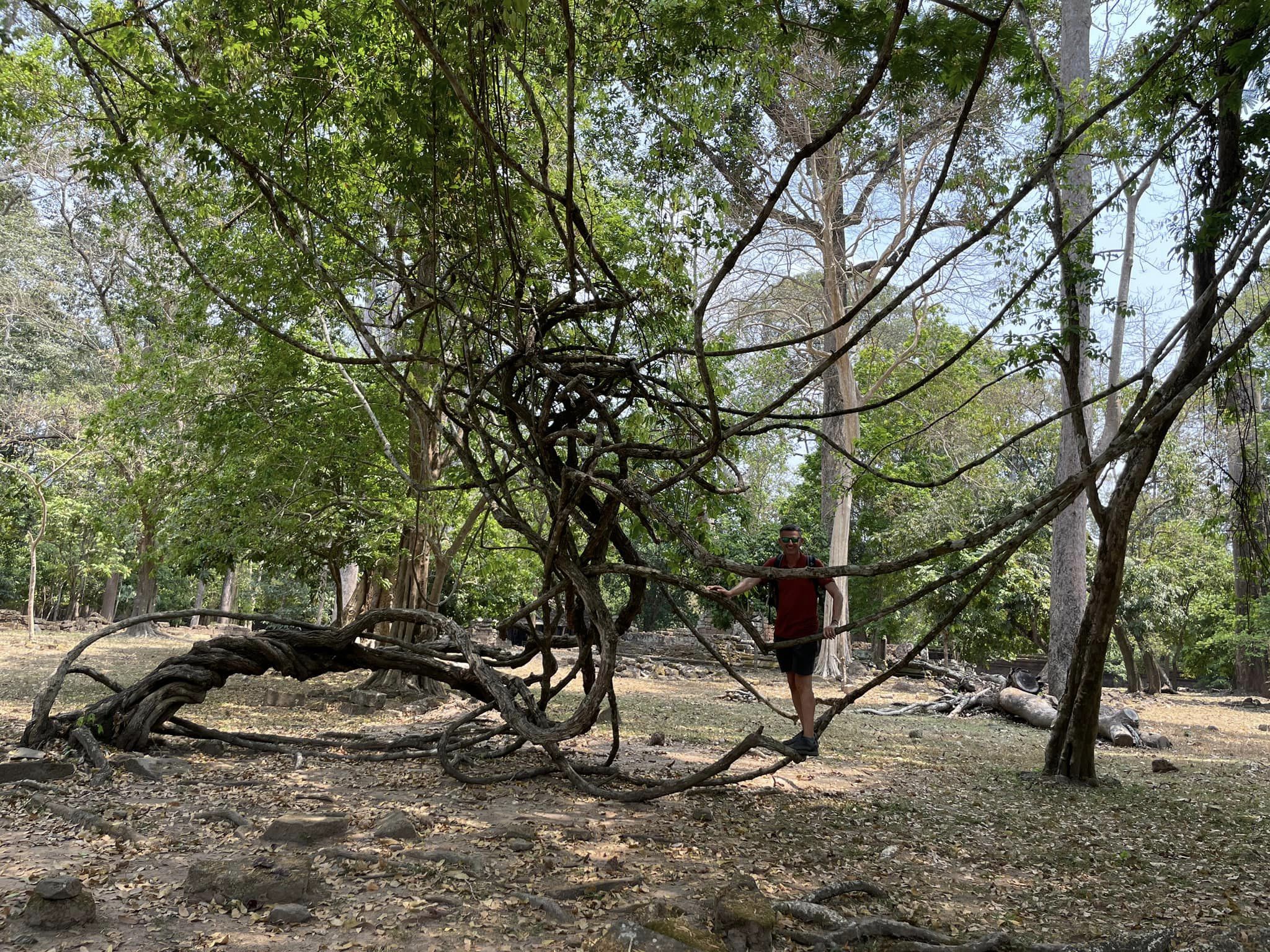
Natural jungle gym.
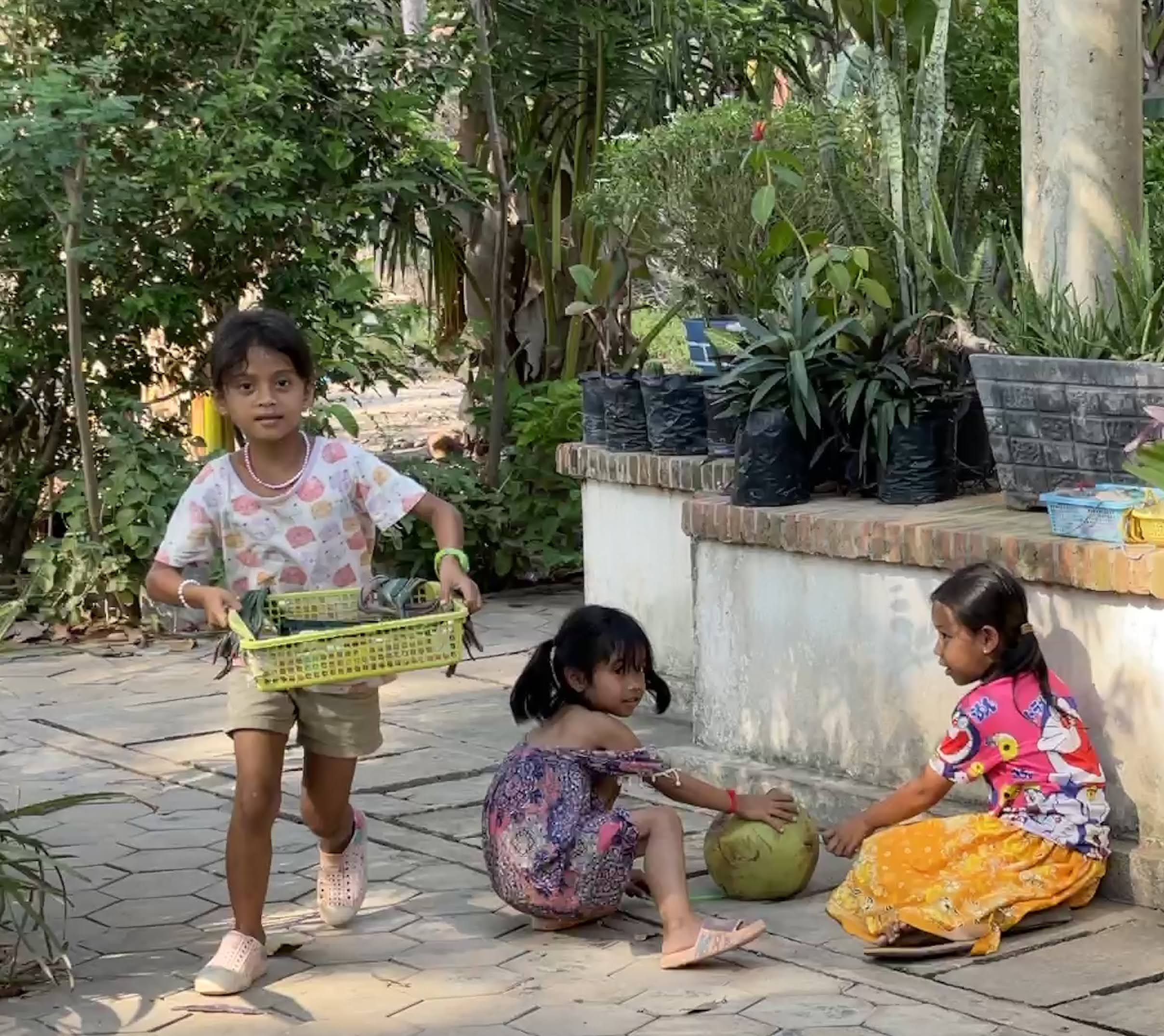
And here come the kids selling bracelets. This little group was busy playing together when suddenly, the most experienced of the crew, noticed a tourist and came running!
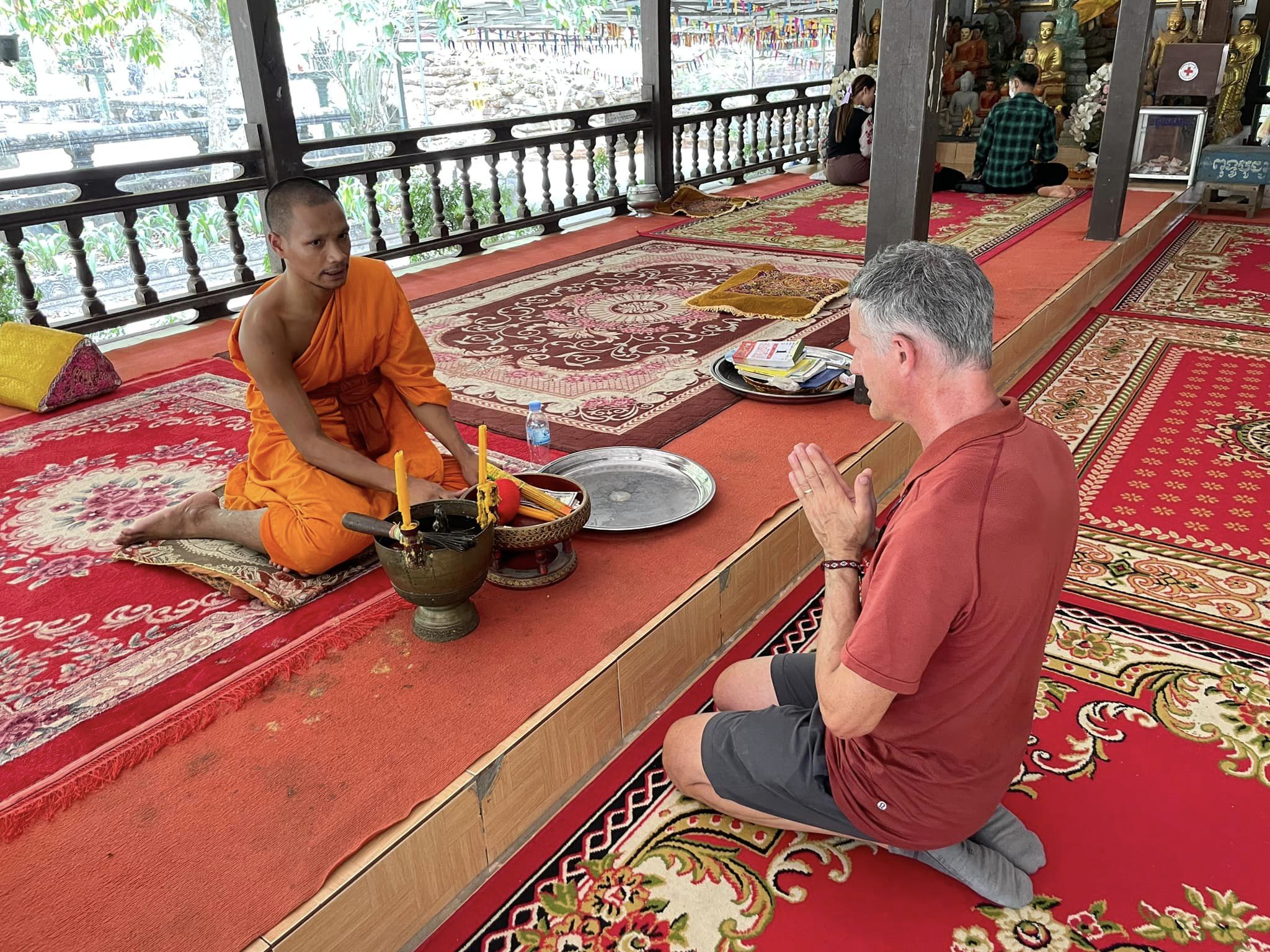
Receiving a blessing from a monk. We woke him from his afternoon nap for the blessing. I guess this is what makes a monk a monk: he still blessed us. This must be the pinnacle of a monk’s life, to live and study at Angkor, the most important pilgrimage spot in SE Asia. We met a woman of 76 who came from a village far away to visit Angkor for her very first time!
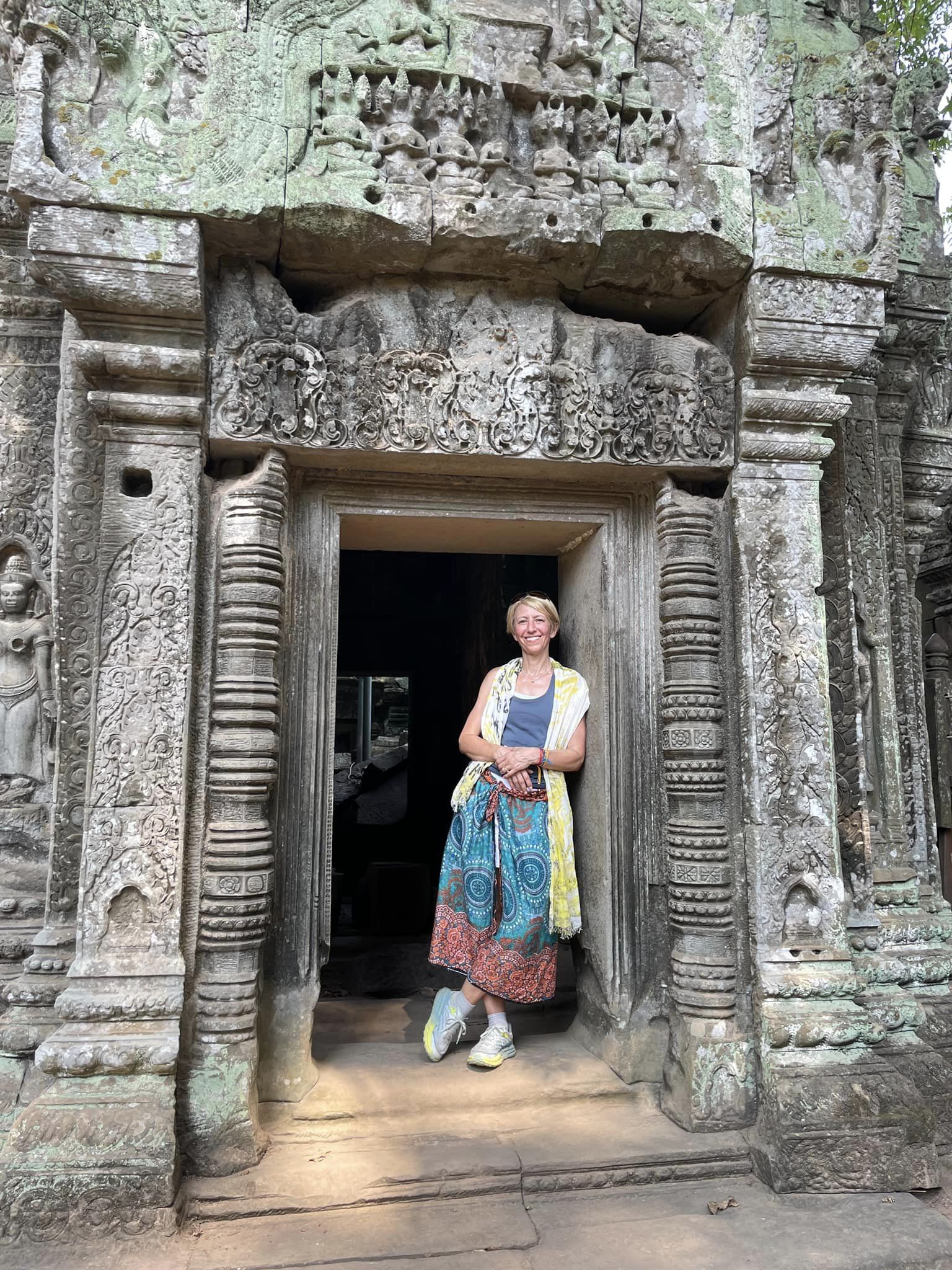
Hanging out in a doorway in Preah Khan. Yes, it was hot and the extra layers of modesty coverage were definitely not cooling.
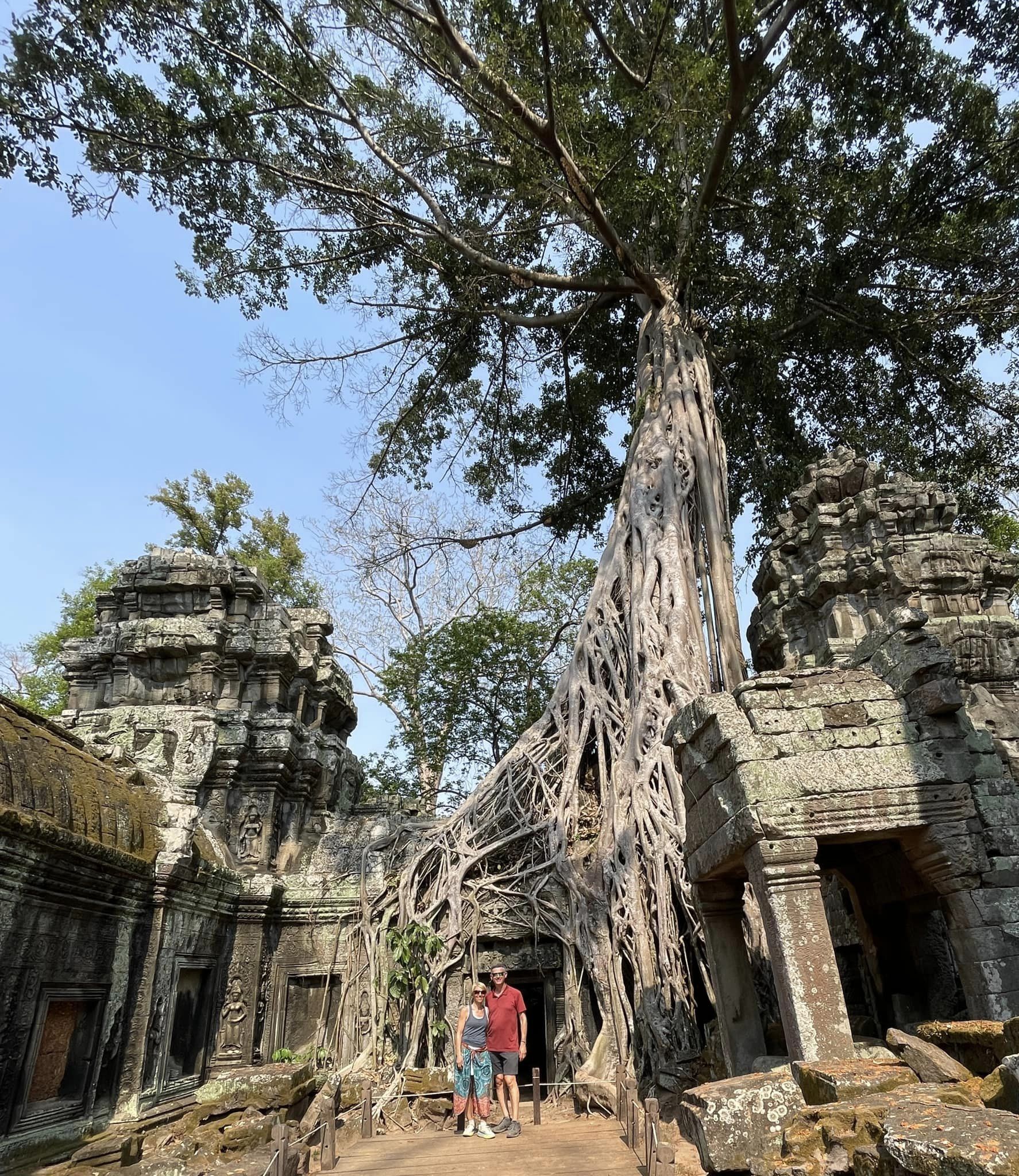
Preah Khan has been left pretty much as it was found, aside from shoring up sections for the safety (Cambodian style) of visitors. Lots of trees and other vegetation is growing among the ruins which gives its famous look. Some trees have damaged some structures and have had to be cut down.
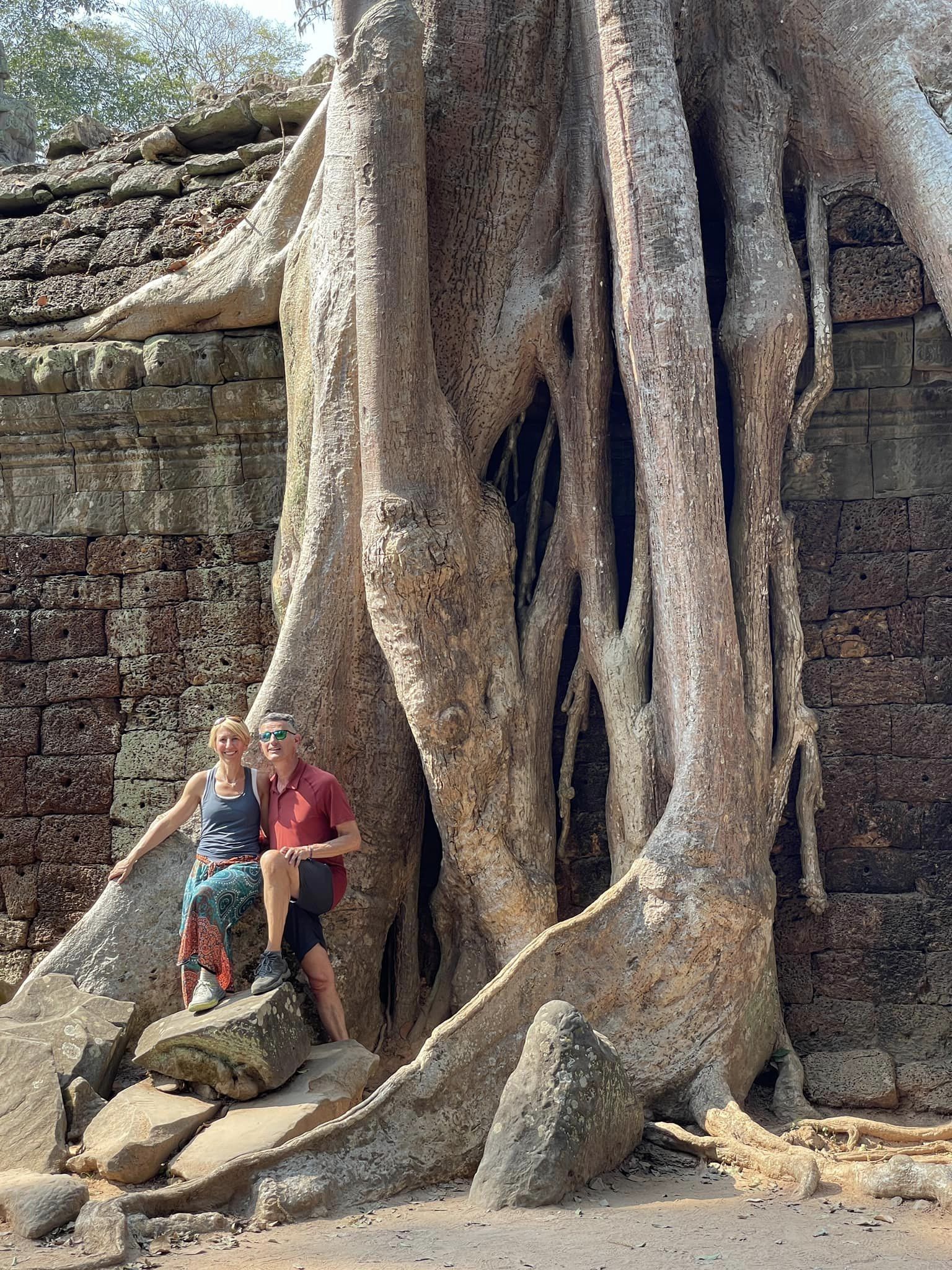
In the lap of trees consuming the temple walls.
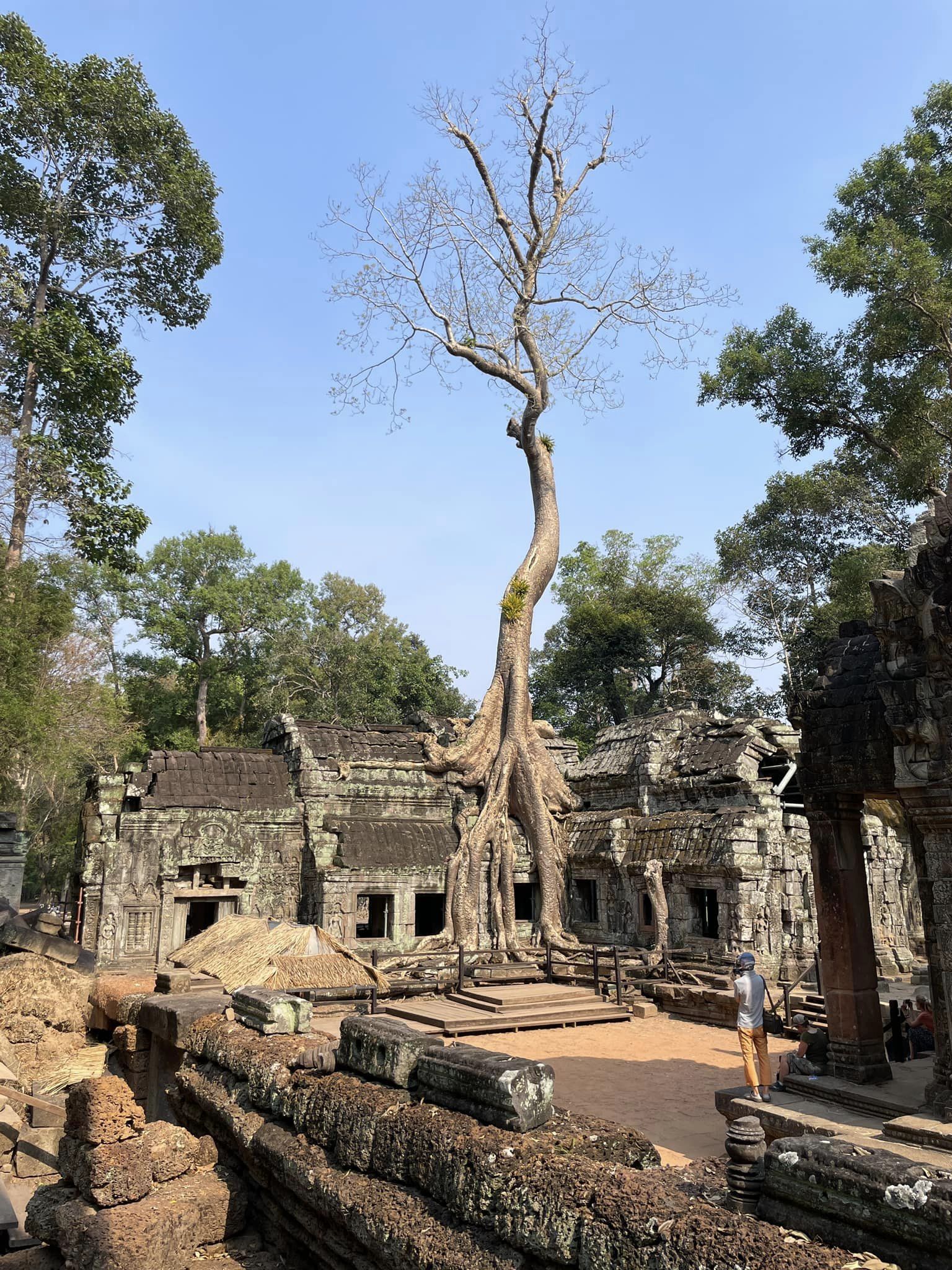
One of many well-known trees hugging Preah Khan. If you zoom in, you’ll see two orchids that have taken up residence halfway and three quarters of the way to the top.
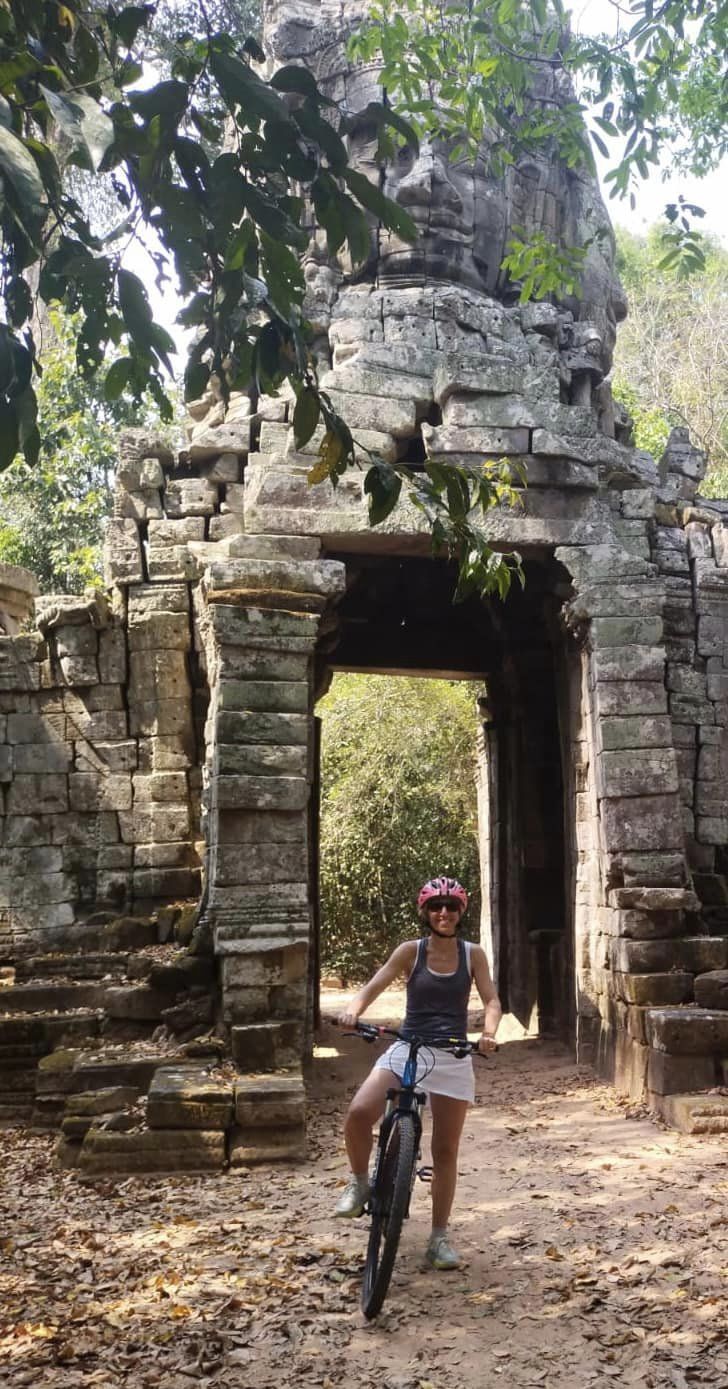
Spending the day on bikes was surprisingly cooling (if you can even say that) with the bit of wind generated by riding...and the lack of a need for modesty covering. It was swelteringly hot and the humidity was unbelievable. I think this was my hottest ever…and April is going to get even hotter. At least it scared off the crowds. Biking is definitely the way to visit this enormous site!
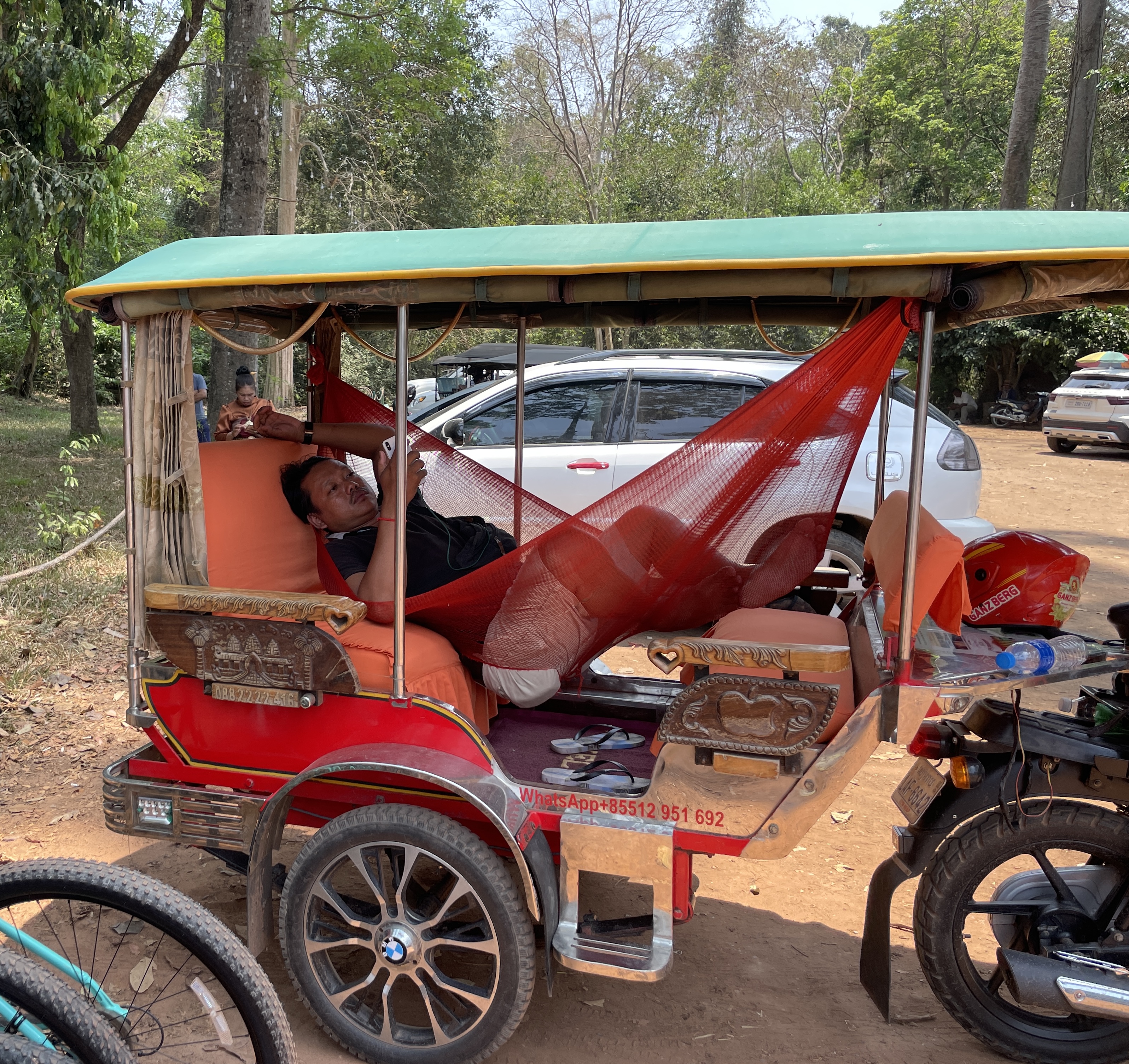
Ho-hum, seen it once, seen it a million times...
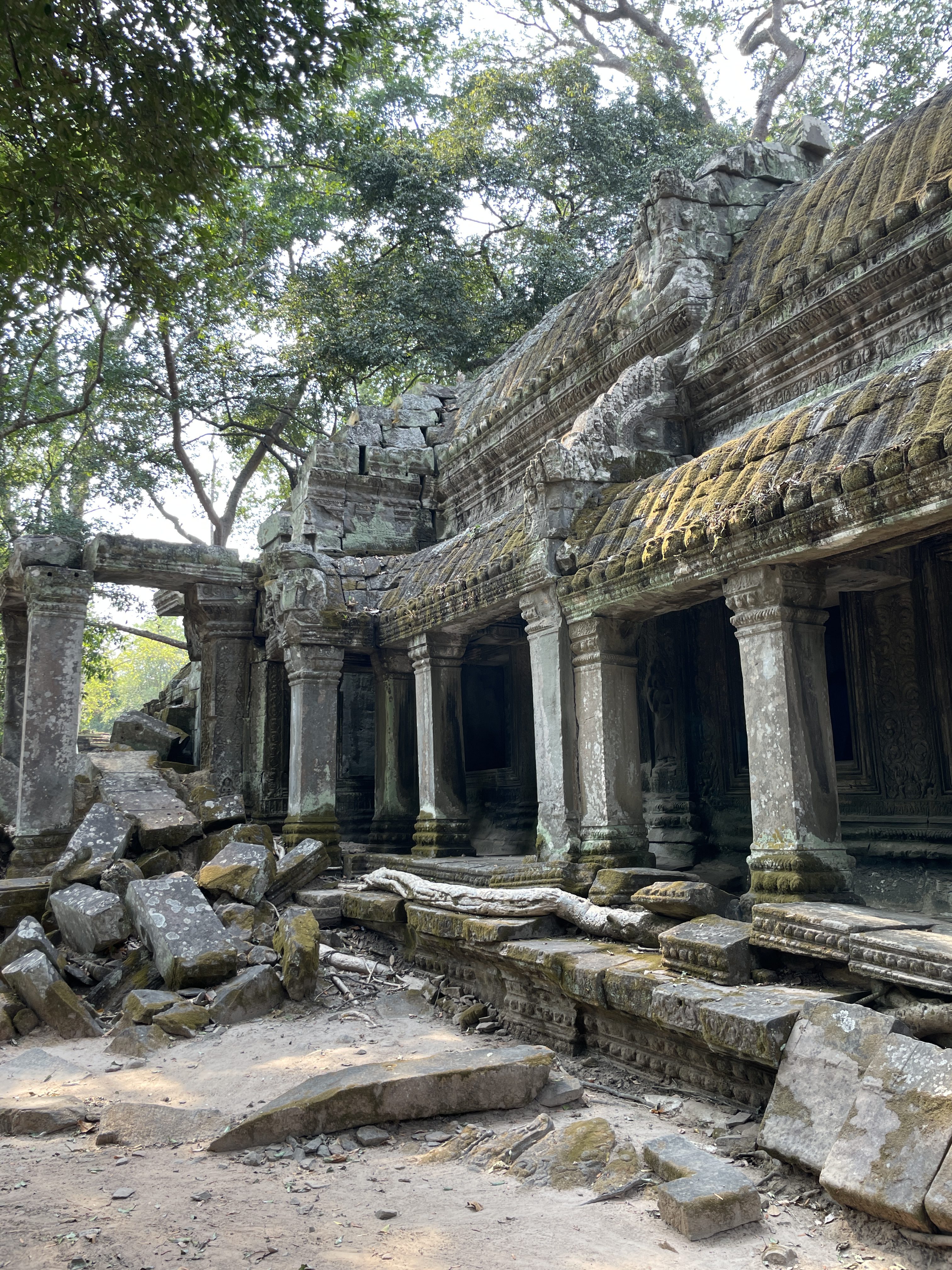
This beautiful place is a sight to behold but should we modern day people really be traipsing around this delicate and crumbling monument?