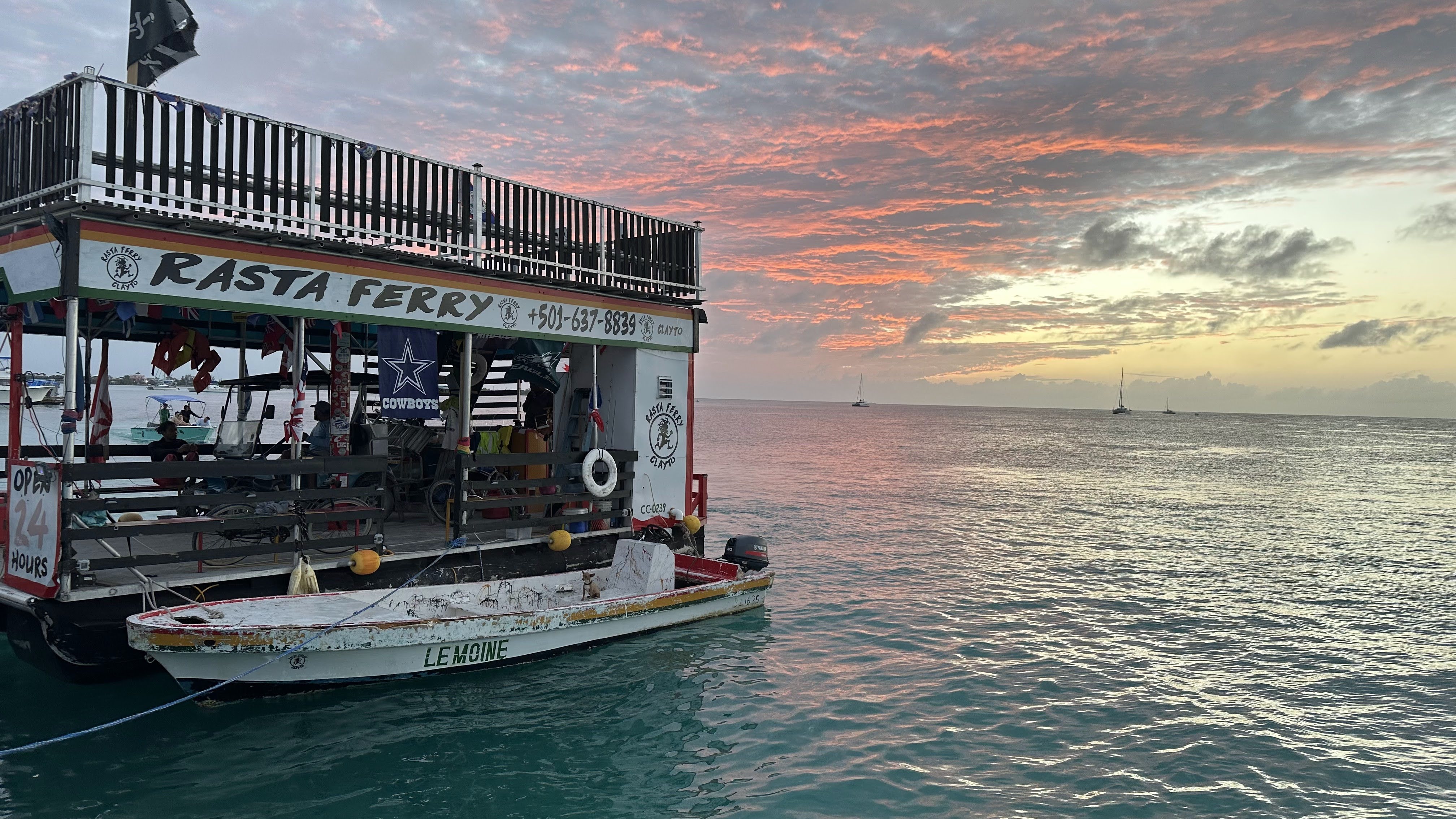
December, 2024
Precious Placencia
We are wrapping up 2024 with a family trip to Belize, starting beachside in Placencia. This is a fabulous, low-key town without the tourist crush of some of the Cayes.
Now spread over two continents and three cities, these family trips that bring us together are pretty special.
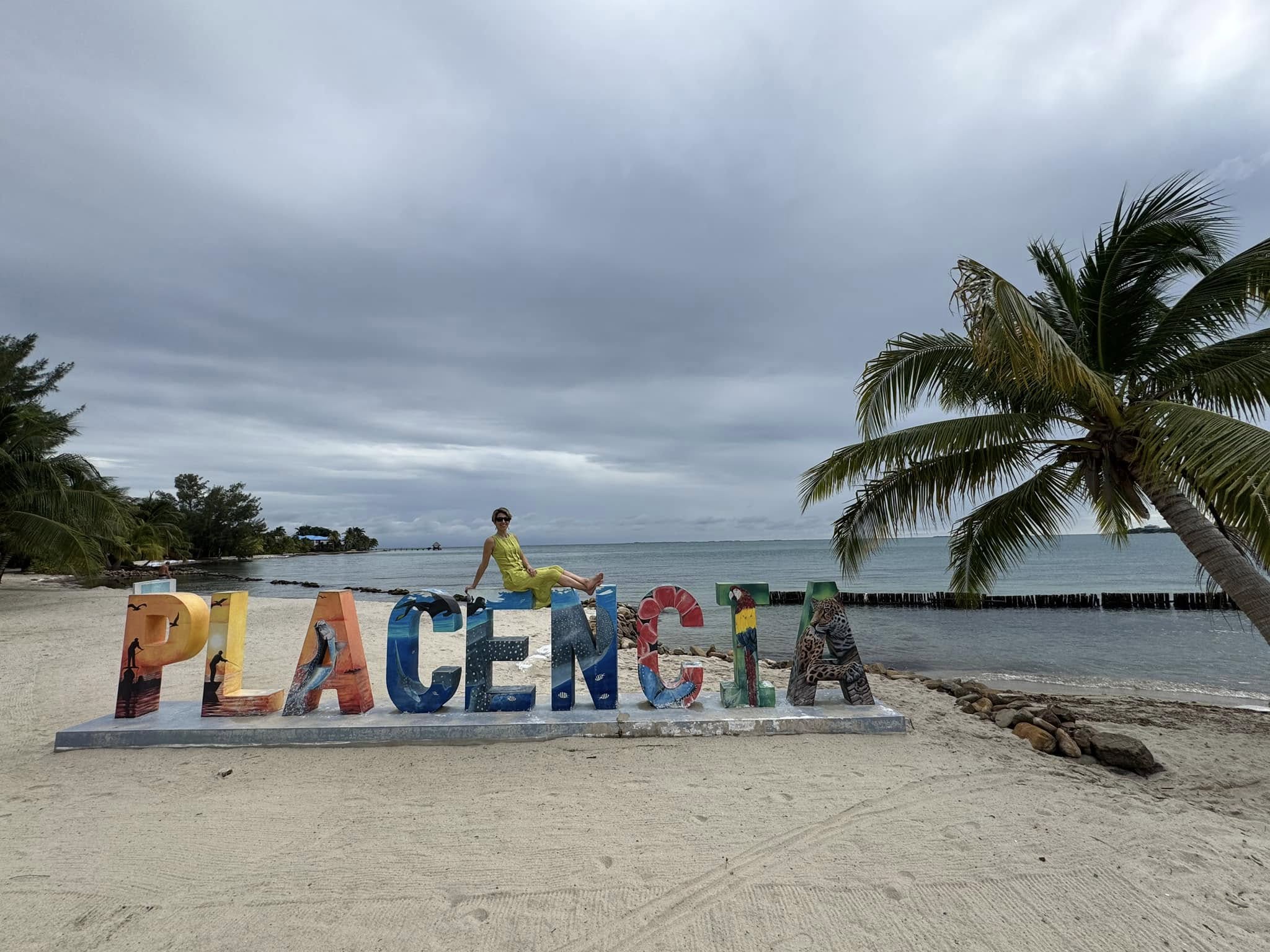
Just us on the beach. This beach is at the Placencia Beach Club, which we thought a bit odd that it closed at 5pm. When we left and settled our tab, I commented on the bites we were getting. She said those were sand flies and that’s why they close at 5! Lesson learned…get off the beach well before dusk.
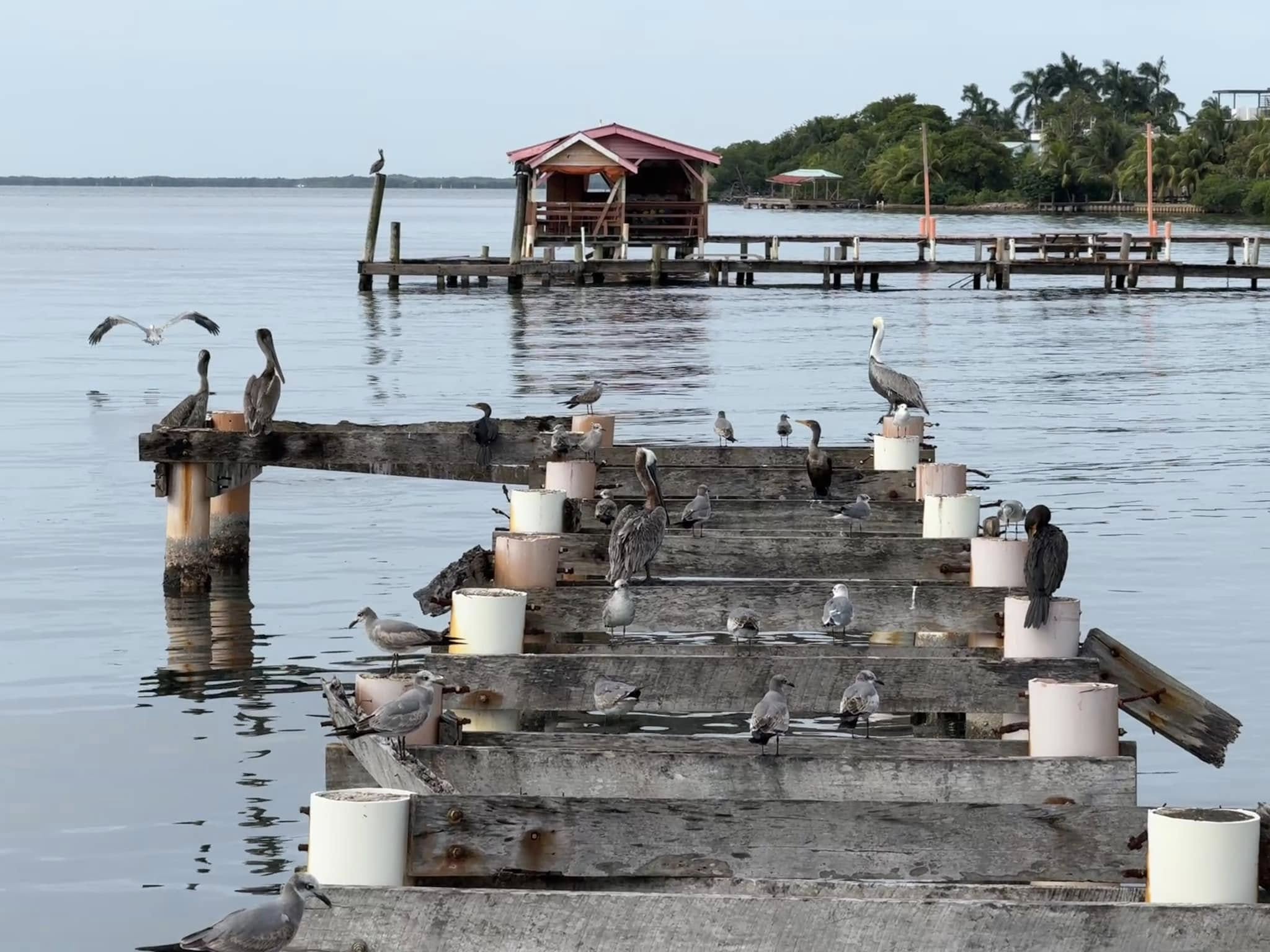
A recent hurricane destroyed the little pier outside our lovely hotel. The owners took on the task of rebuilding most of it but left this part for the birds.
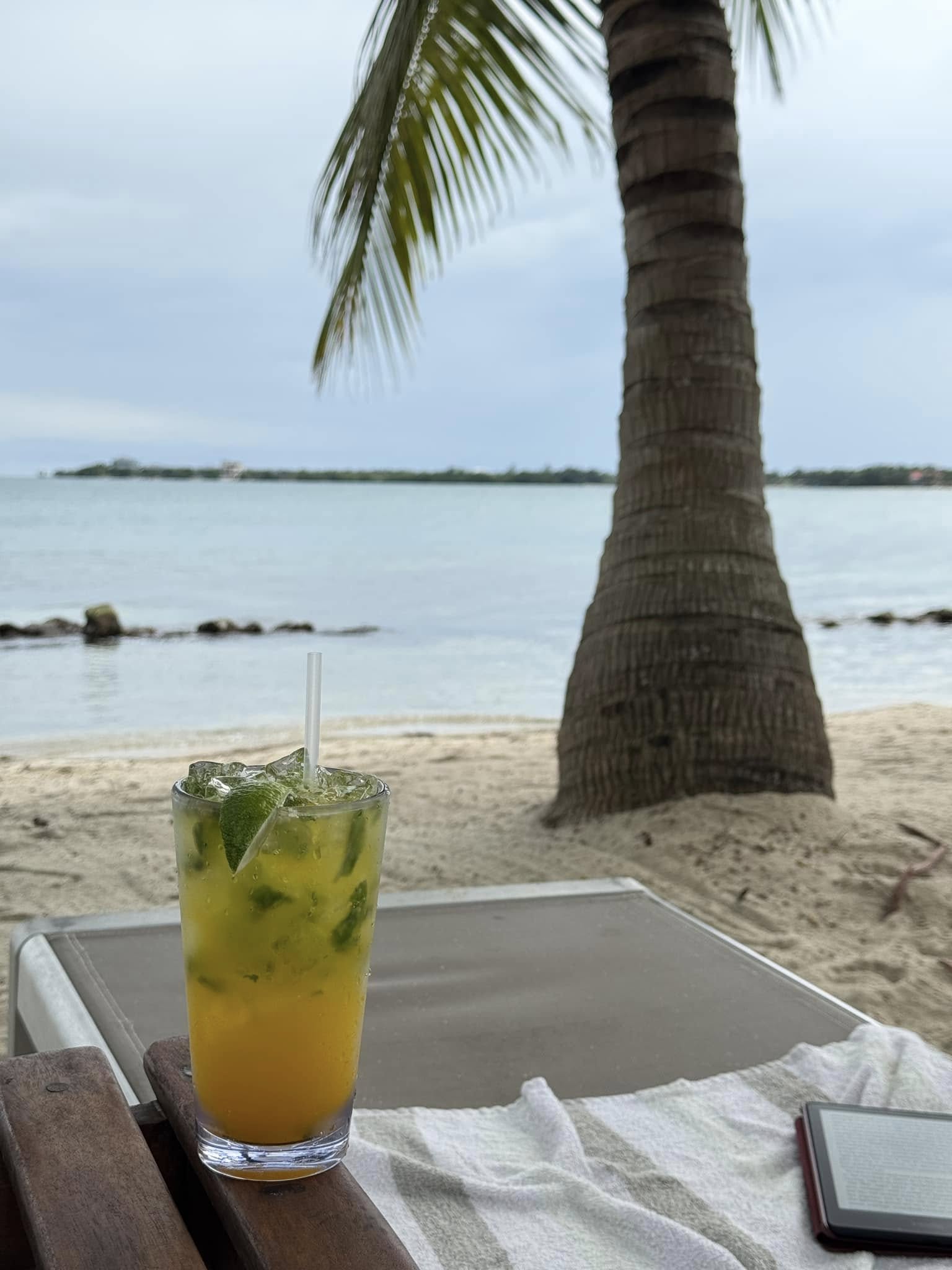
I’m proposing this as a future book club venue.
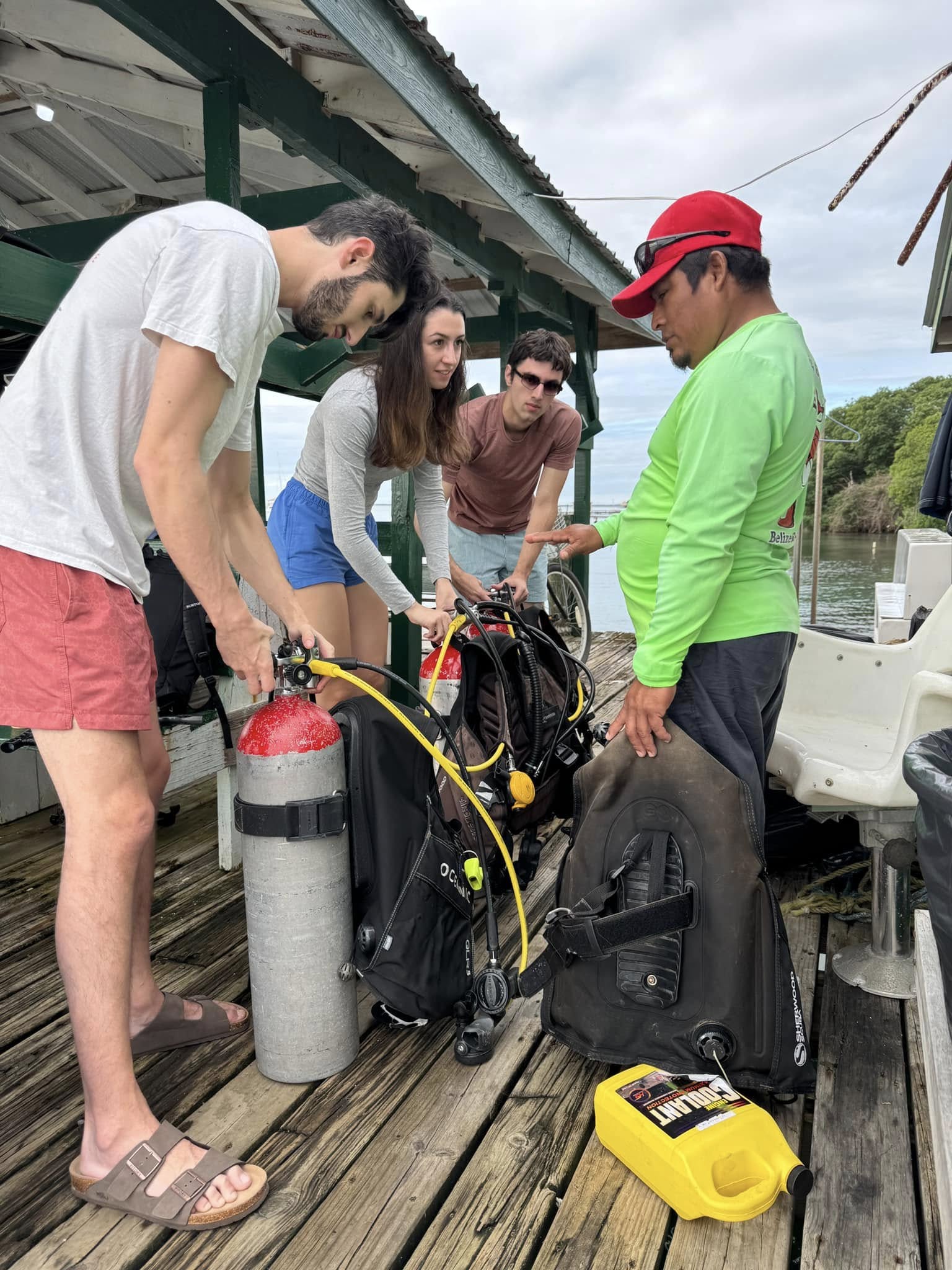
The reason we started our trip in Placencia was for Robyn, Evan and Alex to do their PADI open water dives. They are all freshly certified!
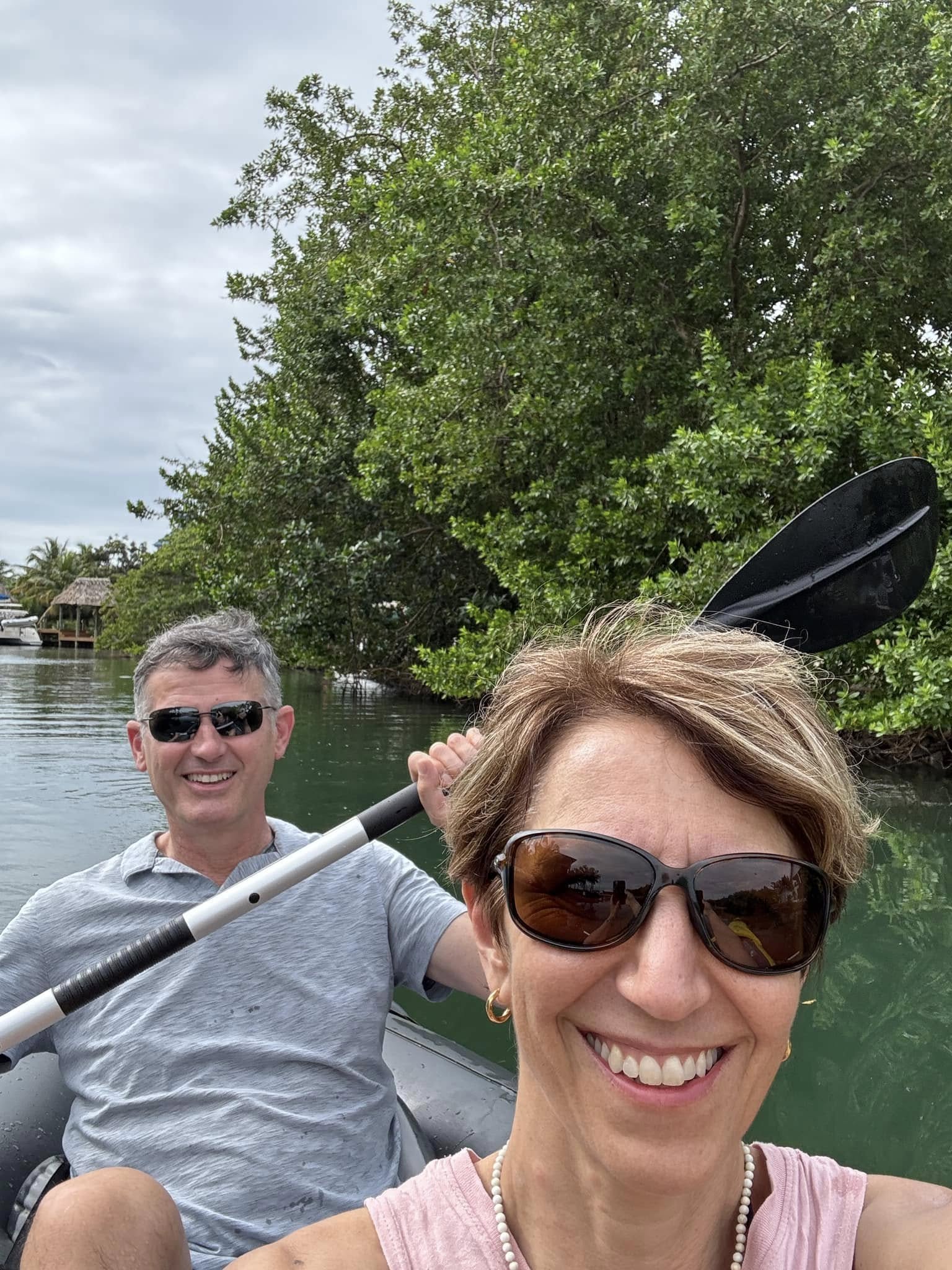
While the kids were working at being safe underwater, we took to a kayak and explored the above water coast of Placencia and the split in Placencia Caye across the way from our hotel. Hidden from view in the split is quite a collection of very fancy properties!
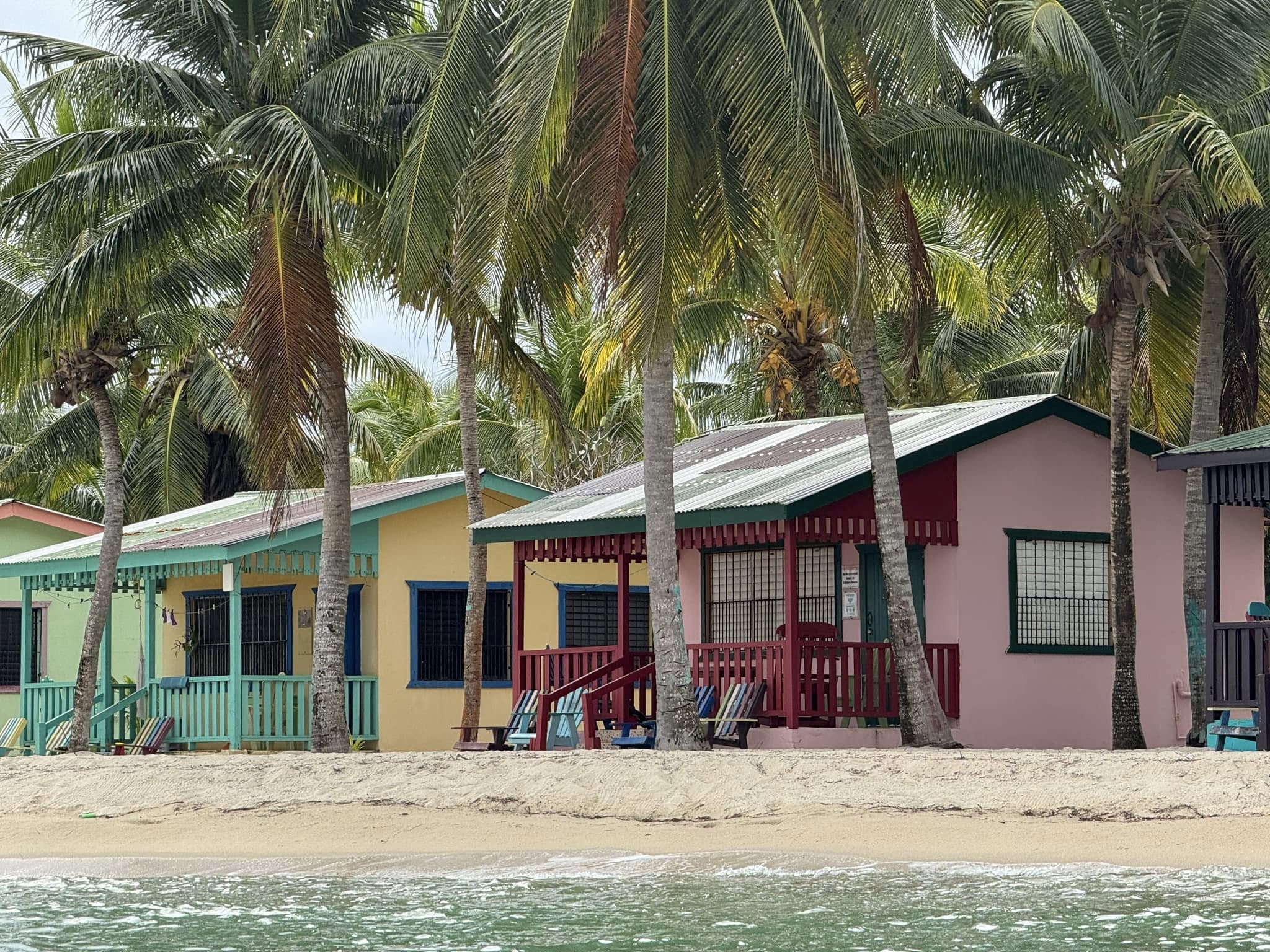
Not so fancy but full of Belizean charm.
Another bit of Belizean charm. Meet William the plastic man! He’s born and raised in Placencia and for the past 16 years he’s been doing his part keeping the beach and town clean. He calls himself a recycler. He picks up plastic bags, cuts them in strips and then twists and stretches them into plastic strings that he makes into macrame bracelets. He’s famous!
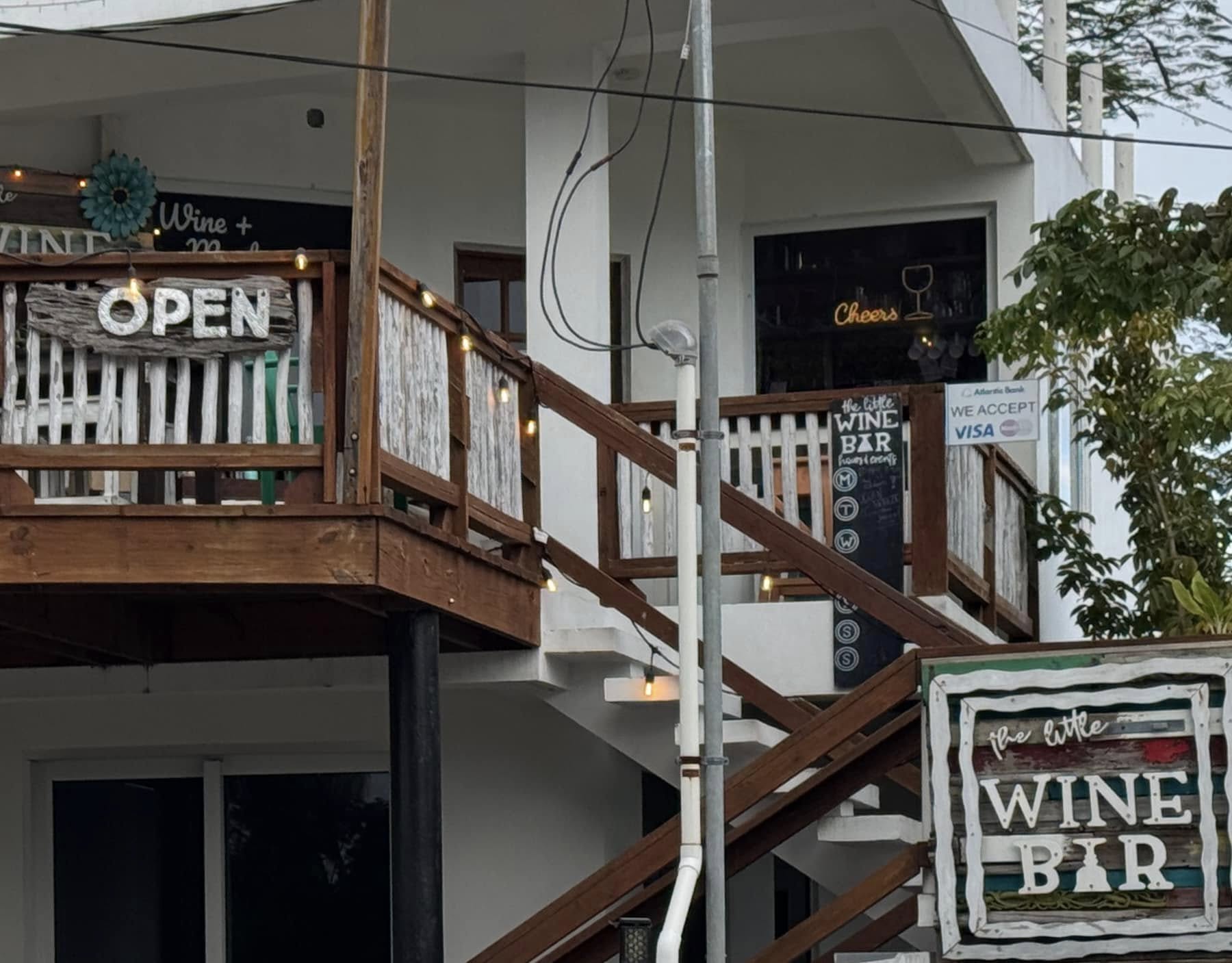
The woman who owns this wine bar has the best sign. At this moment she’s open for business…
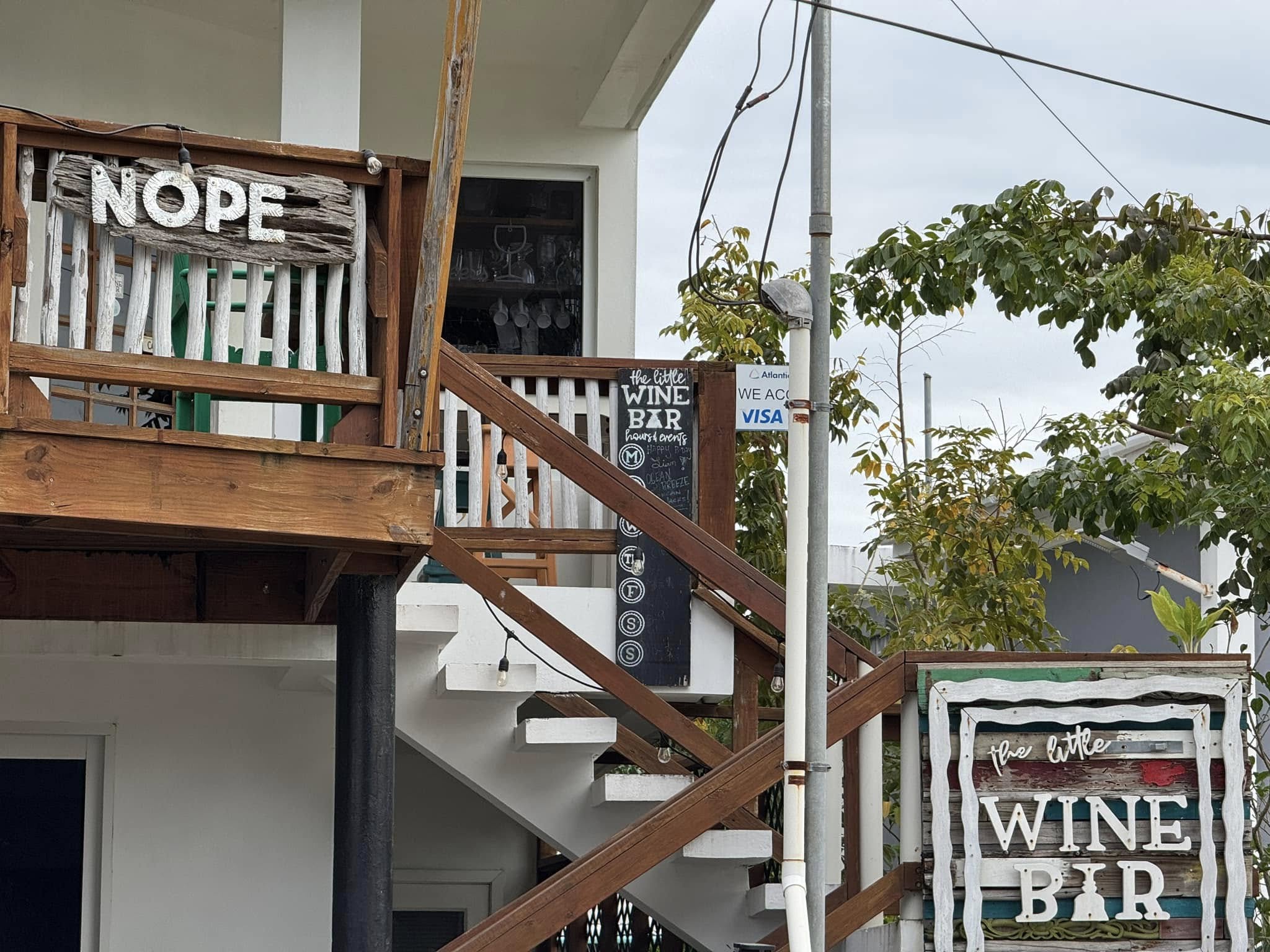
…when she’s closed, she moves the “N” to the front.
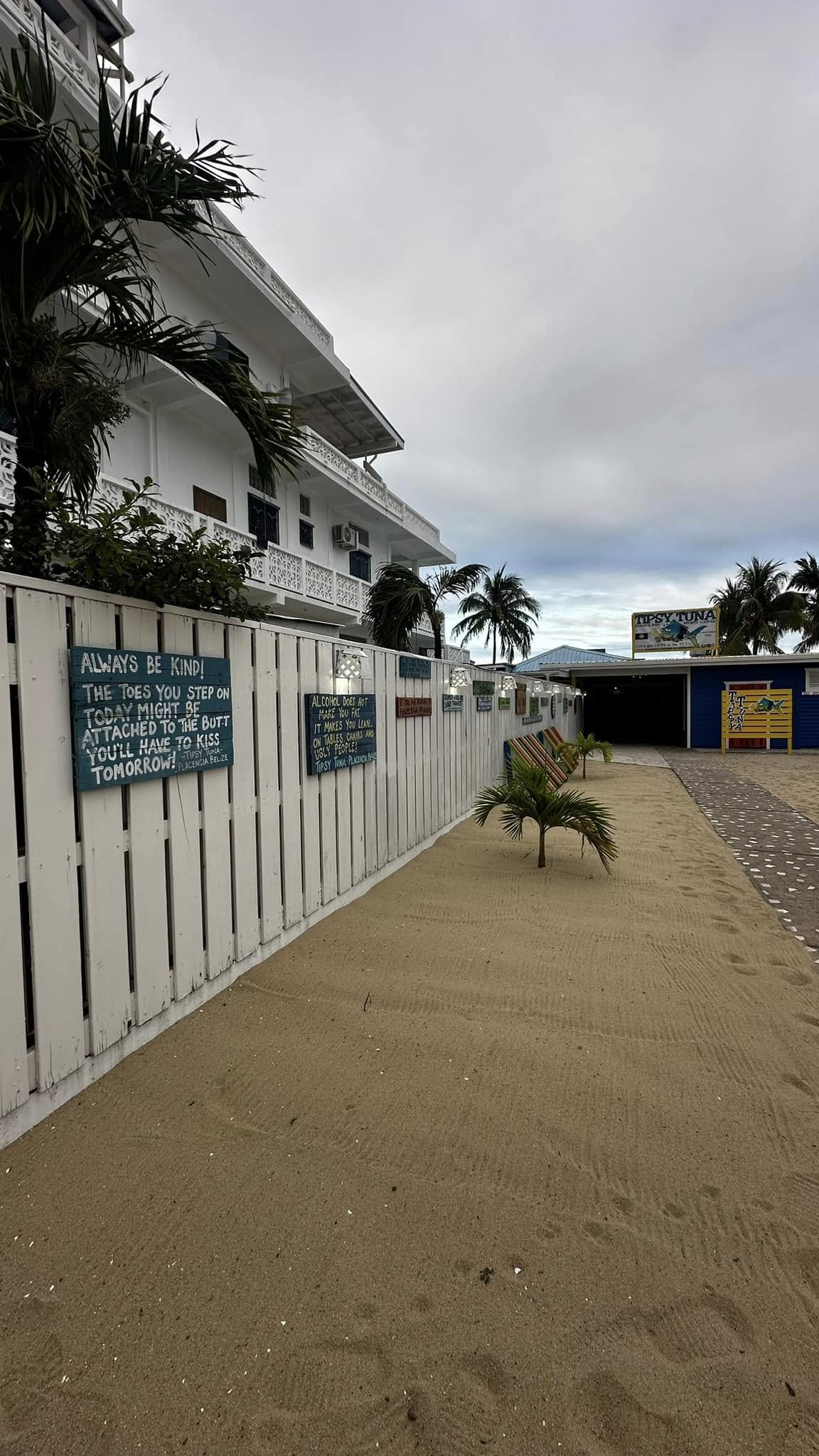
The owner of the Tipsy Tuna has all sorts of inspirational messages along the path. Important tidbits like: "Make today so awesome yesterday gets jealous" "Nobody ever ruined their eyesight by looking at the bright side" "The last mosquito that bit me was hungover for a week" "Drunken words are sober thoughts" "If you think you are too small to make a difference, you’ve never spent the night with a mosquito" "Always be kind! The toes you step on today may be attached to the butt you have to kiss tomorrow" "It’s all shits and giggles until someone giggles and shits"
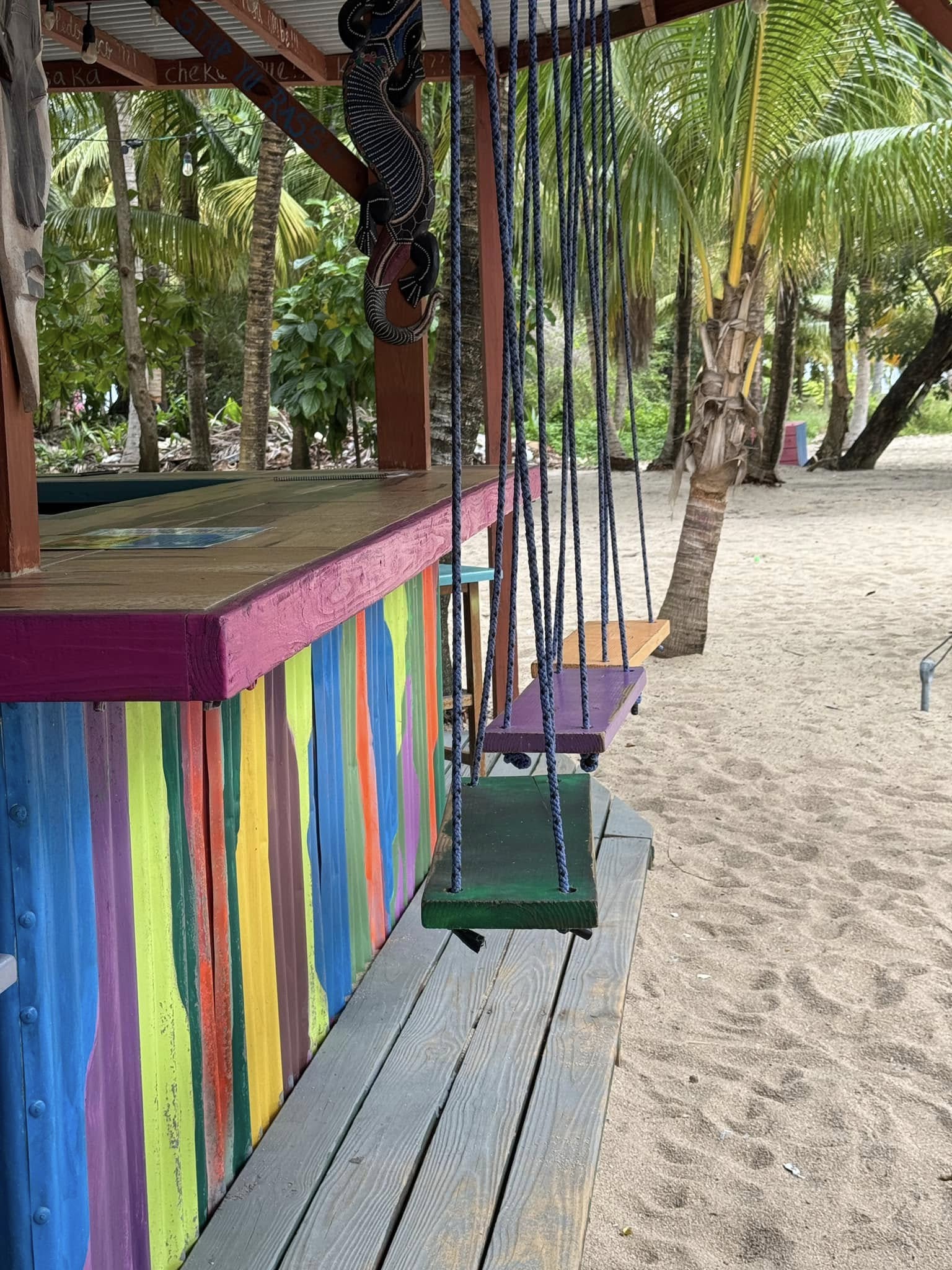
Beachside bar.
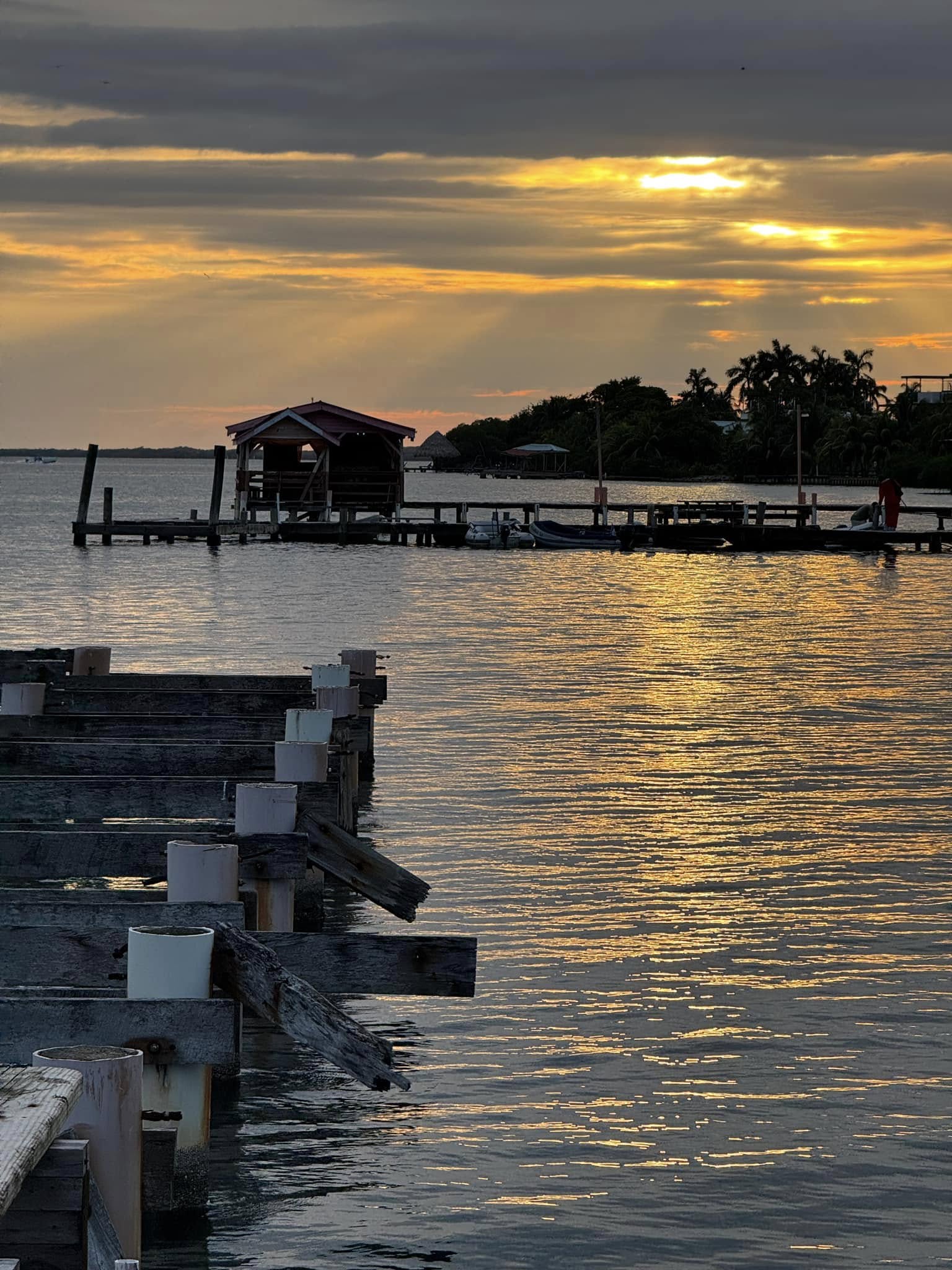
Goodnight Placencia!
Jungle, Rainforest and Mosquitoes!
We’ve moved from a narrow spot in the ocean off the mainland to the Mountain Pine Ridge Forest Reserve and lush jungle not far from the Guatemalan border. Humidity and mosquitos have ramped up but at least no sand flies. The nearby town of San Ignacio has a surprising collection of must-see stops!
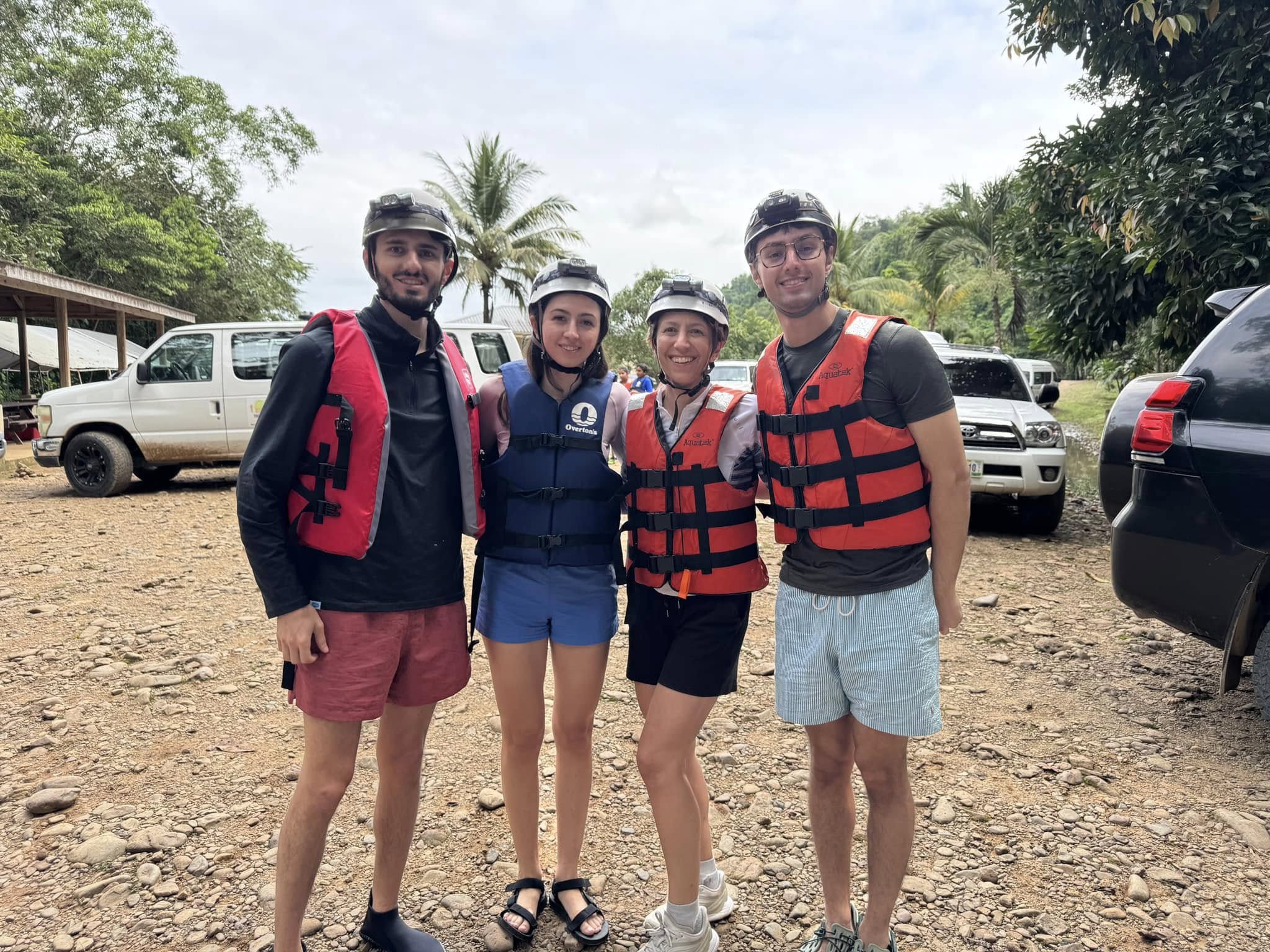
There are over 2000 caves in Belize but exploring caves is a relatively new pursuit here. Our guide told us that people here are reluctant to go in them because they are full of spirits. His grandparents told him not to go inside the caves because you never know what will follow you out! The younger generation no longer believes in the spirits so in they go! Actun Tunichil Muknal (the cave of the crystal sepulchre) is reputed to be the cave to visit in Belize due to its sheer size (5km deep) and important spiritual significance. It’s a huge river cave that was a sacred site for the Maya. Just before the decline of the Maya empire around 900 AD, the region suffered a few hundred years of drought (which was a contributing factor to its demise). When the drought just wouldn’t let up, the Maya ventured deeper in the caves with a flurry of appeals in the form of sacrifices and offerings thinking they’d get more action from the gods. Sadly, this effort was to no avail. Apparently, that’s not how climate change works. It was an amazing day but no photos are allowed because in the years since they opened this cave to the public (1997) after its discovery in 1986, tourists have been distracted taking photos and have inadvertently stepped on some artifacts inside. Others have dropped their camera and crushed skulls or knocked out ancient teeth. Cameras are now banned so (full disclosure) the photos inside the cave are courtesy of the Internet.
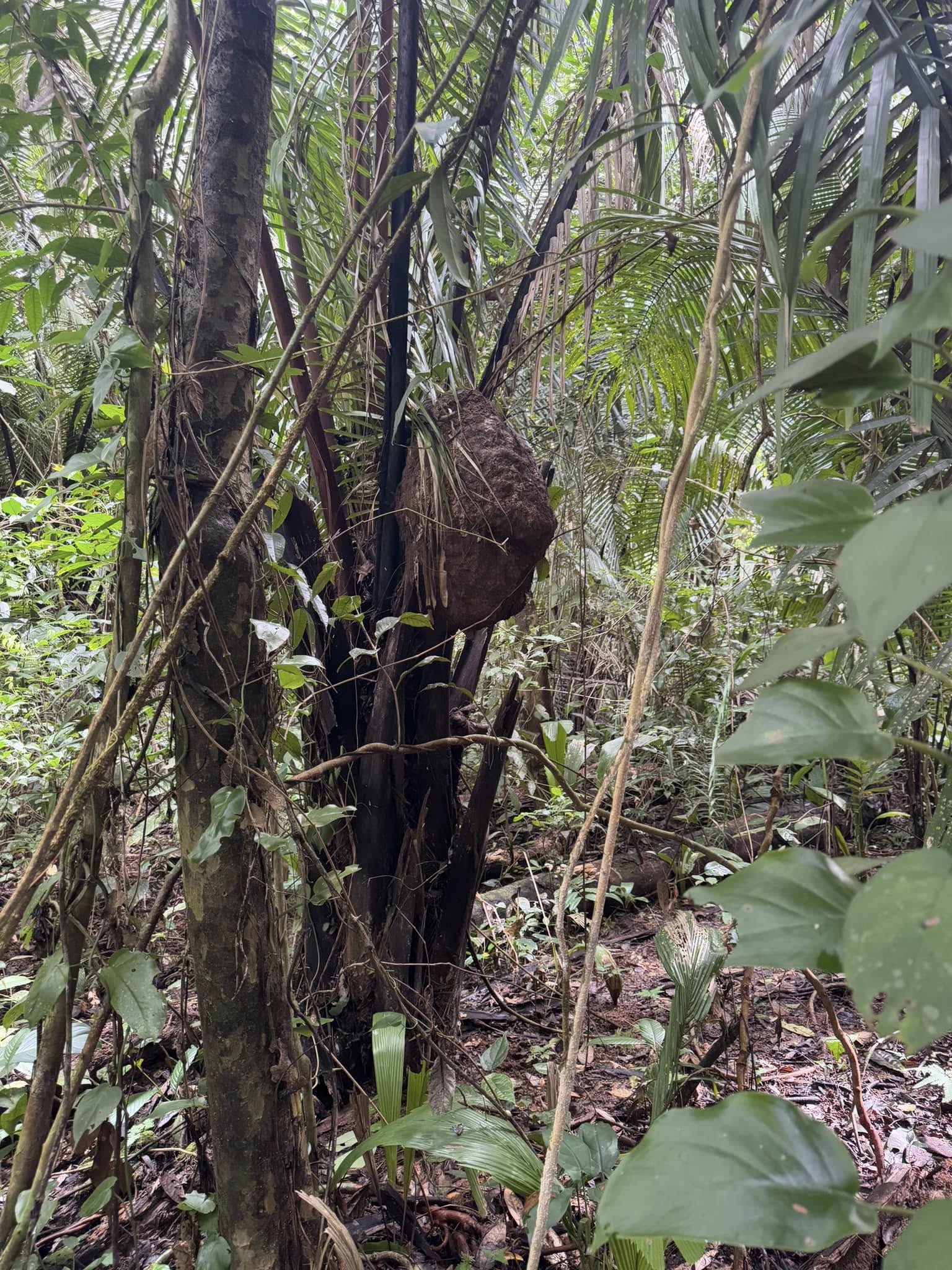
Our journey to the ATM cave took us on a hike through three river crossings to reach the mouth of the cave. On the way we tasted termites! Why I asked what that brown bulge on the tree was, I don’t know, but that is what prompted this culinary experience. Our guide coaxed them out of their tree home and gave us each one to try. She told us to be sure to pop them with our teeth to get the flavour (and maybe to keep them from running amok on our tongues). Alex’s tasted like mint while Robyn’s, Evan’s and mine tasted like carrot; all classic termite tasting notes.
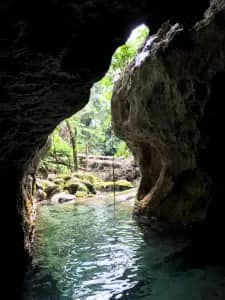
Once we got to the mouth of the cave, we swam through passages, climbed over the massive and jagged boulders from the collapsed limestone ceiling and squeezed through tight spaces.
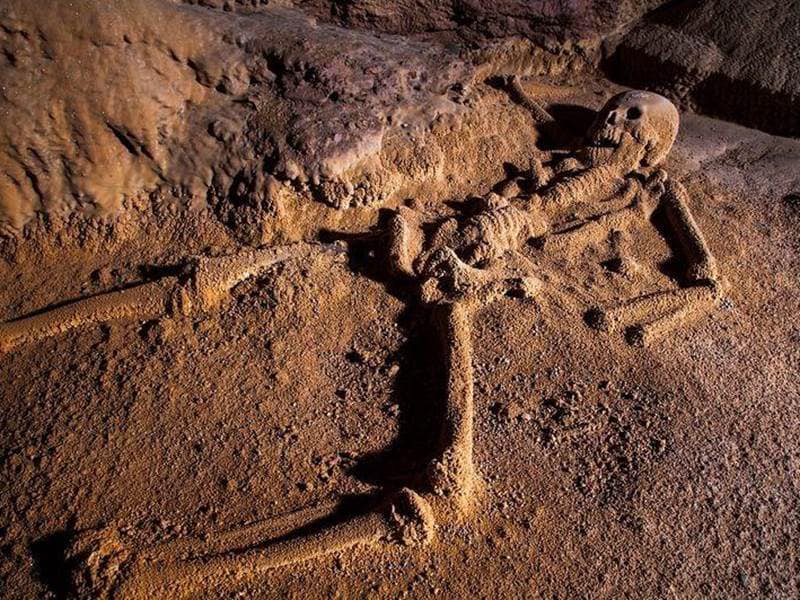
Lots of skeletons of babies, children and virgin maidens, as well as ceramic bowls from food offerings, remain in there from that time, fused to the cave floors from the centuries of dripping mineral-rich water, along with the most magical stalagmites and stalactites. One of the highlights deep inside the cave is the Crystal Maiden, a mostly complete skeleton of a young woman covered in limestone crystals making her sparkle. They say she voluntarily offered herself up for sacrifice because she was left in a dancing pose. However post sacrifice, she had no control over her placement. The ritual sacrifices involved blunt force to the head in the belief that the soul of the person would be released through a hole in the skull. The bowls from food offerings also had what they call “kill holes” to release the spirit of the offerings.
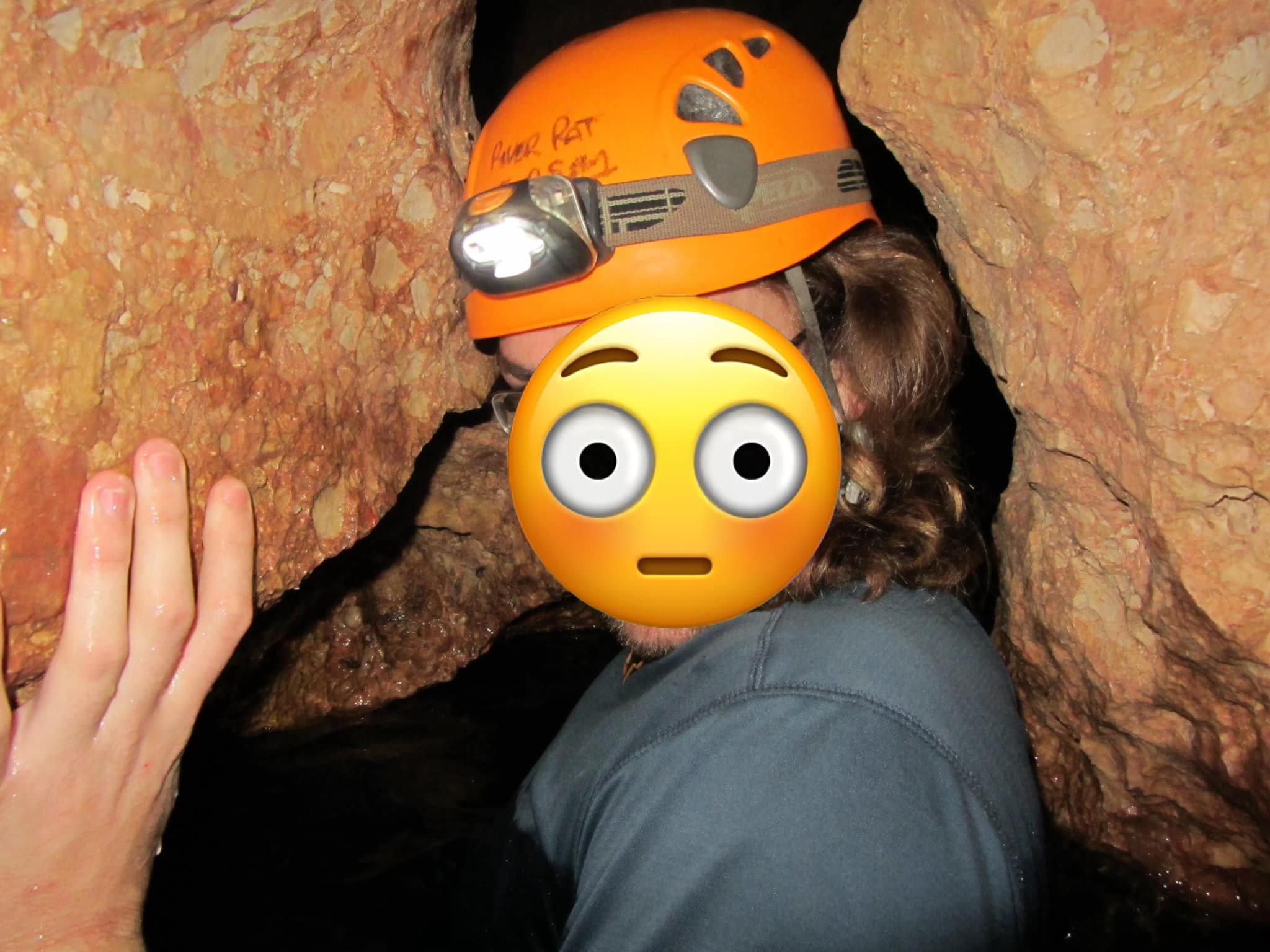
We went through what is called “Devil’s Spine”, not for the faint of heart (although no part of the trip to the ATM caves is for the faint of heart). It's a narrow channel of the cave with rushing water and a sharp turn to the right part of the way down the channel. I’m not sure what happens if you miss the right turn… Before getting out of the Devil’s Spine, we had to squeeze sideways between sharp rocks with our heads turned to the side and our bodies shoulders below water. Alex and Evan (Adam didn’t come with us) were warned to watch out for their Adam’s apples…
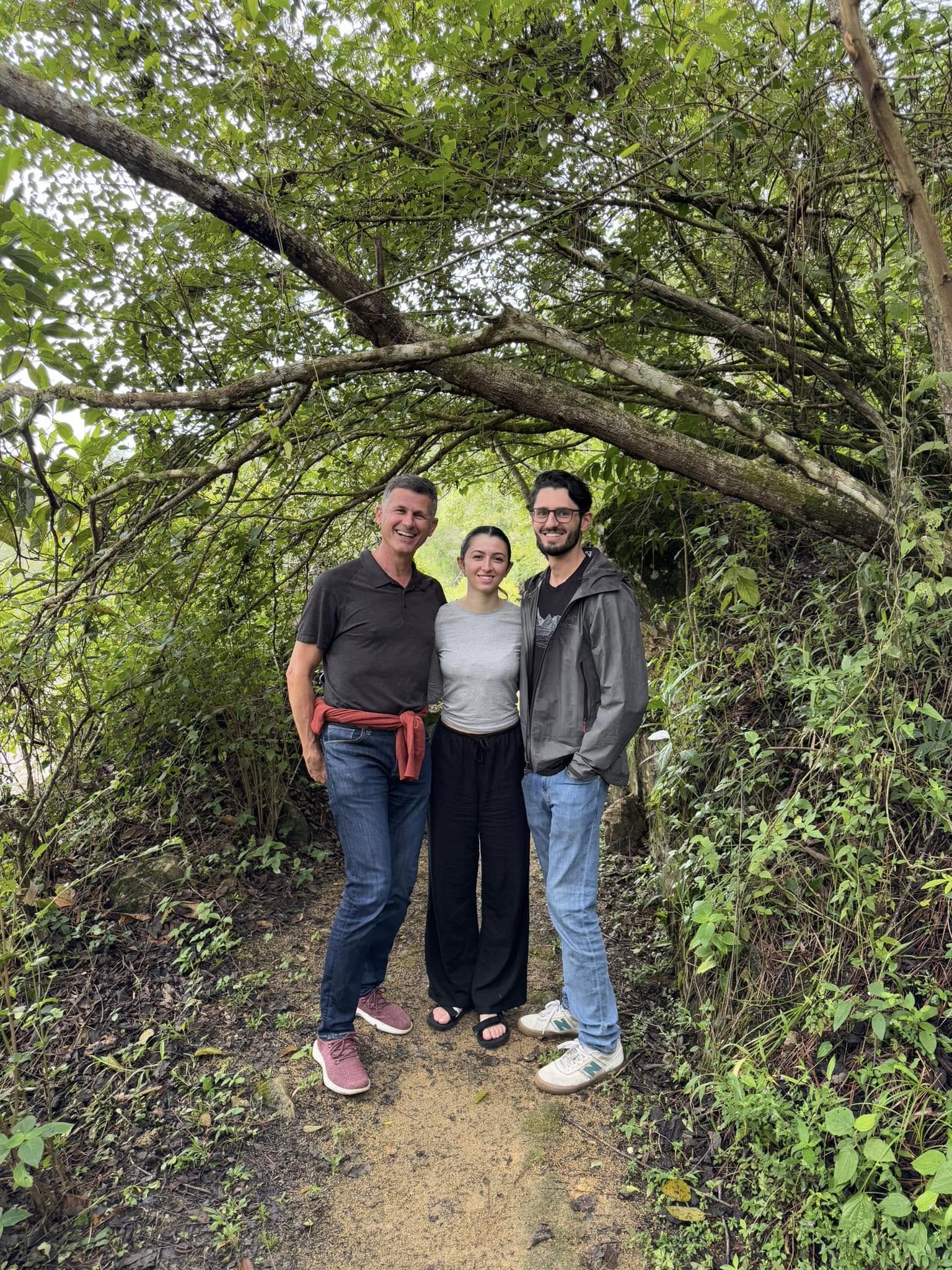
Walking distance from our rustic lodge in the Pine Ridge Forest is Big Rock Falls. We had to hike past the opposite of rustic…one of Francis Ford Coppola’s properties in Belize. It was a beautiful hike through the forest past lots of big rocks in the river that ultimately leads to the falls. Nice of Francis to let us pass freely…although it wasn’t so free as we stopped in for a pretty bougie lunch after the hike!
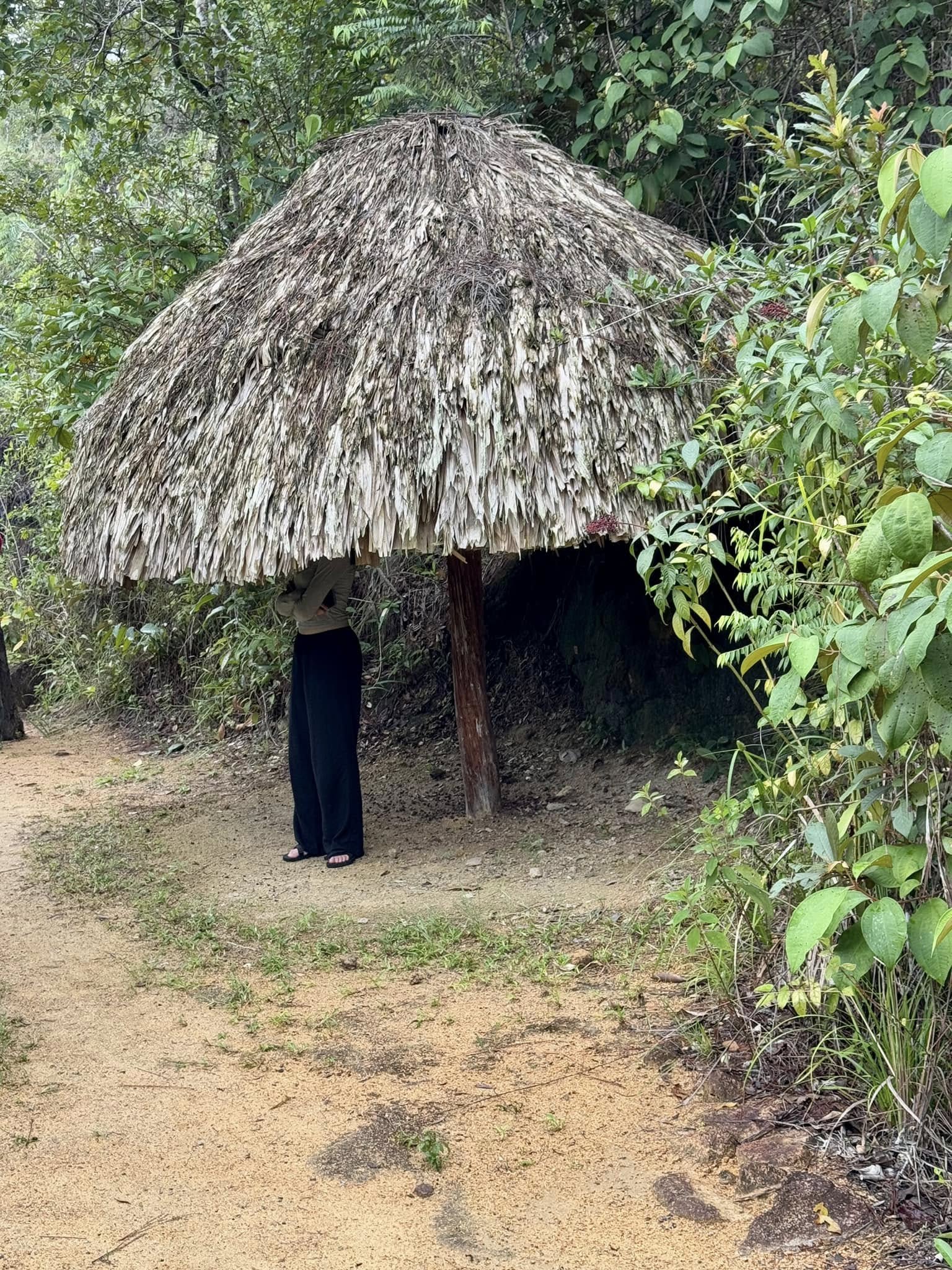
Strategic hide and seek spot?
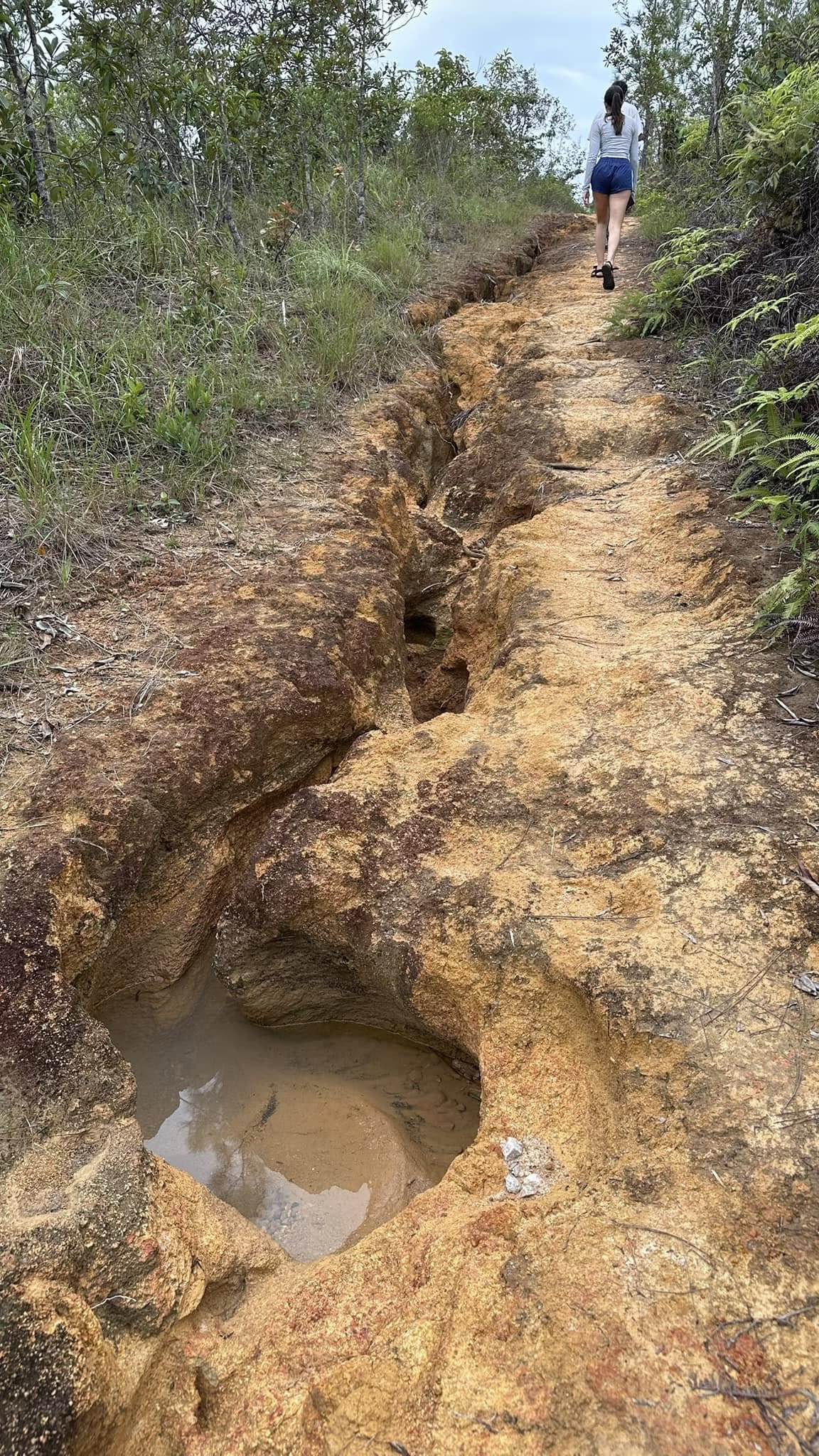
It had been raining and the ground was a bit soggy and slippery in places. Thankfully we were heading to higher ground!
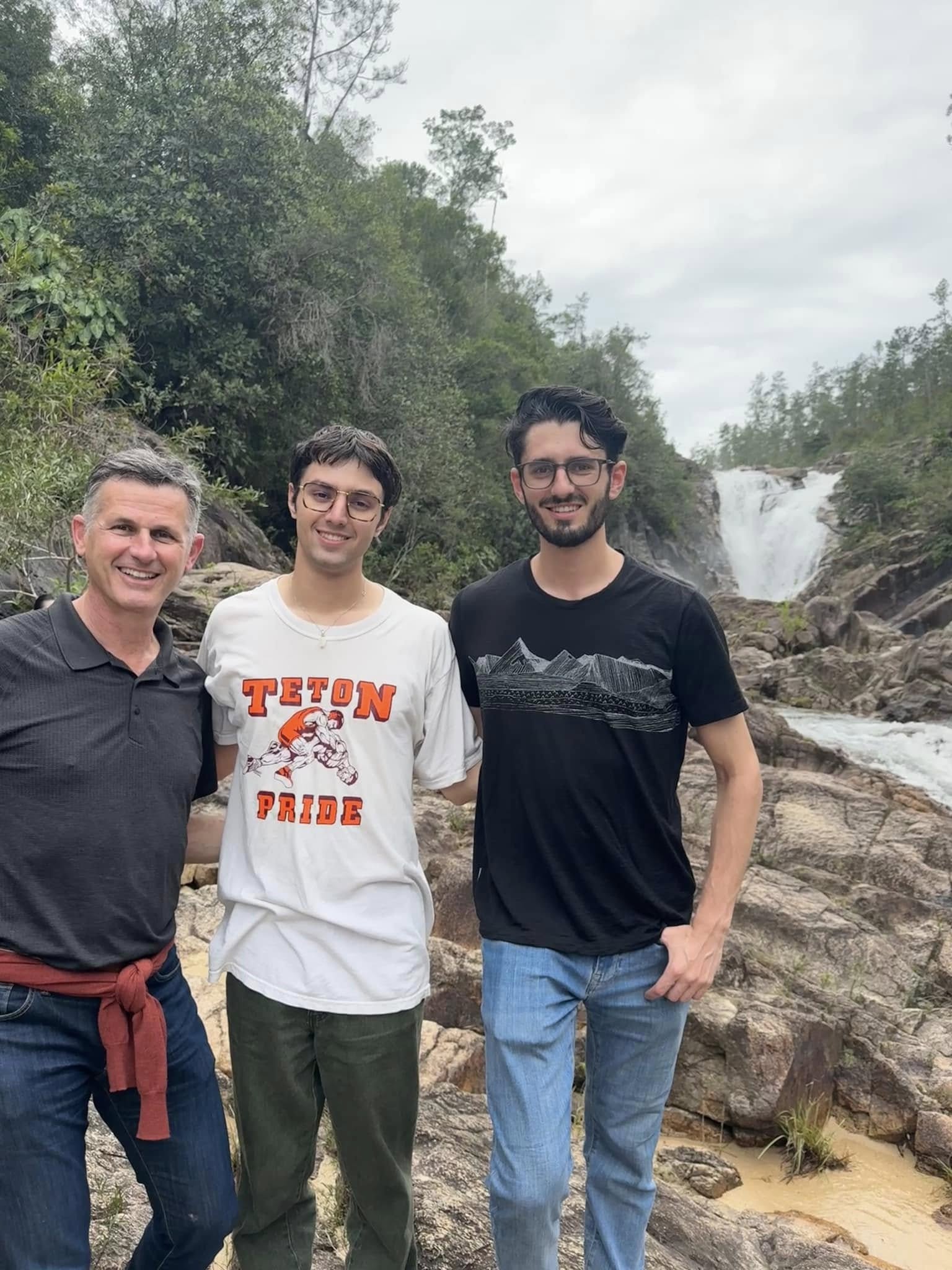
Made it to the falls!
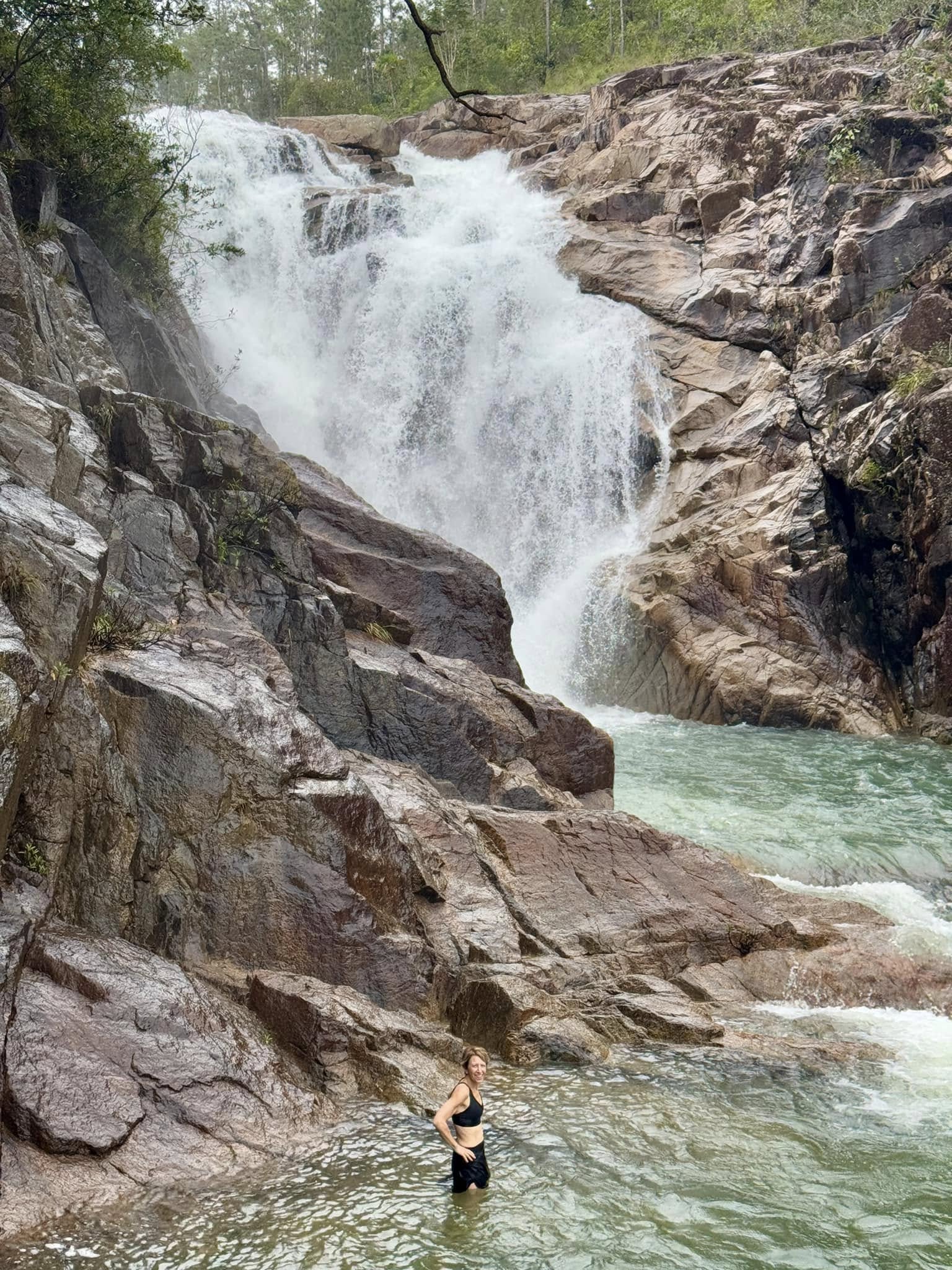
Turns out I was the only one game to go in but neglected to bring a bathing suit. It took days for my clothes to dry in this humidity! The water was perfect after such a humid hike.
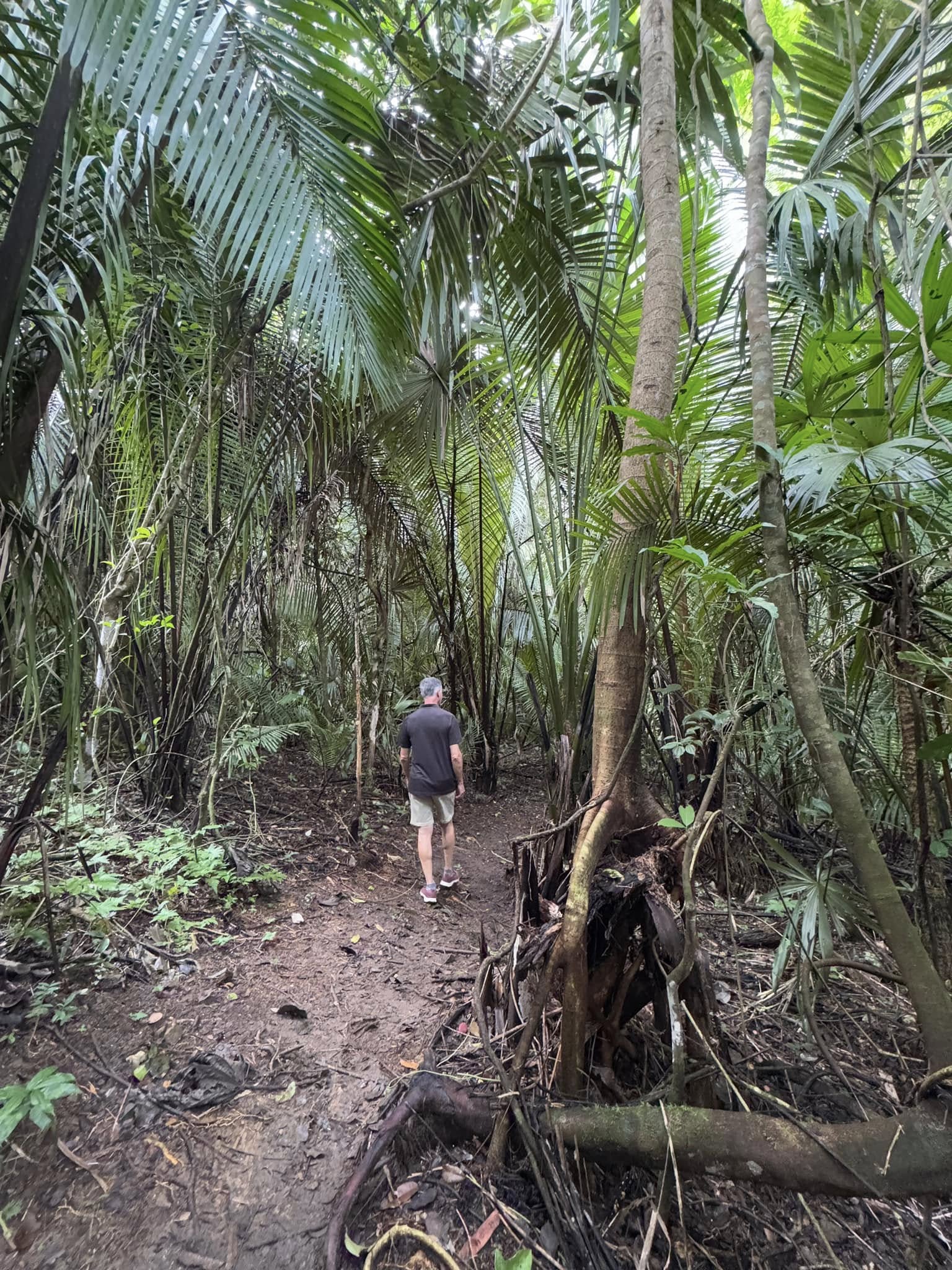
Another muddy hike after the rain in our jungle paradise.
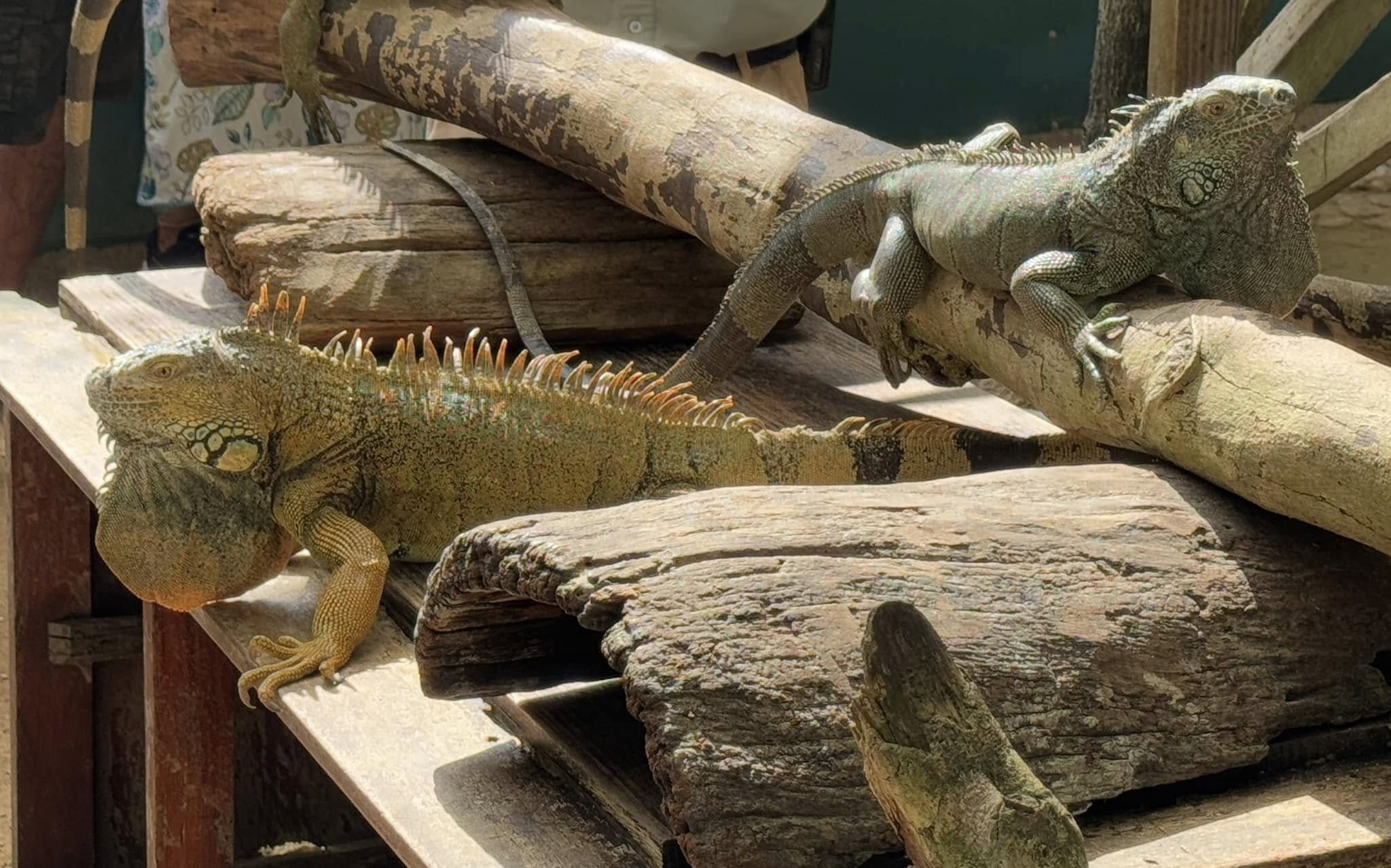
Of the 45 species of iguanas out there, Belize is home to two: green iguanas and black iguanas. Green iguanas are threatened and in 1996, conservationists here started the Green Iguana Conservation Project. Aside from habitat loss and the pet trade (green iguanas are more attractive than black ones and black ones, being city dwellers, are considered to be the pigeons of the iguana world so less appealing), green iguanas and their eggs are considered to be a delicacy. Their consumption is particularly popular around Easter and part of the education is to convince locals that the North American tradition of chocolate Easter eggs is a better choice than green iguana eggs. Not a hard sell in my opinion. As for results, our guide told us that consumption has dropped from 30% to 7%. The younger generation is more interested in saving these creatures than eating them, thanks to educational programs like this. The conservation project rescues injured iguanas with the hopes of reintroducing them back into the wild if possible. If not, they become permanent residents here where they serve as ambassadors to the conservation cause and may be lucky enough to be part of the breeding program.
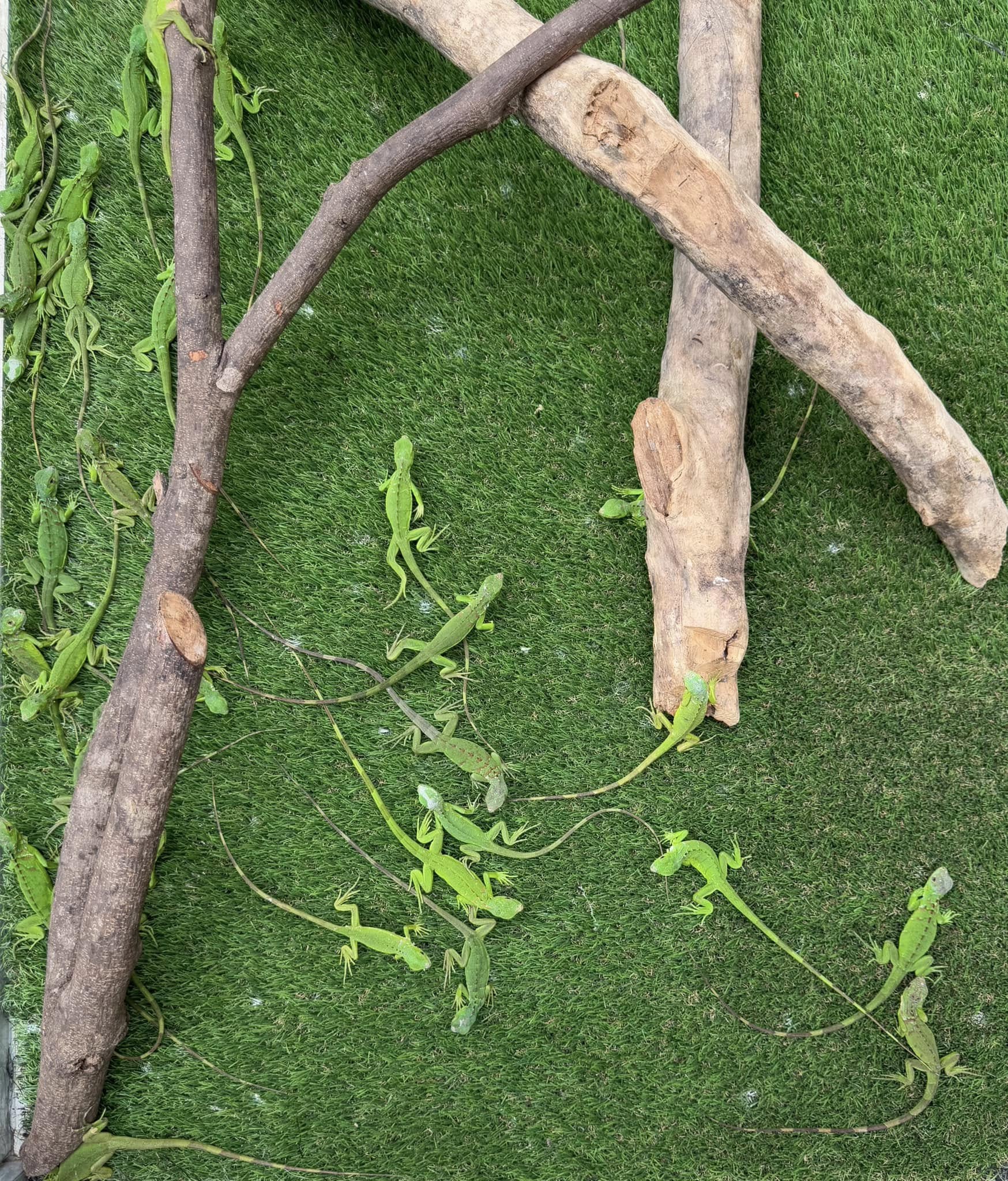
100-150 baby iguanas hatch here each year and are released into the wild, sadly with only a 10-15% survival rate. The eggs are incubated at specific temperatures to balance the population by gender. It turns out that X and Y chromosomes do not determine the gender of these hatchlings, it’s the temperature during incubation. Eggs turn male if the temperature during the middle third of their incubation is between 31C-33C; above or below this, the eggs will go female. The implications of climate change are not lost on the future of the species.
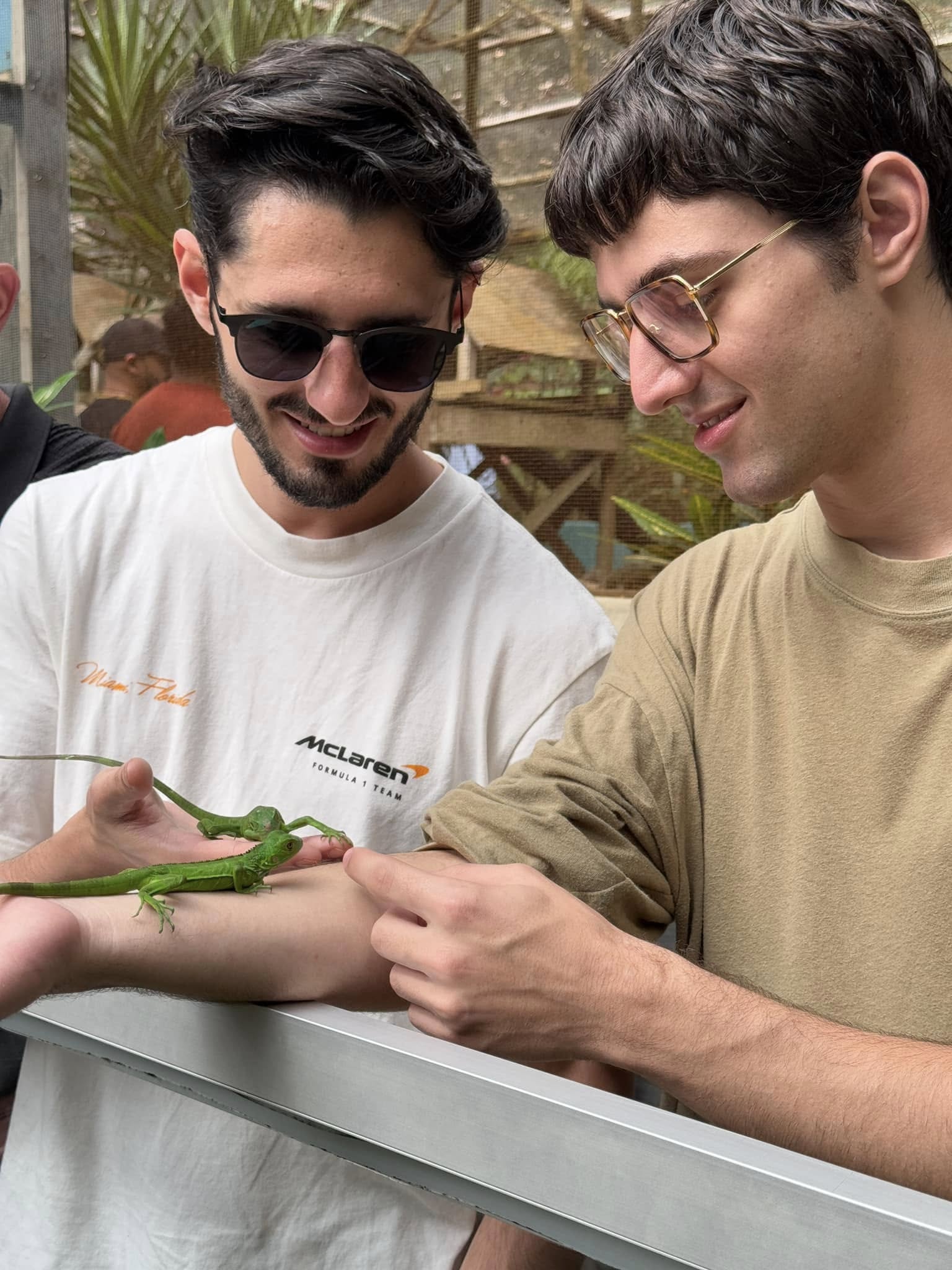
Playdate!
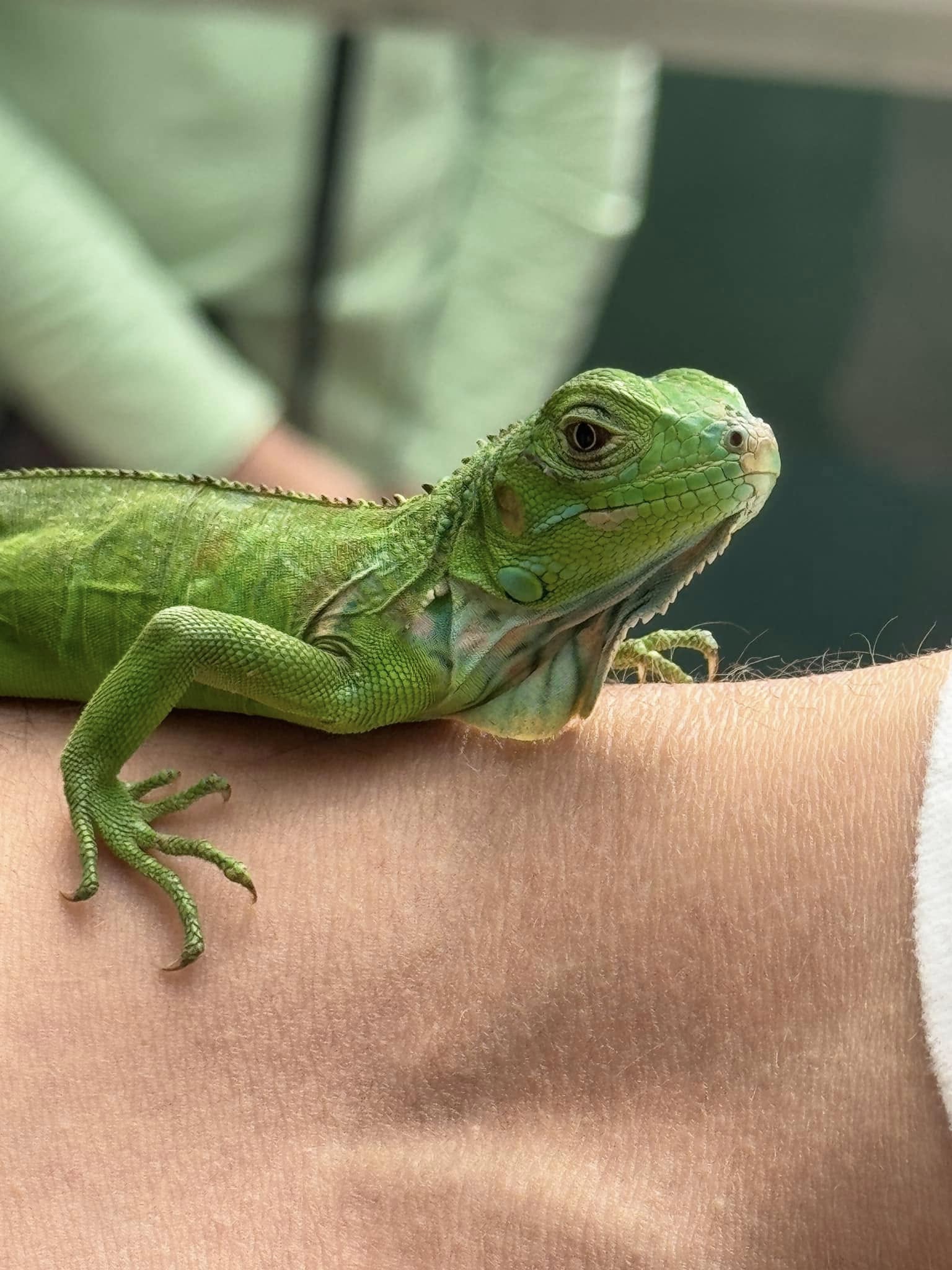
Quite a photogenic 5-month-old…they kind of lose their cuteness as they age.
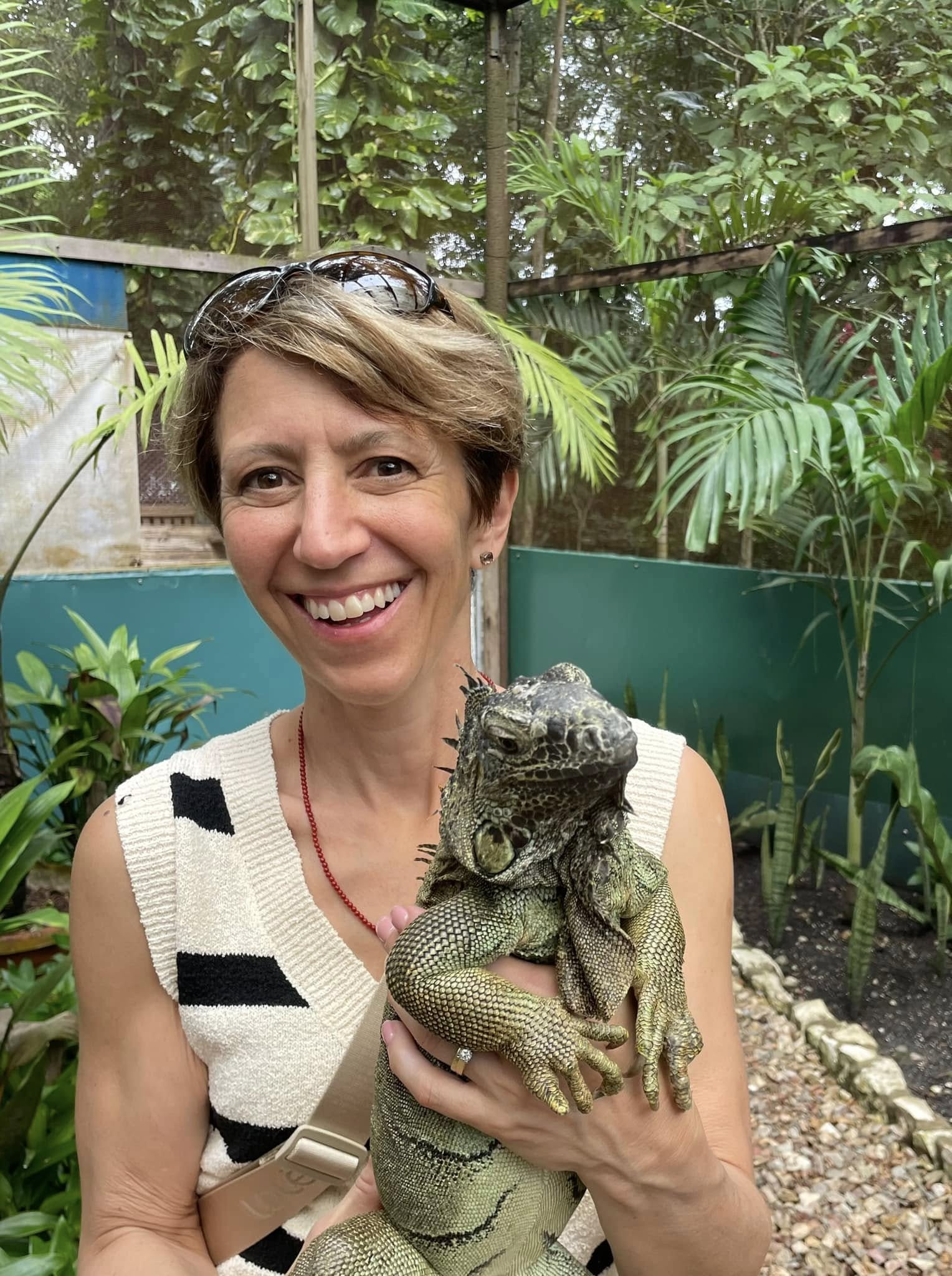
A face only a mother could love…
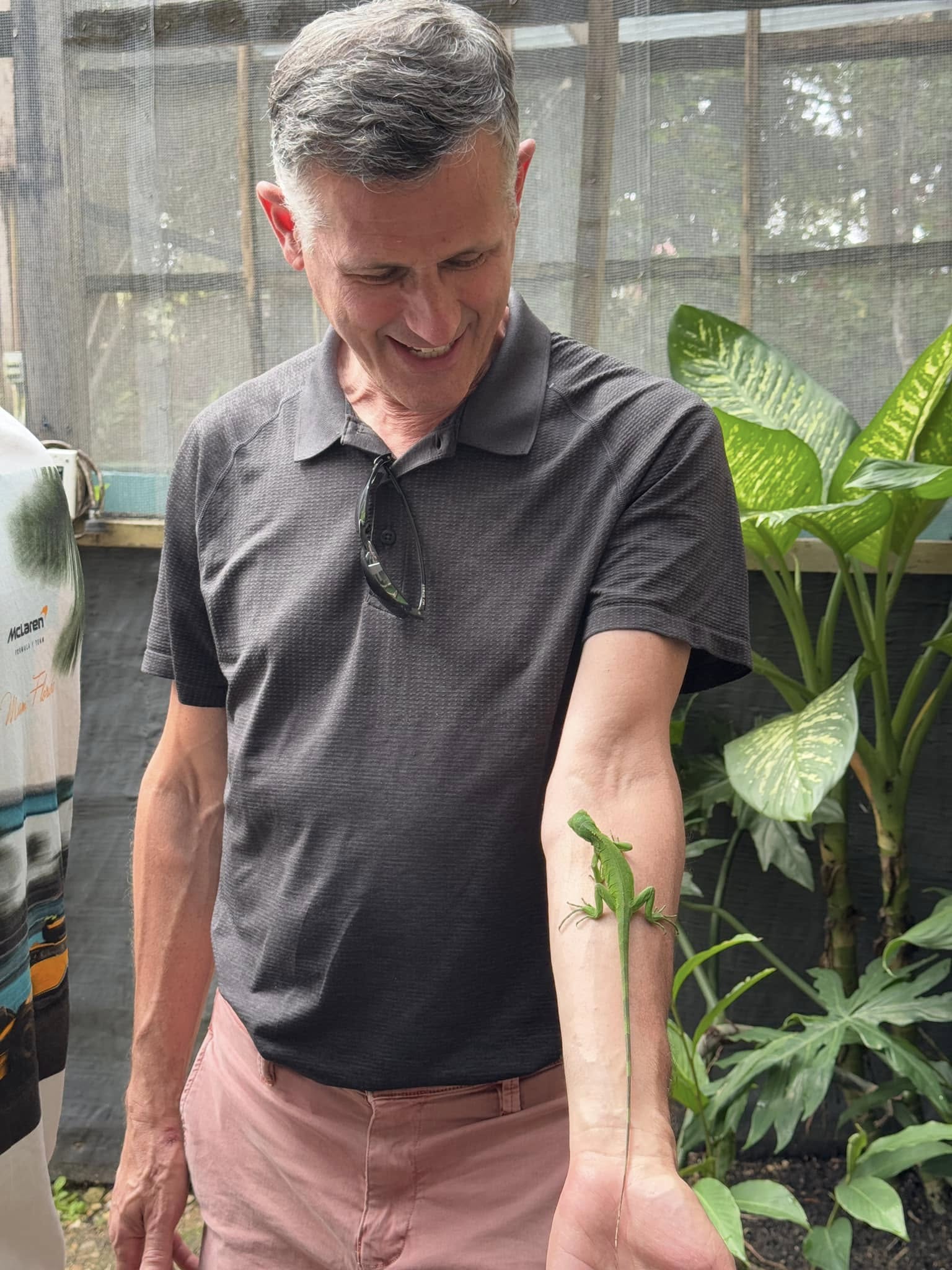
Adam got a tattoo!
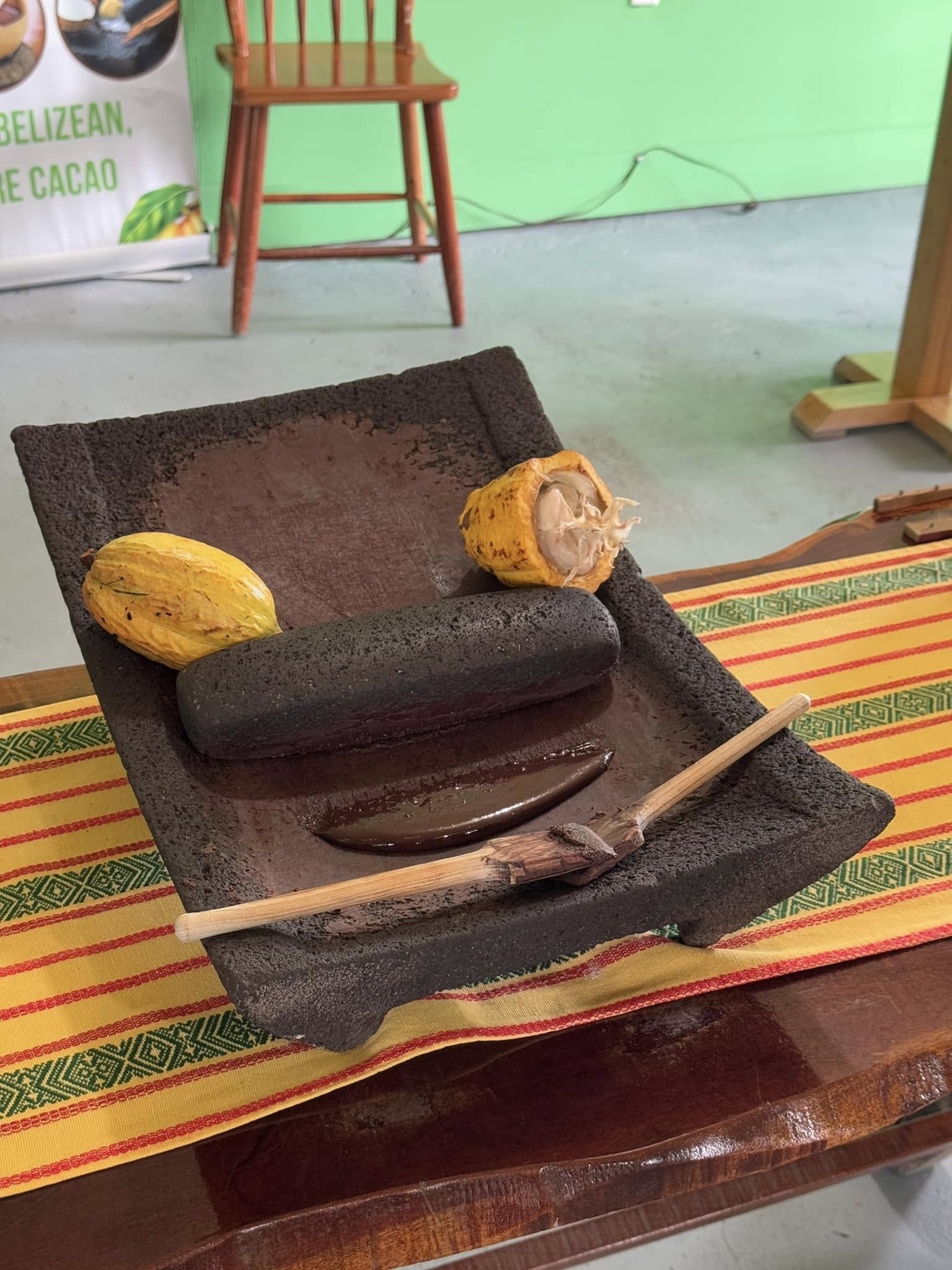
I’m so glad we stopped in at Ajaw Chocolate where we learned all about the Maya way of making chocolate. The owners are of Maya descent and brought their chocolate-making to San Ignacio ten years ago. We can thank the Maya for bringing us chocolate in the first place! They were the first to experiment with wild cacao trees and figured out how to cultivate them in 1500BCE. We got to follow the tasting steps of the ancient Maya as they figured out by experimentation and by accident what to do with these pods growing on tree trunks. We tasted the fresh-from-the-pod cacao bean still with its fleshy coating (the coating tastes a bit like a lychee and the raw bean is quite mild with a hint of chocolate at the end of chewing), then the fermented bean and the sun dried bean (more chocolate flavour), and finally the roasted bean, where we peeled off the husk and ate the cacao nibs inside. The husks are either used for tea or compost. The fermentation and drying were critical parts of the process which the Maya figured out by observation. Unpicked pods started to rot on the tree with the beans fermenting inside the pods. Aha!
Then the magic started. Using basalt stone, our guide ground the nibs into a paste three times, each time getting smoother. This paste was then mixed with hot water into a chocolate drink which we had first with honey and then added chilli and allspice. Delicious and this is exactly how the Maya had their chocolate! An example of a happy accident in the process came from using the same porous basalt grinding stone for spices and cacao beans. The magic of cross-contamination!
While Belize was one of the original countries where cacao was found, it is a relatively small producer. There are 15-17 million cacao trees here, mostly in the south near Placencia. In a good year, a tree yields 50 pods which ends up producing 1-2 kilograms of dried cacao beans, enough to make roughly 40 chocolate bars. Only about half of the beans are of acceptable quality to make chocolate.
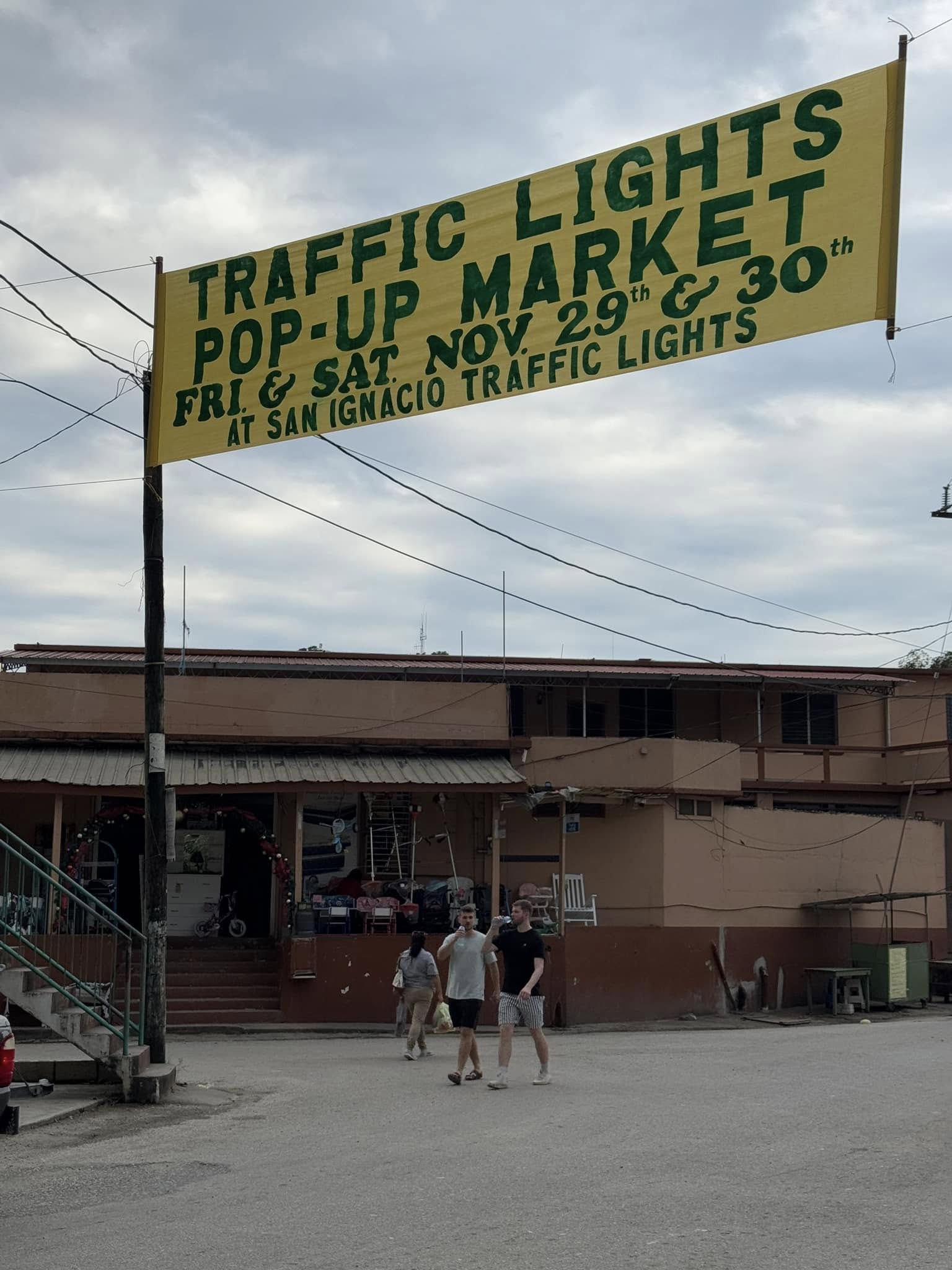
This would have been a known locale for the pop-up market! Our guide told us that until recently there were only four sets of traffic lights in all of Belize and this one in San Ignacio is off on Sundays (who would be driving when everyone is in church?).
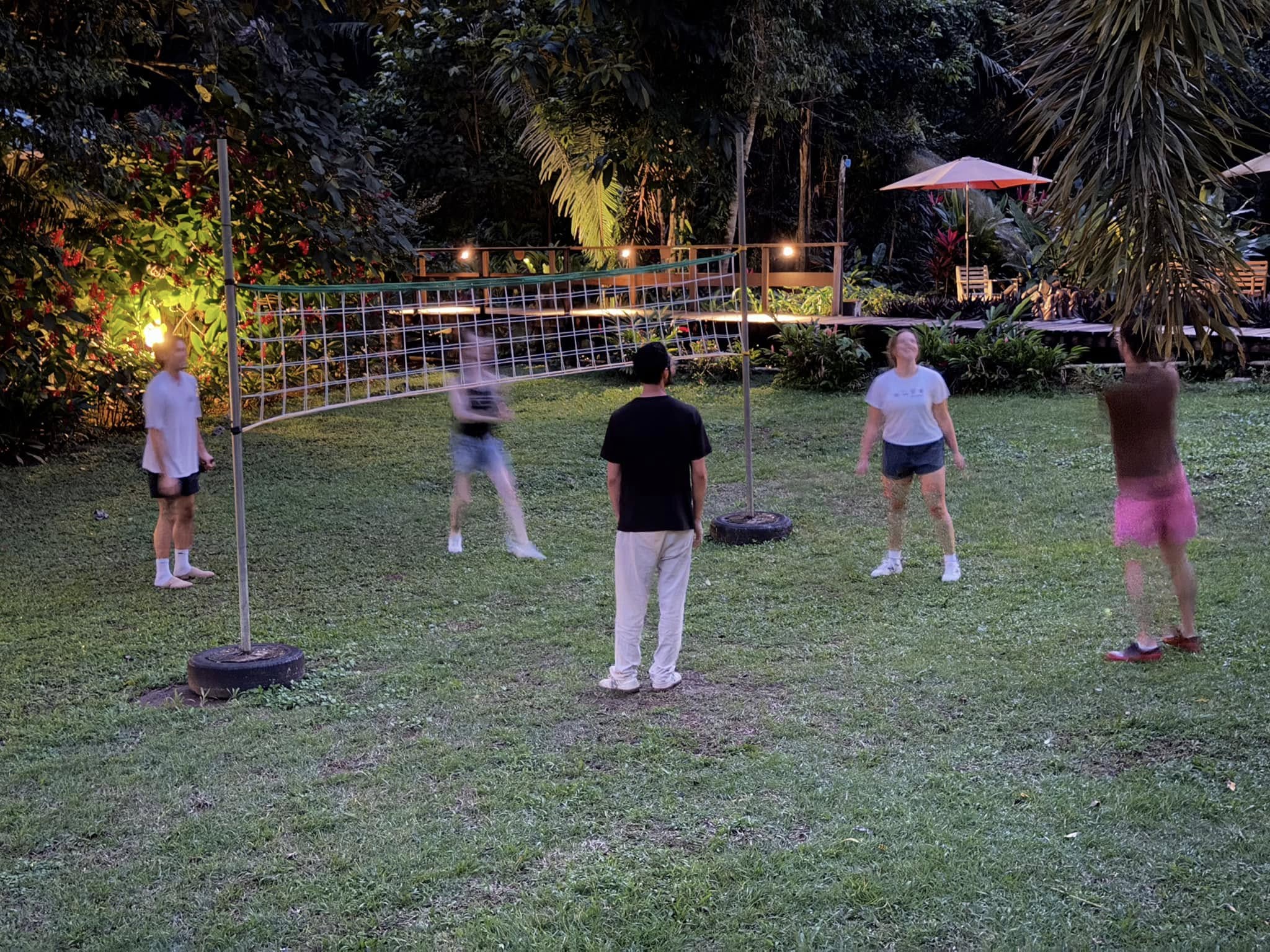
What?! A volleyball net in the jungle? Must have known Matthew was arriving!
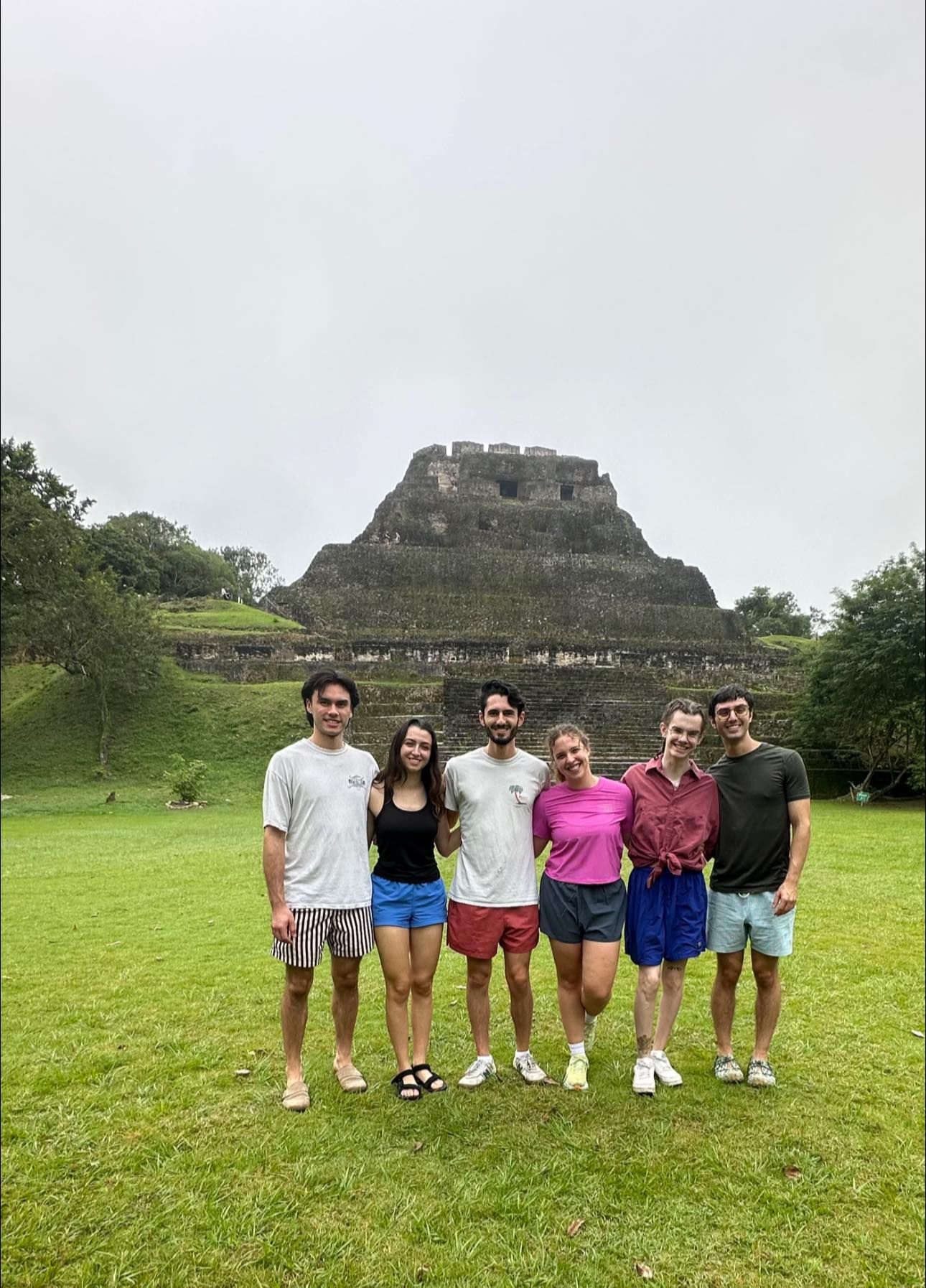
Xunantunich is the second tallest ruin in Belize at
130 feet, 10 feet shy of the tallest, Caracol (Caracol is not nearly as well known because it’s very remote and doesn’t have a proper road yet). Visitors are still allowed to climb this structure which was a business and political centre with elites living inside. Photos and details about the trip to Xunantunich are courtesy of Alex and Evan. Adam and I were under the weather and had to bail on this excursion at the last minute.
Termites were on the menu on this excursion as well! There was a 50/50 chance of getting mint or carrot ones. Robyn really wanted a mint one since she got a carrot last time. Matthew got a mint on his first try and Robyn got carrot again! Surely the odds were in her favour and if she tried another it would be mint. Nope. Carrot. She kept thinking the next would be a minty termite but after about 10, she gave up. Clearly she needs to be kept far away from a casino!
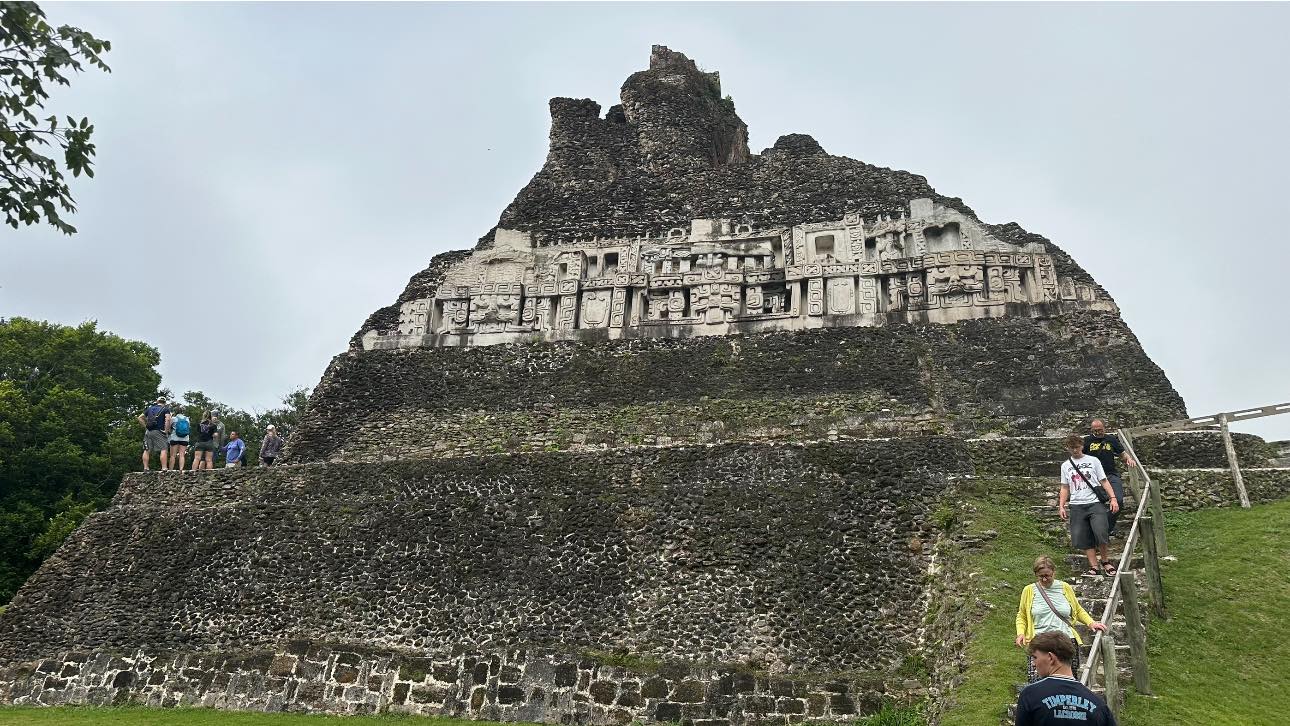
El Castillo, the centre of Xunantunich, has a facade showing partly what it would have looked like in its heyday when 200,000 people lived in the Belize Valley (current population of Belize is 420,000). Back then, the entire limestone structure would have been covered in plaster like this painted red, white and orange. The recreated carvings around the outside depict the sun and the moon gods, some ritual serpents and masks. Around the time of the downfall of the Mayan empire, the community started to realize that the priests were scamming them. A bit of a riot erupted and the residents stormed the government buildings (hmmm, Jan 6 inspiration?) and defaced the gods by breaking off their noses. That was the beginning of the end…
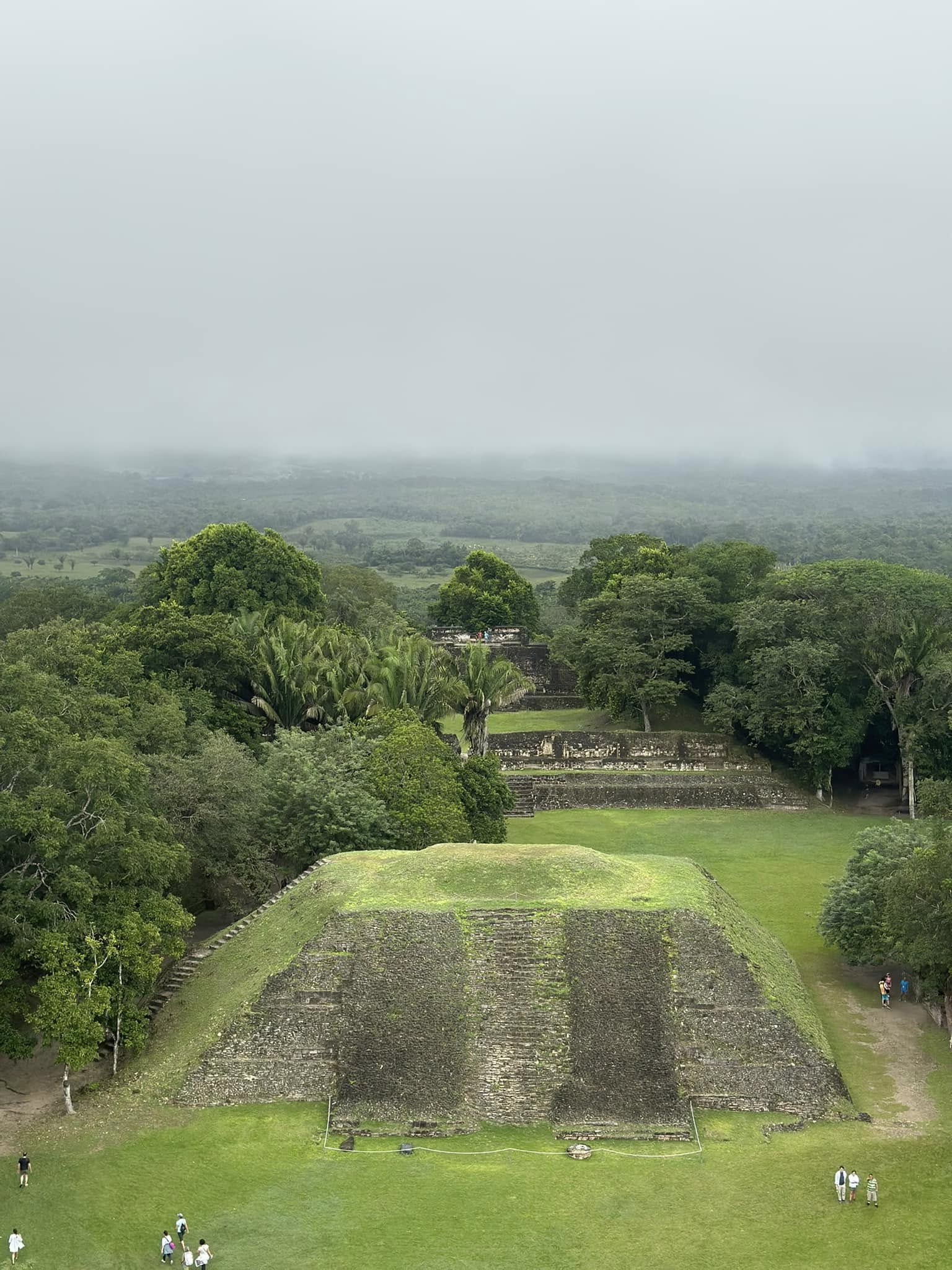
From the top of El Castillo you can see a few other structures. The locals believe that El Castillo represents the heavens and the low structure in the distance, the nine layers of the underworld. The kids were told that this excursion was extra special because they got to go to heaven and hell in the same day!
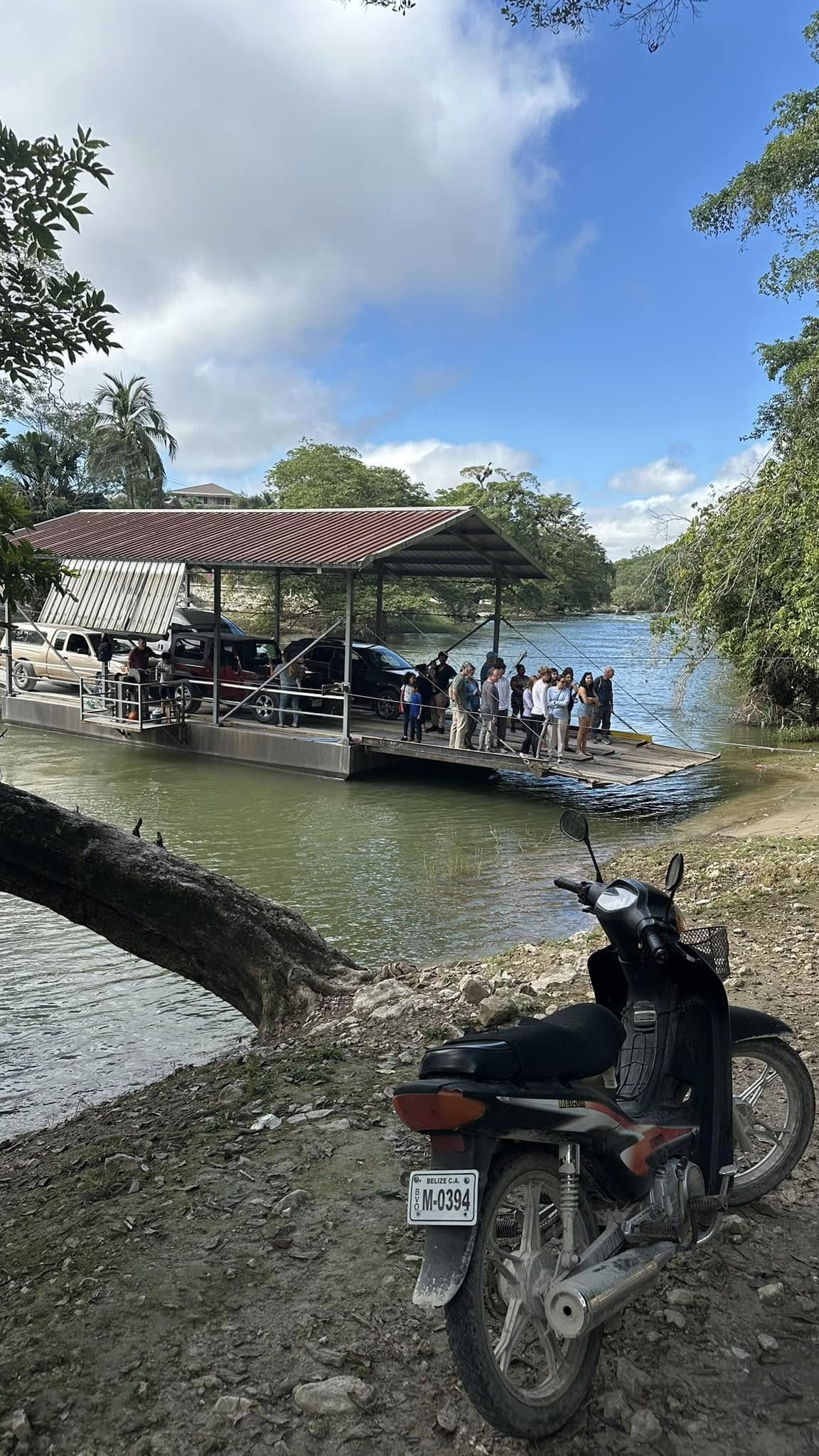
A hand-crank ferry across the Mopan River gets foot, horse and vehicle traffic across to Xunantunich. The river is all of about 25 metres wide on a good day. A few days before this, there had been so much rain that the ferry couldn’t run and the site was closed to visitors.
From the top of the underworld structure, they saw some amazing spider monkey antics. Cirque du Soleil has nothing on these guys!
And then this happened…Evan coaxing out a tarantula with a blade of grass. Much too close to my son’s hand, in my opinion, but clearly there was no parental supervision this day!
Chillin' in Caye Caulker
We finished off our adventure and 2024 on a few of Belize’s beautiful Cayes. Caye Caulker is a chill, hippy kind of island that was split in two by Hurricane Hattie in 1961. Rather than dwelling on this mishap, they turned it into a great opportunity. The Split, as it’s known, is the hub of the little bit of action to be found on the island!
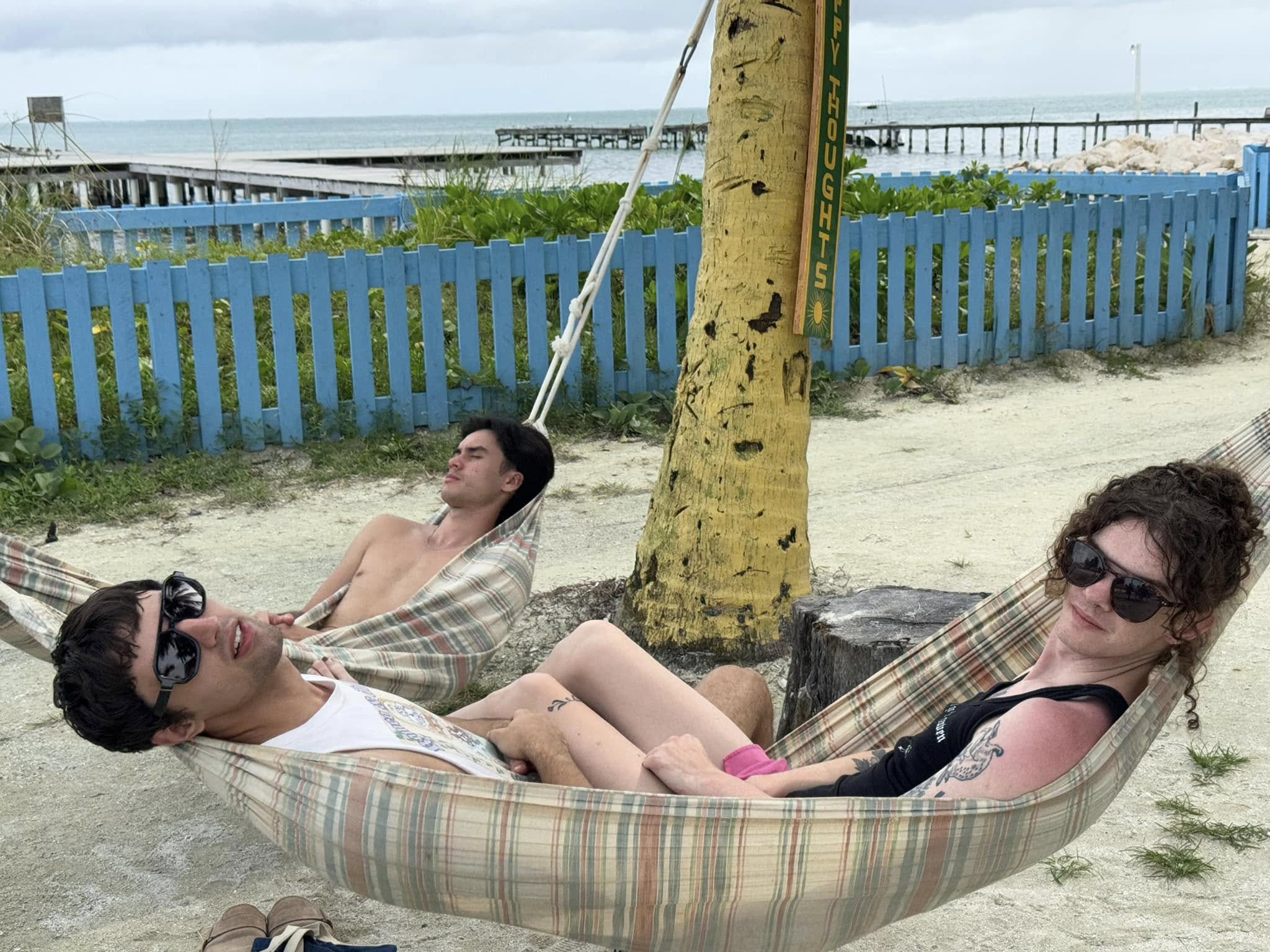
The chill-ness of Caye Caulker.
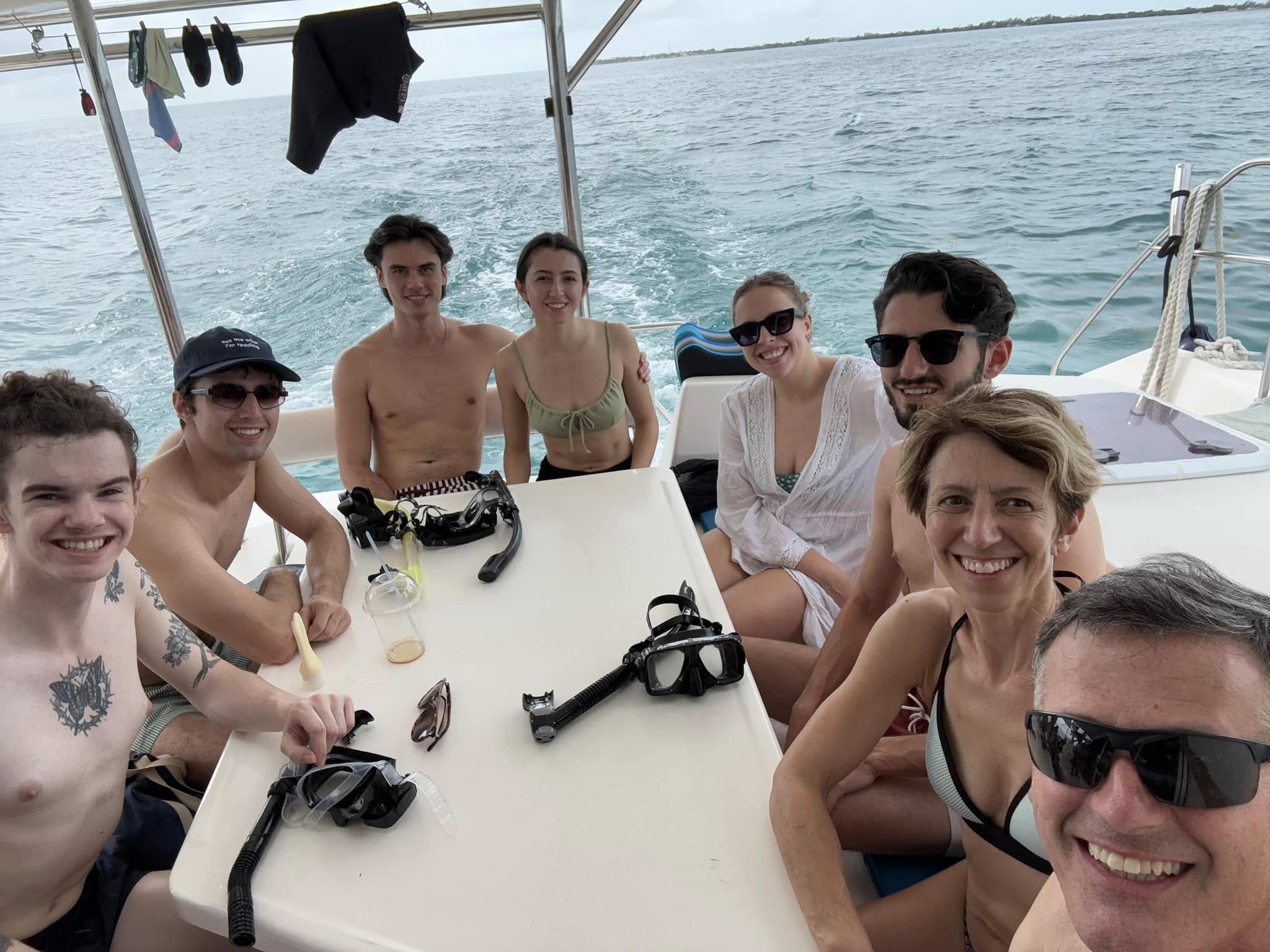
Caye Caulker was the perfect jumping off point to explore a little bit of the world’s second largest barrier reef, running 300km along Belize’s coast. A biodiversity hotspot, this is home to tons of marine life and amazing coral, and is a refuge for a number of threatened species including the green sea turtle which we were lucky enough to see.
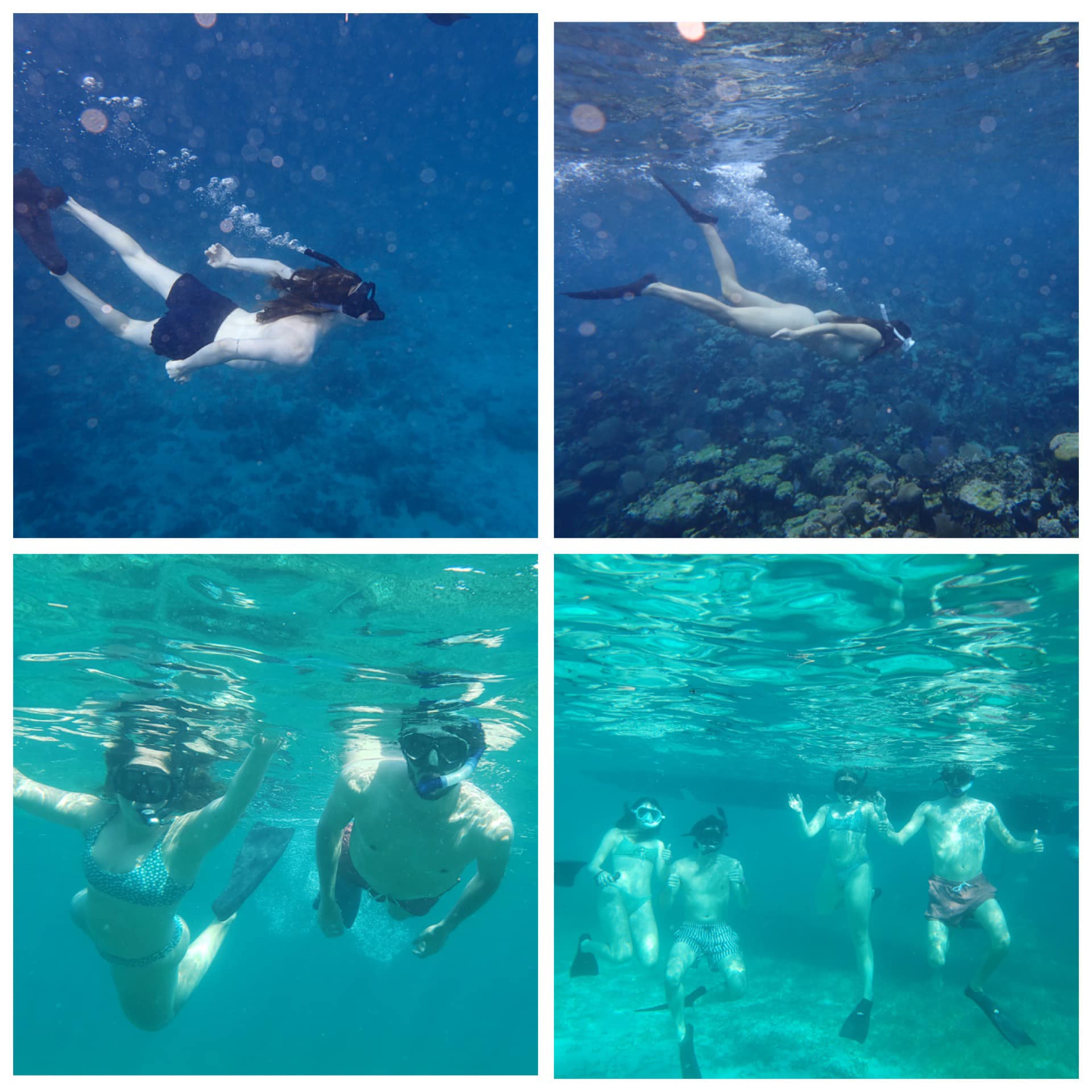
Despite the fact that we were snorkelling, there was a lot of free-diving with trailing air bubbles going on!
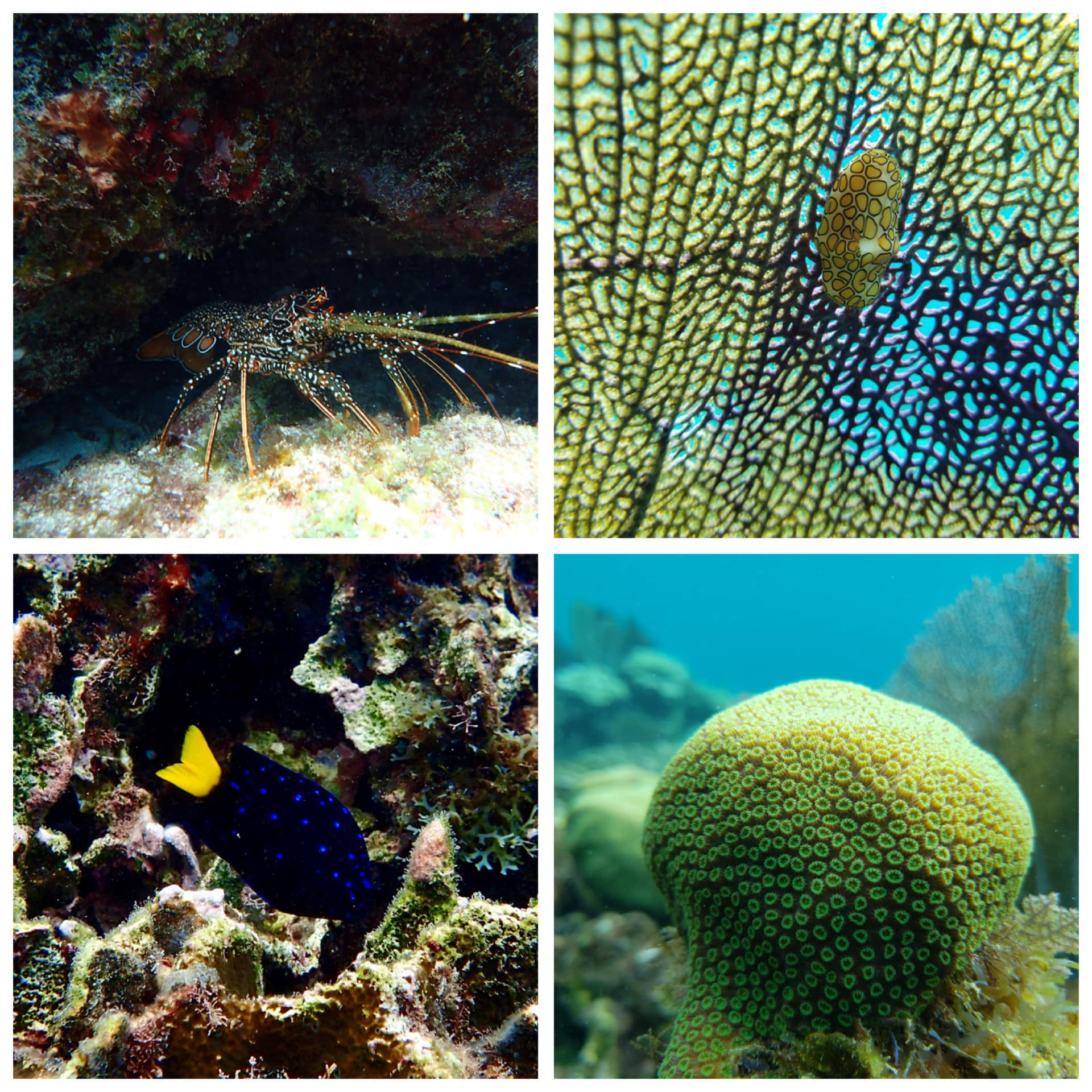
The world under the water is truly a wonder to behold.
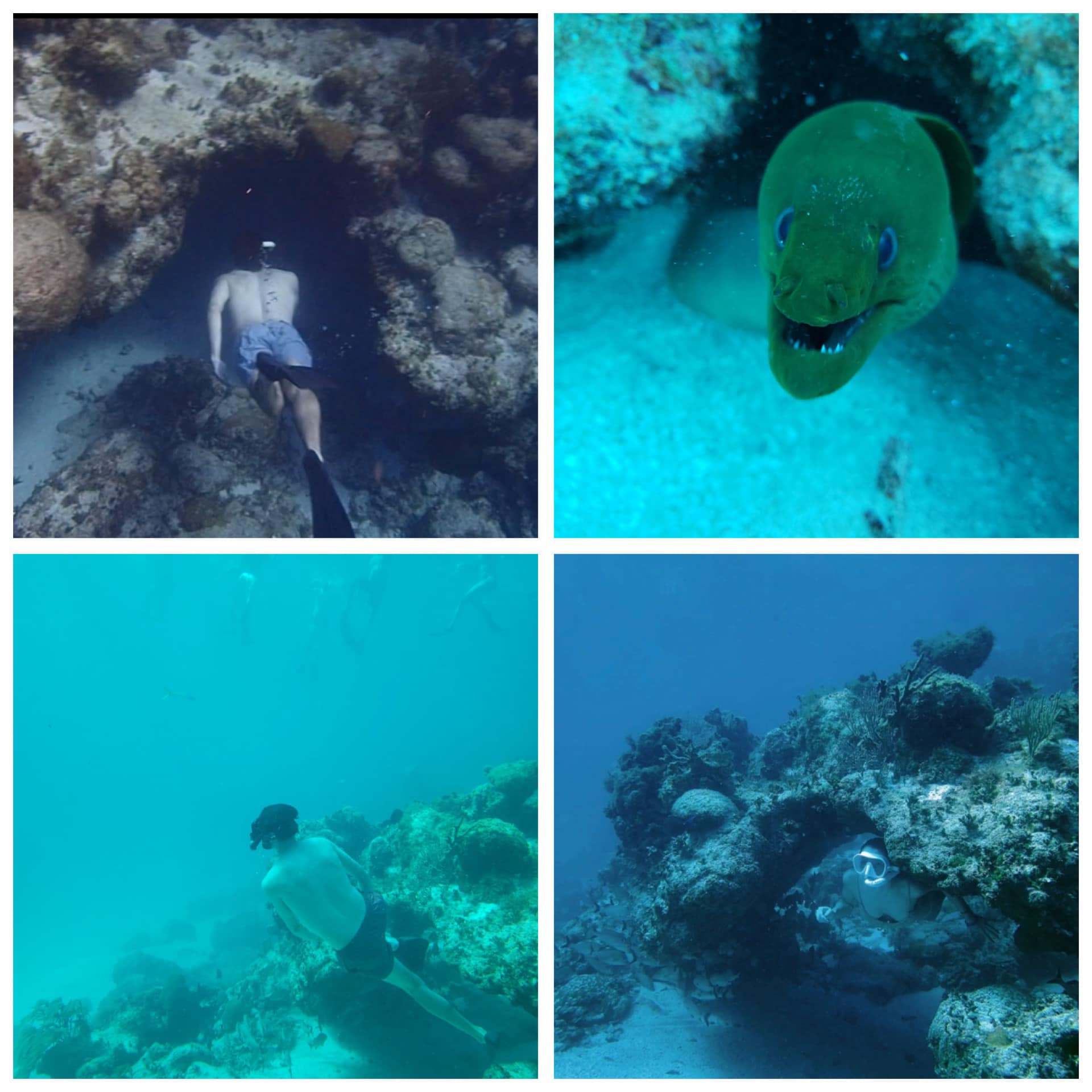
Thanks to their newfound underwater confidence from their PADI training, Robyn Lorant, Evan Lorant and Alex Lorant did a little free-dive swim through a tunnel at the bottom of the coral gardens, perhaps inspired by this Moray Eel we encountered. Robyn wins the imitation contest!
Here’s Alex doing the full dive through the tunnel.
…and Evan following big brother through the tunnel.
A pod of dolphins were playing around and under our catamaran!
This curious ray showed up to see what all the fuss was about…
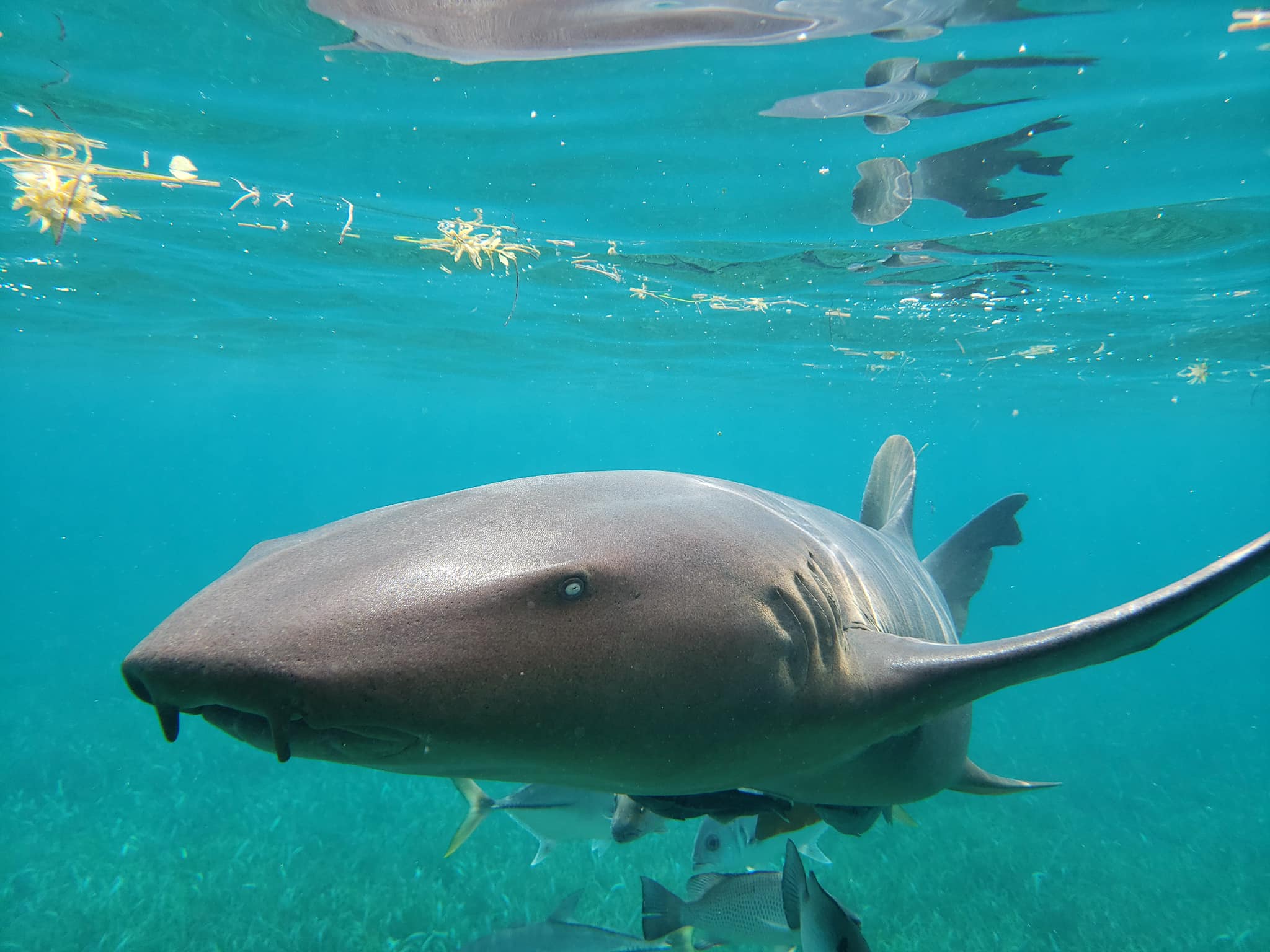
This was the fuss…Yup, we swam with a bunch of these guys too!
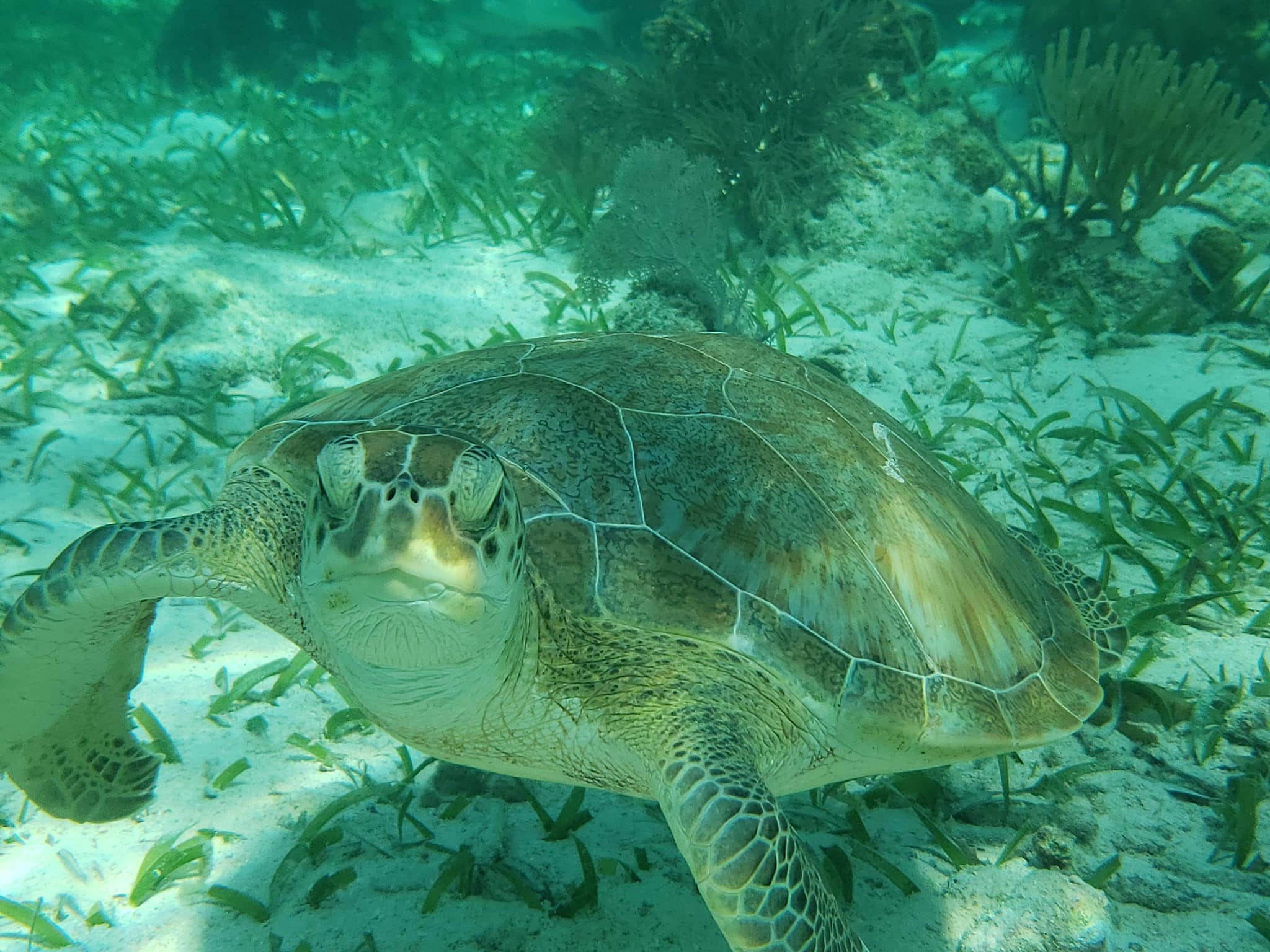
This endangered green sea turtle is looking a little annoyed after being roused from his solitude. Given his endangered status, I guess we should have been a bit quieter…
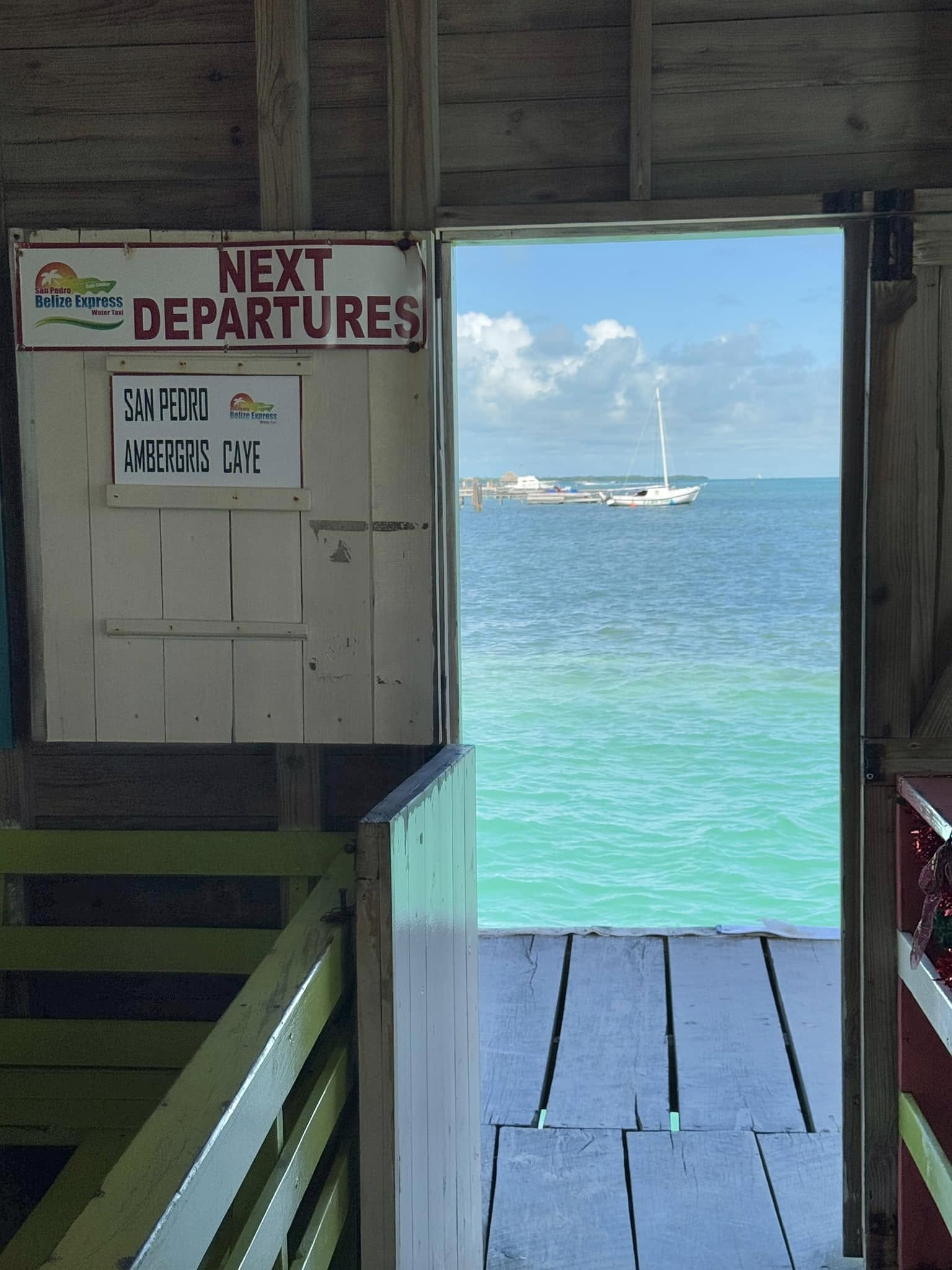
This is the kind of boarding gate I could get used to!
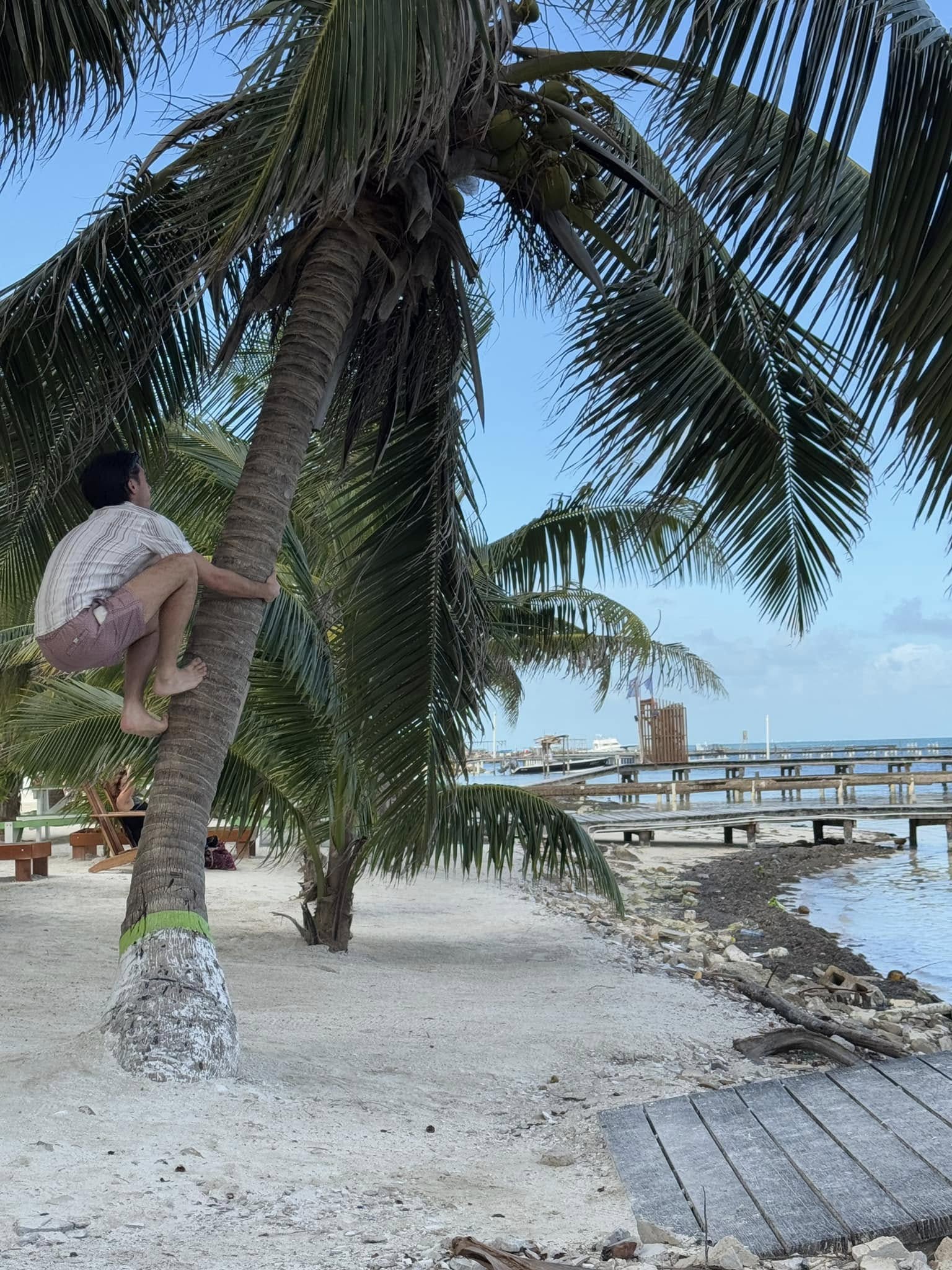
If you’re ever stuck on a deserted island, Matthew is the guy you want on your team!
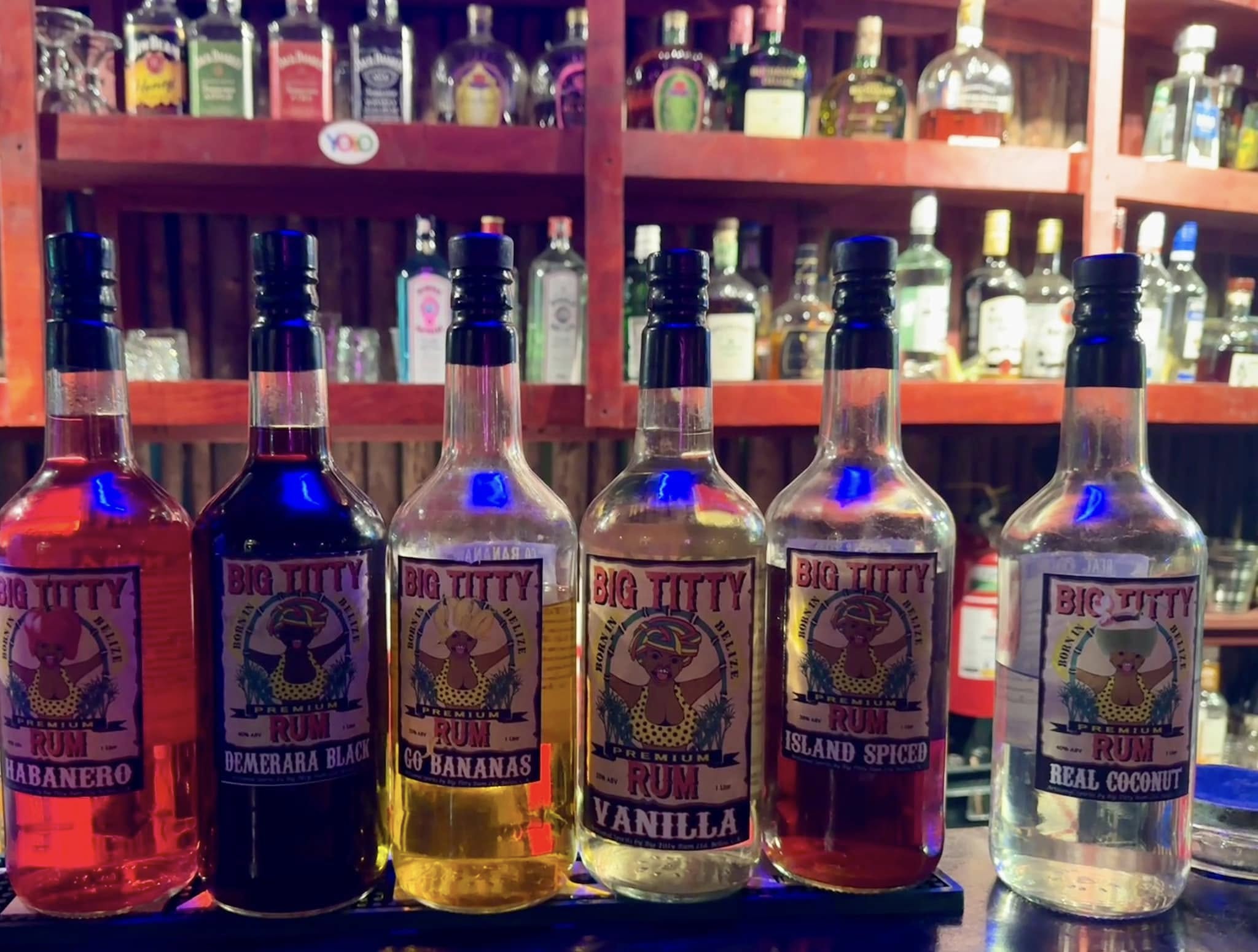
One of Belize’s biggest rum brands. They sure know how to pick a name down here!
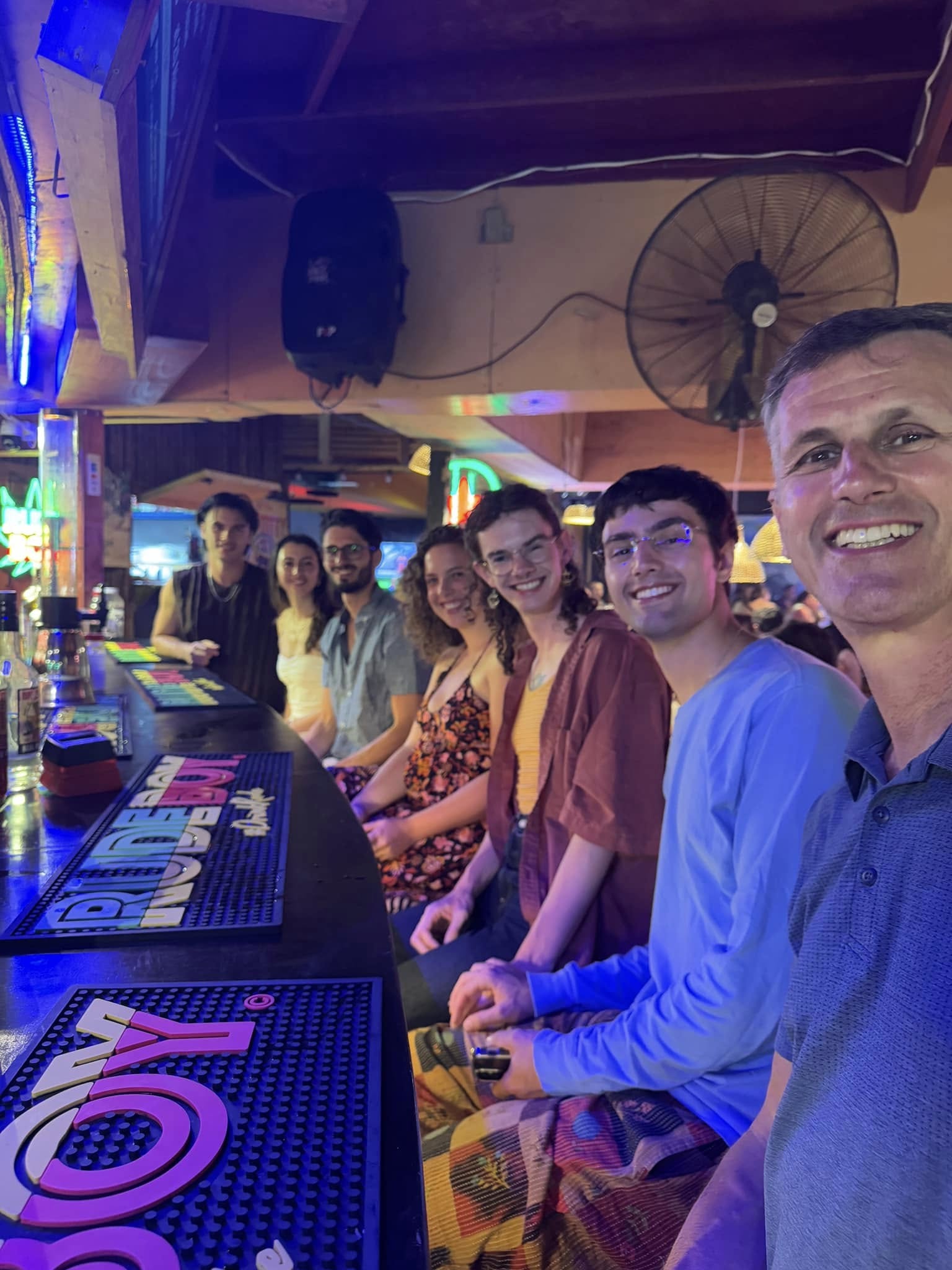
Eight people walk into a bar…
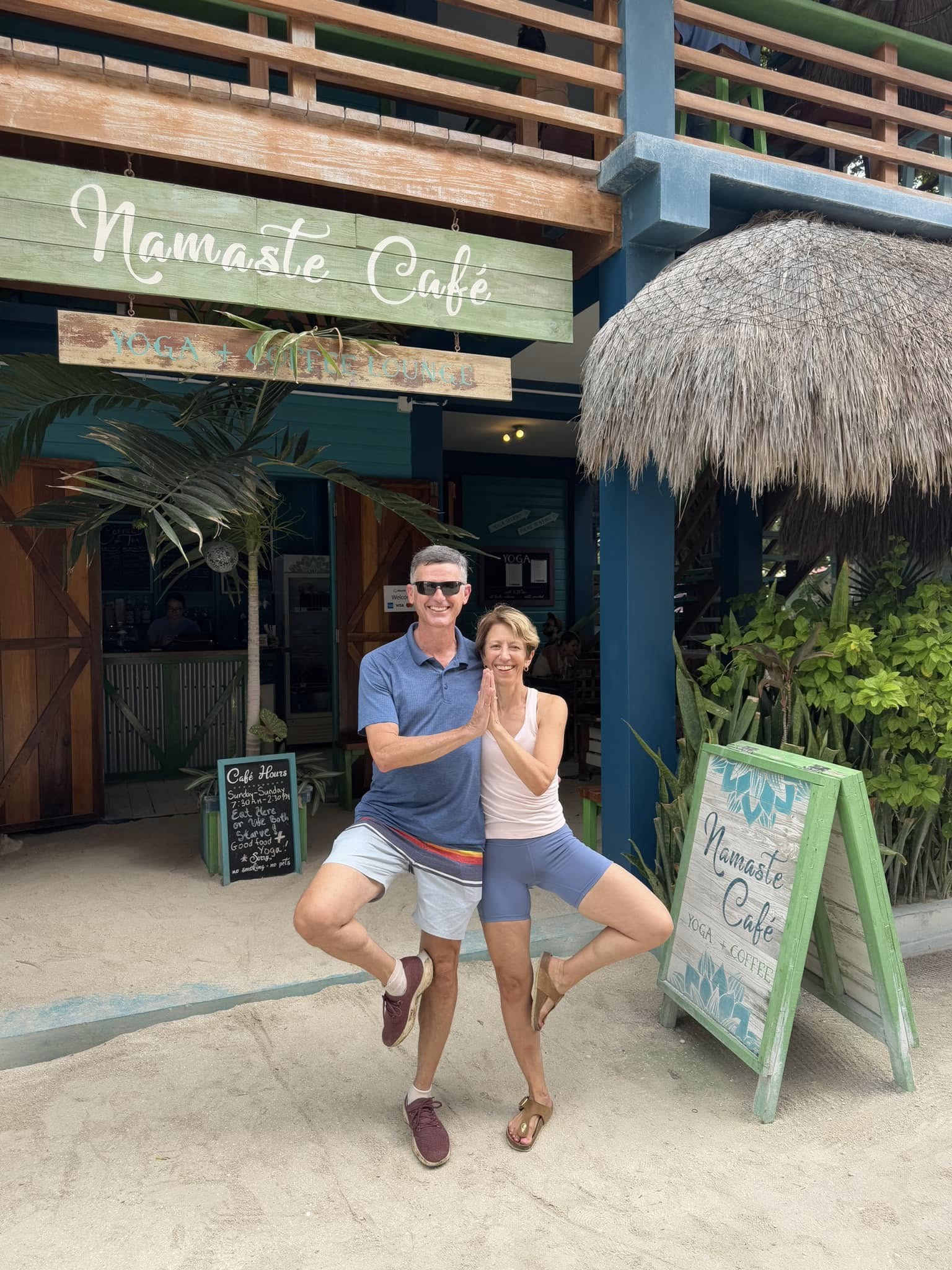
Rounding out the year with a bit of morning yoga…
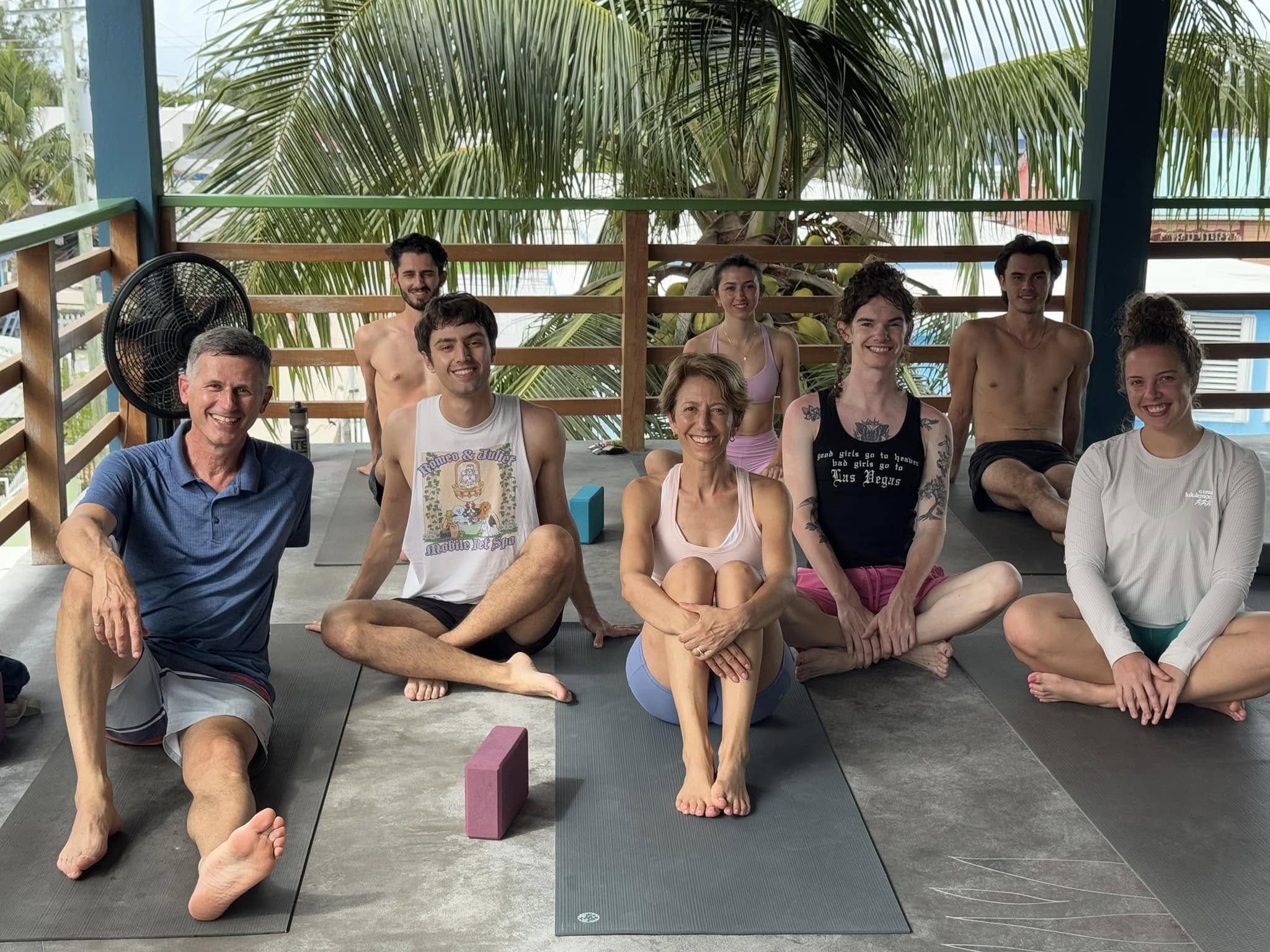
…with the whole gang to boot!
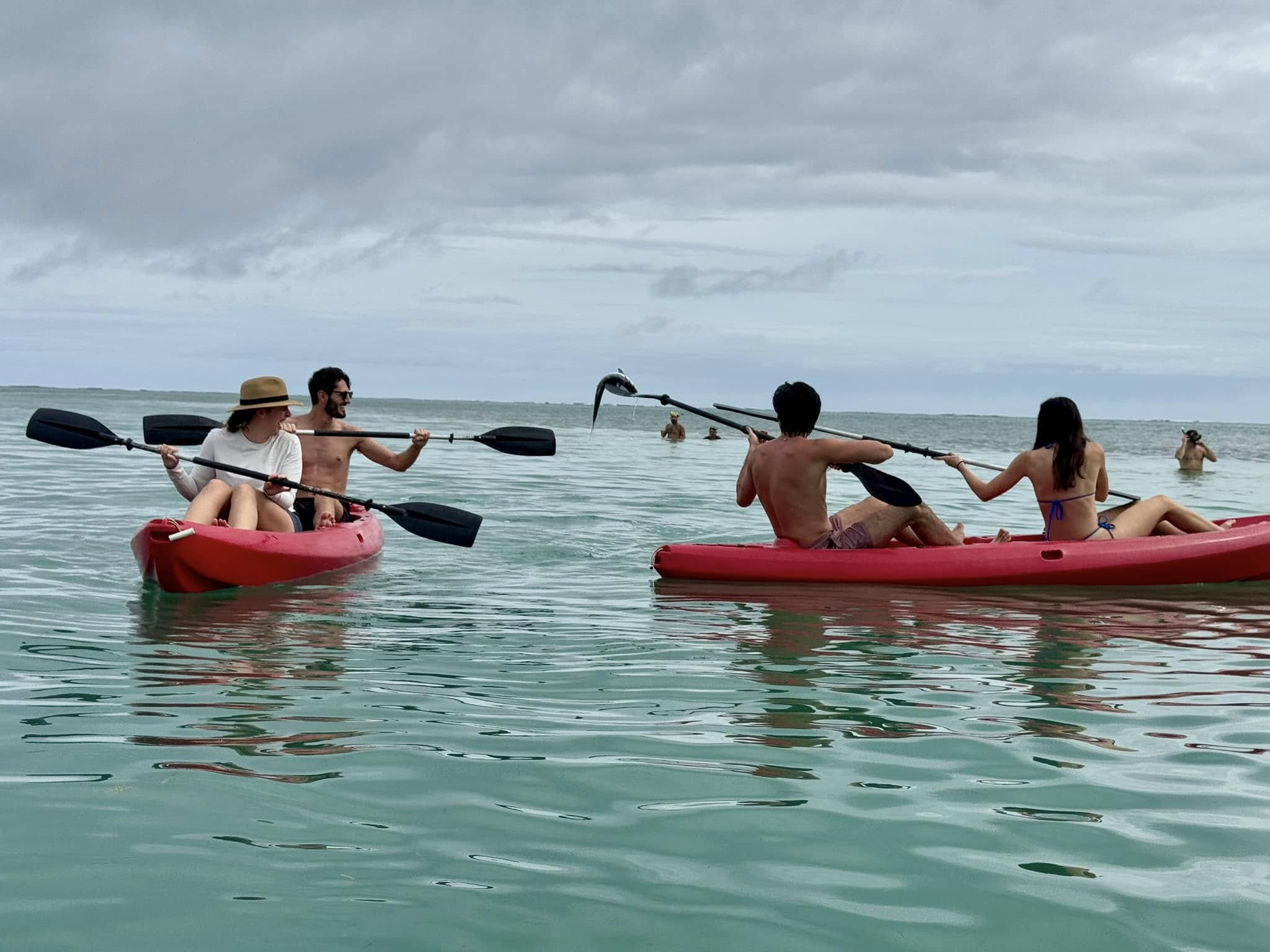
Fish toss!
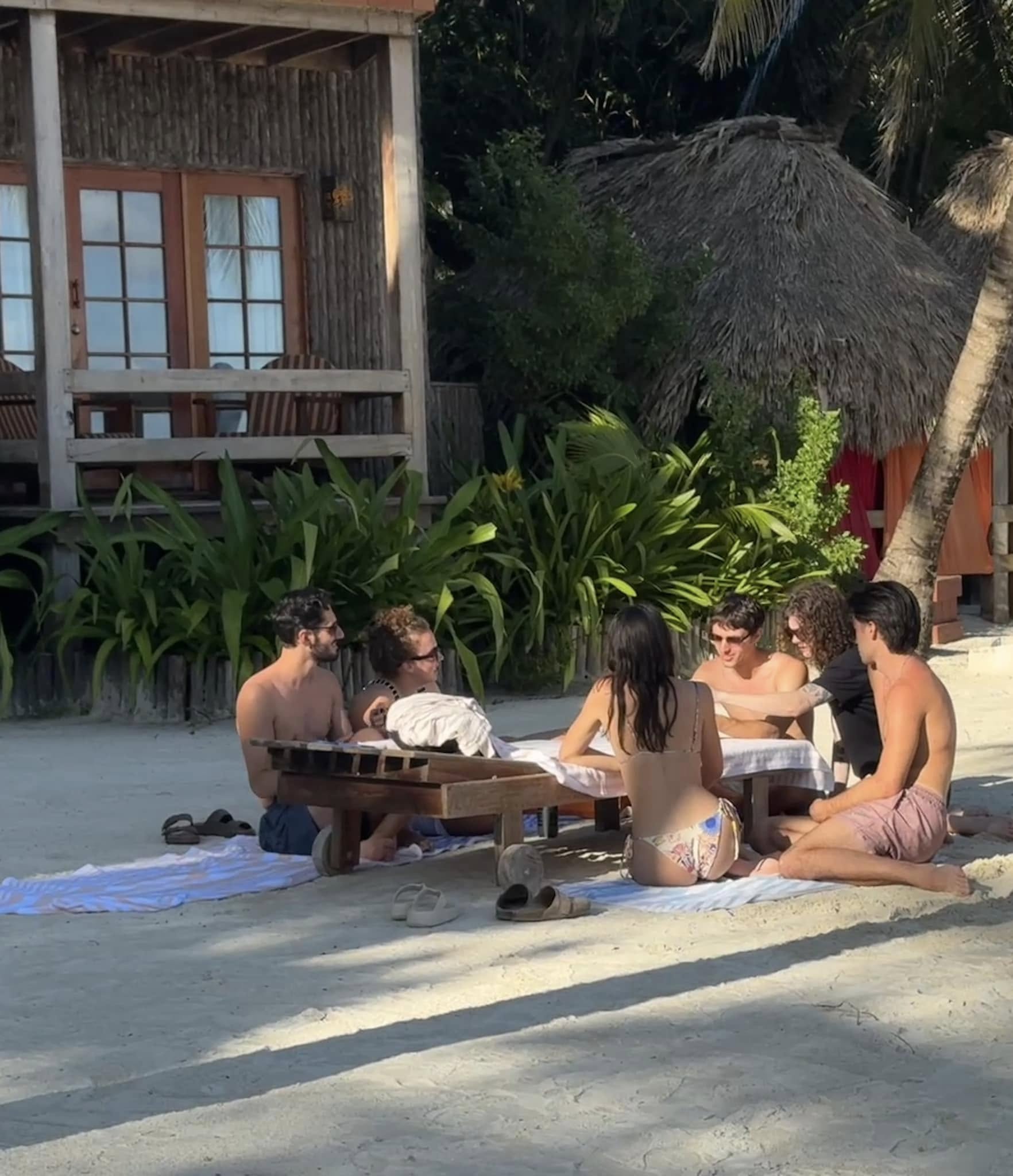
The latest addiction: Monopoly Deal. This card game is a little more of a strategy game than “fish toss”.
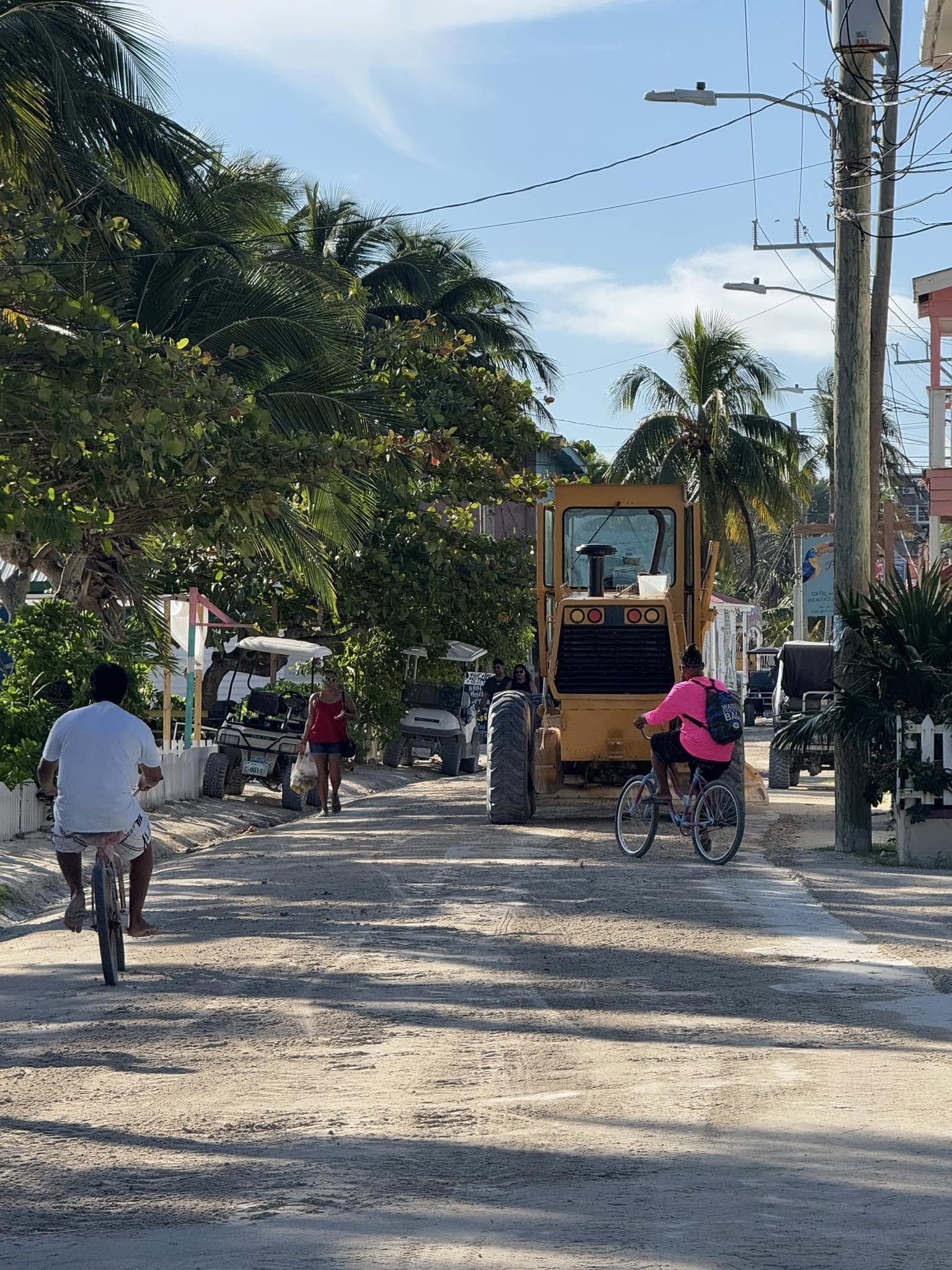
All of Caye Caulker is covered in sand including the roads and the floors of many restaurants. After the rain, they bring out the grader to groom the roads and take care of the resulting potholes.
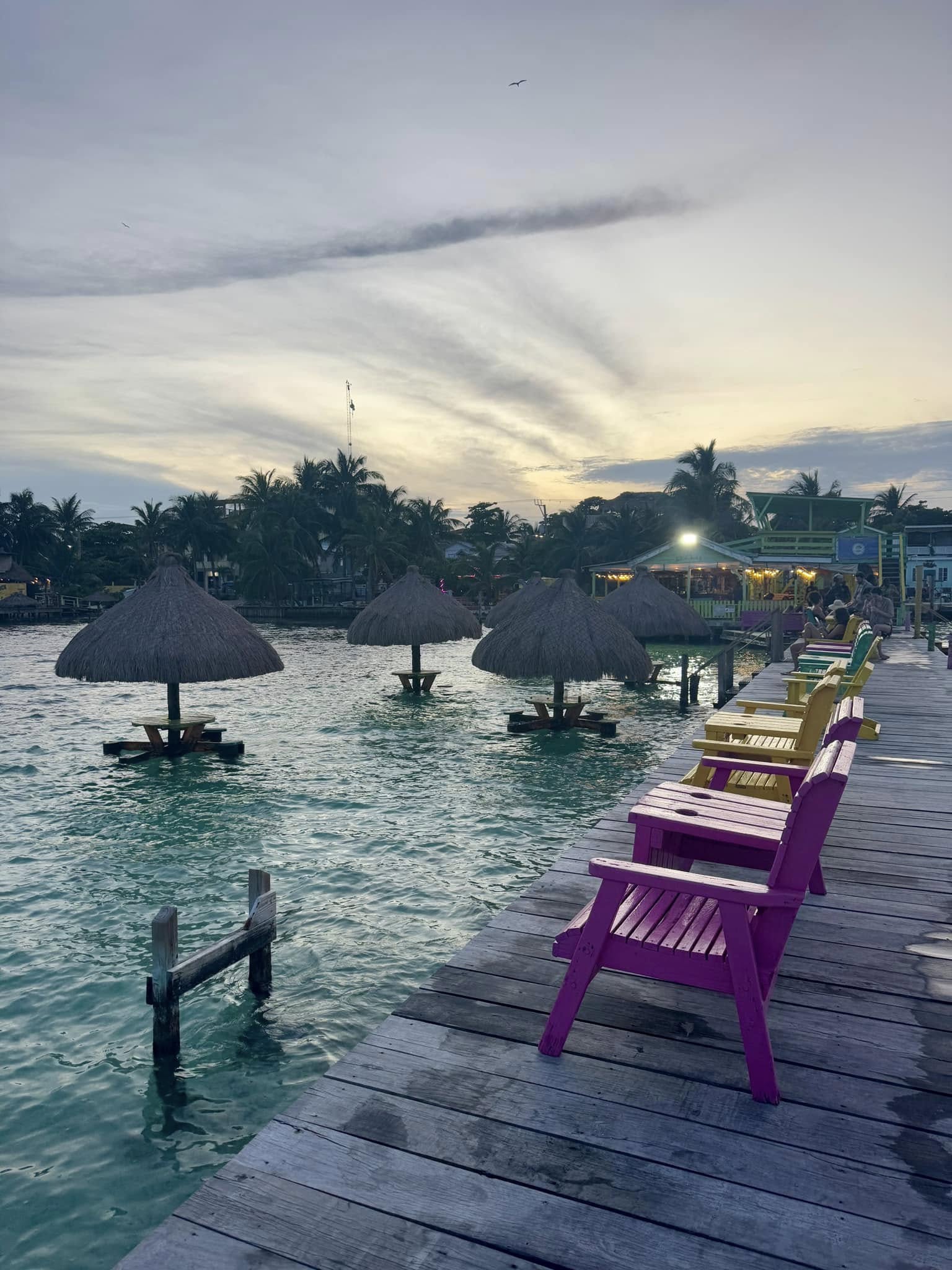
The Sip n’ Dip bar. It’s magical to sit at the water tables with a drink and snacks…until something goes awry. Seemed like a good idea at the time. Lesson learned: watch out for lurking barnacles!
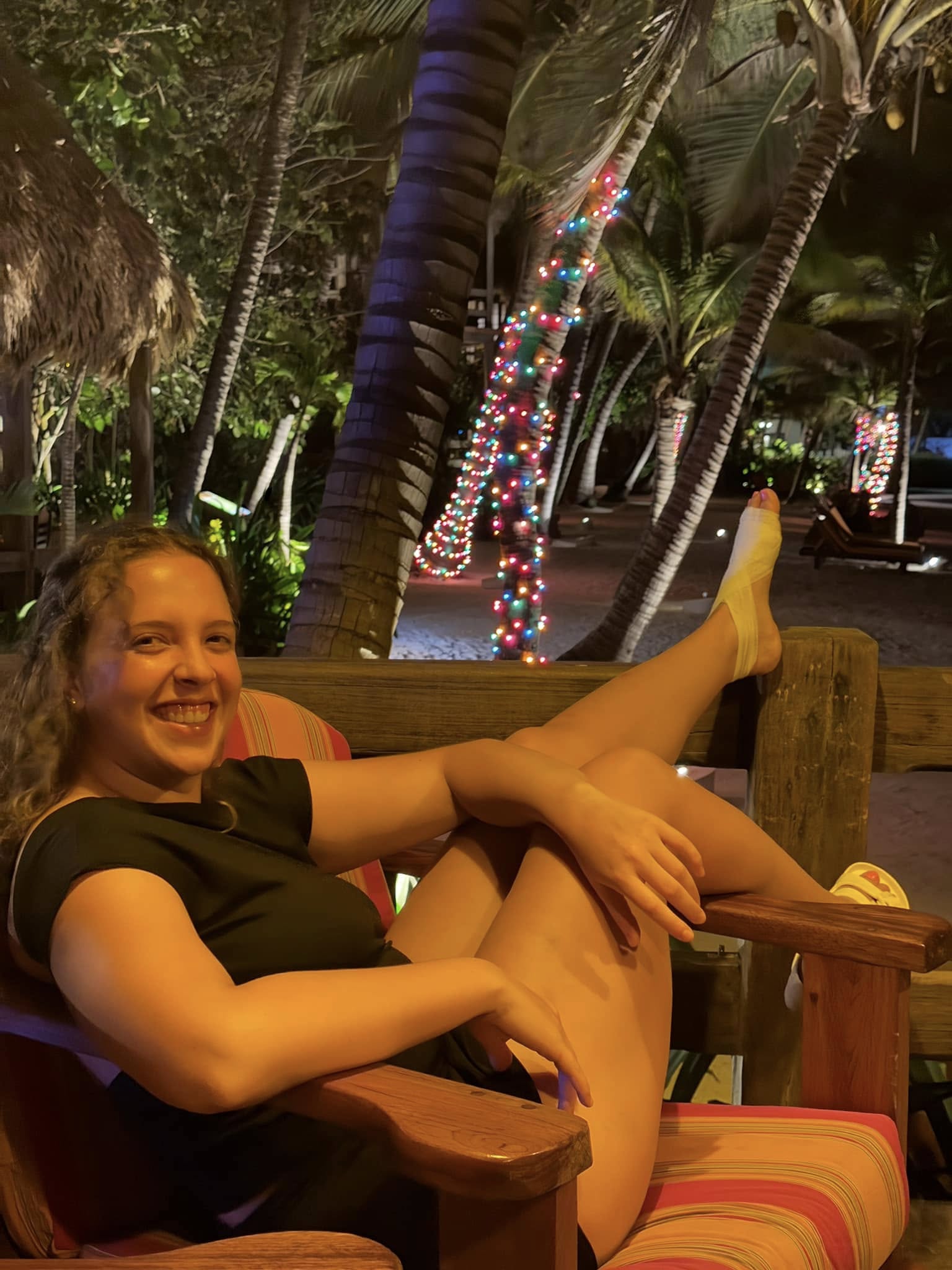
Meghan had the unfortunate encounter with a barnacle at the Sip n’ Dip and is bringing home a special souvenir: five Belizean stitches. But it’ll take more than that to slow her down!
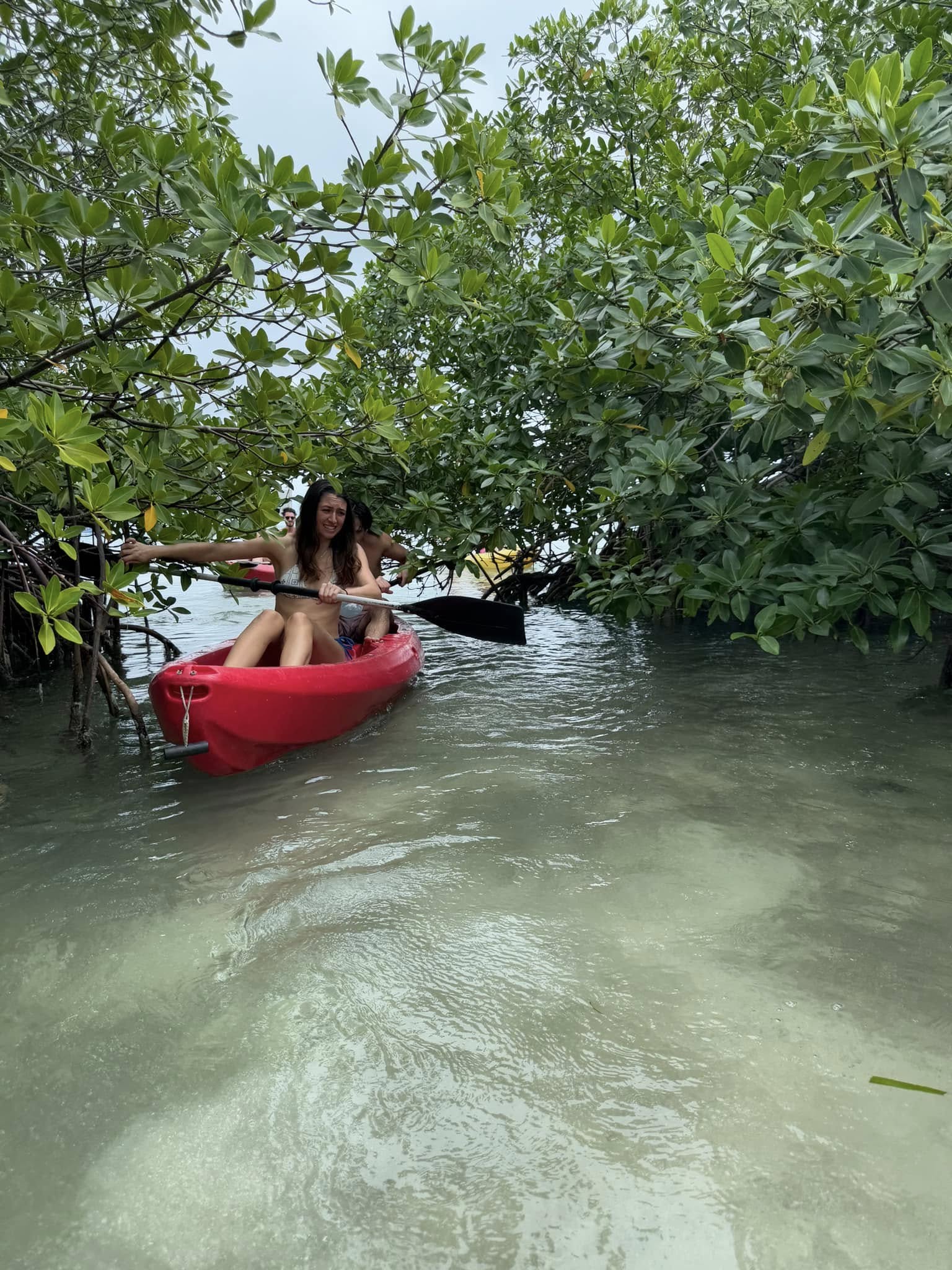
This also seemed like a good idea at the time…I thought it would be cool to kayak through a little mangrove. Adam and I got through no problem but I think we woke up the mosquitoes which summarily attacked Robyn and Matthew. They jumped in the water to try to escape them. When we told the guy who rented us the kayaks about it, he said that if we had asked, he would have told us not to go in there…that’s where the crocodiles are!
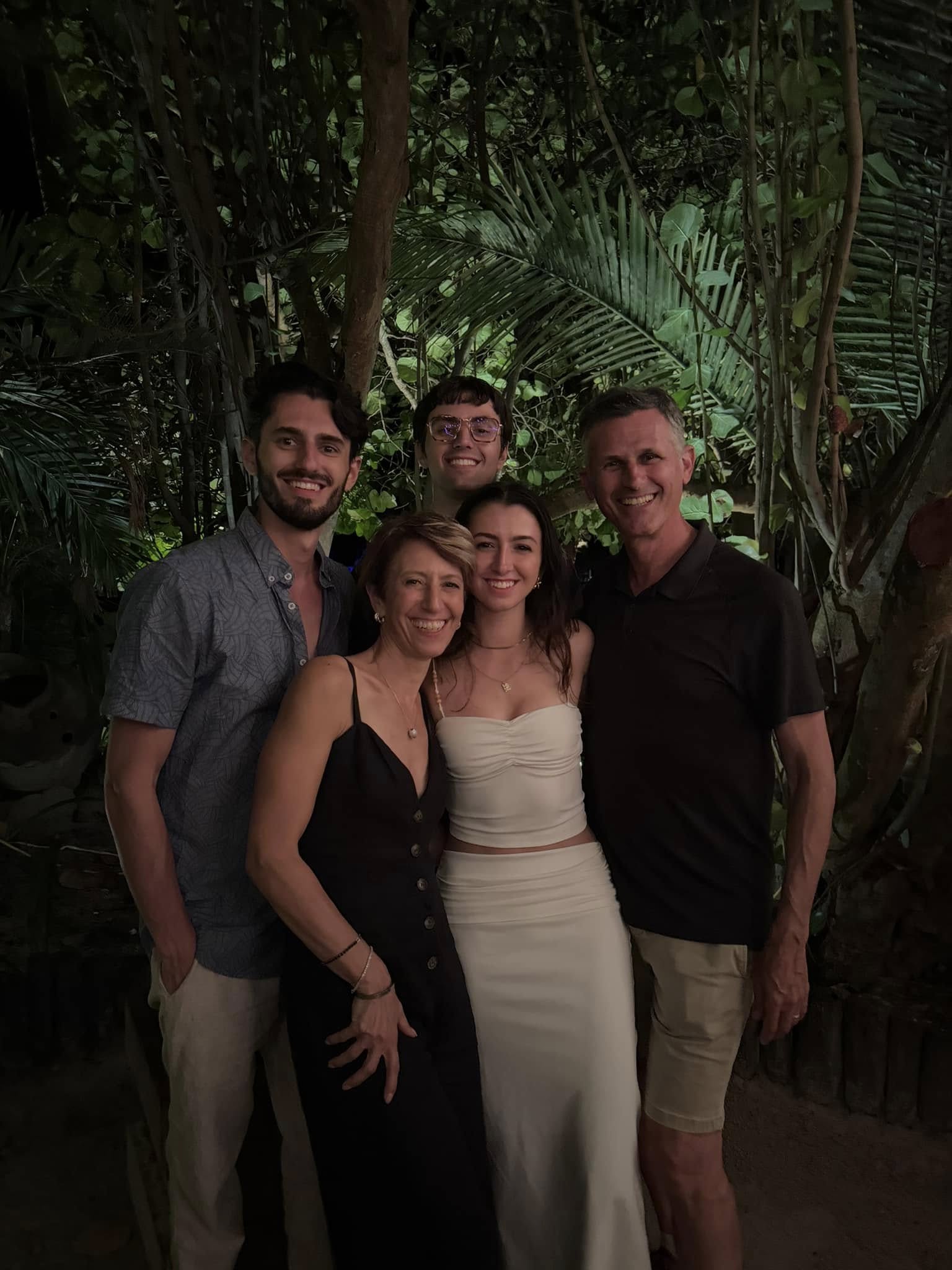
2024 Lorant family photo in our mock jungle patch by the beach on Ambergris Caye. Mock it may have been, but those were real trees with real mosquitoes.
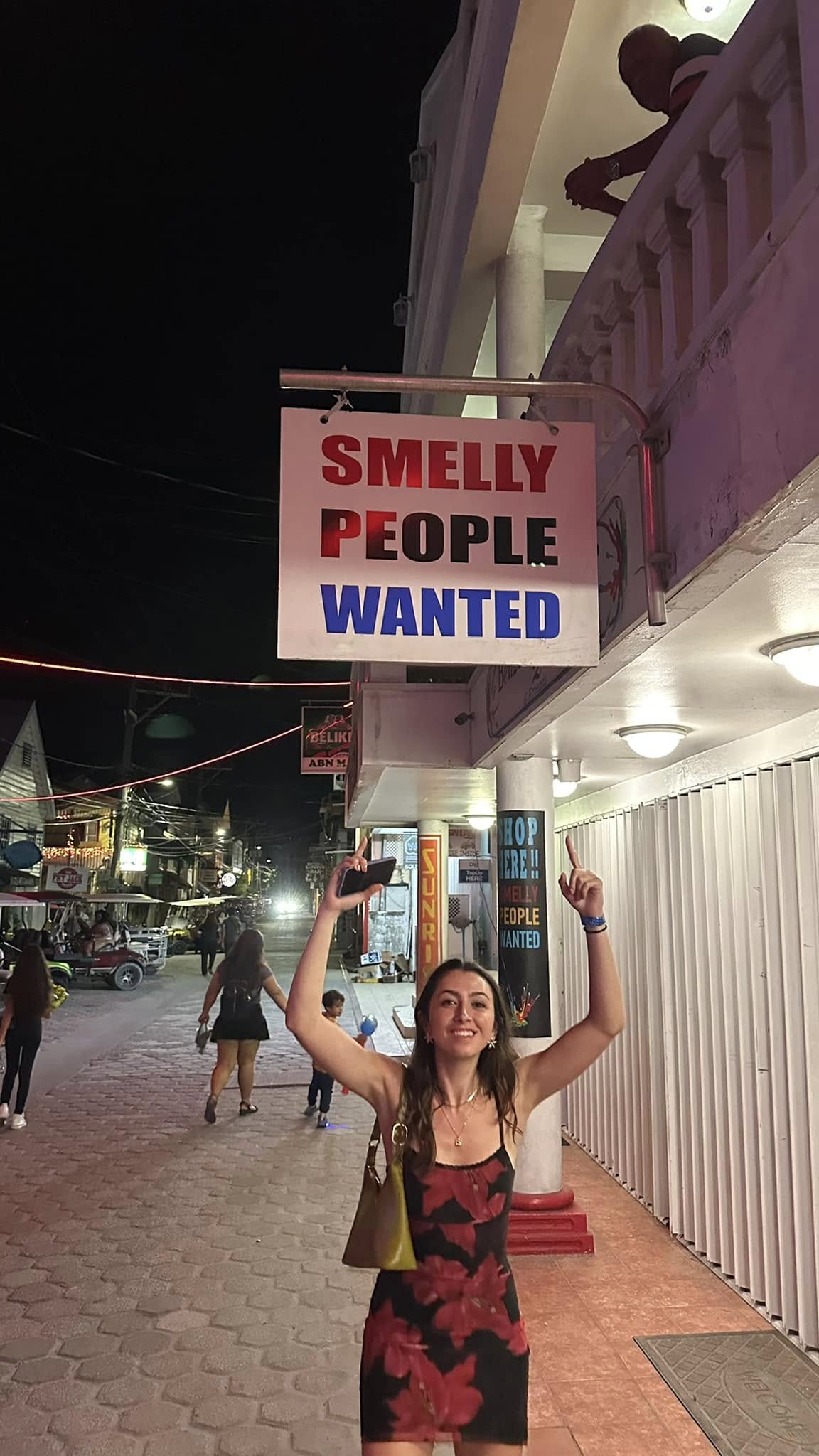
Thankfully she has a good job back home!
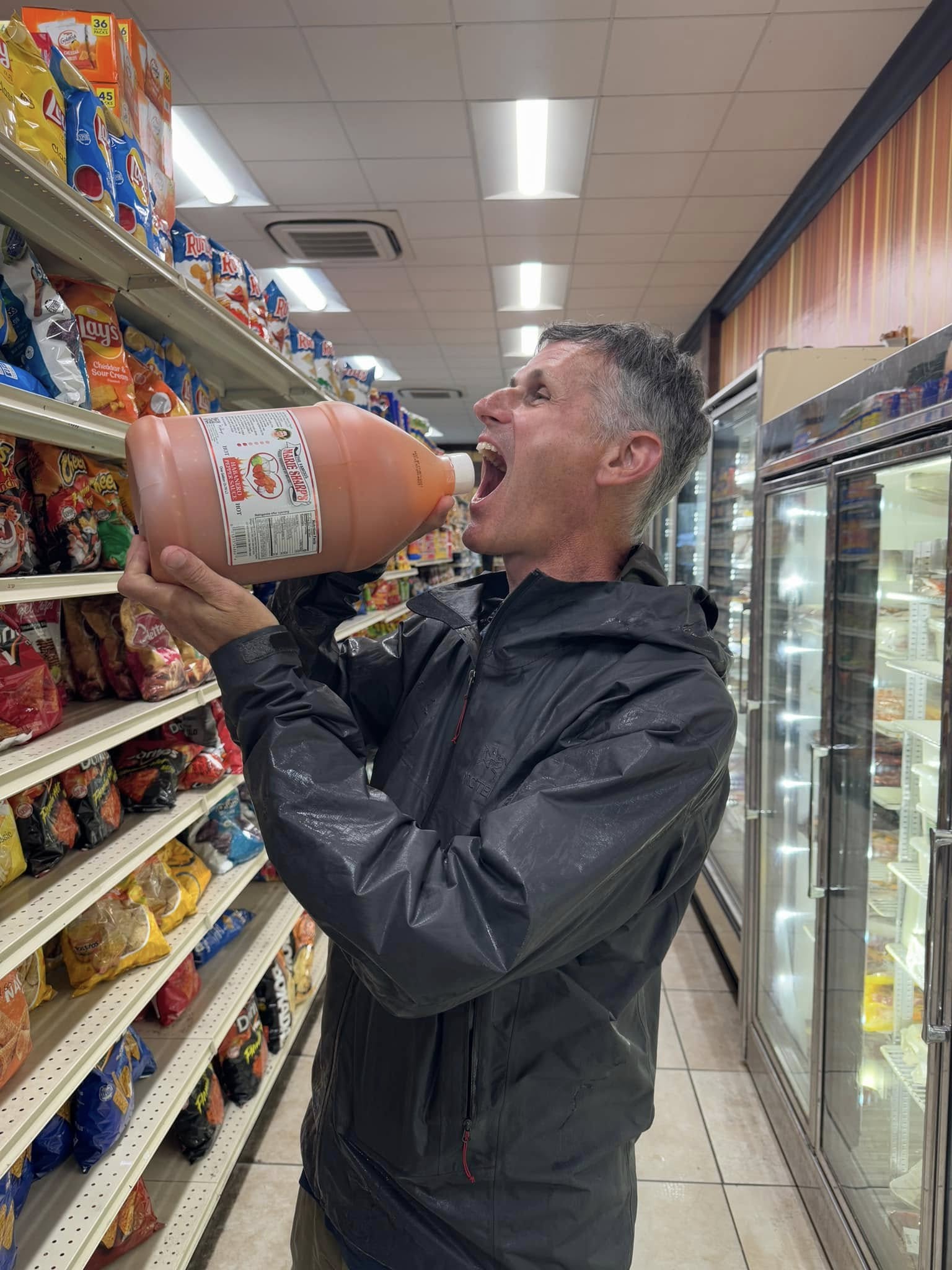
Marie Sharpe is the internationally-renowned Belizean hot sauce queen. It all started when a friend wanted to make hot sauce and asked her if she could grow some habaneros for him on her farm. She grew way more than he needed so she made her own hot sauce so as to not waste the leftovers. The rest is a history full of corporate intrigue, cheating partners and a resilient businesswoman who came out the other side successful beyond her wildest dreams!
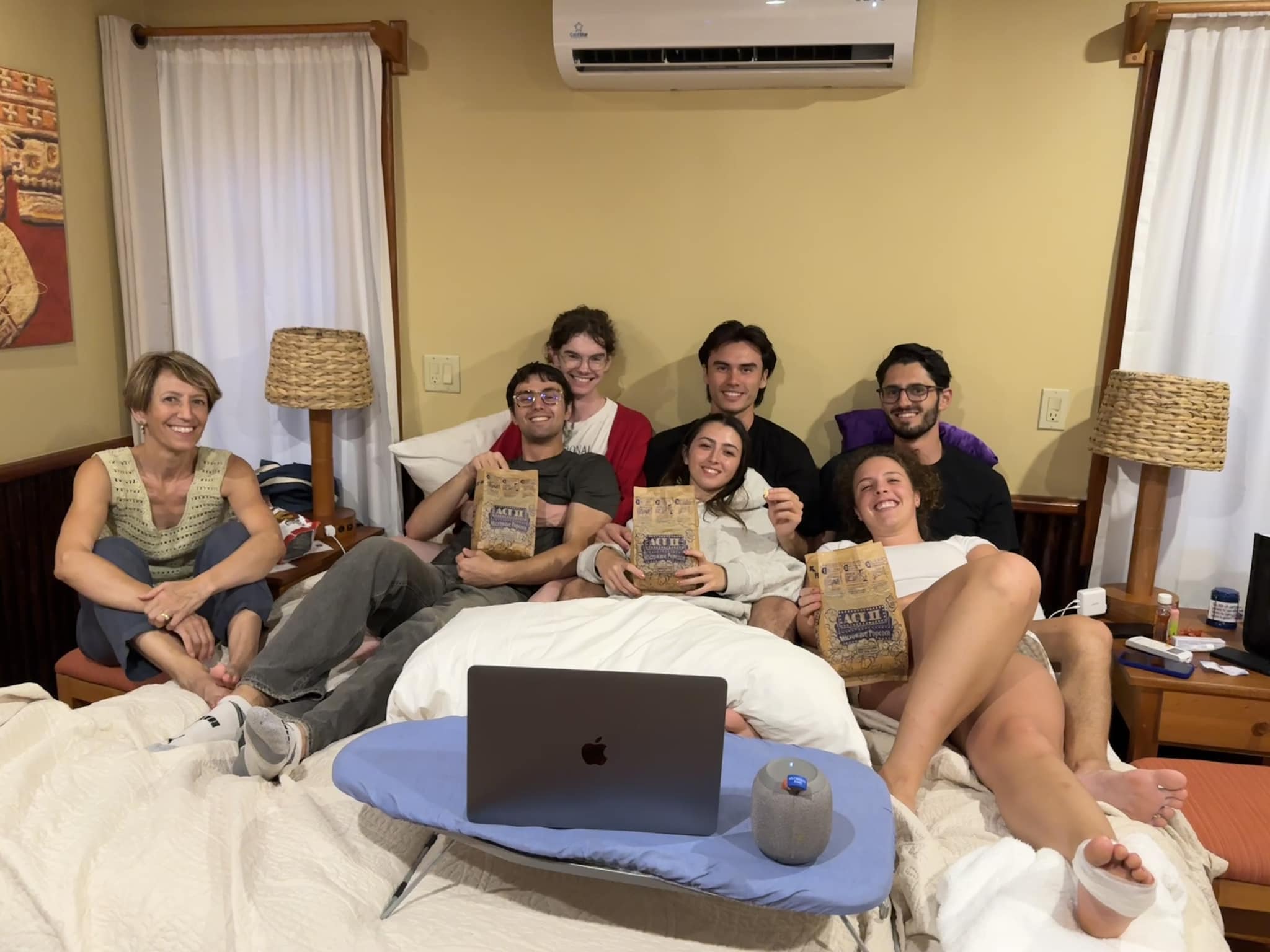
What do you do on a rainy New Year’s Day when everything in town is closed? Craft a home theatre with an ironing board and an extra speaker and hop into bed for a family movie, of course!
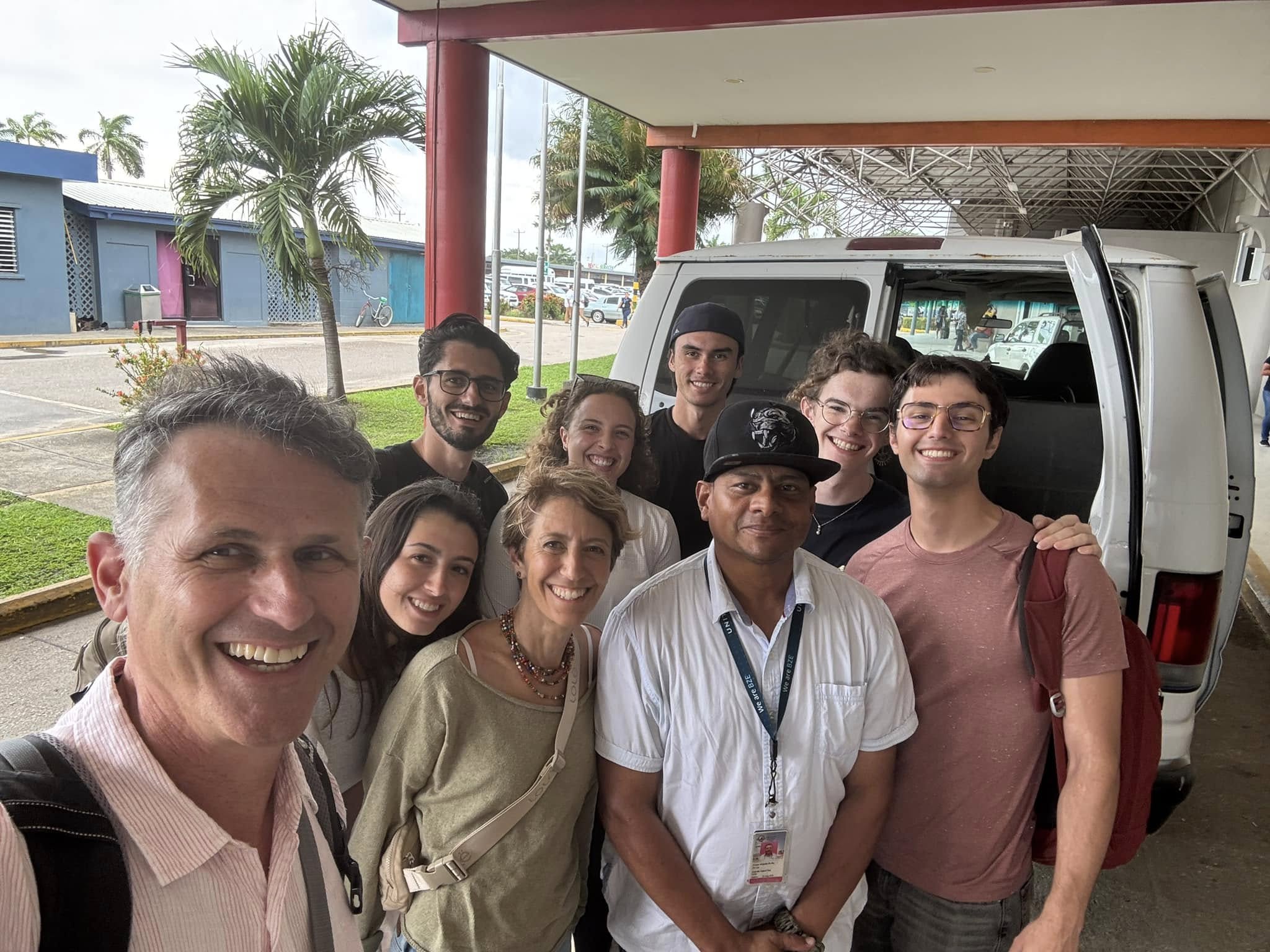
And that’s a wrap! Us with our new friend Enrique who saved the day in so many ways and so many times. We met him halfway through the trip when Matthew, Nora and Meghan arrived and we discovered the rental car company gave away the larger vehicle we had booked. Stranded, Adam found Enrique who became our unofficial driver and fixer!