April, 2023
Sacred Uluru and Kata Tjuṯa
I can’t begin to describe the beauty of the landscape in Yulara where we had the privilege of exploring Uluru and Kata Tjuṯa. From sunrise to sunset, the colours and views are in constant flux with the ever-changing angles of the sun. This is an aboriginal sacred place and stories abound, from teaching sacred practices and life skills to the children, metered out as they mature, to reading the shapes in the rock and telling moral tales to keep everyone behaving properly! If you come here, a few pieces of advice: 1) We spent two nights and I would suggest 3 or 4. It’s hot, so ideally you go out first thing for sunrise and then hike, come back in the afternoon to rest and then go out again for sunset. 2) Invest in fly nets…the bush flies are harmless but an annoyance you can do without! The $15 (for two!) will greatly improve your experience!
The first approach is always special.
Uluru is made up of sedimentary sandstone half a billion years old. It is 348m high with a 9.4 km circumference which we circumnavigated!
Although aboriginal peoples have occupied this land for 30,000 years with the Anangu people being the ancestral owners, the European explorers rocked up in 1873 and tried to push the aboriginals out. Hmmm, sound familiar? A land claim was ultimately put forward in 1976 and it took until 1985 before title was given back to the Anangu. They call it “hand back”. The Uluru Kata Tjuṯa National Park is now on a 99-year lease to the government and is jointly managed by a board of eight Anangu (four men and four women) and four members of the Australian government. How progressive!
Story time: The Mala people came upon this rock on their journey from the north and decided it was a good place to stay. They began their ceremony (inma) preparations. The men decorated and raised Ngaltawata, the ceremonial pole signalling the start of the ceremony. The women gathered and prepared food while the men hunted, made fires and fixed their weapons. In the middle of it all, a couple of Wintalka men showed up and invited the Mala to their inma. The Mala had to refuse as their ceremony had already begun and couldn’t be stopped. A classic case of bad timing. But the Wintalka didn’t quite see it that way and when they went home and told their people that they had been refused, in anger they created an evil spirit – a huge devil-dog called Kurpany – to destroy the Mala inma. The kingfisher woman (Luunpa) came across Kurpany but her warnings to the Mala were not heeded. Kurpany showed up, killed a few of the men and the rest of the community fled south. Lessons learned? It’s important to finish what you start and you should always watch for and listen to warnings of danger.
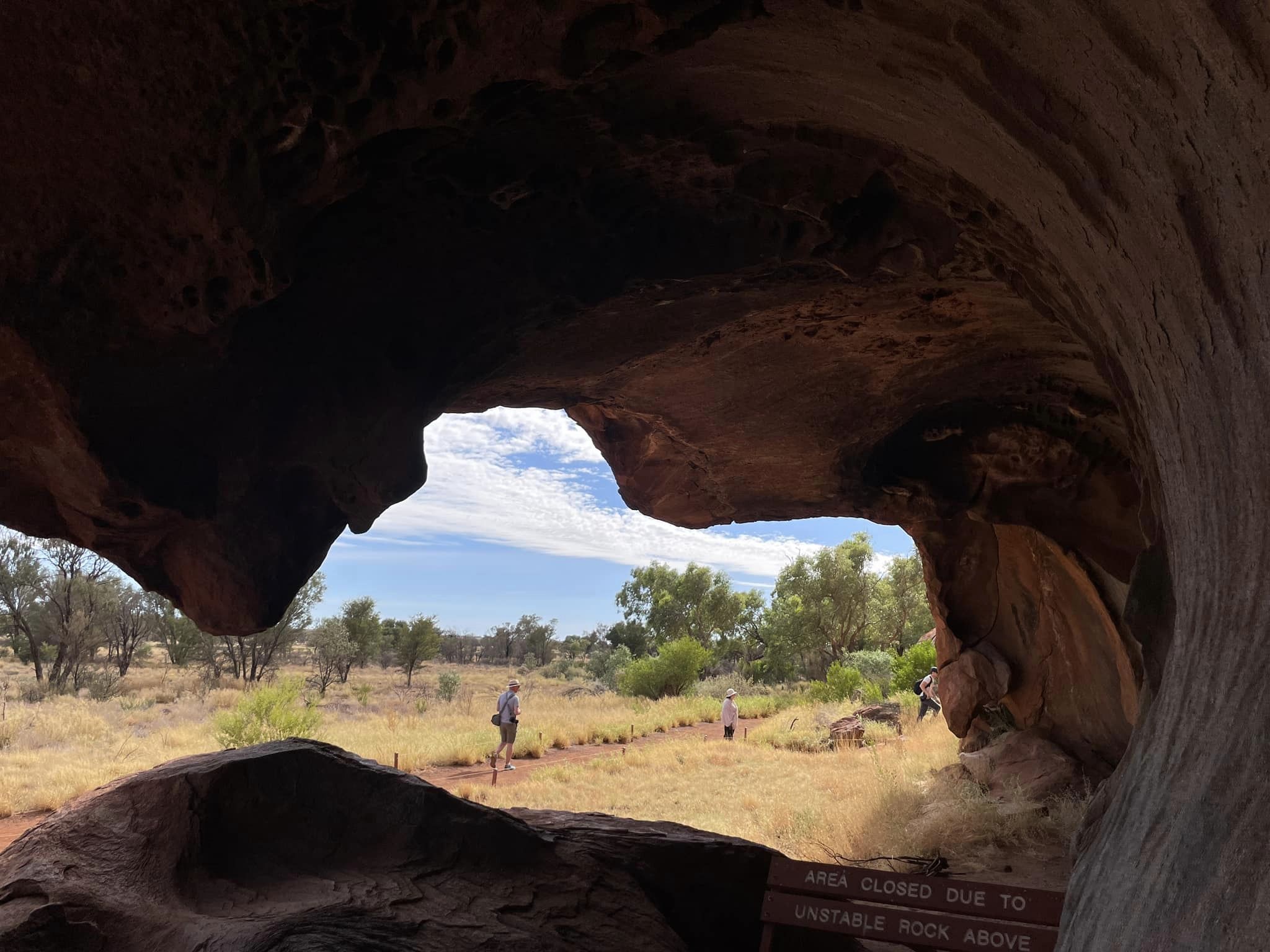
Peeking out an opening at the back of the cooking cave. You can still see the blackened ceiling from the cooking fires.
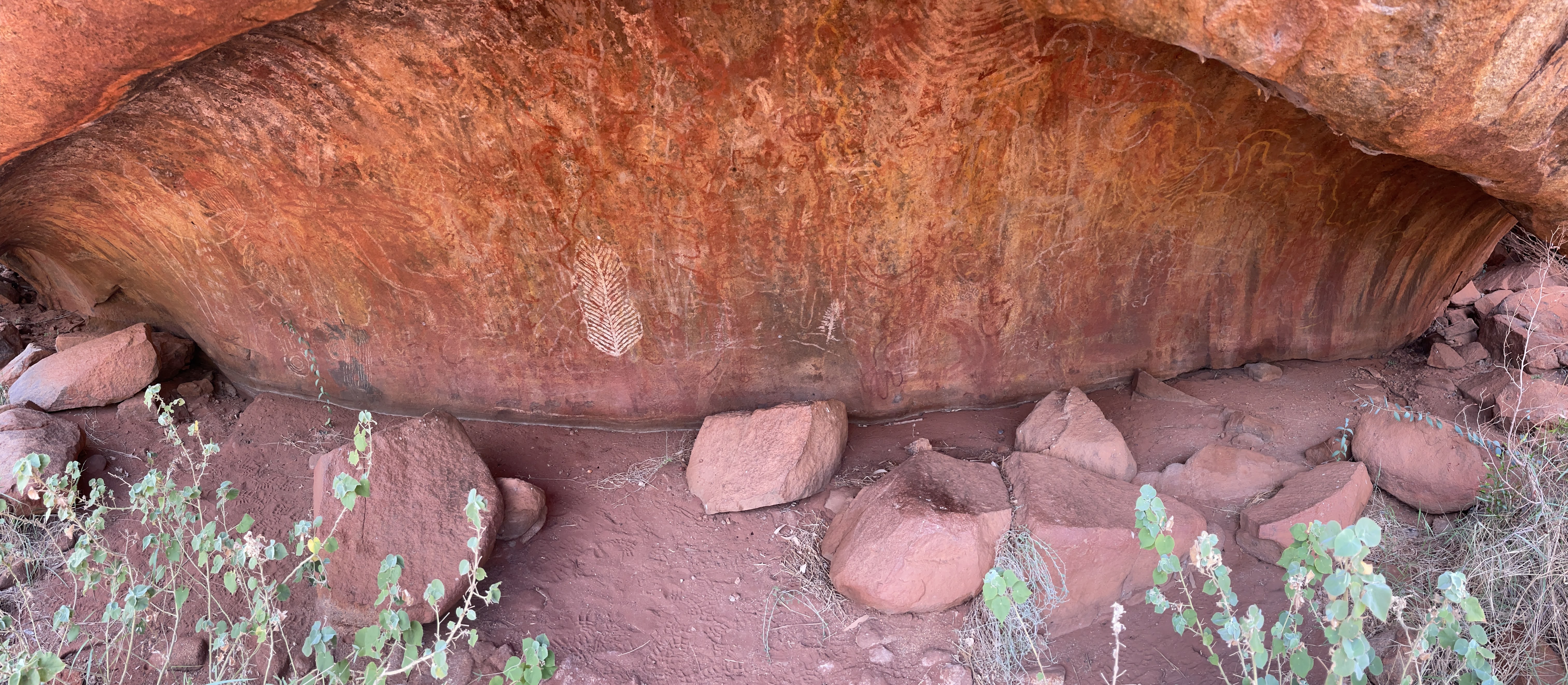
The teaching cave is where Anangu elders taught boys to be men; how to navigate their landscape and survive. The wall of this cave is their schoolroom blackboard. Generations of grandfathers painted pictures on the walls to teach and illustrate tracking and hunting. The boys would then be taken into the bush to put their newly learned skills to the test and to learn where the waterholes are (can you see the concentric circles in the wall art?), where to find animals and where to find materials to make tools and weapons. The boys are separated from their families during this time, which may last several years, until the boy proved not only his hunting skills, but also self-reliance and discipline.
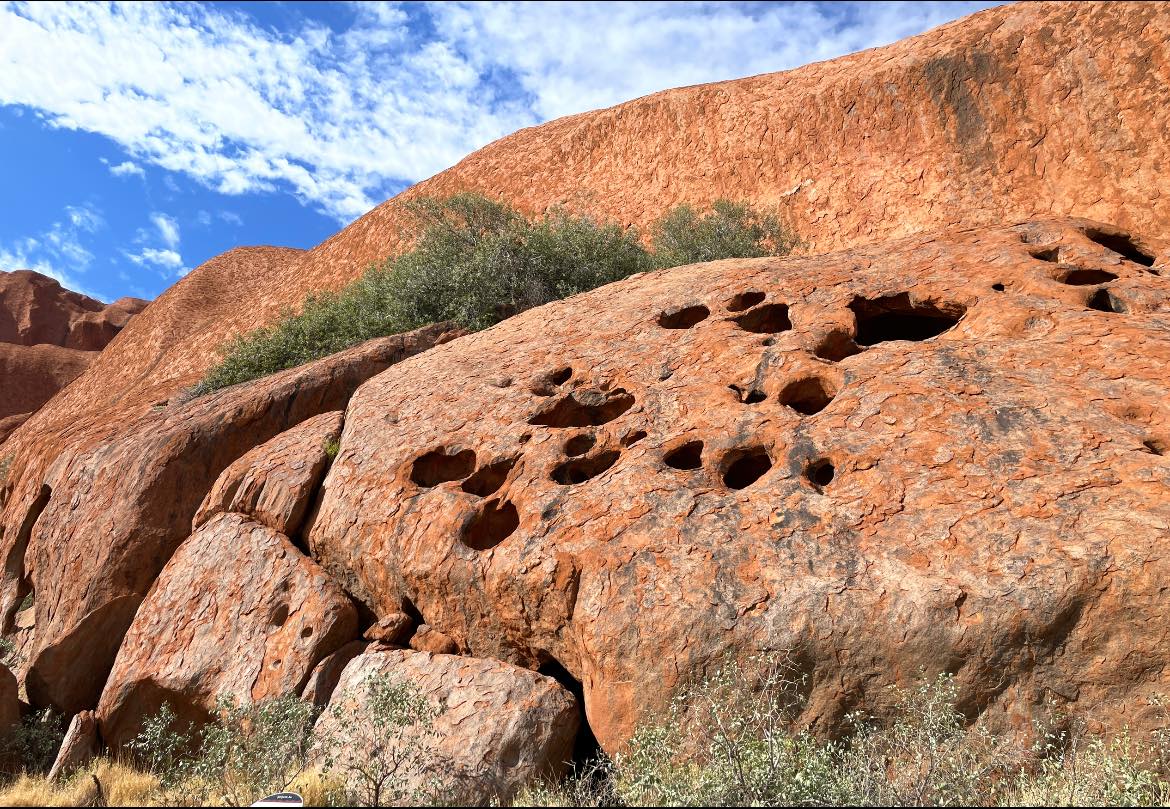
Itjaritjari is a blind, marsupial mole that lives underground, rarely surfacing except after rain. They are small enough to fit in the palm of your hand and have a very practical backwards pouch (so the sand doesn’t get in while they’re digging). These are the mole’s holes!
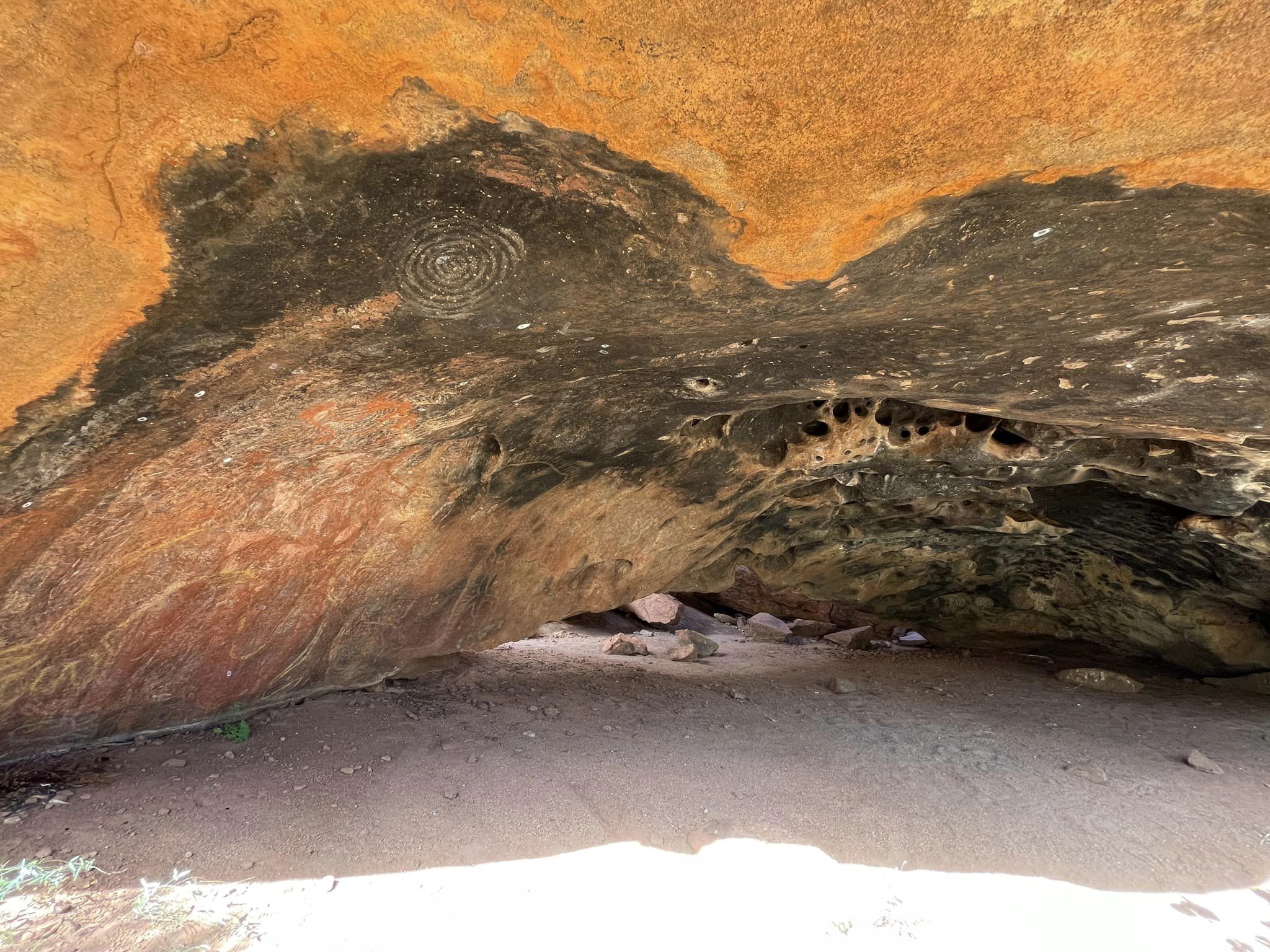
The old person’s cave was where elders too old to participate in ceremonies would rest and make sure women and children did not enter the ceremonial areas. Their children and grandchildren would bring them food to cook over the fire (see the blackened ceiling).
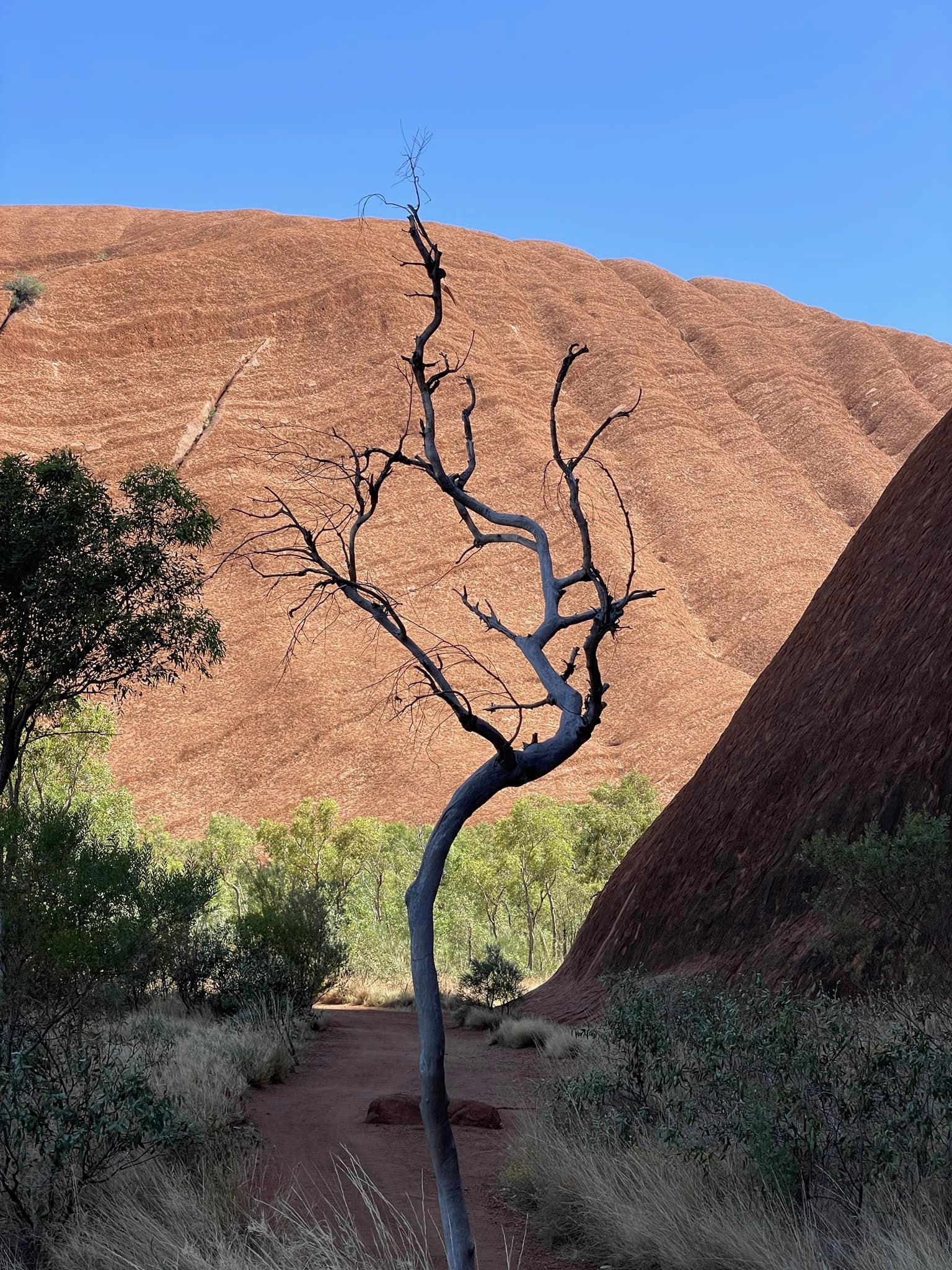
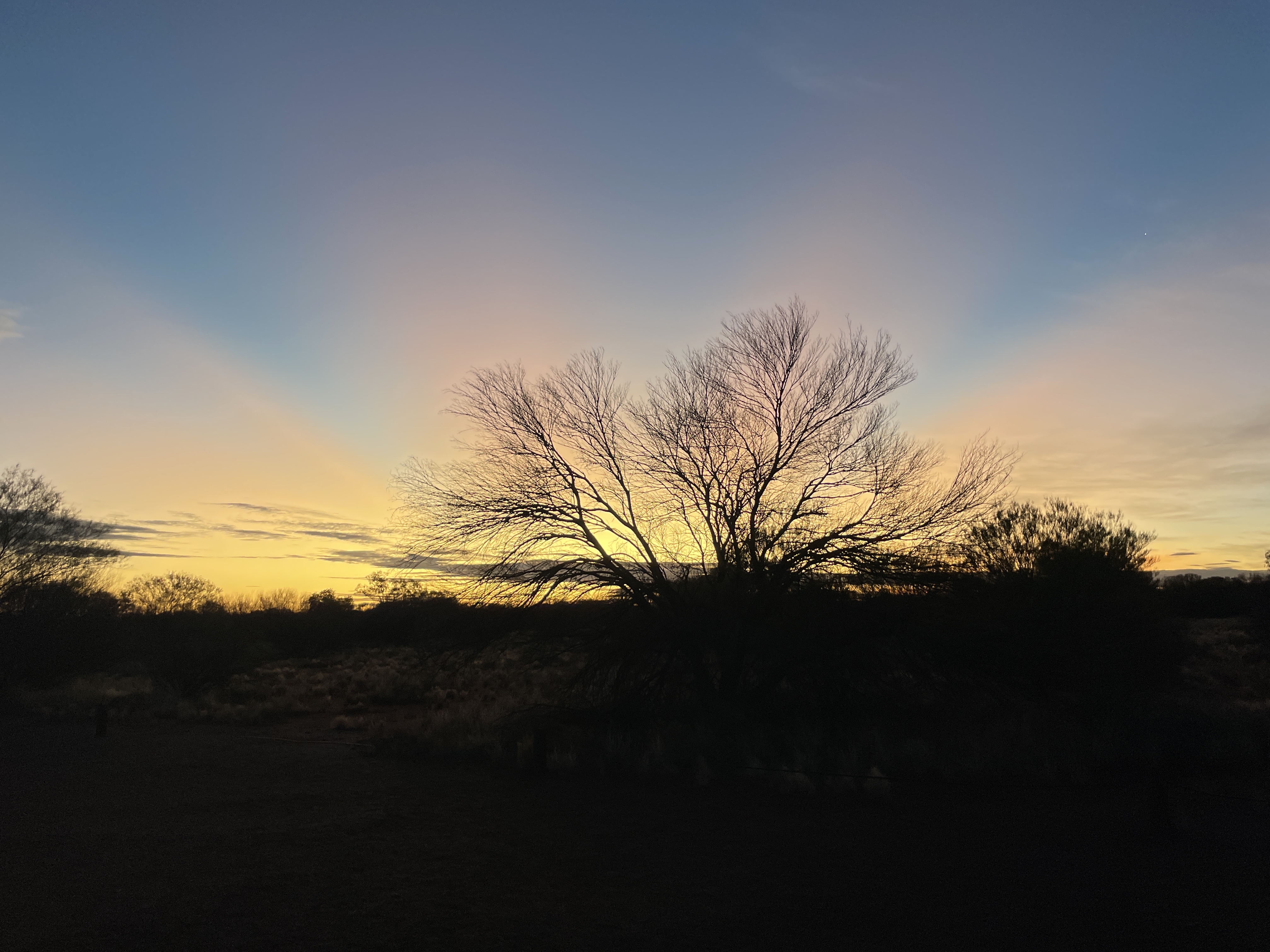
The vegetation is amazing in this desert. I couldn’t get enough of these bare trees. Can’t tell you how hard it was to select one to share!
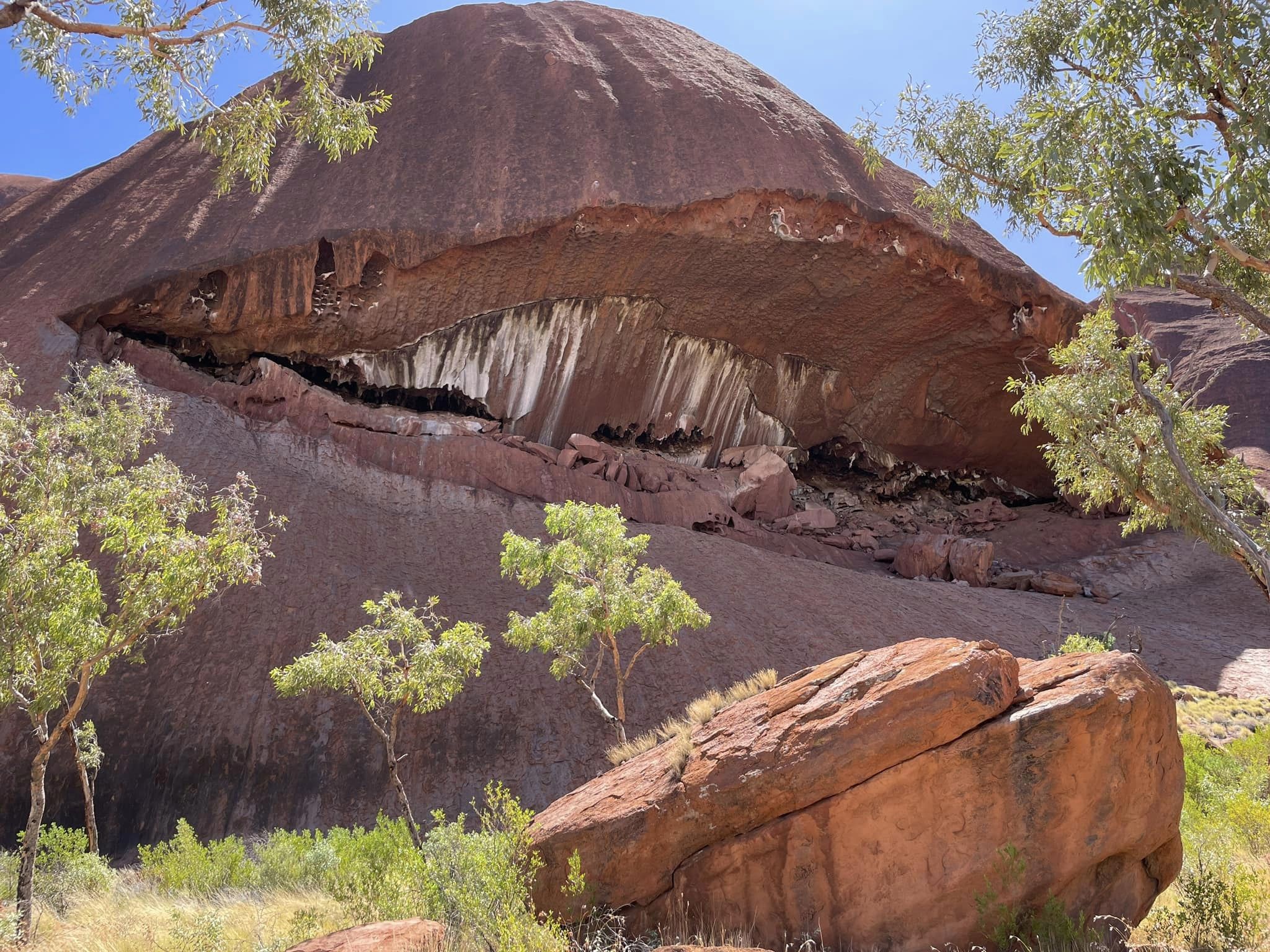
Looks like a toothy grin. The teeth are actually bat droppings! There are 35 species of bat here, some so small that they can fit in a matchbox.
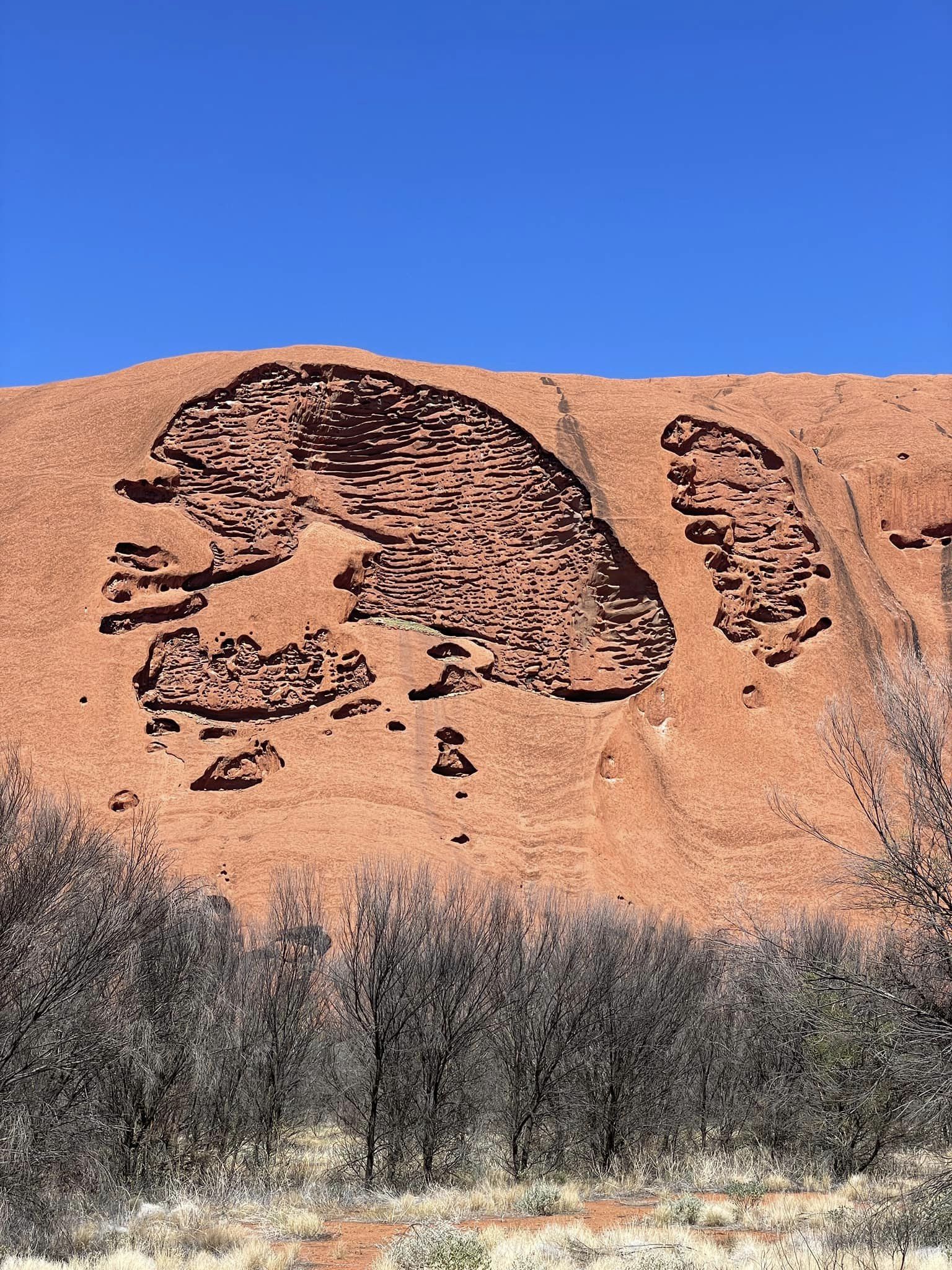
The aboriginal peoples believe these caves that seem to be in the shape of a skull were what attracted the Mala people when they first arrived in Uluru, and where they decided to set up camp. This period is called Dreamtime and the belief is the earth was created through their wanderlust. Scientists say it’s not so as the evidence of human occupation dates back a mere 30,000 years.
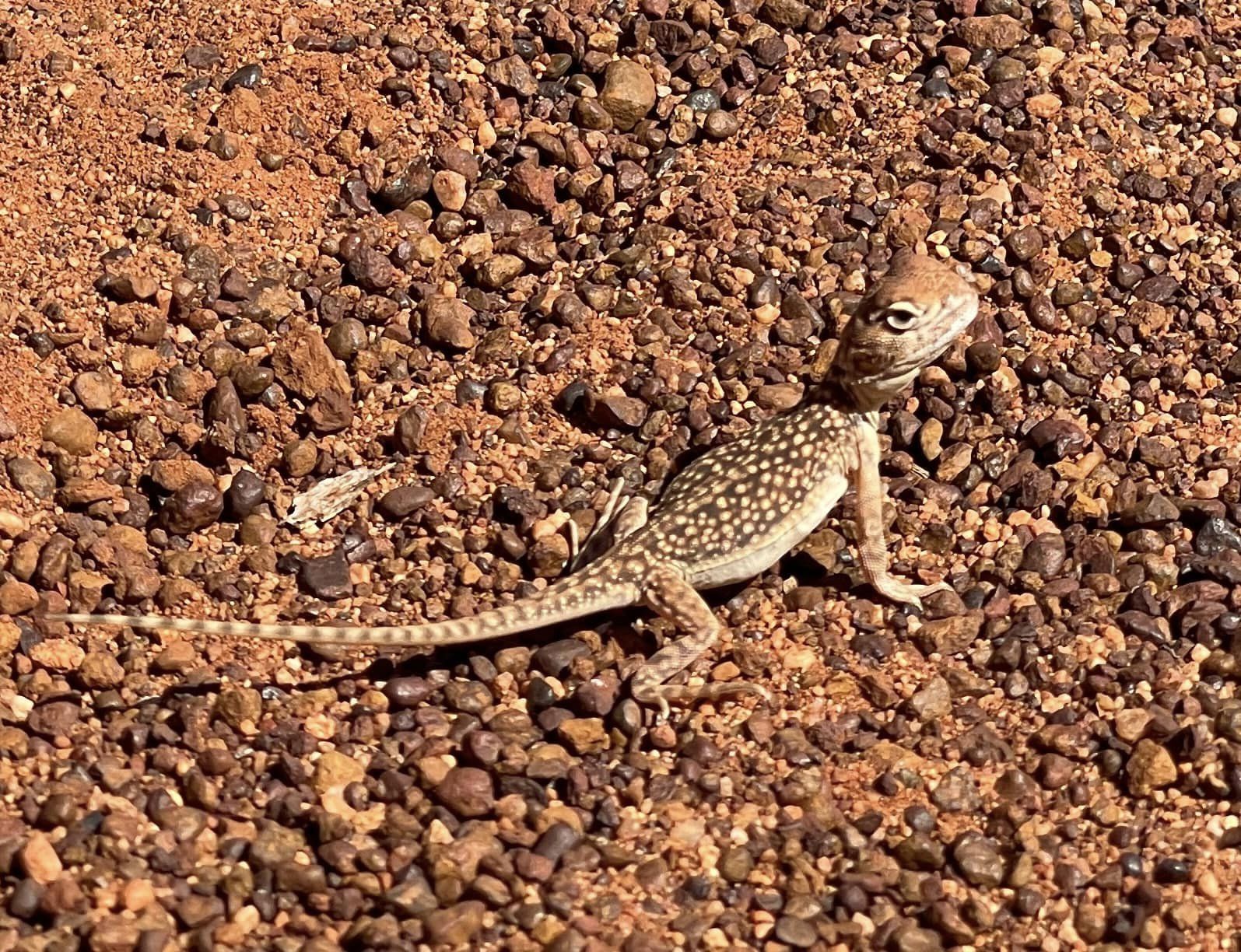
Perfect camouflage! Glad we didn’t step on this tiny cutie.
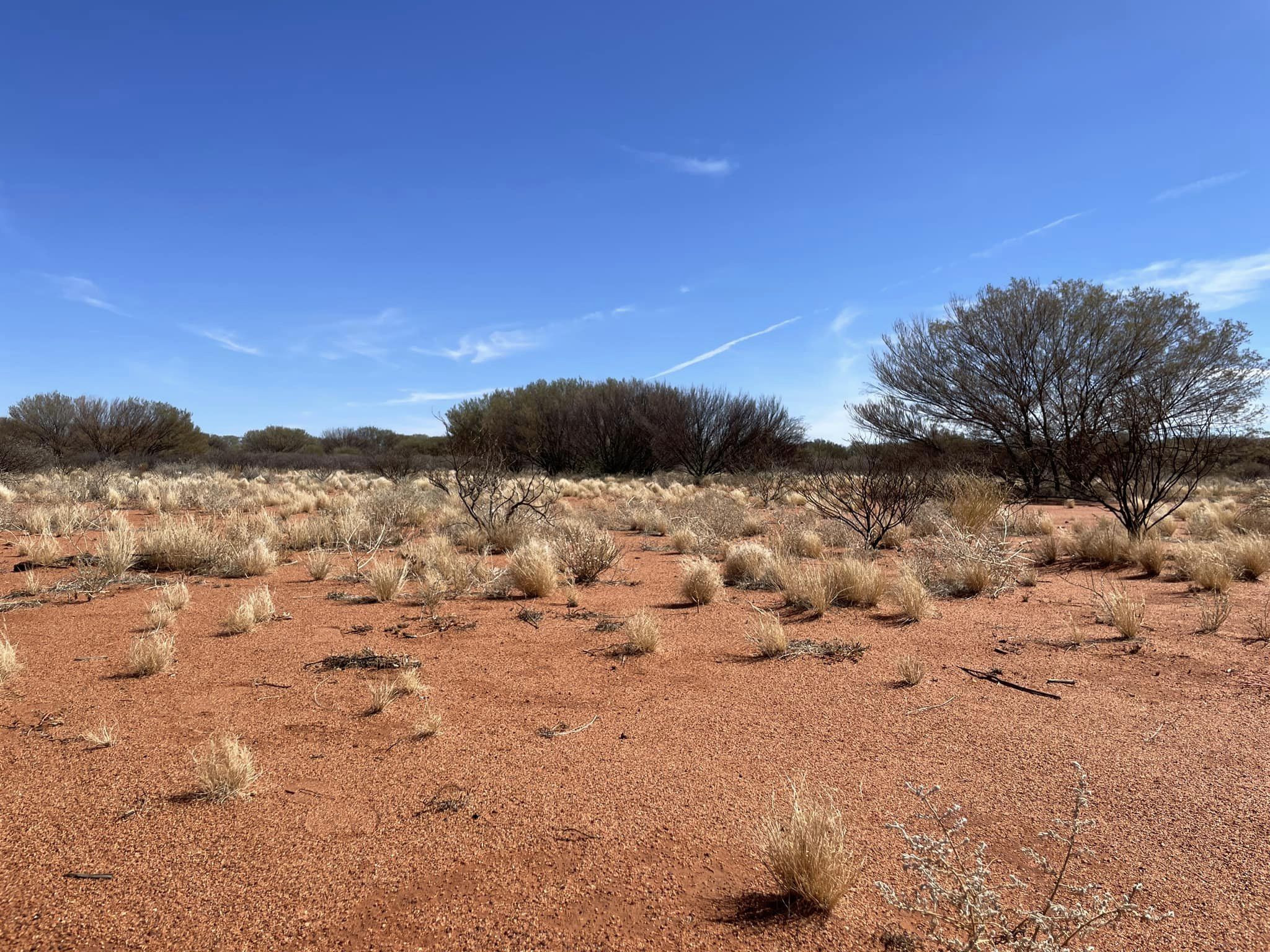
Buffle grass was introduced in Australia for pasture and dust control. It can withstand heavy grazing so it was thought to be a great solution to feeding the many camels that were introduced here with the early explorers in the 1870s. Unfortunately it had the negative effect of squeezing out spinafex grass which prevents erosion and provides a sticky substance for making traditional tools. It’s now a big problem as it has completely changed the ecosystem, displacing native plants, and poses a fire risk…not a good thing in a desert like this!
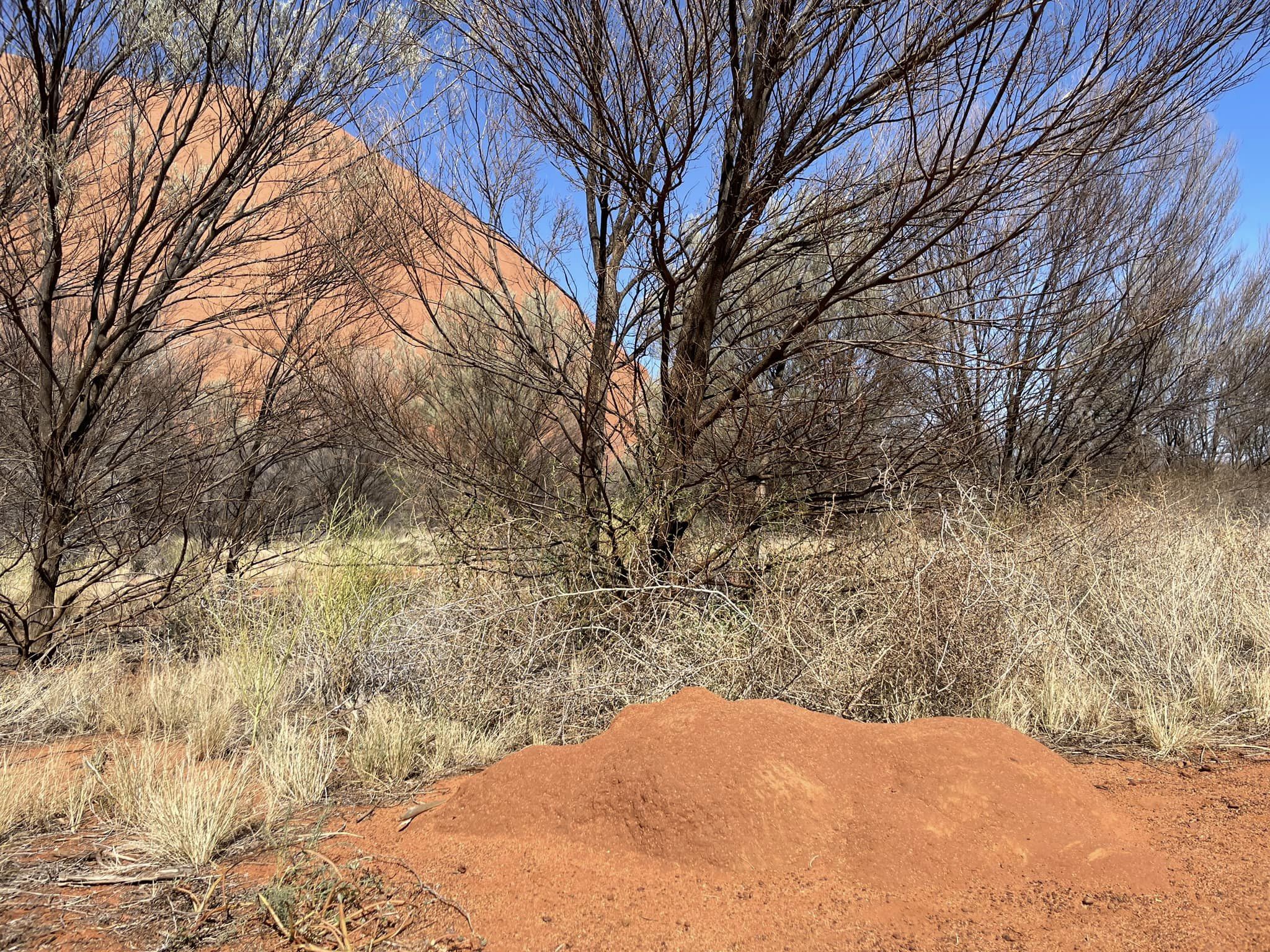
Foolaru? Nope. A termite mound! The design fits well with the rest of the neighbourhood!
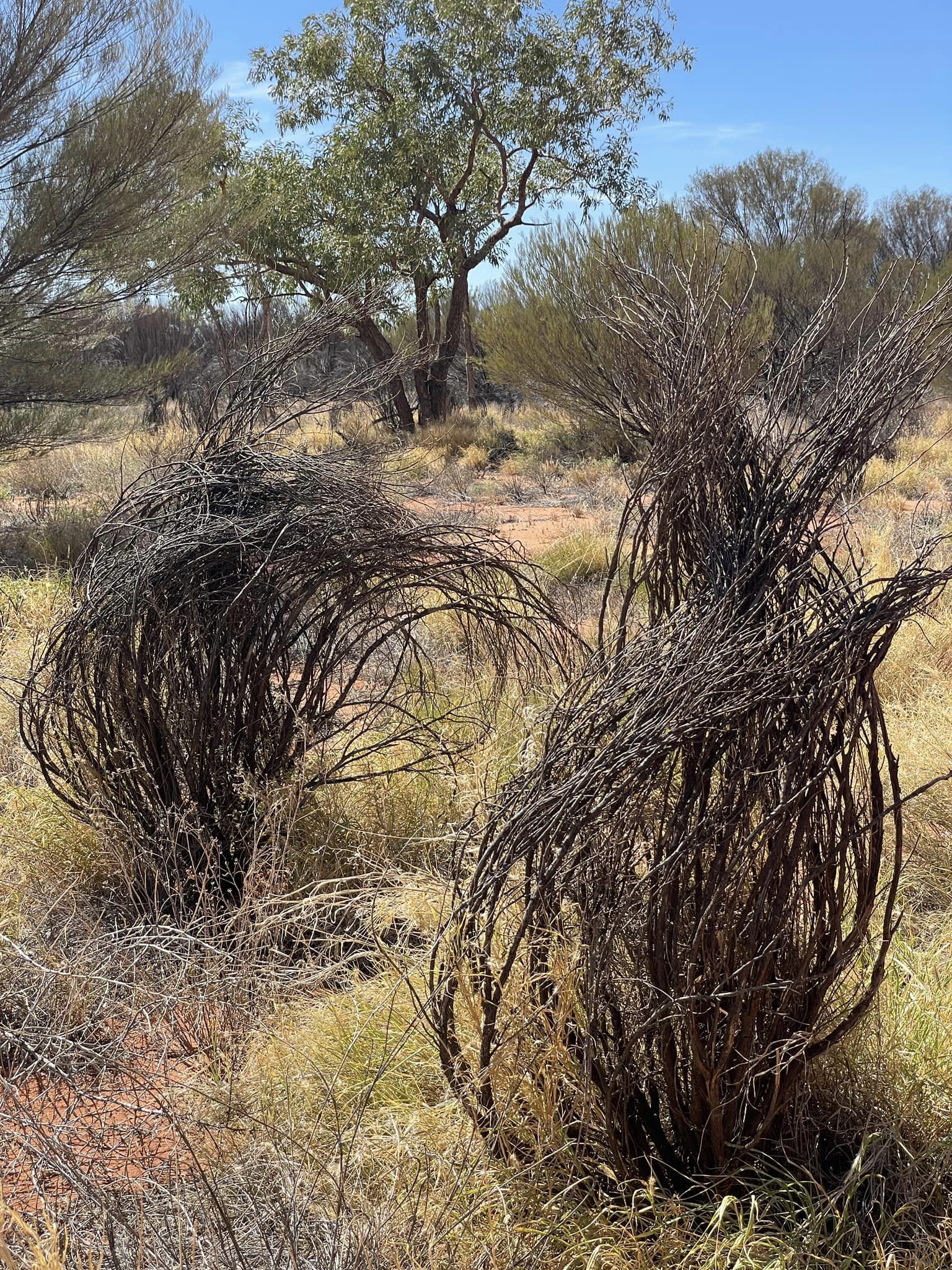
Remember the 1980s troll dolls with the messy hair?
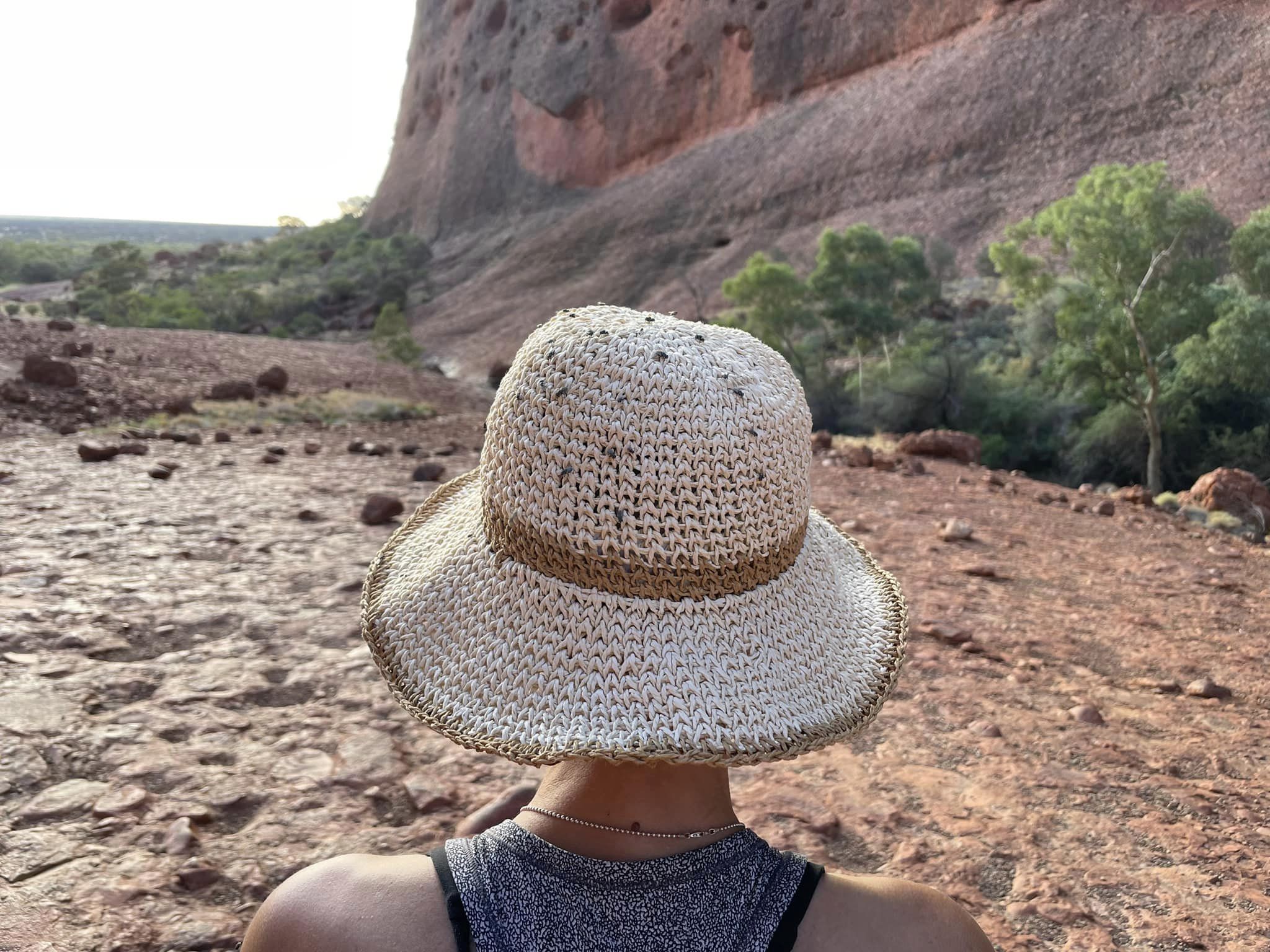
Glad I’m wearing a hat. Bush flies are not after your blood so they don’t bite. They're in the game for your sweat, saliva and tears for their collection of proteins and carbohydrates and salts. I guess we should engage in licking our sweaty skin as it seems to be good for our health!
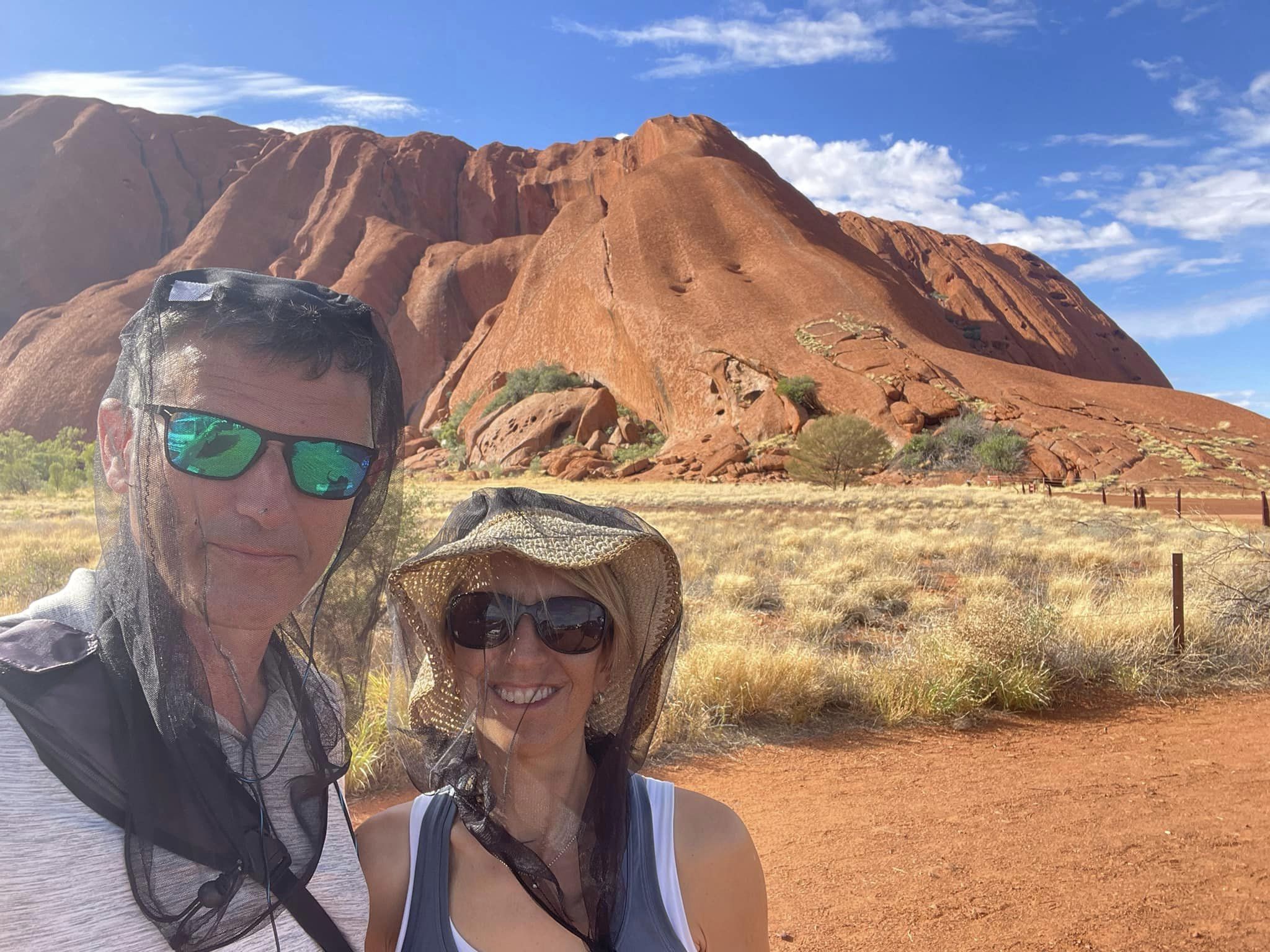
Like the new headwear? Those bush flies are harmless but incredibly annoying! Note the fly on the tip of Adam's nose.
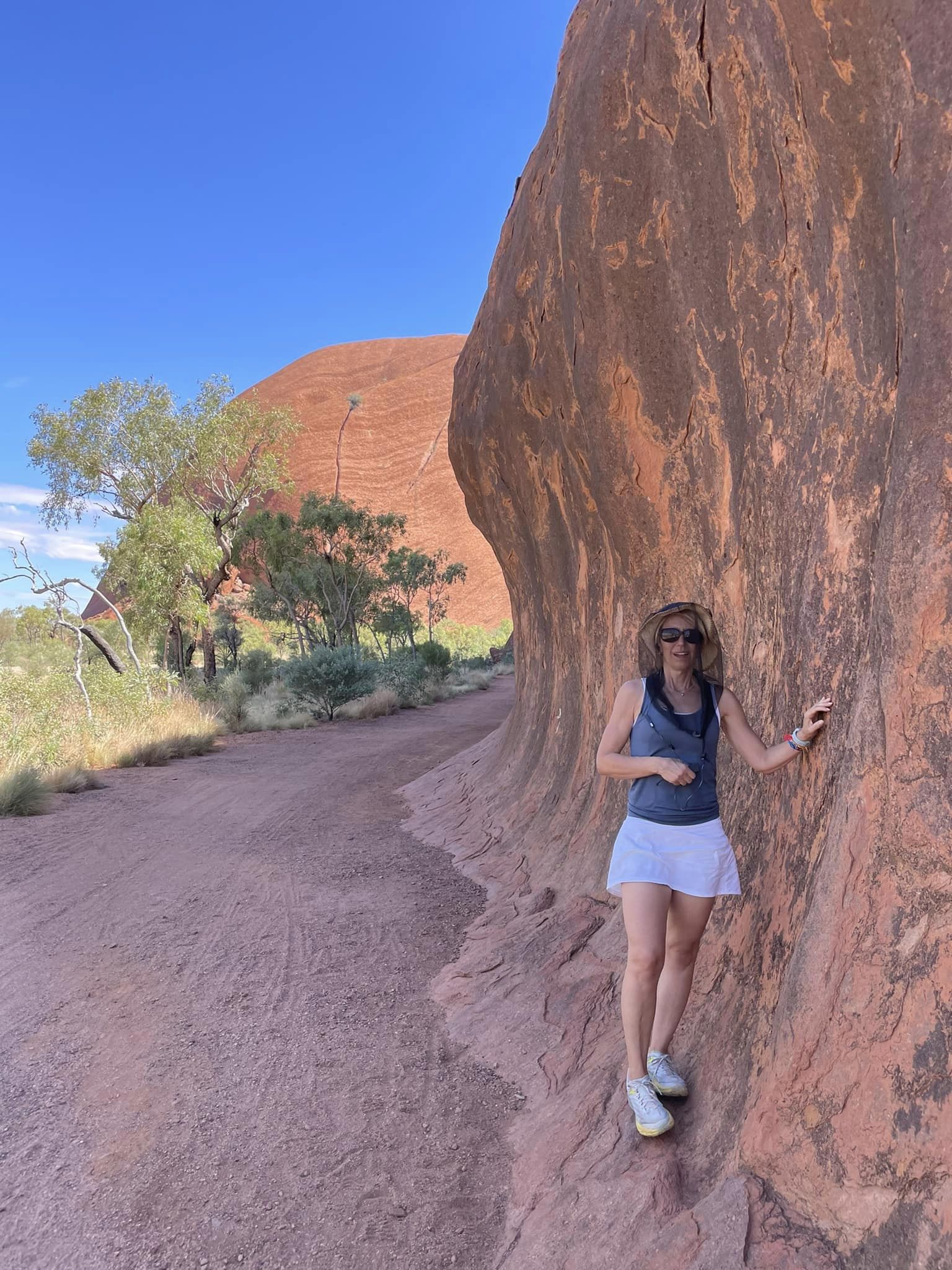
One of the few spots around Uluru where you can get close enough to (legally) touch the rock. Red rock on the surface is harder. When it flakes away, it exposes grey rock underneath which is softer and over time erodes to the formations we see, thanks to wind, rain and sun.
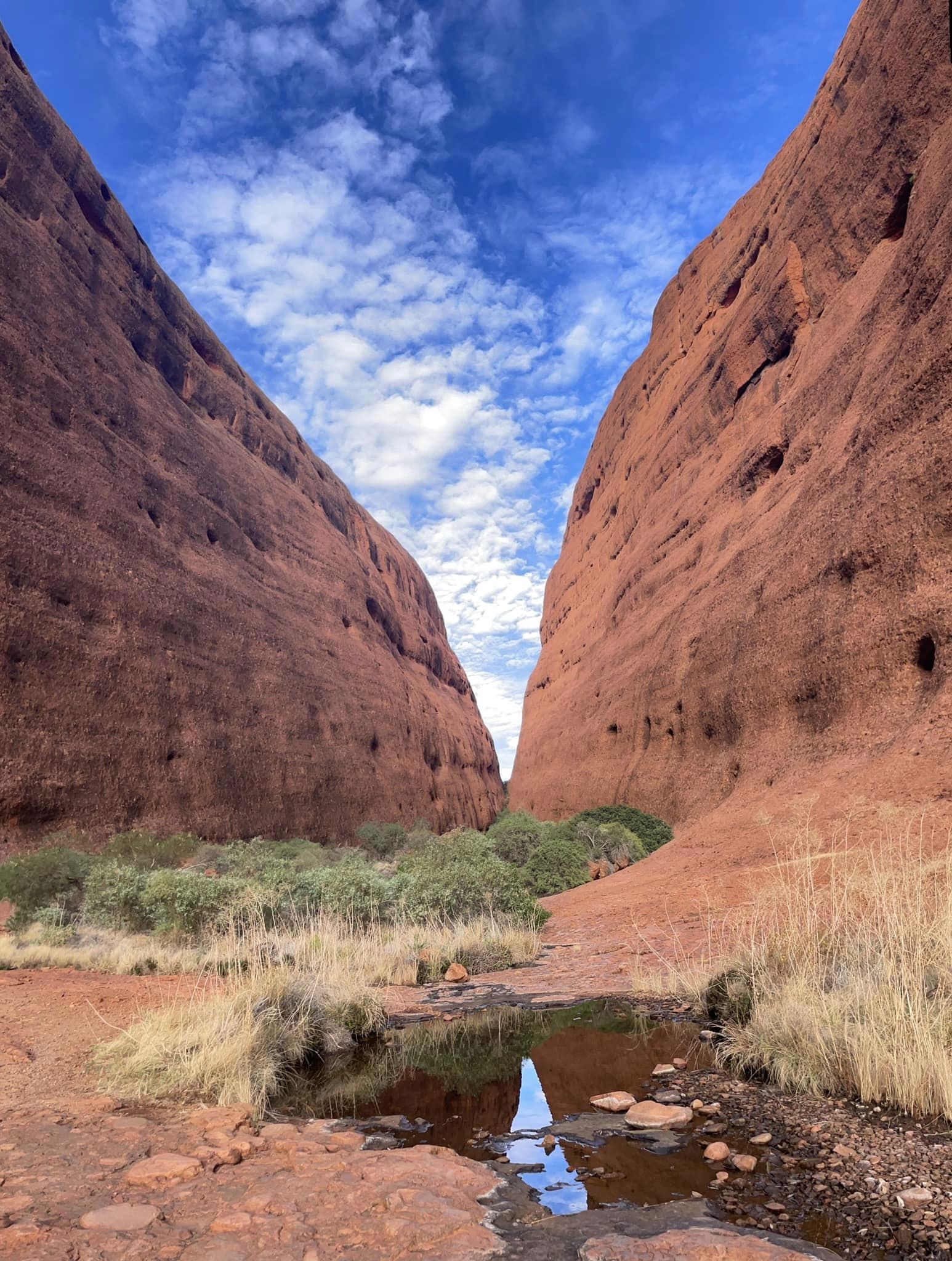
Now we hop over to Kata Tjuṯa, about 50km by road from Uluru. We loved Kata Tjuṯa! It’s much bigger than Uluru, leaving a footprint of 20 square km and soaring to 548m. For the Anangu, Kata Tjuṯa is an important site for men’s business. While all are welcome to explore the trails, the stories and cultural knowledge associated with these rock formations are not shared with visitors.
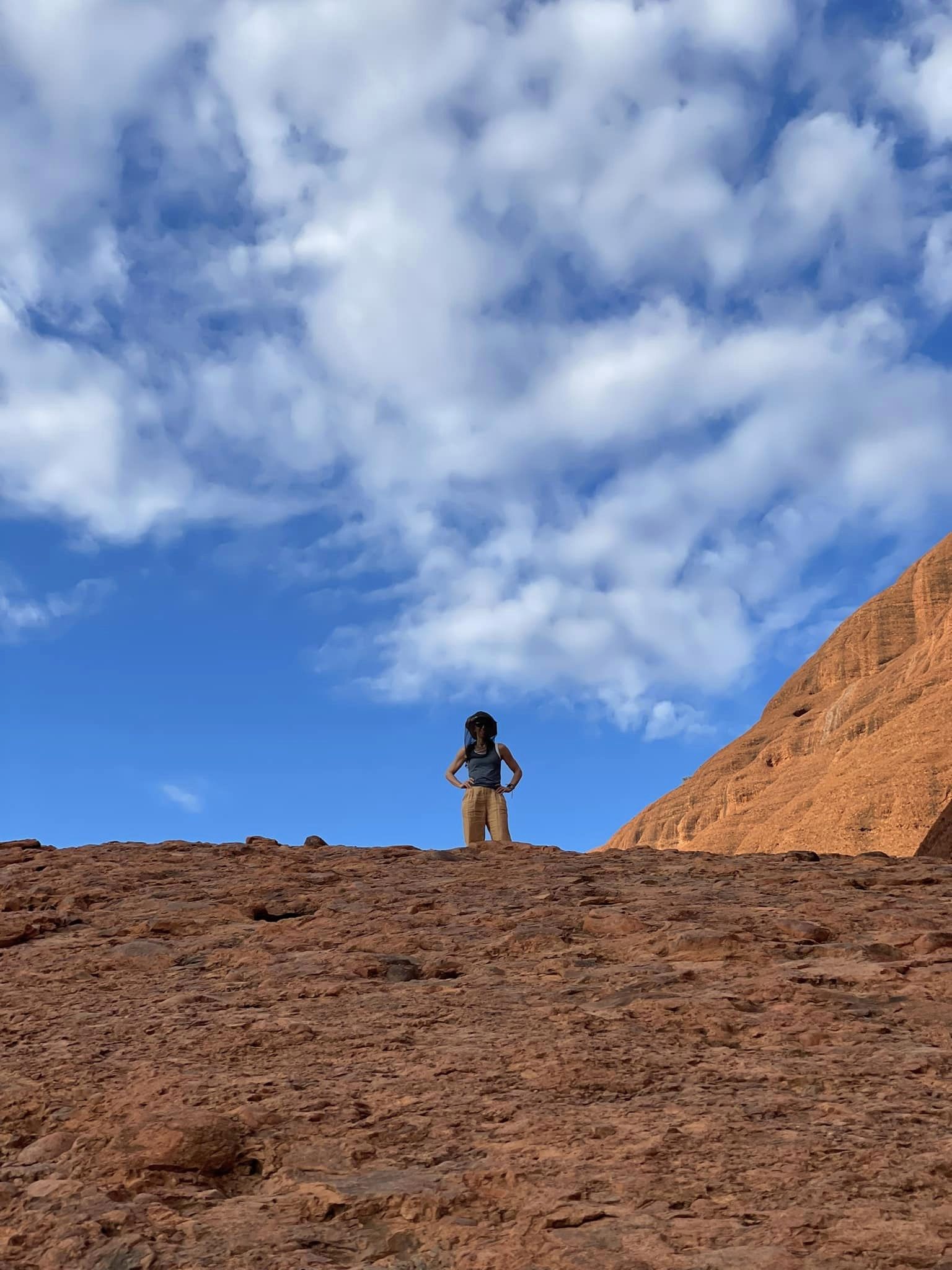
So, I felt tall in Vietnam…not anymore!
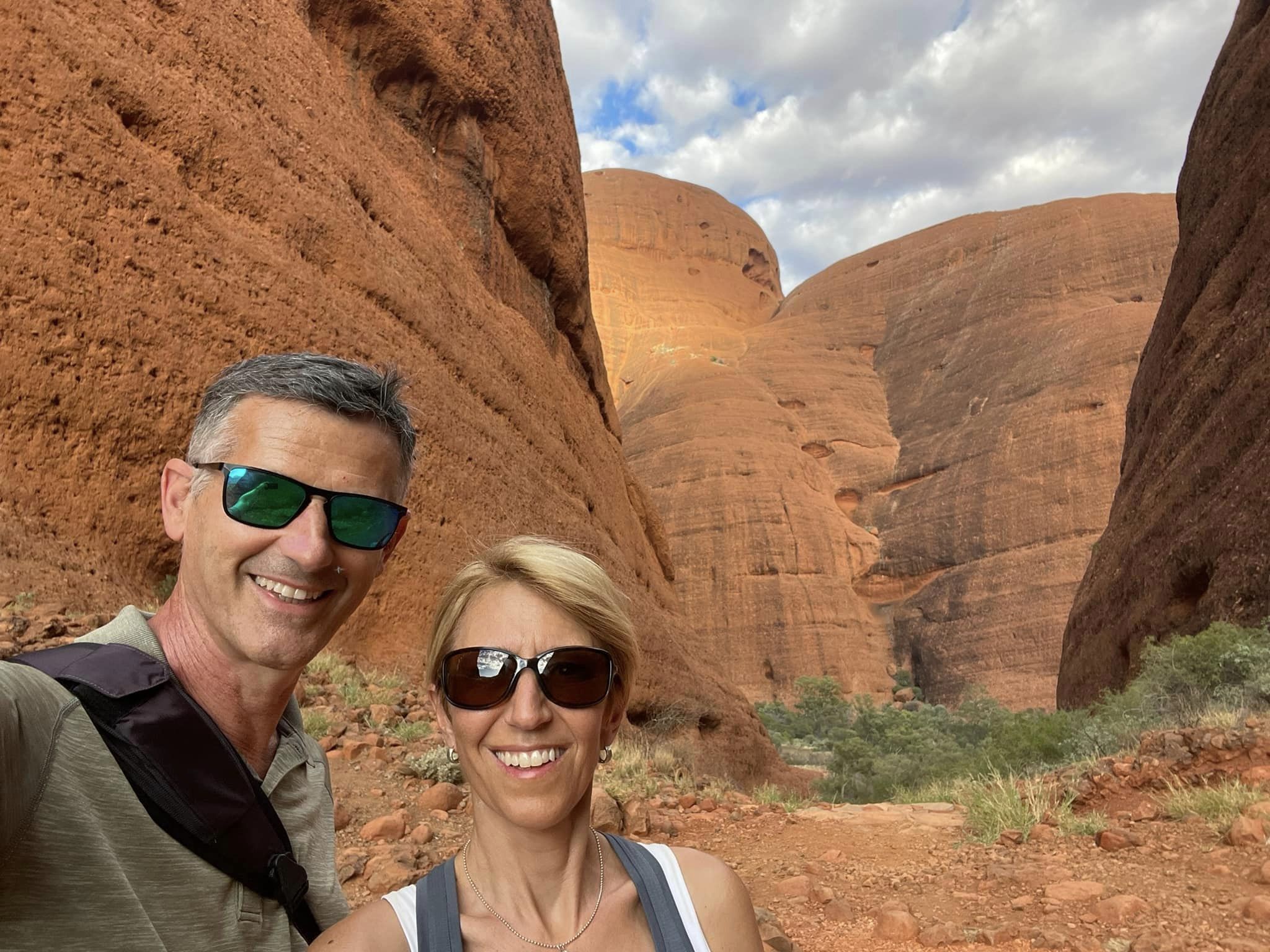
The words, Kata Tjuṯa mean many heads. There are 36 domes in here and the amazing thing is that we can hike through and around. Definitely not over! The Anangu have objected for years to people climbing on the rocks. It’s deemed to be disrespectful. Finally, the Australian government made climbing in the Uluru - Kata Tjuṯa National Park illegal. We saw rangers driving around…likely to save people who don’t wear hats or bring enough water, but I wouldn’t be surprised if they are also there to catch people on the rocks.
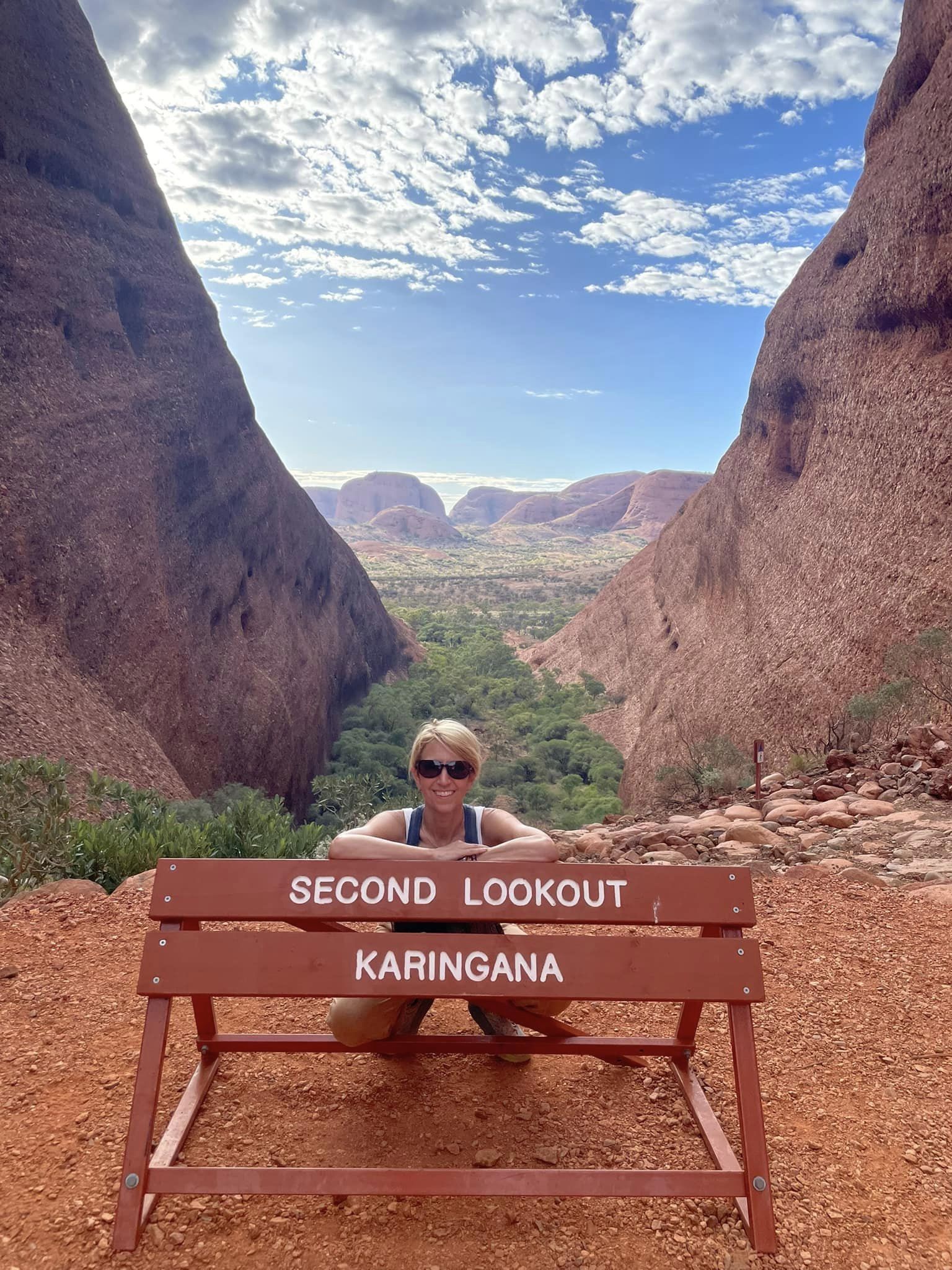
The morning before our flight away from this beautiful place, we got up early to do one of the more challenging hikes. This is the Valley of the Winds and if you come here, make it a priority. Our other option was sunrise over Uluru and I truly believe we made the better choice (that’s why you need to stay a bit longer than us when you come). Scrabbling along rocky paths and through ravines with towering domes can’t be beat.
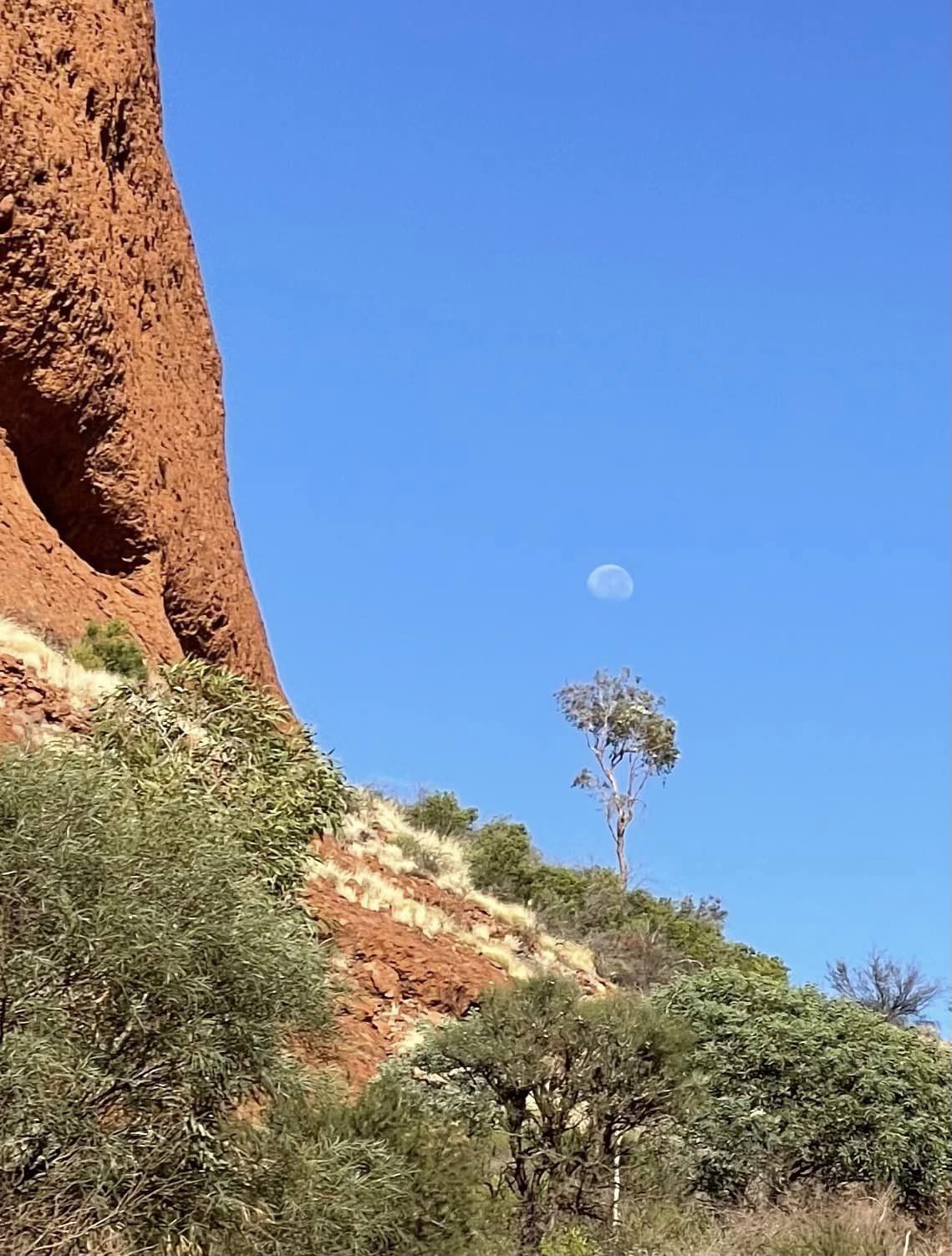
The moon slowly setting. I guess it wants to enjoy every second of this vista too!
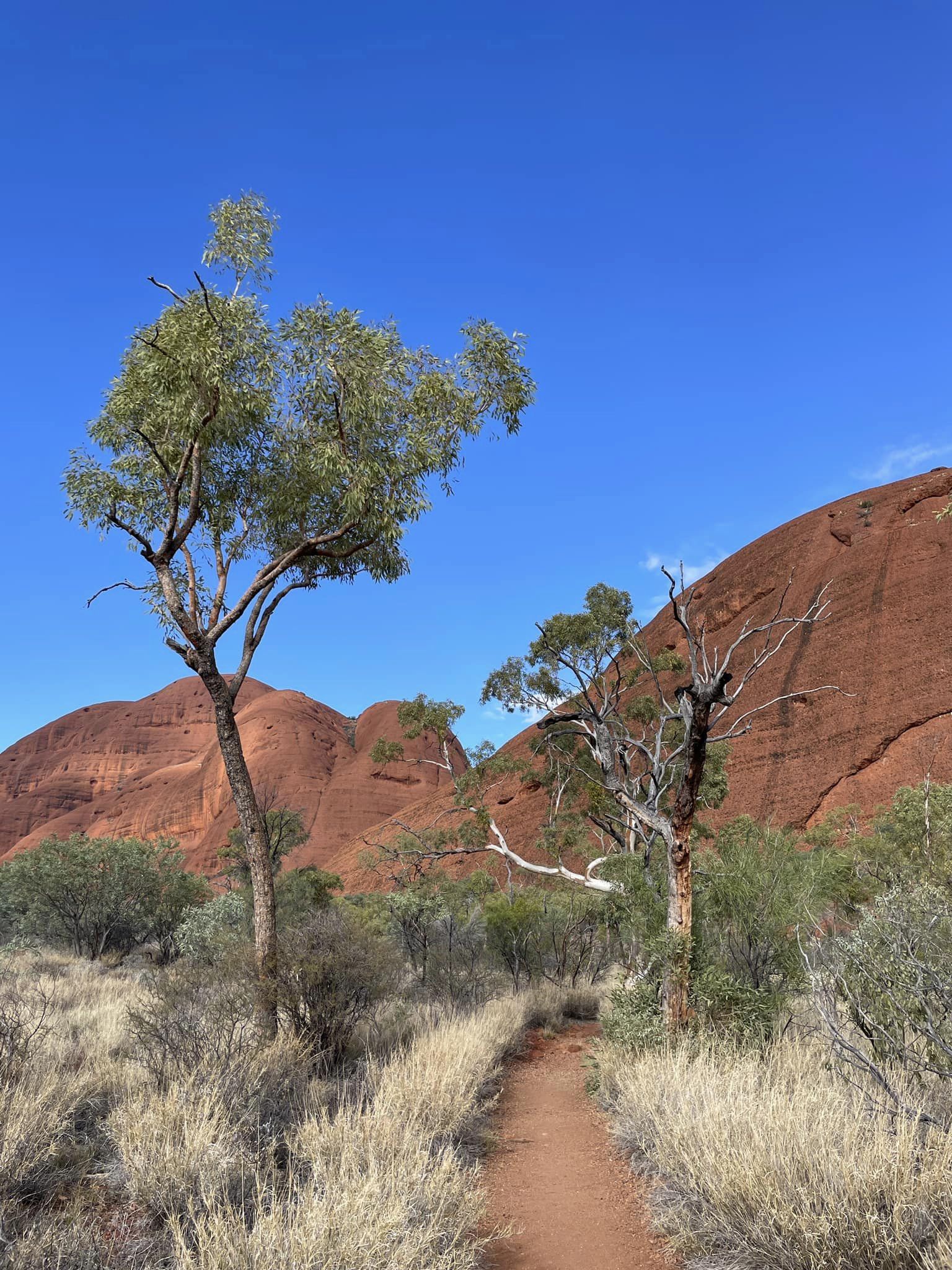
A little bit of all the beauty packed into one spot. The evidence of a waterfall when it rains, the shapes of the domes, the dry and lush vegetation. Follow the path right in!
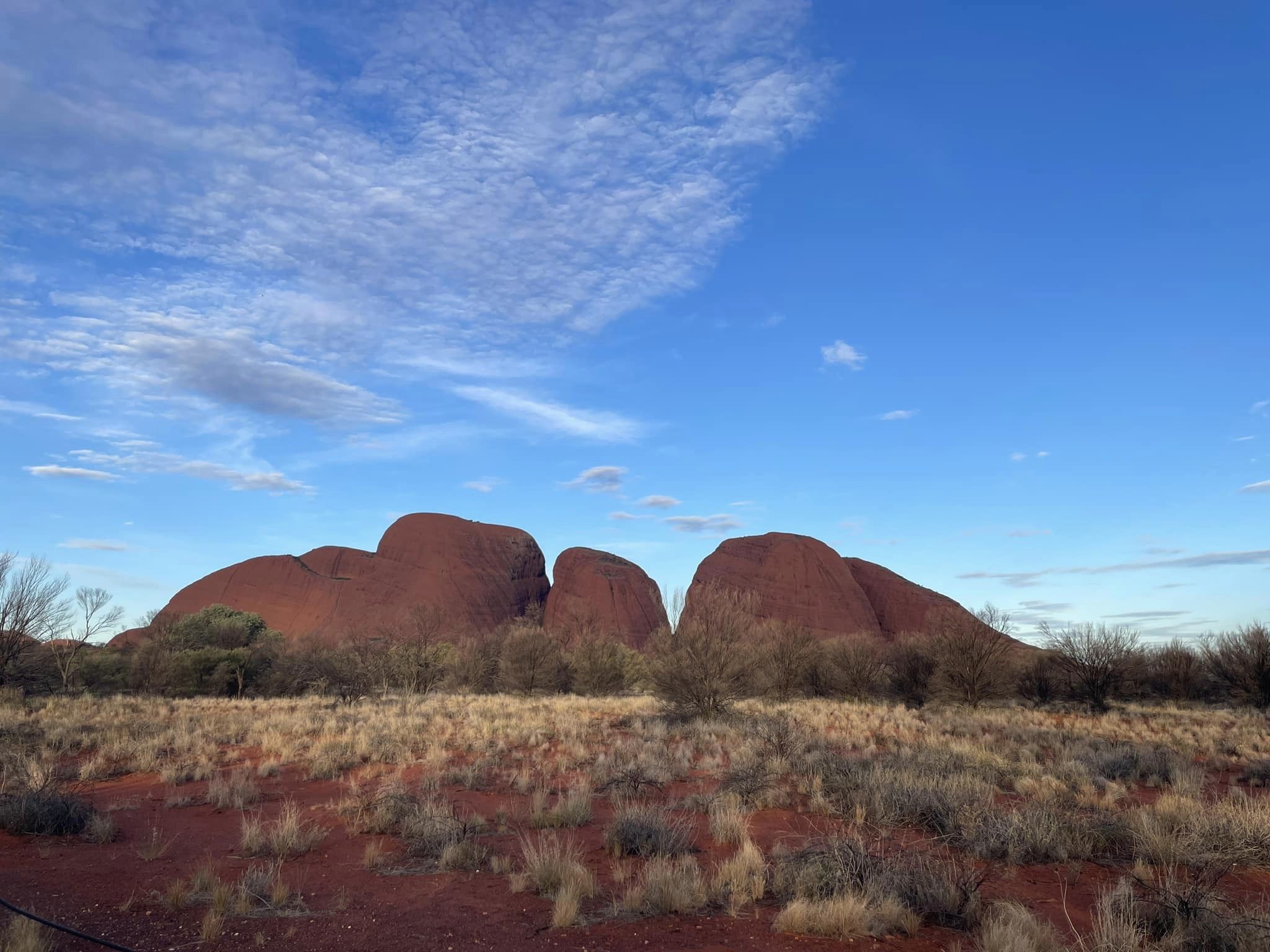
Now it’s your turn to be witness to the colour changes of the rocks of Kata Tjuṯa, in this case, at sunset. 6:09pm.
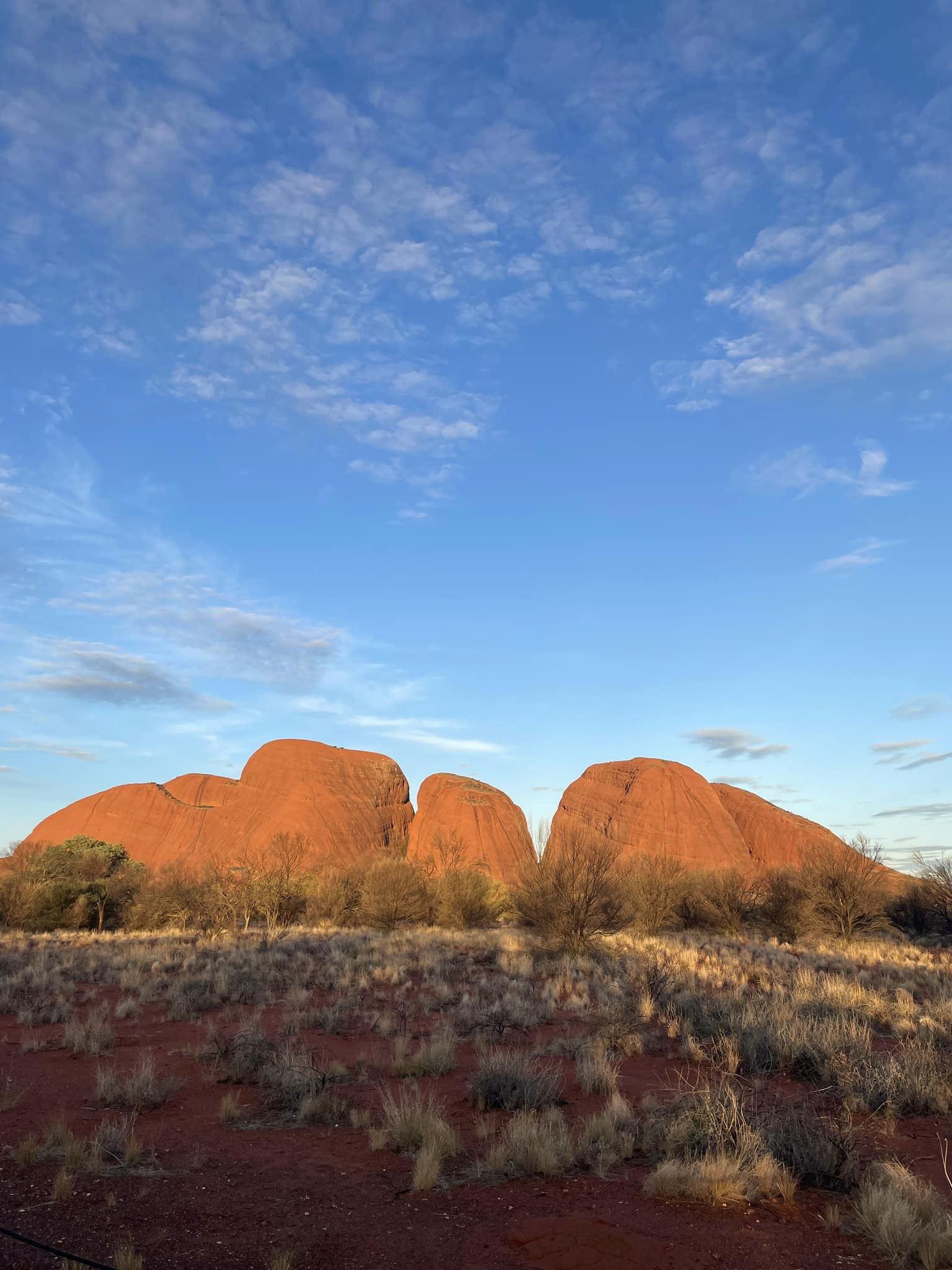
6:23pm
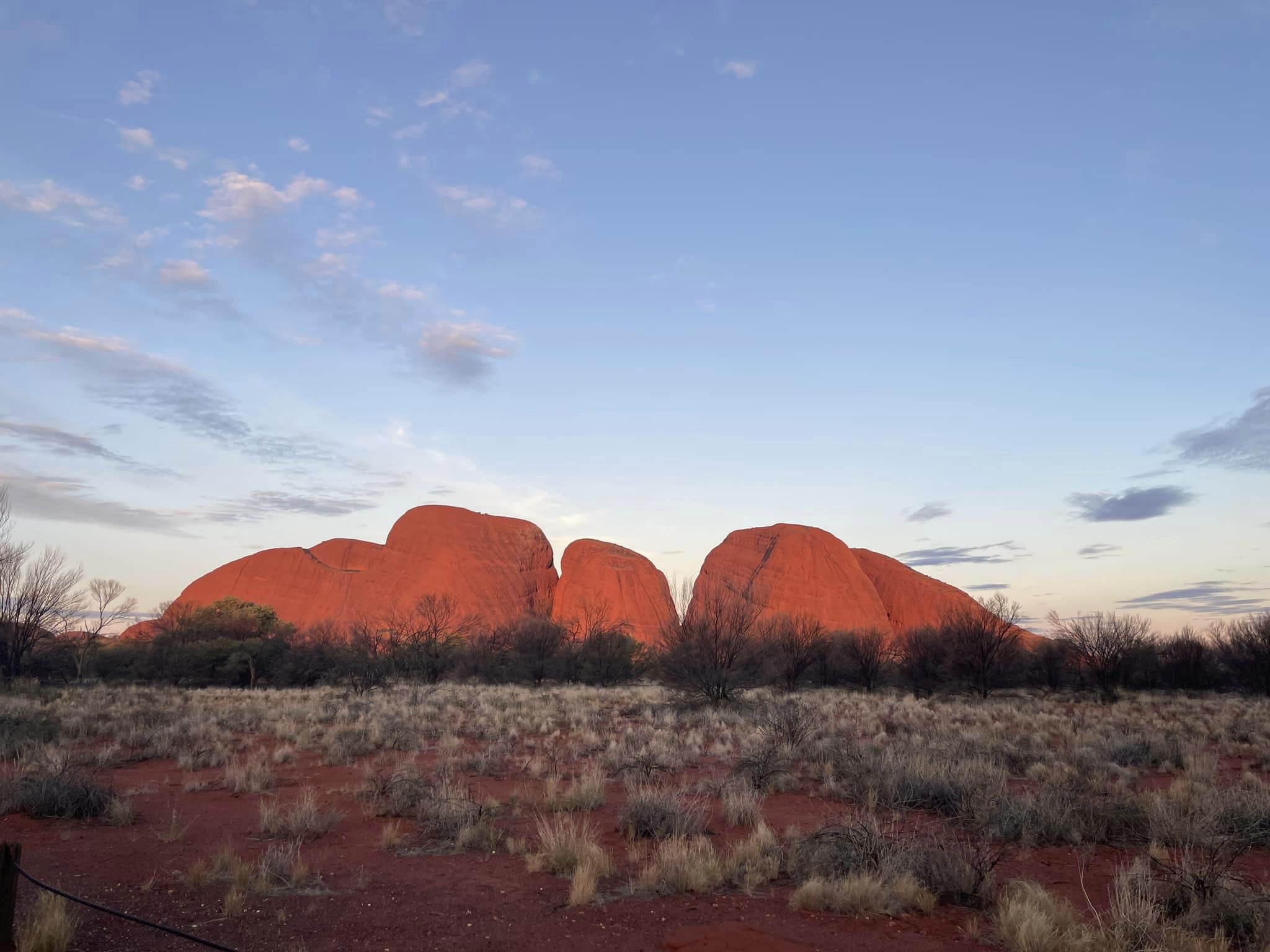
6:35pm.
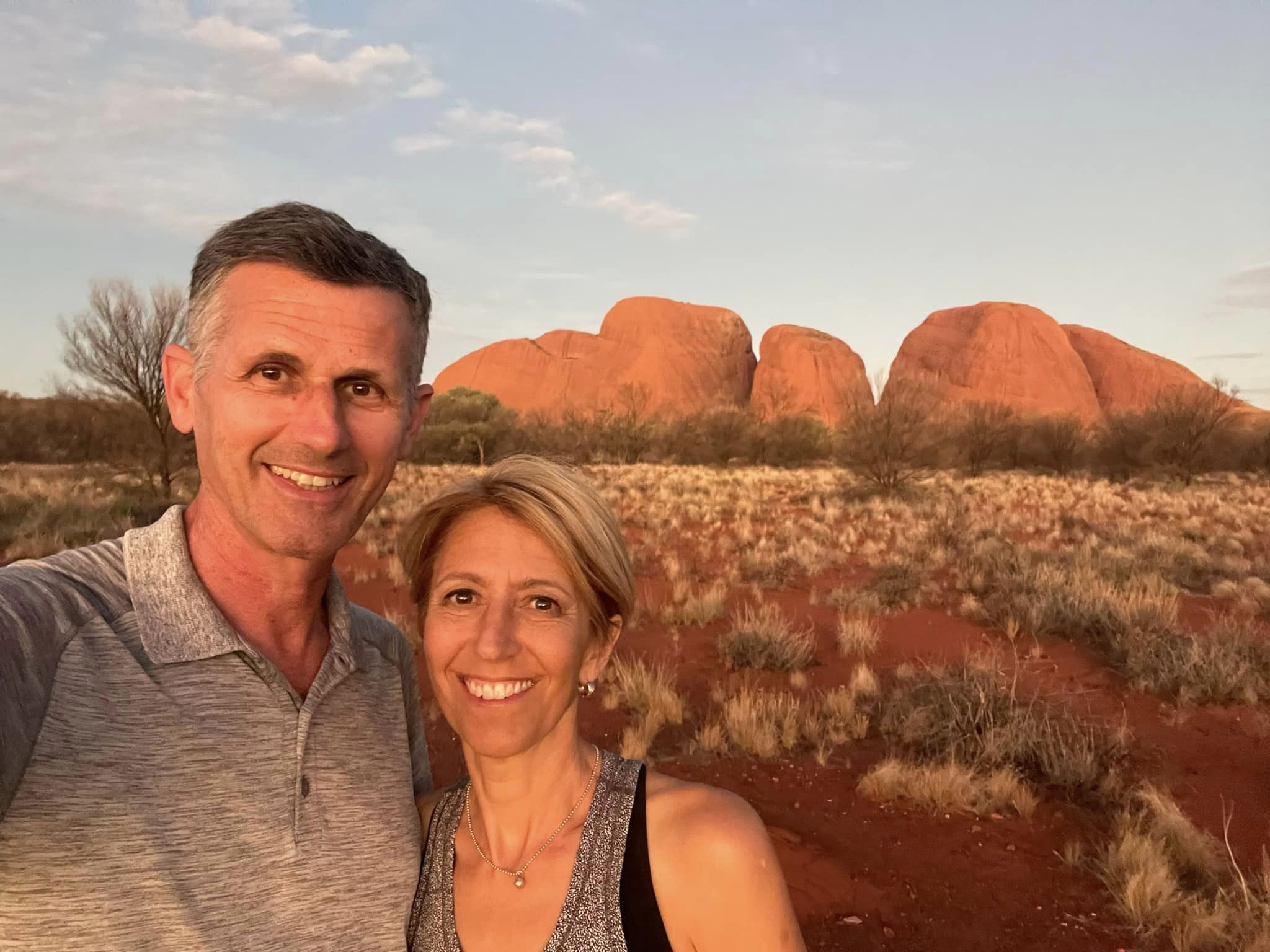
6:56pm.