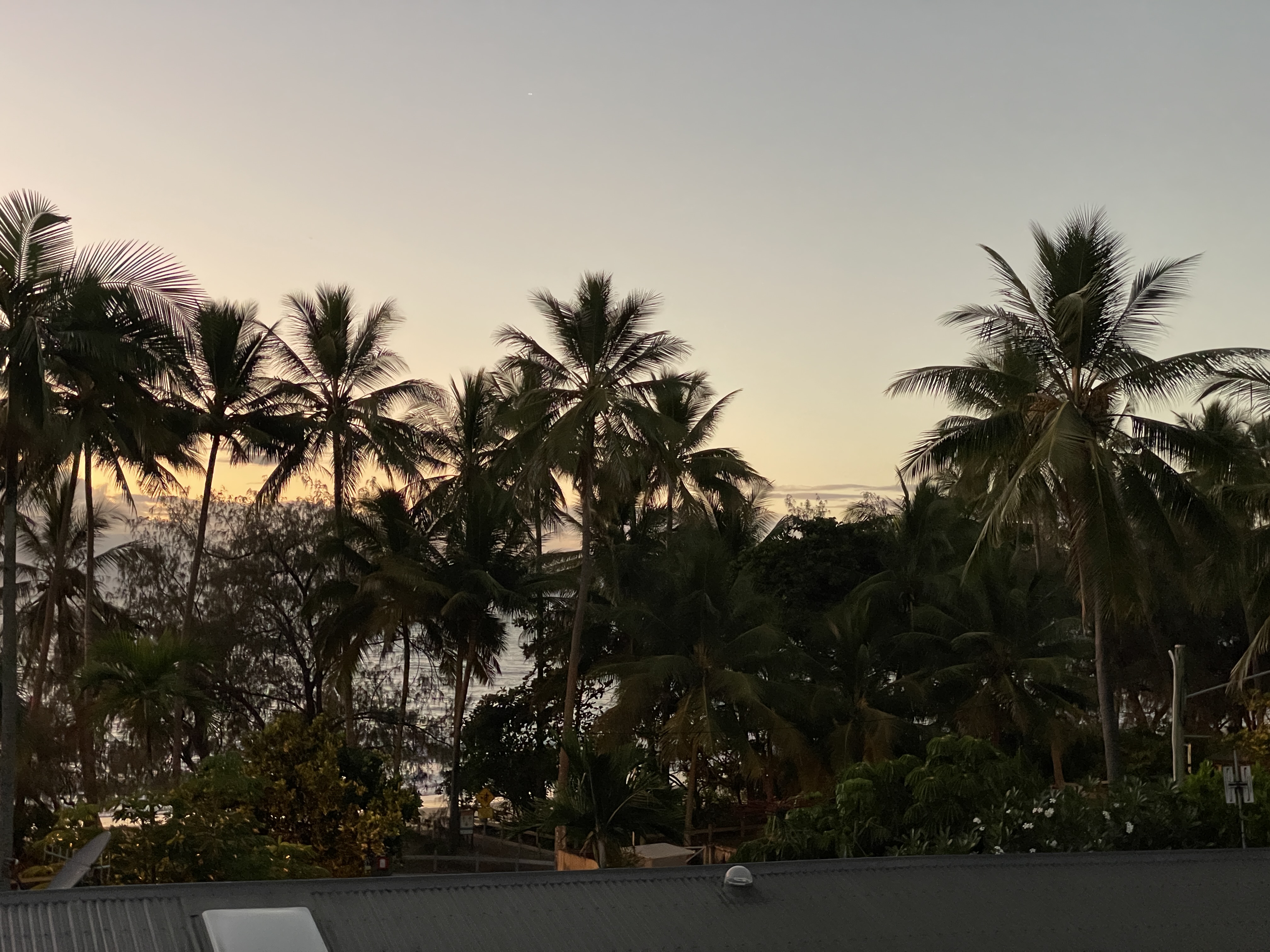
April, 2023
Dazzling and Drippy Daintree Rainforest
We finished our time in Australia in the north east of the country and explored a whole different kind of nature. The Daintree Rainforest, full of plants in overdrive, and the Great Barrier Reef, in all its brilliant and fading glory, were a privilege to visit. It is not lost on us that this is a dwindling world that we humans need to work hard at keeping alive, for our planet’s sake.
Welcome to the Daintree Rainforest, the oldest continuous living rainforest in the world (10 million years older than the Amazon). The Kuku Yalanji tribe are native to this land and shared a spiritual connection with the rainforest until the first European settlers showed up in the late 1800s and started to clear the rainforest in search of gold, other metals, wood, minerals and agriculture. The rainforest has been protected from all this nasty business since 1988.
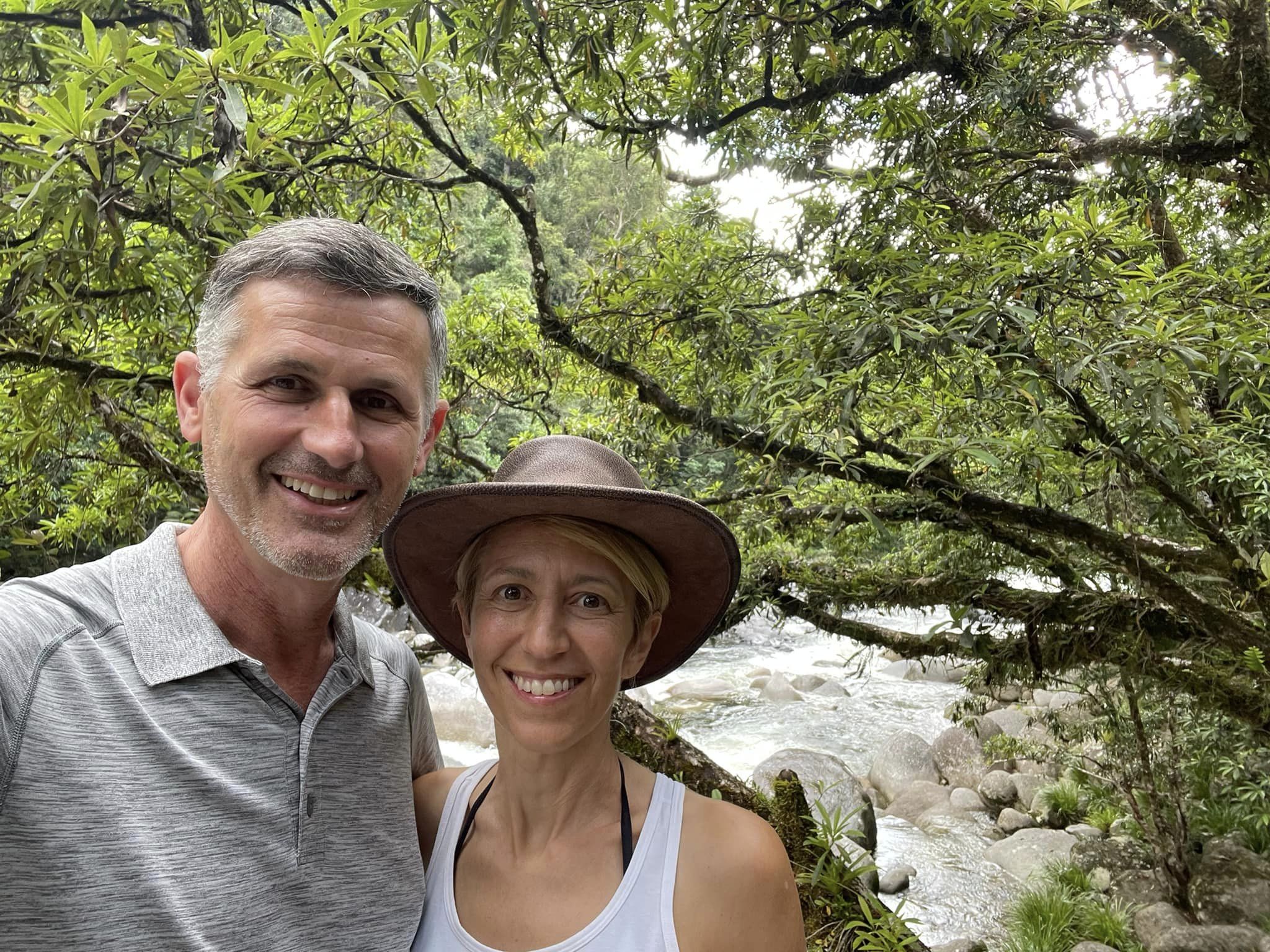
Despite this sordid history, this place is unlike anywhere else in the world due to its very complex ecosystem; 920 species of trees and 130 species of reptiles live in this 1,200 square kilometre area. It’s a bit of natural magic tucked away in the far north of Queensland.
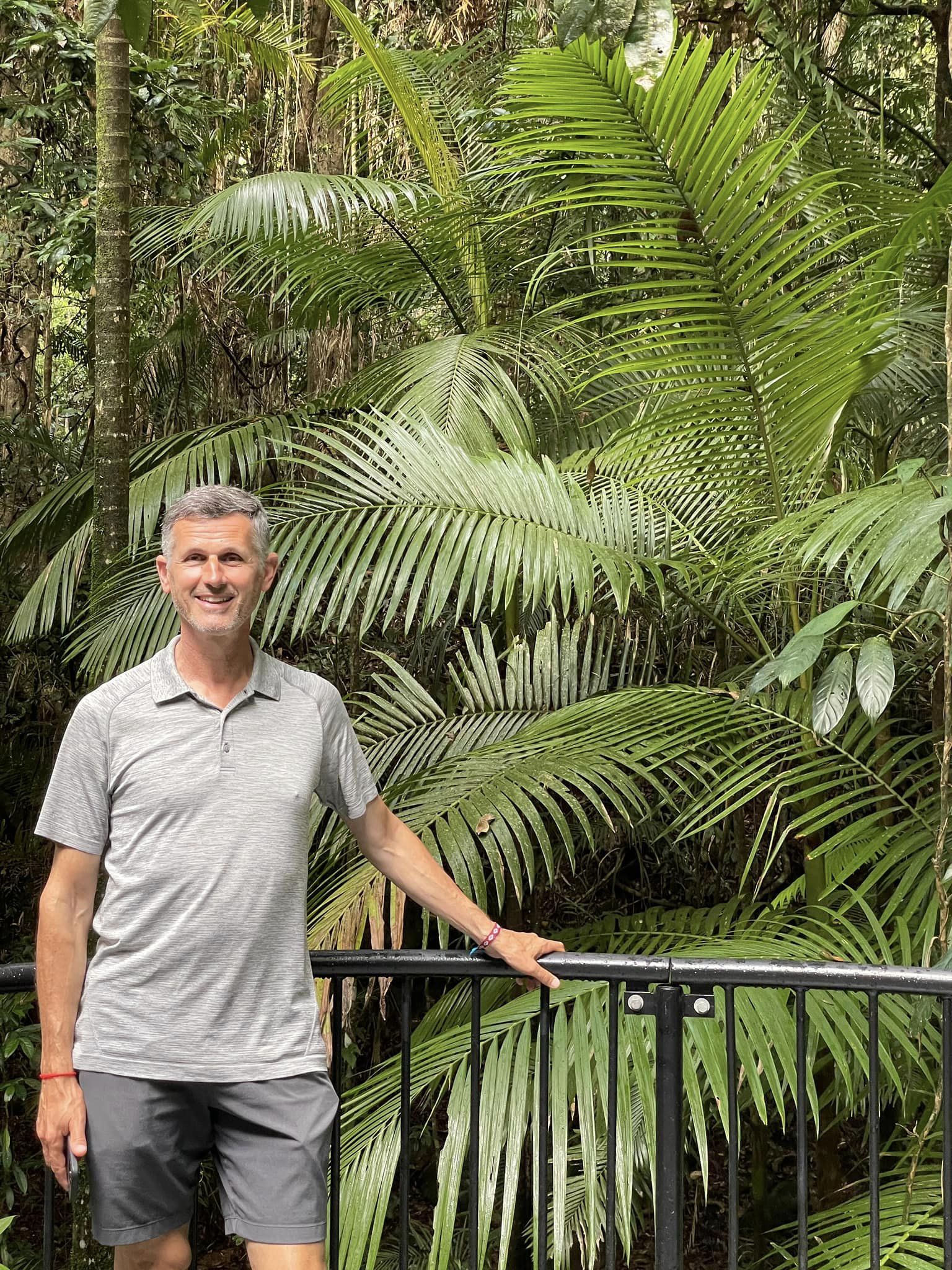
This tropical rainforest in the FNQ (new acronym for us: Far North Queensland) is definitely the land of big leaves, not to mention dangerous leaves that will cut you, poison you and generally ruin your trip. This is where there are serious consequences when people don’t obey the “do not touch” rule!
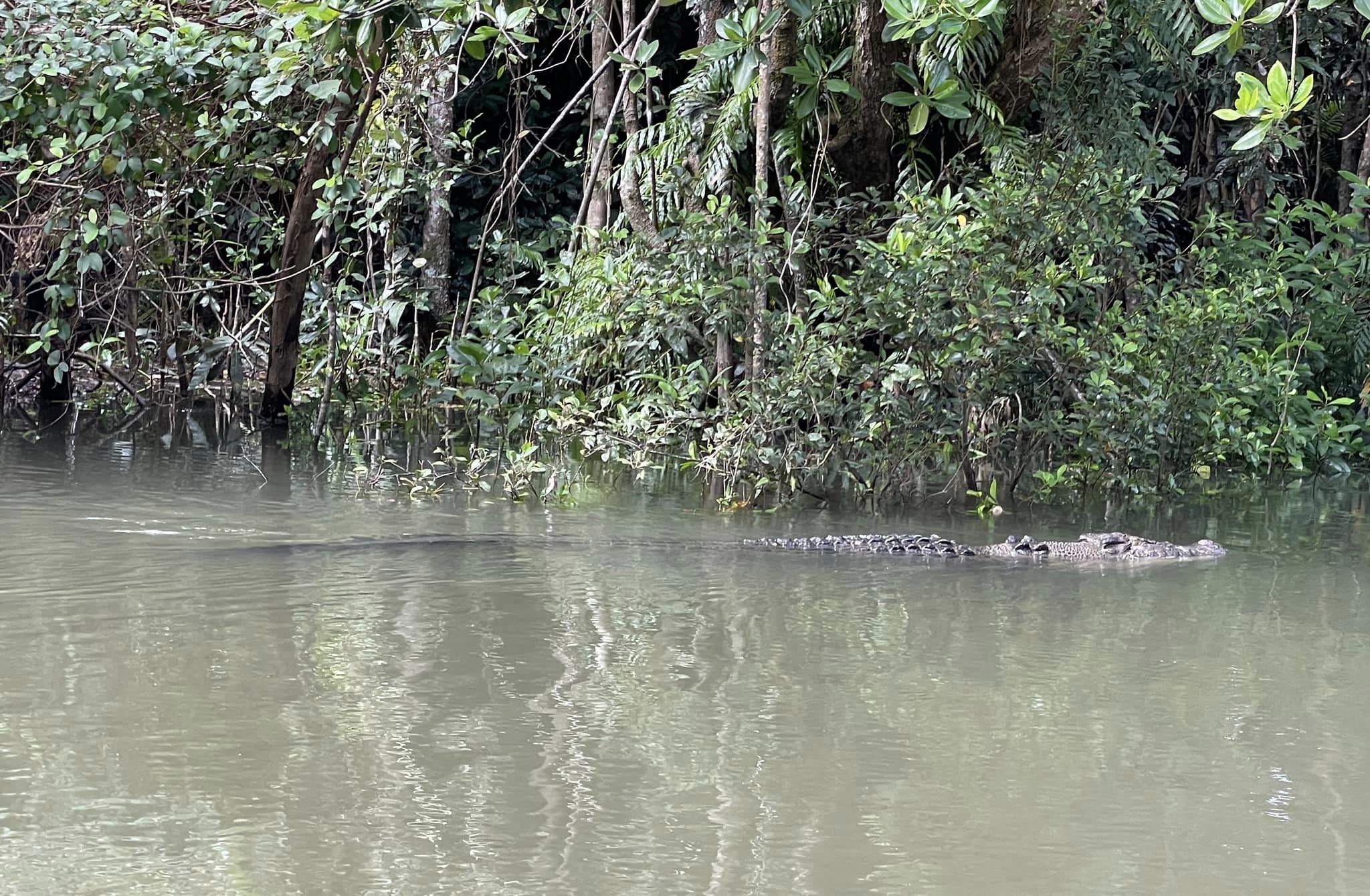
Meet Scarface, the king of crocodiles in the Daintree River. Scarface is around 70 years old, measures 5 metres and weighs 500 kg. While crocs can regrow their teeth lost to crunching on bones and whatever else gets in their mouths, once there is nerve damage, tooth time is over. Scarface is now toothless but he’s still the patriarch around here and in his heyday, he could smash full grown cattle like Tic Tacs. We were lucky to see Scarface as he had recently returned from a 31 day absence. Locals speculated that he may have lost in a turf war with a couple of other dominant crocs trying to move in on his territory, he may have died of old age, or he may have met with human interference. He returned mid-March, unscathed. Nobody really knows where he went but maybe the old rascal has a new “friend” upriver?
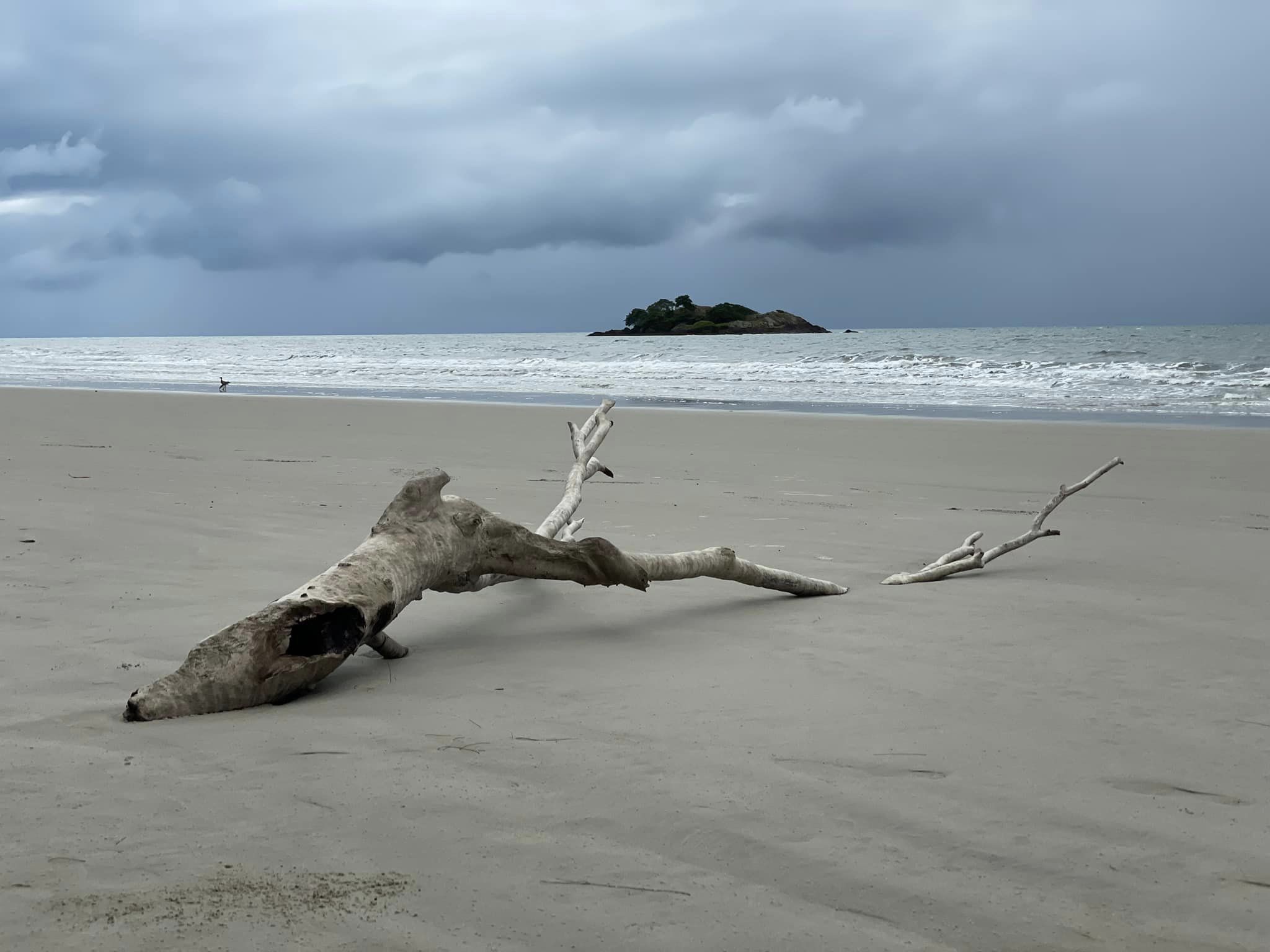
This divining rod seems to have worked! There’s the water!
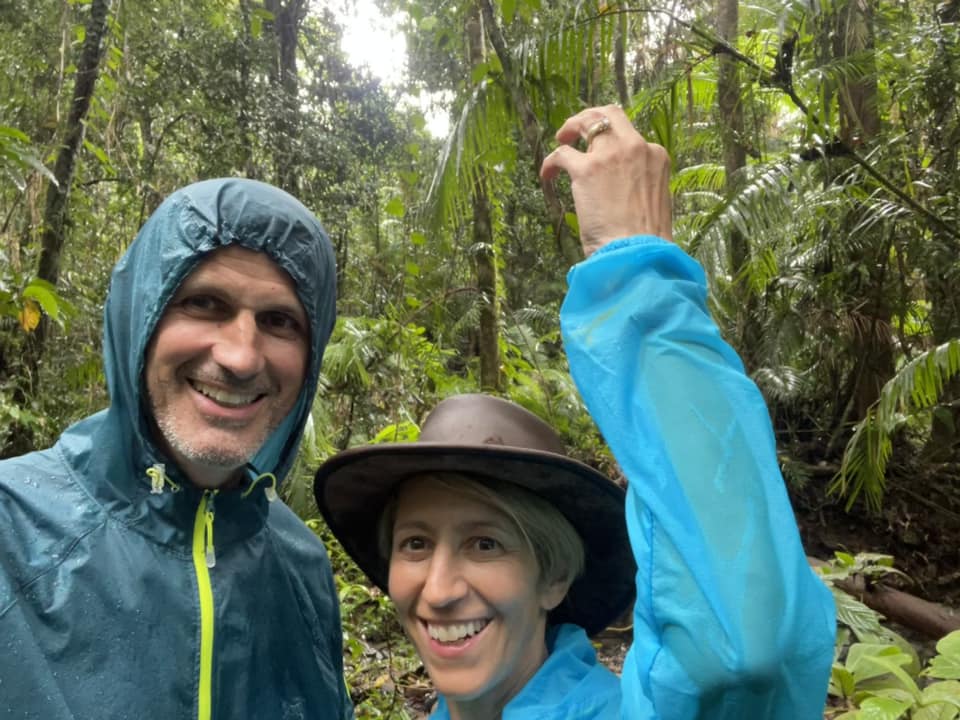
The rainforest certainly lived up to its name. Lucky we had our "Arc’teryx" waterproof rain jackets that we bought at a street stand in Hanoi. So much for waterproof! But my outback hat worked!
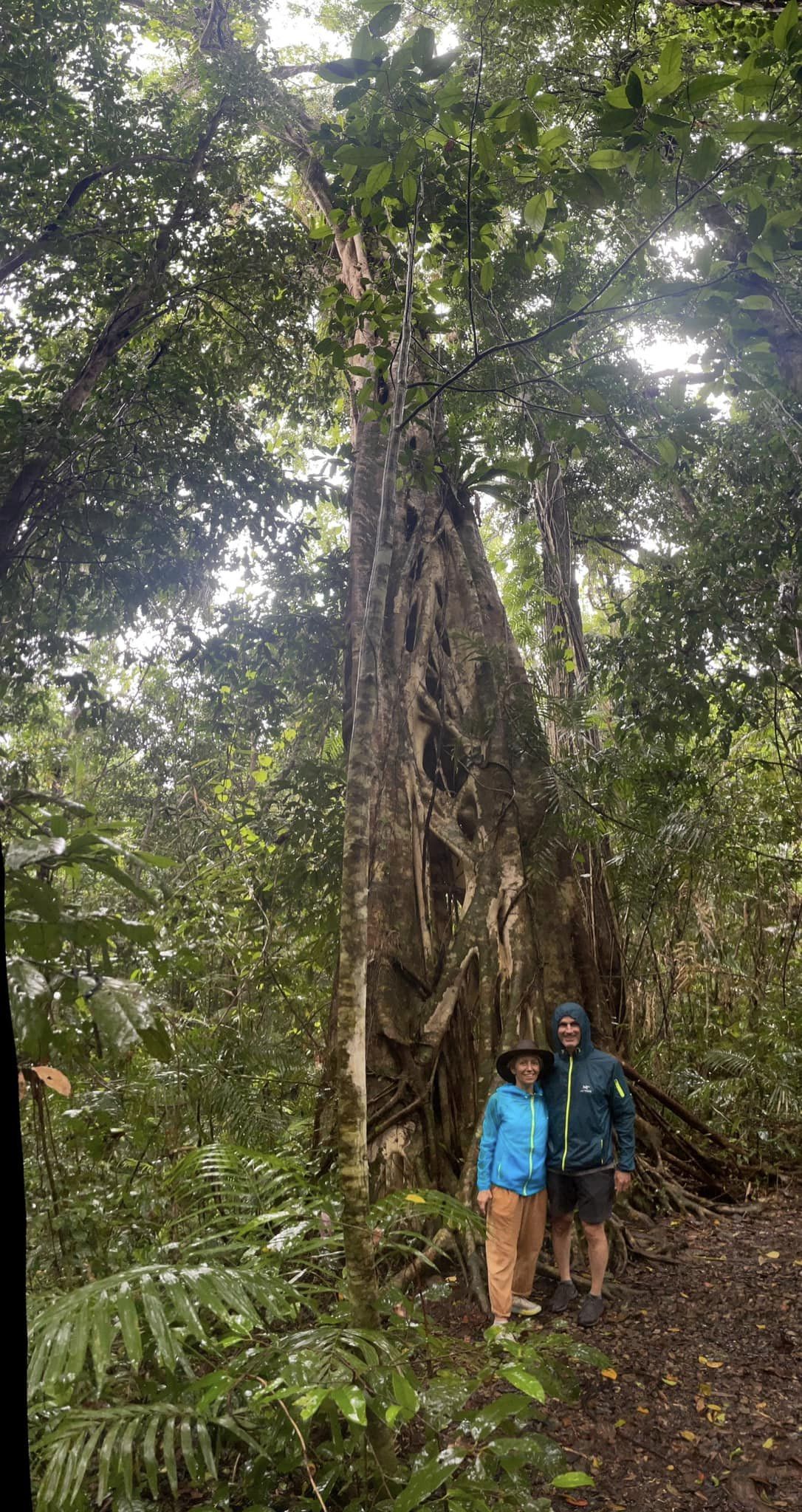
How’s that for a big strangler fig! Birds eat the figs and then unwittingly drop the seeds on the tops of trees as they fly by. The seeds germinate up there on the treetops and the fig’s air roots find their way down to the forest floor and create their own root system separate from the host tree. Ultimately, the strangler fig covers the host tree with its own trunk and that’s the end of the host. The host tree dies and eventually it’s trunk rots away and the now hollow centre of the strangler fig provides refuge, feeding and shelter to a bunch of forest creatures.
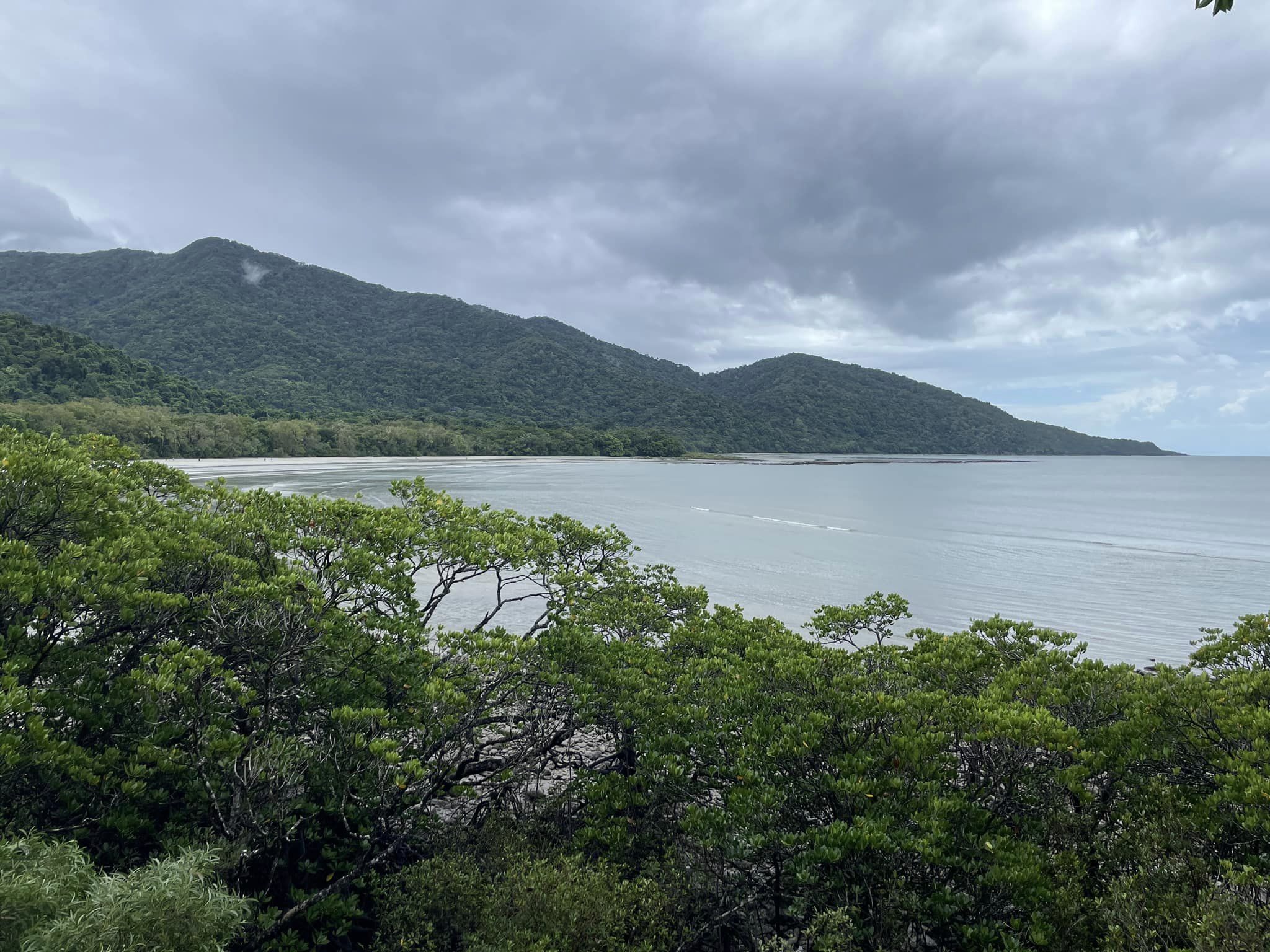
Cape Tribulation, the only place in the world where two World Heritage listed areas meet; the Daintree Rainforest and the Great Barrier Reef. The Cape was discovered by Captain James Cook who was the first European to land here in 1770. Landing is putting it mildly…his ship (the Endeavour) crashed into a coral reef while sailing through what we now know as the Great Barrier Reef. The ship was severely damaged and Cook reportedly told his crew that this is where their trials and tribulations would begin, hence the name.
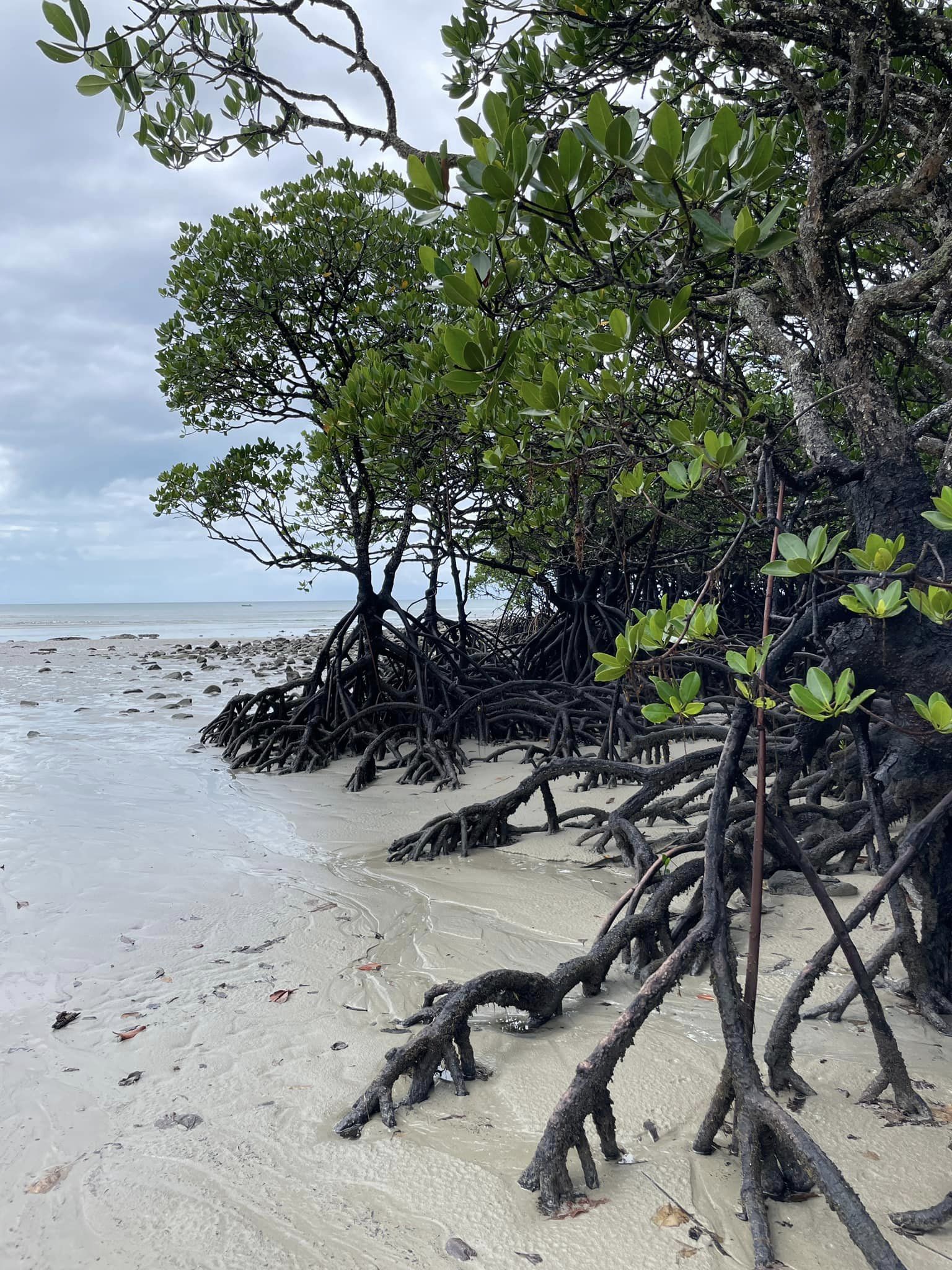
Mangrove forest along the edge of Cape Tribulation Beach. This area has one of the highest diversity of mangrove trees and shrubs in the world (about 30 species). These very cool trees have adapted to life in salty coastal water and have developed a salt filtration system and a method of breathing oxygen despite their roots being submerged in mud and water.
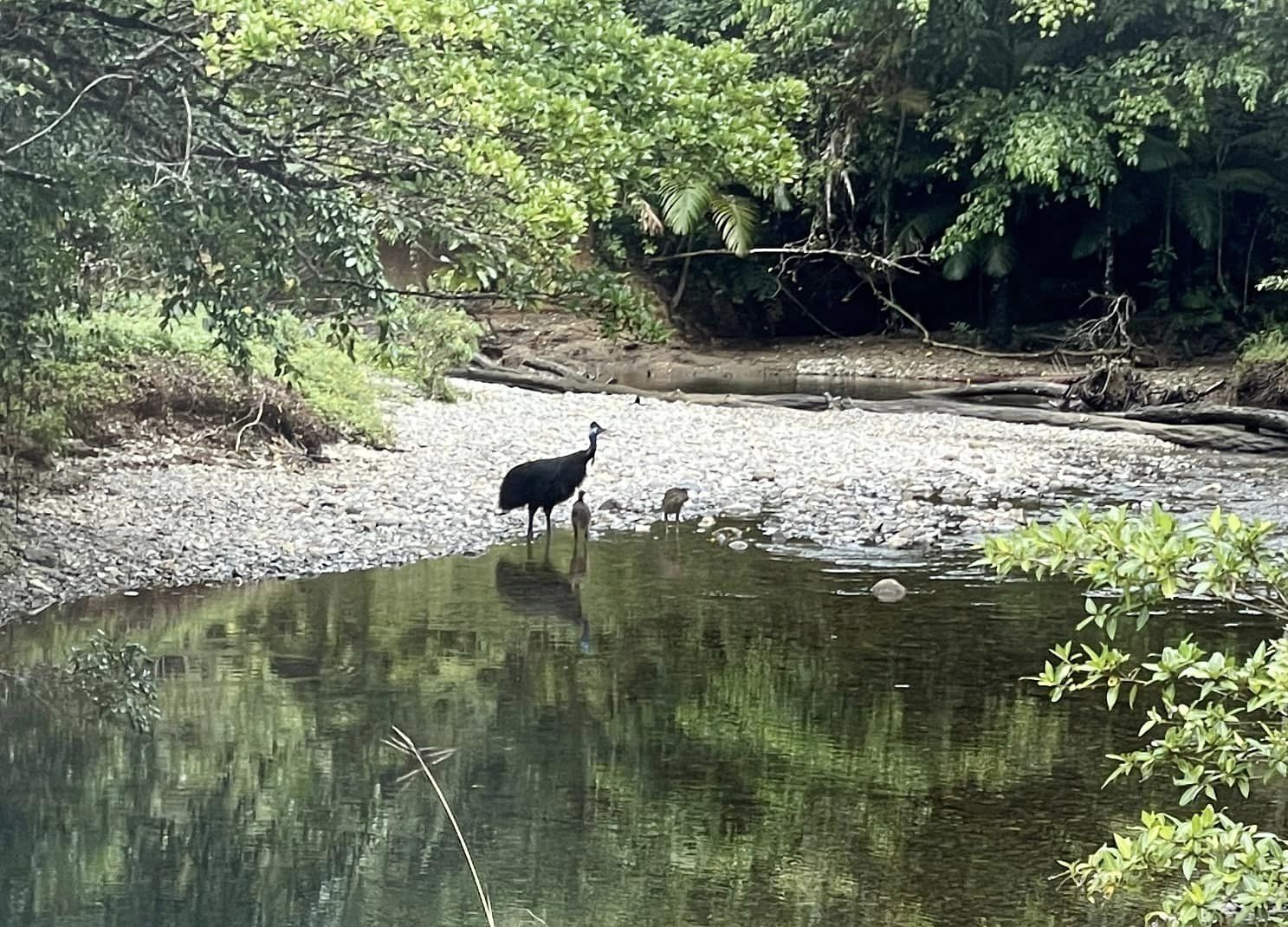
An elusive Cassowary dad with a couple of chicks having a roadside drink.
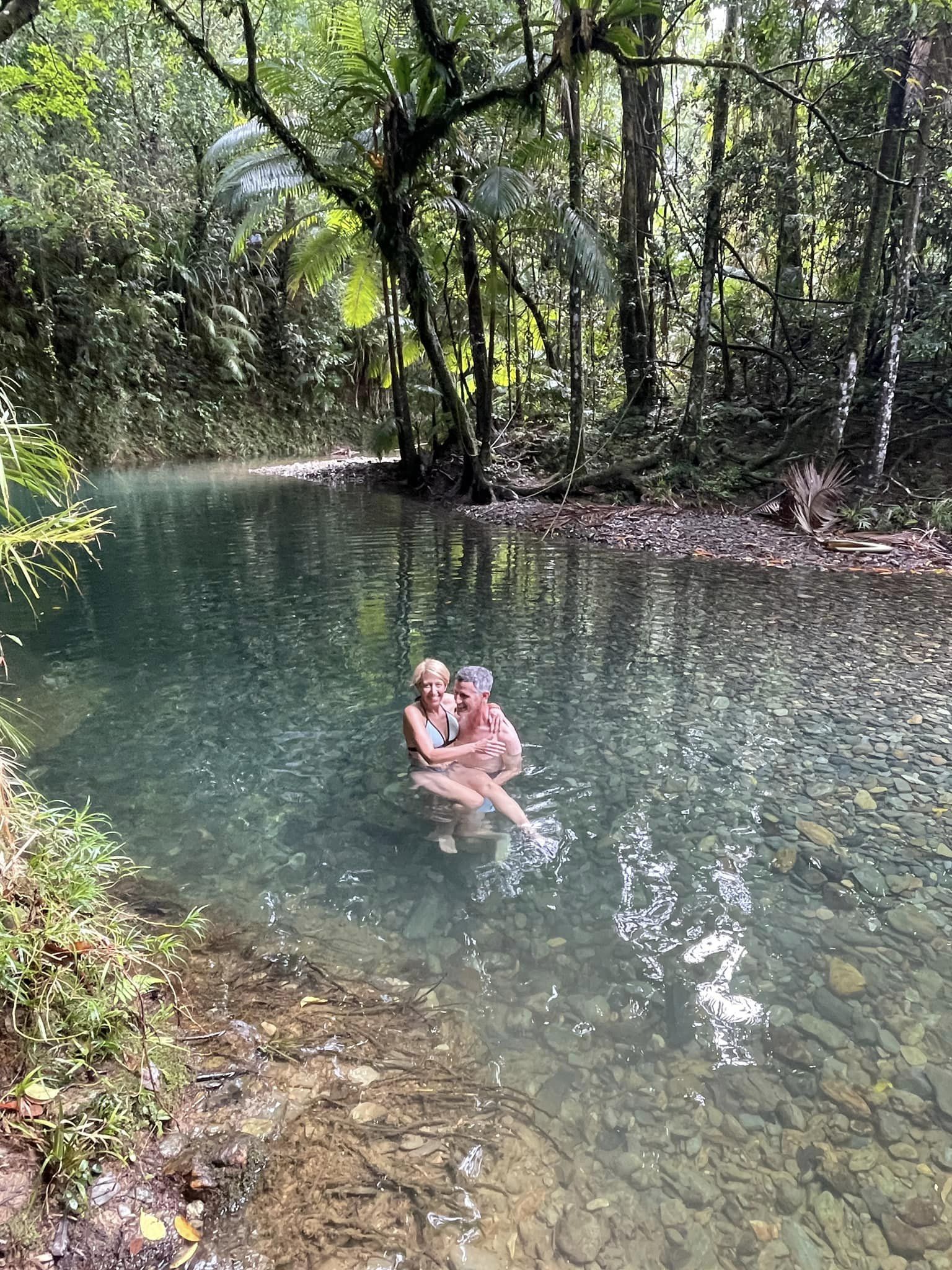
Despite all the rain earlier in the day, Cooper Creek didn’t overflow so we were lucky enough to get in for a swim.
The Great Barrier Reef...Hanging on for dear life
Ah, the Great Barrier Reef! We were fortunate to go when we did as the weather turned and trips were cancelled for the next two days. How disappointing it would have been if we had gone all that way and missed the chance to explore this natural wonder.
So what’s the status of the reef? Is it dying? Is it already dead?
Yes it has suffered great loss and no it is not already dead.
Climate change through water temperature and sea level changes, acidification and extreme weather events has severely threatened the reef but bad publicity is making it sound worse than it is. Cynics (like Adam) would say that’s a lot of marketing-speak to prop up tourism, and there is some of that at play for sure, but I’m going to go with my new, favourite saying: the glass is half full and the other half was delicious. Some estimates show 50% of the reef is dead and climate change is making it harder for the coral to recover and regrow. We’ve all heard about coral bleaching and I learned that this doesn’t mean that the coral is dead. When the coral is stressed due to environmental changes, it expels the algae that lives inside it. The algae gives the coral its colour and when the algae is gone the coral appears white (bleached). This is a bit of cutting off one’s nose to spite one’s face. The coral is fed by the algae that it just kicked out. If the coral remains stressed, it won’t let algae back in and if that goes on too long, then the coral will die. There is a huge trickle-down effect when coral dies as thousands of marine animals depend on it for their survival. Without coral, we lose the ecosystem.
All kinds of research and work is being done to preserve and propagate the reefs (we even saw a number of underwater platforms where new coral is “planted” and growing) but it really comes down to climate change. And we humans are the driving force behind our warming planet. When you’re out here and see the unbelievable beauty, life and loss, it really drives the point home. It’s stunningly beautiful and I hope it will still be here for our grandchildren.
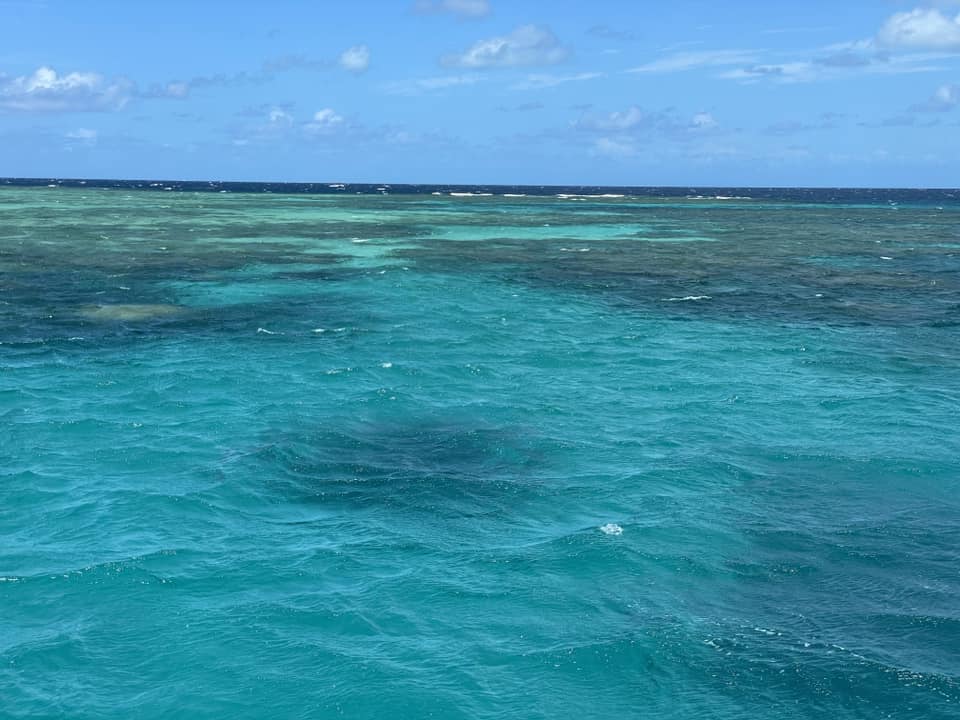
The Great Barrier Reef is the longest barrier reef in the world, stretching 2,300km in length and 344,000 square km. There are 2,900 individual reefs and we snorkelled three sites around one of them, Opal Reef, which is situated on the outer reef.
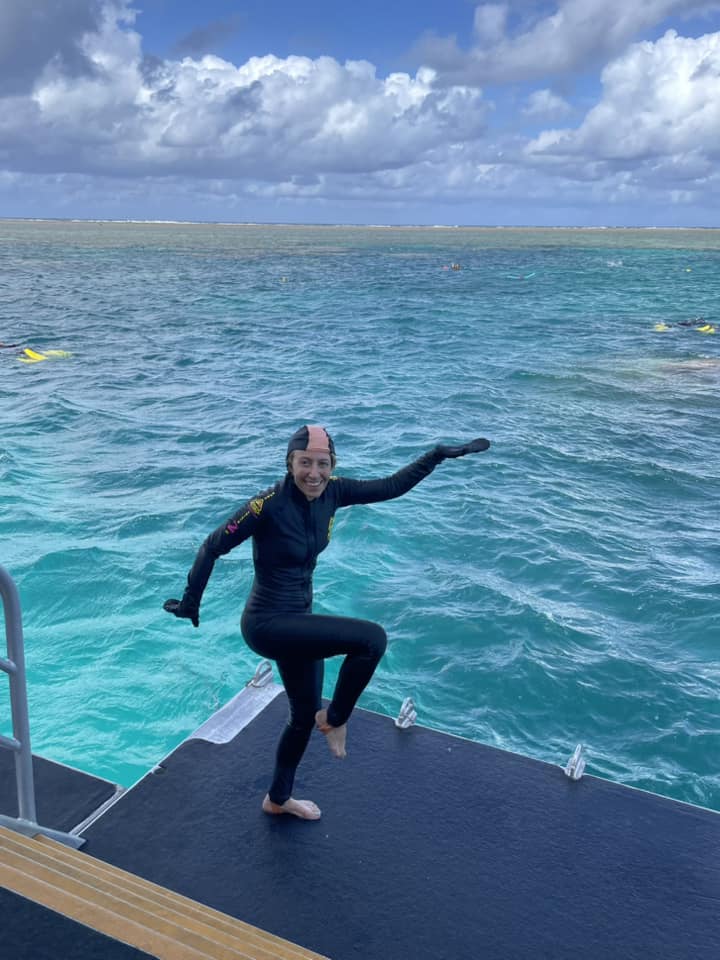
Lethal jellyfish in the waters here. Unlikely to be this far out (about an hour and a half by boat from Port Douglas) but why take any unnecessary risks? So we get to don these stinger suits. Basically a lululemon onesie with a hood and mitts.
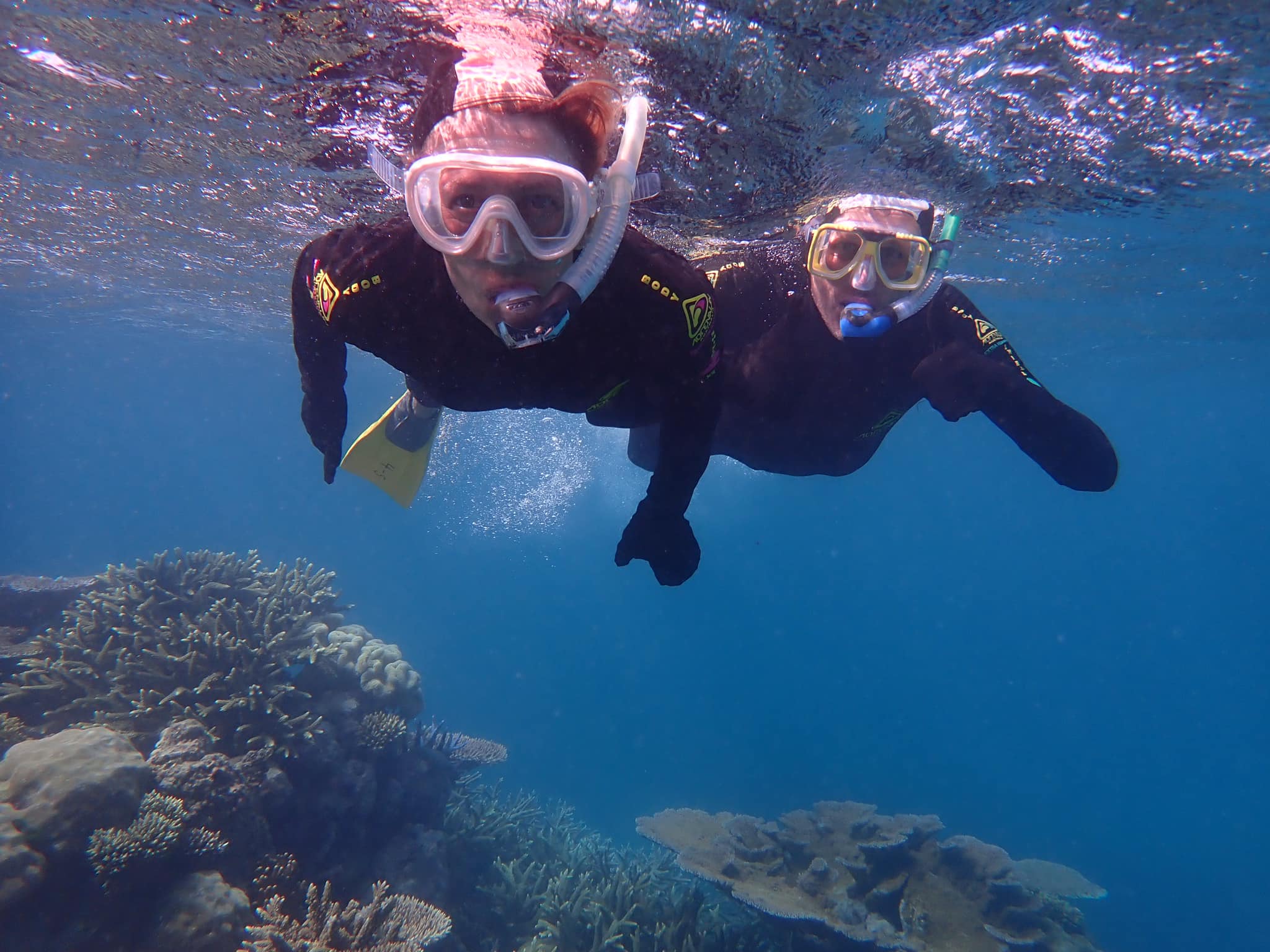
Guess who!
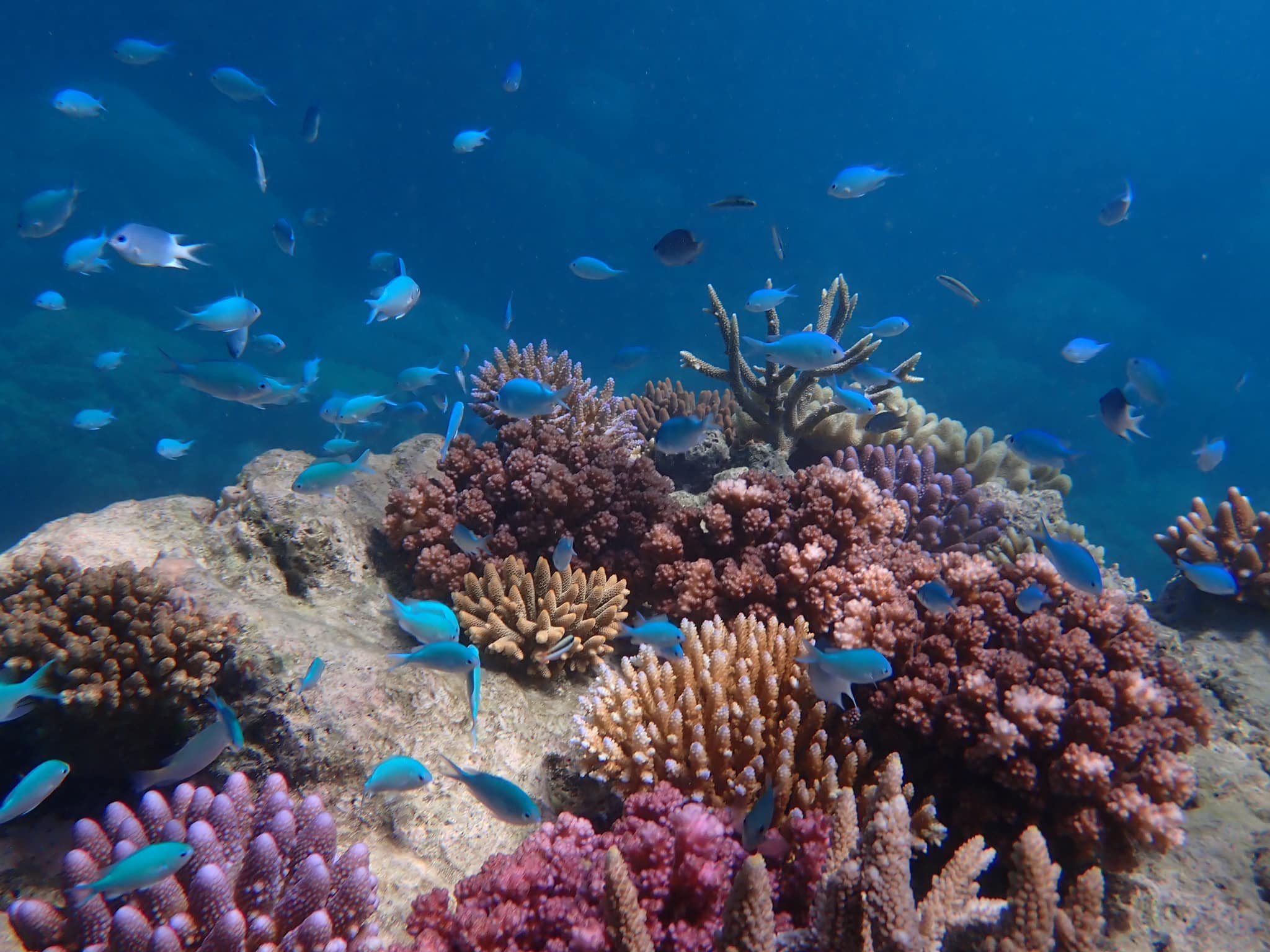
The colour in the coral comes from the algae living inside it. In its natural, algae-free state, coral is clear. The algae helps the coral survive by providing it with nutrients from photosynthesis. In turn, the coral polyps provide the algae with protection and the nutrients they need to carry out photosynthesis.
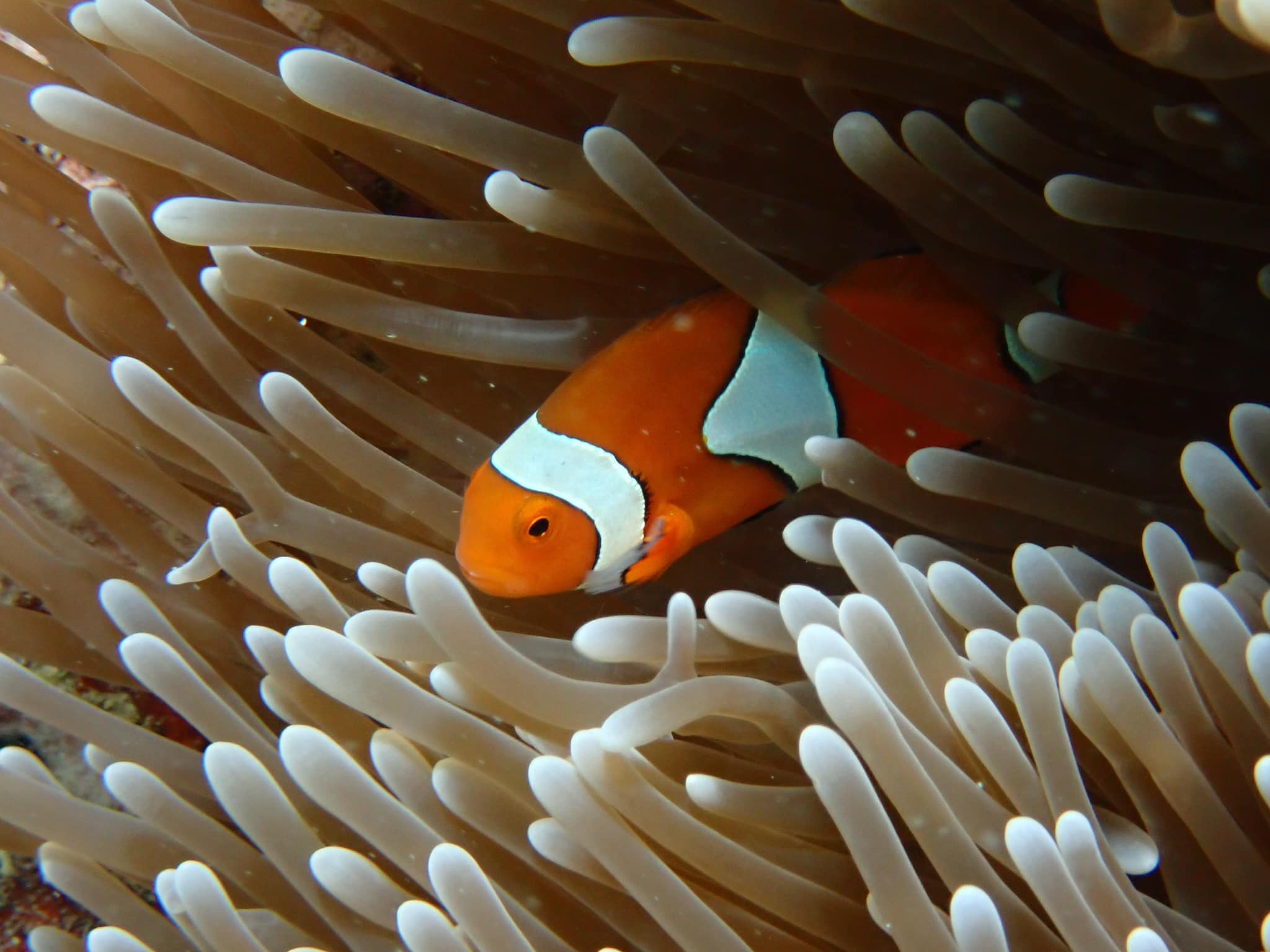
A classic! Clown fish live inside anemones for life. Outside of the interesting family relationship that exists between clown fish (more on that in a second), there is a symbiotic relationship between the clown fish and the anemone. The anemone keeps the clown fish safe from predators which are not immune to the sting of the anemone as are the clown fish, and the clown fish helps feed the anemone with its waste. Here’s the very cool feature of the clown fish. They can switch gender! All clown fish are born male but have both sex organs. In a family (dominant female, dominant male and up to four juvenile males) the female is the dominant household member (she becomes female within six months of pairing up with a male). If she dies, the dominant male then transforms into a female, which takes about 30 days, and one of the juveniles becomes the dominant male. They left that detail out of Finding Nemo.
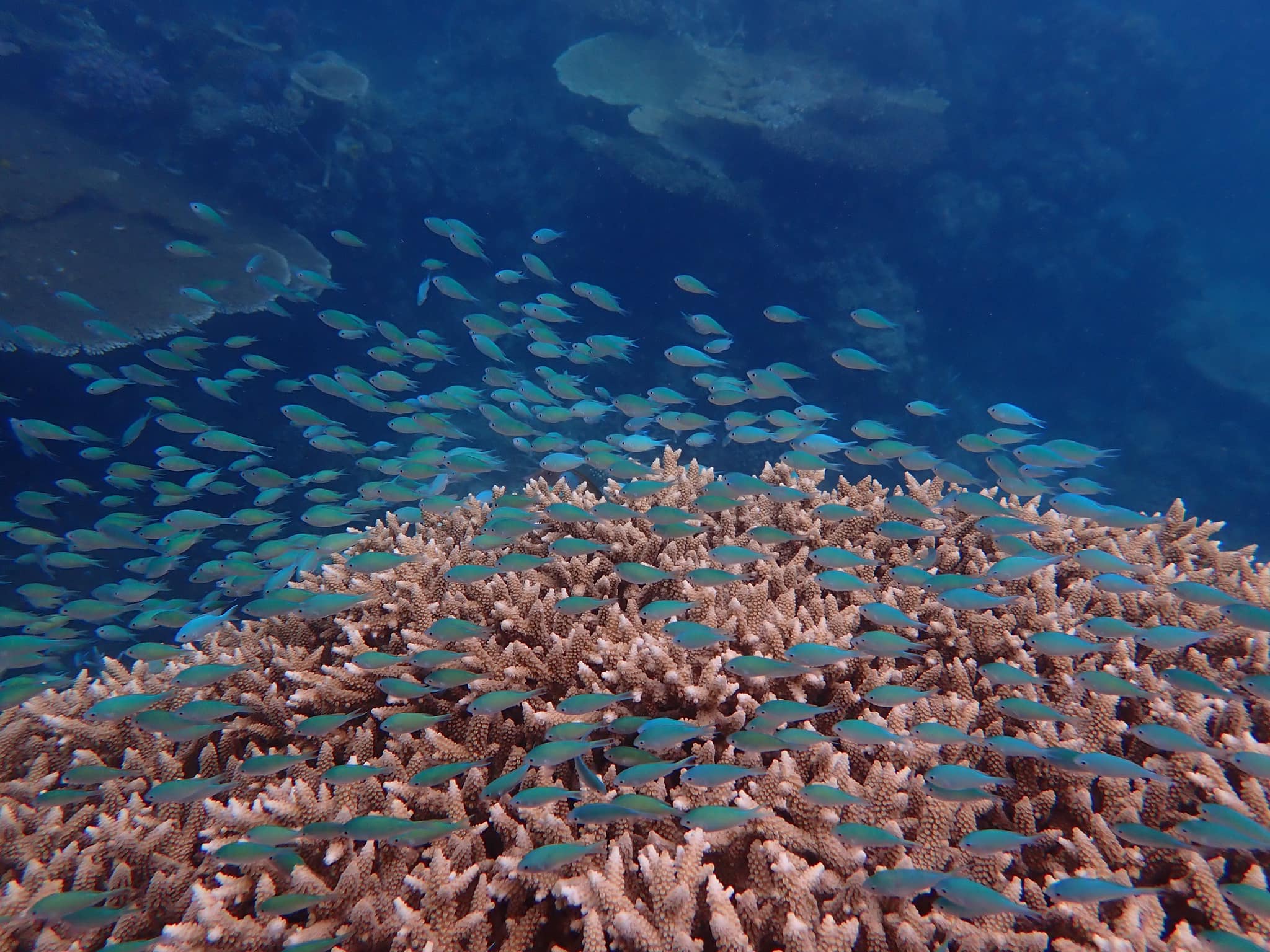
Schools of fish swim around and nibble on creatures living on the coral. While this coral is not colourful, it is very much alive.
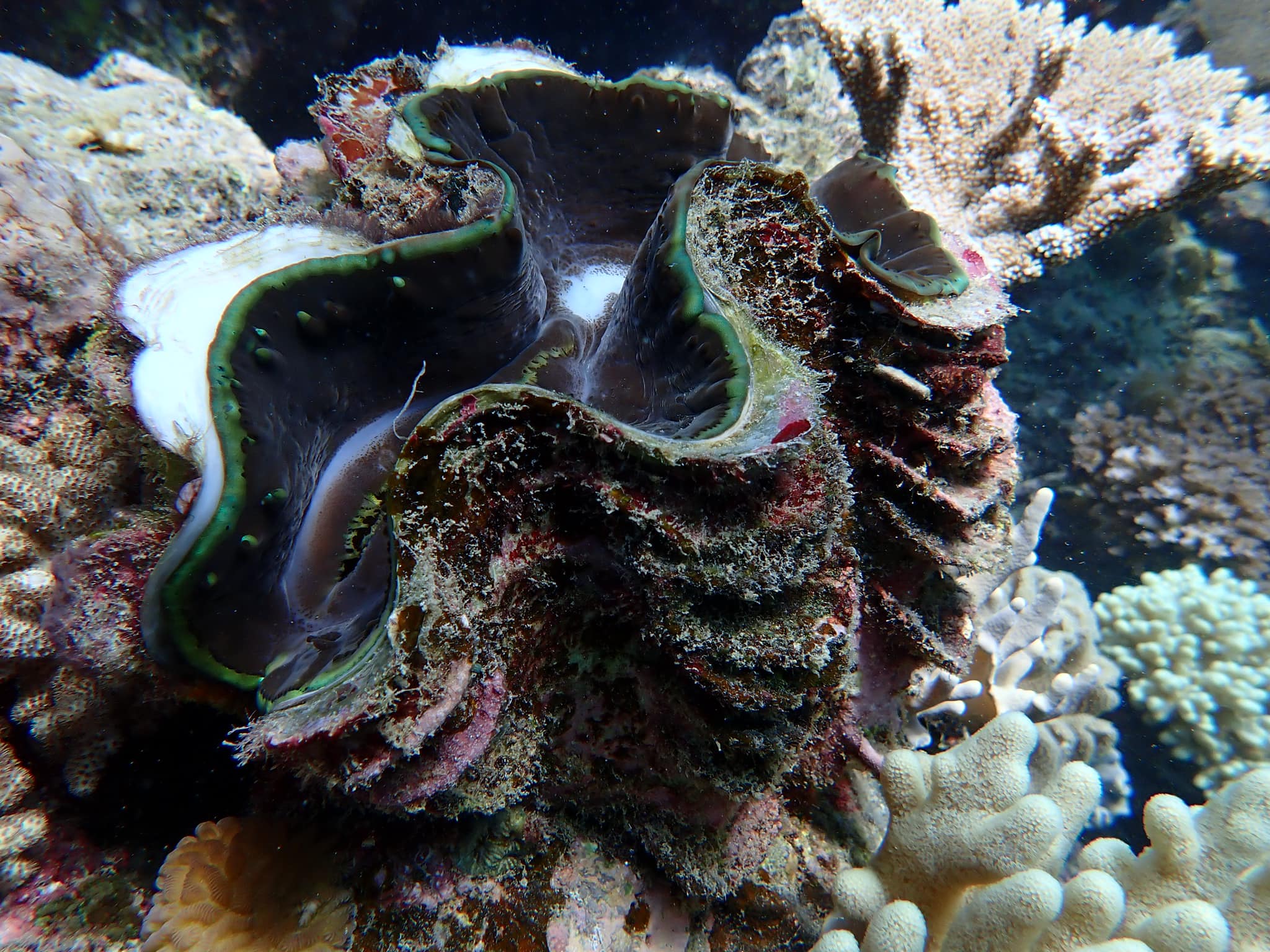
Giant clam! Never seen anything like this before. They are huge! Bigger than me folded in half.
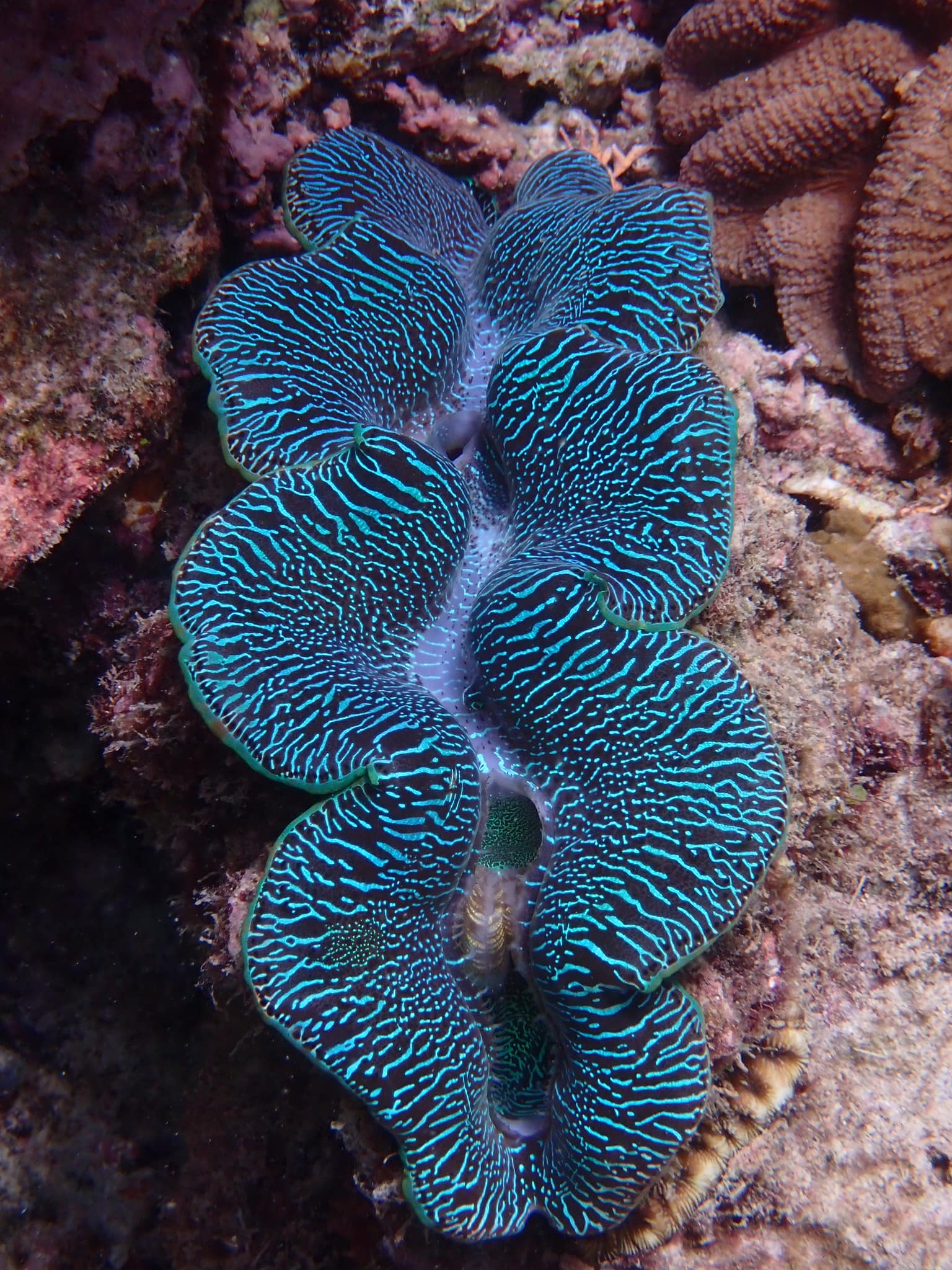
The giant clams have light and sensory receptors along their mantle (remember the mantle’s role in pearl production…can you imagine the size of a pearl in this guy!). Our marine biologist guide waved her hand above and the massive shell clamped shut. Clams do a big job in filtering phytoplankton, microorganisms and waste from the water. The sea water is sucked in the part of the tissue that looks like a slit (top area in this photo) and filtered water is pushed out the siphon (what looks like a round hole). It’s a perfect win-win. Clam eats and cleans the water all at the same time.
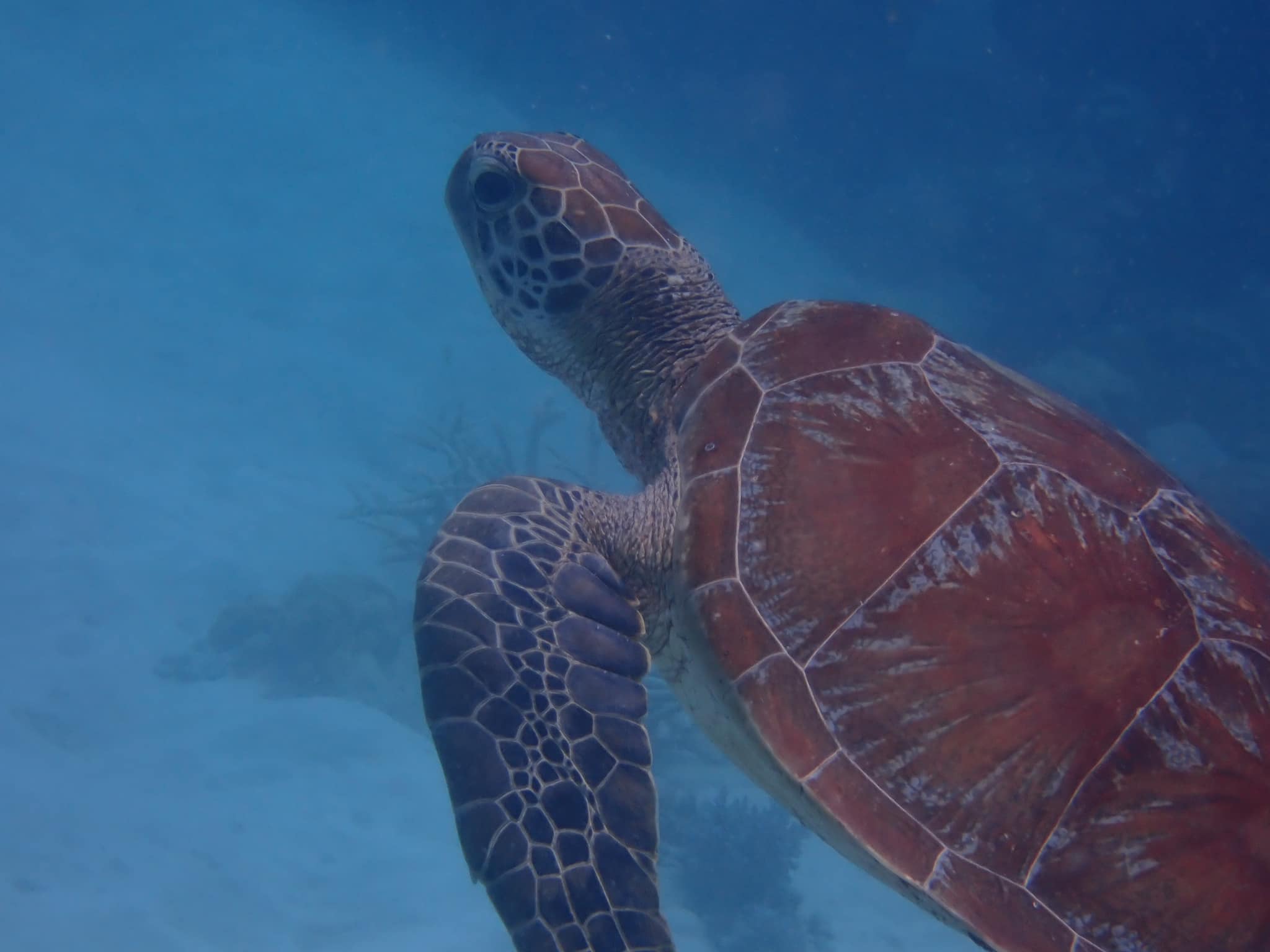
How lucky we were to come across this green sea turtle (I know he doesn’t look green but it’s a play of light under the water). He slowly swam below us and we followed him for a while.
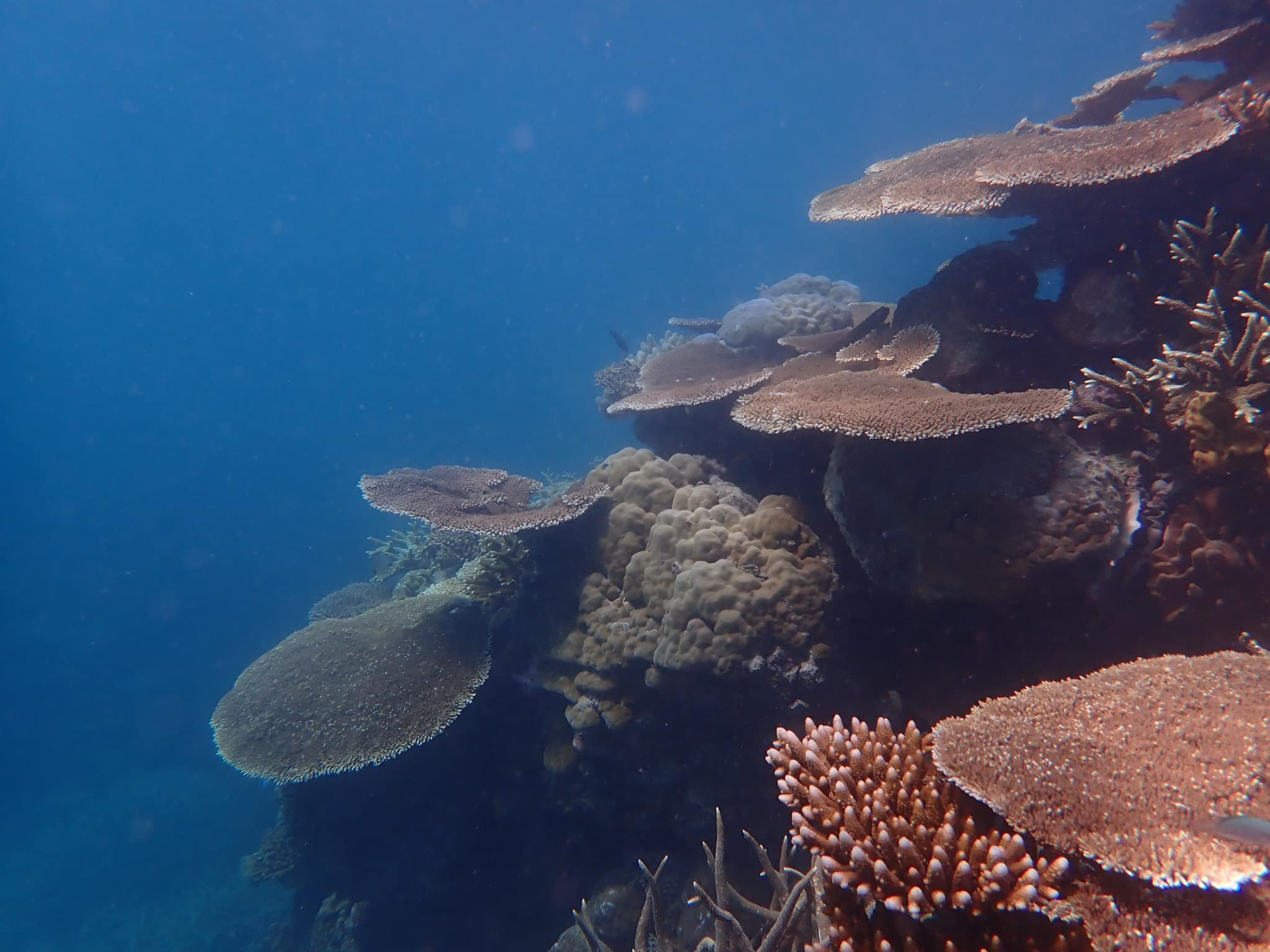
Plate coral balancing on the edge of all sorts of other coral.
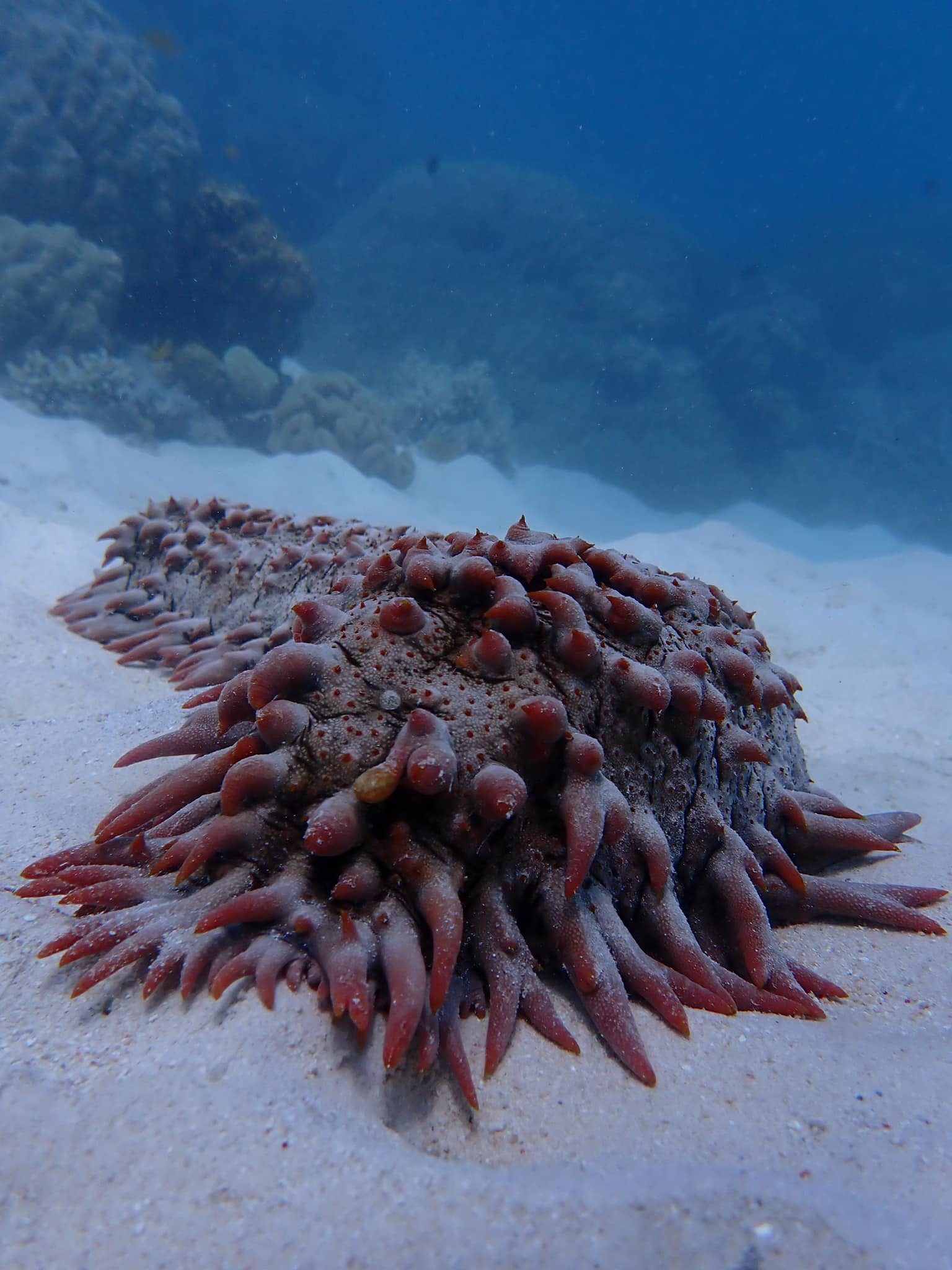
The roomba of the sea. The pineapple sea cucumber sucks up all sorts of debris from the floor and aerates the sand as it goes.
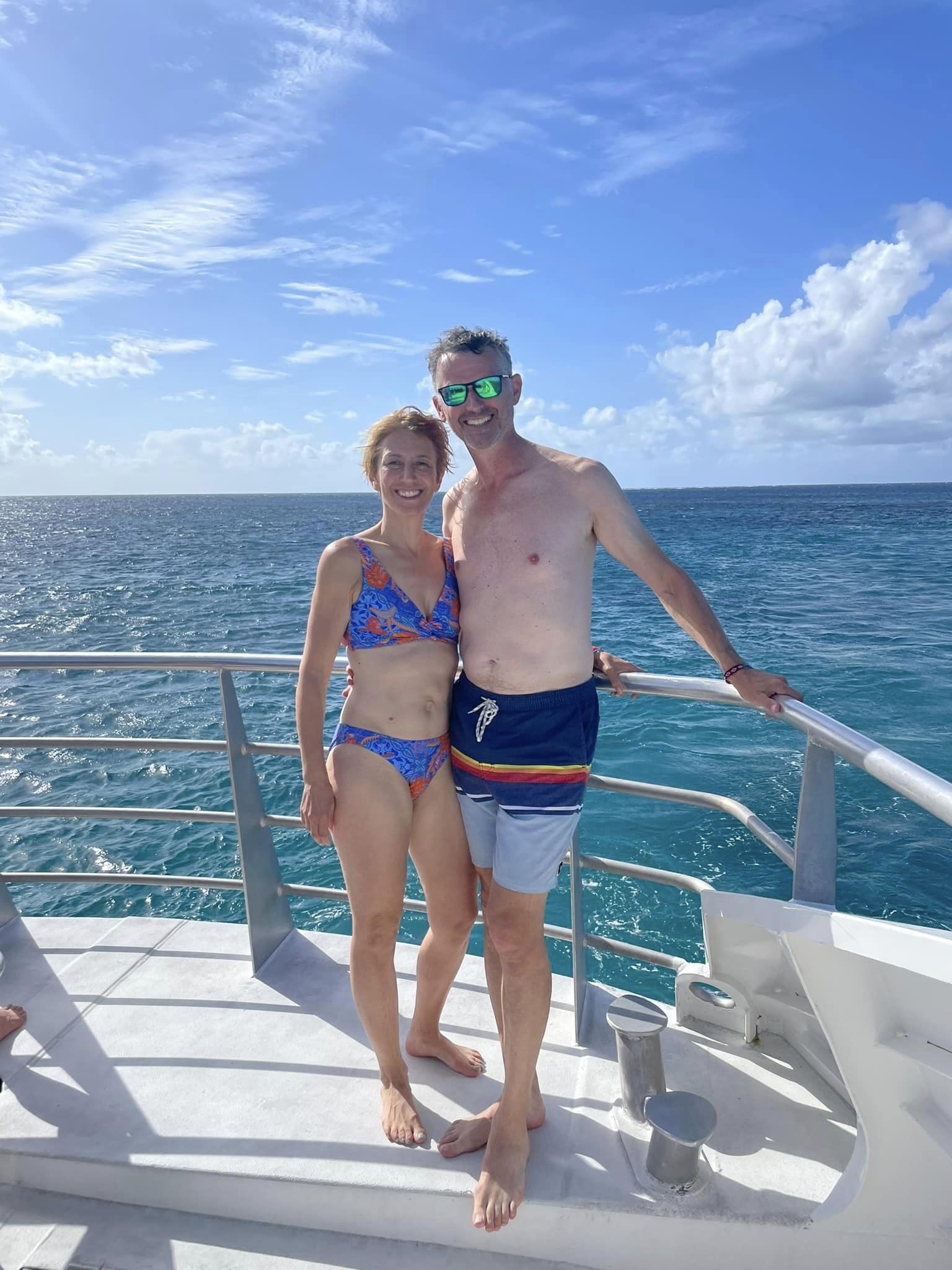
Lounging after three snorkelling sites along Opal Reef.
Delightful Port Douglas
Chill and laid back, this beach town is the perfect gateway to explore the Daintree Rainforest and the Great Barrier Reef. Great food, beaches and interesting flying creatures!
Downtown Port Douglas is a noisy place in the evening. Thousands of colourful Lorikeets (parrot cousins) swoop around in huge, screeching flocks. What a pain for the restaurants and hotels nearby. You literally have to shout to be heard above the din.
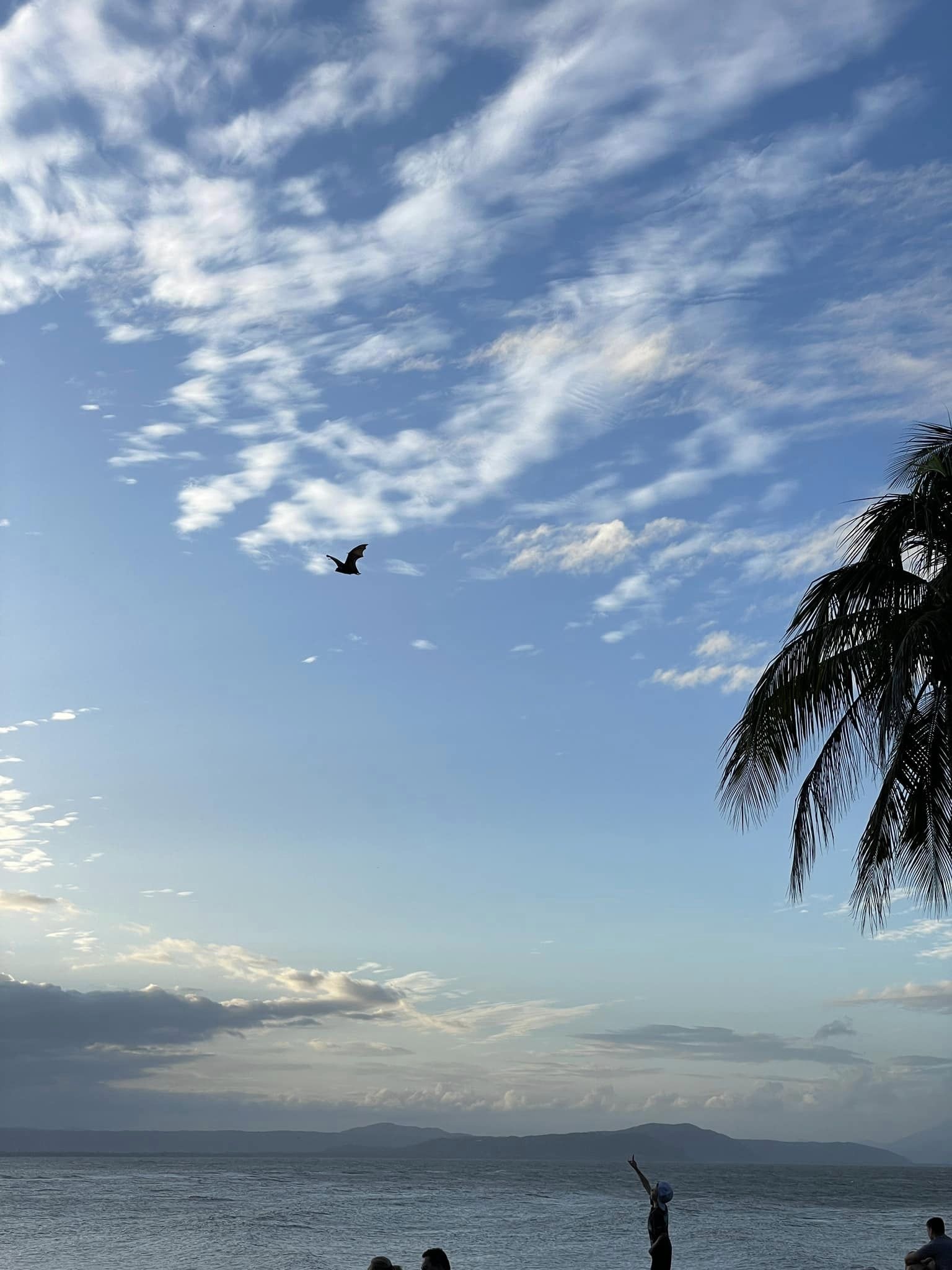
It’s a bird, it’s a plane, it’s a…
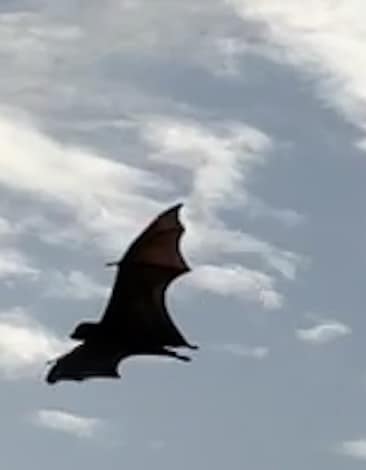
…huge flying fox! These guys swoop around the coastline at dusk looking for a place to hang for the night. The noisy Lorikeets don’t seem to pay them any mind…they’re vegetarian.
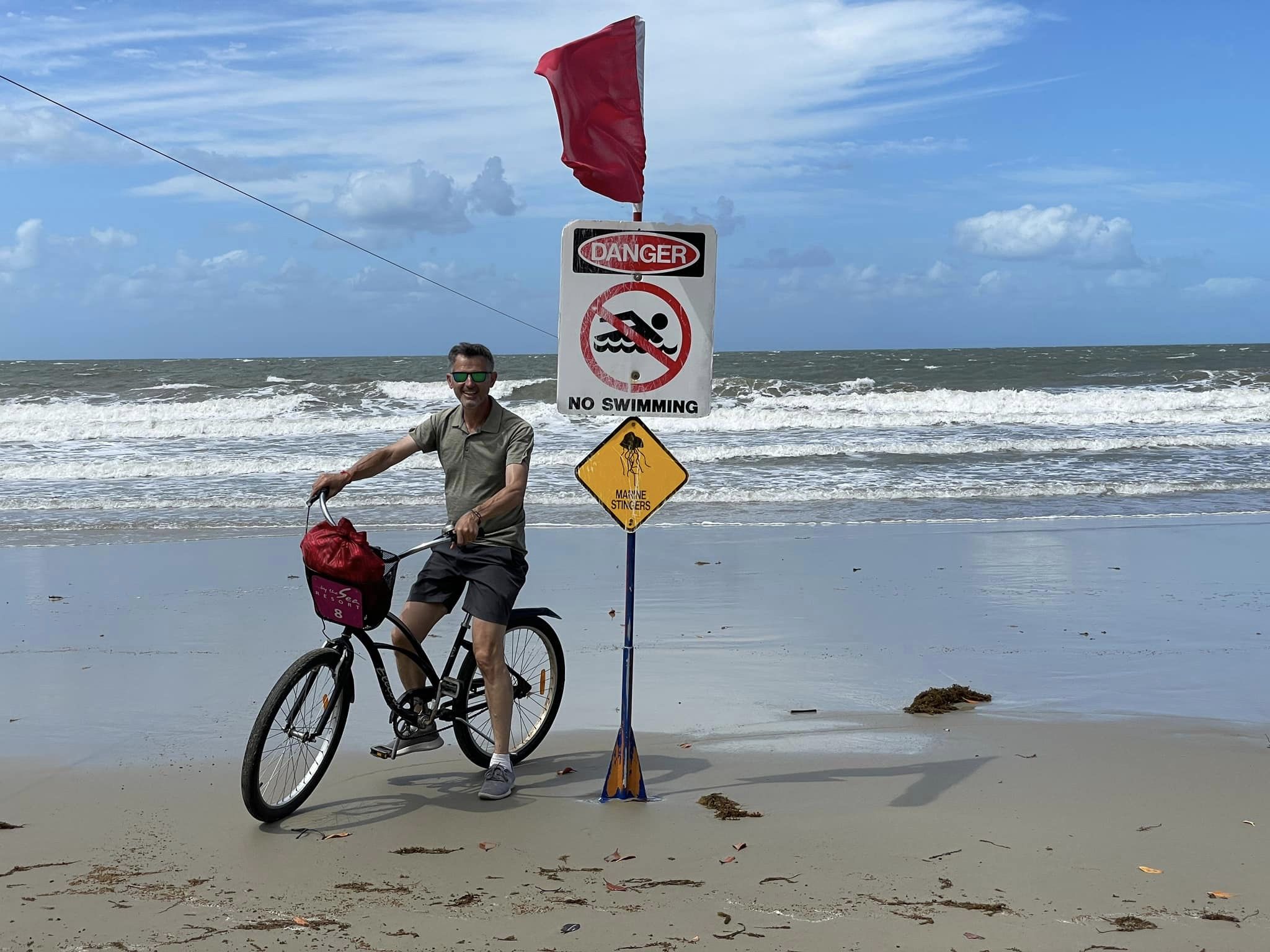
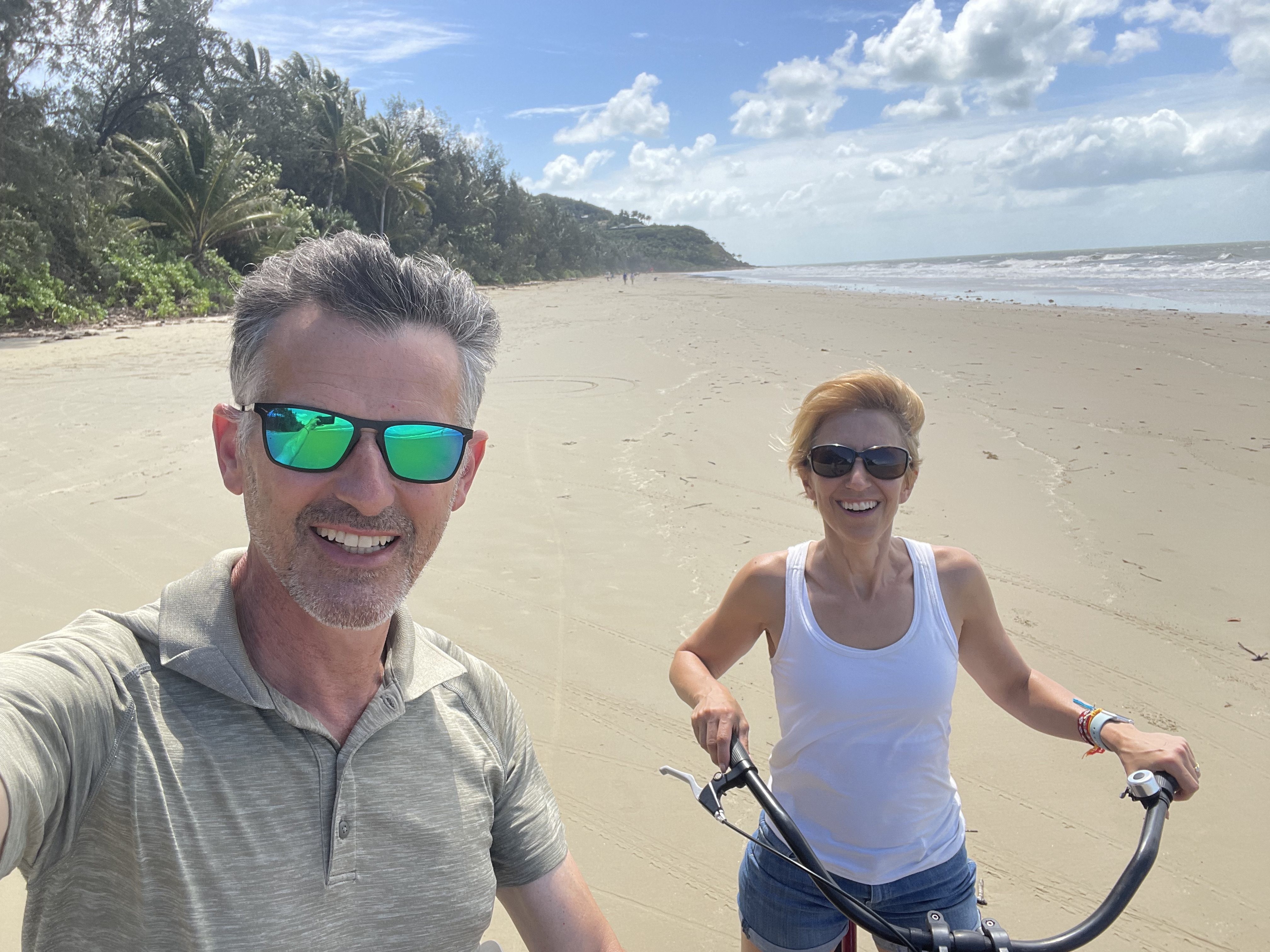
No swimming on our last day (windy and stinger risk) so we borrowed bikes to ride up and down Four Mile Beach in Port Douglas.
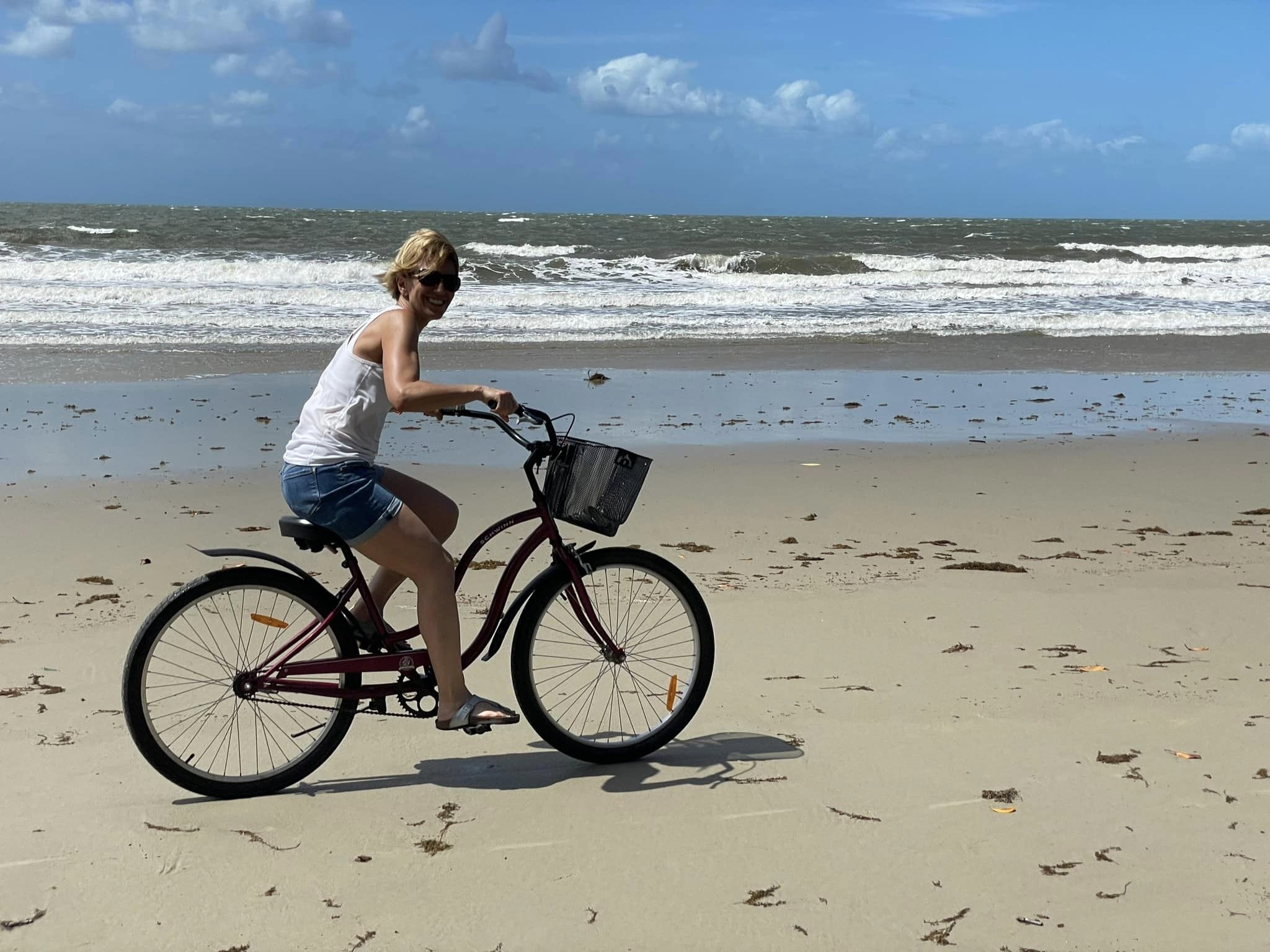
Can you tell how hard I’m working? I wouldn’t know how to calculate the wind speed but it was a crazy strong and head on!
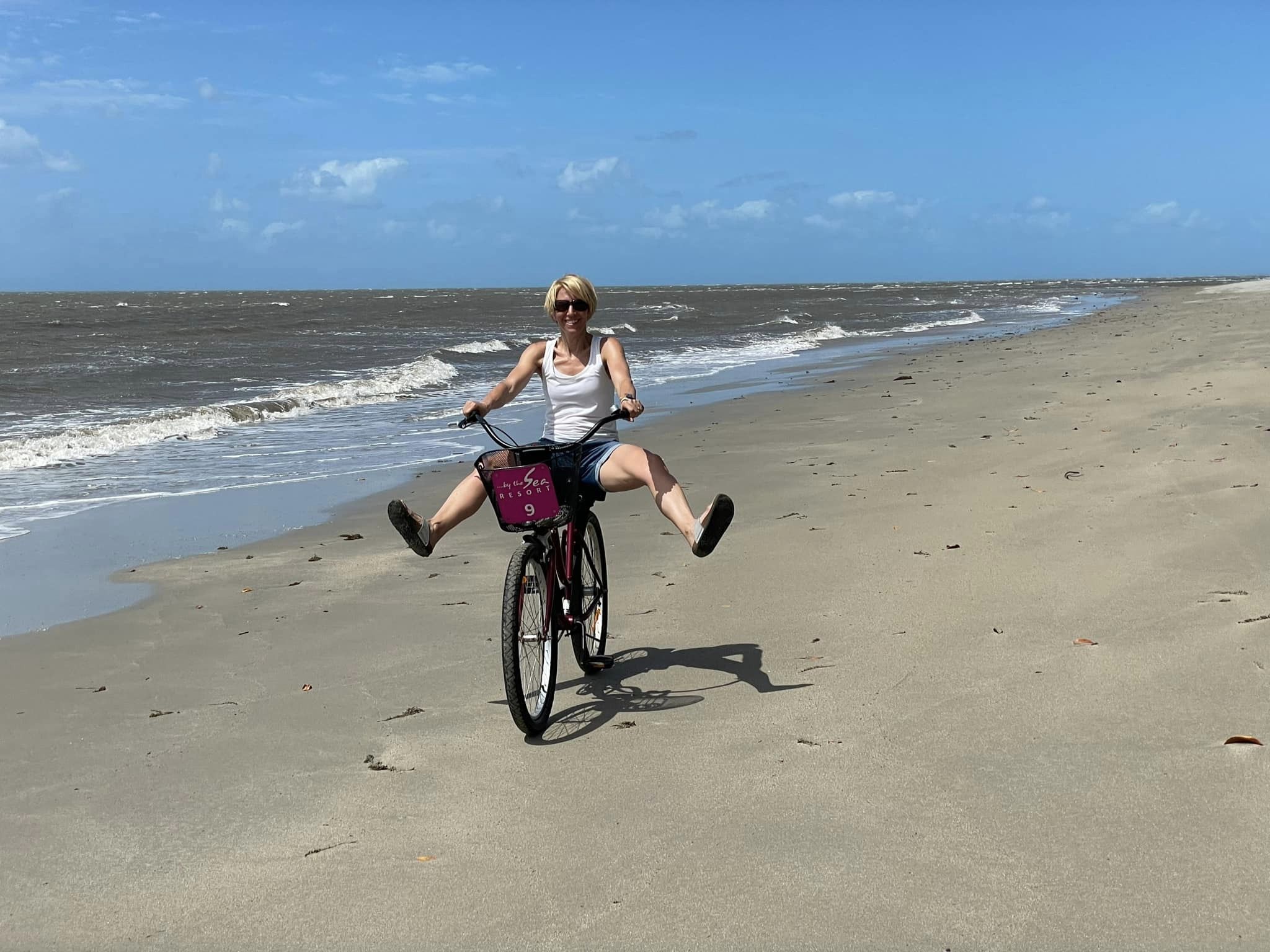
Riding back was way easier with the wind at our backs…hardly had to pedal at all!
And that's a wrap from our amazing time in Australia. Time to pedal home...