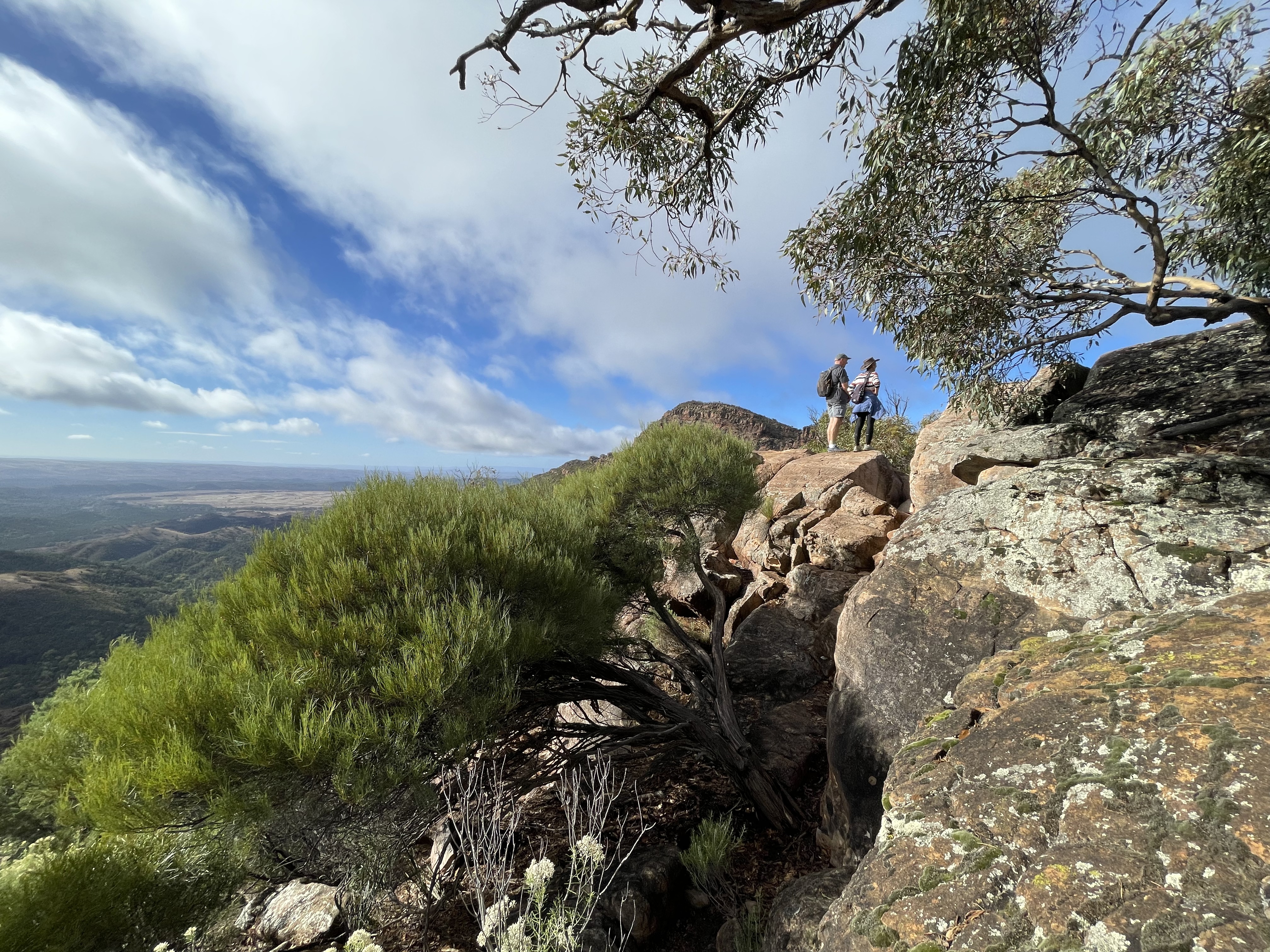
April, 2023
Formidable Flinders Ranges
A road trip like no other! Maggie and Doug, our guides extraordinaire, took us on the most amazing adventure through the outback to the Flinders Ranges and Wilpena Pound. Storms, hiking, feral animals and unexpected mud baths!
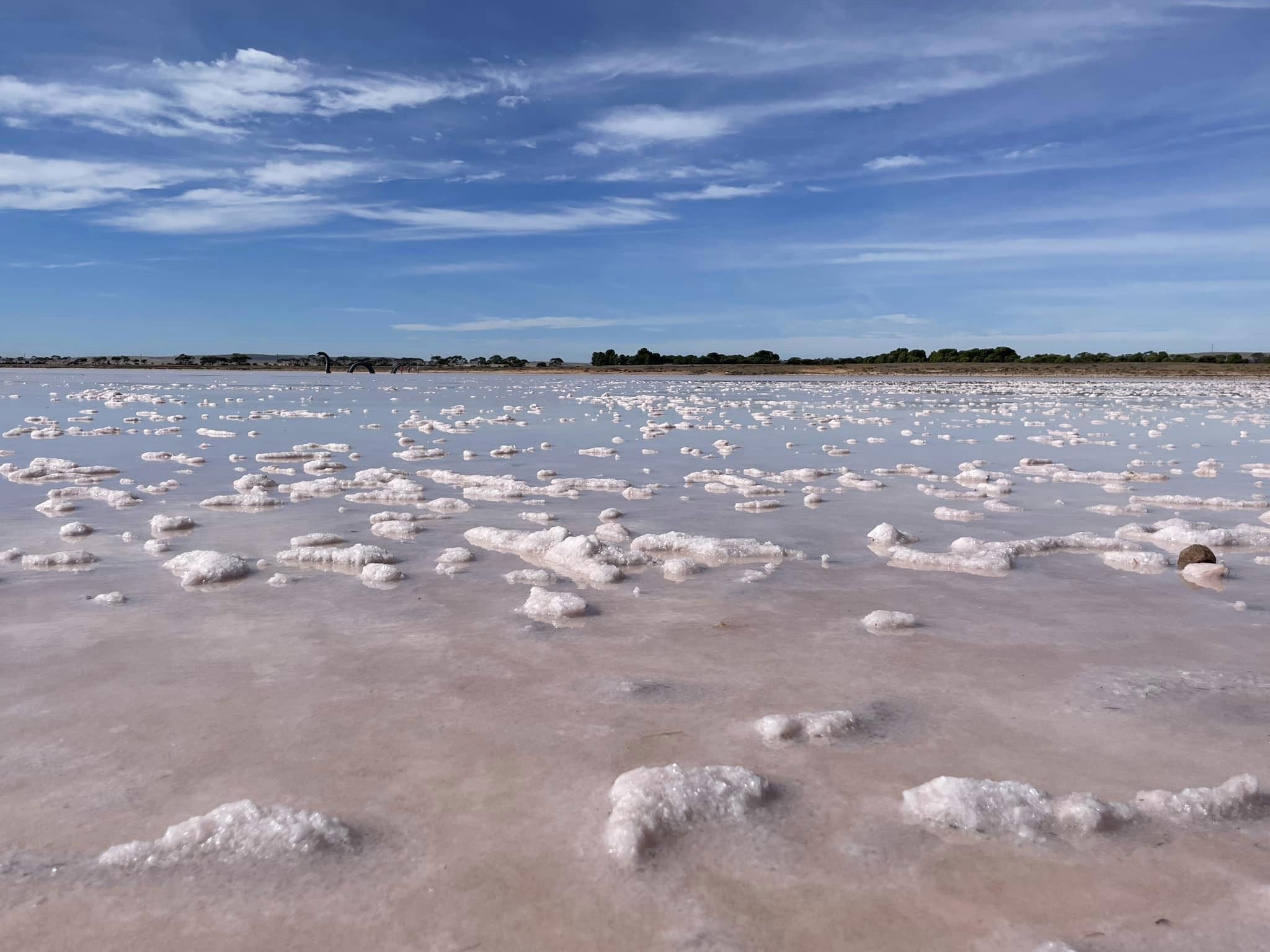
Lake Bumbunga, aka Pink Lake, feels a little like Death Valley in Nevada but there is actually water out there and the pink hue (from carotene produced by halo bacteria and dunaliella salina—not much else can live in this amount of salinity) gives it a more lively vibe. The lake shrinks through evaporation in the summer, appearing less pink with less water, and leaves behind these hard, crusty mounds of salt. There are salt flats upriver where they harvest salt for sale.
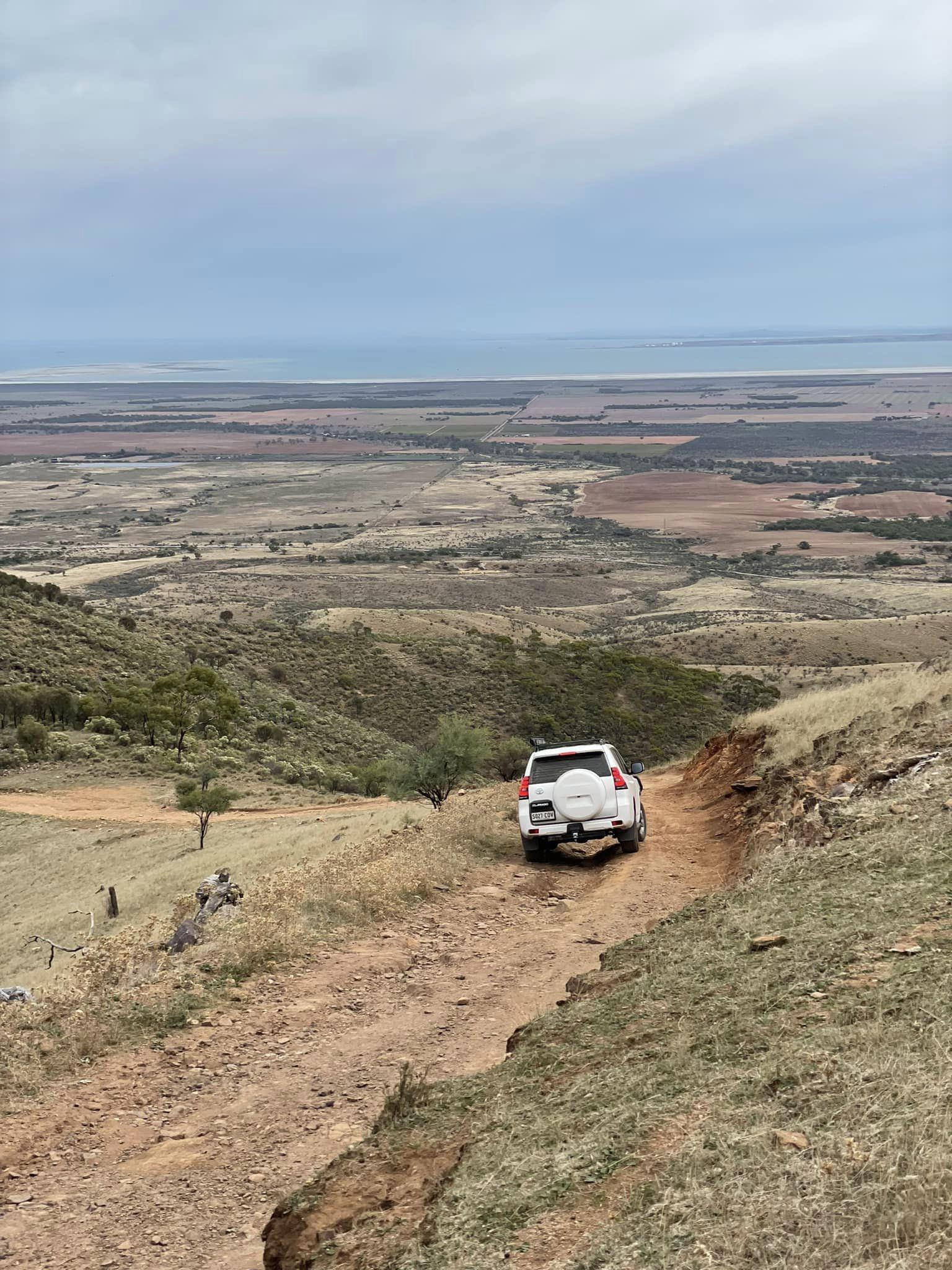
Our road trip started with a 4WD trek through the Bridle Track, a treacherous drive in muddy conditions and a wild ride on a dry day. Best not to have lunch before embarking on this 10km drive leading off a survey road…and best to go with Doug who takes the rocks, ruts and edges like a pro!
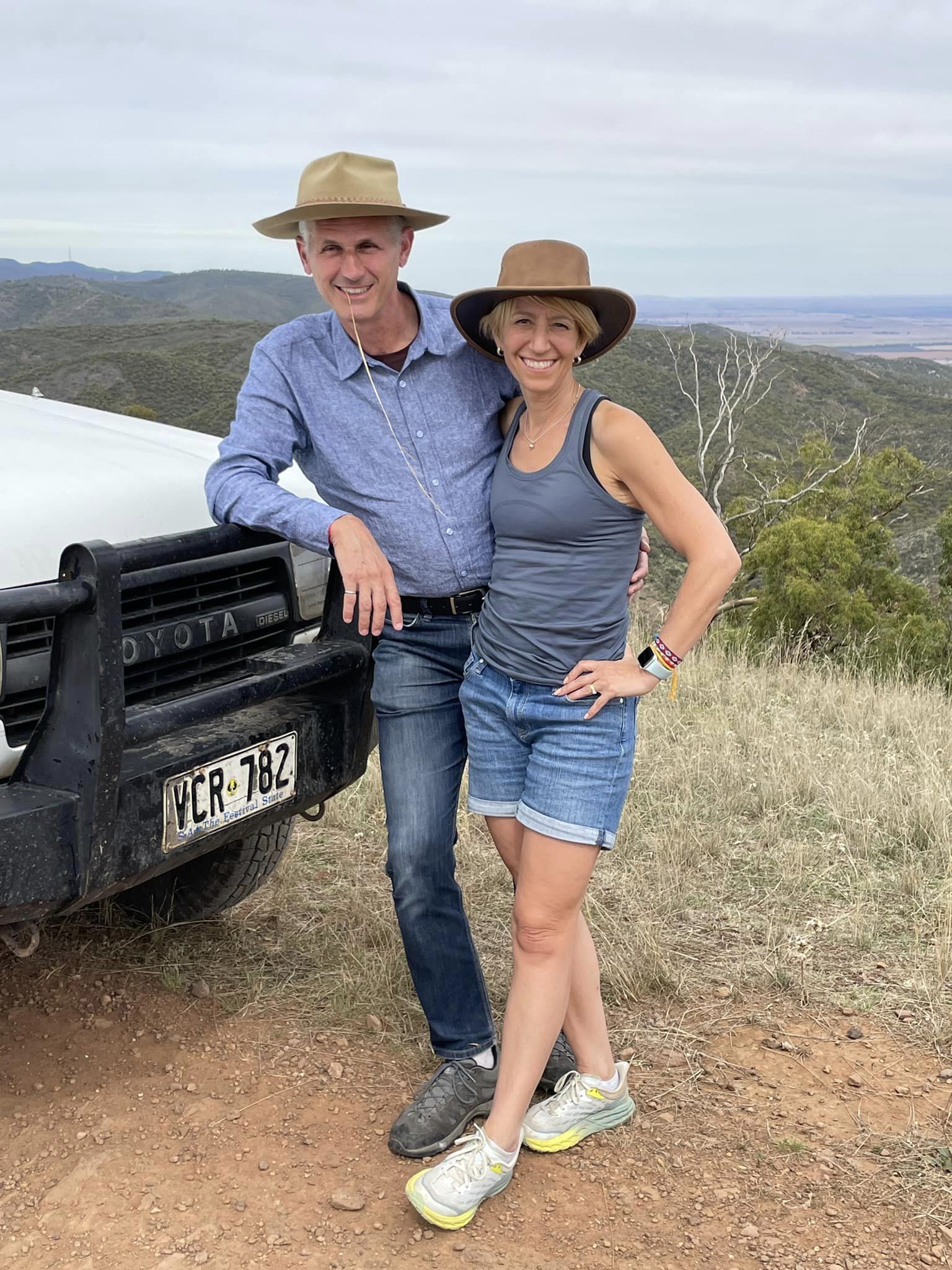
We fit right in like locals!
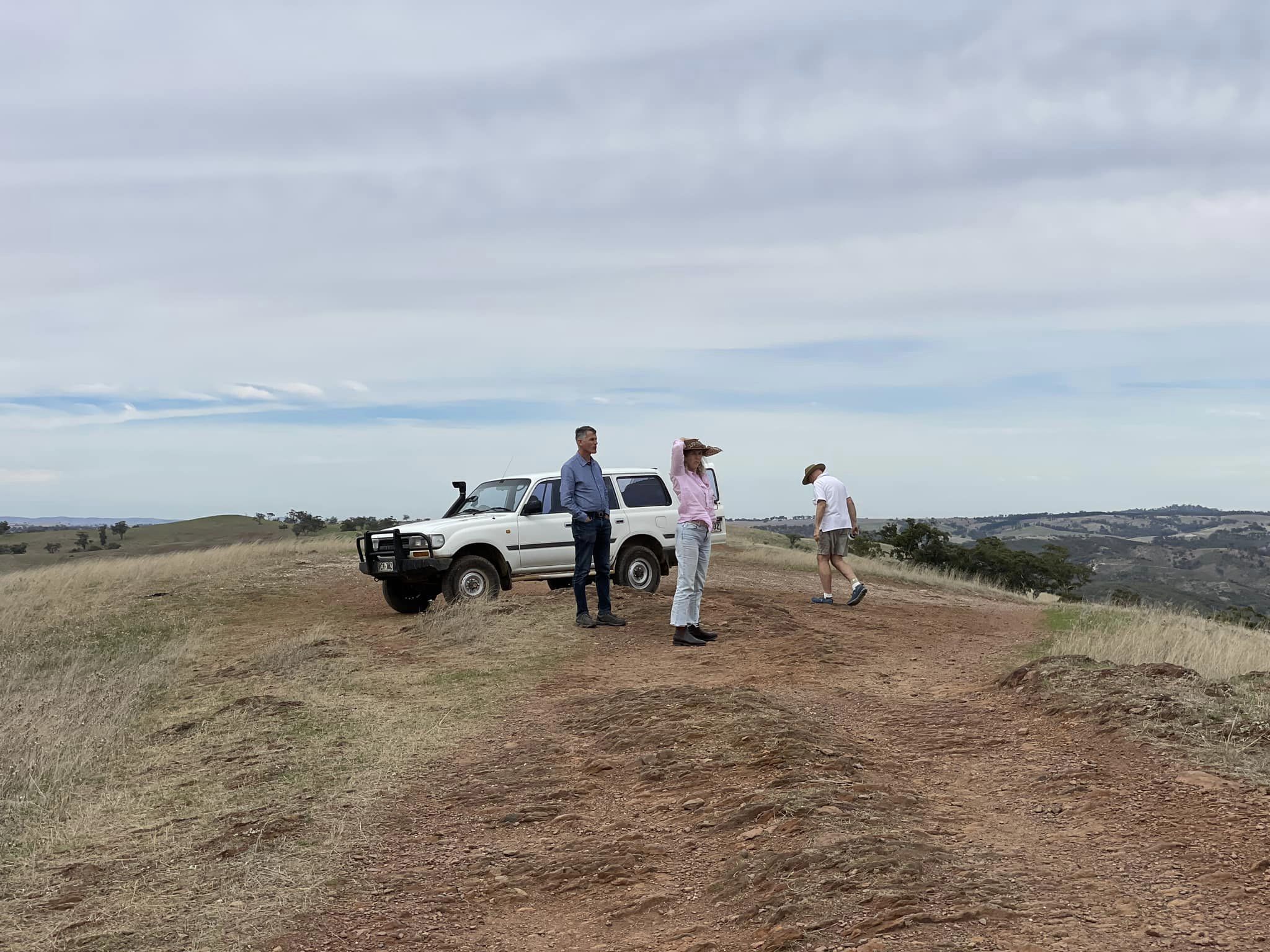
At the top of the Bridle Track overlook. Just need you to note how clean the truck is…
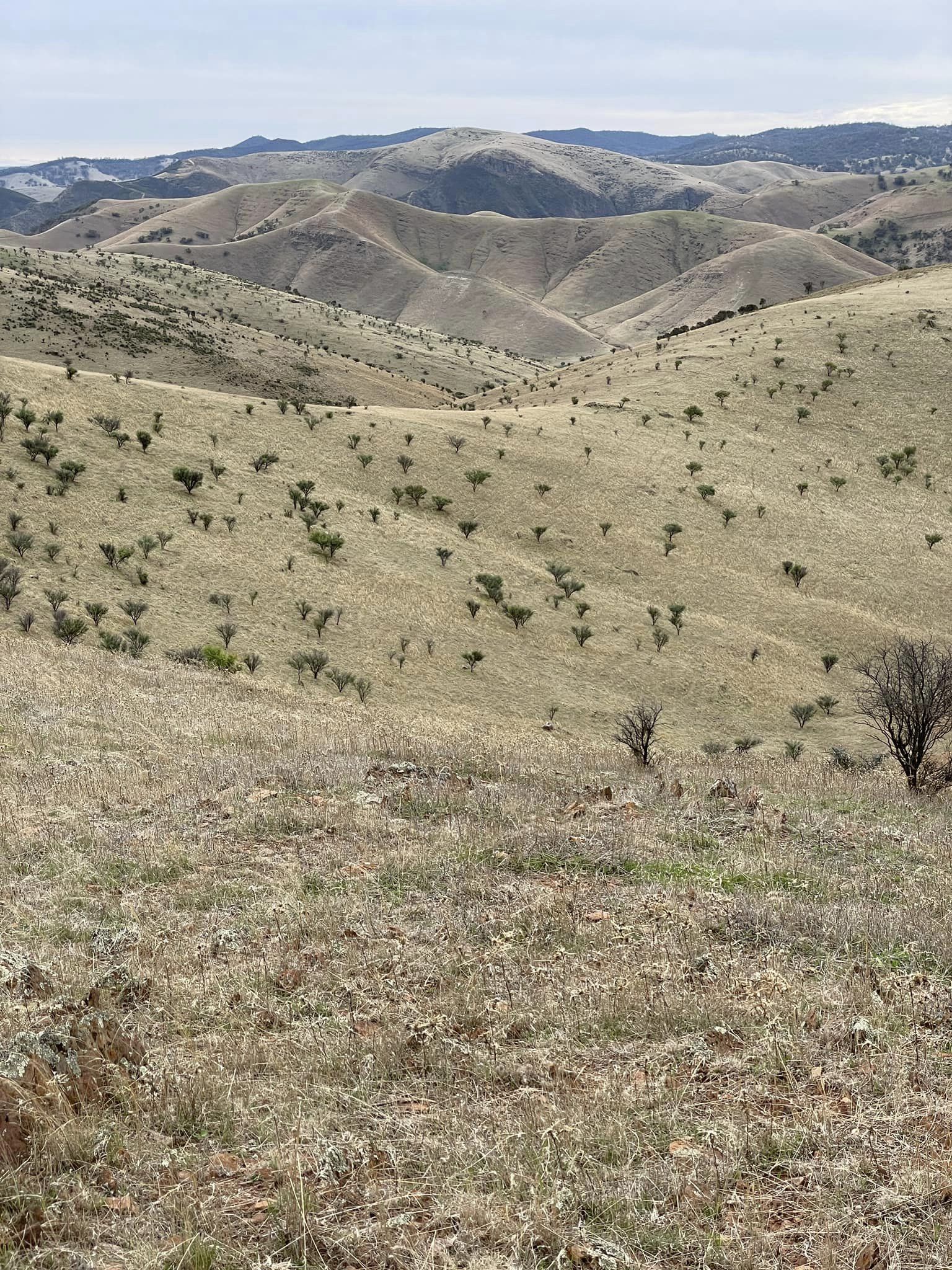
The spectacular view from the top.
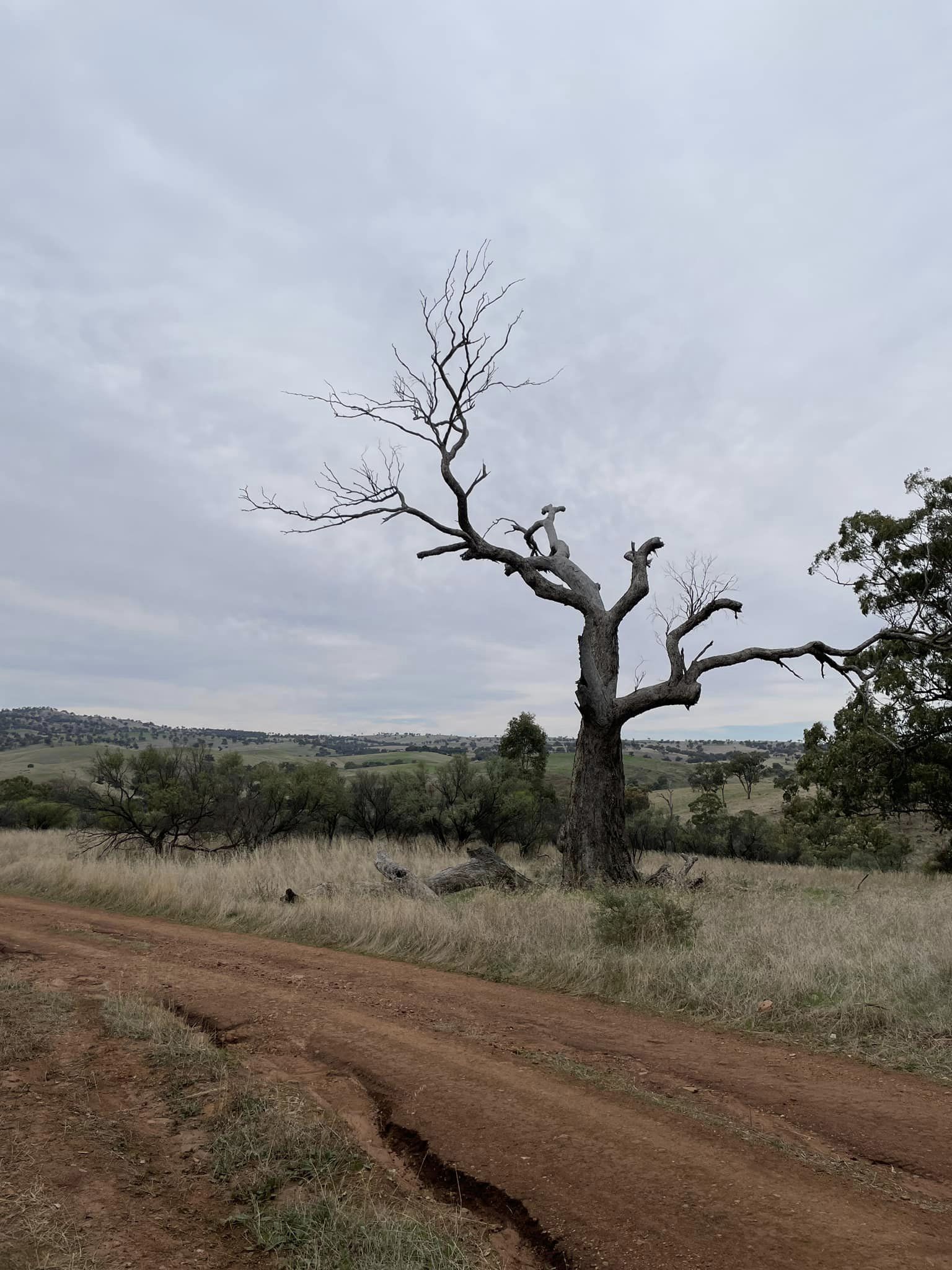
The magic of dead trees in the landscape. The outback is a pretty arid place and only the hardiest flora and fauna survive.
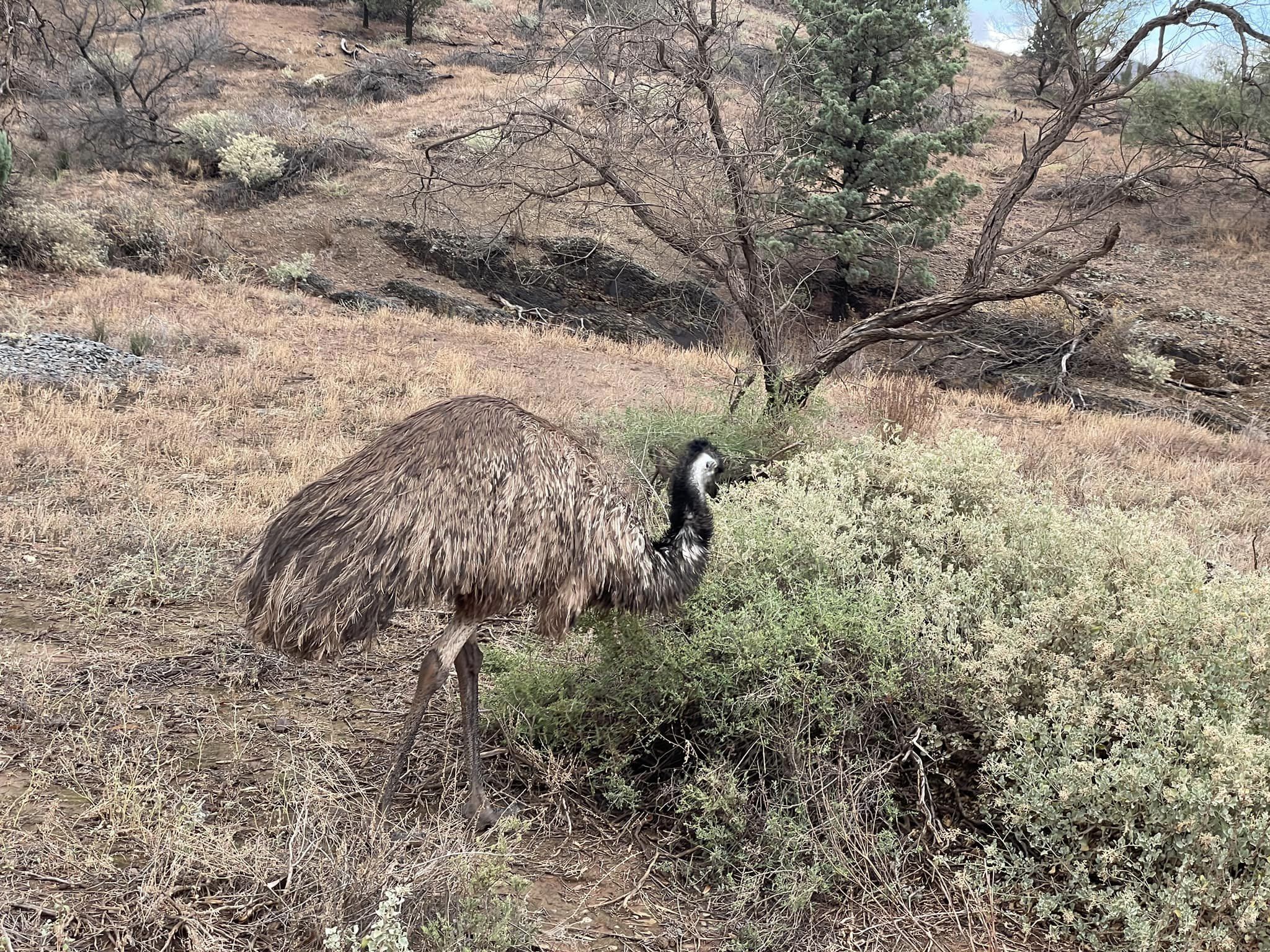
One of many emu we encountered. There’s really something so pretty about the emu, with its blue face and its natural bustle of feathers that sashays side to side as it runs.
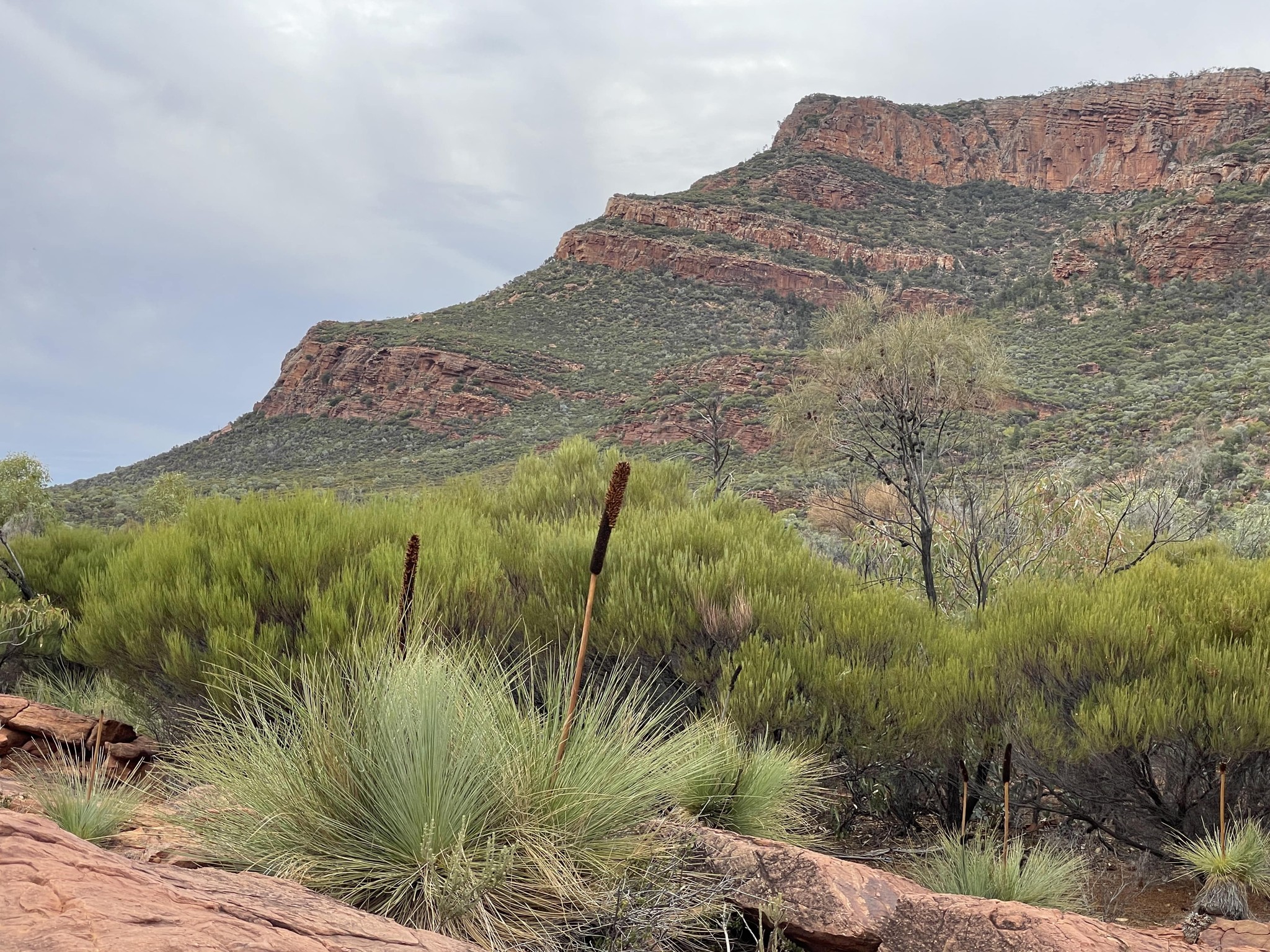
Our first hike took us to Arkaroo Rock, a significant painting site of the Adnyamathanha people who first lived on this land.
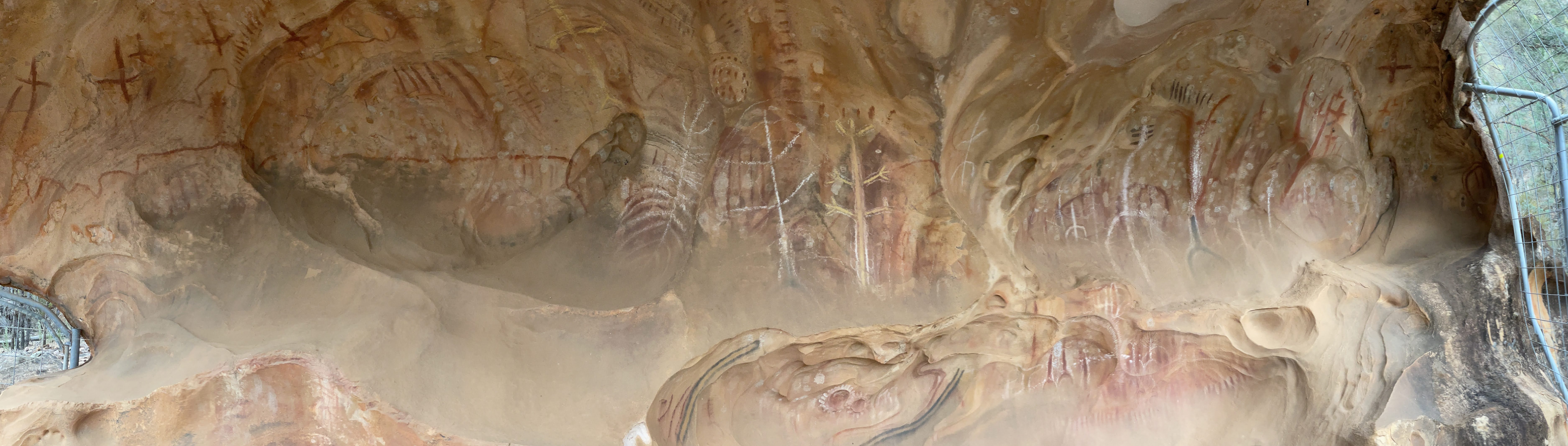
The rock art at Arkaroo Rock tells some of the stories of the creation of Ikara (aka Wilpena Pound). Ikara is a large sickle-shaped "amphitheatre" 17km long and 8km wide, surrounded by mountains on three sides with only a narrow gorge opening at one end. Aboriginal legend tells of Ikara being created by two giant snakes who couldn’t move after eating all the people gathered in the area for a ceremony. St Mary’s peak is said to be the head of the male snake and Beatrice Hill the head of the female.
So this is the first instalment of how our white truck came to collect its red hue…
…then, passing through the Brachina Gorge, we came across a couple of Sydney city slickers in their bargain car rental who slip-slided in the mud and slid right off the road. Of course Doug had what could be used as a tow rope in the truck…
…then the knight in shining armour’s steed got stuck in the mud! The Sydney city slickers and four passersby helped us get unstuck. Funnily enough, two of the passersby (the guys, I might add) were wearing crocs and rubber slides…not the best footwear for mud pushing. Having vast experience pushing cars out of snow and ice, Adam was glad to help direct the process! And that’s the story of our colour-changing truck.
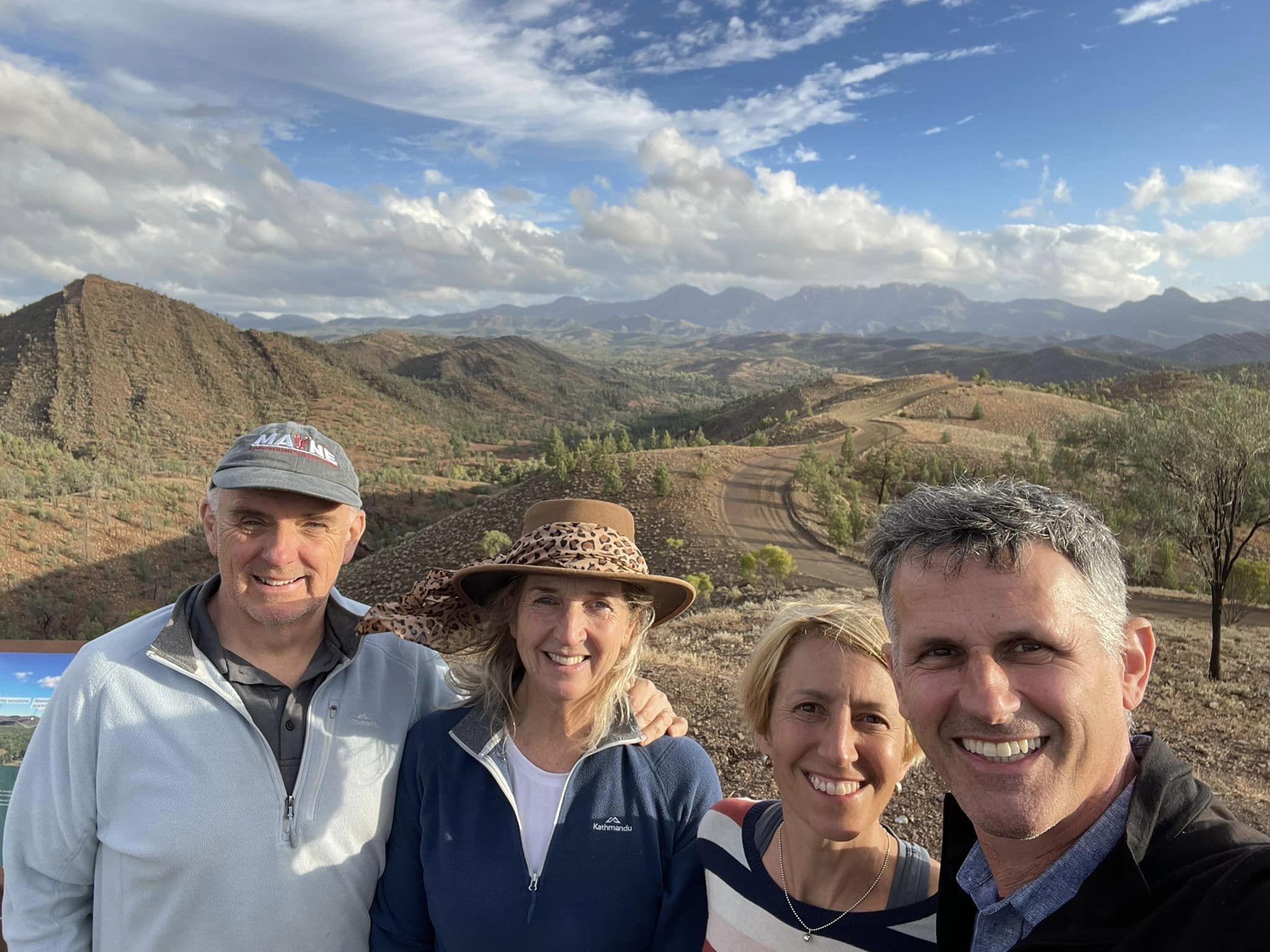
We made it out! Razorback Lookout over the Bunyeroo Valley. The highest peak of the Flinders Ranges in the background (just above Maggie Measday’s left ear) is St Mary’s Peak (the head of the aforementioned male snake who created one side of Ikara), where we hiked the following day.
If not for Doug’s keen eye, we would have driven over this Shingleback lizard. I had to make sure he was ok (really just needed a closer look); he didn’t appreciate the interruption of his sun tanning session.
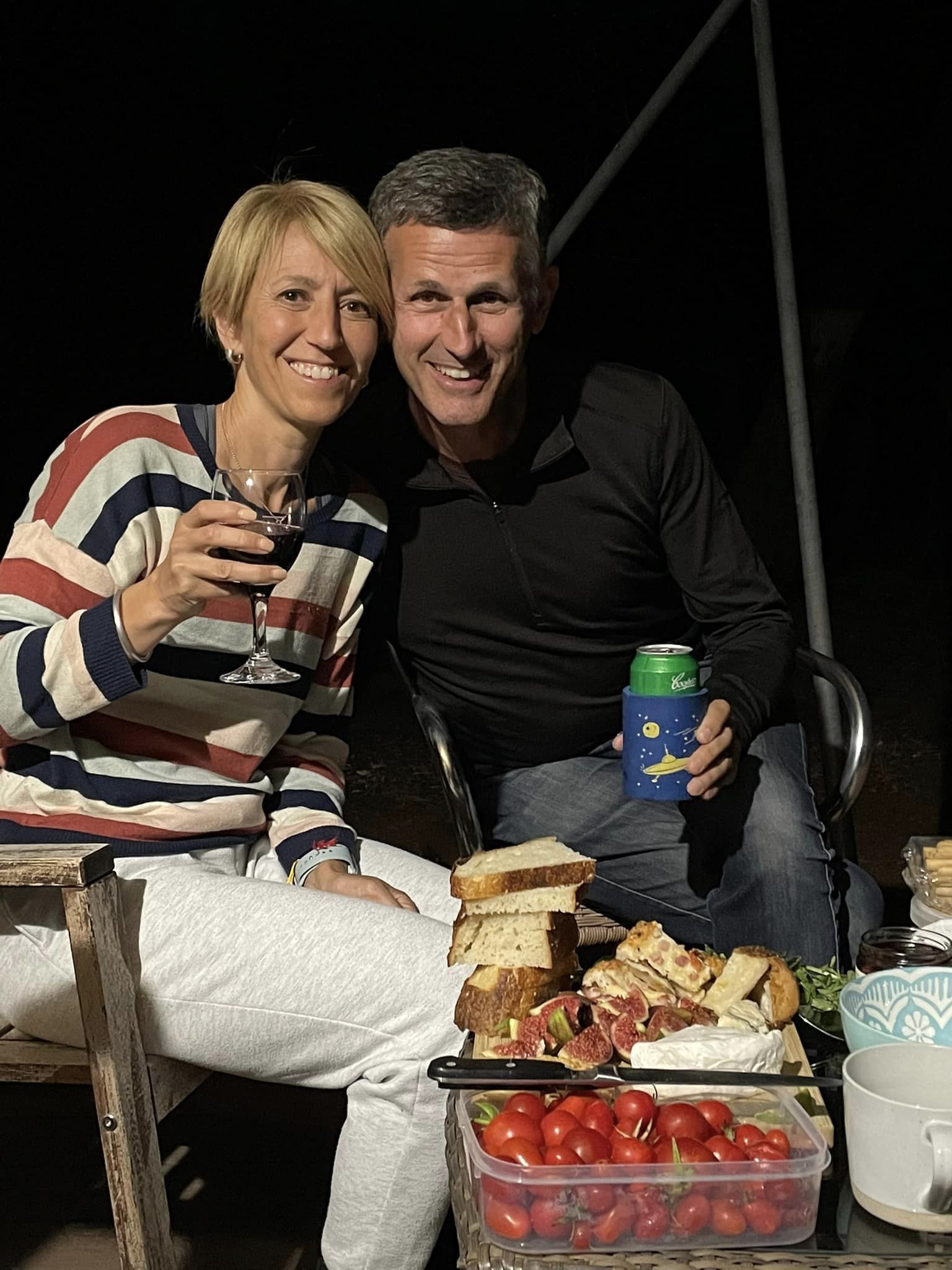
Gourmet glamping at Ikara-Wilpena Pound. Fresh tomatoes and figs from Maggie and Doug’s garden, along with some of Maggie Beer’s dukkah and olive oil…doesn’t get better than this! Oh, and then there was the Shiraz.
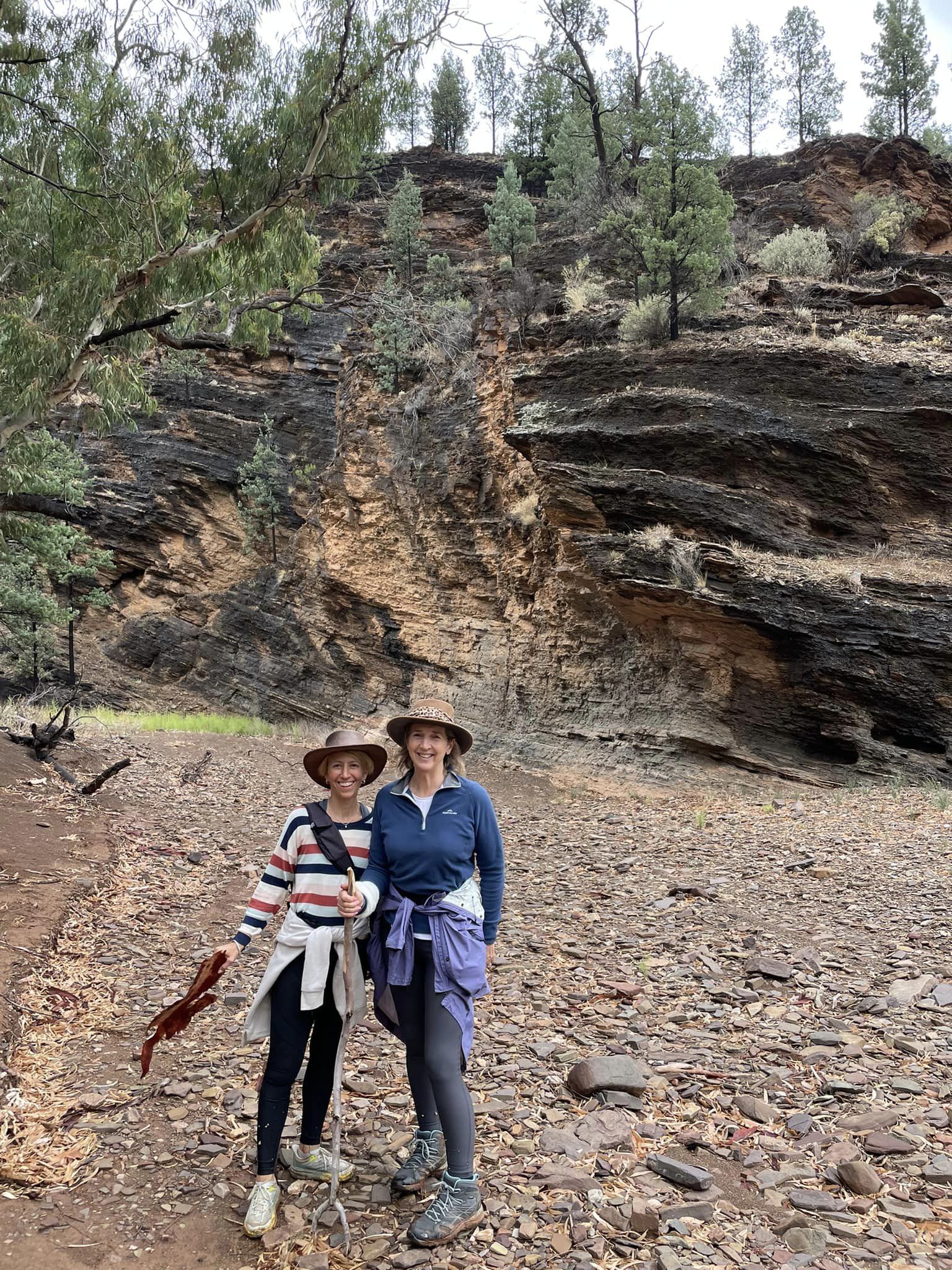
Hiking in Bunyeroo Gorge where we came across water, thanks to the big storms (caused by a cyclone 3,500 km away in Western Australia). There was even a severe weather alert that I’ve never seen before: a sheep grazier warning. Cold temperatures, rain, showers and westerly winds risked the loss of lambs and sheep exposed to these conditions. Ah, the things we don’t even think about in Vancouver’s autumn.
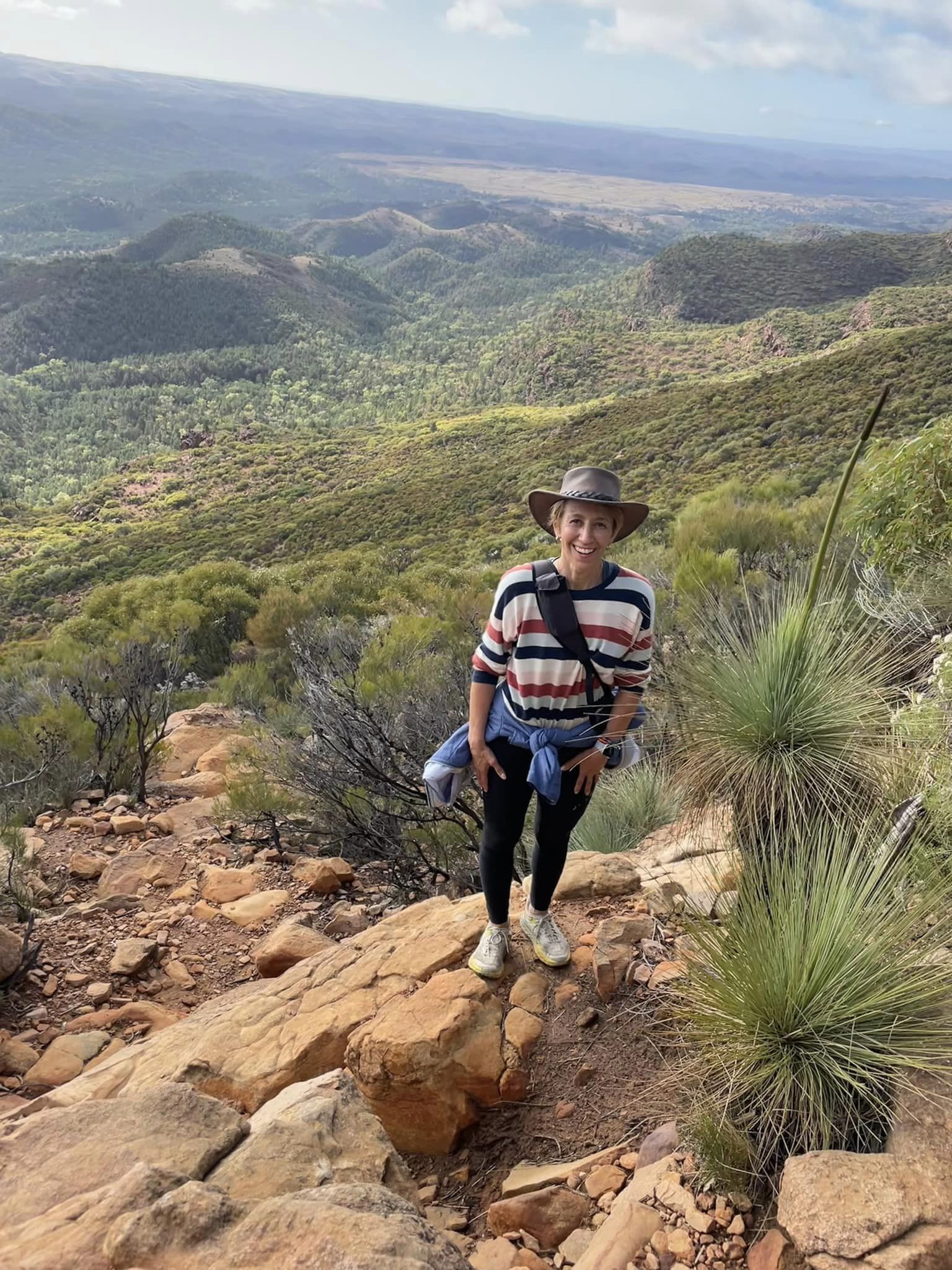
We set out at 7am to hike the outside track up to St Mary’s Peak saddle and then down into Wilpena Pound. About 17km of beauty and a lot of scrabbling over rocks. Amazing!
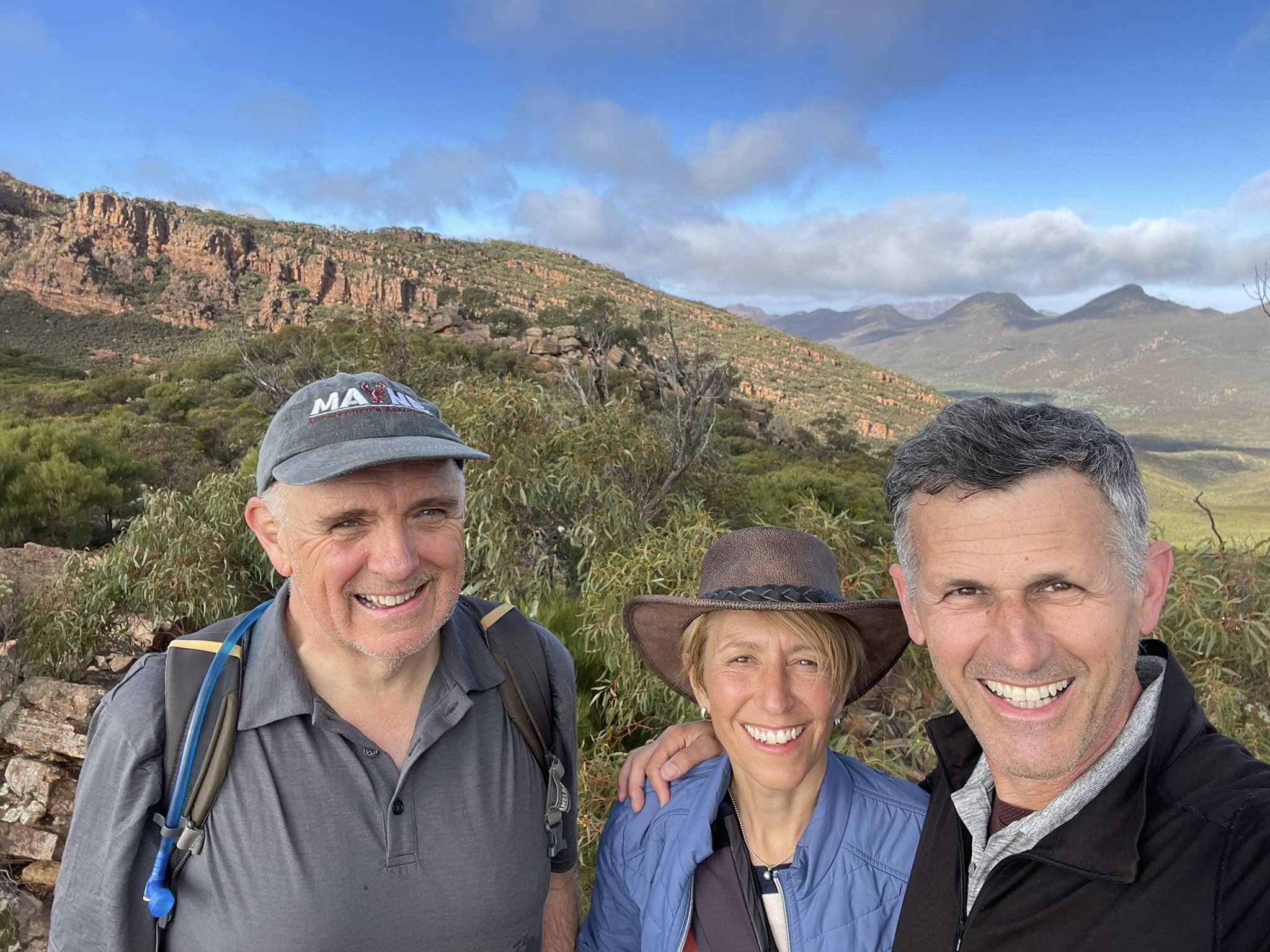
At the top!
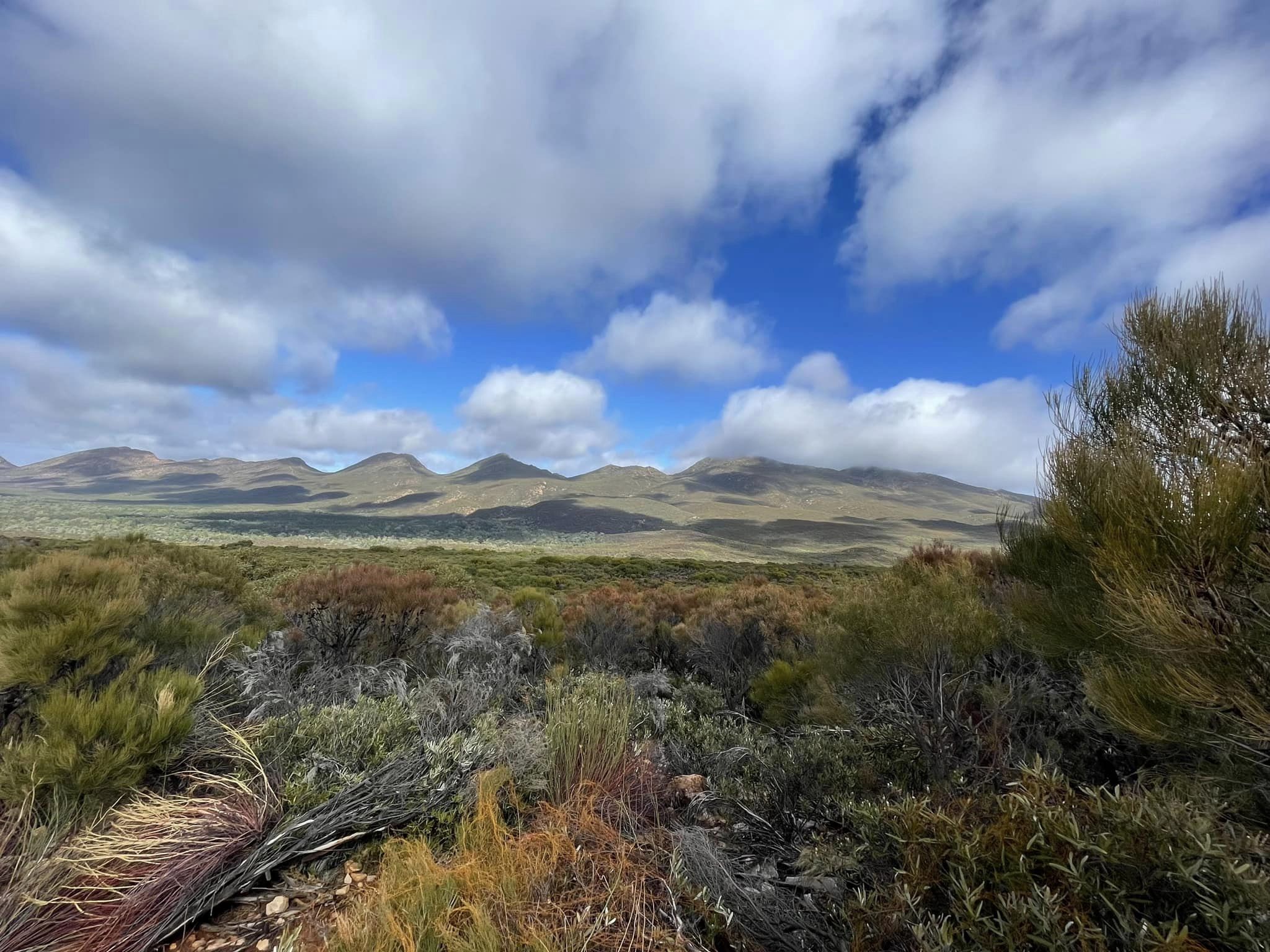
The view from the top of where we hiked, across the pound to the other side. In 1851, when the first settlers arrived and saw this huge area almost completely surrounded by mountains, they thought it would be a great place to hold stock. They neglected to ask the local aboriginal people what they thought of this plan. Instead they barrelled ahead and ended up with 120,000 sheep grazing in there. It was ultimately overgrazed and hit with droughts forcing the pastoralists to move on.
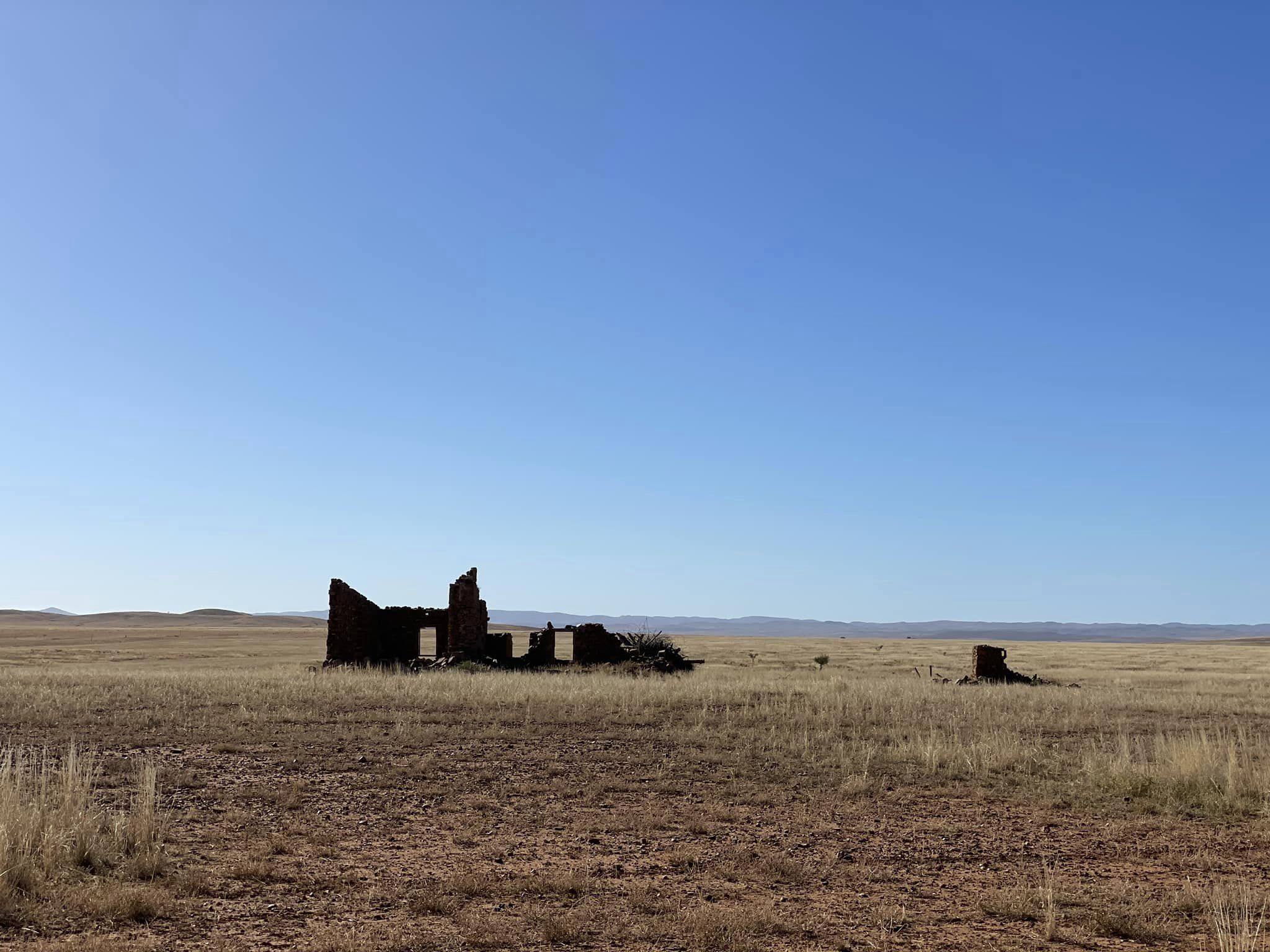
Roadside ruins of early 1900s station houses.
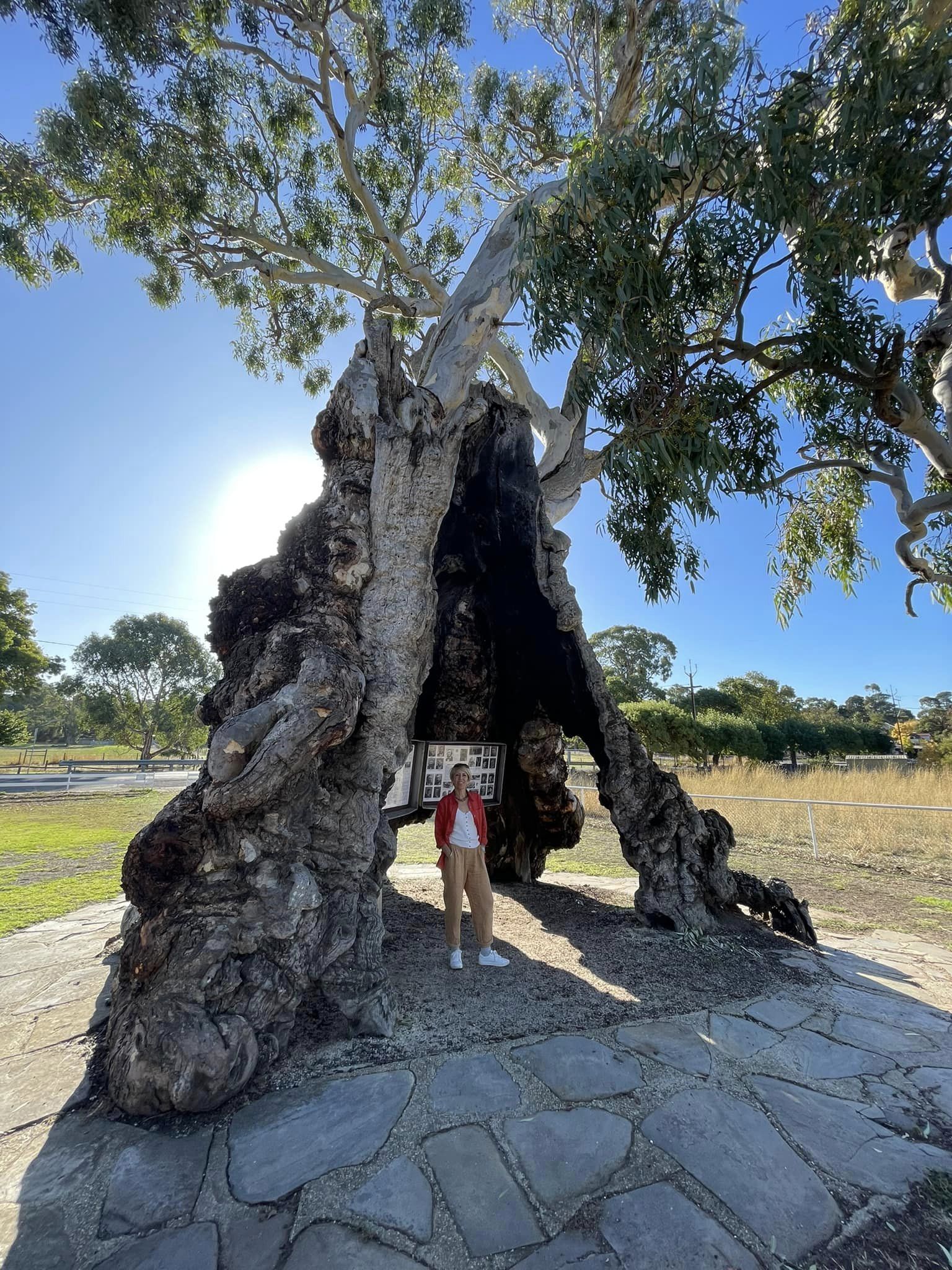
So here’s a fun story…this is the Herbig Family tree. In 1855, after 129 days at sea, Johann Friedrich Herbig arrived in South Australia seeking his fortunes. He must have been pretty tired (and penniless) after such a journey and didn’t want to spend much time looking for accommodation. He saw this gnarled, hollowed out gum tree and decided to move in. He stayed for five years (must have saved a lot on rent), married Caroline (a woman 12 years his junior who was a bit of an old maid at 18), brought her home to his tree, had their first two of 16 children in the tree and then finally built a pine and pug house nearby. This was typical construction at the time, using pine logs standing upright with chicken wire nailed on both sides of the walls holding it all together. This was then covered in chopped straw and mud, followed by a lime wash to protect the house from the elements. Johann died at 58 of “brain damage” but had managed to amass quite an estate of 1,000 acres. After he died, the children taught their mother to write her name so she could sign documents and she lived another 40 years. She outlived seven of her children and by 2004, her descendants numbered 841 with five families still living in the area today. Interesting bit about Caroline. She survived a stabbing attack where she was strung up on a wattle tree and stabbed in her left chest. Apparently she was of a “sturdy build” so the wattle tree bent under her weight so that her feet touched the ground and she ran away. The doctor said she didn’t bleed to death thanks to her plumpness. After the attack, Caroline went to stay with her aunt, where she met Johann. So I guess all’s well that ends well!
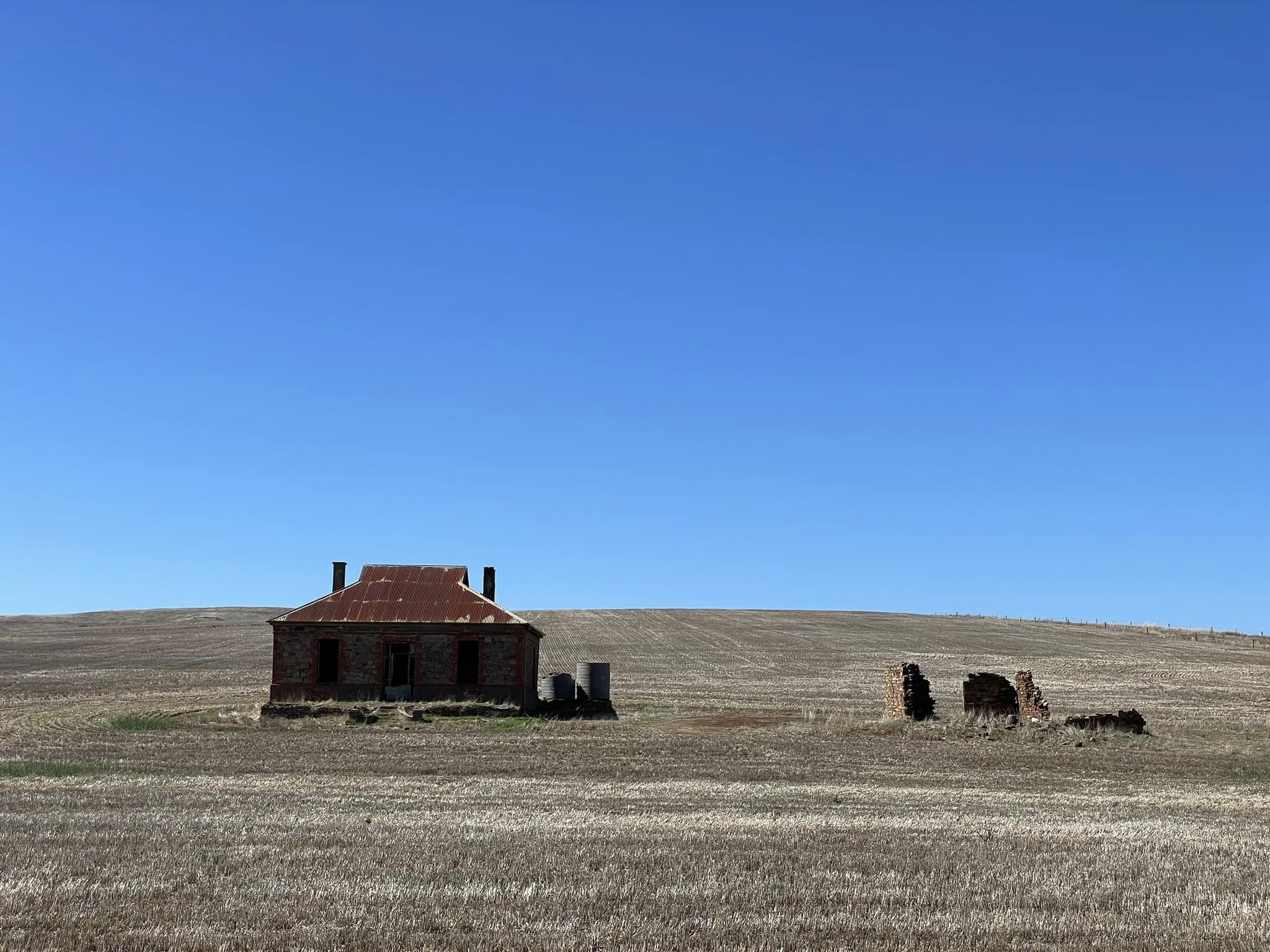
Recognize this from the Midnight Oil Diesel and Dust album cover?
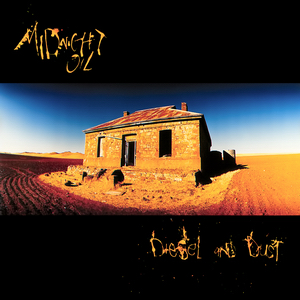
Here's the album cover...
Little did this fella know where we would go from here…or maybe he did and that’s why he didn’t stick around for a photo shoot…
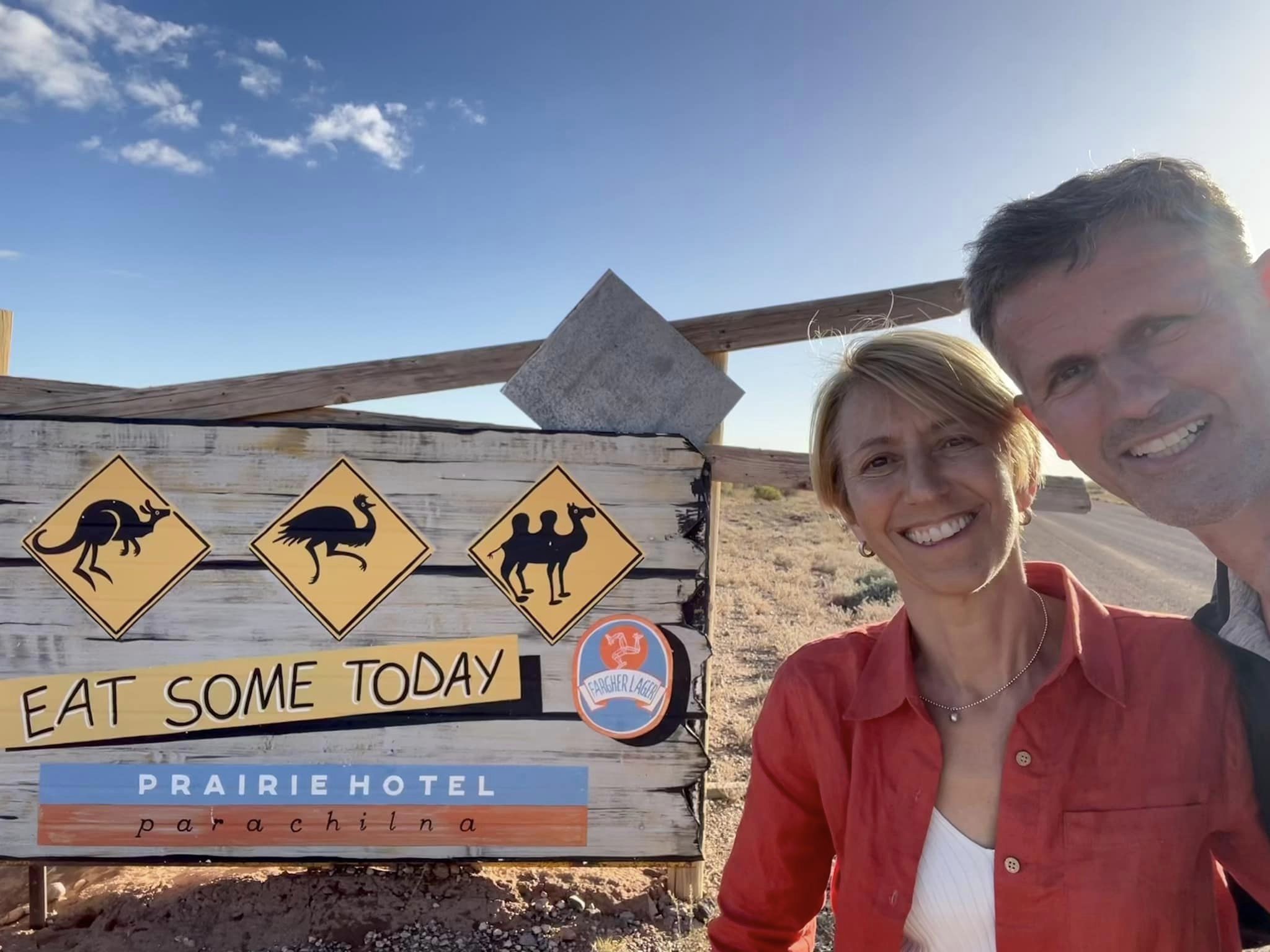
...and here's where we went from there. Eat some today? Why not?!
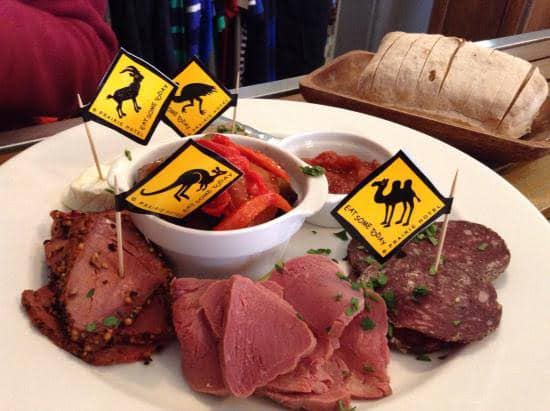
The Prairie Hotel’s feral antipasto plate: Camel metwurst, smoked roo, emu liver parfait, goat chevre, bush tomato chilli jam, marinated vegetables, saltbush dukkha & olive oil, ciabatta. The general consensus was the smoked roo was the best and no, it didn’t taste like chicken!
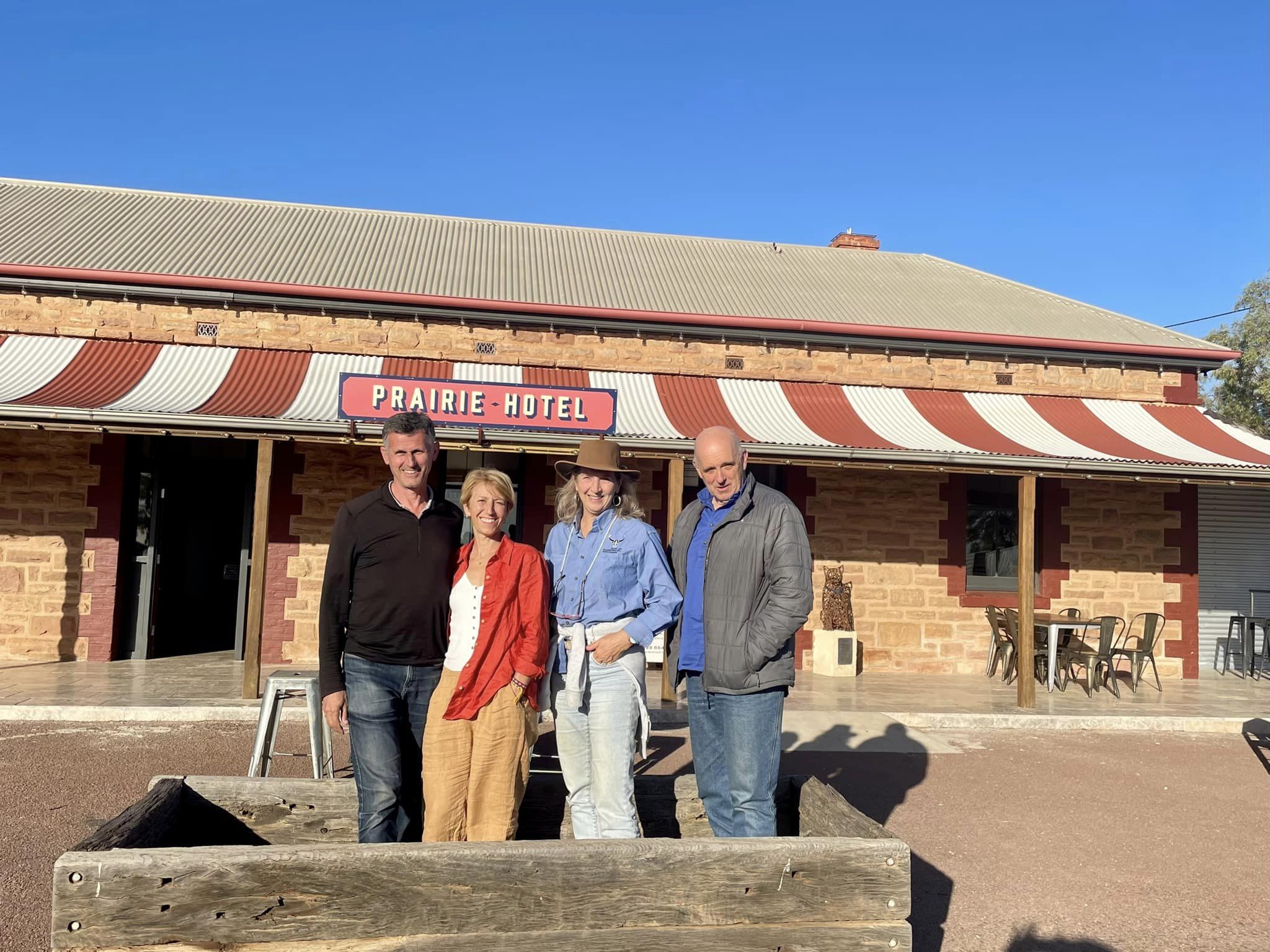
The Prairie Hotel in Parachilna. Thank you Maggie Measday and Doug Adamson for a most remarkable week.